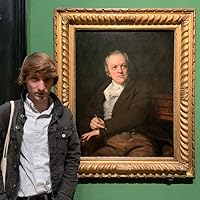
Paul Tillich was a German-American theologian and Christian existentialist philosopher. Tillich was – along with his contemporaries Rudolf Bultmann (Germany), Karl Barth (Switzerland), and Reinhold Niebuhr (United States) – one of the four most influential Protestant theologians of the 20th century. Among the general populace, he is best known for his works The Courage to Be (1952) and Dynamics of Faith (1957), which introduced issues of theology and modern culture to a general readership. Theologically, he is best known for his major three-volume work Systematic Theology (1951–63), in which he developed his "method of correlation": an approach of exploring the symbols of Christian revelation as answers to the problems of human existence raised by contemporary existential philosophical analysis.
Trying to impress a friend (a doctoral candidate in religious history), I mentioned that I was reading Paul Tillich’s A History of Christian Thought. Her answer was, “That’s fine if you’re a follower of Tillich.” I was somewhat taken aback, but I recognized that she expected a more granular and objective view of sources.
Tillich himself addresses the point, “if a systematic theologian teaches history, he cannot help but tell you what he thinks about things. He cannot simply enumerate facts in a textbook fashion.” The problem here is similar to what occurs with the history of philosophy. If you want a detailed and objective history, you probably should not read Bertrand Russell’s A History of Western Philosophy.
However the history of philosophy is central to doing philosophy, and in the same way the history of religion (in this case the history of Christian thought) is central to doing (Christian) theology. To understand events in terms of the fabric of the historical context, rather than in terms of general principles, is a discipline in itself, peculiar to the study of history.
Even so, if one wants to get acquainted with a vast subject matter, it helps to start out with an opinionated reviewer. One may later come to revise one’s opinions or to disagree. In the case of Tillich, I get to understand the sources of his thinking as well as to borrow his viewpoint on the history.
The discussion of the early church fathers was very hard for me to retain, as is much of the discussion of the medieval church. I understand it while I am reading it, but I end up with very global impressions, such as that the church fathers had to work hard to give believers what they wanted. If, for example, people needed Jesus to have the power to forgive sins or to transcend death, then the church fathers had to have a theology that placed the historical Jesus on the same level with the creator in Genesis.
When Tillich reaches the periods of the Reformation and the Enlightenment, he starts to deal more with the issues that concern us today, such as the role of authority in reaching right opinion, and the need to reconcile religious experience with scientific understanding.
As he reaches the eighteenth and nineteenth centuries, we see Tillich more and more describing thinkers in categories which are important to his own theology. Tillich is himself an Existentialist, following Martin Heidegger. He comes to describe the philosophers in terms of being essentialists or existentialists, saying that it is important to incorporate both viewpoints in one’s theology (philosophy). People like Kant and Hegel are the essentialists, having an all-encompassing intellectual view of the world. A person like Schelling, Kierkegaard, Nietzsche or Feuerbach is the existentialist, who “looks at man in his predicament in time and space, and sees the conflict between what exists in time and space and what is essentially given.”
While I have engaged in sketchy history and breathtakingly vague generality, Tillich’s work has helped me to understand how opposing views are reconciled in theology, and what the prospects are for the opposing views regarding religion today.
This books consists of lectures Paul Tillich delivered at Union Theological Seminary and the University of Chicago Divinity School in the 1960s. Part one covers the Hellenistic and Jewish background of Christianity, the early church, the patristic period, the Middle Ages, the Counter-Reformation and Catholicism after the Council of Trent, the Reformation and Post-Reformation Protestant theology, and the Enlightenment.
Part two is more narrowly focused--it primarily covers the 18th and 19th centuries and deals specifically with the legacy of the Enlightenment and theology's attempts to address the challenges it posed. Tillich describes what he calls the "classical synthesis"--the attempt to incorporate Enlightenment insights into theology while preserving the essence of Christian faith. The two key figures here are Schleiermacher and Hegel. He then analyzes the dissolution of this attempted synthesis brought on in part by the critical onslaught of the 19th century--including the critical perspectives of non-Christian thinkers like Feuerbach, Marx, and Nietzsche. The final chapter covers some of the major trends of 20th century theology up through the 60s (Barth, existentialism, etc.); here the problems bequeathed by the 19th century are still very much alive.
As befits a series of classroom lectures, there is minimal in-depth scholarly apparatus, and the tone is very conversational. Tillich moves through the major figures of the tradition with ease and provides sophisticated but accessible discussions of such topics as the early Christological controversies, the debates between realism and nominalism in the Middle Ages, the debate between the Reformers and Medieval Catholicism, etc.
There are a few weak spots. His treatment of post-Trent Catholicism is perfunctory, and there is virtually no treatment of Eastern Orthodoxy apart from the discussion of the Greek church fathers. (Apparently the Orthodox theologian George Florovsky delivered some lectures covering the Orthodox tradition in more detail as part of Tillich's course, but these lectures aren't included in this volume.) Part two deals almost exclusively with German theology, and readers may feel that Tillich is being a bit parochial in his insistence that only German theology really grappled with the challenges posed by modernity.
These limitations notwithstanding, this is an extremely stimulating volume. Tillich was clearly deeply rooted in the traditions of Christian theology, and he moves with ease and clarity across a wide range of thinkers and topics. Specialists would likely take issue with some of his interpretations, but he makes the thinkers and issues seem relevant to contemporary (or then-contemporary) thought, not just of antiquarian interest. The book also sheds considerable light on Tillich's own theology--as it shows which figures in the tradition he is most indebted to and highlights some of the perennial issues facing Christian thought.
In exhaustively and astutely tracing the development of Christian doctrine from its pre-Christ roots in Judaistic thought and Hellenistic philosophy to existentialist theology in the 1960s, Paul Tillich here analyzes the innovations each theologian (or philosopher) produced in our understanding of Biblical teaching.
He presupposes every thinker—from Clement to Augustine, from Pseudo-Dionysius to Aquinas, from Anselm to Luther, from Kant to Barth, from Nietzsche to von Harnack—attempted to understand Scripture by interpreting the perennial relevance of the message of Christ through the unique concerns of each epoch. This he calls the “theology of mediation.” In this sense, historical pressures have necessarily deepened our understanding of the divine and shaped our conception of Biblical teaching: “In order to be received the Christian message had to be proclaimed in categories which could be understood by the people who were to receive it. […] Every great philosophy is rooted in an existential emergency, in a situation of questioning out of which saving answers must come” (Vol. II, 221).
At over 600 pages (in my hardcover edition) of dense doctrinal discussion, this is a daunting yet rewarding monolith that introduced me to scores of theologians seeking to grasp what it means to fear the Lord. While Tillich holds a unique position in liberal Lutheranism—he criticizes von Harnack on the left and Barth on the right, defines the believer simply as one who holds the Christian message as his/her “ultimate concern,” refers to God in adapted existentialist terminology as the “Ground of Being,” and proffers a theological method of “correlation” between existential anxieties and Christianity’s solutions—it’s clear both what his presuppositions are and when he intrudes with his own critiques of each thinker, and thus his evaluations enhance rather than detract from his descriptions.
Tillich es un hombre que lleva a la práctica muy bien su "principio protestante", y este es un libro que lo demuestra. Cómo parte de libro base para el curso de historia del pensamiento cristiano, Tillich traza de una manera muy precisa y objetiva toda la historia del pensamiento cristiano, al menos en sus mayores acontecimientos.
A HISTORICAL INTERPRETATION OF CHRISTIAN THEOLOGY/PHILOSOPHY
Paul Tillich (1886-1965) was a German-American theologian and Christian philosopher, who was dismissed from his teaching position in Germany after Hitler came to power in 1933. He came to America, where he taught at Union Theological Seminary and the Harvard Divinity School.
This book was published posthumously. The Editor’s Preface explains, “[This book] combines into one volume two books of Paul Tillich’s lectures that have been previously published. The first part… beginning with the Graeco-Roman preparations for Christianity and ending with the post-Reformation development in Protestant theology. The second part… beginning with the rise of the Enlightenment and ending with the theology of Karl Barth and modern existentialism… [It] originated as lectures delivered by Tillich at Union Theological Seminary… the second part of this volume contains tape-recorded lectures which Paul Tillich delivered at the Divinity School of the University of Chicago…”
Tillich observes, “We have dealt with the negative side in Greek thought at the time of the ‘kairos’ [supreme moment]. But there were also some positive elements. First we will take up the Platonic tradition. The idea of transcendence, that there is something that surpasses empirical reality, was prepared for Christian theology in the Platonic tradition. Plato spoke of essential reality, of ‘ideas’ as the true essences of things… [Another] point in which the Platonic tradition was important was its idea of providence. This seems to us to be a Christian idea, but it was already formulated by Plato in his later writings.” (Pt. I, I, C2, pg. 6)
He points out, “[Celsus made] a serious attack… Christians who had the same philosophical education that Celsus had tried to answer for the church. The Apologists did not answer the attacks so much on the level of historical criticism as on the philosophical level. They did it in a way which shows three things that characterize every apologetic. First of all, it you want to speak meaningfully with someone, there must be a common basis of some mutually accepted ideas. The truth that is common to both Christians and pagans must first be elaborated… A rule for all Christian missionary work is that the other one must understand what you say; but understanding involves at least partial participation. If the missionary speaks an absolutely different language, no understanding is possible. Thus, the Apologists had to show that there is something in common.” (II, B, pg. 25-26)
He says, “The basic authority for Origen was Scripture. He introduced the famous distinction between three meanings of the Scripture. (1) The ‘somatic,’ literal or philological sense… (2) The ‘psychic’ or moral sense… (3) The ‘pneumatic’ or spiritual sense… There are some cases in which the biblical text has only a mystical meaning; then this coincides with the literal sense. Ordinarily, however, the mystical sense has to be distinguished from the literal meaning. The mystical sense is to be found through the allegorical method; this is a method of finding the hidden meaning behind the texts.” (II, F2, pg. 57)
He explains, “Now we will present the significance of the decision of Nicaea for world history and the history of the church: … The statements were made in philosophical, non-biblical terms. Some Greek concepts were taken into the dogma, not so much as classical philosophy but as mystical philosophy of religion… From now on the unity of the church is identical with the majority of the bishops… The church had become a state church. This was the price which had to be paid for unity. The emperor did not command the content of the dogma, but he exercised control.” (II, H2, pg. 71-72)
He points out, “Tertullian … is supposed to have said---though he did not actually say it---‘I believe because it is absurd.’ … What Tertullian actually said was: ‘The son of God died: it is by all means to be believed, because it is absurd. And he was buried, and rose again; the fact is certain, because it is impossible.’ This [paradox] is a mixture of two factors: first, it expresses the surprising, unexpected reality of the appearance of God under the conditions of existence; secondly, it is a rhetorical expression … It must not be taken as a literal expression, but by means of a paradox a pointing to the incredible reality of the appearance of Christ. Now, people added to this the formula, ‘credo quia absurdum,’ but Tertullian himself never said this. With such a view he never would have been able to present such clear dogmatic formulae and, as a Stoic, believe in the ruling power of the Logos.” (II, K, pg. 98)
He states, “All of this is in agreement with Augustine’s famous doctrine of time. Philosophically speaking, this is his greatest achievement, because here he really starts a new era of thinking about the concept of time… Time is not an objective reality in the sense in which a thing is. Therefore it is not valid for God. The question how time was before creation is meaningless. Time is created WITH the world; it is the form of the world. Time is the form of the finitude of things, as is space also. Both world and space/time have eternity only insofar as they are subjects of the eternal will to creation. That means they are potentially present in the divine life, but they are not eternal as real; as real they are finite; they have a beginning and an end.” (II, L3, pg. 117)
He explains, “For Pelagius death is a natural event, not a result of the fall. Since death belongs to finitude, it would have happened even if Adam had not fallen into sin… The sin of Adam belongs to him alone and not to the human race as such. In this sense original sin does not exist. Original sin would make sin into a natural category, but man is a moral being. Therefore, then contradiction of the moral demand must be an event of freedom and not a natural event. Everybody must sin in order to be a sinner. The simple dependence on Adam does not make anyone a sinner… he does not see that Christianity also stresses the tragic universality of sin, thus making it a destiny of the human race… Pelagius had a point, but he did not see the profundity of the Christian description of the human situation.” (II, L6, pg. 123-124)
He says of Augustine’s position, “Because of original, hereditary sin, everybody belongs to a ‘mass of perdition,’ to a unity of negativity. The most striking consequence of this is that even infants who die early are lost. Since everybody belongs to the mass of perdition, nobody can be saved except by a special act of God. this is the most powerful emphasis on the solidarity of mankind in the tragedy of sin. Thus, he denies most radically… the freedom in the individual personality… Now, in the light of our modern research into depth psychology and sociology we are probably able to understand better than our fathers what Augustine meant, namely, the inseparable participation of everyone in human existence, in a social structure, and in an individual psychological structure, neurotic or otherwise.” (II, L6, pg. 128)
He laments, “Something else of great importance in the daily life of the medieval man was the experience of the demonic. This was a reality for these people… And the demonic is a power which is present in the cathedral as something already conquered… When entering the cathedral one sprinkled oneself with holy water. This had the effect of purifying oneself from the demonic forces which had been brought along from the daily life… This is the background to the trials of witches and in part for the persecution of heretics. It is the basis for the demonic persecution of the demonic… So they started the great persecutions of the sorcerers, which were even more cruel and bloody than those of the heretics. As in every persecution fear was behind this hostile attitude toward oneself and others…” (III, D, pg. 148-149)
He argues, “Anselm’s intention [i.e., proof of God’s existence] has never been defeated, namely, to make the certainty of God independent of any encounter without world, and to link it entirely to our self-consciousness. I would say that at this point the two ways of philosophy of religion part company. The one type looks at culture, nature and history … on the basis of an awareness of the unconditional. I believe this is the only POSSIBLE philosophy of religion. The other type looks at all this … in terms of something which is given outside, from which through progressive analysis one might finally come to the existence of a highest being called God. This the form which I deny… I could say that where God is not the ‘prius’ of everything, he can never be reached. If one does not start with him, one cannot reach him. This is what Anselm himself felt when he realized the incompleteness of the cosmological argument.” (III, G, pg. 165)
He states, “The phrase ‘sola fide’ is the most misunderstood and distorted phrase of the Reformation… The phrase should not be ‘by faith alone’ but ‘by grace alone, received through faith alone.’ Faith here means nothing more than the acceptance of grace. This was Luther’s concern, because he had experienced that if it is put the other way around, you are always lost, and if you take it seriously, you fall into absolute despair, because if you know yourself, you know that you are not good. You know this as well as Paul did, and this means that ethics are the consequence and not the cause of goodness.” (III, V, A2 pg. 236)
He asserts, “The question behind this doctrine [predestination] is: Why does not everybody receive the same possibility to accept or reject the truth of the gospel? Not everyone has the same possibility historically for some have never known Jesus. Not all have the same possibility psychologically… The answer to this question is divine providence, but… providence with respect to our eternal destiny is predestination… all of these who teach predestination have observed something empirically, namely, that there is a selective and not an equalitarian principle effective in life. Life cannot be understood in terms of an equalitarian principle, but only in terms of a selective principle… Calvin himself felt the horrible aspect of this doctrine.” (III, V, C2, pg. 267-268)
He points out, “The orthodox doctrine of inspiration took some of Calvin’s ideas and made them more radical and primitive. The authors of Scripture were the hands of Christ, the notaries of the Holy Spirit… The words, and even the pointings in the Hebrew text, are inspired… One is driven to actual absurdities with this doctrine of inspiration. To maintain it one has to make artificial harmonizations, for there are innumerable contradictions in the Bible on historical as well as other matters. Such contradictions are made out to be only apparent, and one is forced to be ingenious in inventing ways to harmonize them.” (III, VI, A2, pg. 281-282)
He argues, “We cannot understand Karl Marx without understanding his relation to Feuerbach… He said that Feuerbach did a great job, but he did not go far enough. He did not explain why projection was done at all, and this, Marx said… can only be explained in terms of the social existence of men. Religion is the escape of those who are oppressed by the upper classes into an imaginary fulfillment in the realm of the absolute. Marx’s negation of religion is a result of his understanding of the social condition of man.” (Pt. II, IV, A2, pg, 436-437)
He observes, “A further shock came with the idea of evolution. Then a six-day creation was defended, then abandoned. Evolution said that life has developed out of the inorganic realm. Then where is God?... a particular work of God’s creation must be postulated and on this thin thread the whole apologetic position was suspended. There was the lacuna in scientific knowledge… Theologians enjoyed this lacuna, for they could place God in this gap left by science… This was an idea unworthy of God. The position was indefensible so theologians had to withdraw again. But one last point was kept. That is the creation of man… This was and still is a last defense against science, but this last defense is not tenable either… in the Aristotelian sense, the soul is the form of the body and you cannot separate them.” (IV, C3, pg. 456)
For anyone seriously studying Christian theology and its philosophical development, this book will be of great interest.
Tillich is clearly a brilliant historian of theology, who sees the connections in the flow of ideas from the second century to the twentieth. He presents this in a relatively accessible form such that the book can be read as a text or used as a reference reasonably easily.
On the negative side, Tillich himself is an existentialist with a strong strain of religious socialist (self-described), and he not only regards that as the true Christian religion, he frequently explains how it is, to one degree or another, what Christians have always believed. He also accepts unquestioningly the assumptions that most of the Bible is historically inaccurate. This becomes more problematic in the latter half of the book, when he is covering nineteenth and early twentieth century theologians, dismissing revivalism almost out-of-hand as completely irrelevant to "real" Christianity (he does credit it as impacting Martin Kahler, whom he respects but in large part rejects) and talks quite a bit about why each of the modern liberal theologians is wrong insofar as they disagree with him. It makes it a bit difficult to get a clear handle on the early twentieth century situation (the book is comprised of lectures delivered prior to his death in the early 60s). However, for an overview of everything from Tertullian through the Enlightenment, this is an excellent treatise.
I read the book a few years back, and wrote a brief review in which I said I probably would not read it again; I then had occasion to use it in preparing lessons on the history of denominations, and perhaps because of this I thought it would benefit me to go through it once more. It was slow, and much more than I will remember, but I do think I benefited from it and was able to draw on my reading in answering questions about modern theology that came in my e-mail. It is not a devotional book, but a history lesson that connects the dots between the major names, Augustine and Anselm, Tertullian and Thomas Acquinas, even people like Kant and Kierkegaard and Hegel and Marx. Worth reading if you want to understand something of the history of doctrine in the churches.
This, hands down, has been absolutely instrumental in my clarity of thought. That is not to say that Tillich's account of the history of Christian thought offers anything new, but rather, he offers a synthesis as a systematic theologian--not as Church historian--of the great movements of Christian thought and captures the proper understanding of each movement, realizing the importance of how each one impacted the other, and the overlap therefrom.
The book itself is actually split into two parts from two different courses that Tillich lectured in to his divinity students, one at Union Theological in New York and the latter at Chicago School of Divinity in IL. Tillich, therefore, is easy, accessible, and offers the clarity and conceptualization that is often times lost in technical theological precision. Both are good, but in this transcription, Tillich's voice as an orator and lecturer can be heard, and it is remarkable. The section on the Fathers, Apologists, and Nicene Fathers was fantastic. The section on the middle ages was the toughest to get through, simply because this is the area where I have read the least amount of primary material. Even still, Tillich's analysis is wonderful, zoning in on thinkers that are normally skipped right over, such as Nicholas of Cusa and Jakob Böhme. His analysis of the movements from the middle ages to reformation to the enlightenment, the romantic reaction, and finally to existentialism was the most helpful and profound treatment I have ever read. So much clarity has been brought to my understanding thanks to Tillich of these movements. His lectures on Kierkegaard were Nietzsche delightful, and his lectures on Schleiermacher, Hegel, Schiller, and Schlegel were the most helpful in understanding the attempted synthesis between the Enlightenment and Orthodoxy, the Infinite and the Finite.
I cannot recommend this book more to students of theology.
A book that has helped re-engage my Christian faith, A History of Christian Thought is a book about the history of Christian theology and its relation to philosophy outside of Christianity. The book is unequivocally viewed from a Euro-centric model with good reason. It looks at Christianity in its relationship with philosophy which is less influential in Eastern Christianity whether it is Oriental Orthodox or Eastern Orthodox. As a result, the book to many could be seen as too Western-centric in its position and particularly German-centric in its views. I think that would be missing the point that views theology in a different way to other theology books.
On the faith position, A History of Christian Thought puts reason at the centre of the development of Christianity. Based on lectures that Paul Tillich had done throughout his life, A History of Christian Thought rejects a Biblical-centric view of Christianity and instead argues Christianity was developed and heavily influenced by philosophical movements from the world.
From the first chapters, Tillich puts forward the various philosophical movements that influenced the development of Christianity. Stoicism, Eclecticism, scepticism and many others in the different schools helped form Christian theology and thought. However, Tillich argues that Platonic philosophy had the most influence on Christian theology. Its focus on ideas (ousia), the separation of spiritual and physical worlds, transcendence, providence and highest form being God clearly impacted Christian theology.
Over the first couple of centuries, Christianity was an extension of Greek philosophy. Whether it was Justin Martyr's Apologia (which is a philosophical justification for Christianity without the Bible which didn't exist at that point) to the dominance of the Logos in thinking and how it was the embodiment of reason to the Neo-Platonism of Plotinus influencing the thinking of Origen, Christianity was heavily indebted to Hellenic philosophy. The debates over Christology which was the central part of the early church were in many ways debates on philosophy where Greek philosophical concepts were debated. The ideas of the Allegorical Method highlight the differences in Biblical interpretation from an early period, where the Bible is seen through the lens of allegory before it is being literally interpreted. The first chapters set up the basis of Christian thinking which the rest of Christian history can use for its own.
The medieval period is defined by its debate between different ideas: Nominalism versus Realism, Augustinianism (Platonically influenced) versus Aristotelianism, Dialectics versus tradition, Thomism versus Scotism. These trends were representative in different people and movements, whether Augustinianism being put forward by the Franciscan order or Dominicans putting forward Aristotelian philosophy. Different philosophers and theology scholars are looked at including William of Ocham, Aquinas, Anselm and even the German mystics which have fascinated me.
The analysis of Roman Catholicism and the Reformation isn't I think the entire strong point of the book. Tillich is quite opposed to Catholicism and too sympathetic to Martin Luther. Whilst I think Catholicism in history has been very authoritarian and dealt with historical changes poorly, the modern Roman Catholic church has been a force for good in many parts of the world. Martin Luther was given quite a positive light in the book on the other hand and I think Tillich wrongly defends Martin Luther from his authoritarianism and Anti-Semitism. Nevertheless, I think the book goes over the important ideas that were central to the development of Lutheranism including sola fide, sola scriptura, sin and faith, plus the book looks over the differences between Lutheranism and other Christian theological positions. Calvinism is also looked at and it argues that Calvinism is heavily Biblical in nature. Anglicanism is largely ignored but I suspect it is because the Anglican church never had a Luther or Calvin to define its theological doctrines.
The last sections of the book look over the problems of the Enlightenment and how this led to significant issues in Christianity. These include issues of science versus Biblical interpretation, the nature of the Bible as being a non-historical book and the development of non-Christian theories of philosophy. Various different philosophers are looked at including Hegel (who tried to reconcile Christianity with the spirit of history), Kant (who Tillich credits as being the founder of Christian liberal theology which is interesting as Kant came from Pietist parents) and Schleiermacher (who attempts to create a Protestant liberalism). This section clearly identified the problems with Christianity in modernity.
The last chapter goes over various 20th century theological movements and theologians who attempt to reconcile theology with the modern age. There isn't a single fundamentalist or evangelical theologian mentioned but that I think demonstrates the date of the book being from the late 1960s. Neo-Evangelicalism had only emerged around a decade before and so there wasn't much theology that defended Biblical inerrancy at that time which was mainstream.
I think the best thing about the book is that it views Christianity from the lens of philosophy. Tillich's book argues that Christianity's development was more of a philosophical development, particularly in the past than a development of analysing the scriptures. Given my post-evangelical faith crisis I have had where I have come to totally reject Evangelical Protestant interpretation of the Bible, it is wonderful to read theology books where Biblical inerrancy is not the focal point of theology. This book puts Tillich into one of the best theologians of the 20th century.
This is a tough book. Very heavy on the philosophy. It was difficult to grasp the extent of the knowledge laid down by Tillich. I won't be rereading this book because there is simply too much information, good as it is. One impression I will take away is the seriousness of Christians prior to the period after Tillich and today. The sheer effort at figuring out the nature of God, the Logos, is mindboggling. What I didn't care for was how impractical the entirety of this book was. While I better understood some of the movements, nothing really seemed... Christian, to me. Tillich is too educated. If one had to have an ounce of his knowledge and learning to grasp theology, then we are all in great trouble. Before this book I had never even heard of existentialism being a part of Christian thought and many of the continental thinkers I also did not know, like Schelling, Lessing and others whose names don't readily come to mind. For instance, there was nothing about Wesley or Baptists and Methodists. Not even anything about American theologians like Jonathan Edwards. There seemed to be too much emphasis on philosophy, so much so that I often found myself straining to dig out what was Christian. For instance, growing up Christian, I never knew of anyone who thought Kant was the protestant's philosopher.
Overall, while this book can be read with profit, the juice may not be worth the squeeze. I do not think my own experience of Christianity was elevated in any way, if anything I would have to work extremely hard to reread sections of this book, commit things to memory, and read the works of many of the named individuals. Even then, what would I gain? What about theology would I know more of? Excuse me, not theology, but Christian Thought. As I write this I am beginning to think Christian Thought was something entirely different from what I imagined, maybe even something Tillich came up with.
Again, and finally, because I tire of writing this review on so difficult a book where one cannot readily recreate (accurately, anyway) passages of the book, I wanted to reiterate my impression this book left: serious Christianity. No one talks about the Logos in church. No one discusses the creed, or the nature of the cosmos. There are many other things in these 500 pages no Christian, none that I've ever known, anyway, talk about. I think this is partly because almost nothing in these 500 pages of dense information was there discussion of what's in the bible. Christians today discuss the bible and use verses for their arguments. You wouldn't get that idea from Tillich. You would hardly even know there was a bible by reading this book. Barely any doctrines or dogma are discussed. Almost no christology, soteriology, eschatology, etc.
I wanted to conclude and say that there are many gold nuggets to be found. Interesting things about Calvinism that I didn't understand before, things about Luther, Max Weber, and Kierkegaard. This is why I am leaving my review at 5 stars. There is much to be gained from this book, even if you only gain by reading small parts. It took me a long time compared to other books to read this. I could usually only stomach 20-30 pages a day. Good luck with it.
I was interested in this book because I wanted to learn more about Christianity. I would say my expectations were met, but this was no walk in the park. This book was split into two parts.
First Part: I would say it was very educational about the early church. I really don’t have too many criticisms, I wanted to learn about the early church, so I hopefully did. There were some terms I was familiar with, but learning it all at once was very taxing.
From memory, I would say around pg. 200 was when the book started to pickup, but that is probably more due to some familiarity with European history.
Second part: The first third was very enjoyable, but as it goes on, there are some mannerisms that were distracting. It seems like every other page that Tillich will redefine a term (like conservative, originalism, etc.) to something completely different then its usual meaning. Sometime it’s based on the terms original meaning, other times it just seemed excessive.
Despite covering far less history, there seemed to be a lot more terms, and I can’t say that it was all presented in the most optimal way. Spinoza, Hegel, etc. These people are not introduced chronologically.
Tillich is not originally from an English speaking country (Germany), and it does show in some of his terms and mannerisms.
Also, major negative, Tillich can absolutely not shut up about the “bourgeoisie” and Karl Marx. While I acknowledge that there probably is an intersection between church thought and socialism, it’s mentioned enough to where I can tell how Tillich probably leaned, which just shows that in the last 60 years, nothing has changed with regard to who is employed on campuses to teach. Tillich mentioned his opposition to McCarthy, and frankly he’s absolutely the kind of person who would be opposed to him.
Overall, this is a book where for the majority of it, I would read 15 pages and start yawning, which was actually kind of helpful for falling asleep at night. There were parts that were far more interesting, but it took awhile to get there. I cannot in good faith give this book a one star, it gave me the knowledge I was looking for. However, it wasn’t the lightest read, nor did Tillich stay on topic or present in the best possible way. I wanted to read a book a month for the year, and this took me three months.
This entire review has been hidden because of spoilers.
I was at a very different point in my life when I picked up a copy of this book: early 20s, and just becoming really skeptical about the "truthiness" of christianity. However, as there are SOOOOO many books to read (and they keep writing new ones, darn it), I never got around to it until this year, 40 years later and well beyond mere skepticism when it comes to religion. But, still being very interested in the history, philosophy, and anthropology of religion, I finally broke the binding on my 40 year old copy. First, for those of you not familiar with Tillich, this is really two books in one, consisting of two of Tillich's early 1960s lecture series. The first deals with the broad history of the "thought" behind what became christianity, from the Greco-Roman and Judeo background in the world it first developed, up through the Enlightenment and its effect on [mostly Protestant] christianity. The second part goes into detail on modern Protestant philosophy and theology and its development from the late 18th through the mid-20th century. The first part is essential reading to any student of the history and philosophy of christianity or religion in general, or even just the history of Western civilization. The details and discussions are amazing. I found myself wondering how his students were ever able to keep up with him! Amazing. The second part is if anything even more dense. However, this part was of less interest to me overall, so I found it slower going. But, Tillich's ability to communicate how the diverse directions of thought were interconnected and entwined was breathtaking. His descriptions of how the ideas and writings of people such as Barth, Hume, Kant, Rousseau, Feuerbach, Kierkegaard, Schleiermacher, and movements such as the Enlightenment, Romanticism, Marxism, and Existentialism, all worked together (often in opposition to each other) to drag Protestantism into the modern world (not always successfully). So, with one star removed for the second half, due mostly to a bit of not-so-subtle skewing towards his own beliefs, I recommend this as a MUST-READ for anyone serious about understanding how christianity became what it is today, whether one is a believer or not.
Based on Paul Tillich's lectures as professor of theology at the Union Theological College (NY), "A History of Christian Thought" provides an introduction into Christian belief from the ancient Church, the Hellenistic philosophy, through the Roman Empire, Middle Ages until today (1950s). The book covers the main influences along the way including Augustine, the Stoics, Anselm of Canterbury, Joachim of Floris, Thomas Aquinas, Dun Scotus, Luther, Calvin, etc. I was impressed how Paul Tillich managed to discuss such a huge piece of history and theological thought in just 300 pages. It was the perfect introduction into Christian thought to me as an atheist. I now also understand the split in the Christian church with the authoritarian Catholic church on one side and the Reformed churches on the other. The book showed how Christian Thought changed over time. How the church used its 1,000 years of monopoly on education, and how it had to renew in order to stay relevant as life philosophy during the Renaissance and Enlightenment and industrial revolution. Especially remarkable to me was the equivalence of the concept of "God" and "Love," as noted by Luther. That and the location of the Spirit on every person. It can create a beautiful religion that naturally includes all people no matter what background, gender, social status, race, ethnicity, or sexual orientation. More than the pure historical and theological background, Paul Tillich also helped me with complicated concepts (i.e., for a non-religious person) such as God, the Trinity, grace, and faith. Just like "The Courage to Be," this book is highly recommended to anybody interested in Christian theology. Very well worth your time.
As far as histories of Christian thought go this is actually one of the better ones. A number of issues, though, prevent it from a fully recommendation.
Absorption into "The One"
Tillilich's most important contribution in this volume is his lucid discussion of Neo-Platonism. Going beyond traditional accounts, Tillich describes it as "the abyss of everything specific." Neo-Platonism, as it relates to the "One," says that the One is beyond all distinctions, beyond the difference between Subject and Object (it's hard to define what Neo-Platonism means by "the One." Loosely-speaking, we will call it the "God-concept" for lack of a better term). It is not purely negative but is rather positive: it incorporates everything into itself.
This might seem like an arcane discussion, but it is crucial to understanding not only the rest of Christian thought, but Tillich's own ethics and theology. Tillich will identify God, or more importantly, our experience of God, as the "ground of being." Salvation, thus, for Tillich, is entering into the "New Being." Sin and evil are, obviously, nothing, no-thing, the dissolution of being. Readers will certainly recognize Augustine's discussion of evil as a privation of Good.
Universals
Tillich gives a particularly good analysis of the recurring realist-nominalist debate. He goes beyond the mere textbook descriptions which say that realists believe that universal ideas exist, whereas nominalists do not. That's true, but fails to capture the power of the movement. Tillich notes that for the realists, universals were dynamic powers of being arranged in a hierarchy where the one universal above mediated below, and so on. When I read this, all of a sudden Platonism made perfect sense. Interestingly, Tillich notes that when Greek paganism became Hellenized, the pagan gods were simply transposed into universal mediations. This is particularly insightful when we apply this same analysis to Roman Catholic and Eastern Orthodox syncretism ala Mary and the saints.
High Points Through History
Not every thinker is going to be consistently good in analysing church history. Tillich's particular strengths are Augustine, Anselm, and Luther. I do not buy into Tillich's apologetics, but his discussion of the ontological argument was good. While risking some oversimplification, he notes a number of differences between Eastern and Western thought. Salvation for the former was absorption into the One, a vertical movement, whereas the primary reality for the latter was a horizontal movement, eschatology. This is a terrible oversimplification, but there is some truth in it as it relates to Origen's influence on Eastern theology and Christology. Western thought, by contrast, was able to better develop a kingdom of God eschatology. Tillich, though, does not develop this point in greater detail.
The Bad Parts
Tillich, despite his protests, is a liberal. He relies on outdated scholarship which makes the silliest claims (he thinks Daniel got his material from the Persians, which is silly even on Tillich's own analysis since the Persian religion was ontological absorption, whereas Daniel spoke of the horizontal movement of the Kingdom of God in history--Daniel 2, 7, and 9). Further, while Tillich himself gives a good criticism of Eastern ontology, it's difficult to see how his own view isn't similar
Depraved Sexual Ethics
Tillich makes a number of strange claims that do not make sense unless one is aware of Tillich's own life. (Tillich, while there was no official diagnosis, likely suffered from satyriosis). He accuses Calvinist countries of having a repressed sexual ethic. This is strange since it was the Puritans and Reformers who delighted in sexual love between husband and wife. The Romanist Thomas More accused the Reformers of drinking and "lechering." What does Tillich mean by this claim? According to his wife's biography of him, and his son's own memory,
And I am saying that at the beginning they agreed sexual involvement with others was permitted and that this arrangement got out of hand. He wouldn't stop and she didn't like it anymore, perhaps after the trauma of emigration and adjusting to a new world and a new child" (p. 14)
This quote is one of the rather tame ones and I won't cite more for propriety reasons. It gets a lot worse, including Tillich's frequenting of brothels. How can Tillich justify this? Simple. It goes back to his "ground-of-being" theology. Salvation is finding actuality in "the New Being." Tillich, thus, would seek sexual experience in other women, even prostitutes, but rationalized this by saying he wasn't seeking "actuality" in these encounters.
Unfortunately, even by Tillich's own ethical theory, I think he fails. We must bring up the uncomfortable likelihood that he risked (if not openly caught) venereal diseases from these encounters. This would have a destructive side-effect on his existence. Would this not, accordingly, be a slide into non-being and dissolution? Indeed it would, and so by his own existential standards he is condemned.
I think this explains his anger at the Calvinist sexual ethic. The Reformers and Puritans saw joy in married sex--something Tillich rejected in his own life--and denied sexual encounters with strange women, something Tillich openly sought.
Conclusion
Is this book worth getting? It's hard to say. The philosophical analyses were superb, but knowing Tillich's own background I'm uneasy recommending it. I bought my copy at a garage sale for about ten cents (and the previous owner bought it from a public library book sale for about the same price. No profit or royalties were made by anybody). I wouldn't spend more than that on it.
Here Paul Tillich presents a sweeping overview of the major streams of thought that have been in conflict and conversation with each other since before the time of Christ. Tillich was not just a compelling theologian but an effective teacher as well; otherwise, I never would have been able to see this 500-page collection of transcribed lectures all the way through to the end.
What is best in Tillich’s history is that it’s interpretative history. It is pure intellectual, no facts or events. He shows ideas and gives his judgment on them, in a very personal way. Since he was a great and original thinker, this accounts for the biggest value of the book.
If you approach it from a secular history background of dry and hollow books , this is a great discovery. Maybe this materialistic people have no “struggle with their ultimate concern in life”, therefore they can’t engage history in an existential way. I think I understood better what that means after finishing this book.
Not all parts of it are good. All description of Reformation except from Luther seems out of touch with recent scholarship. The last 100 pages on existentialism are hard to follow, unless you’re used with this type of language. Strong points are really strong, though. They seem to be Platonism, neo-platonism (as religion), Augustine, medieval realism and nominalism, Luther, romanticism and mysticism. This parts are really worth a read, and you can jump through them on the book (I didn’t and I regret the time lost in it)
Accessible and honest where opinions are Tillich's own, History of Christian Thought is an excellent primer for those wanting a panorama of essential Christian trends from ancient times to "contemporary" existential concerns and theological trends(keeping in mind this was written in 1968!) Some of the more radical implications of Luther's thought and Tillich's fascinatingly fair treatment of Nietzche were just a couple insightful surprises. Highly recommended even today.
A very fair appraisal of Christian history. Though he is definitely Protestant (and a liberal one at any), he has great esteem for the truth, for God as our ultimate concern, and for a faithfulness to Christian history and its present and future. Tillich also properly connects theology to its philosophical, historical, and social roots. He is certainly a resource for Christian thought for all who are curious about their heritage.
Made me realize that the canon is a political, very human compromise -- which enabled me to accept the hypocrisy of the church while following my own path more easily