"Le avventure di Guizzardi" (1972) is the first work I've read of celebrated author and translator Gianni Celati (1937-2022). According to the Italian Wikipedia page, this novel has been translated into French and Basque (!), but I find no evidence of any English translation. Personally, I think this would be a tricky book to do justice to in English.
It's terribly odd, both in tone (language style) and subject matter (more on that below). It's a sort of modern fable or fairy tale with a kind of weirdness that reminds me a bit of Italo Calvino.
As for the writing style, the Italian Wikipedia article says this: "[this novel along with two of his others are] contraddistinti da uno stile di insistita devianza dalla norma scolastica e dallo sforzo della lingua di rappresentare una realtà più autentica, al di fuori del canone borghese."
(...characterized by a style of persistent deviation from the scholastic norm and by the effort of the language to represent a more authentic reality, outside the bourgeois canon.")
Yes, the language: it took me a few pages to get used to the sentence structure (unusual syntax) and the not infrequent sentences that lack a conjugated verb. Additionally, a good number of words used don't appear in standard Italian dictionaries, but asking via an Italian-language Google AI search, almost all the words were revealed to be dialectical, from Piedmont or other northern regions.
The story itself is whimsical, quirky, eccentric, grotesque, absurd. The main character, Danci, undergoes an improbable series of misadventures which are both bizarre and deeply disturbing (the hospital where the staff beats and sexually assaults the patients, for example).
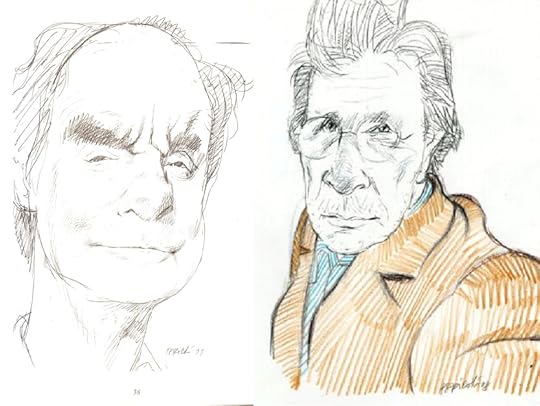
Here is how Encyclopedia dot com describes Celati's work:
"Celati is not a writer whose work can be easily categorized," explained a Dictionary of Literary Biography contributor, calling Celati "one of Italy's most intriguing modern writers." Similarly, David Robey wrote in the Times Literary Supplement that Celati is "one of the most original contemporary Italian writers," and Rebecca J. West noted in Gianni Celati: The Craft of Everyday Storytelling that Celati is "recognized as one of the most respected of the so-called post-[Italo] Calvino generation." West also observed that Celati's "workshop crafting of deeply thoughtful and highly imaginative stories of the everyday [constitute his] ongoing gift to Italian letters."
(end of quotation)
Despite finding the book a bit of a challenge to read, I eventually fell in love with his writing style and really enjoyed the journey.
However, I would only recommend this title to readers who are very solid and comfortable with the Italian language. For those seeking Italian literature to improve their reading skills, maybe skip this one for now.