A meditation on the burden and joy of inheritance, and the strange power of the objects and keepsakes that connect us
'This is how I became interested in things. In their strange pull and power; in the ways they hold on to us and we to them.'
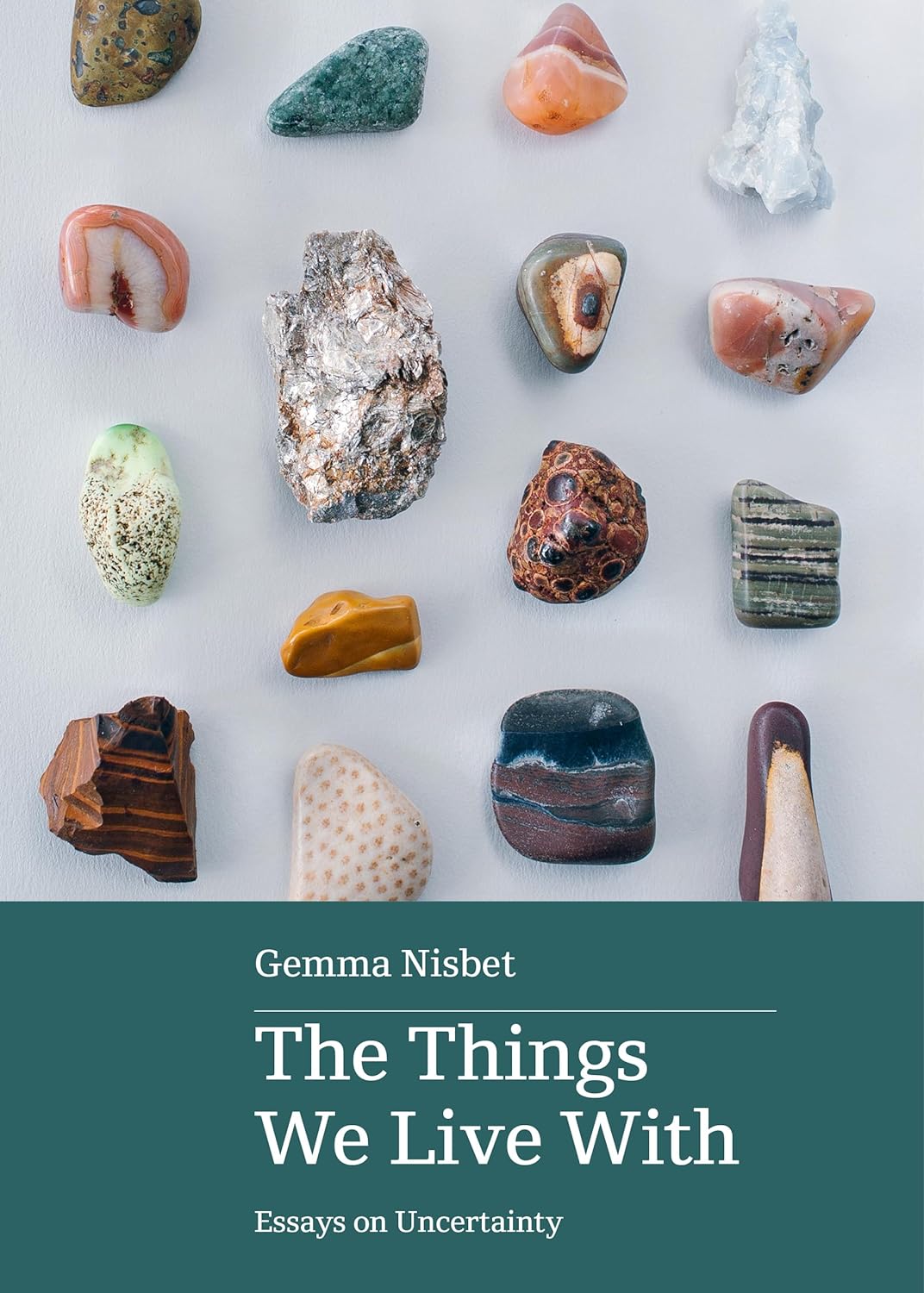
After her father dies of cancer, Gemma Nisbet is inundated with keepsakes connected to his life by family and friends. As she becomes attuned to the ways certain items can evoke specific memories or moments, she begins to ask questions about the relationships between objects and people. Why is it so difficult to discard some artefacts and not others? Does the power exerted by precious things influence the ways we remember the past and perceive the future? As Nisbet considers her father's life and begins to connect his experiences of mental illness with her own, she wonders whether hanging on to 'stuff' is ultimately a source of comfort or concern.
Intimate and wide-ranging, The Things We Live With is a collection of essays about how we learn to live with the 'things' handed down in families which we carry throughout our not only material objects, but also grief, memory, anxiety and depression. It's about notions of home and restlessness, inheritance and belonging -- and, above all, the ways we tell our stories to ourselves and other people.
'The Things We Live With is a tender cartography of grief and familial legacy, in which Gemma Nisbet elegantly explores how the maps we make--whether by story, memory, art, or artefact--inevitably fall shy of the territory.' -Josephine Rowe
'What are we to make of all these things around us? And what are they to make of us? Delicately, as if unpacking a box of fragile treasures, Nisbet cups in her hands and presents us with a series of with old, loved things, with her family, and her own crushable centre. They are all, it turns out, well kept in the same box. Nisbet wraps her meditations in soft words and firm intelligence, and in this wonderful, digressive and intently considered work she uncovers the tender meaning of possessions, and what it is to be possessed by them too. As a devoted keeper of objects, I read this book with recognition and envy, and anyone who inherits, hoards, abhors or adores the relics of their lives will appreciate Nisbet's candour and contemplations.' --Kate Holden
'Wise, profound and with tender humour The Things We Live With expands our thinking about the power of objects to shape our sense of self, anchor our memories, and reflect our place in the world. In these superb, engrossing essays Gemma Nisbet draws us in close as she examines what we hold onto, what we let go, and the complex relationships between the tangible and intangible. A moving portrayal of grief, love, and legacy, this is a collection to treasure.' --Vanessa Berry
This collection of essays by Gemma Nisbet explores the significance objects take on in the aftermath of loss – the way they shape and define us, and act as talismans for grief. This is a thoughtfully written collection in which the author muses on the relationship we develop with the flotsam and jetsam of our lives, and the physical and emotional legacy we inherit from our parents.
I read it hot on the heels of Bad Seeds musician Warren Ellis’s book Nina Simone’s Gum, which covers similar terrain. Ellis is a born storyteller and, like Nisbet (who is a travel writer) has roamed his way around the globe, playing for his supper and forming attachments to found objects which anchor him to his memories.
But whereas Ellis’ book is hilarious and compelling, Nisbet’s is more contemplative and meandering. His narrative centres around the elevation of a piece of Nina Simone’s chewing gum into a sacred talisman of a living legend. He took the gum from the piano she left it on at a concert curated by his friend and colleague Nick Cave in London in the late 90’s, and 20 years later had it cast in silver and mounted as the star piece in an exhibition again organized by Cave. The gum is the hero in Ellis’ narrative, and it makes for riveting reading. Nisbet on the other hand has no central story with which to anchor her musings, and at times her writing seems to lack focus and cohesion.
I lost my father earlier this year and my son in early 2021, so I am no stranger to the grieving process. I read this collection hoping for connection, insight and comfort but unfortunately, I did not find it. There’s no doubt The Things We Live With is well written, with beautiful descriptions and poetic prose, but I felt Nisbet was playing a little too safe in her discussion of her grief and mental health struggles. She alludes to her personal struggle with anxiety – touching on her suicidal ideation, her tendency to catastrophise and her anxiety about fronting up to professional engagements – but her exploration of these struggles is vague and detached, and while I found it interesting, I struggled to feel any connection to her, and I longed for her to delve deeper.
I wondered if her anxiety about the opinions of her academic colleagues influenced her writing a little too much and made her play safe in the telling of her story. I will own that my own grief and mental health struggles have been so seismic that this may not be the right book for me at this current period, when my grief is still very raw.
Grief is a deeply emotional process, and grievers long for catharsis and connection. I cried rivers, for example, when I read Nick Cave’s painful discussion in his book (co-written with Sean O’Hagan), Faith Hope and Carnage, about the night he lost his beloved son Arthur. I longed for a similar catharsis with Nisbet’s book, but sadly found it lacking.
She does however, explore some interesting terrain and references many excellent writers and sources. I found her discussion and critique of Joan Didion – another writer vaunted for her writing on grief – fascinating.
In her discussion of Didion’s writing Nisbet makes one of her most salient observations, on what Didion called ‘The vortex effect’ – ‘…the way a seemingly benign scene or object or path could in grief suck her into previously happy memories made painful by circumstance.’ My son was studying classical piano at The West Australian Academy of the Arts, and a few bars of Nocturne or The Moonlight Sonata will often find me face to the floor, howling.
Later Nesbit quotes artist Vanessa Berry: ‘One of the confounding aspects of grief … [is] the contrast between the pain of loss, acute and interior and lonely, with the oblivious churn of life as it continues all around.’
This review is clearly biased against The Things We Live With because of my recent loss and need for sense-making, connection and catharsis. I would urge readers who enjoy intelligent, contemplative writing to give Nisbet’s book a go. It may not move you, but it will offer plenty of food for thought about the meaning we make from the objects in our lives, and the way they connect us to our grief and our memories.
5 / The Things We Live With : Essays on Uncertainty really struck a chord for me, quite a few in fact. From the start I was captivated by the references to the memories of her father’s painting, and even the comparisons of her father to the Bush Tucker Man. With references and quotes interspersed from some great writers, Gemma’s writing is part memoir and it is done in a ruminative way, and she lets us in on some very personal details of her life.
There were so many things that resonated for me and I’m sure will for a lot of readers. For example collections you may still have of rocks or shells, letters from international penpals through school programs, random kitsch souvenirs. Other random things that you are not sure why you still have them, but think about the day someone might have to go through them wondering the exact same thing.
Nostalgia for the things and objects in my own life kept intruding into my thoughts as I was reading. Gemma’s writing will have you asking yourself all sorts of questions about objects that hold a place in our heart. What makes it something we can’t seem to part with? What intrinsic value it has versus the emotional value?
I am left with the impression that Gemma has been dreaming of writing these essays for a long time and mulling on thoughts about the things she has collected and held onto and the space they take up. But whatever the final catalyst for them appearing in this wonderful collection I am glad that she has achieved this feat.
Nisbet's gentle meditations on the nature of connections between objects and possessions, both our own and those of others, and grief (among other things) is a balm, recognisable in its layered musings to me, as a person who lost her father more than half her lifetime ago. I recognised Nisbet's questioning of the longing we impress upon the objects that others leave behind, as well as being anchors or placeholders, with the power to deliver us back to previous versions of ourselves. There is a lovely arc in the collection, a finishedness achieved through a sense of Nisbet's own working through of what objects have meant in her life, and especially how these traces have informed her ways of thinking, and how she reflects on these patterns. I made my way through this book with pencil in hand, underlining sentences with particular resonance for me. I will be returning to these essays again, no doubt.