A remarkable new collection exploring ageing, mortality and environmental destruction - from our finest Scottish lyric poet**WINNER OF THE DAVID COHEN PRIZE FOR LITERATURE 2023**'By far the best British poet alive' SPECTATOR'A master of language' HILARY MANTELIn this powerful, moving new book, John Burnside takes his cue from Schiller, who recognised that, as one thing fades, so another everywhere and always, in matters great and small, new life blossoms amongst the ruins.Here, in poems that explore ageing, mortality, environmental destruction and mental illness, Burnside not only mourns what is lost in passing, but also celebrates the new, and sometimes unexpected, forms that emerge from such losses. An elegy for a dead lover ends with a quiet recognition of everyday beauty – first sun streaming through the trees … a skylark in the near field, flush with song – as the speaker emerges from lockdown after a long illness.Throughout, the poet attends to the quality of grace – numinous, exquisite, fleeting as an angel’s wing – and the broken tryst between humankind and its spiritual and animal elements, even with the gaunt deer on the roads/like refugees. He acknowledges the inevitability of the fading towards death, but still finds chimes of light in the darkness – insisting that, here and now, even in decline, the world, when given its due attention, is all Annunciation.
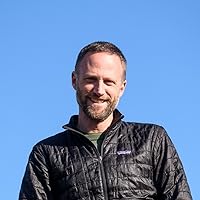
John Burnside was a Scottish writer. He was the author of nine collections of poetry and five works of fiction. Burnside achieved wide critical acclaim, winning the Whitbread Poetry Award in 2000 for The Asylum Dance which was also shortlisted for the Forward and T.S. Eliot prizes. He left Scotland in 1965, returning to settle there in 1995. In the intervening period he worked as a factory hand, a labourer, a gardener and, for ten years, as a computer systems designer. Laterly, he lived in Fife with his wife and children and taught Creative Writing, Literature and Ecology courses at the University of St. Andrews.
I find it difficult to write reviews of poetry and poetry books. You first need the poems to be pretty good, and then you have to meet the poem at the right time and place for it to matter to you. Only a few poems are completely transcendent, universally encounterable (if that's a word). This collection has both kinds. Which means it's a trove to be visited again and again. Read this, read Black Cat Bone, read John Burnside. It's time travel, discovery amid the landscapes of youth, the kernel of mystery in the familiar.
This was beautiful. I loved reading each of these poems, letting the language roll over me, and noticing new thoughts, new things, each time I read it. I read it cover to cover then just dipped back and forth into each of the poems, revelling in them. I'm not excellent at analysing poetry so I can't say why they hung together the way they did, but that focus on environment and nature, but in such an urban, everyday setting, was gorgeous - the connection between the ruin and the blossom. This is a book I'll be rereading for years.
We discussed this collection at Nottingham Stanza and most people in the group had enjoyed reading it. I loved the musicality of the poems - the language is so precise. This is definitely a book I will read again.