Jump to ratings and reviews
Rate this book

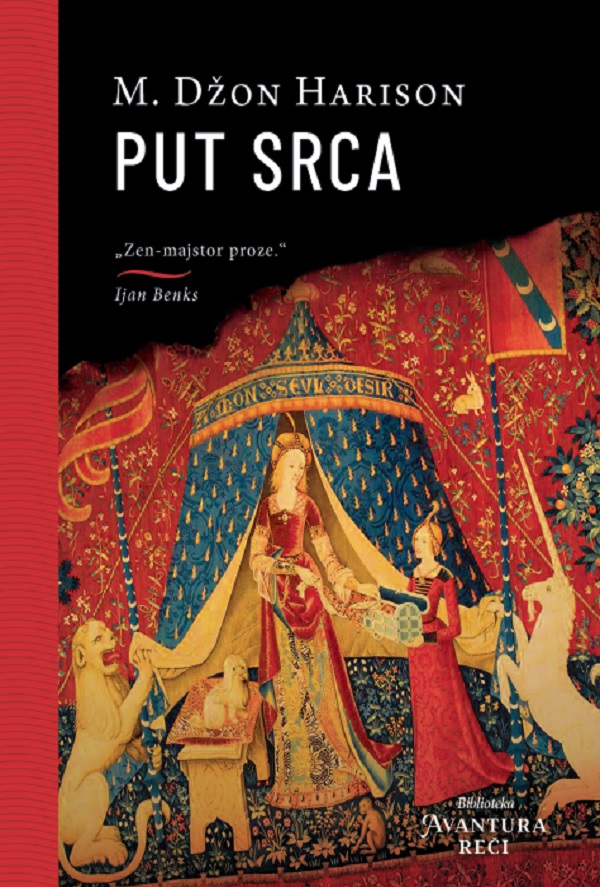
Put srca

Rate this book
„Harison pokazuje majstorstvo u kontrolisanju likova, jezika i pejzaža, kao i sposobnost da na uznemirujući način prikaže ono neobjašnjivo što počiva ispod površine naših života.“ – The Review of Contemporary Fiction

Jedne tople majske noći troje studenata na Kembridžu izvelo je magijski ritual koji će im nepovratno promeniti živote. Godinama kasnije, nijedno od učesnika ne može da se seti šta se tačno dogodilo, ali ono malo što znaju ne uspeva da ih oslobodi sveprožimajuće jeze. Pem Stajvesant pati od epilepsije i prate je čudne vizije, a njenog muža Lukasa progone tajanstveni demoni. Njihov najbolji prijatelj i treći učesnik obreda naizgled je najmanje zahvaćen prokletstvom iz prošlosti i čini sve što može da im pomogne da premoste jaz u svom odnosu...

U Putu srca M. Džon Harison donosi začudnu i potresnu priču koja prevazilazi žanrovske odrednice i u kojoj se vešto mešaju individualna ljudska drama, mitologija, seksualnost i romantična i mračna prošlost i sadašnjost Evrope – i u vidu jedinstvenog mita, nesvakidašnje priče u priči.

„Nijedan živi pisac ne piše takvu rečenicu. On predstavlja evolutivnu kariku između Vilijama Barouza i Virdžinije Vulf.“ – Olivija Leng

„Harisona uvek vredi čitati.“ – The New York Times

255 pages, Paperback

First published January 1, 1992

97 people are currently reading
4936 people want to read

About the author

M. John Harrison

110 books827 followers
aka Gabriel King (with Jane Johnson)

Michael John Harrison, known for publication purposes primarily as M. John Harrison, is an English author and literary critic. His work includes the Viriconium sequence of novels and short stories, Climbers, and the Kefahuchi Tract trilogy, which consists of Light, Nova Swing and Empty Space.

Ratings & Reviews

What do you think?
Rate this book

Friends & Following

Create a free account to discover what your friends think of this book!

Community Reviews

5 stars
298 (29%)
4 stars
330 (32%)
3 stars
237 (23%)
2 stars
122 (11%)
1 star
40 (3%)
Displaying 1 - 30 of 172 reviews
Profile Image for Blair.
2,032 reviews5,852 followers
January 28, 2019
I’ve written before about the difficulty of finding original things to say about books when you’ve written upwards of a thousand reviews. Every compliment or critique is inevitably a variation of something I’ve written in the past. That includes saying I’ve ‘never read anything like this before’. Unfortunately, however, I must break this particular cliche out again for M. John Harrison’s The Course of the Heart. There is no other way to describe it.

It’s not that the setup is especially original. As students, three young people – a couple, Pam and Lucas, and their friend, the narrator – take part in some sort of magical rite. They are joined/led by an eccentric self-styled magician, Yaxley. The rite doesn’t go as planned, and the resulting fallout shapes the rest of their lives. Reading that description, you might imagine something like The Secret History or Joyce Carol Oates’ Beasts, but The Course of the Heart is a quite different proposition which weaves together dark fantasy and stark realism.

Central to the plot of The Course of the Heart is the idea of the Pleroma. This word, Greek for something like ‘full perfection’, has various meanings: in Gnosticism, it represents the divine world, and in this book it is similarly used to describe a utopian realm. The three main characters’ youthful ritual (never properly explained, never properly remembered) brought them close to it, and thus shaped the obsession and madness that defines the whole group thereafter. There’s also another myth; an epic Lucas creates for Pam over a number of years. This story takes the form of the imaginary memoirs of Michael Ashman, a travel writer traversing Europe in search of the ‘Heart’ (or ‘Coeur’), another mystical realm which exists somewhere between the physical world and the Pleroma.

From the beginning, the experience of reading this book is deeply strange. Not ‘strange’ as something like, say, Twin Peaks deliberately is, nor in the sense that a high fantasy novel might ask the reader to imagine a world entirely unlike our own. Just wrong, off-kilter, askew. I imagine this is a hallmark of Harrison’s work – it's certainly there in the stories contained within You Should Come With Me Now – but here, it is all the more striking because of the contrast between the mystical elements and the characters’ ordinary, even depressing, lives. Never has magical realism been so closely juxtaposed with the kitchen-sink banal. The miserabilist atmosphere occasionally reminded me of Janice Galloway’s bleak The Trick is to Keep Breathing.

Sometimes it's funny, sometimes horrifying, sometimes a mixture of both – the image of Yaxley's head thrust beneath the marquee is indelible. The ritual with Yaxley and Lawson and the ‘facsimile’ is also indelible, for very different reasons.

Part of me wants to admit I didn’t fully understand The Course of the Heart and, though I liked it, I’m perhaps not the right reader for it. Part of me wants to say that very thing – the sense of not being able to properly grasp what is happening, of reaching for something beyond what the author/narrator is willing to give away – is a crucial part of what this book is. Arguably, the narrator’s inability to explain that long-ago ritual makes this explicit.

TinyLetter | Twitter | Instagram | Tumblr
Profile Image for Jack Tripper.
531 reviews350 followers
August 11, 2025
It’s rare for me to reread a book I didn’t really care for the first time. In this case, however, I felt that I didn’t even comprehend enough of it to properly rate it. After this go round, I can’t say I understood everything that happened, but Harrison’s gorgeous prose and the vaguely dreamlike, ominous atmosphere were plenty enough to carry me through.

This is an expansion of Harrison’s 1988 novelette, “The Great God Pan,” which itself is sort of a modern update of Machen’s 1894 original, though here the phrase “great god Pan” is meant more to evoke the idea of accessing a higher, or more divine, realm, rather than be taken literally.

A trio of English friends, now approaching middle age, had in their University days attempted a magic ritual to summon this aforementioned mystical and mythical world, known as the Pleroma, and now they are plagued by strange, disturbing apparitions or manifestations that may or may not be hallucinations. Our protagonist/narrator (unnamed I think) means to find the old magician who performed this rite in the hopes of putting an end to these phantasmagorical intrusions, which are beginning to deteriorate their physical and mental well-being.

I’ve mentioned in other reviews that Harrison’s prose can be incredibly vivid, yet somehow foggy and cryptic at the same time, and this is true here. I found this impressionistic style hard to follow on both occasions, and I’m in full agreement with Jordan West’s review where he mentions that it’s easier to appreciate than enjoy. Even though I remained in a state of either total or semi-confusion throughout (it did come together and make a tad more sense to me by the end, thankfully), when I reflect on it I find that the eerie, Lynchian vibes and sense of encroaching unreality have stuck with me, and that’s enough for a 4 star rating in my book. There’s certainly not much else like it in the sphere of horror and weird fiction. It’s almost like a straight literary novel where mundane reality is ever so slightly askew. And wrong.

The only real negative I can think of — other than the fact that I’m apparently too dumb for certain books — is that it focuses a bit too much on boring everyday life for me, but again Harrison’s beautifully enigmatic writing and the gloomy, unearthly mood during these scenes more than made up for it.

I think that should I ever decide to revisit this novel yet again, it probably wouldn’t hurt to read up a bit on Gnosticism, as many of the ideas and concepts explored within are inextricably linked to it. Hopefully I have more time in my next life, because it isn’t likely to happen in this one.
Profile Image for David.
380 reviews18 followers
January 17, 2015
M John Harrison, in an ideal world, would be acclaimed by all and sundry as one of our greatest writers. As it is his works are not as widely known as they should be.

Harrison started life as a Science Fiction writer, moved into fantasy with his Viriconium sequence (of which In Viriconium stands as a kind of masterpiece) and then, in the late 80's there was a shift into what I can only call magical realism. The Course of the Heart is of the latter strand and is a quite wonderful book. Harrison, beginning with the novel Climbers in 1989, began to write stories with a strong sense of place that were shot through with surreal imagery, dreamlike and disturbing, yet melancholy and moving as well.

The Course of the Heart stands between Climbers and Signs of Life and now that I have finished it, is one of my favourites of his works. The tale of three Cambridge students who, one June day, perform some kind of experiment (whether occult or scientific, or a mixture of both is never fully explained) with the aid of the strange and complex Yaxley, and end up living with the consequences for the next twenty-odd years.

Harrison imagines something called the Pleroma, a kind of Heaven, which all three glimpsed somehow. Lucas and Pam, who later marry, deal with it by inventing a mythical country (a realm of the Heart) somewhere in middle-europe. Lucas expands on this in the form of a fictional travel writer, Michael Ashman, and his investigations into 'The Coeur". Yaxley, a demented figure on the fringes, drifts in and out of the narrative, promising help, but never delivering. Hallucinatory imagery abounds. Pam and Lucas buckle under the strain, Pam becoming ill, Lucas burying himself in his fictions.

Harrison writes all this with such power, such vitality, that you end up wishing the Empress Gallica XII Heiriodule had been real, that The Coeur had not removed itself from the world. There are deep Gnostic philosophical arguments at the heart of this book, but they never get in the way of the story, which, in the end, is a love story.

This is a brilliantly written book, full of humanity, magic and loss. Do yourself a favour and get acquainted with the worlds of M John Harrison.
Profile Image for Yórgos St..
103 reviews55 followers
October 5, 2019
The whole time that I was reading The course of the Heart I had this strange feeling that I was reading something that I shouldn't have. A secret or maybe a deeply personal account. This is a hard book to review. It's one of those books that someone needs to experience. Here the reader will find all of Harrison's usual obsessions. The duality of reality/fantasy, people in need of escaping (but to where and can they?), human relationships, analyzing the human condition, loss, grief and love. In addition, in this novel, the reader will find Europe's secret history and Gnosticism woven into the narration. Harrison's literary obsessions are also present. The writing is dense, poetic and austere. Harrison needs just a few words to describe the entire life of a married couple. In a small paragraph we can understand a whole life's frustrations and hopes. Harrison is an incredible writer, an artist really.
Overall The course of the Heart was one of the most challenging reading experiences I have ever had. Mentally and emotionally. There were times that it was unbearably sad and I thought that I could not keep on reading it. But then Harrison, like a modern Arthur Machen, gives us glimpses of what lies beyond the concrete reality, behind the veil. The ecstasy of life.
Profile Image for Adam.
558 reviews433 followers
August 6, 2007
Dense almost unbearably sad and horrifying work by Harrison, one of his better novels up there with Light and In Viriconium. Gnostic speculation on unraveling lives, a definate Lynchian feel throughout(I don't mean this as a cop out cheap adjective, I think my comparison holds up). Maybe it is a cop out as I can't even begin to explain this book, so I guess read it and judge, but you should definately read it.
Profile Image for Baal Of.
1,243 reviews81 followers
March 6, 2015
This book straddles the line between weird fiction and literary fiction, and for that it comes widely regarded. The front cover has blurbs from two authors I love very much, Iain M. Banks and China Mieville, so in theory I ought have devoured this book with great relish. The problem is that it represents everything I hate about literature, as conceived by those with their literary noses firmly pointed up in the air. It focuses on characters I found utterly unsympathetic and irredeemably annoying, worse, I found them dull as powdered shit. The plot is as thin as onion-skin, and pretty much nothing happens the entire book, which of course is very literary, because who needs something as sordid as an engaging story. We are told that something really powerfully weird and disturbing happened to the this trio, under the prompting of the gnostic magician Yaxley, and the evidence of the event is the thoroughly fucked up influence it had on their very drab middle-aged lives that we are now witnessing. This event was allegedly so fucking weird that the main character occasionally smells roses, and this is supposed to assure us that the undescribed event was really horrific. I remain unconvinced. Yes, Pam hallucinates a pale deformed couple copulating at inopportune times, but the strangeness is so rarefied, and filtered through such a literary lens that it basically left no impression on me outside a desperate ennui and a desire to just be done.
A phrase that I always look for on any literary book when reading the blurbs, an instant red flag warning me that boredom lies herein is "examines the human condition." I was going to write that this book doesn't contain a blurb with that phrase, but then I checked, and to my bemusement, the last blurb on the first page of this volume contains this from The New York Times: "... sorrows of the human condition." Well fuck me sideways, there is the evil phrase, and thus my confirmation bias gets a hit.
Another phrase from the cover hits home, this one from Mieville: "...the attritional banalities of modern life." Leave it to Mieville to express in much finer words than I could possibility write just what it is about this book that makes me dislike it so much. Banality in spades. So given all that, why two stars instead of one. Because I must begrudgingly admit that it is well written. Harrison is a master of his craft. I just didn't enjoy the ride on this particular craft.
Profile Image for Kulchur Kat.
75 reviews26 followers
December 20, 2023
A Weird Fiction Masterpiece

The consequences of a failed occult ritual to access a metaphysical realm called the Pleroma dogs the three protagonists as they try to impose meaning onto their disconsolate, broken lives. It seems there is a terrible price to be paid for their glimpse of paradise. The Course of The Heart is a poetic novel of luminous moments briefly experienced, fleetingly glimpsed before the despairing shadow of the quotidian world interjects.

‘Beautiful Swimmers’ is a dream book at the heart of the novel, ostensibly the memoirs of Michael Ashman, charting his travels in pre-war Europe. He searches for a lost kingdom of Middle Age Europe called the Coeur. Two of the novel’s protagonists, Pam and Lucas, become obsessed with the Coeur, seeing it as a fulcrum between the world as we know it, and the Pleroma. They come to see the meaning of their troubled lives irrevocably bound to the Coeur.

M. John Harrison suffuses the novel with a heady ambiguity, the tone finely poised between the metaphysical and the mundane. In visionary prose, he depicts a world teasingly on the edge of ecstatic becoming. With a nod to the kind of fragmentary modernist poetry of TS Eliot and David Jones, the quotidian runs alongside the transcendental, numinous visions of nature and mythic Jungian archetypes, ambiguously interweaving with delineations of the everyday.

The Course of The Heart is one of my all time favourite books, and arguably the greatest weird fiction novel.

More M John Harrison reviews at kulchurkat.uk
Profile Image for "Greg Adkins".
53 reviews8 followers
August 9, 2008
An odd little book -- difficult to get into, at times difficult to follow, and, for me at least, difficult to finish. And yet I'm glad that I stuck with it. It has a dense, poetical rhythm that while sometimes infuriatingly obtuse ended up being greatly affecting. "The Course of the Heart" follows a group of three college friends who, after performing a byzantine magic ritual the precise nature of which none of them can remember, find their lives slowly unraveling over the course of the next twenty years. We never find out exactly what the ritual was that they performed, but we do know its purpose -- to somehow penetrate the Pleroma, the mythical perfect reality that our world exists as the merest shadow of. And we know that there was a price they paid for this ritual: one of a life filled thereafter with longing, an insufferable sense of anxiety, and an inability to ever truly connect to the world again. The plot follows the narrator, nameless to us and apparently less affected by the ritual than his friends, as he vainly attempts to help them regain what they have lost. The narrative dips and bends, focusing more on minute details and surprisingly dense literary and historical references, pausing occasionally for unexpected, intensely surreal happenings. It's a bit like a David Lynch movie, in function if not in form -- fascinating to witness, at times aggravatingly mysterious, often beyond any kind of rational comprehension, but starkly compelling nevertheless.
Profile Image for Paul Dembina.
686 reviews162 followers
November 7, 2024
In the same vein as Harrison's short story The Incalling and his recent novel The Sunken Land Begins to Rise Again this features 3 people who get involved in a mysterious ritual when they are at University and which affects the rest of their lives

As usual Harrison leaves a lot of ambiguity as to whether something supernatural really happened or not. His mordant wit is also on display. He's a seriously good writer
Profile Image for Jordan West.
249 reviews151 followers
May 28, 2018
3.5; this is one of those books where appreciation outpaces personal enjoyment, as a result of which the rating ends up feeling too low or too high either way however I rank it; contains moments of sublime gnostic otherworldliness, but overall I prefer Harrison's earlier work from the Viriconium era.
Profile Image for Michael Battaglia.
531 reviews68 followers
September 30, 2019
If I described the plot of this book to you as "Three university students have a magical afternoon that none of them can quite remember afterwards", some people might think that I'm writing a chapter in their biography while others might believe that genre was already perfected with "Nick and Nora's Infinite Playlist". But if I went further to explain that years later they're unable to shake the sensations from that day and sometimes experience strange visions, maybe you'd think I was describing a kind of supernatural thriller. And if I finally said that the book hinges on secret fictional histories and the consequences of interfacing with Gnostic concepts, I might have to shout as I could be explaining this as you back away quickly.

So yes, that's exactly what its about. And not quite. And definitely. Harrison is very far from a straightforward writer. Coming to prominence as one of SF's New Wave in the late sixties and seventies, he fit right in with a group of works that were often long on ambition and pushing boundaries but sometimes short on coherence. His most famous work is probably the Viriconium sequence, a fantasy series set around a strange city, and the later stories in the sequence can more or less give you an idea of what to expect from his more recent work . . . he's sometimes more interested in conveying the plot in the most elusive way possible, like some kind of dark spot you can't shake out of your peripheral vision, so the extent of the pleasure you get out of one of his books depends on how much he can hook you with the overall mood and in trying to figure out exactly what he's describing around. Done less than perfectly it can be frustrating, like trying to play "Name That Tune" by putting your ear against a concrete wall while the band jams away in the other room, and even when he pulls it off it can require patience from a generous reader.

Here, for me at least, it worked. The story is being told by an unnamed narrator (who seems to be a guy) and is set off by an event spearheaded in college by him and two friends Pam and Lucas. They team with a magician named Yaxley (I kept imagining him as comics writer Alan Moore although the real Alan Moore seems far less creepy in person) in an attempt to access what they call "The Pleroma" and in the process of that . . . something happens. What it is exactly no one seems to know but twenty years later as the characters all approach middle age they're haunted to some degree by it, leaving the narrator not so much to put the pieces together but basically look at the remains of an explosion and identify which bits exactly were the pieces.

It’s a story that basically screams for languid prose shot through with strains of existential dread, or in short, M John Harrison. The narrator dips back and forth through the years, catching up with Pam and Lucas in the present day (where they've married and separated) as well as getting involved with Yaxley here and there. All of this is told in a densely sensuous fashion, like a memory unspooling itself from what it has no interest in remembering and at times the effect can be like zoning out from a group conversation at a party, then suddenly snapping back into focus while trying to pretend you understand what everyone is talking about without having any hope of picking the threads up again.

It can be maddening, especially the more you try to focus on what exactly the characters managed to do/access. The narrator himself doesn't seem to be interested in figuring it out but the story tantalizes you with the notion that you might be able to. Two of the characters routinely experience disturbing hallucinations even as we see their attempts to painstakingly construct the history of a fictional world alongside ours (along the lines of Jean d'Ormesson's "The Glory of the Empire" or real world art project Kcymaerxthaere) from postcards and a made-up travelogue, as if that's some kind of entry point. Or is it? Is there even an entry point? Its possible that portions of this book may make more sense to those with a deeper knowledge of Gnosticism than I have. I can tell you the Pleroma refers to a certain sense of completeness of perfect knowledge (in a spiritual sense in contrast to the physical world, which Gnostics seem to disdain) but separate from the Godhead, which is an incomprehensible perfection. I think. This is probably the point I should mention my degree is not in philosophy. Look online and you'll find a theoretical diagram of what it should look like, if you're interested in maps to non-physical places.

But does that help in understanding the story? You'll have to tell me. I don't know if Harrison's intent was for readers to take a crash course in Gnostic systems as much as recreate this queasy feeling of a hangover that lasts for the rest of your life. While the narrator seems to be generally okay, Pam and Lucas spend most of the book like two people who have been through a life changing trauma and are still trying to understand the exact contours of it. They can't explain it because there aren't words for it, none at least that the corporeal human mind can hold. If Harrison's good at one thing, its setting a mood and its an unsettled one that hovers over the entire story, as if its trying to find reasons to slip away even as something won't allow it to go.

More than a lot of fantasy stories I've read, it feels like magic. Not the magic where people wave their arms and cast spells and join wizard schools, but the kind of magic that probably would exist if there were proper magicians . . . tools like allow to pull back the curtain just a sliver and see the system of the world for what it really is. The idea of another reality behind this one that can't be glimpsed because the mind can't hold it, not without being altered forever, and not for the better. Everything that happens in the novel appears to be a consequence of unprepared people interfacing with an aspect of reality too pure to be held and suffering from the effects of that proximity (or its absence, who can say), desperately trying to draw up some kind of framework to impose even the slightest bit of sense of what their minds keep rebelling from. Dangerous in a way I can comprehend, not a concern that fireballs are going to shoot uncontrollably out of your fingers but left with a wound you can't define, that's going to linger for the rest of your life.

Meanwhile, life keeps going on. The narrator stands as both witness and participant, watches his friends grapple with it and try to move past it, watches Yaxley try to access it again. There are moments where maybe they brush up against the edge of it again and in a sense are almost the most disappointing segments of the book, the unexplainable nearly made concrete, where even the promise of words reduces the magic. The world is not the world and maybe the characters were forced to stop pretending for a second and its something they wind up regretting for the rest of their lives.

This is a tough book to pin down. It'll either tug at you or leave you cold. It haunted me, for all the reasons I said and more. For the moments of sheer yawning pain where they're too tired to even react to anymore. For the moments a little bit of clarity breaks through and they immediately wish it didn't. Or even when the agony itself gives full voice to the nightmare. Late in the book, someone shouts, "Heaven is harder to bear than all this. The world." and as much as you want to see wizards and elves and a kind of cozy familiar magic, none of that exists here. What's left is far more frightening because we're capable of seeing it every day if we look. Its in the eyes of those who wish they didn't get old, who lost loved ones more years before than they can stand, who experienced a perfection of war and its horrors . . . who felt they have seen with perfect vision the world as it truly is and can't abide the knowledge because it never fades even as memory does. What they know, what Harrison captures here, goes deeper and hurts on a level most of us can't even bear. In the book, all that stands in the way is the idea they have of the "Coeur", which is French for "heart". There, you'll have to judge whether it was enough of them. In the real world, we best hope it is, because magic or no, it may be all we have.
Profile Image for Mike Reed.
40 reviews10 followers
June 8, 2011
Beautifully written in that prose that only Harrison can manage: at once pin-sharp and elusive. Like crystallised smoke. One of the very few writers who can create a credible sense of the numinous, the otherworldly. Partly because he's also so acute on the banalities, the slow rot of sad lives. Mesmerising, frightening, transfiguring, awesome. Must read it again.
Profile Image for El Convincente.
280 reviews73 followers
June 9, 2024
Este comentario solo lo entenderá plenamente quien haya leído El curso del corazón: esta novela (el Mundo) encierra otra novela perfecta (el Pléroma) que solo podemos vislumbrar gracias a las partes mejor narradas (el Corazón). Aquellas partes en las que Harrison no se pone pesado, abstruso, elusivo y tedioso.
Profile Image for Simon.
430 reviews97 followers
October 22, 2024
This is a slice-of-life novel following a group of mystics in late 1980's/early 1990's Britain, brought together by all of them once having taken part in a ritual that did NOT go as expected but affected each of them in completely different ways. The one among them who conducted the ritual, Mr. Yaxley, seems to be a caricature of David Myatt who from the 1960's to the 1980's was one of the most influential Satanists in the UK before in the 1990's converting to Islam and later on leaving that to start a completely new religion called the Numinous Way which as far as I can tell has nothing to do with either Islam or Satanism. At any rate Yaxley believes the ritual gave all of the participants a glimpse of the Pleroma - which in Gnosticism is the primordial light all of creation came from, constituted by the total combined manifestation of all God's powers, shattered by the division of existence into matter and spirit. Instead, the ritual ended up traumatising all the parcipants because none of them were psychologically prepared for it. Note that the failed ritual is constantly alluded to but never shown or described in detail, hence the implication that the Gnostic interpretation is simply Yaxley's own attempt to fit a much more complex reality into one specific narrative.

Meanwhile, another member of the circle named Lucas becomes fascinated with a travelogue written in the 1930's describing a Catholic monastery in modern day Czechia that was destroyed by World War 2 and before being converted into a monastery an independent city-state in the Renaissance called the Coeur, which developed an unique and distinct culture as the result of being at the convergence between streams of influences from all over Renaissance era Europe. When the Coeur was conquered by an invading army, its ruling noble dynasty ended up scattering all over Europe and spreading the philosophical and religious insights once contained within the Coeur across very different cultures. (the parallel with the Pleroma within Gnostic cosmology is clearly intentional on the author's part) One of the main characters, Lucas' wife Pamela, is strongly hinted to be a descendant of the Coeur's ruling dynasty but it's never quite clear whether or not the Coeur is an invention of the in-story travelogue author Michael Ashman.

I liked this because it scratched a similar itch as MJH's later novel "The Sunken Land Begins to Rise Again" which also seamlessly combined trippy psychedelic mysticism with a complex look into everyday life in modern day Britain and an unpredictable plot untethered from any type of traditional narrative structure. Right down to the picturesque and lyrical descriptions of various rural communities, going in detail about both their surrounding landscapes and local architectural styles, as well as the large cast of eccentric characters inhabiting them. There are, however, two big differences between the two novels that result in "The Course of the Heart" being in my estimation by far the most interesting of the 2 novels.

The first is that while both novels revolve around weird mystical experiences intruding upon a surface of modern social realism? Whereas the characters in "The Sunken Land..." filter those experiences through a reference frame derived from sensationalistic conspiracy theories that MJH probably meant to spoof David Icke's stories of disguised lizardfolk among us, the characters in "The Course of the Heart" try to understand their mystical experiences through older occult traditions and are clearly more well read hence dealing with the intrusion of the deeper numinous reality upon their prosaic lives in a more thoughtful and philosophical manner.

The second is that "The Course of the Heart" has a darker and more absurd sense of humour, often derived from various disgusting things that Yaxley gets other people to do as part of occult rituals - however most of them are in-context harmless since all the participants have no problem with it. (the reader ends up with the impression that one should expect people whose worldviews are very different from their surrounding culture's consensus reality to have similarly idiosyncratic moral codes, which should be evaluated on their own terms) The only things that Yaxley does, that are shown in-context to be unambiguously harmful, are his recruiting people for rituals and ceremonies they aren't psychologically ready for - which is not exactly the same thing as running afoul of culturally specific value systems. Yet at the same time MJH does an excellent job at balancing all the absurd humour with serious drama and moments of emotional weight in the characters' lives - in particular Lucas and Pamela's marriage and then Pamela's battle with cancer.

Most of all, what I find interesting about "The Course of the Heart" was the fact of it being a novel about modern day occultists which at no point portrays them as cool, glamourous or intimidating. Even the sleaziest among them, the aforementioned Yaxley, comes across as more silly and pathetic than anything else. Compare and contrast to DC Comics' "John Constantine: Hellblazer" and you'll see how distinctive "The Course of the Heart" is. Closest comparison I can think of in overall feel is "Weaveworld" by Clive Barker, but unlike Barker MJH never describes the parallel world intruding upon ours in more than fleeting glimpses.

Thanks to Justin Isis for having recommended this.
Profile Image for Jovana Autumn.
664 reviews208 followers
September 4, 2023
The Course of the Heart - A Wonder of Strange Fiction

The Course of the Heart by John M. Harrison was unlike anything I have come across in fiction, in the sea of almost 1300 books this is a magnificent stand-alone.

The story revolves around three main characters who participated in a nondescript ritual during their college days and its consequences on their adult lives. Harrison pays little attention to the ritual itself, which is out of character for fiction writing that involves such a trope if you are hoping to find a new dark academic book like Tartt’s The Secret History and Rio’s If We Were Liars you will be disappointed. This book is devoid of academic pretense, privileged young intellectuals, and dark topics to which we are accustomed in the genre.

The deconstruction of Holy Grail stories, gnosticism, along with the history of medieval Europe go hand in hand with the exploration of human morality and the loss of the heart. The real question here is where is the heart now, and what is the heart? What is Pleroma? Is it worth the risk to even know the answer to such questions? The case of the characters of the novel provides a negative answer – all of them are haunted by literal demons that have come out of Pleroma. Pam is followed by a white entity resembling a floating couple entangled in eternal lovemaking with wide eyes staring at the observer, Lucas is followed by a wayward dwarvish creature, and the narrator is haunted by the vivid smell of roses, the smell of the Goddess of Pleroma.

Much of the joy of reading this book is in the participation in the Search for the lost heart. Lucas has made a story out of their unfortunate past in order to give sense to the pain they are facing in the present. Lucas and Pam believe in the story: „But he had begun to believe that the historical past of the Coeur was only a kind of involution of his own life, a way of twisting or folding the outside of his experience to imply an inside, a meaning.”

Harrison is bold enough to present us with an almost forgotten viewpoint on faith, humanity, morality, and life. Maybe our views often coming from a place of self-centeredness are limited, at times comical. Our tries to make sense of topics out of the scope of our understanding may only lead to madness. Wrapped up in masterful symbiosis of the poetic beauty of the language with the plain structure of the plot and complex topics discussed, Harrison has made one unique piece of fiction, one that evokes both pleasure and contemplation urging the reader to return to the novel and explore the mystery of Kenoma and Pleroma over again.

„I don’t think it was “wrong” or “evil”. Why should it have been? I think now it was one of those things that life offers you, from which you take the value you expect, or have been encouraged to expect, rather than some intrinsic goodness or badness.“
Profile Image for Patrick.G.P.
163 reviews129 followers
June 3, 2021
The Course of the Heart is a difficult novel to describe, following four characters who are deeply affected by a ritual they performed together in University. As their lives begin to disintegrate in strange ways, they slowly try to figure out if the ritual actually worked, or if something went horribly wrong.

Harrison’s prose and storytelling is simply masterful, weaving different conversations, perspectives, thoughts, and memories together almost seamlessly. His characters come to life in his stellar prose, fumbling in their search for answers, often irrational, full of faults and dreams.
Wrapped within the narrative, there is also a novel within the novel about a fictional travel writer, where the writing reminded me a lot of W.G. Sebald’s Rings of Saturn, and Mark Valentine, and John Howard’s excellent Secret Europe. A mix of personal memoirs, history, and occultism portraying an alternate history of Europe. I felt that some of the occult and gnostic references went over my head as I read it, though I never felt that this deterred my enjoyment of the novel, however, I think the story will open itself up even more if one has a broader knowledge of Gnosticism.

The novel is quite bleak and I felt myself being quite affected by the melancholy of the characters and events as I read it, sometimes feeling restless and empty as I put the book away, yet I was always eager to continue reading. A strange and memorable novel, The Course of the Heart draws the reader into a narrative that feels both personal and mysterious.
Profile Image for Nick Tramdack.
131 reviews43 followers
April 6, 2011
A gnostic tale that hits you like a kick in the gut. Harrison's bleak narrative centers around epilepsy, sex, magic, medieval legend, cancer, car crashes, and how badly fantasy can hurt. If you're the kind of reader whose biggest wish is still to get a letter from Hogwarts, or (more topically) to "find out about your destiny" as the lost heir of an ancient kingdom, etc etc.... then don't read this book.

Don't read it unless you want to grow up.

Like many readers of this book, when I was finished I would up sort of pissed that "the big crucial magic spell" wasn't described in detail. I wanted some pyrotechnics! Yet the more I thought about it, I realized withholding this from the reader was actually crucial to Harrison's approach. Let's not even talk about the characters of the story yet: if you KNOW the details of the magic ritual that caused all their problems at Cambridge, what will you USE those details for? To imagine yourself doing the same thing, maybe? To imagine an escape? To imagine you too could do magic and see something incredible, some liminal glimpse of the Heart of the World after which everything would be transformed...?

Exactly.

Harrison's brilliant move in not even showing the magic might seem like a literary version of trolling. But it works. It makes you focus on exactly the critical question of the novel: what exactly is fantasy good for, anyway?

I shouldn't have to add that Harrison's prose in this story is brilliant. Here's my favorite bit. Look how he breaks from past to present tense, risky move, yet done properly it creates a kind of zen effect:

"She watched the steam rising from her coffee cup, first slowly and then with a rapid plaiting motion as it was caught by some tiny draught. Eddies form and break on the surface of a deep, smooth river. A slow coil, a sudden whirl. What was tranquil is revealed as a mass of complications that can be resolved only as motion..."

I have to note that "The Quarry", a short story in Harrison's short story collection, Things that Never Happen, wound up becoming a section of this book. I found this section hard to make it through, maybe cuz I'd read it before. I will say that the novel frame did seem to give more character/backstory to the affectless (THANX SCI FI CLUB FOR THIS WORD!) narrator of the section. Still, I wonder if Harrison would admit that "character" and "backstory" are remotely interchangeable.

Heh, now that I think about it, that grouchy contrarian would probably hold that the terms are meaningless abstractions...
Profile Image for Keith Deininger.
Author 24 books112 followers
Read
April 3, 2014
It's difficult to write about the inexplicable and make it work. An excellent, literary read. Very thought-provoking. Some may not like this one because there is little that is truly explained, but for those who don't mind a little mystery, this is an excellent novel. Why have I not read any M. John Harrison before?
Profile Image for Samuel Moss.
Author 7 books71 followers
December 9, 2024
The ultimate aim of great art is to generate a mystical or supernatural state in the reader.

Beside that, a book could convey what experiencing a mystical or supernatural state would or might be like.

Very few works of art are capable of the former. Even fewer do the latter. The 'Secret History' is one of the few that comes to mind. 'The Passion According to G.H.' might be one of the very few that does both at the same time.

'The Course of the Heart' does the latter while (maybe amazingly) being 90% realist fiction. This is a book that is mostly about failing marriages, drinking tea, going for walks, trying to maintain friendships through adulthood, reading books, sitting in grubby cafes, how confusing other people are, looking at flowers, being on the beach et c. et c.

This is pretty perfect because our lives are 90% mundane realism. It's almost like this book is saying 'Look, these people are in touch with some divine element, and their lives are just like yours. You probably are too, you're just not looking hard enough.'

Then there is the other 10%: ineffable experiences, dreams bleeding into reality, historical hyperstition et c. All of it horrifying and scarring in ways that cannot be described.

This book really is maddening. It only provides questions, no apparent answers. Most readers are going to hate this. There are whole scenes where characters try, but fail, to communicate with one another, usually with one running or standing in the rain or snow while the other says their name over and over. It's very cinematic and approaches the point of absurdity, but then the question would be: how should a person who bears a scar of the Pleroma act? How can we judge someone who knows what is out there? We see the lives of Pam and Lucas waste away: failed relationships, restlessness, hiding away in fantasy, divorce, resentment and so on. And they can never explain exactly why this is happening. They keep moving, shifting, turning, reaching for something but never find it.

Among all this much and grind the book is unbelievably--almost oppressively--beautiful at points.

Since this book largely takes place in (and I figure was written during) the 80's I can't help but associate it with the whole 80's romantic thread (Cure, New Order, Cocteau Twins et c). The bands are never mentioned, but there is something that links in there. There are large parts that went over my head and I often couldn't tell whether this was intentional/some part of the Pleroma, or just some reference to 80's British culture that I was missing.

The biggest question of the book, at the end of this first read, is whether the narrator really did escape the Pleroma unscathed, or whether he just isn't aware of the scar he bears. He 'fell into the shit and came up smelling like roses' but one suspects that this isn't really be the case. The question then is, what is wrong with him after all? It's hard to tell whether the obsession with sex is just poorly aged status quo at the time, or an indication of some change in the narrator. On the other hand what appears to be his near total detachment from his wife and daughter might be a part of this.

And finally: in the movie, Lawson would be played by Alan Rickman.
Profile Image for Temucano.
559 reviews21 followers
December 2, 2023
Hasta la mitad me ha tenido en vilo, seguía esperando una trama, un argumento sólido que justificara tanta angustia, tanto desespero. La historia me atrapó pero sólo a partir del último tercio, cuando todo parece cobrar más sentido, o será que te acostumbras al estilo. La prosa es rápida pero hermética, en algunas partes bella (en especial esas evocaciones medievales del Coeur), y en otras aburrida, he ahí el peligro de su lectura.

No deja para nada indiferente, pero hay que tener paciencia.
Profile Image for Denny.
104 reviews10 followers
December 15, 2022
Thought I had stumbled into a class on gnostic European history.
Profile Image for Cleo.
175 reviews8 followers
March 14, 2024
Some really compelling images in here, unfortunately lacking any sort of anchor to a plot or theme around them.
Profile Image for lucas.
115 reviews
Read
October 17, 2025
a vivid fever dream of a novel, and i truly dont know how i feel about it. will have to reread at some point
Profile Image for Simon Mcleish.
Author 2 books141 followers
January 12, 2013
Originally published on my blog here in January 2002.

Three undergraduates, under the guidance of one of the tutors, perform an occult ritual in a Cambridge field. In later years, even though none of them can quite remember what happened or what they actually did, the experience continues to haunt them. They spend their lives trying to escape it, trying to have lives which do not centre around this disturbing event.

Harrison portrays the world of the occult as sleazy and sordid, where unpleasant immoralities need to be committed to try to bring about uncertain results. It is made very obscure to the reader; Harrison does not reveal any more to the readers than the characters are able to remember. All we can know are the effects that it has had on the three former students - the visions and obsessions which stalk them - and how they try to deal with them. Even the existence of the supernatural (in the novel's fictional world) is left somewhat in doubt (shared hallucinations being the only evidence).

Perhaps more than Harrison's other novels, The Course of the Heart is reminiscent of other writers; there are echoes here of The Sea, the Sea and Iris Murdoch (particularly of Lawrence Durrell). The Course of the Heart is an excellent and thought provoking novel, stripping the world of the occult of the glamour which it is so frequently given.
Profile Image for John.
282 reviews66 followers
February 5, 2009
In the most general sense this is the story of an unfortunate couple plagued by the mysterious consequences of a barely eluded-to ritual performed during their college years, told through the eyes of their friend, who was part of their ritual (and who, unlike them, suffers no consequences). The story here seems to be almost beside the point, though, and what we get is a very intricate, extremely idiosyncratic portrait of these two very extreme people.

In what little I've read of Harrison (at this point, Light and a few random short stories - Egnaro, for one, stands out clearly in my mind), Harrison really knocks me out with his portrayals of intense, extreme personalities existing on the fringes of society, people driven to paroxysms of psychosis and rage and self destruction by some enigmatic impulse stalking them just below the surface of consciousness. And in Course of the Heart, we get plenty of that.

There are also some wonderfully poetic descriptions throughout, like this, when the narrator is describing a dream he had:

"The air had veiled, brown qualities, draining the colour from the stands of gorse which sometimes appeared at the landward side of the road. Every so often the white finger of an old signpost came into view - not the yellowish white of bone or ivory, but the hard chemical white of typewriter correction fluid: Penzance 5 miles."
Profile Image for Christine.
320 reviews11 followers
February 14, 2008
Just don't. The book is trying so hard to be a piece of art that any story that may have originally sparked it just gets lost amid the author's "cleverness." (Yes, it did deserve the quotations.)
I only made it through the first section and a bit into the second (about 80 pages or so), but I was struggling under the insane amount of description for the sake of description from the very beginning. There were at least three scenes in memory that actually went into detail about the conversations of the people sitting at the table next to them *that had nothing to do with the story*. Seriously, if you want to set the mood, that's one thing, but I don't need to have a new weather description and what everyone that's not even a bit part character is saying for each page-long scene followed by absolutely nothing happening in said scene.

The throwing of the book happened when Character A told Character B that Character C wanted to sleep with Character C's own daughter and that Character A wanted Character B to help him with this. I kid not. I don't care what the reasoning was, I don't care if it woudl have created world peace or made everyone sit around in a circle singing kumbayah and eating skittles. No. I'm done. Across the room it went.
This entire review has been hidden because of spoilers.
Profile Image for Jim.
3,082 reviews155 followers
March 19, 2020
i am not entirely sure what i just read... this was a seriously bizarre book, beautifully written but at the same time kinda ugly and nasty and unseemly too... it took me a while to acclimate to the time shifts and scene shifts and reality shifts, but eventually i just accepted things would get tangential or fantastical or whatever and absorb the shocks... i have always found books set in England to be strangely familiar, though i have never been... Harrison uses a lot of natural phenomena and balances it with human creations to weave a wonderfully evocative text... the heart of the book is illusory, or maybe elusive? the imagined history of imagined-Ashman's Middle Europe is fabulous and rather believable even... chock full of weirdness, wrongness, and sadness... don't expect to understand the mystery, or if you think you do, don't try explaining it to anyone else, lest they run away screaming... yeah, this is a book that requires experiencing, but mostly in a sideways perceptiveness... fantasy at a high level of fantastic, though likely not for even the surest of fantasy lovers... recommended, with warnings of possible dissatisfaction, confusion, or pleasure, even...
Profile Image for Stephen R Spencer II.
27 reviews
May 26, 2021
The world in The Course of The Heart is a lot like ours, only—always present but usually indiscernible outside of seemingly spontaneous moments—magical or markedly metaphysical, the result of unfathomable teleology. Though, the novel reads like a cautionary tale warning against the exploration into the beyond, which is exemplified through the lives of three friends who, while studying at Cambridge, participated in some sort of mysterious ritual led by a bat shit magician—a ritual that none of them, including the wile warlock, can clearly remember. The bulk of the book takes place twenty years after the ritual, and it portrays how each of the participants, primarily focusing on the three friends, had been negatively affected (though by varying degrees) from frivolously peaking behind the curtain of our material world; or, perhaps to oversimplify their plight, they were cursed. M. John Harrison is a gifted writer, controlled and calculated, a natural articulator of both the real and unreal and their synthesis, and while The Course of The Heart is deeply tragic and terrifying, it is always beautiful.
Profile Image for Szplug.
466 reviews1,508 followers
July 6, 2012
Jodeme, este libro me recuerda a los de Clive Barker—esto a mi parecer no es bueno ni malo necesariamente, sino inesperado—a pesar de hay menos de horror y más de melancólico. El corazón en esta vida que parpadea: espejo, ancla, luz, asesino. Me gustó, pero todavía sentía que algo faltaba—he llegado a la pleroma sin entenderla.

También uno de los cuentos que integran el volumen Things That Never HappenThe Quarry—casi palabra a palabra aparece en el octavo capítulo de la novela. Es una cosa que me frustra demasiado, aunque no puedo explicar bien por qué.
Displaying 1 - 30 of 172 reviews

Join the discussion

Can't find what you're looking for?

Get help and learn more about the design.