

What do you think?
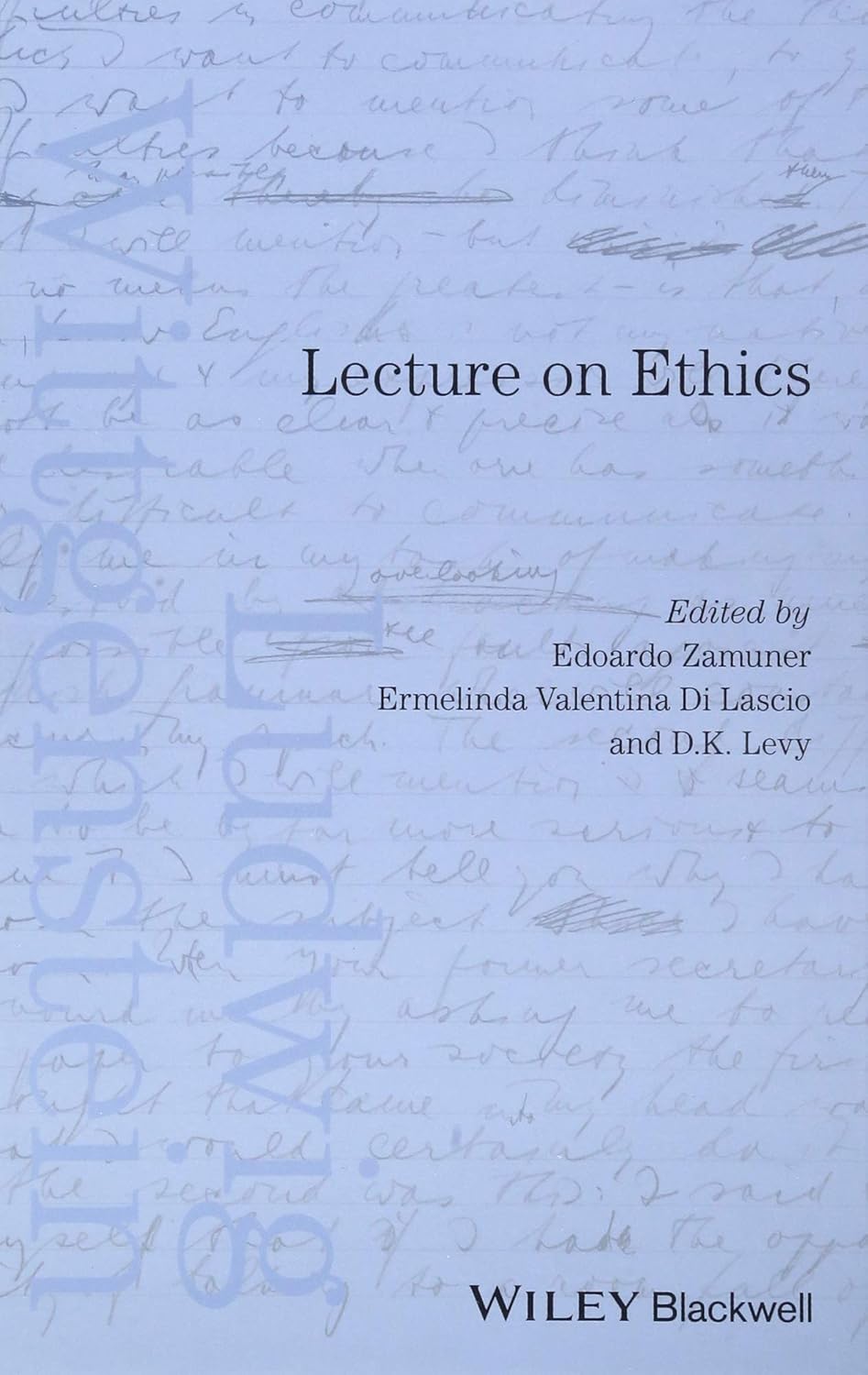
Lecture on Ethics
The most complete edition yet published of Wittgenstein's 1929 lecture includes a never-before published first draft and makes fresh claims for its significance in Wittgenstein's oeuvre.The first available print publication of all known drafts of Wittgenstein's Lecture on EthicsIncludes a previously unrecognized first draft of the lecture and new transcriptions of all draftsTranscriptions preserve the philosopher's emendations thus showing the development of the ideas in the lectureProposes a different draft as the version read by Wittgenstein in his 1929 lectureIncludes introductory essays on the origins of the material and on its meaning, content, and importance
Unknown Binding
First published January 1, 1929
About the author
Ludwig Wittgenstein
299 books3,108 followersLudwig Josef Johann Wittgenstein (Ph.D., Trinity College, Cambridge University, 1929) was an Austrian-British philosopher who worked primarily in logic, the philosophy of mathematics, the philosophy of mind, and the philosophy of language.
Described by Bertrand Russell as "the most perfect example I have ever known of genius as traditionally conceived, passionate, profound, intense, and dominating", he helped inspire two of the twentieth century's principal philosophical movements: the Vienna Circle and Oxford ordinary language philosophy. According to an end of the century poll, professional philosophers in Canada and the U.S. rank both his Tractatus Logico-Philosophicus and Philosophical Investigations among the top five most important books in twentieth-century philosophy, the latter standing out as "...the one crossover masterpiece in twentieth-century philosophy, appealing across diverse specializations and philosophical orientations". Wittgenstein's influence has been felt in nearly every field of the humanities and social sciences, yet there are widely diverging interpretations of his thought.
Described by Bertrand Russell as "the most perfect example I have ever known of genius as traditionally conceived, passionate, profound, intense, and dominating", he helped inspire two of the twentieth century's principal philosophical movements: the Vienna Circle and Oxford ordinary language philosophy. According to an end of the century poll, professional philosophers in Canada and the U.S. rank both his Tractatus Logico-Philosophicus and Philosophical Investigations among the top five most important books in twentieth-century philosophy, the latter standing out as "...the one crossover masterpiece in twentieth-century philosophy, appealing across diverse specializations and philosophical orientations". Wittgenstein's influence has been felt in nearly every field of the humanities and social sciences, yet there are widely diverging interpretations of his thought.
Ratings & Reviews
Friends & Following
Create a free account to discover what your friends think of this book!
Community Reviews
Displaying 1 - 30 of 36 reviews

December 29, 2020
La conferencia como tal es cortita, pero se agradece los comentarios incluidos en esta edición. Grande, Witt!

December 24, 2016
Me gustaría señalar una imprecisión de la introducción a mi ejemplar de la Conferencia que podría llevar a hacer una mala lectura, redactada por Manuel Cruz. Los juicios éticos no 'muestran' nada, las únicas proposiciones que 'muestran' son las proposiciones de la lógica, que nos muestran la forma lógica de las proposiciones. Los juicios éticos son una subclase de la clase de 'oraciones' que no tienen carácter proposicional, y cualquier oración que caiga en esta clase (salvo las proposiciones de la lógica y las actitudes proposicionales) no tendrá, propiamente hablando, significado alguno. Esto es lo que debería haber dicho el autor si hubiera querido redactar una introducción a la Conferencia en consonancia con el llamado primer Wittgenstein.
June 27, 2016
Decir que es bueno (o malo) no tendría sentido
July 17, 2026
Interessant, unsere Sprache ist nicht ausreichend für die Ethik.
Bro sollte mal Levinas lesen
Bro sollte mal Levinas lesen

January 7, 2024
The conclusion of Wittgenstein's "Lectures on Ethics" leaves us pondering the role of ethics when attempting to articulate the ultimate meaning of life and absolute values. According to him, ethics, in its pursuit of unveiling profound truths, doesn't substantially augment our knowledge.
As a reader navigating Wittgenstein's discourse, he challenges the conventional view of ethics as a systematic discipline, characterizing it as a human inclination. This inclination, he regards with a certain level of respect, highlighting the limitations inherent in language and human cognition when wrestling with profound ethical inquiries.
In the realm of Wittgenstein's philosophy, these lectures underscore his commitment to unraveling the complexities of language and thought, particularly within the domain of ethics. Overall, "Lectures on Ethics" prompts readers to reassess assumptions about ethics, urging them to navigate the intricate terrain of ultimate meaning and absolute values thoughtfully.
As a reader navigating Wittgenstein's discourse, he challenges the conventional view of ethics as a systematic discipline, characterizing it as a human inclination. This inclination, he regards with a certain level of respect, highlighting the limitations inherent in language and human cognition when wrestling with profound ethical inquiries.
In the realm of Wittgenstein's philosophy, these lectures underscore his commitment to unraveling the complexities of language and thought, particularly within the domain of ethics. Overall, "Lectures on Ethics" prompts readers to reassess assumptions about ethics, urging them to navigate the intricate terrain of ultimate meaning and absolute values thoughtfully.

January 7, 2025
In 1929 shortly after his return to Cambridge Wittgenstein gave a lecture on Ethics to the “Heretics”, a group, who the introduction tells us, were not academic philosophers. A former member of them had been Virginia Woolf and also David Pinset.
I am not especially interested in Ethics. (I think Asimov said everything you need to know: Never let your sense of morals prevent you from doing what is right. And if you pretend, I add, not to know what is right, you are lying.)
But this lecture is really interesting. And the most interesting are the introductory remarks. After he apologizes for his bad English he tells them gently that they would not understand a lecture on logic.
And then he says this:
Ethics he defines as Moore did as the general enquiry into what is good. And as alternatives: Ethics is the enquiry into what is valuable, or, into what is really important. Ethics is the enquiry into the meaning of life, or into what makes life worth living, or into the right way of living.
Nothing really exciting, except maybe that we see that he touches on the idea of family resemblance.
There is, he says, a relative (and trivial) sense of good. “Thus when we say that this man is a good pianist we mean that he can play pieces of a certain degree of difficulty with a certain degree of dexterity.”
A judgement of relative value (e.g. about the right way to Granchester) can be formulated in a way that there is no appearance of a judgement of value left. And he concludes: “No statement of fact can ever be, or imply, a judgement of absolute value.”
The absolute right road would be a chimera. A “characteristic misuse of our language runs through all ethical and religious expressions.”
Ethical judgements are a form of nonsense. Wittgenstein is still in the framework of the Tractatus. But we can see already the mind of the PU working:
Ethics can be no science. But it is also not nonsense in the sense of gibberish as the resolute readers want you to believe. Ethics does not add something to our knowledge of the world. “But it is a document of a tendency in the human mind which I personally cannot help respecting deeply and I would not for my life ridicule it.”
The lecture consists of less than ten pages. To make a book out of it of nearly 150 pages is a remarkable accomplishment. But I should not ridicule the effort. At least there is a wonderful letter by his sister Gretl to Wittgenstein that is at least as valuable as the lecture itself.
I am not especially interested in Ethics. (I think Asimov said everything you need to know: Never let your sense of morals prevent you from doing what is right. And if you pretend, I add, not to know what is right, you are lying.)
But this lecture is really interesting. And the most interesting are the introductory remarks. After he apologizes for his bad English he tells them gently that they would not understand a lecture on logic.
And then he says this:
Another alternative would have been to give you what is called a popular-scientific lecture, that is a lecture intended to make you believe that you understand a thing which actually you do not understand, and to gratify what I believe to be one of the lowest desires of modern people, namely the superficial curiosity about the latest discoveries of science.
Ethics he defines as Moore did as the general enquiry into what is good. And as alternatives: Ethics is the enquiry into what is valuable, or, into what is really important. Ethics is the enquiry into the meaning of life, or into what makes life worth living, or into the right way of living.
Nothing really exciting, except maybe that we see that he touches on the idea of family resemblance.
There is, he says, a relative (and trivial) sense of good. “Thus when we say that this man is a good pianist we mean that he can play pieces of a certain degree of difficulty with a certain degree of dexterity.”
A judgement of relative value (e.g. about the right way to Granchester) can be formulated in a way that there is no appearance of a judgement of value left. And he concludes: “No statement of fact can ever be, or imply, a judgement of absolute value.”
The absolute right road would be a chimera. A “characteristic misuse of our language runs through all ethical and religious expressions.”
Ethical judgements are a form of nonsense. Wittgenstein is still in the framework of the Tractatus. But we can see already the mind of the PU working:
My whole tendency and I believe the tendency of all men who ever tried to write or talk ethics or religion was to run against the boundaries of language.
Ethics can be no science. But it is also not nonsense in the sense of gibberish as the resolute readers want you to believe. Ethics does not add something to our knowledge of the world. “But it is a document of a tendency in the human mind which I personally cannot help respecting deeply and I would not for my life ridicule it.”
The lecture consists of less than ten pages. To make a book out of it of nearly 150 pages is a remarkable accomplishment. But I should not ridicule the effort. At least there is a wonderful letter by his sister Gretl to Wittgenstein that is at least as valuable as the lecture itself.
Read
December 12, 2017A strange mixture of brilliant intelligence and sophomoric stupidity.

August 17, 2025
El libro rescata una breve conferencia que da el autor en Cambridge, 1929. Rescato tres ideas principales:
1) Generalmente pensamos la ética como el estudio de lo que es bueno o el estudio de lo que es correcto, en general, aplicado a la conducta humana. El autor amplía esta perspectiva: entiende la ética conectada estrechamente con el sentido de la vida; lo que hace que valga la pena ser vivida. Porque si la vida no tiene un sentido, todo estaría permitido. En ese sentido, la ética estaría conectada con la estética.
2) Cuando decimos que algo es bueno o correcto, podemos estar queriendo decir dos cosas distintas. En la primera posibilidad, cuando decimos "esta es una buena silla" o "este es el camino correcto para ir de Linares a Talca", lo que queremos decir es que la silla o el camino cumplen ciertos criterios: la silla es adecuada para que se siente un humano, es suficientemente firme, el camino es el que nos ayuda a llegar a destino en el menor tiempo posible. Algo es bueno-para. En otras palabras, se trata de una declaración de hechos, una constatación de que algo cumple cierto estándar, es adecuado para cierto objetivo. No implica nunca que algo sea bueno o malo, solo que es. Wittgenstein llama a esto juicio de valor relativo. En la segunda posibilidad, cuando decimos "usted debería querer comportarse mejor", estamos haciendo un juicio de valor absoluto, es decir, estamos queriendo decir que algo es bueno o malo en sí mismo.
3) Los juicios de valor relativos están sujetos al estudio científico y pueden expresarse mediante el lenguaje. Pero los juicios de valor absolutos no. De estos realmente no podemos hablar con certeza y los límites del lenguaje no nos permiten expresarlos correctamente. Solo podemos hablar de ellos mediante metáforas, pero nunca de manera precisa. La ética y la religión pertenecen a este último tipo de juicios. Por eso, «la Ética, si es algo, es sobrenatural, pero nuestras palabras solo expresarán hechos» (p. 29). No se puede ir más allá del mundo.
Esperablemente, el autor concluye de este análisis que de la ética no puede realmente hablarse, pues siempre que lo intentamos chocamos contra los límites del lenguaje. Intentar hablar sobre ella es una inclinación natural, pero, al fin y al cabo, una tarea sin esperanza, un esfuerzo fútil:
A primera vista, el panorama que delinea Wittgenstein no es nada alentador. Tampoco es ninguna sorpresa: ya había escrito en el Tractatus que "de lo que no se puede hablar, es mejor callar la boca". Sin embargo, visto pragmáticamente, creo tiene algo rescatable: nos recuerda que en el terreno de la ética —así como en el de la política, la estética o la religión— no encontraremos verdades absolutas. Podemos estudiarlas todo lo que queramos, pueden pasar cientos o miles de años, pero no por eso llegaremos a un conocimiento sólido y definitivo. Y así fuera, sería una quimera. Sería material para un cuento de Borges. Ya no habría nada más a lo que ponerle atención, sería lo único importante. No habría nada más de lo que valdría la pena hablar, porque «si un hombre pudiera escribir un libro de Ética, que realmente fuera un libro de Ética, este libro destruiría, con una explosión, todos los otros libros del mundo» (p. 29).
1) Generalmente pensamos la ética como el estudio de lo que es bueno o el estudio de lo que es correcto, en general, aplicado a la conducta humana. El autor amplía esta perspectiva: entiende la ética conectada estrechamente con el sentido de la vida; lo que hace que valga la pena ser vivida. Porque si la vida no tiene un sentido, todo estaría permitido. En ese sentido, la ética estaría conectada con la estética.
2) Cuando decimos que algo es bueno o correcto, podemos estar queriendo decir dos cosas distintas. En la primera posibilidad, cuando decimos "esta es una buena silla" o "este es el camino correcto para ir de Linares a Talca", lo que queremos decir es que la silla o el camino cumplen ciertos criterios: la silla es adecuada para que se siente un humano, es suficientemente firme, el camino es el que nos ayuda a llegar a destino en el menor tiempo posible. Algo es bueno-para. En otras palabras, se trata de una declaración de hechos, una constatación de que algo cumple cierto estándar, es adecuado para cierto objetivo. No implica nunca que algo sea bueno o malo, solo que es. Wittgenstein llama a esto juicio de valor relativo. En la segunda posibilidad, cuando decimos "usted debería querer comportarse mejor", estamos haciendo un juicio de valor absoluto, es decir, estamos queriendo decir que algo es bueno o malo en sí mismo.
3) Los juicios de valor relativos están sujetos al estudio científico y pueden expresarse mediante el lenguaje. Pero los juicios de valor absolutos no. De estos realmente no podemos hablar con certeza y los límites del lenguaje no nos permiten expresarlos correctamente. Solo podemos hablar de ellos mediante metáforas, pero nunca de manera precisa. La ética y la religión pertenecen a este último tipo de juicios. Por eso, «la Ética, si es algo, es sobrenatural, pero nuestras palabras solo expresarán hechos» (p. 29). No se puede ir más allá del mundo.
Esperablemente, el autor concluye de este análisis que de la ética no puede realmente hablarse, pues siempre que lo intentamos chocamos contra los límites del lenguaje. Intentar hablar sobre ella es una inclinación natural, pero, al fin y al cabo, una tarea sin esperanza, un esfuerzo fútil:
La Ética, en tanto surge del deseo de decir algo acerca del significado último de la vida, del bien absoluto, de lo absolutamente valioso, no puede ser una ciencia. Lo que dice no le agrega absolutamente nada a nuestro conocimiento en ningún sentido (p. 43).
A primera vista, el panorama que delinea Wittgenstein no es nada alentador. Tampoco es ninguna sorpresa: ya había escrito en el Tractatus que "de lo que no se puede hablar, es mejor callar la boca". Sin embargo, visto pragmáticamente, creo tiene algo rescatable: nos recuerda que en el terreno de la ética —así como en el de la política, la estética o la religión— no encontraremos verdades absolutas. Podemos estudiarlas todo lo que queramos, pueden pasar cientos o miles de años, pero no por eso llegaremos a un conocimiento sólido y definitivo. Y así fuera, sería una quimera. Sería material para un cuento de Borges. Ya no habría nada más a lo que ponerle atención, sería lo único importante. No habría nada más de lo que valdría la pena hablar, porque «si un hombre pudiera escribir un libro de Ética, que realmente fuera un libro de Ética, este libro destruiría, con una explosión, todos los otros libros del mundo» (p. 29).

Read
October 23, 2025''Now I am tempted to say that the right expression in language for the miracle of the existence of the world, though it is not any proposition in language, is the existence of language itself. But what then does it mean to be aware of this miracle at some times and not at other times? For all I have said by shifting the expression of the miraculous from an expression by means of language to the expression by the existence of language, all I have said is again that we cannot express what we want to express and that all we say about the absolute miraculous remains nonsense''
7. Whereof one cannot speak, thereof one must be silent.
7. Whereof one cannot speak, thereof one must be silent.

December 23, 2022
Excelente. La edición trae comentarios, y al final unas anécdotas de conversaciones con Wittgenstein que ayudan a aclarar (u oscurecer) su posición. Aunque claro, la idea original es de Kierkegaard, y si vamos más atrás es en realidad de Schelling, pero eso es otra historia.

November 18, 2025
vaya pedazo de petardo
February 26, 2016
La versión de Ediciones Tácitas está terrible bonita.

February 14, 2020
Solo tengo esto para decir: Wittgenstein es un papucho! 😍

April 19, 2026
Ludwig Wittgensteins Vortrag über Ethik (1929/1930) ist ein intellektuelles Ereignis von beinahe asketischer Schönheit. Es ist der seltene Moment, in dem einer der strengsten Denker der Philosophiegeschichte die Grenzen seines eigenen logischen Käfigs nicht nur vermisst, sondern bewusst an ihnen entlangdenkt – im Wissen um ihre Unüberschreitbarkeit und im Beharren auf ihrer existenziellen Relevanz.
Die Anatomie des Unsagbaren: Eine Würdigung
Wittgenstein unternimmt in diesem Vortrag etwas Radikales: Er rettet die Ethik, indem er sie für sinnlos erklärt. Doch dieser „Unsinn“ ist bei ihm kein Mangel an Verstand, sondern ein Übermaß an Bedeutung. Er unterscheidet messerscharf zwischen relativem Wert (dem Funktionalen, den Fakten, dem „guten Stuhl“) und absolutem Wert (dem ethisch Erhabenen).
Seine zentrale These ist eine Provokation für jeden Szientismus: In einem Buch, das alle Fakten der Welt enthielte – eine totale Bestandsaufnahme alles Seienden –, fände sich kein einziger ethischer Satz. Ethik, so Wittgenstein, ist nicht-naturalistisch und jenseits der Tatsachenordnung. Sie gleicht einer Tasse, in die man eine Gallone Wasser füllen möchte: Das Gefäß von Sprache und Wissen ist schlicht zu klein für das Absolute.
Die Kartografie des Staunens
Besonders eindrücklich ist Wittgensteins Rückgriff auf das persönliche Erleben. Er nennt zwei Erfahrungen als Ankerpunkte:
* Das Staunen darüber, dass die Welt ist – nicht wie sie ist.
* Das Gefühl absoluter Sicherheit, in dem einem „nichts geschehen kann“.
Den Versuch, diese Erfahrungen sprachlich zu fassen, entlarvt er als logischen Missbrauch. Man kann über die Größe eines Hundes staunen, weil er auch klein sein könnte. Über die Existenz der Welt zu staunen ist logisch unmöglich, da ihr Nicht-Sein nicht sinnvoll vorstellbar ist. Und doch ist genau dieser „Missbrauch“ der Sprache für Wittgenstein kein Fehler, sondern Ausdruck einer unaufhebbaren existenziellen Bewegung.
Wittgensteins Ethik-Vortrag ist die Kartografie einer Gefangenschaft, in der die Gitterstäbe aus der Logik unserer eigenen Sprache geschmiedet sind. Er zeigt, dass Ethik nicht Wissen darüber ist, wie man handelt, sondern der hartnäckige, beinahe heroische Versuch, gegen die Grenzen der Sprache anzudenken.
Wer diesen Text liest, begreift: Das Absolute lässt sich nicht in Sätze bannen, ohne zu bloßen Fakten zu gerinnen und damit seinen eigentlichen Gehalt zu verlieren. Wittgensteins Schlusssatz ist eine Verneigung vor dem Unaussprechlichen – eine Erinnerung daran, dass das Entscheidende dort beginnt, wo die Wissenschaft verstummt.
Er lehrt, dass wir den „Unsinn“ der ethischen Sprache nicht vorschnell verwerfen dürfen, denn er ist das einzige Medium, mit dem wir die Wände unseres begrifflichen Käfigs berühren – und erahnen, dass jenseits davon etwas liegt, das sich nicht sagen, aber vielleicht zeigen lässt.
Die Anatomie des Unsagbaren: Eine Würdigung
Wittgenstein unternimmt in diesem Vortrag etwas Radikales: Er rettet die Ethik, indem er sie für sinnlos erklärt. Doch dieser „Unsinn“ ist bei ihm kein Mangel an Verstand, sondern ein Übermaß an Bedeutung. Er unterscheidet messerscharf zwischen relativem Wert (dem Funktionalen, den Fakten, dem „guten Stuhl“) und absolutem Wert (dem ethisch Erhabenen).
Seine zentrale These ist eine Provokation für jeden Szientismus: In einem Buch, das alle Fakten der Welt enthielte – eine totale Bestandsaufnahme alles Seienden –, fände sich kein einziger ethischer Satz. Ethik, so Wittgenstein, ist nicht-naturalistisch und jenseits der Tatsachenordnung. Sie gleicht einer Tasse, in die man eine Gallone Wasser füllen möchte: Das Gefäß von Sprache und Wissen ist schlicht zu klein für das Absolute.
Die Kartografie des Staunens
Besonders eindrücklich ist Wittgensteins Rückgriff auf das persönliche Erleben. Er nennt zwei Erfahrungen als Ankerpunkte:
* Das Staunen darüber, dass die Welt ist – nicht wie sie ist.
* Das Gefühl absoluter Sicherheit, in dem einem „nichts geschehen kann“.
Den Versuch, diese Erfahrungen sprachlich zu fassen, entlarvt er als logischen Missbrauch. Man kann über die Größe eines Hundes staunen, weil er auch klein sein könnte. Über die Existenz der Welt zu staunen ist logisch unmöglich, da ihr Nicht-Sein nicht sinnvoll vorstellbar ist. Und doch ist genau dieser „Missbrauch“ der Sprache für Wittgenstein kein Fehler, sondern Ausdruck einer unaufhebbaren existenziellen Bewegung.
Wittgensteins Ethik-Vortrag ist die Kartografie einer Gefangenschaft, in der die Gitterstäbe aus der Logik unserer eigenen Sprache geschmiedet sind. Er zeigt, dass Ethik nicht Wissen darüber ist, wie man handelt, sondern der hartnäckige, beinahe heroische Versuch, gegen die Grenzen der Sprache anzudenken.
Wer diesen Text liest, begreift: Das Absolute lässt sich nicht in Sätze bannen, ohne zu bloßen Fakten zu gerinnen und damit seinen eigentlichen Gehalt zu verlieren. Wittgensteins Schlusssatz ist eine Verneigung vor dem Unaussprechlichen – eine Erinnerung daran, dass das Entscheidende dort beginnt, wo die Wissenschaft verstummt.
Er lehrt, dass wir den „Unsinn“ der ethischen Sprache nicht vorschnell verwerfen dürfen, denn er ist das einzige Medium, mit dem wir die Wände unseres begrifflichen Käfigs berühren – und erahnen, dass jenseits davon etwas liegt, das sich nicht sagen, aber vielleicht zeigen lässt.
August 4, 2025
En linea con las ideas propuestas en su "primer" pensamiento, los límites del mundo son los limites de lo decible. Lo que es dicho puede ser dicho en la medida que la veracidad de las preposiciones se evalua logicamente según su correspondencia empirica. Lo que no pueda ser evaluado de esa forma, no tiene sentido que se intente evaluar al menos no en el plano del lenguaje. Es por ello que la etica y la estetica asumen una excepcionalidad o exceso al lenguaje. El juicio etico y estetico supone una preposición no evaluable contingentemente según cuan verazmente describen al mundo. Las preposiciones sobre bueno y lo bello exceden la capacidad logica para evaluar su veracidad y, sin embargo, existen en el lenguaje. Es por esto que se asumen como juicios absolutos y que desde un primer Wittgenstein pueden pensarse como un limite que el lenguaje le pone al sujeto.
"Nuestras palabras, usadas tal como lo hacemos en la ciencia, son recipientes capaces solamente de contener y transmitir significado y sentido, significado y sentido naturales. La ética, de ser algo, es sobrenatural y nuestras palabras sólo expresan hechos, del mismo modo que una taza de té sólo podrá contener el volumen de agua propio de una taza de té por más que se vierta un litro en ella."
"Nuestras palabras, usadas tal como lo hacemos en la ciencia, son recipientes capaces solamente de contener y transmitir significado y sentido, significado y sentido naturales. La ética, de ser algo, es sobrenatural y nuestras palabras sólo expresan hechos, del mismo modo que una taza de té sólo podrá contener el volumen de agua propio de una taza de té por más que se vierta un litro en ella."

May 8, 2026
Ethics, as is well known, is an absolutely sensitive subject. We are all, in a way or another, affected with regards to our worldview when the thematics of Ethics are upon our vicinity. The one thing, for sure, is that Ethics as a subject matter is, undoubtedly, always around us even when we fail to realize it as such. This is what Ludwig Wittgenstein delivers in this lecture: a relative and absolute approach to Ethics. The relative view is that: let's say there's an end, a destination we are traveling to, for instance Paris France, we are flying there---there a panorama of flight routes to this destination according to the relative view of Ethics. That is, it can be looked at such that it's approached in a perspectival way. The absolute view offers a standard unde which, universally, everyone will agree upon. It's the One way roundabout Ethics. Wittgenstein, however, says there 'can be no science' 'so far as Ethics, springing from desire, to say something about the ultimate meaning of life...et cetera.' It's, at the end, one of his humble approaches to the things he speaks about. The lecture ends as he comments Ethics as a 'tendency of the human mind' which he cannot ridicule as he respects it.

May 3, 2023
Hay en este Wittgenstein una dimensión estética que produce esculturas textuales. Es austero, preciso, desconfiado, magnánimo. La tensión es insoportable. Empuja hacia la nada al descubrir la limitación de la condición humana, mientras empuja hacia el todo al advertir que algo indescifrable lo reclama. Entre lo posible y lo imposible, entre lo relativo y lo absoluto, se abre este limbo Wittgensteiniano. No deriva en el cinismo, ni en la implosión en la nada del escepticismo antiguo. No se resigna, presenta batalla. Por eso es primero una estética del límite. De ahí derivan todas las jaulas. No se puede realmente conocer nada. Es indispensable depurar ilusiones. No es posible una ética. Los valores pertenecen a otro mundo inaccesible al ser humano. Es un problema estructural, una condición de imposibilidad. Cuando parece haber una ética, una mínima inspección muestra que se trata de una confusión del lenguaje. Wittgenstein es el más feroz destructor de mundos.
June 26, 2024
La conferencia son seis páginas. Te las lees (dando tiempo a pensar sobre lo que estás leyendo) en 15 minutos y te vuelan la cabeza.
Los anexos de esta edición están muy bien porque sirven para indagar un poco más en la concepción que tenía Wittgenstein acerca de la ética. Hay una correspondencia con un amigo en la que habla de la importancia de que, al final de la conferencia, esté hablando en primera persona. Además hay también una discusión muy interesante acerca del asesinato de César por parte de Bruto.
La conclusión a la que llega Wittgenstein en la conferencia es la misma que la del Tractatus: de ética no podemos hablar. Pero es increíble cómo, arrojando a la ética a la papelera, la salva acto seguido para que ascienda a los cielos. Porque aquello de lo que nada puede decirse es precisamente lo más importante. Voy a darle un par de días para releerlo más adelante, porque me ha gustado mucho, pero quiero ver cómo resiste a un poco de crítica y tiempo.
Los anexos de esta edición están muy bien porque sirven para indagar un poco más en la concepción que tenía Wittgenstein acerca de la ética. Hay una correspondencia con un amigo en la que habla de la importancia de que, al final de la conferencia, esté hablando en primera persona. Además hay también una discusión muy interesante acerca del asesinato de César por parte de Bruto.
La conclusión a la que llega Wittgenstein en la conferencia es la misma que la del Tractatus: de ética no podemos hablar. Pero es increíble cómo, arrojando a la ética a la papelera, la salva acto seguido para que ascienda a los cielos. Porque aquello de lo que nada puede decirse es precisamente lo más importante. Voy a darle un par de días para releerlo más adelante, porque me ha gustado mucho, pero quiero ver cómo resiste a un poco de crítica y tiempo.
Read
August 14, 2023That is to say: I see now that these nonsensical expressions were not nonsensical because I had not yet found the correct expressions, but that their nonsensicality was their very essence. For all I wanted to do with them was just to go beyond the world and that is to say beyond significant language. My whole tendency and, I believe, the tendency of all men who ever tried to write or talk Ethics or Religion was to run against the boundaries of language.
This running against the walls of our cage is perfectly, absolutely hopeless. Ethics so far as it springs from the desire to say something about the ultimate meaning of life, the absolute good, the absolute valuable, can be no science. What it says does not add to our knowledge in any sense. But it is a document of a tendency in the human mind which I personally cannot help respecting deeply and I would not for my life ridicule it.
This running against the walls of our cage is perfectly, absolutely hopeless. Ethics so far as it springs from the desire to say something about the ultimate meaning of life, the absolute good, the absolute valuable, can be no science. What it says does not add to our knowledge in any sense. But it is a document of a tendency in the human mind which I personally cannot help respecting deeply and I would not for my life ridicule it.

May 31, 2023
One cannot speak of ethics, one can only live it.
As I'm reading Levinas and Sartre at the same time, I see a similar theme of ethics that only gets its meaning in situation.
In the examples of ethical situations given by Wittgenstein, I see a similarity with Sartre in that responsability is firstly "Pour-soi-pour-autrui", remaining in an ontological state of solipsism. Where is the real place for the Other? In that respect, Levinas has a more solid ethics framework that still respects the ineffable.
But in the end, certainly they would all agree that ethics is as beyond the self as it is beyond language, that ethics is transcendental.
As I'm reading Levinas and Sartre at the same time, I see a similar theme of ethics that only gets its meaning in situation.
In the examples of ethical situations given by Wittgenstein, I see a similarity with Sartre in that responsability is firstly "Pour-soi-pour-autrui", remaining in an ontological state of solipsism. Where is the real place for the Other? In that respect, Levinas has a more solid ethics framework that still respects the ineffable.
But in the end, certainly they would all agree that ethics is as beyond the self as it is beyond language, that ethics is transcendental.
Read
July 8, 2025A fascinating brief read. Think it traces the transition between early and late Wittgenstein well: he’s reached a point where he sees the most fundamental philosophy (ethics) as essentially ineffable and perhaps even meaningless in some sense, yet still frames this within the context of a logical, scientific worldview.

January 10, 2021
Nu er jeg langt fra en ekspert, men det der var da en gang vrøvl..
Nuvel, den er læst.
Lad mig endelig blive irettesat..
Nuvel, den er læst.
Lad mig endelig blive irettesat..
August 8, 2021
La conferencia pese a ser cortita es muy interesante, sirve para entender un poco más el pensamiento de Wittgenstein.
May 30, 2022
More of a lecture on the language around ethics rather than the ethics itself

August 15, 2022
It is not worth the price
It is very expensive for a short text and some images of facsimiles. It would be better invest in the most relevant text of Wittgenstein like Tractatus.
It is very expensive for a short text and some images of facsimiles. It would be better invest in the most relevant text of Wittgenstein like Tractatus.

March 31, 2024
Sencillo de leer pero poco de acuerdo con algunos puntos
February 11, 2025
absolutamente precioso

March 24, 2025
ou seja, tudo é possibilidade, tudo é estupidez. ensaios filosóficos levam sempre ao mesmo.
October 3, 2025
¿Quizás carecería de sentido decir si es bueno o malo?
May 8, 2026
Diría que es bueno pero no tendría sentido.
Displaying 1 - 30 of 36 reviews