Jump to ratings and reviews
Rate this book

Napoleon Symphony

Rate this book
Napoleon the tyrant, lover, general, and doomed hero are woven together in this story of his life from his early military campaigns and courtships to his exile and death on St. Helena.

366 pages, Hardcover

First published January 1, 1974

55 people are currently reading
937 people want to read

About the author

Anthony Burgess

360 books4,251 followers
Librarian Note: There is more than one author in the Goodreads database with this name.

Seriocomic novels of noted British writer and critic Anthony Burgess, pen name of John Burgess Wilson, include the futuristic classic A Clockwork Orange (1962).

He composed also a librettos, poems, plays, screens, and essays and traveled, broadcast, translated, linguist and educationalist. He lived for long periods in southeastern Asia, the United States of America, and Europe along Mediterranean Sea as well as England. His fiction embraces the Malayan trilogy ( The Long Day Wanes ) on the dying days of empire in the east. The Enderby quartet concerns a poet and his muse. Nothing like the Sun re-creates love life of William Shakespeare. He explores the nature of evil with Earthly Powers , a panoramic saga of the 20th century. He published studies of James Joyce, Ernest Miller Hemingway, Shakespeare, and David Herbert Lawrence. He produced the treatises Language Made Plain and A Mouthful of Air . His journalism proliferated in several languages. He translated and adapted Cyrano de Bergerac , Oedipus the King , and Carmen for the stage. He scripted Jesus of Nazareth and Moses the Lawgiver for the screen. He invented the prehistoric language, spoken in Quest for Fire . He composed the Sinfoni Melayu , the Symphony (No. 3) in C , and the opera Blooms of Dublin .

Ratings & Reviews

What do you think?
Rate this book

Friends & Following

Create a free account to discover what your friends think of this book!

Community Reviews

5 stars
78 (21%)
4 stars
120 (33%)
3 stars
108 (30%)
2 stars
37 (10%)
1 star
14 (3%)
Displaying 1 - 30 of 46 reviews
Profile Image for Vit Babenco.
1,783 reviews5,780 followers
May 19, 2023
Napoleon Symphony. Is it a novel? Is it a symphony? One thing I know for sure it isn’t a soap opera. It is words turned into chords and music turned into words – a piece of history. From pianissimo to crescendo, from staccato to rallentando – that is the pace of history.
Opera. Nothing like opera. The only art that comes close to the art of war, don't laugh, gentlemen. Massing of choruses like troops, exact timing. My bands play operatic arias while the battle proceeds. Don't let me hear that term tragedy loosely used. Gods playing about with men, predetermination.
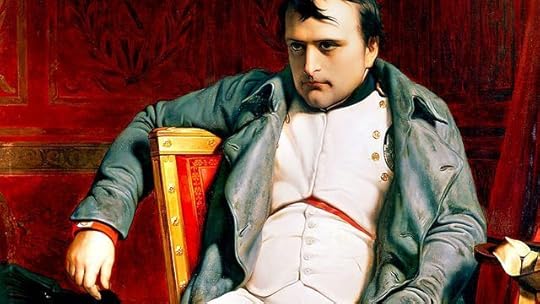
The power of a tyrant is the music to which he keeps everyone dancing.
Profile Image for Fergus, Weaver of Autistic Webs.
1,270 reviews18.4k followers
February 5, 2025
Anthony Burgess escaped from the clinical depression of his earlier moodily dystopian novels - came up for air, so to speak - long enough in the faraway 1970´s to publish this bawdy Napoleonic tell-all tale.

And me? I was going under for the third and final time. Whereupon I proceeded to drown in my rich but antsy modecate-induced broth: a perfect Pity Party.

It was in 1974, and I was hopelessly adrift.

It was a new year, I had a new job, and my heart stung ever anew with my round-heeled erstwhile fiancé’s rejection. She had gone on to greener pastures, and I was more totally gone, in my first job after uni, into a deep blue grieving funk.

Win some and lose some.
***

I never liked Burgess much. He only made me squirm in sync with the demonically relentless barbs of my modecate. He fit perfectly beside me in my perpetual daytime/nighttime slough.

It was now always one mental mood: the sharp light of an unshaded electric light bulb.

What had I done to deserve all this? I had cast my fate to the wind. Such was undoable for an OCD/Aspie kid like me. I was forced upon the metalled tracks of appetency - devoid of any name, shape or form of appetite.

Go figure.

Freedom, after all my protest, was nonexistent in our modern world!
***

And Burgess’ Napoleon? Hopelessly, lustily grandiose, as if to taunt me.

Burgess revels in all the usual scatological detail (item: the power of the most powerful man in Europe was mere compensation for a miniscule member) - as usual.

And that was just peachy to me, victim of one tragic flaw that I was: the sin of perpetual hope in a ruthless and victimizing world...

Who Never Stopped Trying to be Free!
***

Now, a full fifty years later this New Year, I AM Free.

The world no longer bothers me, or I, it.

I now know my silence speaks freedom to the world.

Freedom from the drudgery of the usual sloughs -

Freedom from that youthful shackle, desire -

And Freedom from any and every care.

I woulda done that in 1974, had I "sang in my chains like the sea." I didn't know that then.

But now I do.

What do I care of Napoleon's conquests now?

They're a mere pennyworth of toil and trouble!
Profile Image for Helga.
1,386 reviews481 followers
September 11, 2023
There are no punishments in war, only consequences.

This is a satirical fictionalized version of Napoleon, his love life, wars and eventual exile.
If Burgess found it fun to write this book, I didn’t find it remotely fun to read it.
I have read enough books to know most of the characters who were involved with Napoleon. I know all about his life, state of mind and wars, but still It was extremely difficult for me to follow the story.
Profile Image for Laura.
7,132 reviews606 followers
December 2, 2012
From BBC Radio 3 - Drama on 3:
An epic drama charting Napoleon Bonaparte's meteoric rise in the early years of the French revolution, set against his tumultuous relationship with Josephine. Written by Anthony Burgess but never performed in his lifetime and now adapted for radio by Anjum Malik. Part of Radio 3's Napoleon season, marking 200 years since his famous retreat from Moscow.


Profile Image for Jean Ra.
415 reviews1 follower
May 10, 2022

En una de sus visitas promocionales a España, Anthony Burgess se hizo con una traducción al catalán del Ulises de James Joyce, cosa que, creo yo, antes que por sus aptitudes como políglota, tuvo que ver con su gran admiración hacia el escritor irlandés. Se comprueba en esta Sinfonía napoleónica que llevó también a la práctica toda esa admiración y practicó el modelo de novela enciclopédica, políglota, que aúna diferentes registros literarios y racionales (los sueños se mezclan con la vigilia y el mito con lo histórico) en favor de buscar una indagación mucho más amplia de la figura de Napoleón.

Si bien el dominio del lenguaje de Burgess resulta incuestionable, en ocasiones se le va la mano y cae en una verbosidad engolada y emperifollada, una escritura recargada que en no pocas ocasiones pone a prueba la paciencia del lector. Esto se debe a que, tal y cómo especifica en el epílogo en verso del final, su intención es la de innovar, dotando a la narración de una estructura y un texto que imiten a las formas musicales, específicamente de Beethoven, y por lo tanto no se centra tanto en el relato de peripecias o la expresión directa de ideas.

Lo que no quita que Burgess demuestre gran conocimiento de los detalles de los hechos históricos, de las batallas, de la organización de tropas, de los hechos privados del emperador francés y una multitud de aspectos que abarca con una soltura magistral, digna de ser examinada por los estudiosos de la literatura. En ese aspecto, Burgess me parece que calibra mejor las necesidades del texto y que todo ese aluvión de datos se ciñe principalmente a la estructura musical que se autoimpuso que no en una exhibición vana de conocimiento, lo que transmite una mayor idea de harmonía.

Es su fondo se trata de una novela cómica, que en no pocos pasajes se regodea con las mofas contra Bonaparte, al que nunca llama por su nombre completo y, si se refiere a él como emperador, lo hace con ironía. Burgess era un señor bastante de derechas y, siendo él inglés, significa que lo francés lo observa sin mucho afecto. Aún y así, principalmente hacia el final, parece que, viéndose expuesto por demasiado tiempo a esas ideas, imágenes, nombres y momentos históricos, se muestra más flexible y entonces sí muestra algo de empatía respecto al hombre (que no con el militar o el mandatario), de hecho en la parte final Burgess se adhiere a la tesis que Bonaparte murió envenenado, admitiendo así implícitamente la mezquindad inglesa, nación muy afecta a encarcelar e incluso eliminar a héroes franceses, léase Jeanne d'Arc o el mismo Napoleón, entre otros.

La lectura alcanza en diversos pasajes ciertas cotas de pesadez, en otros resulta más admirable y también tiene sus partes más festivas y divertidas, como por ejemplo en el tercer movimiento, que Napoleón se rodea de sus tropas, a los que nombra casi hombre a hombre, y progresivamente el texto muta, aparecen los dioses, Napoleón es equiparado como un Prometeo moderno, y otras deidades como Saturno bajan a discutir su valor y mérito, para al final realizar una nueva muda y demostrarse que se trataba de una gran obra de teatro dedicada a la mayor gloria de Bonaparte.

La novela por cierto también está dedicada a Stanley Kubrick, de quien surgió la idea que Burgess le escribiera el guion para una película sobre la figura de Napoleón, viejo proyecto que el director norteamericano no pudo realizar, en cambio aprovechó toda su investigación personal del período histórico para rodar Barry Lyndon, que se sitúa en una época cercana. Burgess por su parte aprovechó todo el material aunado para escribir una novela intrincada y de gran exigencia literaria. Salta a la vista que no estamos frente a la novelización del hipotético guion, sino ante un trabajo mucho más ambicioso, en el que Burgess demuestra no poca pericia y pone a prueba sus armas como literato. Yo, por cierto, lo percibía como una especie de escritor a medio camino entre los modernistas y los posmodernistas, pero con este título se demuestra más próximo a los posmodernos norteamericanos al estilo John Barth. Si alguien le gusta esos tipos de lecturas exigentes, aquí encontrará otra sabrosa ración. Si alguien cree que reeditará una experiencia similar a La naranja mecánica, que se vaya olvidando y mejor tenga claro que se trata de otro tipo de literatura, menos juvenil y gratificante. Para sibaritas literarios y amantes de las digestiones pesadas.
Profile Image for Miguel.
95 reviews6 followers
June 28, 2017
Anthony Burgess compone aquí la coronación y caída descarnada de Napoléon Bonaparte, con sus sueños de inmortalidad desde la Gran Galería de las Tullerías e inmerso en la niebla, el humo y la sangre de la forja de un imperio contra Rusia, Prusia y Gran Bretaña. Un Prometeo de incipiente calvicie y barriga mórbida, un rostro único al frente de Europa acompañado por sórdidas armonías de caza, un líder cornudo abrazado sin embargo a la infiel en la victoria y en la derrota, un maestro de la estrategia que brinda con chambertin aguado, pero también el cónsul vitalicio de un desfile de cadáveres sobre el río Berezina en un escenario blanco, blanco, blanco. Al final, un león atrapado en una isla como presa vulgar mientras le desafían con el recuerdo de Waterloo, un hombre que nunca podría huir de un señalado fracaso, pero a cuyo paso tocarían a vuelo las campanas, ya fueran "celestiales o infernales".
Profile Image for Steven Fleeker.
15 reviews
November 5, 2012
This is a really fun and funny novel, but you do have to be prepared.
A background of reading James Joyce, William S. Burroughs, or Samuel Beckett is almost required. You don't have to have enjoyed the others, but you should have a grasp of reading the literary equivalent of a 1960's Fellini film.

But OMG it is a funny fictionalization of Napoleon Bonaparte that had me laughing out loud.

If you like humor, and don't mind a bit of a challenge, go for it.

I could tell that Mr Burgess had a lot of fun writing it.
111 reviews3 followers
September 1, 2008
Interesting concept but ultimately too confusing and virtually syntactically unreadable in places.

Bottom line - "too clever clever for its own good".

Is anyone able to recommend me a Napoleonic volume (fiction or non fiction) that is a little more grounded in reality than this academic exercise?

Two stars for originality. One star for readability.
Profile Image for Bill FromPA.
703 reviews47 followers
February 18, 2019
A “Novel in Four Movements” patterned on the Eroica. Like the movements of a symphony, the four sections of the novel contrast with one another and offer an aesthetic of juxtaposition rather than a narrative that unfolds from beginning to end in a traditional manner, a change in manner and style from chapter-to-chapter being an accepted idiosyncrasy since at least the era of Ulysses. The symphonic scaffolding provides sufficient unity to allow Burgess a range of stylistic opportunities including passages in verse interspersed with the dominant prose.

In this novel Napoleon is presented on a human scale and, unlike Tolstoy or Conrad who see Bonaparte as a kind of instrument of abstract forces, Burgess attempts to see his actions and failings as the result of his personal psychology interacting with events.

Profile Image for Zachary Granat.
101 reviews25 followers
September 21, 2023
At first, I thought Anthony Burgess wrote Napoleon Symphony for me. Certainly, I represent one of the few people who could understand it. Having read two hefty biographies of the Corsican commander, I could recognize (nearly) every name on the page, even when Burgess never introduces them, every battle his book names, even when he jumps randomly between them, and every confliction, coalition, and partition from 1803 to 1815, even when he leaps right over them without warning. Yes, anyone else (or almost anyone else—the friend who recommended it to me did just fine on his scant foreknowledge) would find this novel as messy as its hero’s famous hemorrhoids.

Eventually, however, I realized that Burgess did not, in fact, write it for me; he wrote it for Stanley Kubrick. Forget the Beethovenian allusions, Burgess’ pages read like the frames of a film reel, with cross-cutting, split screen, montage, and, regrettably, no subtitles. At least, that’s my way of explaining—but not excusing—his bizarre technical choices, the most jarring of which must be his transitions. In the middle of a conversation, without a section break, the narrative will jump into a new scene populated by several new characters. And if one of those characters should happen to be named Napoleon or Josephine, they might be introduced merely as “he” or “she.”

Symphony’s cinematic style harkens back to the polyphonic poetry of T. S. Eliot, and when it succeeds—which is only when it is not for its own sake—it succeeds brilliantly. The seamless shifts into first-person that give voice to Napoleon’s grognards and marshals are the most triumphant feature, one that enables exhilarating summaries of combats and campaigns. A back-and-forth between an obsequious official report and a foul-mouthed sergeant of engineers describing the crossing of the Berezina stands out as the most memorable passage, and there are others just as good.

But they are no substitute for literary depth. To invoke Eliot again, Symphony’s soldiers are hollow men. Sure, they’ve all had at least a dozen biographers to render them already. Yet that does not relieve Burgess of his responsibilities as a novelist. He neglects to ascribe personalities or motivations to the majority of his characters, daunting as their numbers are, and for all their lively external dialogue, few of them receive definite internal lives.

Now, as for the subject of him, Burgess disappoints. For one thing, he can’t even get Bonaparte’s nicknames right, eschewing his actual epithets (Boney, Le Tondu, the Little Corporal) in favor of bland Burgessian ones (lui, C-in-C, N). The man himself, though, has less variation. I blame his author’s Britishness; Burgess subscribes to his country’s established view that Napoleon was little more than a petty tyrant, a witty brute, who fought for base reasons and lost to blind folly. To the extent that this is true, it isn’t compelling, and to the extent that it is not, it leaves out the Napoleonic Code, the Legion of Honor, his patronage of the arts and sciences, and everything that inspired generations of Bonapartists other than his bellicosity.

Perhaps Kubrick could have done what Burgess could not. In a real film, not Symphony’s attempt at being one, you can’t access inner thoughts or internal monologue, but Burgess scarcely accesses them either, and you would still get his vivid action and switchback pacing. Reading it, I was amply entertained yet little enlightened, and I longed for what any novel’s fan ought to fear: a screen adaptation.
Profile Image for Bettie.
9,977 reviews5 followers
March 6, 2014


Sunday evening
:O)

BBC BLURB: Adapted from a novel by Anthony Burgess.

From BBC Radio 3 - Drama on 3:
An epic drama charting Napoleon Bonaparte's meteoric rise in the early years of the French revolution, set against his tumultuous relationship with Josephine. Written by Anthony Burgess but never performed in his lifetime and now adapted for radio by Anjum Malik. Part of Radio 3's Napoleon season, marking 200 years since his famous retreat from Moscow.


Napolean had a complex, didn't he. LOL Some great lines in here, however...

more than 3 
it cannot be


5* A Clockwork Orange
4* Inside Mr Enderby
3* Napoleon Symphony
Profile Image for Nicki Markus.
Author 55 books297 followers
September 28, 2019
Napoleon Symphony is a book I expected to like more than I did. Not that I hated it, but it simply never gripped me. I enjoyed the novel's structure and appreciated the links to the Eroica symphony. I liked the fact that Burgess didn't feel the need to explain every event in detail (which would have been boring for someone like me who has read a lot about Napoleon). Rather, he concentrated on Napoleon as a character. However, at times I felt the novel was trying to be too clever for its own good. Not all the prose gimmicks worked, and that left me feeling somewhat detached, so I ended up skim-reading instead on sinking deep into the prose. As such, for me, this was three and half stars. It's an intriguing work but not something that would draw me back for rereads.
Profile Image for Chris Cook.
241 reviews4 followers
March 31, 2015
Well...this book was interesting. After all is said and done, I feel the need to: 1) read a biography of Napoleon as well as a history of that time period, because I felt like I missed a lot from not knowing the story all that well; and 2) listen to Beethoven's Eroica Symphony, since the author says he developed the plot of this book around the four movements of that symphony, and I think knowing that work better would inform this work. Thus, this book is a gateway drug to a multi-media extravaganza.
Profile Image for Alex Sarll.
7,055 reviews365 followers
Read
November 8, 2012
In which Burgess asks - did Napoleon have to exist, or would it have been better all round for someone to have invented him? And then has an admittedly superfluous go at doing just that. I suspect it would appeal more to those with at least a little Bonapartist to them, whereas I've only ever regarded the little shit as a prototype for the breed of hypocrite dictator of which Europe and indeed the world has seen all too much since.
Profile Image for choclsote.
7 reviews
December 26, 2023
I read this for a second time now because of the Napoleon movie which, being a fan of the Napoleonic area, i had looked upon with great anticipation. Though I had expected a bad movie after seeing the trailer, I was devastated when I got to see the picture. I write all this to state just how good this book is in contrast to other works about him and especially Ridley Scotts work.
Both are obviously fictionalised retellings of Napoleons life. Both show only fragments, though they do also differ in this aspect for the movie tries to show the whole story to an uneducated audience (and fails at it obviously, not only as a historical account but also it’s terrible story-telling in general i believe) while Burgess elegantly (though quite confusing at times) links a few selected events and knits together an epic story (now we come to the true genius of this book) moulded into the music of Beethoven’s great “Eroica” Symphony.
Now, I do acknowledge that it is terribly confusing and not suitable for one who knows not much about Napoleon but why shouldn’t it?
For one who knows about the different characters around him, his marshals, ministers and mistresses (3 m’s) and can understand all these little details, the jokes every page is a literary mine of gold. And this is what I find so impressive; it’s fictionalised, it’s shaped according to a symphony, the writing is so refined and smart and still there’s so much historical accuracy in it that there must be so much reading and research behind it, and (once more) still it is so entertaining that it made me completely euphoric just writing this review.
In short; when you know your Napoleonic history and want to read an entertaining, funny yet smart book full of epic retellings of battles in verse form adorned with historical details and are not afraid of some confusing fever dreams I strongly encourage you to read this masterpiece. It is one of my favourites and the best historical fiction I know.
Profile Image for Michael Samerdyke.
Author 63 books21 followers
January 31, 2025
I would give this four-and-a-half, but I enormously enjoyed this book.

I read this because I read about the abortive Kubrick-Burgess Napoleon project in last year's Kubrick biography. A cheap copy of "Napoleon Symphony" became available, and I bought it and then gave it a read.

Wow! I LOVED the first three movements of this book. The first movement, the Rise to Power, is very smart and funny. "Monty Python's Life of Napoleon." The second movement, which covers the Russia campaign, captures the horrors of that conflict while being very funny as well. (Napoleon incognito in Paris really made me howl.) The third movement is essentially the 100 Days and is fast and interesting.

The fourth movement was a letdown. It is the St. Helena years, and Napoleon, instead of acting, is acted upon. Apart from a scene in which two doctors argue over an unconscious Napoleon (Napoleon recalls his victory at Austerlitz) the last movement is a heavy slog. Still, that's how it ended up for Napoleon.

I have never read an Anthony Burgess book before, but this novel dazzled me. I might read more by him, perhaps. Certainly this novel is a delight. Highly recommended.
Profile Image for Thomas Noriega.
73 reviews3 followers
November 8, 2022
Weird weird weird book, Burgess twists the form of the novel to tell a story at once grand and intimate, proud and embarrassing, metaphysical and keenly embodied
Profile Image for Eric T.
21 reviews1 follower
May 25, 2017
Napoleon Symphony is a dizzying novel of linguistic fireworks. A comedy in that, as Burgess himself states, it is not a tragedy. Burgess's Napoleon is Promethean, or at least sees himself as such. The comparison is made in the novel both facetiously and sincerely.

The structure of the novel is borrowed from Beethoven's third symphony, Eroica (which was written for Napoleon and is, like Burgess's Napoleon, Promethean). Like a symphony, the general structure is easy to follow; there are four movements: the Allegro con brio follows N's rise to power, the Marcia funebra is N's failed exploits in Russia as well as his fall into tyranny, the Scherzo is N's fall out of public favor and disastrous loss at Waterloo, and the Finale is his exile and death.

On the surface, it seems to be an easy to follow narrative, but the novel is more musical than narrative. The perspective shifts constantly and Burgess embellishes on themes and scenarios, jumping, at times elegantly and others less so, from moment to moment by tangential threads. The final movement is perhaps the most challenging, placing N in his demeaning final days simultaneously with his most triumphant escapades, both military and sexual. The jumps here leave the reader questioning what is real, what is remember, and what is fantasized with little to guide.

Burgess does make one more comparison here that I find fascinating. Being a 20th Century writer, it would be difficult not to compare the two would-be conquerors of Europe: Napoleon Bonaparte and Adolf Hitler. Burgess makes one key distinction between the two expansionist regimes. Bonaparte propagates a meritocracy loosely based on a French born constitution - a meritocracy that suggests the exceptionalism of French Republicanism. Hitler propagates German exceptionalism and racism. However, Burgess seems to hint that Bonaparte's conquests gave birth to German exceptionalism, as, in his novel, it was the rallying cry against a foreign tyrant that first inspired the German speaking world to adopt the idea of the superior Aryan race. Whether or not this holds any historical merit, I find the idea fascinating and I find it has a sort of memetic currency in relation to U.S./Western foreign policy regarding the spread of Secular Democracy to foreign countries militarily, inadvertently fueling the fires of radical theocrats. Burgess, having been knee deep in the colonial system for much of his life, definitely has something to say about spreading Western values through force, whether or not he actually believed that Napoleon's expansionist regime lead to the Third Reich.

I will likely revisit the novel in the future. Burgess's novel as symphony makes for a spectacular experiment in language and narrative. Great for ambitious readers.
Profile Image for Nosemonkey.
628 reviews17 followers
February 8, 2023
"This is a comic novel and it must
"Be read as such, as such deemed good or bad"

I deem it good, even though I didn't understand it all.

The already high concept "the life of Napoleon but based on Beethoven's Third Symphony" becomes even more high concept when you throw in the legend of Prometheus and Britain's (contemporary at time of writing) entry into the EEC.

It's all explained in the poem at the end (including nods to this originally being intended as a film for Stanley Kubrick, who turned it down for being impossible to film) - but doesn't make it any easier to follow, what with huge amounts of prior knowledge of people and events required, and an Oulipolian structural framework that I'd guess has never made any sense to anyone except the author. It's deeply episodic, makes wild leaps through time (usually without making clear precisely when or where we are), frequently diverts into wordplay and rhyme for no discernable reason, and on top of all that is told from multiple perspectives - many of which are unclear, some of which are dreams or hallucinations or just reminiscences. Quite how much is fact, how much fiction would take significantly more knowledge of Napoleon's career than I possess.

But despite all that - and the huge amounts of confusion this generated throughout - it's still great fun. I'm now a lot more sympathetic to Napoleon than I ever have been before, and kinda wish there was an annotated version so I could understand it all. And even when you can't quite work out what he's on about and suspect he's taking the piss out of his readers' own intellectual pretentions as much as anything, Burgess can *write*.
Profile Image for Sebastián.
79 reviews23 followers
January 17, 2014
Maldita sea, qué libro más orate.

Tanto que se ganó crear una etiqueta de "oratez" sólo para él.

Si partimos de la idea que la estructura de la novela pretende imitar la de la tercera sinfonía de Beethoven, pues arrancamos con el pie derecho para Sibaté. No que haya nada malo en ello, solo es una forma de advertir que no va a haber una "normalidad" en la escritura.

Entonces es donde debe uno notar la polifonía de voces, el juego de tiempos, los saltos espaciotemporales en la narración, los hilos de pensamiento... y mezclarle a ello una de las partes más horrendas de la historia, las guerras napoleónicas (sobre todo la fallida invasión a la Madre Rusia) y un Napoleón tan crudo que no se sabe si es una caricatura de la caricatura o si el sujeto en realidad era así de despreciable. No hay un esfuerzo notorio por villanizarlo pero queda plasmado como un vil y repugnante tirano. Como todo tirano.

Llega un punto en la novela en la que dejé de leer por interés o gusto o querer saber cómo termina (se sabe que el viejo muere en una isla en la mitad de la nada) sino por terminar, se siente una pequeña satisfacción, un pequeño triunfo al terminar.
Profile Image for Marina.
16 reviews
June 18, 2020
burgess = great. beethoven = great. this novel should resultantly be a triumph, but it falls short. this novel can be visualised by the scene in 'a clockwork orange' where alex sleeps with 2 girls, soundtracked by beethoven. we watch the characters wildly flail around the novel, come and go from the narrative, but this ménage à trois is nowhere near as fun.

similarly to ACO, burgess' best prose is found in vulgarity and the obscene, but the odd, somewhat beautiful quote does occasionally appear, such as when burgess observes 'a lovely dawn of broken eggs and oyster shells began to rise over paris.'

there's just far too much going on, the novel skips characters and settings almost every paragraph to the point where the crescendo is being played on broken violins.

'i could practically feel my lower jaw dropping into my ball sack with the sheer fucking astonishment of it' - yes, how astonishingly bad this is.

do i know anything new about napoleon? no.
Profile Image for chance..
58 reviews1 follower
March 19, 2019
it really is impossible to enjoy this book without sounding pretentious, but i can’t say i didn’t. it’s a book about napoleon for people who already love napoleon, it toys with something that has always bugged me with historical novels and that’s that i already know the big picture. burgess doesn’t bother himself with explaining the obvious and major events in bonaparte’s life, he just cuts to the chase with the wit, the characters, and the experimentation (some of which works spectacularly, some of which falls depressingly flat). not an introduction to napoleon (or burgess, for that matter) but not worth forgetting.
Profile Image for Gus López.
37 reviews
July 25, 2021
Un buen libro que en sí no tiene algún nudo argumental importante digno de hacer mención, es chusco en algunas partes y en su segunda mitad relata la relación entre Josefina y Napoleón después de su divorcio. Da un retrato bastante detallado del emperador pero no se dan referencias historiográficas de que así haya sido su carácter. En fin es una novela histórica que para mí fue muy llevadera, pero no goza de una gran gloria. La edición de la Editorial Acantilado es recomendable, además no sé si exista otra.
20 reviews
November 20, 2014
Superb comic art. (I feel) Better written that A Clockwork Orange, though less radical, showing the complex development of the author and his remarkable captivating flair. Many of his conclusions and views resonate with academic writing on Napoleon, which isn't something you always get with speculative fiction. I don't know that I prefer it to A Clockwork Orange, but he proved that wasn't his limit.
Profile Image for Ferda Ak.
121 reviews12 followers
June 5, 2022
A very original mode of writing, almost like Joyce .. However, I didn’t enjoy it , found most of it boring.
Moreover, most of the time he is mocking , making fun of Napoleon , who is universally accepted to be one of the most brilliant soldiers of all time. Certainly he had his faults and weak points; he was a human being after all All great men have their eccentricities .
This book seems to be written to show all his negative aspects ;therefore , is a big disappointment to me.
Profile Image for Helen.
40 reviews9 followers
August 19, 2021
This novel is incredible despite the fact that it is frequently completely incomprehensible. It flutters in and out of any soft of logic in a concussionistic way--things resurface and clarify and then grow fuzzy again. I enjoyed the fact that it's more about the fussings of war than the actual strategy or drive. A very funny and delightful read. Delectable language.
Profile Image for Bryan Murphy.
Author 12 books80 followers
October 28, 2015
Immensely self-indulgent, ultimately boring, this novel is indeed novel but, in my view, fails monumentally in its announced attempt to turn prose into music. There again, I always hate it when fine writers like Burgess squander their wealth of talents.
Profile Image for Mike.
69 reviews
April 11, 2020
Hard pass. I enjoy Anthony Burgess and I Iove historical fiction but, for some reason, combining the two makes me want to set fire to the closest bookstore. I had the same problem when I read "A Dead Man in Debtford". I couldn't read more than two pages without nodding off.
Displaying 1 - 30 of 46 reviews

Can't find what you're looking for?

Get help and learn more about the design.