"Theo Nestor is a writer who, I am positive, will be heard from," wrote Pulitzer Prize-winning author Frank McCourt, and hear from her we do in this enthralling memoir that doubles as a witty and richly told writing guide. Yet the real promise in Writing Is My Drink lies in Nestor's uncanny ability as a storyteller and teacher to make sure we'll also hear from you, the reader. Brimming with stories from her own writing life, and paired with practical "Try This" sections designed to challenge and inspire, this disarmingly candid account of a writer's search for her voice delivers charming, wise, and often hilarious guidance that will motivate writers at every stage of their careers.
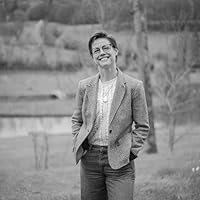
Theo Pauline Nestor is the author of Writing Is My Drink: A Writer’s Story of Finding Her Voice (And a Guide to How You Can Too) (Simon & Schuster, 2013) and How to Sleep Alone in a King-Size Bed: A Memoir of Starting Over (Crown, 2008), which was selected by Kirkus Reviews as a 2008 Top Pick for Reading Groups and as a Target “Breakout Book.” An award-winning instructor, Nestor has taught the memoir certificate course for the University of Washington’s Professional & Continuing Education program since 2006. Nestor also produces events for writers such as the Wild Mountain Memoir Retreat, Bird by Bird & Beyond, and the Black Mesa Writers’ Intensive, featuring talks by literary leaders such as Anne Lamott, Cheryl Strayed, Julia Cameron, and Natalie Goldberg.
I guess despite the title I thought this would be a mostly comedic book about writing and drinking, not necessarily in that order.
It was more of a very personal and perceptive self-help book for writers. It’s also a really funny book about writing and drinking, not necessarily in that order
When I first read about finding your voice as a writer, I was all, pish posh, don’t be silly. My problem isn’t finding my voice as a writer, mostly it’s about subduing it.
Then I did a few of the writing exercises at the end of each chapter.
Hmmm, my voice as a writer might be more absent than I realized. Considering my tagline starts with the words, Vague Meanderings it probably shouldn’t have been a shock .
Intrigued, I did a few more exercises in this boot camp for writers.
My voice wasn’t the problem, it was not letting my voice go out to play.
When I was young – I maybe I don’t have to add this part, but here goes, and stupid I said anything that popped into my head. I wrote anything that popped into my head. When I was a writer and editor years ago I was told by a writer I needed an editor. I did. Or maybe I didn’t. Maybe having that uncensored voice made me a better writer.
I’m no longer young, hopefully slightly less stupid, and I have a child. I learned to censor myself, to a large degree for him. Now I’m in the habit of censoring myself, editing myself, and it stifles the writing process.
I agree with the title completely. Writing gives me a buzz.
It’s not so much that I’m a writer, or an author, or an artist, just a compulsive putting words into print person.
I could no sooner stop writing than breathing.
So how am I going to unchain my inner voice and let her loose upon the world?
I don’t know, but it might be a lot of fun trying.
Writing Is My Drink is probably the most unique memoir I’ve read because it doesn’t just tell the stories of a life, it gives you practical advice on the writing life and makes you feel like you can be a writer, too. Through telling her very personal stories, Theo Nestor gives you the permission to be the writer you have always longed to be. Each chapter begins or continues with another story from her childhood or Nestor’s later life, filling in more family history or personal growth, while focusing on her passion and pursuit for writing and how she eventually found her voice and confidence. Nestor packs the page with so much raw honesty and truth, while managing to lace every chapter with all the laugh-out-loud humor she is known for in real life (full disclosure: I took her year-long Memoir class at University of Washington). Each chapter ends with a section called, “Try This”, with a list of helpful writing prompts or ideas to get you jolted into your own creative writing. My favorite thing about Nestor is the fact that she is an unapologetic feminist and she writes about it in a matter-of-fact and even light-hearted way that makes you feel hopeful. But she also gets down into those gritty realities and comes up with stunning bits of wisdom you can cling to, wisdom not just for writing, but for life. Gretchen Rubin of The Happiness Project says it is the new Bird by Bird, and it is!
I loved this book! I love Nestor's whole vibe. So encouraging and still honest. Finding one's writing voice is no small task. I'm still working on it and it's been decades. I look forward to digging into the exercises and referring back to it when I'm feeling discouraged. Highly recommend!
Did I already tell you that I'm somewhat of a junkie when it comes to books about writing? This is a good one - especially for memoirists. Occasionally Nestor's self-deprecating humor was like a fly buzzing around in the room....but it found its way out the window, eventually.
I always used to say that Anne Lamott's Bird by Bird is my most favourite book about writing - but this little gem by Theo Pauline Nestor comes pretty close. I've learned an awful deal about writing by reading this, and the included writing prompts are gifts that keep on giving. Also: Rarely have I felt more understood when it comes to the bittersweet ups and downs of trying to write.
I have mixed feelings about this book. I picked it up from a display case at the library on a whim. One of my favorite ways to put off actually writing myself is through the guise of 'improving' it by reading about it, so this book was a natural choice for me.
I expected this book to be mostly a how-to book about writing, with a few charming or harrowing stories from Nestor's experience. It turns out to be a strange hybrid, 70% memoir about how Nestor became the writer she is today, 27% meditation on the act of writing itself, and 3% writing exercises, doled out in one-to-two pages of writing prompts at the end of each chapter based on the life-events revealed therein.
This hybrid-style is not intrinsically good or bad, just as this book is not good or bad, but middle-of-the-road, a perfect 2.5 book. However, I do think it could have been executed more effectively. I've broken down the reasons for this below:
pros: Nestor is very encouraging of the fledgling writer. I consider her more a cheerleader than master of the written word. A few of the writing exercises were useful, I might even try one or two. The best by far was the '26-minute memoir,' the idea for which Nestor says came to her in a dream.
I liked some of the stories she told very much, especially the ones dealing with her eccentric grandmother, Buddhist great-aunt, and her loving step-father. These characters were vivid and strong, and are really the only reason I read the whole book.
Which leads us to...
The cons: Except for the aforementioned endearing stories, which were in the minority, the whole book centered on how for most of her life, Nestor severely doubted her ability to write, and didn't think she was deserving of doing/studying it, and was unable to make herself actually sit down and write. It got old pretty quick. I found myself wanting to shake her and yell, "WRITE, already!"
Nestor claims that her epiphany came when she realized that she needed to start being as honest as possible in her writing, but then she glossed over several characters and admissions that seemed pretty pivotal. For instance, she claims to have written an entire (unpublished) manuscript on how much she doesn't like children or being a mother, even though she has two kids. Aside from the struggle of writing this book and never seeing it published, she doesn't go into further detail about that, at all. To include even a paragraph or two about how she reconciled (or didn't) having kids with hating having kids, which I think would have made it a more engaging read.
She also glosses over her mother, who was always too interested in living her own life than being a mother. It seems that this is the source of her 'Am I good enough?' dilemma, but we never see the scenes and acts of disinterest that would make her mother come alive like the other characters she describes.
Nestor's writing ability is average. I found myself wondering how she was able to get a gig as a writing instructor. I know it was just at a community college, but she didn't have a degree in writing, and hadn't been published yet. How does that happen?
Read it if you have the time. If you don't, don't feel too bad about it.
A few years ago I took a full day/evening workshop with some of my mentors, and the woman who put it together was Theo Pauline Nestor, whose name I had not known until then. She was also Mistress of Ceremonies and gave us some of these stories of her writing life along with her humor. We did some of the exercises in the book during her session with another writer, and I bought her book. Since then I've had many smiles, mine and others, in using Writing Is My Drink's "Try This" suggestions to pair with the material for the writing groups I teach, and I can hear her voice each time I pick up her guide. If you are struggling to find your own true writing voice, Theo can help!
I loved this honest and wonderfully written "memoir/life lessons/how to be a writer" read. Besides chapters on her own journey to finding her voice and becoming a writer, each chapter has a list of useful exercises should you wish to give them a try. I resonated with so much of it, especially the role that allowing ourselves to be vulnerable plays in our lives and writing.
I admire the author's enthusiasm for encouraging aspiring writers. My issue was that the book was almost as much her own life story as well, which didn't resonate with me all that much; moreover, the writing advice is heavily skewed toward memoir as a genre. Guess I wasn't her target audience.
Theo Pauline Nestor showed her readers many things, and one thing for certain, in her book “Writing Is My Drink”: Nestor knows the memoir genre thoroughly. Unlike “The Art of Memoir” by Mary Karr or “Bird by Bird” by Anne Lammot where the authors offer their spin on important elements of memoir writing (i.e. voice, structure, etc.), “Writing Is My Drink” is part personal narrative, part writing guide, part promotion for other books Nestor’s readers may find useful for both finding their voice as writers and for gaining more reverence for the oft under-appreciated literary genre of personal narrative essay.
Nestor’s writing leads the reader down the long, winding road of her early experiences finding her footing as a young professor of literature, a young mother, a young wife, and a young writer who had yet to be published at the time. The terrain of Nestor’s journey is rocky, fraught with insecurity, imposter’s syndrome, and the childhood traumas her work ---and her motherhood--- had forced her to unpack. If there is nothing that both parental and locos parentis roles demand of a person, it’s to deal with one’s crap immediately. Whether it’s through therapy, through creativity, or any other means, parents and those in locos parentis roles have a responsibility to the next generation to brave the ‘mess’ of their lives; they must unravel it, face it, work through it, lest its static grow into a white noise that drowns any good message they wish to convey. "I tried to figure it out on the page,” Nestor admits. In “Writing Is My Drink”, Nestor gives us a window view into her doing just that: working through her mess so that she could be the best parent, professor, and writer possible; it’s how she found the story in her work as a memoirist. She encourages us to do the same.
Nestor becomes a tour guide for her readers who seek to follow a similar path by allowing her readers to observe her unpacking her life’s mess to discover the story in her life’s journey. Towards the end of “Writing Is My Drink”, Nestor gives her readers four big obstacles they may encounter during creative struggle. Disarming those four obstacles, she teaches how to move past them, acknowledging that sometimes getting started is the hardest part.
One of the disarmed writing challenges that struck me the most was the challenge of getting past a ‘false start.’ It’s difficult enough to begin writing with the hope of settling into a flow; it’s even harder knowing you might clumsily stumble into a piece that doesn’t have a satisfying end. Seemingly with a wink and a smile, Nestor encourages her readers to avoid fretting false starts, to simply begin again, to take as many false starts as we need; of all the impactful things she wrote in this book, this was the most impactful thing for me.
In the end, Nestor completes the metaphor in the book’s title “Writing Is My Drink” by showing her readers ---not telling---the many ways her writing projects consume her waking thoughts throughout most days similar to the way an alcoholic absent-mindedly floats through a day towards the next drink. If I could compare “Writing Is My Drink” to an alcoholic beverage, I’m not sure which one it would be, but it would certainly be one that was good to the last drop.
After a crisis of self-doubt about my writing skills, I tried to find whatever I could to bolster my ability to write character voice. This is one book I came across, and though it mostly pertains to writing memoir-style own voice, I liked following author Theo Pauline Nestor's struggles to find that elusive quest...voice. She gives good writing exercises to help writers dig for the stories within themselves and help to share the truth. It is the authenticity of story that brings power, and for that and many of her other gems, I found value working through the book.
For people attacked by self-doubt, it's good to know that there are other people who belong to the Major Leagues of self-doubt, for whom it's a daily battle. The author has created exercises that have worked for her and are sure to help the garden-variety doubters as well. If you've ever thought that you lead a boring life, this book helps you see just how fascinating your life is.
Generous and genuine encouragement and support for writers, with lots of writing exercises and prompts. I especially like the 26 minute memoir, and will be checking out the examples on her website, WritingIsMyDrink.com.
Just a great book for writers - whether just starting out or old hat - full of great stories and suggestions for all of us interested in the written word. Although focused on memoirs, this book speaks to all writers.
Good mix of personal narrative and writing craft, with ideas to spark creative writing at the end of each chapter. This might be skewed more toward the newer writer, but there's something for everyone here.
Disclaimer: I received this book free from NetGalley in exchange for an honest review. I did not receive any form of compensation.
With NaNoWriMo almost upon us, I have been trying to get myself back into the mindset of a writer. I have always dabbled, but I truly want to start putting pen to paper on a regular basis. One of the things on my bucket list is to write a book. I have started many times, but just never get around to finishing because something always comes up. This cancer scare has made me sit up and realize that life is too short not to do some of the things that I have always wanted to do.
One thing that I felt the author touched on that many other writing books don’t is the feeling of being exposed. Even if you are writing fiction, you are exposing aspects of yourself that would otherwise be hidden. And when you are submitting these to be published, not only are you exposing yourself, but you are now being asked to be judged. These are some of the hardest things to deal with.
It isn’t a lack of creativity that stymies most authors, it is fear. This book addresses these fears and how to face them head on. He shows how he personally deals with these demons that block the doorway. He also gives exercises at the end of each chapter to help the reader figure out where the demons are lurking and how to exorcise them.
This book will not teach you that if you insert character A and plot twist B into your story, then you will end up with an epic. This is definitely not that type of book. However, if you have the know-how and the passion for writing, but just are too afraid to take that leap of faith, then you will definitely want to read this book.
If something is blurbed as "the new Bird by Bird", you can be sure that I'm going to read it. I remember Bird by Bird, and though I'm not sure if I actually learnt anything from it, I remember being inspired by it, and I was hoping that Writing is my Drink would do the same.
This is basically a memoir of the author, with each chapter supposed to illustrate a point of writing. At the end of each chapter, there are exercises that you can do.
To be honest, I could have done without the exercises at the end. Most of the book is memoir, about how the author writes, so to suddenly come to a "checklist/to-do list" was a bit of a shock. And I'll admit that thinking of Bird by Bird made any concrete writing exercises a bit of a surprise.
Speaking of writing exercises - I actually did one! I wasn't going to, at first, but I loved the concept of the 21 minute memoir, so I decided to give it a go. And it was pretty fun, although what I wrote bore absolutely no resemblance to the others in her website. I did, however, manage to get a few people on Dayre to do it, and it was amazing reading their stories.
All in all, this was a decent read. I think it would have been more powerful without the exercises, since most of the book feels more inspirational than craft-focused, but since I actually did do one of the exercises, I can't say they were all totally distracting. Perhaps they would have been better served at the end of the book?
Speaking of writing inspiration, I should really go and re-read Bird by Bird when I get the chance.
"Two competing forces have dominated my life: a great need to please others and an equally powerful desire for expression, a tumbleweed that has grown in mass and velocity with the passing years".
I read those opening sentences from "Writing Is My Drink" (2013) by Theo Pauline Nestor standing in the public library. Less than a minute later I left with the book in my hand. Less than one hour later, after copying nine sentences from the introduction, which is just eight pages, I went and purchased my own copy. Less than four hours later, with significant highlighting and margin annotating included, I finished, except for the "Try This" suggestions closing each chapter. I'm saving those for my re-read.
I'm so glad I didn't read this wonderful book before starting my submission for the AARP/Huffington Post memoir contest. And I wish I'd found it early in the year, before beginning to write those 5000 words. Yes, you read those two sentences correctly. The familiar formula contributing to this Jekyll/Hyde contradiction? Quality of Nestor's memoir + my inner critic = high likelihood of procrastination/endless re-writes. If I'd read "Writing..." first, that February 15 AARP/Huffington Post deadline would likely have come and gone with no submission from Pat.
Any long form prose I write in the future will be enhanced having read this book much the same as my lyric writing has steadily improved since finishing Stephen Sondheim's "Finishing The Hat" over four years ago. Thanks to Theo & Stephen for sharing their gifts