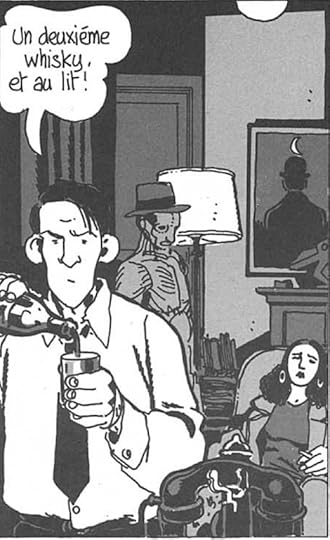
Paris, 1950s. In this graphic novel adaptation, Nestor Burma's past comes knocking when Bélita, a young woman, leads him to the Salpetriere hospital, where he discovers the recently deceased Abel Benoît, an old buddy from his anarchist days. While Burma has chosen to move onto the (more or less) straight and narrow as a private eye, his friend had stayed on the other side of the law as a counterfeiter and worse, until his own past caught up with him — lethally. So now it's up to Malet to avenge his friend, and hopefully unravel a mystery whose roots run far and deep back into the past...
Jacques Tardi is a French comics artist, born 30 August 1946 in Valence, Drôme. He is often credited solely as Tardi.
After graduating from the École nationale des Beaux-Arts de Lyon and the École nationale supérieure des arts décoratifs in Paris, he started writing comics in 1969, at the age of 23, in the comics magazine Pilote, initially illustrating short stories written by Jean Giraud and Serge de Beketch, before creating the political fiction story Rumeur sur le Rouergue from a scenario by Pierre Christin in 1972.
A highly versatile artist, Tardi successfully adapted novels by controversial writer Louis-Ferdinand Céline or crime novelist Léo Malet. In Malet's case, Tardi adapted his detective hero Nestor Burma into a series of critically acclaimed graphic novels, though he also wrote and drew original stories of his own.
Tardi also created one of French comics' most famous heroines, Adèle Blanc-Sec. This series recreates the Paris of early 20th century where the moody heroine encounters supernatural events, state plots, occult societies and experiments in cryogenics.
Another graphic novel was Ici Même which was written by Jean-Claude Forest, best known as the creator of Barbarella. A satire, it describes the adventures of Arthur Même who lives on the walls of his family's former property.
Tardi has produced many antiwar graphic novels and comics, mainly focusing on the collective European trauma of the First World War, and the pitfalls of patriotism spawned several albums (Adieu Brindavoine, C'était la guerre des tranchées, Le trou d'obus, Putain de Guerre...). His grandfather's involvement in the day-to-day horrors of trench warfare, seems to have had a deep influence to his artistic expression. He also completed a four-volume series on the Paris Commune, Le cri du peuple.
Fantagraphics Books translate and publish in English a wide range of Tardi's books, done by editor and translator Kim Thompson.[3] The books released so far are West Coast Blues (Le Petit bleu de la côte ouest), You Are There (Ici Même), and It Was the War of the Trenches (C'était la guerre des tranchées); a single album collecting the first two Adele Blanc-Sec volumes has also been published.
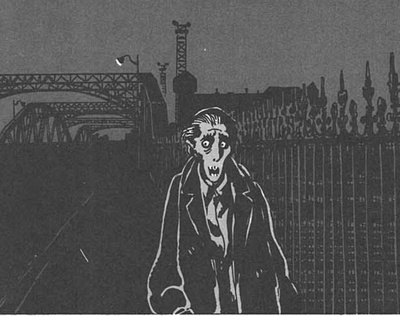
Paris. La nuit, sur le pont de Tolbiac, un homme rode. Dans son regard, la folie.
Highly stylized and oozing bleakness, this is one of the few comic books that I managed to read in the original French edition. I might have missed some of the subtleties of the language, but the noir credentials of the Leo Mallet plot and the black & white panels of Jacques Tardi are a marriage made in comic book heaven. The opening salvo, borrowed from an Edvard Munch painting, should be self-explanatory.
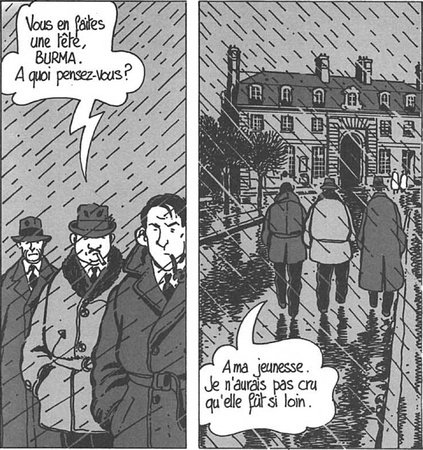
Normally, I have little patience with rough sketches and cartoonish character portraits that make it into the final version of a comic, but there is something particular about the style of Tardi, probably the contrast between the stark yet realistic backgrounds and the vague, unfinished faces of his characters, something about his cinematic angles and his dark palette that communicates despair and futility, as this particular gumshoe story requires.
Outside of the US, where the genre first developed in the pulps era, I believe France (and possibly Japan in recent years) is the literary scene that best internalized and adapted ‘noir’ to its particular national sensibilities. Think of the early Jean Gabin movies, like ‘Quai des Brumes’ or ‘Pepe le Moko’ or of Francois Truffaut’s adaptation of Cornell Woolrich. Leo Mallet deploys here the same classic storytelling techniques established by his American mentors: A lonely, hard-bitten, taciturn private-eye named Nestor Burma gets a calling card from his past, meets a seductive gipsy woman and is drawn into a conspiracy of corporate malfeasance and police cover-up tied somehow to his anarchist youth.
The main selling point of the comics for me is the overall scope of the Nestor Burma series to make a portrait of underworld Paris by focusing in each episode on a different neighbourhood. Le pont Tolbiac sits in the 13th arrondissement, one of the less flashy destinations for tourists in the city of light, but one with a colourful history and a working class population. Crime is, apparently, also a trademark of the 13th. Setting the action in the cold and rainy month of November 1956 adds to the dismal and dark vibe of the album.
I don’t want to comment on the actual plot, which is serviceable if not overtly original. I will only mention that I am now interested in reading the novel version by Leo Mallet, before starting on the second album in the comic series, but unfortunately it seems to be out of print and unavailable in an English translation. I guess, I'll just pour myself a whisky while I wait.
Τα βασικά συστατικά της μαγείας του Tardi έχουν βρει την αλχημική ισορροπία τους σε αυτό το album: το μελάνι ξεχειλίζει και μορφοποιεί τους αδρά σχεδιασμένους χαρακτήρες, δίνοντάς τους όγκο και "παρουσία". Το πυκνό και υγρό μαύρο δίνει την αίσθηση ότι έχει πλημμυρίσει με αβίαστη φυσικότητα τις κοιλότητες των μορφών όπως τις οριοθετεί το πενάκι. Είναι ασύλληπτο το πώς αυτές οι χοντροκομμένες φιγούρες που ο επιπόλαιος αναγνώστης θα τις περάσει για προχειρότητες μπορούν να μεταδίδουν τόση ανθρώπινη αμεσότητα: ένας εφημεριδοπώλης με την πλάτη του γυρισμένη στον αναγνώστη μοιάζει βαριεστημένος - μπορείς να διακρίνεις τον οκνηρό του βηματισμό -, ένα καμιόνι παίρνει απότομα μια στροφή και σχεδόν σηκώνεται από την άσφαλτο, χωρίς τα λάστιχα να ξεκολλάνε από τη γη. Κάθε καρέ είναι καθηλωτικό. Η πλοκή, βασισμένη σε νουάρ μυθιστόρημα του Malet, είναι αργή αλλά ποτέ βαρετή. Κυρίως είναι μια ιστορία προδοσίας: των πάλαι ποτέ συντρόφων μεταξύ τους, αλλά και του καθενός ξεχωριστά απέναντι στον ιδεαλισμό μιας αμετάκλητα χαμένης νιότης. Είναι μια ιστορία που έχει μόνο ηττημένους.
When Nestor Burma receives a letter asking for help from a man he's never met, he is dragged into a web of mysteries, all tied to a heist twenty years earlier...
I loved the Tardi and Manchette crime books Fantagraphics put out a while back so I grabbed this during the annual Fantagraphics sale last November.
I gather this is an adaptation of a Leo Malet detective novel. Nestor Burma is a down on his luck private eye. Is there any other kind? Anyway, Burma turns over a lot of rocks, unearthing parts of his own past best left buried, and eventually finds out who killed the letter writer, along with a lot of other stuff.
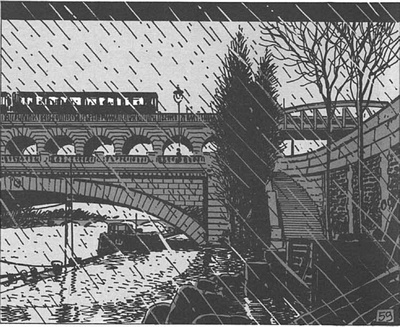
Tardi's art was what brought me to this and I was not disappointed. His cartoony figures and dark, brooding, realistic backgrounds really made the story pop for me. Does it ever NOT rain in Paris? The mystery wasn't solveable but who cares. Burma's walking around the gloomy Paris streets pulled everything together.
I didn't like it quite as much as the Tardi-Manchette collaborations but Fog Over Tolbiac Bridge was a great read. Four out of five stars.
Con esta historia Tardi empezó su adaptación de las novelas de Léo Mallet. La adaptación en si es muy fiel a la novela, pero no por ello deja Tardi de aportar su talento. Además de su habitual brillantez como narrador, sus dibujos dan mayor solidez a la ambientación y hacen que la historia sea aún más inmersiva y absorbente que la novela original a la vez que conserva todas las virtudes de esta.
Toujours un immense plaisir que de lire Tardi, surtout en le suivant dans le XIIIe lors d’une enquête policière. Les rues sont sombres, pluvieuses, mélancoliques et étouffantes. Les portraits toujours sensibles. Je ne connaissais pas les romans de Malet, mais ait bien envie de les découvrir davantage, d’autant plus avec les adaptations de Tardi. Découvrir le détective Burma, anarchiste, surréaliste et morgue lors de cette enquête dans Paris était excellent. Après je pense avoir davantage été captivé par Tardi que l’histoire en elle-même : c’est pas révolutionnaire mais simple à lire.
Genel olarak fransız ekolüne, anlatış tarzına yabancı olanlar için zorlayıcı bir hikaye. Sürekli olarak sokak isimleri ile bahsedilmesi, sol-anarşist örgütlere/kavramlara yapılan atıflar ve 70'lerin başında çekilmiş bir TRT dizisi hitabeti ile yapılan konuşmalar hikayeye dahil olmayı biraz zorlaştırıyor. Eğer bu sürece hakim değilseniz sürekli olarak bi ön araştırma yapma ihtiyacı hissediyorsunuz.
Çevirmen Sertaç Canbolat'ın, Leo Malet'in gayet hakim olduğu argo dil ve sokak ağzını yerelleştirme çabası da beni bir miktar yordu. Akıcı ve duru bir dil konuşan Fransız anarşistlerinden "çapariz" kelimesini duymayı zihnim hala kabullenemiyor. Kara üçleme kitabını çeviren Haldun Bayrı üslubunu bir miktar daha doğal ve kendime yakın bulmuştum.
Bunun yanında Tardi ve Leo Malet ikilisinin oluşturduğu bir kitap için maalesef özensiz baskı ve sunum olmuş bu çizgi roman. Çizgi romanın Versus baskısı -gerçek ebatını bilmemekle birlikte- kötü basılmış bir korsan kitap hissiyatı yaratıyor. Çizimler sanki sayfaya sığdırılabilmek için fazlaca büyütülmüş. Kötü ve okunması zor bir font seçilmiş. Kapak tasarımı konusunda yurtdışındaki örnekleri çok daha "cool" duruyor. Elbette kitabın 2012 yılında baskı yaptığını düşünürsek o dönemin grafik roman anlayışı için uygun olabilir.
Arşiv / Koleksiyon için elde tutulabilecek bir kitap ama maalesef hikaye vuruculuğu konusunda en azından Türkçe baskısı benzerlerinin epeyce gerisinde.
Another fantastic Jacques Tardi graphic novel book. This time, based on the detective novel by Leo Malet, that takes place on the Left Bank sometime in the 1950s. A tight crime narrative regarding a private Detective's past with anarchists from the 1930s. The old gang is back together again, of sorts. But times have changed. Interesting how Malet and of course, Tardi focus on the location. It includes a map of that part of Paris and where the incidents in the narrative took place. A beautiful production of a book.
Ten komiks nie zmienił mojego stosunku do twórczości Tardiego. Uwielbiam soczystą kreskę i spowijającą całość melancholię, ale forma się niestety mocno zestarzała, a gadające głowy męczą bardzo. Dla fanów klasyki, która niekoniecznie wyprzedzała swoje czasy
Léo Malet has had a difficult life in which he struggled through much adversity, but from a runaway orphan youth who quit Montpellier aged 16, he made it right into the fringes of the literary avant-garde of the 1930s, knowing André Breton personally and being recognised by him, while still doing all kinds of odd jobs to make ends meet. His attempts to make a living from writing pulp fiction in Simenon's footsteps failed to provide him with bourgeois security and self-assurance. But at least, in the 1940's to 1950's, he created a credible French answer to Philip Marlowe, Nestor Burma.
Burma made his appearance in 120, rue de la Gare, and was adapted to cinema, and in the 1950's Malet wrote a series of crime novels around him called Les Nouveaux Mystères de Paris, with each arrondissement (15 of 20 got their novel) being the unique and only background to each novel, so that the neighbourhoods became almost a kind of protagonist of the story. By the 1970s Malet was almost forgotten, and his bitterness was such that from anarchist he went to having far-right and fairly racist political positions. He also was a bit of a difficult character, not surprisingly given his circumstances, always at odds with the world around him.
Jacques Tardi, who does seem to have a penchant for authors and figures of this kind, did a brilliant job of resurrecting Burma almost single-handedly, thereby strapping his author Malet from oblivion, with this graphic novel adaptation. Set in 1950's Paris and rigourously black-and-white like a true film noir, this particular adventure is probably the one into which Malet put the most of his own autobiography. The site of the action is the 13th arrondissement in which young Léo had arrived in Paris from Montpellier, and the Foyer végétalien at which Nestor Burma remembers to have slept at a similar time was in fact where Malet went to sleep as a youngster, not making enough money as a newspaper vendor to afford a hotel or rented room for himself.
As always with Tardi, an impressive amount of research went into the preparation of the artwork, thousands of photographs allowing him to recreate an urban landscape that by the time of drawing had already changed a great deal since the time at which the action was set. You have to read it several times and to look at it for a long time to fully appreciate it. If you like the genre and Paris, it is hard to find anything more compelling and endearing. A true classic, and no wonder a few other Malet adaptations from Tardi followed, and the series is now being continued by other draughtsmen, respecting rigorously the aesthetics created by Tardi.
Nestor Burma, after the success of this album, even got his own television series, and just at the very end of his life, Léo Malet came back on the scene to stay. Not bad as a heritage of a comic album.
Fantastic atmosphere in this adaptation of a French noir novel. There's one thread in the story I don't like - the depiction of the Roma and an instance of, well, fridging, but that aside this is a suitably bleak venture into old crimes and loyalties in the grimmer side of an apparently perpetually rain soaked Paris.
A noir detective book given to me by a friend years ago that I was always going to get to. Glad I did. Cool art work, fun story. If you don't read this in Sam Spades voice you are doing it wrong.
Segundo acercamiento a las adaptaciones comiqueras del detective francés Nestor Burma después de la decepcionante "Una Resaca de Cuidado". Este "Niebla en el Puente de Tolbiac" es francamente superior. La trama es atractiva y atrapa, sin bajones hasta su emocionante final. Pero definitivamente no me gusta Tardi, lo que para muchos será una herejía. Es cierto que en este album hace un buen trabajo en la creación de atmósferas, pero me saca mucho de la historia como dibuja las figuras y en general lo grueso y poco detallado de su trazo.
Die Stadt der Liebe Paris ist wirklich keine Stadt der Liebe. Grau in grau, es regnet dauernd, die Kulisse ist abseits der Touristenattraktionen industriell geprägt, und die lange Geschichte dieser Stadt drückt sich auf die Bewohner. Einer davon, Nestor Burma, Privatdetektiv, muss sich mit der dräuenden Gefahr einer Geschichte aus fast schon vergessener Vergangenheit beschäftigen, und bewegt sich dabei halb schlafwandlerisch, halb getrieben von morbider Neugier, durchs 13. Arrondissement...
Ich kenne dieses Gefühl, nicht aus Paris, aber aus Budapest, einer Stadt, die ich inzwischen blind kenne. Die Stadtteile, die man als Tourist nicht zu sehen bekommt, sind die faszinierendsten, in einer Mischung aus Heruntergekommenheit und gleichzeitig dem "echtem Leben", das dort stattfindet, im Gegensatz zu den Hochglanzpalästen der Vorzeigestadtteile. Tardi ist ein Meister in der Stadtbeschreibung, man fühlt sich, als wäre man dabei, wenn der Protagonist durch Paris schlendert und dem Leser die dunkelsten Ecken einer Stadt und der menschlichen Psyche zeigt. Dabei wird man mit einigen geschichtlichen Eigenheiten konfrontiert, über die ich nichts wusste - die Kultur der Anarchisten und Veganer der 1930er Jahre ist zum Beispiel so etwas, über das ich gern mehr lesen würde.
Ehrlich gesagt, ist dies kein einfaches Comic. Eine komplizierte Geschichte, sehr literarisch, verpackt mit 50er-Jahre-Französisch und durchgängig in einem französischen "Hardboiled Slang" gehalten - das ist echt hart an der Grenze dessen, was ich noch verstehe. Natürlich wäre es eine Schande, diesen meinen Wissens- und Sprachmangel dem BD anzulasten. Ich hoffe nur leise, dass es geht wie bei Tardis Adèle et la bête, wo auch der erste Band doch ein bisschen schwer zu lesen war, und ab Band 2 die Unverständlichkeit ein wenig nachließ.
Vorbildlich, wie eigentlich praktisch immer bei Casterman, die Aufbereitung: Ein Vorwort von Léo Malet, der den zugrundeliegenden Roman schrieb, und weitergehende editoriale Beigaben.
From the early 1940s through the early 1980s, Leo Malet wrote about thirty hardboiled crime novels featuring Parisian private detective Nestor Burma. Along the way, he conceived of writing one set in each of Paris' twenty "arrondissements" (districts), a project he abandoned after covering fifteen. This 1982 adaptation of a 1956 novel takes place in the 13th arrondissement, and its key locations are helpfully mapped out on a map that forms the endpapers of this beautifully produced edition.
Burma is sometimes characterized as a kind of French twist on Sam Spade or Philip Marlowe, but over time, Malet gave him a more radical background, drawing upon his own life (he was a minor member of the Surrealist movement, wrote for radical left newspapers, and is often described as being an anarchist in his youth). This particular entry in the Burma series draws upon his radical youth, and the plot revolves around a series of characters he knew thirty years early in 1926, when he was living in a vegan hostel for anarchists (this is apparently based on Malet's own youthful tenure in a vegan hotel).
The plot is quite convoluted, and involves a gypsy woman who lives in the neighborhood, as well as a retired cop who is obsessed with an unsolved murder from the past. As a crime story, it's not the greatest, but the dark mood of the time and place is effective. Tardi's artwork brings the cold and isolation to the fore, as Burma wanders the 13th in the rain, trying to figure out what it's all about. Tardi's attention to architectural detail is always excellent, and here it really feels documentary in style, with FLN graffiti adding an element of despair and foreboding to the proceedings.
If this story (the first one I've read of the Nestor Burma series, in comic or book form) was designed by any other artist, I'd spend 1 hour on a medium+ noir story. But Tardi. This guy can truly create the best atmosphere for this genre. Dark, moody, sometimes delusional, the protagonist tries to get the pieces of his past life together again through a crime long forgotten, and with him we do too.
Absolutly superb adaptation, one of tardi's best. Really looking forward to reading more of Nestor Burma's cases through the great artist's eye.
Leo Malet wanted to write a thriller by Paris district, the new mysteries of Paris after Eugène Sue. He did not succeed in write all the 20 books, but only 15. I do not like his thriller, Paname, accordéon, populo, Piaf's clone...I find the plot too light, to much previsible. Tardi decided to adapt some of his novels, here the 13° district. But the weakness of the scenario does not compensate for the elegance of the drawing.
Andiamo avanti con Nestor Burma nel nostro giro di Parigi, quartiere per quartiere, qui siamo nel XIII a sinistra della Seine ma non nel quartiere delle università, Saint Michel per intenderci. Siamo a ridosso del Periferico (via ad alta densità di traffico), sulle tracce de la “Petite ceinture” vecchia ferrovia interna a Parigi andata in obsolescenza con la costruzione del Métro. Qui la trama è fosca come il quartiere, nel 1956, era sede di fabbriche, area di manovra della stazione di Austerlitz. Non che sia tanto migliorato adesso. Qui il nostro anti-eroe affronta il suo passato anarchista. Si sa i compagni rimangono tali anche di fronte a cambiamenti e rinunce. Malet, e da lì anche il suo personaggio, non ha mai rinunciato. È sceso a compromessi con la società, è datore di lavoro ad esempio, ma mai con la sua coscienza. Ci troviamo di fronte alla chiamata a soccorso di un vecchio compagno. In un caso torbido, vedi violento. Qui Burma troverà l’Amore sull’orlo del Démon de Midi, in francese l’espressione traduce quel bivio al quale si trovano confrontati gli uomini 40 / 50 nei confronti delle donne molto più giovani. Ma si tratta di Burma e la felicità gli sarà, ovviamente, negata. Maturerà la sua vendetta nel modo meno consono al personaggio. Romanzo tra i più tristi e foschi, l’atmosfera ne è resa magistralmente nel fumetto di Tardi, tutto in sfumature di grigio. E’ uno dei romanzi preferiti da noi estimatori dell’opera di Léo Malet. Se volete leggere alcuni romanzi di Malet vi raccomando: “120 rue de la gare”, “Eaux troubles au pont de Javel” et “Brouillard au pont de Tolbiac”.
This is a graphic novel adaptation of a popular French private eye series. Similar to Darwyn Cooke's adaptation of the Parker series, this book deals with grim material and characters, including the protagonist, who are not very likeable. They are former anarchists, sell-outs, bitter men with grey lives and anger subsided under years of failure. All the dreams of their youths were turned to ashes under the Nazi occupation of their country and the best they can manage is to try and grasp some happiness through money or alcohol.
Our hero, Nestor Burma, receives a letter from a man who claims to know him, but he does not remember, and is soon drawn into a murder mystery with connections to a decades old crime and political motivations gone bad. It's interesting and Tardi's style certainly lends emotional weight to the grim proceedings. My only criticism is that the main character seems to be constantly playing catch up and almost seems like an observer in his own tale.
Fog Over the Tolbiac Bridge is Tardi’s first Nestor Burma adaptation, and he dives into it with all the enthusiasm of a man who genuinely enjoys rain-soaked misery. It’s film noir in comic form, and Tardi nails the atmosphere: endless autumn drizzle, slippery cobblestones, peeling façades, and city streets that look like they haven’t been cheerful since the Napoleonic era.
The plot is classic Burma - a crime rooted somewhere in the detective’s own checkered past, populated by people who smoke too much, talk too little, and generally look like they’ve been up to no good for several decades. It’s not groundbreaking, but then again, neither is crime.
As first outings go, it’s excellent: stylish, moody, and perfectly suited to a detective who meets every mystery with the same expression - a sigh disguised as a cigarette.
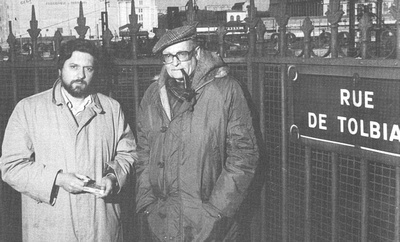
220×295 'les romans (A SUIVRE)' ¦ D.L. 05/1982 ¦ rear:₂₀₃₄ →3 page Malet introduction with many pictures
Narrative: **** A great adapter, he even adds touches like Burma smoking the same demon-headed pipe that Malet is seen smoking in the introduction.
Visual: **** I have my issues with his wavy line used on characters- but the precision of his backgrounds never impressed me so much. A wondeful example, the rear cover of my edition is one of the best "4th plates" in my library! https://www.bedetheque.com/media/Vers...
Superbe rendu d'un 13e arrondissement méconnaissable, jusqu'au pont de Tolbiac du titre. La rue souterraine Watts file toujours autant les jetons cela dit.
Dommage que le récit ne donne pas tant de place aux souvenirs liés aux années du Foyer végétalien et ses anars aux mains bientôt bien sales ; je ne sais pas si c'est lié au roman original tout comme la chute mélo qui m'a plus fait sourire que frémir.
Sans commentaire le seul rôle féminin et la représentation des Gitans.
This entire review has been hidden because of spoilers.
Fantastico romanzo noir parigino scritto con maestria e sapienza da un ex-surrealista, ex-imbianchino, ex-guardiano notturno. Fa parte dei Nuovi misteri di Parigi, un viaggio negli arrondissements a volte sordidi a volte spietati sempre poetici e immaginifici. Fazi ne ha ripresi parecchi in Italia, en France Guénat où Les Bouquins de Laffont
Tardi’s depiction of dark 50s Paris continues in Tolbiac (I read 120, rue… earlier). At 80 pages, Tardi’s adaptation of Malet’s novel felt a bit short. They could have given us more details about Burma’s relationship with Bélita. The last page murder and unfinished story felt like a cop out. I don’t have the original French but Fantagraphics’ Thomson’s translation read very well. Recommended.
Fun drawings of unknown corners of Paris, but the dangers of transforming a novel into a BD (even a policier) is there can be a lot of blah blah accompanied by drawings of people standing around talking. Not so compelling.
Bueno, podría no haber crimen, ni el affaire con Belita, ni recuerdos de una juventud anarquista. Simplemente Tardi dibujando a Burma paseando por el París del distrito 13 y sería una obra maestra igual, ¿no?
Comic-noir de las aventuras de un detective francés ex-anarquista en el Paris de después de la Segunda Guerra Mundial. Detallista, irónico y marcado por los destinos fatales.