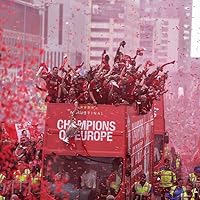
A stellar selection of former Liverpool players including John Barnes, Nigel Spackman, and Ronnie Moran candidly recollect their memories of the club's eventful 1980s era During the 1980s, Liverpool Football Club dominated English soccer, winning seven league titles, two European Cups, two FA Cups, and four League Cups. Here, Simon Hughes interviews some of the most colorful characters to have played for the club during that period. The resulting interviews, set against the historical backdrop of both the club and the city, provide a vivid portrait of life at Liverpool during an era when the club's unparalleled on-pitch success often went hand in hand with a boozy social scene fraught with rows, fights, and wind-ups. Former Liverpool players John Barnes, Bruce Grobbelaar, Howard Gayle, Michael Robinson, John Wark, Kevin Sheedy, Nigel Spackman, Steve Staunton, David Hodgson, and Craig Johnston, as well as first-team coach Ronnie Moran, all candidly recollect their memories of this exciting time in Liverpool Football Club's history.
Red Machine is a meticulously crafted book filled with characters so different individually and yet collectively they formed one of the most formidable football teams ever and maintained that standard throughout a decade before the club became a victim of changing football culture. To put it simply, it was all because they 'didn't want to lose'.
I must say that this was a very insightful book into the players that made up one of the greatest football teams of the 80's Players that are well known such as John Barnes and Bruce Grobelaar share their memories of being in a very good Liverpool at a time when the country was going through a political upheaval and the city went through changes that reshaped it. Lesser known players such as Howard Gayle and Michael Robinson give another side of the story as they explain the difficulties in trying to establish themselves into a team that was full of winners. A lot of laughs and a few melancholy moments make this a worthy read for both Liverpool fans and anyone interested in sport from the 80's
If you are a Liverpool supporter and want an insight into how the club works then this is the book for you. It provides candid, honest accounts from all manner of people who have played all types of roles within the squad from the introvert to the outrageously extravert, each character provides a sterling summary of their time at the club. The real genius of the book for me lies in its pace. It doesn’t spend too long or too little time with each of its subjects. You’re not left bored with each character but at the same time you’re not left craving more. Well considered, excellently plotted. A really easy read that entertains from first to last page.
As I started this book I lowered my expectations as it was clearly just a set of individual player reminiscences and I anticipated them to be rather predictable and similar. However, the choices of players interviewed from the well know (Grobbelaar) to those who only played a handful of games (Gayle) was good and for the most part their stories around their upbringings, earliest days in football and signing & playing for Liverpool in their pomp were interesting (the exception being Kevin Sheedy and not because he was more successful playing for Everton!).
Worth reading if you are a Liverpool fan and can remember most of the players in the book!
Why was the all-conquering Liverpool side of the 1980s one of the greatest teams UK football has ever produced? Journalist, footie fan and proud Scouser Simon Hughes decided to find out by talking to ten of them, plus long-time coach Ronnie Moran. It's an intriguing pitch for a sports book and Simon's a good writer. He begins by stating "Few of the active footballers I've met since starting a career in journalism have anything that is genuinely interesting to say", then sets out to confound his statement. Trouble is, it's not the best list of players. Stephen Gerrard writes a foreword, but he was just a kid when the red machine was conquering all before it.
Hughes talks to Bruce Grobbelaar, Craig Johnstone and John Barnes - and their stories are fascinating and heart-breaking in turn, but not really because of football - but there's no Souness, no Hansen or Lawrenson and sadly no Rush or Dalglish. What a book that would have made. We do get a closing interview with one man who does know where all the bodies are buried, but Ronnie Moran, at 79, is of an older generation who were brought up to know their place and keep a tight lip, so it's a short chapter. As Moran says himself at the end of his interview "I haven't let too much slip there, have I?" No Ronnie, you haven't. But then again, as Hughes postulates afterwards, "perhaps it was Liverpool's simplicity that outsiders found most complex" and maybe Ronnie Moran has nailed it after all? Pointing to a treasured photograph of Bill Shankly, Bob Paisley, Joe Fagan and Reuben Bennett, his four closest friends in football, Moran concludes "They didn't want to lose. That's what football boils down to." The Mighty Reds became a Red Machine because they didn't want to lose.
I reckon this book would be a good read for any football fan (especially any Liverpool FC fan). I began to watch club football less than a decade ago, and have spent many hours since reading about and watching footage from historic Liverpool matches to satisfy my curiousity of this special club's history. Many books repeat stories which are often available elsewhere. This author tries something a little different: he takes 10 or so interviews with players and a coach, each which contributed in their own way to Liverpool's dominance during the 80s. Some, like John Barnes, are among the greatest to wear the Red shirt , others played only a few matches or a season or two with the senior team. But each interview deepens ones understanding of the club, from the triumphant European Cups and League Titles to the disappointment of losing the League Title to Everton to the tragic Heysel and Hillsborough disasters, during its most dominant decade. The interviews abound with insight and pathos and humor. I only wish there was more.
I finished this book somewhat deflated. Having idolised the Liverpool players of the 80's, the icons who attracted me to become a lifelong supporter, it is sad to be disillusioned by hearing that they are indeed human. Nevertheless, it is interesting to hear about their lives, difficulties and personalities. They knew how to drink and party. Yet they took their football seriously. A compelling read for any Liverpool supporter.