An inspiring look at the historic foreign policy triumph of John F. Kennedy’s presidency—the crusade for world peace that consumed his final year in office—by the New York Times bestselling author of The Price of Civilization, Common Wealth, and The End of Poverty The last great campaign of John F. Kennedy’s life was not the battle for reelection he did not live to wage, but the struggle for a sustainable peace with the Soviet Union. To Move the World recalls the extraordinary days from October 1962 to September 1963, when JFK marshaled the power of oratory and his remarkable political skills to establish more peaceful relations with the Soviet Union and a dramatic slowdown in the proliferation of nuclear arms. Kennedy and his Soviet counterpart, Nikita Khrushchev, led their nations during the Cuban Missile Crisis, when the two superpowers came eyeball to eyeball at the nuclear abyss. This near-death experience shook both leaders deeply. Jeffrey D. Sachs shows how Kennedy emerged from the Missile crisis with the determination and prodigious skills to forge a new and less threatening direction for the world. Together, he and Khrushchev would pull the world away from the nuclear precipice, charting a path for future peacemakers to follow. During his final year in office, Kennedy gave a series of speeches in which he pushed back against the momentum of the Cold War to persuade the world that peace with the Soviets was possible. The oratorical high point came on June 10, 1963, when Kennedy delivered the most important foreign policy speech of the modern presidency. He argued against the prevailing pessimism that viewed humanity as doomed by forces beyond its control. Mankind, argued Kennedy, could bring a new peace into reality through a bold vision combined with concrete and practical measures. Achieving the first of those measures in the summer of 1963, the Partial Nuclear Test Ban Treaty, required more than just speechmaking, however. Kennedy had to use his great gifts of persuasion on multiple fronts—with fractious allies, hawkish Republican congressmen, dubious members of his own administration, and the American and world public—to persuade a skeptical world that cooperation between the superpowers was realistic and necessary. Sachs shows how Kennedy campaigned for his vision and opened the eyes of the American people and the world to the possibilities of peace. Featuring the full text of JFK’s speeches from this period, as well as striking photographs, To Move the World gives us a startlingly fresh perspective on Kennedy’s presidency and a model for strong leadership and problem solving in our time.Praise for To Move the World“Rife with lessons for the current administration . . . We cannot know how many more steps might have been taken under Kennedy’s leadership, but To Move the World urges us to continue on the journey.”—Chicago Tribune “The messages in these four speeches seem all too pertinent today.”—Publishers Weekly
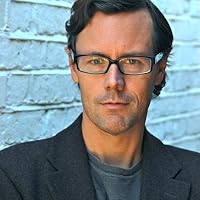
Jeffrey David Sachs, is an American economist, public policy analyst, and former director of the Earth Institute at Columbia University, where he holds the title of University Professor, the highest rank Columbia bestows on its faculty. He is known as one of the world's leading experts on economic development and the fight against poverty.
Sachs is the Quetelet Professor of Sustainable Development at Columbia's School of International and Public Affairs and a professor of health policy and management at Columbia's School of Public Health. As of 2017, he serves as special adviser to the United Nations (UN) Secretary-General António Guterres on the Sustainable Development Goals (SDGs), a set of 17 global goals adopted at a UN summit meeting in September 2015. He held the same position under the previous UN Secretary-General Ban Ki-Moon and prior to 2016 a similar advisory position related to the earlier Millennium Development Goals (MDGs), eight internationally sanctioned objectives to reduce extreme poverty, hunger and disease by the year 2015. In connection with the MDGs, he had first been appointed special adviser to the UN Secretary-General in 2002 during the term of Kofi Annan.
In 1995, Sachs became a member of the International Advisory Council of the Center for Social and Economic Research (CASE). He is co-founder and chief strategist of Millennium Promise Alliance, a nonprofit organization dedicated to ending extreme poverty and hunger. From 2002 to 2006, he was director of the United Nations Millennium Project's work on the MDGs. He is director of the UN Sustainable Development Solutions Network and co-editor of the World Happiness Report with John F. Helliwell and Richard Layard. In 2010, he became a commissioner for the Broadband Commission for Sustainable Development, whose stated aim is to boost the importance of broadband in international policy. Sachs has written several books and received many awards.
UN special advisor Jeffrey D. Sachs (Price of Civilization) revisits the Cold War challenges facing the Kennedy administration between October 1962 and September 1963 during the era of Dr. Strangelove. In this careful study, the author zeroes in on four key speeches Kennedy delivered in the months prior to his assassination in November 1963. Specifically, the book focuses on the commencement address to American University known as the Peace Speech , also the theme of the author’s Reith Lecture for the BBC six years ago . JFK, together with gifted speechwriter Ted Sorensen, his ‘intellectual alter ego’ , set out a strategy for nations to live in ‘mutual tolerance’ with ramifications that extend into the 21st century ]. Influenced by the writings of Winston Churchill and Pope John XXIII , the two collaborated to send a message of hope to the Class of 1963 . Two weeks later Kennedy flew to Ireland where he delivered this message to members of the Irish Parliament . By July he announced a partial test ban treaty to the nation ], and brought this news to the UN General Assembly . While sound bites of the Kennedy-Sorensen collaboration echo in modern classrooms-- ie “Ask not what your country can do for you and “Ich bin ein Berliner” -- the messages in these four speeches seem all too pertinent even 50 years on in today’s war against terrorism. Historians can't let go of JFK-- always come up with something else to say about him.
The best part about this book was the text of JFK's speeches in the back, otherwise, overly enthusiastic language gave me the sense that this was a grown man's ode to his hero, written as an elementary school book report.
Wanted to like this book as Prof Sachs gives excellent lectures on JFK, I was disappointed though, nothing new here and kind of more liberally skewed than it needed to be.
I cannot write any kind of impartial review for this book. I'm all the way with JFK, and always have been. In recent years I have come across various writers who hold views of my friend John that concur with my own. Douglas P. Horne and James W. Douglass being two of them. In this 2013 publication 'To Move the World:JFK's Quest for Peace', Jeffrey D. Sachs is certainly a third. The author is the Director of the Earth Institute at Columbia University. He recently discovered JFK's Commencement Address, given at American University in D.C. on June 10th 1963, which I hold to be as important and penetrating an oratory, comparable to Churchill's war time broadcasts. Although this book quotes various examples of the Kennedy/Sorensen eloquence, for example lines from the Inaugural; Address to the U.N. Assembly in 1961; Address on Civil Rights, 1963; speech in Berlin, 1963; Sachs focuses upon the American University speech, the speech to the Irish Dail, June 28th 1963, the Address to the Nation on the Partial Nuclear Test Ban Treaty on July 26th 1963 and the speech to the 18th General Assembly of the United Nations on September 20th 1963. After the Cuban Crisis of October '62, Kennedy spent his final year in office to move the world powers back from the brink of the nuclear precipice, and to chart a new course towards peace and the ending of the Cold War.
Instead, the darkness chose a bloody coup d'état, a calamity for the world, and in their shame they still deny truth, fifty years on.
Some of us were alive for these actual events, but the perspective of 60 years puts them in focus as a turning point. The Cold War loomed over our heads and the prospect of nuclear holocaust seemed like a likely fate. But Kennedy made the possibility of a different path, a path leading to peace and security seem attainable. The book is built around three speeches. Worth the time to read in their entirety in the appendix.
In this book well-known economist and public intellectual Jeffrey Sachs moves from the world of economic development and environmental concerns to an examination of how John F. Kennedy’s thought and rhetoric changed the dynamic of the Cold War. Sachs apparently came to this project through his friendship with Theodore Sorensen, Kennedy's primary speechwriter. Also, I suspect that Sachs came to the project because of his own quest to alter the dynamics in the world about global poverty, sustainable economic development, and ecological stewardship. In this book Sachs doesn't break any new historical ground. His main concern is to examine how the interplay of experience and rhetoric shaped the course of events both before and after the Kennedy administration.
Sachs notes that Kennedy had some important role models for his rhetoric and perceptions. First and foremost among these role models was Winston Churchill. However, his model was not simply the pugnacious Churchill of 1940 who defied the Nazis, but also the postwar Churchill, who, while warning of the spread of communism, also spoke in favor of peaceful talks. Perhaps in Churchill’s less eloquent but most apt words, more “jaw-jaw” and less “war-war”. This attitude of conciliation was carried forward by Dwight Eisenhower. Sachs notes a couple of Ike's speeches that struck a conciliatory note and that appreciated the dangerous dynamics that were developing between the US and the USSR. The most famous of Ike's speeches was his farewell speech, which Sachs describes is only one of two presidential farewell speeches that bears remembrance (the other was George Washington’s). In Ike's farewell speech, he warned of – indeed I think coin the phrase of – "the military industrial complex". Ike understood that there were strong pressures in the US (and certainly within the USSR as well) that pushed for military confrontation as a part of a profit and power seeking engine driven by defense contractors and the military. Roughly contemporary with Kennedy’s time in office was the papacy of Pope John XXIII, whose encyclical Pacem In Terris (Peace on Earth) provided another eloquent voice speaking out in favor of peace and justice. Kennedy was thus not alone on his perceptions and hopes, and he carried forward a line of predecessors and contemporaries from whom he could gain wisdom and assistance.
Sachs doesn't dodge the fact that Kennedy made the Cold War worse by the fiasco of the Bay of Pigs invasion that occurred shortly after he took office. In another one of history's "what if's", historians of wondered if Ike would've had the good sense to have pulled the plug on the Bay of Pigs invasion, or whether he would have gone whole hog with the invasion. Kennedy chose halfway measures that embarrassed the US, made Castro more belligerent, and that suggested to the USSR that some further intervention on behalf of their Cuban comrades was necessary. Sachs details how Khrushchev developed his harebrained scheme to put offensive missiles in Cuba with the thought of revealing the fateful come play at a party Congress scheduled in late 1962 (shades of Dr. Strangelove here). This scheme led to the Cuban missile crisis, where humankind came within an eyelash of worldwide catastrophe. Credit goes to both Kennedy and Khrushchev for avoiding a nuclear Armageddon by backing away from the demands of hardliners. Kennedy had to deal with Air Force Chief of Staff Curtis LeMay (the model for Stanley Kubrick's general Jack Ripper in Dr. Strangelove). Khrushchev obviously had his own people to deal with as well.
After this harrowing experience, Kennedy chartered a new course to try to ease the tensions of the Cold War. His renewed concerns with this subject eventually led to his June 1963 speech at American University that has since been dubbed "The Peace Speech". Kennedy laid out the need for renewed efforts to avoid war, efforts that were neither naïve nor impossible to achieve. This included a voluntary suspension of nuclear testing so long as no other nation engaged in tests of their own. Kennedy followed up the next day with a major speech on civil rights where, I believe for the first time, he described the civil rights movement in terms of a moral imperative. These two speeches, perhaps more than his better-known inaugural address, highlight of Kennedys’ rhetorical gifts and moral vision.
Sachs does a good job of carefully examining Kennedy's rhetoric. For instance, Sachs shows how effectively Kennedy used the rhetorical device of antimetabole, the Greek term referring to the repetition of words in transposed order (e.g., “Ask not what your country can do for you—ask what you can do for your country.”) A great deal of credit for Kennedy’s rhetorical success goes to his aid Ted Sorensen, who wrote the first drafts and worked revisions in tandem with Kennedy. As a team, it will come up with signature ways of speaking and arguing that proved eloquent and effective. Kennedy was able to get the Soviet Union to the bargaining table, the parties agreed to a partial nuclear test ban treaty (underground testing was still allowed), and, most notably by the standards of today, he was able to get overwhelming Senate approval for the treaty. This was one of the highlights of Kennedy's congressional efforts. As we know, no civil rights legislation and no economic stimulus bill were enacted until after Lyndon Johnson became president and oversaw those efforts. While Kennedy's rhetorical gifts are undoubted, I still have the sense that without Johnson, the major civil rights legislation and perhaps even the economic stimulus Kennedy sought would have been sidetracked by Congress. As we know from our experience with President Obama, formal rhetoric that artfully and clearly sets forth a vision for possibilities is important, but not sufficient to effect real change. The trench warfare of congressional approval is also necessary to translate positive visions into law. Nevertheless, one can't leave this book without appreciating the skilled vision that Kennedy and Sorensen set forth.
Sachs spends a little bit more time on the post-Kennedy Cold War, and especially noteworthy is the period in the early and mid-1980s when Ronald Reagan and the hard core Republican right wing adapted an extremely confrontational attitude toward the Soviet Union. This attitude was perceived by the Soviet leadership and reciprocated. In hindsight, the Nixon-Ford-Kissinger efforts for détente are much more rational and reasonable. Reagan supporters argue that Reagan's rhetorical and military build-up in confrontation with the Soviet Union led to the downfall of the Eastern block and eventually the Soviet Union. But this argument should be subject to a lot of skepticism and should be rejected without a more persuasive argument made through a careful historical analysis than I’ve yet seen. The fact is, the doomsday clock that measured the threat to human well-being crated by nuclear war (now I think subject to other factors, such as ecological catastrophe) moved up very close to midnight again during a period in the 1980’s. However, once Reagan perceived a change in Soviet attitudes in the person of Gorbachev, Reagan's very effective rhetoric changed into one of conciliation and the need for rational consideration of the parties’ mutual need to avoid nuclear war and threatening confrontations. Neither Kennedy nor later Reagan dropped his strong stance of anti-Communism, but both came around to a much more sensible position. (Kennedy was more constrained by the extreme political right wing than was Reagan, who, like Nixon going to China, had a degree of credibility for a changed attitude toward the USSR that no Democrat could gain in order to achieve the changes the Reagan fostered.)
In my continued reading reflecting back on the presidency of John F. Kennedy, this book was a worthwhile addition. I thought it might be an exercise in hagiography, but instead, I found it a measured consideration of Kennedy and the importance of his and his predecessor’s rhetoric in defining the conflicts of the Cold War and thereby limiting the potential for a nuclear war. Perhaps because of my primal Republican background, I've never been an unabashed Kennedy admirer. His record was mixed, but I have gained a sense that the man grew during the course of his presidency and that the tragedy of his assassination did rob the world of his potential. Would he have avoided the deep entanglement of the Vietnam War? Would he have been able to forward the program of civil rights as effectively as did Lyndon Johnson? Would changes brought about by the initial efforts in diffusing the largest tensions of the Cold War have continued? All these “what if?” questions remain as tantalizing possibilities that will never receive a definitive answer. The only sure thing is the actual past; the future—or alternative futures—are marked by uncertainty. So with Kennedy. We should examine carefully his accomplishments, his failures, and the gifts he left behind, which though all too few, are nonetheless significant. I think Sachs performs an important service in this book in acknowledging that heritage and challenging us today to find similar instances where we can understand and improve our world through our rhetoric and politics.
It was oddly painful to read this book as every page reminded me of the tremendous gap between Kennedy and the politicians of his era and the current administration and the performance actors posing as members of Congress of our own time!
Professor Sachs traces how JFK rapidly moved from being a "cold warrior" of the old school -- that shaped by the seemingly "solid wall" of Communism represented by the Soviet Union and, after 1947, Communist China -- to a man genuinely committed to forging a deep and lasting peace between the two "sides" (which, as we now know, were never as "solid" as we once thought).
He not only includes generous portions of JFK's speeches in this account, but also includes at the end several of them in their entirety.
There were two major turning points in JFK's amazingly short journey -- he was, after all, assassinated less than three full years into his term of office:
o The first was the debacle of the Bay of Pigs, that failed invasion of Cuba by a rag-tag band of Cubans who had fled the Castro Revolution and that, from the first, was designed by the military and the CIA to draw in obvious US support for a mission that was otherwise destined to fail. From this he learned that blind faith in either the military or the so-called "intelligence community" was dangerous.
o The second was the Cuban missile crisis which, we now know, came perilously close to initiating a nuclear exchange between Cuba and the US that may well have led to a greater disastrous nuclear war between the US and the Soviet Union. Determined NEVER to get this close to mutual annihilation again, JFK doubled down on finding a way to begin winding down the tensions of the Cold War. In this he was aided by the then Soviet leader Nikita Khrushchev who, during those tense days of the stand-off over Cuba, worked closely with JFK through in-betweens who included the dying Pope John XXIII to find a way out, not just from the Cuba dilemma, but from the "fingers on the nuclear triggers" that almost launched a nuclear war.
JFK's primary achievement was the partial nuclear test ban treaty reached in 1963. His vision for how to move towards a more genuinely less tense world was announced in his beautiful and still-moving speech at American University's graduation ceremonies in the spring of 1963.
But the promise of future progress was brutally halted by his senseless assassination in November of that year, a day I remember well as I was only 20 years old then.
How I miss Kennedy! Not just because, for all his faults, he was a bright and good man trying to do the right thing, but because he exemplified an ideal of "statesmanship" and "diplomacy" and "respect for others" that seems totally absent from our severely diminished civic and political life today.
Will we ever again have leaders of this caliber? Almost assuredly not in what remains of my shortening lifetime!
This book has given me an even greater appreciation for JFK. I have learned that no matter what the obstacles, that America’s 39th president was dedicated to bringing an end to nuclear warfare and a beginning of global peace. He taught us all to understand that even our adversaries can provide us with inspiration and common interests toward attaining peace in our world and and of the threat of nuclear destruction. Author Jeffrey Sachs is due tremendous credit for reminding us of JFK’s commitment to peace and his willingness to work with the Soviet union to bring about a treaty to bring an end, cheesy nuclear arms, race, and nuclear testing.
This is a very good book and a fitting tribute to John F Kennedy's greatness. In my reading I had only read about JFK's great contribution to the civil rights movement but not much of his work on disarmament. His contribution to world peace has been immense. The fact that the U.S.A. and Russia has had no nuclear confrontation to date should be fully attributed to JFK's greatness.
What a shame, he ultimately fell to a lunatic's bullet. How could this have happened, but I suppose these are the saddest parts of our crazy life.
"Never before has man has such capacity to control his own environment, to end thirst and hunger, to conquer poverty and disease, to banish illiteracy and massive human misery. We have the power to make this the best generation of mankind in the history of the world-or to make it the last."-John F. Kennedy September 20, 1963
A cult of style over substance has developed around JFK. Unsurprisingly really - he was quite a personality with a colourful private life and the first youngish hip President who connected to a new era with new values. And he looked good in shades.
But getting beyond the hair, smile, women and style this is a serious examination of JFK as peace maker, policy theorist and advocate for the big themes of the 60s - nuclear disarmament, the peace movement, facing down the threat of devastating war. Sachs lays out JFK's fundamental principles, developed further after the near catastrophic Cuban Crisis.
This is a superbly written examination of those ideals through the speeches, language and rhetoric designed to inspire the world and the practical steps that were taken through hard negotiation to actually change the way nuclear weapons were tested. The partial test ban treaty was finally given senate approval just months before JFK was assassinated.
It's interesting too that JFK appeared to have found a willing partner in the desire to de-escalate the potential horrors of nuclear annihilation in Khrushchev. Their relationship and correspondence was warmer, smarter and more open than the world would have liked to think at the time. Soon after November '63 the plotters moved against Khrushchev and he was removed within a year.
If these two had survived a little longer, or if JFK had been re-elected is the stuff of conjecture and fertile ground for alternate historians. What's clear is that their work, ideals, hopes and vision set the scene for later thawing of the Cold War and the successful limiting of nuclear weapons in the SALT talks.
It's telling that most people still find the circumstances of JFK's death more interesting than his achievements as President. This book is a noble attempt to address this.
Whilst reading this fine account of a US President with strong ideals, and the energy, wit and skill to enable them, I can't help reflecting on the dearth of statesmanship in the modern era - when arguably we need it more than ever in an increasingly volatile world. It's deeply depressing that the nation that gave the world JFK, FDR, Lincoln, Eisenhower, Washington and Jefferson now can't field anyone even close to warranting any serious attention (Hilary excepted) for the 2016 Presidential race. Watching the recent Republican "debate" I was struck by how low the bar has now been set. The unsophisticated views, low intelligence and attention seeking simple headlines will not be anywhere near enough to make a great American President. Or even an average one. America is better than this, always was, and still knows it. At it's best the Presidency can achieve greatness. This book is an excellent blueprint of how to achieve that greatness.
Focuses on JFK's peace process legacy but exclusively through examining his speeches (which are pretty great). Insightful book, but has a tendency to get repetitive.
Interesting book with a lot of great anecdotes and insights into JFKs numerous speeches and programs. Following a politicians career via his public speaking is incredibly interesting to me, as was the numerous mentions of JFK's great respect for Churchill.
Nice quick read with a solid push for movement towards sustainable development as a method of achieving JFK's vision of peace.
Very well done; re-reading some of JFK's famous speeches reminds me what an inspirational president he was. His speeches still are interesting to read and as fresh as the days in which he and Sorenson composed them. This is a brief book but very well-written though of course with a definite point of view. It should go without saying that the author greatly admired JFK.
This book looks back on John F. Kennedy's struggle for peace in the nuclear age, and peace in general.
This book is insightful in the terms of peace, but it gets repetitive at certain points. It offers key notes and understanding to Kennedy's ideals, and while it was good, it was not worth the $26.
Sachs creates a brilliant telling of the causes, complexities, and consequences of Kennedy's peace crusade. He not only describes the context of the Peace Speech in excellent detail, but extends Kennedy's message and approach to confronting peace in the modern world. Overall, 'To Move the World' was a quick, engaging, and enlightening read.
Loved, loved this book. The messages of peace are so inspiring and will be relevant as long as there are people alive on the planet. I'm re-obsessed with the Kennedy clan now and I need to buy this book to re-read.
A good read. Found this at the dollar store a while back and certainly worth it. Gives one side of the Kennedy presidency and the efforts for peace during a very volatile time in our country's history
Fascinating analysis of JFK's quest for peace, but all the more interesting as a forward looking blueprint for solving today's biggest issues, which Sach's rightly points out is climate change.
Thanks Jeff, piqued my interest in Kennedy and Kruschev. I realize this wasn't meant to be a history, but a quick overview of Kennedy's approach to leadership (which is inspiring).