

What do you think?

Benjamin January #2
Fever Season
The summer of 1833 has been one of brazen heat and brutal pestilence, as the city is stalked by Bronze John - the popular name for the deadly cholera epidemic that tests the healing skills of doctor and voodoo alike. Benjamin January's Paris medical training keeps him all night long with the dying at Charity Hospital. Then his work as a music teacher takes him out again into the fetid, empty midday streets. Empty except for Cora Chouteau, a dark-skinned plantation waif come to town in search of her lover, sold in slavery to one of its prominent families. Though January's certain she's a runaway, he agrees to try to pass a message to the man she seeks. Soon, however, he learns that Cora is accused of murdering her lecherous master, Otis Redfern, and poisoning his wife almost to death. Yet it seems that Emily Redfern herself, iron-willed and socially ambitious, had cause to wish her profligate husband dead. And Cora, too - or so the girl insists.... Before Ben can unpick one story from the other, Cora disappears into the torrid night. Risking both his life and his freedom, Ben pursues the truth through a lush and fevered world of opulent town houses, grim cemeteries, and raucous taverns.
395 pages, Mass Market Paperback
First published July 1, 1998
About the author
Barbara Hambly
181 books1,639 followersaka Barbara Hamilton
Ranging from fantasy to historical fiction, Barbara Hambly has a masterful way of spinning a story. Her twisty plots involve memorable characters, lavish descriptions, scads of novel words, and interesting devices. Her work spans the Star Wars universe, antebellum New Orleans, and various fantasy worlds, sometimes linked with our own.
"I always wanted to be a writer but everyone kept telling me it was impossible to break into the field or make money. I've proven them wrong on both counts."
-Barbara Hambly
Ranging from fantasy to historical fiction, Barbara Hambly has a masterful way of spinning a story. Her twisty plots involve memorable characters, lavish descriptions, scads of novel words, and interesting devices. Her work spans the Star Wars universe, antebellum New Orleans, and various fantasy worlds, sometimes linked with our own.
"I always wanted to be a writer but everyone kept telling me it was impossible to break into the field or make money. I've proven them wrong on both counts."
-Barbara Hambly
Ratings & Reviews
Friends & Following
Create a free account to discover what your friends think of this book!
Community Reviews
Displaying 1 - 30 of 148 reviews

November 13, 2011
Wow, my first impression upon closing this book, I was actually muttering the word over and over to myself until Ron asked me what I was doing. I just couldn't come up with any other words, my mind was still trying to filter through all of the things I had just experienced. From gut wrenching, almost stomach emptying scenes of human depravity and cruelty to the beautiful simplicity of one human taking the gigantic step of learning to trust another human. In between you have the cruelty of the diseases, yellow fever and cholera, rampaging through the city, the accepted and challenged injustices based upon the color of ones skin or sex, poisoning, slavery, kidnapping, death, birth, friendship, the joys of learning and music, healing and renewal.
Although this is a mystery series, I read them for the historical aspects and the characters. This one doesn't disappoint on any of those levels. Barbara Hambly depicts a time, place and society rarely covered, or even mentioned, in fiction. We get to walk the streets of pre Civil War New Orleans (1830's) experiencing relations between whites, blacks, Creoles, French, free colored and those uncouth Americans with their ugly, clunky language. There is an emphasis on the placage system, common law marriages between white Creoles and free colored women and their children. We see this fascinating, gracious, structured and genteel society, draped in a beautiful, gauzy cloth that flutters up to give us a peek at the ugly realities and customs needed to keep up the facade.
Hambly does an incredible job of keeping her characters true to their time period. Benjamin January, or Janvier, depending on the background of the person speaking with him, is a man who has tasted freedom, after living in Paris, and knew upon returning home to New Orleans that he had to make compromises. He could no longer look at someone "above him" in the eye and must always try to appear as less than a man and just a bit slow and dumb. The inner dialogue and constant fights he has with himself to keep this reigned in are how the reader get to see the true sense of this man. Rose Vitrac a woman who bears the shame of valuing knowledge above everything else and daring to want to teach girls to use their brains. Abishag Shaw, a law man who isn't as dumb as he appears and has an inventive language all his own, like "Borgialatin the soup" or "chromatic betters". This just touches on the rich, complex characters, some new some returning, as well as historical personages, that populate the pages.
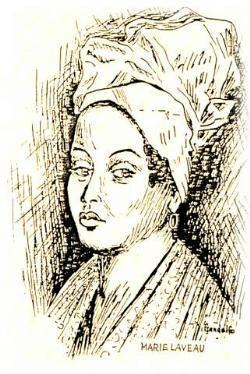 Marie Leveau
With the many characters, historical places and descriptions it may be a bit much for some especially if one opens this expecting a nice little cozy mystery set in historical times. This is a detailed, multi-layered read that deserves the readers full attention. It is certainly for adults due to scenes of cruelty and brutality and some minor language. Two minor nit picky things. January's reason why he returned from Paris the year before being repeated too frequently and the only other thing would be a map, since Hambly makes such an effort to tell the reader the layout of the city, street and houses. I know such minor things but I thought I'd mention them.
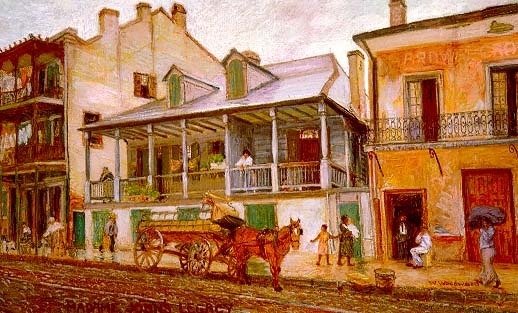
The author wraps her mystery within one of early America's most horrific historical events that is still being disputed - did she or didn't she - to this day, and a stop on many haunted New Orleans tours. This gives a powerful punch to her story that many unfamiliar with the incident may find over the top, too hard to believe. It was amazing that even though I knew this history, it did not ruin the book or the denouement for me. Hambly provides a nicely detailed author's note, at the end of the book, explaining the background and research that helped her arrive at the direction she took for the story. Do not read this before finishing the book, just trust me on that.
It has been quite some years since I read the first book in the series but the writing, Benjamin January and the New Orleans societal system had always stayed with me. It was a case of the too many books syndrome but thanks to a Goodreads friend and her enthusiasm as she read the series I had to read this book. I don't plan on waiting that long between books in this series again.
"One thing I've learned," January said with a smile, "love is beyond comprehension. Anyone can love anyone. It's like the cholera."
Although this is a mystery series, I read them for the historical aspects and the characters. This one doesn't disappoint on any of those levels. Barbara Hambly depicts a time, place and society rarely covered, or even mentioned, in fiction. We get to walk the streets of pre Civil War New Orleans (1830's) experiencing relations between whites, blacks, Creoles, French, free colored and those uncouth Americans with their ugly, clunky language. There is an emphasis on the placage system, common law marriages between white Creoles and free colored women and their children. We see this fascinating, gracious, structured and genteel society, draped in a beautiful, gauzy cloth that flutters up to give us a peek at the ugly realities and customs needed to keep up the facade.
"If every woman killed every master who had her against her will, there'd be dead men lying like a carpet from here to the moon." says Cora, a runaway slave. Benjamin, a free man of color, later replies. "If every woman killed every wench her husband had, there'd be dead women lying like a carpet from here to the moon."
Hambly does an incredible job of keeping her characters true to their time period. Benjamin January, or Janvier, depending on the background of the person speaking with him, is a man who has tasted freedom, after living in Paris, and knew upon returning home to New Orleans that he had to make compromises. He could no longer look at someone "above him" in the eye and must always try to appear as less than a man and just a bit slow and dumb. The inner dialogue and constant fights he has with himself to keep this reigned in are how the reader get to see the true sense of this man. Rose Vitrac a woman who bears the shame of valuing knowledge above everything else and daring to want to teach girls to use their brains. Abishag Shaw, a law man who isn't as dumb as he appears and has an inventive language all his own, like "Borgialatin the soup" or "chromatic betters". This just touches on the rich, complex characters, some new some returning, as well as historical personages, that populate the pages.
Marie LeveauWith the many characters, historical places and descriptions it may be a bit much for some especially if one opens this expecting a nice little cozy mystery set in historical times. This is a detailed, multi-layered read that deserves the readers full attention. It is certainly for adults due to scenes of cruelty and brutality and some minor language. Two minor nit picky things. January's reason why he returned from Paris the year before being repeated too frequently and the only other thing would be a map, since Hambly makes such an effort to tell the reader the layout of the city, street and houses. I know such minor things but I thought I'd mention them.
The author wraps her mystery within one of early America's most horrific historical events that is still being disputed - did she or didn't she - to this day, and a stop on many haunted New Orleans tours. This gives a powerful punch to her story that many unfamiliar with the incident may find over the top, too hard to believe. It was amazing that even though I knew this history, it did not ruin the book or the denouement for me. Hambly provides a nicely detailed author's note, at the end of the book, explaining the background and research that helped her arrive at the direction she took for the story. Do not read this before finishing the book, just trust me on that.
"She had a way of pronouncing the word American that implied a world of lice and tobacco stains."
It has been quite some years since I read the first book in the series but the writing, Benjamin January and the New Orleans societal system had always stayed with me. It was a case of the too many books syndrome but thanks to a Goodreads friend and her enthusiasm as she read the series I had to read this book. I don't plan on waiting that long between books in this series again.
January 22, 2024
This takes all the things I loved about the first book and makes them even better. The atmosphere is SO vivid and creepy, and the multiple storylines build up to an intricate mystery that's absolutely delicious it is execution. It's quite a dark story overall — and that's a feature not a bug — but it makes the bright spots stand out even more. Absolutely loved it

October 18, 2008
I am re-reading this series this summer. Fever Season is the second volume of the January Mysteries. In New Orleans, many people have fled the city because of the epidemic. January hasn’t, though he might wish he had.
Hambly’s series succeeds because she mixes history in with a smidge of gothic and compelling characters that confronted racial issues, not only in adjusting to how the Americans have changed New Orleans, but also with an institution that denies Ben his ability to practice medicine and forces him to earn money with his skills as musicians.
In this book as well, we are introduced to Rose, a mixed-race woman, who struggles to be a science teacher to those mixed-race girls who are destined to be concubines to the rich white men who control New Orleans society, much the same way Ben’s youngest sister is, as was his mother.
Livia, Ben’s mother, is perhaps one of the greatest things about this series. She was a field hand until she, and her two children, were sold and her new master freed her. She became his concubine, and this former master paid for Ben’s education and is the father of Dominque. Livia’s determination to ensure her family’s survival has alienated her eldest daughter, who has established herself in the free black community as a voodoo priestess. But Livia is a fascinating character because she knows and works the structure that is forced on her. She is far more aware of what is at stake than Ben is in many cases, and she appears unfeeling, uncaring, and driven only by money. But one wonders.
To review the plot of the novel would be to offer a major spoiler, but the plot does involve Ben trying to discover what has happened to a missing young escaped slave as well as who is trying to destroy his reputation. The fictional plot is interwoven with real history and New Orleans lore in a realistic and compelling way.
Older ReviewIn many ways, the mystery is secondary to the relationship between January and his mother. Couched in the unusual story of a men who does not fit, is a look at familial relationships and the destruction and harm it can bring to a family.
Hambly’s series succeeds because she mixes history in with a smidge of gothic and compelling characters that confronted racial issues, not only in adjusting to how the Americans have changed New Orleans, but also with an institution that denies Ben his ability to practice medicine and forces him to earn money with his skills as musicians.
In this book as well, we are introduced to Rose, a mixed-race woman, who struggles to be a science teacher to those mixed-race girls who are destined to be concubines to the rich white men who control New Orleans society, much the same way Ben’s youngest sister is, as was his mother.
Livia, Ben’s mother, is perhaps one of the greatest things about this series. She was a field hand until she, and her two children, were sold and her new master freed her. She became his concubine, and this former master paid for Ben’s education and is the father of Dominque. Livia’s determination to ensure her family’s survival has alienated her eldest daughter, who has established herself in the free black community as a voodoo priestess. But Livia is a fascinating character because she knows and works the structure that is forced on her. She is far more aware of what is at stake than Ben is in many cases, and she appears unfeeling, uncaring, and driven only by money. But one wonders.
To review the plot of the novel would be to offer a major spoiler, but the plot does involve Ben trying to discover what has happened to a missing young escaped slave as well as who is trying to destroy his reputation. The fictional plot is interwoven with real history and New Orleans lore in a realistic and compelling way.
Older ReviewIn many ways, the mystery is secondary to the relationship between January and his mother. Couched in the unusual story of a men who does not fit, is a look at familial relationships and the destruction and harm it can bring to a family.

Read
August 26, 2014Benjamin January is working at a hospital during a yellow fever epidemic. (Yellow fever is transmitted by mosquitos, and due to being endemic in Africa, many people from Africa have some level of immunity. The characters in the book are aware of the latter fact but not the former, and have no useful treatment even if they did know the cause.) Meanwhile, both free people of color and slaves are mysteriously vanishing. In more cheerful news— well, cheerful for a while— Ben meets Rose, a free woman of color running a school for girls. Rose is a great character, and their slow burn romance is lovely.
That being said, the book as a whole was awesomely depressing. Not only was it set in a yellow fever epidemic, not only did it contain a brief but absolutely horrifying torture sequence, but both the epidemic and the horrifying torture were actual historic events, ie, they really happened to real people. Also, dead children. Truly grimdark, though not gratuitously given that it’s real history. Not even Ben and Rose’s charming courtship and politicly crude policeman Abishag Shaw’s delightful way with words ("But I do think I should point out to you that even if Miss Chouteau gets cleared of Borgialatin the soup herself, it ain't gonna win her freedom,") can lift the general gloom.
I have been told that this and Sold Down the River are the darkest books in the whole series. However, I already started Graveyard Dust, and it looks like Hambly is careful to get new readers up to speed on events, so Fever Season is probably skippable if you like the characters but want to miss the awesome depressingness.
That being said, the book as a whole was awesomely depressing. Not only was it set in a yellow fever epidemic, not only did it contain a brief but absolutely horrifying torture sequence, but both the epidemic and the horrifying torture were actual historic events, ie, they really happened to real people. Also, dead children. Truly grimdark, though not gratuitously given that it’s real history. Not even Ben and Rose’s charming courtship and politicly crude policeman Abishag Shaw’s delightful way with words ("But I do think I should point out to you that even if Miss Chouteau gets cleared of Borgialatin the soup herself, it ain't gonna win her freedom,") can lift the general gloom.
I have been told that this and Sold Down the River are the darkest books in the whole series. However, I already started Graveyard Dust, and it looks like Hambly is careful to get new readers up to speed on events, so Fever Season is probably skippable if you like the characters but want to miss the awesome depressingness.

October 14, 2012
It strikes me as very risky for a writer to write an historical "whodunnit" featuring an actual infamous figure from the past. This particular person is not exactly a household name, but for someone who (like me) has taken more than one Haunted History tour of New Orleans, it probably won't take long before the reader figures out why a particular name sounds so familiar. And when one of the central goals of mystery writing is to keep your readers guessing, it's not exactly a great idea to give them a big honking historical clue. (A bit like writing a mystery about bank robberies when two of your characters are Bonnie & Clyde...)
So I'll admit, I spent a good few chapters afraid I'd spend the whole book wincing at the obvious misdirections and rolling my eyes at how impossibly slow our amateur detective was. But fortunately, Ms. Hambly is a bit more clever than that. The mystery takes on a few extra wrinkles, and there are a number of plausible twists and turns. Plus there's the introduction of a potential love interest for January, along with some shades of mystery in her own life. And finally, there's the vivid depiction of the unusual culture of 1830s New Orleans, which comes to life enough to almost qualify as a character in itself.
All in all, rather than finding myself irritably waiting for the detective to figure things out (as I often am in a book where I think the culprit is painfully obvious), I found myself just enjoying the ride as the plot worked its way out.
A successful story, and I look forward to reading the third book in this series.
So I'll admit, I spent a good few chapters afraid I'd spend the whole book wincing at the obvious misdirections and rolling my eyes at how impossibly slow our amateur detective was. But fortunately, Ms. Hambly is a bit more clever than that. The mystery takes on a few extra wrinkles, and there are a number of plausible twists and turns. Plus there's the introduction of a potential love interest for January, along with some shades of mystery in her own life. And finally, there's the vivid depiction of the unusual culture of 1830s New Orleans, which comes to life enough to almost qualify as a character in itself.
All in all, rather than finding myself irritably waiting for the detective to figure things out (as I often am in a book where I think the culprit is painfully obvious), I found myself just enjoying the ride as the plot worked its way out.
A successful story, and I look forward to reading the third book in this series.

April 6, 2010
This is a very good historical mystery, set in New Orleans in the 1830's during a summer outbreak of yellow fever. When people of color begin to quietly disappear, it's uncertain at first whether they're dropping dead from the fever, which can overcome a person with shocking speed, or if an even more sinister fate has befallen them.
Hambly's writing is lush and vivid, and she brings the rather horrific setting to life. (The city was a cesspool even before people started dying all over the place. Don't read this while you're eating lunch.) Not only are the characterizations rich and realistic, I think Hambly does a good job of making January a man of his time. For instance, he's educated and enlightened, but while he's pretty sure that bleeding patients profusely and dosing them with "heroic" quantities of noxious substances will cause more harm than good, he doesn't have any idea what causes the disease so he's reluctant to criticize other people's efforts.
I almost knocked a star off my rating because of the ending, which is unnecessarily sensationalist and gruesome. I don't care if it is based on a possibly true story, as the author's note claims. Also, I saw it coming very early in the novel, as I think most readers will.
Hambly's writing is lush and vivid, and she brings the rather horrific setting to life. (The city was a cesspool even before people started dying all over the place. Don't read this while you're eating lunch.) Not only are the characterizations rich and realistic, I think Hambly does a good job of making January a man of his time. For instance, he's educated and enlightened, but while he's pretty sure that bleeding patients profusely and dosing them with "heroic" quantities of noxious substances will cause more harm than good, he doesn't have any idea what causes the disease so he's reluctant to criticize other people's efforts.
I almost knocked a star off my rating because of the ending, which is unnecessarily sensationalist and gruesome. I don't care if it is based on a possibly true story, as the author's note claims. Also, I saw it coming very early in the novel, as I think most readers will.

June 23, 2012
The second of Barbara Hambly's Benjamin January series manages to hit the big trifecta of "reasons to be very glad you're living in 21st century America": we now know what causes diseases like yellow fever and cholera and how to cure them; we've abolished chattel slavery; and we let women pursue education and careers if they want to.
And it does all this in the context of an engrossing and troubling mystery about a certain type of person disappearing that's (loosely) based on reports of an actual historical event. Well, actually there are two mysteries that wind up crossing each other by accident. Hambly is at the top of her game here, and the novel explores the back alleys and fine houses of New Orleans with a clear, pitiless, and often shocking gaze.
And it does all this in the context of an engrossing and troubling mystery about a certain type of person disappearing that's (loosely) based on reports of an actual historical event. Well, actually there are two mysteries that wind up crossing each other by accident. Hambly is at the top of her game here, and the novel explores the back alleys and fine houses of New Orleans with a clear, pitiless, and often shocking gaze.

June 10, 2012
This novel is the second in a series about 1830s New Orleans and Benjamin January, a free man of color (title of the first novel). Benjamin is a medical doctor who only practices medicine in the summer when the fever season mysteriously kills hundreds of people. Otherwise, he teaches piano lessons or is hired to play at balls. He is a "free man of color," but he is always worried about his own welfare, since he is very tall and very black. He is always in danger of being mistaken for a slave and sold.
This mystery/history novel finds Benjamin searching for a runaway slave, Cora Chouteau, who in turn is accused of murdering her master and poisoning his wife. As he becomes involved in searching for Cora and investigating the death of her master, he discovers that free people of color are disappearing. The plot goes in many directions and Benjamin becomes involved with a variety of people from all levels of society. The details are impeccable and the story complicated, but easy to follow. New Orleans society pre Civil War is like nothing I ever studied, and I am happy to have discovered Barbara Hambly. I may pick up another book in this sequence soon.
This mystery/history novel finds Benjamin searching for a runaway slave, Cora Chouteau, who in turn is accused of murdering her master and poisoning his wife. As he becomes involved in searching for Cora and investigating the death of her master, he discovers that free people of color are disappearing. The plot goes in many directions and Benjamin becomes involved with a variety of people from all levels of society. The details are impeccable and the story complicated, but easy to follow. New Orleans society pre Civil War is like nothing I ever studied, and I am happy to have discovered Barbara Hambly. I may pick up another book in this sequence soon.

March 16, 2009
This was the first of the Benjamin January series that I read and I was reluctant to start. So many books which deal with slavery in the south are hokey or very politically correct. This one (and others in the series) deals with it in an open-minded and informative way (and no, it doesn't at all condone it).
While race is an underlying theme in these books, it is not the implicit point of them. They are convoluted mysteries, well presented in the context of New Orleans and environs in the 1830's. I imagine that someone who has lived in New Orleans could really get a kick out of hearing all the place names and thinking about those places as empty space or plantations recently taken over and populated.
And then there's the fever, which is what ultimately overcame my reluctance to read this series. If you have a morbid curiosity about disease, this will only serve to whet your appetite, not give you any new information about yellow fever, but it is interesting to see yellow fever (and cholera) in its historic context.
While race is an underlying theme in these books, it is not the implicit point of them. They are convoluted mysteries, well presented in the context of New Orleans and environs in the 1830's. I imagine that someone who has lived in New Orleans could really get a kick out of hearing all the place names and thinking about those places as empty space or plantations recently taken over and populated.
And then there's the fever, which is what ultimately overcame my reluctance to read this series. If you have a morbid curiosity about disease, this will only serve to whet your appetite, not give you any new information about yellow fever, but it is interesting to see yellow fever (and cholera) in its historic context.

Read
May 21, 2014I've only fairly recently developed the ability to leave books unread if I'm not enjoying them, but having got 150 pages into a 400+ novel with barely any plot development, I felt pretty justified in returning this to the library without finishing it.
I was really interested in the premise/setting of the book ("free man of color" surgeon/pianist Benjamin January navigates 1830s New Orleans in the middle of a cholera epidemic), but given that it was theoretically a mystery novel, I found the lack of plot development to be a bit of a problem. And while I appreciate period detail and description at least as much as the next person, after the first few repetitions I didn't need to be told yet again that people kept their doors and windows closed because they thought disease was spread by bad air.
Based on what I've read, I'd give this two stars, though I suppose there's a slim chance I stopped reading too soon and I would have enjoyed the rest of the book had I persevered.
I was really interested in the premise/setting of the book ("free man of color" surgeon/pianist Benjamin January navigates 1830s New Orleans in the middle of a cholera epidemic), but given that it was theoretically a mystery novel, I found the lack of plot development to be a bit of a problem. And while I appreciate period detail and description at least as much as the next person, after the first few repetitions I didn't need to be told yet again that people kept their doors and windows closed because they thought disease was spread by bad air.
Based on what I've read, I'd give this two stars, though I suppose there's a slim chance I stopped reading too soon and I would have enjoyed the rest of the book had I persevered.

February 23, 2011
Woweee. What a novel! Set in New Orleans in 1834, this is a complex historical thriller that is written in a tightly plotted, descriptive, way as only Barbara Hambly can dish up. We get to meet Rose Vitric for the first time, and the underlaying story shook me up to no end. It's a devilishly clever and well-written book.
For the longer review, please go here:
http://www.epinions.com/review/Barbar...
For the longer review, please go here:
http://www.epinions.com/review/Barbar...

November 22, 2014
I read this book years ago and it stuck in my mind and resurfaces every now and again. It came up today during a conversation about afro punk, victorians, and voodoo (hanging with academics...its what we do). Anyway, this book is an excellent drama that touches upon class, race, racism, voodoo, family bonds, and the hypocrisy of religious zealots. I recommend it for anyone who enjoys murder mysteries, historical fiction,and light horror.

July 11, 2017
Hambly's writing is as evocative as ever, as she continues this series set in 1830s New Orleans. The divisions between Creole and American, free colored and enslaved black are as stark as ever, but the portrayal of how members of the different groups interact with each other are nuanced and fascinating. It's a grim book in many ways, but I can't help but want to read more about Benjamin January and his friends (and enemies).

September 22, 2026
It's fever season in New Orleans, where cholera, referred to as Bronze John, is decimating the population, especially the white population. It's 1833 and the city is brutally hot, humid and, due to monsoons, wet. Smudge pots fill the air with darkness and smoke. Those who can afford to do so have moved out of the city until fever season ends, leaving streets and homes in most areas empty. Carts filled with those dead from the fever ply the streets, with the morning cry “Bring out yo’ dead!” echoing as a wake up call. Dr. Ben January volunteers at the charity hospital during fever season, and as the story begins, he's exhausted, depressed and remembering how his wife died a year earlier in Paris from the fever.
Against the miasma that fever season brings on New Orleans in 1833, free coloreds and slaves who sleep out (who are earning money from outside jobs to buy their freedom by splitting earnings with their masters) are disappearing - those who have no families or otherwise won't be missed right away, and the assumption of Bronze John claiming them doesn't ring true. At the same time, a runaway slave named Cora seeks help from January to make contact with her beau who was sold by their master to one of the leading creole families in New Orleans where January teaches piano to the 2 youngest daughters who are still living at home. Then, after a meeting between Cora and her beau has been arranged, Cora literally disappears. At the same time, someone starts spreading calumnies about January and he narrowly escapes attacks by gangs lying in wait for him.
This is a mercilessly dark, even horrific, read, one even I had to take breaks while reading and switch to lighter fare. In addition to Bronze John and gangs kidnapping coloreds, you will need to be prepared at the end for scenes of truly nightmarish conditions and abuse of slaves. Hambly in her acknowledgments reveals that what is at the heart of the murder mystery, all that she describes, comes from historical records and in fact the final horrific scenes and many of the characters were real historic events and figures.
There are a few lighter moments - including introduction of Rose, who is also a free colored, and for whom January establishes the promise of a future. We learn a great deal more about January himself, his family and background. I also think Hambly does a good job weaving into the story the complex politics and history that is New Orleans - which then was a city divided into 2 sections: French and American. It's a haunting read and I for one have no desire to time travel back to New Orleans in the 1830s.
Against the miasma that fever season brings on New Orleans in 1833, free coloreds and slaves who sleep out (who are earning money from outside jobs to buy their freedom by splitting earnings with their masters) are disappearing - those who have no families or otherwise won't be missed right away, and the assumption of Bronze John claiming them doesn't ring true. At the same time, a runaway slave named Cora seeks help from January to make contact with her beau who was sold by their master to one of the leading creole families in New Orleans where January teaches piano to the 2 youngest daughters who are still living at home. Then, after a meeting between Cora and her beau has been arranged, Cora literally disappears. At the same time, someone starts spreading calumnies about January and he narrowly escapes attacks by gangs lying in wait for him.
This is a mercilessly dark, even horrific, read, one even I had to take breaks while reading and switch to lighter fare. In addition to Bronze John and gangs kidnapping coloreds, you will need to be prepared at the end for scenes of truly nightmarish conditions and abuse of slaves. Hambly in her acknowledgments reveals that what is at the heart of the murder mystery, all that she describes, comes from historical records and in fact the final horrific scenes and many of the characters were real historic events and figures.
There are a few lighter moments - including introduction of Rose, who is also a free colored, and for whom January establishes the promise of a future. We learn a great deal more about January himself, his family and background. I also think Hambly does a good job weaving into the story the complex politics and history that is New Orleans - which then was a city divided into 2 sections: French and American. It's a haunting read and I for one have no desire to time travel back to New Orleans in the 1830s.

April 15, 2022
Una interesante novela negra con ambientación histórica, que explora uno de los personajes más oscuros de la alta sociedad del siglo XIX en Nueva Orleans, guiados de la mano de un personaje ficticio que hace un excelente trabajo. El doctor Benjamin January, afroamericano libre, médico preparado en Paris, regresa a su ciudad natal después de perder a su esposa y a su hijo por nacer en una epidemia de cólera. Su condición de hombre libre no lo excusa de tener que manejarse dentro de los límites impuestos por la sociedad elitista dominante. De tener que soportar insultos y tolerar la ignorancia de sus "superiores", a pesar de tener los conocimientos para rivalizar con cualquiera de ellos. Un hombre que, sin ser esclavo, solo podía ganarse la vida como profesor de música. Sus estudiantes, los hijos de la misma alta sociedad que lo tiene bajo su pie.
Con estos elementos empieza la trama de "Temporada de fiebre". Las descripciones de la ciudad asolada por una epidemia de fiebre amarilla, con los ricos huyendo y los pobres escondiéndose en las casas abandonadas, los muertos cayendo en las cunetas o colocados en la carreta de los recolectores de cadáveres, los hospitales de caridad llenos de moribundos, los médicos discutiendo terapias experimentales que rayaban en la barbarie, es un escenario digno de la historia contada.
En medio de este paisaje dantesco tenemos a Benjamin January, quien decide hacerle un favor a una esclava fugitiva. Está en proceso de huir y quiere ver a su novio esclavo una vez más. Benjamín ayuda, solo para descubrir después que la policía la busca, acusada de robar dinero de sus amos, así como de asesinar al patrón y de intentar asesinar a su esposa.
A este problema y a las muertes que van sumándose por culpa de la epidemia, agreguen que Benjamín y Rose, una maestra de escuela a quien ayuda en el cuidado de sus alumnas enfermas y quien era amiga personal de la esclava fugitiva, empiezan a descubrir que otras personas están desapareciendo. Hombres y mujeres libres, sin familiares. Si están muriendo por la epidemia, sus cuerpos sepultados en los pantanos del área, o en manos criminales, eso es parte del misterio con el cual tiene que lidiar Benjamín.
El final, épico y basado en un hecho real. Las escenas descritas se quedarán en su mente al terminar la última página, tras lo cual irán a verificar si todo era cierto.
Lamento decirles que sí. El autor, al final, discute las fuentes bibliográficas del evento y la personalidad de los involucrados. A veces la realidad supera a al ficción. Otras veces es peor.
En resumen, una novela que, si tienen la oportunidad, deben leer. Páginas donde el escenario es tan importante como los personajes, pero no compiten por su atención. Emparejan a la perfección y transmiten el mensaje con el impacto que la historia amerita.
Con estos elementos empieza la trama de "Temporada de fiebre". Las descripciones de la ciudad asolada por una epidemia de fiebre amarilla, con los ricos huyendo y los pobres escondiéndose en las casas abandonadas, los muertos cayendo en las cunetas o colocados en la carreta de los recolectores de cadáveres, los hospitales de caridad llenos de moribundos, los médicos discutiendo terapias experimentales que rayaban en la barbarie, es un escenario digno de la historia contada.
En medio de este paisaje dantesco tenemos a Benjamin January, quien decide hacerle un favor a una esclava fugitiva. Está en proceso de huir y quiere ver a su novio esclavo una vez más. Benjamín ayuda, solo para descubrir después que la policía la busca, acusada de robar dinero de sus amos, así como de asesinar al patrón y de intentar asesinar a su esposa.
A este problema y a las muertes que van sumándose por culpa de la epidemia, agreguen que Benjamín y Rose, una maestra de escuela a quien ayuda en el cuidado de sus alumnas enfermas y quien era amiga personal de la esclava fugitiva, empiezan a descubrir que otras personas están desapareciendo. Hombres y mujeres libres, sin familiares. Si están muriendo por la epidemia, sus cuerpos sepultados en los pantanos del área, o en manos criminales, eso es parte del misterio con el cual tiene que lidiar Benjamín.
El final, épico y basado en un hecho real. Las escenas descritas se quedarán en su mente al terminar la última página, tras lo cual irán a verificar si todo era cierto.
Lamento decirles que sí. El autor, al final, discute las fuentes bibliográficas del evento y la personalidad de los involucrados. A veces la realidad supera a al ficción. Otras veces es peor.
En resumen, una novela que, si tienen la oportunidad, deben leer. Páginas donde el escenario es tan importante como los personajes, pero no compiten por su atención. Emparejan a la perfección y transmiten el mensaje con el impacto que la historia amerita.

May 6, 2025
This is only book #2 from this series, but it already feels like it's going to become a favorite. I really like Ben, the MC, and seeing the story from his point of view - a free man of color living in New Orleans in the 1830s. He (and others like him) don't have trouble with the residents of New Orleans, who are accustomed to the laws in this regard, but the Americans - those from other parts of the country - have a hard time accepting this, and that's where the trouble usually starts.
In addition to those worries, New Orleans is in the middle of a massive cholera outbreak, and Ben, as a French-trained surgeon, is working nearly round the clock. In the middle of all this is a murder and a runaway slave whose capture is demanded by her owners. It seemed evident that the two problems are related, but figuring out who was involved was a challenge. I didn't put the pieces together until it became obvious in the book, but at least the motive was easy to determine.
I have the next several books from this series in my audio library, and I hope to listen to the next one relatively soon.
In addition to those worries, New Orleans is in the middle of a massive cholera outbreak, and Ben, as a French-trained surgeon, is working nearly round the clock. In the middle of all this is a murder and a runaway slave whose capture is demanded by her owners. It seemed evident that the two problems are related, but figuring out who was involved was a challenge. I didn't put the pieces together until it became obvious in the book, but at least the motive was easy to determine.
I have the next several books from this series in my audio library, and I hope to listen to the next one relatively soon.

September 17, 2018
Carefully described historic details create the atmosphere of early nineteenth century New Orleans during a yellow fever epidemic with a society in flux between French, Creole, and American cultures. There are also several mysteries, but there is so much going on with the epidemic and with the hero Benjamin January, doctor, musician and free man of color, that the mysteries played second fiddle.

November 25, 2017
A very entertaining mystery and a pretty authentic look at 19th century New Orleans society.
Aiso, a pretty interesting afterword.
Aiso, a pretty interesting afterword.
June 18, 2018
an atmospheric mystery & historical fiction set in 1830s new orleans. well written main & supporting characters. would love to read spin off with abishag shaw as mc.

December 10, 2024
Got a little confusing throughout the book with all the going back and forth. OK, but not great.
April 17, 2020
This is a dense book to read. Lots of characters with not too much references, so easily confused! I realize this is the 2nd book with this leading character...and perhaps if I had read the first one that might not have been the case. It is based on a true story from New Orleans. I thought the book was very good showing the hard, horrible life of the black men and women in New Orleans (and all over the south). It is really a sickening story of American life. I recommend it from that point of view.

August 13, 2007
Masterfully crafted, the events follow necessities imposed by the stratification of pre-Civil War New Orleans' society. Benjamin January ends up detective because he is a free man of color, and cannot count on the white authorities. Following disappearances, a murder that is not what it seems, and the strange behavior of one of the most powerful women in the city, January risks his life and his freedom to find answers.
Thematically, and dramatically focusing on the tenuous nature of freedom for colored people, Hambly creates a heartbreaking world that manages to be as hopeful, cruel, inexplicable and odd as the human beings who occupy it. Emphasis on active cruelty as well as casual disdain, but some nice looks at love and hope too.
Thematically, and dramatically focusing on the tenuous nature of freedom for colored people, Hambly creates a heartbreaking world that manages to be as hopeful, cruel, inexplicable and odd as the human beings who occupy it. Emphasis on active cruelty as well as casual disdain, but some nice looks at love and hope too.

June 25, 2012
Benjamin January spends most of the book sleep deprived from working too many shifts at the hospital during a yellow fever epidemic. It gives the book a hazy tone, making the reader share an almost trance like state as our hero stumbles around amidst the worst conditions that nature and man can throw at a person. The ending of the mystery drags on for quite some time, and then ends on a very weird and sudden note – made all the weirder by the author’s note at the end explaining how she did not make any of that sh*t up. >shudder<
Besides the mystery and the cast of characters, it was a fascinating read on the “medical” basis alone as Hambly takes the reader through a tour of where western medicine was in the 1830’s – trust me, its brutal.

July 11, 2015
Another enjoyable Benjamin January suspense. Familiar characters with unknown new ones make this story well worth reading. Ms Hambly continues her good storytelling with vivid depictions of 1830s New Orleans. My one complaint would be that she was too good with the often distasteful details. A bit too much about the deplorable conditions of those days with rodents everywhere, waste product stenches all around, dead animal carcasses in ditches, filth and muck and roaches and mosquitoes in abundance. Realism may need to be a bit limited but you sure get a picture of what life was like in New Orleans back then. So it gets a thumbs up from me even if it made me thank God I was not living in New Orleans at that time.

August 31, 2009
I'm wondered, while reading this book, whether mysteries might change the world more than the other books I am reading, which are profound and scholarly reflections on justice and history.
Here's a quote: (p.185 in paperback)
"Men don't need to be evil, Mademoiselle. They just have to be bad enough to say, 'There's nothing I can do.'"
I was talking to someone about a man I knew who won awards for designing the delivery system for napalm. "Was he a good man?" she asked. You tell me.
Here's a quote: (p.185 in paperback)
"Men don't need to be evil, Mademoiselle. They just have to be bad enough to say, 'There's nothing I can do.'"
I was talking to someone about a man I knew who won awards for designing the delivery system for napalm. "Was he a good man?" she asked. You tell me.

April 23, 2011
Benjamin January in peak form, fighting Cholera and his usual demons - but I'm starting to think "a novel of suspense" is code for "despite historical setting, expect ridiculous and unbelievable level of thriller action." I don't know if I can believe the constant melodramatic turns - this time, a perfect-yet-sinister Creole hostess sneaks in, sending the story over the top. I had a bit of trouble separating the historical from the fanciful here.

April 25, 2011
I read this whole series over and over. They're so densely plotted that I often lose track of the thread of the story. That would usually kill a book for me (see Lempriere's Dictionary) but with these I don't even care - it's spending time in historical New Orleans with Hambly's amazing cast of characters that keeps me coming back.
One of my favorite series, in any genre.
One of my favorite series, in any genre.

October 30, 2011
Hambly spins a compelling tale of Creole society in New Orleans in the early 1800's, with a mystery based on an actual case. Benjamin January is a likable and intelligent protagonist with some maddening blind spots. A good series, although I find myself bracing for something awful to happen to January. Both books I've read reveal the true horrors of slavery and the ownership of human beings.

November 8, 2008
A thoroughly enjoyable book, a historical-mystery-suspense hybrid. This one was darker and stronger than the first in the series, IMO, a little bit more noir, although M. Janvier will always be too soft in the center to be a true hardboiled detective.

June 24, 2012
I enjoyed this book more than the first in the series, but I still skimmed passages near the end. Although I enjoy history and appreciate detail, I find these books overwritten on both the sentence and scene level. I'd probably read the next installment, but I'm not going out of my way to find it.
Displaying 1 - 30 of 148 reviews