

What do you think?

Ladies of the Rachmaninoff Eyes
A lost midcentury classic—the farcical misadventures of a queer Black teen sharing a house with two adoptive mothers, a lascivious cook, and a reticent ghost.
In a small Michigan town, in the late 1950s, the widow Etta Klein—wealthy and Jewish—has for more than thirty years relied for aid, comfort, and companionship on her Black housekeeper Harriet Gibbs. Between “Aunt Harry” and Etta, a relationship has developed that is closer than a friendship, yet not quite a marriage. They are inseparable, at once absurdly unequal and defined by a comic codependence.
Forever mourning the early death of her favorite son, Sargent, Etta has all but adopted Aunt Harry’s nephew, the precocious, gay seventeen-year-old Oliver, who has been raised by both women. Oliver is facing down his departure to college—and fending off the advances of Etta’s cook, Nella Mae—when the household is disrupted by the arrival of a self-proclaimed “warlock,” one Maurice LeFleur, who has convinced Etta and Harry that he might be able to contact Sargent in the afterlife . . .
Ladies of the Rachmaninoff Eyes was the debut of the extraordinary Henry Van Dyke, whose witty and outrageous novels look back to the sparkling, elaborate comedies of Ronald Firbank and forward to postmodern burlesques like Fran Ross’s Oreo . There is nothing else quite like them in American fiction.
In a small Michigan town, in the late 1950s, the widow Etta Klein—wealthy and Jewish—has for more than thirty years relied for aid, comfort, and companionship on her Black housekeeper Harriet Gibbs. Between “Aunt Harry” and Etta, a relationship has developed that is closer than a friendship, yet not quite a marriage. They are inseparable, at once absurdly unequal and defined by a comic codependence.
Forever mourning the early death of her favorite son, Sargent, Etta has all but adopted Aunt Harry’s nephew, the precocious, gay seventeen-year-old Oliver, who has been raised by both women. Oliver is facing down his departure to college—and fending off the advances of Etta’s cook, Nella Mae—when the household is disrupted by the arrival of a self-proclaimed “warlock,” one Maurice LeFleur, who has convinced Etta and Harry that he might be able to contact Sargent in the afterlife . . .
Ladies of the Rachmaninoff Eyes was the debut of the extraordinary Henry Van Dyke, whose witty and outrageous novels look back to the sparkling, elaborate comedies of Ronald Firbank and forward to postmodern burlesques like Fran Ross’s Oreo . There is nothing else quite like them in American fiction.
192 pages, Paperback
First published December 1, 1966
About the author
Henry Van Dyke
4 books6 followersHenry Van Dyke (1928 - 2011) was born in Allegan, Michigan, and grew up in Montgomery, Alabama, where his parents were professors at Alabama State College. He served in the Army in occupied Germany, playing flute in the 427th Marching Band. There he abandoned his early ambition to become a concert pianist and began to write. In 1958, after attending the University of Michigan on the G.I. Bill and living in Ann Arbor, he moved to New York, where he spent the rest of his life. Henry taught creative writing part-time at Kent State University from 1969 until his retirement in 1993, and was the author of four novels, including Blood of Strawberries, a sequel to Ladies of the Rachmaninoff Eyes.
(Source: https://www.mcnallyeditions.com/henry...)
(Source: https://www.mcnallyeditions.com/henry...)
Ratings & Reviews
Friends & Following
Create a free account to discover what your friends think of this book!
Community Reviews
Displaying 1 - 30 of 84 reviews

no
June 26, 2024I was overwhelmed by its relentless wittiness. Reading it is like being in a steam room, or on a roller coaster, wow, this is so exhilaratingly good, and exactly where I want to be, but eventually my mood changes to ‘get me outta here’

February 12, 2024
Another excellent book from McNally Editions. I tagged this book lgbtq and race issues, but that’s not what the book is about, in fact the most remarkable thing about this unusual story is its unremarkable inclusivity. Written by a Henry Van Dyke, a gay Black man, and published in 1965, the Civil Rights era in the U.S., I expected there to be bridge building or insights into race in America, but there’s really none of that. The fact that Oliver, from whose pov the story is told, is a gay Black teenager and that his Aunt Harriet’s employer, Mrs. Klein, is a wealthy, White Jewish woman, aren’t important to the story of a week in the life of this dysfunctional, functioning family of sorts.
The humor comes from the 30 year, oddly co-dependent relationship of the two old widows, Aunt Harry and Mrs. Klein, Oliver’s de facto mothers, who bicker, banter, battle, support and praise each other, they are each other’s most loyal confident and the bane of the other’s existence all in the same conversation.
The other characters, Mrs. Klein’s son Jerome, his wife Patricia Jo, and the sex crazed cook, Della, who cannot understand why she fails in her attempts to seduce the poetry loving Oliver, bring added humor as the supporting cast.
When the two old women invite to the house Maurice le Fleur, a self-styled warlock, to conduct a seance in order to contact Sargent Klein, the beloved elder son who five years earlier committed suicide in NYC, Oliver alone is determined to protect the women, Della included, from this obvious con man, which lands Oliver in some outrageous situations.
I recommend this book, it’s touching, funny, a little heartbreaking, but mostly it is very entertaining.
The humor comes from the 30 year, oddly co-dependent relationship of the two old widows, Aunt Harry and Mrs. Klein, Oliver’s de facto mothers, who bicker, banter, battle, support and praise each other, they are each other’s most loyal confident and the bane of the other’s existence all in the same conversation.
The other characters, Mrs. Klein’s son Jerome, his wife Patricia Jo, and the sex crazed cook, Della, who cannot understand why she fails in her attempts to seduce the poetry loving Oliver, bring added humor as the supporting cast.
When the two old women invite to the house Maurice le Fleur, a self-styled warlock, to conduct a seance in order to contact Sargent Klein, the beloved elder son who five years earlier committed suicide in NYC, Oliver alone is determined to protect the women, Della included, from this obvious con man, which lands Oliver in some outrageous situations.
I recommend this book, it’s touching, funny, a little heartbreaking, but mostly it is very entertaining.

January 5, 2026
This is such an idiosyncratic, one-of-a-kind book that I feel a bit curmudgeonly not giving it 5 stars - and until about halfway through, I was thinking it deserved such. But my enthusiasm began to wane about then - and a rather disappointing climax/dénouement (and a penultimate chapter of animal cruelty I certainly could have done without!) made me reconsider.
Others have likened this to the works of Ronald Firbank (whom, alas, I haven't read - yet!), but to me Van Dyke seems like a black Southern version of Patrick Dennis -and indeed, the titular characters - Aunt 'Harry' Gibbs and Mrs. Etta Klein reminded me in their boozy bickering banter of Auntie Mame and Vera Charles! Belle Thompson also bore whiffs of Patrick's own Belle Poitrine from Little Me: The Intimate Memoirs of that Great Star of Stage, Screen and Television, Belle Poitrine.
It still seems rather bizarre that a comedic book by and about a black queer man could have been written back in 1961, and I'm glad it's being rediscovered through the recent reprinting. I DID enjoy it enough that I'm moving on to the sequel, and we'll see how well the adventures of Oliver hold up in a second serving.
Others have likened this to the works of Ronald Firbank (whom, alas, I haven't read - yet!), but to me Van Dyke seems like a black Southern version of Patrick Dennis -and indeed, the titular characters - Aunt 'Harry' Gibbs and Mrs. Etta Klein reminded me in their boozy bickering banter of Auntie Mame and Vera Charles! Belle Thompson also bore whiffs of Patrick's own Belle Poitrine from Little Me: The Intimate Memoirs of that Great Star of Stage, Screen and Television, Belle Poitrine.
It still seems rather bizarre that a comedic book by and about a black queer man could have been written back in 1961, and I'm glad it's being rediscovered through the recent reprinting. I DID enjoy it enough that I'm moving on to the sequel, and we'll see how well the adventures of Oliver hold up in a second serving.

June 22, 2020
Full disclosure: The author was once my creative writing professor and briefly mentored me as I wrote my first novel. That being said, I can't believe it took me so long to read his first novel, published two years before I was born. It's not an easy book to find in print, and I think that's a real shame, because this is an important book.
It mixes tragedy and comedy deftly as it follows Oliver, a young man struggling with his identity as a black man and his sexuality. He lives with two widows-- his aunt Harry and her former employer and now companion Mrs. Klein, a wealthy Jewish woman. Neither woman is handling the suicide of Mrs. Klein's son Sargent at all, but this makes the situation ripe for a con artist who claims to be a "warlock" and offers to conduct a séance to commune with the dead son. Chaos ensues, of course.
I highly recommend this book.
It mixes tragedy and comedy deftly as it follows Oliver, a young man struggling with his identity as a black man and his sexuality. He lives with two widows-- his aunt Harry and her former employer and now companion Mrs. Klein, a wealthy Jewish woman. Neither woman is handling the suicide of Mrs. Klein's son Sargent at all, but this makes the situation ripe for a con artist who claims to be a "warlock" and offers to conduct a séance to commune with the dead son. Chaos ensues, of course.
I highly recommend this book.

December 20, 2025
A genuine delight, & one of my favorite literary discoveries of the year. Delightfully written—Van Dyke is a master comedic stylist—it whirls through an ostensibly frivolous story that, like the great screwball classics of old Hollywood, withholds its true emotional weight until the last act.
One of the most remarkable, albeit subtle, aspects about Van Dyke's story & style is how lightly it negotiates so many weighty topics swirling just outside the frame of the the text itself. As a queer black American man writing at the height of the Civil Rights Movement, the pressure to produce a realist novel with Social Purpose must have been enormous—even in more carefree contexts situating oneself directly within the high camp tradition of Ronald Firbank & Oscar Wilde is often regarded with deep suspicion.
Which is not to say that Van Dyke ignores these factors; indeed, the more the story progressed I felt like he was acutely aware of them. Like Wilde, he inverts expected behaviors & social expectations for satirical purposes & comedic effect, carefully accumulating little absurdities until it threatens to destabilize entire social hierarchies. For me the unexpected (unrealistic?) racial dynamics between these characters living in the mid century American South only drew my attention to them all the more. A similar strategy is employed re: sexuality, as most of the sexual situations teenage Oliver finds himself entangled in are heterosexual, with his implied queerness is primarily signaled instead through his snobbishness & intense Francophilia.
Also a special shoutout to the household cook Nella Mae, a deliciously bawdy character who initially operates as comedic relief but whose trajectory, like all of these characters, eventually turns deeply poignant. I kept thinking about her a lot, & hope things turned out okay for her in the end.
[Afterward I also read the continuing adventures of Oliver, 1969's Blood of Strawberries , & loved it as well.]
"'When you get older'—and before she finished I wanted to protest; I was pretty sick of that old chestnut, dropped by the aged (Benson, Aunt Harry, and now Patricia Jo) whenever they were in a tight spot; it was a dirty ploy, this more-experienced-than-thou weapon used by elders to win the game when they were losing—'you'll understand that one has to believe a little bit in almost everything.'"
One of the most remarkable, albeit subtle, aspects about Van Dyke's story & style is how lightly it negotiates so many weighty topics swirling just outside the frame of the the text itself. As a queer black American man writing at the height of the Civil Rights Movement, the pressure to produce a realist novel with Social Purpose must have been enormous—even in more carefree contexts situating oneself directly within the high camp tradition of Ronald Firbank & Oscar Wilde is often regarded with deep suspicion.
Which is not to say that Van Dyke ignores these factors; indeed, the more the story progressed I felt like he was acutely aware of them. Like Wilde, he inverts expected behaviors & social expectations for satirical purposes & comedic effect, carefully accumulating little absurdities until it threatens to destabilize entire social hierarchies. For me the unexpected (unrealistic?) racial dynamics between these characters living in the mid century American South only drew my attention to them all the more. A similar strategy is employed re: sexuality, as most of the sexual situations teenage Oliver finds himself entangled in are heterosexual, with his implied queerness is primarily signaled instead through his snobbishness & intense Francophilia.
Also a special shoutout to the household cook Nella Mae, a deliciously bawdy character who initially operates as comedic relief but whose trajectory, like all of these characters, eventually turns deeply poignant. I kept thinking about her a lot, & hope things turned out okay for her in the end.
[Afterward I also read the continuing adventures of Oliver, 1969's Blood of Strawberries , & loved it as well.]
"'When you get older'—and before she finished I wanted to protest; I was pretty sick of that old chestnut, dropped by the aged (Benson, Aunt Harry, and now Patricia Jo) whenever they were in a tight spot; it was a dirty ploy, this more-experienced-than-thou weapon used by elders to win the game when they were losing—'you'll understand that one has to believe a little bit in almost everything.'"

September 21, 2025
Baroque, recursive dilettantism filtered exquisitely through the outlying force multipliers of the Black Arts Movement. If the ‘movement’ had needed its Henry James, and Henry James been one frightfully funny sonofabitch, it would’ve been Van Dyke. But it didn’t and he wasn’t. As it stands, that leaves Van Dyke as an absolute singularity in letters.

June 28, 2026
yes, I did read this because of its mention in
after hours at dooryard books
, thanks for asking.
fascinating book. I went into this a little warily, thinking it might be dry or reflective of a taste I no longer share as a modern reader, but it was largely a blast. tragicomic, mostly comic and certainly camp and at times almost picaresque, with a greater lean toward tragedy and a more subdued bittersweet mood at the end.
it almost doesn't matter what the book is about, but I can give my best attempt at an elevator pitch anyway. 16-year-old oliver is nephew to aunt harry, longtime housekeeper and bestest squabbling frenemy to the wealthy and aging etta klein. harry is black; etta is white, and jewish, and the family's sage (and very horny) cook nella has interesting insights about the perception of jewishness and whiteness from a black perspective—in spite of oliver's insistence that jews are "as white as anything," to nella's more worldly eyes, jews obviously aren't "colored or anything," but neither are they "white-white." both harry and etta are perennially mourning the death of sargent, etta's oldest son who went off to new york and killed himself for unknown reasons, and have basically made oliver into a proxy for him, much to the dismay of etta's living son jerome and jerome's wife patricia jo. when a "warlock" who styles himself maurice le fleur promises harry and etta the chance to speak with sargent's spirit, they jump on the idea, and oliver and jerome, in a surprising turn, find themselves in rare agreement about this being a bad idea. hijinks ensue against the background of oliver mentally preparing to go off to cornell after years of having been "educated up" on mrs. klein's dime, etcetera etcetera. there's a great running gag about oliver's "summer poem," upon which he works with great diligence.
the line "her hands were as gay as bees, always" also gave me great pleasure.
the foreword gives some great historical context but does also fall into the foreword trap of spoiling a little too much. when ladies came out, at least one reviewer basically said that mailer and burroughs and so on should aspire to be a little more like van dyke. disappointing, then, that this hasn't had staying power! go read it!
on the audiobook: the narrator has a great voice for the tenor of this unique little slip of a book, but he does dramatically mispronounce some things—descartes as dez-CAR-tez??????
(also, green acorns has to be a nod to green acres, right?)
fascinating book. I went into this a little warily, thinking it might be dry or reflective of a taste I no longer share as a modern reader, but it was largely a blast. tragicomic, mostly comic and certainly camp and at times almost picaresque, with a greater lean toward tragedy and a more subdued bittersweet mood at the end.
it almost doesn't matter what the book is about, but I can give my best attempt at an elevator pitch anyway. 16-year-old oliver is nephew to aunt harry, longtime housekeeper and bestest squabbling frenemy to the wealthy and aging etta klein. harry is black; etta is white, and jewish, and the family's sage (and very horny) cook nella has interesting insights about the perception of jewishness and whiteness from a black perspective—in spite of oliver's insistence that jews are "as white as anything," to nella's more worldly eyes, jews obviously aren't "colored or anything," but neither are they "white-white." both harry and etta are perennially mourning the death of sargent, etta's oldest son who went off to new york and killed himself for unknown reasons, and have basically made oliver into a proxy for him, much to the dismay of etta's living son jerome and jerome's wife patricia jo. when a "warlock" who styles himself maurice le fleur promises harry and etta the chance to speak with sargent's spirit, they jump on the idea, and oliver and jerome, in a surprising turn, find themselves in rare agreement about this being a bad idea. hijinks ensue against the background of oliver mentally preparing to go off to cornell after years of having been "educated up" on mrs. klein's dime, etcetera etcetera. there's a great running gag about oliver's "summer poem," upon which he works with great diligence.
aunt harry, who was cheating with her cards, said, "you don't get enough exercise if you ask me. letting her make a white boy out of you is beginning to tell on your health.”
I sat as far away from le fleur as I could decently manage and diddled with my poem, trying to fit "sequestered destiny" and "playground in eden" into an iambic meter.
the line "her hands were as gay as bees, always" also gave me great pleasure.
the foreword gives some great historical context but does also fall into the foreword trap of spoiling a little too much. when ladies came out, at least one reviewer basically said that mailer and burroughs and so on should aspire to be a little more like van dyke. disappointing, then, that this hasn't had staying power! go read it!
on the audiobook: the narrator has a great voice for the tenor of this unique little slip of a book, but he does dramatically mispronounce some things—descartes as dez-CAR-tez??????
(also, green acorns has to be a nod to green acres, right?)

February 7, 2026
4.25 stars
“The insane comedy had a tinge of grist in it: we seemed, both of us, to have been playing out some grotesque pageantry of our lives; Della was there, nude to the world, exposed, vulnerable, and gluttonous; and I, dressed and harnessed, was locked in a dark closet.”
This book’s prose is magnificent. It’s worth reading for this alone. However, be warned that it can be confusing at times. Van Dyke tends throw the reader into scenes without much explanation or exposition. The language is a peculiar mixture of witty intellectual allusion mixed with mid-twentieth-century American slang.
Van Dyke’s willingness to defy expectations makes this book a fascinating read. It follows Oliver, a seventeen-year-old Black boy destined for the Ivy League. He was raised by his great-Aunt Harry and a wealthy Jewish widow named Mrs. Klein; Mrs. Klein is technically Aunt Harry’s employer, but their relationship more closely resembles that of a toxic married couple who can only express their love through contention and pettiness. Oliver serves as a sort of surrogate for Mrs. Klein’s deceased son, Sargeant, a position that complicates his relationship with her adult living son, Jerome. Oliver spends his days writing poetry and dodging the guileless but still predatory sexual advances of Della, Mrs. Klein’s Black maid. Their cloistered existence is disrupted when Mrs. Klein hires a snake oil spiritual medium to perform a séance so that she can talk to Sargeant from beyond the grave. Although Oliver is primarily concerned with this intruder’s apparent intention to steal Mrs. Klein’s valuables, the séance ends up bringing the layered contradictions and tensions of the characters’ relationships to light in an explosive fashion. The mounting absurdities of these topsy-turvy social dynamics could be employed for pure comedic effect, but Van Dyke doesn’t let the reader fall into the lazy comfort of satire. Instead, he employs the irony to needling, tragicomic effect that unsettles as much as it amuses.
Oddly enough, this book reminds me a lot of The Great Gatsby. The main character, Oliver, is a Nick Carraway-like figure who mostly serves to observe the unhinged behavior of those around him. He’s exceptionally passive as a protagonist but his perspective lends dimension to the story and its themes. The characters’ messy behavior, complicated by their respective identities and web of relationships, creates a slow-burn dramatic tension. Real-world social and political issues are only hinted at or obliquely mentioned but nevertheless form the backbone of the book’s thematic weight. Also—everyone is drunk most of the time.
This book’s major flaw is that it gets too intoxicated by its own melodrama and symbolic significance, especially toward the end. Nevertheless, it’s absolutely worth a read.
“The insane comedy had a tinge of grist in it: we seemed, both of us, to have been playing out some grotesque pageantry of our lives; Della was there, nude to the world, exposed, vulnerable, and gluttonous; and I, dressed and harnessed, was locked in a dark closet.”
This book’s prose is magnificent. It’s worth reading for this alone. However, be warned that it can be confusing at times. Van Dyke tends throw the reader into scenes without much explanation or exposition. The language is a peculiar mixture of witty intellectual allusion mixed with mid-twentieth-century American slang.
Van Dyke’s willingness to defy expectations makes this book a fascinating read. It follows Oliver, a seventeen-year-old Black boy destined for the Ivy League. He was raised by his great-Aunt Harry and a wealthy Jewish widow named Mrs. Klein; Mrs. Klein is technically Aunt Harry’s employer, but their relationship more closely resembles that of a toxic married couple who can only express their love through contention and pettiness. Oliver serves as a sort of surrogate for Mrs. Klein’s deceased son, Sargeant, a position that complicates his relationship with her adult living son, Jerome. Oliver spends his days writing poetry and dodging the guileless but still predatory sexual advances of Della, Mrs. Klein’s Black maid. Their cloistered existence is disrupted when Mrs. Klein hires a snake oil spiritual medium to perform a séance so that she can talk to Sargeant from beyond the grave. Although Oliver is primarily concerned with this intruder’s apparent intention to steal Mrs. Klein’s valuables, the séance ends up bringing the layered contradictions and tensions of the characters’ relationships to light in an explosive fashion. The mounting absurdities of these topsy-turvy social dynamics could be employed for pure comedic effect, but Van Dyke doesn’t let the reader fall into the lazy comfort of satire. Instead, he employs the irony to needling, tragicomic effect that unsettles as much as it amuses.
Oddly enough, this book reminds me a lot of The Great Gatsby. The main character, Oliver, is a Nick Carraway-like figure who mostly serves to observe the unhinged behavior of those around him. He’s exceptionally passive as a protagonist but his perspective lends dimension to the story and its themes. The characters’ messy behavior, complicated by their respective identities and web of relationships, creates a slow-burn dramatic tension. Real-world social and political issues are only hinted at or obliquely mentioned but nevertheless form the backbone of the book’s thematic weight. Also—everyone is drunk most of the time.
This book’s major flaw is that it gets too intoxicated by its own melodrama and symbolic significance, especially toward the end. Nevertheless, it’s absolutely worth a read.

January 14, 2024
Picked up this new McNally Editions - which are just a beautiful tactile experience to hold and read, by the way - on a whim, intrigued by the premise of a gay black teen growing up with his black housekeeper aunt and an old Jewish widow. It’s one of the most original plots I’ve come across, and all the characters are compelling, with dialogue that draws you in. All in all it was a delightful reading experience - funny and moving at the same time.

June 28, 2024
A really unique premise with such vibrant characters. Just as humorous as it is emotional
June 22, 2026
3.75 - read this for my work's book club for pride month. Definitely a character book rather than a plot book, and I've been reading a lot of plot books recently so this was a little hard to get into but overall it was funny, and the writing style was lovely.
August 16, 2025
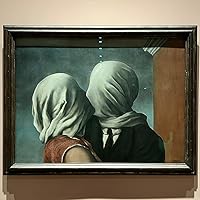
I really should stop buying books simply because the covers are pretty 😅
Ladies was so intriguing conceptually—the way Van Dyke shrugs off topics like queerness and racial hostility with nonchalance, how it was camp over tragedy/satire. Yet, all that was promised fell short because of major structural issues. Plot spent ages building up to something but said“plot twist” did not land. And the lightness over substance didn’t speak to me. Like it was trying too hard to dilute the emotional weight of its own themes.
Looking back at the blurb from The New York Times: “His debt to Truman Capote, James Baldwin, Tennessee Williams…”Hmmm, big overstatement.
UPDATE: I was ready to give this 4 stars until I reached the last third and people started randomly dying
Ladies was so intriguing conceptually—the way Van Dyke shrugs off topics like queerness and racial hostility with nonchalance, how it was camp over tragedy/satire. Yet, all that was promised fell short because of major structural issues. Plot spent ages building up to something but said“plot twist” did not land. And the lightness over substance didn’t speak to me. Like it was trying too hard to dilute the emotional weight of its own themes.
Looking back at the blurb from The New York Times: “His debt to Truman Capote, James Baldwin, Tennessee Williams…”Hmmm, big overstatement.
UPDATE: I was ready to give this 4 stars until I reached the last third and people started randomly dying

June 10, 2024
Very Truman Capote, midwestern gothic, tragicomedy vibes that leans a lot more on the comedy than the tragedy. This was super reminiscent of Other Voices, Other Rooms to me— a queer teen coming of age while also discovering the histories and complex interior lives of the eccentric elderly relatives who are raising him.
McNally Editions are quickly becoming a go to for me for curating undiscovered (by me) modern classics.
McNally Editions are quickly becoming a go to for me for curating undiscovered (by me) modern classics.

July 30, 2026
what a strange little book. i fell victim to purchasing it solely because the cover was pretty but i’m glad i did. etta and harry are lesbians no question.

July 21, 2026
Picked this up in a lesbian bookstore in London


May 20, 2026
3.5 ⭐️
i honestly adored the writing: so witty & at times very touching. i have never read anything like this! it was very elusive & i really had to work to get through it at times. i wasnt sure what the point was, and wouldnt have known some of the themes without reading a synopsis tbh. there was SO much written in between the lines, but i can truly appreciate that in a book.
written by henry van dyke, a queer black author in the 60’s (iconic), this story hits on almost everything. relationships, identity, inequality, the mundane, etc. i did genuinely enjoy it, though i was really bored at times & struggled to pick it up. the ending brought it up from a 3 star, breaking my slump on page 135 / 170. the writing was beautiful. overall a genuinely good book, but no where near one of my favorites.
ps. the mcnally edition is stunning & perfect to meeee!!
i honestly adored the writing: so witty & at times very touching. i have never read anything like this! it was very elusive & i really had to work to get through it at times. i wasnt sure what the point was, and wouldnt have known some of the themes without reading a synopsis tbh. there was SO much written in between the lines, but i can truly appreciate that in a book.
written by henry van dyke, a queer black author in the 60’s (iconic), this story hits on almost everything. relationships, identity, inequality, the mundane, etc. i did genuinely enjoy it, though i was really bored at times & struggled to pick it up. the ending brought it up from a 3 star, breaking my slump on page 135 / 170. the writing was beautiful. overall a genuinely good book, but no where near one of my favorites.
ps. the mcnally edition is stunning & perfect to meeee!!

March 24, 2025
What a strange but fascinating novel. It did not go where I was expecting it to, but that's not a bad thing. A couple awkward transitions here and there, but overall, I really liked this book! Van Dyke's prose is lovely, and there's a host of great, odd characters in here that made it easy to stay engaged.

May 3, 2024
I will read this again. I'll give this to friends. I ordered a hardbound edition for my library. This book made me weep. 16-year-old Oliver resides with his Aunt Harriett and her companion/employer Mrs. Klein, elderly ladies who bicker and fuss, they are haunted (figuratively) by Mrs. Klein's gay son - a suicide. There is a libidinous cook, a deaf gardener, a suspect medium and a seance. There is wry humor, arresting prose and, finally, pathos. I found each character unique and endearing. I've read the last thirty pages three times. Why isn't Henry Van Dyke better known? Bravo McNally Editions for bringing this back out.

March 12, 2025
Omg just realised I can log this book because it’s a rediscovered classic so therefore PUBLISHED. I’m humiliated by the state of my reading challenge but I would like to say this is the 13th book I’ve read for work since I started two months ago. Rose says they shouldn’t count because I’m paid to read them but I counter that I have read half of them not during work hours. I’ve already written my report so I can’t really be bothered to rehash my thoughts but it was a fun read, very novel to have come out of the 1950s, but ultimately light on substance, a little weak on structure and really could have been funnier. 3.5.

March 1, 2024
Started off very "light-decadent," as promised on the back cover. I liked the clear, simple characters. But the ending was suddenly too sentimental.
I'll probably try to read The Dead Piano soon.
I'll probably try to read The Dead Piano soon.

April 5, 2024
What is it about Michigan and surprisingly good 20th century forgotten gay novels?

July 19, 2024
actually obsessed w this... gentle & piercing satire abt race and queerness and also astrology from 1965... the peacock chapter had me very emotional!
August 30, 2026
(3.5 stars) If I were more into literary classics this would certainly be a five star book for me. It is incredible that Henry Van Dyke, a black gay man living during the Civil Rights era, chose to write such a hopeful, campy piece of fiction. Van Dyke addresses queerness and racism in an almost nonchalant manner, creating a fictional Michigan town where all his characters are free “to annoy, love, despise, and lust after eachother as individuals.” (from the foreword) despite their race, religion, or class. This in and of itself is an act of resistance as oppressed people were (and still are) expected to write solely about their struggles and hardships. Instead, Henry Van Dyke chose to write a good old fashioned romp about the love between Etta Klein, a wealthy Jewish woman, and Harriet Gibbs (Aunt Harry), her black house keeper. The two women have a hilarious codependent relationship told through the eyes of Aunt Harry’s nephew Oliver, a gay black teenager who they raised together, the summer before his freshman year at Cornell.
Perhaps my favorite passage from the entire book was how Oliver thought of them:
“[…] they could clash swords one minute and the next they would be kissing; they could compose poison letters to each other one minute and request papal dispensations for each other the next. […] They could not be separated for very long, not seriously separated at any rate, and they would use any means, no matter how outlandish, to get back together–-as long as they could save face. Yet, one day, one would have to die, die before the other. What would the surviving one do? They had woven a bickering, bantering tapestry together that was stronger than husband and wife, or sisters or cousins. And this bickering and bantering, this arguing, I was beginning to learn, was not to be made light of; it was a high seriousness, their arguing; it was the way they made love.” (pg 131-132)
I didn’t think the final few chapters of the book were as strong as the beginning, but I did enjoy the writing throughout. I’ll be recommending this one in the store!
Perhaps my favorite passage from the entire book was how Oliver thought of them:
“[…] they could clash swords one minute and the next they would be kissing; they could compose poison letters to each other one minute and request papal dispensations for each other the next. […] They could not be separated for very long, not seriously separated at any rate, and they would use any means, no matter how outlandish, to get back together–-as long as they could save face. Yet, one day, one would have to die, die before the other. What would the surviving one do? They had woven a bickering, bantering tapestry together that was stronger than husband and wife, or sisters or cousins. And this bickering and bantering, this arguing, I was beginning to learn, was not to be made light of; it was a high seriousness, their arguing; it was the way they made love.” (pg 131-132)
I didn’t think the final few chapters of the book were as strong as the beginning, but I did enjoy the writing throughout. I’ll be recommending this one in the store!

November 11, 2024
I love Ann Arbor and gay people!!!
Good book, took me a minute to like it in the beginning but as I kept reading I didn’t want to put it down. Super lighthearted plot and it did end up getting sad in the ending but overall very good. Also it was written by a Michigan alumni!!! (That’s why I chose to read it tbh). I was shocked to find out it was published in 1965 because it was definitely opposite of the stereotypes at the time.
Good book, took me a minute to like it in the beginning but as I kept reading I didn’t want to put it down. Super lighthearted plot and it did end up getting sad in the ending but overall very good. Also it was written by a Michigan alumni!!! (That’s why I chose to read it tbh). I was shocked to find out it was published in 1965 because it was definitely opposite of the stereotypes at the time.

May 17, 2026
I enjoyed this. Would be good for fans of Percival Everett. There was a tonal dissonance at times that was hard to reconcile - the “emotional” bits felt forced and somewhat cliche, or just not well-written & I think it was because of that dissonance. Could have also been the age of the narrator, being only 17. In any case, the humorous parts were the best.

January 11, 2026
This was so stupid I loved it
April 14, 2024
A phenomenal comedy about a narrator who is wise beyond his years. The entire premise of holding a seance to communicate with the dead is so good, and the climax of the book is perfectly done. I would not change a single thing. I love the characters’ love for each other and the amazing representation of ethnicities, sexuality, and gender
July 21, 2026
I got this in my book subscription and wasn’t particularly excited to pick it up but it was actually fun and very different from most things I read. Despite being written decades ago, the narration felt so modern. It was a bit silly and random (let’s just say the word warlock gets used a lot) but also deep and sad.

September 24, 2026
Adored the dynamic in this book, women who argue and love to the death, "closer than husband and wife, closer than siblings" and the reader, seeing it through the eyes of nephew Oliver, is worried and entertained all at once.
Displaying 1 - 30 of 84 reviews