

What do you think?

Fluke: Chance, Chaos, and Why Everything We Do Matters
In the perspective-altering tradition of Malcolm Gladwell’s The Tipping Point and Nassim Nicholas Taleb’s The Black Swan comes a provocative challenge to how we think our world works—and why small, chance events can divert our lives and change everything, by social scientist and Atlantic writer Brian Klaas.
If you could rewind your life to the very beginning and then press play, would everything turn out the same? Or could making an accidental phone call or missing an exit off the highway change not just your life, but history itself? And would you remain blind to the radically different possible world you unknowingly left behind?
In Fluke, myth-shattering social scientist Brian Klaas dives deeply into the phenomenon of random chance and the chaos it can sow, taking aim at most people’s neat and tidy storybook version of reality. The book’s argument is that we willfully ignore a bewildering but for a few small changes, our lives—and our societies—could be radically different.
Offering an entirely new lens, Fluke explores how our world really works, driven by strange interactions and apparently random events. How did one couple’s vacation cause 100,000 people to die? Does our decision to hit the snooze button in the morning radically alter the trajectory of our lives? And has the evolution of humans been inevitable, or are we simply the product of a series of freak accidents?
Drawing on social science, chaos theory, history, evolutionary biology, and philosophy, Klaas provides a brilliantly fresh look at why things happen—all while providing mind-bending lessons on how we can live smarter, be happier, and lead more fulfilling lives.
If you could rewind your life to the very beginning and then press play, would everything turn out the same? Or could making an accidental phone call or missing an exit off the highway change not just your life, but history itself? And would you remain blind to the radically different possible world you unknowingly left behind?
In Fluke, myth-shattering social scientist Brian Klaas dives deeply into the phenomenon of random chance and the chaos it can sow, taking aim at most people’s neat and tidy storybook version of reality. The book’s argument is that we willfully ignore a bewildering but for a few small changes, our lives—and our societies—could be radically different.
Offering an entirely new lens, Fluke explores how our world really works, driven by strange interactions and apparently random events. How did one couple’s vacation cause 100,000 people to die? Does our decision to hit the snooze button in the morning radically alter the trajectory of our lives? And has the evolution of humans been inevitable, or are we simply the product of a series of freak accidents?
Drawing on social science, chaos theory, history, evolutionary biology, and philosophy, Klaas provides a brilliantly fresh look at why things happen—all while providing mind-bending lessons on how we can live smarter, be happier, and lead more fulfilling lives.
336 pages, Hardcover
First published January 23, 2024
About the author
Brian Klaas
8 books241 followersBrian Paul Klaas is an American political scientist, a contributing writer at The Atlantic, and an associate professor in global politics at University College London.
Ratings & Reviews
Friends & Following
Create a free account to discover what your friends think of this book!
Community Reviews
Displaying 1 - 30 of 583 reviews

April 2, 2024
Cheerful sociopolitical scientist Brian Klaas somehow builds a bridge between deterministic and stochastic rationales for why and how humans do things, in order to reach this curious book's thesis: although our very nature is predetermined, the nature of randomness means we can predict nothing. "Each individual controls almost nothing, but influences almost everything" is the shiny veneer that he applies to his rather depressing construction, as he merrily avoids abject nihilism by insisting that because every little decision has an impact, it doesn't matter that we have no free will and that we inhabit a world whose only abiding law is chaos theory. And so let's sit back and contemplate an idea once put forward by an ancient Chinese proverb: the flapping of a butterfly's wings can be felt on the other side of the world. No need to despair. I guess?
I recommend this book to atheist anarchists who strive to create positive change in the world for the randomly dispossessed, while maintaining that we must celebrate life right now because the world could collapse into destruction at any moment (basically my 1990s-2000s social circle). I also recommend this book to mainstream progressives who reject individualism, meritocracy, and pattern recognition while also upholding "shared reality" standards (basically my old friends now that they've grown up and have mortgages). I do not recommend this book to people of faith, people who believe in free will and/or individualism, and people who reject disintegrating worldviews - no matter how upbeat that disintegrating voice may be.
Lest it seem that I am eyerolling away my experience of this breezily written yet often enervating book, I should make clear that Fluke is a worthy endeavor and overall a complex and interesting read. Brian Klaas is a commentator and writer for a host of liberal media usual suspects (CNN, MSNBC, Washington Post, Guardian, etc. et al) and a former policy director for the 40th governor of Minnesota; despite that uninspiring and rather embarrassing resume, his mind is far from banal, his ideas are fascinating to contemplate, and his political outlook does occasionally diverge from the mainstream Democrat company line. I'm a paid subscriber to his occasionally Manichean* but mainly compelling and mind-expanding substack "The Garden of Forking Paths" - so I knew what I was getting into when I made an advance order of this book. He's a confident writer with a strong voice and a compelling point of view on how the world works. Per Klaas, our world is not Convergent ("everything happens for a reason"), it is Contingent ("stuff just happens"). His combining the idea of the randomness of all existence with an insistence that human nature is predetermined and we are all creatures without free will certainly made for an often uncomfortable read, despite his positive tone. I appreciate uncomfortable ideas, even when I don't enjoy them.
On the plus side, I was happily surprised at the author's measured defense of "geography equals destiny" and the idea that where we live often impacts how we live (see Guns, Germs, and Steel: The Fates of Human Societies) - an idea that has been misconstrued as racist, including by racists. I loved his thoughts on narratives and storytelling. From the strongest chapter of the book: "Reality doesn't have a narrative arc. We cram it into that form nonetheless, as our storytelling minds distort our view of the world." Also, I'm glad he recognizes that qualitative data is meaningful. Public policy analysts, I know you love your charts and graphs, but don't just focus on the quantitative! Get those pull quotes! (Apologies for nerdy outburst.)
On the "well that's interesting" side, I had very mixed feelings about how Klaas's perspective on humanity's supposed lack of free will - usually due to innate challenges, genetic factors that can't be controlled, etc. - appears to mean that he will excuse criminal behavior coming from the mentally unwell. Because how can mentally ill criminals even help themselves. That is both a humane perspective and yet also such a condescending one, in its way. Of course, mental health is both context for and driver of behaviors - but that context should not necessarily be an excuse for those behaviors, let alone a reason to refuse recognizing the agency that even the mentally ill can often have in their choices. That said, I'm all too familiar with this perspective since it is a common one in progressive spaces - where I live - and I do understand how such an outlook helps us in limiting the knee-jerk tendency to demonize the mentally unwell who commit acts of awful violence.
On the minus side, and it's a big one: he really didn't provide many examples of "why everything we do matters" - which I at first took to be one of the major points of the book. That subtitle eventually felt like it was some kind of a tonic that Klaas was giving himself so that he (and the reader) didn't become too depressed over a perspective on life that insists we have no agency and everything is random. He includes several absorbing stories that illustrate why random things matter, in particular his detailing of how unpredictable it was that Hiroshima and Nagasaki were eventually chosen as targets for nuclear destruction. Another striking example concerns the fates of two colleagues, one who was in the twin towers for a meeting on 9/11 and the other who decided to change his shirt at the last minute, and so survived. But this book needed examples that were less, well, obliterating. More commonplace examples, at least ones that aren't just referencing Sliding Doors for chrissakes. He does try. He uses the randomness of children - their births, their behaviors - as demonstration/justification for his point that the flukes and chaos and inability of us to truly plan for the future are all beautiful things. And he posits that because our decisions influence others, because they have ripple effects beyond us, our random actions still have importance and meaning. Sure, I agree. But that idea presented alongside the stance that we only do things because of our brain chemistry, and that we truly lack free will and the ability to make independent decisions outside of our predetermined mindsets? I'm sorry, but that is still a sort of nihilism, despite Klaas' insistence that we view that perspective as freeing. Not exactly what I'd call a revelatory point of view.
* Ironically, Klaas recently criticized the Manichean worldview, using it to bolster his explanation of why conspiratorial right-wingers think the way that they think. But how can anyone who views American politics through his conspicuously binary lens (the Left = Good, Trump supporters = racist, homophobic, misogynist conspiracists) not themselves be thinking with a Manichean mindset? And it should go without saying that the Left is often subject to its own kinds of conspiratorial thinking...
I recommend this book to atheist anarchists who strive to create positive change in the world for the randomly dispossessed, while maintaining that we must celebrate life right now because the world could collapse into destruction at any moment (basically my 1990s-2000s social circle). I also recommend this book to mainstream progressives who reject individualism, meritocracy, and pattern recognition while also upholding "shared reality" standards (basically my old friends now that they've grown up and have mortgages). I do not recommend this book to people of faith, people who believe in free will and/or individualism, and people who reject disintegrating worldviews - no matter how upbeat that disintegrating voice may be.
Lest it seem that I am eyerolling away my experience of this breezily written yet often enervating book, I should make clear that Fluke is a worthy endeavor and overall a complex and interesting read. Brian Klaas is a commentator and writer for a host of liberal media usual suspects (CNN, MSNBC, Washington Post, Guardian, etc. et al) and a former policy director for the 40th governor of Minnesota; despite that uninspiring and rather embarrassing resume, his mind is far from banal, his ideas are fascinating to contemplate, and his political outlook does occasionally diverge from the mainstream Democrat company line. I'm a paid subscriber to his occasionally Manichean* but mainly compelling and mind-expanding substack "The Garden of Forking Paths" - so I knew what I was getting into when I made an advance order of this book. He's a confident writer with a strong voice and a compelling point of view on how the world works. Per Klaas, our world is not Convergent ("everything happens for a reason"), it is Contingent ("stuff just happens"). His combining the idea of the randomness of all existence with an insistence that human nature is predetermined and we are all creatures without free will certainly made for an often uncomfortable read, despite his positive tone. I appreciate uncomfortable ideas, even when I don't enjoy them.
On the plus side, I was happily surprised at the author's measured defense of "geography equals destiny" and the idea that where we live often impacts how we live (see Guns, Germs, and Steel: The Fates of Human Societies) - an idea that has been misconstrued as racist, including by racists. I loved his thoughts on narratives and storytelling. From the strongest chapter of the book: "Reality doesn't have a narrative arc. We cram it into that form nonetheless, as our storytelling minds distort our view of the world." Also, I'm glad he recognizes that qualitative data is meaningful. Public policy analysts, I know you love your charts and graphs, but don't just focus on the quantitative! Get those pull quotes! (Apologies for nerdy outburst.)
On the "well that's interesting" side, I had very mixed feelings about how Klaas's perspective on humanity's supposed lack of free will - usually due to innate challenges, genetic factors that can't be controlled, etc. - appears to mean that he will excuse criminal behavior coming from the mentally unwell. Because how can mentally ill criminals even help themselves. That is both a humane perspective and yet also such a condescending one, in its way. Of course, mental health is both context for and driver of behaviors - but that context should not necessarily be an excuse for those behaviors, let alone a reason to refuse recognizing the agency that even the mentally ill can often have in their choices. That said, I'm all too familiar with this perspective since it is a common one in progressive spaces - where I live - and I do understand how such an outlook helps us in limiting the knee-jerk tendency to demonize the mentally unwell who commit acts of awful violence.
On the minus side, and it's a big one: he really didn't provide many examples of "why everything we do matters" - which I at first took to be one of the major points of the book. That subtitle eventually felt like it was some kind of a tonic that Klaas was giving himself so that he (and the reader) didn't become too depressed over a perspective on life that insists we have no agency and everything is random. He includes several absorbing stories that illustrate why random things matter, in particular his detailing of how unpredictable it was that Hiroshima and Nagasaki were eventually chosen as targets for nuclear destruction. Another striking example concerns the fates of two colleagues, one who was in the twin towers for a meeting on 9/11 and the other who decided to change his shirt at the last minute, and so survived. But this book needed examples that were less, well, obliterating. More commonplace examples, at least ones that aren't just referencing Sliding Doors for chrissakes. He does try. He uses the randomness of children - their births, their behaviors - as demonstration/justification for his point that the flukes and chaos and inability of us to truly plan for the future are all beautiful things. And he posits that because our decisions influence others, because they have ripple effects beyond us, our random actions still have importance and meaning. Sure, I agree. But that idea presented alongside the stance that we only do things because of our brain chemistry, and that we truly lack free will and the ability to make independent decisions outside of our predetermined mindsets? I'm sorry, but that is still a sort of nihilism, despite Klaas' insistence that we view that perspective as freeing. Not exactly what I'd call a revelatory point of view.
* Ironically, Klaas recently criticized the Manichean worldview, using it to bolster his explanation of why conspiratorial right-wingers think the way that they think. But how can anyone who views American politics through his conspicuously binary lens (the Left = Good, Trump supporters = racist, homophobic, misogynist conspiracists) not themselves be thinking with a Manichean mindset? And it should go without saying that the Left is often subject to its own kinds of conspiratorial thinking...

Read
January 22, 2026A very interesting book on how things happen and the ripple effects of tiny actions. Goes into a lot of philosophical depth about whether everything is predetermined or nothing is, and what that means on an individual level.
(IMO nothing. I have no idea if I actually have free will but I *feel* like I have free will and as such I need to make good choices that assign with the morals I also believe I've chosen to have. Possibly that's a delusion and everything I am and do is a direct result of my molecules and random events going back to the Big Bang, but at this point it's kind of like believing in God and you just have to get on with life.)
Anyway, the book lays it all out in a very interesting way, and also gets into the myriad issues with social science and experiments and the various problems (non replicable results, publication bias, failure to report negatives, issues because of its racist past, etc). Thought provoking stuff written in a friendly and accessible way, and for me particularly interesting in the discussion about how we like to seek patterns, meaning, stories in the randomness of life. If you're a person who says "It was meant to be!" a lot you should proably read this.
(IMO nothing. I have no idea if I actually have free will but I *feel* like I have free will and as such I need to make good choices that assign with the morals I also believe I've chosen to have. Possibly that's a delusion and everything I am and do is a direct result of my molecules and random events going back to the Big Bang, but at this point it's kind of like believing in God and you just have to get on with life.)
Anyway, the book lays it all out in a very interesting way, and also gets into the myriad issues with social science and experiments and the various problems (non replicable results, publication bias, failure to report negatives, issues because of its racist past, etc). Thought provoking stuff written in a friendly and accessible way, and for me particularly interesting in the discussion about how we like to seek patterns, meaning, stories in the randomness of life. If you're a person who says "It was meant to be!" a lot you should proably read this.

October 10, 2023
This book combines all the sciences that I am totally into: social/heuristic bias, mathiness, and philosophy. So it basically blew my mind. Klaas begins the book with the story of how war secretary H.M. Stimson (IIRC) avoided choosing Kyoto as a bombing location in WWII because he had been there and loved it so much - saving those people and condemning those in Hiroshima. The Nagasaki bomb was a redirect from a different chosen location, too. How could things have been different? Klaas explores the many worlds/Garden of Forking Paths (Borges) theories but also examines the possibility that the events in this universe could be predetermined. The fallacy of true randomness, lying with statistics, humans' imperative to create story out of event sequences--these are all covered too. Some concepts seem counterproductive - if there is no randomness, why would we create stories out of random event sequences? - but if you read each chapter and Klaas's logic, you can see how these concepts work together. I have to admit that I will have to read this again to fully understand it. Looking at these ideas from a completely different perspective has me questioning the way I think. Klaas is also extremely respectful of those who don't share his ideas, leaving room for thoughtful discussion if you happen to read this in a group.

April 23, 2024
People tend to fall into two camps when breaking down “the way the world works”: 1) “Everything happens for a reason” – be it fate, God, universe, karma, etc or 2) Everything is a jumbled, chaotic mess that can be thrown off by one little twist BUT it is all due to science and pre-determined by atoms and your ancestors, cavemen, the beginning of time, the beginning of our solar system, yada yada (although, doesn’t that mean it happens for a reason? Hmmm). In an age where we all want to control EVERYTHING from our lives to economies to even the weather; it certainly boggles the mind as to why things happen. Exploring this play on Chaos Theory, String theory and even philosophy; Brian Klaas offers his thoughts in, “Fluke: Chance, Chaos and Why EVERYTHING We Do Matters”.
“Fluke” is a combination social science, pop psychology, philosophy, evolutionary biology, and borderline neuroscience piece in which Klaas, according to his own words, attempts to answer why things happen, that “flukes matter”, how people came to be the way they are across evolution and how we effect EVERYONE and EVERYTHING. I’m sure you’ve at least once had the thought, when in a particularly low moment, “I wish I hadn’t been born” or that if your existence was eliminated no one would care or notice. Or, you may have been blown away by a ‘coincidence’ or ‘right place at the right time’ event. Klaas theorizes that there are no such things as coincidences, everything is predetermined by the dawn of man/science but yet a small change can, literally, change the course of all things.
Are you confused? Does it sound like Klaas is as well? Well, then you aren’t alone because that’s exactly how it seems as “Fluke” is a messy and chaotic (pun intended) thesis. Don’t misunderstand, the actual writing style, format and presentation is concise enough and breaks down the social science puzzle in a way that is easily digested for the general audience and those new, but interested, in the subject. “Fluke” serves as strong introduction to Chaos Theory and it opposing theories. There is no argument that Klaas isn’t credible or an academic – he most certainly is – and yet, he also manages to infuse the text with a modern, millennial prose that brings the material to life.
The problem, herein, lies with the actual content. Klaas doesn’t seem to realize that his hypothesis and thesis is utterly unclear and he jumps back and forth between being a pure science believer and of thinking we can and do have free will and things “just happen”. Either Klaas doesn’t know which side of the fence he is on; or he simply doesn’t know how to express himself well enough. Of course it is opportune, and scholarly, to present both sides of the case but that isn’t exactly what “Fluke” is doing. Honestly, it’s unclear what is being proposed because again, Klaas seems to toggle. Little is gained from “Fluke”, nothing is learned and similar books on the shelves simply cover the subject 100 times better and in a more crystal - clear way.
None of these complaints compares to the major catastrophic downfall that can be pinpointed to page 83 of “Fluke” that sours the entire duration of the text, thereafter. Bear with me as I lay this out: On page 83, Klaas discusses locusts, how they ‘march’ and ruin crops and the possible reasons behind ‘why’ (or lack thereof) they act in such a destructive manner. Klaas states,
“Locusts are a bit like Dr. Jekyll and Mr. Hyde”. For much of their lives, they flit about in their solitary state, harmless grasshoppers moving somewhat at random, happily munching when they get hungry. If left to their own devices, they will avoid fellow locusts. But if locusts get forced together – often by food shortages – the crowding brings out their inner Mr. Hyde. They transition into their “gregarious” state, ditching their green-brown camouflage and morphing instead into a much brighter yellow, or even black. Despite the apparently friendly “gregarious” description, these are not guests you’d want at a dinner party, unless you like visitors who eat everything but your mortgage”.
I was instantly interested in the color change of locusts and Googled, “Locusts yellow, locusts black” and the very first link (and thus a .5 second result) was a Wired.com article by Mary Bates from December 2013. Does the following sound familiar?
“In their solitary phase, locusts are unassuming insects that generally keep to themselves. But when they transform into what’s known as their gregarious phase, they move faster and are attracted to other locusts. It is in this phase that locusts form the oppressive swarms that can blacken the skies and decimate crops. A new study looks at what happens in the insects’ brains as they undergo this Jekyll and Hyde transformation.
“In their solitary phase locusts are unassuming insects. Their brown-green bodies are camouflaged to blend into the background and they walk slowly with a low, creeping gait. They generally avoid other locusts unless they are mating – or if they are forced together by a food shortage. When this happens, the crowding of solitary locusts together induces a change. The insects transform into what’s known as their gregarious phase. Gregarious locusts are colorful, move faster, and are attracted to other locusts”.
Now, to get a bit personal for a moment, I am a published writer/journalist who has appeared in mainstream media publications and as a historian working with the Historic Royal Palaces in England. There is no law against paraphrasing and in fact, being that most everything has already been written; this is the norm to showcase previous studies, statements, works, writings, etc. The issue here is that Klaas didn’t paraphrase very well and this is borderline plagiarism. As this article on Wired.com dates from 2013; it is obvious which comes first and it isn’t Klaas. The only thing he did do, was put ‘gregarious’ in quotation marks. This could also be slightly placed on a “let it slide”- scale, had Klaas sourced the article in his notes section. I double checked three times the notes for the chapter and nothing, nada, zilch. If I were to have written such a piece in my professional endeavors without even sourcing; I would be ‘canceled’ or fired. This hinders the rest of the “Fluke” in a detrimental way. Not only is Klaas unclear on his views but now we don’t even know what to trust as being his own words! It was at this point that I didn’t even want to finish “Fluke” but as Klaas stipulates, cavemen and science determined that I will, indeed, finish.
“Fluke” does do well, on a positive note”, of offering case studies that discuss various fields from weather to acts of terrorism, wars to accidents, love stories to survival and everything in between. Sadly, even though the author blurb on the book jacket of “Fluke” maintains that “Klaas has conducted field research across the globe”; the pages of “Fluke” don’t feature a singular research study conducted by Klaas and instead discusses the experiments of others. This isn’t to say he hasn’t personally performed studies on the subject (I cannot verify) but the inclusion would have clarified and progressed his narrative forward.
The highlight and strongest pages of “Fluke” are the concluding chapters which meander on a philosophical stream exploring the concept of ‘free will”, our souls and existence separate from our physical bodies and our minds. These discussions teeter on addressing theology vs. science, the metaphysical and spiritual realms. This is the most engaging Klaas presents himself in the entirety of “Fluke” and ends the piece in a memorable way although it is a little too late for redemption.
“Fluke” is suitable enough for an average Joe Schmo desiring an induction to the topic but it simply doesn’t ‘wow’ readers, doesn’t serve as a conversation starter or change minds. In fact, I can’t even remember much of what I read being it was so convoluted, unresolved and repetitive. You can decide for yourself whether or not to read “Fluke” (Klaas would argue that it has already been decided for you before the existence of man) but I wouldn’t recommend it.
“Fluke” is a combination social science, pop psychology, philosophy, evolutionary biology, and borderline neuroscience piece in which Klaas, according to his own words, attempts to answer why things happen, that “flukes matter”, how people came to be the way they are across evolution and how we effect EVERYONE and EVERYTHING. I’m sure you’ve at least once had the thought, when in a particularly low moment, “I wish I hadn’t been born” or that if your existence was eliminated no one would care or notice. Or, you may have been blown away by a ‘coincidence’ or ‘right place at the right time’ event. Klaas theorizes that there are no such things as coincidences, everything is predetermined by the dawn of man/science but yet a small change can, literally, change the course of all things.
Are you confused? Does it sound like Klaas is as well? Well, then you aren’t alone because that’s exactly how it seems as “Fluke” is a messy and chaotic (pun intended) thesis. Don’t misunderstand, the actual writing style, format and presentation is concise enough and breaks down the social science puzzle in a way that is easily digested for the general audience and those new, but interested, in the subject. “Fluke” serves as strong introduction to Chaos Theory and it opposing theories. There is no argument that Klaas isn’t credible or an academic – he most certainly is – and yet, he also manages to infuse the text with a modern, millennial prose that brings the material to life.
The problem, herein, lies with the actual content. Klaas doesn’t seem to realize that his hypothesis and thesis is utterly unclear and he jumps back and forth between being a pure science believer and of thinking we can and do have free will and things “just happen”. Either Klaas doesn’t know which side of the fence he is on; or he simply doesn’t know how to express himself well enough. Of course it is opportune, and scholarly, to present both sides of the case but that isn’t exactly what “Fluke” is doing. Honestly, it’s unclear what is being proposed because again, Klaas seems to toggle. Little is gained from “Fluke”, nothing is learned and similar books on the shelves simply cover the subject 100 times better and in a more crystal - clear way.
None of these complaints compares to the major catastrophic downfall that can be pinpointed to page 83 of “Fluke” that sours the entire duration of the text, thereafter. Bear with me as I lay this out: On page 83, Klaas discusses locusts, how they ‘march’ and ruin crops and the possible reasons behind ‘why’ (or lack thereof) they act in such a destructive manner. Klaas states,
“Locusts are a bit like Dr. Jekyll and Mr. Hyde”. For much of their lives, they flit about in their solitary state, harmless grasshoppers moving somewhat at random, happily munching when they get hungry. If left to their own devices, they will avoid fellow locusts. But if locusts get forced together – often by food shortages – the crowding brings out their inner Mr. Hyde. They transition into their “gregarious” state, ditching their green-brown camouflage and morphing instead into a much brighter yellow, or even black. Despite the apparently friendly “gregarious” description, these are not guests you’d want at a dinner party, unless you like visitors who eat everything but your mortgage”.
I was instantly interested in the color change of locusts and Googled, “Locusts yellow, locusts black” and the very first link (and thus a .5 second result) was a Wired.com article by Mary Bates from December 2013. Does the following sound familiar?
“In their solitary phase, locusts are unassuming insects that generally keep to themselves. But when they transform into what’s known as their gregarious phase, they move faster and are attracted to other locusts. It is in this phase that locusts form the oppressive swarms that can blacken the skies and decimate crops. A new study looks at what happens in the insects’ brains as they undergo this Jekyll and Hyde transformation.
“In their solitary phase locusts are unassuming insects. Their brown-green bodies are camouflaged to blend into the background and they walk slowly with a low, creeping gait. They generally avoid other locusts unless they are mating – or if they are forced together by a food shortage. When this happens, the crowding of solitary locusts together induces a change. The insects transform into what’s known as their gregarious phase. Gregarious locusts are colorful, move faster, and are attracted to other locusts”.
Now, to get a bit personal for a moment, I am a published writer/journalist who has appeared in mainstream media publications and as a historian working with the Historic Royal Palaces in England. There is no law against paraphrasing and in fact, being that most everything has already been written; this is the norm to showcase previous studies, statements, works, writings, etc. The issue here is that Klaas didn’t paraphrase very well and this is borderline plagiarism. As this article on Wired.com dates from 2013; it is obvious which comes first and it isn’t Klaas. The only thing he did do, was put ‘gregarious’ in quotation marks. This could also be slightly placed on a “let it slide”- scale, had Klaas sourced the article in his notes section. I double checked three times the notes for the chapter and nothing, nada, zilch. If I were to have written such a piece in my professional endeavors without even sourcing; I would be ‘canceled’ or fired. This hinders the rest of the “Fluke” in a detrimental way. Not only is Klaas unclear on his views but now we don’t even know what to trust as being his own words! It was at this point that I didn’t even want to finish “Fluke” but as Klaas stipulates, cavemen and science determined that I will, indeed, finish.
“Fluke” does do well, on a positive note”, of offering case studies that discuss various fields from weather to acts of terrorism, wars to accidents, love stories to survival and everything in between. Sadly, even though the author blurb on the book jacket of “Fluke” maintains that “Klaas has conducted field research across the globe”; the pages of “Fluke” don’t feature a singular research study conducted by Klaas and instead discusses the experiments of others. This isn’t to say he hasn’t personally performed studies on the subject (I cannot verify) but the inclusion would have clarified and progressed his narrative forward.
The highlight and strongest pages of “Fluke” are the concluding chapters which meander on a philosophical stream exploring the concept of ‘free will”, our souls and existence separate from our physical bodies and our minds. These discussions teeter on addressing theology vs. science, the metaphysical and spiritual realms. This is the most engaging Klaas presents himself in the entirety of “Fluke” and ends the piece in a memorable way although it is a little too late for redemption.
“Fluke” is suitable enough for an average Joe Schmo desiring an induction to the topic but it simply doesn’t ‘wow’ readers, doesn’t serve as a conversation starter or change minds. In fact, I can’t even remember much of what I read being it was so convoluted, unresolved and repetitive. You can decide for yourself whether or not to read “Fluke” (Klaas would argue that it has already been decided for you before the existence of man) but I wouldn’t recommend it.

November 22, 2023
We care about what happens to people we know, and they — we tend to believe — must have played a role in the event. This is how we form narratives, including the narrative of our own agency.
But anything can change the course of our lives. A cloud moves, and a plane doesn’t take off or changes its flight path. We know that chance occurrences make a difference in the outcome, yet we resist this notion, partly because it seems unfair. Some people live, others die, due to luck? We might as well say they were saved or destroyed for no reason at all.
“We want a rational explanation to make sense of the chaos of life,” Brian Klaas writes. And to a large extent, we tune out what we believe is noise. Yet how else does the future get made?
If your parents hadn’t met, you wouldn’t be here. The same is true for your ancestors, all the way back.
"We are the offshoots of a sometimes wonderful, sometimes deeply flawed past," he writes, and "our existence is bewilderingly fragile, built upon the shakiest of foundations."
When we look for a cause, we often see a fluke. It’s not the meaning we originally hoped for. But it’s something unexpected and unrepeatable, and we can embrace it.
Elegantly readable. I received a free advance copy from NetGalley. I wrote more on Medium (unpaywalled friend link).
But anything can change the course of our lives. A cloud moves, and a plane doesn’t take off or changes its flight path. We know that chance occurrences make a difference in the outcome, yet we resist this notion, partly because it seems unfair. Some people live, others die, due to luck? We might as well say they were saved or destroyed for no reason at all.
“We want a rational explanation to make sense of the chaos of life,” Brian Klaas writes. And to a large extent, we tune out what we believe is noise. Yet how else does the future get made?
If your parents hadn’t met, you wouldn’t be here. The same is true for your ancestors, all the way back.
"We are the offshoots of a sometimes wonderful, sometimes deeply flawed past," he writes, and "our existence is bewilderingly fragile, built upon the shakiest of foundations."
When we look for a cause, we often see a fluke. It’s not the meaning we originally hoped for. But it’s something unexpected and unrepeatable, and we can embrace it.
Elegantly readable. I received a free advance copy from NetGalley. I wrote more on Medium (unpaywalled friend link).

August 4, 2024
The author's amazing idea is that everything is chaotic, blah blah blah. To prove this, the book starts with an anecdote about Henry Stimson visiting Kyoto on vacation before WWII and then fighting to preserve it from bombing when he was Secretary of War. This whole argument is silly for a number of reasons.
1. War is hell. Life is unpredictable. The weather is variable. Duh. Not amazing.
2. Kyoto wasn't equivalent to every other city in Japan. I find it hard to believe the Stimsons went there randomly instead of to Hiroshima just to look at leaves or whatever, as suggested in the book. Kyoto, as the former capital, is a cultural treasure of temples and palaces near mountains, etc. To back up his thesis that bombing Hiroshima was totally random, the author would have to make the case that Hiroshima had as much cultural/tourist value to preserve as Kyoto did. He doesn't even try to make that case.
3. The atomic bombs were strategic--not tactical--weapons. The point wasn't to temporarilty knock down Japanese airplane maufacturing, as suggested in the book. It was to get Japan to surrender (and Stalin to back off).
4. A more fundamental argument about where to drop the Bomb was whether to even drop it on a city at all. For the sake of demonstrating its power, some made the case that it could be dropped in the water off the coast of Japan or in a non-populated area. This debate is not even mentioned in the book.
5. And so on.
I'm not an expert on this topic and I'm not even getting into any science issues, but the whole thing falls apart quickly. Things are complex. Causes are multifactorial. If you don't bother to dig deep into whatever you're talking about, or if you dishonestly elide important facts, then you can make silly connections between dots that make things look astonishing.
1. War is hell. Life is unpredictable. The weather is variable. Duh. Not amazing.
2. Kyoto wasn't equivalent to every other city in Japan. I find it hard to believe the Stimsons went there randomly instead of to Hiroshima just to look at leaves or whatever, as suggested in the book. Kyoto, as the former capital, is a cultural treasure of temples and palaces near mountains, etc. To back up his thesis that bombing Hiroshima was totally random, the author would have to make the case that Hiroshima had as much cultural/tourist value to preserve as Kyoto did. He doesn't even try to make that case.
3. The atomic bombs were strategic--not tactical--weapons. The point wasn't to temporarilty knock down Japanese airplane maufacturing, as suggested in the book. It was to get Japan to surrender (and Stalin to back off).
4. A more fundamental argument about where to drop the Bomb was whether to even drop it on a city at all. For the sake of demonstrating its power, some made the case that it could be dropped in the water off the coast of Japan or in a non-populated area. This debate is not even mentioned in the book.
5. And so on.
I'm not an expert on this topic and I'm not even getting into any science issues, but the whole thing falls apart quickly. Things are complex. Causes are multifactorial. If you don't bother to dig deep into whatever you're talking about, or if you dishonestly elide important facts, then you can make silly connections between dots that make things look astonishing.

January 31, 2024
"If you could rewind your life to the very beginning and then press play, would everything turn out the same?"
It's not often (for me anyhow) that I read a book that really captures my attention, and has me thinking about it for a while after putting it down. Without wanting to sound braggadocious, I do read a fair bit, and sometimes the tedium and lackluster nature of certain books gets under my skin. This leaves me with book burnout from time to time, where I just don't feel like reading at all.
Rarely do I have the pleasure of reading a book that can really get my gears turning, and present me with concepts that I haven't extensively explored on my own, or read about elsewhere.
Fluke is that book.
It was an incredibly fascinating read. I wasn't sure what to expect from the book going in, as I had not heard of the author before. I enjoy reading about science and social psychology, so I picked this one up when I saw it. I am happy to report that the book far exceeded any expectations I had of it going in. There's some super-interesting writing here. More below.
Author Brian Paul Klaas is an American political scientist and contributing writer at The Atlantic. He is an associate professor in global politics at University College London.
Brian Klaas:
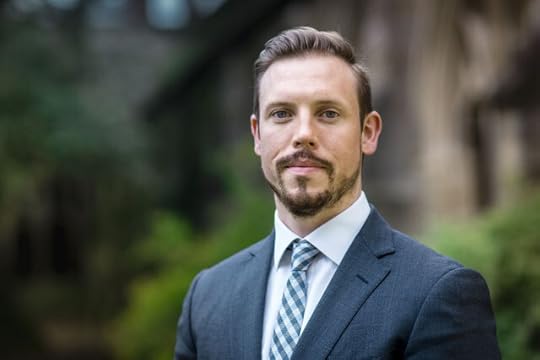
The author writes with a lively and engaging style that shouldn't have trouble holding even the finicky reader's attention. The audiobook version I have is also read by the author, which is a nice touch I always appreciate. The book's formatting was also well done, and it has great flow. There are many, many passages of interesting and quotable writing in these pages. I am including some of the more choice quotes here, both for my own future reference, and for anyone else interested.
Klass gets the writing off on a good foot, with a very well-written intro. He talks about the decision to drop the atomic bomb on Hiroshima. The city of Kyoto was previously chosen, but Secretary of War H.L Stimson liked Kyoto, having visited there years earlier. That random vacation saved the people of Kyoto, while dooming the ones living in Hiroshima.
He writes:
The meat and potatoes of the book is ultimately about how chaos theory applies to all of our lives. Don't worry, the author never gets too technical or esoteric. Anyone with even a small degree of scientific literacy should be able to follow the plot here. Points added, because all too often, science books fail miserably at doing just that...
I think we have all pondered at some point, about certain random, chance happenstances that have changed our lives (and the lives of those close to us) forever afterward. The author provides many super interesting examples of this throughout. A foiled revolutionary coup from failing to grasp a pant leg. The gift of a tie saving someone from dying on 9/11. The assassination of an Archduke starting a World War.
Why did everything turn out the way it did? It's a question that has forever intrigued, well; just about everyone; from religious scholars, to scientists, to philosophers, to you and I.
Upon close examination or reflection, many of the world's pivotal turning points occurred due to the presence of some tiny essential element that has drastically weighed down the scale of causality.
The book covers many examples from history, and Klass provides a shocking example from his own family history. The scope of the writing here is quite broad, and I found the subject matter he presents here to be incredibly fascinating.
The author drops this excellent quote, which delves a bit more into the thesis of the book:
Klass breaks down the traditional line of thinking around causality into two distinct camps: "Convergence is the “everything happens for a reason” school of evolutionary biology. Contingency is the “stuff happens” theory."
He says that the common theory of causality, that is; the convergence theory, is not correct:
Klass outlines the aim of the book here:
He drops this quote, asking who the most influential person of the 21st century was:
In this quote, he talks about misconceptions around the super-successful and wealthy:
Some more of what is covered here includes:
• Laplace’s demon
• Evolution; adaptive and maladaptive change
• Schemas; heuristics
• Swarms; locusts
• Complicated vs. Complex systems
• Emergence
• Cascades
• The brain as a prediction machine; probability theory
• Quantum theory; entanglement
• Mankind's inborn narrative shaping of information; narrative bias.
• Path dependency
• The Great Man theory
• Darwin; evolution.
• How timing, down to the split second, produces world-changing impacts
• "The Garden of Forking Paths"
• Why rocket science is easier than understanding human society
• Are our lives scripted from the start, or do we have the freedom to choose our futures?
• Free Will. "You can decide to drink water, but do you choose to want to drink water in the first place? Do you sit down, reflect, and then say, “I choose to feel thirsty!”? Your body decides for you. When you then decide to drink water, you’re responding to your body, and the complex interactions within it. But what’s true of thirst is true of everything else."
• The upside of uncertainty in our chaotic, intertwined world
********************
Fluke was a super thought-provoking read. I read a decent number of books, and I have not read one that covers all the material that the author presents here.
He did a great job with this book. I liked it so much, and it was so interesting, that I will revisit it soon for a reread.
I would highly recommend it.
5 stars, and a spot on my favorites shelf.
It's not often (for me anyhow) that I read a book that really captures my attention, and has me thinking about it for a while after putting it down. Without wanting to sound braggadocious, I do read a fair bit, and sometimes the tedium and lackluster nature of certain books gets under my skin. This leaves me with book burnout from time to time, where I just don't feel like reading at all.
Rarely do I have the pleasure of reading a book that can really get my gears turning, and present me with concepts that I haven't extensively explored on my own, or read about elsewhere.
Fluke is that book.
It was an incredibly fascinating read. I wasn't sure what to expect from the book going in, as I had not heard of the author before. I enjoy reading about science and social psychology, so I picked this one up when I saw it. I am happy to report that the book far exceeded any expectations I had of it going in. There's some super-interesting writing here. More below.
Author Brian Paul Klaas is an American political scientist and contributing writer at The Atlantic. He is an associate professor in global politics at University College London.
Brian Klaas:
The author writes with a lively and engaging style that shouldn't have trouble holding even the finicky reader's attention. The audiobook version I have is also read by the author, which is a nice touch I always appreciate. The book's formatting was also well done, and it has great flow. There are many, many passages of interesting and quotable writing in these pages. I am including some of the more choice quotes here, both for my own future reference, and for anyone else interested.
Klass gets the writing off on a good foot, with a very well-written intro. He talks about the decision to drop the atomic bomb on Hiroshima. The city of Kyoto was previously chosen, but Secretary of War H.L Stimson liked Kyoto, having visited there years earlier. That random vacation saved the people of Kyoto, while dooming the ones living in Hiroshima.
He writes:
"...Clouds spared one city, while one couple’s vacation decades earlier saved another. The story of Kyoto and Kokura poses an immediate challenge to our convenient, simplified assumptions of cause and effect following a rational, ordered progression. We like to imagine that we can understand, predict, and control the world. We want a rational explanation to make sense of the chaos of life. The world isn’t supposed to be a place where hundreds of thousands of people live or die from decades-old nostalgia for one couple’s pleasant vacation, or because clouds flitted across the sky at just the right moment."
The meat and potatoes of the book is ultimately about how chaos theory applies to all of our lives. Don't worry, the author never gets too technical or esoteric. Anyone with even a small degree of scientific literacy should be able to follow the plot here. Points added, because all too often, science books fail miserably at doing just that...
I think we have all pondered at some point, about certain random, chance happenstances that have changed our lives (and the lives of those close to us) forever afterward. The author provides many super interesting examples of this throughout. A foiled revolutionary coup from failing to grasp a pant leg. The gift of a tie saving someone from dying on 9/11. The assassination of an Archduke starting a World War.
Why did everything turn out the way it did? It's a question that has forever intrigued, well; just about everyone; from religious scholars, to scientists, to philosophers, to you and I.
Upon close examination or reflection, many of the world's pivotal turning points occurred due to the presence of some tiny essential element that has drastically weighed down the scale of causality.
The book covers many examples from history, and Klass provides a shocking example from his own family history. The scope of the writing here is quite broad, and I found the subject matter he presents here to be incredibly fascinating.
The author drops this excellent quote, which delves a bit more into the thesis of the book:
"...Whenever we revisit the dog-eared pages within our personal histories, we’ve all experienced Kokura’s luck (though, hopefully, on a less consequential scale).
When we consider the what-if moments, it’s obvious that arbitrary, tiny changes and seemingly random, happenstance events can divert our career paths, rearrange our relationships, and transform how we see the world. To explain how we came to be who we are, we recognize pivot points that so often were out of our control. But what we ignore are the invisible pivots, the moments that we will never realize were consequential, the near misses and near hits that are unknown to us because we have never seen, and will never see, our alternative possible lives. We can’t know what matters most because we can’t see how it might have been.
If hundreds of thousands of people could live or die based on one couple’s vacation choice decades earlier, which seemingly trivial choices or accidents could end up drastically changing the course of your life, even far into the future? Could being late to a meeting or missing an exit off the highway not just change your life, but alter the course of history? And if that happened, would you even realize it? Or would you remain blind to the radically different possible world you unknowingly left behind?"
Klass breaks down the traditional line of thinking around causality into two distinct camps: "Convergence is the “everything happens for a reason” school of evolutionary biology. Contingency is the “stuff happens” theory."
He says that the common theory of causality, that is; the convergence theory, is not correct:
"I am a (disillusioned) social scientist. Disillusioned because I’ve long had a nagging feeling that the world doesn’t work the way that we pretend it does. The more I grappled with the complexity of reality, the more I suspected that we have all been living a comforting lie, from the stories we tell about ourselves to the myths we use to explain history and social change. I began to wonder whether the history of humanity is just an endless, but futile, struggle to impose order, certainty, and rationality onto a world defined by disorder, chance, and chaos.
But I also began to flirt with an alluring thought: that we could find new meaning in that chaos, learning to celebrate a messy, uncertain reality, by accepting that we, and everything around us, are all just flukes, spit out by a universe that can’t be tamed..."
Klass outlines the aim of the book here:
We will tackle six big questions:
1. Does everything happen for a reason, or does stuff… just happen?
2. Why do tiny changes sometimes produce huge impacts?
3. Why do we cling to a storybook version of reality even if it’s not true?
4. Can’t we just tame flukes with better data and more sophisticated probability models?
5. Where do flukes come from—and why do they blindside us?
6. Can we live better, happier lives if we embrace the chaos of our world?
He drops this quote, asking who the most influential person of the 21st century was:
"Who has been the most influential person of the twenty-firstbcentury so far? Some might say Xi Jinping, or Vladimir Putin, or Donald Trump. I disagree. My nomination would be an unnamed person. The COVID- 19 pandemic likely started with a single person, in a single event, in Wuhan, China.VIII The lives of literally billions of people were drastically changed, for years, by one virus infecting one individual. Never in human history have the daily lives of so many people been so drastically affected, for so long, by one small, contingent event. Welcome to the swarm..."
In this quote, he talks about misconceptions around the super-successful and wealthy:
Some more of what is covered here includes:
• Laplace’s demon
• Evolution; adaptive and maladaptive change
• Schemas; heuristics
• Swarms; locusts
• Complicated vs. Complex systems
• Emergence
• Cascades
• The brain as a prediction machine; probability theory
• Quantum theory; entanglement
• Mankind's inborn narrative shaping of information; narrative bias.
• Path dependency
• The Great Man theory
• Darwin; evolution.
• How timing, down to the split second, produces world-changing impacts
• "The Garden of Forking Paths"
• Why rocket science is easier than understanding human society
• Are our lives scripted from the start, or do we have the freedom to choose our futures?
• Free Will. "You can decide to drink water, but do you choose to want to drink water in the first place? Do you sit down, reflect, and then say, “I choose to feel thirsty!”? Your body decides for you. When you then decide to drink water, you’re responding to your body, and the complex interactions within it. But what’s true of thirst is true of everything else."
• The upside of uncertainty in our chaotic, intertwined world
********************
Fluke was a super thought-provoking read. I read a decent number of books, and I have not read one that covers all the material that the author presents here.
He did a great job with this book. I liked it so much, and it was so interesting, that I will revisit it soon for a reread.
I would highly recommend it.
5 stars, and a spot on my favorites shelf.

February 17, 2024
In Brian Klaas's captivating book "Fluke," readers are taken on an intriguing journey exploring the concept of chance and its profound influence on our lives. The narrative commences with an explosive opening, drawing readers into the realm of chance and its ripple effects. The initial chapters present a treasure trove of captivating anecdotes, such as the butterfly effect of a present of a tie leading to a man narrowly avoiding 9/11. These stories serve as vivid illustrations of the book's central theme, highlighting how seemingly inconsequential events can set in motion a chain reaction, shaping individual fates and historical narratives in ways we could never foresee.
However, as the book progresses, it takes a sharp turn towards philosophical melancholy. While Klaas's exploration of the inherent randomness of existence is thought-provoking, it becomes overwrought and repetitive. The initial excitement surrounding the power of chance gives way to an overwhelming sense of existential dread, leaving the reader feeling more lost than enlightened.
This shift in tone creates a jarring disconnect between the book's engaging beginning and its somber conclusion. The meticulously crafted stories that initially demonstrate the power of chance lose their impact as Klaas drowns them in philosophical ponderings. While the philosophical musings might resonate with some readers, they ultimately overshadow the book's core strength: its ability to showcase the fascinating ways chance alters our lives.
Ultimately, "Fluke" is a book with immense potential that stumbles in its execution. While the initial chapters offer a captivating glimpse into the power of chance, the book's descent into philosophical despair detracts from its overall impact. Readers seeking a thought-provoking exploration of chance and its influence will find much to ponder in the first half, but may be left disappointed by the book's melancholic conclusion.
However, as the book progresses, it takes a sharp turn towards philosophical melancholy. While Klaas's exploration of the inherent randomness of existence is thought-provoking, it becomes overwrought and repetitive. The initial excitement surrounding the power of chance gives way to an overwhelming sense of existential dread, leaving the reader feeling more lost than enlightened.
This shift in tone creates a jarring disconnect between the book's engaging beginning and its somber conclusion. The meticulously crafted stories that initially demonstrate the power of chance lose their impact as Klaas drowns them in philosophical ponderings. While the philosophical musings might resonate with some readers, they ultimately overshadow the book's core strength: its ability to showcase the fascinating ways chance alters our lives.
Ultimately, "Fluke" is a book with immense potential that stumbles in its execution. While the initial chapters offer a captivating glimpse into the power of chance, the book's descent into philosophical despair detracts from its overall impact. Readers seeking a thought-provoking exploration of chance and its influence will find much to ponder in the first half, but may be left disappointed by the book's melancholic conclusion.

July 16, 2024
Guess what! Every seemingly random, unimportant thing that every single person does can have huge consequences, sometimes years later. Reality doesn’t work like the linear narrative of a story where cause and effect are tied together in a logical way.
Also, even though your life is like a garden of forked paths, each one creating alternate effects; there is an unbroken chain of causes and effects from the beginning of the universe (around 14 billion years ago)
so you only seem to have free will. Essentially: you can choose how to act on your desires but you can’t choose your desires.
The latter part of the book slants toward pessimistic philosophy and determinism.
It’s engaging, humorous and well written, definitely a good one if you’ve never read anything along these lines before because it’s less depressing than similar works.
Also, even though your life is like a garden of forked paths, each one creating alternate effects; there is an unbroken chain of causes and effects from the beginning of the universe (around 14 billion years ago)
so you only seem to have free will. Essentially: you can choose how to act on your desires but you can’t choose your desires.
The latter part of the book slants toward pessimistic philosophy and determinism.
It’s engaging, humorous and well written, definitely a good one if you’ve never read anything along these lines before because it’s less depressing than similar works.

April 17, 2024
We already Know this, but…
This is Our World
We think we live in a world we create and control, one of predictable outcomes based on known inputs. But many of our outcomes are the result of chance and contingency. This is why the future is so hard to predict. If human experience was primary driven by controllable inputs yielding knowable output results, the future would be reliably predictable. We are fooled by the operation of the iron laws of deterministic cause and effect with mathematical precision at the level of inanimate objects and moving bodies where physics defines for us known causes and predictable effects, but this does not translate into predictable or predetermined human actions, reactions, and behaviors. Also, chance, fluke and contingency occurring within the deterministic order of nature, e.g., genetic mutations, simply become incorporated into the ongoing deterministic flow of cause and effect. This is because natural determinism is about the complex chain of interlocking cause and effect, not predictability in human relations or actions. Cause and effect relationships, outside of scientific laws, are not known in advance. This is why the author says every moment counts for human beings, at any moment a random event or chance fluctuation can change the trajectory of the deterministic (not predetermined) future in which we exist.
What Does This Mean to Us?
So, every moment counts, what are we do with this knowledge? How are we to live? Brian Klass answers this with a quote from Kurt Vonnegut, “A purpose of human life, no matter who is controlling it, is to love whoever is around to be loved”. For me, the of condition uncertainty is the basis for a more empathetic existence. When we learn to accept that human existence and reality itself is uncertain and stop living the comfortable lie of predictable cause and effect outcomes, we can learn to appreciate what we do have and each other. We are inextricably linked to one another across space and time. Every little thing we do affects the lives of other people. We live an entangled existence such that our connections to each other are more important than our individualism. As the author says, we control little but influence much. Our lives create ripple effects through the complex interconnected system of existence. Everything is connected to everything else, including us to each other. In a very real way, we do not exist individually, we exist relationally. We can learn empathy by understanding that everyone does not get their just deserts and that we are all subjects in a world defined by discord, chance, and chaos. When we stop trying to deceive ourselves into thinking that we can impose order, certainty, control and rationality on all, we will become humble enough to treat each other with empathy, compassion and understanding. Our mutual existence and continued progress is bewilderingly fragile and constructed upon a shaky foundation, but it cannot be any other way.
The Anti-Bible
The version of human relations governed exclusively by the known laws of cause and effect is the simplified version of existence we use to help navigate our experience. Given the choice between complex uncertainty and comforting assurance, most people prefer the comforting assurance and this the basis of religious belief and all religious books such as the Bible which purport to be the only guide to the present and guarantee of the future. A desire to be certain and obtain guarantees about the future as well as complete explanations about the present is the basis of conspiracy theories, religious beliefs and the invention of God. The fake certainty of religion clouds judgement.
Brian Klass is no Pragmatist
This sentence on page 35 jump off the page. “But we’ve focused so much on what is useful that we’ve forgotten what is true.” Pragmaticism holds that truth just is that which is useful. This does mean that which is true is also good, beneficial or desirable, only that it is actionable for human purposes in the world. As Richard Rorty once said, pragmaticism does not give one a reason for not being a NAZI, but nor does it give one a reason for being a NAZI. If contingency is true, it is so just because it is part of the human condition. There are no transcendent, foundational, or fundamental truths. Brian Klass uses the word truth without telling us what he thinks makes something true, is it some transcendent knowledge? He allows for the possibility of fixed truth which I think is preposterous, at least within the realm of human action.
The author talks about the “Fitness Beats Truth” theorem. But if fitness, call it usefulness, beats truth, then fitness or usefulness is truth. The author proposes that we cannot have both, fitness and truth. By this he means truth as knowing something fundamental or foundational about reality. But is the quantum ‘truth’ of reality versus ‘fitness’, which is a summary level understanding of the world, more fit for navigating our experience? Does not fitness become the truth? That is, fitness is the truth at our ontological level of existence in the world of “medium sized dry goods”. We do not interact with reality at the quantum level and how do we know that our understanding of the quantum level is even correct (true) since it is only our understanding based on our cognitive and sensory equipment as well as our mathematical expressions? How can this be called the truth of reality? The author points out that the way we view the world is filtered through our senses, but this is also the case with the way we see the so-called underlying fundamental or foundation quantum reality; it proves out mathematically but does not make any sense intuitively. Therefore, is not our understanding of the subatomic world just that, our understanding? Just something that is useful to us, anther for of fitness. Thus, it earns the noble title of ‘truth’.
In Summary
Continuity is real because the world is not in complete chaos; it is a network of events, forming various successions which reveal necessary and determinable relations. But discontinuity is also real, for the order we discern in the various events is not a single order. The successions we observe are independent and the points where they intersect cannot be predicted from within the successive events themselves. Brute contingency is therefore as real as any scientific law. Consequently, though the world may be known, it can never be reduced to a predictable scheme.
This is Our World
We think we live in a world we create and control, one of predictable outcomes based on known inputs. But many of our outcomes are the result of chance and contingency. This is why the future is so hard to predict. If human experience was primary driven by controllable inputs yielding knowable output results, the future would be reliably predictable. We are fooled by the operation of the iron laws of deterministic cause and effect with mathematical precision at the level of inanimate objects and moving bodies where physics defines for us known causes and predictable effects, but this does not translate into predictable or predetermined human actions, reactions, and behaviors. Also, chance, fluke and contingency occurring within the deterministic order of nature, e.g., genetic mutations, simply become incorporated into the ongoing deterministic flow of cause and effect. This is because natural determinism is about the complex chain of interlocking cause and effect, not predictability in human relations or actions. Cause and effect relationships, outside of scientific laws, are not known in advance. This is why the author says every moment counts for human beings, at any moment a random event or chance fluctuation can change the trajectory of the deterministic (not predetermined) future in which we exist.
What Does This Mean to Us?
So, every moment counts, what are we do with this knowledge? How are we to live? Brian Klass answers this with a quote from Kurt Vonnegut, “A purpose of human life, no matter who is controlling it, is to love whoever is around to be loved”. For me, the of condition uncertainty is the basis for a more empathetic existence. When we learn to accept that human existence and reality itself is uncertain and stop living the comfortable lie of predictable cause and effect outcomes, we can learn to appreciate what we do have and each other. We are inextricably linked to one another across space and time. Every little thing we do affects the lives of other people. We live an entangled existence such that our connections to each other are more important than our individualism. As the author says, we control little but influence much. Our lives create ripple effects through the complex interconnected system of existence. Everything is connected to everything else, including us to each other. In a very real way, we do not exist individually, we exist relationally. We can learn empathy by understanding that everyone does not get their just deserts and that we are all subjects in a world defined by discord, chance, and chaos. When we stop trying to deceive ourselves into thinking that we can impose order, certainty, control and rationality on all, we will become humble enough to treat each other with empathy, compassion and understanding. Our mutual existence and continued progress is bewilderingly fragile and constructed upon a shaky foundation, but it cannot be any other way.
The Anti-Bible
The version of human relations governed exclusively by the known laws of cause and effect is the simplified version of existence we use to help navigate our experience. Given the choice between complex uncertainty and comforting assurance, most people prefer the comforting assurance and this the basis of religious belief and all religious books such as the Bible which purport to be the only guide to the present and guarantee of the future. A desire to be certain and obtain guarantees about the future as well as complete explanations about the present is the basis of conspiracy theories, religious beliefs and the invention of God. The fake certainty of religion clouds judgement.
Brian Klass is no Pragmatist
This sentence on page 35 jump off the page. “But we’ve focused so much on what is useful that we’ve forgotten what is true.” Pragmaticism holds that truth just is that which is useful. This does mean that which is true is also good, beneficial or desirable, only that it is actionable for human purposes in the world. As Richard Rorty once said, pragmaticism does not give one a reason for not being a NAZI, but nor does it give one a reason for being a NAZI. If contingency is true, it is so just because it is part of the human condition. There are no transcendent, foundational, or fundamental truths. Brian Klass uses the word truth without telling us what he thinks makes something true, is it some transcendent knowledge? He allows for the possibility of fixed truth which I think is preposterous, at least within the realm of human action.
The author talks about the “Fitness Beats Truth” theorem. But if fitness, call it usefulness, beats truth, then fitness or usefulness is truth. The author proposes that we cannot have both, fitness and truth. By this he means truth as knowing something fundamental or foundational about reality. But is the quantum ‘truth’ of reality versus ‘fitness’, which is a summary level understanding of the world, more fit for navigating our experience? Does not fitness become the truth? That is, fitness is the truth at our ontological level of existence in the world of “medium sized dry goods”. We do not interact with reality at the quantum level and how do we know that our understanding of the quantum level is even correct (true) since it is only our understanding based on our cognitive and sensory equipment as well as our mathematical expressions? How can this be called the truth of reality? The author points out that the way we view the world is filtered through our senses, but this is also the case with the way we see the so-called underlying fundamental or foundation quantum reality; it proves out mathematically but does not make any sense intuitively. Therefore, is not our understanding of the subatomic world just that, our understanding? Just something that is useful to us, anther for of fitness. Thus, it earns the noble title of ‘truth’.
In Summary
Continuity is real because the world is not in complete chaos; it is a network of events, forming various successions which reveal necessary and determinable relations. But discontinuity is also real, for the order we discern in the various events is not a single order. The successions we observe are independent and the points where they intersect cannot be predicted from within the successive events themselves. Brute contingency is therefore as real as any scientific law. Consequently, though the world may be known, it can never be reduced to a predictable scheme.

August 31, 2024
Pop Chaos Theory
This was a fun and interesting read but I think I've read too many books like this so it didn't overly impress me. You'll get a nice review about Chaos Theory about how our lives, evolution, politics and many other things are dictated by both convergent and contingent events. There's a nice discussion about risk vs uncertainty. This is kind of an armchair book with some fun anecdotes and speculations and there is no new ground explored here. Don't expect too much out of this book if it's in your wheelhouse already.
This was a fun and interesting read but I think I've read too many books like this so it didn't overly impress me. You'll get a nice review about Chaos Theory about how our lives, evolution, politics and many other things are dictated by both convergent and contingent events. There's a nice discussion about risk vs uncertainty. This is kind of an armchair book with some fun anecdotes and speculations and there is no new ground explored here. Don't expect too much out of this book if it's in your wheelhouse already.

July 21, 2025
คำพูดมากมายความหมายเท่ากับที่เดิม
นี่เราชอบคอนเซปต์หนังสือมากเลยนะ (และเชื่อด้วย) แต่พี่เขียนยกตัวอย่างโคตรเยอะจนง่วง ซึ่งก็มีข้ออ้างว่า การยกตัวอย่างคือการทำให้คนจดจำเรื่องราวได้ดีที่สุด (story telling) ก็ใช่อยู่ แต่ไม่ไงพี่ ของพี่มันไม่ได้เป็นเรื่องเป็นราวแบบนั้นมันแค่ยกมาเพื่อประกอบ core concept เดียวคือเรื่องบังเอิญมีจริง ชีวิตคือการทอยลูกเต๋าของพระเจ้า
ไม่รู้ว่าทำไมมันฮิตติดชาร์ตอะไรขนาดนั้น อาจจะเพราะเรื่องเล่ามันเยอะมั้ง จับต้องง่าย แต่ในหนังสือฟิสิกส์ (สตีเฟน ฮอว์กกิ้ง) คณิตศาสตร์ (taleb, หรือล่าสุดที่เราอ่าน The Logic of Miracles: Making Sense of Rare, Really Rare, and Impossibly Rare Events ก็พูดเรื่องนี้กันอยู่แล้ว แต่อาจจะไม่ใช่ในความหมายเดียวกันกับที่ไบรอันอยากจะสื่อขนาดนั้น คือ พอเป็นของฮอว์กกิ้งหรือทาเล็บ มันก็ค่อนข้างเฉพาะเจาะจงไปสาขาวิชา ไม่ได้ครอบคลุมและกล้าหาญแบบไบรอันที่จะบอกตรงไปตรงมาว่า บางทีชีวิตมันก็ไม่ได้มีความหมายอะไรมากหรอกนอกจากการสุ่ม ดูคลีเช่มาก ก็คลีเช่จริง การอ่านเล่มนี้เลยเป็นเหมือนการตอกย้ำความเชื่อของตัวเองนิดหน่อย เพราะเราเชื่อแบบไบรอัน 5555 รู้สึกไม่ดีเสมอเวลาบอกว่าไม่เชื่อว่ามนุษย์มี free will เพราะอธิบายตัวเองไม่ได้ แต่แค่บอกได้ว่าถ้าให้เลือกข้างเชื่อว่ามีหรือไม่มี ก็เชื่อว่าไม่มี ซึ่งคุณพี่ไบรอันก็จะอธิบายแทนเราให้ว่าทำไมเราถึงคิดว่าไม่มี (ยื่นหนังสือให้)
แต่ แต่ แต่ คือพอพูดงี้ เอ้า ถ้าบอกชีวิตไม่มีความหมายอะไร (คือเขาก็ไม่ได้บอกแบบนั้น เขาพูดประมาณว่า x อาจจะไม่ได้ทำให้เกิด y แบบตรงไปตรงมา ทุกเรื่องที่เกิดขึ้นอาจจะไม่ได้มีเหตุผลรองรับ บางทีมันก็แค่เกิดขึ้น ไม่ได้มีความหมายอะไร) งี้ก็นีตเช่เลยสิ คือ เขาพูดในความหมายที่ว่า เราอาจจะควบคุมอะไรไม่ได้ (สโตอิก!) แต่ทุกการกระทำของเรามีผลกระทบเสมอ (butterfly effect!) core concept ก็ประมาณนี้แหละ แล้วก็อธิบายมันแม่งทั้งเล่ม โยงแม่น้ำชียันไนล์เพื่อมาอธิบาย ก็อ่านแล้วอาจจะรู้สึกว่าโดนตีหัวเข้าบ้านนิดหน่อย แต่ถ้ารู้สึกว่า โอ้ย นี่แหละใช่ ก็ระวังตัวไว้ว่านี่แกกำลัง echo chamber ตัวเองอยู่หรือเปล่า
ใดๆ เราว่า concept ไม่ใหม่ วิธีการเล่ายังไม่ได้ว้าว (อยากให้ว้าวแบบยูวัลอะ คนนี้เล่าเก่ง) แต่ concept เรื่องนี้มันอาจจะใหม่ในสาขา Sociology History มั้งไม่รู้ คือ ฟิสิกส์ คณิต มันพูดเรื่องนี้นานแล้วแต่เล่ายากแบบเนิร์ดแบบกูก็ไม่รู้ว่าจะรู้ไปทำไมเหมือนกัน ส่วนอันนี้เล่าง่ายจนแบบ กูกำลังโดนหลอกแน่ๆ เลยวะ แต่ด่า the secret +1 คะแนนให้ไบรอัน
นี่เราชอบคอนเซปต์หนังสือมากเลยนะ (และเชื่อด้วย) แต่พี่เขียนยกตัวอย่างโคตรเยอะจนง่วง ซึ่งก็มีข้ออ้างว่า การยกตัวอย่างคือการทำให้คนจดจำเรื่องราวได้ดีที่สุด (story telling) ก็ใช่อยู่ แต่ไม่ไงพี่ ของพี่มันไม่ได้เป็นเรื่องเป็นราวแบบนั้นมันแค่ยกมาเพื่อประกอบ core concept เดียวคือเรื่องบังเอิญมีจริง ชีวิตคือการทอยลูกเต๋าของพระเจ้า
ไม่รู้ว่าทำไมมันฮิตติดชาร์ตอะไรขนาดนั้น อาจจะเพราะเรื่องเล่ามันเยอะมั้ง จับต้องง่าย แต่ในหนังสือฟิสิกส์ (สตีเฟน ฮอว์กกิ้ง) คณิตศาสตร์ (taleb, หรือล่าสุดที่เราอ่าน The Logic of Miracles: Making Sense of Rare, Really Rare, and Impossibly Rare Events ก็พูดเรื่องนี้กันอยู่แล้ว แต่อาจจะไม่ใช่ในความหมายเดียวกันกับที่ไบรอันอยากจะสื่อขนาดนั้น คือ พอเป็นของฮอว์กกิ้งหรือทาเล็บ มันก็ค่อนข้างเฉพาะเจาะจงไปสาขาวิชา ไม่ได้ครอบคลุมและกล้าหาญแบบไบรอันที่จะบอกตรงไปตรงมาว่า บางทีชีวิตมันก็ไม่ได้มีความหมายอะไรมากหรอกนอกจากการสุ่ม ดูคลีเช่มาก ก็คลีเช่จริง การอ่านเล่มนี้เลยเป็นเหมือนการตอกย้ำความเชื่อของตัวเองนิดหน่อย เพราะเราเชื่อแบบไบรอัน 5555 รู้สึกไม่ดีเสมอเวลาบอกว่าไม่เชื่อว่ามนุษย์มี free will เพราะอธิบายตัวเองไม่ได้ แต่แค่บอกได้ว่าถ้าให้เลือกข้างเชื่อว่ามีหรือไม่มี ก็เชื่อว่าไม่มี ซึ่งคุณพี่ไบรอันก็จะอธิบายแทนเราให้ว่าทำไมเราถึงคิดว่าไม่มี (ยื่นหนังสือให้)
แต่ แต่ แต่ คือพอพูดงี้ เอ้า ถ้าบอกชีวิตไม่มีความหมายอะไร (คือเขาก็ไม่ได้บอกแบบนั้น เขาพูดประมาณว่า x อาจจะไม่ได้ทำให้เกิด y แบบตรงไปตรงมา ทุกเรื่องที่เกิดขึ้นอาจจะไม่ได้มีเหตุผลรองรับ บางทีมันก็แค่เกิดขึ้น ไม่ได้มีความหมายอะไร) งี้ก็นีตเช่เลยสิ คือ เขาพูดในความหมายที่ว่า เราอาจจะควบคุมอะไรไม่ได้ (สโตอิก!) แต่ทุกการกระทำของเรามีผลกระทบเสมอ (butterfly effect!) core concept ก็ประมาณนี้แหละ แล้วก็อธิบายมันแม่งทั้งเล่ม โยงแม่น้ำชียันไนล์เพื่อมาอธิบาย ก็อ่านแล้วอาจจะรู้สึกว่าโดนตีหัวเข้าบ้านนิดหน่อย แต่ถ้ารู้สึกว่า โอ้ย นี่แหละใช่ ก็ระวังตัวไว้ว่านี่แกกำลัง echo chamber ตัวเองอยู่หรือเปล่า
ใดๆ เราว่า concept ไม่ใหม่ วิธีการเล่ายังไม่ได้ว้าว (อยากให้ว้าวแบบยูวัลอะ คนนี้เล่าเก่ง) แต่ concept เรื่องนี้มันอาจจะใหม่ในสาขา Sociology History มั้งไม่รู้ คือ ฟิสิกส์ คณิต มันพูดเรื่องนี้นานแล้วแต่เล่ายากแบบเนิร์ดแบบกูก็ไม่รู้ว่าจะรู้ไปทำไมเหมือนกัน ส่วนอันนี้เล่าง่ายจนแบบ กูกำลังโดนหลอกแน่ๆ เลยวะ แต่ด่า the secret +1 คะแนนให้ไบรอัน

January 15, 2024
In No Country for Old Men, Cormac McCarthy wrote “You never know what worse luck your bad luck has saved you from.” I've considered that on several occasions in my life, but after reading Fluke I may have to consider that luck might not even exist. The author wonders "whether the history of humanity is just an endless, but futile, struggle to impose order, certainty, and rationality onto a world defined by disorder, chance, and chaos.” Klaas opens the book with the story of how Hiroshima and Nagasaki were chosen to be bombed, and it comes down to the fact that Henry Stimson, US Secretary of War, had visited Kyoto and took that city off the list so Hiroshima was bombed instead. Clouds covered Kokura which had been the target of the second atomic bomb but cleared over Nagasaki at the last possible moment.
The many examples in the book can mess with our views of "everything happens for a reason" and be a bit disconcerting. Klaas writes that "the natural world seems to seesaw between contingency and convergence." "Convergence is the “everything happens for a reason” school of evolutionary biology. Contingency is the “stuff happens” theory." It turns out that very little is in our direct control and that idea is somewhat freeing. Klaas is not recommending that we all just wait in bed for stuff to happen to us because in a world full of flukes and random occurrences, we can still have an effect: “What you do matters. But it also matters that it's you, and not somebody else, who's doing it.” Fluke provides a readable, interesting way to think about (and maybe even better understand) our infinitely complex world and our role in it.
Thank you to Scribner and Edelweiss for providing me with a copy of this book. It will be published on January 23, 2024.
The many examples in the book can mess with our views of "everything happens for a reason" and be a bit disconcerting. Klaas writes that "the natural world seems to seesaw between contingency and convergence." "Convergence is the “everything happens for a reason” school of evolutionary biology. Contingency is the “stuff happens” theory." It turns out that very little is in our direct control and that idea is somewhat freeing. Klaas is not recommending that we all just wait in bed for stuff to happen to us because in a world full of flukes and random occurrences, we can still have an effect: “What you do matters. But it also matters that it's you, and not somebody else, who's doing it.” Fluke provides a readable, interesting way to think about (and maybe even better understand) our infinitely complex world and our role in it.
Thank you to Scribner and Edelweiss for providing me with a copy of this book. It will be published on January 23, 2024.

February 5, 2024
2024 is off to a great start with amazing books, and the second I picked up this Brian Klaas book, I knew I’d love it. I really enjoyed Brian’s previous book Corruptable and was pleasantly surprised when I learned he had a new one coming out. As someone who falls in the camp of chaos theory and free will skepticism, I wasn’t sure which side Brian would land on, but he was speaking my language from the start.
This book really highlights how completely random events determine outcomes, and Klaas starts with a great example. The first story he shares in this book is about how a guy’s vacation with his wife in Kiyoto decided where the U.S. would send a nuclear bomb. Each chapter is dedicated to different topics and how small, seemingly insignificant factors make for world-changing outcomes.
This is a topic not a lot of people like to read about because we humans are control freaks. Klaas does a superb job explaining how there’s so much outside of our control, but he also finds away to explain why we’re all living extremely important lives. This is nice because sometimes this topic turns people into depressed nihilists, but I think Klaas does a good job steering people away from that.
I have a feeling this is going to be one of my favorite books of 2024. If you’re interested in the topic of randomness, success vs. luck, free will, fate, and all that jazz, you need to read this ASAP.
This book really highlights how completely random events determine outcomes, and Klaas starts with a great example. The first story he shares in this book is about how a guy’s vacation with his wife in Kiyoto decided where the U.S. would send a nuclear bomb. Each chapter is dedicated to different topics and how small, seemingly insignificant factors make for world-changing outcomes.
This is a topic not a lot of people like to read about because we humans are control freaks. Klaas does a superb job explaining how there’s so much outside of our control, but he also finds away to explain why we’re all living extremely important lives. This is nice because sometimes this topic turns people into depressed nihilists, but I think Klaas does a good job steering people away from that.
I have a feeling this is going to be one of my favorite books of 2024. If you’re interested in the topic of randomness, success vs. luck, free will, fate, and all that jazz, you need to read this ASAP.

November 16, 2024
Racey populist nonsense. I feel really let down by this book. It's such a "gee whiz" account of history, creating "coincidence" after "coincidence" out of one event or another.
Sure, coincidences occur - that's what COINCIDENCE means. There's nothing magical about it, nothing that provides some 'deeper' 'hidden' meaning.
Klaas more or less acknowledges this by calling the book "Fluke". But then he goes on for way too many pages trying to enthuse the reader in story after story of "amazing" coincidences, links, and "did-you-know?" accounts of this and that.
Over-hyped rubbish, in my view.
I wish I'd listened to Ros Taylor's interview of Klaas on the Bunker podcast before throwing away good money on this book. There's nothing like a good interview to draw out the weakness of a theory.
Sure, coincidences occur - that's what COINCIDENCE means. There's nothing magical about it, nothing that provides some 'deeper' 'hidden' meaning.
Klaas more or less acknowledges this by calling the book "Fluke". But then he goes on for way too many pages trying to enthuse the reader in story after story of "amazing" coincidences, links, and "did-you-know?" accounts of this and that.
Over-hyped rubbish, in my view.
I wish I'd listened to Ros Taylor's interview of Klaas on the Bunker podcast before throwing away good money on this book. There's nothing like a good interview to draw out the weakness of a theory.

Read
November 2, 2024Library book. Forced to read for book group.
Loved the beginning, then OMG I. Just. Couldn't. Continue. Skimmed to the end and read the 305-page acknowledgments, which was kind of fun.
Loved the beginning, then OMG I. Just. Couldn't. Continue. Skimmed to the end and read the 305-page acknowledgments, which was kind of fun.

January 17, 2024
Very readable but meandering. It’s science-adjacent philosophy. He’s very well-read. I can’t quite decide what to make of the book.
Start with the excerpt: https://www.theatlantic.com/internati...
Henry L. Stimson’s 1926 vacation in Kyoto saved that city from nuclear destruction — but doomed Hiroshima and Nagasaki. It’s quite a story. And quite a fluke!
The most striking part of the book, which is written by a social scientist, is the failure of social science research to achieve any useful results. Which, speaking as a physical scientist, was no great surprise. As Brian Clegg notes in his nice review, “If the topics of social science are so impossible to effectively study in any quantifiable fashion, why bother at all? Why do we fund all this research?” Indeed. Physics envy?
Random notes from the book:
1) Flukes are unavoidable. As are Black Swans.
2) The Garden of Forking Paths metaphor (Borges, 1941)
3) “Evolution is smarter than you are”: Leslie Orgel, https://en.wikipedia.org/wiki/Leslie_...
4) Leave some slack in your grand plans. Think about what the pandemic did to “optimized” supply chains!
Hrm. I’m struggling to write an intelligible review of Fluke. I get the feeling Klaas’s book might have worked better as a long magazine article. He needed a Stern Editor.
OK: for me, a 3-star book. Cautiously recommended for fast readers. Maybe. But you’ll get ~85% of his message from the excerpt!
Start with the excerpt: https://www.theatlantic.com/internati...
Henry L. Stimson’s 1926 vacation in Kyoto saved that city from nuclear destruction — but doomed Hiroshima and Nagasaki. It’s quite a story. And quite a fluke!
The most striking part of the book, which is written by a social scientist, is the failure of social science research to achieve any useful results. Which, speaking as a physical scientist, was no great surprise. As Brian Clegg notes in his nice review, “If the topics of social science are so impossible to effectively study in any quantifiable fashion, why bother at all? Why do we fund all this research?” Indeed. Physics envy?
Random notes from the book:
1) Flukes are unavoidable. As are Black Swans.
2) The Garden of Forking Paths metaphor (Borges, 1941)
3) “Evolution is smarter than you are”: Leslie Orgel, https://en.wikipedia.org/wiki/Leslie_...
4) Leave some slack in your grand plans. Think about what the pandemic did to “optimized” supply chains!
Hrm. I’m struggling to write an intelligible review of Fluke. I get the feeling Klaas’s book might have worked better as a long magazine article. He needed a Stern Editor.
OK: for me, a 3-star book. Cautiously recommended for fast readers. Maybe. But you’ll get ~85% of his message from the excerpt!
March 29, 2024
"Everything happens for a reason." If you, like me, find yourself grinding your teeth when that banal attempt at reassurance is offered to others during moments of crisis, I can heartily recommend this thought-provoking book by UK-based American social scientist Brian Klaas.
‘Fluke: Chance, Chaos and Why Everything We Do Matters’ is a fascinating and well-argued defence of a new and more sophisticated concept of determinism, that black hat philosophical opponent to the modern world’s cherished concept of ‘free will’.
Using examples from history and from his own life, Klaas explains the difference between the convergence theory of our fates (‘everything happens for a reason’) and the contingency theory (‘stuff happens’). After reading this book, I challenge anyone to still adhere to the former framework.
Klaas opens with a particularly stark illustration of contingency theory. In the 1920s, a US businessman and his wife vacationed in Kyoto and were charmed by the old Japanese capital. Twenty years later, that man was the US Secretary of War. On hearing the US military planned to drop the first atomic bomb on Kyoto, he intervened and suggested they spare that city.. At the last moment, Hiroshima was chosen instead.
In other words, a random seemingly non-consequential event (two American civilians' choice of holiday destination in peacetime) led to a beautiful and ancient city being spared from total vaporisation in a world war and another being chosen in its place. Tens of thousands of people, who would have otherwise have been killed, survived to live another day.
“Ours is an intertwined world,” Klaas writes. “Once you accept that entangled existence, it becomes clear that chance, chaos, and arbitrary accidents play an outsize role in why things happen. In an intertwined world, flukes matter.”
Of course, this idea is wholly at odds with our cherished Western notion of linear progress and modernity, influenced for the last 300 years in science by Newtonian physics and in economics by Adam Smith and others who view the economy as a giant equilibrium machine.
We assume that every effect has a specific cause, that to understand something you just need to understand its constituent parts and that if we understand patterns from the past we will better understand the future. But these assumptions just don't hold true in complex adaptive systems.
"Complex systems, such as locust swarms or modern human society, involve diverse, interacting and interconnected parts (or individuals) that adapt to one another," Klaas writes. "The system, like our world, is in constant flux. If you change one aspect of the system, other parts spontaneously adjust, creating something altogether new."
In such an intertwined world, chance, chaos and arbitrary accidents will play an outsized role in why things happen. And this risk is made even greater by our obsession with ever greater efficiency and optimisation. Modern social and economic systems are now so connected we are left with little slack if something unexpected happens. We saw this most recently in the pandemic, where a confluence of minor supply change disruptions fed into the biggest price shock since the 1970s. And we see it in climate change as tipping points are reached, with massive knock-on effects to mass migration, energy costs, food production and geopolitical strains.
It is utterly clear to me that, contrary to our individualist ethos, egocentricity and notions of being in control, we are not above it all - directing the world around us - but part of an incredibly complex web of interconnections and random forces.
While this book's deterministic message might sound depressing and lead readers to conclude humanity's efforts to improve our world are pointless, Klaas actually takes a positive view of inherent uncertainty, arguiong that "while we control nothing, we influence everything". But it will take a mindshift in realising we are part of an organic whole, not little autonomous units of production unconnected from the natural world around us.
"All of us matter, though some of us will influence events within our lifetimes in more or less profound and visible ways," he writes. "But if we want to maximise the chance that our actions will matter even more, then the best pathway comes from one of the finest innovations our species has ever evolved: cooperation. Humans who work together create change together."
This is a book to came back to. There is so much truth here. Highly recommended.
‘Fluke: Chance, Chaos and Why Everything We Do Matters’ is a fascinating and well-argued defence of a new and more sophisticated concept of determinism, that black hat philosophical opponent to the modern world’s cherished concept of ‘free will’.
Using examples from history and from his own life, Klaas explains the difference between the convergence theory of our fates (‘everything happens for a reason’) and the contingency theory (‘stuff happens’). After reading this book, I challenge anyone to still adhere to the former framework.
Klaas opens with a particularly stark illustration of contingency theory. In the 1920s, a US businessman and his wife vacationed in Kyoto and were charmed by the old Japanese capital. Twenty years later, that man was the US Secretary of War. On hearing the US military planned to drop the first atomic bomb on Kyoto, he intervened and suggested they spare that city.. At the last moment, Hiroshima was chosen instead.
In other words, a random seemingly non-consequential event (two American civilians' choice of holiday destination in peacetime) led to a beautiful and ancient city being spared from total vaporisation in a world war and another being chosen in its place. Tens of thousands of people, who would have otherwise have been killed, survived to live another day.
“Ours is an intertwined world,” Klaas writes. “Once you accept that entangled existence, it becomes clear that chance, chaos, and arbitrary accidents play an outsize role in why things happen. In an intertwined world, flukes matter.”
Of course, this idea is wholly at odds with our cherished Western notion of linear progress and modernity, influenced for the last 300 years in science by Newtonian physics and in economics by Adam Smith and others who view the economy as a giant equilibrium machine.
We assume that every effect has a specific cause, that to understand something you just need to understand its constituent parts and that if we understand patterns from the past we will better understand the future. But these assumptions just don't hold true in complex adaptive systems.
"Complex systems, such as locust swarms or modern human society, involve diverse, interacting and interconnected parts (or individuals) that adapt to one another," Klaas writes. "The system, like our world, is in constant flux. If you change one aspect of the system, other parts spontaneously adjust, creating something altogether new."
In such an intertwined world, chance, chaos and arbitrary accidents will play an outsized role in why things happen. And this risk is made even greater by our obsession with ever greater efficiency and optimisation. Modern social and economic systems are now so connected we are left with little slack if something unexpected happens. We saw this most recently in the pandemic, where a confluence of minor supply change disruptions fed into the biggest price shock since the 1970s. And we see it in climate change as tipping points are reached, with massive knock-on effects to mass migration, energy costs, food production and geopolitical strains.
It is utterly clear to me that, contrary to our individualist ethos, egocentricity and notions of being in control, we are not above it all - directing the world around us - but part of an incredibly complex web of interconnections and random forces.
While this book's deterministic message might sound depressing and lead readers to conclude humanity's efforts to improve our world are pointless, Klaas actually takes a positive view of inherent uncertainty, arguiong that "while we control nothing, we influence everything". But it will take a mindshift in realising we are part of an organic whole, not little autonomous units of production unconnected from the natural world around us.
"All of us matter, though some of us will influence events within our lifetimes in more or less profound and visible ways," he writes. "But if we want to maximise the chance that our actions will matter even more, then the best pathway comes from one of the finest innovations our species has ever evolved: cooperation. Humans who work together create change together."
This is a book to came back to. There is so much truth here. Highly recommended.

February 29, 2024
This was truly outstanding, the sort of book I always look for but rarely find. Without using overly technical jargon and with a touch of humor, the author pursues the fascinating subject of how chance and uncertainty impact our lives. He is knowledgeable but not preachy.
The subject matter deeply resonates with my Buddhist practice, in that it incorporates both impermanence and interbeing, and reinforces the importance of each person's individual actions. Thank you, Brian Klaas; I will recommend this book to my book club and just about everyone else!
2026 - I led a discussion of this in our Readin' Vegans book club; it was thought-provoking and fun!
The subject matter deeply resonates with my Buddhist practice, in that it incorporates both impermanence and interbeing, and reinforces the importance of each person's individual actions. Thank you, Brian Klaas; I will recommend this book to my book club and just about everyone else!
2026 - I led a discussion of this in our Readin' Vegans book club; it was thought-provoking and fun!

February 22, 2024
I freaking LOVED THIS BOOK. I will be reading it again and again.

January 10, 2024
'Fluke' by Brian Klaas is an immersive journey through life’s intricate unpredictably and the profound influence of chance on our very existence. Klaas delves into the subject matter by covering a wide array of topics and themes, spanning from sociology and politics to philosophy and physics, basically offering refreshing views and food for thought for readers from all corners of society and academia.
The book challenges our perceived control over life, revealing how seemingly inconsequential events can spiral into monumental shifts, leaving us humbled by the fragile nature of our existence. This is done by, on the one hand, liberating us from the illusion of complete control over our lives and systems and, on the other hand, by highlighting the effects human agency can have on major political, societal and more general life events. The opening story of the book goes ahead and illustrates the randomness of major political events very well by referring to the story of H.L. Stimson, America’s former Secretary of War, who played a pivotal role in the nuclear bombings of Japan during WWII “a relic that marks a chain of events in which one man ultimately played God, sparing 100,000 lives while condemning a similar number to death elsewhere”.
Another positive and refreshing aspect of this book are Klaas’ personal anecdotes and illustrations he recurrently includes, which personalize and humanize his ideas by adding personal narratives to the applied concepts. Klaas’ very existence is subject to a horrific event that had happened to his great-grandfather, which includes the killings of almost an entire family, “a chain-link past, and if the past had been even marginally different, (h)e would not be here”, just like the rest of us.
It is not very often that you come across an author who is able to weave complex, as well as simple ideas into an understandable prosa. Brian Klaas’ skill in simplifying complex ideas for easy comprehension is admirable, allowing readers to delve into intricate subjects with clarity and understanding.
Overall, Fluke is a treasure trove of intriguing facts and ideas, poised to reshape our perspectives on life’s (un)predictability and then again, to embrace it. I very much enjoyed reading it - it is in many ways different to his previous book “Corruptible: who gets power and how it changes us”, but the one thing they both have in common is: they do not disappoint and will make you close the book having gained a new outlook on life and things.
For anyone seeking a thought-provoking and transformative read that invites you to reconsider life amidst its inherent unpredictability, chance and human agency, 'Fluke' is an absolute must-read.
The book challenges our perceived control over life, revealing how seemingly inconsequential events can spiral into monumental shifts, leaving us humbled by the fragile nature of our existence. This is done by, on the one hand, liberating us from the illusion of complete control over our lives and systems and, on the other hand, by highlighting the effects human agency can have on major political, societal and more general life events. The opening story of the book goes ahead and illustrates the randomness of major political events very well by referring to the story of H.L. Stimson, America’s former Secretary of War, who played a pivotal role in the nuclear bombings of Japan during WWII “a relic that marks a chain of events in which one man ultimately played God, sparing 100,000 lives while condemning a similar number to death elsewhere”.
Another positive and refreshing aspect of this book are Klaas’ personal anecdotes and illustrations he recurrently includes, which personalize and humanize his ideas by adding personal narratives to the applied concepts. Klaas’ very existence is subject to a horrific event that had happened to his great-grandfather, which includes the killings of almost an entire family, “a chain-link past, and if the past had been even marginally different, (h)e would not be here”, just like the rest of us.
It is not very often that you come across an author who is able to weave complex, as well as simple ideas into an understandable prosa. Brian Klaas’ skill in simplifying complex ideas for easy comprehension is admirable, allowing readers to delve into intricate subjects with clarity and understanding.
Overall, Fluke is a treasure trove of intriguing facts and ideas, poised to reshape our perspectives on life’s (un)predictability and then again, to embrace it. I very much enjoyed reading it - it is in many ways different to his previous book “Corruptible: who gets power and how it changes us”, but the one thing they both have in common is: they do not disappoint and will make you close the book having gained a new outlook on life and things.
For anyone seeking a thought-provoking and transformative read that invites you to reconsider life amidst its inherent unpredictability, chance and human agency, 'Fluke' is an absolute must-read.
August 13, 2026
Fluke: An Entertaining Book That Mistakes Framing for Critical Thinking
Brian Klaas is an entertainer. He is good at taking unfamiliar research, historical episodes, and technical concepts and giving them an intuitive frame. He finds the human analogy, the surprising anecdote, or the conceptual hook that makes a complicated subject accessible. His writing can make you feel smarter because, by the end, you seemingly understand something obscure. However there is a difference between explaining something well and thinking rigorously. Fluke embodies that difference.
The book's central idea is that our lives are shaped by contingency, chance, and circumstances beyond our control. The author is good at assembling research and anecdotes that illuminate this idea. He moves between psychology, economics, history, biology, neuroscience, and everyday experience, repeatedly finding an accessible way into material that might otherwise seem daunting. He is good at synthesis. He takes disparate findings and shows the reader connections. He introduces an interesting example, finds an analogy, gives it a memorable conceptual name, connects it to another field, and then arrives at a broad implication about how we should understand society or ourselves. The result is conceptual momentum. The reader thinks, "Yes, that's interesting" and, "Yes, that makes sense” but "that makes sense" is not equivalent to "that argument survives scrutiny."
The problem with Fluke (and a lot of this author’s other writing) is that the frameworks do more work than the analysis. The author finds an elegant way of framing a problem, shows how several examples fit within that frame, and then arrives at a conclusion that was often implicit from the beginning. The reader gets clarity; however, the argument is neither sufficiently tested nor thoroughly reasoned. This gives Fluke the flavor of being more analytically ambitious than it actually is. Synthesis is not a replacement for critical thinking. An argument does not become rigorous simply because it contains several interesting pieces of evidence that point in the same direction. The interesting intellectual work begins after a framework has been established. Connecting ideas is different from examining them.
Klaas’ treatment of free will is one of the clearest examples of this. He acknowledges that the questions are "mind-bending, baffling and mysterious" but after raising the philosophical problems of consciousness, determinism, and free will, he quickly concludes that he does not believe in free will, while allowing that some future discovery might change the picture. The declaration "I don't believe in free will" is not an argument. It tells us where he stands. Klaas acknowledges that consciousness is poorly understood, which in itself should make the reader more cautious about such sweeping conclusions. He argues that libertarian free will would require overturning much of what we know about science, which is a very large claim that requires elucidation.
The problem is not that Klaas claims to believe there is no free will. That may or may not be true. The problem is that Klaas does not do any intellectual work. He encounters a difficult question, recognizes that it is difficult, tells us that it is difficult, takes a provocative position, and then moves on. That is admiring a problem rather than working through it. Moreover, his stated position isn’t remotely useful. Even if free will doesn’t exist, humans still have to behave as if they have agency. Chapters 12 and 13 are particularly weak for this reason. They feel like excursions into philosophical questions much larger than the empirical and explanatory material that precedes them. The author suddenly asks the reader to take a position on one of philosophy's most contested problems, but he does not do enough philosophical analysis to earn the confidence of his own conclusion. His provocative declaration that he doesn’t believe in free will therefore feels more like a theatrical flourish than a well-reasoned and developed argument. The fact that a question is profound does not make his treatment of it profound.
Klaas’ examination of chaos theory provides another example of this problem. The idea that "we control nothing but influence everything" sounds insightful, but it collapses an important distinction between controlling outcomes and controlling our own actions. Of course we do not control many of the circumstances that shape our lives. We do not control accidents, institutions, biology, the historical conditions into which we are born or other people's decisions. It does not follow that we control nothing. We control whether we lie, whether we retaliate, whether we establish a boundary, whether we keep a promise, and so on. We may not control the outcome of those choices, but the choices themselves are among the causes that produce subsequent outcomes. "I can’t control that outcome" is a valid observation. "I control nothing" is a ridiculous, lazy, sloppy, and indefensible claim.
The more interesting question is not how little control we have, but what remains within our control when outcomes are uncertain. If the author's argument about chance is meant to change how we think about agency and responsibility, then this is precisely where the analysis should become more demanding. When does a lack of control mitigate responsibility? When does it not? How should responsibility vary with knowledge, capacity, incentives, and available alternatives? How do we distinguish being caused to act from being coerced into acting? These questions are harder than the reassuring middle ground that chance constrains us but we can still influence the world. The latter is an appealing frame. The former is the hard intellectual work. Fluke stops with the frame.
The same tendency recurs throughout the book. The author does not merely want to tell us that a phenomenon exists. He wants to tell us what it means. He moves from "this is an interesting phenomenon" to "therefore we should think differently about the world" without sufficiently establishing why his particular interpretation is superior to competing explanations. This is why the book's structure is important. Once the reader accepts the author's framing, the examples seem to point naturally toward the conclusion but that is because the examples have been carefully selected and arranged to support the frame. The more difficult intellectual task would be to interrogate the frame and conclusions themselves.
A critical thinker would be interested in what would prove their framing wrong. That is largely missing. Klaas’ discussion of chance and agency illustrates the same limitation. There are genuinely interesting tensions between randomness, circumstance, individual agency, and responsibility. The author is very good at making those tensions legible. He seems to be less interested in systematically resolving them. The book repeatedly brings the reader to the edge of an interesting philosophical question, makes the question feel vivid, and then moves on once the conceptual point has been outlined. That makes for popular nonfiction but it leaves an intellectually curious reader greatly wanting.
The author's prose masks the problem. His writing is confident, clean, and rhetorically efficient. A good analogy, a memorable anecdote, and a compelling narrative can make an interpretation seem more settled than it actually is. His writing has enough conceptual momentum that the reader can mistake the feeling of intellectual movement for intellectual rigor. This is perhaps the author's greatest strength and greatest limitation. He has a good instinct for the detail that makes an abstract idea memorable. He sees connections between fields. He knows how to sequence information. He understands how to turn research into narrative and technical concepts into something intuitive. However, none of those skills are equivalent to sustained critical analysis. Klaas is much better at synthesis and explanation than at interrogation. His writing often clarifies problems without resolving them. His conclusions often feel like extrapolations rather than conclusions that have been rigorously earned. This is relevant because the book is clearly trying to change how the reader thinks about chance, agency, responsibility, and the shape of a human life. However, Klaas is more successful at making ideas accessible than at establishing his particular interpretation of the data is the most compelling one.
I often finished a chapter of Fluke thinking, "That was interesting," without thinking, "I have been forced to rethink my position.” The book is entertaining, accessible, and occasionally fascinating but it is not a particularly deep book. It does not give the reader the experience of having been made to think critically. Based on Fluke, I have to imagine Klaas wouldn’t be particularly good at game theory because that requires reasoning about strategic interdependence, incentives, beliefs, counterfactuals, and what happens when each actor responds to what the other actors are expected to do rather than attributing everything to “random chance.”
Brian Klaas is an entertainer. He is good at taking unfamiliar research, historical episodes, and technical concepts and giving them an intuitive frame. He finds the human analogy, the surprising anecdote, or the conceptual hook that makes a complicated subject accessible. His writing can make you feel smarter because, by the end, you seemingly understand something obscure. However there is a difference between explaining something well and thinking rigorously. Fluke embodies that difference.
The book's central idea is that our lives are shaped by contingency, chance, and circumstances beyond our control. The author is good at assembling research and anecdotes that illuminate this idea. He moves between psychology, economics, history, biology, neuroscience, and everyday experience, repeatedly finding an accessible way into material that might otherwise seem daunting. He is good at synthesis. He takes disparate findings and shows the reader connections. He introduces an interesting example, finds an analogy, gives it a memorable conceptual name, connects it to another field, and then arrives at a broad implication about how we should understand society or ourselves. The result is conceptual momentum. The reader thinks, "Yes, that's interesting" and, "Yes, that makes sense” but "that makes sense" is not equivalent to "that argument survives scrutiny."
The problem with Fluke (and a lot of this author’s other writing) is that the frameworks do more work than the analysis. The author finds an elegant way of framing a problem, shows how several examples fit within that frame, and then arrives at a conclusion that was often implicit from the beginning. The reader gets clarity; however, the argument is neither sufficiently tested nor thoroughly reasoned. This gives Fluke the flavor of being more analytically ambitious than it actually is. Synthesis is not a replacement for critical thinking. An argument does not become rigorous simply because it contains several interesting pieces of evidence that point in the same direction. The interesting intellectual work begins after a framework has been established. Connecting ideas is different from examining them.
Klaas’ treatment of free will is one of the clearest examples of this. He acknowledges that the questions are "mind-bending, baffling and mysterious" but after raising the philosophical problems of consciousness, determinism, and free will, he quickly concludes that he does not believe in free will, while allowing that some future discovery might change the picture. The declaration "I don't believe in free will" is not an argument. It tells us where he stands. Klaas acknowledges that consciousness is poorly understood, which in itself should make the reader more cautious about such sweeping conclusions. He argues that libertarian free will would require overturning much of what we know about science, which is a very large claim that requires elucidation.
The problem is not that Klaas claims to believe there is no free will. That may or may not be true. The problem is that Klaas does not do any intellectual work. He encounters a difficult question, recognizes that it is difficult, tells us that it is difficult, takes a provocative position, and then moves on. That is admiring a problem rather than working through it. Moreover, his stated position isn’t remotely useful. Even if free will doesn’t exist, humans still have to behave as if they have agency. Chapters 12 and 13 are particularly weak for this reason. They feel like excursions into philosophical questions much larger than the empirical and explanatory material that precedes them. The author suddenly asks the reader to take a position on one of philosophy's most contested problems, but he does not do enough philosophical analysis to earn the confidence of his own conclusion. His provocative declaration that he doesn’t believe in free will therefore feels more like a theatrical flourish than a well-reasoned and developed argument. The fact that a question is profound does not make his treatment of it profound.
Klaas’ examination of chaos theory provides another example of this problem. The idea that "we control nothing but influence everything" sounds insightful, but it collapses an important distinction between controlling outcomes and controlling our own actions. Of course we do not control many of the circumstances that shape our lives. We do not control accidents, institutions, biology, the historical conditions into which we are born or other people's decisions. It does not follow that we control nothing. We control whether we lie, whether we retaliate, whether we establish a boundary, whether we keep a promise, and so on. We may not control the outcome of those choices, but the choices themselves are among the causes that produce subsequent outcomes. "I can’t control that outcome" is a valid observation. "I control nothing" is a ridiculous, lazy, sloppy, and indefensible claim.
The more interesting question is not how little control we have, but what remains within our control when outcomes are uncertain. If the author's argument about chance is meant to change how we think about agency and responsibility, then this is precisely where the analysis should become more demanding. When does a lack of control mitigate responsibility? When does it not? How should responsibility vary with knowledge, capacity, incentives, and available alternatives? How do we distinguish being caused to act from being coerced into acting? These questions are harder than the reassuring middle ground that chance constrains us but we can still influence the world. The latter is an appealing frame. The former is the hard intellectual work. Fluke stops with the frame.
The same tendency recurs throughout the book. The author does not merely want to tell us that a phenomenon exists. He wants to tell us what it means. He moves from "this is an interesting phenomenon" to "therefore we should think differently about the world" without sufficiently establishing why his particular interpretation is superior to competing explanations. This is why the book's structure is important. Once the reader accepts the author's framing, the examples seem to point naturally toward the conclusion but that is because the examples have been carefully selected and arranged to support the frame. The more difficult intellectual task would be to interrogate the frame and conclusions themselves.
A critical thinker would be interested in what would prove their framing wrong. That is largely missing. Klaas’ discussion of chance and agency illustrates the same limitation. There are genuinely interesting tensions between randomness, circumstance, individual agency, and responsibility. The author is very good at making those tensions legible. He seems to be less interested in systematically resolving them. The book repeatedly brings the reader to the edge of an interesting philosophical question, makes the question feel vivid, and then moves on once the conceptual point has been outlined. That makes for popular nonfiction but it leaves an intellectually curious reader greatly wanting.
The author's prose masks the problem. His writing is confident, clean, and rhetorically efficient. A good analogy, a memorable anecdote, and a compelling narrative can make an interpretation seem more settled than it actually is. His writing has enough conceptual momentum that the reader can mistake the feeling of intellectual movement for intellectual rigor. This is perhaps the author's greatest strength and greatest limitation. He has a good instinct for the detail that makes an abstract idea memorable. He sees connections between fields. He knows how to sequence information. He understands how to turn research into narrative and technical concepts into something intuitive. However, none of those skills are equivalent to sustained critical analysis. Klaas is much better at synthesis and explanation than at interrogation. His writing often clarifies problems without resolving them. His conclusions often feel like extrapolations rather than conclusions that have been rigorously earned. This is relevant because the book is clearly trying to change how the reader thinks about chance, agency, responsibility, and the shape of a human life. However, Klaas is more successful at making ideas accessible than at establishing his particular interpretation of the data is the most compelling one.
I often finished a chapter of Fluke thinking, "That was interesting," without thinking, "I have been forced to rethink my position.” The book is entertaining, accessible, and occasionally fascinating but it is not a particularly deep book. It does not give the reader the experience of having been made to think critically. Based on Fluke, I have to imagine Klaas wouldn’t be particularly good at game theory because that requires reasoning about strategic interdependence, incentives, beliefs, counterfactuals, and what happens when each actor responds to what the other actors are expected to do rather than attributing everything to “random chance.”

June 8, 2024
An interesting read that gave me lots of good ideas for the book I want to write. I didn’t agree with everything he said but it was very thought provoking. Interesting to think about the world from different perspectives. Is everything pre-determined? Is life just a complicated game of billiard ball that we can’t yet predict? Do we want to be able to predict everything or is the point of life embracing the randomness?

June 14, 2024
Do things happen "for a reason?" Nope. Do we have "free will?" Nope.
Everything is a fluke, resulting from chaos. We do not control anything, and our existence came about by chance, yet our mere existence has an impact on, and is interconnected to, everything.
Next book to study: "Free Will," by Sam Harris.
5 Stars. Read this book with an open mind, and you will never -- ever -- see yourself, or the world, the same way again.
Everything is a fluke, resulting from chaos. We do not control anything, and our existence came about by chance, yet our mere existence has an impact on, and is interconnected to, everything.
Next book to study: "Free Will," by Sam Harris.
5 Stars. Read this book with an open mind, and you will never -- ever -- see yourself, or the world, the same way again.
March 23, 2025
Fluke is a chaotic attempt to explain how we can never be certain about causality. But after emphasizing randomness, Klaas pivots to determinism, arguing that we have no free will. He then paradoxically advises us to embrace life by believing we influence everything, despite not controlling anything. But if free will doesn’t exist, can we even call it our influence?

March 10, 2024
I have strong mixed feelings about this book. Some parts were incredibly boring and repetitive, like making the argument that "things don't always happen for a reason" ad nauseum. If you aren't religious, you don't really need dozens of pages on this. Then, there's the condemnation of individualism because "everything is interconnected." But when he's finished with his straw man arguments, there's a lot of good stuff in here, some of which resonated deeply with me. You don't have to be a determinist or a collectivist to appreciate the role of what we call "chance" or "luck" in our lives. And I love the idea of embracing this as part of the human condition, as opposed to fighting against it.
I read Moneyball right before I read this and Klass actually uses the Moneyball story as a foil to sum up his theme. I had been struggling to conceptualize what I didn't like about Moneyball and this book hit the nail on the head. I'm actually planning on rereading Fluke because I think my philosophical differences with the author hindered my ability to get all I could out of it.
UPDATE: I tried to reread it and took off a star because there is just too much terrible reasoning and bad ideas to recommend the book. And it really is tedious.
I read Moneyball right before I read this and Klass actually uses the Moneyball story as a foil to sum up his theme. I had been struggling to conceptualize what I didn't like about Moneyball and this book hit the nail on the head. I'm actually planning on rereading Fluke because I think my philosophical differences with the author hindered my ability to get all I could out of it.
UPDATE: I tried to reread it and took off a star because there is just too much terrible reasoning and bad ideas to recommend the book. And it really is tedious.

August 19, 2024
Fluke by Brian Klaas is a thought-provoking exploration of how luck and randomness play an outsized role in shaping our lives, particularly in relation to power and success. Klaas, a political scientist, blends personal anecdotes, psychological research, and global case studies to examine how much of what we often attribute to skill or merit can be chalked up to chance.
It’s a good read for anyone interested in the intersection of psychology, politics, and human behavior, leaving readers questioning how much of their lives is truly within their control.
I won a copy of this book in a GoodReads Giveaway!
It’s a good read for anyone interested in the intersection of psychology, politics, and human behavior, leaving readers questioning how much of their lives is truly within their control.
I won a copy of this book in a GoodReads Giveaway!

January 22, 2024
I enjoyed everything about this book. It was full of so many interesting stories that gave me much to think about. I will definitely be talking about/ recommending this book to everyone I know this year 😆
I did when an ARC in a goodreads giveaway, thank you.
I did when an ARC in a goodreads giveaway, thank you.

October 26, 2025
Full of thought provoking insights with perfect balance of philosophy and science to explain how everything happens for a reason (or not). Challenges your way of thinking about life and motivates you to change how you live it. Very recommended!
Displaying 1 - 30 of 583 reviews