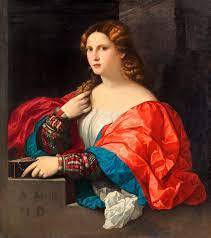
In The Bill, László Krasznahorkai’s madly lucid voice pours forth in a single, vertiginous, eleven-page sentence addressing Palma Vecchio, a sixteenth-century Venetian painter. Peering out from the pages are Vecchio’s voluptuous, bare-breasted blondes, a succession of models transformed on the canvas into portraits of apprehensive sexuality. Alongside these women, the writer that Susan Sontag called “the Hungarian master of apocalypse” interrogates Vecchio’s gift: Why does he do it? How does he do it? And why are these models so afraid of him even though he, unlike most of his contemporaries, never touches them? The text engages with the art, asking questions only the paintings can answer.
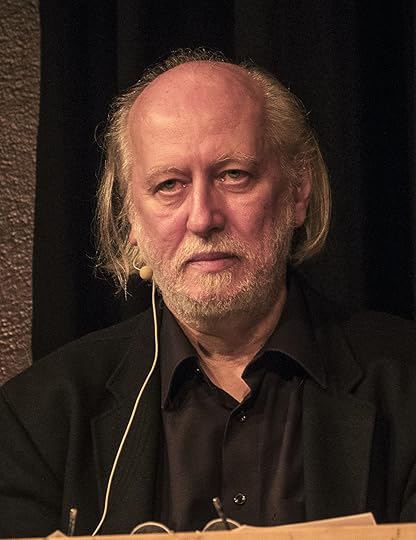
László Krasznahorkai is a Hungarian novelist and screenwriter who is known for critically difficult and demanding novels, often labelled as postmodern, with dystopian and bleak melancholic themes. He was awarded the Nobel Prize in Literature in 2025.
He is probably best known through the oeuvre of the director Béla Tarr, who has collaborated with him on several movies.
Apart from the Nobel Prize, Krasznahorkai has also been honored with numerous literary prizes, among them the highest award of the Hungarian state, the Kossuth Prize, and the 2015 Man Booker International Prize for his English-translated oeuvre.
'There is nothing to express, nothing with which to express, no power to express, no desire to express, together with the obligation to express.'' -Samuel Beckett
The moment you step in to the world of Laszlo Krasznahorkai, a dreadful atmosphere surrounds and envelops you and makes your heart throb with pulsating anxiety, the long and meandering sentences spread a sense of consternation and fright around you as if there is no way out of these decrees of apocalypse but, just then, the characters of his literary universe muster courage of their entire beings and spring up to life from the chaos and melancholy of life, as beautifully as one could. The majestic pen of the god of catastrophe and melancholia writes as we think, as if the streams of these palpitating thoughts dance before the quivering eyes of the reader; the reader is at the mercy of the omnipotent author to pick up these enticing thoughts and watches with bated breath that his consciousness twirls and sways as per the desire of the author.
The world of Krasznahorkai, as we know it, pours out a quintessential entropic music, and those eternal sentences gradually evaporate, with each section revealing just a hint of what could lie beneath, to discharge the darkness and melancholy encapsulated in them, eventually. However, the short story we deal with here is somewhat different from the Krasznahorkai world we are familiar with, it deals with art and beauty. And as we read it, a strange sensation may rise to cloud readers’ judgement that the story may not stand to the stupendous heights, the author is known to take his prose. But the author here takes the unfamiliar road of artistry, and traverses it with finesse of an expert of these tricky lanes with his usual and revered vehicle of colossal sentences, to take his prose to the level of divinity by bewitching his readers through pouring out a fine prose poem at their disposal.
The narrator of the story provides courtesans to the poet, Palmo Vecchio, who unusually use them just as models and not for the purpose they are generally known for. A sense of confusion and anxiety creeps in the mind of the narrator and inspires the narrator to douse his/ her flames of disquietude and curiosity so he/ she writes to the poet and asks him about his strange behavior with these women. The narrator contemplates that the poet never finds interest in the dark secrets of flesh, for which the services of these women are generally demanded by our society. The realization leaves the women in a bit of uncertainty and dubiety as they feel unsure about the purpose of the poet, only to be swayed away by the narrator through the comfort of money the expedition might be bringing along, and thus leaving the beings of these women stranded in the sea of nothingness as if the entire purpose of their existence is just to keep the wheel of society moving, robbing them off the (in)authentic meaning they might have assigned to their existence.
The sense of uneasiness surrounds these women as they are afraid that the poet may be hiding his real desires under the veneer of hypocrisy, and they may be demanded to do something beyond their capabilities. The narrator keeps on contemplating upon the probable reasons behind the weird expeditions of the poet, and eventually assuage his/ her tormented soul by assuming that perhaps the poet is looking for art. It is the art what the poet is after, for he is not searching for external contours of bodily pleasures, rather his eyes are exploring something eternal which may lie beneath the flesh. The great dissatisfaction which keeps us moving towards perfection also infects the poet too, as he asks for same women again and again to perfect the mysterious key to salvation he is painting through colors on his canvas.
What could it be it that the poet is looking for in his muses? Is he searching for some specific and rare lineation of woman body which may remind him of something beautiful from his memory such as the valley of Seriana. Does it has to do something with the sexuality of humanity as these voluptuous are being transformed into portraits of apprehensive sexuality on the canvas of color and dash? The charming and beguiling portraits, of the enigmatic rapture associated with these treasured women, stand profound witness to the mystifying desire of the poet.
Perhaps he is looking just for a sensation which is pure and sacred like a smile or a curl of hair, something which is beyond comprehension but still you are ready to bet your entire life for it- the moment of sheer bliss. It is the moment when flickering candle of our soul reveals the animal in our eyes, the majestic look which may drive us crazy from utter happiness. The incomprehensibility of that moment, of that sensation is probably what keeps its beauty intact. Perhaps it is possibility that something might happen later, which keeps moment of joy pure and sacred. The sensation is fragile which may evaporate to the air of nothingness as you try to capture it in the very moment by immortalizing with colors and lines on canvas through painting a picture of stillness and fulfilment. The narrator proposes that the desire to capture the sensation limits itself and the entire purpose of the uncommon vocation is to realize that the thing desired though cannot be captured but once existed. The author produces a lucid and lyrical voice in a single, vertiginous, eleven-page sentence giving it an air of poetic sensibility, addressing the motives of Palma Vecchio.
I wish Gordon Lish had instead written this little book as he would have shown László Krasznahorkai how to do it right. Not that the book wasn't interesting, but I hear the voice of Lish doing much greater damage than LK ever could. Oh well, it is what it is. I still "really liked it" enough to give it four stars.
Read not in this edition but as a short story in Dalkey's Best European Fiction 2011, along with looking at some of Palma Vecchio's art online.
About the moment of anticipation as the best illustration of desire (though that is reductive; Krasznahorkai's long sentence explores the byways and corners of thought and feeling involved in that idea); told from the apparent viewpoint of a pimp who provides courtesans to Palma Vecchio, who uses them only as models. (The women's initial mockery and/or bewilderment of that, of the client not wanting sexual services, is something that never seems to be found in recent serious fiction or memoir about prostitution by female authors - instead there is, IIRC, relief at less work - but there is so little historically by women to compare that delves into inner thoughts in that situation to compare with modern writers' attitudes.) The narrator suggests their figures, in the way Palma Vecchio paints them, evoke the undulations of the landscape of Bergamo where the artist grew up (this has a mocking tone to try and evade pretentiousness and tenuousness). The girls laugh at their colleagues or themselves later appearing as the Virgin Mary and other holy women. "I myself think we're all nothing but bodies" he says, irreligiously.
This small book clearly has its fans: the presentation copy will be part of that, though I think this story would have worked better in a themed collection with other pieces to reflect and refract. It is dense for so few pages, dense in its observation of minutiae, but there is not quite enough, I think, that it works on its own - if the point of the volume were the paintings, a compendium of most of Palma Vecchio's paintings, and the story an accompaniment more unusual than gallery-style labels, then it would seem weightier, if I may speculate on a book I've never seen a copy of. At any rate, what I can say after writing this post is that the style is somewhat infectious.
Historical fiction often isn't involving enough to distract me from wondering about research and evidence, but in the second half, because of the narrative's immersion in thought processes, this managed it.
...because the road back from memory inevitably takes you to the wrong place, and perhaps its whole purpose is to make you believe that there once was a real event, something that had actually happened, where the thing previously desired existed, and all the while the memory is shepherding you away from its object and offer you its counterfeit instead, because it never could give you the real object the fact being that the object doesn't exit, ...
A lovely dialogue with art and the artist and the models and time and the gaze
"...it is not the fact that they drive men crazy the way they peel off their clothes; oh no, quite the opposite, nor is it the way the breast pops out, or the belly or the lap, or the rump and the thighs appear for any such appearance means the end of unfettered illusion, no, it's the moment when the faint flickering candlelight reveals the animal in their eyes, because it is this look that drives everyone crazy, crazy for that beautiful animal, that animal that is nothing but body, which is what people die for, for the moment, that splinter of time, when that animal appears, beautiful beyond comprehension..."
Krasznahorkai glances sidelong at Vecchio, he who nurses at the wound of the world, he who bathes in linens and hair the colour of golden coins the infernality of lust, the metaphysical dilemma of longing, the tempestuous relation between presence and absence. The secret to the most reverent of paintings is in what is not there: as in life, we revel and progress if only for what is lacking. László holds the artist's brush in this fine diacritic of an analysis. His portraiture is of the artist himself, and it is painted with the finest of oils.
"...in fulfilling the promise you have lost the thing promised, it’s what vanishes in the fulfillment of itself, the light in the desired object goes out, its flame quenched—and so desire limits itself, for however much you may desire there’s nothing more to be done, because there is nothing at all real about the desire, desire consists entirely of anticipation, that is to say the future, because, strange as it is, you can’t go back in time, there’s no returning from the future, from the thing that happens next, no way of getting back to it from the other side, the side of memory, it’s absolutely impossible, because the road back from memory inevitably takes you to the wrong place, and perhaps its whole purpose is to make you believe that there once was a real event, something that actually happened, that the thing once desired did indeed exist, and all the while your memory is shepherding you away from this object and offering you its counterfeit instead, because it never could give you the real object, the fact being that this object doesn’t exist..."
This author always makes me feel unstable. And in just a 14 page sentence, I felt the sting of judgement with a crescendo just touching brilliance but remaining, dangling, just over the precipice of incomprehensibility.
Of particular note is his definition of a painter here as “someone who inhabits desire but can reject it in advance.”
i purchased this 14 pg book for $15 bc for some reason i thought it was a hardcover. its not. its just some paper stapled together. im going to buy the other one of these in the series.
Palkittu László Kraznahorkai jatkaa kysymyksiä herättäviä postmoderneja kokeilujaan. Tosin pokkari lienee lähinnä välityö tai käsikirjoituksen runko yltämättä aivan tuotannon parhaimpiin (Satantango, Melancholy of Resistance). Syväsukellus kiihkeästi naislumoa maalanneen Palma Vecchion (1480-1528) taiteen jännitteisiin tarjoaa lähtökohdan - mielestäni välillä rajulle, outoja tunteita välittävälle - sanailulle. Bill:For Palma Vecchio, at Venice etsii, aavistelee, purkaa aihetta vieden läpikuultaviin, näkemyksellisiin ulotteisiin. Heijastumina, epäsovinnaisesti kuvattuna. Maalauksiin patoutuneesta eroottisesta voimasta irtautuvat hahmot vievät tekstiä, kiihdyttävät liikkeeseen vaellukseksi. Pidin kuvien ja kielen visuaalisesta muodosta. Pokkarin luettuani palasin todellisuuteen, Venetsian koulukunnan - etupäässä madonnia ja pyhää perhettä edustavaan renessanssiin. Miettimään maalausten Venus vaikutteista tyyliteltyä Violantea. Palma Vecchion "tytärtä", Tizianin rakastettua?
As always Laszlo is a wonderful stylist and an experimenter with grammatical realism. The story is just one elongated sentence that builds and builds without seeming too daunting. I love the way he, the narrator, is often conscious of what he is describing or saying. What do we really have when he have achieved what we want? Another way of saying it is the journey, the chase that gives the end its meaning (or does it; perhaps the goal is just as hollow as a circle when we have finally made a straight line out of it). I read this story in the Best European Fiction 2011.
The Bill, Laszlo Krasznahorkai (Szirtes)...I found it while moving (ugh! bummer) but I had been looking for it and I saw it in my wife's "throw away" pile...beautiful in execution and, like, Animalinside, a beautiful object.
Làsz ruminates on desire and capturing that fleeting moment before the inevitably unfulfilling satiety. Of course, a similar feeling accompanies this painfully short text.