Jump to ratings and reviews
Rate this book

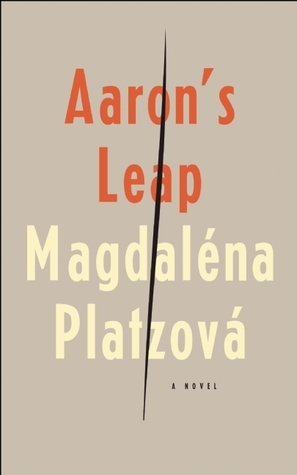
Aaron's Leap

Rate this book
“Told in clear and beautiful prose, Aaron’s Leap is a deeply moving portrait of love, sacrifice, and the transformative power of art in a time of brutal uncertainty.” —SIMON VAN BOOY, author of The Illusion of Separateness

Based on the real-life story of Bauhaus artist Friedl Dicker-Brandeis, Aaron’s Leap is framed by the lens of a twenty first-century Israeli film crew delving into the extraordinary life of a woman who taught art to children in the Nazi transport camp of Terezín and died in Auschwitz. Aided by the granddaughter of one of the artist’s pupils, the filmmakers begin to uncover buried secrets from a time when personal and artistic decisions became matters of life-and-death. Spanning a century of Central European history, the novel evokes the founding impulses, theories, and personalities of the European Modernist movement (with characters modeled after Oskar Kokoschka, Alma Mahler and Franz Werfel) and shows what it takes to grapple with a troubled history, “leap” into the unknown, and dare to be oneself.

Magdaléna Platzová was raised in Prague and has lived in Washington, DC and New York City, where she taught literature at NYU, and now lives in Lyon, France. She is the author of a children’s book, two collections of short stories, and three novels, including Aaron’s Leap, a Lidové Noviny Book of the Year Award finalist, hailed by the Frankfurter Allgemeine Zeitung as a novel that “must be counted among the best written by contemporary Czech writers.” It is her first book to be published in English.

224 pages, Paperback

First published January 1, 2006

3 people are currently reading
119 people want to read

About the author

Magdaléna Platzová

17 books4 followers

Magdaléna Platzová is a Czech writer, journalist, playwright and translator. She studied at Georgetown University, Brockwood Park School and Charles University in Prague where she obtained master's degree in philosophy. In 2001-2004 she worked as a literary editor for Czech weekly newspaper Literární noviny. She currently writes cultural journalism for Prague-based weekly magazine Respekt.

Ratings & Reviews

What do you think?
Rate this book

Friends & Following

Create a free account to discover what your friends think of this book!

Community Reviews

5 stars
11 (20%)
4 stars
17 (31%)
3 stars
21 (38%)
2 stars
5 (9%)
1 star
0 (0%)
Displaying 1 - 16 of 16 reviews
Profile Image for Madeleine.
Author 2 books951 followers
May 30, 2014
(This review was originally written for and posted at the Chicago Center for Literature and Photography's site. The publisher very generously provided me with a copy of this novel.)


Magdaléna Platzová's Aaron's Leap is a powerful, sobering meditation on both the human condition and the nurturing of the artistic soul that closes the distance between far-flung eras, absent friends, and seemingly unrelated histories of people and places alike--all of which demonstrate a unifying power akin to a ripple effect in time.

The narrative bounds across decades to explore a modern-day Israeli film crew's efforts to produce a documentary about the early- to mid-1900s life and art of Berta Altmann. Berta gets her own voice and story throughout the book, revealing intimate details about her that no retrospective examination of the conflicted woman could ever hope to replicate--a limitation that Berta's friend and fellow artist, Krystýna Hládková, is keenly aware of, coaxing her toward filmed interviews in the hopes of adding crucial dimension to what she sees as a detachedly historical film. Krystýna's granddaughter Milena tags along as a translator and soon finds herself romantically though confusingly entangled with the crew's cameraman, the titular Aaron, and the two add their own interconnected threads to the book's tapestry of inevitable connections.

Aaron's Leap is not just one character's story but it is bound by one idea: the necessity of art. The crucial role art plays in society and the artists' need to create form the backbone of the novel, with the characters' stories serving the central thesis to varying degrees. Aaron throws himself into his work, almost talking himself out of his feelings for Milena by convincing himself that she would be a distraction from the career to which he's devoted himself; Berta practically tortures herself to produce art that satisfies her, railing against her own impulses to fit a mold that isn't true to her own avenue of expression; Krystýna, primarily appearing as an elderly woman whose final days are upon her, destroys some of the uglier vestiges of her past and throws most of her efforts into detailing the Berta she knew in the hopes of leaving behind images both of herself that her son can peacefully live with after she's gone and of the Berta she knew and loved that would otherwise die with her.

The conflict between artists' utterly devoted, almost childlike tunnel-visioned regard for the work driving them and the cold imperatives of adult responsibility emerges as a recurring theme, emphasizing the frustrations that arise from trying to strike a realistic balance between the two. Berta is the best encapsulation of this, from witnessing a professor's descent into seeming madness in order to live in unbridled servitude to his art to trying to find her own harmonious allocations of energy. She responds to an interrogation regarding the openly communist ideals she has cultivated by explaining "We don't want to destroy... We want everyone to have enough food and heat, so they don't have to choose between working for money and working for the soul" and crying out in her diary entries with existential crises like "Must one really work and scrape by only for oneself to be able to create something? Must one be self-centered?"

The seemingly self-serving nature of the artist is a frequent concern for Berta, who is routinely described as a warm, magnetic and wholly selfless woman. A therapist suggests that growing up without a mother and with a father who couldn't give her the attention she needs left the adult Berta craving love and unwilling to impose upon others, which ultimately reconciles her artistic confidence with the ostensibly incompatible self-doubt plaguing her personal life. Berta is so worried that she doesn't give enough of herself to others and saves her best parts for her art that it's not until two days before she and her husband are sent to the Terezín concentration camp that she finally realizes she has sabotaged herself, confessing that "the balance of almost forty-two years" is that she has "accomplished nothing as an artist." Neither Berta nor anyone else directly pose the question, but it is this slap of clarity that asks whether it is more selfish to live for one's art or to be so devoted to others in the finite present that it compromises one's intended legacy as a canonical powerhouse, inadvertently diminishing the enjoyment of others in the far more expansive future. When Krystýna correctly observes that Berta was only able to give herself to others through her talents in Terezín by offering art lessons to the children imprisoned with her--and, therefore, giving them some shred of normalcy during a hellish obliteration of the childlike innocence she understood so well--it is one of the book's most piercing, tragic revelations about an otherwise strong woman whose unearned sense of guilty obligation to others was her undoing.

Platzová expertly illustrates the connectivity of the past, present and future, as well as the influences such chains of events impose on the widening spiral of time. It is not only Berta's living past and current memory that unite strangers and places but also the shifting times that she witnessed that drive this point home with a poignancy. The artists comprising the company she kept as a young woman regard themselves as midwives ushering in a new era on the ashes of the old in an "attempt to remold human life and its industrially produced elements into an artistic work." There can be no new worlds created without nurturing a dissatisfaction with the old, and a willingness to sit by dispassionately in uncertain times of flux between the two is to suffer a living death.

Likewise, stagnation arises from sidestepping opportunity one too many times, as the chances to become the person that one's talent mandate they should be are not a limitless resource. While it took Berta nearly her entire life to keep her short-term needs from obscuring her long-term goals, there is a chance that Aaron will not make the same mistake and, in fact, take the leap that will lead him to the sublime fulfillment that life is waiting for him to embrace.
Profile Image for Rebecca.
4,180 reviews3,445 followers
May 11, 2014
A bit like an Eastern European, Holocaust-themed version of The Blazing World. That is to say, this is another composite portrait of a female artist – built through her own diaries, her best friend’s confession, and an Israeli documentary being made about her life.

Berta Altmann was transported to Terezín (Theresienstadt) in 1942, and was then on the last shipment to Auschwitz in 1944. She had been part of the Bauhaus/avant-garde artistic scene in the Berlin-Vienna-Prague region, and witnessed the rise of Hitler in the interwar period. An acquaintance of Wassily Kandinsky and Paul Klee, “Berta believed in salvation through art.”

The novel’s present-day sections focus on Kristýna Hládková, aged 88, who was Berta’s best friend and is now the chief interviewee for the documentary, and her granddaughter Milena, who works as a translator for the film crew and has fallen in love with the photographer, Aaron. The narrative, delivered entirely in the present tense, shifts back and forth between Kristýna, Milena, and Berta (either her journals or a third-person account of her life). I must admit I found this rather confusing, and would have preferred more of the contemporary story overall.

I also thought the title seemed inappropriate in the end; Aaron is too minor a character to merit singling out in this way. I can see, though, that his relationship with Milena is about taking a second chance on love (after the complicated failure of his first marriage): “Leap. Have the courage to be loved, with all the risks it entails.”

There are some complex emotions at work here: depression, ambivalence about motherhood, survivor’s guilt, fear of death, and questioning one’s legacy. Even the descriptions of wartime are nuanced: “living in a besieged city was ghastly and beautiful at the same time,” and it made people determined to “experience the fullness of life.”

This is Czech author Platzová’s first work to be released in English, and the translation works very well apart from a couple of strange phrases: “lays in wait” and “alongside beside.” Indeed, the writing is very beautiful in places. I marked this out as my favorite line for its alliteration and its evocative imagery: “The pulse of blood, the babel and burgeoning of the darkness.”

I would consider reading more of Platzová’s work in translation one day. (There’s a bit more about the author here.)
Profile Image for Tuck.
2,264 reviews251 followers
March 12, 2014
life story novelof artist and independent woman of europe, from wwi to wwii. she grows up and studies in vienna 1917, uh huh, death. then moves to berlin to attend bauhaus till 1935, uh huh, horror. then moves to prague 1936, uh huh, terezin.
bellevue literary press gets all the props for being such wonderful dreamers and providing us with the most important things to read.
platzova should get a parade. if there was any justice, she would.
friedl dicker-brandeis could still be alive, she'd barely be 100 years old now http://www.jewishmuseum.cz/en/afdb.htm

Profile Image for Kingofmusic.
269 reviews53 followers
Read
September 18, 2025
Abbruch auf S. 79; komme mit dem Stil nicht klar. Schade um die interessante Story, aber auf Gedeih und Verderb weiterlesen bringt mir und dem Buch nichts.
Profile Image for Beth.
291 reviews
February 7, 2014
Aaron’s Leap encompasses the Bauhaus school and movement, ideology, and aesthetics during the antebellum and Holocaust eras. Narrated during the 21st century, and initiated by an Israeli film crews’ study of the protagonist’s life, it has all the elements for a great novel. It promises to seize the reader emotionally, philosophically, and morally. Ironically, this fundamental factor – emotion - is missing.  It is not entirely absent, in that the facts automatically guide your ethos intellectually. Yet, Platzova’s writing style does not lend itself to these raw, unprotected senses; the type you would expect from a novel of this complexity.

I am not enamored by the author’s narrative. I prefer more depth in my reading. Aaron’s Leap lacks the narrative weight I favor. I have considered if some of my stylistic issues have more to do with the translation. However, the author’s ending confirmed my overall feeling. The novel was average, and the ending was kitschy. This does not mean it is a horrible novel; it simply did not reach its potential.

My last thought regarding Platzova’s story: I was dispirited by how poorly Bauhaus ideals were depicted – as if all were positively ridiculous. The Bauhaus greatly affected modern day art, and has housed some of the best artists worldwide. In any movement there are extremists, and they were definitely a part of the Bauhaus ideology in its early development. Its attendants, devoted to creating a new style of art, fished all over the spectrum to find its medium. In the end, they did accomplish their major goals, and greatly contributed to contemporary art. The schools continued existence is testament to its significance in the art world.
1,340 reviews56 followers
June 17, 2022
L'idée de mettre en lumière la vie de Friedl Dicker-Brandeis m'a fait découvrir cette artiste sous les traits de Berta Altmann. J'ai suivi son cheminement jusqu'au camp de Terezin avec intérêt.
Mais la seconde histoire entre Milena et Aaron, plus simple histoire d'amour, m'a paru rajoutée inutilement.
Ce qui m'a surtout gêné, dans ce roman, c'est le style factuel de l'auteure : il fait ça... elle fait ça....
Dommage.
Une citation :
Sautez le pas. Ayez le courage d'être aimée avec tous les risques que cela comporte. Il faut avoir du courage pour le bonheur, alors ayez-le. (p.185)
Profile Image for Charlene.
708 reviews1 follower
September 16, 2016
It took quite a while to figure out what Aaron's leap was. The courage to live and love another truly takes a leap of faith and not everyone makes it.
Profile Image for Stephanie.
432 reviews2 followers
September 1, 2021
A travers les yeux de Kristina qui l'a accompagné jusqu'à son départ pour le camp de Terezin, on découvre la vie de Berta Altmann, artiste juive autrichienne des années 20/30, réfugiée à Prague et qui sera assassinée à Auschwitz.
Une écriture qui ne m'a malheureusement pas accroché. Un style plat et des personnages auxquels je ne me suis pas attaché.
34 reviews
June 26, 2023
Čítalo sa to ako na hojdačke. Velmi sľubný rozbeh, pozvoľný útlm, až som to po polovici na chvíľku odložila a neskôr sa tým prehrýzla len silou vôle, aby som poslednú štvrtinu knihu prečítala jedným dychom.
Takže boli tam časti čo ma vyslovene nebavili, ale zároveň úchvatné myšlienky, čo ma zasiahli. A ten zvrat v záverečnej časti, to rozuzlenie, to bolo skvelé.
Profile Image for Adrien de Steiger .
52 reviews
December 6, 2024
Narration un peu désordonnée qui rend la lecture inconfortable. Mais style plaisant et passages "roman historique" intéressants.
Profile Image for World Literature Today.
1,190 reviews360 followers
Read
May 31, 2014
"The novel is beautifully written, with masterful creation of atmosphere and sculpting of the main characters. The translation by Craig Cravens is excellent and true to Platzová’s artful prose." - Michaela Burilkovova, Gainesville, Florida

This book was reviewed in the May 2014 issue of World Literature Today. Read the full review by visiting our website: http://bit.ly/1ktjjZ1
Profile Image for Carla.
Author 20 books50 followers
July 25, 2015
This novel is written in the present tense, which isn't a favorite of mine. But the nonfiction elements are skillfully interwoven--readers who seek lost history of the Holocaust are sure to find it interesting.
90 reviews1 follower
May 1, 2014
sort of uneven, but fairly good. Artists, turn of century, Prague, etc. linking to present day
Displaying 1 - 16 of 16 reviews

Can't find what you're looking for?

Get help and learn more about the design.