Jump to ratings and reviews
Rate this book
Rate this book
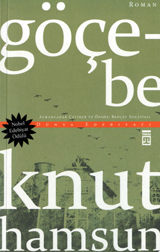
Göçebe, üç bölümlük büyük romana yazarın verdiği genel isimdir. İlk kitap Sonbahar Yildizlari Altinda 1906'da, Hüzünlü Havalar 1909'da, Son Mutluluk 1912'de yazıldı. Üç bölümün üç ayrı adı var, ama aslında üç bölümün üçü de birer "hüzünlü hava"dır; üçünün de kahramanı aynı kişi. Hamsun'un asıl adı olan Knud Pedersen'in ağzından anlatılır olaylar. Artık büyük şehirlerden bezmiş, iç sıkıntılarını kırlarda, ormanlarda, şehirden uzak yerlerde dağıtmaya çalışan, kayıp gençliği peşinde avare, orta yaşlı bir hülya adamıdır kahraman. Şehrin gürültü ve uygarlığından kaçarak tabiatın bağrında, yıldızların altında ruhuna sükûn ve şifa arayan, kanının çağıltısını kırların soluğunda yatıştırmak isteyen, şair ruhlu birisi.

496 pages, Paperback

First published January 1, 1909

Loading...
Loading...

About the author

Knut Hamsun

772 books2,520 followers
Novels of Norwegian writer Knut Hamsun (born Knud Pedersen), include Hunger (1890) and The Growth of the Soil (1917). He won the Nobel Prize for literature in 1920.

He insisted on the intricacies of the human mind as the main object of modern literature to describe the "whisper of the blood, and the pleading of the bone marrow." Hamsun pursued his literary program, debuting in 1890 with the psychological novel Hunger.

Ratings & Reviews

What do you think?
Rate this book

Friends & Following

Create a free account to discover what your friends think of this book!

Community Reviews

5 stars
456 (28%)
4 stars
632 (40%)
3 stars
401 (25%)
2 stars
70 (4%)
1 star
14 (<1%)
Displaying 1 - 30 of 114 reviews
Profile Image for Rıdvan.
562 reviews96 followers
December 23, 2018
Aslında varlıklı ve çok zeki biri. Bırakıyor arkasında herşeyi. Yollara düşüyor. Her gittiği yerde ayrı hayatlar ayrı insanlar ayrı hikayeler...
Aslında üç ayrı kitabın bir araya gelmesiyle oluşmuş bir koca kitap Göçebe. Çokta güzel. Gerçek bir münzevi hikayesi okuyoruz. Adamın muhtemelen damarlarında ki kanı bile ağır ağır akıyor
Profile Image for Carduelis.
302 reviews
October 26, 2025
Kitap, şehirden kaçıp fiziksel olarak gezginliği seçmiş bir adamın hikâyesini anlatıyor. İsimsiz bu anlatıcı, -huzuru ararken- olgunlaşma dönemi ve yaşlanma döneminde, doğayla daha fazla iç içe olabilmek için köylerde ya da çiftliklerde çalışarak geçimini sağlıyor ve aynı zamanda oradaki insanlara yardımcı olmaya çalışıyor. Roman, yalnızca onun fiziksel gezginliği değil, manevi ve psikolojik göçebeliğini de aktarıyor. Üç bölümden oluşan kitapta: İlk bölüm, anlatıcının gezdiği birkaç çiftlikteki gözlemleriyle sınırlı. İkinci bölüm, altı yıl sonrasına atlayarak, anlatıcının eski çalıştığı çiftliklerden birinde tekrar işe girmesiyle yaşanan dönemi ve oranın hanımının gönül maceralarını aktardığı olayları içeriyor. Son bölüm ise yaşlılık ve yaşam üzerine bir iç döküşle sona eriyor.
Hamsun'un, savaş dönemindeki politik tutumları nedeniyle kendi halkı tarafından protesto edilmiş bir yazar olduğunu okumuştum, bu romanın içsel yalnızlığı ve toplumdan kopuş duygusu acaba oradan mı geliyor diye düşündüm. Yazarın Açlık romanındaki derin psikolojik çözümlemeleri ve insan bilincine dair ustalığı bende güçlü bir etki bırakmıştı. Göçebe ise bunun aksine, -Ne okudum, neden okudum?- sorularını sordurtan, bende hayal kırıklığı yaratan bir kitap oldu, zor bitirdim.

Herkese keyifli okumalar.
Profile Image for Steven R. Kraaijeveld.
574 reviews1,935 followers
May 16, 2016
The Wanderer is composed of two related novels: Under the Autumn Star and On Muted Strings. The first was definitely better than its sequel, which follows the same character (Knut Pedersen, Hamsun's real name) later on in his wanderings - but I thoroughly enjoyed them both. Hamsun has a unique talent for elevating the lives of ordinary people to a high level of general and artistic interest; and his propensity for leaving unexplained some of the reasons, motivations, or background of his main characters serves to add depth to what might otherwise be more straightforward tales. The beautiful epilogue to On Muted Strings is probably the most personal I have encountered Hamsun in his writings.
Profile Image for Oziel Bispo.
539 reviews85 followers
July 24, 2017
Um viajante volta a um sítio onde estivera há oitos anos atrás e encontra tudo em decadência , tanto as pessoas como as construções. As pessoas já não se entendem , as famílias estão destruídas, o adultério , os ciúmes e as brigas imperam..Ele vê tudo isso acontecer com seu antigo patrão que está envolvido até o pescoço em brigas , adultério e vícios numa disputa ferrenha com sua esposa Luisa.
O viajante tenta de todas as maneiras restaurar aquele lugar , com projetos de pinturas e técnicas de agricultura, mas no tocante as relações humanas ele nada consegue ,as coisas vão de mal a pior .Sua única alternativa é pensar no passado, mas o passado também lhe doi pois no passado ele amou uma mulher naquele lugar e agora no presente percebe que a continua amando. .
Knut é um especialista em penetrar no mais íntimo do ser humano. .Não é à toa que ele de um simples sapateiro se tornou um nobel de literatura.
Profile Image for Konserve Ruhlar.
307 reviews196 followers
August 26, 2014
Üç kitaptan oluşan romanda ana kahraman aynıdır. Knut Hamsun'un kendisi olarak yorumlanan kahraman 50'li yaşlarında hüzünlü, hiçbir yerde uzun süre kalamayan, kırlarda, doğal hayatta mutlu olarak içine kapanan, gittiği çiftliklerde ve kentlerde çevresindeki insanları ilgiyle izleyen biridir. Kahramanın gözlemlediği kadınlar genelde mutsuzdur. Evlilik kurumunun mutsuzluk getirdiği görünür. Norveç'in müthiş doğasını Knut Hamsun'un gözünden okumak kitaptaki en doyurucu nokta. İhtiyarlandıkça kendini sorgulayan karakter şiirler yazmaya başlar. Kitapta yer yer bunları okuyucu ile de paylaşır. Her bölümde farklı ve üzgün kadınlar var. Yazar onlara tanımlayamadığı ilgi duyar.

Doğadan insanın içine ilerleyen duygulu bir yolculuk bu kitap. Yaşlılık ve melankoli, doğa ve insan, kadın - erkek, şehir ve kırsal kesim hayatı ince detaylarla yorumlanır.
Profile Image for Brendan Monroe.
688 reviews205 followers
March 21, 2023
Even the wanderer will, at some point, find the pull of domestic life impossible to resist. Even the wanderer will, when given the possibility for companionship, return.

This is what I took away from Hamsun's "Wanderer" — the futility of trying to live a truly nomadic life. Sooner or later, someone will find you and you'll no longer wish to escape life.

The shelves of today's bookstores teem with novels attempting to advance a political or social agenda, to signal the virtues of the author. How nice then to read a novel that seeks simply to tell a story!

Our protagonist Knut Pedersen finds himself in thrall to the wife of a captain whose estate Pedersen finds work on. But this isn't a tale of forbidden love. We quickly become aware that Pedersen's infatuation will only ever be that, as being a "wanderer" and workman places him in a lower class than the object of his affection.

The reader can't help but feel their own share of Pedersen's powerlessness at this fact, and it makes for some frustrating reading as we're made, like Pedersen, to mostly observe the events that play out.

But such is the life of the wanderer. To drift but never truly inhabit any one particular place. To never form any lasting relationships. To practice learning the movements of life in one town only to then be driven off to another.

And so, like the long, winding road, it goes.
Profile Image for Andy.
1,277 reviews234 followers
March 1, 2024
Very confused by this sequel to under the autumn star. At times, it read like a prose version of an unknown Henrik Ibsen play. But I think Hamsun pretty much hated Ibsen. At time it seemed to be played for farce. at times, it was poetic and at times it was simply tiresome.

I wasn’t entirely sure why he’d even written a sequel, or more like a continuation of the first book. Most confusing.
Profile Image for Jennifer.
567 reviews343 followers
January 29, 2021
2.5 stars. This is the most frustrating decent-ish fantasy trilogy. It has the bones to be much better: magical treachery and a zombie plague, revolution and cataclysm, an enemies-to-lovers romance. Paula Brandon/Volsky is a very competent writer, but sometimes a distinctly unpleasant one with a predilection for torture and dead things. I skimmed large sections of The Wanderers because they seemed both unnecessary and unpleasant and I didn't actually care that much. In short: lots of promise, disappointing execution. This third book feels particularly unfocused.

One major problem is that there's really only enough plot for two books, not three. There's a whole lot of wandering (and mostly not by the zombie Wanderers, who are initially intriguing and then fizzle out into mere thuggery). And the aimlessness is compounded by the fact that there are three major groups of characters, and only one group (the romantic couple Jianna and Falaste) actually captured my interest and sympathy. That means that about 66% of the pages are devoted to characters who are either uninteresting or actively repulsive. Case in point: Aureste Belandor lost my respect in the first book when he kills his servant in a rage, and despite his love for his family, he remains more despicable than interesting. Yet hundreds of pages are devoted to him!

For maybe the first time ever, I think this series would have been better with more romance, or at least more development in that quarter. Jianna Belandor starts off as a spoiled brat, clever but fundamentally clueless as to her father's character or the world she lives in. She improves throughout, but it's never obvious what the clear-eyed and quietly competent Falaste Rione sees in her. They are the new hope for the future - a world in which the restrictions of class are softened and idealism and philanthropy have a place - yet spend relatively little time in the spotlight and are separated for most of the series. Stronger characterizations here could have saved the whole series. But instead, we have pages and pages of Aureste and co. trudging endlessly on their way to try to save the known world, squabbling and occasionally killing members of their party as they go.

I'm disappointed. I hoped that this trilogy was poorly rated because it was mis-marketed to romance readers, but it turns out that it's just not that good.
Profile Image for Steven R. Kraaijeveld.
574 reviews1,935 followers
May 16, 2016
"There are some who pick themselves up after a fall and continue on their way through life, with their blue and yellow bruises. And there are others who never rise again."
This sequel to Under the Autumn Star follows the same character (Knut Pedersen, Hamsun's real name) on his wanderings in the Norwegian countryside, six years later. He ends up meeting many of the same characters in correspondingly late(r) stages of their lives. The novel is not as compact and well-crafted as its predecessor; however, it has its fine moments, and the beautiful epilogue is some of Hamsun's most personal writing, in which he reflects on literature, truth-in-literature (or general lack therefore during his times), life, solitude, wandering, and getting old. He even takes a few jabs at Ibsen in the process.
Profile Image for Jessie Leigh.
2,100 reviews911 followers
October 7, 2015
Read This Review & More Like It On My Blog!

This entire review is going to get a lot SPOILERy, so stay away unless that's good with you!

Unfortunately, this is series that never quiiite panned out for me; I liked it but that is the sole extent of the feeling inspired by these books. I hesitated to start my ARC of the first book (for months...), but finally dove in and was mildly surprised by the complex worldbuilding and the original ideas that present amid an otherwise uneven debut. However, after my unexpected experience with The Traitor's Daughter, neither its direct sequel The Ruined City, or this, the trilogy's conclusion, lived up to the sheer awesome potential that a fantasy series based on a magical upheaval and zombie apocalypse could should have been. With the amount of and mix of genres and ideas that The Wanderers has within the four hundred page length, some plotlines/characters are inevitably neglected to the detriment of the overall impression of the novel and series. While I obviously walked away from this genre-blending series much less enthused than I'd hoped to be, I will definitely stay tuned to see what else this author comes up with in the future.

The tension and danger is supposed to be at its utmost level here, having theoretically built up a large confrontation between the Overmind and the humans/arcanists over the last two novels. But... no, not really. I never really felt the suspense build to anything credible, nor was I really impressed with the zombies (aka the "Wanderers" of the title), "plague-wraiths" and all else used to induce fear in the characters themselves. the narrative jumps around from story to story; from Jianna's mad (heroic!) plans to her father/uncle's expedition to the deteriorating city of Virtisi itself, supposedly illustrating the increased antagonism. The idea of the Overmind as an alien opponent is really a good one - the same with the alternating polarity of magic. Unfortunately, the execution of the threat of the Inhabitants/Pockets is somewhat lacking in retrospect (the Pockets, especially seem devoid of threat or malevolence). What Paula Brandon does well, really very well actually, is in the history and worldbuilding behind her medieval-ish Veiled Isles. Faerlonne is a vaguely recognizable as an homage to the Italian city-states of real-world Earth, but is an utterly original, conquered nation with its arcanists, humanoid amphibian slaves called Sishmindri. Each successive novel in the series does a more than considerable job advancing the knowledge about Faerlonne and Taerleez - something I greatly enjoyed.

Both the characters and dialogue are still very rudimentary and repetitive in the third novel. I was more forgiving of these in the first, but the weighted down dialogue, full of exposition, never really goes away and it gets old. While Jianna has grown and changed, it doesn't feel authentic. For example, she now supports the resistance and Faerlonnish freedom from their oppression but the idea of Sishmindri independence is abhorrent to her.  Love interest Dr. Falaste Rione is still stereotypically perfect and for that unfortunate reason I can't buy into the romance between the two or in any chemistry between him and the young "maidenlady".  The voice of each character can be stilted and wooden - the third person perspective feels appropriate especially when the book focuses in on the city storyline, but it does Jianna and Aureste themselves no favors. I first found Aureste to be a delightfully morally-grey and conflicted character with a murky personal history - over the course of the last two novels his characterization degenerated into a mindless and often oblivious bully. The same is true of the still now-unnecessary Yvenza, the secondary antagonist from The Traitor's Daughter. Since the end of that book she has drifted along in each sequel, serving no real purpose behind transparent plotting and scheming.

Aside from all that bitching above, my main issue with The Wanderers is just how easy and simple the resolution to every single plot line is. Seriously. There's no real struggle for the main characters. The final conflict between the beleaguered arcanists and the Overmind to "cleanse" the Source was utterly underwhelming and rushed - Aureste at least had a battle worthy of a zombie-apocalypse-novel finale, but I was very disappointed in just how lamely it was executed. Jianna and Falaste's ridiculous escape from prison also smacks of deux-ex-machinas or just "terribly convenient."  I would've applauded the author if she had carried through, but there are other ways to rescue her doomed lovers than the laughable manner chosen here. For the hundreds and hundreds of pages (415 + 384 + 416 = 1215) accrued to reaching these final pages and epic "once every several generations" conflict, it simply wasn't the impact and fight promised. The only slight exception is Aureste, but from Nalio's easy escape (so everyone's cool with the fact that he was gong to let Jianna be executed when he could've stopped it? Yeah? Okay then...) to Onartino's less than exciting final appearance there was a certain lack of ooomph.

An uneven series that started out strongly and faltered more and more as it approached the end, there's still a lot of originality at play in the Veiled Isles trilogy. The Wanderers, especially, didn't quite manage to live up to my expectations, but Paula Brandon has proven herself to be an inventive new author with creativity to burn. In a genre where a lot of novels go for the same predictable fantasy tropes, Paula Brandon constantly tries for new ideas and angles, and even if they don't quite pan out, it's worth a try to venture into her fertile imagination.
Profile Image for Jip.
90 reviews
April 15, 2026
"De pure genade dat je mag leven is de gulle vooruitbetaling voor alle narigheid gedurende het leven, voor alle narigheid op zich."

Ik ben blij dat ik geen vrouw ben in 1910 op het Noorse platteland - dan liever een zwerver
Profile Image for Dovydas Strimaitis.
12 reviews
January 1, 2022
"...what one does must not be hopelessly at odds with what one is!" - Knut Hamsun in A Wanderer Plays on Muted Strings


The Wanderer (which actually contains two books, Under the Autumn Star and A Wanderer Plays on Muted Strings, from the so-called 'wanderer trilogy') by Knut Hamson from the first sentences climbed to the top of the list of my favorite books. It does not happen often that I feel such closeness to a fiction book in English (as it is not my native tongue), so it really took me by surprise. But definitely a pleasant one!

I guess, first of all, it is thanks to the translators Oliver and Gunnvor Stallybrass that I could enjoy these two novels. The sentences were not simplistic, had intriguing and sometimes intricate syntax, yet I could flow through them as if reading perfectly rhymed poetry written in my native language. While the language maintains the outdated vocabulary, which is fitting to the time when the book was written, it felt fresh, understandable, yet still poetic. So congratulations to the translators, and I definitely recommend reading the book in English (unless, of course, you read Norwegian), as translations can be a tricky and way-too-often a disappointing business.

However, the translation only enhanced and transmitted the great piece of literature that The Wanderer is. From the very beginning, the language used, the way the main character Knut Pedersen thinks and phrases his sentences is a real delight to read. You can always feel some sort of easiness, carelessness, yet the text never becomes chaotic or superficial. It avoids lyricisms and romanticism, and because of that reaches an uncontrived air of poeticism. What is more, the manner in which the book is written mirrors the character of Knut. While (at least from the two stories in the book) we do not know much about his past, we discover quickly that he is not only well-educated, but intellectual and insightful in the way he sees the world, in the way he self-reflects, and in the way he analyzes others. Knut sees beauty and meaning in people that do not seem beautiful and meaningful to a (stereo)typical intellectual - the unpretentious lives and worries of farmhands, road workers, log drivers, and maids gain depth in his eyes. Knut, while himself having a more conscious vision of life, one that is possibly not attainable to the simple workers, by living with them as equals, elevates their life experiences to a level of contemplation.

Yet there is none of the typical romanticization or idealization of the countryside or the lives of simple people. He is very direct in his thoughts, not praising when unearned, not criticizing to demean. Knut thinks, talks and acts very matter-of-factly. And while he can be critical of others, he is especially conscious of his own thoughts and feelings, and often mocks himself for getting ahead of himself, or for indulging in emotions.

He is extremely insightful but doesn't take more words than necessary to describe an action, an atmosphere, a feeling, and that makes the reader experience all of these things more deeply, not fictitiously as in a romantic poem or a fairytale, but as if it was actually happening - I suppose that is one of the definitions of realism. However, don't be mistaken, The Wanderer is one of the most poetic prose books that I have ever read. Knut's stance in front of his own life, in front of existence as such, is very deeply felt, lest without many words, and that elevates it to a level of poetic contemplation - sometimes not even in the lines, but between them, or in the head of a reader.

The discovery of Knut Hamsun and his prose that is at the same time blunt, witty, and poetic, was one of my literary highlights of 2021.
Profile Image for Gerbrand.
465 reviews19 followers
November 30, 2023
“Het lijdt trouwens geen twijfel dat er een zekere mate van hersenloosheid voor nodig is om blijvend tevreden te zijn met zichzelf en alles. Maar gelukkige momenten heeft iedereen. Een gevangene zit op een kar op weg naar het schavot, een spijker prikt hem in zijn zitvlak, hij gaat verzitten en voelt zich prettiger.”

Een boek uit 1909. Tweede deel uit de Zwerver-trilogie. Je hoeft Onder de herfstster (deel 1) niet gelezen te hebben. Toch denk ik dat het extra leuk is om het niet lang na elkaar te lezen. En dat komt omdat Louise, de vrouw van kapitein Falkenberg, ook in dit verhaal een belangrijke rol speelt. In deel 1 was de ik-verteller verliefd op haar. En in deel 2 gaat deze dagloner na 6 jaar weer langs het landgoed van kapitein Falkenberg voor werk. Dat de ik-verteller ook schrijver is komt eigenlijk niet naar voren. Hij observeert als een schrijver zou je kunnen zeggen.

De bijzondere stijl van Hamsun ga ik steeds meer waarderen. Misschien ga ik Mysteriën nog eens herlezen. Maar eerst deel 3 van deze trilogie, in mei 2024 komt het uit.
Profile Image for Geoff.
444 reviews1,582 followers
October 3, 2008
Much like the tone of a book by Giono (I'm sure Giono was well aware of Hamsun), this is a lovely, simple story about a wanderer and his interactions with people and nature. The sometimes surreal, magical imagery that crops up, and Hamsun's almost mystical descriptions of solitude, working with the land, and the joy of immersing oneself in forests, rivers, and mountains, makes it a wonderful, contemplative book. The characters themselves were a little thin, but overall I greatly enjoyed this.
Profile Image for Madhuri.
312 reviews59 followers
August 18, 2008
The theme of a wandering man is central to many of Hamsun's characters, so it is perhaps only fitting that a book comprising of two of his writings be called The Wanderers. The cover contains two inter-twined Hamsun writings: Under the Autumn Star and Wanderer plays on muted strings, the latter a sequel to the first - and is a close but stale reflection of Hamsun's themes and moods, perhaps even a reflection of some of his own experiences
In the former, the wanderer Knut Pedersen leaves behind his city life with the romantic fantasy of leading a simple village life. He begins to do odd jobs on farms, but finds his heart often interfering with his idea of simplicity as he falls in love with the women of the house. His adopted simplicity is not able to lure him into settling down on a farm with one of the maids as his simpleton companion does. Like most of Hamsun's heroes, he hangs in abeyance in a feverish passion, that works to depress and exalt him alternatively, but also always keeps him on his feet. He is the confused man who does not know what he wants - whether it is the affections of one lady or the other, or merely a life in the woods. It is, in a way comical to read of his mild frustrations, because he seems to be oriented towards what he apparently escaped from while escaping the city. It is also comical because these are the confusions of a real person, whose element is inconsistency and not a singular approach to life which seems to be the characteristic of most other protagonists.
In On Muted strings, Pedersen, six years later, returns to one of the farms where he had worked during his earlier wanderings. And if there is a word that can describe the emotion of this narrative, it is the well chosen word in the title - muted. This hero is certainly different from Hamsun's other heroes, he is a quietened, withdrawn soul in contrast to the earlier restless character. There is that lack of the characteristic fervor, although still retaining his element of estrangement and frivolity. He is more a narrator now than the protagonist - as he observes the life of the landowners, which are portrayed in shades of decadence. Though I think he tries to refrain from it, Hamsun does pass his negative reflections on alcoholism and infidelity in his commentary, something that trivializes him a bit in my opinion. Though I do not expect an author to be an unbiased observer, I think he could keep well above the station of passing moral judgements.
I recently chanced upon a more detailed commentary on these characters which I found quite appropriate:

Fictional heroes who are estranged from their environment seldom emerge lifelike. With most writers, such heroes are mere shadows, or, at best, symbols. But Hamsun is able to portray both the environment and the alienation, the soil and the extirpation. His heroes have roots even though they cannot be seen. The reader never knows precisely how they have become what they are, but their existence is real all the same.
Hamsun’s favourite hero is a young man in his late twenties or early thirties, rash, good-natured, with no plans for the future, always anticipating some happy chance, yet at the same time resigned and melancholy. Hamsun’s hero is frivolous in word and deed. He speaks to people as he would to a dog or to himself.


Perhaps this work does not quite compare to Hunger or Mysteries, and is only a slighted shadow of these, but it is a very good read, describing a real man and his romantic fantasies of a simple village life, and of a lot of other romantic notions. The translation by Oliver and Gunnvor Stallybrass is excellent.
Profile Image for Rosewater Emily.
293 reviews2 followers
February 28, 2023
Минувшим вечером нашлось адекватнейшая синематографическая аналогия, достойная просмотра теми, кто ищет возможности оценки повести ("этой" или "Кнута Гамсуна" - не так важно, поскольку речь о сохранении человечности):
Le petite vendeus de soleil (Djibril Diop Mambety, 1999)
...
En Vandrer spiller med Sordin naar han blir halvhundrede Aar.
"Не могу ли и я считать себя Странницей, ещё не прожившей положенного Гамсуном полувека, чтобы играть на сурдинке с тем же мастерством, но всё-таки, как минимум, выкорчевавшей какой-нибудь, не особо сопротивлявшийся пень в близлежащем лесу, с тем сохраняя память о древе от охамевших пикникёров, рвущихся в президенты, и в то же время, приобретая возможность своевременно использовать этот импровизированный "аксессуар", например, при игре на флейте?"
Вопрос слишком длинен для Странницы, не спорю, но чувство единения, самые основы которого не должны подлежать формулировке, присутствует и сохраняется на протяжении всей оставшейся жизни; или я не права?
Saa meget Teatervæsen er det i ethvert Menneske, man smigres ved at bli holdt for mere end man er.
И это, правда, до определённой степени чудесный опыт - ощущать себя персонажем более, нежели "обнаруживающим себя в собственной тарелке", рассудительным, отдающим отчёт в каждом собственном действии, способным взять на себя непомерную ответственность за судьбы отдельных государств, биологических видов, звёздных систем, лишь бы не за пытавшихся "сделать из тебя человека" и сохранить твоё здоровье и жизнь родственников и "близких" (изобретаемых с тем же успехом и поспешностью, с какой происходило овладение популярными детскими конструкторами в надлежащем, с легчайшими отклонениями, возрасте). Чудесный до отвращения опыт - иногда становится непросто стряхнуть с лица выражение, ощущаемое тобой как чужой, однако произведшее достаточно сильное впечатление на разогретый чересчур горьким шоколадом либо излишне сладким вином ум (ли?).
Возможно, именно это и следовало бы назвать "кармой" - склонность организма маскироваться под плод чужой, превозносящей либо оскорбляющей его фантазии. Человек - всей душой жаждущий превзойти реальность своей добровольной фантасмагоричностью хамелеон.
Vi er som Brever som er sendt ut: vi befinder os ikke længer under Befordringen, vi er kommet frem.
..и вероятнее всего, не имеет значения, можем ли мы доставить удовольствие самим себе в качестве прочитанных и доставленных по адресу. Религиозностью может повеять от подобных убеждений, однако и теорией "разумной" эволюции в равно степени - от такого сорта религиозности. Замкнутым кругом - от системы, полагающейся на противоборство исследователей "духовного" и "материального" - для сторонника кванта (само собой, кванта).
Наверное, одним из редких недостатков этой повести можно считать однообразностью обонятельного опыта - сирень, сосна, плоть; водопад остался без запаха, а значит - без вкуса; а значит - фру Фалькенберг утонула в дистиллированной воде, ушла под рафинированный лёд, под Соединённые Штаты Детских Травм, возглавляемые, подобно Спарте, разноцелевыми инициативами капитана Фалькенберга и инженера Лассена; под, в конце концов, преждевременную игру на сурдинке какого-нибудь Гринхусена..?
Den Vise hvad vet han om Kvinden?
"О женщине" не знает ничего даже она сама.
Det blir visst meget Bær iaar.
Profile Image for Andrés Cabrera.
464 reviews90 followers
July 11, 2017
Hamsun es un artesano de la palabra: la calidez y precisión con la que hilvana sus ideas es preciosa. El noruego escribe como si alzase una cometa en los cielos: comprende que, más allá de lo dicho, hay un vuelo, una danza que se da entre las nubes y el objeto. En ese intervalo entre la idea y la expresión, Hamsun hace de la afección la protagonista de su relato. Comprende que, como bien explica al final de la novela, el vagabundo no es un sabio: no es alguien que reflexiona al borde de la muerte, ni en virtud de sus años vividos, no es ese que se erige como "más apto" que los demás por el hecho de su vejez; por el contrario, el vagabundo no es sabio; antes bien, comprende que la vida y sus enseñanzas sólo tienen sentido en cuanto han sido experimentadas por uno mismo, y que, más allá de hacerse extendibles a todo contexto y persona, el aprendizaje es personal. La melodía sólo tiene sentido para aquel que la ha vivido, que ha navegado entre sus acordes y se ha visto frente a sí mismo y la inmensidad del paisaje humano. Para aquel que ha temido y amado, la melodía es parte constitutiva de su relato. Para el resto, son acordes tapados, insonoros. Por eso, el vagabundo sabe que siempre toca con sordina: no importa que lo oigan, ni quien, sólo interesa su propia melodía: en su momento, en su vivencia. Luego de eso, sólo queda el camino: abierto y expectante...

He leído que, para muchos, esta segunda parte de la Trilogía del vagabundo está peor lograda que la primera. Sin embargo, considero que no es así: si bien la acción que transcurre no es siempre crucial, Hamsun logra incorporar aquí un ritmo, una cadencia que arrastra al personaje y que es indisociable del suceso pivote de la narración: . En este sentido, lo interesante de A Wanderer Plays on Muted Strings es que hace del afecto el partícipe principal del relato. Como novela de transición, catapulta al personaje de Pedersen un paso más allá de su mero deambular de la primera novela, lo hace consciente, lo reafirma como modo de ser digno...vida plena.

Aunque preferí esta segunda parte a la primera, considero que tampoco está muy por encima de su predecesora (de allí que haya matenido la puntuación de tres estrellas). Eso sí, intuyo que la última parte será magistral. Algo me lo dice.
Profile Image for Rana YILDIRIM.
61 reviews1 follower
December 7, 2024
Başlıktan dolayı beklentim çok büyüktü, göç ve göçebe kavramları benim için çok şey ifade ediyor. Kök, köken, köksüzlük, toprak, aidiyet, yersizlik, yurt, yurtsuzluk… Hepsi, üstüne düşündüğüm şeylerdir.

Ne yazık ki baş karakterin iç sesi ve yaşadıkları; bana bu adamın derdinin ne olduğu ve Hamsun’un ne anlatmaya çalıştığıyla ilgili bütüncül bir anlayış sunamadı, belki de sundu da ben henüz kavramak için hazır değildim. Yine de düşündürdüğü, hissettirdiği bazı şeyleri buraya kaydetmek isterim:

Okul bilgiçliği kavramı ve bunun hayattaki dengeyle olan ilişkisinin sezdirildiği yerleri sevdim. Baş karakterin zaman içinde ,dünyanın çok değiştiği zamanlara rastlamış olmasının da etkisiyle, yenilikler hakkında yaptığı gözlemleri okumak da hoştu. Son bölümün sonunda kısa süreli kaldığı yerlerden birinde daha fazla kalmasının rica edilmesinin de sadece parasal menfaat gereği olduğunu anlaması ve sonra bunu yaşlılığına bağlaması da yüreğimi burktu, üstelik tam da orada Matmazel’in kurduğu sabit aile yaşantısı ve torunu olabilecek yaşta bir çocuk içini ısıtmaya başlamış ve bahar gelmesine rağmen yola çıkmayabileceğini kendine söylemişken. Şuna benzer bir ifade kullanıyordu, sonuçta 60’lık bir ihtiyarı kim sadece kendisi olduğu için yanında istesin? Yaşlılığın getirdiği yalnızlık duygusu çok gerçekçi olarak ortaya konmuştu çoğu yerde. Tat kaçırıcı derecede gerçek.

Ayrıca özgürlük ve aidiyet ikilemi de sezdirilmişti bazı yerlerde. Bir fareyle arkadaş olacak kadar yalnız kalmıştı zaman zaman ve köye yaklaşırken tekrar insanların olduğu bir yere gidiyor olduğu için içini bir heyecan kaplamıştı. Özgürlüğü seçiyor gibiydi ana karakter ama içinde kapanmayan bir aidiyet hissi eksikliği de vardı.

Tüm bunlar ağzımda acı ve buruk bir tat bıraktı. Bilmiyorum belki de kişisel göç öykümdendir, bana zaman zaman acı veren.
Profile Image for Teri.
227 reviews5 followers
January 13, 2010
Hamsun is so introspective...gets inside the mind and soul of his characters. very satisfying reading..not light
143 reviews5 followers
April 11, 2022
Če bi sledili trenutni politični histeriji (mislim na trenutno pripisovanje herezije ruski umetnosti), potem Hamsuna ne bi smeli brati iz še toliko bolj dokazljivega razloga - bil je namreč goreč podpornik nacizma. Bi bila pa to seveda ogromna škoda. Potepuhi so izvrsten roman, ki sodi v skupino etnonacionalnih del, ki jih je polna tudi slovenska literatura. Vendar je več kot to - potepuštvo je izguba zakoreninjenosti ne le v norveški zemlji (in krvi), temveč je tudi beganje med tradicijo in razvojem, med naravo in družbo, med pravičnostjo in koristjo, med Norveško in Ameriko, med ljubeznijo in "štacuno"... v zraku pa ves čas visi vprašanje: "Ali so ljudje drugje kaj bolj srečni?". Odličen roman in mojstrski prevod.

"Kaj je bilo pravzaprav z Edevartom? Roke so mu bile velike in čvrste, kite kakor treba, a duša mu je bila zdrobljena. Tako je zdaj jadral stran, prazen in brez doma, bilo je, kakor da je od nikoder, koder koli se je klatil, je vlekel za sabo svoje korenine, Kvartači niso imeli od svoje ljubeznivosti do njega nič, igrati ni hotel in vinski brat ni bil. Naposled so dobili vtis, da je pobožnjak od svete vojske in so mu hoteli govoriti malo po volji. Rekli so, da imajo o kvartanju ljudje različne nazore, nekaterim da se zdi to greh. Nekaterim se zdi greh tudi žganje piti, so rekli in ga strmo gledali."
Profile Image for George.
3,458 reviews
November 19, 2024
A compassionate novel about a middle aged man wandering the Norwegian countryside seeking work.

The narrator, Knut Petersen is in search of the simple life by wandering the countryside, doing such work as digging a well, logging, plowing and painting buildings. Settling down does not occur to him. He is susceptible to his employer’s wives and daughters!

The Wanderer consists of two closely related novellas, ‘Under the Autumn Star’ and ‘On Muted Strings’. In ‘Under the Autumn Star’ the narrator joins with Grindhusen to undertake work on various farms. The narrator then meets up with Lars Falkenberg, who is an unqualified piano tuner and handyman. Knut and Lars find work on the estate of Captain Falkenberg. Knut becomes romantically attached to the Captain’s wife. Knut leaves to go back to the city. In ‘On Muted Strings’, Knut, now six years older and aged fifty, again finds work with Captain Falkenberg. In this novella Knut sees that the Captain’s marriage is faltering. The Captain’s wife is unhappy and leaves the Captain. Meanwhile Knut is employed in a number of jobs for the Captain.

Interesting characters, descriptions of country life, and steady plot momentum make for a satisfying reading experience.

This first novella was first published in 1906 and the second novella was first published in 1909. Knut Hamsun was awarded the Nobel Prize for Literature in 1920.
Profile Image for Jeff Miller.
267 reviews10 followers
June 14, 2026
I’m a huge fan of Knut Hamsun and have been ever since I first read ‘Hunger’ over 30 years ago. I actually thought I’d read this, but when I picked up an early printing for my collection, I realised that it was a gap and promptly sat down to read (Oliver and Gunnvor Stallybrass translation).

It’s broken into two separate ‘books’ but really it’s just one story; ‘Under the Autumn Star’ is more ‘classic’ Hamsun, whilst ‘On Muted Strings’ had a stranger edge to it – with more of a ‘structured’ plot, against, what I feel, is the more ‘where the wind takes me’ plots of my favourite Hamsun novels. Which is slightly ironic, given the title of ‘The Wanderer’ and the lovely “I saunter onward, slowly and indifferently, with my hands in my pockets. Why should I hurry? It makes no difference where I am.”

Recognised critically aa one of his very best, I can admire its quality, without feeling as engaged as I have previously – I would not recommend this as an introduction to Hamsun, but am pleased to have filled that gap.
Profile Image for Reinier.
87 reviews
March 14, 2025
as beautifully written as the first book in the trilogy but i have to say i didn’t care too much about the whole history with Lovise Falkenberg; i have yet to understand what that narrative’s function would be in this trilogy so focused around nature and the protagonist’s unbound way of living. come to think about it, the contrast between Lovise’s orderly, civil life and the protagonist’s unbound way of living may just be what Hamsun was after: at the end of the novel, after having stayed at a single farm for a couple of years, the protagonist makes his way back to the mountains again, offering a kind of solution to the tragedy of living a life so bound to civilisation and characterised by expectations as the one Lovise and her husband had been living for so long and that would eventually lead to death as well. the Afterword was again what i’ve known and loved from Knut Hamsun before and i can’t wait for the final part of the trilogy.
Profile Image for Gert De Bie.
511 reviews65 followers
July 20, 2024
Ook op middelbare leeftijd blijft onze zwerver zwerven. Toch lijkt hij vooral gefascineerd te zijn door de menselijke relaties op de boerderij waar hij al eerder verbleef. Het wedervaren van de boer, zijn vrouw - waar onze zwerver een boontje voor heeft - en enkele van hun gasten vullen het gros van de pagina's in het tweede deel van de Zwervertrilogie.
Eigenlijk niet waar we als lezer op zaten te wachten: we lazen de Zwervertrilogie op zoek naar natuurbeleving en de worstelingen van een gevoelige ziel met het leven en zijn omgeving.
Toch wist Hamsun ons mateloos te boeien: hoe hij de spanningen binnen relaties schetst, hoe onze gevoelige zwerver zichzelf in twijfel trekt, maar goedmoedig en oprecht in het leven staat en hoe hij bijna letterlijk mee lijdt onder het leed van de mensen die hij graag heeft, het maakt van deel 2 een schoon boekje, vlot lezend en meeslepend.
Profile Image for Travellinckx .
Author 2 books25 followers
October 17, 2020
Second book of Knut Hamsun that I've read. The Wanderer consists of two short novels, both following itinerary of a solitary wanderer through landscape of Norwegian countryside. Beautiful travelogue of a man who really walk the path as a wanderer and not just a passing by tourist. While the book is a contemplative reflection of his observation about nature, odd jobs that he did and the people that he met along the way, the book is also telling love stories which is almost as same level as Madame Bovary and Anna Karenina. Not many writer could do that.

I was shocked to find out that once upon a time, Knut Hamsun's books were burned in his home country. Apparently, he was openly a Nazi supporter and he even gave his Noble Prize to Joseph Goebbels. But then again, good writing is good writing. As Ingar Sletten Kolloen, one of his biographer stated, "we can't help loving him, though we have hated him all these years. That's our Hamsun's trauma. He's a ghost that won't stay in the grave,"

The best quote from the book that I remember perfectly well : "life had made him evasive and vacillating. That is what life makes us all, year by year".
Profile Image for Kay.
113 reviews1 follower
July 15, 2021
Litt kjedelig og repeterende, men likevel veldig hamsunsk i språket, og det er alltid et stort pluss.

Det blir visst meget bær iår. Tyttebær, krekling og multer. Ikke for det, bær kan man ikke leve av. Men det er hyggelig at de står der i marken og er vennlige for øyet.
Profile Image for Ђорђе Јанковић.
6 reviews
January 24, 2025
One of the rare books I didn’t want to finish. In every sentence, I felt the loneliness, pain, and suffering of a young man in Norway, under the cloudy sky and northern wind.
Displaying 1 - 30 of 114 reviews

Join the discussion