A light-hearted look at the history and practice of “the ultimate human-interest story,” the obituary.
“What a wonderful surprise—a charming, lyrical book about the men and women who write obituaries. The Dead Beat is sly, droll, and completely winning.”— David Halberstam
Where can readers celebrate the life of the pharmacist who moonlighted as a spy, the genius behind Sea Monkeys, the school lunch lady who spent her evenings as a ballroom hostess? The obituary page, of course. Enthralled by these fascinating former lives, Marilyn Johnson tumbled into the little known world of the obituary page to find out what made it so compelling. She sought out the best obits in the English language, and chased the people who spent their lives writing about the dead. Surveying Internet chat rooms, surviving a mass gathering of obituarists, and making the pilgrimage to London to savor the most caustic and literate obits of all, she leads us into the cult and culture behind this fascinating segment of our daily news.
The Dead Beat: Lost Souls, Lucky Stiffs, and the Perverse Pleasures of Obituaries by by Marilyn Johnson is a book I picked up from the library by chance. I am a nurse and one of the odd habit nurses have is looking at obituaries, weird, I know. We check to see if we know anyone we helped, especially if working in a nursing home recently or part time. Odd habit but apparently others have it too. Well this book shows the strange obits out there, the different styles of writing obits from different parts of the world, different styles from various writers of obits, unusual lives of those departed, and strange timing of deaths of multiple people. Some places in the book was a bit dry but for the most part it was very interesting and ...well, I was going to say 'full of life' but that would be inappropriate now wouldn't it? Very interesting anyway. Enjoyed the book greatly.
This book came to me by way of providence. I decided one day that I would like to read a book about obituaries. Shortly after, (voila) I came upon this book at the Boston Fine Arts Museum bookstore.
More specifically, Johnson writes about the blossoming cult following obituaries have been attracting for some time now. She gives an overview of the favored obituary writers, the best websites to find international favorite obituaries, the life of an obituary writer and the changing styles and fashions of obituary writing. Her actual writing skills are not remarkable, it feels a bit like getting a letter from a friend of your mother's. There isn't anything about her that makes her particularly qualified to write the book either, aside from her enthusiasm.
I enjoyed the book for it's subculture-immerision and for the selections of classic obituaries she shares throughout. Also, I'm fascinated by the widespread commonality of common-people obituaries--the ones about a favorite neighborhood plumber--that are written by skilled writers and published in major newspapers. Johnson loves these and talks about them a lot. A good way to familiarize yourself if you are at all interested in this field.
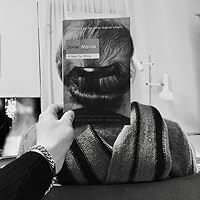
I picked this book up because I liked the cover. Look at it. It’s so catchy, it almost looks like a McSweeny’s book. But it’s not. It’s almost that clever- but not quite. I wasn’t quite sure how Marilyn Johnson was going to sustain a book about obituaries for 223 pages, and the answer is she doesn’t- not really.
Johnson tries her hardest to show how great obits are- she speaks incessantly to how they bring people closure, or together, or whatever. It was when she was in the middle of these diatribes I lost interest in the book.
I found myself not really caring about the people who obsess about reading obituaries, and really, I didn’t care much about the people that write obituaries, but really, the star of the book are the excerpts of written obituaries. Seriously, these people know how to turn a phrase.
“Society today does not assign extraordinary attributes to a 35-year-old heavy-equipment mechanic who is living with his parents and whose possessions do not appear to much exceed a Miller Light and pack of Marlboros on the bar before him, a union card in his pocket and a friend on either side.”
Paging Mr. Springsteen- someone’s taking your imagery of the blue collar American worker and using it to write about dead people.
And-
“Agate, population 70, is one of those towns that people describe as ‘blink and you’ll miss it.’ Lois A. Engel loved living in the blink.”
That’s a great first sentence of a great American novel.
The excerpts are also heartbreaking. This is from one of the obituaries on someone who died in the September 11th attacks.
“You know the sweetest thing my sister [Lisa L. Trerotola] did?’ said her brother, Paul Spina. ‘She was planning a surprise party Oct. 6 for my brother-in-law’s 40th birthday. Sent the invitations and everything. He has no idea. Would you put that in the newspaper? I don’t have the heart to tell him.”
They are harsh, and cold, and brutally honest.
“I could write a book,’ [Dorothy Custer] said often after rearing 13 children. Her Daughters encouraged her to do just that. But it was too late. Launching and overseeing so many young lives took her own well-being. When later she didn’t need to be ‘Mom’ anymore, she had no energy, will or nerve. Even before her last child was born, she had begun using alcohol to retreat from her burden, and possibly, from depression. Social drinking became wine every day at 5 P.M., and then, all day. Intervention was not successful.”
But the one thing they have in common is that they are all about the people, dead people. For better or worse they are about the people.
Death is never easy or fun. The interesting thing about this book that is partially uninteresting is that it made me wonder what my obituary might say. Who would write it? Would it be funny? Would it be sappy? Would I be looked back upon fondly? Would people scour at me through their words? I don’t know many dead people, but I wondered what their obituaries said about them. Overall I wouldn’t go out of my way to read this book. But I will say it did make me think about just a bit about death, and more importantly how one is remembered.
I LOVED this book. Since I am an OLD FASHIONED newspaper reader and a dedicated obituary aficiando from way back, this book gave me ample permission to really relish the art of the obituary. The cover of the book, incorporating the title is: "This PUBLICATION, proudly sent forth under the title of THE DEAD BEAT will gratify THE READER with a survey both humorous and poignant of the wonders enfolded in the pages of an ordinary newspaper, and including many marvelous tales relating to LOST SOULS, LUCKY STIFFS and the PERVERSE PLEASURES of OBITUARIES." (capitalizations theirs) Marilyn Johnson is a wonderful writer. A journalist, she has sought out obituaries that are works of art; gone to several Great Obituary Writers' International Conferences, (the sixth being held in Las Vegas, New Mexico); met a host of talented obituary writers and gotten their stories; and given me a new appreciation of the genre. There are, as I didn't know, people who write obituaries for illustrious publications like the NEW YORK TIMES, THE ECONOMIST, THE DENVER POST, and British newspapers like the INDEPENDENT, the TIMES and the GUARDIAN. Tracing what one well known UK obituary writer, Nigel Fountain calls "... the Obit Revolution of 1986, kicked off by technology, when the newspaper business shifted from printing presses to computers," she cites the writers who select famous, near famous and not-famous people from the "deaths" column. These journalists interview friends, neighbors and family or glean tidbits from previously published information. They feature the person in death embellished in life. Johnson writes, "By 1988, the GUARDIAN was off and running with its own smart and culturally savvy obits, also bylined. It [THE GUARDIAN:] takes pride in covering popular culture... [and:] ran an obit of Martha Carson, the country-and-western singer whose trademark stance of dropping to one knee at moments of emotional climax, the microphone stand at an angle, had been picked up by Elvis in the early fifties....". What sensational journalism! Who knew? As Johnson says, "You don't know how many things you don't know until you start dawdling over the obituary page." Johnson cites forty-five internet addresses where obituaries can be researched. Another reference to Sept. 11, surfaces in this book with the way the NEW YORK TIMES handled each horrifc death one by one. How THE NEW YORK TIMES became a local paper with its "A Nation Challenged " section featuring "Portraits of Grief," brief evocations of the victims written carefully by feature writers turned obituarist. Johnson includes, after the Aknowledgements section, where extraordinary obituary writers mentioned in the book are again commemerated, an Appendix, a marvelously complete "notes" section, and a Bibliography. She is thorough and professional. A sleeper of a newspaper history book and a heroic pursuit of good writers writing good about good people.
I picked up this book because the blurb on the cover said "An uplifting, joyous, life-affirming read for people who ordinarily steer clear of uplifting, joyous, life-affirming reads." My conclusion upon finishing is that I didn't need to read a whole book about the world of obituaries and the people who love them. Marilyn Johnson writes about the structure of obituaries, the various styles of obits and the papers that run them. She introduces us to the obituary writers she admires and the people who influenced them. Throughout, she provides many examples of obituaries, all fascinating. Her style is lively and witty. She's aware that her subject may seem a little off the wall, but she defends it well, saying that a good obituary distills what is unique about a person, so that some little piece of her will be preserved after she has died.
My problem with all of this is that I would have liked the book so much better if it had been a long essay instead. I lost patience in the chapter near the end where Johnson describes the hours she spends on the Usenet message board alt.obituaries. I wanted to reach into the book, pull her out of her chair and make her go outside. In other words, she didn't convert me to her obituary obsession--and there's nothing really wrong with that. There was just too much of this book for my taste.
I am obituary junkie, at least I was until I started getting the NY Times which spends more time on engagements in Sunday Styles than it does the obits of ordinary people. And that's where I split from the author of this book - she prefers the obits of the famous and noted that the English papers and the NY Times run, whereas I like the more sentimental everyday obits often written by family members. The Vancouver Sun and The Oregonian had excellent versions of these and I used to save my favourites. But I don't really care too much about the people who wrote the obits on staff or the devoted internet celebrity death watchers. I want the stories of regular people and she doesn't. The most surprising omission in the book is a lack of full examples of some of the best obits out there. Snippets are quoted but it's kind of like writing a book on German Expressionist art and only showing small sections of the canvas. More obits, less pondering!
The front cover says This book...will gratify the reader..." Well, no, it doesn't. What I thought would be actual obituaries is instead a book filled with comments about obituaries, and the people who write them. One of the chapters even dissects the obituary and gives names to each of the phrases that are, or maybe should be, used in an obituary. There are other books of obituaries, and I've read a couple. They are interesting, the actual obituary of famous, notorious, and almost-famous people; they tell a story, define history, introduce us to people we wish we'd known better. This book does not do that. There are a excerpts of actual obits, but not the full story. So, it was a disappointment.
This was Johnson’s first book, but I read it after her other two other deep-dive investigative career-day romps, one on librarians and one on archaeologists (Lives in Ruins). This is about obituarists, and the particular skills it takes to distill an entire life down to its main events and themes – all delivered, preferably, in sparkly and unexpected prose that doesn’t devolve into clichés. It’s a “fusion of the literary arts, black humor, and pathos.” They also, generally, have to work quite quickly – with just a few days between a death and the published obituary – and deal with family members and friends who may be emotional and/or uncooperative. The task takes contradictory attributes: “empathy and detachment; sensitivity and bluntness.”
Johnson attends the Sixth through Eighth Great Obituary Writers’ International Conferences and haunts online forums to meet fellow journalists and obsessives. She also interviews some of her heroes, like Jim Nicholson of the Philadelphia papers and Ann Wroe of the Economist. Along with the basic components of any good obituary, she discusses the spate of ‘ordinary Joe’ tributes that appeared after 9/11 and other tragedies and the differences between American and British newspaper obituaries (for one thing, the former tend to include medical details of the death).
Obituary writing sounds appealing in the same way that biography writing does: it’s a chance for intense knowledge of another life, the rare privilege of seeing it from end to end and making observations and assessments. Johnson also makes a case for death being a great equalizer; most lives are equally full of incident and strangeness when you look closely enough. “A little life well lived is worth talking about. … There goes one, the only one, the last of his kind.”
Another favorite line: “The vast waterfall of history pours down, and a few obituarists fill teacups with the stories.”
As someone who enjoys meandering through old cemeteries, gazing at tombstones and wondering about the people who lie below, I was excited at the prospect of an entire book about obituaries. Author Marilyn Johnson focuses not so much on interesting obituaries themselves but on the craft of the creative obituary writer. A self-proclaimed obituary fan, Johnson shares fascinating insights into the writing process: from research to publication.
When I worked for a local newspaper, about a decade ago, we followed a very different process. Except for a few high-profile local celebrities, which entailed front-page feature stories, most obituaries were dictated to us by the local funeral home directors. But as Johnson relates, the art of creative obituaries has become more prominent in recent years.
Johnson interviewed a host of talented obituary writers, and when she relates their stories, the book is engaging. Too much of the book, however, concentrates on Johnson's own stories about seeking out other obituary fans. The end result is an information-packed book that lacks focus. She should have emulated her favorite obit writers, who distill an entire lifetime into 1,000 words.
The world of obituary writing is slightly larger than I suppose I would have imagined it, had I imagined it at all. Johnson brings to light the differences in newspapers, the styles of various writers (and their conferences!), and even talks about some of the obituary "fans." I thought the sections on writers writing obituaries for ordinary people - finding their stories through talking with family and friends - quite interesting, and wished that happened more in my hometown. (Most of our obituaries are rather boring, written by family members following a simple template. I'm quite encouraged to write my own!)
Scattered throughout are excerpts from obituaries, which were my favorite parts of the book. In some cities, obituaries are much more deadpan - sneaky with their jokes - without being too disrespectful. One of my favorites:
"Selma Koch, a Manhattan store owner who earned a national reputation by helping women find the right bra size, mostly through a discerning glance and never with a tape measure, died Thursday at Mount Sinai Medical Center. She was 95 and a size 34B."
This is one of those hip, offbeat books that is such a joy to read. In case you didn't know, we are in the midst of the 'golden age of obits.' I happen to be listening to the author read her own work and it is a trip. It is droll entertainment at its best. I cannot recommend it more highly. It has been so much fun that I turned it back and listened a second time.
Johnson isn't really talking about the obits that family members or funeral homes write for the local paper. She is telling us that seasoned members of the fourth estate write savvy and sometimes funny, stories about the famous, infamous and sometimes everyday people who have died.
Johnson takes the reader to the 6th Annual Great Obituary Writers' International Conference, where obit writers and obit groupies gather to enjoy the written work of wordsmiths sowing obits in their local, national (and international) gardens. Folks pay their own way to hear from the greatest purveyors of obit wit and research. Obit reading has become wildly popular. Who knew?
Frankly, the reason I listened a second time to this talking book is to feel Marilyn Johnson's beautiful use of the English language wash over me and fill in the spaces in my heart that loves a lovely turn of phrase. The 'new obit' arrived in the 1980s but they moved to an art form during 9/11. That's when the newspapers were trying to help Americans process the loss of over 2900 innocent people on one shattering day. I won't forget this book anytime soon. In fact, I've started reading the British and American obits online. Fascinating stuff.
"The best, I find, are made out of humble and unlikely material like the obit of Suzanne Kaaren, ninety-two, an actress who had appeared in several Three Stooges shorts. In her obit for the NY Sun, Stephen Miller had crammed her identification with the fascinating particulars of her life: 'an original Rockette, a champion high-jumper, a patent holder for a pop-top can, and in the 1990s she waged a successful legal battle against Donald Trump when the developer tired to evict her from her sprawling, rent-controlled Central Park South apartment.' Miller, an amused sponge of pop culture, had sprinkled her obit with deadpan sentences like, "The Stooges seemed to value her opinion, and regularly tried out new material on her." The casual reader might have missed it, but Rosner was the poster. Over the cut-and-paste, she commented: "I would love any obit with the sentence, 'The Stooges seemed to value her opinion.'"
I will graciously give this book 2 stars. The Dead Beat is an ode to obituaries. I get it, that's not everyone's cup of tea. But I've always been fascinated by the writing of obits and reading about people's lives through the obituaries. This book managed to suck that joy out of it. Reading about the writers of obits was interesting but if you wonder how the author keeps up a 230 page book on the subject - a lot of repetition and opinions. There's a fascinating documentary out there entitled "Obit." which gives much more information and more likely to keep one's attention on the subject.
This was a cute audiobook listen while doing a longer drive. It’s about the lives and work of obituarists, and the obituaries they write. It’s a fun look into a morbid subculture. Highlights include the writers convention in Las Vegas, New Mexico that ironically concludes with the death of Reagan. I got a good chuckle out of some passages, like the obituary who referred to a polygamists wife as his “better 1/8th”. If you’re like me and like learning about esoteric non fiction, this is a fast read and may make you pick up a local paper to see who died and what the writer thought of them.
I read the obituaries because: 1. I’m at that age where people I know are dying 2. I don’t want to miss the death of a friend’s loved one (ie- I asked a friend for an rsvp to a party not knowing that her mom had died)
Of course, I find obits fascinating- you learn so much. But I never knew there were professional obit writers- we had to write our mom’s obit🤷♀️
So a conference for obit writers? Fascinating! A lot of things in this book are fascinating. Who knew so many people were obsessed with obituaries???
There’s lots of links if you want to get more involved. It’s nice to know I’m not alone, but I think I’ll stick to my local news obits (which are unprofessionally written by the family) 🤷♀️
This was interesting, and I loved the profiles of the obit writers that Johnson has constructed. It is, admittedly, a little out of date (I'm not sure who's using a google group right now as opposed to, say, a subreddit), but it's easy to follow and endlessly entertaining. A quick read that kept me going while I moved house.
If you are a fan of obituaries, genealogy, elevating / appreciating "the little guy," and / or interested in the art of writing under the pressure of deadlines, you'll appreciate this author's passion in The Dead Beat!
The book is peppered with anecdotal excerpts of obituaries and names of well-respected obituarists.
Such a fun read!
Favorite quotes:
"How the British obits look is part of their impact, but how they read is the point. A great British obit doesn't read like a prosaic resume. It's an opinionated gem of a biography, informed by all kinds of history, high and low, including gossip. It has the clear-eyed perspective of an op-ed piece and the drama of the news. It doesn't pull its punches in consideration of the dead; it aims not just for factual truth, as one of the editors put it, but for some sort of "higher truth" - and it takes pleasure in its aiming." (p. 148)
"And, there are so many interesting people dying, and the cascade of the dead is so relentless, that speed-reading obituaries can cause you to miss the point. Obit reading is an act of contemplation." (p. 152)
"A four-newspaper salute to the ones who succeed in shrinking the world to a neighborhood." (p. 145)
"I got very keen on biography because I wanted to change it. I wanted to stretch the form. I think of it as a way of capturing souls." (quoting Ann Wroe on p. 139)
Very nice overview of obituaries, obituary construction, development of obituaries in major news sources, and obituarists we've known and loved. Ties right into my job... p.222: "I still think that the point of the obituary and the beauty of it, aside from its elegant structure and the wonderful writing it can inspire, lies in that heroic act. There goes one, the only one, the last of his kind, the end of a particular strand of DNA. ... The better the obit, the closer it approaches re-creation. It's an act of reverence, a contemplation of this life that sparked and died, but also an act of defiance, a fist waved at God or the stars. And what else, really, do we have besides the story?"
Perhaps Marilyn Johnson has read Jim Harrison:
Larson's Holstein Bull by Jim Harrison
Death waits inside us for a door to open. Death is patient as a dead cat. Death is a doorknob made of flesh. Death is that angelic farm girl gored by the bull on her way home from school, crossing the pasture for a shortcut. In the seventh grade she couldn't read or write. She wasn't a virgin. She was "simpleminded," we all said. It was May, a time of lilacs and shooting stars. She's lived in my memory for sixty years. Death steals everything except our stories.
This book started off so well, but on the whole it’s more about the infrastructure of obituaries rather than obituaries themselves – the relevant newspapers, the writers, and an annual meeting of writers and readers. It was also extremely gushy, like an enthusiastic fan club letter about obituaries. The topper was the eight pages with posed and occasionally cheesy pictures of obituary writers.
I guess it’s a difficult trick to write a whole book focusing on obituaries and why they interest and move readers. The book does do this somewhat, but fleetingly. There was a good section on the NYT’s tributes to the victims of 9/11, and in general the information on newspapers and styles was interesting. But the best parts, as expected, were the excerpted obituaries themselves – the nun who took her whisky neat, the old woman who’d run away as a girl to join the circus, the engineer who survived the Russian Revolution by being thrown up onto a ship’s deck as a small child.
This beginning was especially good: Agate, population 70, is one of those towns that people describe as ‘blink and you’ll miss it.’ Lois A. Engel loved living in the blink.
The book was an entertaining, quick read, but there’s a lot of padding, and a little too much of the author.
I'll start with my biases. I'm a longtime, now former, journalist who's written several "everywoman/everyman" obituaries for family and friends. I call obit writers friends. (I know some funeral directors, too.) I started a choir at my church to sing at funerals because the music suffered at times and upset grieving families further. (Good music can comfort.) It's neither ghoulish nor cultish to appreciate a fine last word, and that's what Marilyn Johnson's book is about. Yes, some folks take their appreciation to extremes. I find them fascinating from a distance. But, here's the thing: An obituary (or wedding or anniversary announcement) should give the reader a sense of the person or people it celebrates. The only way it can do that is by breaking free from standard forms and telling the truth. Johnson's book recognizes and encourages that, with copious, sometimes hilarious, examples from English-language publications. It celebrates good send-offs and fine prose. The book is meticulously researched. I found the chapter on obituary terminology (most of it made up) silly. But I'm quibbling. The Dead Beat is a fun and quick read.
Light reading, went down very easily. My interest level waxed and waned as she went on too long about some writers and got a little repetitious making some points, but she has a way with a phrase, sometimes, or a detail, that left me with a good feeling about the book, overall. I'm going on to read her books about librarians and archeologists.
Notable lines:
These quotes sizzle when they hit the grill.
(a real pub called) The Slug and Lettuce
He did an impression of Charles de Gaulle, his penis playing the part of the General's nose.
When Danny Sugarman of The Doors died, an obit mentioned his wife, Fawn Hall. Was that the Fawn Hall, Ollie North's shredding secretary from the Iran-Contra scandal? Indeed it was.
"He left many things well begun."
And obituaries, as anyone who reads or write obituaries will tell you, are really not about death. They're occasioned by death, and they almost always wrap up with a list of those separated from the beloved by death, but they are full of life.
You will note that this book is included on a goodreads list titled "You Read About What?" If that is your response to the title of this book, do not read it under any circumstances. If, however, you understand that obituaries, when done well, are not morbid because in fact they are about LIFE, by all means, grab this wonderful tome. Johnson includes great excerpts from obituaries, interviews with obituarists, adventures she had in alt.obituaries and a compelling delineation of the impact that the New York Times' post-9/11 Portraits of Grief had on the obituary field as a whole. And, God help me and my fellow obsessives, there is a five-page "Internet Tour Guide" to newspapers with great obituary sections and other obituary resources.
I enjoyed Marilyn Johnson's This Book Is Overdue so much I wanted to read her earlier works (especially since she'll be speaking at the MLA conference next spring). I've downloaded this to my laptop using Border's desktop e-reader software, and it's a very convenient way to read (and cost less than the cheapest paperback copy I could find on Amazon). I admit to reading obituaries regularly and often find them very entertaining (although I'm reading small-town papers, and suspect obits are written by family members, not staff writers). I'm just up to Chapter 3, so will see what else she has to say about this topic. She has a very amusing style.
I found this book to be very important. After reading it, I had a greater appreciation for life. Specifically, an appreciation for the unique stories that everyone has to share and that make everyone special in their own way. I never realize that obituaries could be so interesting or even fun to read. I also didn't realize how much that they can vary depending on the writer and publication. It made me take notice of a part of the newpaper that I would normally overlook. The book also had several funny and touching moments. I highly recommend it to everyone.
Not exactly what I was expecting but still highly entertaining. Johnson mostly concerns herself with the rise of the "ordinary Joe" obituary as a regular feature in newspapers. The characters (both writers and the deceased) she covers are interesting, but I was hoping she'd be more reflective about why we read strangers' obituaries and how obits are connected to other ways we commemorate our dead.
Such a disappointing book. I like to read obits; the 94 year old lady, who was married for 57 years and has 5 kids, 13 grandkids and 21 great grandkids. There's just something about those! I was expecting this book to be more about obits themselves, not the mechanics and the people who write them. I truly found it boring about half-way through and had to force myself to finish it.
This was a fascinating book on a subject I know virtually nothing about. I don't think I've ever even read an obituary that wasn't about someone I personally knew. The author's passion for this subject matter really shows, breathing life* into a highly unusual topic.
I didn't know much about writing obits. Or reading them, but I have friends who read them every day. Author is a bit obsessed. Which is okay. I just didn't enjoy as much as I'd hoped.