

What do you think?

Madeleine Karno #2
Det levende kød
Det er en kaotisk og kvælende hed sommernat i Varbourg i 1894. En italiensk anarkist har dræbt den franske præsident, og folkemængdens vrede rammer byens italienske borgere i flæng. Midt i postyret gøres et uhyggeligt fund i en kulhandlers baggård. Rosalba Lombardi, en ung prostitueret, er blevet myrdet og maltrakteret på en måde der får boulevardpressen til at skrive om “Varbourgs egen Jack the Ripper”, men Madeleine Karno får snart en fornemmelse af at sandheden er endnu mere skræmmende.
Madeleine er langt om længe startet på universitetet, hvor hendes kærlighed til videnskaben skal stå sin prøve, og det burde være udfordring nok. Ikke alle er begejstrede for at se unge kvinder i lærdommens hellige haller. Hun kan imidlertid ikke lade være med samtidig at jage sandheden om Rosalbas død – til trods for at det bliver en jagt og en sandhed der sætter mærker på både krop og sjæl.
DET LEVENDE KØD er anden bog i serien om Madeleine Karno, Kadaverdoktorens datter og ambitiøse assistent, der ikke har i sinde at lade sit køn stå i vejen for sin fremtid.
Madeleine er langt om længe startet på universitetet, hvor hendes kærlighed til videnskaben skal stå sin prøve, og det burde være udfordring nok. Ikke alle er begejstrede for at se unge kvinder i lærdommens hellige haller. Hun kan imidlertid ikke lade være med samtidig at jage sandheden om Rosalbas død – til trods for at det bliver en jagt og en sandhed der sætter mærker på både krop og sjæl.
DET LEVENDE KØD er anden bog i serien om Madeleine Karno, Kadaverdoktorens datter og ambitiøse assistent, der ikke har i sinde at lade sit køn stå i vejen for sin fremtid.
309 pages, Hardcover
First published March 1, 2013
About the author
Lene Kaaberbøl
61 books790 followersJeg kom til verden på Rigshospitalet i København d. 24.3.1960. Overlægen var i kjole og hvidt - han var blevet afbrudt midt i en gallamiddag - men min søster siger, at det er da ikke noget, hendes fødselslæge var i islandsk nationaldragt. Nogen vil mene at det således allerede fra starten var klart at jeg var et ganske særligt barn. Andre vil sikkert påstå at min mor bare var god til at skabe pludselige gynækologiske kriser.
Jeg blev altså født i København, men det må nok betragtes som en fejl, for min forældre er jyske, min opvækst foregik i Jylland (mestendels i Malling ved Århus), og jeg betragter mig i dag som eksil-jyde på Frederiksberg, på det mine jyske venner omtaler som Djævleøen (Sjælland).
Jeg har skrevet altid, eller i hvert fald lige siden jeg nåede ud over »Ole så en so«-stadiet. Som hestetosset teenager skrev jeg bøgerne om Tina og hestene (de to første udkom da jeg var femten, den fjerde og sidste da jeg var sytten). Som 18-årig opdagede jeg Tolkien og Ringenes herre, og derefter Ursula K. LeGuins trilogi om Jordhavet, og lige siden har mit bog-hjerte banket for eventyr og drageblod og verdener, der ligger mindst tre skridt til højre for regnbuen eller Mælkevejen, og under alle omstændigheder et pænt stykke fra den asfalterede danske virkelighed.
I dag, cirka 30 bøger senere, er jeg stadig lige så håbløst vild med at skrive som jeg altid har været. Og selv om jeg har været en lille smuttur i krimi-land og skrevet en kriminalroman for voksne - læs mere på ninaborg.dk hvis du har lyst - så er jeg bestemt stadig børnebogsforfatter og har stadig hang til magiske momenter!
Personal
Name Lene Kaaberbøl
Born 1960, in Copenhagen, Denmark. Education: Århus University, degree (English, drama). Hobbies and other interests: Playing pentanque.
Addresses
Office—Phabel & Plott ApS, Laksegade 12, St.th, DK-1063 Copenhagen K, Denmark.
Career
Novelist. Formerly worked as a high school teacher, copy writer, publishing company editor, cleaning assistant, and riding teacher. Phabel & Plott ApS, Copenhagen, Denmark, owner and writer.
Honors Awards
Best Disney Novel Writer of the Year award, Disney Worldwide Artist Convention, 2001, for five "W.I.T.C.H." series novels.
Associated Names:
* Lene Kaaberbol (English)
Jeg blev altså født i København, men det må nok betragtes som en fejl, for min forældre er jyske, min opvækst foregik i Jylland (mestendels i Malling ved Århus), og jeg betragter mig i dag som eksil-jyde på Frederiksberg, på det mine jyske venner omtaler som Djævleøen (Sjælland).
Jeg har skrevet altid, eller i hvert fald lige siden jeg nåede ud over »Ole så en so«-stadiet. Som hestetosset teenager skrev jeg bøgerne om Tina og hestene (de to første udkom da jeg var femten, den fjerde og sidste da jeg var sytten). Som 18-årig opdagede jeg Tolkien og Ringenes herre, og derefter Ursula K. LeGuins trilogi om Jordhavet, og lige siden har mit bog-hjerte banket for eventyr og drageblod og verdener, der ligger mindst tre skridt til højre for regnbuen eller Mælkevejen, og under alle omstændigheder et pænt stykke fra den asfalterede danske virkelighed.
I dag, cirka 30 bøger senere, er jeg stadig lige så håbløst vild med at skrive som jeg altid har været. Og selv om jeg har været en lille smuttur i krimi-land og skrevet en kriminalroman for voksne - læs mere på ninaborg.dk hvis du har lyst - så er jeg bestemt stadig børnebogsforfatter og har stadig hang til magiske momenter!
Personal
Name Lene Kaaberbøl
Born 1960, in Copenhagen, Denmark. Education: Århus University, degree (English, drama). Hobbies and other interests: Playing pentanque.
Addresses
Office—Phabel & Plott ApS, Laksegade 12, St.th, DK-1063 Copenhagen K, Denmark.
Career
Novelist. Formerly worked as a high school teacher, copy writer, publishing company editor, cleaning assistant, and riding teacher. Phabel & Plott ApS, Copenhagen, Denmark, owner and writer.
Honors Awards
Best Disney Novel Writer of the Year award, Disney Worldwide Artist Convention, 2001, for five "W.I.T.C.H." series novels.
Associated Names:
* Lene Kaaberbol (English)
Ratings & Reviews
Friends & Following
Create a free account to discover what your friends think of this book!
Community Reviews
Displaying 1 - 30 of 85 reviews

June 30, 2021
3.5 / 4.0 Stars
This was an interesting murder mystery set in 1894 Vaubourg, France. The writing was well suited for a late nineteenth century story. The character of protagonist Madeleine Karnot was well developed, whereas that of other characters was not done quite as well. The setting of scene was rather bare bones. What strikes the reader is the graphic nature of horror described and the passion of the female protagonist to solve the murders of various discarded women. She was as a dog with a bone whereas the men in leadership roles were less than interested and found her tenacity rather annoying.
I found the the narratives of the several deaths rather confusing. Perhaps, reading the written word might have made it a bit easier to follow the story's thread. Regardless, Nicola Barber did a spectacular job of reading this story and beautifully rendered varying voices for the dialogue of the various characters. Her French was lovely. However, her German would have benefited from some coaching.
Triggers: graphic murder scenes, graphic sexual scenes, misogyny
I am grateful to HighBridge Audio for having provided a complimentary copy of this audiobook. Their generosity, however, did not influence this review - the words of which are mine alone.
This was an interesting murder mystery set in 1894 Vaubourg, France. The writing was well suited for a late nineteenth century story. The character of protagonist Madeleine Karnot was well developed, whereas that of other characters was not done quite as well. The setting of scene was rather bare bones. What strikes the reader is the graphic nature of horror described and the passion of the female protagonist to solve the murders of various discarded women. She was as a dog with a bone whereas the men in leadership roles were less than interested and found her tenacity rather annoying.
I found the the narratives of the several deaths rather confusing. Perhaps, reading the written word might have made it a bit easier to follow the story's thread. Regardless, Nicola Barber did a spectacular job of reading this story and beautifully rendered varying voices for the dialogue of the various characters. Her French was lovely. However, her German would have benefited from some coaching.
Triggers: graphic murder scenes, graphic sexual scenes, misogyny
I am grateful to HighBridge Audio for having provided a complimentary copy of this audiobook. Their generosity, however, did not influence this review - the words of which are mine alone.

Read
June 30, 2017"Is it something you think, Madeleine? Or is it something you know?"
A prostitute is found mutilated and dead in a coal yard on the day after the night that the President is assassinated. A knock on the door of the house where Madeleine and her father live brings a request from the Commissaire des Morts to attend the body. Madeleine is 21 and an assistant to her physician father -- she wants to study medicine herself, but it is not likely that she will be allowed at university due to her gender. Nevertheless, Madeleine has the requisite knowledge and skills to conduct these examinations. She performs the autopsy back at the morgue and finds some disturbing contradictions. From there, the story really gets complicated as Madeleine investigates this case.
This second book in the Madeleine Karno series was excellent historical fiction with a clever and suprising mystery/plot. Set in France in 1894, the details of the period are perfectly rendered and add so much ambience and authenticity to the story. The moral and ethical dilemma that Madeleine confronts was even more appalling considering the time period.
I love the character of Madeleine and the relationship she has with August, her fiance. Makes it hard to wait for the third installment! I've read every other book written by this author as well and can highly recommend to anyone who likes mysteries that focus on a variety of topics but all of them have a medical bent because of the main character.
Thank you to NetGalley and Atria Books for the e-book ARC to read and review. Gorgeous cover as well!
A prostitute is found mutilated and dead in a coal yard on the day after the night that the President is assassinated. A knock on the door of the house where Madeleine and her father live brings a request from the Commissaire des Morts to attend the body. Madeleine is 21 and an assistant to her physician father -- she wants to study medicine herself, but it is not likely that she will be allowed at university due to her gender. Nevertheless, Madeleine has the requisite knowledge and skills to conduct these examinations. She performs the autopsy back at the morgue and finds some disturbing contradictions. From there, the story really gets complicated as Madeleine investigates this case.
This second book in the Madeleine Karno series was excellent historical fiction with a clever and suprising mystery/plot. Set in France in 1894, the details of the period are perfectly rendered and add so much ambience and authenticity to the story. The moral and ethical dilemma that Madeleine confronts was even more appalling considering the time period.
I love the character of Madeleine and the relationship she has with August, her fiance. Makes it hard to wait for the third installment! I've read every other book written by this author as well and can highly recommend to anyone who likes mysteries that focus on a variety of topics but all of them have a medical bent because of the main character.
Thank you to NetGalley and Atria Books for the e-book ARC to read and review. Gorgeous cover as well!

January 31, 2021
I really enjoyed Madeline as a character and the different way she is treated because she is a woman in the 1800. Liked the science bits in forensic science it made the murder mystery so much more interesting. I really didn't want it to end and I was eager to continue to the next book but there is none. I hope they write another book in the series

July 7, 2018
Interesting young woman's struggle in France of the 1880's to achieve her goal of getting into medical school. She has always assisted her father in autopsy work, knows the human body and has the will to succeed in whatever she attempts. I did not read the first book of the series but have just downloaded a sample as the kindle is only 99 cents. I noticed several reviewers referred to loose ends, and we all know mystery fans do not like loose ends. Well, there are some in this book as well.
Apparently the first one started the same way this starts with a dead woman left on the streets. Since her father, the forensic doctor, is otherwise occupied Maddie takes on the responsibility of performing the autopsy. She also gets immediately involved in murder investigation.
This is not a boring young woman as she has decided to be engaged to a man who has had a varied love life history. We get a little science, a little history of college admissions for females, a little social work among the prostitutes of the town and the uncovering of a serial killer.
I had tried another book by this author years ago and meant to go back and read it again and forgot about her just that easily. Happy this book popped up in available books at my library. She is unique.
Apparently the first one started the same way this starts with a dead woman left on the streets. Since her father, the forensic doctor, is otherwise occupied Maddie takes on the responsibility of performing the autopsy. She also gets immediately involved in murder investigation.
This is not a boring young woman as she has decided to be engaged to a man who has had a varied love life history. We get a little science, a little history of college admissions for females, a little social work among the prostitutes of the town and the uncovering of a serial killer.
I had tried another book by this author years ago and meant to go back and read it again and forgot about her just that easily. Happy this book popped up in available books at my library. She is unique.

December 20, 2017
Lene Kaaberbol has really made my day. First she wrote Doctor Death which made me her fan and then she wrote A Lady in Shadows. I was her fan then and I am more so now. It took 2 years to make it happen but now were on a roll. I don't want to give the story away so lets just say that Madeleine Karno is my type of woman. Independent, smart and willing to do things to make it happen.

August 26, 2017
**I received this book free from NetGalley in exchange for an honest review**
I was pleasantly surprised by this book! Whodunnit type novels aren't my usual choice, but A Lady in Shadows was a wonderful story.
It all begins with the muder of a prostitute during the mayhem following the assassination of French president Marie François Sadi Carnot, causing fears of a French Jack the Ripper; and leads into something even darker and more twisted.
Although I had a pretty good idea who the villan was by about halfway through, there was plenty of suspense to keep me interested. And more than a couple more surprises before the conclusion.
The setting in Victorian era Paris pleased my love of historical fiction. The main character of Madeleine Karno is well written - although many of the supporting characters (her father, the inspector, eben her fiance) were a little 2 dimensional. I would like to see them fleshed out a bit in subsequent tales.
All in all, I found it interesting enough that I now feel compelled to read the original novel in his series... and look forward to a follow-up.
I was pleasantly surprised by this book! Whodunnit type novels aren't my usual choice, but A Lady in Shadows was a wonderful story.
It all begins with the muder of a prostitute during the mayhem following the assassination of French president Marie François Sadi Carnot, causing fears of a French Jack the Ripper; and leads into something even darker and more twisted.
Although I had a pretty good idea who the villan was by about halfway through, there was plenty of suspense to keep me interested. And more than a couple more surprises before the conclusion.
The setting in Victorian era Paris pleased my love of historical fiction. The main character of Madeleine Karno is well written - although many of the supporting characters (her father, the inspector, eben her fiance) were a little 2 dimensional. I would like to see them fleshed out a bit in subsequent tales.
All in all, I found it interesting enough that I now feel compelled to read the original novel in his series... and look forward to a follow-up.
April 25, 2018
This is a terrific story, full of intrigue, memorable characters, terrific plot. Evil in the name of science, for the good of the Fatherland—France, in this case, not Germany. Disturbing but not implausible given the state of science at the time, and of geopolitics.
It was the Wild West of science, like the real westward expansion in America, where people worldwide flocked to California to grab a chance at discovering gold. The race was on for scientific discovery as well.
Meanwhile, the French government was worried about the alarming westward expansion by its neighbor Germany—at France’s expense. After the Franco-Prussian War of 1870-1871, Germany claimed Alsace—whose population was historically bilingual—as war reparations; part of Lorraine as well. France was justifiably concerned about losing more territory—and citizens—to its neighboring rival.
Atria, publisher of the English-language editions, did us a real disservice by giving this book such a vague, namby-pamby title, not the direct translation of the original title, which would be Living Meat . That blunt title is much more compelling, more horrific—and more truthful. And honestly? I suspect would also sell more books, not that that should matter. The more truthful title would also serve as fair warning to squeamish readers.
Women of this time period were legally still considered chattel, owned by husbands or fathers. So-called men of science believed women were ‘proven’ inferior by their smaller brain size. When even decent women were treated as Untermenschen, prostitutes were considered even more subhuman, as free bodies for the taking, dead or alive. What then was a little experimentation?
The intrepid Madeleine, dubbed ‘Mademoiselle Death’ by local reporter Christophe, finally won the right to study at the University of Varbourg. Not surprisingly, she is not welcomed with open arms. When the truth about Professor Althauser is finally revealed, she is glad to have achieved justice for the dead women, but it has come at a high cost: She lost her place at university. But then, she was never really welcomed for her mind, was she? Althauser was the only prof who admitted her to his class—but that was to scrutinize her as potential brood mare for his secret insemination project. She is the ideal candidate, he tells the biggest Pro Patria donor.
In the meantime, Althauser gets the police to haul in young, healthy, well-nourished streetwalkers—the same ones, again and again—on trumped-up charges of public indecency so he can artificially inseminate them. He even lets the police watch, even gets a photographer to photograph them to document his “progress”. The poor women are legally imprisoned for 1, 2, even 3 months, for supposed syphilus treatment. Althauser is a mad scientist, a Dr. Mengele running an involuntary baby production program akin to that in The Handmaid’s Tale.
Prostitutes at the time were nicknamed “etudiennes” (“female students”)—implying that any female who wants to study at university was considered a whore; the age-old Madonna-vs.-whore dichotomy. The only respectable woman was the one who knew her place, as wife and mother.
August’s grandmother wants to control Madeleine’s body, too. She will support them only if Maddie produces an heir in two years. Instead of being appalled that they have “anticipated” their marriage vows, she is thrilled. Maddie’s father who knows nothing about this latest development, already has a hard time accepting the informality between fiancé and fiancée.
Why am I rehashing the plot in a “review”? I think it’s more to remind myself what the book was about.
The deeper mystery didn’t occur to me until later: The seemingly unrelated flashbacks of a young boy named Adrian were the thoughts of Althauser as a boy. His real mother was a whore, which he discovered when he sneaked downstairs to peek into his father’s study. She was horribly disfigured (by syphilus) and reeked of decaying flesh. Macabre. That explains why his doctor father insisted on examining his son so thoroughly every week! To see if there were any signs of syphilus.
Does that explain the son’s late lapse into madness? Or was his behavior normal for a privileged man of his day? Entitled to do whatever he wished? That lack of feeling, of conscience, was what he drilled into his students, belittling the poor sap who dared to object about dissecting living creatures. Althauser TOLD them—ordered them—to become unfeeling. They were not allowed to be both men of science AND compassionate, at least not in his classroom. Maddie realizes how, in trying to fit in as the lone female, she was duped in this way. Fortunately she was strong enough morally to see that this inhumanity was a crime; and fortunate for the poor dead women, she exacted some measure of revenge on their behalf, by bringing Althauser’s crimes to light.
The scientist was killed by his servant, the woman previously willing to help him as he performed a crude Caesarean operation—outdoors—on a poor young woman only 4 months pregnant. One HE tortured by repeated, forced insemination. He actually wanted to throw the fetus away as if it were garbage, but his assistant felt she owed the dead mother. The infant did survive—and Maddie named her Catherine.
Kaaberbøl explains in the Author Notes that there really was a serial killer in France between 1894 and 1898, around the same time as “Jack the Ripper” in London. His name was Joseph Vacher, only 29 years old by the time he was finally caught and executed in 1898. He killed at least 20 young people, mostly young women and girls but some boys as well, between the ages of 13 and 21.
This book was originally published in 2013, the English translation in 2017. I hope there will be a follow-up to the series, because Madeleine Karno is a terrific character, more real—to me, anyway—than many other female characters in other popular historical fiction series. Lene Kaaberbøl is a fantastic author.
Equal praise goes to the translator, Elisabeth Dyssegaard. As a fellow translator, I know just how much time a (good) translator can, and often does, spend on choosing just the right word to capture the meaning but also the nuance of the original text. As even general readers are aware, different writers in a shared language do not write in the same way; each has a unique style. Translating is thus an art, not a science. No machine can ever do what a human can, which is to live a language, speak it with other native speakers, know idioms and slang, which is what a living language IS. A great translator, like a great writer, is also an avid reader—in both languages. Hours spent unpaid, for the pure enjoyment. If translating an author for the first time, it means preparing by reading all the writer’s works, or as many as possible, to get s sense of the suthor’s writing style.
There is basic translation, then there is literary translation. The latter is a skill developed over a lifetime, not one picked up overnight. A great literary translator must also be a skilled writer, able to make the English text flow as well; it must read/“sound” natural, not stilted.
Translators deserve to be recognized at the very least, which is why, as a volunteer “librarian” on Goodreads, I added Ms. Dyssegaard’s name to the records for the English-language editions.
It was the Wild West of science, like the real westward expansion in America, where people worldwide flocked to California to grab a chance at discovering gold. The race was on for scientific discovery as well.
Meanwhile, the French government was worried about the alarming westward expansion by its neighbor Germany—at France’s expense. After the Franco-Prussian War of 1870-1871, Germany claimed Alsace—whose population was historically bilingual—as war reparations; part of Lorraine as well. France was justifiably concerned about losing more territory—and citizens—to its neighboring rival.
Atria, publisher of the English-language editions, did us a real disservice by giving this book such a vague, namby-pamby title, not the direct translation of the original title, which would be Living Meat . That blunt title is much more compelling, more horrific—and more truthful. And honestly? I suspect would also sell more books, not that that should matter. The more truthful title would also serve as fair warning to squeamish readers.
Women of this time period were legally still considered chattel, owned by husbands or fathers. So-called men of science believed women were ‘proven’ inferior by their smaller brain size. When even decent women were treated as Untermenschen, prostitutes were considered even more subhuman, as free bodies for the taking, dead or alive. What then was a little experimentation?
The intrepid Madeleine, dubbed ‘Mademoiselle Death’ by local reporter Christophe, finally won the right to study at the University of Varbourg. Not surprisingly, she is not welcomed with open arms. When the truth about Professor Althauser is finally revealed, she is glad to have achieved justice for the dead women, but it has come at a high cost: She lost her place at university. But then, she was never really welcomed for her mind, was she? Althauser was the only prof who admitted her to his class—but that was to scrutinize her as potential brood mare for his secret insemination project. She is the ideal candidate, he tells the biggest Pro Patria donor.
In the meantime, Althauser gets the police to haul in young, healthy, well-nourished streetwalkers—the same ones, again and again—on trumped-up charges of public indecency so he can artificially inseminate them. He even lets the police watch, even gets a photographer to photograph them to document his “progress”. The poor women are legally imprisoned for 1, 2, even 3 months, for supposed syphilus treatment. Althauser is a mad scientist, a Dr. Mengele running an involuntary baby production program akin to that in The Handmaid’s Tale.
Prostitutes at the time were nicknamed “etudiennes” (“female students”)—implying that any female who wants to study at university was considered a whore; the age-old Madonna-vs.-whore dichotomy. The only respectable woman was the one who knew her place, as wife and mother.
August’s grandmother wants to control Madeleine’s body, too. She will support them only if Maddie produces an heir in two years. Instead of being appalled that they have “anticipated” their marriage vows, she is thrilled. Maddie’s father who knows nothing about this latest development, already has a hard time accepting the informality between fiancé and fiancée.
Why am I rehashing the plot in a “review”? I think it’s more to remind myself what the book was about.
The deeper mystery didn’t occur to me until later: The seemingly unrelated flashbacks of a young boy named Adrian were the thoughts of Althauser as a boy. His real mother was a whore, which he discovered when he sneaked downstairs to peek into his father’s study. She was horribly disfigured (by syphilus) and reeked of decaying flesh. Macabre. That explains why his doctor father insisted on examining his son so thoroughly every week! To see if there were any signs of syphilus.
Does that explain the son’s late lapse into madness? Or was his behavior normal for a privileged man of his day? Entitled to do whatever he wished? That lack of feeling, of conscience, was what he drilled into his students, belittling the poor sap who dared to object about dissecting living creatures. Althauser TOLD them—ordered them—to become unfeeling. They were not allowed to be both men of science AND compassionate, at least not in his classroom. Maddie realizes how, in trying to fit in as the lone female, she was duped in this way. Fortunately she was strong enough morally to see that this inhumanity was a crime; and fortunate for the poor dead women, she exacted some measure of revenge on their behalf, by bringing Althauser’s crimes to light.
The scientist was killed by his servant, the woman previously willing to help him as he performed a crude Caesarean operation—outdoors—on a poor young woman only 4 months pregnant. One HE tortured by repeated, forced insemination. He actually wanted to throw the fetus away as if it were garbage, but his assistant felt she owed the dead mother. The infant did survive—and Maddie named her Catherine.
Kaaberbøl explains in the Author Notes that there really was a serial killer in France between 1894 and 1898, around the same time as “Jack the Ripper” in London. His name was Joseph Vacher, only 29 years old by the time he was finally caught and executed in 1898. He killed at least 20 young people, mostly young women and girls but some boys as well, between the ages of 13 and 21.
This book was originally published in 2013, the English translation in 2017. I hope there will be a follow-up to the series, because Madeleine Karno is a terrific character, more real—to me, anyway—than many other female characters in other popular historical fiction series. Lene Kaaberbøl is a fantastic author.
Equal praise goes to the translator, Elisabeth Dyssegaard. As a fellow translator, I know just how much time a (good) translator can, and often does, spend on choosing just the right word to capture the meaning but also the nuance of the original text. As even general readers are aware, different writers in a shared language do not write in the same way; each has a unique style. Translating is thus an art, not a science. No machine can ever do what a human can, which is to live a language, speak it with other native speakers, know idioms and slang, which is what a living language IS. A great translator, like a great writer, is also an avid reader—in both languages. Hours spent unpaid, for the pure enjoyment. If translating an author for the first time, it means preparing by reading all the writer’s works, or as many as possible, to get s sense of the suthor’s writing style.
There is basic translation, then there is literary translation. The latter is a skill developed over a lifetime, not one picked up overnight. A great literary translator must also be a skilled writer, able to make the English text flow as well; it must read/“sound” natural, not stilted.
Translators deserve to be recognized at the very least, which is why, as a volunteer “librarian” on Goodreads, I added Ms. Dyssegaard’s name to the records for the English-language editions.
This entire review has been hidden because of spoilers.

March 20, 2018
I love historical fiction mysteries and this book definitely falls into that genre. Set in Victorian London, this series features Madeleine Karno, whose father is a pathologist for the London police. Although Madeleine has hands on experience assisting her father with autopsies, she wants to become a doctor, a difficult feat during the Victorian era. So a lot of this story revolves around Madeleine's attempts to study physiology in a male dominated field, but the mystery is about the murder of prostitutes, executed in a gruesome Jack the Ripper style. For me, much of pleasure around this story is the technology (or lack thereof) of the times. No cell phones, no DNA evidence, how did mysteries get solved. And throughout this story is the fascinating look at the status of women - from prostitutes to high ladies - and their place in society.
Great story!
Great story!

January 22, 2018
I kept going on this one because I liked the main character and wanted to find out what would happen to her, since the mystery aspect was rather obvious. And then the ending brought me up short, which was frustrating. I'm not sure what else to say about this one without spoiling it. Not a bad book, just disappointing.

May 4, 2018
The year is 1894 and Madeline is a woman that has an interest in a field that has usually been reserved for men, forensic pathology. She is the first female student to be admitted to the University of Varbourg. The story begins when a lady of the night has been found brutally murdered with no signs of a struggle. It seems possible that there is a Jack the Ripper in France. Madeline, in addition to her work also investigates to track down the murderer. This is a well written book and enjoyable story. I received this audio book from Goodreads Giveaways for a review.

July 1, 2017
More of a whyitwasdone than a whodunnit, but I loved the historical detail. I really felt like I was transported to 1894 France!
December 13, 2017
From the publisher: On June 2nd, 1894, in the wake of President Mrie Francois Sadi Carnot’s assassination, France descends into chaos and riots in the streets of Varbourg. Many lives are lost in the mayhem, but when one lady of the night is found murdered with brutal incisions and no signs of a struggle, it is clear something is amiss. Madeleine Karno must ask herself the terrifying question: Do they have their very own Jack the ripper in France? Madeleine is no stranger to cases such as this. Though she is a woman in forensic pathology (a career considered unseemly even for men), her recent work with a string of mysterious deaths and becoming the first female student admitted to the University of Varbourg has earned her some semblance of respect. But there’s only so much her physiology courses can do to help her uncover the mysteries of a mad scientist’s brutal murders. Madeleine must do whatever it takes - - investigate the darkest corners of the city and even work undercover - - to track down a murderer at large. But if there’s one thing the press has right about “Mademoiselle Death,” it’s this: it takes a woman to find a killer of women.
This is the 2nd installment of the Madeline Karno series, and let me just say at the outset that it is a winner. The writing is nothing less than poetic, the plot quite different from anything I have read in quite a while. I must admit I have not read the first entry in the series, although I have read two of the books the author has written together with Agnete Friis, “Death of a Nightingale” and “The Boy in a Suitcase,” both excellent.
The tale takes place between June 24, 1894 and October of that same year, and a lot happens in between. Madeline’s father is a well-respected doctor, during which time she was his secretary “long before he officially agreed to let me assist him with the actual autopsies. I was fourteen when I began the first one.” As the tale opens, she is engaged to one Professor Dreyfuss, “the eminent parasitologist from Heidelberg.” Madeline had graduated from Madame Aubrey’s Academy for Young Ladies, where among things she was trained in “posture and manners.” She now seeks admission to the Institute of Physiology at the University, which is granted, making her one of the few female students admitted to the institute at all. (Of the more than 40 students, she is the only female in her lecture class.) She marvels that she has been handed “the keys to what I wished for most of all in the whole world: knowledge.” She soon finds herself working with the police to find the killer of these young women, the solution to which is nothing that they, or the reader, could ever have imagined.
A local journalist dubs Madeline “Mademoiselle Death,” quite alarming to her and making her father furious. Nonetheless, her investigation takes her to the Commission for Public Health and Decency, whose work is shocking to her as well as to the reader, including the thesis that “sexual reproduction drew mankind down into filth, disease, senility and ruin. Where woman was, there was also death.” One of the most fascinating novels I have come across in a long time, it is recommended.
This is the 2nd installment of the Madeline Karno series, and let me just say at the outset that it is a winner. The writing is nothing less than poetic, the plot quite different from anything I have read in quite a while. I must admit I have not read the first entry in the series, although I have read two of the books the author has written together with Agnete Friis, “Death of a Nightingale” and “The Boy in a Suitcase,” both excellent.
The tale takes place between June 24, 1894 and October of that same year, and a lot happens in between. Madeline’s father is a well-respected doctor, during which time she was his secretary “long before he officially agreed to let me assist him with the actual autopsies. I was fourteen when I began the first one.” As the tale opens, she is engaged to one Professor Dreyfuss, “the eminent parasitologist from Heidelberg.” Madeline had graduated from Madame Aubrey’s Academy for Young Ladies, where among things she was trained in “posture and manners.” She now seeks admission to the Institute of Physiology at the University, which is granted, making her one of the few female students admitted to the institute at all. (Of the more than 40 students, she is the only female in her lecture class.) She marvels that she has been handed “the keys to what I wished for most of all in the whole world: knowledge.” She soon finds herself working with the police to find the killer of these young women, the solution to which is nothing that they, or the reader, could ever have imagined.
A local journalist dubs Madeline “Mademoiselle Death,” quite alarming to her and making her father furious. Nonetheless, her investigation takes her to the Commission for Public Health and Decency, whose work is shocking to her as well as to the reader, including the thesis that “sexual reproduction drew mankind down into filth, disease, senility and ruin. Where woman was, there was also death.” One of the most fascinating novels I have come across in a long time, it is recommended.

February 1, 2018
Madeleine is a bright young woman who wants to pursue a career in forensic pathology. If she succeeds, she will be the first woman in France to do so. She already assists her father in doing autopsies, and her curiosity is piqued when a young woman is found with unusual abdominal incisions. Does France have its own Jack the Ripper-style killer?
From the opening scene, this latest Madeleine Karno mystery is a tension-filled and absorbing listen. The narrator effectively draws listeners into Madeleine's life in 1894 France, and manages both the voices and pacing perfectly.
Highly recommended.
From the opening scene, this latest Madeleine Karno mystery is a tension-filled and absorbing listen. The narrator effectively draws listeners into Madeleine's life in 1894 France, and manages both the voices and pacing perfectly.
Highly recommended.

May 21, 2013
24. juni 1894 Varbourg Frankrig. Madeline Karno ligger i sin seng og fornemmer at der er noget galt i byens gader og stræder. Hun har ret. Præsidenten er blevet myrdet af en Italiensk ekstremist og hele byen går totalt amok og straffer dem som har den nationalitet. På grund af dette må vores intelligente Madeline, som er sin fars assistent, ud til et liget af en ung prostitueret Rosalba Lombardi der er efterladt i en kulhandlers baggård. Hendes far har travlt i den anden ende af byen så nu er det op til Madeline at gøre det hun er bedst til. At dokumenterer gerningsstedet med notater og kultegninger. Det bliver hendes personlige jagt på morderen som vi følger, hun efterlader ikke et spor uden at kontrollere det uanset om hende sikkerhed kan være i fare eller ej. Madeline der er 21 år bliver kastet ud i lidt af hvert i løbet af bogen. Hun føler sin krop give hende direkte indikationer af hvad den vil, den forvirrer hende med mystiske signaler, hun prøver ikke at være så meget kvinde at hun ikke besvimer eller føler ubehag når hun skal disseksere dyr og så irriterer det hende med al den pylren som mænnerne i hendes liv omgiver hende af. Historien er flydende og Lene Kaaberbøl formår at få en til at vil læse mere og mere, selv om det minder om en krimi man har læst før. Der er ikke rigtig noget nyt i historien, men researchen gør hele forskellen. Her er tale om homofobiske tendenser med falske vidnesbyrd, forsøg med insemination af kvinder for fædrelandets skyld med hjælp fra en organisation, Pro Patria, som består af halvgamle ideologiske mænd som prøver at finde den rigtige kvinde at avle på (Madeline var ikke imponeret), en irriterende journalist som tørster efter de bedste historier, prostituerede som udsættes for eksperimenter under lovens paragraffer, en professor som ikke er rigtig klog og et start på universitetet som ikke forløber som vores kære hovedperson havde tænkt sig etc. etc.
Jeg kan ikke rigtig finde ud af om jeg ville have lyst til at læse resten af bøgerne som skulle komme. Dette er nok fordi jeg føler at Lene har ville prøve sin lykke som krimiforfatter og det voksne publikum. Men igen så kunne det være spændende at følge Madeline Karno og se hvor hun ender med sine mål som hun har sat sig for sit liv.
Jeg kan ikke rigtig finde ud af om jeg ville have lyst til at læse resten af bøgerne som skulle komme. Dette er nok fordi jeg føler at Lene har ville prøve sin lykke som krimiforfatter og det voksne publikum. Men igen så kunne det være spændende at følge Madeline Karno og se hvor hun ender med sine mål som hun har sat sig for sit liv.

September 16, 2017
France in the 19th century has very little to interest the average woman besides keeping house, raising children and staying out of sight - all the things that Madeleine Karno is not. She is an assistant to her physician father and wants to be admitted to medical school on her own merit. There is just one or two small problems - someone is killing pregnant prostitutes a la Jack the Ripper style and there are no women in medical school. This would stop anyone other than Madeleine who takes dangerous risks to solve this grisly crime. Her fiance, a nobleman who has a less than noble past, is supportive but his ex-lover and his family want Madeleine and her notoriety out of the picture unless she gives up her dreams. Terrific historical mystery with a spunky, smart woman who does not faint dead away at the sight of a dead body or a shadow in the dark. My thanks to the publisher for the advance copy.

January 26, 2018
This review was written for LibraryThing Early Reviewers.
This is the 2nd book in the series. I have read the first book and enjoyed it very much. This book takes place at the time of an assassination of France's president and a Jack the Ripper type serial killer is on the loose in Varbourg, France. Madeleine has come to the conclusion that it takes a woman to find a killer of women. In her quest to find the killer, she will be dealing with subject matters, such as; abortion, artificial insemination, cesarean birth and homosexuality. The book is well-written and the author did an excellent job in researching the historical, political and social details of 1894 Victorian France. Madeline Karno, also know as Doctor Death, is a strong-willed, smart, independent and caring woman training to be a forensic pathologist, a career that is unseemly even for a man. She has become the first female to gain admission to the University of Varbourg. She is engaged to August but their relationship has taken a turn for the worse. I look forward to reading the 3rd book in the series in order to find out what will happen next in the life of Madeline Karno. I would highly recommend this book to those who enjoy historical mysteries.
This is the 2nd book in the series. I have read the first book and enjoyed it very much. This book takes place at the time of an assassination of France's president and a Jack the Ripper type serial killer is on the loose in Varbourg, France. Madeleine has come to the conclusion that it takes a woman to find a killer of women. In her quest to find the killer, she will be dealing with subject matters, such as; abortion, artificial insemination, cesarean birth and homosexuality. The book is well-written and the author did an excellent job in researching the historical, political and social details of 1894 Victorian France. Madeline Karno, also know as Doctor Death, is a strong-willed, smart, independent and caring woman training to be a forensic pathologist, a career that is unseemly even for a man. She has become the first female to gain admission to the University of Varbourg. She is engaged to August but their relationship has taken a turn for the worse. I look forward to reading the 3rd book in the series in order to find out what will happen next in the life of Madeline Karno. I would highly recommend this book to those who enjoy historical mysteries.

December 2, 2017
It’s so nice to see my new friend Madeleine Karno again! She’s back with a new mystery and her handsome fiancé. It’s June 1894 and the French president has been assassinated triggering riots in the streets. When the body of a young woman is found in an alley the next morning, Madeleine is called and finds herself with a possible Jack the Ripper copycat roaming the streets. Then she receives word that she has been accepted as the first female student at the local university. While she will be learning from the best, her professor will test her limits in every way possible. Meanwhile, her fiancé is facing charges and their future is starting to look very uncertain.
There is a lot going on in this story and I love how the author is able to balance all the parts of the storyline and weave them together seamlessly. There are plenty of twists and turns to keep the reader engaged and guessing till the end. The character of Madeleine continues to develop in this 2nd installment of the series and my affection for her just continues to grow. She is not just smart and well-educated but a caring and empathetic individual as well. She can distance herself enough to be able to expertly carry out an autopsy but turn around and cry for the victims. I really like the depth of this character. Finally, I like how the author places her character in a historical setting but manages to incorporate issues such as homosexuality and women’s rights into the story without disturbing the history. If you haven’t checked out this series yet, then I definitely think you need to.
A review copy of this book was provided by NetGalley and Atria Books in exchange for an honest review.
There is a lot going on in this story and I love how the author is able to balance all the parts of the storyline and weave them together seamlessly. There are plenty of twists and turns to keep the reader engaged and guessing till the end. The character of Madeleine continues to develop in this 2nd installment of the series and my affection for her just continues to grow. She is not just smart and well-educated but a caring and empathetic individual as well. She can distance herself enough to be able to expertly carry out an autopsy but turn around and cry for the victims. I really like the depth of this character. Finally, I like how the author places her character in a historical setting but manages to incorporate issues such as homosexuality and women’s rights into the story without disturbing the history. If you haven’t checked out this series yet, then I definitely think you need to.
A review copy of this book was provided by NetGalley and Atria Books in exchange for an honest review.

November 28, 2017
** ARC provided by the author for an honest review **
Jack the Ripper in France? Madeleine Karno is back and investigating a new case that has similar victims a the infamous serial killer in New York Times bestselling author Lene Kaaberbøl’s A Lady in Shadows.
France is rife with riots and chaos is everywhere, many have lost their lives but when a body is found with surgically brutal incisions and no sign of struggle Madeleine is on the case to find the madman before it’s too late. The eerie similarities to London’s Jack the Ripper has the citizens of Varbourg terrified. It is up to Madeleine to go undercover and take down this monster before he can strike again.
This was an engaging work of historical fiction mixed with a bit of mystery and whole lot of thriller. You are kept on the edge of your seat trying to figure out who did it and why. Madeleine is a great character. She is a strong and independent woman, and this was in the nineteenth century. I love that not only is she a woman seemingly ahead of her time, she works in a career that is male dominated. Truly a female empowering character. The plot and the characters are well written and make the reader invest in the story.
Not only were the plot and characters intriguing but also the great detail that the author gives of France and the time is wonderfully vivid and accurate. An enjoyable read for both historical and mystery lovers alike. Four stars.
Jack the Ripper in France? Madeleine Karno is back and investigating a new case that has similar victims a the infamous serial killer in New York Times bestselling author Lene Kaaberbøl’s A Lady in Shadows.
France is rife with riots and chaos is everywhere, many have lost their lives but when a body is found with surgically brutal incisions and no sign of struggle Madeleine is on the case to find the madman before it’s too late. The eerie similarities to London’s Jack the Ripper has the citizens of Varbourg terrified. It is up to Madeleine to go undercover and take down this monster before he can strike again.
This was an engaging work of historical fiction mixed with a bit of mystery and whole lot of thriller. You are kept on the edge of your seat trying to figure out who did it and why. Madeleine is a great character. She is a strong and independent woman, and this was in the nineteenth century. I love that not only is she a woman seemingly ahead of her time, she works in a career that is male dominated. Truly a female empowering character. The plot and the characters are well written and make the reader invest in the story.
Not only were the plot and characters intriguing but also the great detail that the author gives of France and the time is wonderfully vivid and accurate. An enjoyable read for both historical and mystery lovers alike. Four stars.
January 13, 2018
On June 2nd, 1894, in the wake of President Marie Francois Sadi Carnot’s assassination, France descends into chaos and riots in the streets of Varbourg. Many lives are lost in the mayhem, but when one lady of the night is found murdered with brutal incisions and no sign of a struggle, it is clear something is amiss. Madeleine Karno must ask herself the terrifying question: Do they have their very own Jack the Ripper in France?
Madeleine is no stranger to cases such as this. Though she is a woman in forensic pathology (a career considered unseemly even for men), her recent work with a string of mysterious deaths and becoming the first female student admitted to the University of Varbroug has earned her some semblance of respect. But there’s only so much her physiology courses can do to help her uncover the mysteries of a mad scientist’s brutal murders. Madeleine must do whatever it takes—investigate the darkest corners of the city and even work undercover—to track down a murderer at large. But if there’s one thing the press has right about “Mademoiselle Death,” it’s this: it takes a woman to find a killer of women.
Madeleine is no stranger to cases such as this. Though she is a woman in forensic pathology (a career considered unseemly even for men), her recent work with a string of mysterious deaths and becoming the first female student admitted to the University of Varbroug has earned her some semblance of respect. But there’s only so much her physiology courses can do to help her uncover the mysteries of a mad scientist’s brutal murders. Madeleine must do whatever it takes—investigate the darkest corners of the city and even work undercover—to track down a murderer at large. But if there’s one thing the press has right about “Mademoiselle Death,” it’s this: it takes a woman to find a killer of women.

April 26, 2014
Exciting and well written. I enjoyed the mystery as well as Madeleines story. The only drawback is that it didn't take me long to piece together the puzzle, making the book a tiny bit less exciting than it could have been.

March 28, 2018
Madeline Karno, a.k.a. "Doctor Death", is female forensic pathologist in the late 1800s. She also finds herself to be an investigator as one particular case of a murdered prostitute whose abdomen was destroyed. Faced with constant scrutiny based on her being a female, Madeline is determined to find the young woman's murderer.
This book is extremely detailed in the scientific aspects where the author has clearly done a lot of research not only in forensic pathology but for obstetrics. Furthermore, it is extremely detailed in the historical aspects which may have history buffs rejoicing. However, it is also heavy with multiple concepts thrown into it which can be confusing at times. I understand that the author was probably trying to point out how very different life was in the 19th century. Especially for a female, a bisexual, and a prostitute-these are actually three different characters. Yet, to me it felt distracting. For example: I am still not really sure what the point of Madeline's fiancee's former male lover had to do with the story. It seemed to be yet another (forced) example of what a wonderful character Madeline is in her willingness to still be with her fiancee as she would have to provide for him once they were married because this would otherwise put him exile. A lot of the book has to do with other characters complimenting the main character on her strength, intelligence, persistence, caring nature, fearlessness, and her slim figure. Personally, I found her to be my least favorite character as she came across as spoiled, quick to anger, disrespectful, and insufferable.
Although this book is part of a series, it can easily be read as a standalone. I was not even aware that this was the second book in a series until I went to write the review. For those who are fans of audio CDs and/or audiobooks in general, I would recommend listening to this book on AudioCD or audiobook. Nicola Barber does a wonderful job narrating the book and her inflections and varying voices greatly contribute to the overall tone of the book.
Conversely, I would not recommend this book for anyone who may be triggered or offended by the following: graphic violence, kidnapping, murder, abortion, prostitution, infidelity, sexual scenarios, and anti-feminism. Moreover, if you find that trauma to the eye is especially offensive (like I do), be warned that there is an especially graphic scene involving that horrific concept.
Please note: an audioCD of this book was generously provided by LibraryThing's Early Reviewer program in exchange for an honest review.
This book is extremely detailed in the scientific aspects where the author has clearly done a lot of research not only in forensic pathology but for obstetrics. Furthermore, it is extremely detailed in the historical aspects which may have history buffs rejoicing. However, it is also heavy with multiple concepts thrown into it which can be confusing at times. I understand that the author was probably trying to point out how very different life was in the 19th century. Especially for a female, a bisexual, and a prostitute-these are actually three different characters. Yet, to me it felt distracting. For example: I am still not really sure what the point of Madeline's fiancee's former male lover had to do with the story. It seemed to be yet another (forced) example of what a wonderful character Madeline is in her willingness to still be with her fiancee as she would have to provide for him once they were married because this would otherwise put him exile. A lot of the book has to do with other characters complimenting the main character on her strength, intelligence, persistence, caring nature, fearlessness, and her slim figure. Personally, I found her to be my least favorite character as she came across as spoiled, quick to anger, disrespectful, and insufferable.
Although this book is part of a series, it can easily be read as a standalone. I was not even aware that this was the second book in a series until I went to write the review. For those who are fans of audio CDs and/or audiobooks in general, I would recommend listening to this book on AudioCD or audiobook. Nicola Barber does a wonderful job narrating the book and her inflections and varying voices greatly contribute to the overall tone of the book.
Conversely, I would not recommend this book for anyone who may be triggered or offended by the following: graphic violence, kidnapping, murder, abortion, prostitution, infidelity, sexual scenarios, and anti-feminism. Moreover, if you find that trauma to the eye is especially offensive (like I do), be warned that there is an especially graphic scene involving that horrific concept.
Please note: an audioCD of this book was generously provided by LibraryThing's Early Reviewer program in exchange for an honest review.

November 16, 2023
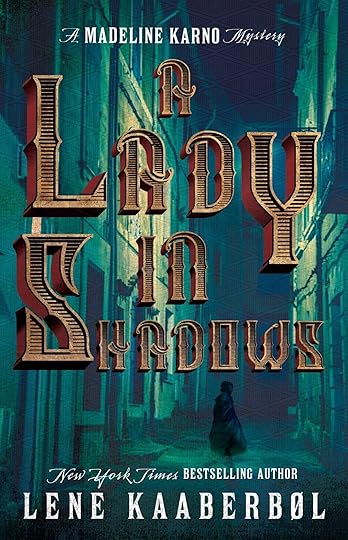
During a tumultuous time in France, a young lady was found brutally murdered in an alleyway corner in the city, with her stomach cut wide-open, and her insides sprawled out. No one cares about this woman, because she is one of the many prostitutes in the city who are looked down upon by the general population. What makes this murder quite peculiar is that there were no signs of struggle on her body. Could it be that this was not a murder, but an illegal abortion procedure gone wrong? Or is there something much darker behind this lady's death?
Madeleine Karno is tasked by the police force to try and solve this mystery. She is an astute detective who is highly observant and analytical, who has a masterful knowledge of human anatomy. Not only that, but she is the first female to have been accepted as a student at a university in her city. Madeleine has a lot to prove, living in a society that is misogynistic and discriminatory towards women. To top it all off, she also has to struggle with the fact that the man she is engaged with is bisexual, and one of his previous male lovers is back in the picture and is extremely hostile towards Madeleine.
More than the mystery aspect of this novel, I appreciated Madeleine's storyline regarding her willingness to break gender norms and to prove herself as an equal to men in the highly masculine space of academia. Additionally, the novel is full of interesting information on the anatomy of human beings and animals, such as octopuses. The author has done good research on the topics she wrote about, and this is an intellectually stimulating read.
The mystery aspect of the novel was alright, but nothing spectacular in my opinion. We can easily guess who the culprit is in my opinion, and the reveal at the end wasn't something that really moved me, though it was still done decently enough.
I would recommend this novel if you're interested in reading about an intelligent and astute woman trying to make it in 19th century France, even if the mystery portion itself isn't very grabbing.
3 stars.
“If Mama had lived, ... I hope she would have supported and approved of her daughter’s ambitions to accomplish something in this life. She taught me to read when I was five years old. If she knew what I was doing now, if she knew that I had been accepted at the university—the university , Papa—don’t you think she would have been just a little bit proud?”

January 15, 2018
*the publisher provides an ARC via NetGalley in exchange for an honest review*
As a history nerd I really appreciated the historical details in this. This turn-of-the-20th-century time period is one of my favorites to read and study. Kaaberbøl includes key components of the time period like xenophobia, nationalism, militarism, and eugenics. She particularly articulates the views and processes of prostitution. France like many western countries was in the midst of reform movements whereby middle class reformers sought to improve their countries and standards of living. Some of these movement were extremely beneficial to society, such as city sanitation, more healthcare services for women and children, education and worker's rights, etc. We still live with the benefits of these reform movements. However, there were other questionable movements such as the regulation of prostitution. In some respects it can be argued that this benefited the prostitutes by decriminalizing it and creating mandatory health examinations to prevent the spread of infectious disease. Though the intentions may have good (and you know that they say about the road to hell) in practice the regulation of prostitution - and women's bodies - was rife with class prejudice and racism. I think the author does an admirable job at accurately portraying that in her novel. Moreover, one of the characters is bisexual. Kaaberbøl also accurately portrays the consequences of being "outed" as well as the unfortunate classification of same-sex sexual relations as a "degenerate" or "deviant" behavior in the medical and emerging field of psychology. So, in my opinion, the author handled complex historical material with a deft hand!
Though I applaud the author's historical accuracy, a few things fell short in this novel, at least for me! I think the story was bogged down by the minutiae of the heroine's daily life and did not provide enough investigation. I enjoyed the dynamics of Madeleine Karno's experience as the first female student at her university as well as her relationship with her fiancé, I would have liked a stronger focus on how our heroine was uniquely equipped to solve this crime. Additionally, the ending is a classic deus ex machina. I think the ending is what really curbed my enthusiasm for the novel. Without revealing details, it all seemed a little convenient and neatly wrapped up for my taste.
As a history nerd I really appreciated the historical details in this. This turn-of-the-20th-century time period is one of my favorites to read and study. Kaaberbøl includes key components of the time period like xenophobia, nationalism, militarism, and eugenics. She particularly articulates the views and processes of prostitution. France like many western countries was in the midst of reform movements whereby middle class reformers sought to improve their countries and standards of living. Some of these movement were extremely beneficial to society, such as city sanitation, more healthcare services for women and children, education and worker's rights, etc. We still live with the benefits of these reform movements. However, there were other questionable movements such as the regulation of prostitution. In some respects it can be argued that this benefited the prostitutes by decriminalizing it and creating mandatory health examinations to prevent the spread of infectious disease. Though the intentions may have good (and you know that they say about the road to hell) in practice the regulation of prostitution - and women's bodies - was rife with class prejudice and racism. I think the author does an admirable job at accurately portraying that in her novel. Moreover, one of the characters is bisexual. Kaaberbøl also accurately portrays the consequences of being "outed" as well as the unfortunate classification of same-sex sexual relations as a "degenerate" or "deviant" behavior in the medical and emerging field of psychology. So, in my opinion, the author handled complex historical material with a deft hand!
Though I applaud the author's historical accuracy, a few things fell short in this novel, at least for me! I think the story was bogged down by the minutiae of the heroine's daily life and did not provide enough investigation. I enjoyed the dynamics of Madeleine Karno's experience as the first female student at her university as well as her relationship with her fiancé, I would have liked a stronger focus on how our heroine was uniquely equipped to solve this crime. Additionally, the ending is a classic deus ex machina. I think the ending is what really curbed my enthusiasm for the novel. Without revealing details, it all seemed a little convenient and neatly wrapped up for my taste.

May 4, 2019
At first I thought-hey, this might be a little better than the last one.
Then I thought-eh, never mind. It's the same.
And then-This is awful.
I think the author is actually more interested in the dynamics of Madeline and August's relationship than she is in the case. She doesn't do a whole lot to solve it. Not really. Things come to light, things work out, people die, people kidnap her, etc. The evil behind it all isn't really even confronted or brought to justice. In that it ends up feeling not only anticlimactic, but unfinished. He's supposed to be this evil mastermind, we don't even see it end. Maybe it would have been somewhat fulfilling for him to realize he was meeting his end at the hand of a person he viewed as disposable. It's all very bizarre and not all that thrilling. If you can't guess who the killer is from the moment you meet him...
Most of the book seems really to be taken up by relationship drama. It is so sad to me that Madeleine's first sexual experience is her trying to claim August, and August proving he's also attracted to women. It just is so dysfunctional.
I also got sick of hearing how exceptional Madeleine must be when she displays an ounce of intelligence or bravery. And she seems to enjoy that. That's not seeking equality btw. To want to be viewed as more like the men, better than other women? That also puts men down. And for all her high talk of possibly not wanting children...it took ONE look at a baby and all of a sudden she's a mother? She looks down, for example, on Daphne LaCour. A woman who does not like what her husband does for a living. Madeleine calls her disturbed, insane. She feels bad for her 'besieged husband'. Her husband who photographs prostitutes for a living in their basement? Imagine your husband shoots porn in your basement and you can't do a thing about it. And then one day he walks upstairs with a woman. You gonna be happy? It's such an outrageous scenario, but it's bizarre to blame the wife.
Then I thought-eh, never mind. It's the same.
And then-This is awful.
I think the author is actually more interested in the dynamics of Madeline and August's relationship than she is in the case. She doesn't do a whole lot to solve it. Not really. Things come to light, things work out, people die, people kidnap her, etc. The evil behind it all isn't really even confronted or brought to justice. In that it ends up feeling not only anticlimactic, but unfinished. He's supposed to be this evil mastermind, we don't even see it end. Maybe it would have been somewhat fulfilling for him to realize he was meeting his end at the hand of a person he viewed as disposable. It's all very bizarre and not all that thrilling. If you can't guess who the killer is from the moment you meet him...
Most of the book seems really to be taken up by relationship drama. It is so sad to me that Madeleine's first sexual experience is her trying to claim August, and August proving he's also attracted to women. It just is so dysfunctional.
I also got sick of hearing how exceptional Madeleine must be when she displays an ounce of intelligence or bravery. And she seems to enjoy that. That's not seeking equality btw. To want to be viewed as more like the men, better than other women? That also puts men down. And for all her high talk of possibly not wanting children...it took ONE look at a baby and all of a sudden she's a mother? She looks down, for example, on Daphne LaCour. A woman who does not like what her husband does for a living. Madeleine calls her disturbed, insane. She feels bad for her 'besieged husband'. Her husband who photographs prostitutes for a living in their basement? Imagine your husband shoots porn in your basement and you can't do a thing about it. And then one day he walks upstairs with a woman. You gonna be happy? It's such an outrageous scenario, but it's bizarre to blame the wife.

November 19, 2017
My thanks to Netgalley and the Publisher for an opportunity to read an advanced copy of this book.
Dreadful. That is the only word that I can come up with to describe this long and drawn out book. Trying either to shock the reader with the subject matter or to lure them in with the detailed gynecological practices of a villainous doctor in 1880’s France, or if that is not enough, the unbeknownst relationships of Madeline Karno’s fiancé – which really served no point. The book should have been wall-banged within the first 100 pages.
Trying to disguise a failed, what we now call a cesarean section, as the acts of a French Jack the Ripper, Madeleine Karno, who we were introduced to in ‘Doctor Death’ begins to see tell tail signs and sets off to find the hideous person brutalizing the local prostitutes all in the name of science.
Lene Kaaberbol goes into curious detail about the time and place, but tends to go overboard for shock value. The doctor at the center of this fiasco reads more like Josef Mengele, the Auschwitz Angel of Death, in his need to find perfect subjects to rebuild France’s dwindling birth rates. Then throw in a person from August Dreyfuss’ past, and a photographer with his own naughty secrets, and those that should know better but do not do better when it comes to those in need.
Considering how I loved her first book in this series, this was a torture to read. The gruesomeness of the subject matter was not the issue for me, but rather how drawn out it all was. How in the end she tried to tie her storylines together and how unrealistic that it all played out. If there is a third book, I certainly hope that she tries not to throw too much in in hopes that something will catch the reader and that she reduces her fillers to keep the story flowing.
Dreadful. That is the only word that I can come up with to describe this long and drawn out book. Trying either to shock the reader with the subject matter or to lure them in with the detailed gynecological practices of a villainous doctor in 1880’s France, or if that is not enough, the unbeknownst relationships of Madeline Karno’s fiancé – which really served no point. The book should have been wall-banged within the first 100 pages.
Trying to disguise a failed, what we now call a cesarean section, as the acts of a French Jack the Ripper, Madeleine Karno, who we were introduced to in ‘Doctor Death’ begins to see tell tail signs and sets off to find the hideous person brutalizing the local prostitutes all in the name of science.
Lene Kaaberbol goes into curious detail about the time and place, but tends to go overboard for shock value. The doctor at the center of this fiasco reads more like Josef Mengele, the Auschwitz Angel of Death, in his need to find perfect subjects to rebuild France’s dwindling birth rates. Then throw in a person from August Dreyfuss’ past, and a photographer with his own naughty secrets, and those that should know better but do not do better when it comes to those in need.
Considering how I loved her first book in this series, this was a torture to read. The gruesomeness of the subject matter was not the issue for me, but rather how drawn out it all was. How in the end she tried to tie her storylines together and how unrealistic that it all played out. If there is a third book, I certainly hope that she tries not to throw too much in in hopes that something will catch the reader and that she reduces her fillers to keep the story flowing.

August 9, 2017
A copy of this review can also be found at Book Ink Reviews.
A Madeline Karno Mystery, A Lady in Shadows continues to follow Doctor Death in her new murder mystery. But true to the country settings, the press changes her name is Mademoiselle Death.
An intelligent, turn of the century woman? Sign. Me. Up. A woman that chooses to honor the dead by doing both forensic work and autopsies? Yes, please. This is a gem and a fantastic follow up to Kaaberbøl's original about London's Ripper, Doctor Death.
I enjoyed the expansion on Madeline, to see her drive begin to be fulfilled and that it isn't hampered by any of the men in her life. I enjoyed that she is a modern, feminist thinker. Kaaberbøl deals with reproduction (hard not to when it is a story focused on France's real life Ripper) and toes a very uneasy line with ideas of abortion and artificial insemination.
Though it is supposed to be a mystery, I really have to disagree. I knew "Who Dun It" at about a quarter of the way into the book. And all the foreshadowing only reaffirmed my conclusion. But, like the book states over and over again: "Facts first. Then the conclusion." Really, it's less about the gruesome, twisted, horrible bad guy being slapped in handcuffs and more about the adventure of the art and act of catching them.
A solid 4 and a good mystery for the cold, dark days that will surround its release in December. Pre-order now!
Thank you to NetGalley, Lene Kaaberbøl, and Artia Books for this free ARC in exchange for an honest review.
A Madeline Karno Mystery, A Lady in Shadows continues to follow Doctor Death in her new murder mystery. But true to the country settings, the press changes her name is Mademoiselle Death.
An intelligent, turn of the century woman? Sign. Me. Up. A woman that chooses to honor the dead by doing both forensic work and autopsies? Yes, please. This is a gem and a fantastic follow up to Kaaberbøl's original about London's Ripper, Doctor Death.
I enjoyed the expansion on Madeline, to see her drive begin to be fulfilled and that it isn't hampered by any of the men in her life. I enjoyed that she is a modern, feminist thinker. Kaaberbøl deals with reproduction (hard not to when it is a story focused on France's real life Ripper) and toes a very uneasy line with ideas of abortion and artificial insemination.
Though it is supposed to be a mystery, I really have to disagree. I knew "Who Dun It" at about a quarter of the way into the book. And all the foreshadowing only reaffirmed my conclusion. But, like the book states over and over again: "Facts first. Then the conclusion." Really, it's less about the gruesome, twisted, horrible bad guy being slapped in handcuffs and more about the adventure of the art and act of catching them.
A solid 4 and a good mystery for the cold, dark days that will surround its release in December. Pre-order now!
Thank you to NetGalley, Lene Kaaberbøl, and Artia Books for this free ARC in exchange for an honest review.

November 18, 2017
A Lady in Shadows in the second installment in the Madeleine Karno historical mystery series. I did not read the first book in the series and found that this was not an issue when reading this book. This story takes place in late 19th century France where the country is dealing with a multitude of issues to include the assassination of their president and a serial killer on the loose whose crimes closely resemble that of Jack the Ripper. The author provides a bit of historical context in the back of the book to explain that the story was based on a real person from this dark time in France's history. I appreciate it when I can read a historical fiction book that teaches me something about a country's past. Madeleine, the leading lady, is a strong willed, intelligent woman who is breaking the mold of typical society by assisting her father with autopsies and attending medical school. These experiences lead her to a mystery involving the brutal murder of prostitutes in a similar fashion to Jack the Ripper. While trying to solve this mystery, she heads down a very twisted and dark path in the underbelly of France. This experience also leads her to discover personal things about herself as a woman. I found that the writing at times was a little too descriptive and the author would go off on detailed tangents that could distract from the story. It was a good historical mystery and a good story overall.
I received a copy of this book from the publisher through NetGalley in exchange for an honest review.
I received a copy of this book from the publisher through NetGalley in exchange for an honest review.

March 15, 2018
I received an audiobook copy of this novel on CD and listened to it while driving AND often sitting in my car waiting. Sometimes it was sitting because I wanted to know what strange twist the story would take next.
The narration is wonderful. For some listeners you may want to allow your ear time to get used to the beautiful accent. I know I missed some of the clues and details early on and will be going back to listen again. This is a book both genders can appreciate.
It is dark crime for a mature audience. The topic can be sordid and twisted, the perpetrator deviant yet intelligent.
It starts out with a crime against a working class female and we think we are going to be following along with a Jack-The-Ripper type case. This is so much more!
Madeleine Karno is fighting for her right to become educated and follow in her father's footsteps as a medical professional. She, herself, is a type of medical detective and coroner's assistant. She is also a woman of compassion and open minded views. We view the conditions of the times and certain beliefs that may surprise you.
As Madeleine finally thinks she may be getting some acceptance and regard as an intelligent, capable female she discovers a horrible truth. Be prepared for many such discoveries along the way.
This is a book you will find yourself thinking about long after it is over.
The narration is wonderful. For some listeners you may want to allow your ear time to get used to the beautiful accent. I know I missed some of the clues and details early on and will be going back to listen again. This is a book both genders can appreciate.
It is dark crime for a mature audience. The topic can be sordid and twisted, the perpetrator deviant yet intelligent.
It starts out with a crime against a working class female and we think we are going to be following along with a Jack-The-Ripper type case. This is so much more!
Madeleine Karno is fighting for her right to become educated and follow in her father's footsteps as a medical professional. She, herself, is a type of medical detective and coroner's assistant. She is also a woman of compassion and open minded views. We view the conditions of the times and certain beliefs that may surprise you.
As Madeleine finally thinks she may be getting some acceptance and regard as an intelligent, capable female she discovers a horrible truth. Be prepared for many such discoveries along the way.
This is a book you will find yourself thinking about long after it is over.

May 24, 2018
Madeleine is a strong female character with an inquisitive mind and a compelling determination to learn more about forensic medicine. While pursuing all leads in this gripping horror mystery, Madeleine faces many unexpected events (including some that affect her personally) before ultimately identifying the murderer. Much the same as Doctor Death, A Lady in Shadows kept my attention throughout as I followed the clues, attempting to ascertain the perpetrator's identity.
As much as I enjoyed reading Dr. Death, the first book in this series, I found A Lady in Shadows to be so much more exciting. The suspense is more substantial, making the climax all the more satisfying. There are enough issues left unresolved that imply there will be more books about Madeleine Karno. I look forward to future novels about Mademoiselle Death and her persistent sleuthing methods.
As an enthusiastic reader of Scandinavian thrillers, I rate Lena Kaaberbøl high among my favorite Scandinavian authors.
As much as I enjoyed reading Dr. Death, the first book in this series, I found A Lady in Shadows to be so much more exciting. The suspense is more substantial, making the climax all the more satisfying. There are enough issues left unresolved that imply there will be more books about Madeleine Karno. I look forward to future novels about Mademoiselle Death and her persistent sleuthing methods.
As an enthusiastic reader of Scandinavian thrillers, I rate Lena Kaaberbøl high among my favorite Scandinavian authors.

May 3, 2020
Well-written who-dunnit set in France in 1894, where a young woman must navigate not only society's expectations, but also her fiancé's former lover, a lecturer at university and, oh yeah, a murder of a prostitute that hides a more than the eye can see.
So I really enjoyed this book, it's fairly quick and easy to read, but I was never bored and I love Madeleine as a heroine who wishes for more that was 1890s France is willing to give.
I bought this in a library sale 3 years ago (this lockdown is making me read my TBR shelf) and apparently it's the second in a duology! As soon as the library opens, I'm gonna get the first book.
I loved the themes of emancipation, of (forced) motherhood and a woman's role in society in relation to not only men and marriage but also the nation. It was a really interesting backdrop for a very enjoyable murder mystery!
The only let down was, that it ended rather quickly and tied up all the lose ends a little too efficiently, it was a bit too much like a fairytale ending, but it's really only a minor fault with an otherwise great book.
So I really enjoyed this book, it's fairly quick and easy to read, but I was never bored and I love Madeleine as a heroine who wishes for more that was 1890s France is willing to give.
I bought this in a library sale 3 years ago (this lockdown is making me read my TBR shelf) and apparently it's the second in a duology! As soon as the library opens, I'm gonna get the first book.
I loved the themes of emancipation, of (forced) motherhood and a woman's role in society in relation to not only men and marriage but also the nation. It was a really interesting backdrop for a very enjoyable murder mystery!
The only let down was, that it ended rather quickly and tied up all the lose ends a little too efficiently, it was a bit too much like a fairytale ending, but it's really only a minor fault with an otherwise great book.
Displaying 1 - 30 of 85 reviews