Jump to ratings and reviews
Rate this book

Terrorism and Communism: A Reply to Karl Kautsky

Rate this book
Written in the white heat of revolutionary Russia’s Civil War, Trotsky’s Terrorism and Communism is one of the most potent defenses of revolutionary dictatorship. In his provocative commentary to this new edition the philosopher Slavoj Žižek argues that Trotsky’s attack on the illusions of liberal democracy has a vital relevance today.

183 pages, Paperback

First published June 1, 1920

87 people are currently reading
1944 people want to read

About the author

Leon Trotsky

1,088 books797 followers
See also Лев Троцкий

Russian theoretician Leon Trotsky or Leon Trotski, originally Lev Davidovitch Bronstein, led the Bolshevik of 1917, wrote Literature and Revolution in 1924, opposed the authoritarianism of Joseph Stalin, and emphasized world; therefore later, the Communist party in 1927 expelled him and in 1929 banished him, but he included the autobiographical My Life in 1930, and the behest murdered him in exile in Mexico.

The exile of Leon Trotsky in 1929 marked rule of Joseph Stalin.

People better know this Marxist. In October 1917, he ranked second only to Vladimir Lenin. During the early days of the Soviet Union, he served first as commissar of people for foreign affairs and as the founder and commander of the Red Army and of war. He also ranked among the first members of the Politburo.

After a failed struggle of the left against the policies and rise in the 1920s, the increasing role of bureaucracy in the Soviet Union deported Trotsky. An early advocate of intervention of Army of Red against European fascism, Trotsky also agreed on peace with Adolf Hitler in the 1930s. As the head of the fourth International, Trotsky continued to the bureaucracy in the Soviet Union, and Ramón Mercader, a Soviet agent, eventually assassinated him. From Marxism, his separate ideas form the basis of Trotskyism, a term, coined as early as 1905. Ideas of Trotsky constitute a major school of Marxist. The Soviet administration never rehabilitated him and few other political figures.

Ratings & Reviews

What do you think?
Rate this book

Friends & Following

Create a free account to discover what your friends think of this book!

Community Reviews

5 stars
201 (30%)
4 stars
217 (32%)
3 stars
169 (25%)
2 stars
48 (7%)
1 star
27 (4%)
Displaying 1 - 30 of 67 reviews
Profile Image for Nathaniel Flakin.
Author 5 books109 followers
December 31, 2021
Ernest Mandel called this "Trotsky's worst book," but I thought it was great. Trotsky wrote it in the armored train while leading the Red Army in the civil war.

Kautsky's critique is based on an abstract concept of "democracy": he rejects the Russian Revolution because it does not include an assembly based on universal suffrage, complete freedom of the press, etc. Kautsky tries to present the Paris Commune as a "democratic" form of the dictatorship of the proletariat. Trotsky responds convincingly that the Paris Commune naturally also suppressed the counter-revolutionary press and imprisoned its enemies. The irony here is that Kautsky was a minor figure in a "democratic" bourgeois government in Germany which did have a constituent assembly elected by universal suffrage — this "democracy" massacred thousands of workers, while also suppressing the workers' press.

What is shocking about this book is the frankness with which Trotsky discusses the unimaginable hardships of the early workers' state in Russia. But the French Revolution had already shown that no profound social transformation is possible without a revolutionary dictatorship. These hardships can be overcome because the masses unleash an energy that outside of a revolution seems completely impossible.

Politics, and especially revolutionary politics, is never a question of 50% of votes plus one. It is always about which class has political power. So while Kautsky claims to defend "democracy" as a principle standing above the class struggle, he is actually defending the dictatorship of the bourgeoisie.

We could attempt some kind of quantitative comparison: how many people were killed by the workers' government in Russia, which Trotsky was part of? How many were killed by the bourgeois government in Germany, to which Kautsky gave his half-hearted support? But this apolitical framing of the question distracts from the fundamental point: Trotsky was defending a system that killed capitalists in order to defend socialism — Kautsky a system that killed workers to defend capitalism.

One weakness of this book is that so much of it is dedicated to Trotsky's ideas on the militarization of labor. It is important for context to understand that these proposals were rejected by the Bolshevik Party, and Trotsky later criticized them himself. As he says many times during the book, by necessity the Bolsheviks were learning as they went along — there no previous experience of building socialism for them to rely on. And the inclusion of this final long chapter on militarization (not dealing with Kautsky's polemic at all, but instead reprinting a speech by Trotsky) in fact presents a mistake by one leader of the Soviet government. But it gives the reader the impression that Bolshevism equals militarization.

A great read. It is hard to imagine why anyone today defends Kautsky. #bookstagram #trotsky
Profile Image for Brendan Holly.
47 reviews13 followers
January 16, 2016
I read this work in concert with Trotsky’s autobiography My Life. The autobiography provides little insight into political philosophy, so I chose Terrorism and Communism as a supplement. Besides the obvious reaction of, “Wow, Trotsky sounds a lot like that Stalin guy”, there are two main claims that I extracted from this work, originally a reply to the Menshevik (think Social Democrat) Kautsky.

The first claim is that the dictatorship of the proletariat is an advancement from liberal democracy. Kautsky holds that democracy is the ideal, one vote per person. Yet, democracy is not so “democratic”. Democracy is a bourgeoisie invention representing bourgeoisie tastes and transmitting bourgeoisie power. Democracy and free markets are linked (so we are told by Friedmanites and most liberal talking-heads), and the power of capital makes equality and democracy unattainable. (If you don’t agree with this, my review is not the place to convince you).

Thus democracy is a form of structural oppression by the bourgeoisie on the proletariat. The inversion of this, is the dictatorship of the proletariat. This is evocative of reactionary complaints of “the tyranny of the minority”. You know, one of those countless times when a minority group (think about the LGBTQA+ community) is oppressed, derided, and completely alienated. After countless years of systematized oppression, this group fights for recognition and equality, and they are criticized for trying to force their opinions on the majority.
“Although democracy is not equal, at least everyone is free and able to speak their mind, unlike in your repressive DICTATORSHIP of the proletariat”, Kautsky might reply. There is some truth to this claim, but the freedom of democracy is much less than advertised. It is more a freedom of speech than a freedom of action. One is not free to overthrow capital in a democracy; the police and army are the main vehicles of the state, but systematized ideology and propaganda work to reduce this desire. What rebellion and descension is “allowed” has been subsumed by the state itself.
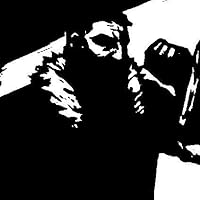
description
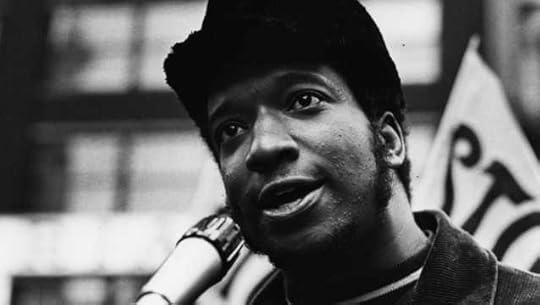
Borrowing an illustrative picture from Hadrian (The Goodreads user), rebellion has found its place within the state and ideology, and more often than not rebellion has become commodified itself. And if by some feat an organization is able to rebel past the “allowed limit” (a limit that is undoubtedly racialized), the rebel is likely to end up as Fred Hampton did in Chicago in 1969: assassinated by the police (and Hoover’s FBI).
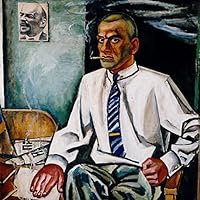
description
OK great. Either way we live in a dictatorship. The job of politics is merely to determine the class hierarchy under this dictatorship. However, obvious liberal critiques immediately attack Trotsky’s claims because the dictatorship of the proletariat is not the dictates of Russian proles. It is the dictatorship of a group of (largely) lower-middle class men utilizing (allegedly) Marxian analysis and communist end goals to concoct a pragmatic praxis to withstand the civil war and increase production.
"So the proletariat puts their trust in a sort of benevolent dictator? The state eventually withers away? Hmmm. This is certainly not surefire, could you describe the transition from dictatorship of the proletariat to communism as such (a transition that may require the communist revolution throughout the world)?"

“Easy!”, says Trotsky, “First we must enact compulsory labor throughout Russia!”

“Sure Trotsky, work is already compulsory, we know all about wage slavery. Are we really going to be better off with you all in charge though? I’ve read the Soul of the Man under Socialism and this sounds nothing like it. Keynes discusses the possibility of a four hour workday, how about that?”

“We cannot build socialism on decreased production”, says Trotsky.

“So you are telling me that what you want us to continue in similar shitty conditions with reconstituted wage slavery in the hopes of an eventual communism in which the state withers away? That right-wing loony David Horowitz is right. This sounds like pie-in-the-sky religion!”

“But we are building a materialist socialist state!”

“No, WE are doing the same thing we have been doing (only “better”) and “praying” that our work leads to respite in another period.”

“Bugger off you liberals!”

With a poor understanding of dialectics and dialectical materialism, I see a sort of irony that emerges from this political philosophy. Class conflict has pushed civilization (eurocentric) forward from feudalism to liberal democracy and socialism/communism is the next stop. However, this process, according to Marxist-Lenninst analysis, needs to arc back to a sort of feudal organization with a benign dictatorship in order to catapult back to a classless society. This is certainly not foolproof. All of that withstanding, if there was a socialist revolution tomorrow I would certainly do my part. Yet, I would not be surprised to find myself in some Gulag for “impeding” the "progress" to the communist state.
description
Profile Image for Jonfaith.
2,145 reviews1,745 followers
July 15, 2023
The solution is simple: the old musician refuses altogether to play on the instrument of the revolution.

The aging player is of course Karl Krautsky, a now forgotten social democrat who wrote tons of invective about the Bolshevik policy, abandoning the ideals of the Russian Revolution.

The Trotsky is a three star polemic but Slavoj remains masterful in his epic Forward. Trotsky cites American Civil War for the suspension of due process and the harassment of journalists sympathetic to the Confederacy. Trotsky looks to the failures of the Paris Commune as precedent for the elimination of class enemies: one cannot be too careful in these matters. The Slovenian philosopher is sober in his assessment and explores evolution from war communism to the NEP and then to the Five Year Plan.

Trotsky displays plenty of wit, whereas Zizek was uniformly earnest.
Profile Image for Will Collins.
13 reviews8 followers
December 9, 2020
Can be summed up in one fantastic quote from the book:

‘To make the individual sacred we must destroy the social order which crucifies him. And this problem can only be solved by blood and iron’ - Leon Trotsky
Profile Image for William West.
349 reviews104 followers
May 25, 2017
This tiny book, little more than a pamphlet, is the literary equivalent of a giant, fire-breathing, communist dragon. Written during the blood-bath that was the Russian civil war, during which Trotsky went from radical organizer and politician with no military experience to master-general and army-builder through sheer improvisation, this is a terrifyingly clear-eyed defense of revolutionary terror and dictatorship. Many of the key practices that would come to characterize what came to be known as "Stalinism"- the forced militarization of labor and agriculture, censorship, and centralized economic planning enforced through utterly ruthless, indeed deadly, means are named and championed by Trotsky.

Was Trotsky, then, the secret founder of Stalinism? As Slovoj Zizek cogently points out in his uncharacteristically lucid foreword, the profound difference between Trotsky and Stalin can only be fully understood by realizing how much they had in common. Both embraced, perhaps even reveled, in terror. But Trotsky extolled terror to the population on which he unleashed it. This book is an attempt by a leading member of the Soviet state to explain the necessity of dictatorship in the incomprehensibly unstable years immediately following the Bolshevik revolution, in which the new government was in an existential struggle with both domestic and foreign enemies. As Trotsky proclaims to the Russian people, "There is as yet no socialism here, and nor could there ever have been." Indeed, the Russian people must sacrifice more than they did under the Czar to establish socialism. Dictatorship was a transitional necessity, the horror of which had to be presented to its subjects, so they would be motivated to overcome it. In that sense, state terror is a kind of self-negation on the part of the state.

It was under Stalin's police-state that socialism was declared to be fully achieved in the Soviet Union. Stalin told the Soviet people not to struggle for a more equitable society. And indeed, under Stalin, the people began to vote for state sanctioned candidates. There were decades without war or invasion. And people were indiscriminately sent to secret prisons never to be seen or heard from again. But this was not talked about, its reality was negated.

Can we not see a reflection of Stalinism in the modern-day United States? It is a democracy because we get to vote for one of the two candidates the oligarchs and their two parties choose for us. We are told and asked to repeat that our government does not abuse us, when agents of the state openly murder minorities with defacto impunity and while the US imprisons and executes more of its people- both statistically and in actual number- than any other country on Earth. And yet, we are not allowed to think anything better might be possible.

Is the only modern state that is not totalitarian the one that openly practices brazen terror because it is the only one which shows its face to its subjects?
Profile Image for misael.
383 reviews32 followers
January 24, 2022
Serve para destruir a ideia de Trotsky como "nice guy" e é teoricamente bastante válido na crítica que faz à social-democracia austro-alemã, embora seja exaustivo em certos pontos e acabe por se perder nas abstrações que tanto critica. O prefácio do Zizek é muito bom.
Profile Image for David Steece, Jr..
48 reviews4 followers
April 8, 2016
Meh.

When he's attacking liberal democracy, parliamentarianism, or capitalism Trotsky is erudite and witty with well-supported, logical arguments. Its when he takes to the 'positive' task (in the technical sense) of defending terrorism and the "dictatorship of the proletariat" that he falls flat on his face. In fact, he sounded not unlike many Neoliberal scholars as he lamented the "herd" mentality of the "lazy" Russian peasants or when he says that the raising of the living standard will depend on external circumstances like the "will and consistency of the working class," apparently regardless of poor management or impossible quotas. He advocates all sorts of typically "free market" (an oxymoron) strategies of worker encouragement including work quotas, competition amongst laborers, and one-man-rule over factories. These are hardly marxist principles, and in fact sound like spitball ideas at a Ford Motor Company board meeting.

So, in the end, like many theoreticians of power, Trotsky does well and good tearing others down for their oppressive tendencies, but when it comes to recognizing or criticizing those same tendencies in himself or his Party, he is found rather wanting. He's hardly alone in this, and he's no more dishonest and narcissistic than America's so-called "Founding Fathers," its just that I expected—hoped for—more.

I love Trotsky's prose, poise, and panache, but I hate his disdain for peasants and his self-serving definition of the "dictatorship of the proletariat." He seems to think that just because he says—repeatedly—that the dictatorship is of the working class, than that somehow justifies its regressive features, forgetting that many liberal democracies had vaulted men from lowlier classes upward, where they quite often forgot their humble beginnings to embrace the status-quo power dynamics. Oliver Cromwell comes to mind. Trotsky seems no different here.

Kautsky, at least as portrayed by Trotsky (I still have to read Kautsky's book), is certainly a fool, but in "Terrorism and Communism" Trotsky full reveals the open-ended authoritarianism that doomed Soviet-style communism and alienated so many leftists over the course of the 20th Century.
Profile Image for Seyva.
2 reviews2 followers
December 28, 2023
I picked this up walking around the mile end one day for like 5 bucks and gave it a (admittedly not very thorough) read. The intro by Zizek is entirely skippable except for a laugh, iirc he spends a good bit of time analyzing some of Trotsky’s dreams and trying to read into them his paternal relationship to Lenin??

The book itself is a fantastic refutation of Kautsky’s slanders in regards the Bolshevik regime and the lengths they had to go to, to defend the young workers state. I didn’t get that much out of it, primarily because I already knew how much of a degenerate dog Kautsky was at this point and so his hypocritical rapprochements just rang hollow. Also this is just a moot point today, anybody still arguing about this is probably not worth our time and energy.

I would definitely revisit it to learn more about the economic aspects of War Communism, especially given the brilliant context given by the article in IDOM 43 but this is certainly not a text by Trotsky that I would say makes for essential reading.
Profile Image for Ramzey.
104 reviews
April 28, 2023
A book every marxist should read!
In Defense of revolutionary dictatorship of the proletariat unlike the earlier book I read about Hungary.

This book also explain why the Hungary Soviet Republic did not last. I am happy I read this book after the last one by Bob Dent.
333 reviews31 followers
November 4, 2021
A work that I wished to be good, that was good for a moment, and then squandered it all.

I will be the first to admit I am no fan of Trotsky. But this work was produced not only during his cooperation with the Bolsheviks and Lenin, but as a defense of the November Revolution against the anti-communist tirade of Karl Kautsky.

This edition has a foreword by the German-American Marxist-Leninist Max Bedacht written in 1920. It is an able introduction, as well as a short defense of the Bolsheviks by Bedacht himself. The preface is one written by the British socialist H. N. Brailsford, a fellow traveler of the CPGB until the 1930s. The preface is interesting as one that has an attitude almost completely opposite to that of Trotsky himself; Brailsford openly says that the peasants could be used by the Bolsheviks as "the character and form of a constructive proletarian revolution." Compare this Trotsky's ceaseless suspicion and degradation of the peasantry as the source of all the ills of the USSR.

The first seven chapters are all good defenses of the proletarian revolution, the need for the party, the need for repression against the bourgeoisie, and the need for the dictatorship of the proletariat in general. The problem arises when one compares this with Trotsky's later works: his harsh denunciations of Stalin, etc. Trotsky never addressed this work again for very intentional reasons: he couldn't, or it would show his hypocrisy.

The problem with the work itself arises at the eighth chapter, which is a reprint of Trotsky's speech to the Third All-Russian Congress of Trade Unions. This speech was the source of one of the last political struggles with the Communist Party before Lenin's death, and rightly so. In it, Trotsky posits just about every measurable imaginable to make life under peace-time socialist rule unbearable: the institution of military discipline in trade unions, forced labour during peace-time, etc. Lenin correctly castigated Trotsky over these absurdities in his "The Trade Unions, the Present Situation, and Trotsky’s Mistakes." Additionally, Trotsky starts his address with an assertion that is simply wrong from any Marxist view of the subject: "As a general rule, man strives to avoid labor...One may even say that man is a fairly lazy animal." This is absolutely antithetical to Marx's view of labour and human activity; it is not just a revision, but a complete destruction of the very basis of any and all Marxist analysis. Trotsky attempts to legitimize this with a quote from Labriola detailing humanity under communism as a "lazy and happy genius," but it makes his attitude no less absurd or incorrect from a Marxist perspective. Were not the rest of the work quite good, this paragraph alone would've brought this down to a single star.
Profile Image for Theo Austin-Evans.
144 reviews96 followers
December 17, 2022
‘You know, with Kautsky, the more I learn about that guy, the more I don’t care for him’ - Norm MacDonald

I’m going to attempt the possible and defend Trotsky in the face of a seemingly insuperable wave of MLM sycophants; an admittedly difficult task to be sure.

Fine, Mao supersedes Trotsky in his understanding of the peasantry, Trotsky is a tad too abstract and not as concrete as the venerable Chairman, he overestimated the upper crust of the working class yadda yadda. But here we have a cutthroat and effective evaluation of lived Soviet reality. Surely someone can’t read this and come away detesting the man? The militarisation of labour goes a hell of a long way in deflating the aspirations of some of the most enervating so-called ‘Marxists’ of my generation who see themselves becoming poets as soon as the class struggle has progressed somewhat, even the notion of egalitarianism (contra the utopian notion of egalitarianism, where the necessity of momentarily maintaining wages, rewarding impressive labour etc. is construed as some immoral sin) is dispelled, a notion all too often misunderstood. As well as this, Trotsky demonstrates the necessity of the State in a way I have found unmatched by other Marxist writers within the tradition — I know it’s a cliche at this point but I do really think that anarchists dwell in some idealistic stupor.

That being said.... do any of these writings carry any weight anymore? Must we solely speak in the language handed down to us by neoliberalism? As I grow older I feel like this is most likely the case. However, this work does stand as a Romantic, passionate haranguing by a man gripped by the most intense and critical conditions imaginable, and he was truly fighting for something novel and in my eyes very important. Perhaps all of these writings surrounding the Internationals are beyond antiquarian at this point of time, but maybe there is something to be salvaged within these silverfish-addled tomes that could cut through the current miasma of our lost futures. Something concerning a steel will, an organised strength, something that may not be a cure-all but will alleviate some ails, some pretty bloody big ones at that.

Even if all of this discourse amounts to nil at least when you’ve read this you’ll no longer need to stare at a closeted liberal with a glazed over expression while swallowing their tepid notions of revolution. Trotsky’s notion of Revolution and violence may belong to a bygone era, but let us not allow these snivelling knaves to diminish and denigrate what once was. Oh and just to mention, no other Marxist has been this unabashedly sincere and open on the sheer horror and terror that civil war, class struggle and the road to socialism involve: Trotsky gives it to you like a pear cider made out of 100% pears.
Profile Image for MichaelK.
284 reviews18 followers
August 21, 2021
One leftwing narrative about the Russian Revolution is that in its early years the Soviet State was doing good work creating a better society, but then Stalin came along and ruined it. Back in 2017, I went to a book event where the author/speaker made this argument - I bought his book, but have not read it yet (nor have I read the other books on the revolution which I purchased that year). The author described himself as a Trotskyist.

Trotsky was one of the organisers of the 1917 Bolshevik Revolution, and then became leader of the Red Army. After the Revolution, Russia quit WW1 and Civil War broke out, chiefly between the Communist Reds and the Anti-Revolutionary Whites, with various smaller groups also being involved (many leftwing groups did not like the Bolsheviks). Trotsky was ousted during Stalin's rise, and spent the rest of his life in exile, before being assassinated by a Soviet agent in Mexico in 1940.

In Animal Farm, the character Snowball is largely based on Trotsky, a sympathetic portrayal that follows the narrative that the revolution started well but was ruined by Stalin, represented by Napoleon. One of Trotsky's later books, which seems to have popularised this narrative, is The Revolution Betrayed (1937).

Terrorism and Communism (1920) is Trotsky's defence of political violence - it is also one of the very few of his books still in print by a major publisher, and comes with a long introduction by Slavoj Žižek. I posted in a leftist Facebook group that I was reading it, and a few people commented, saying it was 'one of Trotsky's best' and 'an absolute banger'.

This context should hopefully explain why I went it into expecting, despite the controversial title and subject matter, to feel some positivity towards it. Instead, I bounced off it so hard I almost ended up a Thatcherite; indeed, I was left thinking I would much rather have the Tories in power than Trotskyists.

At times, I wanted to hit my head against a wall, and I imagined myself looking to camera and saying, "Wow, this is garbage."

In hindsight, it should not have been so surprising that I hated it. On the Political Compass, Trotsky is Authoritarian Left. My instincts place me in Libertarian Left: my radical sympathies lie more with anarchism rather than Bolshevism. In leftwing groups, a frequent topic of discussion is uniting the fractious Left against the more united Right, but many argue that there are irreconcilable differences between Authoritarian and Libertarian leftists, which make such an alliance impossible to maintain: anarchists and communists were enemies in both the Russian and Spanish Civil Wars.

(The Political Compass is a simplification, and probably had negative impacts on political discourse, but it's a fun simplification and has led to some good memes.)

Trotsky is good at describing flaws in parliamentary democracy: the political and legal equality of the wealthy capitalist and the poor labourer, both having one vote in elections, is mystical nonsense. It does not take account of economic realities and the ways the political and legal system is biased in favour of the wealthy, who can use their wealth to influence politics and get away with criminality ('Punishable by a fine' translates to 'Legal for rich people'). Thus, with political power concentrated in the hands of wealthy, and the workers only having insignificant or indeed illusory power, you might describe liberal democracy as a 'dictatorship of the bourgeoisie' - therefore, the solution is to trash this false democracy and put in place a 'dictatorship of the proletariat', where political power is held by workers, represented by the Communist Party, the only political party.

It is not the job of the communists - the class-conscious and politically advanced vanguard of the working class - to represent majority opinion, but to create it, by elevating the understanding of the rest of the population and proving how good communism is. Eventually, the rest of the working class, and the re-educated remnants of the bourgeoisie, will understand that the communists were right all along.

The criticisms of parliamentary democracy are strong - and you can find echoes of them across all sorts of media right up to the present day. I was specifically reminded of Isabel Hardman's Why We Get The Wrong Politicians (2018) and Martin Williams' Parliament Ltd (2016), among many other works. His explanation of the 'dictatorship of the proletariat' made me understand this doctrine better, though I think the flaws in it are quite evident.

Some of Trotsky's arguments in defence of political violence are quite standard, and could be used by adherents of any political position: sometimes, when your political opponents are uncompromising, inconvincible, and repressive, violence is the only way to topple them. When you are a new and fragile regime, surrounded by enemies within and without, violence is inevitably necessary to maintain control and defend the revolution.

Trotsky uses various examples of political violence throughout history to make this point; today we might use the example of the Rebel Alliance in Star Wars. Of course their violence was necessary to overthrow the Galactic Empire! Unfortunately, the sequel trilogy did not explore the rebels' difficulties in establishing the New Republic: this is covered in books I have no intention to read.

So, we can agree that violence is sometimes necessary. If we were to then agree that liberal democracy is a dictatorship of one class over the rest, and that the interests of the ruling class are directly antagonistic and irreconcilable to those below it, then we can see how easy it is to justify a violent insurrection and subsequent reign of terror.

'As long as class society, founded on the most deep-rooted antagonisms, continues to exist, repression remains a necessary means of breaking the will of the opposing side... The question as to who is to rule the country, i.e., of the life or death of the bourgeoisie, will be decided on either side, not by references to the paragraphs of the constitution, but by the employment of all forms of violence... [There is] in history no other way of breaking the class will of the enemy except the systematic and energetic use of violence.'

It's a recurring theme in history, and popular media, that revolutions end up recreating the old order with new faces in charge. Some descriptions of Tsarist Russia from the 1800s can be mistaken for descriptions of Soviet Russia, for example this one by the Marquis de Custine, who visited in 1838:

'It is a country in which the government says what it pleases, because it alone has the right to speak. In Russia fear replaces, that is paralyses, thought... Nor in this country is historical truth any better respected than the sanctity of oaths... even the dead are exposed to the fantasies of him who rules the living.'

Trotsky defends the Soviets against charges that they are using exactly the same tactics as tsarism by pointing out that the Soviets are doing it to the bad guys, the capitalists, the landlords, the bourgeoisie - not the good guys, the proletariat.

'Do you grasp this... distinction? Yes? For us Communists it is quite sufficient.'

'Who aims at the end cannot reject the means.'

The end goal is, of course, a socialist utopia. The Soviet state is described as the transition towards true socialism, when the state 'will have melted away entirely into a producing and consuming commune'. This is where Trotsky sounds most like a religious fanatic awaiting his preferred apocalypse. Actually, 'awaiting' is perhaps the wrong word, since in his mind the Marxist apocalypse is already here: he is living through it. As the Christian Heaven on Earth is preceded by Armageddon, the final battle between Light and Dark, so too is True Socialism preceded by the Revolutionary Epoch, the final battle between Proletariat and Bourgeoisie:

'The road to socialism lies through a period of the highest possible intensification of the state. And you and I are just passing through that period. Just as a lamp, before going out, shoots up in a brilliant flame, so the state, before disappearing, assumes the form of the dictatorship of the proletariat, i.e., the most ruthless form of state, which embraces the life of the citizens authoritatively in every direction... Civilised humanity has entered a revolutionary epoch; all the capitalist countries are speeding towards colossal disturbances and an open class war; and the task of the revolutionary representatives of the proletariat is to prepare for that inevitable and approaching war the necessary spiritual armoury and buttress of organisation.'

During the transitional stage, forced labour is necessary. Trotsky uses a few arguments to justify this. In wartime, it is fairly standard for states to conscript soldiers; it is necessary for the defence of the realm. The communists are extending this principle to the militarisation of labour: as conscripting soldiers in wartime is necessary and acceptable, why not the rest of the labour force? Furthermore, labour under capitalism was wage slavery, made compulsory by the forces of economic necessity: "freedom of labour" was a lie.

By contrast, forced labour under communism is honest about the compulsion, and besides, at least the workers were now working for the Communist Party, who have their interests in mind, not some heartless capitalist; and at least the compulsion is only temporary during this transitional stage. Once we reach True Socialism 'there will be no compulsion... under socialism we shall be moved by the feeling of duty, the habit of working, the attractiveness of labour, etc, etc... under socialism there will not exist the apparatus of compulsion itself, namely, the state.'

'As all must eat, all are obliged to work. Compulsory labour service is sketched into our constitution and our labour code.'

'The worker does not merely bargain with the Soviet state: no, he is subordinated to the Soviet state, under its orders in every direction - for it is his state.'

Trotsky defends the Soviets against the charge that they are a slave state no better than the Egyptian regime who used slaves to build the pyramids. He points out that the Egyptian slaves were working in the Pharaoh's interests, while the Soviet workers are working in the interests of the workers, as represented by the Communist Party.

Parts of this book make Trotsky sound like someone who has never organised any industry or enterprise before, trying to explain why practices he and his mates had previously being railing against have persisted after the revolution. These are the funniest parts of the book, because he's defending practices associated with capitalism while desperately trying to rebrand them.

For example, he describes the importance of 'rivalry' in boosting economic production. He wants us to believe that this 'rivalry' is different to capitalist competition. Under socialism, 'rivalry will acquire an ever less selfish and purely idealist character. It will express itself in striving to perform the greatest possible service for one's village, region, town, or the whole of society, and to receive in return renown, gratitude, sympathy, or just internal satisfaction from the consciousness of work well done. But in the difficult period of transition... rivalry must inevitably be to a greater or lesser degree bound up with a striving to guarantee for oneself one's own requirements.' He also explains why some people need to be paid more than others, if they've 'done more for the general interest' than the lazy, careless, or disorganised.

Elsewhere, he defends 'One-Man Management' of factories against critics who argue the factories should be under the control of the workers themselves. Trotsky argues that (a) the factories are controlled by representatives of the Communist Party, who represent the working class, therefore the factories are actually under worker control; and (b) one-man management is more efficient, because it means a single person is ultimately responsible and accountable for the factory; and besides, if a worker is interested in management, perhaps one day when they're a bit more experienced they can earn a promotion and become a manager themselves!

'The foremost, intelligent, determined administrator naturally strives to take the factory into his hands as a whole, and to show both to himself and to others that he can carry out his work.' Gee, I wonder what it would be like if that administrator owned the factory.

To understand how Trotsky got to these views, we do need to understand him in historical context. This book was written during the Russian Civil War, after the great conflagration of the First World War. His views were shaped by the traumas of war and political repression under the Tsar. After the revolution, the Bolshevik regime was fighting off enemies on multiple fronts, suffering from economic sanctions, and trying to figure out how to govern effectively to bring about socialism. It is also worth reflecting on how terrible the conditions of the working classes were globally at that time, and also specifically in Russia under the Tsar. Add in Marx's and others' criticisms of capitalism, many of which still hold up.

Communism, like Christianity 2000 years ago, offered people radical hope for a better world following an imminent apocalypse. The Communist Manifesto's famous finale, 'The proletarians have nothing to lose but their chains. They have a world to win' is not so effective in the developed world these days: most people can point to many things they could lose other than metaphorical chains; we live lives of relative comfort, both in the global picture and certainly compared to the working classes of a century ago.

However, I can certainly understand communism's appeal when you're living in a slum, when you have long working hours in terrible conditions and a dead-end job with no hope of advancement or change. If you're already living under wage slavery, why not communist slavery? At least that's only temporary while you wait for Heaven on Earth.

I did not find this book 'an absolute banger'; I found it relentlessly tedious, unpleasant, and nonsensical. I can certainly understand wanting and hoping for a better system than what we have now, but the answer - if this book, supposedly 'one of Trotsky's best', is anything to go by - is not to be found in Trotskyism.
Profile Image for Jim.
3,093 reviews155 followers
January 3, 2023
Brilliant! There are so many parallels between when this was written and now, it was a bit unbelievable at times. But good theory holds true over time, it seems. Intriguing, how the West made just about everything attached to Socialism and Communism, before AND after this time period, to be the ultimate in evil. I guess when the program for the West involves Capitalism and Imperialism it must be important as fuck to make sure to portray anything that shines true light on the evils of those two systems to be absolutely awful and destructive. I enjoyed Slavoj Žižek's Foreword, and even understood most of his points. I have read some Žižek know he can be very Lacanian in his analysis, unsurprisingly, and that often leads to confusion for me as I am not overly schooled in Psychoanalysis in general. So understanding Žižek's writing was good. Trotsky is a superb theoretician and writer. I loved this book all the way through. I won't get into a debate about what went wrong in Russia, then or now, but no one will ever convince me that Socialism is bad, or that any kind of Capitalism is good. I would recommend this book to anyone interested in Trotsky, Socialism, or this period of Russian history, even if most of the focus is on refuting the Czech philosopher Karl Kautsky and his commentary on Socialism in Russia. A stellar read for me.
Profile Image for Hunter Castillo.
14 reviews5 followers
July 3, 2023
This is some good shit, and champions very good the communist critique to Kautsky's analysis of the Paris Commune.
A must read, for sure.
Profile Image for David Allen.
61 reviews4 followers
March 30, 2024
I found the argument for compulsory labour under socialism interesting. While I like to think I make my own 'free choices' in how I exert my labour, these choices are actually shaped and even directed by capitalism. By being explicit about this, I think it's actually a very honest position to take. And by establishing this, it creates a starting point to consider and organise around how the proletariat can direct their own labour, rather than by being dictated to by the demands of capital like mindless zombies.

This book has a bit of a long winded intro which I think could mostly be skipped.
Profile Image for Giorgi.
20 reviews
April 27, 2025
ჟიჟეკის წინასიტყვაობა ნძრევაა,დალშე წასაკითხია და ოპორტუნიზმის წინააღმდეგ სახელმძღვანელოც.ხო და კიდევ-ამ წიგნის დამწერს ლიბერალი დაუძახო ხმამაღალი სიტყვა იქნებოდა, ხმამაღლად არასწორიც.
Profile Image for Olivier Turbide.
25 reviews
July 17, 2024
Ce livre fait si bien ressortir la différence entre le bolchévisme et le menchévisme (ou le kautskisme, ce qui revient à peu près au même) : l’un est déterminé à tout faire pour faire triompher et faire survivre la révolution, et en conséquence voit toujours les choses sous l’angle de la résolution pratique des problèmes, alors que l’autre, à travers ses critiques abstraites et morales, révèle qu’il ne se préoccupe constamment que de justifier sa propre inaction, sa proscrastination de la révolution, et sa capitulation face aux préjugés bourgeois.

Comme le dit si bien Trotsky, c’est la différence entre nager dans la rivière pour la traverser, et refuser de se mouiller, tout en se plaignant, depuis la rive, du chaos du courant.
Profile Image for Shulamith Farhi.
336 reviews82 followers
February 20, 2023
Trotsky’s defense of war communism can be difficult to accept, even for those most inclined to support him. For a convincing intervention into the historiographical debates concerning the text, see https://www.historicalmaterialism.org..., especially for the criticism of Žižek’s decisionistic portrayal of Trotsky's politics in this period. In this review, I will focus on Trotsky’s critique of ideology and his advocacy of rivalry.

For Trotsky, bourgeois parliamentary democracy legitimates itself in terms of natural law, that “will prove to be a paraphrase of Christian spiritualism freed from its crude mysticism.” The gospels

“proclaimed to the slave that he had just the same soul as the slave-owner, and in this way established the equality of all men before the heavenly tribunal. In reality, the slave remained a slave, and obedience became for him a religious duty. In the teaching of Christianity, the slave found an expression for his... protest against his degraded condition. Side by side with the protest was also the consolation. Christianity told him: 'You have an immortal soul, although you resemble a packhorse.' Here sounded the note of indignation. But the same Christianity said: 'Although you are like a packhorse, yet your immortal soul has in store for it an eternal reward.' Here is the voice of consolation. These two notes were found in historical Christianity in different proportions at different periods and amongst different classes. But as a whole, Christianity, like all other religions, became a method of deadening the consciousness of the oppressed masses.”

Natural law fulfills a similar double ideological function of indignant protest and deadening consolation, preaching that

“'All men are equal before the law, independently of their origin, their property, and their position; every man has an equal right in determining the fate of the people.' This ideal criterion revolutionized the consciousness of the masses in so far as it was a condemnation of absolutism, aristocratic privileges and the property qualification. But the longer it went on, the more it sent the consciousness to sleep, legalizing poverty, slavery and degradation: for how could one revolt against slavery when every man has an equal right in determining the fate of the nation?”

Although Trotsky doesn’t develop this idea further, the underlying notion that ideology is defined by its normalizing role is plausible.

Trotsky’s promotion of “rivalry in the sphere of production,” rooted in “the vital instinct” is less compelling. Under bourgeois conditions this instinct manifests in competition and in socialism it “will acquire an ever less selfish and purely idealist character.” Socialist competition resembles a quasi-potlach with each “striving to perform the greatest possible service for one’s village, county, town, or the whole of society, and to receive in return renown, gratitude, sympathy, or, finally, just internal satisfaction from the consciousness of work well done.”

The difficulty is ameliorated by the context of the writing of the text, but Trotsky’s idea of rivalry is troubling even apart from the macho rhetoric used to describe it. Trotsky’s use of notions like a 'vital instinct' of competition ultimately undermines his argument, since it makes it more difficult to distinguish between communist ideals and the capitalist world it opposes. It would be absurd to expect anyone emerging from a war to ignore the aggressive impulses in man, but arguing that this aggression can be channeled for socialist purposes flirts with the same ideas that underpin the bourgeois social order. Any socialist defense of competition is flawed for the same reason that leftist politics inspired by Mauss are a dead-end: the constant escalation needed to play the game of potlach result in wasteful non-dialectical expenditure with diminishing returns, pitting potential comrades against each other in pointless displays of potency. To defeat renegades like Kautsky, our terrorism must be a bit... classier.
Profile Image for Yogy TheBear.
125 reviews13 followers
March 17, 2018
A high proportion of the book can just be described as endless polemic. Trotsky has a need to prove that he and the Bolsheviks experiment is always right, that it is infallible to error and criticism; for this he constantly debates his opponents in absurd ways. On no point dose he coincide or step back , on all points he comes up with absurd arguments , he bends and twists reality and logic to create his unattackable arguments. For him none have the right logic to talk about the revolution in Russia.
I strongly recommend to at least read chapter 8 (PRBLEMS OF THE ORGANIZATION OF LABOUR) . There Trotsky gives a shot at economic calculation (my Austrian friends will get a good laugh :) ) from an evident but undeclared position of a production Tsar (to use the words of Mises ). But put yourself the question: Would Trotsky speak of compulsory labor ,labor army and militarization, etc; if he knew that he would be assigned to do manual labor (as the rest) when and where the production Tsar (who is not him!! ) commands ? Trotsky believes that the interests of the state and of the society can align 100%. But he fails to see that the state aligns the interests of society to itself (with force). Society (as a hole) dose not align the interest of the state to itself not only because it dose not always has the force, but even when it dose, the interests of the individuals are not 100 aligned to each other. What he calls the anarchy of production mediates peacefully between the different interests of society.
Another peculiarity with Trotsky is his belief in the relativity of logic and ethics in accordance with class and historical period. Mises again dismantled this fallacy. This idea makes action that do good to all people to be bad…This idea actually destroys all morals regardless of class, action for moral considerations become valueless. What remains is the morality of the fist; Who can impose his force upon another is good, regardless if he is a capitalist or a proletarian…
And lastly the most annoying thing is the endless Kautsky rants. Let us be clear… Kautsky is a true Marxist, a true idiot; just like Trotsky and the rest. Yet he wanted peace and a more peaceful revolution and transition. Now I know … If you want to be a famous Marxist in that time all you needed to do is insult Kautsky…
Profile Image for John.
49 reviews6 followers
Read
March 9, 2014
Trotsky's refutation of Kautsky and earnest defense of the most extreme policies that distinguished Bolshevism is sometimes moving and often highly disturbing. Trotsky's prose from 1920 is compelling and he ideas (mostly) unvarnished. His juvenile ad hominem polemics are a bit much to bear, but these alone mar the book's execution. Trotsky will unflinchingly serve up unabashed zingers like:

"As for us, we were never concerned with the Kantian-priestly and vegetarian-Quaker prattle about the 'sacredness of human life.' We were revolutionaries in opposition, and have remained revolutionaries in power. To make the individual sacred we must destroy the social order which crucifies him. And this problem can only be solved by blood and iron."

This is much more immediate material than you could get from other socialist writers. It also illustrates that Trotsky was not the "good" Marxist, the less murderous alternative to Stalin, that his Western rehabilitationists have declaimed.

Žižek's sympathetic introduction is excellent and keenly informative.
Profile Image for Sean.
11 reviews
May 11, 2023
A brilliant work exposing the myth of equality and justice through parliamentary democracy, asserting that the only means to equality and justice is socialism. The path to socialism requires revolution, and a socialist revolution will face the violent resistance of the capitalists, which must be met with greater force in order to suppress it.

Zizek makes an astute observation that modern social-democrats, even those who called themselves Trotskyists like Ernest Mandel, dislike Terrorism and Communism because it asserts the need for revolution and the dictatorship of the proletariat over the bourgeoisie and those who seek to restore its power.

Trotsky provides a historical explanation of the rise of the idea of "democracy," and how it is, like religion, a myth that gives the oppressed the illusion of equality with the oppressor:

The doctrine of formal democracy is not scientific Socialism, but the theory of so-called natural law. The essence of the latter consists in the recognition of eternal and unchanging standards of law, which among different peoples and at different periods find a different, more or less limited and distorted expression. The natural law of the latest history – i.e., as it emerged from the Middle Ages – included first of all a protest against class privileges, the abuse of despotic legislation, and the other “artificial” products of feudal positive law. The theoreticians of the, as yet, weak Third Estate expressed its class interests in a few ideal standards, which later on developed into the teaching of democracy, acquiring at the same time an individualist character. The individual is absolute; all persons have the right of expressing their thoughts in speech and print; every man must enjoy equal electoral rights. As a battle cry against feudalism, the demand for democracy had a progressive character. As time went on, however, the metaphysics of natural law (the theory of formal democracy) began to show its reactionary side – the establishment of an ideal standard to control the real demands of the laboring masses and the revolutionary parties.

If we look back to the historical sequence of world concepts, the theory of natural law will prove to be a paraphrase of Christian spiritualism freed from its crude mysticism. The Gospels proclaimed to the slave that he had just the same soul as the slave-owner, and in this way established the equality of all men before the heavenly tribunal. In reality, the slave remained a slave, and obedience became for him a religious duty. In the teaching of Christianity, the slave found an expression for his own ignorant protest against his degraded condition. Side by side with the protest was also the consolation. Christianity told him:– “You have an immortal soul, although you resemble a pack-horse.” Here sounded the note of indignation. But the same Christianity said:– “Although you are like a pack-horse, yet your immortal soul has in store for it an eternal reward.” Here is the voice of consolation. These two notes were found in historical Christianity in different proportions at different periods and amongst different classes. But as a whole, Christianity, like all other religions, became a method of deadening the consciousness of the oppressed masses.

Natural law, which developed into the theory of democracy, said to the worker: “all men are equal before the law, independently of their origin, their property, and their position; every man has an equal right in determining the fate of the people.” This ideal criterion revolutionized the consciousness of the masses in so far as it was a condemnation of absolutism, aristocratic privileges, and the property qualification. But the longer it went on, the more if sent the consciousness to sleep, legalizing poverty, slavery and degradation: for how could one revolt against slavery when every man has an equal right in determining the fate of the nation?

Rothschild, who has coined the blood and tears of the world into the gold napoleons of his income, has one vote at the parliamentary elections. The ignorant tiller of the soil who cannot sign his name, sleeps all his life without taking his clothes off, and wanders through society like an underground mole, plays his part, however, as a trustee of the nation’s sovereignty, and is equal to Rothschild in the courts and at the elections. In the real conditions of life, in the economic process, in social relations, in their way of life, people became more and more unequal; dazzling luxury was accumulated at one pole, poverty and hopelessness at the other. But in the sphere of the legal edifice of the State, these glaring contradictions disappeared, and there penetrated thither only unsubstantial legal shadows. The landlord, the laborer, the capitalist, the proletarian, the minister, the bootblack – all are equal as “citizens” and as “legislators.” The mystic equality of Christianity has taken one step down from the heavens in the shape of the “natural,” “legal” equality of democracy. But it has not yet reached earth, where lie the economic foundations of society. For the ignorant day-laborer, who all his life remains a beast of burden in the service of the bourgeoisie, the ideal right to influence the fate of the nations by means of the parliamentary elections remained little more real than the palace which he was promised in the kingdom of heaven.

Terrorism and Communism: A Reply to Karl Kautsky
Profile Image for Mahmoud Ashour.
247 reviews31 followers
June 1, 2017
I was expecting an overview of Trotsky's economic or political theories, However this book is just a reply to another book by Kautsky who criticized the oppressive tactics of the Bolsheviks, the reply goes in most cases is in the tone of the end justifies the means. This book is significant if someone is doing a research on the policies of the Bolsheviks in the 1910s but if you are looking for a book to better understand communism this is not the one AT ALL.
Profile Image for Jordan.
1 review1 follower
January 22, 2015
Though I personally do not agree with the communist dictatorship, this book described a point of view far beyond my own and made me analyze my own beliefs because of it. I'll just say it was a good read.
103 reviews9 followers
August 8, 2025
Must read for all communists - Written at the height of the civil war in the USSR, Trotsky addresses liberal critiques (namely Kautsky of the German SPD) accusing the bolsheviks of 'doing to much to soon', as well as critiquing the liberal hypocrisy around topics such as violence and democracy.
Profile Image for Timothy Morrison.
940 reviews24 followers
Read
September 13, 2022
.It has been said of the Bolsheviks that they are more interestng than Bolshevism. To those who hold to the economic interpretation of history that may seem a heresy. None the less, I believe that the personality not merely of the leaders but also of their party goes far to explain the making and survival of the Russian Revolution. To us in the West they seem a wholly foreign type. With Socialist leaders and organizations we and our fathers have been familiar for three-quarters of a century. There has been no lack of talent and even of genius among them. The movement has produced its great theorist in Marx, its orator in Jaurès, its powerful tacticians like Bebel, and it has influenced literature in Morris, Anatole France and Shaw. It bred, however, no considerable man of action, and it was left for the Russians to do what generations of Western Socialists had spent their lives in discussing. There was in this Russian achievement an almost barbaric simplicity and directness. Here were men who really believed the formulæ of our theorists and the resolutions of our Congresses. What had become for us a sterilized and almost respectable orthodoxy rang to their ears as a trumpet call to action. The older generation has found it difficult to pardon their sincerity. The rest of us want to understand the miracle.

The real audacity of the Bolsheviks lay in this, that they made a proletarian revolution precisely in that country which, of all portions of the civilized world, seemed the least prepared for it by its economic development. For an agrarian revolt, for the subdivision of the soil, even for the overthrow of the old governing class, Russia was certainly ready. But any spontaneous revolution, with its foundations laid in the masses of the peasantry, would have been individualistic and not communistic. The daring of the Bolsheviks lay in their belief that the minute minority of the urban working class could, by its concentration, its greater intelligence and its relative capacity for organization, dominate the inert peasant mass, and give to their outbreak of land-hunger the character and form of a constructive proletarian revolution. The bitter struggle among Russian parties which lasted from March, 1917, down to the defeat of Wrangel in November, 1920, was really an internecine competition among them for the leadership of the peasants. Which of these several groups could enlist their confidence, to the extent of inducing them not merely to fight, but to accept the discipline, military and civilian, necessary for victory? At the start the Bolsheviks had everything against them. They are nearly all townsmen. They talked in terms of a foreign and very German doctrine. Few of them, save Lenin, grasped the problems of rural life at all. The landed class should at least have known the peasant better. Their chief rivals were the Social Revolutionaries; a party which from its first beginnings had made a cult of the Russian peasant, studied him, idealized him and courted him, which even seemed in 1917 to have won him. Many circumstances explain the success of the Bolsheviks, who proved once again in history the capacity of the town, even when its population is relatively minute, for swift and concentrated action. They also had the luck to deal with opponents who committed the supreme mistake of invoking foreign aid. But none of these advantages would have availed without an immense superiority of character. The Slav temperament, dreamy, emotional, undisciplined, showed itself at its worst in the incorrigible self-indulgence of the more aristocratic “Whites,” while the “intellectuals” of the moderate Socialist and Liberal groups have been ruined for action by their exclusively literary and æsthetic education. The Bolsheviks may be a less cultivated group, but, in their underground life of conspiracy, they had learned sobriety, discipline, obedience, and mutual confidence. Their rigid dogmatic Marxist faith gives to them the power of action which belongs only to those who believe without criticism or question. Their ability to lead depends much less than most Englishmen suppose, on their ruthlessness and their readiness to practise the arts of intimidation and suppression. Their chief asset is their self-confidence. In every emergency they are always sure that they have the only workable plan. They stand before the rest of Russia as one man. They never doubt or despair, and even when they compromise, they do it with an air of truculence. Their survival amid invasion, famine, blockade, and economic collapse has been from first to last a triumph of the unflinching will and the fanatical faith. They have spurred a lazy and demoralized people to notable feats of arms and to still more astonishing feats of endurance. To hypnotize a nation in this fashion is, perhaps, the most remarkable feat of the human will in modern times.
83 reviews3 followers
June 29, 2021
Very interesting. Man, the Bolsheviks were up against a lot in the early 20th century. It’s incredible to think they made it 70 years before collapse. The transition away from capitalism is going to be a long and arduous task, just like the transition from feudalism to capitalism (with liberal democracy sprinkled in) was. For all the failures of the Soviet regime, we can never say they didn’t try. They picked up where the failed English revolution and French revolutions (jacobins and Paris commune) had left off. Those ones failed much faster and could not with stand the global bourgeois’ attacks. The bolsheviks did that and then some, changing the world forever. Revolution ain’t pretty but it sure can be fruitful. We need to hold on to the utopian elements of all the previous ones and be prepared for the terrible elements. All I know is anyone at all interested in seeing things actually change and believes that revolutions are the only way of making this a possibility, sure as hell better be well versed in the previous attempts. Anyone who talks of change and revolution is bullshitting you unless they are reading the works of Trotsky, Lenin, Robespierre, Mao, Khrushchev, and Marx. Even a bit of Stalin can’t hurt.

I deplore Stalinism but you can’t study Lenin without studying Stalin and finding the parts of Leninism that gave way to Stalinism, which turned one of the most glorious Revolutions on the planet - where for the first time the exploited poor took the state and economy into their own hands - into a totalitarian dictatorship. It can’t be denied however that the USSR under Stalin became an industrial powerhouse that surpassed most western powers in just 10 years - brought many of the exploited and illiterate masses out of poverty; educated them, created a country of well read, well educated, well fed people with some of the most renowned engineers and physicists in the world - oh, and under his leadership destroyed the Nazis, emancipated the Jews, and protected his people from extermination. I still think it would have been better if Lenin could have lived for ten more years of course. Interestingly enough, 70% of Russians approve of Stalin and see him much like the English see Winston Churchill, so any doofus Americans who get offended by seeing him on my wall of revolutionaries should reflect on the indoctrination they’ve been subjected to themselves.

Either way, Trotsky writes a great book and helps explain and justify some of the extreme measures taken by the Bolsheviks in the early days of the revolution. The clear difference between Lenin and Trotsky’s brutality and Stalin’s is when Lenin and Trotsky utilized terror to get the bourgeois and dissenters in line - they wrote 100s of pages explaining to each other and their people why they were doing these things - they were completely transparent and honest about the state of the country and economy - when Stalin came to power and unleashed havoc on the Communist Party, liquidating hundreds of thousands of members for corruption, it was completely prohibited to discuss or even acknowledge what was taking place (unless you wanted to be disappeared yourself). I think we’d be looking at a totally different Russia today if Lenin could have lived long enough to see his project to the end or at least until the organization had time to legitimize and cement itself - even Trotsky outmaneuvering Stalin could have possibly lead to a different, more honest and transparent society. What’re you gunna do? I’m looking forward to the next attempts. As Hegel would say, fail again and fail better.
Profile Image for Anais.
2 reviews1 follower
December 7, 2025
A lot of Trotskyists seem slightly embarrassed by this book, it shatters the myth of a soft and democratic Trotsky, and some liberals/conservatives use it to "prove" that Trotsky was actually a proto-Stalin ("see they both justified revolutionary violence"). I'm not a Trotskyist or even a Marxist-Leninist, but this is Trotsky's key book, which should on no account be politely ignored, but instead focused on. Read Chapters 1–7 (From Introduction to Marx and ... Kautsky) and the epilogue chapters for the most devastating critique of liberal/social-democratic pacifism and, alongside Fanon, one of the most potent defences of revolutionary violence ever written. It refuses moral blackmail and names - without obfuscation or hedging - the question everyone wants to dodge: what does it take to win? Skip or skim the economic Chapters 8 and 9 unless you’re doing historical research on War Communism.

The violence/parliament chapters are still fire (even if you disagree with the conclusions, the questions it raises are important, and many still have a hard time answering). However, while Trotsky does address, in a remarkably honest way, the issue of revolutionary violence in an extraordinarily difficult situation, Trotsky’s framework risks turning necessity into permanent justification. Trotsky sees the danger of defeat very clearly but he sees the danger of bureaucratic ossification less clearly here. The economic stuff has aged terribly and is a relic that even Trotsky himself walked back like 1 year later (seriously even in the 1935 preface Trotsky basically repudiates the economic policies and is like "yeah those were emergency measures, not a platform"). Nobody in 2025 is seriously defending comprehensive labour conscription, and the book in general contains a great deal of schematism and voluntarism (especially with regard to economics) that has not aged well. But the chapters on parliamentarism, pacifism, and violence remain scalding because liberal and social-democratic responses to illiberal reaction have not fundamentally changed: when faced with actual far-right or fascist threats, large parts of the centre and centre-left still default to “vote harder”, “institutions will hold”, “don’t stoop to their level”. Trotsky’s counter-argument - that the ruling class abandons democratic norms the moment its property is threatened - keeps being vindicated.

Yes - absolutely read it. But only if you’re willing to wrestle with the ugliest political questions without flinching.
Profile Image for Augusto Delgado.
292 reviews5 followers
November 28, 2017
La democracia es la dictadura de la clase que está en el poder. Que haya elecciones y parlamentarismo periódicamente no quita la esencia de ser una dictadura de la clase burguesa, con su ejército y su terrorismo de estado y sus impresentables payasos en el parlamento, diseñada para aplastar de manera violenta -y frecuentemente sangrienta- a los trabajadores.

Cuando la clase trabajadora toma el poder, tiene que aplicar su democracia sobre la clase enemiga y sus aliados, no hay medias tintas, a menos que quiera renunciar a su poder y a la posibilidad de cambiar la pútrida sociedad capitalista.

Trotsky -casi dejando de lado la magnífica prosa habitual en muchos otros libros, urgido por las circunstancias de la guerra civil y tener que organizar y liderar la defensa del estado soviético- nos enseña que la dictadura del proletariado ha de recurrir a una serie de medias extremas y transitorias para lograr el objetivo, y que los lamentos de Kautsky no hacen más que desenmascarar el criminal papel de la social democracia europea en su complicidad con la guerra imperialista, traicionando las revoluciones alemana y húngara, y apoyando la invasión y el bloqueo y sanciones al nuevo estado obrero.

Esta edición difiere de las anteriores primero, por el genial prólogo de Slavoj Žižek en el que el eslovenio monta una necesaria provocación a los blandos neokautskyanos (tipo Negri et al. que buscan autorregular el capitalismo en vez de eliminarlo) afirmando la necesidad de las medidas extremas del comunismo de guerra y a la vez marcando la diferencia con el mito popular que pone a dichas medidas como la causal de la reacción estalinista.

Además contiene una glosa a modo de epílogo y bibliografía, glosario de nombres y cronología, y una carátula digna de un póster en gigantografía.

Altamente recomendable.
688 reviews9 followers
August 14, 2021
Really eye-opening perspective on communism that was especially refreshing from my western perspective. Having said that, I was not aware on how much of an Outlier Trotsky was and still is amongst the communists in a philosophical or political sense. The introduction by Slavoj really helped to clarify where he stood philosophically, especially when writing this book where he was still a part of the Bolshevik government. Since the book is in the format of a rebuttal of criticism of communism in the Soviet Union the book brings up some really good points today I've never heard formatted in that way. It's harsh and you can really get a sense of trotsky's aggression in his writing and unquestionably his pompousness. But if you take into consideration the monumental change that they were wanting to do, literally a revolution of a giant major country, he explains how everything was necessary, even the most barbaric political decisions. I'm so un-used to hearing someone defend so vigorously being against democracy, that it's actually quite refreshing to hear the one sided argument (makes it quite easy if nobody is replying). Trotsky is unapologetically defending harsh measures, from the stand point of moral and intellectual superiority for the greater good of their goal. It makes me understand far better that the people that lead that movement, that are today so associated with being cruel and dictatorial, were perhaps actually doing what they really believed was the right thing for a better country. It's not a perspective i hear about a lot. Having said all of that, this was no fun read. This book is expectedly intensely boring. Only if you are fascinated with the Soviet union as I am is this remotely relevant or interesting.
Displaying 1 - 30 of 67 reviews

Can't find what you're looking for?

Get help and learn more about the design.