What do you think?
Rate this book


480 pages, Paperback
First published August 25, 1967


You had been infected by the living death of the town, a deadness accentuated rather than opposed by the paradoxical racket of the loudspeaker in the plaza. In a bicycle shop three youths naked to the waist and smeared with grease exchanged whispered cracks and presented idiotic smiles as you passed. A smell of sulfur floated from the bathhouse where in the shadow a woman showed her rosy flanks while her open hand paddled a little boy who refused to step into the water.
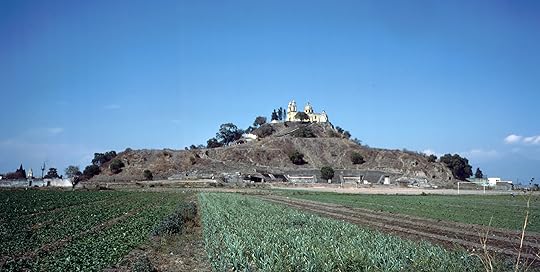
There are throttled screams, a faint stench of blood as the Cholulans make sacrifices for victory; during the night seven children have been killed on the altar of Huitzilopochtli. Cortés orders continuous alert and has two priests from the great pyramid brought before him. Wearing robes of black-dyed cotton, the priests converse with Malinche, the princess whom the Spaniards call Doña Marina. They reveal Montezuma’s orders and the Cholulans’ secret plans. The Spaniards are to be seized and twenty are to be sacrificed on the pyramid by Montezuma’s direct command; he has sent the caciques promises, jewels, garments, a drum of purest gold.
He makes me too aware that all of us want to close the circle of our lives, to be able to think that the round line ends where it began, to want to live many lives within the one we do live, to be sure that if we only had more strength of mind, will, and dream, we could make our little pasts have meaning. Unconsciously we are all poets and we struggle to oppose nature with our patterns: nature which does not consider us individual beings at all but rather confluences of lives that cannot be isolated one from the other, that flow together in a great whirl that neither begins nor ends.
Franz’s simple idea was that the new in architecture is not something that just happens but that it results, in the first place, from the fact that the people who live in buildings change. Because people change, so must architecture, which must be at the service of valid human needs, not of some fixed idea about what is and is not monumental, or of models handed down from the past, or of the spirit of decorativeness.
…and so, Dragoness, there are more things in heaven and earth than are dreamt of in your philosophy, and you, Isabel, for I am talking to you too, to both of you because this Mass must be celebrated first by a woman: all Masses begin with an Introit, just as do the life of every woman and the lives of the men who are born of women; you, Isabel, will discover only what you accept and you must accept everything. And having begun with the Introit, we end with piety before the Anointed Priapus, before Christ-Bacchus who at the very end does not demand the love of the God who abandoned him but the consolation of the witch, Mary wise in lore of potions and sleep-inducing herbs…
من همه چیز را تحمل میکنم غیر از چیز کهنهای که یکسره تکرار شود. هیچ چیز آن قدر جالب نیست که بالاخره ملالآور نشود.