

What do you think?

A Diet of Treacle
Tired of being a good girl, Anita Carbone gets more than she bargained for when she, arriving in Greenwich Village, meets a troubled young war veteran and his drug-dealing roommate, who has a penchant for murder. Original.
205 pages, Mass Market Paperback
First published January 1, 1961
About the author
Lawrence Block
742 books3,060 followersLawrence Block has been writing crime, mystery, and suspense fiction for more than half a century. He has published in excess (oh, wretched excess!) of 100 books, and no end of short stories.
Born in Buffalo, N.Y., LB attended Antioch College, but left before completing his studies; school authorities advised him that they felt he’d be happier elsewhere, and he thought this was remarkably perceptive of them.
His earliest work, published pseudonymously in the late 1950s, was mostly in the field of midcentury erotica, an apprenticeship he shared with Donald E. Westlake and Robert Silverberg. The first time Lawrence Block’s name appeared in print was when his short story “You Can’t Lose” was published in the February 1958 issue of Manhunt. The first book published under his own name was Mona (1961); it was reissued several times over the years, once as Sweet Slow Death. In 2005 it became the first offering from Hard Case Crime, and bore for the first time LB’s original title, Grifter’s Game.
LB is best known for his series characters, including cop-turned-private investigator Matthew Scudder, gentleman burglar Bernie Rhodenbarr, globe-trotting insomniac Evan Tanner, and introspective assassin Keller.
Because one name is never enough, LB has also published under pseudonyms including Jill Emerson, John Warren Wells, Lesley Evans, and Anne Campbell Clarke.
LB’s magazine appearances include American Heritage, Redbook, Playboy, Linn’s Stamp News, Cosmopolitan, GQ, and The New York Times. His monthly instructional column ran in Writer’s Digest for 14 years, and led to a string of books for writers, including the classics Telling Lies for Fun & Profit and The Liar’s Bible. He has also written episodic television (Tilt!) and the Wong Kar-wai film, My Blueberry Nights.
Several of LB’s books have been filmed. The latest, A Walk Among the Tombstones, stars Liam Neeson as Matthew Scudder and is scheduled for release in September, 2014.
LB is a Grand Master of Mystery Writers of America, and a past president of MWA and the Private Eye Writers of America. He has won the Edgar and Shamus awards four times each, and the Japanese Maltese Falcon award twice, as well as the Nero Wolfe and Philip Marlowe awards, a Lifetime Achievement Award from the Private Eye Writers of America, and the Diamond Dagger for Life Achievement from the Crime Writers Association (UK). He’s also been honored with the Gumshoe Lifetime Achievement Award from Mystery Ink magazine and the Edward D. Hoch Memorial Golden Derringer for Lifetime Achievement in the short story. In France, he has been proclaimed a Grand Maitre du Roman Noir and has twice been awarded the Societe 813 trophy. He has been a guest of honor at Bouchercon and at book fairs and mystery festivals in France, Germany, Australia, Italy, New Zealand, Spain and Taiwan. As if that were not enough, he was also presented with the key to the city of Muncie, Indiana. (But as soon as he left, they changed the locks.)
LB and his wife Lynne are enthusiastic New Yorkers and relentless world travelers; the two are members of the Travelers Century Club, and have visited around 160 countries.
He is a modest and humble fellow, although you would never guess as much from this biographical note.
Born in Buffalo, N.Y., LB attended Antioch College, but left before completing his studies; school authorities advised him that they felt he’d be happier elsewhere, and he thought this was remarkably perceptive of them.
His earliest work, published pseudonymously in the late 1950s, was mostly in the field of midcentury erotica, an apprenticeship he shared with Donald E. Westlake and Robert Silverberg. The first time Lawrence Block’s name appeared in print was when his short story “You Can’t Lose” was published in the February 1958 issue of Manhunt. The first book published under his own name was Mona (1961); it was reissued several times over the years, once as Sweet Slow Death. In 2005 it became the first offering from Hard Case Crime, and bore for the first time LB’s original title, Grifter’s Game.
LB is best known for his series characters, including cop-turned-private investigator Matthew Scudder, gentleman burglar Bernie Rhodenbarr, globe-trotting insomniac Evan Tanner, and introspective assassin Keller.
Because one name is never enough, LB has also published under pseudonyms including Jill Emerson, John Warren Wells, Lesley Evans, and Anne Campbell Clarke.
LB’s magazine appearances include American Heritage, Redbook, Playboy, Linn’s Stamp News, Cosmopolitan, GQ, and The New York Times. His monthly instructional column ran in Writer’s Digest for 14 years, and led to a string of books for writers, including the classics Telling Lies for Fun & Profit and The Liar’s Bible. He has also written episodic television (Tilt!) and the Wong Kar-wai film, My Blueberry Nights.
Several of LB’s books have been filmed. The latest, A Walk Among the Tombstones, stars Liam Neeson as Matthew Scudder and is scheduled for release in September, 2014.
LB is a Grand Master of Mystery Writers of America, and a past president of MWA and the Private Eye Writers of America. He has won the Edgar and Shamus awards four times each, and the Japanese Maltese Falcon award twice, as well as the Nero Wolfe and Philip Marlowe awards, a Lifetime Achievement Award from the Private Eye Writers of America, and the Diamond Dagger for Life Achievement from the Crime Writers Association (UK). He’s also been honored with the Gumshoe Lifetime Achievement Award from Mystery Ink magazine and the Edward D. Hoch Memorial Golden Derringer for Lifetime Achievement in the short story. In France, he has been proclaimed a Grand Maitre du Roman Noir and has twice been awarded the Societe 813 trophy. He has been a guest of honor at Bouchercon and at book fairs and mystery festivals in France, Germany, Australia, Italy, New Zealand, Spain and Taiwan. As if that were not enough, he was also presented with the key to the city of Muncie, Indiana. (But as soon as he left, they changed the locks.)
LB and his wife Lynne are enthusiastic New Yorkers and relentless world travelers; the two are members of the Travelers Century Club, and have visited around 160 countries.
He is a modest and humble fellow, although you would never guess as much from this biographical note.
Ratings & Reviews
Friends & Following
Create a free account to discover what your friends think of this book!
Community Reviews
Displaying 1 - 30 of 118 reviews

May 13, 2021
Bourbon-drinking Block clearly hated the Beats in his 1961 quasi-existentialist nod to Camus, which turns into more of a version of Reefer Madness than The Stranger. Kerouac and Ginsberg take their hits here as romanticizing the Beat life as a trip to counter-culture Heaven, as Block’s version of those days is a trip straight to Hell. Originally titled Pads Are For Passion (!!), the second book Lawrence Block wrote under the pseudonym Sheldon Lord.
Early on this is a kind of funny cautionary tale about a bunch of Greenwich Village teens/twenty-somethings getting "involved in" pot (that gateway drug to heroin, don’tcha know), so it’s kind of silly for a long time until it turns dark. Anita drops out of Hunter College and falls inexplicably in love with PTSD-Korean War vet Joe, who wants to drop out of society and turn on. Anita tries pot once at a party initiated by a Ginsberg-type poet ranting a terrible poem, and right away strips and has sex with Joe in the middle of the floor at the party (!!). Yeah, I hate how that happens, every time I take a hit on what Block calls a "marijuana joint." Reefer Madness, indeed! Be careful, boys and girls! Stop inhaling that weed! (It’s a wonder she does not simultaneously get pregnant from that one public sexual experience as a warning to all careful readers).
Treacle is British for molasses, which is what three girls who live at the bottom of a well in Alice in Wonderland survive on. Treacle as pot? the well, as some Village dive? I'll admit that there are moments in which I saw the roots of today's opioid addiction in this book, though it doesn't feel quite seriously cautionary or (certainly!!!) well-written enough as Winter's Bone or No Country for Old Men on the subject.
Later, as things turn to absolute crap, (because they have to! Because: Pot! and all these young people who don't want to get a job and settle down!) Joe’s psychotic roommate Shank, who has begun peddling heroin, sadistically, (so trigger-warning) rapes Anita and (spoiler alert--oh, come on, as if you will ever read it?!) kills a cop and someone else "on the road" (on the run).
Okay, this isn’t a great book, not nearly as good as Grifter's Game or Lucky at Cards, but I can see why they decided to include it for fans of Block and noir in the Hard Case Crime series, even though it is easily the worst Block I have read, maybe two stars or 2.5. It's a period piece by Lawrence Block! But I listened to it without stopping (it's a short book) and I will always remember it in conjunction with Kerouac’s On the Road and I’ll also always recall that campy hipster poem at the party igniting the drugs and sex.
I also like that it contributes to my sense that American noir is, besides its shadowy/pulpy exercise in style, a critique of capitalism in its send-up of a society that creates victims that can only dream of financial survival. Dealing and turning tricks on the way tot the American Dream??!!
Here's that neo-liberal dream unmasked, as an older man, one of Shank's victims, tells him:
"What a thing to be young! You can be anything you want!"
Boom, and literally boom, in the next moment. And finally, of Shank's gun:
"He could feel it: All that power. All that emptiness." Could have been written by Camus about Meursault in The Stranger, though (of course!!) Camus was a much better thinker and writer than Block, in this book, at least.
I did not hate the Beats or hippies as Block clearly did, but Treacle (terrible title!) is a darkly amusing (and then not so amusing) attempt at existentialist noir that I somewhat guiltily admit that I liked in spite of myself.
Early on this is a kind of funny cautionary tale about a bunch of Greenwich Village teens/twenty-somethings getting "involved in" pot (that gateway drug to heroin, don’tcha know), so it’s kind of silly for a long time until it turns dark. Anita drops out of Hunter College and falls inexplicably in love with PTSD-Korean War vet Joe, who wants to drop out of society and turn on. Anita tries pot once at a party initiated by a Ginsberg-type poet ranting a terrible poem, and right away strips and has sex with Joe in the middle of the floor at the party (!!). Yeah, I hate how that happens, every time I take a hit on what Block calls a "marijuana joint." Reefer Madness, indeed! Be careful, boys and girls! Stop inhaling that weed! (It’s a wonder she does not simultaneously get pregnant from that one public sexual experience as a warning to all careful readers).
Treacle is British for molasses, which is what three girls who live at the bottom of a well in Alice in Wonderland survive on. Treacle as pot? the well, as some Village dive? I'll admit that there are moments in which I saw the roots of today's opioid addiction in this book, though it doesn't feel quite seriously cautionary or (certainly!!!) well-written enough as Winter's Bone or No Country for Old Men on the subject.
Later, as things turn to absolute crap, (because they have to! Because: Pot! and all these young people who don't want to get a job and settle down!) Joe’s psychotic roommate Shank, who has begun peddling heroin, sadistically, (so trigger-warning) rapes Anita and (spoiler alert--oh, come on, as if you will ever read it?!) kills a cop and someone else "on the road" (on the run).
Okay, this isn’t a great book, not nearly as good as Grifter's Game or Lucky at Cards, but I can see why they decided to include it for fans of Block and noir in the Hard Case Crime series, even though it is easily the worst Block I have read, maybe two stars or 2.5. It's a period piece by Lawrence Block! But I listened to it without stopping (it's a short book) and I will always remember it in conjunction with Kerouac’s On the Road and I’ll also always recall that campy hipster poem at the party igniting the drugs and sex.
I also like that it contributes to my sense that American noir is, besides its shadowy/pulpy exercise in style, a critique of capitalism in its send-up of a society that creates victims that can only dream of financial survival. Dealing and turning tricks on the way tot the American Dream??!!
Here's that neo-liberal dream unmasked, as an older man, one of Shank's victims, tells him:
"What a thing to be young! You can be anything you want!"
Boom, and literally boom, in the next moment. And finally, of Shank's gun:
"He could feel it: All that power. All that emptiness." Could have been written by Camus about Meursault in The Stranger, though (of course!!) Camus was a much better thinker and writer than Block, in this book, at least.
I did not hate the Beats or hippies as Block clearly did, but Treacle (terrible title!) is a darkly amusing (and then not so amusing) attempt at existentialist noir that I somewhat guiltily admit that I liked in spite of myself.

June 22, 2014
If it weren't for the fact that fellow Block fans have given this sub-stellar marks I would think that I had somehow lost the last 20 pages (presumably ones that would reveal a clever twist lurking just beneath the surface). Alas, it appears that I am not missing said pages, and that this simply is not Lawrence Block at his finest.
While Block's first "Hard Case Crime" piece, Grifter's Game , wasn't my favorite, its ending was redemptively haunting. This one read like a by-the-book morality tale à la Reefer Madness.
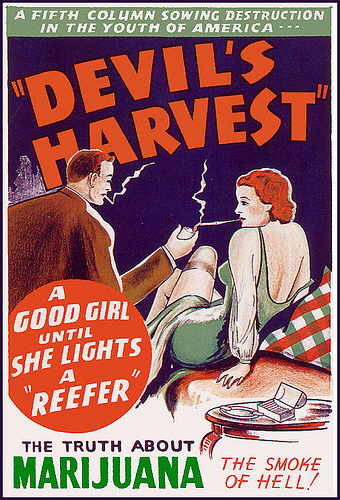
For me, it was just shy of achieving a campy level of self-awareness. The dialogue between the hip, turned-on stoner cats (or whatever they call themselves) and the naïve, square Anita reminded me of the Goth Kids from South Park .

While Block's first "Hard Case Crime" piece, Grifter's Game , wasn't my favorite, its ending was redemptively haunting. This one read like a by-the-book morality tale à la Reefer Madness.
For me, it was just shy of achieving a campy level of self-awareness. The dialogue between the hip, turned-on stoner cats (or whatever they call themselves) and the naïve, square Anita reminded me of the Goth Kids from South Park .
Why don't you just go back to your Justin Timberlake and your homework, you conformist asshole?While the Goth Kid zingers are funny (to me) as one-liners and scenelets, though under 200 pages, this book was pushing my limits. However, I certainly won't hold it against the father of Matthew Scudder.

January 25, 2012
01/2012
A treat. A 1961 pulp exploitation novel - beatniks, drugs, sex, violence - that's actually well-written, or at least not cringe-inducing like this stuff usually is.
A treat. A 1961 pulp exploitation novel - beatniks, drugs, sex, violence - that's actually well-written, or at least not cringe-inducing like this stuff usually is.

July 22, 2018
One of Lawrence Block's early works in which some kids from the Village "turn on, tune in and drop out". Drugs lead to murder and then a life on the run. It probably all would have been just fine, but for a friend who is a complete psycho. Not one of Block's best by a long shot, but I still found myself pulling for the kids to do the right thing by the end.

October 18, 2011
Some know it all hag decided it was a good idea to lecture me about the decrease in size of the stores mystery section (she was wrong actually, the section is bigger now than it ever was, but the customer is always right, right?) called the Hard Case Crime books, junkie books. She hated that we had them displayed and wanted to know why we got rid of all the good books. I thought at the time I should explode at her, and in the imaginary world in my head I thought I'd start screaming at her for putting down the type of book that I happened to be reading at the time and turning the tables on her by accusing her of calling me a junkie and then telling her to get out of the fucking store if she is going to insult me. In my imagination I would have hurled the four linear feet of Harlequin Romances I was holding at the time at her, and because this is make believe she would have suffered some very stingy paper cuts.
This is my second foray into the Hard Case Crime books, I held off a long time in reading any of them, and now two in the last four days. I sort of feel dirty, like the character Anita in this book who once she steps out of her square world in the Hip Beat world of 1960 Greenwich Village is soon going from just experimenting with taking a puff of chronic to balling some guy in the middle of a party while everyone watches. How quickly these type of things work as stepping stones spiraling out of control behavior. Although is reading two 'junkie' novels in a few days really a bad behavior?
There is a great line somewhere in this book that called all the novels by Beat writers crap, I wish I had marked where the line was so I could quote it. It made me laugh out loud, something that I rarely do with books, but which actually happened twice in the past 24 hours (the second time was a scene in Cooter Farm, and it wasn't because of the name which I chuckle on the inside every time I see or think of the name Cooter Farm, I'm quite mature).
As a sensational account of the East Village in the early 1960's I liked this novel quite a bit, almost four stars worthy. As a crime novel though it was more, well sensational, than good. It wasn't over the top sensationally absurd as say the Blue Boy character from Dragnet, but it felt like a sort of anti-beat propaganda, which is fine with me. I have no love for the beats. But the crime part of the story was kind of rushed and felt almost tacked on towards the end of the book because, well kids who have flushed away their lives smoking the mary jane are just a hop skip and jump away from becoming junkies or murderers. Also, since this is a crime novel, well there needs to be a some crime that is a little more serious than possession with intent to sell of some drugs of a few dime bags.
I'll probably be returning to read some more junkie books once I finish reading Cooter Farm.
This is my second foray into the Hard Case Crime books, I held off a long time in reading any of them, and now two in the last four days. I sort of feel dirty, like the character Anita in this book who once she steps out of her square world in the Hip Beat world of 1960 Greenwich Village is soon going from just experimenting with taking a puff of chronic to balling some guy in the middle of a party while everyone watches. How quickly these type of things work as stepping stones spiraling out of control behavior. Although is reading two 'junkie' novels in a few days really a bad behavior?
There is a great line somewhere in this book that called all the novels by Beat writers crap, I wish I had marked where the line was so I could quote it. It made me laugh out loud, something that I rarely do with books, but which actually happened twice in the past 24 hours (the second time was a scene in Cooter Farm, and it wasn't because of the name which I chuckle on the inside every time I see or think of the name Cooter Farm, I'm quite mature).
As a sensational account of the East Village in the early 1960's I liked this novel quite a bit, almost four stars worthy. As a crime novel though it was more, well sensational, than good. It wasn't over the top sensationally absurd as say the Blue Boy character from Dragnet, but it felt like a sort of anti-beat propaganda, which is fine with me. I have no love for the beats. But the crime part of the story was kind of rushed and felt almost tacked on towards the end of the book because, well kids who have flushed away their lives smoking the mary jane are just a hop skip and jump away from becoming junkies or murderers. Also, since this is a crime novel, well there needs to be a some crime that is a little more serious than possession with intent to sell of some drugs of a few dime bags.
I'll probably be returning to read some more junkie books once I finish reading Cooter Farm.

November 1, 2013
An alternate title could have been “Drugs Are Bad” or “Hasty Decisions are not Recommended”. While they’re not as eye catching or as hip as “A Diet of Treacle”, they still sum up the story pretty accurately.
Joe and Shank have a strange living arrangement. Sharing an apartment in the West Village, Shank supports Joe financially by peddling pot to a steady stream of customers. Both are subscribers to the hip lifestyle of the 60s, meaning that they’re not interested in getting a nine to five pencil pushing desk job, instead opting to wax philosophical about life and ridicule the squares that live uptown. All things considered, they had a good thing going until Joe decides to pick up an attractive woman, Anita, on a bet.
While there’s no immediate connection at first, Joe bumps into Anita later on and is shocked to discover that she wants to move in with him. Not really knowing how to take this, Joe tries to push her away, insisting that she’s simply not built for his lifestyle. When she fails to yield her offer, the two end up between the sheets and a domestic relationship follows. While Shank initially insists he’s OK with his new roommate, a darker side has recently begun brewing deep inside him and is threatening to come to the surface.
I never understood Anita’s rationale for moving in with Joe. While it’s made known that she’s uninterested in the whole getting married, having kids and living the life of financially secure housewife, her quick decision to jump into bed with this guy she barely knows – yes, I’m aware that one night stands are a thing – then wanting to live in his rundown, disgusting apartment (roaches literally crawling across the floor) was a bit of stretch considering her upbringing and stance on drug culture. It was too much of a 180, even for someone wanting to dramatically shake up their life.
Shank’s change in attitude, while gradual, did seem rushed, if that makes sense. There are glimmers of violent tendencies early on when he speaks about the power his switchblade carries, how it drops women’s inhibitions, even hinting that he may take some by force. However, there’s not a doubt in my mind that he’s a psychopath. It probably didn't help that he shared a room with Joe and Anita dancing the horizontal mambo. In his twisted world view, Anita was insatiable and it was his turn whether she liked it or not. Whether his progression is rushed or not, Shank’s truly a horrific monster that Block tries his damnedest to make sure the reader doesn't forget.
It’s worth noting that there’s some strong writing here – as if I have to tell you that when it’s a Lawrence Block novel. Joe’s musings about life and his distaste for dropping into the system, becoming a cog in the great wheel of society, were easy to identify with. He almost felt like a more focused, older and wiser Holden Caulfield. I would have probably enjoyed a whole book written in that style alone, tossing out the crime elements that were mixed in.
I’m not sure if this one will stick with me as strongly as my first Block Hardcase Crime book, Grifter's Game, but it’s a short read that you could most likely blast through in one sitting.
Joe and Shank have a strange living arrangement. Sharing an apartment in the West Village, Shank supports Joe financially by peddling pot to a steady stream of customers. Both are subscribers to the hip lifestyle of the 60s, meaning that they’re not interested in getting a nine to five pencil pushing desk job, instead opting to wax philosophical about life and ridicule the squares that live uptown. All things considered, they had a good thing going until Joe decides to pick up an attractive woman, Anita, on a bet.
While there’s no immediate connection at first, Joe bumps into Anita later on and is shocked to discover that she wants to move in with him. Not really knowing how to take this, Joe tries to push her away, insisting that she’s simply not built for his lifestyle. When she fails to yield her offer, the two end up between the sheets and a domestic relationship follows. While Shank initially insists he’s OK with his new roommate, a darker side has recently begun brewing deep inside him and is threatening to come to the surface.
I never understood Anita’s rationale for moving in with Joe. While it’s made known that she’s uninterested in the whole getting married, having kids and living the life of financially secure housewife, her quick decision to jump into bed with this guy she barely knows – yes, I’m aware that one night stands are a thing – then wanting to live in his rundown, disgusting apartment (roaches literally crawling across the floor) was a bit of stretch considering her upbringing and stance on drug culture. It was too much of a 180, even for someone wanting to dramatically shake up their life.
Shank’s change in attitude, while gradual, did seem rushed, if that makes sense. There are glimmers of violent tendencies early on when he speaks about the power his switchblade carries, how it drops women’s inhibitions, even hinting that he may take some by force. However, there’s not a doubt in my mind that he’s a psychopath. It probably didn't help that he shared a room with Joe and Anita dancing the horizontal mambo. In his twisted world view, Anita was insatiable and it was his turn whether she liked it or not. Whether his progression is rushed or not, Shank’s truly a horrific monster that Block tries his damnedest to make sure the reader doesn't forget.
It’s worth noting that there’s some strong writing here – as if I have to tell you that when it’s a Lawrence Block novel. Joe’s musings about life and his distaste for dropping into the system, becoming a cog in the great wheel of society, were easy to identify with. He almost felt like a more focused, older and wiser Holden Caulfield. I would have probably enjoyed a whole book written in that style alone, tossing out the crime elements that were mixed in.
I’m not sure if this one will stick with me as strongly as my first Block Hardcase Crime book, Grifter's Game, but it’s a short read that you could most likely blast through in one sitting.

September 8, 2010
Thankfully, a quick read. I guess it was mostly well done, if you want to read about lost kids making the drug scene & digging themselves a hole. He had the kids & their attitudes down pretty well.
Unfortunately, Block wasn't very well acquainted with the drug scene. I'm certain he never dealt any - the described sizes & quantities were all wrong. Who ever heard of buying 3 z's to make a profit? After 2, you'd go for a 1/4 lb. Not a single baggie was weighed or 'fingered'. No cleaning, either. The pot highs were way out there, too. Better than anything straight Mexican would accomplish, which all the pot was supposed to be.
Unfortunately, Block wasn't very well acquainted with the drug scene. I'm certain he never dealt any - the described sizes & quantities were all wrong. Who ever heard of buying 3 z's to make a profit? After 2, you'd go for a 1/4 lb. Not a single baggie was weighed or 'fingered'. No cleaning, either. The pot highs were way out there, too. Better than anything straight Mexican would accomplish, which all the pot was supposed to be.

December 14, 2018
COUNTDOWN: Mid-20th Century American Crime
BOOK 219 (of 250)
HOOK = 3 stars: "Joe Milani studied the room with half-opened eyes...absorbing every aspect of the interior of the coffee house..." is included in the opening paragraph. Joe sits with his buddy, Skank, and bets he can pick up the pretty girl across the room. He does, and Skank just sits, flying high on pot.
PACE = 2 stars: Most of the characters stay stoned, in which they say time slows down, and so does this story.
PLOT = 2: Good girl Anita starts selling pot and heroin along with Joe and Skank. Things go from bad to worse. Standard formula, nothing unexpected happens.
PEOPLE =3: It's interesting/sad to read of the descent into hell of Anita and Joe and Skank. And there is a point at which no one can turn back. Skank truly goes off the deep end.
ATMOSPHERE = 2: An apartment is a 'dump'. That's about it for atmosphere here: it's all about the characters slow descent.
SUMMARY: 2.4 is my overall rating. Block can do so much better.
BOOK 219 (of 250)
HOOK = 3 stars: "Joe Milani studied the room with half-opened eyes...absorbing every aspect of the interior of the coffee house..." is included in the opening paragraph. Joe sits with his buddy, Skank, and bets he can pick up the pretty girl across the room. He does, and Skank just sits, flying high on pot.
PACE = 2 stars: Most of the characters stay stoned, in which they say time slows down, and so does this story.
PLOT = 2: Good girl Anita starts selling pot and heroin along with Joe and Skank. Things go from bad to worse. Standard formula, nothing unexpected happens.
PEOPLE =3: It's interesting/sad to read of the descent into hell of Anita and Joe and Skank. And there is a point at which no one can turn back. Skank truly goes off the deep end.
ATMOSPHERE = 2: An apartment is a 'dump'. That's about it for atmosphere here: it's all about the characters slow descent.
SUMMARY: 2.4 is my overall rating. Block can do so much better.

May 17, 2017
Treacle is a British term for molasses. A treacle tart is a traditional English dessert. Treacle is also a medicinal compound used as an Antidote for poison. It is also mentioned in Chapter 7 of Alice in
Wonderland. It is an interesting title for block's 1961 novel about the Beat generation as they evolved into hippies. Perhaps it's an allusion to the characters aversion to working for a living. Perhaps its a reference to their drug use. In any event, Block doesn't romanticize the Beats the way Kerouac did. Their lives aren't filled with the glory of discovering the beauty of the world. Instead, in this novel, their lives
are a descent into hell. Three youths drop out of society and end up in the East Village together. Shank is a bit of a psychopath. He deals first pot and then heroin. Joe returns from a stint in military service and rooms with Shank. He spends his days sitting in the park. Getting
stoned, and picking up chicks such as Anita. She left her square life and square boyfriend to come to the village. Eventually she moves in with Joe and shank who scares the crap out of her. Drugs, public sex, parties, are their lives as they descend into rape murder junk and
running from the law. Truly, a dark portrayal of the beatniks and
hippies in 61. It is well written and easy to read. Block wrote well even in his early days.
Wonderland. It is an interesting title for block's 1961 novel about the Beat generation as they evolved into hippies. Perhaps it's an allusion to the characters aversion to working for a living. Perhaps its a reference to their drug use. In any event, Block doesn't romanticize the Beats the way Kerouac did. Their lives aren't filled with the glory of discovering the beauty of the world. Instead, in this novel, their lives
are a descent into hell. Three youths drop out of society and end up in the East Village together. Shank is a bit of a psychopath. He deals first pot and then heroin. Joe returns from a stint in military service and rooms with Shank. He spends his days sitting in the park. Getting
stoned, and picking up chicks such as Anita. She left her square life and square boyfriend to come to the village. Eventually she moves in with Joe and shank who scares the crap out of her. Drugs, public sex, parties, are their lives as they descend into rape murder junk and
running from the law. Truly, a dark portrayal of the beatniks and
hippies in 61. It is well written and easy to read. Block wrote well even in his early days.

December 30, 2007
Just got this in the mail yesterday so I spent Saturday reading it while trying to burn off a bad gin hangover from last night. This is a great example of how pulp fiction took it to the Beat Generation in the early 60s; it's almost the anti-REEFER MADNESS in its satiric romance of cheap weed and free love. So far not as much crime as in most HCC books, but I'm only on pg. 129. There's a great metaphysical riff by a Beat "poet" trying to orchestrate an orgy right now, so I'm happy to wait for the crime to take off. The opening monologue about what a ripoff it is to pay thirty-five cents for an espresso is a nice reminder of how the times they have a-changed---best read while at Starbucks, of course.
UPDATE: So I finished it the next day. The crime plot doesn't kick in until the last quarter. It's okay but not as gripping as other HCC books. You can feel Block searching for his ending with the main character's effort while on the run to reawaken his morality. The last sentence is a head-scratcher. Still not sure how to interpret it....
UPDATE: So I finished it the next day. The crime plot doesn't kick in until the last quarter. It's okay but not as gripping as other HCC books. You can feel Block searching for his ending with the main character's effort while on the run to reawaken his morality. The last sentence is a head-scratcher. Still not sure how to interpret it....

September 29, 2025
3.5 stars.
This was decent but overall forgetable. We follow two young men who are skating by on life smoking weed with no hopes for the future. When a young lady from the good side of town meets them after some adventure of her own things start to go downhill eventually leading to murder.
It was quite hilarous how cannabis was spoken about in this book. I know its from the 60s but it makes it out to be the best thing ever created and will take you off to the highest of highs ever. The dangers of it are talked about like you are taking your life in your hands each time you do it. Thats the time period I guess but it was funny to read now. Everything was also "jive" and "hip" in how the characters spoke which was cringe but funny.
it's more of a character study than a crime novel. There is a murder but it takes place in the last 20 percent of the book. Overall its good but there are better Blocks out there to read first.
This was decent but overall forgetable. We follow two young men who are skating by on life smoking weed with no hopes for the future. When a young lady from the good side of town meets them after some adventure of her own things start to go downhill eventually leading to murder.
It was quite hilarous how cannabis was spoken about in this book. I know its from the 60s but it makes it out to be the best thing ever created and will take you off to the highest of highs ever. The dangers of it are talked about like you are taking your life in your hands each time you do it. Thats the time period I guess but it was funny to read now. Everything was also "jive" and "hip" in how the characters spoke which was cringe but funny.
it's more of a character study than a crime novel. There is a murder but it takes place in the last 20 percent of the book. Overall its good but there are better Blocks out there to read first.
May 26, 2020
A blend of Reefer Madness and every juvenile delinquent pulp novel ever written. The unintended humor of the audiobook narrator’s voicing of the main bad guy, Shank, makes me give this 2 stars. This is not a good entry in the Hard Case Crime reprint series.

November 14, 2019
After consulting well-informed sources I've concluded that, contrary to what Block writes near the beginning of this book, heroin and cocaine do not actually have the same effects on users. Turns out coke is a bit of an upper. Who knew?
I also found it amusing that the dealer character scores three ounces of pot and puts it in an envelope which he then sticks in his back pocket. Obviously that's a damn big back pocket... I could go on but why nit-pick, suffice it to say that there are amusing escapist period details in this book but it's not up to the standards of the other early Hard Case reissues of Block titles, especially Grifter's Game and The Girl With the Long Green Heart.
I also found it amusing that the dealer character scores three ounces of pot and puts it in an envelope which he then sticks in his back pocket. Obviously that's a damn big back pocket... I could go on but why nit-pick, suffice it to say that there are amusing escapist period details in this book but it's not up to the standards of the other early Hard Case reissues of Block titles, especially Grifter's Game and The Girl With the Long Green Heart.

July 23, 2022
I was really invested in the story and loved the early 60s backdrop of Manhattan. No of the characters ever went anywhere just stayed the same flat note. The ending provided nothing to the story either. It just ended with a simple resolution. It’s a short book so I don’t feel too bad I took the time to read it. The title of the book and characters do somewhat work if you ponder the Alice in wonderland implications. In a well and Ill.

July 26, 2019
I was disappointed by this one. I'm a big Lawrence Block fan but this was less of a crime novel and more of a story about beatniks living the beatnix lifestyle.

October 23, 2015
I'm not sure what to rate this book. It's very well-written and thoroughly absorbing, yet it never really amounts to much. I'm sure that, back in 1961 (the year it was first published), reading about kids smoking pot, dropping out of school, and engaging in wild partying provided quite a thrill for straight-laced "squares" like me. Now, however, it all feels a bit like BABY'S FIRST TRAINSPOTTING. In other words, this book has more in common with THE BREAKFAST CLUB than it does REQUIEM FOR A DREAM.
But, honestly, that's part of the novel's charm. Sometimes it's nice to dial back a notch and read a cautionary tale that's not trying to compete with FEAR AND LOATHING IN LAS VEGAS or the backstage antics of Motley Crue. In A DIET OF TREACLE, it's not really the pot that's destroying the characters' lives; the pot is just a symptom of their general malaise.
But, of course, the pot just makes things worse.
There's a funny scene in the book where a girl tries pot for the first time and ends up doing something way out of character. It's only funny because it's the one scene in the book where author Lawrence Block exaggerates the effects of pot, making it seem like PCP or something. Apart from that, the book is surprisingly calm and level headed. And WAY better than any book originally titled PADS ARE FOR PASSION has any right to be.
But, honestly, that's part of the novel's charm. Sometimes it's nice to dial back a notch and read a cautionary tale that's not trying to compete with FEAR AND LOATHING IN LAS VEGAS or the backstage antics of Motley Crue. In A DIET OF TREACLE, it's not really the pot that's destroying the characters' lives; the pot is just a symptom of their general malaise.
But, of course, the pot just makes things worse.
There's a funny scene in the book where a girl tries pot for the first time and ends up doing something way out of character. It's only funny because it's the one scene in the book where author Lawrence Block exaggerates the effects of pot, making it seem like PCP or something. Apart from that, the book is surprisingly calm and level headed. And WAY better than any book originally titled PADS ARE FOR PASSION has any right to be.

January 13, 2008
Love love loved it. As noted, this 1961 title seems to have been Block's beat book - you can really tell Block was dipping into Kerouac and Camus at the time, to say nothing of the drugs and drink. There's some crazy lingo, dad! Straight from the fridge. Things twist into a good noir thriller at the end. Another reminder of just how long Block has been really good.

December 27, 2021
A Hard Case Crime reprint of Block’s 1961 tale of NYC beatniks caught up in drugs and, eventually, murder. Credit to Block for actually trying to show beatniks as misunderstood outsiders and making an argument that marijuana is less dangerous to society than alcohol at a time when most beatsploitation novels stuck to the usual stereotypes. But it’s painfully obvious that Block wrote this when he was just starting out and writing fast trashy pulp novels, and that he was padding it out to get it to a publishable length. Still, it’s interesting how it only really picks up once the murder bits start kicking in.

January 17, 2025
“You’re hipped on forests so much you forget how much you hate trees.”
Joe and Shank live in Greenwich Village, somewhere in time between the Beats and the hippies, smoking, and in Shank’s case dealing, dope.
“Hemp,” he said. “Tea, gauge, grass. A million names for a million games. Let’s blow up, little girl.”
The ‘little girl’ is Anita, and her arrival on the scene changes everything. Pot becomes heroin. Heroin leads to murder. Murder of a cop. And the trio have to run.
“But it was not a trio the police found.”
This book was like a cross between a "Beat" type book and a Hard Case Crime book. And since I like both of those types of books, I liked this one! It's very much a product of its time, and it had a lot of interesting things to say. Good ending too!
Joe and Shank live in Greenwich Village, somewhere in time between the Beats and the hippies, smoking, and in Shank’s case dealing, dope.
“Hemp,” he said. “Tea, gauge, grass. A million names for a million games. Let’s blow up, little girl.”
The ‘little girl’ is Anita, and her arrival on the scene changes everything. Pot becomes heroin. Heroin leads to murder. Murder of a cop. And the trio have to run.
“But it was not a trio the police found.”
This book was like a cross between a "Beat" type book and a Hard Case Crime book. And since I like both of those types of books, I liked this one! It's very much a product of its time, and it had a lot of interesting things to say. Good ending too!

March 26, 2022
I've liked all the Block books I've read. This one isn't for me. I didn't like the characters and I didn't really care what happened to them, but boy does Block write good scumbags

July 9, 2015
A Diet of Treacle is early Lawrence Block indulging in a bit of beatsploitation. The title comes from Alice in Wonderland and refers to a trio of sisters who lived in the bottom of a well and ate nothing but treacle. A sweet indulgence that when eaten to the exclusion of all else made them sick. 50's and 60's pulps often provided squaresville with lurid looks into various subcultures from underground homosexual circles to teenage greaser gangs to beatniks. The emphasis on sleaze and crime pretty much guaranteed that the sub-culture in question would not get a fair shake. That said, Block portrays the beats here in moderately sympathetic light.
As with most of these ventures, the plot is thin and events often serve as an anthropologic study of beat culture rather than furthering the narrative. There are three main characters: Joe Milani, a Korean war vet who, disillusioned with the American Dream, finds himself at home with the free love and easy living lifestyle of the Greenwich Village beat scene. Anita Carbone, an upperclass co-ed on a Holden Caulfield trip, rejecting the phonies and playing tourist among the bohemians. Shank, a sociopathic drug dealer who sees the beat scene solely as a playground for his libertine tendencies and a way to make money. These three characters circle each other in coffeehouses, poetry readings, parties, and fleabag apartments. They opine on the scene, their role in it, and where it might be going. Eventually small bad behaviors spiral into worse bad behaviors and end up in rape and murder.
A number of reviewers have criticized the book for its ridiculous portrayal of marijuana use. Many of these sorts of pulps got away with being lurid by advertising themselves as a sort of PSA. With that in mind, Block's portrayal of drug culture here is pretty mild. The descriptions of various highs are hyperbolic, but I've certainly known a pothead or two to make exaggerated claims about their vice of choice. Surprisingly for the time, Joe repeatedly talks about marijuana's non-addictive nature and its relative harmlessness compared to alcohol. As for Anita's libidinous explosion in the wake of trying pot for the first time, I thought it was pretty clear that the highly repressed young woman was going to explode at some point or another regardless of the catalyst.
As far as the rape goes, I thought it was remarkably well handled for the genre and the time.
Block gets a few jabs in at the beats, a character declares all beat novels to be crap, most of the beats are depicted as druggy drop outs with no future, etc. However, he does seem to sympathize with their criticism of square culture, and the poets come off well even if the novelists don't. The book is fun as a time capsule, a look at a very filtered view of beat culture. As a crime novel it's threadbare. Minor Block, but good for a giggle.
As with most of these ventures, the plot is thin and events often serve as an anthropologic study of beat culture rather than furthering the narrative. There are three main characters: Joe Milani, a Korean war vet who, disillusioned with the American Dream, finds himself at home with the free love and easy living lifestyle of the Greenwich Village beat scene. Anita Carbone, an upperclass co-ed on a Holden Caulfield trip, rejecting the phonies and playing tourist among the bohemians. Shank, a sociopathic drug dealer who sees the beat scene solely as a playground for his libertine tendencies and a way to make money. These three characters circle each other in coffeehouses, poetry readings, parties, and fleabag apartments. They opine on the scene, their role in it, and where it might be going. Eventually small bad behaviors spiral into worse bad behaviors and end up in rape and murder.
A number of reviewers have criticized the book for its ridiculous portrayal of marijuana use. Many of these sorts of pulps got away with being lurid by advertising themselves as a sort of PSA. With that in mind, Block's portrayal of drug culture here is pretty mild. The descriptions of various highs are hyperbolic, but I've certainly known a pothead or two to make exaggerated claims about their vice of choice. Surprisingly for the time, Joe repeatedly talks about marijuana's non-addictive nature and its relative harmlessness compared to alcohol. As for Anita's libidinous explosion in the wake of trying pot for the first time, I thought it was pretty clear that the highly repressed young woman was going to explode at some point or another regardless of the catalyst.
As far as the rape goes, I thought it was remarkably well handled for the genre and the time.
Block gets a few jabs in at the beats, a character declares all beat novels to be crap, most of the beats are depicted as druggy drop outs with no future, etc. However, he does seem to sympathize with their criticism of square culture, and the poets come off well even if the novelists don't. The book is fun as a time capsule, a look at a very filtered view of beat culture. As a crime novel it's threadbare. Minor Block, but good for a giggle.

August 4, 2009
This is an infuriating and annoying book. It gets some stars for two reasons: first, the camp factor, and second, because it holds a fascinating place in history -- a beatsploitation drug-hysteria novel written by the great Lawrence Block. It concerns a nice-ish kid and a not-so-nice-ish Korean War vet getting lost on the road to Crazyville, man, and getting mixed up with one bad man who's, like, waaaaaaaaaaaaaaaaaaaaaaaaaaaayyyyyy out there, man, I mean like BEAT, you dig? Horse, man. The big H. Like, CRAZY.
For historical whackadoos like me there are a lot of interesting references (for instance, "Mexican Brown" as a crappy kind of marijuana -- probably just an error on Block's part, but who knows) and the overall portrayal of the drug culture from that era is interesting by its very existence. However, the depth and accuracy of it seems to be pretty weak. The big moral turnaround of the book is when a girl gets high on tea and suddenly goes nuts, having public sex with her druggie boyfriend in front of everyone at a downtown beat party, man. Like crazy.
Those beatsploitation books are actually kinda hard to find because the amazingly weird covers make them collectors' items, so it's good to finally read one. Block's prose is always effective, even when he's writing reactionary hysteria. And having just re-read On the Road I found this an extra-special flavor of hilarious.
If you're looking to catch up on Block's great works, however, check out a couple other Hard Case Crime titles: the unbelievable Grifter's Game, also notable for its reflection of early-'60s drug hysteria in its amazing ending, and Killing Castro, which works as historical noir on a level almost approaching James Ellroy's American Tabloid, but thirty years ahead of its time.
For historical whackadoos like me there are a lot of interesting references (for instance, "Mexican Brown" as a crappy kind of marijuana -- probably just an error on Block's part, but who knows) and the overall portrayal of the drug culture from that era is interesting by its very existence. However, the depth and accuracy of it seems to be pretty weak. The big moral turnaround of the book is when a girl gets high on tea and suddenly goes nuts, having public sex with her druggie boyfriend in front of everyone at a downtown beat party, man. Like crazy.
Those beatsploitation books are actually kinda hard to find because the amazingly weird covers make them collectors' items, so it's good to finally read one. Block's prose is always effective, even when he's writing reactionary hysteria. And having just re-read On the Road I found this an extra-special flavor of hilarious.
If you're looking to catch up on Block's great works, however, check out a couple other Hard Case Crime titles: the unbelievable Grifter's Game, also notable for its reflection of early-'60s drug hysteria in its amazing ending, and Killing Castro, which works as historical noir on a level almost approaching James Ellroy's American Tabloid, but thirty years ahead of its time.

December 30, 2020
A classic noir in which a “good” girl from uptown becomes involved with a troubled war vet and his drug-dealing roommate in Greenwich Village. Block’s knack for fast-paced narrative and quippy dialogue is on full display. Anita and Joe are characters you want to root for as much as you want to shake them and say “wake up and get yourself out of this before things go bad…” which of course they do. The first half of the book is an interestingly look at a certain early-60s lifestyle, while the second half is a bloody crime spree. Both parts work well together.

October 18, 2012
I picked this one out simply because it's a Lawrence Block novel. It's my third read by this author and I’ve found them quite entertaining prior to this. No doubt my reaction is due mostly to the subject matter: 1960's beat scene Greenwich Village stuff. Just not my taste but it’s my own fault for giving it a try.
As I said, it was Lawrence Block novel so I had high expectations. The author does a decent job of trying to make a story out of these characters but I just didn't enjoy them or the setting. We follow three losers through the story, none of which have much in the way of a personality I wanted to root for and no purpose in life other than to try not to be bored. Lots of drugs and sex, but no rock 'n roll. Several scenes that tried to relate some kind of marijuana-induced existentialism thoughts were downright stomach-turning. No mystery in this one either; we witness all the crimes being committed and it's just a matter of time before it all comes crashing down. The ending seemed chopped off as if the word count had been reached and the deadline was here.
As I said, it was Lawrence Block novel so I had high expectations. The author does a decent job of trying to make a story out of these characters but I just didn't enjoy them or the setting. We follow three losers through the story, none of which have much in the way of a personality I wanted to root for and no purpose in life other than to try not to be bored. Lots of drugs and sex, but no rock 'n roll. Several scenes that tried to relate some kind of marijuana-induced existentialism thoughts were downright stomach-turning. No mystery in this one either; we witness all the crimes being committed and it's just a matter of time before it all comes crashing down. The ending seemed chopped off as if the word count had been reached and the deadline was here.

August 21, 2018
Christ, why can't Lawrence Block write a single novel without a sadistic rape scene? He seems to think it's America most popular fetish as opposed to a horrendous crime.
Perhaps just as horrendous is the pseudo-beat jargon the characters talk in (ya dig daddy-o?) and the whole Refeer Madness atmosphere.
I'll give this two stars because I did enjoy the last thirty or so pages but, to quote Futurama, the rest is "so bad I think it gave me cancer!"
Perhaps just as horrendous is the pseudo-beat jargon the characters talk in (ya dig daddy-o?) and the whole Refeer Madness atmosphere.
I'll give this two stars because I did enjoy the last thirty or so pages but, to quote Futurama, the rest is "so bad I think it gave me cancer!"

December 29, 2019
Early hard boiled thriller from Block, set in Beat era NYC. Cracking dialogue, slimmest of plots but enough to keep you interested and entertained if not- excuse the pun- blown away.
March 9, 2023
3.25
One of those Not-What-I-Thought-It-Would-Be novels, and for the book's first half it seemed light on plot, a book about very little.
But I stuck with it, and the book's second half kept me reasonably entertained.
Joe and his pal Shank are part of the "beat" scene, or seem to think they are, consider themselves "hip" and want to spend their time hanging out with the "hip" crowd.
They spend their time getting high on grass, and make a living selling the stuff also.
Although Shank seems to do most of the money making with the unambitious Joe quite content to live off his earnings.
Into their lives comes the young lady Anita, who doesn't know what she wants in life but decides to reject the prospects of marriage and a quiet life in the burbs.
She hooks up with Joe, and despite not being initially keen on drugs, becomes not only his lover but a pot smoking companion as well. She is going to the bad!!
Shank has his problems, the law is tailing him, and he has secretly gone from being a pot seller to a seller of heroin as well. He is pretty much a psychopath and will only go on a downhill slide to jail or the chair - won't he? What is to become of this trio, what fate awaits them at the end?
Well, I read on to find out. I sometimes thought the author was sending up the 60's Beat scene, other times I thought he had critical contempt for the people and setting he was writing about.
Other reviewers tend to lean towards the latter of those two and maybe they're right.
The book's first half didn't really feel like a crime/pulp tale, but a portrayal of a scene, the "hip" crowd and the seeming hopelessness of their lives. And as others pointed out, it sometimes felt like an early 60's version of Reefer Madness as well. It was probably in the last quarter where it became more of a standard crime tale when the trio were on the run from the law.
Overall I enjoyed the book, while having some mixed feelings about it.
It was reasonably well written, yet despite being the work of a now revered crime writer, it seemed (IMO) to be an odd inclusion to the Hard Case Crime series. A curio, for sure.
One of those Not-What-I-Thought-It-Would-Be novels, and for the book's first half it seemed light on plot, a book about very little.
But I stuck with it, and the book's second half kept me reasonably entertained.
Joe and his pal Shank are part of the "beat" scene, or seem to think they are, consider themselves "hip" and want to spend their time hanging out with the "hip" crowd.
They spend their time getting high on grass, and make a living selling the stuff also.
Although Shank seems to do most of the money making with the unambitious Joe quite content to live off his earnings.
Into their lives comes the young lady Anita, who doesn't know what she wants in life but decides to reject the prospects of marriage and a quiet life in the burbs.
She hooks up with Joe, and despite not being initially keen on drugs, becomes not only his lover but a pot smoking companion as well. She is going to the bad!!
Shank has his problems, the law is tailing him, and he has secretly gone from being a pot seller to a seller of heroin as well. He is pretty much a psychopath and will only go on a downhill slide to jail or the chair - won't he? What is to become of this trio, what fate awaits them at the end?
Well, I read on to find out. I sometimes thought the author was sending up the 60's Beat scene, other times I thought he had critical contempt for the people and setting he was writing about.
Other reviewers tend to lean towards the latter of those two and maybe they're right.
The book's first half didn't really feel like a crime/pulp tale, but a portrayal of a scene, the "hip" crowd and the seeming hopelessness of their lives. And as others pointed out, it sometimes felt like an early 60's version of Reefer Madness as well. It was probably in the last quarter where it became more of a standard crime tale when the trio were on the run from the law.
Overall I enjoyed the book, while having some mixed feelings about it.
It was reasonably well written, yet despite being the work of a now revered crime writer, it seemed (IMO) to be an odd inclusion to the Hard Case Crime series. A curio, for sure.
August 27, 2026
Lawrence Block paints a grim picture of the Greenwich Village hipster scene of the early '60s in "A Diet of Treacle." The hipsters are a sad bunch of self-serious low-lifes who live in crummy apartments, listen to bad poetry, and are mainly interested in cheap sex, getting stoned and feeling superior to the squares.
Appropriately enough, "A Diet of Treacle" begins in a coffee-house on Bleecker Street were Joe Miloni is sipping espresso with his best friend, Shank. Joe spies Anita across the room--clearly a better class of gal than usually seen in the Village--and, on a bet (stakes are a joint, of course), goes over to her table to try and pick her up.
Is that tawdry enough for you? Well, things get more down in the gutter as Anita, for some reason, is attracted to Joe--pretty much a layabout who does nothing with his time--and tolerates Joe's friend Shank who may be sadistically cruel but at least is ambitious enough to make a living selling marijuana.
Anita moves in with Joe and Shank, deciding that sharing a shabby one-room apartment with these two losers is better than the middle-class existence in store for her if she marries her boyfriend and ends up a housewife in a split-level house on Long Island.
Well, everyone's entitled to make their own life decisions. But when the three main characters of your novel make nothing but bad decisions it gets a little tiresome. Block could at least have made his low-life characters somewhat interesting--smart, or charming, or talented, or something. But, no. He's content to make them losers who just keep on losing, as things go from bad to worse for them in the course of the novel.
I did enjoy the Greenwich Village setting. It brought back some memories of Washington Square Park and some familiar street names. It's an interesting--if not very convincing--depiction of the tail end of the beat/hipster scene. In a few years the beats would be replaced by the Beatles and the hipsters would be replaced by the hippies. Not that Block knew any of this when he wrote "A Diet of Treacle" in 1961. It seems that Block was mainly interested in catching a wave when he wrote this book--writing a sensationalist expose of a lifestyle that was going out of style even at the time.
Appropriately enough, "A Diet of Treacle" begins in a coffee-house on Bleecker Street were Joe Miloni is sipping espresso with his best friend, Shank. Joe spies Anita across the room--clearly a better class of gal than usually seen in the Village--and, on a bet (stakes are a joint, of course), goes over to her table to try and pick her up.
Is that tawdry enough for you? Well, things get more down in the gutter as Anita, for some reason, is attracted to Joe--pretty much a layabout who does nothing with his time--and tolerates Joe's friend Shank who may be sadistically cruel but at least is ambitious enough to make a living selling marijuana.
Anita moves in with Joe and Shank, deciding that sharing a shabby one-room apartment with these two losers is better than the middle-class existence in store for her if she marries her boyfriend and ends up a housewife in a split-level house on Long Island.
Well, everyone's entitled to make their own life decisions. But when the three main characters of your novel make nothing but bad decisions it gets a little tiresome. Block could at least have made his low-life characters somewhat interesting--smart, or charming, or talented, or something. But, no. He's content to make them losers who just keep on losing, as things go from bad to worse for them in the course of the novel.
I did enjoy the Greenwich Village setting. It brought back some memories of Washington Square Park and some familiar street names. It's an interesting--if not very convincing--depiction of the tail end of the beat/hipster scene. In a few years the beats would be replaced by the Beatles and the hipsters would be replaced by the hippies. Not that Block knew any of this when he wrote "A Diet of Treacle" in 1961. It seems that Block was mainly interested in catching a wave when he wrote this book--writing a sensationalist expose of a lifestyle that was going out of style even at the time.

Read
November 17, 2021The thirty-ninth hard case crime novel done and it’s a 60 year old tale of sex drugs and murder from Lawrence block its possibly my least favourite of his novels so far but that’s probably because all of his others are so good he has set the bar very high. It has a fairly interesting depiction of the drug scene in early 1960s New York with some surprising character development given the short length of the book. The ending is satisfying and the three character perspectives are used well. It doesn’t have the punch or humour or great use of language as his other novels. It would have been good to see Anita’s home life a little more so we could see why she was driven away from it so that she chooses to run with joe into such a horrid situation.

September 1, 2025
I've been a fan of most of the Block noir stuff I've read, but I can't really recommend this one very highly. Post-Korean War young vet has existential crisis and joins the Beat scene in Greenwich Village, shacking up with a sketchy drug dealer. Falls for a good girl from uptown. Then spends 3/4 of the book aimlessly meandering and skipping over weeks and months of time, before actual crime and violence pop up in the final act.
Some of the "protagonists" musings are thinly veiled criticisms of middle American values and what remains of the American Dream in the early days of the Cold War. Which is all well and good, and quite interesting in their own right, but other than a few bright spots there, the rest is just a long slog where nothing interesting happens until everything is crammed into the final 40 pages. That's a lot of meandering for a crime novel.
Some of the "protagonists" musings are thinly veiled criticisms of middle American values and what remains of the American Dream in the early days of the Cold War. Which is all well and good, and quite interesting in their own right, but other than a few bright spots there, the rest is just a long slog where nothing interesting happens until everything is crammed into the final 40 pages. That's a lot of meandering for a crime novel.
Displaying 1 - 30 of 118 reviews