

What do you think?
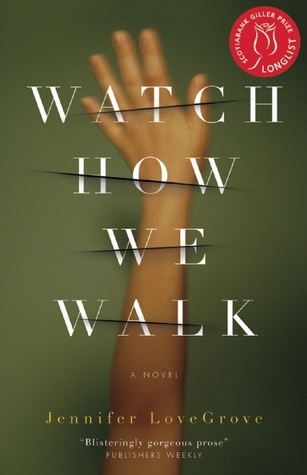
Watch How We Walk
Alternating between a woman’s childhood in a small town and as an adult in the city, this novel traces a Jehovah Witness family’s splintering belief system, their isolation, and the erosion of their relationships. As Emily becomes closer to her closeted Uncle Tyler, she begins to challenge her upbringing. Her questions about the Jehovah’s Witnesses’ insular lifestyle, rigid codes of conduct, and tenets of their faith haunt her older sister Lenora too. When Lenora disappears, everything changes and Emily becomes obsessed with taking on her sister’s identity, believing that Lenora is controlling her actions. Ultimately, Emily finds release through self-mutilation. The narrative offers a haunting, cutting exploration of the Jehovah’s Witness practice and practical impact of “disfellowshipping,” proselytization, and cultural abstinence, as well as their attitude toward the “worldlings” outside of their faith. Sparse, vivid, menacingly suspenseful, and darkly humorous, Watch How We Walk simultaneously engages on emotional, visceral, and intellectual levels.
320 pages, Paperback
First published January 1, 2013
About the author
Jennifer LoveGrove
6 books39 followersJennifer LoveGrove’s newest book is the poetry collection The Tinder Sonnets (April 2026, Book*hug Press). Beautiful Children with Pet Foxes, published in spring 2017, was longlisted for the Raymond Souster Award. Her novel Watch How We Walk was longlisted for the Giller Prize. She has two other poetry collections: I Should Never Have Fired the Sentinel and The Dagger Between Her Teeth. She divides her time between downtown Toronto and rural Ontario.
Ratings & Reviews
Friends & Following
Create a free account to discover what your friends think of this book!
Community Reviews
Displaying 1 - 30 of 92 reviews

October 1, 2013
My interest in this stems from my fascination with the Jehovah's Witness religion. I have only general knowledge of their beliefs which is pretty ironic considering half of my family members are devout Witnesses, while the other half are Bible-toting Christian zeliks. Watch How We Walk by Jennifer LoveGrove is the jarring story of Emily Morrow, presented in alternating views of her younger self and as an adult, dealing with the divisive rules of the Jehovah's Witness religion.
Emily and her sister are raised in a strict home and are encouraged not to fraternize with "worldly" people. They are forbidden to read materials deemed worldly, practice holidays, celebrate birthdays, amongst other nos. To top it off, if the are caught doing something immoral, they will be disfellowshipped. For a young Emily, this all seems understandable since it is all she knows. Her older sister, Lenora, as a teenager is finding "The Truth" to be a big bunch of lies. Emily struggles with what to do as she sees her sister begin to disassociate herself with the religion.
Jennifer LoveGrove writes an emotional rollercoaster with Watch How We Walk where a family struggles with their religion, and honoring the rules to that religion. Emily wants to be a funambulist when she's older which seems very fitting given that she's always seems to be walking the line with her religion and coming into her own. The young Emily wants nothing more than to be a full-time Pioneer, spreading the Truth to all who have not heard. But she also wants to be accepted. Her older self (which is told in first-person narrative) suggests she wants out. She wants to be as liberated as her sister, Lenora. Emily does not want to live in constant fear of the last days, or being disfellowshipped. She doesn't want to be forced not to speak with members of her family because her family says so.
The characters in Watch How We Walk are all so well developed that I must applaude LoveGrove for giving me people to care about. Although flawed, their struggles are evident on every page. A stern father who's dealing with the guilt of his past by plunging headfirst into the fellowship. He almost blindly follows all their rules and regulations to a fault. The mother, she's on a moving train that just won't slow down. She's the person who shows the most compassion for her family's situation. This family is very real and are easy to relate to.
I don't know if the differences between a person raised as a Jehovah's Witness turns out much different than one raised as a Christian. LoveGrace novel makes me think that the struggle to find self after enduring the restraints of either religion is a hard but worthy journey. Watch How We Walk is not for those expecting happy endings, rainbows, and butterflies but is still inspirational nontheless and should not be passed over.
Emily and her sister are raised in a strict home and are encouraged not to fraternize with "worldly" people. They are forbidden to read materials deemed worldly, practice holidays, celebrate birthdays, amongst other nos. To top it off, if the are caught doing something immoral, they will be disfellowshipped. For a young Emily, this all seems understandable since it is all she knows. Her older sister, Lenora, as a teenager is finding "The Truth" to be a big bunch of lies. Emily struggles with what to do as she sees her sister begin to disassociate herself with the religion.
Jennifer LoveGrove writes an emotional rollercoaster with Watch How We Walk where a family struggles with their religion, and honoring the rules to that religion. Emily wants to be a funambulist when she's older which seems very fitting given that she's always seems to be walking the line with her religion and coming into her own. The young Emily wants nothing more than to be a full-time Pioneer, spreading the Truth to all who have not heard. But she also wants to be accepted. Her older self (which is told in first-person narrative) suggests she wants out. She wants to be as liberated as her sister, Lenora. Emily does not want to live in constant fear of the last days, or being disfellowshipped. She doesn't want to be forced not to speak with members of her family because her family says so.
The characters in Watch How We Walk are all so well developed that I must applaude LoveGrove for giving me people to care about. Although flawed, their struggles are evident on every page. A stern father who's dealing with the guilt of his past by plunging headfirst into the fellowship. He almost blindly follows all their rules and regulations to a fault. The mother, she's on a moving train that just won't slow down. She's the person who shows the most compassion for her family's situation. This family is very real and are easy to relate to.
I don't know if the differences between a person raised as a Jehovah's Witness turns out much different than one raised as a Christian. LoveGrace novel makes me think that the struggle to find self after enduring the restraints of either religion is a hard but worthy journey. Watch How We Walk is not for those expecting happy endings, rainbows, and butterflies but is still inspirational nontheless and should not be passed over.

August 12, 2013
I went into reading this with a little bit of worry – you see, I was raised as a Jehovah’s Witness, so I was worried that this would be one of those books with all the details wrong and it would drive me crazy. But, thankfully this story, while fictional, reads as if it was my childhood – or that of any other JW kid who wasn’t entirely sold on the religion. I’m guessing that the author’s experience as a JW was before my time, since there were a few details that are not exactly as they are now, but still true to life.
Emily’s character as a young child is very innocent and I connected immediately to her. I think the things she thinks and acts is similar to how a lot of JW kids start out. She believes everything she’s told, even if she isn’t quite sure what it means or how it all fits together. LoveGrove does a great job writing from this perspective, which I’d imagine would be very hard to do. Emily’s older sister Lenora is starting to experiment and test the boundaries, and though she’s sullen and a bit bratty, I saw a lot of myself in her as well. The parents and uncle are an interesting group, because in off moments they let you see their true feelings, even though they’re trying hard to parent as best they can and not let their children see what is going on beyond what they need to know.
The alternating perspective of Emily as an adult were disconcerting at first, and it took me a bit to figure out exactly what was going on. Maybe it’s the way that the narrative switches from third-person when telling about Emily’s family life in her formative years to first-person when Emily is older. It was a little odd. I found myself rooting for her, though, and that she would be able to make it in life despite her up-bringing and naivete.
In the end, there is nothing really resolved – as this topic isn’t one that can really *be* resolved, I guess. Sadly this story rings so true that I think that maybe some will see it as far-fetched and a little bit crazy. It would almost seem that way to me if I hadn’t lived a life so similar. It’s a fictional story that is very close to being true, so if you’ve ever really wondered what goes on behind closed doors in a JW family, you should read this book. The memoirs I’ve seen sensationalize and embellish the truth, but this is spot-on despite being fiction.
Emily’s character as a young child is very innocent and I connected immediately to her. I think the things she thinks and acts is similar to how a lot of JW kids start out. She believes everything she’s told, even if she isn’t quite sure what it means or how it all fits together. LoveGrove does a great job writing from this perspective, which I’d imagine would be very hard to do. Emily’s older sister Lenora is starting to experiment and test the boundaries, and though she’s sullen and a bit bratty, I saw a lot of myself in her as well. The parents and uncle are an interesting group, because in off moments they let you see their true feelings, even though they’re trying hard to parent as best they can and not let their children see what is going on beyond what they need to know.
The alternating perspective of Emily as an adult were disconcerting at first, and it took me a bit to figure out exactly what was going on. Maybe it’s the way that the narrative switches from third-person when telling about Emily’s family life in her formative years to first-person when Emily is older. It was a little odd. I found myself rooting for her, though, and that she would be able to make it in life despite her up-bringing and naivete.
In the end, there is nothing really resolved – as this topic isn’t one that can really *be* resolved, I guess. Sadly this story rings so true that I think that maybe some will see it as far-fetched and a little bit crazy. It would almost seem that way to me if I hadn’t lived a life so similar. It’s a fictional story that is very close to being true, so if you’ve ever really wondered what goes on behind closed doors in a JW family, you should read this book. The memoirs I’ve seen sensationalize and embellish the truth, but this is spot-on despite being fiction.
August 5, 2015
This isn't the type of thing I normally read. My wife was a Jehovah's Witness until her mid-teens, though, and both sides of her family are still in the religion (with varying degrees of conviction, and assuming you even consider it a religion at all of course). So yeah, this piqued my interest.
The publisher's description gives way too much away. It's essentially the story of a family of Witnesses, with a narrower focus on two young sisters and the way the religion shapes them growing up.
It's no melancholic, wistful coming of age tale, however. This shit can really mess you up. That fact and the process leading to that unfortunate outcome are most definitely explored here. It's a belief system (quaintly dubbed by its followers as The Truth) that actively discourages independent thought as well as clearing your mind of all thoughts (as in meditation). One in which the members are always watching each other, sniffing out the slightest hint of sin and indiscretion. One in which 'friends' and family members can be disfellowshipped and subsequently shunned (read: completely ignored/treated as though they simply don't exist). There's a huge focus on End Times/Armageddon. These things and more cause a maelstrom of fear and anxiety in the impressionable mind of the youngest sister in the novel, Emily, and it's absolutely heartbreaking. All of the characters are complex, actually. It would have been easy to do a story like this in shades of black and white, but thankfully that's not the case here. LoveGrove is a former Witness herself, and it shows in the details. She's done a great job putting it all together.
Despite the dark cloud looming throughout, there are moments of lightness and, if not joy, at least respite. It's so compelling and written so well that it flies by like a thriller at times. The ending is perfect, leaving only a couple of loose ends that, given Emily's limited perspective, have to stay loose. I know this is a story that will stay with me for a long time.
One more bit of non-book-related stuff, but still relevant. My wife and I recently went to the memorial for her grandfather who recently died. The Elder's speech was amusing and fitting, but interspersed with random moments of utterly blatant advertisements for the religion, as well as Bible passages not having anything to do with the deceased but rather strategically placed to instill fear and/or continued subservience. After the service a woman gave me a card with the Jehovah's Witness website on it, trying to convert me, telling me the site even has a section where my kids can learn to say please and thank you and such. Really? All this with my grieving wife a few feet away, being placated by some other person. I don't think I've ever bitten my tongue as hard as I did that day. I know firsthand that some of them are wonderful people, and I don't want to generalize. Maybe that lady actually has a heart, and maybe it was even in the right place, but damn was that ever a kick you when you're down kind of moment. And that's "The Truth".
The publisher's description gives way too much away. It's essentially the story of a family of Witnesses, with a narrower focus on two young sisters and the way the religion shapes them growing up.
It's no melancholic, wistful coming of age tale, however. This shit can really mess you up. That fact and the process leading to that unfortunate outcome are most definitely explored here. It's a belief system (quaintly dubbed by its followers as The Truth) that actively discourages independent thought as well as clearing your mind of all thoughts (as in meditation). One in which the members are always watching each other, sniffing out the slightest hint of sin and indiscretion. One in which 'friends' and family members can be disfellowshipped and subsequently shunned (read: completely ignored/treated as though they simply don't exist). There's a huge focus on End Times/Armageddon. These things and more cause a maelstrom of fear and anxiety in the impressionable mind of the youngest sister in the novel, Emily, and it's absolutely heartbreaking. All of the characters are complex, actually. It would have been easy to do a story like this in shades of black and white, but thankfully that's not the case here. LoveGrove is a former Witness herself, and it shows in the details. She's done a great job putting it all together.
Despite the dark cloud looming throughout, there are moments of lightness and, if not joy, at least respite. It's so compelling and written so well that it flies by like a thriller at times. The ending is perfect, leaving only a couple of loose ends that, given Emily's limited perspective, have to stay loose. I know this is a story that will stay with me for a long time.
One more bit of non-book-related stuff, but still relevant. My wife and I recently went to the memorial for her grandfather who recently died. The Elder's speech was amusing and fitting, but interspersed with random moments of utterly blatant advertisements for the religion, as well as Bible passages not having anything to do with the deceased but rather strategically placed to instill fear and/or continued subservience. After the service a woman gave me a card with the Jehovah's Witness website on it, trying to convert me, telling me the site even has a section where my kids can learn to say please and thank you and such. Really? All this with my grieving wife a few feet away, being placated by some other person. I don't think I've ever bitten my tongue as hard as I did that day. I know firsthand that some of them are wonderful people, and I don't want to generalize. Maybe that lady actually has a heart, and maybe it was even in the right place, but damn was that ever a kick you when you're down kind of moment. And that's "The Truth".

November 2, 2014
The first line was small, timid, and red. I was scared, but it was the only way through. I breathed deeply and drew the line longer, pushed harder, and it bloomed.
It hurt. I clenched my teeth, then smiled.
I etched another line, perpendicular to the first. It burned, clear and pure, both pain and pleasure, sheer release. Red beaded and dripped down my arm, but I didn’t look away. Compared to everything else that had happened, it was nothing.
I clenched my fist tight, then opened it. Something surged through my veins -- a warm rush, a high, and then, exquisite release.
I stretched out my arm and admired my newfound craft. A perfect red letter L.
Watch How We Walk is the first novel by Jennifer LoveGrove, a published poet and short story writer, who was raised as a Jehovah's Witness and uses her inside experience to shine a light on the darker side of this little understood community. Being a poet, LoveGrove plays with the novel's construction with varying results: chapters are either from the first-person point of view of Emily as a twenty-year-old living in Toronto, or from the third-person point of view, focusing on Emily at ten-years-old and living with her family, and this was a curious but ultimately satisfying structure; but LoveGrove also -- annoyingly -- foregoes quotation marks for dialogue, and even though so many authors that I admire have been doing this (Cormac McCarthy, Lisa Moore), the system of dashes and never using a "he said" and having the same person speaking twice in a row, with separate dashes, made for an unnecessary muddle. But to the story.
At ten, Emily wants nothing more than to grow up to be a full-time Pioneer -- someone devoted to Witnessing the Truth door-to-door -- and as she believes completely in what her parents and the elders at the Kingdom Hall have taught her, Emily is eager and pious and willing to keep learning. She's also a normal kid: awkward about speaking during the door-to-door canvassing (and dreading having a kid from school answer the door); awkward about having to step into the hall of her school during the national anthem and Our Father; wanting friends but afraid to associate with "worldly" people. Meanwhile, Emily's older sister Lenora is a perfect and confident JW kid: knowledgeable about the belief system, she was baptised early, participates admirably during meetings, gets straight As at school, and is modest and obedient. Everything appears perfect in this family -- in a community where appearances are the most important thing -- until Lenora enters high school, cuts her hair, and starts hanging out with worldlies on the sly.
At twenty, Emily has left her family to attend university in the city:
All my energy went into planning my escape: researching universities, filling out forms, creating a budget, getting a summer job. These were things considered normal, even commendable for most teenagers, but for me, it was forbidden.
We know that Emily is trying to get over some sort of family tragedy and she is a mess: carving letters and numbers into her skin; compulsively cleaning her apartment and washing her hands; counting all of her steps; and having conversations and arguments with Lenora in her head, usually ending with Lenora convincing Emily to do something she doesn't want to do.
As the sections alternate between the young Emily's family rupturing under the strain of the ever more rebellious Lenora and the older Emily trying to fulfill the wishes of the sister in her head, the long hinted at tragedy is revealed, throwing focus on who Emily eventually becomes. Even with the inventive structure, this is a fairly standard plot, so what makes Watch How We Walk stand out is the look into the JW culture, and I found that to be the novel's strength and, to some degree, its weakness.
Naturally, all children raised within a religion can be said to be brainwashed; told to accept on faith the beliefs of their family and community. As LoveGrove describes here, those stakes are raised for JW kids who believe 100% in the looming Armageddon and the Resurrection only of the faithful, and while dialogue and discussions of Watchtower articles are a mainstay of the Hall meetings -- and children are encouraged to ask for clarification of doctrine they don't understand -- it is forbidden to actually question the beliefs themselves. And as much as the community's purpose might appear to be to affirm amongst themselves and then spread their beliefs to others, in practise, these people's lives are devoted to dramatic and petty powerplays: the men try to outdo each other in shows of piety and canvassing, trying to climb the ladder of power until reaching the ultimate goal of becoming elders; and the women spend all their energy spying and gossiping, trying to discover and denounce those families who aren't living in perfect faith. Those who are denounced must pay the ultimate sacrifice, becoming "disfellowshipped"; doomed to be excluded and shunned by their community and family. And as LoveGrove explains in this article, being disfellowshipped is especially devastating for people who have spent a lifetime being discouraged from making friendships outside of the JW community. The impact that the faith has on Emily is well-described as she prays constantly to Jehovah, forever afraid for the ultimate judgement of hers and Lenora's transgressions, but there was something off-puttingly passive about these sections (like Emily is simply witnessing the events?) and young Emily doesn't quite come across as a real person.
As for the downside of the JW setting: it was hard for me to accept that not one of the faithful was simply a good person finding fulfillment in their beliefs. We get to know Emily's parents, and it is revealed that her father (an impatient and short-tempered man) clings to his beliefs because of a childhood trauma (and would also dearly love to be an elder one day), and her mother joined the JWs as an adult when she fell in love (and if she regrets it now, she outwardly conforms while engaging in small rebellions). If she joined as an adult, then so too must have her younger brother, Uncle Tyler, whose conversion would make zero sense: from his unwillingness to cut his hair to his worldly friends, he wouldn't be risking being disfellowshipped -- and therefore losing his family -- had he never been baptised. As I said, all of the Sisters are gossipy spies, and the elders are sadistic perverts; seemingly only interested in holding power and forcing people to intimately describe their transgressions. And there's a lost opportunity here, too: a character is disfellowshipped and we never revisit that person to see what the shunning is actually like in practise.
And my final complaint might also be attributed to LoveGrove's poetic sensibilities: there's an allusion made when Emily is young to her being fascinated by tightrope walkers, and when she's older, someone notices her excellent posture and invites her to join a circus school. I understand this as metaphor -- when Emily is young her favourite hymn at the Hall (the only one with a bouncy piano line) goes, Lets watch how we walk, and watch how we talk. That thus we may be alert and wise, and, of course she spent her childhood forever walking a thin line: between the insular world of the JWs and the wider community she meets at school; between loyalty to Lenora (and not tattling on her) and fearing for her ultimate fate; between what's she's been taught and what she sees. But when the metaphorical becomes the literal and Emily is attempting to actually cross a highwire, it felt clumsy and heavy-handed (and not very poetic).
I didn't find Watch How We Walk to be a compelling page-turner -- it had a very passive vibe -- but it was highly readable (even if I had to often reread dialogue to parse who was speaking). The inside look at the Jehovah's Witness community was very interesting (even if I would have appreciated seeing even one follower who was in it for the right reasons) and the sections with the older Emily were intriguing (when she wasn't at circus school). Does that sound conflicted enough? This book had plusses and flaws, and while I didn't feel any true connection with the characters, it certainly wasn't a waste of time.

June 8, 2022
This book hits close to home. I gravitated towards this book because I have family members who are Jehovah's Witnesses. There were enough details included in this novel that made me think the author had her own personal experiences with JWs. It's a sad yet truthful depiction of what can happen to a family who belong to a “religion” that is based on fear, divisiveness, exclusion,
power, and manipulation instead of love.
power, and manipulation instead of love.

August 3, 2013
"Lets watch how we walk, and watch how we talk. That thus we may be alert and wise..."
Watch how we walk is a story about keeping up appearances and how striving to please others can have detrimental effects on our lives.
On the outside the Morrows appear to be a normal family. They are good, upstanding Jehovah's witnesses. They attend services and avoid "worldly" distractions. Just like the other families within the "truth".
Beneath the calm surface of this family there is turmoil. Emily's father is controlling to the point where his family walk on eggshells around him:
"Emily pauses before she answers, unsure if it's one of her dad's no-talking-at-the-table-nights or not. Those happen, along with no-talking-in-the-car, a couple of times a week after he's had a bad day"
Religion is number one in his life. Everything is said and done with a view to pleasing the elders in the town. Their approval comes before the happiness of his wife and children.
As the story alternates from "before" to "after" we see the effect this faith has on the family. Emily and sister become increasingly smothered by the faith:
" All my energy went into planning my escape: researching universities, filling out forms, creating a budget, getting a summer job. These were things considered normal, even commendable for most teenagers, but for me, it was forbidden."
Like all teenagers Lenora becomes rebellious. She longs to make her own way in the world, to find her own voice through forbidden music and "worldly" friends. However this voice is quickly quelled by the hypocritical, cruel elders within the church.
Emily's love for her sister urges her to show her support for Lenora . Another voice tells her to remain loyal to the faith. She is torn in two and turns to self-mutilation in order to deal with her emotions.
As the story reaches an end we learn that the choices Emily's father has made have torn a family apart forever. The empty feeling of Loss outweighs any feeling of fulfilment that "The Truth" could ever bring now.
Watch How We Walk is an emotionally charged page turner. It's a book you will read in very few sitting as you won't want to put it down. Faith can be a tricky subject to tackle but the book is very well written and feels very real.
The only small criticism I have was that it was a little too short! I would have loved to hear more from Emily's mother (whom I think was adding more than just coffee to her travel mug). I feel like she may have a story of her own to tell?

September 3, 2015
I'm so torn with rating this one. I "liked" it, but I don't know if I "enjoyed" it. It was so well written, and I wanted to know what happened in the end, but I don't think I ever "liked" reading it. It's a tough one to explain. It was so sad, and my heart was just broken for Emily throughout the entire book. But I still wanted to finish reading and see what happened to her. Spoiler alert: there is no happy ending here.
November 2, 2013
This is among the top ten most depressing books I have ever read.

December 5, 2013
Watch How We Walk is a book that conjured up old memories for me. When I was in high school, I had a friend – “Tanya” – who was a Jehovah’s Witness. I use the term “friend” loosely because I’m not sure that those of us outside the religion can ever actually penetrate their closed ranks. The one time I went to Tanya’s house after school, I got a fairly cool reception from her mother, and her brother avoided making eye contact with me. “Oh don’t worry. It’s nothing personal,” Tanya assured me. “It’s because you’re worldly.” Oh, okay. Thanks for clarifying. Jesus. But what bothered me most about the religion were the limited opportunities my bright, funny, curious, talented friend was going to have, or not have, ahead of her. Tanya was a passionate writer – she was always working on poems, stories, etc., but that core, innate talent that burned within wasn’t going to go far for a girl destined to be a full-time Pioneer (a person who devotes their time to spreading “the word” via door-knocking). I guess if she was happy following that path, I shouldn’t judge, but I think about her from time to time and wonder if she ever got a chance to really let that talent fly.
Watch How We Walk looks at this dilemma, of being free to choose one’s own path vs. living loyal to your family and faith, within the dynamics of the Morrow family, a devout Jehovah’s Witness family living in a small town where being different is always that much more pronounced. Dad Jim seems to be the most dedicated and earnest of the bunch, prone to saying things like “Easy, Vivian. Moderation,” to his wife during an argument. Meanwhile mom Vivian is quietly disobedient behind her husband’s back – sneaking off to watch movies instead of door-knocking, singing and dancing with her equally naughty brother. And then there’s the mysterious coffee mug always nearby, full of...? The fact that she keeps her old playbills from her acting days says she wasn’t always so devout, and just maybe she regrets her decision to join the fold.
But at the heart of the story is nine-year old Emily, who is only starting to see that these beliefs can be questioned. Her older sister, the teenage Lenora, is all rebelliousness and attitude, flaunting her newly bleached blond hair, hanging out with wordly kids, and talking back to her parents. Typical teenage stuff, but in the JW religion, this can lead to being disfellowshipped – essentially kicked out of the religion and your family, shunned as it were, (not to mention being humiliated publically in front of the congregation) until you make amends – if you can make amends. Lenora walks a fine line, until one day she makes a break for it, with tragic consequences. Young Emily witnesses all of this, and the story moves back and forth between the past, told in third person, and present-day Emily, now in her late teens/early 20s, told in first person. Present-day Emily is clearly troubled by her past, and as the story unfolds we begin to see just how unbalanced she has become by events. Although she has gained a measure of freedom from her restrictive upbringing, the cost of her losses weighs on her, leading her to some questionable (and at times, a bit far-fetched) actions.
Stylistically, although I found the switching between first and third person unnecessary and a bit jarring, the characters are real and three-dimensional, with personal issues and struggles that shape who they are, and in turn, their depth of faith. I found the resolution of Lenora’s tale a bit over the top; I don’t think it needed to go there to be an effective story, but Emily’s first steps toward a new life are hopeful which saved the book from being a somewhat depressing tale.
Watch How We Walk is ably, occasionally poetically, told. It is also a fascinating, detailed look through the Kingdom Hall window to a religion and lifestyle few of us know about. While I have respect for anyone who can live that staunchly, I feel for those who want something more but have to make a choice between personal freedom and faith/family. I hope wherever Tanya is today, she’s still writing.
Watch How We Walk looks at this dilemma, of being free to choose one’s own path vs. living loyal to your family and faith, within the dynamics of the Morrow family, a devout Jehovah’s Witness family living in a small town where being different is always that much more pronounced. Dad Jim seems to be the most dedicated and earnest of the bunch, prone to saying things like “Easy, Vivian. Moderation,” to his wife during an argument. Meanwhile mom Vivian is quietly disobedient behind her husband’s back – sneaking off to watch movies instead of door-knocking, singing and dancing with her equally naughty brother. And then there’s the mysterious coffee mug always nearby, full of...? The fact that she keeps her old playbills from her acting days says she wasn’t always so devout, and just maybe she regrets her decision to join the fold.
But at the heart of the story is nine-year old Emily, who is only starting to see that these beliefs can be questioned. Her older sister, the teenage Lenora, is all rebelliousness and attitude, flaunting her newly bleached blond hair, hanging out with wordly kids, and talking back to her parents. Typical teenage stuff, but in the JW religion, this can lead to being disfellowshipped – essentially kicked out of the religion and your family, shunned as it were, (not to mention being humiliated publically in front of the congregation) until you make amends – if you can make amends. Lenora walks a fine line, until one day she makes a break for it, with tragic consequences. Young Emily witnesses all of this, and the story moves back and forth between the past, told in third person, and present-day Emily, now in her late teens/early 20s, told in first person. Present-day Emily is clearly troubled by her past, and as the story unfolds we begin to see just how unbalanced she has become by events. Although she has gained a measure of freedom from her restrictive upbringing, the cost of her losses weighs on her, leading her to some questionable (and at times, a bit far-fetched) actions.
Stylistically, although I found the switching between first and third person unnecessary and a bit jarring, the characters are real and three-dimensional, with personal issues and struggles that shape who they are, and in turn, their depth of faith. I found the resolution of Lenora’s tale a bit over the top; I don’t think it needed to go there to be an effective story, but Emily’s first steps toward a new life are hopeful which saved the book from being a somewhat depressing tale.
Watch How We Walk is ably, occasionally poetically, told. It is also a fascinating, detailed look through the Kingdom Hall window to a religion and lifestyle few of us know about. While I have respect for anyone who can live that staunchly, I feel for those who want something more but have to make a choice between personal freedom and faith/family. I hope wherever Tanya is today, she’s still writing.

August 30, 2013
Emily is a young girl trying to make sense of her life as a Jehova’s Witness. She is constantly trying to defend herself against the taunts of schoolmates; and to explain her way of life to others. She goes door to door with her family, but always with the hope that she will not knock on any doors where she will be forced to face people she knows and fears. Emily’s father is their family guide. He quotes scripture, he sets the rules and he reigns over his family. Her mother appears to go along with his desires, however, she does not always believe in the path he has set for them and seems to be adding more than coffee to her ever present travel cup. Lenore is Emily’s teenage sister. She is also struggling with this very religious life, presenting a very pious front to her congregation, while at the same time rebelling against the church and it’s restrictions in a number of ways.
Then there is Uncle Tyler, her mother’s brother, who is breaking more than one rule and appears to be on the slippery slope to disfellowshipment. Emily is exposed to all this but she is too young to make a difference. She is unable to understand what is happening to her family and unable to help. She is very confused.
The story is told on two levels. The first when Emily is young and hoping her family will survive. The second is told when Emily is older. There has been a crisis within the family which is not revealed until much later, and Emily’s reaction to all that has happened is severe. She becomes a cutter. Her arms are criss-crossed with scars. Cutting herself makes her feel better and more in control, connecting her when she feels like she is going to disappear.
This is a very thought provoking story. Emily faces the loss of not only her religion and her family but her innocence as well. It is not always easy to read, but this is a story that you will persevere with through the, sometimes, very dark moments.
Then there is Uncle Tyler, her mother’s brother, who is breaking more than one rule and appears to be on the slippery slope to disfellowshipment. Emily is exposed to all this but she is too young to make a difference. She is unable to understand what is happening to her family and unable to help. She is very confused.
The story is told on two levels. The first when Emily is young and hoping her family will survive. The second is told when Emily is older. There has been a crisis within the family which is not revealed until much later, and Emily’s reaction to all that has happened is severe. She becomes a cutter. Her arms are criss-crossed with scars. Cutting herself makes her feel better and more in control, connecting her when she feels like she is going to disappear.
This is a very thought provoking story. Emily faces the loss of not only her religion and her family but her innocence as well. It is not always easy to read, but this is a story that you will persevere with through the, sometimes, very dark moments.

July 23, 2014
I couldn't put it down.
This is a story about a Jehovah's Witness family in a small town, told from 10 year old Emily's point of view in the third person and also from her as a young adult 10 years later, in the first person. You can tell that, aside from the father of the family, the rest of them are in various stages of questioning the JW dogma. Teenage Lenora is rebelling and her little sister Emily is confused, wanting to do as she's been brought up to believe but seeing her sister break all the rules and grasp freedom for herself. As we see the older Emily, we can see she's very troubled. She cuts herself, hurts herself and she seems like she has her sister's voice in her head. We wonder what happened to her sister, was she merely disfellowshipped from the JW church or is it something worse? The younger Emily is already showing signs of stress when things close in around her.
I really enjoyed this book. I wanted to cuddle both Emilys and tell them everything would be ok as i watched them struggle through, one losing herself and the other finding herself. It's a tragic story but with hope at the end. It seems to be a very good insight into the family life of the JW religion
This is a story about a Jehovah's Witness family in a small town, told from 10 year old Emily's point of view in the third person and also from her as a young adult 10 years later, in the first person. You can tell that, aside from the father of the family, the rest of them are in various stages of questioning the JW dogma. Teenage Lenora is rebelling and her little sister Emily is confused, wanting to do as she's been brought up to believe but seeing her sister break all the rules and grasp freedom for herself. As we see the older Emily, we can see she's very troubled. She cuts herself, hurts herself and she seems like she has her sister's voice in her head. We wonder what happened to her sister, was she merely disfellowshipped from the JW church or is it something worse? The younger Emily is already showing signs of stress when things close in around her.
I really enjoyed this book. I wanted to cuddle both Emilys and tell them everything would be ok as i watched them struggle through, one losing herself and the other finding herself. It's a tragic story but with hope at the end. It seems to be a very good insight into the family life of the JW religion
October 13, 2014
I really enjoyed this book once I got over the nagging feeling that it too closely imitated Miriam Toews' A Complicated Kindness. It would be tempting to emulate that amazing little book, but it's too dangerous a thing to do. What Toews has working for her is a wicked sense of humor that allows us to breathe a bit even with the terrible tensions in her novels.
Still, this book was riveting and well-written, and the tightrope walking was a nice extended metaphor for Emily Morrow's competing motivations. What a thin and dangerous line this child has to walk until she falls or jumps.
The ending is particularly interesting because it is open to such antipodal interpretation. Is it tragic or redemptive? I would say the latter.
This is a scathing portrait of Jehovah's Witnesses, inspired presumably by the writer's own childhood. (I was struck by how similar many of their practices are to Mormonism.) If this is at all an accurate picture of them, they're less welcome than ever at my door.
I hope Ms. LoveGrove is hard at work on another novel.
http://arts.nationalpost.com/2013/10/...
Still, this book was riveting and well-written, and the tightrope walking was a nice extended metaphor for Emily Morrow's competing motivations. What a thin and dangerous line this child has to walk until she falls or jumps.
The ending is particularly interesting because it is open to such antipodal interpretation. Is it tragic or redemptive? I would say the latter.
This is a scathing portrait of Jehovah's Witnesses, inspired presumably by the writer's own childhood. (I was struck by how similar many of their practices are to Mormonism.) If this is at all an accurate picture of them, they're less welcome than ever at my door.
I hope Ms. LoveGrove is hard at work on another novel.
http://arts.nationalpost.com/2013/10/...

June 15, 2015
For some reason this book brings to mind the non-fiction books by Ayaan Hirsi Ali. Watch How We Walk is the story of a girl growing up in a Jehovah Witness household and like Islam as described by Ali, the religion tells its members that the world is bad. This sets up an internal conflict that can only be dealt with by lying either to yourself or to everyone else.
Emily, as we see her as an adult in the city, is self-harming. As a child she adhered to her strict religion with thrice-weekly meetings and strictures against anything or anyone "worldly" (read non JW). When her teenage sister Leonora started flouting standards, Emily was confused and prayed to Jehovah for help for all of her family. Her father is determined to be a outstanding member, her mother mostly likes the hymns and her uncle begins to let his hair grow.
A haunting look at a lifestyle most of us only get a glimpse of when they come to our door.
Emily, as we see her as an adult in the city, is self-harming. As a child she adhered to her strict religion with thrice-weekly meetings and strictures against anything or anyone "worldly" (read non JW). When her teenage sister Leonora started flouting standards, Emily was confused and prayed to Jehovah for help for all of her family. Her father is determined to be a outstanding member, her mother mostly likes the hymns and her uncle begins to let his hair grow.
A haunting look at a lifestyle most of us only get a glimpse of when they come to our door.

June 2, 2017
I can't express how reading this was for me in words. It sent me into multiple panics, scary states that kept my partner and I awake all night crying and calming me down. But I am glad I read it. Reading a book that so accurately portrays a JW family and a childhood that I know so well because I lived it was incomparable.
It was difficult mostly because of how close it hit home, how easily my family could have become this:
I am grateful this book exists, but for any other ex-JWs out there: prepare yourself well with a support system before reading. I'm thankful from the bottom of my heart for mine.
It was difficult mostly because of how close it hit home, how easily my family could have become this:
I am grateful this book exists, but for any other ex-JWs out there: prepare yourself well with a support system before reading. I'm thankful from the bottom of my heart for mine.

April 25, 2014
A simple and compelling story about a claustrophobic family relationship, told from the perspective of the youngest daughter, Emily. Her family are devout Jehovah's Witnesses and the strictness of the church and her father makes tensions simmer deep and long.
I'm assuming that Jennifer LoveGrove depicts devout Jehovah's Witnesses with some accuracy -- for me it was fascinating to read about how Emily struggled to reconcile her deep belief that worldly people and things are evil with her real desires to make friends, to fit in at school, and to question her upbringing.
I won't share the ending -- one I didn't predict! -- but just to say the ending was a surprise to me and I liked the choice!
I'm assuming that Jennifer LoveGrove depicts devout Jehovah's Witnesses with some accuracy -- for me it was fascinating to read about how Emily struggled to reconcile her deep belief that worldly people and things are evil with her real desires to make friends, to fit in at school, and to question her upbringing.
I won't share the ending -- one I didn't predict! -- but just to say the ending was a surprise to me and I liked the choice!
February 12, 2015
What a disturbing and tragic, but totally fascinating, story. While I'm rating the book very highly (I might even give it 4-1/2 stars if I could), I feel a bit conflicted about saying I "enjoyed" it because I found it so very upsetting. It's hard to imagine how it would be possible to live within the kind of rigidity that Emily did and somehow come out of it unscathed. Emily doesn't, of course, and the author's recounting of her life as a naive but confused child, and then later as a severely emotionally scarred adult, is haunting and totally captivating. Sadly, it also comes across as being painfully plausible. A highly recommended read.
March 24, 2015
From the perspective of someone who grew up a JW, that book was intense. A bit PTSD, with memories and feeling that were long ago tucked away comes flooding back. I dont' know what others will think of the book if they hadn't experienced the feelings of growing up in that kind of environment. I hope that it can be slightly educational to the destruction that overly zealous and overly critical groups can have on individuals and families. The author does a good job explaining and using JW terminology, opening up this world to the reader.

September 22, 2014
LoveGrove is a poet as well as a novelist, and it shows. This is not an easy read, but it is a quick read. The writing cuts to the quick and is not overbearing. While the religious subject matter can be viewed as quite specific (and part of the draw of the book is that it is), there are themes that are universal throughout the book including isolation, trauma, and despair. This is an emotional and raw story, but not without a thread of hope.

September 25, 2018
Set in the 1970s. The story is told through the eyes of a child who doesn’t fully understand her faith; father is weak and a tyrant. Some things are distorted (studying the WatchTower every meeting) and some are just downright wrong. Some problems are a result of dysfunctional family, not being Witnesses. For non-witnesses who can't distinguish which are which, the story can be grossly misleading.
January 4, 2014
Although there were a couple of times that it was difficult to follow the story this story was an excellent depiction of life as a member of a JW family. Written from the perspective of the youngest daughter the author depicts the stingent rules and regulations the JW lives by and the sad effects they can have on their families as a whole.

November 12, 2013
"What Emily understands is that it's more important to maintain the appearance of faith and virtue than to actually have any."
This book is both a beautiful and haunting look at what it looks like to be a girl (and a young woman) who grew up as part of a restricting faith.
This book is both a beautiful and haunting look at what it looks like to be a girl (and a young woman) who grew up as part of a restricting faith.

February 3, 2015
This book immerses you into the world and the characters that Jennifer LoveGrove describes. The way she portrays Emily at both stages of her life was so real and unapologetic. It was dramatic, suspenseful, and moving.

March 11, 2024
3.5 rounded up.
This was dark and heavy, but I like how it covered tough topics in a respectful way. The characters felt authentic, and the story provided a show-not-tell critique of how religious structures can foster toxicity in families and communities. The way important dialogue was written interrupted the story in such a frustrating way for me that it was a struggle to complete.
Energy: Honest. Innocent. Raw.
Scene: 🇨🇦 Family home and Kingdom Hall in a Canadian town (1980s?)
Perspective: The experience of a 10-year-old child living in a Jehovah’s Witness family with an older sister who goes missing, and their perspective as an adult having escaped to university.
🐺 Growls: Dialogue was unnecessarily ambiguous (no quotations, rarely indicates who is speaking)
🐕 Howls: Atmosphere and direction lacking in adult Emily chapters made it hard to piece together timeline and context.
🐩 Tail Wags: Emily’s and Lenora’s sisterly bond and squabbles. The unraveling family dynamics. The chapters about Emily as a child.
----
🤔 Random Thoughts:
-Heavy themes around religious abuse, trauma, and lifelong effects could be a difficult or cathartic read depending on your past and current state of mind. Check content first if in doubt.
🎬 Tale-Telling: Mostly stream of consciousness and finely tuned show-not-tell prose.
👥 Characters: Likeable and empathetic. The childhood logic, family expectations, and quest for individual identity felt relatable.
🤓 Reader Role: Deep diving into Emily’s psyche living in her head in childhood. Observing with snippets of her thoughts while watching her cope as an adult.
🗺️ World-Building: Simple descriptions of settings; emotional and psychological states; dialogue and character interactions
🔥 Fuel: How and when does Lenora go missing and why? What happened to Emily after her sister went missing? What resulted in her struggles as a new adult and will she overcome? How far will the parents go to enforce their control?
📖 Cred: Hyper-realistic (unfortunately).
🚙 Journey: Start at the beginning, start at the end, meet in the middle. Slow burn emotional odyssey.
Mood Reading Match-Up:
-Side streets. Churchy chants and singing. Cars driving by. Light rain. Cloudy days. ‘70s/’80s music from another room.
-Literary fiction with behind closed doors family dysfunction and secrets
-Character and family study with religious trauma and coming-of-age adversities
Content Heads-Up: Religious trauma (Jehovah’s Witness). Self-harm (descriptive, graphic, on page). Mental illness (hospitalization; anxiety, panic, depressive symptoms). Homophobia (experiences, character opinions, prejudice, ostracizing; descriptive, on page). Outing (public, homophobic; social circle and family; graphic, on page). Sexual content (self). Alcohol use. Cannabis use.
Rep: Heterosexual. Gay. Cisgender. White and ambiguous characters. Jehovah’s Witness characters & experience.
📚 Format: Kobo Plus
My musings 💖 powered by puppy snuggles 🐶 refined with by Ai bookworm buddy ✨
This was dark and heavy, but I like how it covered tough topics in a respectful way. The characters felt authentic, and the story provided a show-not-tell critique of how religious structures can foster toxicity in families and communities. The way important dialogue was written interrupted the story in such a frustrating way for me that it was a struggle to complete.
Energy: Honest. Innocent. Raw.
Scene: 🇨🇦 Family home and Kingdom Hall in a Canadian town (1980s?)
Perspective: The experience of a 10-year-old child living in a Jehovah’s Witness family with an older sister who goes missing, and their perspective as an adult having escaped to university.
🐺 Growls: Dialogue was unnecessarily ambiguous (no quotations, rarely indicates who is speaking)
🐕 Howls: Atmosphere and direction lacking in adult Emily chapters made it hard to piece together timeline and context.
🐩 Tail Wags: Emily’s and Lenora’s sisterly bond and squabbles. The unraveling family dynamics. The chapters about Emily as a child.
----
🤔 Random Thoughts:
-Heavy themes around religious abuse, trauma, and lifelong effects could be a difficult or cathartic read depending on your past and current state of mind. Check content first if in doubt.
🎬 Tale-Telling: Mostly stream of consciousness and finely tuned show-not-tell prose.
👥 Characters: Likeable and empathetic. The childhood logic, family expectations, and quest for individual identity felt relatable.
🤓 Reader Role: Deep diving into Emily’s psyche living in her head in childhood. Observing with snippets of her thoughts while watching her cope as an adult.
🗺️ World-Building: Simple descriptions of settings; emotional and psychological states; dialogue and character interactions
🔥 Fuel: How and when does Lenora go missing and why? What happened to Emily after her sister went missing? What resulted in her struggles as a new adult and will she overcome? How far will the parents go to enforce their control?
📖 Cred: Hyper-realistic (unfortunately).
🚙 Journey: Start at the beginning, start at the end, meet in the middle. Slow burn emotional odyssey.
Mood Reading Match-Up:
-Side streets. Churchy chants and singing. Cars driving by. Light rain. Cloudy days. ‘70s/’80s music from another room.
-Literary fiction with behind closed doors family dysfunction and secrets
-Character and family study with religious trauma and coming-of-age adversities
Content Heads-Up: Religious trauma (Jehovah’s Witness). Self-harm (descriptive, graphic, on page). Mental illness (hospitalization; anxiety, panic, depressive symptoms). Homophobia (experiences, character opinions, prejudice, ostracizing; descriptive, on page). Outing (public, homophobic; social circle and family; graphic, on page). Sexual content (self). Alcohol use. Cannabis use.
Rep: Heterosexual. Gay. Cisgender. White and ambiguous characters. Jehovah’s Witness characters & experience.
📚 Format: Kobo Plus
My musings 💖 powered by puppy snuggles 🐶 refined with by Ai bookworm buddy ✨
June 29, 2024
"Once the elders decide you're a wayward sheep, there's no reversing it."
2.4...so that i can justifiably round down because i didn't enjoy it (but it's a very it's not you, it's me thing)
i picked this up on a whim because i've literally never seen a book about jehovah's witnesses that wasn't that one book about the girl in the concentration camp that my grandparents made me write book reports about in 3 consecutive grades so as to give a "good witness," but i digress.
did appreciate that title is from the kingdom melody that i hated the most ("let's watch how we walk and watch how we talk that thus we may be alert and wise buying out the opportune time since this world in satan lies" like boys it's CLUNKY, it's hard to sing, it's creepy).
it is possible i'm being too hard on it simply because it is the only book i've read about this like maybe i was expecting it to align with my experience a little more considering it was in theory pretty similar.
lovegood really manages to capture the isolation of being a kid raised as a jw (maybe not so much in the jw dot org age but certainly when i was a child). the characters do feel really crackly-buzzy-alive real. but i just found it to be soooooo much.
like yes, don't get me wrong, it's a miserable religion but this is just such a bleak read. i don't even necessarily think it was melodramatic or unrealistic. a lot of the families i knew had these sort of stormy interior lives and like take a stroll thru the exjw subreddit and it's obvious that most people come out like emily just? idk. it was kind of over-the-top.
one reviewer said there were moments of levity and respite but i quite literally found none. i suppose for me the problem was just a matter of perspective and voice.
also while i understand lovegood's decision to have young emily's story told in the third person, while telling her adult story in her own voice i hated it and the alternating perspectives were jarring in a distracting way not an effective way.
2.4...so that i can justifiably round down because i didn't enjoy it (but it's a very it's not you, it's me thing)
i picked this up on a whim because i've literally never seen a book about jehovah's witnesses that wasn't that one book about the girl in the concentration camp that my grandparents made me write book reports about in 3 consecutive grades so as to give a "good witness," but i digress.
did appreciate that title is from the kingdom melody that i hated the most ("let's watch how we walk and watch how we talk that thus we may be alert and wise buying out the opportune time since this world in satan lies" like boys it's CLUNKY, it's hard to sing, it's creepy).
it is possible i'm being too hard on it simply because it is the only book i've read about this like maybe i was expecting it to align with my experience a little more considering it was in theory pretty similar.
lovegood really manages to capture the isolation of being a kid raised as a jw (maybe not so much in the jw dot org age but certainly when i was a child). the characters do feel really crackly-buzzy-alive real. but i just found it to be soooooo much.
like yes, don't get me wrong, it's a miserable religion but this is just such a bleak read. i don't even necessarily think it was melodramatic or unrealistic. a lot of the families i knew had these sort of stormy interior lives and like take a stroll thru the exjw subreddit and it's obvious that most people come out like emily just? idk. it was kind of over-the-top.
one reviewer said there were moments of levity and respite but i quite literally found none. i suppose for me the problem was just a matter of perspective and voice.
also while i understand lovegood's decision to have young emily's story told in the third person, while telling her adult story in her own voice i hated it and the alternating perspectives were jarring in a distracting way not an effective way.

July 11, 2020
Escape from hypocrisy
Watch how we walk is a brutally well-written debut novel. It’s a thought-provoking story about Emily who was born into a family of Jehovah’s Witnesses.
I don’t know where to start. At first, I have to say I grew up as one of Jehovah’s Witnesses in Finland. So when I started reading this book I wondered if there were any errors or misunderstandings. On the contrary, the story was very believable. I don’t know when the author was a member of the organization, but the story reminded me of my childhood years in the 80s.
At the beginning of the story, Emily is a child. She is a devout member of a congregation and she even plays meetings in her own room. One day, she disfellowships a member of the congregation without knowing what it actually means. Emily witnesses her classmates and tells Agnes the Pentecostal why she doesn’t sing the National anthem.
Emily’s father wants to be a good Witness. However, he is holding something back. Emily’s older sister Lenora is a teenager and she starts to complain about many things. Mother looks like she isn’t de facto interested in the ‘Truth’. Finally, Lenora goes missing and Emily questions everything. There is no happy ending.
All in all, I think the JW organization is one of the characters. Despite the fact that I have always lived in Finland I connected to Emily at first. The JW culture is pretty much same everywhere. I felt her when she wanted to understand everything in meetings and when she finally leaves the organization and wants to live free. Her life isn’t easy.
Her teacher last year, Ms. Robin, was like that, always annoyed when Emily told her what she wasn’t allowed to do, what was forbidden for Jehovah's Witnesses. It was hard enough to put up your hand in front of the entire class and say ‘I’m supposed to leave the room for Christmas activities, it’s against our religion’. And even worse, when the teacher throws up her hands and says, like Ms. Robin did, ‘is there anything that’s not against your religion? How about snow? Can you draw a snowman instead, or is that a sin, too?’ The other kids' laughter surged like a tidal wave and filled the room.’
I had very similar experiences in a Finnish primary school in the 80s. I also left everything behind and have never looked back.
It’s possible to live without lying.
’This is me. This is who I am.’
Watch how we walk is a brutally well-written debut novel. It’s a thought-provoking story about Emily who was born into a family of Jehovah’s Witnesses.
I don’t know where to start. At first, I have to say I grew up as one of Jehovah’s Witnesses in Finland. So when I started reading this book I wondered if there were any errors or misunderstandings. On the contrary, the story was very believable. I don’t know when the author was a member of the organization, but the story reminded me of my childhood years in the 80s.
At the beginning of the story, Emily is a child. She is a devout member of a congregation and she even plays meetings in her own room. One day, she disfellowships a member of the congregation without knowing what it actually means. Emily witnesses her classmates and tells Agnes the Pentecostal why she doesn’t sing the National anthem.
Emily’s father wants to be a good Witness. However, he is holding something back. Emily’s older sister Lenora is a teenager and she starts to complain about many things. Mother looks like she isn’t de facto interested in the ‘Truth’. Finally, Lenora goes missing and Emily questions everything. There is no happy ending.
All in all, I think the JW organization is one of the characters. Despite the fact that I have always lived in Finland I connected to Emily at first. The JW culture is pretty much same everywhere. I felt her when she wanted to understand everything in meetings and when she finally leaves the organization and wants to live free. Her life isn’t easy.
Her teacher last year, Ms. Robin, was like that, always annoyed when Emily told her what she wasn’t allowed to do, what was forbidden for Jehovah's Witnesses. It was hard enough to put up your hand in front of the entire class and say ‘I’m supposed to leave the room for Christmas activities, it’s against our religion’. And even worse, when the teacher throws up her hands and says, like Ms. Robin did, ‘is there anything that’s not against your religion? How about snow? Can you draw a snowman instead, or is that a sin, too?’ The other kids' laughter surged like a tidal wave and filled the room.’
I had very similar experiences in a Finnish primary school in the 80s. I also left everything behind and have never looked back.
It’s possible to live without lying.
’This is me. This is who I am.’
August 9, 2017
This piece was an inside look at a Jehovah's witness family as seen through the eyes of their youngest daughter, navigating life inside of a cult as well as growing pains.
The narrative was, for lack of terms, bare bones. No lengthy descriptions of characters or situations. Very stark. Not at all a complaint as it left a very clean plate on which to present the raw emotions of the younger and older sisters. Sometimes less truly is more and without the complications of the author trying to push her image of the protagonists on the reader the personality of the aforementioned really pop. There was just enough of a glimpse in to the younger sisters' mind to get a grasp of her bit by bit as you see her mind form and mature as the plot goes on.
The pacing itself was a bit slow but with enough hallmarks which did keep my interest enough to want to keep going. Those who prefer a faster paced or high drama type of plot might need to adjust expectations a little bit. All in all, well done with a writing style that keeps everything flowing nicely.
I must warn that this is no feel good Oprah book club chick lit pick. There are some deep psychological aspects present that, while not glorifying actions, are presented honestly and are an integral part of both protagonists. So a darker work but well worth the time.
The narrative was, for lack of terms, bare bones. No lengthy descriptions of characters or situations. Very stark. Not at all a complaint as it left a very clean plate on which to present the raw emotions of the younger and older sisters. Sometimes less truly is more and without the complications of the author trying to push her image of the protagonists on the reader the personality of the aforementioned really pop. There was just enough of a glimpse in to the younger sisters' mind to get a grasp of her bit by bit as you see her mind form and mature as the plot goes on.
The pacing itself was a bit slow but with enough hallmarks which did keep my interest enough to want to keep going. Those who prefer a faster paced or high drama type of plot might need to adjust expectations a little bit. All in all, well done with a writing style that keeps everything flowing nicely.
I must warn that this is no feel good Oprah book club chick lit pick. There are some deep psychological aspects present that, while not glorifying actions, are presented honestly and are an integral part of both protagonists. So a darker work but well worth the time.
August 6, 2026
Part of the story that’s written in the past is interesting, but the part of the story featured in the present was meh.
The blurb is misleading. What I mean is that, Uncle Tyler’s appearance in the book is minimal and unsubstantial. There’s no deeply meaningful conversations or interactions between Emily and him. He takes her out for ice cream. He bring her to see his friends, but she plays Pac Man in another room the whole time. He eats supper with the family. Buys her books. Gets disfellowshipped for being gay. Goes to Lenora’s funeral. Offers a ride to Emily when she’s fleeing two Brothers and then that’s it. His whereabouts are not mentioned during the present timeline.
This is not a niece and uncle story, but a story that centres on two sisters. One dead and the other in psychosis for the majority of the book.
I saw the « plot twist » of Lenora being pregnant straight away. It was too prévisible.
There is no clear resolution in the end for Emily and many questions left unanswered. We also never learn what happened to the rest of the surviving characters.
All in all, dissatisfying to me.
The blurb is misleading. What I mean is that, Uncle Tyler’s appearance in the book is minimal and unsubstantial. There’s no deeply meaningful conversations or interactions between Emily and him. He takes her out for ice cream. He bring her to see his friends, but she plays Pac Man in another room the whole time. He eats supper with the family. Buys her books. Gets disfellowshipped for being gay. Goes to Lenora’s funeral. Offers a ride to Emily when she’s fleeing two Brothers and then that’s it. His whereabouts are not mentioned during the present timeline.
This is not a niece and uncle story, but a story that centres on two sisters. One dead and the other in psychosis for the majority of the book.
I saw the « plot twist » of Lenora being pregnant straight away. It was too prévisible.
There is no clear resolution in the end for Emily and many questions left unanswered. We also never learn what happened to the rest of the surviving characters.
All in all, dissatisfying to me.
This entire review has been hidden because of spoilers.

April 1, 2019
This was a very interesting read. Not at all what I was expecting. The description of the novel is very thorough but I somehow thought the story would be much lighter.
So... the use of the alternating narratives is very effective and adds greatly to the character development. Adult Emily chapters are in the first person, and young Emily in childhood are in third person narrative. It’s a little awkward at first but seems to work.
The story is actually a rather dark journey of self discovery. The family is Jehovah Witness members and they each struggle with following the strict beliefs. Their desire to maintain their faith at all costs denies them opportunities for a meaningful family life.
The story is informative, believable, intriguing, never dull. While my knowledge and experience with JW faith is extremely limited, I found this to be an interesting backdrop upon which to create a fascinating story.
Another great first novel read.
So... the use of the alternating narratives is very effective and adds greatly to the character development. Adult Emily chapters are in the first person, and young Emily in childhood are in third person narrative. It’s a little awkward at first but seems to work.
The story is actually a rather dark journey of self discovery. The family is Jehovah Witness members and they each struggle with following the strict beliefs. Their desire to maintain their faith at all costs denies them opportunities for a meaningful family life.
The story is informative, believable, intriguing, never dull. While my knowledge and experience with JW faith is extremely limited, I found this to be an interesting backdrop upon which to create a fascinating story.
Another great first novel read.

June 27, 2018
As someone who grew up as a JW, this book touched me deeply. This novel could have very easily been about my adolescence and early adulthood, and I fully identified with the character of Emily as though she were my twin. I feel like this book finally gave a voice to so many "survivors" of this religion, which is often a mystery to outsiders. The question of, "Why don't you just leave?" is answered in the most painful and tragic of scenarios.
This book was written with tremendous empathy as only one who experienced the challenge of leaving this religion, could understand.
It wasn't always easy for me to read. I often had to stop and have a good cry. But it was cathartic, too, to know that the mystery of this religious sect is at last being revealed in such a personal, and painfully accurate manner.
I'm looking forward to reading more from this author.
This book was written with tremendous empathy as only one who experienced the challenge of leaving this religion, could understand.
It wasn't always easy for me to read. I often had to stop and have a good cry. But it was cathartic, too, to know that the mystery of this religious sect is at last being revealed in such a personal, and painfully accurate manner.
I'm looking forward to reading more from this author.
February 5, 2026
Exquisitely written though kind of slow moving at parts. The character development is remarkable and the story is so accurate in terms of what it’s like to grow up in the JW environment. Emily‘s childhood reminded me so much of my own, her father so much of my own. And at the end I found myself thinking “yup, I totally get why killing yourself seems like a preferable alternative to being an unwed, teenage mother in a JW congregation.”
This entire review has been hidden because of spoilers.
Displaying 1 - 30 of 92 reviews