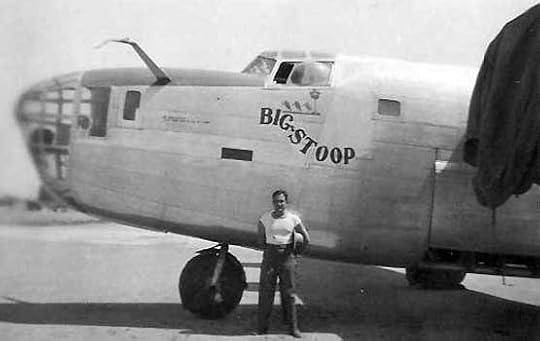
In the fall of 1944, a massive American bomber carrying eleven men vanished over the Pacific islands of Palau, leaving a trail of mysteries. According to mission reports from the Army Air Forces, the plane crashed in shallow water—but when investigators went to find it, the wreckage wasn't there. Witnesses saw the crew parachute to safety, yet the airmen were never seen again. Some of their relatives whispered that they had returned to the United States in secret and lived in hiding. But they never explained why.
For sixty years, the U.S. government, the children of the missing airmen, and a maverick team of scientists and scuba divers searched the islands for clues. They trolled the water with side-scan sonar, conducted grid searches on the seafloor, crawled through thickets of mangrove and poison trees, and flew over the islands in small planes to shoot infrared photography. With every clue they found, the mystery only deepened.
Now, in a spellbinding narrative, Wil S. Hylton weaves together the true story of the missing men, their final mission, the families they left behind, and the real reason their disappearance remained shrouded in secrecy for so long. This is a story of love, loss, sacrifice, and faith—of the undying hope among the families of the missing, and the relentless determination of scientists, explorers, archaeologists, and deep-sea divers to solve one of the enduring mysteries of World War II.
The Hook - The non-fiction choice for our Fourth Tuesday Book Group and a penchant for this kind of book.
The Line – ”The human impulse to bury the dead is as old as civilization itself.”
The Sinker – In the author Wil S. Hylton’s words ”The first time Pat Scannon went to Palau, he wasn’t sure what he was searching for. Vanished: The Sixty-Year Search for the Missing Men of World War II begins when Patrick Scannon, MD, PH.D., joins a scuba expedition seeking a Japanese Ship in 1993. This quest changes quickly when the crew is offered the opportunity to find a Japanese trawler, the first combat kill of George H. W. Bush, a naval aviator. Yes, that George Bush, our 41st President. It gets even more interesting when Harper Magazine publishes an article that alludes to an old document stating strong circumstantial evidence that George Bush committed a war crime as a rookie naval pilot” The trawler is found and the mystery is solved leaving Scannon and his wife Susan time to enjoy a vacation but rather than hitting the tourist sites they are hooked and instead spend the next days exploring World War II wreckage. It is here Scannon finds the wing of a plane, an American plane. ”I just came around that bend in the coral, and I was a different person.”. The hunt for wrecked planes and their missing men of World War II becomes a lifetime mission. Hylton tells Scannon’s story, his quest to bring the boys home, unite their remains, allowing a proper burial with some sense of closure for the families.
Scannon states ”When he scoured the archipelago with sonar, when he hung in the open doorway of a Cessna, when he slogged through the jungle and traversed the channel on yet another rainy day, he wasn’t searching for the dead. He was searching for the living.”
Narrative non-fiction always provides me with food for thought. Wil S. Hylton intersperses the search for five downed planes with stories of the crews and the missing men’s families. One, Tommy Doyle is quoted early in the book. He often wonders what happened to his father and how his own life would have been different if he had come home from the war. At first look I thought what makes this need to know so important but on reflection I think I came to a better understanding. Pauline Boss says this phenomenon is grief heightened by uncertainty (pg.89). She calls it “ambiguous loss” (pg. 90). “Whether it’s the sudden disappearance of a child or the slow erasure of a parent by dementia, the grief process is disrupted because so much of grieving depends on the knowledge and acceptance of what has happened.”
I do remember hearing about B-24’s, The Liberator, the “iron coffins” that Scannon was seeking. What amazed me was the number of these produced for war, 18,000. This was more than all other planes. To give this figure perspective only approximately 1,500 Boeing 747’s have been built. More impressive than the sheer number of planes built was that 12,000 salaried women were hired to meet production needs.
The last chapters of Vanished: The Sixty-Year Search for the Missing Men of World War II are brutal but end on a poignant note. Patrick Scannon and the men and women who work with him to bring our missing war dead home are to be admired. Wil S. Hylton has provided us with another important piece of history from World War II and a compelling read.
This was an amazing, gripping, and at times suspenseful read that documents one man's sudden overwhelming desire to find out what happened to three B-24 Liberators shot down near Palau in the Pacific theater of World War II. Hylton does a great job of describing Pat Scannon's current-day journey of research, travel, interviews, heartaches, and elation in discovering the mystery of what happened to those lost B-24's, and shows a masterful job of interweaving that with the very personal back story of the men on those ill-fated flights. I literally had goosebumps at times while reading this. The book also does a good job at conveying just how many of our servicemen are unaccounted for in the Pacific theater, and the incredibly long odds people like Scannon and his Bent-Prop Project face in shedding light on the mysteries surrounding them. I recommend this book for anyone, especially the patriotic and those with interests in aviation and World War II.
I heard an interview with the author on NPR. I'm interested in the Pacific bombing campaigns of WWII, and had read Laura Hillenbrand's Unbroken last year, so I knew right away I'd want to read this one too. As soon as I could get to my desktop computer I ran a Google search for "Will Hilton." I came up empty-handed. Fortunately, I remembered the book's title, which at least is spelled the way it sounds, and was able to order a copy from my local library (sorry, Wil, just having a little fun at your expense).
I’m no expert on what passes for popular writing about WWII in the Pacific, but my impression is that the Army Air Corps' bombing campaigns have been less covered than the fighter and attack campaigns flown by the Navy. True, much has been written about the B-29 bombing campaign against the Japanese homeland, but comparatively little about the island bombing raids conducted by B-24s and their crews.
I was also drawn in by the detective and forensic aspects of Hylton's story, the finding of wrecks missing for 60+ years, the determination of what had happened to the missing crewmen from those wrecks.
I was delighted to find a book that helped fill in some of the blanks in my knowledge of the B-24 campaigns, and when it comes to crafting a suspenseful story about finding lost planes and crews ... a story that would make a damn fine thriller novel, no less ... Hylton delivers. There are even villains, and boy are they ever: the Japanese and their kempai Gestapo.
I wish Hylton had included a few more photos. That's my only criticism.
I could not put this book down. I devoured it. I want more.
I was lucky to get an early copy of this book, and can't say enough about it. Taut, tragic, thrilling--it unfolds like a mystery and ghost story. Hylton is an unparalleled storyteller, and a deep-diving reporter, who's returned with a story of a lifetime here. For years, I've followed his work in major magazines from The New York Times Sunday Magazine to Harper's to GQ and Esquire, and I would put him at the top of the heap as a writer. His stories have ranged from political profiles to faraway journeys, always told in a direct voice that never pulls its punches. This clear-eyed honesty is what gives his work such power, and here he takes us brilliantly into the past, to World War II, its heroes and the families who waited for their return. To say more would be to spoil it. You must read this book!
I couldn't put this book down - it is am amazing story of one man's quest to find airmen missing during WW2 in the waters off a small island in Micronesia . It is also the story of the devastating grief families go through when their loved ones are never found. I highly recommend it
I think most people will find this story interesting. Whether you are WWII air war historian, lover of 1940’s nostalgia, a diver, archeologist, or someone interested in the POW recovery story, you will find something of interest in this book.
This was a good story and a nice read. Vanished is a testament to the long term suffering that the families of the MIAs experience even a half century after the war’s end. These families never achieve that feeling of closure. I guess I did not realize how bad it could be and how this sense of ambiguity could last for generations. Families remain in limbo as to the exact fate of their loved ones until their remains are recovered and repatriated. This book heightened my awareness to the suffering of the families of the MIAs.
The story begins with Tommy Doyle who inherits a wooden trunk from his deceased mother. The trunk contains mementos and letters from his father, a tail gunner who was shot down in a B-24 over Palau. Tommy’s father, Jimmy Doyle, was listed as MIA but there were rumors that he survived the crash and made it back to the States and then abandoned his family. Tommy’s uncle believed this story enough that they actually traveled to California to look for him. This is an example of the type of uncertainty that families of MIAs live with. In the back of their mind there is always the possibility that their husband, father, or grandfather somehow survived. They hold onto this uncertainty until bodies are recovered and repatriated. This is why locating and identifying the remains is relevant even to this day.
This book stands as a tribute to men like philanthropist Pat Scannon who made finding the location of these downed B-24s his life’s ambition and men like Bill Belcher from the BentProp project. The BentProp Project is a volunteer association dedicated to the repatriation of POW/MIAs from the Pacific theater of WWII. It is comforting to know that there are fellow Americans that are committed to a cause such as this.
Finally, this book is a tribute to the young men that flew the B-24s that never returned home. The pages of this book bring these boys back to life one last time. By the end of the book the mysteries are solved and the missing men are repatriated. The families finally achieve the sense of closure that that they had been longing for, for over a half of century.
For the historian, Vanished contains many interesting stories such as how Charles Lindbergh as a civilian flew with the Marines and the Army Air Corp on actual combat missions. One mission Lindy returned with 290 gallons of fuel while the other pilots had to turn back because of low fuel. He demonstrated to McArthur that the P38’s range could be extended from the published 570 mile to 700 miles by reducing RPMs and thinning out the fuel mixture. Lindy promised to teach pilots how to do this. With that McArthur changed his strategy to bomb Palau from Wakde and said that this was a gift from heaven. Lindbergh accompanied the US P-38 pilots on their initial flight to Palau and was almost shot down by a zero on his tail.
Another interesting anecdote was about the Japanese POW camps in WWI. The Japanese WWI camps were “a model of civility and respect” and “.…many of the camps were so comfortable and accommodating that they seemed like small towns.” The German prisoners were allowed to open bakeries and other shops that the Japanese civilians would frequent. The author asks what happened in the few years between WWI and WWII that made the Japanese POW camps “like the Nazi machinery of death …[that made them] so dehumanizing that it can be difficult to comprehend?” In fact, the author points out that the Japanese POW camps were 10X worse for the American solider then the German POW camps.
Again, I think most people will find this story interesting.
In 1944, a b-24 crashed, leaving its crew MIA and their loved ones bereft and without closure. After decades of searching and unanswered questions, clues are slowly pieced together and the story of what happened is revealed to the dedicated team of scientists and researchers who refused to give up the hunt.
This true story of the journey towards discovery and answers brought me to tears on more than one occasion. It is easy to relate to the men, as we see them through their correspondence with loved ones as well as information gleaned from their family after the fact. It is also easy to understand the pain those loved ones must have felt after the loss of their son, husband, father, brother, or friend. I began to sympathize with the families and crew and found myself hoping that the story somehow ended differently. It really takes the men from being a number in a statistic about KIA/MIA to being real, tangible people who lived, loved, worried, laughed, and died fighting for their country.
At times, the story did seem to unfold in a slightly tedious way, unveiling clues only after a sometimes lengthy background explanation. But once the clue was revealed, it did make sense as to why it was included and my attention was recaptured by the story. It was good to see, also, the extent to which the researchers etc went to in order to bring the lost men home and how they truly cared about what they were doing.
Overall, "Vanished" was moving and enlightening and painted a real, accessible picture of the struggle to find these lost men and bring their tragic story to a close.
Vanished : The Sixty Year Search for the Missing Men of World War II by Wil S Hylton is an indepth study of the search for the remains of fighter planes and their crew lost in the Pacific Battlefield. It all started with Pat Scannan and his wife Susan went on a trip with a film crew for stories of downed aircraft and buried treasure. Scannan was hooked when he found part of a propeller in the waters of Palau. For the next 20 years he returned and did methodical search and he researched archived military records. He did it for the sake of bringing closure to the families of the MIAs. The book also details the lives of some of the crew members and their families. Tpac the military organization that searches for all MIAs from all conflicts and peacetime accidents, welcomed Scannan and his efforts locating downed planes.
Well, although it kept my interest, it didn't turn out like I thought it would. I was hoping for some "grand revelation" about how the missing guys survived the plane crash and ended up in some secret government mission, etc. That, of course, is not anywhere near what the book is about. It's very similar to Hunting Warbirds: The Obsessive Quest for the Lost Aircraft of World War II in that there's a guy who becomes obsessed with finding a WWII aircraft crash. Where the Hoffman book recalls in agonizing detail how men attempt to get a B-29 to fly again, this Hylton book flips back and forth between the most recent decade and 1944, and illustrates the details that lead up to the _finding_ of a B-24. Along the way, some mysteries are uncovered that the reader never has the satisfaction of finding out the answers to. Fairly quick read, but nothing special here.
I read an ARC of this book and found it mesmerizing. The narrative is taut, the reporting exhaustive, and the humanity expansive. I felt great affection for the World War II fliers who went missing in the Pacific and for the people who made it their life's business to find the last vestiges of those men. The story demands to be read.
A beautiful book, and exactly the kind of story I’d want to write if I had the time. Hylton deftly weaves the story of a B-24 crew shot down over Palau in 1944 in with the team that, 60 years later, spent countless hours searching for their remains and bringing them home. I especially appreciated the vivid writing, sympathetic tone, and accurate grasp of the history.
A decent account of one man's obsession with finding a missing American WWII bomber in the Pacific. I am fascinated by the efforts of groups that are dedicated to recovering remains of American service people who are missing from all the conflicts we have been involved in. This story felt like a long-form piece that was added to in order to make a book, which is ok. I liked the search material a bit more than the history and seemingly padded stuff, but no harm done. I just like the detective parts of the tale more.
Take a gander over at the 940s call number : the shelves of libraries all over this great land are jam-packed with the stories and history of World War II. It is an area of constant circulation and fascination for readers, and this is a worthy addition. On a 1993 vacation to Palau, normal dude Pat Scannon sees the wreckage from a B-24 Liberator, one of America’s “eighteen-ton behemoth” bombers. Though clunky and clumsy, they were an essential component of America’s Clutch Win. The wreck starts Scannon wondering about the war and the men inside the plane. Why is the wreck here? Did the men survive? As a historian, Hylton does an amazing job of transferring Scannon’s growing obsession to the page, writing with a lyricism that borders on fiction. Yet the book manages to retain a journalistic remove as it twines together the strands of a much larger story. Hylton skillfully telescopes from the war’s bigger history to individual stories, exploring everything from the backstory of investigator Pat Scannon to Jimmie Doyle, an impossibly handsome member of one of the crashed B-24s, and overarching information about the two-headed Nimitz/MacArthur campaigns in the Pacific. The one man pipe dream soon turns into a full-bore project with partners and staff on expeditions. “It wasn’t about the thrill of adventure, or finding a pot of gold,” says Scannon. “It wasn’t even about finding lost planes. It was about memory. It was about preserving the past.” VERDICT This combination of military, social, and personal histories makes for compulsive reading. Hylton’s efforts and extensive endnotes take “painstaking research” to new heights. Combined with writing that has clearly been edited down to the bone, this must have taken forEVer to pen, but the reward from this labor of love is an intuitive, discerning look at one aspect of comprehension.
Find reviews of books for men at Books for Dudes, Books for Dudes, the online reader's advisory column for men from Library Journal. Copyright Library Journal.
I am reviewing an Advanced Reader Copy I won through Goodreads Giveaways.
Vanished tells the story of some of the many thousands of MIA soldiers in the Pacific Theatre of WWII. It's really a double story--one of the life of the young men lost in the conflict, and one of the people searching for them 60 years later. Author Wil S. Hylton does a great job at making you feel for all of these groups-- the heartache and loss of the missing soldiers' families, the promise of so many young lives with their attendant hopes and dreams cut short, the sense of purpose of the team that searches for military remains all over the world, and the life-changing story of the man who found the planes at Palau. The true-life tale reads like a gripping fiction, and I found myself engrossed in the book from the first page, really wanting to find out what happened to these soldiers and to the many others like them.
There are some small hiccups in the version that I read that may be corrected in the final version of the book--some narrative breaks and transitions that seem a little abrupt, or that I may have placed in a different position for clarity's sake--but they in no one take away from the emotional heart of the story being told here.
I look forward to more books by Hylton, who has a deft way with words and weaving research into a tale well worth reading.
After reading this book I learned the word catachresis, defined as "1: use of the wrong word for the context 2: use of a forced and especially paradoxical figure of speech". The author of this book writes very catachrestically, using words incorrectly (although I think it is intentionally) to paint a picture. However, it didn't have the desired effect for me as I just found it to be incredibly distracting. The author also writes in what I would call a very "flowery" manner, which I have never enjoyed and is part of the reason I like non-fiction so much. Less flowery, more to the point please. And speaking of getting to the point, every time a new person was introduced they got a half chapter devoted to their mini-biography. It was quite overdone and really not necessary for many of the people, creating long periods not devoted to the main plot line. The story seemed scattered and I literally fell asleep on a number of occasions. I wanted to like this book and I did appreciate parts of it, particularly the discussion of families of MIA, but overall it wasn't for me.
I received Vanished as part of a Goodreads giveaway.
Vanished tells the story of an air crew that disappeared on or around the island nation of Palau, alternating modern day chapters of the excavation with reconstructed events around the final mission, as well as the personal lives of the men lost.
It was a very well-told story, and the back-and-forth structure was very effective. Most interesting was the insight on so-called "MIA families" who suffer a unique sort of grief, that of not knowing. I enjoyed getting to know all the characters, both the scientists, researchers, and descendants of the crew in the 1990s-2000s and the soldiers themselves. As someone who isn't a big WWII history buff, it was an interesting read; however, I feel like I would have gotten more out of it had I a real interest in the period.
Definitely recommended, especially for fans of WWII and military history.
What an awesome novel. I'd rate this higher if I could. The book is about 60 year search for the missing men of B-24 bombers in the Pacific theatre. I love how the author writes. It is exciting and fast paced and reads like a first rate thriller. It is also a moving story since it impacts so many families seeking answers to what happened to their loved ones cited by the military as MIA.
I was most impressed by a man named in the book Pat Scannon. What a noble man. What a humble man. What a hero. Here is a man who became obsessed and because of this obsession provided important answers to suffering families. No, he didn't do it alone but he did provide the impetus for the searches from the military organizations as well as the locations for the searches.
Please read this book. I found it incredible and although the year is still young, I believe it will be one of my favorite reads in 2014.
You don't die until the last person who knew you dies.
This is the remarkably-told story of the ambiguous loss families feel when their loved ones go missing in action during wartime. In addition, it is also the story of: family responses when their sons and brothers went off to war after Pearl Harbor; a broad-brush history of presidential and military strategists in the Pacific theater; a portrait of the lives of air crews at their remote Pacific bases(Los Negros and Wakde); an overview of the formation of the Joint POW/MIA Accounting Command (JPAC); and one man's obsession to find three B-24s on Palau almost seventy years after they crashed. While the heroic subject of the book, Pat Scannon, succeeds in one respect, he also faces failure at the end of the story when he cannot find the remains of three crew members who were executed by their Japanese captors.
Too many sub-plots and every character encountered gets a brief biography. By the time I was half way through I had almost forgotten what the book was about. Basically, the focus of the story was muddled by all the foregoing.
Basically it was like watching a Nat Geographic about finding gold on a ship wreck and spending a hour in front of the screen only to discover at the end that they didn't find anything but better luck next time. I took to skimming the book in the last 75 pages or so, which is not a good sign.
This is the story of the search for the men who went missing when their bomber crashed somewhere in in the islands of Palau. This was such an emotional book, and the determination of these people to find the men who have been missing for so long was equally moving. I wish that everyone who was missing from any war in service to this country could be recovered and sent home, or at least find out what actually happened to them. In a lot of cases there may not be anything to recover. I can't recommend this book enough.
Interesting account of the long, tough search for missing air crews shot down over the Pacific during the Battle of Pelelui in 1944. Most people, when thinking about MIA's, think about the 880 MIA's from the Viet Nam War. WWII by contrast, had 83,000 MIA's! The search for these air crews were became the obsession of dedicated team of marine archaeologist / patriots.
This book started out almost like a fiction novel and then seemed to transition into a non-fiction, historical book. However, I learned so much more about the War in the Pacific that it made up for the rote historical narrative.
Pat Scannon, MD, PhD, Entrepreneur, successful business owner, and worker for his own business, was bored and decided to join a scuba expedition in Palau in 1993 to dive a Japanese shipwreck. Having never done this before, both he and his wife first got certified to scuba dive. The experienced group they joined takes them under their wing and they are off to Palau looking for the sunken ship. Before they get too far along they are offered a unique opportunity to locate a Japanese trawler that is reputed to be the first combat kill scored by George W. Bush (yes, that one) and also a target of speculation that he may have committed a war crime sinking an unarmed vessel and then strafing survivors in life boats. After finding and exploring the trawler the divers determined that the trawler had been loaded with weapons and munitions and also that the survivors had been heavily armed, so...no war crime. While the rest of the team went to celebrate in the bars, Pat and his wife were more interested in seeing what else they could find. They located what appeared to be a portion of a wing from a large plane and, with a little research, they determined it to be from an American four-engine bomber from WWII, most likely a B-24 affectionately known by the crews as the Flying Coffin. They couldn't find any other parts of the plane but this started Pat on a decades-long mission to try to identify the plane and locate remains of the crew if possible. Over many years he made additional trips to Palau to talk with native witnesses and military veterans from WWII, some of whom also witnessed planes being shot down in that area. He continued his dives with additional divers signing on to help him with the search. From there Wil S. Hylton, author of Vanished: The Sixty-Year Search for the Missing Men of WWII, takes us on time trip alternating between the ongoing search of today and the days during the last years of the war and the activities of the bomber crews leading up to and after the shoot down. In the search they do find two other B-24s that were also shot down in the same area about the same time as well as many smaller fighter planes often with remains, identified (where possible), and re-repatriated to relatives. But the original partial discovery of the first B-24 proved very illusive for many years and involved painstaking searches of both US and Japanese military archives for activities in and around Palau at that time. This was well written and reads like a detective novel revealing a little more with each page until the mission is completed and most of the mysteries resolved and explained. Pat's mission had evolved over many years into the founding of a well-respected team of divers, researchers, archaeologists, etc, that worked with other recovery specialists from the US government trying to bring closure to families of so many still MIA today. Highly recommended!
A fascinating story of the men that were lost in the Pacific in World War II. The main part of the story revolves around the small island of Palau - and the searches that one man, Pat Scannon, spearheaded over 20+ years as he took on the mission of finding the Americans lost in Pacific. He went on to found the Bent Prop Project - an effort to locate the remains of Americans lost in WWII (and has since expanded to other conflicts) and provide closure to the families of the missing. Along the way, the author examines many subjects, including the Japanese treatment of prisoners, American war strategy in the Pacific, and the effects of war, on the men who fought it and the families who were left to grieve, sometimes with little except a telegram. I knew about the MIAs from the Vietnam War - I am friends with the daughter of a MIA; she is in the League of POW/MIA Families. But I had no idea of the extent of the MIAs associated with WWII - 73,000 missing and 56,000 of those were in the Pacific theater. It dwarfs the nearly 1600 that are unaccounted for from Vietnam. This was an interesting account of a small part of WWII and the hunt for closure for a few of their families.
Quotes to remember:
...when again bright morning dyes the sky And waving fronds above shall touch the rain, We give you this - that in those times We will remember
It wasn't about the thrill of adventure, or finding a pot of gold. It wasn't even about the lost planes. it was about memory. It was about preserving the past.
The special grief of the MIA family is little understood...grief can be heightened by uncertainty...Whether it's the sudden disappearance of a child or the slow erasure of a parent by dementia the grief process is disrupted because so much of grieving depends on knowledge and acceptance of what has happened.
...there was also a profound intimacy to the job - the delicate task of handling a man's remains, the haunting awareness of his family's grief, and the daily struggle to maintain emotional distance on a recovery site. At a fundamental level, it was the unit's job not just to bring home remains, but to provide each family with answers, in the hope that truth would allow life, finally, to go on.
They shall grow not old, as we that are left grow old: Age shall not weary them, nor the years condemn. At the going down of the sun and in the morning, We will remember them.
4.5 stars. I enjoyed this book more than I thought I would. I liked the mystery aspect to the story and I liked how the author alternated between chapters occurring during the present day and during WWII. I feel like this story could be a movie if it’s not already. It’s also incredible to think about the amount of time and intelligence it took to track down this plane. So many smart people working together and so many people with such niche skills & talents (scuba diving, photoshopping maps, extensive archival research, sky diving, etc.) The team of people that made this discovery possible over a 10+ year period is truly a remarkable and passionate group.
This entire review has been hidden because of spoilers.
Reflecting the 60 year search (and counting) for lost WW2 soldiers, sailors, and airmen in the Pacific, the story drags on a bit through the minutiae and painstaking processes involved. Why this work is important struck me between the eyes. Third and fourth generation families of men whose tangible remains never returned (from any wars) are still suffering not just uncertainty and loss, but deep unresolved psychological wounds of misplaced hopes and possible rejection: continuing casualties of a physical conflict long ended.
It's hard for us to imagine not knowing how/when/where a loved one has died. This book puts to rest several WWII aviators who were "lost" in the Pacific. It's part history, part mystery, part detective. Fascinating reading on the efforts still ongoing to identify and recover the remains of those lost in the Pacific during WWII. Worth your time - you'll learn new things and be inspired.
The beginning of this book was not epic but it built up and did a great job sharing details that could have been mundane. The beginning put me off because some self absorbed millionaire got involved on a whim. You know what happened? He grew a heart and that (along with the soldier's stories) was amazing.