Forty years ago, the world changed. Men became crazed killers and threatened all humanity. Now the world might be about to change again, but will it be for the better?
----
Forty-four years ago, as any schoolgirl can tell you, the moth’s eggs hatched and an army of caterpillars spread their tiny toxic threads on every breath of wind. Since then, men have been cloistered, protected from birth against the deadly poison.
But now there’s a vaccine - a way that men can leave the facility without dying or suffering from psychosis. Emerging, into their new world, eyes wide with wonder at every new experience, the truth soon becomes clear.
This world was not made for men. And they are not safe.
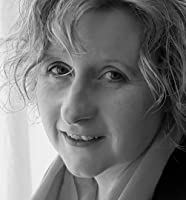
Jane is a forty-something mother of two living in Hampshire in the UK. She finally made it to university at the age of thirty-four, studying philosophy and English literature. After graduating, Jane began teaching English and philosophy, squeezing her passion for writing into any spare time she could find.
ANNOUNCEMENT! My very brilliant agent Liza DeBlock has secured me a smashing two-book publishing deal with Angry Robot Books for MOTHS and TOXXIC. Angry Robot publishes many outstanding authors in Sci-Fi and fantasy and I am beyond excited that they have chosen my books for their list.
When Moths started as a self-publishing experiment last year, I was hoping to sell only a few copies and be able to point to it on Amazon and say to my friends "look - I did that." However, the response both in sales and positive reviews has been mind-blowing. Now, with the help of the team at AR, I'm bringing my high-concept thriller to the widest audience possible. I couldn't be happier. Moths will now be republished in March 2023, with some intriguing updates of the original. Toxxic will follow on at a date TBC.
Thank you to all those who have contacted me over the last year to say how much you've enjoyed Moths. Your messages have kept me going. And also to everyone who has read, rated and reviewed Moths and pre-ordered Toxxic. If you haven't already, please visit www.janehennigan.com and sign up for the newsletter to be eligible for a discount on the list price of Toxxic when it is released.
Last week I read the first book in this series, Moths, and gave it a glowing review. On the one hand, I think Toxxic pairs well with Moths in many ways. But I PROFOUNDLY did not enjoy reading it.
Moths told us the story of a world where, 50 years before, a toxin that only effected men had spread like wildfire. The toxin either killed the men outright, or else drove them permanently into violent psychosis. Nearly all men died, either from violence or being unable/uninterested in caring for themselves. Only a few were able to be kept alive, constantly sedated. New generations of men were kept carefully cloistered in clean facilities, and society as a whole developed into a women-only one.
In Toxxic, following the development of a vaccine, society is looking at the re-integration of men. Yet there is opposition. Many of the older women, who lived through the incredible violence of the initial plague, remember men as sources of fear and terror. And they remember the world before, male-dominated and patriarchal, when it was frightening to go walking alone at night, you had to keep a careful eye on your drink at a bar, and male-superiority was baked into nearly everything to one degree or another. Even if the vaccine works, and we don’t have to fear men becoming violent psychopaths, they ask, do we really want to go back to that?
This is where I will address the ways that Moths and Toxxic play against each other. The protagonist of *Moths* was one of the women who survived the initial outbreak, and did so with her sense of empathy intact. Her life’s vocation was as a carer in one of the clean facilities. Her husband died in the initial infection; her son became violent, and attacked her, but was taken safely into custody. Crucially, despite her son’s assault, she was spared the worst of the violence.
One of the primary POVs in Toxxic did not. She survived as a teenager, and was witness to some of the most horrifying of the violence that happened. Unsurprisingly it left her deeply, deeply traumatized, and when it is announced that men are going to be reintroduced into society, she joins a movement to prevent this by any means necessary.
So this book was hard to read. The depictions of violence, which includes sexual violence, are unflinching. The first book was bad enough; this one was worse. While I understand why the author chose to do it the way she did, it nevertheless felt gratuitous to me. As an artistic choice, fine. But I don’t particularly want to read it.
And there was one change that was subtle, but once I realized it I was profoundly bothered by it. In the first book, the toxin-induced psychosis seemed like just that: psychosis. The men went mad and became violent. In this book, they didn’t seem to go mad so much as go sadistic. It seemed to really almost cheapen the story, and is a large part of the reason I say it felt gratuitous.
So to sum up: I enjoyed the first book, and thought it was excellent. I did not enjoy the second book, and am undecided on whether it was excellent or not. This might be one of those books I think about for a long time, but I really, really hope not.
Trigger warnings on this book: Sexual assault (both violent and coerced); grooming; graphic violence; suicide.
Commence the raving. I loved this!! I’m all about post-apocalyptic dystopian fiction, and this is a fresh take on the whole “people get infected and start killing one another” trope. Here, only males are infected, and you’d best believe there’s a hefty amount of gore. Hennigan uses several viewpoints to let us know, little by little, what society was like before, and women’s reactions to a vaccine trial in the present day.
Is the vaccine effective? Can men really reintegrate into society…or should they remain locked up and sedated in facilities? The government wants to give the vaccine to men and boys (but only monthly…we can’t have them getting ideas, after all!!), but not everybody can forget the past.
(Insert ominous music)
I’m already itching to read more stories in this world!
Many thanks to NetGalley and Angry Robot for a complimentary copy in exchange for my honest feedback.
Just incredibly sad and all too believable. Can humanity survive when it is at odds with itself or are we too power hungry, unforgiving or scared to see love.
Toxxic was such a solid sequel! For the majority of the book, I'd say I enjoyed it at least as much, if not more than, Moths. I think I was more invested in the characters in this one, and it was certainly just as thought provoking as its predecessor. The characters, both old and new, were wonderfully complex and showed us so many different perspectives on what life was like both now, and in the 40ish years from the start of the plague leading up to where we are now. It's truly an impressive feat to cover both so much time and so many perspectives, and to do it in a way that feels cohesive and authentic.
All that to say... I did not love the ending. And it wasn't just like "eh not as strong as the rest of it", but... I really did not like it. I want to say so much more about it, but that is spoilery. And hey look, you may love it! Also, if by chance there does end up being a third book someday, I'd rethink taking a star off. Just saying. Toxxic remains an incredibly strong follow-up despite my hesitation over the ending, and like I said, your mileage certainly may vary. The series is wonderfully thought out regardless, and I think it was because I grew to care so much about the characters and the world that I felt so strongly about how it ended.
Bottom Line:
A very strong sequel, and one whose ending makes me want another book!
A bit of a clunky strat, getting used to new POVs from book 1,but once it settles into its groove this was a great story.
Very character and relationship focused with some get wrenching, emotionally charged scenes and themes.
Would definitely continue to read more, but this felt like it could be an open-ended conclusion to a duology with potential for further stories either in the before times or into the future.
I read an eARC of this book so thank you to the author, publisher and NetGalley.
Another excellent dystopian thriller in the world of Moths from Jane Hennigan. I think I may have liked this one even more than Moths.
This one picks up slightly after the ending of moths and we see the return of some beloved characters from Moths as well as new voices and perspectives. While Jane Hennigan is such a good writer that you could understand what happened in Moths just by reading this one, I would highly recommend reading them in order to fully appreciate the world building and horror that came with the first book.
This felt like it leaned more sci-fi thriller, whereas moths felt a little more sci-fi horror. We have conspiracies, warring political factions and people caught in the middle. There are some harrowing descriptions of the initial infection event as well as moments of extreme violence happening in Toxxic’s timeline.
This was a worthy sequel to Moths and I’m really impressed at what Jane Hennigan has done with this series. A unique dystopian world seen from the perspective of individuals trying to live their lives and do the right thing in a challenging, and often dangerous situation.
Commence the raving. I loved this!! I’m all about post-apocalyptic dystopian fiction, and this is a fresh take on the whole “people get infected and start killing one another” trope. Here, only males are infected, and you’d best believe there’s a hefty amount of gore. Hennigan uses several viewpoints to let us know, little by little, what society was like before, and women’s reactions to a vaccine trial in the present day.
Is the vaccine effective? Can men really reintegrate into society…or should they remain locked up and sedated in facilities? The government wants to give the vaccine to men and boys (but only monthly…we can’t have them getting ideas, after all!!), but not everybody can forget the past.
(Insert ominous music)
I’m already itching to read more stories in this world!
Many thanks to NetGalley and Angry Robot for a complimentary copy in exchange for my honest feedback.
This has to have one of the most depressing endings I've read all year. I loved this book and Moths, and I wish there was a third book coming out... there are so many questions to be answered still, and I would really like to see what's happening in mainland Europe too!
Thank you to the publisher, AngryRobot, for my finished copies of Moths and Toxxic ❤️
I really enjoyed this book!! A great sequel to Moths. The ending left me a bit frustrated and sad, but it felt realistic and was a good commentary to make to wrap up the narrative of the story. I hope that there will be a third book in this series, but after a quick google search, I am left doubting that possibility. In my perfect world, I'd love a happy ending, so I hold out hope!
Toxxic is a fantastic sequel to Moths, I absolutely loved it. Toxxic picks up pretty much straight after book one, but it now follows a few different POV's, which I really liked the switch up from book ones format and liked that the author was brave enough to move away from Mary who's story we followed in book one, it really helped the story flow and was interesting to see the effects of the world on these different characters.
Now we have a vaccine that's being used on a few selective men who are then being housed with foster families to try and integrate men back into society, while this comes with its own struggles for both women and men from very different reasons there's also the radical XX group who do not want the vaccine used at all and we see the lengths this group goes to in order to prevent men being back out in the world, there's some real devastating moments throughout.
I enjoyed all the characters but particular loved Evie's storyline. She's not content with her life and I feel like she is just passing time and on a whim decides to become part of the foster trial where she is accepted and gets to bring home Artemis a young man and Daniel a child to take care, all without consulting her wife, they already don't get along and you can see the further strain this puts on them. I loved how Evie really dives into the situation and loves being part of this trial, you can feel her starting to become happy at this little made family and I just loved the connection between her and Artemis. He was my favourite character I think throughout this, while we don't get his POV I just loved that he kept to himself and came across as moody and dangerous but deep down we see a softer side to him once he accepts he's free from the faculty and is being accepted into a new welcoming home.
I'm not sure if they will be another book in this world, but I'd 100% want to read it if there was. There's no real cliff-hanger but there are few parts left open for the reader to ponder on. Overall I've really enjoyed both books, I loved the theme and how the story has been turned into something we haven't seen before.
Thank you so much to Angry Robots for gifting me an early copy of this book.
A good sequel, but it wasn't quite as good as the first book. Especially the ending left a lot to be desired - it's felt rushed, unresolved and unsatisfactory - but very much open for further books in this series.
I don't really know how to feel about the violence in this second book. In the first book I was of the understanding (my interpretation) that the infected men suffered some sort of psychosis because of the moth toxin, and that their subsequent violence was aimed towards women because of deeply ingrained sexism taught by our patriarchal society. But in this book the men, brought up in this new society, still react with hate and sadistic violence towards women when infected. And this just takes away so much impact and meaning from the first book. But maybe I'm over analysing.
The violence in this book felt more like it was there for the shock value and to keep the stakes high.
Really enjoyed Moths and was looking forward to this sequel but I don't think it quite matched the original. Was this book edited?? As there are typos and errors - not to mention mistakes that don't match the first book (characters changed or renamed with no explanation). The idea is good but would benefit from fleshing out and being examined for plot holes. For example, why no suggestion that the vaccine only be introduced for newborn males ? Immediately letting institutionalised males loose on the world doesn't seem particularly plausible.
This entire review has been hidden because of spoilers.
Toxxic has a sharp stark cover featuring the bright neon green on a dark background. Theres also the clever use of a hypodermic needle as the “I” in Toxxic. I really like the cover, it fits well with the first book in the series, and would make me pick it up from a book store shelf to learn more about it. The danger of the Moths and their threads is still apparent so men are still in facilities……for now! There are differing opinions on what should be done with them. There’s those that want the men to live out their days confined to the facilities, yet at the same time complain about the resources needed to keep the men there. Then there’s the other people who want to reintegrate the men into society. A vaccine has been found and it’s decided a small test group will be formed. A man from a facility and a boy from a prep school will be given the vaccine and placed in a home, into a family to see how they cope and how the dynamic works. Of course, the families housing the males are to be given incentives such as extra land, a scholarship for a member of their family either at agricultural or engineering or a non- resident teacher course. The hosting families are also given training in how to deal with the men/boys along with extra clothing, and more food & travel vouchers. The males are placed within the families in kind of a buddy system, a boy from a prep school and a man from one of the facilities. Tony and Artemis are two men chosen and they are paired with two young boys Layton and Daniel. The males, both boys and men are to experience life outside and a freedom to move around that they have never had before. They are expected to work and do chores in exchange for a roof over their heads, food and clothing. They are supposed to integrate into the community of Eastor but it soon becomes apparent that not everyone is happy about the vaccine, the males or the families accepting the men in the trial either. Life becomes much harder and dangerous for the males on the trial and the families they are placed with. That’s probably why Evie and Molly become closer as they hare both in the same situation. Whilst there are those that support the system there are many that oppose it and will go to any lengths to sabotage the experiment. The main underground opposition are the Womens Conservative Society, with its Head Quarters also known as XXHQ on the outskirts of Citadel. All the women that are part of the society are referred to by numbers such as XX104 who joins the movement to prevent males being let out of the different facilities. We read about the day to day things the women take for granted that the males are now becoming part of. Tony isn’t used to the hard physical work but makes up for any short comings with enthusiasm. Artemis starts off sullen and thinking about running away to becoming attached to both the young boy put with him as part of the buddy system and Evie. The men get to be outside, not looking at the outside from behind glass, they can breathe real fresh air that hasn’t been through a filtration system. They experience friendships and being around females that aren’t staff members for the first time too. There are some really poignant scenes within the book. Of course, the males “mess up” but they do their best to do whatever is asked of them. They also feel responsible when a beloved animal is killed purely because of their presence in Eastor. There is so much going on in this book, theres the daily interactions between the males and their foster families, the way the foster families are shunned by neighbours for even having males in their homes. Theres also the member of the Womens Conservative Society XX62 who went into a meeting at Chesterford, another area chosen for the male integration trial and blows herself up, injuring many and killing four little boys. Two of my favourite characters were Mary and Tony. The way Tony wrote to Mary about everything that was happening, he didn’t forget her kindness towards him at the facility. Tony really has a lot to deal with throughout the series, people he thought dead and long gone suddenly reappearing, then the loss of Mary, the hate from the women who think the men should remain in the facilities. I also enjoyed the way the tough, grumpy Artemis softened when placed within a family and tried to nurture the young boy placed with him. I would have loved a happier ending for Tony, Daniel and Layton, and a way that Evie could keep her child whether it is born male or female. I’d also have liked to know more about Sophia and how/why she has Logan and Nathan. So I’m kind of hoping that there may be a third book? As soon as I finished reading Moths, I couldn’t wait to start reading Toxxic, I really wanted to know what was going to happen next. There were a couple of occasions when I was slightly confused as the book does jump from the past to present etc quickly. But once you really get into the book its addictive reading, and I did not want to put this book down. I haven’t read two books in the same series back to back like I did with Moths & Toxxic for a long time and I really enjoyed immersing myself into this futuristic, but scarily realistic world and didn’t want it to end! My immediate thoughts upon finishing reading Toxxic were that the book covered a lot of controversial subjects in a very clever way. The way the males are put away in facilities and women run everything, the way “male born women” were also rounded up with the men and “female born men are told they must live as women. The families just consist of women. The way women were compensated for bearing male babies and handing them over. The way that women go to visitation to have sex just for fun rather than reproduce with males. The book kind of turns “normal society” on its head. I certainly was not disappointed and honestly would love there to be more books set in this world!
In book one, Moths, we encountered the Moths. Their eggs hatched, and the caterpillars spread toxic threads into the world over forty years ago. These toxins only affected men, killing them, or turning them aggressively and psychotically violent. The toxin got released all at once, causing widespread violence, with men killing women across the globe, with horrific outcomes. Women eventually got things under control, and since then men have been kept indoors in closed facilities, sheltered against the toxin, to protect them, and the remaining women across the world.
But now there is a vaccine available. One that lets men leave the protection of the facilities without dying or becoming psychotic. A programme is set up and select men are given the vaccine and released into the care of volunteer women in a selection of communities. There is very mixed feeling among women about this programme. Some women feel that the men should stay locked away, for all women's safety. Others feel that now that there is a solution, reintegration should happen. Those who remember the male-dominated patriarchy, and the massacre when the men went mad, are very opposed. Where does this leave women now?
This book was the second in a series, which I didn’t realise when reading it. It is set in a dystopic world, where women are now all who remain in charge, and men are no longer in control or safe. It is a very feminist novel, showing the impact that a world without men can have. Women live, for the most part, in harmony. There is a lot which has fallen apart due to large amounts of knowledge and the volume of workforce loss, but women are learning the skills, and rebuilding to get power, internet and all other infrastructures back into place. Healthcare, childcare, education, justice, housing, and jobs, all is working well, and people, for the most part, are happy. The matriarchy has it all figured out it seems. The issues addressed in this book are all real and present in society. The women in the story who remember the old days recall the days when women were the weaker sex, always at risk of male violence, in a state of constant wariness if not fear when out in public. Having to live by guidelines, not walking alone, especially not at night, don’t wear that, don’t upset a man etc. As a woman reading the book, a lot of the issues women now no longer fear in this new dystopic world seem amazing, and you wonder at the society being built. A place where a woman can walk down a dark laneway to a friend's house at night with no fear. A place where all women’s voices are heard.
However, you start to see the undercurrents of power-wielding, and thirst for control that exists among some women. The desire for power, and to hold it over others is not a gender discriminatory corruption. Men just have more opportunities to hold such power. In the book, the characters work through many emotions as they try to come to terms with yet another major shift in their perception of how the world is going to sit for them now. It is interesting to see how this all plays out. Overall, a thought-provoking read, but perhaps one that is a little less enjoyable because the subject matter is so close to the truth. It stings more when you feel conflicted about the message, and what side you feel you should be on.
It is worth noting again, that this is the second book in the series, and I do recommend reading the first book to get fully up to speed. I read this without the first book, and while it does work stand-alone, I feel the story would make a lot more sense when read in series.
*I received this book from NetGalley for review, but all opinions are my own.
Thanks to Angry Robot for the advanced copy of this title in return for an honest review.
I absolutely adored the first book Moths, even though I was slightly worried it would be another story piggybacking off of COVID, but it had so much more to it that the idea of it being a virus almost faded into the background. For me, it's more about human nature and emotions and whatnot, than the actual thing they're facing. And I was eager to see if Toxxic was more of the same.
Whilst some books in a series may be read as a standalone, this definitely isn't. I mean, sure, you could read it without the first one, it won't be the end of the world, but you'll have absolutely no idea what's going on. So definitely read Moths first, trust me, you'll get so much more out of it if you do. And it's another excuse to read a fabulous story.
I don't know if this is just a two book series or if there's more. It ends perfectly fine, and I would be happy with the ending if this was it, but I am really enjoying it and would be more than happy to read more. Even if she doesn't, I hope there's more books in Jane as she's definitely got a talent here. Whether it's in the dystopian thriller genre or not, I'm intrigued to see. She's got such a way of writing character emotion that is as good as I've read.
I don't like books that bash men (or women) just for the sake of it; that in order to be a feminist, you have to actively hate men. That's not for me. However, Jane steers clear of that and actually presents some very interesting discussions around gender and equality and inequality, and what we'd change if we could. I think they'd be good book club reads as they're great for conversation - or arguments.
Once again, there's a great cast of characters, some we know from the first book and some that are new. The ones we already know have been fantastically expanded upon and built upon, which was great to read as we become close to these characters. And then the new characters seemingly fit into this world and more than hold their own.
I won't quote the line in case it doesn't end up in the final book, but there is mention of my hometown Stevenage in this book and that made me smile. Not very important for most readers, but I rarely see it used in literature, and so it made me smile every time.
It's quite gruesome this one. With Moths, all the violence from the initial infection is touched upon or mentioned in passing, whereas with this one, we get full on chapters depicting the horrors from "before". Jane hasn't left anything out or sugar coated anything, it is all there in its terrifying glory.
It is perfectly paced. It's fast paced but not so much that you get lost, but fast enough that you're really on edge and really involved in the terror and the thrill of the story.
I really enjoyed it. If I had to choose I'd say I marginally preferred Moths, but that's only because I really enjoyed the scenes in the facility and enjoyed reading about Mary, and the men locked inside. Whereas this one is about what happens when the men are allowed back out with the women. It's a completely different dynamic, a different feeling, a different read, but equally as enjoyable to read.
These are books I possibly wouldn't have picked up for myself initially but I'm sure glad I got the chance to read them as they're really great. If dystopian thrillers are your thing, then I definitely recommend this duology.
Very disappointed. I had read the opening book in the series, Moths, earlier this year and was very much looking forward to seeing how this new world would develop. Unfortunately, this time around, the plot was flat, boring and transparent, while the characters felt shallow and dull.
There was a great opportunity for the author to build on the frightening new world order they had created—one where the Moths held as much power as the women—but the book failed to take us there. Instead, it focused almost entirely on highlighting the inequalities of our real-world patriarchy: the pervasive struggles women face in a male-dominated society, the disproportionate power held by men, and the vulnerability many women experience daily, which to be fair may have been the book's central aim.
However, while these are undeniably important issues and ones that deserve to be addressed, the book lacked balance. There was little acknowledgment of the great strength of women, their remarkable solidarity, their past achievements, and their immense contributions to society. Equally disappointing was the absence of recognition for the male allies who, throughout history, have stood alongside women and contributed significantly to advancing the cause of equality. Progress toward gender equality requires the efforts of both women and men, working together—not through a one-sided focus, but by fostering mutual understanding and shared purpose. What struck me particularly was the portrayal of women during the 'Battle of Waterloo' scene. They were depicted as cowering, fragile figures forced into a desperate last stand. This felt reductive and overlooked the reality of so many strong, defiant women I have known and admired over the years—women who would never have cowered or whimpered in the face of adversity. These are no-nonsense, bring-it-on characters who refuse to be "put in their place" by any man. It felt like a missed opportunity for the author to showcase the full spectrum of women's strength, their resilience and capability—qualities that have always shone, even in the harshest and most oppressive circumstances. These women, both real and historical, are the embodiment of defiance and solidarity. Yet, this richness of character was glaringly absent in the portrayal of women in this book.
The story itself was underwhelming, and the ending felt rushed and unsatisfying. Too many characters were killed off in vague and unremarkable ways, robbing the narrative of emotional impact. Hints that the next installment might take us to Europe or Australia were included but, for me, this series has already become a trip too far.
This was a hard and challenging read for many plot-related reasons, so I'd only recommend reading Toxxic if you've read and enjoyed Moths (the first in the series) first.
That aside, I also found it compelling and thought-provoking, so it was a worthwhile read for me.
Let's get into the plot: 44 years ago a plague of toxic moths infected all men. Half died almost immediately, while half became 'manic' and killed millions of women around them. Since then, surviving uninfected men have grown up in prep houses and sanitoriums, with meds to keep them calm and shaved heads to enable easy checking for moths. Until (in book 1) a vaccine was found...
The only problem is, after 44 years many women don't want them back. When a fostering programme is introduced for the first few men allowed outside, it's quickly targeted by the 'XX', a group that doesn't want them out at all.
Book one had an empathetic narrator who was a great introduction to the before and after times of the moths. This book has a few narrators who range from the loveable (Tony, one of the test releases) to the interesting (Evie, about to foster) and also a member of the XX, who of course hates all men - because of her very valid experiences when the moths came. She's largely what makes the book a tough read. She is not hugely sympathetic, she talks about men in horrible ways, and her experiences of the world reveal so much incredibly awful violence that you might just want to put the book down. But you have to separate character from author and realise that she is a product of her experience and it makes logical sense. It's also what makes the book interesting but not necessarily enjoyable. I enjoyed the exploration of this particular apocalyptic-style event, but it won't be for everyone.
To an extent it felt a bit like a middle book of a series, where there is some progress but also some hope lost. I want to read the next book, if there is one, and find out that there's a positive future for these people! So give me more please!
I will just start by pointing out, I took a bit more in reading this book because I didn’t realized this was book two on the series, so I had to grab the first book and read it first to better have a grasp on the story…
while I liked the story and how this was a dystopian society, I didn’t like quite some things… for instance, all the characters have the same speech and therefore the same voices, if I ended a chapter in the middle, more often than not I had to go back to read who the character was supposed to be… we also have some lose ends… for instance the situation with the lady that sells candy apples was with Artemis and Daniel, not with Tony, why did it was latter as if it had happened with Tony, even more because he only reunited with Artemis in Mary funeral…
Other thing that I didn’t like was how extreme the exploration of the violence was, you don’t need to tell all details for us to understand how bad the violence was… and I don’t mean only the first wave… also, the women that wanted to prevent men coming out from facilities are as bad as the men that weren’t infected by the moths…
I got a bit tired of the book and had to have long breaks, but never mind me, maybe you’ll love it, and this book just wasnt for me…
Thank you NetGalley and Angry Robot, for the free ARC and this is my honest opinion.
I will just start by pointing out, I took a bit more in reading this book because I didn’t realized this was book two on the series, so I had to grab the first book and read it first to better have a grasp on the story…
while I liked the story and how this was a dystopian society, I didn’t like quite some things… for instance, all the characters have the same speech and therefore the same voices, if I ended a chapter in the middle, more often than not I had to go back to read who the character was supposed to be… we also have some lose ends… for instance the situation with the lady that sells candy apples was with Artemis and Daniel, not with Tony, why did it was latter as if it had happened with Tony, even more because he only reunited with Artemis in Mary funeral…
Other thing that I didn’t like was how extreme the exploration of the violence was, you don’t need to tell all details for us to understand how bad the violence was… and I don’t mean only the first wave… also, the women that wanted to prevent men coming out from facilities are as bad as the men that weren’t infected by the moths…
I got a bit tired of the book and had to have long breaks, but never mind me, maybe you’ll love it, and this book just wasnt for me…
Thank you NetGalley and Angry Robot, for the free ARC and this is my honest opinion.
I picked this book up on a whim while passing through a bookstore and didn't realize it was the second book of a series. However, the book was written in a way that it can stand on its own without requiring a reader to have prior knowledge of the world and/or characters.
The book contains scattered references to the 2020 pandemic, societal shifts, and pop culture without being overtly political or polarizing. Nothing is black and white, no character is wholly good or evil, and the ending was not predictable. All of these are things that make a book enjoyable, in my opinion.
There were some grammatical errors, especially towards the end of the book. Page 255 shifts perspective without warning (as in identifying the character by name so we know which POV we are reading). This gives me the impression that the ending was a bit rushed. Overall, the story content/quality outweighs a few errors, but I do hope the author has better editing next time.
This book elicited a number of feelings from me. Most notably, I felt spine-tingling fear. Very few, if any, books have ever made me feel afraid. The author has a unique and terrifying skill of creating a fantasy that feels far too close to a real-life possibility for comfort.
TL;DR: Excellent read, needs a little better editing, will cause haunting nightmares, and the author should write more. Please and thank you.
From the point of view of the serial science fiction reader, this novel has a few weak points. First of all, the unoriginal premise, since the pandemic that sends half the world's population out of their minds is not exactly a new idea. Then, the, shall we say, post-pandemic situation is hardly credible, with rural communities with a rather primitive atmosphere combined with very advanced situations and environments, both in terms of the confinement of male members of the community and the fields of study that are proposed. There are many suspended situations that would require either elaboration or elimination, and others that are completely inexplicable. To give one example, Sam admits to being a male who has agreed to pretend to be female as he is immune to contagion: this is an element that could have had a huge bearing on the story, but instead is thrown in, without further development. In all this, the story nevertheless manages to generate enough curiosity to be carried through to the end and, even if one suspects something at one point, the ending is not entirely predictable. With a little reorganisation and a little more clarity of ideas, it could have been a good novel.
The second in this fast paced dystopian series picks up where the last left off. With a vaccine now known about, a trial is being organised, with men allocated to houses out in the wide world. But some women don't think it's right; some think it's unnatural. And some remember the horrors men inflicted even before the moths, and they want these men to pay for it...
I read this very fast as I badly wanted to know what happened! Having accidentally read these out of order, I can tell you that this one would stand alone if necessary, but with the first one you get a better understanding of the relationships between different characters. This one features more flashbacks to the days everything went bad, so you're not lost with what's happening, and it also, I think, has a better explanation of the world, as it's not confined to care homes like the last one.
My heart broke several times reading this, and I really hope Jane has more planned; I'd like to find out what happens next to our intrepid little band and how they live in this very changed world. Brilliant.
This is the second book in this series and I would strongly recommend reading 'Moths' first. I didn't and it felt very much like I was late to the party. The author does provide some background, and there are other snippets interspersed which broke up the flow and didn't really add much clarity.
The premise is that some moths mutated and caused a virus which only affected men and caused them to become violent and aggressive. By this second book we are further along, the men have been in camps for 40 years and women have forgotten pretty much how to exist alongside them. Then someone develops a vaccine that stops the aggression, and a sample of men are sent out to 'foster homes' to see how they cope and how the new world copes with them.
Its an interesting premise, and I enjoyed the read, I just felt maybe I would have got more from the book if I'd read 'Moths' first. Thank you to NetGalley and Angry Robot for allowing me access to the ARC in exchange for an honest review.
This dystopian cautionary tale started with Moths, about a worldwide infestation of deadly moths forty-four years ago that affected mainly only males, either killing them outright or causing them to become murdering, raping monsters.
After the infestation, infected males were kept in sanitoriums and uninfected males were cloistered away in facilities and cared for, never leaving.
But now a vaccine has been developed and experimentally a few males were given the vaccine and put into foster homes on the outside to see how they transition.
Toxxic is told from several points-of-view, is fast-paced, and raises lots of questions about male and female roles. It and Moths would be good book club selections that could keep quite a dialogue running, believe you me.
I received this book from Angry Robot Books through Edelweiss in the hopes that I would read it and leave an unbiased review. This is that review.
It was always going to be difficult to match or surpass the original in this series or duology, Moths, but I really enjoyed Toxxic. Easy book to read, goes at a quick thriller pace with various POVs that enrich and broaden the worldbuilding as well as various perspectives people have on the reintegration of men into society. A couple of scenes, namely about a character from the first book, made me a bit emotional, but overall Toxxic didn't have the full emotional breadth that the original did. Where the first book I felt maybe could have used 10-20 pages less, this one could have used 30-50 more to build up a few more relationships or the period of the first infestation.
Still, this is a successful sequel, and it is set up for there to be a potential third entry which I would absolutely read.
😭😭 tony u will always be remembered and loved (not even a dead character mind u)
LOVE but sometimes it gets so on the nose w/ the point of how a matriarchy can easily be as harmful if you rlly believe in bioessentialism and such. Like Yes Tony It Is Like When The Men Were In Power thank you for spelling that out for me. Also idk what happened in the editing/publishing at the end but there were so many typos and like formating mistakes in the last few chapters. ALSO the whole evie storyline should've been more developed that woman was annoying me by the end, insta-loving all over the place after having sex ONE TIME w/ a man like plz ur supposed to be his legal guardian what is happening
this makes it sound like i hate this sequel but honestly it did expand on everything i wanted it to in the first book, and the ending is realistic & satisfying enough to make the series feel complete.
thank you to the publishers angry robot and netgalley to let me rea and review this book by providing me with ARC version of the book. first of all, the book is amazing. the concept of the book is so unique it grips you right from the start. i was not even sure with the description where the story would go. but i have to admit the simple language in this story actually worked this time. i am a big sucker for hard language that needs to be deciphered thoroughly by me, but now i understand there are books that are like indian action films (indian action films have no physics and people just fly all the time) you just read it and enjoy.
anyway i loved the book with all of my heart!!!
read it when you want to just chill and have a coffee with a fantasy book
Mixed feelings. On the one hand, this expands on some of the lore mentioned in the first book, bringing events to life through perspectives that are harrowing to read. On the other hand, the story builds to a climactic sequence that, while exciting, makes the whole thing feel like a zombie movie essentially. It feels like the first book introduces a lot of intriguing ideas with the dystopia it presents, while the second book devolves into action and doesn't deliver as well in terms of themes. The ending also makes everything that happened feel a bit pointless - yet it also makes me want a third book? So like I said, mixed feelings.