

What do you think?

Robert Doisneau : Paris
Organizzato tematicamente, il libro ci guida in un'incantevole passeggiata per i giardini di Parigi, lungo la Senna e tra la folla dei parigini. Più di 500 fotografie, molte delle quali inedite, creano un ritratto unico della Ville Lumiere: dalle acrobazie dei monelli sui pattini alla fisarmonicista dall'aria impertinente, dalle eleganti signore che portano a spasso il cane all'indimenticabile bacio dell'Hotel de Ville, la magia di Parigi in bianco e nero è un tesoro senza tempo. Le foto, pubblicate dalle figlie del fotografo, sono completate dai commenti dello stesso Doisneau.
400 pages, Hardcover
First published September 26, 2005
About the author
Robert Doisneau
151 books18 followersHe was a French photographer. In the 1930s he used a Leica on the streets of Paris. He and Henri Cartier-Bresson were pioneers of photojournalism. He is renowned for his 1950 image Le baiser de l'hôtel de ville (Kiss by the Town Hall), a photograph of a couple kissing in the busy streets of Paris. Doisneau was appointed a Chevalier (Knight) of the Legion of Honour in 1984.
Ratings & Reviews
Friends & Following
Create a free account to discover what your friends think of this book!
Community Reviews
Displaying 1 - 13 of 13 reviews

December 17, 2023
I don't photograph life as it is, but life as I would like it to be.
— Robert Doisneau
For someone who is in love with Paris, this collection of 560 photographs of the French photographer Robert Doisneau (1912-1994) is an absolute treat.
While I mostly associate images of nocturnal Paris with the photography of Brassaï, Doisneau’s photographs add a matutinal perspective on the city, widening the scope to street scenes in broad daylight. His exploring and documenting of Paris in black and white is often cheerful, with an eye for humour and the comical, shimmering with joie de vivre, celebrating life, love (Cosy kiss, 1950) and the beauty of Paris.
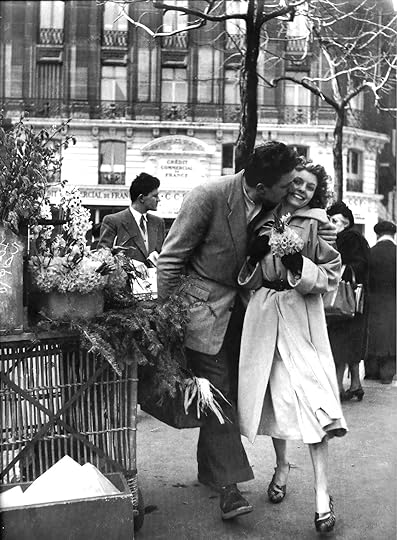
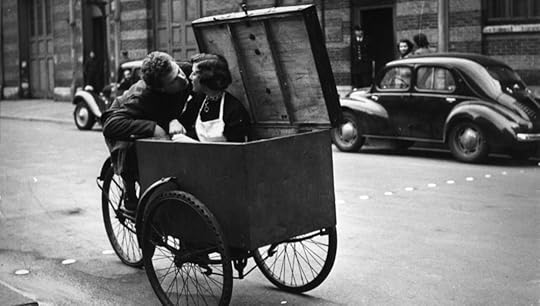
Thematically organised (Paris by surprise, Paris for Parisians (les Halles, everyday Parisians, a home for tenants, Paris-by –the-Seine) Paris in Upheaval (occupation, resistance, liberation, demonstrations), Paris at play (fairs, cabarets and nightclubs, society, fashion) Paris in concrete, the book offers enchanting vignettes from the multifarious facets everyday life in Paris, a couple of snapshots from children’s play, love, a couple of glamourous events and magnificent portraits.
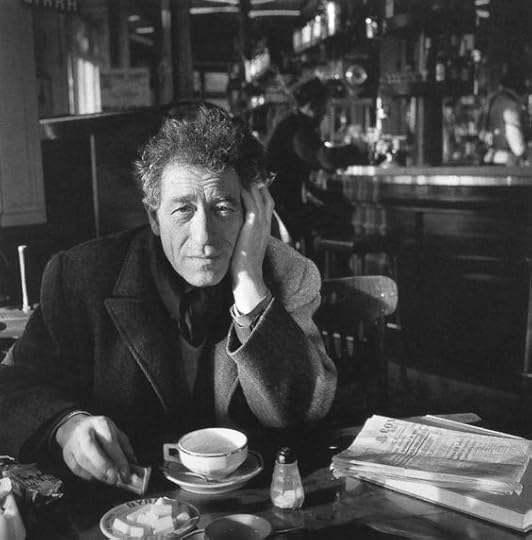
Particularly with his choices on the human figure Doisneau illustrates breezingly the French national motto of Liberté, égalité, fraternité, juxtaposing casually portraits of ordinary Parisians next to photographs of personalities that might ring a bell with the reader (Charles de Gaulle, Vercors, Prévert, Francis Ponge, Raymond Queneau, Juliette Binoche, Orson Wells, Alberto Giacometti (1958), Picasso, Colette, some couturiers (Christian Lacroix, Jean-Paul Gaultier)
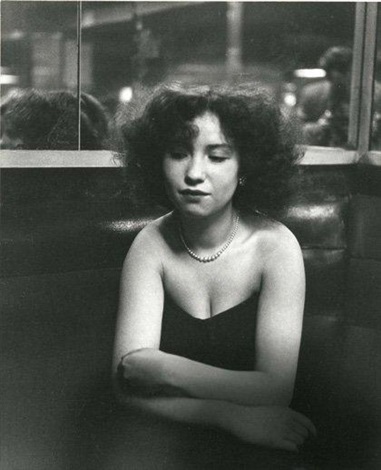
A couple of favourites are gems of storytelling condensed in just one image, for instance the accordionist on the cover picture or the picture of Anita, who could one of those characters with a shady past one encounters so often in the cafés and bars described by Patrick Modiano.
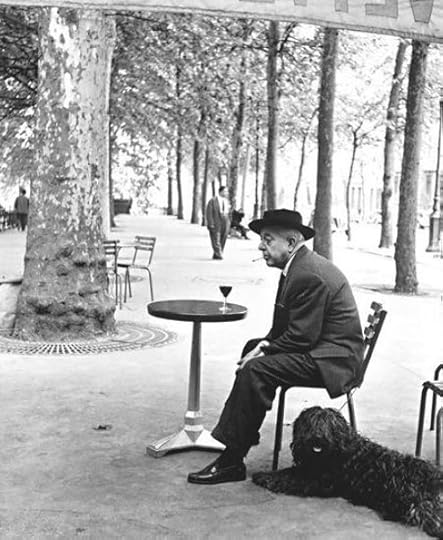
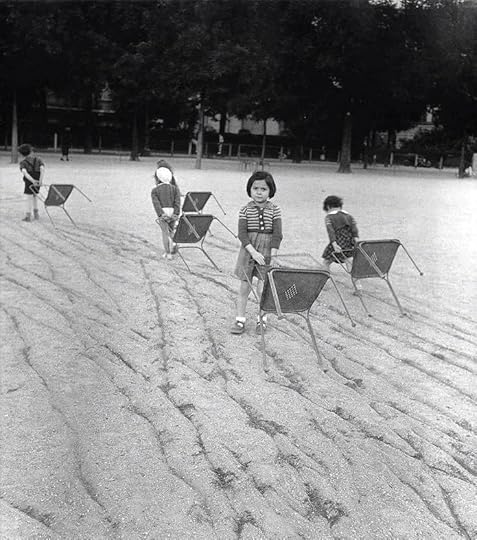
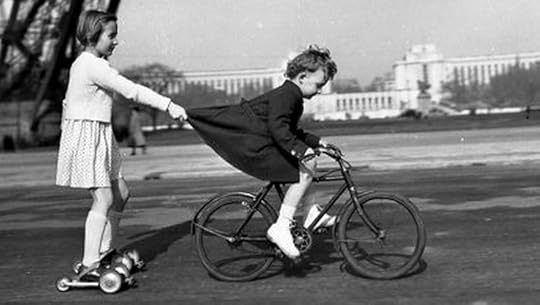
The photographs are accompanied by fragments from the personal notebooks of Doisneau and some of these witty comments made me smile, for instance when he recounts of loitering around and so coming late to work because he preferred to capture the poetry of a gracious moment, taking a snapshot from a street scene that he finds amusing, savouring the urban spectacle during his strolls:
“One morning I had an appointment with a clutch of advertising people who were preparing a campaign to launch new washbasins in polystyrene – or was it polyester?
As usual, I was late, and as I was crossing the Tuileries I was held up by a van marked ‘Gougeon: Fine Art Movers.’
Once I saw the statues by Maillol, the washbasins completely slipped by mind.
It must have been about that time that the advertising agency stopped returning my calls.”
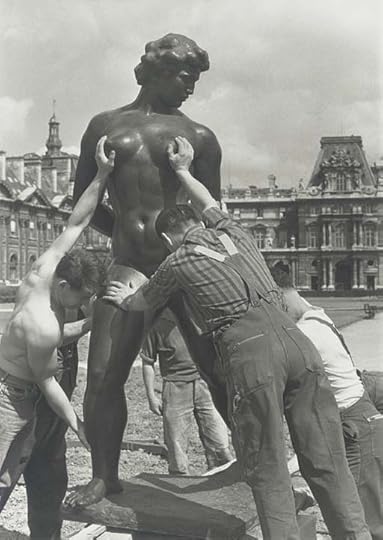
Venus gone bust, 1964
For half of a century I pounded the cobblestones, then asphalt, of Paris, wandering up and down the city. The few images that now rise to the surface of the flow of time, bobbing together like corks on a swirling stream, are those taken on time stolen from my employers. Breaking the rules strikes me as a vital activity, and I must say I enjoyed indulging in it.
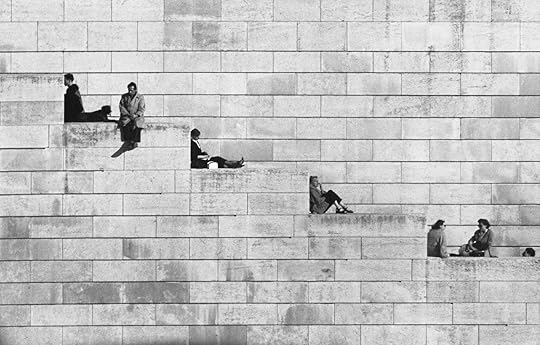
Diagonal steps 1953
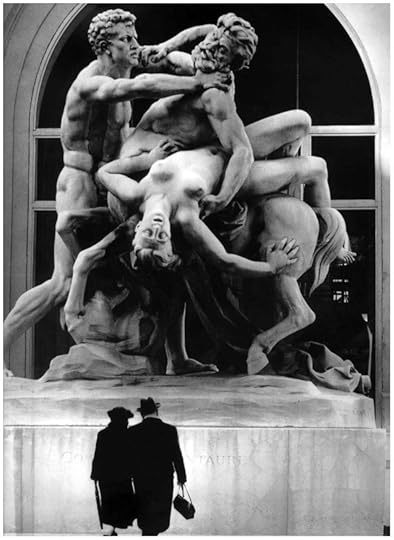
The centaur town hall of the 6th arrondissement 1971
Charm needs to be fleeting, Doisneau reflects , but glancing through this wondrous collection, I am grateful for Doisneau’s art to stop and capture time in his photographs.
— Robert Doisneau
For someone who is in love with Paris, this collection of 560 photographs of the French photographer Robert Doisneau (1912-1994) is an absolute treat.
While I mostly associate images of nocturnal Paris with the photography of Brassaï, Doisneau’s photographs add a matutinal perspective on the city, widening the scope to street scenes in broad daylight. His exploring and documenting of Paris in black and white is often cheerful, with an eye for humour and the comical, shimmering with joie de vivre, celebrating life, love (Cosy kiss, 1950) and the beauty of Paris.
Thematically organised (Paris by surprise, Paris for Parisians (les Halles, everyday Parisians, a home for tenants, Paris-by –the-Seine) Paris in Upheaval (occupation, resistance, liberation, demonstrations), Paris at play (fairs, cabarets and nightclubs, society, fashion) Paris in concrete, the book offers enchanting vignettes from the multifarious facets everyday life in Paris, a couple of snapshots from children’s play, love, a couple of glamourous events and magnificent portraits.
Particularly with his choices on the human figure Doisneau illustrates breezingly the French national motto of Liberté, égalité, fraternité, juxtaposing casually portraits of ordinary Parisians next to photographs of personalities that might ring a bell with the reader (Charles de Gaulle, Vercors, Prévert, Francis Ponge, Raymond Queneau, Juliette Binoche, Orson Wells, Alberto Giacometti (1958), Picasso, Colette, some couturiers (Christian Lacroix, Jean-Paul Gaultier)
A couple of favourites are gems of storytelling condensed in just one image, for instance the accordionist on the cover picture or the picture of Anita, who could one of those characters with a shady past one encounters so often in the cafés and bars described by Patrick Modiano.
The photographs are accompanied by fragments from the personal notebooks of Doisneau and some of these witty comments made me smile, for instance when he recounts of loitering around and so coming late to work because he preferred to capture the poetry of a gracious moment, taking a snapshot from a street scene that he finds amusing, savouring the urban spectacle during his strolls:
“One morning I had an appointment with a clutch of advertising people who were preparing a campaign to launch new washbasins in polystyrene – or was it polyester?
As usual, I was late, and as I was crossing the Tuileries I was held up by a van marked ‘Gougeon: Fine Art Movers.’
Once I saw the statues by Maillol, the washbasins completely slipped by mind.
It must have been about that time that the advertising agency stopped returning my calls.”
Venus gone bust, 1964
For half of a century I pounded the cobblestones, then asphalt, of Paris, wandering up and down the city. The few images that now rise to the surface of the flow of time, bobbing together like corks on a swirling stream, are those taken on time stolen from my employers. Breaking the rules strikes me as a vital activity, and I must say I enjoyed indulging in it.
Diagonal steps 1953
The centaur town hall of the 6th arrondissement 1971
Charm needs to be fleeting, Doisneau reflects , but glancing through this wondrous collection, I am grateful for Doisneau’s art to stop and capture time in his photographs.

January 28, 2024
I am not sure that the saying, “plus ça change, plus c'est la même chose” is entirely applicable. However, the Paris that I enjoyed in 2023 is not so different from the earlier Paris documented by Robert Doisneau.
This collection of photographs and commentary spans several decades of the mid-20th century. It is notable for Doisneau’s eye for composition, his humor, and his ability to capture life “on the fly.”
It is a thoroughly satisfying effort and I recommend that if you are in doubt about whether you will enjoy it, please read the review by my GR friend, Ilse. https://www.goodreads.com/review/show...
I have tried not to borrow her observations which are a great deal more complete.
5*
This collection of photographs and commentary spans several decades of the mid-20th century. It is notable for Doisneau’s eye for composition, his humor, and his ability to capture life “on the fly.”
It is a thoroughly satisfying effort and I recommend that if you are in doubt about whether you will enjoy it, please read the review by my GR friend, Ilse. https://www.goodreads.com/review/show...
I have tried not to borrow her observations which are a great deal more complete.
5*
January 7, 2024
“Was it really reasonable to love whatever
I happened to see?
I never asked myself that question.
Nor do I regret it, because once you start taking your alarm clock apart you no longer know what time it is.”
I loved this collection.
I was happy to see the brooding face of Raymond Queneau, Georges Simenon with his pipe, a slightly drunken Duras and the ever studious Simone de Beauvoir...but what I loved the most are the pictures of the regular folks: people walking their dogs, buthcers carrying a load of meat...pictures that force your mind to conjure up the entire life stories of those portrayed.
I borrowed this collection from the library, but I know I will have to buy it because I know I want to return to Doisneau's Paris, again and again.
“There are days when the simple act of seeing feels like a simple joy. You're buoyant, so buoyant cops halt the traffic to let you cross. You feel rich so you want to share your overflowing joy with others. 'It's Sunday every day!' as the song by Prévert goes.
The memory of such moments is the most precious thing I own.
Maybe because they're so rare.”
I happened to see?
I never asked myself that question.
Nor do I regret it, because once you start taking your alarm clock apart you no longer know what time it is.”
I loved this collection.
I was happy to see the brooding face of Raymond Queneau, Georges Simenon with his pipe, a slightly drunken Duras and the ever studious Simone de Beauvoir...but what I loved the most are the pictures of the regular folks: people walking their dogs, buthcers carrying a load of meat...pictures that force your mind to conjure up the entire life stories of those portrayed.
I borrowed this collection from the library, but I know I will have to buy it because I know I want to return to Doisneau's Paris, again and again.
“There are days when the simple act of seeing feels like a simple joy. You're buoyant, so buoyant cops halt the traffic to let you cross. You feel rich so you want to share your overflowing joy with others. 'It's Sunday every day!' as the song by Prévert goes.
The memory of such moments is the most precious thing I own.
Maybe because they're so rare.”

November 9, 2018
I checked out three Doisneau books from the library and this was my favorite by far. This seems to have more of a 'celebrate life' feel to it, and for that it's my favorite.
December 3, 2014
This immense collection of French photographer Robert Doisneau spans decades of his life. From the pre-WWII years of cafés, the opening of the Eiffel tower, Folies Bergére to the French Resistance during the war years and on into the 70s, these marvelous pictures show Paris in all its glory. The rich and famous are here, the artists, café-goers, can-can dancers and all the well-known Parisian regulars. But there are also the average people - shopping, working and enjoying their marvelous city. Gorgeous portraiture by a master.

December 11, 2022
Lo terminé de leer, de ver, de admirar y de devorar. Dos veces son las que me he paseado por el París de diferentes épocas.
Mirar las fotografías de este increíble fotógrafo me ha recordado a la frase de, siempre nos quedará París o París era una fiesta.
El trabajo de Robert en blanco y negro es asombroso y me he enamorado de todo lo que ha sabido capturar.
Si os gusta París, la fotografía y descubrir su fascinante historia del siglo XX, este es vuestro libro
Mirar las fotografías de este increíble fotógrafo me ha recordado a la frase de, siempre nos quedará París o París era una fiesta.
El trabajo de Robert en blanco y negro es asombroso y me he enamorado de todo lo que ha sabido capturar.
Si os gusta París, la fotografía y descubrir su fascinante historia del siglo XX, este es vuestro libro

October 12, 2025
La Parigi di Doisneau è vera, elegante, romantica, lontana, misteriosa, bellissima, affascinante, quotidiana, sorprendente, una Parigi che non stanca mai

December 4, 2024
Ensorceleur 👌✨
August 27, 2008
Robert Doisneau was an astonishing photographer, with apparently effortless skill. This book is filled with hundreds of his photographs, many of which have never been published before. If you are looking for a book of his most well-known and popular images, then this is not recommended. However, if like me you are an admirer of his work, and want to see practically all the photographs of his that remain, then get this book.
March 8, 2010
I don't know a lot about photography (I just pretend to) but I loved going through this book. Paris already has such a magical quality about it and Doisneau's pictures made day to day Paris life really come alive. I was surprised to find the simple black and white photos so mesmerizing. Even the quotations taken from Doisneau's journals really added to the book - they were insightful and showed the photographer's deep relationship with his city.
April 27, 2013
What an amazing collection of photographs. Doisneau had a gift for capturing the everyday moment with charm and could raise it to art. I probably will have to own a copy of this one, i've loved looking through it again and again.

May 19, 2012
Great images interspersed with the photographer's thoughts. A really great view of Paris from between the wars to the mid-eighties. My first Doisneau book but it won't be my last.

Read
June 21, 2012So many of his images I'd never seen before all in one volume, and some of the back story to the characters in them.
Displaying 1 - 13 of 13 reviews