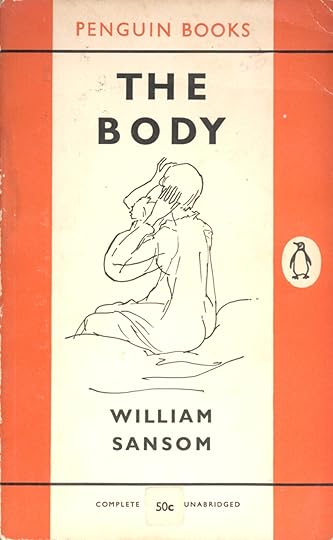
Henry Bishop is a well-off suburbanite with a comfortable income from a hairdressing business that seems to run itself perfectly well without him. 20 years of marriage to Madge does not seem to have produced any children, although this topic never seems to occur to him, as he relates a recent crisis in his life.
Things to notice about Henry: he has odd ideas about certain topics being "male", and the power of science and technology, he is concerned to acquire "knowledge" which he admits he never seems to hold on to. When we first encounter him he is busy stalking an insect in his garden to kill with poison. He is already wound up with tension about his position in the world (perhaps that lack of children preys on him as a failure of his masculinity?), and ready to get obsessed with the possibility that his wife is having an affair with vulgar young Charley Diver next door.
When is this story set? All readers seem to assume it is contemporary to when it was first published (1949) and some push it into the early 50s. Yet, apart from a single line about "scarcity" (which doesn't seem to be borne out by the picnic feast Henry can supply in chapter 6) there is no austerity, no war damage, no references to military service by the young men. When a character makes a mock-patriotic speech during the boat trip, he mentions Kaiser Wilhelm, but nobody adds a jibe about Hitler. Could this be really occurring in the mid 30s, Sansom wrote it earlier and never updated the text? In which case, did Henry have a war record he is not mentioning at all? He is unsure about the very idea of physical combat. Perhaps the unspoken source of his anxiety is some deeper failure at manhood he has been keeping secret - unfit or unwilling for service in some way.
This is a world in which social certainties are shifting - old Mrs Lawlor has come down the social scale very badly, she has to let her house out to all sorts of people. Standards and conventions are eroding, and soon a middle-aged dabbler who lives off unearned income is not going to get any respect off the little upstarts he bumps into on the street. The confrontation behind "Sleuth", decades in the future, is murmuring here already - ironically, one of the minor characters is a hack crime fiction writer.
Altogether this is a very good novel with a lot more to it than the usual one-line summary of "jealous husband having a breakdown". A portrait of an unstable individual with a fragile identity, afraid of the changes he senses in society at large, this is nearer in spirit to late 60s/70s fiction in the vein of Ballard or McEwan.