

What do you think?

Histoire d'une âme: Manuscrits autobiographiques
« Ce que je relis dans ce cahier, c'est si bien mon âme !... Ma Mère, ces pages feront beaucoup de bien. On connaîtra mieux ensuite la douceur du bon Dieu... » (Sainte Thérèse) Edition des manuscrits autobiographiques de sainte Thérèse qui révèlent sa confiance et son amour envers Dieu. En racontant sa vie, Thérèse de Lisieux développe de manière simple une véritable théologie, qu'on appellera celle de la « petite voie ».
416 pages, Pocket Book
First published September 30, 1898
About the author
Thérèse of Lisieux
160 books412 followersSaint Thérèse de Lisieux or Saint Thérèse of the Child Jesus and the Holy Face, born Marie-Françoise-Thérèse Martin, was a French Carmelite nun. She is also known as "The Little Flower of Jesus". She was canonized by the Roman Catholic Church May 17, 1925.
She felt an early call to religious life, and overcoming various obstacles, in 1888 at the early age of 15, became a nun and joined two of her older sisters in the enclosed Carmelite community of Lisieux, Normandy. After nine years as a Carmelite religious, having fulfilled various offices, such as sacristan and novice mistress, and having spent the last eighteen months in Carmel in a night of faith, she died of tuberculosis at the age of 24. The impact of her posthumous publications, including her memoir The Story of a Soul was great, and she rapidly became one of the most popular saints of the twentieth century. Pope Pius XI made her the star of his pontificate. She was beatified in 1923, and canonized in 1925. The speed of this process may be seen by comparison with that applied to a great heroine of Thérèse, Joan of Arc, who died in 1431 but was not canonized until 1920. Thérèse was declared co-patron of the missions with Francis Xavier in 1927, and named co-patron of France with Joan of Arc in 1944. On 19 October 1997 Pope John Paul II declared her the thirty-third Doctor of the Church, the youngest of all Doctors of the Church, and only the third woman Doctor. Devotion to Thérèse has developed around the world.
Thérèse lived a hidden life and 'wanted to be unknown' yet through her writings—as well as her spiritual autobiography she left letters, poems, religious plays, prayers and various notes, and her last conversations were recorded by her sisters—and thanks to the photographs taken inside the Lisieux Carmel by her sister Céline, she became known to, and later seen by, millions of men and women. According to one of her biographers, Guy Gaucher, after her death, "Thérèse fell victim to an excess of sentimental devotion which betrayed her. She was victim also to her language, which was that of the late nineteenth century and flowed from the religiosity of her age." Thérèsè herself said on her death-bed : "I only love simplicity. I have a horror of pretence", and she spoke out against some of the Lives of saints written in her day :" We should not say improbable things, or things we do not know. We must see their real, and not their imagined lives." The critic Marina Warner observed that the excesses sometimes associated with her cult should not blind one to the heroism of her, "struggle to be good, and the radical affirmation of ordinary lives that her sainthood stands for."
The depth of her spirituality, of which she said "my way is all confidence and love," has inspired many believers. In the face of her littleness and nothingness, she trusted in God to be her sanctity. She wanted to go to Heaven by an entirely new little way. "I wanted to find an elevator that would raise me to Jesus." The elevator, she wrote, would be the arms of Jesus lifting her in all her littleness.
The Basilica of Lisieux is the second greatest place of pilgrimage in France after Lourdes.
She felt an early call to religious life, and overcoming various obstacles, in 1888 at the early age of 15, became a nun and joined two of her older sisters in the enclosed Carmelite community of Lisieux, Normandy. After nine years as a Carmelite religious, having fulfilled various offices, such as sacristan and novice mistress, and having spent the last eighteen months in Carmel in a night of faith, she died of tuberculosis at the age of 24. The impact of her posthumous publications, including her memoir The Story of a Soul was great, and she rapidly became one of the most popular saints of the twentieth century. Pope Pius XI made her the star of his pontificate. She was beatified in 1923, and canonized in 1925. The speed of this process may be seen by comparison with that applied to a great heroine of Thérèse, Joan of Arc, who died in 1431 but was not canonized until 1920. Thérèse was declared co-patron of the missions with Francis Xavier in 1927, and named co-patron of France with Joan of Arc in 1944. On 19 October 1997 Pope John Paul II declared her the thirty-third Doctor of the Church, the youngest of all Doctors of the Church, and only the third woman Doctor. Devotion to Thérèse has developed around the world.
Thérèse lived a hidden life and 'wanted to be unknown' yet through her writings—as well as her spiritual autobiography she left letters, poems, religious plays, prayers and various notes, and her last conversations were recorded by her sisters—and thanks to the photographs taken inside the Lisieux Carmel by her sister Céline, she became known to, and later seen by, millions of men and women. According to one of her biographers, Guy Gaucher, after her death, "Thérèse fell victim to an excess of sentimental devotion which betrayed her. She was victim also to her language, which was that of the late nineteenth century and flowed from the religiosity of her age." Thérèsè herself said on her death-bed : "I only love simplicity. I have a horror of pretence", and she spoke out against some of the Lives of saints written in her day :" We should not say improbable things, or things we do not know. We must see their real, and not their imagined lives." The critic Marina Warner observed that the excesses sometimes associated with her cult should not blind one to the heroism of her, "struggle to be good, and the radical affirmation of ordinary lives that her sainthood stands for."
The depth of her spirituality, of which she said "my way is all confidence and love," has inspired many believers. In the face of her littleness and nothingness, she trusted in God to be her sanctity. She wanted to go to Heaven by an entirely new little way. "I wanted to find an elevator that would raise me to Jesus." The elevator, she wrote, would be the arms of Jesus lifting her in all her littleness.
The Basilica of Lisieux is the second greatest place of pilgrimage in France after Lourdes.
Ratings & Reviews
Friends & Following
Create a free account to discover what your friends think of this book!
Community Reviews
Displaying 1 - 30 of 1,598 reviews

January 3, 2018
My wonderful Mom died 42 years ago this year. She was a mere 56.
What did it?
Smoking and Stress. The high screaming stress of non-stop work. Don't ever surf that monster wave, friends, without a sane bit of healthy R&R! Don't let the Machine chew you up & spit you out too.
So... January, 1981, then.
There I was, wiped out, washed-up and bereft of my traditional comforter. I was lost. I was a chain-smoking nut, even. I only wanted to scream, but dared not.
So I read the original Dark Night of the Soul, by a late-Renaissance mystic, and THEN, I felt my primal scream echoed... and answered.
Eureka. The Path had again opened up in my soul.
I found my way in life.
And whaddaya think I did next?
You got it!
I read Therese of Lisieux. Who revealed the start of a New Dawn of Love in my freeze-dried PTSD-laden heart.
Wow. Words escaped me.
My wife caught the bug, and read it too. And that gorgeous spring we planked down the downpayment on our own new house. Never mind that the interest rates back then were in the mid-teens. We were in love and we were happy. Our careers were about to take off.
Newlyweds, we didn't mind going for the long, grinding haul. Life was good again. And soon we'll celebrate our 44th wedding anniversary - in that same (old) house.
You may not know this, but our wonderful guide, Therese, has ways to make Roses fall upon you from Heaven...
Just like she did for us that year!
READ this and see if they don't.
If not - you may need Heavenly Help.
Don't be afraid to ASK for it!
For otherwise, whaddaya got?
You've got only the hard, bitter life of the workaday world -
And the Game never Ends
When your Whole World depends
On the Turn of a Friendly Card.
What did it?
Smoking and Stress. The high screaming stress of non-stop work. Don't ever surf that monster wave, friends, without a sane bit of healthy R&R! Don't let the Machine chew you up & spit you out too.
So... January, 1981, then.
There I was, wiped out, washed-up and bereft of my traditional comforter. I was lost. I was a chain-smoking nut, even. I only wanted to scream, but dared not.
So I read the original Dark Night of the Soul, by a late-Renaissance mystic, and THEN, I felt my primal scream echoed... and answered.
Eureka. The Path had again opened up in my soul.
I found my way in life.
And whaddaya think I did next?
You got it!
I read Therese of Lisieux. Who revealed the start of a New Dawn of Love in my freeze-dried PTSD-laden heart.
Wow. Words escaped me.
My wife caught the bug, and read it too. And that gorgeous spring we planked down the downpayment on our own new house. Never mind that the interest rates back then were in the mid-teens. We were in love and we were happy. Our careers were about to take off.
Newlyweds, we didn't mind going for the long, grinding haul. Life was good again. And soon we'll celebrate our 44th wedding anniversary - in that same (old) house.
You may not know this, but our wonderful guide, Therese, has ways to make Roses fall upon you from Heaven...
Just like she did for us that year!
READ this and see if they don't.
If not - you may need Heavenly Help.
Don't be afraid to ASK for it!
For otherwise, whaddaya got?
You've got only the hard, bitter life of the workaday world -
And the Game never Ends
When your Whole World depends
On the Turn of a Friendly Card.

October 3, 2007
March 2, 2023: As this year is the 150th anniversary of the Little Flower's birth I am making a pilgrimage of sorts through her writings and those of her loved ones. I began with The Story of a Family: The Home of St. Therese of Lisieux, which made many references to incidents in this book which were far from clear in my memory despite having read this book at least six times and listened to it several more. This read brought them back to mind, plus so many other things I had forgotten.
As I began, I gathered round myself, all my extant copies of this book. I don't know what happened to the first one I read in high school, but I still have the paperback I read in 2005; it was published by Source Books in CA and Anthony Clark in the UK. I did a quick perusal of GRs editions and could not find it based on the cover photo; I did not read every publisher, so it might be there. They published 6 different editions from 1973 to 1993. At first, I thought I might have picked up one of the earlier editions from when I lived in Great Britian, but then realized I had left before 1993, so I must have acquired this subsequently. For this reading, however, I read entirely from this version without bothering with any of the others. It was an excellent refresher. I need to do this at least every other year!
The Secular Carmelites have moved this book from a three-month study in the second or third year of formation to a full year of study in the last year of formation; that is how rich this text is in deep theology, despite how seemingly simple it appears. It merits close and regular reading and I have read it in conjunction with books by other authors who have written about this book who have shed light on a particular aspect of the book to great effect.
February 26, 2010: I can't remember the first time I read this, but I think it was in high school. Dear St. Thérèse, was my Confirmation saint so I wanted to read her autobiography. I remember being blown away by her simple and yet powerful approach to sanctity. It IS the Gospel -- so gentle, humble, meek and Christian -- and not even difficult in a way except that I kept forgetting to live it!
Then as I got older, I confess I sort of forgot about this book and my patron saint. I even came to think that she was too 'young' for me. She died in her mid-twenties so what could she have known or written which could be of help to a wife and mother, someone living the active life out in our modern world? Everything. I reread her book a few years ago and it spoke to my heart a million times more than it did when I was younger.
Here are some of my observations from my 2010 reading: I have so much to learn from her! In many ways I envy her that quiet, solitary life behind the walls of Carmel. So much crowds in on my life and seems to stand between me and simplicity, between me and the love of God. Then I read some more and know that all the 'things' don't matter, whether they be physical, emotional or mental. It is only a matter of a willing heart. Is this heart open to Him? Am I willing to give it all away in a second and run to Him when He calls? Am I following Him now ... or trying to anyway? Little Flower, please continue to be my guide! Dear gentle mentor saint, help this sinner follow Him Whom we both love.
><><><><><><><><><><><><><><><><><><><><><>
Special note: My oldest daughter, Meg, was born on St. Thérèse's feast day, October 1st! That has always felt like such a special gift to me from her! A further 'rose' from her was the gift of my present job, as Director of Religious Education at my parish. Coincidentally (and of course there are no coincidents with God!) my first day on the job was her feast day as well ... the 1st of October 2009. Thank you again dear St. Thérèse!
Just found out one of the dates/times I actually read this, so I'm recording it now.
January 19, 2023: Rereading in honor of the 150th anniversary of her birth. And also, in honor of my granddaughter, Rose, born to my daughter born on St. Thérèse's feast day, October 1st! She is a darling Rose!
As I began, I gathered round myself, all my extant copies of this book. I don't know what happened to the first one I read in high school, but I still have the paperback I read in 2005; it was published by Source Books in CA and Anthony Clark in the UK. I did a quick perusal of GRs editions and could not find it based on the cover photo; I did not read every publisher, so it might be there. They published 6 different editions from 1973 to 1993. At first, I thought I might have picked up one of the earlier editions from when I lived in Great Britian, but then realized I had left before 1993, so I must have acquired this subsequently. For this reading, however, I read entirely from this version without bothering with any of the others. It was an excellent refresher. I need to do this at least every other year!
The Secular Carmelites have moved this book from a three-month study in the second or third year of formation to a full year of study in the last year of formation; that is how rich this text is in deep theology, despite how seemingly simple it appears. It merits close and regular reading and I have read it in conjunction with books by other authors who have written about this book who have shed light on a particular aspect of the book to great effect.
February 26, 2010: I can't remember the first time I read this, but I think it was in high school. Dear St. Thérèse, was my Confirmation saint so I wanted to read her autobiography. I remember being blown away by her simple and yet powerful approach to sanctity. It IS the Gospel -- so gentle, humble, meek and Christian -- and not even difficult in a way except that I kept forgetting to live it!
Then as I got older, I confess I sort of forgot about this book and my patron saint. I even came to think that she was too 'young' for me. She died in her mid-twenties so what could she have known or written which could be of help to a wife and mother, someone living the active life out in our modern world? Everything. I reread her book a few years ago and it spoke to my heart a million times more than it did when I was younger.
Here are some of my observations from my 2010 reading: I have so much to learn from her! In many ways I envy her that quiet, solitary life behind the walls of Carmel. So much crowds in on my life and seems to stand between me and simplicity, between me and the love of God. Then I read some more and know that all the 'things' don't matter, whether they be physical, emotional or mental. It is only a matter of a willing heart. Is this heart open to Him? Am I willing to give it all away in a second and run to Him when He calls? Am I following Him now ... or trying to anyway? Little Flower, please continue to be my guide! Dear gentle mentor saint, help this sinner follow Him Whom we both love.
><><><><><><><><><><><><><><><><><><><><><>
Special note: My oldest daughter, Meg, was born on St. Thérèse's feast day, October 1st! That has always felt like such a special gift to me from her! A further 'rose' from her was the gift of my present job, as Director of Religious Education at my parish. Coincidentally (and of course there are no coincidents with God!) my first day on the job was her feast day as well ... the 1st of October 2009. Thank you again dear St. Thérèse!
Just found out one of the dates/times I actually read this, so I'm recording it now.
January 19, 2023: Rereading in honor of the 150th anniversary of her birth. And also, in honor of my granddaughter, Rose, born to my daughter born on St. Thérèse's feast day, October 1st! She is a darling Rose!

September 6, 2011
Well this book has been such an emotional experience for me. I guess I have now come full circle from my early childhood version of God ( magical nice fatherly fellow who granted wishes and protection from evil) to my early adulthood ( and also completely wrong notion of) God ( angry father who didn't love me, but seemed to reward evildoers) to my later notion of their not being a God at all. That was the only way I could explain the horrors of the modern world, the evils I learned of on the nightly news that broke my heart and cost me my faith. How surprising to learn that this great saint had the same low spots as me, the same doubts! She pulled thru and so have I! It's a shame that it's mostly just catholics who read of the lives of saints. We can learn so much by being open to others' experiences. I am also pleased to read in this autobio that so much of the methods I learned from the Buddha were helpful to her too! The most important one being, "Do not dwell in the past. Do not worry about the future. Concentrate the mind on the present moment." the version I read was a freebie from Amazon for Kindle that didn't say so, but also contained many of her letters, prayers and poems. What a treasure.
May 11, 2024
Was skeptical at first. Thought it would be girly and was like “why is she calling herself a little flower”? And then 5 pages in, I’m like “Dang, I wanna be a little flower”. Must read

July 28, 2023
There is a purity, in St. Therese’s writings, that I hope will - at least minimally - pass on to me, or at least provoke some good movements in my soul. She had a beautiful heart, she was so pure and she had such a genuine love for Jesus.
And the way she interspersed scriptural quotes throughout her writings is not only beautiful, but it also shows the faith of someone who had a real command and deep understanding of the bible at a young age.
The great importance of St. Therese as a saint throughout all the world is rooted in her simplicity, in her ordinary life, in the fact that she didn’t do anything special, and therefore she proves that true sanctity doesn’t need any grandiose or special actions.
But overall, as a catholic myself, I have to say that I didn’t like “Story of a soul”.
Caveat: I’m not writing these negative comments to be petty or even with a light heart. It really saddens me to find out that this great classic, in reality, doesn’t contain as much wisdom or insight as I was hoping it would.
Even as a very young child, she was (by her own admission) extremely strong-willed and precociously intelligent. All this is great, of course. The problem is that she was raised as a “little princess” in a wealthy family, and she quickly developed a superiority complex that is absolutely crystal clear in her writings.
Not only she repeatedly declares her joy at “being better than anyone else” in many things, but as soon as she doesn’t get what she wants (the main thing being, following her sister Pauline into the convent) she throws unimaginable fits of desperation until the people around her give up and enable her. Her crying is nothing but a weapon, and it works.
She tells the story of how she had grown so attached to her sister Pauline, who had taken a motherly role after her mother’s death. Two or three months after Pauline “abandons” her to go and become a nun, she falls into a dramatic and theatrical depression.
She writes of this depression as something mysterious and demonic, but you don’t need to be a licensed psychiatrist to realize what’s going on there.
All she wants to do is to be with Pauline, to follow her into the convent. And , 4 years later, when she is 14 and not of age yet, the things she does in order to bend the rules and to bend everyone’s will to her own will are almost unbelievable:
The convent’s head says “no, you need to wait until the legal age to enter the convent”. She throws a crying fit.
The local bishop tells her the same. She throws a crying fit. Then they even take her to the pope! Leo XIII. And what does she do in front of the pope, after they specifically instruct her to shut up while in front of him? She demands to be given the special permission to enter the convent prematurely. Then she throws a crying fit in front of everyone.
The way she often projects what clearly is her own personal wishes to “Jesus’ wishes” is, to say the least, psychologically transparent.
So, yes, we are listening to a sweet, sensitive, intelligent person, but who’s also very entitled and bossy, and not that self-aware. I understand that every catholic saint has his or her own charisma, but when it comes to literary classics written by saints, even young ones, their wisdom and self-awareness was on a different level.
During her trip to Rome (1887, she was 14/15, so not exactly a child anymore) the self-driven aspect of her personality shows multiple times: first, when she goes to the Colosseum with only ONE idea infixed in her mind: “I will kiss the ground where the early martyrs walked”. And as soon as she realizes that the area is not open to tourists, she cries. “Her heart is broken”. Undeterred, she takes her sister or cousin with her, and together they sneak away from the group, they walk over the barriers, and she is not happy until she has touched that ground. I know this is nothing serious, but even at 22, writing about this while looking back, she seems unable to see the entitlement that this action demonstrates.
Secondly, when she visits the relics of Jesus’ cross, she puts her hand through - knowing that it’s forbidden - because she wants to touch the nail, and she writes “Obviously, God knew that my intentions were pure and He agreed with that gesture”. Did He really? What about all the other people who might have wanted to touch the nail as well? Are their intentions not as pure as yours? What happened to discipline and delayed gratification? Especially since this was 150 years ago.
I feel like I’m gonna have to come back to this review and make it somehow kinder, because I am talking about a great catholic saint, after all.
But these are my very, very honest and sincere impressions, and I’m rather surprised that almost no reader picked up on these elements.
And the way she interspersed scriptural quotes throughout her writings is not only beautiful, but it also shows the faith of someone who had a real command and deep understanding of the bible at a young age.
The great importance of St. Therese as a saint throughout all the world is rooted in her simplicity, in her ordinary life, in the fact that she didn’t do anything special, and therefore she proves that true sanctity doesn’t need any grandiose or special actions.
But overall, as a catholic myself, I have to say that I didn’t like “Story of a soul”.
Caveat: I’m not writing these negative comments to be petty or even with a light heart. It really saddens me to find out that this great classic, in reality, doesn’t contain as much wisdom or insight as I was hoping it would.
Even as a very young child, she was (by her own admission) extremely strong-willed and precociously intelligent. All this is great, of course. The problem is that she was raised as a “little princess” in a wealthy family, and she quickly developed a superiority complex that is absolutely crystal clear in her writings.
Not only she repeatedly declares her joy at “being better than anyone else” in many things, but as soon as she doesn’t get what she wants (the main thing being, following her sister Pauline into the convent) she throws unimaginable fits of desperation until the people around her give up and enable her. Her crying is nothing but a weapon, and it works.
She tells the story of how she had grown so attached to her sister Pauline, who had taken a motherly role after her mother’s death. Two or three months after Pauline “abandons” her to go and become a nun, she falls into a dramatic and theatrical depression.
She writes of this depression as something mysterious and demonic, but you don’t need to be a licensed psychiatrist to realize what’s going on there.
All she wants to do is to be with Pauline, to follow her into the convent. And , 4 years later, when she is 14 and not of age yet, the things she does in order to bend the rules and to bend everyone’s will to her own will are almost unbelievable:
The convent’s head says “no, you need to wait until the legal age to enter the convent”. She throws a crying fit.
The local bishop tells her the same. She throws a crying fit. Then they even take her to the pope! Leo XIII. And what does she do in front of the pope, after they specifically instruct her to shut up while in front of him? She demands to be given the special permission to enter the convent prematurely. Then she throws a crying fit in front of everyone.
The way she often projects what clearly is her own personal wishes to “Jesus’ wishes” is, to say the least, psychologically transparent.
So, yes, we are listening to a sweet, sensitive, intelligent person, but who’s also very entitled and bossy, and not that self-aware. I understand that every catholic saint has his or her own charisma, but when it comes to literary classics written by saints, even young ones, their wisdom and self-awareness was on a different level.
During her trip to Rome (1887, she was 14/15, so not exactly a child anymore) the self-driven aspect of her personality shows multiple times: first, when she goes to the Colosseum with only ONE idea infixed in her mind: “I will kiss the ground where the early martyrs walked”. And as soon as she realizes that the area is not open to tourists, she cries. “Her heart is broken”. Undeterred, she takes her sister or cousin with her, and together they sneak away from the group, they walk over the barriers, and she is not happy until she has touched that ground. I know this is nothing serious, but even at 22, writing about this while looking back, she seems unable to see the entitlement that this action demonstrates.
Secondly, when she visits the relics of Jesus’ cross, she puts her hand through - knowing that it’s forbidden - because she wants to touch the nail, and she writes “Obviously, God knew that my intentions were pure and He agreed with that gesture”. Did He really? What about all the other people who might have wanted to touch the nail as well? Are their intentions not as pure as yours? What happened to discipline and delayed gratification? Especially since this was 150 years ago.
I feel like I’m gonna have to come back to this review and make it somehow kinder, because I am talking about a great catholic saint, after all.
But these are my very, very honest and sincere impressions, and I’m rather surprised that almost no reader picked up on these elements.

March 11, 2010
I am torn in my reaction to this book. With all of our knowledge of psychiatric illnesses today, we would probably medicate Therese and send her to therapy due to her hallucinations, visions and, at least from the tone of Manuscript A, her self-absorption. I only became interested in the book and St. Therese when I started reading Manuscript B which is almost 2/3 of the way through the book. Manuscript C and the Epilogue were the sections that really moved me and brought home the true scope of her devotion and inner strength. I should probably have cut her more slack in that she was only 25 years old when she died. I can't imagine a 25 year old these days with the same level of piety and grace under the extreme pain and discomfort that accompanied her final months.
By all means read this book, but be prepared to see what at first blush seems to be a self-absorbed brat turn into a devote and beautiful person.
By all means read this book, but be prepared to see what at first blush seems to be a self-absorbed brat turn into a devote and beautiful person.

Read
April 4, 2023Lent read 2023. I find this impossible to rate and that’s okay. It really went head to head with my engrained Protestant sensibilities, so it was a challenging read for me. I say that with relish though. Sainthood is something rather strange for me as a lifelong Presbyterian. I come from a tradition more likely to be iconoclastic. And I’m increasingly aware of how much richness exists outside my own Christian tradition. I’m on a journey to discover and explore. Therese is part of that, and I am doing my best to keep an open heart to all her wisdom even if it feels strange and unfamiliar, like new territory and thus disorienting at times. Yet I feel like her little way is something I’ve long been called to practice as I live my own small life. Therese has given me much to ponder, and I pray this memoir will continue to do good work in my heart and soul.

March 26, 2021
I am glad that I finally read this book!
The first time I read about Saint Thérèse of the Child Jesus was during my confirmation, as I had chosen her as my confirmation saint. At that time, while I knew that she was one of the most loved Catholic saints in the world, I did not try to learn more about her life.
It was only last year after I had the good fortune of receiving her precious relics from the Carmel nuns in Lisieux, that I became more interested to read more about her life and sufferings.
After reading this book, I think I am amazed at her simplicity and devotion. Her thoughts and approach to the various incidents are quite inspiring to read.
Loved this autobiography!
The first time I read about Saint Thérèse of the Child Jesus was during my confirmation, as I had chosen her as my confirmation saint. At that time, while I knew that she was one of the most loved Catholic saints in the world, I did not try to learn more about her life.
It was only last year after I had the good fortune of receiving her precious relics from the Carmel nuns in Lisieux, that I became more interested to read more about her life and sufferings.
After reading this book, I think I am amazed at her simplicity and devotion. Her thoughts and approach to the various incidents are quite inspiring to read.
Loved this autobiography!

April 1, 2025
Very good read.

December 8, 2021
My spiritual director suggested that I spend some time with my patroness, and he was not wrong. (He seldom is.)
I forget how alike St. Therese and I am until I reread this book and think "oh yeah, we're both stubborn, members of large families, suffer from some of the same spiritual ailments, love priests and enjoy praying for them, and so on". The only difference being that she is a saint, and I am not (but hopefully someday!). I took great hope and comfort from the detailing of her struggles and trials, her beautiful love for Jesus, and her Little Way, which is SO HARD but also so rewarding. I'm working on it. ;)
I know that she's a very popular saint, and that it can feel like "oh yeah, St. Therese again", but from my own experience of actually starting to develop a relationship with her (or rather, her reaching out to develop a relationship with me, and it taking literally thirteen years, because I am DENSE) let me just say that saints have time and love for everyone, even if she is the patron to all of your friends (and enemies), too. XD She is in my corner, I do believe. So--develop your relationship with your patron saints! Even if they're popular!
5 stars!
I forget how alike St. Therese and I am until I reread this book and think "oh yeah, we're both stubborn, members of large families, suffer from some of the same spiritual ailments, love priests and enjoy praying for them, and so on". The only difference being that she is a saint, and I am not (but hopefully someday!). I took great hope and comfort from the detailing of her struggles and trials, her beautiful love for Jesus, and her Little Way, which is SO HARD but also so rewarding. I'm working on it. ;)
I know that she's a very popular saint, and that it can feel like "oh yeah, St. Therese again", but from my own experience of actually starting to develop a relationship with her (or rather, her reaching out to develop a relationship with me, and it taking literally thirteen years, because I am DENSE) let me just say that saints have time and love for everyone, even if she is the patron to all of your friends (and enemies), too. XD She is in my corner, I do believe. So--develop your relationship with your patron saints! Even if they're popular!
5 stars!

August 23, 2025
Santa Teresa de Liseaux no quería escribir una obra literaria, pero lo hizo. Eran los últimos estertores del siglo XIX y los suyos propios, pues escribe estas memorias prácticamente en su lecho de muerte y resultan inconclusas, ya que las últimas palabras están escritas con lápiz, antes de su agonía.
Ahora, escritos biográficos de este tipo son comunes en religiosas, pues les eran encomendados por sus superiores como un ejercicio espiritual y de obediencia. Así que en ese sentido es muy cercano a ‘El libro de la vida’, de Santa Teresa de Ávila, quien también sería su máximo ejemplo, pues Teresita del Niño Jesús (como es conocida en el mundo católico) entró con apenas quince años al convento del Carmelo, cuya fundadora fue Santa Teresa de Ávila en 1562.
Y aunque Santa Teresita no tiene grandes experiencias místicas como su predecesora homónima (incluso por ese abajamiento y no solo por su edad es que lleva el diminutivo en su nombre), sí tuvo iluminaciones teológicas para escribir estas memorias. En ellas, a través de alegorías, entiende y explica varias verdades doctrinales del catolicismo. Su estilo eminentemente literario sobresale y construye una obra de una belleza innegable gracias a cómo utiliza el lenguaje, pero también gracias a esas ideas que aunque ella no sea docta (esto lo señala todo el tiempo) son de gran profundidad espiritual.
Aquí un ejemplo de ello: “Un sabio decía: «Dadme una palanca, un punto de apoyo, y levantaré el mundo». Lo que Arquímedes no pudo lograr, porque su petición no se dirigía a Dios y porque la hacía desde un punto de vista material, los santos lo lograron en toda su plenitud. El Todopoderoso les dio un punto de apoyo: Él mismo, Él solo. Y una palanca: la oración, que abrasa con fuego de amor. Y así levantaron el mundo”.
También está, además de todo su camino espiritual -ese camino de perfección del que hablaba Teresa de Ávila- la visión feminista acerca de la mujer y su lugar en la Iglesia, tal como la Santa de Ávila; y aunque no le dedique extensas páginas y reflexiones, tiene sus pequeños momentos que dejan en evidencia su posición:
“Todavía sigo hoy sin entender por qué en Italia se excomulga tan fácilmente a las mujeres. A cada paso nos decían: «¡No entréis aquí... No entréis allá, que quedaréis excomulgadas...!». ¡Pobres mujeres! ¡Qué despreciadas son...! Sin embargo, ellas aman a Dios en número mucho mayor que los hombres, y durante la pasión de Nuestro Señor las mujeres tuvieron más valor que los apóstoles, pues desafiaron los insultos de los soldados y se atrevieron a enjugar la Faz adorable de Jesús... Seguramente por eso él permite que el desprecio sea su lote en la tierra, ya que lo escogió también para sí mismo... En el cielo demostrará claramente que sus pensamientos no son los de los hombres, pues entonces los últimos serán los primeros…”
Teresita es la santa niña, murió apenas a los veinticuatro años, y según sus palabras en este libro, esa muerte (por tuberculosis) fue una ofrenda voluntaria a Dios. El tema del sufrimiento y la santidad es complejo, no lo abordar ahora porque suena más terrible de cómo lo abordan los santos y la cultura popular lo cree. Pero lo que me interesa más de los escritos de Teresita es la iluminación final del ofrecer aunque sea las pequeñas cosas e insignificancias a Dios, los pequeños sacrificios cotidianos, las tonterías (como las animadversiones hacia otros por cosas tan insignificantes como su forma de hablar, los ruidos que hace al rezar, o el agua sucia que le salpica una compañera al lavar) para construir la pequeña perfección. De ahí que sea Teresita en pequeño, la santa de las pequeñas cosas, sin grandes aspavientos.
Finalmente, la revelación última de hacerlo todo con amor y de tratar al prójimo, no ya como a mí mismo, sino a través de la Caridad divina: el amar a los otros como Cristo amó al hombre. Ese es otro nivel de amor terrenal que, tratando de alcanzar el universal y divino, Teresita pone en practica en lo aparentemente simple y fútil. Pero también en esa muestra de amor desinteresado que es el rezar por otros. Para terminar este libro, la santa cuenta su alegría de tener hermanos espirituales convertidos en sacerdotes (que era su deseo ver en hermanos carnales pero murieron de bebés, al parecer). Así, recibe con alegría el encargo de orar por dos misioneros, y sabe que ello llegará a buen puerto. Las mayores gracias que Teresita ha recibido han sido a través de la oración: aquí relata varias peticiones que haría a Dios que se han cumplido.
Entonces, “las almas sencillas no necesitan usar medios complicados”. Así que la inspiración final tras una acción de gracias le hizo comprender unas palabras del Cantar de los Cantares: “atráeme y correremos tras el olor de tus perfumes”. Entonces, a quienes están encomendados a ella, los misioneros, les bastará con que su alma sea atraída a Dios. Ella los arrastrará consigo. “¡Oh, Jesús!, ni siquiera es, pues, necesario decir: Al atraerme a mí, atrae también a las almas que amo. Esta simple palabra , basta”.
Ahora, escritos biográficos de este tipo son comunes en religiosas, pues les eran encomendados por sus superiores como un ejercicio espiritual y de obediencia. Así que en ese sentido es muy cercano a ‘El libro de la vida’, de Santa Teresa de Ávila, quien también sería su máximo ejemplo, pues Teresita del Niño Jesús (como es conocida en el mundo católico) entró con apenas quince años al convento del Carmelo, cuya fundadora fue Santa Teresa de Ávila en 1562.
Y aunque Santa Teresita no tiene grandes experiencias místicas como su predecesora homónima (incluso por ese abajamiento y no solo por su edad es que lleva el diminutivo en su nombre), sí tuvo iluminaciones teológicas para escribir estas memorias. En ellas, a través de alegorías, entiende y explica varias verdades doctrinales del catolicismo. Su estilo eminentemente literario sobresale y construye una obra de una belleza innegable gracias a cómo utiliza el lenguaje, pero también gracias a esas ideas que aunque ella no sea docta (esto lo señala todo el tiempo) son de gran profundidad espiritual.
Aquí un ejemplo de ello: “Un sabio decía: «Dadme una palanca, un punto de apoyo, y levantaré el mundo». Lo que Arquímedes no pudo lograr, porque su petición no se dirigía a Dios y porque la hacía desde un punto de vista material, los santos lo lograron en toda su plenitud. El Todopoderoso les dio un punto de apoyo: Él mismo, Él solo. Y una palanca: la oración, que abrasa con fuego de amor. Y así levantaron el mundo”.
También está, además de todo su camino espiritual -ese camino de perfección del que hablaba Teresa de Ávila- la visión feminista acerca de la mujer y su lugar en la Iglesia, tal como la Santa de Ávila; y aunque no le dedique extensas páginas y reflexiones, tiene sus pequeños momentos que dejan en evidencia su posición:
“Todavía sigo hoy sin entender por qué en Italia se excomulga tan fácilmente a las mujeres. A cada paso nos decían: «¡No entréis aquí... No entréis allá, que quedaréis excomulgadas...!». ¡Pobres mujeres! ¡Qué despreciadas son...! Sin embargo, ellas aman a Dios en número mucho mayor que los hombres, y durante la pasión de Nuestro Señor las mujeres tuvieron más valor que los apóstoles, pues desafiaron los insultos de los soldados y se atrevieron a enjugar la Faz adorable de Jesús... Seguramente por eso él permite que el desprecio sea su lote en la tierra, ya que lo escogió también para sí mismo... En el cielo demostrará claramente que sus pensamientos no son los de los hombres, pues entonces los últimos serán los primeros…”
Teresita es la santa niña, murió apenas a los veinticuatro años, y según sus palabras en este libro, esa muerte (por tuberculosis) fue una ofrenda voluntaria a Dios. El tema del sufrimiento y la santidad es complejo, no lo abordar ahora porque suena más terrible de cómo lo abordan los santos y la cultura popular lo cree. Pero lo que me interesa más de los escritos de Teresita es la iluminación final del ofrecer aunque sea las pequeñas cosas e insignificancias a Dios, los pequeños sacrificios cotidianos, las tonterías (como las animadversiones hacia otros por cosas tan insignificantes como su forma de hablar, los ruidos que hace al rezar, o el agua sucia que le salpica una compañera al lavar) para construir la pequeña perfección. De ahí que sea Teresita en pequeño, la santa de las pequeñas cosas, sin grandes aspavientos.
Finalmente, la revelación última de hacerlo todo con amor y de tratar al prójimo, no ya como a mí mismo, sino a través de la Caridad divina: el amar a los otros como Cristo amó al hombre. Ese es otro nivel de amor terrenal que, tratando de alcanzar el universal y divino, Teresita pone en practica en lo aparentemente simple y fútil. Pero también en esa muestra de amor desinteresado que es el rezar por otros. Para terminar este libro, la santa cuenta su alegría de tener hermanos espirituales convertidos en sacerdotes (que era su deseo ver en hermanos carnales pero murieron de bebés, al parecer). Así, recibe con alegría el encargo de orar por dos misioneros, y sabe que ello llegará a buen puerto. Las mayores gracias que Teresita ha recibido han sido a través de la oración: aquí relata varias peticiones que haría a Dios que se han cumplido.
Entonces, “las almas sencillas no necesitan usar medios complicados”. Así que la inspiración final tras una acción de gracias le hizo comprender unas palabras del Cantar de los Cantares: “atráeme y correremos tras el olor de tus perfumes”. Entonces, a quienes están encomendados a ella, los misioneros, les bastará con que su alma sea atraída a Dios. Ella los arrastrará consigo. “¡Oh, Jesús!, ni siquiera es, pues, necesario decir: Al atraerme a mí, atrae también a las almas que amo. Esta simple palabra , basta”.

September 14, 2008
A sweet story!
I didn't like the book as well as I thought I would, though. I think I just can't relate to someone as doted on as Therese was. I kept thinking what a wuss she was and then feeling bad that I thought such a thing about someone who became a saint! I'll admit that in the end she was not a wuss at all.
The best thing I got out of the book is that God gives everyone the ability to be a saint in his/her own way, and doesn't expect anyone to be a saint in the way that anyone else did. Which is a great relief, actually.
I didn't like the book as well as I thought I would, though. I think I just can't relate to someone as doted on as Therese was. I kept thinking what a wuss she was and then feeling bad that I thought such a thing about someone who became a saint! I'll admit that in the end she was not a wuss at all.
The best thing I got out of the book is that God gives everyone the ability to be a saint in his/her own way, and doesn't expect anyone to be a saint in the way that anyone else did. Which is a great relief, actually.

April 29, 2011
قصتها مفعمة بالإيمان والبراءة والبساطة والتأمل والجمال النفسي وكل خصائص النفس الطيبة الوادعة، وكل ذلك جاء في سيرتها في أعلى درجاته، وحتى عندما أستدعوا الطبيب إليها في مرضها الأخير المؤلم، قال في تأثر: اني اعتقد بان هذه النفس لم تُخلق لتعيش طويلا على الارض!
والذي أعجبني في الكتاب هذه الفقرة، وهي عندما عزمت على دخول الكرمل (بيت الراهبات) الذي كان من شروطه عدم استقبال الفتيات اللواتي يردن الانقطاع عن الدنيا للأبد والتفرغ للعبادة، إلا بعد بلوغهن إحدى وعشرين عامًا، وكانت تريزا حينئذ في الخامسة عشر، غما كان منها إلا أن حاولت إكتساب موافقة أسقف منطقتها، فلم يعطها إجابة حاسمة، فقررت مع والدها (والدها لم يرغمها قط على ذلك الأمر أو يحاول إثنائها عنه على الإطلاق، وإنما كان شديد الفرح عندما دخلت الكرمل كسائر بناته لأن (الرب أختار عرائسه من بيته)، فقررت مع والدها مقابلة الحبر الأعظم (البابا لاون الثالث عشر) فسافرت إليه، وهاهي كلماتها المحلّقة:
.. كان لاون الثالث عشر جالسًا على كرسي مرتفع يرتدي في بساطة ثوبا أبيض ومندلا من اللون ذاته، يحف بقداسته بعض الأحبار وذوي المقامات الكنسية العالية تبعًا لأصول التشريفات، كان كل زائر يجثو بدوره فيلثم أولا قدم الحبر الأعظم فيده، ثم يتناول بركته، وبعذ ذلك يلمسه اثنان من الحرس الشرفي بالأصبع مشيرين إليه أن ينهض، فينتقل إلى قاعة أخرى تاركًا محله لمن يتبعه ..
ولم يكن أحد يتفوه بكلمة ولكني عزمت عزمًا أكيدا على التكلم، وإذا بالأب (رفروني) وكان جالسًا عن يمين قداسته ينبهنا إلى أنه (ينهانا كل النهي) عن مخاطبة الأب الأقدس، فالتفت إلى (سيلين) استطلع رأيها بنظرة وقلبي يكاد ينفطر لشدة خفقانه، فقالت لي: تكلمي!
وبعد هنيهة كنت عند قدمي البابا، لثمت حذاءه فقدم لي يده، وحينئذ رفعت إليه الطرف وقد اغرورقت عيناي دمعًا، فتوسلت إليه قائله: (أيها الأب الأقدس، ألتمس منك نعمة عظمى!)، فللحال أحنى رأسه نحو حتى كاد وجهه يلمس وجهي وكأني بعينيه السوداوين العميقتين تبغيان الولوج إلى صميم نفسي.
فأعدت الكرة قائلة: ( أيها الأب الأقدس، ألا إسمح إكرامًا ليوبيلك أن أدخل الكرمل وأنا في الخامسة عشرة من عمري!)
فما لبث نائب (بايو) العام أن قال مندهشًا مستاءً: (أيها الأب الأقدس، هذه فتاة ترغب الدخول إلى الكرمل ولكن أمرها الآن تحت البحث لدى الرؤساء)
فقال لي قداسته: (إذن، يا بنيتي، افعلي ما يقرره الرؤساء)، فضممت يدي وأسنتدتهما إلى ركبتيْ قداسته، وقلت باذلة جهدي الأخير: (أيها الأب الأقدس، إذا قلتم نعم، فكل من يعنيهم الأمر يرضون كل الرضاء)
فحدّق فيَّ ولفظ الكلمات الآتية موضحًا كل مقطع منها بصوت نافذ مؤثر: (تجمّلي .. تجمّلي .. ستدخلين إذا أراد الله ذلك)
هممتُ بمواصلة الكلام وإذا باثنين من الحرس الشرفي يدعواني إلى النهوض، ولما رأيا أن ذلك لا يكفي، جذباني من ذراعي وأعانهما الأب (رفروني) على إنهاضي، لأن لبثت مضمومة اليدن أسندهما إلى ركبتيْ قداسته، وبنما هم ينقلوني هكذا وضع الأب الأقدس الحنون يده على شفتيْ برفق، ثم رفعها ليباركني، وشيعني بنظره طويلا.
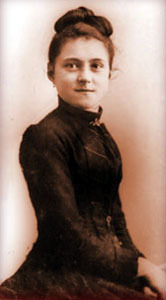
ما أضوأ أسلوبها، وأعجبني كثيرا أنها عند زيارتها الأولى لأسقف منطقتها (الأب رفروني)، كانت قد رفعت شعرها لأعلى على غير عادتها، وذلك كي تعطي إيحاء أثناء المقابلة بأنها كبيرة بما يكفي لدخول الكرمل ^_^
وكانت تلك صورتها في هذه اللحظة:
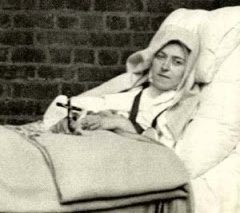
وهذه صورة أخرى لها في مرضها الأخير، والذي من خلال قراءتي للصفحات الأخيرة التي كتبتها في سيرتها، لم أشعر أنها كانت تعاني آلامًا ممزقة، لأن كلماتها كانت شديدة الإيمان، وه تتحدث في يسر وعذوبة عن مرضها، ولم أعلم بمداه إلا عندما قرأت الفصل الأخير من الكتاب، وهو فصل (أنشأته الراهبات الكرمليات اللاتي شهدن فضائلها وحضرن موتها)، وروين فيه كمية وافرة من مواقفها، وتفاصيل مرضها ولحظاتها الأخيرة على هذه الأرض.

May 5, 2019
A fascinating book written by St Therese herself. Not for everyone but a most interesting book.
August 8, 2024
First two chapters was really hard for me. St Thérèse of Lisieux has always been hard for me to relate to. But she gained my respect slowly by her love of God to the point of asking for suffering. What a beautiful soul. Love this Little Flower :)
July 16, 2013
I think I would have found the author completely intolerable in real life.

April 27, 2023
A beautiful glimpse into her life, mind, and desire to serve and love Christ in the simple, small, overlooked ways.

June 29, 2013
Reason for Reading: Our church has been run by the Carmelites for over 100 years. Our priests are Carmelites and we have a statutory of St. Therese in the building. I was much intrigued about her "little way' and after watching the recent 2004 movie about her life was ready to read her autobiography.
In truth, the book is really not an autobiography but more of a snippet of memoirs. It is divided into three pieces, the first, being the longest, was commissioned by her Mother Superior who also happened to be her sister. This is where Therese tells of her childhood up until she is accepted into Carmel. Therese was a sheltered child, raised along with 4 other sisters who also became nuns and devout Catholic parents who kept them from the worldly ways of life but raised them within a deeply loving family atmosphere. Therese was very much childlike her entire life of 24 years, never having experienced any of life's degradations and was a complete innocent in so many matters. Yet her soul belonged to the Lord from a very early age (three) and she knew she wanted to be a saint. Even though her mother died while she was still young her childhood seems to have been happy enough, with Therese preparing herself for a Religious life and a holy, saintly, Heavenly eternal life which may have taken some of the childhood fun out of her but her soul was content with this and she yearned to suffer for Jesus while she was exiled here on earth.
The second piece is a much shorter memoir written for another Mother of the Abbey who had requested Therese write of life at Carmel. Here we see Therese grow-up though she will always retain her childlike innocence. Here for the first time she will actually suffer from things the reader is more able to relate to rather than the childish sufferings in the first part. Therese met fellow Sisters who did not care for her because of her young age and the nepotism that seemed to be going on with her family within the Abbey. She was treated harshly by some, worked hard at back breaking chores, and never let her faith slip. She learned to put into practice what she called her "little way", making small, little efforts to please to the Lord. Over time these little things will add up to a greater good in the end.
Finally, the last piece is more of a letter written to Sister Marie (again her actual sister) who has asked for a small piece from her as she now lays on her deathbed dying of Tuberculosis. Here she writes of her most secret thoughts and desires and requests of Jesus. Her visions, dreams and then glories that await her when she reaches Heaven as she knows she will be gong straight there to continue her work of saving earthly souls from her place in Heaven.
A beautiful little book, with a powerful message between its deceptively short pages. St. Therese was not writing for anyone to read other than her intended singular audience and perhaps she knew other sisters would read her words. Thus she writes simply and childlike and again this can be deceptive to the reader especially as one goes through the first half of the book about her childhood but there are some very wise lessons about living, love and the pursuit of eternal life that came from this dear soul who died at the age of 24. She actually gives us a way to live our lives according to the Gospels, her "Little Way" is an inspiring way to lead one's life. She was not made a Doctor of the Church without reason. This is one of those books that every Catholic should read.
I will be finishing my study of St. Therese with one more book which is a fairly recent autobiographical book written about her life and her way.
In truth, the book is really not an autobiography but more of a snippet of memoirs. It is divided into three pieces, the first, being the longest, was commissioned by her Mother Superior who also happened to be her sister. This is where Therese tells of her childhood up until she is accepted into Carmel. Therese was a sheltered child, raised along with 4 other sisters who also became nuns and devout Catholic parents who kept them from the worldly ways of life but raised them within a deeply loving family atmosphere. Therese was very much childlike her entire life of 24 years, never having experienced any of life's degradations and was a complete innocent in so many matters. Yet her soul belonged to the Lord from a very early age (three) and she knew she wanted to be a saint. Even though her mother died while she was still young her childhood seems to have been happy enough, with Therese preparing herself for a Religious life and a holy, saintly, Heavenly eternal life which may have taken some of the childhood fun out of her but her soul was content with this and she yearned to suffer for Jesus while she was exiled here on earth.
The second piece is a much shorter memoir written for another Mother of the Abbey who had requested Therese write of life at Carmel. Here we see Therese grow-up though she will always retain her childlike innocence. Here for the first time she will actually suffer from things the reader is more able to relate to rather than the childish sufferings in the first part. Therese met fellow Sisters who did not care for her because of her young age and the nepotism that seemed to be going on with her family within the Abbey. She was treated harshly by some, worked hard at back breaking chores, and never let her faith slip. She learned to put into practice what she called her "little way", making small, little efforts to please to the Lord. Over time these little things will add up to a greater good in the end.
Finally, the last piece is more of a letter written to Sister Marie (again her actual sister) who has asked for a small piece from her as she now lays on her deathbed dying of Tuberculosis. Here she writes of her most secret thoughts and desires and requests of Jesus. Her visions, dreams and then glories that await her when she reaches Heaven as she knows she will be gong straight there to continue her work of saving earthly souls from her place in Heaven.
A beautiful little book, with a powerful message between its deceptively short pages. St. Therese was not writing for anyone to read other than her intended singular audience and perhaps she knew other sisters would read her words. Thus she writes simply and childlike and again this can be deceptive to the reader especially as one goes through the first half of the book about her childhood but there are some very wise lessons about living, love and the pursuit of eternal life that came from this dear soul who died at the age of 24. She actually gives us a way to live our lives according to the Gospels, her "Little Way" is an inspiring way to lead one's life. She was not made a Doctor of the Church without reason. This is one of those books that every Catholic should read.
I will be finishing my study of St. Therese with one more book which is a fairly recent autobiographical book written about her life and her way.

March 4, 2023
“I feel that if You found a soul weaker and littler than mine, which is impossible, You would be pleased to grant it still greater favors, provided it abandoned itself with total confidence to Your infinite mercy.”
St. Therese mentions many times in her autobiography that she feels it is impossible to confide her internal disposition in writing. Yet, what she does write of is so incredible that one can only imagine the multitude of love she experienced.
The book is divided into three separate manuscripts. In Manuscript A, Therese primarily talks about her life before Carmel. There is something very pure about reading from a young Therese. In one instance, she is upset because her mother picks for her a flower which her older sister told her not to. This makes a young Therese extremely distraught. How much greater are all my sins, to which I barely bat an eye? Praise God for unfailing mercy. This story is just one example of the beautiful heart and soul Therese was gifted with. The end of Manuscript A is one of my favorite parts of the book. In recognizing that “the fire of Love is more sanctifying than the fires of purgatory,” she submits herself to Christ as an offering of love.
Manuscript B talks about Therese’s life as a Carmelite. But Therese would tell you that “my vocation is Love.” This manuscript is short but very rich, talking about her living in the offering of love to which she had previously committed herself two. Recognizing that love as a theological virtue is only gifted from God, she calls upon all the saints in Heaven to intercede for her doubly so that her offering might become greater.
Manuscript C gives insight into much of the struggles and joys throughout Therese’s faith journey. She talks about battling desolation, as well as many of the sacrifices and small ways she glorifies God and loves others. It is clear that in every encounter, Therese is making an effort with all of self to love and encounter others. The second half of this manuscript is very dense, so much so that I found it difficult to read many pages in one sitting. Each page is so rich with insight into the heart of Jesus.
This book was incredible and has given me much to pray with and strive for on my journey to sainthood. Therese had a very personal and intimate relationship with God. Reading through the beauty of her wonderfully normal life, I only hope I might experience even a fraction of the intimate love and trust in God’s mercy that Therese experienced.
St. Therese mentions many times in her autobiography that she feels it is impossible to confide her internal disposition in writing. Yet, what she does write of is so incredible that one can only imagine the multitude of love she experienced.
The book is divided into three separate manuscripts. In Manuscript A, Therese primarily talks about her life before Carmel. There is something very pure about reading from a young Therese. In one instance, she is upset because her mother picks for her a flower which her older sister told her not to. This makes a young Therese extremely distraught. How much greater are all my sins, to which I barely bat an eye? Praise God for unfailing mercy. This story is just one example of the beautiful heart and soul Therese was gifted with. The end of Manuscript A is one of my favorite parts of the book. In recognizing that “the fire of Love is more sanctifying than the fires of purgatory,” she submits herself to Christ as an offering of love.
Manuscript B talks about Therese’s life as a Carmelite. But Therese would tell you that “my vocation is Love.” This manuscript is short but very rich, talking about her living in the offering of love to which she had previously committed herself two. Recognizing that love as a theological virtue is only gifted from God, she calls upon all the saints in Heaven to intercede for her doubly so that her offering might become greater.
Manuscript C gives insight into much of the struggles and joys throughout Therese’s faith journey. She talks about battling desolation, as well as many of the sacrifices and small ways she glorifies God and loves others. It is clear that in every encounter, Therese is making an effort with all of self to love and encounter others. The second half of this manuscript is very dense, so much so that I found it difficult to read many pages in one sitting. Each page is so rich with insight into the heart of Jesus.
This book was incredible and has given me much to pray with and strive for on my journey to sainthood. Therese had a very personal and intimate relationship with God. Reading through the beauty of her wonderfully normal life, I only hope I might experience even a fraction of the intimate love and trust in God’s mercy that Therese experienced.

June 15, 2023
Para mí un relato autobiográfico puede tener una forma circular, lineal o incluso paralela a otra historia, pero casi siempre es un camino. Una vida que empujamos hacia algún lugar, donde las primeras intuiciones, experiencias y sensaciones se vuelven preferencias por una forma u otra de existir. Incluso aún cuando no podemos satisfacer nuestros deseos, los anhelamos y pensamos en ellos. Los eventos externos influyen en nosotros como nosotros mismos influimos en ellos. Nosotros somos en el mundo, dentro de él, con él al mismo tiempo. Y si caminamos, llegará un punto donde nuestro recorrido interior querrá plasmarse también fuera mediante nuestras obras. Escribe la autora: "En la naturaleza todas las estaciones del año están ordenadas a decidir en el momento preciso la abertura de la más humilde margarita. Pues así está ordenado todo al bien de cada alma". Ella nos dice que entre todas las cosas que podemos aprender a esperar en esta vida, aunque nos cueste, aunque no podamos siempre, aunque nos enseñen lo contrario y aunque nos equivoquemos a menudo, tratemos de esperar el Bien. El Bien, a pesar de todo. "He oído decir que no ha habido aún un alma pura que haya amado más que un alma arrepentida". 🤍

November 18, 2024
This autobiography gives intimate access to the sweet and holy life of a saint and her family of saints. Though it reveals a life of perfectly guarded innocence, its relatable to the contemporary reader in the thoughts, feelings, and interior challenges. It is somewhat heartbreaking to contrast the world in which Therese grew up and what young people--particularly girls--are exposed to now, but it offers a state to which to aspire. Most consoling is validation for living "the little way" as living each moment with purpose, goodness, and attention. We are not all called to travel the world but to live well on the small parcel of real estate our lives occupy. Profoundly moving.

July 13, 2022
Incredible book, life changing.

January 15, 2020
El peso del orgullo nos impide volar tan alto como águilas. El amor propio afecta a nuestra vida, a nuestras relaciones con los demás. Llegarás a este libro si necesitas beber de las fuentes de la humildad y la sencillez. Y así entender qué es el amor verdadero, aceptar tu realidad, sobrellevar tu dolor y reconciliarte con tu vida cotidiana – a veces abrumadora y asfixiante. Las almas sencillas pueden liberarnos de las cadenas de la cotidianidad y del aislamiento producido por el egoísmo.
Este libro es un clásico del cristianismo. Teresa hace un retrato autobiográfico de su vida desde su nacimiento hasta su muerte. No son unas memorias al uso: la narración cronológica viene acompañada de pensamientos de una gran belleza y profundidad teológica.
Teresa nos descubre su vida como si fuera una película. Pinta un fresco histórico del siglo XIX rico en detalles y colores de época. Si eres amante del lenguaje alegórico – las parábolas o la poesía – hay cuatro metáforas espirituales que te encantarán: el navío, el país de las tinieblas, el "águila y el pajarillo" y el pincelito.
Una sorpresa del libro ha sido el manejo de términos afectivos: amor no comprendido, separación, no tomar en serio, ensanchar corazón. Teresa atraviesa duras separaciones - familiares y de amistad - con las que uno puede sentirse identificado. Y es reconfortante saber cómo las aceptó y sobrevivió.
Una de las cosas que llaman la atención, es el contraste entre la estrechez del convento donde vivía Teresa, en comparación con la grandeza de su mundo interior. Es fruto de una mirada interior que permite a Teresa ampliar su realidad. Ella doma su voluntad siendo capaz de varias cosas: descubrir la imagen de Dios en sus compañeras, captar las señales de Dios en lo cotidiano, salir del egoísmo o tener más aguante con el sufrimiento. Sus armas son el sacrificio y la oración, que se traducen en una admirable actitud de servicio. Sin duda unas cualidades que hoy son más necesarias que nunca.
Este libro es un clásico del cristianismo. Teresa hace un retrato autobiográfico de su vida desde su nacimiento hasta su muerte. No son unas memorias al uso: la narración cronológica viene acompañada de pensamientos de una gran belleza y profundidad teológica.
Teresa nos descubre su vida como si fuera una película. Pinta un fresco histórico del siglo XIX rico en detalles y colores de época. Si eres amante del lenguaje alegórico – las parábolas o la poesía – hay cuatro metáforas espirituales que te encantarán: el navío, el país de las tinieblas, el "águila y el pajarillo" y el pincelito.
Una sorpresa del libro ha sido el manejo de términos afectivos: amor no comprendido, separación, no tomar en serio, ensanchar corazón. Teresa atraviesa duras separaciones - familiares y de amistad - con las que uno puede sentirse identificado. Y es reconfortante saber cómo las aceptó y sobrevivió.
Una de las cosas que llaman la atención, es el contraste entre la estrechez del convento donde vivía Teresa, en comparación con la grandeza de su mundo interior. Es fruto de una mirada interior que permite a Teresa ampliar su realidad. Ella doma su voluntad siendo capaz de varias cosas: descubrir la imagen de Dios en sus compañeras, captar las señales de Dios en lo cotidiano, salir del egoísmo o tener más aguante con el sufrimiento. Sus armas son el sacrificio y la oración, que se traducen en una admirable actitud de servicio. Sin duda unas cualidades que hoy son más necesarias que nunca.

December 29, 2018
I really wanted to like this book, being that St. Therese is one of the well-known modern saints as well as patroness of my home church. However, it's very difficult to relate to St. Therese and you can see pretty quick why she's known as the "Little Flower". What we take for the mundane and small annoyances in life, from dealing with rude people or discomfort in our daily lives, she takes in stride and turns little sufferings into a spiritual practice to be closer to Jesus. After all, many of the things we deal with are very minor in comparison to undergoing one of the most humiliating and painful executions at the time of Christ's death.
Though it was hard to read much in one sitting, there are still sprinklings of advice from her "Little Way" that can still apply to everyone to turn ourselves into more loving people. This was one of my favorite quotes from her letters:
"I see now that true charity consists in bearing with the faults of those about us, never being surprised at their weaknesses, but edified at the least sign of virtue. I see above all that charity must not remain hidden in the bottom of our hearts..."
Though it was hard to read much in one sitting, there are still sprinklings of advice from her "Little Way" that can still apply to everyone to turn ourselves into more loving people. This was one of my favorite quotes from her letters:
"I see now that true charity consists in bearing with the faults of those about us, never being surprised at their weaknesses, but edified at the least sign of virtue. I see above all that charity must not remain hidden in the bottom of our hearts..."

March 5, 2026
When St. Thérèse unfolds the great Mystery of Charity, I realize how very far I am from participating in it in even a Little Way. The only hope is to make oneself as small and humble a child as possible, so that one is disposed to receive entirely unmerited Love from our Father: Love is only in us if we first receive the gracious gift of His love for us. We must ask him to make us Victims of His love. In some ways, asking to be a Victim of his Justice is less intimidating—but Jesus desires to pour out his infinite LOVE.
With St. Augustine, she teaches that we can best ascend to God by lowering ourselves to nothing, such that Christ can take us in his arms and lift us up.
On our end, charity is foreign to all natural sentiment. It does NOT obey the command to “love others as yourself.” It obeys the much higher, and more demanding command to “love each other as I have loved you.” That means showing the most love to those you are least inclined to like, it means letting everything be taken from you without asking for it back, it means giving away everything you “have” to those you least like before they can even ask for it. St. Thérèse promises that this only *seems* difficult, for his yoke is easy and his burden is light, and this way of life brings freedom and peace to the soul, and most importantly it “plunges one into the very heart of the Blessed Trinity—Love’s eternal home!” I am really going to need her help with this one!💐
With St. Augustine, she teaches that we can best ascend to God by lowering ourselves to nothing, such that Christ can take us in his arms and lift us up.
On our end, charity is foreign to all natural sentiment. It does NOT obey the command to “love others as yourself.” It obeys the much higher, and more demanding command to “love each other as I have loved you.” That means showing the most love to those you are least inclined to like, it means letting everything be taken from you without asking for it back, it means giving away everything you “have” to those you least like before they can even ask for it. St. Thérèse promises that this only *seems* difficult, for his yoke is easy and his burden is light, and this way of life brings freedom and peace to the soul, and most importantly it “plunges one into the very heart of the Blessed Trinity—Love’s eternal home!” I am really going to need her help with this one!💐

June 30, 2019
Until reading this book, all I’d ever known of St Thérèse was roses. I knew that she was associated with flowers, was known as ‘the little flower’ and was often depicted with a crown or an armful of roses. I’d heard her great promises to send down blessings like a shower of roses after death. From all this, I guess I’d drawn up an image of a soft, sweet saint, permanently transported by her love for Christ. How wrong I was!
Her turn of phrase may be a little quaint or cutesie at times (although it’s hard to know how much of that was the translator. I was reading an older translation from the 50s by Ronald Knox) but Thérèse was a woman of pure iron, always willing and in fact eager for any kind of suffering. She was anything but saccharine – she was practical, thoughtful and deeply canny. She figured out the ‘trick’ to sainthood, if there can be such a thing: to offer every ordinary, everyday circumstance of her life to God. Nothing was too small for her to hand over to Him!
The other great surprise was that she was so like me. Not in virtue, of course, but in her experience of faith. How heartening to discover that such a great saint had such the exact same difficulties I’ve had. Thérèse felt empty in prayer, Thérèse struggled to say the rosary with proper devotion, Thérèse found the people around her incredibly annoying, Thérèse doubted the existence of heaven so much that the thought of it became torture to her. And it never stopped her – she didn’t fall into the trap of feeling unworthy and falling away from prayer because of her shortcomings. Instead she recognised them as an opportunity to rely more heavily on God. What absolute spiritual genius!! Although I’m sure she would say that the genius was that of the Holy Spirit.
I feel bad for battering my mother’s copy of this book by having it in my bag constantly for the last month. I’m definitely going to have to get my own because I’m going to need to reread it.
Her turn of phrase may be a little quaint or cutesie at times (although it’s hard to know how much of that was the translator. I was reading an older translation from the 50s by Ronald Knox) but Thérèse was a woman of pure iron, always willing and in fact eager for any kind of suffering. She was anything but saccharine – she was practical, thoughtful and deeply canny. She figured out the ‘trick’ to sainthood, if there can be such a thing: to offer every ordinary, everyday circumstance of her life to God. Nothing was too small for her to hand over to Him!
The other great surprise was that she was so like me. Not in virtue, of course, but in her experience of faith. How heartening to discover that such a great saint had such the exact same difficulties I’ve had. Thérèse felt empty in prayer, Thérèse struggled to say the rosary with proper devotion, Thérèse found the people around her incredibly annoying, Thérèse doubted the existence of heaven so much that the thought of it became torture to her. And it never stopped her – she didn’t fall into the trap of feeling unworthy and falling away from prayer because of her shortcomings. Instead she recognised them as an opportunity to rely more heavily on God. What absolute spiritual genius!! Although I’m sure she would say that the genius was that of the Holy Spirit.
I feel bad for battering my mother’s copy of this book by having it in my bag constantly for the last month. I’m definitely going to have to get my own because I’m going to need to reread it.

April 22, 2016
I wanted to read a book that had been translated for my Better World Books 2016 Reading Challenge, and since I already had this, I thought I would check it out. After all she has my name, or rather I have hers, and I like little things. Other than that, I really wasted my time.
Therese and her 4 sisters who survived to adulthood all became nuns after an extremely religious, pious, and sheltered upbringing. First I have to say, I'm not a Catholic, and reading this certainly does not sway me in that direction. I found that she seemed to be rather full of herself, and while she speaks about her trials, she never tells us what they are except that she has suffered greatly. She and this book seem very one-dimensional, and I know I'm in the minority of how I feel about this. I kept reading hoping for more of the story, but she would get off on her tangents quoting Scripture when not explaining how she put up with fellow nuns and their annoying little habits. She didn't think she had any? I guess not since she became a saint after dying at such a young age, but when someone wants to suffer and die all the time in order to be closer to God, it doesn't seem that they are living the life he has given them (just my opinion).
The editor in the final half of the book explains a little bit more about her life, and that was a little more understandable and readable.
In summary this book reminded me of a quotation that said some people are so heavenly that they are of no earthly good. I don't know what she did as a nun other than pray, and perhaps I would be better off finding a biography written by someone else about her. On the other hand, I don't think I will bother.
Therese and her 4 sisters who survived to adulthood all became nuns after an extremely religious, pious, and sheltered upbringing. First I have to say, I'm not a Catholic, and reading this certainly does not sway me in that direction. I found that she seemed to be rather full of herself, and while she speaks about her trials, she never tells us what they are except that she has suffered greatly. She and this book seem very one-dimensional, and I know I'm in the minority of how I feel about this. I kept reading hoping for more of the story, but she would get off on her tangents quoting Scripture when not explaining how she put up with fellow nuns and their annoying little habits. She didn't think she had any? I guess not since she became a saint after dying at such a young age, but when someone wants to suffer and die all the time in order to be closer to God, it doesn't seem that they are living the life he has given them (just my opinion).
The editor in the final half of the book explains a little bit more about her life, and that was a little more understandable and readable.
In summary this book reminded me of a quotation that said some people are so heavenly that they are of no earthly good. I don't know what she did as a nun other than pray, and perhaps I would be better off finding a biography written by someone else about her. On the other hand, I don't think I will bother.

October 19, 2013
This book itself is amazing.
The translation of this book is pretty...well, I found places where it was off. On page 220/221 the translator has no clue what she means by the Church Militant, the Church Suffering and the Church Triumphant, so he helpfully adds in [brackets] what he thinks she means. Except he's wrong. Yes, the Church Triumphant means Heaven. But the translator edits in that the Church Suffering is the Christians who are still alive (wrong: it's the souls in Purgatory) and that the Church In Combat (aka, the Church Militant) are missionaries (What? How does that even make sense? The Church Militant consists of the Christian souls who are still alive and are fighting "the good fight" in this world to gain entrance to Heaven.
Read this book. Find a different edition.
The translation of this book is pretty...well, I found places where it was off. On page 220/221 the translator has no clue what she means by the Church Militant, the Church Suffering and the Church Triumphant, so he helpfully adds in [brackets] what he thinks she means. Except he's wrong. Yes, the Church Triumphant means Heaven. But the translator edits in that the Church Suffering is the Christians who are still alive (wrong: it's the souls in Purgatory) and that the Church In Combat (aka, the Church Militant) are missionaries (What? How does that even make sense? The Church Militant consists of the Christian souls who are still alive and are fighting "the good fight" in this world to gain entrance to Heaven.
Read this book. Find a different edition.

March 19, 2023
What an amazing book! St. Thérèse was such a wonderful saint. I love her describing God as a Painter… what a beautiful analogy. This biography is jam-packed with goodness about the Catholic Faith. Would highly recommend!

March 17, 2025
I am continuously amazed by the humility of Saint Thérèse and her love for God!! This book was incredible and I definitely want to read it again to soak it in more!
Displaying 1 - 30 of 1,598 reviews