

What do you think?
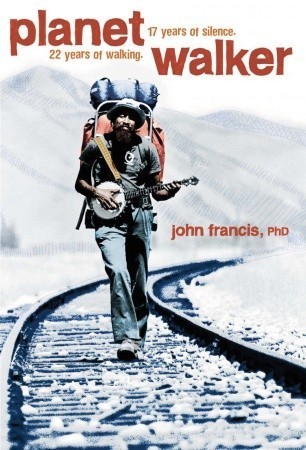
Planetwalker: 22 Years of Walking. 17 Years of Silence.
When the struggle to save oil-soaked birds and restore blackened beaches left him feeling frustrated and helpless, John Francis decided to take a more fundamental and personal stand—he stopped using all forms of motorized transportation. Soon after embarking on this quest that would span two decades and two continents, the young man took a vow of silence that endured for 17 years. It began as a silent environmental protest, but as a young African-American man, walking across the country in the early 1970s, his idea of "the environment" expanded beyond concern about pollution and loss of habitat to include how we humans treat each other and how we can better communicate and work together to benefit the earth.
Through his silence and walking, he learned to listen, and along the way, earned college and graduate degrees in science and environmental studies. The United Nations appointed him goodwill ambassador to the world’s grassroots communities and the U.S. government recruited him to help address the Exxon Valdez disaster.
Was he crazy? How did he live and earn all those degrees without talking? An amazing human-interest story, with a vital message, Planetwalker is also a deeply personal and engaging coming-of-age odyssey—the positive experiences, the challenging times, the characters encountered, and the learning gained along the way.
Through his silence and walking, he learned to listen, and along the way, earned college and graduate degrees in science and environmental studies. The United Nations appointed him goodwill ambassador to the world’s grassroots communities and the U.S. government recruited him to help address the Exxon Valdez disaster.
Was he crazy? How did he live and earn all those degrees without talking? An amazing human-interest story, with a vital message, Planetwalker is also a deeply personal and engaging coming-of-age odyssey—the positive experiences, the challenging times, the characters encountered, and the learning gained along the way.
288 pages, Hardcover
First published March 1, 2005
Ratings & Reviews
Friends & Following
Create a free account to discover what your friends think of this book!
Community Reviews
Displaying 1 - 30 of 150 reviews

May 17, 2014
John Francis was witness to the 1971 oil spill in the San Francisco Bay. I wasn't alive yet, but I was alive during the whole Exxon Valdez horror in 1989. It was a common topic that year in my class during Current Events - all those awful pictures of the poor animals covered in oil made quite an impression on me. I was only 11 but I already was angry that such a thing could happen. TEH ANIMALS, I ranted. (Quietly, of course, because I was a pretty quiet 11-year-old.)
Francis was a young man in 1971 and the impression left on him was even larger. His answer was to give up motorized vehicles entirely. He was going to walk, man, he wouldn't hitch a ride from anyone in a plane, train, or automobile. He began to hoof it everywhere, and made it a mission of his to spread the word about environmentalism, all while on foot. A few years after that he realized that arguing with people whose minds were closed was not the way to go about it either. He took a vow of silence. He became a silent walking environmentalist. He wanted to prove that you don't have to yell to make a point. In fact, you don't always even have to open your mouth at all. His gift to his community on his 24th birthday was to no longer communicate verbally. So, um, yeah, 22 years of walking. 17 years of silence. How long can you walk? Or not speak?
As a person who enjoys silence, I can appreciate that. I think people are entirely too loud - so often people are incapable of sitting in a quiet room by themselves without the TV playing, or the radio on, or having to be around people constantly and constantly talking. These people are scared of something - themselves, maybe, and I feel for them. People talk so much that they don't hear themselves or others talking back. People get so wrapped up in their own importance that they can no longer see beyond the end of their own nose, or are so wrapped up in their convictions that they cannot imagine an alternative point of view. Francis was tired of arguing with people he met - that wasn't the answer.
In his mission of crossing the country solely on foot and while primarily silent, he meets a wide variety of people. Unfortunately he almost exclusively discusses the positive encounters along the way, with few exceptions. This is unlikely because, let's face it, people are assholes, especially when they don't understand what someone else is doing, and I find it hard to believe that there weren't more than like the three or four occasions he described. But the point really is the amount of people he touched along the way - by never speaking a word.
Again, as someone who has (more than once) been accused of being "too quiet", I'd like to beat those accusers over the head with this book. These people are, again, the ones who are so busy being loud and supposedly "making a point" that they are incapable of even listening to their own words, let alone the words of the people around them. They wouldn't know a true conviction if it bit them in the ass.
Francis also accomplished during his journey a degree. And then another degree. And then a Master's. And then his Doctorate. I mean, really. With never opening his mouth! He didn't sit on his haunches and have this stuff handed to him, either. He worked. He made it work. I don't know if it would still be possible today in 2014, but I respect the efforts he made to increase his education in order to further his mission. Kudos, my man.
So, while I enjoyed this book, the only reason I didn't like it more is that about halfway through the book it becomes less about his experiences and more about the individuals he meets along the way. And he gives no hefty explanation about most of them. "And then I met this person. And he thought what I was doing was neat. Later I met this other person." (Paraphrasing here, folks.) That was tedious after a while and made me sad that this was his focus. He had such an incredible story to tell, but the fact that this was his focus for so much of the book made me wonder why. They weren't even really good illustrations about how he was touching people on the road. Or if that was his point, I don't think it worked really well.
Throughout the book are some of his own illustrations in the margins. He followed the example of Picasso who did one sketch a day. Francis would sketch (or paint with water colors) one thing he saw each day - a sunrise, a tree, a bug, a split rail fence. I enjoyed that, as well as the haikus between each entry. I'm a fan of haiku.
So Francis was a man with a plan (and a banjo), doing his thing, "talking" his talk, and setting an example wherever he went. His story is incredible, and I am glad I read his book. I understand (Wikipedia!) that there was talk of movie rights in 2006, but I haven't heard anything about this. Will Smith was rumored to have been interested. Because of course.
For the record, I am also primarily on foot. I don't drive. I do, however, ride the bus daily, and I am often a passenger in other's cars (and love planes and trains). My reasons for hoofing it are mostly different from Francis's but I still feel a special kinship with him.
Now, seriously. Turn off social media and just sit in silence for a while. I guarantee you'll feel better. And take a walk while you're at it. Remember teh animals!
Francis was a young man in 1971 and the impression left on him was even larger. His answer was to give up motorized vehicles entirely. He was going to walk, man, he wouldn't hitch a ride from anyone in a plane, train, or automobile. He began to hoof it everywhere, and made it a mission of his to spread the word about environmentalism, all while on foot. A few years after that he realized that arguing with people whose minds were closed was not the way to go about it either. He took a vow of silence. He became a silent walking environmentalist. He wanted to prove that you don't have to yell to make a point. In fact, you don't always even have to open your mouth at all. His gift to his community on his 24th birthday was to no longer communicate verbally. So, um, yeah, 22 years of walking. 17 years of silence. How long can you walk? Or not speak?
As a person who enjoys silence, I can appreciate that. I think people are entirely too loud - so often people are incapable of sitting in a quiet room by themselves without the TV playing, or the radio on, or having to be around people constantly and constantly talking. These people are scared of something - themselves, maybe, and I feel for them. People talk so much that they don't hear themselves or others talking back. People get so wrapped up in their own importance that they can no longer see beyond the end of their own nose, or are so wrapped up in their convictions that they cannot imagine an alternative point of view. Francis was tired of arguing with people he met - that wasn't the answer.
Silence is always with us. But we do not choose silence, silence chooses us. If you are called to be silent on your journey, recognize the invitation as a great gift. It is a gift to be shared with others. Your relationship to silence is one thing that will define the uniqueness of your journey.
p93
In his mission of crossing the country solely on foot and while primarily silent, he meets a wide variety of people. Unfortunately he almost exclusively discusses the positive encounters along the way, with few exceptions. This is unlikely because, let's face it, people are assholes, especially when they don't understand what someone else is doing, and I find it hard to believe that there weren't more than like the three or four occasions he described. But the point really is the amount of people he touched along the way - by never speaking a word.
Again, as someone who has (more than once) been accused of being "too quiet", I'd like to beat those accusers over the head with this book. These people are, again, the ones who are so busy being loud and supposedly "making a point" that they are incapable of even listening to their own words, let alone the words of the people around them. They wouldn't know a true conviction if it bit them in the ass.
Francis also accomplished during his journey a degree. And then another degree. And then a Master's. And then his Doctorate. I mean, really. With never opening his mouth! He didn't sit on his haunches and have this stuff handed to him, either. He worked. He made it work. I don't know if it would still be possible today in 2014, but I respect the efforts he made to increase his education in order to further his mission. Kudos, my man.
So, while I enjoyed this book, the only reason I didn't like it more is that about halfway through the book it becomes less about his experiences and more about the individuals he meets along the way. And he gives no hefty explanation about most of them. "And then I met this person. And he thought what I was doing was neat. Later I met this other person." (Paraphrasing here, folks.) That was tedious after a while and made me sad that this was his focus. He had such an incredible story to tell, but the fact that this was his focus for so much of the book made me wonder why. They weren't even really good illustrations about how he was touching people on the road. Or if that was his point, I don't think it worked really well.
Throughout the book are some of his own illustrations in the margins. He followed the example of Picasso who did one sketch a day. Francis would sketch (or paint with water colors) one thing he saw each day - a sunrise, a tree, a bug, a split rail fence. I enjoyed that, as well as the haikus between each entry. I'm a fan of haiku.
So Francis was a man with a plan (and a banjo), doing his thing, "talking" his talk, and setting an example wherever he went. His story is incredible, and I am glad I read his book. I understand (Wikipedia!) that there was talk of movie rights in 2006, but I haven't heard anything about this. Will Smith was rumored to have been interested. Because of course.
For the record, I am also primarily on foot. I don't drive. I do, however, ride the bus daily, and I am often a passenger in other's cars (and love planes and trains). My reasons for hoofing it are mostly different from Francis's but I still feel a special kinship with him.
Now, seriously. Turn off social media and just sit in silence for a while. I guarantee you'll feel better. And take a walk while you're at it. Remember teh animals!

January 22, 2014
This novel was tedious and confused and lacked any real direction. John Francis will tell you the journey is the thing, not the destination, but after pages and pages of unexplored 'beliefs' that lead him to renounce speaking and riding in cars, and even more pages of lackluster haikus and an inexplicable tendency to only cross paths with people who fully support his decision and are fully able to translate his silent pantomimes without struggle, I felt like the story wasn't telling the whole truth, and I wondered when Francis would be diagnosed schizophrenic.
John Francis allegedly has some concrete and solid feelings about pollution and pilgrimage, but he lacks the skills to articulate what it is he stands for exactly. His sudden changes of heart and switches in obsessive thinking seems to be brought on so suddenly and often laced with absurd paranoia (photographs stealing one's soul) that it was really hard to connect with his character. I wanted to, oh you better believe I wanted to be invested in the guy on the cover, walking the tracks and strumming his banjo happily, but I truly could not find him to be a credible source of anything, really. Francis uproots his life despite some (unrealistically mild) protest from friends and family and jumps on any oddball behavior that seems to make him stand out. His mother makes a comment in the beginning of the novel that when one is truly happy, one does not have to announce it. That seems to be the underlying, though unintended tone of the entire story. John Francis seems to try so hard to be different, to be mellow, to be environmental, to be organic to be real that it feels completely and utterly forced and contrived.
I skimmed much of the novel searching for anything of value, and while there were moments of pleasant journalling depicting seagulls, waterways, silence and mountains, there is a shocking little of substance in oh so many pages.
I admit I didn't finish reading it. Something I rarely do is give up on a novel, but this story felt like banging my head against a wall.
John Francis allegedly has some concrete and solid feelings about pollution and pilgrimage, but he lacks the skills to articulate what it is he stands for exactly. His sudden changes of heart and switches in obsessive thinking seems to be brought on so suddenly and often laced with absurd paranoia (photographs stealing one's soul) that it was really hard to connect with his character. I wanted to, oh you better believe I wanted to be invested in the guy on the cover, walking the tracks and strumming his banjo happily, but I truly could not find him to be a credible source of anything, really. Francis uproots his life despite some (unrealistically mild) protest from friends and family and jumps on any oddball behavior that seems to make him stand out. His mother makes a comment in the beginning of the novel that when one is truly happy, one does not have to announce it. That seems to be the underlying, though unintended tone of the entire story. John Francis seems to try so hard to be different, to be mellow, to be environmental, to be organic to be real that it feels completely and utterly forced and contrived.
I skimmed much of the novel searching for anything of value, and while there were moments of pleasant journalling depicting seagulls, waterways, silence and mountains, there is a shocking little of substance in oh so many pages.
I admit I didn't finish reading it. Something I rarely do is give up on a novel, but this story felt like banging my head against a wall.
June 18, 2007
I saw the author, Dr. John Francis, tell his story about a year ago and I was intrigued. Out of his personal conviction to be an "environmental practitioner", he didn't speak for 17 years and didn't ride in motorized vehicles for 20 years. (Yes, that's a LOT of miles logged on foot!) He witnessed an oil spill in the San Francisco Bay in 1971, which provided the impetus for his personal journey and pilgrimage on foot. He obtained both a Master's and PhD, when he was not speaking, although defended his diss. by speakerphone. He currently lives in Pt. Reyes Station, close to SF. I enjoyed the local references, his journal writing style, his conviction, (without preachiness), and his willingness to be himself and share his journey with us. It's a good reminder to enjoy nature and to follow one's beliefs, no matter how crazy they seem.

December 6, 2007
I was given this book by a friend's mom after being so personally impacted by the recent oil spill in San Francisco, and was completely thrilled with this unexpected little treat. It's a wonderful book to read if you are spiritually concerned about the environmental state of the 21st century and want a radical, yet approachable, voice. Francis' style flows the way that I imagine he walks and plays the banjo.

March 9, 2022
This was so inspiring and made me dream. Soooo glad I learned about this book what a gem. 4 stars cause it maybe should’ve been longer imo. I loved the illustrations in the margins.
July 3, 2009
I have seen a Ted talk by John Francis and he was a humble, caring and funny man. I was very impressed with him as a person and for his dedication to caring for our planet. I would give 5 stars if I was assessing him as a person, however the book falls short of showing the true nature and soul searching he goes through on his 22 years of walking and 17 years of silence. It reads more like a travelogue than the profound journey it surely was. He leaves much of his emotional response to his personal life out of the book and you only find out he is going to marry a woman he met years before at the end of the book. Of course, this is ok, however, this reticence to express his deepest emotions could be felt throughout the book. Perhaps his 17 years of silence, rather than the written word, was the expression of his deepest emotions.
At the beginning of the book, John Francis, who was in his 20s, states he decided to start walking when he saw the extensive damage an oil spill caused to the environment and to stop speaking when he realised what an arrogant young man he was; always trying to push his opinion down other people's throats and never allowing them to speak! For me, this is the response of a very sensitive and emotional young man. Therefore, for his 22 years of walking and 17 years of silence I also give John Francis 5 stars.
At the beginning of the book, John Francis, who was in his 20s, states he decided to start walking when he saw the extensive damage an oil spill caused to the environment and to stop speaking when he realised what an arrogant young man he was; always trying to push his opinion down other people's throats and never allowing them to speak! For me, this is the response of a very sensitive and emotional young man. Therefore, for his 22 years of walking and 17 years of silence I also give John Francis 5 stars.
June 7, 2022
Since graduating and realizing that life is upon me I’ve been grappling with how I will leave my mark on the world, or more accurately, will I leave any mark at all? Where do I even start? I’m sure these questions have baffled many great people throughout history. Through passion, frustration, and perseverance, John Francis attempts to enlighten us with Planet Walker. “I realize that maybe you can’t change the world by your actions alone, but you can change yourself. And when you do, the world around you may change by attempting to understand you, as we all try to understand each other.”
October 30, 2008
I did like the book--I do like the author--BUT....when John Francis chose not to speak--when he chose to sign,write,and pantomime as a means of communicating, there was no TRUE silence...The author savored music--his own (banjo), as well as the music of others, heard the beauty of nature, rain,thunderstorms,wind,leaves rustling under feet, snow crunching under boots,birds, insects,and on and on--and of course with that, traffic and jackhammers and sirens as well. He heard the sweetness of his mothers voice...So he got to live in the deaf world--well except for the part where you can't hear. You cannot call it a gimmick--because Mr. Francis is too passionate about his cause (environmental issues) and used silence to promote said cause for such a very long time. I respect his commitment--but I don't understand the true benefit of not speaking...I think the walking was the message. Perhaps I wanted him to be like the character on Northern Exposure that spoke very little--while saying alot. Or, maybe I see it as disrespectful to not use that working instrument when not everyone gets the blessing of speech. I wish Mr. Francis well in all of his endeavors and thank him for all of the food for thought.

August 16, 2010
I have deep respect for John Francis and his dedication to his endless self-discovery. Motivated by a disastrous oil spill, Mr. Francis set out on what turned out to be a 17-year silent adventure. All I have to say is that anyone capable of earning a PhD without verbalizing one word deserves credibility and admiration. What an incredible journey!

July 24, 2023
I loved the effort that Dr. Francis put into his mission. I just wish I’d heard more about it in his book. He really seems like a remarkable man. About half way through the biography lost its focus, and I did too. It’s taken me about two years reading this book off and on to finish it. And I rarely put books down. Great message. Took a while to get there, though.
September 26, 2024
This is a really wonderful story. I felt the author was very to the point without embellishment which created periods of lull in the story and pockets of great wisdom to create pause. The overall feel of reading was similar to going on a long walk and reminded me of a similar effect I experienced reading Moby Dick. I was grateful that the author seemed to make an intensional effort not to glamorize a pilgrimage. Despite that, I was still left with the allure and curiosity of starting one (and resources in doing so). The author does an immaculate job of emulating the concept of oneness into a tangible example of lifelong practice.
January 30, 2026
oh John Francis, how did you make this boring

February 7, 2022
This book reads like a journal. It's an easy read, well written, and keeps one guessing about why one would go mainly solo walking for 22 years and not talking for 17 years. It ends still leaveing me with the two questions raised in the book: Did John's walks and silence change the world or was his real contribution enlisting the group of people who published and distributed his newsletter and promoted him? His time writing and drawing and making like minded friends could have been accomplished while taking a five mile hike around his home. The different places he hikes are generally described in the context of how difficult it is for walkers to get from one place to anther instead of describing the beauty of nature. An interesting book, but one I would not have picked up if it wasn't suggested for a book discussion.
August 10, 2015
I LOVE the story of John Francis, whom I first heard in a TED talk. After witnessing an oil spill in the Pacific Ocean, he forgoes automobiles and speech for decades. The book is more of a diary than a cohesive narrative, which didn't totally work for me. Fascinating and inspiring guy, though.

April 19, 2020
“Each one of us, through our own impossible journey, has this capacity to change and make a difference in our world.” (p.276)
Disturbed by witnessing a major oil spill in San Francisco Bay in 1971, John Francis decides to stop using motorized vehicles. Two years later, impressed by the stillness found in listening during a day spent silent, he vows to spend the next year in silence. Francis ends up renewing his vow each year for the remainder of the 1970’s and ‘80s, not speaking for seventeen years. He doesn’t use any type of motorized vehicle for 22 years of his life. In this book Francis narrates how he became an environmentalist, walked across the US, founded the Planetwalk organization, earned a doctoral degree in environmental studies, became an UN Goodwill Ambassador and advises the US federal government on oil spill regulations.
So first of all the author is clearly a badass! Seeing as I’m very interested in the environment, activism and spirituality, and I tend to like memoirs and travel accounts, I was excited to read this book. I enjoyed most parts of it, especially the profound insights Francis shares about his journey. However if judging the book from a literary pov it could’ve been written a little bit better. I rate this book 4/5 stars.
I really appreciated the first half of the book, starting with Francis’ youth in Philadelphia and then skipping to the oil spill in 1971. Francis views the environmental threat as an universal threat, and dreams big. Still, while aspiring to changing the world, his actions are humble. One step at a time Francis takes us with him from California to Washington, across the Rocky Mountains and the plains beyond.
“Sometimes my spirit soars as I climb the several thousand feet over the mountain, simply following the path before me. Other times, it slogs along with me through the mud, brushing against the wet grass and the purple and gold wildflowers.” (p. 116)
The book loses a bit of focus in the second half. These chapters are a patchwork of different people briefly met on the road, time measured by the changing of the seasons and the journey crossing state lines. The book picks up towards the end. After Francis reaches Washington D.C., his journey is described in snapshots and not in full. Here Francis includes only key moments relating to his work as an environmentalist, such as feeling touched by being accompanied by hundreds of people on a walk.
Maybe it’s fitting that a book dedicated to walking, also adopts the pace of a journey on foot. At times I was frustrated at failing to read more than two chapters each day. I also felt invited to accept the natural pace of things.
“Inside I feel heavy, torn between wanting to make a forced march around the globe so that I can get on with my life, and the knowledge that walking and the journey is my life. It will unfold at its own pace.” (p. 215)
Throughout the book, there is no mention of romantic relationships, even though Francis mentions marrying in the epilogue. I truly respect his choice not to share intimate details, but from the story’s pov it’s an unfortunate one. For me, the internal reflections Francis makes on his life and journey were the absolute strong suit of this story. A decision to cut out a part of the author’s personal life erodes the narrative. The touching story arc about his father’s acceptance redeems this in part, but not fully.
If you want to read an inspiring memoir about a man who, through hard work and dedication, succeeds in doing something many thought impossible, you should read this book! Prepare to feel inspired!
Disturbed by witnessing a major oil spill in San Francisco Bay in 1971, John Francis decides to stop using motorized vehicles. Two years later, impressed by the stillness found in listening during a day spent silent, he vows to spend the next year in silence. Francis ends up renewing his vow each year for the remainder of the 1970’s and ‘80s, not speaking for seventeen years. He doesn’t use any type of motorized vehicle for 22 years of his life. In this book Francis narrates how he became an environmentalist, walked across the US, founded the Planetwalk organization, earned a doctoral degree in environmental studies, became an UN Goodwill Ambassador and advises the US federal government on oil spill regulations.
So first of all the author is clearly a badass! Seeing as I’m very interested in the environment, activism and spirituality, and I tend to like memoirs and travel accounts, I was excited to read this book. I enjoyed most parts of it, especially the profound insights Francis shares about his journey. However if judging the book from a literary pov it could’ve been written a little bit better. I rate this book 4/5 stars.
I really appreciated the first half of the book, starting with Francis’ youth in Philadelphia and then skipping to the oil spill in 1971. Francis views the environmental threat as an universal threat, and dreams big. Still, while aspiring to changing the world, his actions are humble. One step at a time Francis takes us with him from California to Washington, across the Rocky Mountains and the plains beyond.
“Sometimes my spirit soars as I climb the several thousand feet over the mountain, simply following the path before me. Other times, it slogs along with me through the mud, brushing against the wet grass and the purple and gold wildflowers.” (p. 116)
The book loses a bit of focus in the second half. These chapters are a patchwork of different people briefly met on the road, time measured by the changing of the seasons and the journey crossing state lines. The book picks up towards the end. After Francis reaches Washington D.C., his journey is described in snapshots and not in full. Here Francis includes only key moments relating to his work as an environmentalist, such as feeling touched by being accompanied by hundreds of people on a walk.
Maybe it’s fitting that a book dedicated to walking, also adopts the pace of a journey on foot. At times I was frustrated at failing to read more than two chapters each day. I also felt invited to accept the natural pace of things.
“Inside I feel heavy, torn between wanting to make a forced march around the globe so that I can get on with my life, and the knowledge that walking and the journey is my life. It will unfold at its own pace.” (p. 215)
Throughout the book, there is no mention of romantic relationships, even though Francis mentions marrying in the epilogue. I truly respect his choice not to share intimate details, but from the story’s pov it’s an unfortunate one. For me, the internal reflections Francis makes on his life and journey were the absolute strong suit of this story. A decision to cut out a part of the author’s personal life erodes the narrative. The touching story arc about his father’s acceptance redeems this in part, but not fully.
If you want to read an inspiring memoir about a man who, through hard work and dedication, succeeds in doing something many thought impossible, you should read this book! Prepare to feel inspired!

April 5, 2021
I feel a bit late to the party as I have just caught up to John Francis' story, which should have been on my radar sooner. I would have been a kid when he was being featured on the evening news and in a number of human interest and environmental-related stories. Thankfully, through the Joy Trip Reading Project, I am making a belated acquaintance with his work and the early days of the environmental non-profit he founded.
As a book, Planetwalker is a little drop-in on a couple of key early years in Francis' evolution as an environmental practitioner (his term). In that regard, it is entirely successful. It's readable, the illustrations (copies of things he sketched or painted on his sojourn) are lovely, and it is well written and a topic of great interest to me. The snippets of poems and other dated epithets are crucial to placing the action in time as it moves, much like life, in fits and starts. The book, published by the National Geographic Society, offers first person storytelling that feels a little sanitized--that is, offensive to none. (That last point is not a criticism and may say more about me than him. In retrospect, it's because his larger point of getting us to listen to one another and expect the best of the other person if we are to be able to achieve meaningful change.) In other words, it has the benefit of hindsight and knowing how (and that!) things worked out and, as such, it occasionally feels a bit emotionally detached from the people and circumstances it describes. Most notable to me was the matter of fact way in which it refers to the death of two people in the Epilogue. My point here is that the author lets the reader in, but only so far.
I would definitely be keen to hear Francis speak, and hope that he will be communicating (whether verbally or non-verbally) with the members of the Joy Trip Reading Group as have several other authors whose works we have read. In the interim, I'll make do with his TED talk at https://www.ted.com/talks/john_franci... and hope that he writes another book at some point to give an update on the intervening chapters of his story and work of his organization.
As a book, Planetwalker is a little drop-in on a couple of key early years in Francis' evolution as an environmental practitioner (his term). In that regard, it is entirely successful. It's readable, the illustrations (copies of things he sketched or painted on his sojourn) are lovely, and it is well written and a topic of great interest to me. The snippets of poems and other dated epithets are crucial to placing the action in time as it moves, much like life, in fits and starts. The book, published by the National Geographic Society, offers first person storytelling that feels a little sanitized--that is, offensive to none. (That last point is not a criticism and may say more about me than him. In retrospect, it's because his larger point of getting us to listen to one another and expect the best of the other person if we are to be able to achieve meaningful change.) In other words, it has the benefit of hindsight and knowing how (and that!) things worked out and, as such, it occasionally feels a bit emotionally detached from the people and circumstances it describes. Most notable to me was the matter of fact way in which it refers to the death of two people in the Epilogue. My point here is that the author lets the reader in, but only so far.
I would definitely be keen to hear Francis speak, and hope that he will be communicating (whether verbally or non-verbally) with the members of the Joy Trip Reading Group as have several other authors whose works we have read. In the interim, I'll make do with his TED talk at https://www.ted.com/talks/john_franci... and hope that he writes another book at some point to give an update on the intervening chapters of his story and work of his organization.
September 13, 2024
“The environmental crisis is an outward manifestation of a crisis of mind and spirit. There could be no greater misconception of its meaning than to believe it to be concerned only with endangered wildlife, human-made ugliness, and pollution. These are part of it, but more importantly, the crisis is concerned with the kind of creatures we are and what we must become if we are to survive”
A friend gave me this book and said it was her all time favorite book, high praise to live up to. I was intrigued by Dr Francis’ journey and philosophy, but disappointed by the book itself, which, as others say, is much more a travel journal (on X date, I reached Y place and stayed with Z person). Following his journey does inspire me to want to vanish into the mountains and wilderness as well, though.
On the one hand, this is a testament to appreciating beauty in the journey and principles. On the other hand, this is more so a list of a few people he’s bumped into along his 22 years rather than a view into his philosophy and learnings along the way. Beyond arbitrarily naming folks and commenting how often he’s praised as a saint, there is limited content. It’s wrong to entitled to the 22+ years of lessons and thoughts of Dr Francis, I recognize, though in the final few pages he alludes to deeper messages, but does not develop the thoughts further in the book. An “environmental practitioner” versus an “environmentalist” for example, is an intriguing concept to me as someone who works on climate related issues, but this is not a book which engages in these dialogues.
A friend gave me this book and said it was her all time favorite book, high praise to live up to. I was intrigued by Dr Francis’ journey and philosophy, but disappointed by the book itself, which, as others say, is much more a travel journal (on X date, I reached Y place and stayed with Z person). Following his journey does inspire me to want to vanish into the mountains and wilderness as well, though.
On the one hand, this is a testament to appreciating beauty in the journey and principles. On the other hand, this is more so a list of a few people he’s bumped into along his 22 years rather than a view into his philosophy and learnings along the way. Beyond arbitrarily naming folks and commenting how often he’s praised as a saint, there is limited content. It’s wrong to entitled to the 22+ years of lessons and thoughts of Dr Francis, I recognize, though in the final few pages he alludes to deeper messages, but does not develop the thoughts further in the book. An “environmental practitioner” versus an “environmentalist” for example, is an intriguing concept to me as someone who works on climate related issues, but this is not a book which engages in these dialogues.

July 16, 2017
I met Dr. John Francis while on vacation in Cape May, NJ in July 2017. He was wearing a Wisconsin Badgers cap & I am a fan, so I said hello. We chatted briefly and he tols us about his walking & his vow of silence. I was fascinated & got this book from the library immedaitely upon our return. Dr. Francis has had an amazing life and I feel I now know him as a result of his writing and his painting/drawing. A man of conviction, caring and fellowship, he has traversed our nation and others on his mission to start conversations about the environment - whatever that means to us. the world NEEDS more people like Dr. Francis. This is an inspiring look into his life and his life's work that I feel privaledged to share.

November 20, 2021
“The beauty of the simple grass. I do not know why my eyes turn to tears, except that often there is pain in beauty”
John Francis is not your average pot smoking, 70’s tree-hugger; his environmental transcendentalism is akin to that of Henry David Thoreau, who believed humanity and nature are intrinsic to one another, not at odds. Planet Walker’s environmental message rings clear throughout the entire novel: humanity and ambience are extensions of one another. They are reflections of one another. In the words of Francis himself, “environment is about how we treat each other when we meet each other”. Sure, Francis’ messages throughout the novel may read to many as tinny and superficially optimistic; his hippie, “give-peace-a-chance” schtick may come off as a phony John Lennon impersonation, but his promotion of Earth stewardship and his environmental conscious are nothing short of beautifully authentic. Francis dove deep into humanity’s ancestral roots and found himself desperate to understand and appreciate the planet he ardently defended: “look at the wilderness as a place where people, shaped by civilization, could go to be recreated and refreshed, not as a resource to be exploited for its minerals, timber, and wildfire”.
John Francis is not your average pot smoking, 70’s tree-hugger; his environmental transcendentalism is akin to that of Henry David Thoreau, who believed humanity and nature are intrinsic to one another, not at odds. Planet Walker’s environmental message rings clear throughout the entire novel: humanity and ambience are extensions of one another. They are reflections of one another. In the words of Francis himself, “environment is about how we treat each other when we meet each other”. Sure, Francis’ messages throughout the novel may read to many as tinny and superficially optimistic; his hippie, “give-peace-a-chance” schtick may come off as a phony John Lennon impersonation, but his promotion of Earth stewardship and his environmental conscious are nothing short of beautifully authentic. Francis dove deep into humanity’s ancestral roots and found himself desperate to understand and appreciate the planet he ardently defended: “look at the wilderness as a place where people, shaped by civilization, could go to be recreated and refreshed, not as a resource to be exploited for its minerals, timber, and wildfire”.

April 13, 2021
I found this book and more importantly its author through a Google search of something like..."nature writing not by white people." Planetwalker showed up at the top of the list, and fortunately my progressive library had a copy. Before I'd finished the book I'd purchased both of Dr Francis' books online. True, a journey of 40 years in under 300 pages is going to be a bit overwhelming to read at times. The book definitely departs from memoir and becomes more of a travel journal. But what a journey it is, undertaken by an extraordinary human being. The pages are also filled with his sketches and haiku, which round out the portrait of this remarkable man.

December 10, 2021
how had it taken me this long in life to learn about john francis?
not only did he give up using cars and all other motor vehicles after witnessing the devastation of the 1971 oil spill, but he travelled across the country by foot without speaking at all, eventually learning sign language, how to play banjo, and watercoloring, and he constantly engaged in the world around him meeting people in remote and hugely populated areas. He even got his masters in Montana and his PhD in Wisconsin in land resources before eventually headed back to visit family in Philly and being employed by the US Coast Guard in regards to oil policies. And all along the way he worked to learn about peace and environmentalism and what individual roles one can take to help in this limited lifespan we humans possess.
not only did he give up using cars and all other motor vehicles after witnessing the devastation of the 1971 oil spill, but he travelled across the country by foot without speaking at all, eventually learning sign language, how to play banjo, and watercoloring, and he constantly engaged in the world around him meeting people in remote and hugely populated areas. He even got his masters in Montana and his PhD in Wisconsin in land resources before eventually headed back to visit family in Philly and being employed by the US Coast Guard in regards to oil policies. And all along the way he worked to learn about peace and environmentalism and what individual roles one can take to help in this limited lifespan we humans possess.

January 19, 2023
After a 1971 oil spill in San Francisco, John Francis was so brokenhearted that he decided to give up riding in mechanized vehicles, and walked everywhere. A few months later, he took a vow of silence, communicating by sign and in writing, walking north through California and then across the country. He tells of the terrain, weather, animals and people he encountered, and how much he gained by listening rather than talking. At first I was impatient with his decision, especially to stop talking, but as I read I became fascinated with his journey, his growth as a person and an environmentalist, and his ability to connect with people even while silent.
May 19, 2023
Wow. I can’t believe I hadn’t heard about John Francis until I was an adult. Then again, my parents aren’t much into environmental protection.
This is a truly inspiring story of how Francis stopped using gas powered transportation for 22 years and a vow of silence for 17 of those years. Many parts of the book were emotional reminders of the joy of backpacking. It was a joy to revisit in the steps of someone else.
I first heard of this book from Black Faces, White Spaces
Popsugar Reading Challenge 2018: A book mentioned in another book (read in 2023)
This is a truly inspiring story of how Francis stopped using gas powered transportation for 22 years and a vow of silence for 17 of those years. Many parts of the book were emotional reminders of the joy of backpacking. It was a joy to revisit in the steps of someone else.
I first heard of this book from Black Faces, White Spaces
Popsugar Reading Challenge 2018: A book mentioned in another book (read in 2023)

July 13, 2017
I cannot express to you how important it is to celebrate environmental practitioners (Francis' own phrase) of color but maybe Carolyn Finney can: http://www.outsideonline.com/2075586/...
I met John Francis and heard him speak before reading this book. I was inspired by his way of being and communicating but I was left wanting to know more about his philosophy, guiding principles, research, etc. This book gave glimpses of that but read more like a travelogue. I guess I'll have to read The Ragged Edge of Silence as well.
I met John Francis and heard him speak before reading this book. I was inspired by his way of being and communicating but I was left wanting to know more about his philosophy, guiding principles, research, etc. This book gave glimpses of that but read more like a travelogue. I guess I'll have to read The Ragged Edge of Silence as well.

July 3, 2018
A gorgeous book that served as an ode to nature. Dr. Francis pushed the limits of what I may think is possible and took me on his journey, helping me to understand the capacity within myself. The accompanying haikus and drawings are a nod to the beauty of simplicity. I actually wrote Dr. Francis after reading this book to send him appreciation for his journey and for sharing his life and work. I was also left with a renewed inention to work toward decreasing my carbon footprint and paying closer attention to our impact on the earth.

July 7, 2020
Toward the end of the book I slowed my reading pace because I didn't want it to end. I wanted to keep walking with John Francis. His book is a meditation on silence, living in connection with the environment, living a personal mission and more. I highly recommend this book to anyone who cares about the environment and who is seeking to find their own place as part of the environment. I also recommend it to those interested in unique personal journeys. Personally I dwelt on his silence and what it meant for him and what it could mean for me.

November 23, 2021
Sesli kitap olarak audible ile dinledim. Dr Francis'in bazı motivasyonlarını tam olarak içselleştiremesem da hikayesini dinlediğim ve öğrendiğim için mutluyum. İnandığı bir düşünce uğruna çıktığı yolda, yolculuğunun ilerlemesiyle arkasında bıraktığı etkinin ve ulaştığı kitlenin büyümesini görmek keyifliydi.
Ekleme: Dr Francis'in TED konuşmasını kitabı okuduktan sonra dinledim. Keşke kitabı okumadan önce izleseydim. Bu haliyle her şey çok daha doğru bir şekilde oturdu aklımda. Videoyu izlemeden önce 4 yıldız olan değerlendirmemi 5'e döndürdüm sonrasında.
Ekleme: Dr Francis'in TED konuşmasını kitabı okuduktan sonra dinledim. Keşke kitabı okumadan önce izleseydim. Bu haliyle her şey çok daha doğru bir şekilde oturdu aklımda. Videoyu izlemeden önce 4 yıldız olan değerlendirmemi 5'e döndürdüm sonrasında.

April 1, 2022
“There are always people who dare to seek on the margin of society, who are not dependent on social acceptance, not dependent on social routine, and prefer a kind of free-floating existence under a state of risk. And among these people, if they are faithful to their own calling, to their own vocation and to their own message, communication on the deepest level is possible. And the deepest level of communication is not communication, but communion. It is wordless. It is beyond words and it is beyond speech, and it is beyond concept.” -Thomas Merton

July 23, 2024
3.5 stars
My brother recommended this book to me and I'm glad I read it. Dr. Francis's life is fascinating and his courage and sheer determination to not talk for 17 years, while getting a PhD and traveling across the nation by walking , all for a cause greater than himself is really something. I respect his decision and feel that this book also gave a glimpse of what the vibes were like in the 1970's. There were so many interesting characters he met along his journey that really encapsulated what the world was like in the 1970's, and it seemed pretty groovy.
My brother recommended this book to me and I'm glad I read it. Dr. Francis's life is fascinating and his courage and sheer determination to not talk for 17 years, while getting a PhD and traveling across the nation by walking , all for a cause greater than himself is really something. I respect his decision and feel that this book also gave a glimpse of what the vibes were like in the 1970's. There were so many interesting characters he met along his journey that really encapsulated what the world was like in the 1970's, and it seemed pretty groovy.
March 19, 2019
I forget how this came to my attention, maybe through a TED Talk, but I found a copy online purported to be in "like new" condition. It arrived with underlines, high-lighting and marks on every page, with colored post-its galore and dog-ears throughout; I nearly tossed it in the recycle bin. I'm very glad I didn't -- those distractions disappeared as soon as I began to read.
A deeply engrossing story of journey, pilgrimage, transformation.
A deeply engrossing story of journey, pilgrimage, transformation.
Displaying 1 - 30 of 150 reviews