

What do you think?

Война на реалности
Ормузд и Ариман, две божества властващи над космическите сили, са вкопчени в титанична битка над едно малко градче в Апалачите, което дори не би трябвало да съществува. Схватка, чието бойно поле е вселената и която ще засегне самата тъкан на реалността. Завесата на космическия хаос е на път да се спусне, освен ако Тед Бартън не намери сили да й попречи.
Само че в този град, Бартън е починал преди много години…
Само че в този град, Бартън е починал преди много години…
224 pages, Paperback
First published October 1, 1957
About the author
Philip K. Dick
1,943 books23.3k followersPhilip Kindred Dick was a prolific American science fiction author whose work has had a lasting impact on literature, cinema, and popular culture. Known for his imaginative narratives and profound philosophical themes, Dick explored the nature of reality, the boundaries of human identity, and the impact of technology and authoritarianism on society. His stories often blurred the line between the real and the artificial, challenging readers to question their perceptions and beliefs.
Raised in California, Dick began writing professionally in the early 1950s, publishing short stories in various science fiction magazines. He quickly developed a distinctive voice within the genre, marked by a fusion of science fiction concepts with deep existential and psychological inquiry. Over his career, he authored 44 novels and more than 100 short stories, many of which have become classics in the field.
Recurring themes in Dick's work include alternate realities, simulations, corporate and government control, mental illness, and the nature of consciousness. His protagonists are frequently everyday individuals—often paranoid, uncertain, or troubled—caught in surreal and often dangerous circumstances that force them to question their environment and themselves. Works such as Ubik, The Three Stigmata of Palmer Eldritch, and A Scanner Darkly reflect his fascination with perception and altered states of consciousness, often drawing from his own experiences with mental health struggles and drug use.
One of Dick's most influential novels is Do Androids Dream of Electric Sheep?, which served as the basis for Ridley Scott's iconic film Blade Runner. The novel deals with the distinction between humans and artificial beings and asks profound questions about empathy, identity, and what it means to be alive. Other adaptations of his work include Total Recall, Minority Report, A Scanner Darkly, and The Man in the High Castle, each reflecting key elements of his storytelling—uncertain realities, oppressive systems, and the search for truth. These adaptations have introduced his complex ideas to audiences well beyond the traditional readership of science fiction.
In the 1970s, Dick underwent a series of visionary and mystical experiences that had a significant influence on his later writings. He described receiving profound knowledge from an external, possibly divine, source and documented these events extensively in what became known as The Exegesis, a massive and often fragmented journal. These experiences inspired his later novels, most notably the VALIS trilogy, which mixes autobiography, theology, and metaphysics in a narrative that defies conventional structure and genre boundaries.
Throughout his life, Dick faced financial instability, health issues, and periods of personal turmoil, yet he remained a dedicated and relentless writer. Despite limited commercial success during his lifetime, his reputation grew steadily, and he came to be regarded as one of the most original voices in speculative fiction. His work has been celebrated for its ability to fuse philosophical depth with gripping storytelling and has influenced not only science fiction writers but also philosophers, filmmakers, and futurists.
Dick's legacy continues to thrive in both literary and cinematic spheres. The themes he explored remain urgently relevant in the modern world, particularly as technology increasingly intersects with human identity and governance. The Philip K. Dick Award, named in his honor, is presented annually to distinguished works of science fiction published in paperback original form in the United States. His writings have also inspired television series, academic studies, and countless homages across media.
Through his vivid imagination and unflinching inquiry into the nature of existence, Philip K. Dick redefined what science fiction could achieve. His wor
Raised in California, Dick began writing professionally in the early 1950s, publishing short stories in various science fiction magazines. He quickly developed a distinctive voice within the genre, marked by a fusion of science fiction concepts with deep existential and psychological inquiry. Over his career, he authored 44 novels and more than 100 short stories, many of which have become classics in the field.
Recurring themes in Dick's work include alternate realities, simulations, corporate and government control, mental illness, and the nature of consciousness. His protagonists are frequently everyday individuals—often paranoid, uncertain, or troubled—caught in surreal and often dangerous circumstances that force them to question their environment and themselves. Works such as Ubik, The Three Stigmata of Palmer Eldritch, and A Scanner Darkly reflect his fascination with perception and altered states of consciousness, often drawing from his own experiences with mental health struggles and drug use.
One of Dick's most influential novels is Do Androids Dream of Electric Sheep?, which served as the basis for Ridley Scott's iconic film Blade Runner. The novel deals with the distinction between humans and artificial beings and asks profound questions about empathy, identity, and what it means to be alive. Other adaptations of his work include Total Recall, Minority Report, A Scanner Darkly, and The Man in the High Castle, each reflecting key elements of his storytelling—uncertain realities, oppressive systems, and the search for truth. These adaptations have introduced his complex ideas to audiences well beyond the traditional readership of science fiction.
In the 1970s, Dick underwent a series of visionary and mystical experiences that had a significant influence on his later writings. He described receiving profound knowledge from an external, possibly divine, source and documented these events extensively in what became known as The Exegesis, a massive and often fragmented journal. These experiences inspired his later novels, most notably the VALIS trilogy, which mixes autobiography, theology, and metaphysics in a narrative that defies conventional structure and genre boundaries.
Throughout his life, Dick faced financial instability, health issues, and periods of personal turmoil, yet he remained a dedicated and relentless writer. Despite limited commercial success during his lifetime, his reputation grew steadily, and he came to be regarded as one of the most original voices in speculative fiction. His work has been celebrated for its ability to fuse philosophical depth with gripping storytelling and has influenced not only science fiction writers but also philosophers, filmmakers, and futurists.
Dick's legacy continues to thrive in both literary and cinematic spheres. The themes he explored remain urgently relevant in the modern world, particularly as technology increasingly intersects with human identity and governance. The Philip K. Dick Award, named in his honor, is presented annually to distinguished works of science fiction published in paperback original form in the United States. His writings have also inspired television series, academic studies, and countless homages across media.
Through his vivid imagination and unflinching inquiry into the nature of existence, Philip K. Dick redefined what science fiction could achieve. His wor
Ratings & Reviews
Friends & Following
Create a free account to discover what your friends think of this book!
Community Reviews
Displaying 1 - 30 of 453 reviews

March 8, 2020
"Maybe he wasn't Ted Barton. False memories. Even his name, his identity. The whole contents of his mind - everything. Falsified...But if he wasn't Ted Barton - then who was he?"

After reading lots of PK Dick short stories, it was interesting to read something with even more twists and turns. PK Dick's "Cosmic Puppets" is more developed and each twist is fun. The story isn't just about Ted Barton or the characters he first meets when he visits Millgate. The small town is a battleground with supernatural forces vying for control over what is real. The ending is somewhat weak but "Cosmic Puppets" is still a fun read! 3.5 stars
After reading lots of PK Dick short stories, it was interesting to read something with even more twists and turns. PK Dick's "Cosmic Puppets" is more developed and each twist is fun. The story isn't just about Ted Barton or the characters he first meets when he visits Millgate. The small town is a battleground with supernatural forces vying for control over what is real. The ending is somewhat weak but "Cosmic Puppets" is still a fun read! 3.5 stars

August 19, 2014
Go into an old friend’s house. Look on the walls, in pleasant frames on end tables and on the kitchen counter. You see someone who looks like your friend: younger, taller, more hair, broader of shoulder and smaller of waist. See the younger self, not older nor wiser, but green, full of kinetic energy and verve.
This is how I read Philip K. Dick’s 1957 publication, The Cosmic Puppets. Phil was only 29 when this was released by Ace Books as a double, the other novella being Sargasso Of Space by Andre Norton. The reader sees a novelist bursting with energy and with fresh ideas and even the first steps of the deep journeys he would later undertake.
Recalling both Ray Bradbury and H.P. Lovecraft, The Cosmic Puppets is about a small, isolated Virginia town that has been collectively caught in a complicated illusion, the townspeople altered to a strange and different reality. Rod Serling needs to step out of the shadows to introduce the story, so reminiscent of Twilight Zone (1959-1964), it could have been used as an episode.
“We see as through a glass, darkly” - how many generations, how many hundreds of thousands, of millions, of people over the centuries have read that passage in the Bible (First Corinthians 13:12) and have moved on unaffected. PKD references this line in Cosmic Puppets and then, later, names one of his most popular novels after this, changing the tense slightly, A Scanner Darkly.
Also Phil’s use of models and clay golems is an earlier vision of his later work The Three Stigmata of Palmer Eldritch.
All in all, The Cosmic Puppets is not one of his great works, but it is indicative of his great talent and is a fine story for a PKD fan or for an aficionado of 50s pulp.
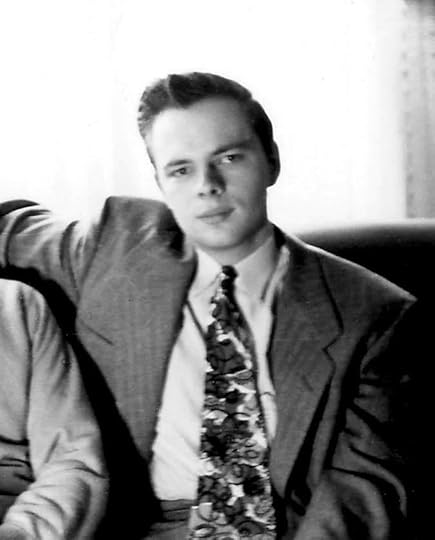
This is how I read Philip K. Dick’s 1957 publication, The Cosmic Puppets. Phil was only 29 when this was released by Ace Books as a double, the other novella being Sargasso Of Space by Andre Norton. The reader sees a novelist bursting with energy and with fresh ideas and even the first steps of the deep journeys he would later undertake.
Recalling both Ray Bradbury and H.P. Lovecraft, The Cosmic Puppets is about a small, isolated Virginia town that has been collectively caught in a complicated illusion, the townspeople altered to a strange and different reality. Rod Serling needs to step out of the shadows to introduce the story, so reminiscent of Twilight Zone (1959-1964), it could have been used as an episode.
“We see as through a glass, darkly” - how many generations, how many hundreds of thousands, of millions, of people over the centuries have read that passage in the Bible (First Corinthians 13:12) and have moved on unaffected. PKD references this line in Cosmic Puppets and then, later, names one of his most popular novels after this, changing the tense slightly, A Scanner Darkly.
Also Phil’s use of models and clay golems is an earlier vision of his later work The Three Stigmata of Palmer Eldritch.
All in all, The Cosmic Puppets is not one of his great works, but it is indicative of his great talent and is a fine story for a PKD fan or for an aficionado of 50s pulp.

Read
May 11, 2019
"I've never seen this town before," he muttered huskily, almost inaudibly. "It's completely different." He turned to his wife, bewildered and scared. "This isn't the Millgate I remember. This isn't the town I grew up in!"
The Cosmic Puppets by American science fiction author Philip K. Dick is set in the small town of Millgate, Virginia during the 1950s. Ted Barton spent his boyhood in Millgate but when he returns as a man in his late twenties, the entire town has completely changed - the street names, the buildings and stores, the houses and park - none of what Ted sees around him is familiar. He might as well have returned to another small town. One can almost hear the theme from The Twilight Zone playing in the background.
Ted Barton wants answers. He starts asking the people in Millgate questions and quickly discovers something is terribly wrong – nobody remembers a boy with his name or knows what happened to the old town park or his school or even the street where his parents owned a house. It's as if everything he remembered as a kid never existed. Impossible!
Ted goes to the office of the Millgate Weekly to check the town records. Only it’s the Millgate Times not the Millgate Weekly. Turns out, although the newspaper records his name correctly, his father and mother are listed as Donald and Sarah not their true names - Joe and Ruth - and their street address is all wrong. Checking further produces even more alarming news: during October, 1935, the month and year his parents sold their Millgate house to move to Richmond, there is a report that Theodore Barton died of scarlet fever. Whoa! Is he really who he thinks he is? And if he isn't Ted Barton, then who is he?
Ted Barton, current resident of New York City, gets a room at the local boarding house but when he’s unpacking the landlady’s son enters and asks who he is and how he got through the barrier. Such strange questions from this odd-looking, thin, bony ten-year-old boy with huge brown eyes and an unusually wide forehead. They converse and the strangeness increases: this boy whose name is Peter starts talking about how he can stop time and has power over creatures. Peter goes on to ask Ted if he has seen both of them and then lets Ted know he’d like to trace one of the Wanderers to find out where they come from and how they do it. What the hell is this kid talking about? The strangeness builds until Peter runs away downstairs to the porch and shouts up at Ted: “I know who you are. I know who you really are!”
Shortly thereafter, Ted has other conversations and witnesses even more oddities. Only one thing is certain: nothing is what it appears to be.
With additional probing and discoveries, one possibility looms above all others, a possibility Ted is willing to explore with confidence: the Millgate he knew as a kid, the small town of his boyhood with all its familiar people, streets, buildings and park hasn't disappeared as much as it has been distorted in some mysterious way by an unseen power.
Written in 1953 but not published until 1957, The Cosmic Puppets is a must read for PKD fans and a great read for anybody else. Philip K. Dick wrote this short, gripping novel when age 25 and used its framework to explores a number of themes and questions that would come to haunt and obsess him over the years. Among their number:
Paranoia of being taken over: Back in the 1950s, people who loved Small Town America could see its demise coming. Not only paranoia of being overrun by the Commies (The Red Scare)) but more probably wiped out by city slickers and sharpies with their suburban sprawl and shopping malls. Oh, yes, twenty years later and the unending sprawl covers nearly all the land in its poisonous neon ooze, Phil would write one of his most famous novels addressing precisely this dilemma: A Scanner Darkly.
A forgotten sense of history and identity: The old town park had a civil war cannon and plaque commemorating a war hero. In the author’s concern for a population cut off from its own history, I was reminded of Milan Kundera’’s The Book of Laughter and Forgetting and The Unbearable Lightness of Being. Closely linked with a loss of history, PKD was also vitally concerned with the country’s drop in the literacy rate: an entire society where people either can’t read or choose not to read but rather are satisfied with being entertained by their TVs featuring advertisement that are nothing more than shiny sewer-bugs that rot the brain. Phil uses this image for TV ads in his The Solar Lottery.
Discrediting tools and craft: Ted Barton comes to know a haggard oldster and town drunk by the name of William Christopher. However, back when Millgate was the true Millgate, William Christopher was his true self, a robust, sober, hard-working electronics expert. Philip K. Dick had great respect for men and women possessing expertise in handling material things – carpenters, masons, potters, auto mechanics – and abhorred the direction American society was headed: an entire population of service workers and telemarketers. This theme is picked up most directly in Galactic Pot-Healer.
Mental Projection and Mind Power: With his special mental powers, the above mentioned ten-year old Peter is able to vitalize and control his small Gumby-like clay creations he calls golems (one of the creepier parts of the tale) along with an entire menagerie of snakes, spiders and large viscous rats with red eyes. And Peter isn’t the only one who has such powers. Such a preoccupation with mental powers of one variety or another is prominent in dozens of the author's novels.
Cosmic forces and underlying divine power: Is all that we see only an illusion? Does our material world weigh us down and occlude our vision, block of perception of an underlying light that is the “true” reality? Or, is there more than one divine force acting in our universe, using humans and other mundane forms of life as if puppets on strings? On this last point, The Cosmic Puppets touches on such ancient dualistic religions as Zoroastrianism, Gnosticism and Manichaeism.
Ah, if we humans only knew the true nature of the ultimate, underlying reality! Philip K. Dick went on to write not only entire novels exploring this question in its many manifestations, such novels as The Divine Invasion and Valis but you can read all about it in his 1,000-page The Exegesis of Philip K. Dick. Want a preview? Dickheads of the world unite! - read The Cosmic Puppets.

American science fiction author Philip K. Dick, 1928-1982

July 28, 2026
'The Cosmic Puppets' is my first Philip K. Dick novel and definitely not the last one. It is one of his early novels and, probably, not the best one as it is rather short and lacks the psychological depth and narrative complexity. However, this story about a small provincial town which becomes a battlefield for two fighting gods is not only an entertaining supernatural thriller but also an example of philosophical sci-fi exploring such themes as uncertain reality, fragile identity, and unseen powers shaping human lives.

May 30, 2019
Strange things are afoot in the small hamlet of Millgate. Why is it that the townfolk consider them to be perfectly natural? A little boy putters around in an old barn loft, communing with his creepy crawlies and messing with time. Nearby, a young girl gathers information from bees. After an absence of 18 years, Ted Barton returns to the place of his childhood. Clearly unacquainted with the famous admonition that "you can't go home again", he is mystified when nothing is as he remembers it.

May 18, 2023
My 18th PKD novel.
One of the author's earliest works - written in 1953, pub. 1957 - 'TCP' soon brings to mind the kind of surreal-yet-close-to-reality storylines found in 'The Twilight Zone'. ~ although 'TTZ' wouldn't begin airing episodes until 1959.
Maybe Rod Serling followed PKD early on.
Even though this is one of Dick's first offerings, I wouldn't say I approached it with low expectations. I didn't go into it thinking it was likely to be clumsy. Now that I'm more familiar with the style evident in his later novels, I was too curious about how that style emerged / developed over time.
That said, 'TCP' does start out very conventionally; it's almost bland. It does not, however, stay bland for long. Along the way, little hints are dropped; they're off-kilter and vague but they provoke, and indicate menace. These weird elements accumulate and, as they do, they cause mystery (my fave touch: the ghostly appearances of The Wanderers), tension - and ultimately terror.
PKD first develops a situation he would later, more creatively, expand in 'Time Out of Joint'. But here his main concern has its focus on the battle for the soul. That battle will escalate to an explosive degree, as the narrative mixes in elements Dick would go on to employ again, years later, in 'Ubik'.
Probably what's most fascinating about this novel is the fact that we're following certain obsessions that Dick established almost from the get-go. In part, these would remain central in his work. They might submerge but they would re-surface in the work of his last years, suggesting a dormant preoccupation having an inevitable full circle return.
Once you're firmly halfway-through 'TCP', there's no end to the 'WTF?' quotient - which, of course, is PKD's stock-in-trade. There may be moments when you think 'Even on its own terms, this doesn't make sense.' However, seen as a fever dream of spiritual warfare, whatever seems incongruous in the telling still reads as exact.
I wouldn't claim that 'TCP' is among PKD's best work. But it does pull - and it intrigued me more than some other early Dick novels, like 'Solar Lottery' and 'Eye in the Sky'. This may be the thing about Dick's body of work, taken as a whole: those drawn to his particular world are bound to find something (or a bunch of pertinent, interconnected somethings) for everyone on that same journey.
One of the author's earliest works - written in 1953, pub. 1957 - 'TCP' soon brings to mind the kind of surreal-yet-close-to-reality storylines found in 'The Twilight Zone'. ~ although 'TTZ' wouldn't begin airing episodes until 1959.
Maybe Rod Serling followed PKD early on.
Even though this is one of Dick's first offerings, I wouldn't say I approached it with low expectations. I didn't go into it thinking it was likely to be clumsy. Now that I'm more familiar with the style evident in his later novels, I was too curious about how that style emerged / developed over time.
That said, 'TCP' does start out very conventionally; it's almost bland. It does not, however, stay bland for long. Along the way, little hints are dropped; they're off-kilter and vague but they provoke, and indicate menace. These weird elements accumulate and, as they do, they cause mystery (my fave touch: the ghostly appearances of The Wanderers), tension - and ultimately terror.
PKD first develops a situation he would later, more creatively, expand in 'Time Out of Joint'. But here his main concern has its focus on the battle for the soul. That battle will escalate to an explosive degree, as the narrative mixes in elements Dick would go on to employ again, years later, in 'Ubik'.
Probably what's most fascinating about this novel is the fact that we're following certain obsessions that Dick established almost from the get-go. In part, these would remain central in his work. They might submerge but they would re-surface in the work of his last years, suggesting a dormant preoccupation having an inevitable full circle return.
Once you're firmly halfway-through 'TCP', there's no end to the 'WTF?' quotient - which, of course, is PKD's stock-in-trade. There may be moments when you think 'Even on its own terms, this doesn't make sense.' However, seen as a fever dream of spiritual warfare, whatever seems incongruous in the telling still reads as exact.
I wouldn't claim that 'TCP' is among PKD's best work. But it does pull - and it intrigued me more than some other early Dick novels, like 'Solar Lottery' and 'Eye in the Sky'. This may be the thing about Dick's body of work, taken as a whole: those drawn to his particular world are bound to find something (or a bunch of pertinent, interconnected somethings) for everyone on that same journey.

May 14, 2017
PKD ~ Where have you been all my life? I never read Philip K. Dick before this year, but I finally decided to give him a try. I read through all the book blurbs and chose Ubik to be my introduction to this author who is revered by many, yet virtually unknown to me. I wanted to make a good choice because, if I chose an inferior book, I might not try another. I think I chose well. So well that I feel confident that I will want to read through his oeuvre.
Perhaps The Cosmic Puppets seems an odd choice for my second book, but I actually put some thought into it. It is the Valis trilogy that most interests me, but I know these books are the culmination of a life’s work and I want to approach them in the best possible way. And what better way than to begin at the beginning? Now I’m not taking this too literally, but I did want to read something from early in Dick’s career. The Cosmic Puppets was the fourth book on a chronological list of thirty-five Dick novels, so it seemed early enough to give me insight into where Dick was coming from. Reading it with the knowledge that Dick’s work would progress over the next twenty-five years, I found it to be a very promising beginning.
The first half of the book has a Bradburyesque small town setting and a Twilight Zone vibe which I enjoyed. Not surprising since I am a long-time fan of both. But the second half of the book enters the very territory that I came to PKD to explore. Paradoxically, I didn’t enjoy reading the second half as much as the first half. Nevertheless it is the second half that interests me ~ the Zoroastrian battle between the cosmic forces of good and evil. Apparently Dick’s religious quest was already underway at this early stage in his writing. And I am eager to follow him and see where he will lead.
Perhaps The Cosmic Puppets seems an odd choice for my second book, but I actually put some thought into it. It is the Valis trilogy that most interests me, but I know these books are the culmination of a life’s work and I want to approach them in the best possible way. And what better way than to begin at the beginning? Now I’m not taking this too literally, but I did want to read something from early in Dick’s career. The Cosmic Puppets was the fourth book on a chronological list of thirty-five Dick novels, so it seemed early enough to give me insight into where Dick was coming from. Reading it with the knowledge that Dick’s work would progress over the next twenty-five years, I found it to be a very promising beginning.
The first half of the book has a Bradburyesque small town setting and a Twilight Zone vibe which I enjoyed. Not surprising since I am a long-time fan of both. But the second half of the book enters the very territory that I came to PKD to explore. Paradoxically, I didn’t enjoy reading the second half as much as the first half. Nevertheless it is the second half that interests me ~ the Zoroastrian battle between the cosmic forces of good and evil. Apparently Dick’s religious quest was already underway at this early stage in his writing. And I am eager to follow him and see where he will lead.

July 4, 2017
„Война на реалности“ е много силен роман на Филип Дик! Главният герой Тед Бартън е роден в малкото затънтено градче Милгейт, което е напуснал преди 18 години. През една отпуска, той решава да се отбие до родното място, въпреки че съпругата му иска да си останат в Ню Йорк. В Милгейт обаче го очаква изненада. След като пристига там, Бартън установява, че всичко е съвсем различно от неговите детски спомени. Други са хората, сградите, имената на улиците... Впоследствие разбира, че около града съществува тайнствена бариера, която необяснимо как е изчезнала за момент, за да може той да влезе. Бартън започва да търси отговори на тази загадка, а и прави всичко възможно, за да върне обратно истинския Милгейт. А градът всъщност е превърнат в арена на вечния сблъсък между древните божества Ормузд и Ариман...

June 21, 2016
"Remember Millgate?"
- Philip K. Dick, The Cosmic Puppets

Ted Barton returns to the small Virginia town of his youth and discovers the town is completely different. It is ground zero for an eternal battle between two Zurvanite Zoroastrian demigods/twin brothers -- Ahura Mazda (Ohrmuzd) and Angra Mainyu (Ahriman). This fight is being waged by proxy using two of the town's more precocious tweens (Mary and Peter).
The novel starts like a typical Rod Sterling production, but like PKD is want to do, it quickly transforms and expands into something almost out of an H.P. Lovecraft novel (Lyn, I love reading your review AFTER and discovering a similar vibe). This novel is one of the main reasons I love PKD. Here is a guy, in his youth, writing a pulply Sci-Fi novel and he can't help jump from campy Sci-Fi into a bizarre Zoroastrian battle that is both across the Universe and in a small Virginia town. He is the epitome of high brow (Zoroastrian demigods) and low-brow (turning a ball of string into a tire iron).
It is strange that in the same week I would read TWO different novels that basically play with the idea of Zoroastrianism being true (the other is Stephen Peck's A Short Stay in Hell). So, if I learned anything this week, it might be that it's time to bone up on my cosmogonic dualism because I don't want to be the last person on Earth to suck up to the supremely wise, Lord Creator, Ahura Mazda.
- Philip K. Dick, The Cosmic Puppets
Ted Barton returns to the small Virginia town of his youth and discovers the town is completely different. It is ground zero for an eternal battle between two Zurvanite Zoroastrian demigods/twin brothers -- Ahura Mazda (Ohrmuzd) and Angra Mainyu (Ahriman). This fight is being waged by proxy using two of the town's more precocious tweens (Mary and Peter).
The novel starts like a typical Rod Sterling production, but like PKD is want to do, it quickly transforms and expands into something almost out of an H.P. Lovecraft novel (Lyn, I love reading your review AFTER and discovering a similar vibe). This novel is one of the main reasons I love PKD. Here is a guy, in his youth, writing a pulply Sci-Fi novel and he can't help jump from campy Sci-Fi into a bizarre Zoroastrian battle that is both across the Universe and in a small Virginia town. He is the epitome of high brow (Zoroastrian demigods) and low-brow (turning a ball of string into a tire iron).
It is strange that in the same week I would read TWO different novels that basically play with the idea of Zoroastrianism being true (the other is Stephen Peck's A Short Stay in Hell). So, if I learned anything this week, it might be that it's time to bone up on my cosmogonic dualism because I don't want to be the last person on Earth to suck up to the supremely wise, Lord Creator, Ahura Mazda.

June 9, 2026
Probably my least favourite Phil K Dick novel I’ve read so far, but that’s not saying much as he’s consistently good or brilliant.
The first half of the Cosmic Puppet’s first half is great is great. I was immediately hooked by the mystery of a man’s childhood town being radically transformed with no explanation. He tries to uncover what sort of unexplainable event has occured.
It almost feels like a prototype to one of his greater novels, Time of out Joint. Whilst the aforementioned maintains brilliance throughout, Cosmic Puppets final act is a little rushed, and I wasn’t wholly satisfied by its conclusion.
Nevertheless, even if it isn’t as remarkable as other questionable-reality novels by Dick, it’s still a fun, pulpy piece of science fiction.
The first half of the Cosmic Puppet’s first half is great is great. I was immediately hooked by the mystery of a man’s childhood town being radically transformed with no explanation. He tries to uncover what sort of unexplainable event has occured.
It almost feels like a prototype to one of his greater novels, Time of out Joint. Whilst the aforementioned maintains brilliance throughout, Cosmic Puppets final act is a little rushed, and I wasn’t wholly satisfied by its conclusion.
Nevertheless, even if it isn’t as remarkable as other questionable-reality novels by Dick, it’s still a fun, pulpy piece of science fiction.
April 10, 2019
“Did it ever occur to you that maybe some of these people prefer the illusion?”
Poor Ted Barton! When, on his way back home from a holiday with his wife Peg, he decides to pay a spontaneous visit to his old hometown Millgate, a secluded little place in the mountains, he finds the whole town strangely altered. Anyone who has yielded to the foolish impulse of re-visiting a childhood place will share this experience, but in Barton’s case, there is more to it than just the unacknowledged reluctance to coming to terms with the realization that the scenery of your childhood is no longer the same – and that it equals yourself in that respect. No, in Barton’s case, there are larger powers at work than just the course of ordinary events for he finds that nothing in that place is “right”, neither the houses, nor the names of the streets, nor the people themselves. All these things have not simply changed, but in fact seem never to have been at all! He even finds that a compass he carries in his trouser-pocket, a keepsake from his childhood, has turned into a piece of stale bread. While his wife Peg somehow does not seem to care a fig about these time inconsistencies – she is quite fed up with Ted’s enthusiasm about his childhood memories, anyway –, Ted himself cannot choose to overlook this puzzle. He wants to find out what is at the bottom of the Millgate mystery, even if this means risking the break-up of his marriage and, less unsettling, confronting primeval powers of darkness.
Dick’s early novel The Cosmic Puppets was published in 1957 and it immediately plunges the reader right into the action – interestingly through a device that the outstanding director Sam Peckinpah would use at the beginning of one of his most famous western movies: Similarly to the children in The Wild Bunch, whose gruesome play with a scorpion and a colony of ants mirrors the tragic conflict of the film, a couple of children in The Cosmic Puppets are sitting in front of a porch and competing with each other moulding little figures of clay. We will see that the motif of creation that is hinted at in this little scene will be of quite some importance later on, especially when we are going to be led into a discussion on what it takes for a reality to be regarded as “real”. Ted Barton might feel that he is moving through a fake town with fake people in it, but to these people their lives are perfectly real and valid, and it would never for a moment occur to them that their existence has effaced some reality with an older right. In his quest to get the old town back Ted even comes across a man who actually knows that the reality of which he is part is not the original one but who, for all his moral qualms and scruples, simply does not want to part with the life he is living in this fake reality. Who knows, he says, what my role in “real” reality is?
What reads like the script for an intriguing episode of The Twilight Zone – I have not even mentioned the mysterious Wanderers, transparent beings who walk about town with their eyes pressed close and whose existence is no matter of wonder to the town-dwellers – will eventually adopt another, less interesting twist to me, which I would not like to divulge here. Let’s just say that I found it out of place, not without logic holes and detracting from the original mystery that was built up.
I must say that I quite sympathized with Ted from the very start because I was entirely able to share his concern about preserving the El Dorado of his memories. Whenever I happen to find myself in my childhood village, I get on my wife’s nerves by saying things like, “There used to be a cherry-tree in that garden, which we used to climb as children. It’s not there, anymore.” The latter sentence has to be pronounced with indignation that implies that all other changes that have occurred in the past forty years are at least equally disgusting. Then there is my classic “There used to be wonderful half-timbered farmhouse on the site of that filling-station”, which I sometimes vary with the introductory “Have I ever told you that …” or with a question such as “Do you know what used to be on that site instead of that bloody filling-station?” More recently, I have made my son my new audience instead of my wife because I fear his wrath far less than I do hers … So, what I want to say is that in a way, I can fully understand Ted Barton, but at the same time I have to wonder at the exactness with which he seems to be able to summon up to memory every single little detail of his childhood town. Maybe, after all, this guy is simply not willing to really grow up and leave behind him “the fields where joy forever dwells”? After all, would it not be natural to assume that at least some changes must have taken place in a period of 18 years? And maybe, with him it is also a way of escaping from his dysfunctional marriage because there seems to be not much sympathy lost between him and his wife.
As I have already said, however, the novel only really intrigued me until its solution began to emerge from the shades of mystery – a solution which fell flat for me. Dick even spoilt it a bit more with his ending: While the beginning of the novel reminded me of one of the finest movies ever, its ending called to mind one of the ribaldries of The Naked Gun. That’s quite an elevator ride – into the wrong direction.
Poor Ted Barton! When, on his way back home from a holiday with his wife Peg, he decides to pay a spontaneous visit to his old hometown Millgate, a secluded little place in the mountains, he finds the whole town strangely altered. Anyone who has yielded to the foolish impulse of re-visiting a childhood place will share this experience, but in Barton’s case, there is more to it than just the unacknowledged reluctance to coming to terms with the realization that the scenery of your childhood is no longer the same – and that it equals yourself in that respect. No, in Barton’s case, there are larger powers at work than just the course of ordinary events for he finds that nothing in that place is “right”, neither the houses, nor the names of the streets, nor the people themselves. All these things have not simply changed, but in fact seem never to have been at all! He even finds that a compass he carries in his trouser-pocket, a keepsake from his childhood, has turned into a piece of stale bread. While his wife Peg somehow does not seem to care a fig about these time inconsistencies – she is quite fed up with Ted’s enthusiasm about his childhood memories, anyway –, Ted himself cannot choose to overlook this puzzle. He wants to find out what is at the bottom of the Millgate mystery, even if this means risking the break-up of his marriage and, less unsettling, confronting primeval powers of darkness.
Dick’s early novel The Cosmic Puppets was published in 1957 and it immediately plunges the reader right into the action – interestingly through a device that the outstanding director Sam Peckinpah would use at the beginning of one of his most famous western movies: Similarly to the children in The Wild Bunch, whose gruesome play with a scorpion and a colony of ants mirrors the tragic conflict of the film, a couple of children in The Cosmic Puppets are sitting in front of a porch and competing with each other moulding little figures of clay. We will see that the motif of creation that is hinted at in this little scene will be of quite some importance later on, especially when we are going to be led into a discussion on what it takes for a reality to be regarded as “real”. Ted Barton might feel that he is moving through a fake town with fake people in it, but to these people their lives are perfectly real and valid, and it would never for a moment occur to them that their existence has effaced some reality with an older right. In his quest to get the old town back Ted even comes across a man who actually knows that the reality of which he is part is not the original one but who, for all his moral qualms and scruples, simply does not want to part with the life he is living in this fake reality. Who knows, he says, what my role in “real” reality is?
What reads like the script for an intriguing episode of The Twilight Zone – I have not even mentioned the mysterious Wanderers, transparent beings who walk about town with their eyes pressed close and whose existence is no matter of wonder to the town-dwellers – will eventually adopt another, less interesting twist to me, which I would not like to divulge here. Let’s just say that I found it out of place, not without logic holes and detracting from the original mystery that was built up.
I must say that I quite sympathized with Ted from the very start because I was entirely able to share his concern about preserving the El Dorado of his memories. Whenever I happen to find myself in my childhood village, I get on my wife’s nerves by saying things like, “There used to be a cherry-tree in that garden, which we used to climb as children. It’s not there, anymore.” The latter sentence has to be pronounced with indignation that implies that all other changes that have occurred in the past forty years are at least equally disgusting. Then there is my classic “There used to be wonderful half-timbered farmhouse on the site of that filling-station”, which I sometimes vary with the introductory “Have I ever told you that …” or with a question such as “Do you know what used to be on that site instead of that bloody filling-station?” More recently, I have made my son my new audience instead of my wife because I fear his wrath far less than I do hers … So, what I want to say is that in a way, I can fully understand Ted Barton, but at the same time I have to wonder at the exactness with which he seems to be able to summon up to memory every single little detail of his childhood town. Maybe, after all, this guy is simply not willing to really grow up and leave behind him “the fields where joy forever dwells”? After all, would it not be natural to assume that at least some changes must have taken place in a period of 18 years? And maybe, with him it is also a way of escaping from his dysfunctional marriage because there seems to be not much sympathy lost between him and his wife.
As I have already said, however, the novel only really intrigued me until its solution began to emerge from the shades of mystery – a solution which fell flat for me. Dick even spoilt it a bit more with his ending: While the beginning of the novel reminded me of one of the finest movies ever, its ending called to mind one of the ribaldries of The Naked Gun. That’s quite an elevator ride – into the wrong direction.

September 9, 2017
Pubblicato nel 1957- Titolo originale “ A glass of darkness”
“La giornata era torrida. Tremule onde di calore salivano dalla strada, per svanire poi nel catrame che scorreva dolcemente, frusciando, sotto le ruote della macchina. Il sole estivo inondava le fattorie sulla collina, le distese verde scuro cosparse di arbusti e di alti pini, i cedri svettanti, l’alloro più tenero, i pioppi.”
Ted Barton convince la moglie Peg ad accompagnarlo nella sua cittadina natale: Millgate.
Sono passati diciotto anni da quando con i genitori si trasferì a Richmond e, dopo tutto questo tempo, Ted sente un richiamo mascherato dal nostalgico desiderio di rivedere i luoghi dell’infanzia
.
”Ted e Peggy Barton si allontanavano rapidamente da Patrick County. Erano vicini al confine di Carroll e al massiccio di Beaver Knob. La strada era in pessime condizioni. La Packard gialla tossiva e ansimava, arrampicandosi sulle ripide colline della Virginia…”
Destinazione dunque Millgate.
[Azzardo collegamenti cercando nella traduzione dei termini un significato che si ricolleghi alla storia che sto leggendo, pertanto:
Mill tra i vari significati= zuffa
Gate=porta
I miei ragionamenti si riveleranno non così avventati...]
Appena arrivati a destinazione, però, la città non si presenta neppure lontanamente vicina a ciò che ricordava.
Una disperata ricerca della propria identità che si credeva salda e si è rivelata, invece, inconsistente.
Una realtà apparente che maschera un substrato dove è in atto un’eterna e crudele lotta tra il bene ed il male.
L’invito di Dick è palese: guardate oltre il reale.
Attenzione, però: una volta tolto il velo...
...tutto cambia:
“Ora che aveva visto la figura, non l’avrebbe più persa. Era come uno di quei giochi a incastro in cui, quando l’immagine nascosta diventa visibile, è impossibile smarrirla di nuovo.”
Non rimane dunque che capire a quale realtà si vuole aderire:
“Intendete dire che la vecchia città è ancora qui?
– Certo! Non è stata distrutta, è stata… seppellita. C’è sopra uno strato, una patina, una specie di magica nebbia nera. Loro sono venuti, e l’hanno stesa dappertutto, ma sotto esiste ancora la vera città, e “può essere riportata alla luce”.”
Distorsioni della realtà
Illusioni percettive
Cambiamento
“– Ma non avete mai pensato che forse qualcuno preferisce l’illusione alla realtà?”
“– È un vecchio problema – disse il dottor Meade, dall’ombra. – Se il mondo è stato creato dal Bene, di dove è venuto il Male?”
“La giornata era torrida. Tremule onde di calore salivano dalla strada, per svanire poi nel catrame che scorreva dolcemente, frusciando, sotto le ruote della macchina. Il sole estivo inondava le fattorie sulla collina, le distese verde scuro cosparse di arbusti e di alti pini, i cedri svettanti, l’alloro più tenero, i pioppi.”
Ted Barton convince la moglie Peg ad accompagnarlo nella sua cittadina natale: Millgate.
Sono passati diciotto anni da quando con i genitori si trasferì a Richmond e, dopo tutto questo tempo, Ted sente un richiamo mascherato dal nostalgico desiderio di rivedere i luoghi dell’infanzia
.
”Ted e Peggy Barton si allontanavano rapidamente da Patrick County. Erano vicini al confine di Carroll e al massiccio di Beaver Knob. La strada era in pessime condizioni. La Packard gialla tossiva e ansimava, arrampicandosi sulle ripide colline della Virginia…”
Destinazione dunque Millgate.
[Azzardo collegamenti cercando nella traduzione dei termini un significato che si ricolleghi alla storia che sto leggendo, pertanto:
Mill tra i vari significati= zuffa
Gate=porta
I miei ragionamenti si riveleranno non così avventati...]
Appena arrivati a destinazione, però, la città non si presenta neppure lontanamente vicina a ciò che ricordava.
Una disperata ricerca della propria identità che si credeva salda e si è rivelata, invece, inconsistente.
Una realtà apparente che maschera un substrato dove è in atto un’eterna e crudele lotta tra il bene ed il male.
L’invito di Dick è palese: guardate oltre il reale.
Attenzione, però: una volta tolto il velo...
...tutto cambia:
“Ora che aveva visto la figura, non l’avrebbe più persa. Era come uno di quei giochi a incastro in cui, quando l’immagine nascosta diventa visibile, è impossibile smarrirla di nuovo.”
Non rimane dunque che capire a quale realtà si vuole aderire:
“Intendete dire che la vecchia città è ancora qui?
– Certo! Non è stata distrutta, è stata… seppellita. C’è sopra uno strato, una patina, una specie di magica nebbia nera. Loro sono venuti, e l’hanno stesa dappertutto, ma sotto esiste ancora la vera città, e “può essere riportata alla luce”.”
Distorsioni della realtà
Illusioni percettive
Cambiamento
“– Ma non avete mai pensato che forse qualcuno preferisce l’illusione alla realtà?”
“– È un vecchio problema – disse il dottor Meade, dall’ombra. – Se il mondo è stato creato dal Bene, di dove è venuto il Male?”

April 10, 2021
4.5 stars. The Cosmic Puppets is one of PKD's outstanding early works, featuring hallmarks of many of what would become his regular tropes (with mind altering drugs a glaring exception). Most evident are the theological (the epic struggle of good vs evil) and ontological themes. The story itself is actually quite chilling, disturbing even, perhaps more so than any other of the many stories of his I've read over the years, yet buoyed by a sense of righteous purpose. Also somewhat underdeveloped is a sense of the absurd and ridiculous that he so deftly wove into his later work (often serving as a source of humor, though never so overtly). The result is something that feels a bit more Twilight Zone than you usually might expect from PKD.

November 24, 2019
ESPAÑOL-ITALIANO
Esta es la primera novela “seria” que leo en italiano. Las últimas veces que había intentado leer algo en este idioma iba a libros que ya había leído en mi adolescencia o mismamente cogía lecturas especializadas en la enseñanza de lengua italiana.
Esta novela habla di Ted Barton, un estadounidense que decide ir con su esposa al pueblo donde se crió, Millgate. Sin embargo, una vez que llega allí se da cuenta que el pueblo que él conocía no existe, como si este hubiese sido reemplazado por otro totalmente distinto. O eso es lo que cree Ted Barton. A partir de ese momento comienza su investigación de esta ciudad, la cual le resulta al mismo tiempo tan misteriosa y familiar.
Para ser la primera novela que leo de este autor estoy bastante contenta, pero no me ha fascinado del todo. Para aquellos que no la reconozcan esta novela es la traducción del italiano de “Marionetas cósmicas ( The Cosmics Puppets).
La historia en sí es bastante buena. Desde el principio sabes que algo no va bien e intentas pensar que es lo que puede estar pasando, llegas hasta imaginar las teorías más disparatas, pero no es hasta casi el final de la historia que todo comienza a tener sentido.
En general, me ha resultado una novela bastante entretenida de leer, a pesar de la barrera del idioma, y ya está. Esto no quiere decir que no vaya a recomendarla, al contrario. Además creo que aún me queda que descubrir mucho de este autor.
Questo è il primo romanzo « serio » che leggo in italiano. L’ultima volta che ho letto in questa lingua è stato con un libro per ragazzi giovanile chiamato “Fairy Oak”. Era una storia che avevo già letto durante l’ adolescenza. Tuttavia, questo libro, appartiene alla fantaScenza, un generE letterario che ho appena cominciato a leggere e che mi sta piacendo veramente. Sono sicura che se avessi comminciato a leggere questo tipo di libri da giovane non l’avrei mai apprezzato.
È la storia di Ted Barton. Decide di fare un viaggio nella città dove è cresciuto, Millgate, ma una volta arrivato si rende conto che quella non era la città della sua infanzia, ma un’ altra completamente differente. é in questo momento dove comincia l’avventura di Ted Barton per scoprire la verità.
Sinceramente, questa è la prima volta che leggo qualcosa di Philip K Dick. In realtà volevo leggerlo molto tempo fa perché è l’autore di tantissime opere interessanti come “ The man in the high castle”. Questo romanzo si chiama, in italiano, La citta sostituita. Non ha un tittolo simile a quello inglese (The cosmics muppets). Come storia mi è veramente piaciuta, ma non mi ha affascinata. Devo anche dire che l’idea di questo libro è abbastanza interesante, inoltre l’autore ha aggiunto del mistero.
In conclusione dirò due cose: che questo libro non sarà l’ultimo che leggeró in italiano e che continuerò senza dubbio a leggere quest’ autore.
Esta es la primera novela “seria” que leo en italiano. Las últimas veces que había intentado leer algo en este idioma iba a libros que ya había leído en mi adolescencia o mismamente cogía lecturas especializadas en la enseñanza de lengua italiana.
Esta novela habla di Ted Barton, un estadounidense que decide ir con su esposa al pueblo donde se crió, Millgate. Sin embargo, una vez que llega allí se da cuenta que el pueblo que él conocía no existe, como si este hubiese sido reemplazado por otro totalmente distinto. O eso es lo que cree Ted Barton. A partir de ese momento comienza su investigación de esta ciudad, la cual le resulta al mismo tiempo tan misteriosa y familiar.
Para ser la primera novela que leo de este autor estoy bastante contenta, pero no me ha fascinado del todo. Para aquellos que no la reconozcan esta novela es la traducción del italiano de “Marionetas cósmicas ( The Cosmics Puppets).
La historia en sí es bastante buena. Desde el principio sabes que algo no va bien e intentas pensar que es lo que puede estar pasando, llegas hasta imaginar las teorías más disparatas, pero no es hasta casi el final de la historia que todo comienza a tener sentido.
En general, me ha resultado una novela bastante entretenida de leer, a pesar de la barrera del idioma, y ya está. Esto no quiere decir que no vaya a recomendarla, al contrario. Además creo que aún me queda que descubrir mucho de este autor.
Questo è il primo romanzo « serio » che leggo in italiano. L’ultima volta che ho letto in questa lingua è stato con un libro per ragazzi giovanile chiamato “Fairy Oak”. Era una storia che avevo già letto durante l’ adolescenza. Tuttavia, questo libro, appartiene alla fantaScenza, un generE letterario che ho appena cominciato a leggere e che mi sta piacendo veramente. Sono sicura che se avessi comminciato a leggere questo tipo di libri da giovane non l’avrei mai apprezzato.
È la storia di Ted Barton. Decide di fare un viaggio nella città dove è cresciuto, Millgate, ma una volta arrivato si rende conto che quella non era la città della sua infanzia, ma un’ altra completamente differente. é in questo momento dove comincia l’avventura di Ted Barton per scoprire la verità.
Sinceramente, questa è la prima volta che leggo qualcosa di Philip K Dick. In realtà volevo leggerlo molto tempo fa perché è l’autore di tantissime opere interessanti come “ The man in the high castle”. Questo romanzo si chiama, in italiano, La citta sostituita. Non ha un tittolo simile a quello inglese (The cosmics muppets). Come storia mi è veramente piaciuta, ma non mi ha affascinata. Devo anche dire che l’idea di questo libro è abbastanza interesante, inoltre l’autore ha aggiunto del mistero.
In conclusione dirò due cose: che questo libro non sarà l’ultimo che leggeró in italiano e che continuerò senza dubbio a leggere quest’ autore.

June 15, 2019
Philip K. Dick is not a very good writer in a mechanical sense. His characters are not often fully developed, his sentence structure can be simplistic, and he has an annoying tendency to drop plot points at the drop of a hat. And this same scenario always seems to play out for me whenever I pick up a Dick book: I start out feeling like I’m reading some sort of mediocre fanfiction written by someone living in a basement somewhere. But then at some juncture I get caught up in the story and realize that things are not as bad as I initially thought. Then about three-quarters of the way through I’m starting to think that this might actually be pretty good. By the end I’m usually trying to find the pieces of my blown mind, realizing that I have just read something that transcends the usual ideas of what constitutes “good” and “bad” writing. This is Philip K. Dick’s strength and the secret of his powers as an author. A thousand monkeys hammering away at a thousand typewriters could eventually mimic Dick’s often clunky prose, but those simians could never in a million years come up with some of the grand, outrageous, and psychedelic ideas that percolated in PKD’s fevered brain.
Dick aficionados, or Dickheads as they like to be called, know exactly what I am talking about. The man was a genius, yes, but a very flawed genius at best. Dick’s battles with mental instability are well documented, and I won’t go into them deeply here. Suffice to say that I truly believe that his inability to separate objective and subjective reality and his lifelong search for answers within the metaphysical both influenced and informed his best work. That he was able to translate some of those experiences and visions to the written word is one of the great triumphs of speculative fiction, as it has blessed us with some occasionally brilliant literature. You can read more about Dick’s life and his legacy on his Wiki page:
https://en.wikipedia.org/wiki/Philip_...
So based on what I have written above, I have some bad news and some good news about “The Cosmic Puppets,” a novelette that Dick originally wrote as “A Glass of Darkness” for the Satellite Science Fiction digest back in 1956. “A Glass of Darkness” was then revised and retitled as “The Cosmic Puppets” and re-released as part of the Ace “Doubles” series in 1957, paired with Andre Norton’s “Sargasso of Space.” I have a 1983 Berkley Books reprint of “The Cosmic Puppets.” So the bad news is that this book is kind of like PKD lite, a sort of starter kit for what would eventually develop into the full-blown maniac of his later years. It’s short, it’s full of potholes, it’s firmly in the tradition of 1950s pulp sci-fi tropes, and it only touches on a few of the grander ideas in the PKD canon. In short, it’s a Ray Bradbury novel without Bradbury’s sublime command of the English language and plot structure. The good news is that it is still a PKD novel, and the second half of the book redeems itself nicely from the somewhat dicey first half.
It begins as your standard “Twilight Zone” episode. New York City insurance salesman Ted Barton is on vacation with his wife Peg when he suddenly decides to detour off of the main road to visit the rural Virginia town of Millgate where he grew up. His trip into nostalgia is not quite what he was expecting. It seems that the Millgate that he is now experiencing isn’t the same Millgate that he remembers. The buildings are different, the people are different, and none of the shops or street names are the same as when he lived there as a child. A trip to the local library for research is even more shocking, as it turns out that the child named Ted Barton born in Millgate back in the day died of scarlet fever. But that can’t be, because he is Ted Barton…...or is he? Ted jettisons his wife Peg to an out of town hotel and rents a room at the local boarding house, determined to get to the bottom of this mystery. None of the town’s current residents recognizes him, though the local physician seems to remember Ted’s death from scarlet fever. To add to the confusion, Ted seems to see luminous ghosts at night. The kicker here is that EVERYONE can see them and accept them as a normal part of everyday life. Obviously, things ain’t quite right in Millgate. Ted is also approached by a mysterious teenager named Peter, who seems to know a lot more about the strange goings on than he is letting on. Peter has an odd set of powers that enable him to make golems out of clay figures and control spiders. Then there is also Mary, the young daughter of the aforementioned local physician, who has her OWN set of unusual friends, starting with the talking bees……
Man, I’m terrible at writing a synopsis. But you get the drift here. What begins as a more or less standard and linear plot slowly descends into madness as Dick adds additional layers of craziness at an almost breakneck pace. By the time you realize that the small town of Millgate is actually the battleground for two Zoroastrian gods it’s too late. At that point you have been sucked into this surreal world and your only hope is to get to the end to see how the whole thing turns out. “The Cosmic Puppets” is good early PKD, and you can see him setting the stage here for the opus magnums that were to come later in his career. The shades between objective and subjective reality that are hallmarks of Dick’s style are here, even if they are a bit less subtle and a bit more two-dimensional than is typical of his future work. I can forgive PKD his rudimentary writing style here because his main ideas are so big. Like cosmic level big. God size big. And I’ll even forgive PKD for eventually devolving into a more or less standard treatise on Manichaeism here. Dick will go on to explore much more diverse philosophical and moral issues in books and short stories to come. “The Cosmic Puppets” is all about the central battle between good and evil, and it pretty much hits its target in terms of what it was trying to do in the context of its era and supposed audience. This is strictly entry-level Philip K. Dick, and you would not do yourself wrong if you used this as a jumping off point for a journey into his oeuvre.
“The Cosmic Puppets” is a quick read. You can knock this sucker out in a couple of hours, or you can take the long road like I did and compartmentalize it into several days. It’s strictly 3-star stuff no matter how I slice it. It’s above a lot of the pulp that came out in 1957, but as far as Dick’s overall work is concerned, it’s just sort of okay. It’s fun and interesting, and even more so in light of where Dick would eventually take these rudimentary ideas, but it’s also not very well written. It really is like watching a good but not great episode of “Twilight Zone” or “The Outer Limits.” Short, shocking, and sweet, but you’re probably not going to remember a whole lot of it the next day.
That said, “The Cosmic Puppets” is still essential PKD for Dickheads and aspiring Dickheads. You have to read just about everything the man wrote in order to get a clear picture of this disturbed and disturbing genius. Go. Shoo. Get after it.
Dick aficionados, or Dickheads as they like to be called, know exactly what I am talking about. The man was a genius, yes, but a very flawed genius at best. Dick’s battles with mental instability are well documented, and I won’t go into them deeply here. Suffice to say that I truly believe that his inability to separate objective and subjective reality and his lifelong search for answers within the metaphysical both influenced and informed his best work. That he was able to translate some of those experiences and visions to the written word is one of the great triumphs of speculative fiction, as it has blessed us with some occasionally brilliant literature. You can read more about Dick’s life and his legacy on his Wiki page:
https://en.wikipedia.org/wiki/Philip_...
So based on what I have written above, I have some bad news and some good news about “The Cosmic Puppets,” a novelette that Dick originally wrote as “A Glass of Darkness” for the Satellite Science Fiction digest back in 1956. “A Glass of Darkness” was then revised and retitled as “The Cosmic Puppets” and re-released as part of the Ace “Doubles” series in 1957, paired with Andre Norton’s “Sargasso of Space.” I have a 1983 Berkley Books reprint of “The Cosmic Puppets.” So the bad news is that this book is kind of like PKD lite, a sort of starter kit for what would eventually develop into the full-blown maniac of his later years. It’s short, it’s full of potholes, it’s firmly in the tradition of 1950s pulp sci-fi tropes, and it only touches on a few of the grander ideas in the PKD canon. In short, it’s a Ray Bradbury novel without Bradbury’s sublime command of the English language and plot structure. The good news is that it is still a PKD novel, and the second half of the book redeems itself nicely from the somewhat dicey first half.
It begins as your standard “Twilight Zone” episode. New York City insurance salesman Ted Barton is on vacation with his wife Peg when he suddenly decides to detour off of the main road to visit the rural Virginia town of Millgate where he grew up. His trip into nostalgia is not quite what he was expecting. It seems that the Millgate that he is now experiencing isn’t the same Millgate that he remembers. The buildings are different, the people are different, and none of the shops or street names are the same as when he lived there as a child. A trip to the local library for research is even more shocking, as it turns out that the child named Ted Barton born in Millgate back in the day died of scarlet fever. But that can’t be, because he is Ted Barton…...or is he? Ted jettisons his wife Peg to an out of town hotel and rents a room at the local boarding house, determined to get to the bottom of this mystery. None of the town’s current residents recognizes him, though the local physician seems to remember Ted’s death from scarlet fever. To add to the confusion, Ted seems to see luminous ghosts at night. The kicker here is that EVERYONE can see them and accept them as a normal part of everyday life. Obviously, things ain’t quite right in Millgate. Ted is also approached by a mysterious teenager named Peter, who seems to know a lot more about the strange goings on than he is letting on. Peter has an odd set of powers that enable him to make golems out of clay figures and control spiders. Then there is also Mary, the young daughter of the aforementioned local physician, who has her OWN set of unusual friends, starting with the talking bees……
Man, I’m terrible at writing a synopsis. But you get the drift here. What begins as a more or less standard and linear plot slowly descends into madness as Dick adds additional layers of craziness at an almost breakneck pace. By the time you realize that the small town of Millgate is actually the battleground for two Zoroastrian gods it’s too late. At that point you have been sucked into this surreal world and your only hope is to get to the end to see how the whole thing turns out. “The Cosmic Puppets” is good early PKD, and you can see him setting the stage here for the opus magnums that were to come later in his career. The shades between objective and subjective reality that are hallmarks of Dick’s style are here, even if they are a bit less subtle and a bit more two-dimensional than is typical of his future work. I can forgive PKD his rudimentary writing style here because his main ideas are so big. Like cosmic level big. God size big. And I’ll even forgive PKD for eventually devolving into a more or less standard treatise on Manichaeism here. Dick will go on to explore much more diverse philosophical and moral issues in books and short stories to come. “The Cosmic Puppets” is all about the central battle between good and evil, and it pretty much hits its target in terms of what it was trying to do in the context of its era and supposed audience. This is strictly entry-level Philip K. Dick, and you would not do yourself wrong if you used this as a jumping off point for a journey into his oeuvre.
“The Cosmic Puppets” is a quick read. You can knock this sucker out in a couple of hours, or you can take the long road like I did and compartmentalize it into several days. It’s strictly 3-star stuff no matter how I slice it. It’s above a lot of the pulp that came out in 1957, but as far as Dick’s overall work is concerned, it’s just sort of okay. It’s fun and interesting, and even more so in light of where Dick would eventually take these rudimentary ideas, but it’s also not very well written. It really is like watching a good but not great episode of “Twilight Zone” or “The Outer Limits.” Short, shocking, and sweet, but you’re probably not going to remember a whole lot of it the next day.
That said, “The Cosmic Puppets” is still essential PKD for Dickheads and aspiring Dickheads. You have to read just about everything the man wrote in order to get a clear picture of this disturbed and disturbing genius. Go. Shoo. Get after it.

September 12, 2022
Дали в интернет или на някоя прашна витрина… случвало се е погледът ми да попадне върху корица от старите издания на „Избрана световна фантастика“ и да изпитам необясним копнеж. Случи се както с „От прахта родени“ на Бредбъри, така и с „Война на реалности“ от Дик – всъщност това е един от първите му романи, публикуван през петдесетте под оригиналното заглавие „The Cosmic Puppets”.
Някъде там, из безкрайните щатски магистрали, Тед Бартън убеждава сприхавата си жена Пеги да навестят градчето, където е отраснал. Оказва се, че сградите, улиците и хората са съвсем различни от тези в спомените му, а според аналите на видоизменената реалност нашият герой е умрял от скарлатина, преди да навърши и десет. Благоверната съпруга изоставя Бартън на нездравите му амбиции да разкрие причините за странната аномалия и той се набърква в дълговечното съревнование между древните божества Ормузд и Ариман, които използват младите си аватари, подпомагани от цяла менажерия плъхове, змии, котки, пеперуди, пчели и глинени големи, за да воюват из улиците на изолираната от света провинциална дупка. Оставям на вас да откриете дали Бартън ще промени скверната фалшива реалност, каква е тайната на минаващите през стени скитници и коя е съвършено красивата жена с „напъпили като пролетни цветове гърди“ в края на романа.
Има какво да се желае от този ранен опит на Дик – и като атмосфера, нарушавана от твърде честата смяна на гледни точки, и като сериозно и задълбочено навлизане в историята – навярно със същия материал Кинг щеше да напише комерсиален шедьовър. Но пък финалът се оказа достатъчно динамичен и занимателен, за да изпитам приятното усещане за кулминация и добре разрешен конфликт.
Така или иначе Филип К. Дик е безапелационно популярен с психеделичната си кибер пънк визия за бъдещето, а многобройните екранизации по книгите му са оставили не просто следа, а осем-лентова магистрала в съвременната поп култура. Отдаден на наркотични зависимости и мистични видения, той умира от сърдечен удар четири месеца преди премиерата на "Blade Runner" (филма на Ридли Скот по романа му „Сънуват ли андроидите електрически овце?“ с участието на Харисън Форд и музиката на Вангелис).
30 години по-късно се подготвя и биографична адаптация по сценарий на дъщерята на Дик, а продуценти са Чарлийз Терон и Алфонсо Куарон - но това, скъпи приятели, е друга история…
Някъде там, из безкрайните щатски магистрали, Тед Бартън убеждава сприхавата си жена Пеги да навестят градчето, където е отраснал. Оказва се, че сградите, улиците и хората са съвсем различни от тези в спомените му, а според аналите на видоизменената реалност нашият герой е умрял от скарлатина, преди да навърши и десет. Благоверната съпруга изоставя Бартън на нездравите му амбиции да разкрие причините за странната аномалия и той се набърква в дълговечното съревнование между древните божества Ормузд и Ариман, които използват младите си аватари, подпомагани от цяла менажерия плъхове, змии, котки, пеперуди, пчели и глинени големи, за да воюват из улиците на изолираната от света провинциална дупка. Оставям на вас да откриете дали Бартън ще промени скверната фалшива реалност, каква е тайната на минаващите през стени скитници и коя е съвършено красивата жена с „напъпили като пролетни цветове гърди“ в края на романа.
Има какво да се желае от този ранен опит на Дик – и като атмосфера, нарушавана от твърде честата смяна на гледни точки, и като сериозно и задълбочено навлизане в историята – навярно със същия материал Кинг щеше да напише комерсиален шедьовър. Но пък финалът се оказа достатъчно динамичен и занимателен, за да изпитам приятното усещане за кулминация и добре разрешен конфликт.
Така или иначе Филип К. Дик е безапелационно популярен с психеделичната си кибер пънк визия за бъдещето, а многобройните екранизации по книгите му са оставили не просто следа, а осем-лентова магистрала в съвременната поп култура. Отдаден на наркотични зависимости и мистични видения, той умира от сърдечен удар четири месеца преди премиерата на "Blade Runner" (филма на Ридли Скот по романа му „Сънуват ли андроидите електрически овце?“ с участието на Харисън Форд и музиката на Вангелис).
30 години по-късно се подготвя и биографична адаптация по сценарий на дъщерята на Дик, а продуценти са Чарлийз Терон и Алфонсо Куарон - но това, скъпи приятели, е друга история…

August 24, 2019
Creo que Phillip K. Dick se ha convertido en un autor de culto gracias a su capacidad de entregar historias de ciencia ficción tan raras como extrañas y al mismo tiempo con tanto sentido que deslumbra.
En esta obra pone sobre la mesa uno de los temas más conocidos y antiguos, la lucha del bien contra el mal, pero hacer algo tan trillado de tal manera que resulte en algo original es donde está el verdadero talento.
Los muñecos cósmicos son algún tipo de deidades que toman como campo de batalla un pequeño pueblo, hacen de él uno de esos pueblos fantasmas que están ahí, pero nadie puede ver.
Cuando comencé esta lectura estaba totalmente perdida, tengo que decir que no entendía una jota de lo que estaba pasando, no es que sea confuso, pero tampoco es nada claro, como lector solo te queda sentarte a esperar a ver si en algún momento el autor decide darte las respuestas.
Debo decir que las respuestas no eran lo que me esperaba y el mismo protagonista de este libro también es sorprendido enterándose que lo que él piensa que será su cometido dentro del pueblo resulta en algo que no lo es.
Me ha encantado y me ha sorprendido mucho, no era para nada lo que me esperaba y más allá de una historia original, entretenida y tan loca como caótica en partes, también tiene mucho sentido cuando terminas de leerlo.
El bien, el mal, la lucha y el saber que todo eso siempre está ahí, donde mires, en un animalito, en una planta, en el cielo y dentro de ti mismo.
Uno nunca sabe cuándo será utilizado por unos muñecos cósmicos para establecer una lucha final, hay que esperar, que en cualquier momento podrán venir pon nosotros
En esta obra pone sobre la mesa uno de los temas más conocidos y antiguos, la lucha del bien contra el mal, pero hacer algo tan trillado de tal manera que resulte en algo original es donde está el verdadero talento.
Los muñecos cósmicos son algún tipo de deidades que toman como campo de batalla un pequeño pueblo, hacen de él uno de esos pueblos fantasmas que están ahí, pero nadie puede ver.
Cuando comencé esta lectura estaba totalmente perdida, tengo que decir que no entendía una jota de lo que estaba pasando, no es que sea confuso, pero tampoco es nada claro, como lector solo te queda sentarte a esperar a ver si en algún momento el autor decide darte las respuestas.
Debo decir que las respuestas no eran lo que me esperaba y el mismo protagonista de este libro también es sorprendido enterándose que lo que él piensa que será su cometido dentro del pueblo resulta en algo que no lo es.
Me ha encantado y me ha sorprendido mucho, no era para nada lo que me esperaba y más allá de una historia original, entretenida y tan loca como caótica en partes, también tiene mucho sentido cuando terminas de leerlo.
El bien, el mal, la lucha y el saber que todo eso siempre está ahí, donde mires, en un animalito, en una planta, en el cielo y dentro de ti mismo.
Uno nunca sabe cuándo será utilizado por unos muñecos cósmicos para establecer una lucha final, hay que esperar, que en cualquier momento podrán venir pon nosotros

August 23, 2025
My expectations are low for these early works and this one was pretty run of the mill. All sorts of odd stuff going on that doesn't really work.
Still, I look out for any hints of what's to come and the setup with a normal little town not being what it seems did remind me of Time Out Of Joint
Onward to Solar Lottery....
Still, I look out for any hints of what's to come and the setup with a normal little town not being what it seems did remind me of Time Out Of Joint
Onward to Solar Lottery....

January 19, 2019
This was one of the lightest of the PKD novels I’ve read. It seemed more a short story or novella than a novel. It is a quick, fast paced, single idea based story; much like a Twilight Zone type story - perhaps one that might better fit the season 4, one hour, episodes. Not a major work, but a good one for it’s time (1957).

March 7, 2010
While not among PKD's best, this is a fairly decent read. It combines several of his perennial obsessions: alternate realities, uncertain identities and Manichaeism.
Another frequent obsession here seems to be ... uh ... boobs. PKD takes the time to mention just about every female character's breasts. They almost seem to have an active life of their own: sweating, heaving, glowing and sometimes just being "thick." I wasn't sure if PKD was feeling poorly weaned when he wrote this novel, of if he was pandering to a pulp SF audience. The final scene of the novel suggests the running mammary theme was meant to be tongue-in-cheek.
Another frequent obsession here seems to be ... uh ... boobs. PKD takes the time to mention just about every female character's breasts. They almost seem to have an active life of their own: sweating, heaving, glowing and sometimes just being "thick." I wasn't sure if PKD was feeling poorly weaned when he wrote this novel, of if he was pandering to a pulp SF audience. The final scene of the novel suggests the running mammary theme was meant to be tongue-in-cheek.

October 6, 2020
Dick'in, H.P Lovecraft ve Ray Bradbury oykünmeli, ilk dönem romanlarından biri. Henüz dil oturmamış, kurguda pek çok tutarsızlık ve boşluklar var, romanın sonu zayıf. Bilim kurgunun Altın Çağı sona erip "hayaletler için hayalet öyküleri" yazılmaya başlanan dönemden bir roman. Romanın içinde bilim öğeleri neredeyse hiç yok. Kurgunun öne çıkarak bilimi, sahte bilim ve bilim-dışına çekmeye başladığı 1950'lerin sonundan 1960'lara geçerken yazılmış olan Kozmik Kuklalar, Dick'in ömrünün sonuna kadar kurgularına yansıtacağı saplantıları içeriyor: Farklı gerçeklik algıları, ilüzyonlar, bilinç altı korkular, süper-varlıklar, vs..

October 3, 2025
I give it four stars for being a gripping tale, otherwise it would have been two or three for the silliness of the final concept. It starts like an episode from The Twilight Zone (two years before the show debuted), and its denouement is like a goofy, childish fantasy. This is the earliest of Dick's novels I've read, and I think it might have taken time for him to become the visionary we know.


June 13, 2025
*** 2.75 stars out of 5, rounded up for Goodreads ***
This definitely isn’t your regular PKD. I think it wouldn’t be a stretch to call this a low fantasy. Wasn’t prepared for this at all.
First of all, you can definitely tell this is one of his earliest works. Quite rough around the edges. Particularly, the ending. Went off the rails pretty wildly.
The plotting was also weak compared to later works of PKD. Everything you expect to happen from the start happens.
In terms of what I liked, I have to say I loved the characters. PKD writes pretty much the same characters every time but it never gets old. This is your classic PKD pulpy characters, this time including children. And yes, apparently PKD can write pretty great young characters too. Pacing was also good, not a single page wasted.
Overall, this is definitely not a must read PKD. It’s pretty short, I’d say go for it if you’re a PKD fan but otherwise there are way better books in his oeuvre.
This definitely isn’t your regular PKD. I think it wouldn’t be a stretch to call this a low fantasy. Wasn’t prepared for this at all.
First of all, you can definitely tell this is one of his earliest works. Quite rough around the edges. Particularly, the ending. Went off the rails pretty wildly.
The plotting was also weak compared to later works of PKD. Everything you expect to happen from the start happens.
In terms of what I liked, I have to say I loved the characters. PKD writes pretty much the same characters every time but it never gets old. This is your classic PKD pulpy characters, this time including children. And yes, apparently PKD can write pretty great young characters too. Pacing was also good, not a single page wasted.
Overall, this is definitely not a must read PKD. It’s pretty short, I’d say go for it if you’re a PKD fan but otherwise there are way better books in his oeuvre.

November 15, 2016
This is my third experience with Philip K. Dick's writing. Others on this site, and indeed the back of the book itself, compare this one to an episode of The Twilight Zone. I think that is a very fair representation for the beginning of the book, it certainly does feel like a Twilight Zone set-up. Then it turns into something much, much harder to describe. Part horror, fantasy, science fiction... maybe more? It can't be explained without major spoilers, and even then I'm not sure it can be properly put to words.
This book is not an amazing story by any means, but it is one of those books that is an experience unlike any other. It is baffling to describe, but follows a form of logic to its conclusion. One of the things I've commented on in other reviews of Dick's books is that the man was not afraid to try something different. Sometimes he overloads his story with so many ideas (such as in Clans of the Alphane Moon), but he seems to somehow keep it under enough control to make a story out of it. This is another one with so many ideas that it could have been multiple books (and yet he somehow keeps all these are ideas contained in under 200 pages), some of these ideas could have been explained better, but the unresolved aspect feels proper given the nature of some of the twists.
Of the three books I've read (the others being Do Androids Dream of Electric Sheep? and Clans of the Alphane Moon) this one is my least favorite. I think it is a solid and entertaining read, but not as good of a story as the others. The philosophical aspects are fairly light here, and there's relatively little messing with the reader's head (well, maybe once or twice...). That said, the lack of these aspects makes this a wonderful place for a newcomer to start. It is not a difficult read from Dick, it introduces a few of his pet subjects, and which it starts off with a traditional Twilight Zone style narrative, it may be comfortably familiar at first before setting up the real plot. Not his best, but still recommended.
This book is not an amazing story by any means, but it is one of those books that is an experience unlike any other. It is baffling to describe, but follows a form of logic to its conclusion. One of the things I've commented on in other reviews of Dick's books is that the man was not afraid to try something different. Sometimes he overloads his story with so many ideas (such as in Clans of the Alphane Moon), but he seems to somehow keep it under enough control to make a story out of it. This is another one with so many ideas that it could have been multiple books (and yet he somehow keeps all these are ideas contained in under 200 pages), some of these ideas could have been explained better, but the unresolved aspect feels proper given the nature of some of the twists.
Of the three books I've read (the others being Do Androids Dream of Electric Sheep? and Clans of the Alphane Moon) this one is my least favorite. I think it is a solid and entertaining read, but not as good of a story as the others. The philosophical aspects are fairly light here, and there's relatively little messing with the reader's head (well, maybe once or twice...). That said, the lack of these aspects makes this a wonderful place for a newcomer to start. It is not a difficult read from Dick, it introduces a few of his pet subjects, and which it starts off with a traditional Twilight Zone style narrative, it may be comfortably familiar at first before setting up the real plot. Not his best, but still recommended.

March 23, 2023
27th book for 2023.
I am slowly working through PKD's books in publishing order. "The Cosmic Puppets", published in 1957, is PKD's fourth published work.
The story revolves around the protagonist, Ted Barton, who returns to his hometown of Millgate, Virginia, after many years away. Upon his arrival, he is shocked to find that the town has changed drastically, and his memories of the place no longer match current reality. As Barton investigates the discrepancies, he discovers that the town has been manipulated and transformed by two powerful, cosmic entities from Zoroastrian religion known as Ormazd (essentially God the creator) and Ahriman (Satan—God the destroyer), who are waging an unending battle throughout the cosmos.
Like many of PKD's books, it explores themes of memory, identity, and the nature of reality. While it is perhaps a less substantial work than some of his later books, I found it an enjoyable, if quick, read.
3-stars.
I am slowly working through PKD's books in publishing order. "The Cosmic Puppets", published in 1957, is PKD's fourth published work.
The story revolves around the protagonist, Ted Barton, who returns to his hometown of Millgate, Virginia, after many years away. Upon his arrival, he is shocked to find that the town has changed drastically, and his memories of the place no longer match current reality. As Barton investigates the discrepancies, he discovers that the town has been manipulated and transformed by two powerful, cosmic entities from Zoroastrian religion known as Ormazd (essentially God the creator) and Ahriman (Satan—God the destroyer), who are waging an unending battle throughout the cosmos.
Like many of PKD's books, it explores themes of memory, identity, and the nature of reality. While it is perhaps a less substantial work than some of his later books, I found it an enjoyable, if quick, read.
3-stars.

July 9, 2018
Very strange entry in the early PKD canon, kinda twilight zone like. starts with a Under the Dome like set but goes in a weird Cosmic horror direction.
Full review in the Dickheads episode:
https://soundcloud.com/dickheadspodca...
Full review in the Dickheads episode:
https://soundcloud.com/dickheadspodca...

January 5, 2020
Esta novela de PKD fue publicada en 1957 y la premisa es buena y comienza bien: Ted Barton que va con su mujer en el coche de vacaciones, se desvía de su camino para visitar el pueblo de su infancia , Millgate. Pero cuál es su sorpresa que al llegar el pueblo está cambiado y nadie parece reconocer que él y su familia vivieran allí. Pero lo más curioso e inquietante del caso es que una vez dentro del pueblo, es casi imposible ya poder salir de allí.
"Nada era familiar. Todo extraño. Esta ciudad no era la Millgate que conociera. Podía advertir la diferencia. No había estado aquí jamás".
Como siempre lo más atractivo y fascinante en las novelas de Dick son los temas que trata, y las ideas que muestra, muy visionarias, muy precursoras de algunas cosas que vendrían después. Aquí vuelve a reflexionar sobre las diferencias entre lo real y lo imaginario, ¿Cuál es nuestra realidad??? ¿Es real el mundo en el que nos movemos o hay más mundos paralelos? ¿Qué se esconde tras la superficie, tras esta plácida apariencia?? Y ya digo que muchas de sus novelas son gloriosas pero no perfectas, porque la idea que plantea es en muchas ocasiones mucho más atractiva que la forma en que aborda la historia. En este caso concreto, Muñecos Cósmicos, tiene un planteamiento inicial mucho más atractivo que la resolución final. Parece que no supiera como acabarlas y se hace un poco de lio al final con un caos de personajes que aparecen y desaparecen.
Dick es una de mis debilidades aunque conozco sus defectos, no es el mejor a la hora de darle profundidad psicológica a sus personajes y sus hilos a veces se pierden en una especie de limbo inexplicado pero por muy menores que sean sus obras, siempre hay algo interesante que rascar de sus historias. Es un gran constructor de mundos, de universos, e incluso en esta novela, que es una de sus obras menores, mientras la lees, puedes visualizar perfectamente el pueblo de Millgate y ese misterio que lo envuelve: hay una oscuridad tenebrosa bajo la apariencia de pueblo perfecto y sus habitantes fantasmales, y esa sensación inquietante es la que perdura.
"¿Y no se le ha ocurrido a usted jamás que quizás algunas de estas personas prefieran la ilusión?
"Nada era familiar. Todo extraño. Esta ciudad no era la Millgate que conociera. Podía advertir la diferencia. No había estado aquí jamás".
Como siempre lo más atractivo y fascinante en las novelas de Dick son los temas que trata, y las ideas que muestra, muy visionarias, muy precursoras de algunas cosas que vendrían después. Aquí vuelve a reflexionar sobre las diferencias entre lo real y lo imaginario, ¿Cuál es nuestra realidad??? ¿Es real el mundo en el que nos movemos o hay más mundos paralelos? ¿Qué se esconde tras la superficie, tras esta plácida apariencia?? Y ya digo que muchas de sus novelas son gloriosas pero no perfectas, porque la idea que plantea es en muchas ocasiones mucho más atractiva que la forma en que aborda la historia. En este caso concreto, Muñecos Cósmicos, tiene un planteamiento inicial mucho más atractivo que la resolución final. Parece que no supiera como acabarlas y se hace un poco de lio al final con un caos de personajes que aparecen y desaparecen.
Dick es una de mis debilidades aunque conozco sus defectos, no es el mejor a la hora de darle profundidad psicológica a sus personajes y sus hilos a veces se pierden en una especie de limbo inexplicado pero por muy menores que sean sus obras, siempre hay algo interesante que rascar de sus historias. Es un gran constructor de mundos, de universos, e incluso en esta novela, que es una de sus obras menores, mientras la lees, puedes visualizar perfectamente el pueblo de Millgate y ese misterio que lo envuelve: hay una oscuridad tenebrosa bajo la apariencia de pueblo perfecto y sus habitantes fantasmales, y esa sensación inquietante es la que perdura.
"¿Y no se le ha ocurrido a usted jamás que quizás algunas de estas personas prefieran la ilusión?

April 9, 2011
If written today, this could have been Dick's foray into YA fantasy fiction. He would have needed to change the protagonist into a plucky teenager instead of a full-grown man, but other than that all the elements are in place. On a road trip to Florida with his almost estranged wife, Ted Barton wants to stop off at Millgate, the Virginia town he left as a young man eighteen years before, They find the town, but everything about it has changed. (Cue the Twilight Zone theme music here.) Street names, buildings, people, everything is different and slightly decrepit. Then Ted finds his name in an old newspaper, a victim of scarlet fever in 1935.
The Cosmic Puppets is pure fantasy -- no science fiction involved. There are two children, Peter who makes tiny clay golems to report of Ted's movements, and Mary who gets regular reports from moths and bees on Peter's activities. Mary and Peter do not get along. Peter reveals to Ted the enormous beings who make up the valley's mountainsides and whose heads reach into the heavens. Little Millgate, Virginia, has become the host of an epic battle between the forces of good and evil. (Just their bum luck.) Ted and the town drunk who somehow escaped "the change" have to will the real Millgate back into existence.
There are some creepy elements here, mostly dependent upon how you feel about spiders and rats. But the Twilight Zone theme continues to hum along in the background, and Rod Serling could make an appearance at any moment.
The Cosmic Puppets is pure fantasy -- no science fiction involved. There are two children, Peter who makes tiny clay golems to report of Ted's movements, and Mary who gets regular reports from moths and bees on Peter's activities. Mary and Peter do not get along. Peter reveals to Ted the enormous beings who make up the valley's mountainsides and whose heads reach into the heavens. Little Millgate, Virginia, has become the host of an epic battle between the forces of good and evil. (Just their bum luck.) Ted and the town drunk who somehow escaped "the change" have to will the real Millgate back into existence.
There are some creepy elements here, mostly dependent upon how you feel about spiders and rats. But the Twilight Zone theme continues to hum along in the background, and Rod Serling could make an appearance at any moment.

January 13, 2019
Two stars, because its ok.
Ancient gods make a small rural virginia town their battleground. Sorta like a small-scale version of The Stand, with spiders. Somewhat interesting, but it all seems for nought. No real resolution on plot, no character arcs. Things happen. Its somewhat spooky. Then it ends.
what stood out is the sexism/male targeting - although a novella, theres at least 5 mentions to breasts, and a particularly sexist punchline joke ending.
Ancient gods make a small rural virginia town their battleground. Sorta like a small-scale version of The Stand, with spiders. Somewhat interesting, but it all seems for nought. No real resolution on plot, no character arcs. Things happen. Its somewhat spooky. Then it ends.
what stood out is the sexism/male targeting - although a novella, theres at least 5 mentions to breasts, and a particularly sexist punchline joke ending.
Displaying 1 - 30 of 453 reviews