

What do you think?

За подмяна
Късмет? Не говорете на Джек Рендал за късмет. Джек е плюл на късмета си и той отдавна го е напуснал. Принуден да напусне и последното си убежище, Джек се връща в града, който някога е бил негов дом. Смята само да спечели малко пари и да изчезне заедно с хората, които иска да спаси. Но за нещастие притежава таланта да привлича неприятностите…
320 pages, Paperback
First published January 1, 1996
About the author
Michael Marshall Smith
256 books1,077 followersMichael Marshall (Smith) is a bestselling novelist and screenwriter. His first novel, ONLY FORWARD, won the August Derleth and Philip K. Dick awards. SPARES and ONE OF US were optioned for film by DreamWorks and Warner Brothers, and the Straw Men trilogy - THE STRAW MEN, THE LONELY DEAD and BLOOD OF ANGELS - were international bestsellers. His most recent novels are THE INTRUDERS, BAD THINGS and KILLER MOVE.
He is a four-time winner of the BFS Award for short fiction, and his stories are collected in two volumes - WHAT YOU MAKE IT and MORE TOMORROW AND OTHER STORIES (which won the International Horror Guild Award).
He lives in Santa Cruz, California with his wife and son.
He is a four-time winner of the BFS Award for short fiction, and his stories are collected in two volumes - WHAT YOU MAKE IT and MORE TOMORROW AND OTHER STORIES (which won the International Horror Guild Award).
He lives in Santa Cruz, California with his wife and son.
Ratings & Reviews
Friends & Following
Create a free account to discover what your friends think of this book!
Community Reviews
Displaying 1 - 30 of 298 reviews

September 30, 2018
Calling Spares a ‘hard-boiled detective’ story is like calling Ben&Jerry’s Wavy Gravy ‘chocolate swirl ice cream.’
Sure. I guess--if you ignore philosophy, organics, ingredients, and taste.
I mean, the lead is an ex-cop/ex-soldier. It's pretty standard detective; just replace the bottle of Scotch with a foil-wrapped pouch of Rapt. Usually.
“Then on an afterthought I reached behind me and took down a bottle of Jack Daniels. Actually, it wasn’t an afterthought. It had been a first thought and an in-between thought. I’d been trying to make it an ex-thought, but something inside me gave up.”
The typical 'damsel-in-distress' are actually six-and-a-half clones escaped from a body Farm, but they’re as innocent and beautiful as the day is long. And the 'corrupt, dirty, big city' setting is a former two-hundred story flying MegaMall that landed in New Richmond, Virginia. Instead of districts or boroughs, we have floors–above 100 is the most rarified air. But the mob scene is pretty standard, as is the drug trade and the street whores, so who knows? Maybe it is really just like Sam Spade.
Practically the same thing.


Except I just never know where Marshall Smith is going to take his stories, and that’s a thing of beauty. As a side note, though Marshall Smith often seems to fall into ‘sci-fi,’ he’s about as sci-fi as Philip K. Dick. He’s more interested in dreaming up concepts for plotting and social commentary, not for actual future-civilization possibility. I admit, I myself stuttered at the clone farm, but you know, it is a bit like a drug trip. You just surrender control and see where the conductor takes you.
The lead, Jack Randall, is a deeply troubled character, a classic Failed Knight. He’s a complex character, often stumbling when you wish he would rise, and often making the choices that keep him running in place. He shows an awareness of his flaws. Some readers may not find him a likable character. But I found him deeply human, albeit a damaged one, with a sense of humor that appealed. I laughed as he questioned a hipster artist.
“Socializing,” I said. “Who did she hang out with?”
“Her friends, of course,” Golson said, clearly baffled. I checked my mental question gun, and found I only had about two patience bullets left. After that, it was going to be live ammunition.
“Okay. You, who the fuck else?” I asked.
“Well, Mandy and Val and Zaz and Ness and Del and Jo and Kate.”
My last patience bullet. “Remember any guys’ names?”
It gets a little strange when the situation requires going into The Gap, a surreal place and the site of the conflict/war that so damaged Randall when he was younger. I felt strongly the echoes of Platoon here, and all the ‘realistic’ Vietnam movies of the 1980s (the book was written in 1996). I won’t say anything more, but that reading requires a tolerance for getting weird. Think Annihilation, with more plot and better self-analysis.
“I believe The Gap is made up of all of the places where no one is, of all the sights no one sees. It comes from silence, and lack, and the deleted and unread; it is the gap between what you want and what you have, between love and affection, between hope and truth. It’s the place where crooked cues come from, and it’s the answer to a question: Does a tree exist when there’s no one there to perceive it?”
This was his second published novel, and you can see the genesis of some of the ideas he likes to play with. A talking refrigerator and the abilities of cats both make an appearance, albeit peripheral. Optioned by Dreamworks, this seems to be languishing in development, which is probably fine. I’m old-fashioned that way.
Overall, very good. I even had a tear in my eye when I finished, which may or may not have been hormones, but is more likely for an intriguing story that went from a noir mystery to a journey of redemption. There’s certainly problems, and as a reader, I’m left thinking about different aspects that were perhaps resolved in untidy ways, but that’s life, isn’t it?
Sure. I guess--if you ignore philosophy, organics, ingredients, and taste.
I mean, the lead is an ex-cop/ex-soldier. It's pretty standard detective; just replace the bottle of Scotch with a foil-wrapped pouch of Rapt. Usually.
“Then on an afterthought I reached behind me and took down a bottle of Jack Daniels. Actually, it wasn’t an afterthought. It had been a first thought and an in-between thought. I’d been trying to make it an ex-thought, but something inside me gave up.”
The typical 'damsel-in-distress' are actually six-and-a-half clones escaped from a body Farm, but they’re as innocent and beautiful as the day is long. And the 'corrupt, dirty, big city' setting is a former two-hundred story flying MegaMall that landed in New Richmond, Virginia. Instead of districts or boroughs, we have floors–above 100 is the most rarified air. But the mob scene is pretty standard, as is the drug trade and the street whores, so who knows? Maybe it is really just like Sam Spade.
Practically the same thing.
Except I just never know where Marshall Smith is going to take his stories, and that’s a thing of beauty. As a side note, though Marshall Smith often seems to fall into ‘sci-fi,’ he’s about as sci-fi as Philip K. Dick. He’s more interested in dreaming up concepts for plotting and social commentary, not for actual future-civilization possibility. I admit, I myself stuttered at the clone farm, but you know, it is a bit like a drug trip. You just surrender control and see where the conductor takes you.
The lead, Jack Randall, is a deeply troubled character, a classic Failed Knight. He’s a complex character, often stumbling when you wish he would rise, and often making the choices that keep him running in place. He shows an awareness of his flaws. Some readers may not find him a likable character. But I found him deeply human, albeit a damaged one, with a sense of humor that appealed. I laughed as he questioned a hipster artist.
“Socializing,” I said. “Who did she hang out with?”
“Her friends, of course,” Golson said, clearly baffled. I checked my mental question gun, and found I only had about two patience bullets left. After that, it was going to be live ammunition.
“Okay. You, who the fuck else?” I asked.
“Well, Mandy and Val and Zaz and Ness and Del and Jo and Kate.”
My last patience bullet. “Remember any guys’ names?”
It gets a little strange when the situation requires going into The Gap, a surreal place and the site of the conflict/war that so damaged Randall when he was younger. I felt strongly the echoes of Platoon here, and all the ‘realistic’ Vietnam movies of the 1980s (the book was written in 1996). I won’t say anything more, but that reading requires a tolerance for getting weird. Think Annihilation, with more plot and better self-analysis.
“I believe The Gap is made up of all of the places where no one is, of all the sights no one sees. It comes from silence, and lack, and the deleted and unread; it is the gap between what you want and what you have, between love and affection, between hope and truth. It’s the place where crooked cues come from, and it’s the answer to a question: Does a tree exist when there’s no one there to perceive it?”
This was his second published novel, and you can see the genesis of some of the ideas he likes to play with. A talking refrigerator and the abilities of cats both make an appearance, albeit peripheral. Optioned by Dreamworks, this seems to be languishing in development, which is probably fine. I’m old-fashioned that way.
Overall, very good. I even had a tear in my eye when I finished, which may or may not have been hormones, but is more likely for an intriguing story that went from a noir mystery to a journey of redemption. There’s certainly problems, and as a reader, I’m left thinking about different aspects that were perhaps resolved in untidy ways, but that’s life, isn’t it?

December 27, 2019
Blade Runner meets Apocalypse Now! Clones, but clones with a much more realist existence... as the ultimate health insurance for the mega-rich!
'Gap War' veteran and huge drug addict Jack Randall takes some time out of life working at a clone facility, when he decides that he just can't let them live caged up anymore. Set in a digital-led future where a fallen mega-mall has become the city of New Richmond, over 200 floors of humanity - the higher up you live the more wealth and privilege you have!

Smith blazes a trail with this first person narrated sci-fi crime conspiracy thriller, from his dark take on what we'd really use clones for to the very well thought out and pretty scary The Gap war and and how it was handled. A must-read for any sci-fi or conspiracy fan as the world building in this reality is phenomenal! 8.5 out of 12 futuristic Four Star read.
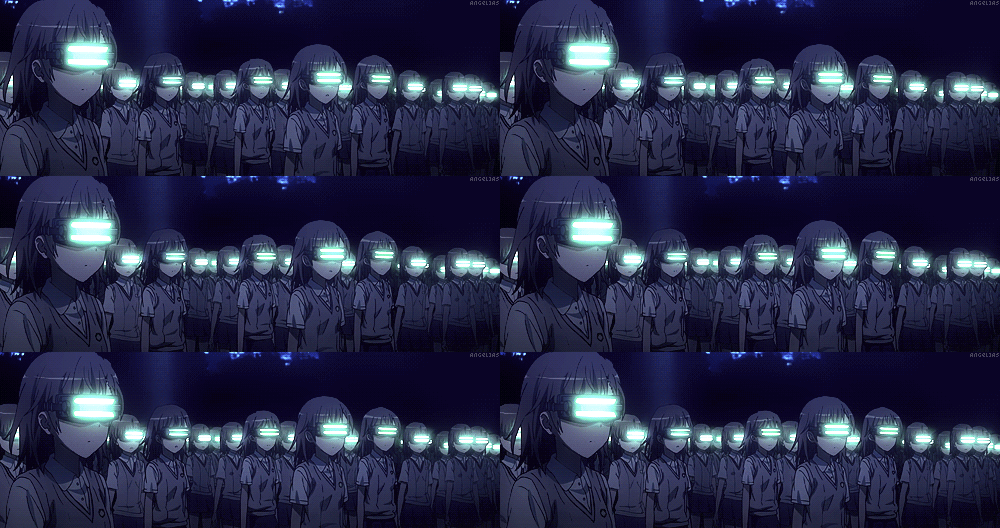
2019 and 2008 rad
'Gap War' veteran and huge drug addict Jack Randall takes some time out of life working at a clone facility, when he decides that he just can't let them live caged up anymore. Set in a digital-led future where a fallen mega-mall has become the city of New Richmond, over 200 floors of humanity - the higher up you live the more wealth and privilege you have!
Smith blazes a trail with this first person narrated sci-fi crime conspiracy thriller, from his dark take on what we'd really use clones for to the very well thought out and pretty scary The Gap war and and how it was handled. A must-read for any sci-fi or conspiracy fan as the world building in this reality is phenomenal! 8.5 out of 12 futuristic Four Star read.
2019 and 2008 rad

November 20, 2022
„Така живеем, заобиколени от неизползван интелект, и този път — за разлика от миналото — не става дума за нашия.“
Брутална книга! В „За подмяна“ успешно се преплитат елементи от различни жанрове, действието е динамично и напрегнато, както и е изпълнена с много мъдрост. За мен, тя представлява на първо място изключително силна антиутопична история... обаче нейната киберпънк атмосфера също доста ме развълнува! Майкъл Смит сериозно повдига темата за клонирането на хора, предизвиквайки силни емоции и размисли.
В антиутопичния бъдещ свят клонингите са създавани и затваряни в специални ферми, с целта да бъдат използвани за резервни части. Разбира се, при това положение богатите и влиятелни хора стават все по-безумни, знаейки че просто могат да си вземат част от своите двойници, а обществото е напълно затънало в корупция. В такава ферма работи за известно време главният герой Джак, който е бивш полицай, а по-късно станал наркозависим. Той изпитва състрадание към зловещата участ на резервните хора, като решава да научи няколко от тях да говорят и след това ги спасява. Впоследствие Джак се завръща в родния си град Ню Ричмънд (бивш летящ над 200-етажен „Мегамол“). На това място неизбежно го очакват големи опасности и мрачни спомени от миналото...
„Това си бе епоха на белезите. Нещо, без което не може.“
„Не знам защо хората си мислят, че животът ти се оформя от решенията, които вземаш, когато се събудиш, но не е така. Важни са другите неща, които се случват, докато спиш и те няма.“
„Разкъсвах се между паниката и безумното спокойствие. Двете усещания взаимно се подхранваха, сливаха се и се смесваха в много по-осезаемата сплав на бързо надигащ се ужас.“
„Аз вярвам в идеята, че в човешкия живот има мигове, които се събират компресирани до максимум един в друг и че не искаме да приемем някои неща за случили се, защото сме в състояние да ги осъзнаем само в каданса на ретроспективното мислене. Не знам, може би именно тези мигове, тези секунди, проблеснали като искри и изпаднали от тъканта на нашия живот, се събират на друго място, за да образуват онова цяло, което остава завинаги отделено от нас. А може би са част от някакъв друг живот.“
„Цялото това спокойствие се сгъстяваше около нас, нахлуваше във времена и в места, където нищо не се случва и никой не бива спасен.“
„Открихме значи как да проникнем в световното подсъзнание, но вместо да се отнесем с уважение към него и да оставим доброто му влияние да се просмуква по малко в света на съзнателното — както впрочем винаги е било ние се опитахме да го нападнем и да го завладеем, сякаш ставаше дума за обикновена нова територия, която „виси“ с неуредена собственост.“
„Религията никога не бе губила популярността си сред богатите, може би защото предлагаше най-лесния достъпен за тях начин да имитират смиреност.“
„Едно време беззаветно вярвахме в невидимия Бог, сега повече вярвахме в потоците електрони, носещи се из пространства, прекалено малки, за да можем да ги видим с очите си. Подобно обръщане към неосезаемото доказваше, че в хората има нещо, което налага да държим необяснимото дълбоко в сърцето си и да се надяваме, че съществува неуловима сила, способна да оформя съдбите ни. Изглежда, винаги ще имаме нужда от места без път към тях.“
Брутална книга! В „За подмяна“ успешно се преплитат елементи от различни жанрове, действието е динамично и напрегнато, както и е изпълнена с много мъдрост. За мен, тя представлява на първо място изключително силна антиутопична история... обаче нейната киберпънк атмосфера също доста ме развълнува! Майкъл Смит сериозно повдига темата за клонирането на хора, предизвиквайки силни емоции и размисли.
В антиутопичния бъдещ свят клонингите са създавани и затваряни в специални ферми, с целта да бъдат използвани за резервни части. Разбира се, при това положение богатите и влиятелни хора стават все по-безумни, знаейки че просто могат да си вземат част от своите двойници, а обществото е напълно затънало в корупция. В такава ферма работи за известно време главният герой Джак, който е бивш полицай, а по-късно станал наркозависим. Той изпитва състрадание към зловещата участ на резервните хора, като решава да научи няколко от тях да говорят и след това ги спасява. Впоследствие Джак се завръща в родния си град Ню Ричмънд (бивш летящ над 200-етажен „Мегамол“). На това място неизбежно го очакват големи опасности и мрачни спомени от миналото...
„Това си бе епоха на белезите. Нещо, без което не може.“
„Не знам защо хората си мислят, че животът ти се оформя от решенията, които вземаш, когато се събудиш, но не е така. Важни са другите неща, които се случват, докато спиш и те няма.“
„Разкъсвах се между паниката и безумното спокойствие. Двете усещания взаимно се подхранваха, сливаха се и се смесваха в много по-осезаемата сплав на бързо надигащ се ужас.“
„Аз вярвам в идеята, че в човешкия живот има мигове, които се събират компресирани до максимум един в друг и че не искаме да приемем някои неща за случили се, защото сме в състояние да ги осъзнаем само в каданса на ретроспективното мислене. Не знам, може би именно тези мигове, тези секунди, проблеснали като искри и изпаднали от тъканта на нашия живот, се събират на друго място, за да образуват онова цяло, което остава завинаги отделено от нас. А може би са част от някакъв друг живот.“
„Цялото това спокойствие се сгъстяваше около нас, нахлуваше във времена и в места, където нищо не се случва и никой не бива спасен.“
„Открихме значи как да проникнем в световното подсъзнание, но вместо да се отнесем с уважение към него и да оставим доброто му влияние да се просмуква по малко в света на съзнателното — както впрочем винаги е било ние се опитахме да го нападнем и да го завладеем, сякаш ставаше дума за обикновена нова територия, която „виси“ с неуредена собственост.“
„Религията никога не бе губила популярността си сред богатите, може би защото предлагаше най-лесния достъпен за тях начин да имитират смиреност.“
„Едно време беззаветно вярвахме в невидимия Бог, сега повече вярвахме в потоците електрони, носещи се из пространства, прекалено малки, за да можем да ги видим с очите си. Подобно обръщане към неосезаемото доказваше, че в хората има нещо, което налага да държим необяснимото дълбоко в сърцето си и да се надяваме, че съществува неуловима сила, способна да оформя съдбите ни. Изглежда, винаги ще имаме нужда от места без път към тях.“

July 27, 2011
This book was TERRIBLE.
I had 2 chief complaints with the book:
1) The writing is piss poor.
2) The story has almost nothing to do with the "Spares". A more fitting title would have been "Crackhead Ex-Cop".
Let's just assume for a moment that Michael Marshall Smith actually wrote a book about the Spares. Here's a rundown of the *completely* believable premise.
In the near future, rich people pay lots of money to keep clones of themselves in "farms". Whenever injured, the rich people just carve a piece off the "spares" and patch themselves up. They pay A LOT of money to do this. Also, these "farms" are run completely by robots. So far, so good?
Okay, well using common sense, the rich people then decide these completely automated farms need a human element (why???). So who do they hire to oversee their expensive and delicate investment? A CRACKHEAD.
Story over. That's the stupidest thing I've ever heard.
Of course, the spares are completely superfluous in the story, and barely appear outside a single chapter. The actual plot centers around the aforementioned crackhead running around a 200-story city that used to be a flying mall (what?) pretending to be a cop, but really just shooting smack and making trite commentary on the retarded future the author scribbled down.
Oh, and then he goes to a hallucinogenic Vietnam-dimension discovered by cats (not joking) and takes more drugs.
If the story wasn't bad enough, Smith constantly uses made-up terminology which he doesn't bother defining or explaining for several chapters. He peppers these code words throughout dialogue which tries to be clever and gritty, but just comes off as stupid and self-smug.
As a bonus the Kindle version was riddled with typos. I've seen more typos in e-books than I ever saw in printed books, but the Kindle Edition of Spares took it to a whole new level. The publisher should be ashamed.
In summary: a stupid story that's poorly written which should be avoided at all costs.
This was quite possibly the worst book I've ever read.
TERRIBLE.
SKIP IT.
I had 2 chief complaints with the book:
1) The writing is piss poor.
2) The story has almost nothing to do with the "Spares". A more fitting title would have been "Crackhead Ex-Cop".
Let's just assume for a moment that Michael Marshall Smith actually wrote a book about the Spares. Here's a rundown of the *completely* believable premise.
In the near future, rich people pay lots of money to keep clones of themselves in "farms". Whenever injured, the rich people just carve a piece off the "spares" and patch themselves up. They pay A LOT of money to do this. Also, these "farms" are run completely by robots. So far, so good?
Okay, well using common sense, the rich people then decide these completely automated farms need a human element (why???). So who do they hire to oversee their expensive and delicate investment? A CRACKHEAD.
Story over. That's the stupidest thing I've ever heard.
Of course, the spares are completely superfluous in the story, and barely appear outside a single chapter. The actual plot centers around the aforementioned crackhead running around a 200-story city that used to be a flying mall (what?) pretending to be a cop, but really just shooting smack and making trite commentary on the retarded future the author scribbled down.
Oh, and then he goes to a hallucinogenic Vietnam-dimension discovered by cats (not joking) and takes more drugs.
If the story wasn't bad enough, Smith constantly uses made-up terminology which he doesn't bother defining or explaining for several chapters. He peppers these code words throughout dialogue which tries to be clever and gritty, but just comes off as stupid and self-smug.
As a bonus the Kindle version was riddled with typos. I've seen more typos in e-books than I ever saw in printed books, but the Kindle Edition of Spares took it to a whole new level. The publisher should be ashamed.
In summary: a stupid story that's poorly written which should be avoided at all costs.
This was quite possibly the worst book I've ever read.
TERRIBLE.
SKIP IT.

July 12, 2009
5.0 stars. This was an incredible novel. I would describe it as science ficiton "noir" in the family of Blade Runner or the Takeshi Kovacs novels by Richard Morgan. Brilliantly written and peopled with superb characters, this one is highly recommended.
Nominee: Britsh Fantasy Award for Best Novel
Nominee: Britsh Fantasy Award for Best Novel

April 5, 2021
For English version please scroll down.
*******
Diese Dystopie beginnt mit dem erschütternden Szenario von Klonen, die rein als Organspender gezüchtet wurden, wandelt sich dann in einen Ermittlerroman und wird im letzten Drittel zu einem knallharten Thriller.
Der Protagonist Jack Randall landet nach einem extrem traumatischen Erlebnis und seinem darauffolgenden Absturz in Drogen und Alkohol als Verwalter auf einer “Farm”, einem Ort, an dem die Klone aufbewahrt werden, bis sie ihrer Verwendung zugeführt werden.
Nach einigen Jahren flieht er mit einigen wenigen Klonen von der Farm, um sie zu retten und kehrt nach New Richmond, die Stadt aus der er kam; zurück. Er gerät natürlich unmittelbar in Schwierigkeiten und verwickelt sich in die Aufklärung einer ganzen Serie von Frauenmorden.
Im Fortgang des Romans spielen immer mehr Aspekte aus der Vergangenheit eine Rolle, unter anderem ein Krieg, bei dem sich der Autor meiner Meinung nach (obwohl meine Kenntnisse des Vietnamkriegs nur rudimentär sind) in der Beschreibung in vielerlei Hinsicht an den besonders grauenhaften Aspekten des Vietnamkriegs orientierte.
Das Buch ist extrem brutal, grausam und beschreibt wirklich scheußliche Szenarien. Natürlich entwirft der Autor ein ziemlich häßliches Bild der Zukunft, das sich meiner Meinung nach aber beunruhigend nahe an unserer Realität befindet.
Mich hat das Buch in jeder Hinsicht beeindruckt. Die Sprache war zwar nicht sonderlich literarisch, sondern das, was man bei einem Thriller erwarten würde, aber die Inhalte haben bei mir Eindruck hinterlassen und werden mich gedanklich noch lange begleiten.
Einen Abzug in der Bewertung gibt es, da mir das Ende zu versöhnlich erscheint.
4 Sterne.
---------
This dystopia begins with the harrowing scenario of clones that were bred purely as organ donors, then turns into an investigative novel and becomes a tough thriller in the last third.
After an extremely traumatic experience and his subsequent fall into drugs and alcohol, the protagonist Jack Randall ends up as administrator on a “farm”, a place where the clones are kept until they are put to use.
After a few years he escapes from the farm with a few clones in order to save them and returns to New Richmond, the city he came from. Of course, he immediately getsinto trouble and gets involved in solving a whole series of feminicides.
As the novel progresses, more and more aspects of the past play a role, including a war in which, in my opinion (although my knowledge of the Vietnam War is only rudimentary), the author in many ways aligned his description of the war with the particularly horrific aspects of the Vietnam War.
The book is extremely brutal, cruel and describes really hideous scenarios. Of course, the author paints a rather ugly picture of the future, but in my opinion it is worryingly close to our reality.
The book impressed me in every way. The language wasn't particularly literary, but what you would expect in a thriller, but the content made an impression on me and will stay with me for a long time to come.
There is a deduction in the rating because the ending seems too forgiving to me.
4 stars.
*******
Diese Dystopie beginnt mit dem erschütternden Szenario von Klonen, die rein als Organspender gezüchtet wurden, wandelt sich dann in einen Ermittlerroman und wird im letzten Drittel zu einem knallharten Thriller.
Der Protagonist Jack Randall landet nach einem extrem traumatischen Erlebnis und seinem darauffolgenden Absturz in Drogen und Alkohol als Verwalter auf einer “Farm”, einem Ort, an dem die Klone aufbewahrt werden, bis sie ihrer Verwendung zugeführt werden.
Nach einigen Jahren flieht er mit einigen wenigen Klonen von der Farm, um sie zu retten und kehrt nach New Richmond, die Stadt aus der er kam; zurück. Er gerät natürlich unmittelbar in Schwierigkeiten und verwickelt sich in die Aufklärung einer ganzen Serie von Frauenmorden.
Im Fortgang des Romans spielen immer mehr Aspekte aus der Vergangenheit eine Rolle, unter anderem ein Krieg, bei dem sich der Autor meiner Meinung nach (obwohl meine Kenntnisse des Vietnamkriegs nur rudimentär sind) in der Beschreibung in vielerlei Hinsicht an den besonders grauenhaften Aspekten des Vietnamkriegs orientierte.
Das Buch ist extrem brutal, grausam und beschreibt wirklich scheußliche Szenarien. Natürlich entwirft der Autor ein ziemlich häßliches Bild der Zukunft, das sich meiner Meinung nach aber beunruhigend nahe an unserer Realität befindet.
Mich hat das Buch in jeder Hinsicht beeindruckt. Die Sprache war zwar nicht sonderlich literarisch, sondern das, was man bei einem Thriller erwarten würde, aber die Inhalte haben bei mir Eindruck hinterlassen und werden mich gedanklich noch lange begleiten.
Einen Abzug in der Bewertung gibt es, da mir das Ende zu versöhnlich erscheint.
4 Sterne.
---------
This dystopia begins with the harrowing scenario of clones that were bred purely as organ donors, then turns into an investigative novel and becomes a tough thriller in the last third.
After an extremely traumatic experience and his subsequent fall into drugs and alcohol, the protagonist Jack Randall ends up as administrator on a “farm”, a place where the clones are kept until they are put to use.
After a few years he escapes from the farm with a few clones in order to save them and returns to New Richmond, the city he came from. Of course, he immediately getsinto trouble and gets involved in solving a whole series of feminicides.
As the novel progresses, more and more aspects of the past play a role, including a war in which, in my opinion (although my knowledge of the Vietnam War is only rudimentary), the author in many ways aligned his description of the war with the particularly horrific aspects of the Vietnam War.
The book is extremely brutal, cruel and describes really hideous scenarios. Of course, the author paints a rather ugly picture of the future, but in my opinion it is worryingly close to our reality.
The book impressed me in every way. The language wasn't particularly literary, but what you would expect in a thriller, but the content made an impression on me and will stay with me for a long time to come.
There is a deduction in the rating because the ending seems too forgiving to me.
4 stars.

March 1, 2021
Начи, чат-пат забравям какъв изрод е Майкъл Маршъл Смит. Няма друг който така да вплита хорър и фантастика, както и да смесва леката фантастика с доста сериозна такава. "За подмяна" не е от най-ключовите му произведения, но пак е светлинни години пред колегите си в предпочитаните от него жанрове. Романа съдържа доста от темите типични за произведенията на автора, но не звучи като канибализиране на стари текстове, напротив Смит отново успява да ни покаже различен ъгъл на вълнуващите го неща (пост травматичен стрес, преплитане на кошмар и реалност, киберпънк, самотен войн, дрога и прочие). За капак имаме едни от най-добре реализираните ретроспекции в жанра на романа, като подавнаето на части успява да разгръща мотивите на главния герой постепенно пред очите на читателя чак до развръзката.
Джек Рандал е пропаднал наркоман, бившо ченге, още по-бивш войник. Пристрастеността му към репа го е довела на дъното на социума - работи като пазач във ферма за клонинги. Ала има нещо в чичо Джек, което го кара да не седи мирно. Дали е чувство за справедливост или такова за вина, няма значение.
Един слънчев ден той се впуска в обречена акция да спаси няколко от предвидените за резервни части клонинги. Пътят му минава през бившият му град - огромен летящ мол, който е стациониран във Вирджиния. Там миналото му го застига лавинообразно и нещата се сгомнясват до небесата.
Интересно е какво ми беше направило впечатление, когато я четох за първи път в гимназиалните си години и какво забелязах сега 20 години по-късно. Малко са авторите, които могат да ти повлияят по толкова различен начин при различните прочити.
Джек Рандал е пропаднал наркоман, бившо ченге, още по-бивш войник. Пристрастеността му към репа го е довела на дъното на социума - работи като пазач във ферма за клонинги. Ала има нещо в чичо Джек, което го кара да не седи мирно. Дали е чувство за справедливост или такова за вина, няма значение.
Един слънчев ден той се впуска в обречена акция да спаси няколко от предвидените за резервни части клонинги. Пътят му минава през бившият му град - огромен летящ мол, който е стациониран във Вирджиния. Там миналото му го застига лавинообразно и нещата се сгомнясват до небесата.
Интересно е какво ми беше направило впечатление, когато я четох за първи път в гимназиалните си години и какво забелязах сега 20 години по-късно. Малко са авторите, които могат да ти повлияят по толкова различен начин при различните прочити.

May 13, 2020
Нашата раса. Хората.
Всички поели накриво по правия път с много надежди, с жестоки провали, с много любов — и пак самички.
Джим Томсън, „Убиецът в мен“
"В Ню Ричмънд новините се излъчват на монитори на всяка пряка двайсет и четири часа без прекъсване. Апаратите са с плосък екран и висят като плакати, въртейки се във всички посоки, за да облъчат безпощадно по-невнимателните измежду приближаващите се. Това помага на горните етажи да си мислят, че знаят какво става.
Не е така, естествено, но те прекарват толкова много време в обсъждане на двайсетте процента неща, за които се съобщава, че никой никога не се замисля за останалото."
"Жените имат своята странна логика. Дали не са налучкали някоя истина?"
"Светът е опасно място, дори когато не си търсиш белята."
"Моралът във висша степен се крепи на това, че си под наблюдение — останеш ли сам, той е склонен да избледнява и да се изпарява без следа."
"Не им бях пречил да си говорят, макар да знаех — мислех си, че съм знаел — колко неосъществимо е всичко това. Спасение от болката, безопасно убежищe...
Всеки има нужда от своята религия, от идеал, към който да се стреми."
"Също като при мен, може би като с всички, половината от програмата на нейния живот беше написана преди тя да е пораснала достатъчно, за да разбере какво изобщо става наоколо. Така че сега само ѝ оставаше да стои и да гледа как редовете с инструкциите на тази програма се изпълняват сами, без външна намеса."
"Във всяко управление има една невидима и пъстра група ченгета, които са там, за да разкриват престъпления. Те са като атрофирал орган в цветущото тяло на корупцията."
"— Значи децата идват тук, за да докажат, че не ги е страх, така ли?
— Не — каза то, — само аз. Баща ми... баща ми мисли, че мъжете трябва да са смели. Той не вярва, че аз съм смел, защото другите момчета все ме бият в училище.
— Знае ли, че идваш насам? — Момчето поклати отрицателно глава и аз пак се усмихнах.
— Не му казвай. Запази го в тайна и така винаги ще знаеш за себе си нещо, за което той и не подозира. А след като той не знае всичко за теб, значи не може да бъде прав във всичко, което ти казва, нали така?"
"Ето, такава беше мама. Винаги знаеше как да каже нещо, без да отваря уста."
"И друг път съм го забелязвал — има случаи, когато по-висшата част на съзнанието ни се оттегля в почивка, долавяйки, че трябва да остави нещата на първобитното в нас."
"А може би този звук идваше от движението на потта по собствената ми кожа, лазеща като новообразувана кора от малки течни същества."
"И изведнъж ми прещрака. Ей така, както си седях, без никаква връзка със събитията, без интуиция, без нищо, което да ми подскаже нещо. Мозъкът просто превключва и изплюва данни. Понякога."
"Мисля, че успях, но понякога собственият ми живот изглежда като демонстрационна версия на програма: всички интересни възможности са деактивирани за времето на четиринайсетте дни пробна експлоатация и този период се повтаря и повтаря без никакъв шанс някога да използвам продукта с всичките му опции."
"А обреченият да се върти в безкраен цикъл на собствената си програма е неспособен да види изхода. Може би нещата се проясняват едва когато умреш. Кодът на твоята програма е написан от самия живот и прищевките на съдбата и единствената роля, която ти е отредена, е да стоиш и да наблюдаваш — с правото на някакви редуващи се емоции: тъжен, скучаещ или ужасен — докато те, създателите на твоята програма, изпълняват заложените в нея инструкции. Емоциите са двигателят на действието — винаги е било така, — но мозъкът ти е абсолютно безсилен да се намеси. Схващате, че бях в депресия."
"За мен Междината се състои от всички места, където никой никога не е бил, и от всички гледки, които никой никога не е виждал. Тя идва от мълчанието, от отсъствието, от изтритото, от непрочетеното — това е междината между онова, което искаш, и това, което имаш, между любовта и обичта, между надеждата и истината. Това е мястото, откъдето идват вредните съвети, и е отговорът на въпроса: съществува ли едно дърво, ако няма кой да го види?"
"Човешките тела са голяма работа и аз никъде не бих отишъл без моето, но понякога те ни носят големи разочарования. Ако се отнесем към тях с онази безотговорност, с която се отнасяме към душите си, всички бихме измрели, но ето че те го понасят, макар и с непрекъснати протести."
"Долавях тялото си да поглежда със завист към неговото и да съжалява, че и аз не се бях отнасял така грижовно към него. Мразя хората в добра физическа форма. Те са толкова...досадни."
"Колко дълго следва да чакаш нещо, което може и да не се случи? Цял живот ли трябва да търсиш Оз?"
"Мислите ни спираха, сякаш градивните тухли на мисълта ставаха прекалено тежки, за да може мозъкът да ги премести."
"— „Приятели“, Джек, не ме устройва. Имам приятели. Нямам нужда от повече. Онова, от което се нуждая, е някой, който да освети гората, така че да намеря място, където да отседна."
"Религията никога не бе губила популярността си сред богатите, може би защото предлагаше най-лесния достъпен за тях начин да имитират смиреност."
"Подобно обръщане към неосезаемото доказваше, че в хората има нещо, което налага да държим необяснимото дълбоко в сърцето си и да се надяваме, че съществува неуловима сила, способна да оформя съдбите ни. Изглежда, винаги ще имаме нужда от места без път към тях. Бог, код, нашите съзнания. Не знам дали просто най-сетне не трябва да прочетем инструкциите за работа."
"Но най-странното бе, че почувствах необяснима близост с покойния ми баща. Колкото и нескопосано да бе изживял живота си, той се бе съпротивлявал на поражението до последния си дъх и тогава просто бе хвърлил картите на масата."
"С някаква необяснима окончателност знаех, че не можеш да легнеш и да зачакаш идването на тъмнината и крадливото приближаване на смъртта. Трябва да тичаш и единственият ти основателен страх следва да бъде, че спреш ли, това означава край — твоят край преди всичко останало."
"Нищо нямаше да се загуби, нищо не можеше да остане напразно сторено. Всичко, което бях направил — всяко дело, всеки поглед, всяка дума, всяко вдишване — блеснаха пред мен — огромни, безкрайни и...мои."
"Всъщност времето ще покаже кое е правилното. Винаги е така."
Всички поели накриво по правия път с много надежди, с жестоки провали, с много любов — и пак самички.
Джим Томсън, „Убиецът в мен“
"В Ню Ричмънд новините се излъчват на монитори на всяка пряка двайсет и четири часа без прекъсване. Апаратите са с плосък екран и висят като плакати, въртейки се във всички посоки, за да облъчат безпощадно по-невнимателните измежду приближаващите се. Това помага на горните етажи да си мислят, че знаят какво става.
Не е така, естествено, но те прекарват толкова много време в обсъждане на двайсетте процента неща, за които се съобщава, че никой никога не се замисля за останалото."
"Жените имат своята странна логика. Дали не са налучкали някоя истина?"
"Светът е опасно място, дори когато не си търсиш белята."
"Моралът във висша степен се крепи на това, че си под наблюдение — останеш ли сам, той е склонен да избледнява и да се изпарява без следа."
"Не им бях пречил да си говорят, макар да знаех — мислех си, че съм знаел — колко неосъществимо е всичко това. Спасение от болката, безопасно убежищe...
Всеки има нужда от своята религия, от идеал, към който да се стреми."
"Също като при мен, може би като с всички, половината от програмата на нейния живот беше написана преди тя да е пораснала достатъчно, за да разбере какво изобщо става наоколо. Така че сега само ѝ оставаше да стои и да гледа как редовете с инструкциите на тази програма се изпълняват сами, без външна намеса."
"Във всяко управление има една невидима и пъстра група ченгета, които са там, за да разкриват престъпления. Те са като атрофирал орган в цветущото тяло на корупцията."
"— Значи децата идват тук, за да докажат, че не ги е страх, така ли?
— Не — каза то, — само аз. Баща ми... баща ми мисли, че мъжете трябва да са смели. Той не вярва, че аз съм смел, защото другите момчета все ме бият в училище.
— Знае ли, че идваш насам? — Момчето поклати отрицателно глава и аз пак се усмихнах.
— Не му казвай. Запази го в тайна и така винаги ще знаеш за себе си нещо, за което той и не подозира. А след като той не знае всичко за теб, значи не може да бъде прав във всичко, което ти казва, нали така?"
"Ето, такава беше мама. Винаги знаеше как да каже нещо, без да отваря уста."
"И друг път съм го забелязвал — има случаи, когато по-висшата част на съзнанието ни се оттегля в почивка, долавяйки, че трябва да остави нещата на първобитното в нас."
"А може би този звук идваше от движението на потта по собствената ми кожа, лазеща като новообразувана кора от малки течни същества."
"И изведнъж ми прещрака. Ей така, както си седях, без никаква връзка със събитията, без интуиция, без нищо, което да ми подскаже нещо. Мозъкът просто превключва и изплюва данни. Понякога."
"Мисля, че успях, но понякога собственият ми живот изглежда като демонстрационна версия на програма: всички интересни възможности са деактивирани за времето на четиринайсетте дни пробна експлоатация и този период се повтаря и повтаря без никакъв шанс някога да използвам продукта с всичките му опции."
"А обреченият да се върти в безкраен цикъл на собствената си програма е неспособен да види изхода. Може би нещата се проясняват едва когато умреш. Кодът на твоята програма е написан от самия живот и прищевките на съдбата и единствената роля, която ти е отредена, е да стоиш и да наблюдаваш — с правото на някакви редуващи се емоции: тъжен, скучаещ или ужасен — докато те, създателите на твоята програма, изпълняват заложените в нея инструкции. Емоциите са двигателят на действието — винаги е било така, — но мозъкът ти е абсолютно безсилен да се намеси. Схващате, че бях в депресия."
"За мен Междината се състои от всички места, където никой никога не е бил, и от всички гледки, които никой никога не е виждал. Тя идва от мълчанието, от отсъствието, от изтритото, от непрочетеното — това е междината между онова, което искаш, и това, което имаш, между любовта и обичта, между надеждата и истината. Това е мястото, откъдето идват вредните съвети, и е отговорът на въпроса: съществува ли едно дърво, ако няма кой да го види?"
"Човешките тела са голяма работа и аз никъде не бих отишъл без моето, но понякога те ни носят големи разочарования. Ако се отнесем към тях с онази безотговорност, с която се отнасяме към душите си, всички бихме измрели, но ето че те го понасят, макар и с непрекъснати протести."
"Долавях тялото си да поглежда със завист към неговото и да съжалява, че и аз не се бях отнасял така грижовно към него. Мразя хората в добра физическа форма. Те са толкова...досадни."
"Колко дълго следва да чакаш нещо, което може и да не се случи? Цял живот ли трябва да търсиш Оз?"
"Мислите ни спираха, сякаш градивните тухли на мисълта ставаха прекалено тежки, за да може мозъкът да ги премести."
"— „Приятели“, Джек, не ме устройва. Имам приятели. Нямам нужда от повече. Онова, от което се нуждая, е някой, който да освети гората, така че да намеря място, където да отседна."
"Религията никога не бе губила популярността си сред богатите, може би защото предлагаше най-лесния достъпен за тях начин да имитират смиреност."
"Подобно обръщане към неосезаемото доказваше, че в хората има нещо, което налага да държим необяснимото дълбоко в сърцето си и да се надяваме, че съществува неуловима сила, способна да оформя съдбите ни. Изглежда, винаги ще имаме нужда от места без път към тях. Бог, код, нашите съзнания. Не знам дали просто най-сетне не трябва да прочетем инструкциите за работа."
"Но най-странното бе, че почувствах необяснима близост с покойния ми баща. Колкото и нескопосано да бе изживял живота си, той се бе съпротивлявал на поражението до последния си дъх и тогава просто бе хвърлил картите на масата."
"С някаква необяснима окончателност знаех, че не можеш да легнеш и да зачакаш идването на тъмнината и крадливото приближаване на смъртта. Трябва да тичаш и единственият ти основателен страх следва да бъде, че спреш ли, това означава край — твоят край преди всичко останало."
"Нищо нямаше да се загуби, нищо не можеше да остане напразно сторено. Всичко, което бях направил — всяко дело, всеки поглед, всяка дума, всяко вдишване — блеснаха пред мен — огромни, безкрайни и...мои."
"Всъщност времето ще покаже кое е правилното. Винаги е така."

April 21, 2011
Michael Marshall Smith totally blew me away with Only Forward, so Spares was going to be a tough act to follow. Unfortunately, it wasn't quite as great as Only Forward (few books are), but the quality of writing was right up to par.
I get the feeling that MMS' stories are an outlet for him to get a few things off his chest. His characters tend to wax philosophic during lulls in the action, and where this seems to annoy some readers, I found these lulls the best parts of the novel.
Like Stephen King, MMS has his finger adroitly placed on the pulse of the human condition. Huh...I don't think I've ever used the word adroitly before. Hm.
Anyways, everything from relationships, addiction, or just getting
through the day are explored through his hero's musings.
All that aside, we have a story that many have likened to a Blade Runner/Coma sort of thing. And it certainly has that Blade Runner feel to it: a vertiginous (ANOTHER word I've never used!) noir (and I'm not a big fan of noir, it's been done to death) action-mystery.
But, as per MMS' track record, there is much more to things than meets the eye.
Man, where does this guy get his ideas? Acid? Dreams? Whatever it is, dude, keep it up and keep writing this stuff.
Folks, this is one of the most talented guys writing today. Besides taking you on a mind trip, his pacing is excellent, you feel for his characters, and his touches on the human condition are bang-on.
There's even a laugh or two. To wit:
"He was uglier than three types of shit in a one-shit bag."
I was set on giving Spares another 5 stars. I wish to heck I could give it a strong 4.5, because as good as it was, I wish I had a better
understanding of what The Gap was. Don't let this discourage you, though. Even though it was a little foggy to me, it didn't detract from the story at all. I just accepted it for it was, and let him carry me through the story.
So...what to rate it? I liked it a lot, even loved it at times, but it wasn't Only Forward, so...
Ah, what the heck. It doesn't cost anything and this was a feat of the imagination and this guy deserves a lot of exposure.
I'm rounding up this up to a 5. So there. Read Michael Marshal Smith. You won't forget it.
I get the feeling that MMS' stories are an outlet for him to get a few things off his chest. His characters tend to wax philosophic during lulls in the action, and where this seems to annoy some readers, I found these lulls the best parts of the novel.
Like Stephen King, MMS has his finger adroitly placed on the pulse of the human condition. Huh...I don't think I've ever used the word adroitly before. Hm.
Anyways, everything from relationships, addiction, or just getting
through the day are explored through his hero's musings.
All that aside, we have a story that many have likened to a Blade Runner/Coma sort of thing. And it certainly has that Blade Runner feel to it: a vertiginous (ANOTHER word I've never used!) noir (and I'm not a big fan of noir, it's been done to death) action-mystery.
But, as per MMS' track record, there is much more to things than meets the eye.
Man, where does this guy get his ideas? Acid? Dreams? Whatever it is, dude, keep it up and keep writing this stuff.
Folks, this is one of the most talented guys writing today. Besides taking you on a mind trip, his pacing is excellent, you feel for his characters, and his touches on the human condition are bang-on.
There's even a laugh or two. To wit:
"He was uglier than three types of shit in a one-shit bag."
I was set on giving Spares another 5 stars. I wish to heck I could give it a strong 4.5, because as good as it was, I wish I had a better
understanding of what The Gap was. Don't let this discourage you, though. Even though it was a little foggy to me, it didn't detract from the story at all. I just accepted it for it was, and let him carry me through the story.
So...what to rate it? I liked it a lot, even loved it at times, but it wasn't Only Forward, so...
Ah, what the heck. It doesn't cost anything and this was a feat of the imagination and this guy deserves a lot of exposure.
I'm rounding up this up to a 5. So there. Read Michael Marshal Smith. You won't forget it.

September 11, 2018
3.5 ish

October 18, 2014
The stars only go up to 5 and I want to give it more. I mean, I gave 5 to “Only Forward” but I like “Spares” even more. After I finished “Only Forward” I had to agree with some reviews saying that the book was not entirely polished. “Spares” definitely has the finished polished feel. Good read all around with an ending that is satisfying and not at all Hollywood!

December 7, 2018
-Con la excusa de trasfondos y escenarios de un género, una trama de otro.-
Género. Ciencia ficción.
Lo que nos cuenta. En el libro Clones (publicación original: Spares, 1996), conoceremos a Jack Randall, un ex policía de Nueva Richmond con un pasado marcado por una vida difícil en el cuerpo, una experiencia militar perturbadora y una horrible tragedia homicida en su familia que terminó por alejarle de la ciudad. Pero debe volver a Nueva Richmond, que en realidad es una enorme aeronave comercial (en el sentido más estricto de la palabra) que quedó varada en tierra y fue ocupada paulatinamente por todo tipo de personas hasta crear una sociedad, para ayudar a unos clones que ha liberado recientemente. Su regreso a la ciudad hará que deba hacer frente a su pasado.
¿Quiere saber más de este libro, sin spoilers? Visite:
http://librosdeolethros.blogspot.com/...
Género. Ciencia ficción.
Lo que nos cuenta. En el libro Clones (publicación original: Spares, 1996), conoceremos a Jack Randall, un ex policía de Nueva Richmond con un pasado marcado por una vida difícil en el cuerpo, una experiencia militar perturbadora y una horrible tragedia homicida en su familia que terminó por alejarle de la ciudad. Pero debe volver a Nueva Richmond, que en realidad es una enorme aeronave comercial (en el sentido más estricto de la palabra) que quedó varada en tierra y fue ocupada paulatinamente por todo tipo de personas hasta crear una sociedad, para ayudar a unos clones que ha liberado recientemente. Su regreso a la ciudad hará que deba hacer frente a su pasado.
¿Quiere saber más de este libro, sin spoilers? Visite:
http://librosdeolethros.blogspot.com/...

March 28, 2017
ספר מד״ב על שוטר לשעבר וחייל לשעבר שמציל אנשים שהם שכפולים גנטיים שנוצרו להשתלת איברים וכדי להגן עליהם צריך להתמודד עם אירועים מעברו.
ספר שנון ומהיר בלי הגיגים עמוקים.
ספר שנון ומהיר בלי הגיגים עמוקים.

November 7, 2012
Spares was written way back before Michael Marshall dropped the Smith from his name, was just starting out as an author and was single-handily responsible for some of the best British sci-fi that had been seen in years! The third of his offerings after One Of Us and the ground-breaking Only Forward, Spares was a novel that redefined the term Cyberpunk and gave us something entirely different from anything we had seen before. Part comedy, part tragedy, part post-modern satire, Spares takes us on a dark journey into an all too believable future where cloning is commonplace and shopping malls are located in vast spaceships that can move about whenever the need arises......
Jack Randall is an ex-cop with a past. A former soldier, he managed to destroy his life through drink and drugs and has now ended up as a caretaker at one of many cloning farms all across the country. The clones are owned by the very rich and famous and, should anything happen to them, doctors come in the middle of the night and remove the appropriate organ or body part from the relevant clone ~ it is Randall's job merely to make sure they are kept fed and watered.
Only, as he begins to sober up and straighten out, Randall begins going outside his remit. He slowly begins to believe that the clones are not just eating, sleeping and defecating machines but people in their own right. And one night, he lets them all go.....
What follows is a gritty sci-fi thriller-noir, as Jack Randall returns to his old stomping ground, meets up with some old friends and attempts, for the first time in his life, to do the right thing.....unfortunately, taking the moral high ground isn't always that easy as Jack is about to find out....
Much as Iain M Banks writes both sci-fi and mainstream fiction, so too has Marshall in later years dropped the sci-fi element to his books and instead gone the more dark thriller route with stuff like The Straw Men trilogy and The Intruders. This, I believe, is to his detriment as he has never been as good a writer as he was at this stage in his career when Spares was released. His characterisation here is spot on, his plotting suitably dark and complex and the story moves at such a pace that, at times, it is almost impossible to keep up! Think the likes of Blade Runner here and you won't be far wrong!
This remains one of my favourite books of all time and, reading it again recently, I was reminded of just how good and relevant it still is today! It's dark themes of the more sinister side of cloning may only pay a small part in this novel but they help make it one of the most memorable sci-fi novels of my generation!
Jack Randall is an ex-cop with a past. A former soldier, he managed to destroy his life through drink and drugs and has now ended up as a caretaker at one of many cloning farms all across the country. The clones are owned by the very rich and famous and, should anything happen to them, doctors come in the middle of the night and remove the appropriate organ or body part from the relevant clone ~ it is Randall's job merely to make sure they are kept fed and watered.
Only, as he begins to sober up and straighten out, Randall begins going outside his remit. He slowly begins to believe that the clones are not just eating, sleeping and defecating machines but people in their own right. And one night, he lets them all go.....
What follows is a gritty sci-fi thriller-noir, as Jack Randall returns to his old stomping ground, meets up with some old friends and attempts, for the first time in his life, to do the right thing.....unfortunately, taking the moral high ground isn't always that easy as Jack is about to find out....
Much as Iain M Banks writes both sci-fi and mainstream fiction, so too has Marshall in later years dropped the sci-fi element to his books and instead gone the more dark thriller route with stuff like The Straw Men trilogy and The Intruders. This, I believe, is to his detriment as he has never been as good a writer as he was at this stage in his career when Spares was released. His characterisation here is spot on, his plotting suitably dark and complex and the story moves at such a pace that, at times, it is almost impossible to keep up! Think the likes of Blade Runner here and you won't be far wrong!
This remains one of my favourite books of all time and, reading it again recently, I was reminded of just how good and relevant it still is today! It's dark themes of the more sinister side of cloning may only pay a small part in this novel but they help make it one of the most memorable sci-fi novels of my generation!

Did Not Finish
September 12, 20202020.09.12
Kończę na 212 stronie. Książka w okolicach 150 strony odbija w jakimś dziwnym kierunku. Miała być dystopia i pierwsze 100 stron spełniło moje oczekiwania. Dalej jest jakaś nudnawa sensacja przypominająca L. Childa.. Straciłam zainteresowanie tym jak to się skończy. Wielka szkoda.
Kończę na 212 stronie. Książka w okolicach 150 strony odbija w jakimś dziwnym kierunku. Miała być dystopia i pierwsze 100 stron spełniło moje oczekiwania. Dalej jest jakaś nudnawa sensacja przypominająca L. Childa.. Straciłam zainteresowanie tym jak to się skończy. Wielka szkoda.

May 15, 2017
No hay medias tintas para mí con esta novela. Es una 5 🌟🌟🌟🌟🌟 como un piano de grande.

May 15, 2016
Meine Rezension zur Veröffentlichung der deutschen Übersetzung.
Es geschieht nicht alle Tage, dass ein waschechter SF-Roman eines bis dahin unbekannten Autors als Hardcover in einem renommierten literarischen Verlag wie Rowohlt erscheint. Da sind die Erwartungen hoch, zumal der Verlag in seinem Magazin verbreitet, dass die Filmrechte von Steven Spielberg erworben worden sind.
USA, 22. Jahrhundert, Jack Randall, der Ich-Erzähler, ein ehemaliger Polizist, taucht mit "Reserven“, Klonen, die für ihre „Originale“ lebende Ersatzteillager darstellen, und deren Aufseher er war, bei einem Freund und Kollegen in New Richmond auf. Er hat einigen von ihnen ein halbwegs menschliches Leben ermöglicht und als das bei einer „Entnahme“ entdeckt wurde, musste er mit seinen Schützlingen fliehen. Er konnte noch den Speicherchip seines sehr menschlichen Assistenz-Roboters mitnehmen, was später noch Bedeutung erhält .
Er braucht Geld, und so muss er sich ins Zentrum der Stadt wagen. Diese stellt eigentlich ein liegengebliebener MegaLiner, ein gigantisches Einkaufs-, und Wohnzentrum, das von Kontinent zu Kontinent fliegt, dar. Es ist auch der Ort des gescheiterten Lebens des Erzählers, der ein erfolgreicher Polizist war, bis er abhängig von Raft, einer Flashback-Droge, wurde und seine Frau und seine Tochter ermordet wurden.
Bei seiner Rückkehr findet er seinen Freund ermordet vor und die Klone sind bis auf eine verschwunden. Auf der Suche nach ihnen und den Mördern taucht er wieder in der Halbwelt unter. Ein Freund, Dealer und Barbesitzer und eine Prostituierte helfen ihm dabei. Er nimmt Kontakt zu seinem alten Gegenspieler, dem Gangsterboss Johnny Vinaldi, auf und recherchiert noch in den bizarren Mordfällen, an denen sein Freund gearbeitet hat. Langsam kommt er dahinter, dass der reichste Mann der Stadt dahintersteckt und dass der sich unheimliche Verbündete zugelegt hat. Zuletzt bleibt ihm keine andere Wahl als mit Vinaldi auf der Suche nach den Klonen in den Spalt einzutauchen, eine Art Unterwelt, ein dem Menschen zutiefst widerstrebender Ort, der aber von eigenartigen Leben erfüllt und auch von „Menschen“ bewohnt ist. Damals scheiterte die militärische Eroberung. Vinaldi, der Erzähler und sein Freund gehörten zu den Soldaten, die zurückkehren konnten, aber andere haben es nicht geschafft. Diese aber sind jetzt wieder als finstere Handlanger aufgetaucht, und sie haben die Eigenschaften des Spalts angenommen, sie sind viel schwerer zu töten.
Die Handlung ist sehr dicht, es gibt viele Bezüge zur vertrauten Welt der populären Kultur. Jack Randall, der Held und Anti-Held zugleich erzählt alles aus seiner Perspektive. Teils ist er lakonisch wie ein Hardboiled-Detektiv, auf der anderen Seite ist er von einer geradezu manischen Ehrlichkeit, was seine Verfehlungen, sein verpfuschtes Leben angeht. Im Kern ist er aber ein aufrechter, zur Liebe fähiger Mensch, ein good Guy eben. Es gelingt ihm in diesem Roman bei weitem nicht alles, und er ist die meiste Zeit in keiner guten Verfassung, doch er gibt nicht auf. Und Jack Randall, oder besser der Autor Michael M. Smith hinter ihm, ist ein sehr geschickter Erzähler, der den Leser bei der Stange zu halten vermag.
Aber nicht nur die erzählerische Kompetenz schafft das, auch der SF-Gehalt, oder besser die Phantastik im Roman. Die eingearbeiteten Ideen sind originell und tragen einiges zur Faszination des Romans bei. Die MegaLiner wurden schon erwähnt, die Klon-Farmen gehören dazu, aber besonders der Spalt, diese Subwelt im Nirgendwo zwischen einer Landschaft des kollektiven Unbewusstem und einer Parallelwelt. Zwar wirkt die Geschichte seiner versuchten „Eroberung“ oft wie die verfremdete Schilderung des amerikanischen Vietnam-Engagements, andererseits bringen Veränderungen im Spalt auch direkt Realitätsveränderungen hervor, so dass der Rezensent an die Vorstellungswelt von Philip K. Dick erinnert wurde. Diesen faszinierenden Aspekt hätte Smith noch ausbauen können. Die Erklärung dieses Spalts ist nicht wissenschaftlich plausibel und auch die Zugangsmöglichkeiten sind ziemlich hanebüchen, aber das fällt nicht sonderlich ins Gewicht, denn man merkt, dass Smith nicht darauf aus ist, ein realistisches Bild der Zukunft zu liefern.
New Richmond ist eine gesteigerte Form einer korrupten Großstadt. Der Roman hat darauf aufbauend viel von einem Hardboiled Krimi an sich. Alle Figuren - bis auf die Klone - könnten auch in einem nicht-phantastischen Krimi einen Auftritt haben. Es gibt außer Randall keinen typischen SF-Charakter. Aber Außenseiter wie er sind die Detektive bei Raymond Chandler auch.
Der deutsche Titel ist irreführend, vermutlich sollte er dem Leser Science Fiction signalisieren, aber das Cloning spielt nur eine geringe Rolle. Offensichtlich wollte man so den SF-ungewohnten Lesern einen Anschlusspunkt für ihr Interesse geben. Ansonsten ist die Aufmachung ansprechend und auch die Übersetzer haben gute Arbeit geleistet.
Als SF-Leser hätte man sich letztendlich mehr Science Fiction im Roman gewünscht, doch auch so ist ein überdurchschnittlicher, ambitionierter Spannungsroman dabei herausgekommen, seine Veröffentlichung als Hardcover ist nicht unberechtigt.
Anmerkung für GR: Aus Michael Marshall Smith wurde Michael Marshall, der dem Genre den Rücken gekehrt hat. Eine Verfilmung wird nun immer unwahrscheinicher.
Es geschieht nicht alle Tage, dass ein waschechter SF-Roman eines bis dahin unbekannten Autors als Hardcover in einem renommierten literarischen Verlag wie Rowohlt erscheint. Da sind die Erwartungen hoch, zumal der Verlag in seinem Magazin verbreitet, dass die Filmrechte von Steven Spielberg erworben worden sind.
USA, 22. Jahrhundert, Jack Randall, der Ich-Erzähler, ein ehemaliger Polizist, taucht mit "Reserven“, Klonen, die für ihre „Originale“ lebende Ersatzteillager darstellen, und deren Aufseher er war, bei einem Freund und Kollegen in New Richmond auf. Er hat einigen von ihnen ein halbwegs menschliches Leben ermöglicht und als das bei einer „Entnahme“ entdeckt wurde, musste er mit seinen Schützlingen fliehen. Er konnte noch den Speicherchip seines sehr menschlichen Assistenz-Roboters mitnehmen, was später noch Bedeutung erhält .
Er braucht Geld, und so muss er sich ins Zentrum der Stadt wagen. Diese stellt eigentlich ein liegengebliebener MegaLiner, ein gigantisches Einkaufs-, und Wohnzentrum, das von Kontinent zu Kontinent fliegt, dar. Es ist auch der Ort des gescheiterten Lebens des Erzählers, der ein erfolgreicher Polizist war, bis er abhängig von Raft, einer Flashback-Droge, wurde und seine Frau und seine Tochter ermordet wurden.
Bei seiner Rückkehr findet er seinen Freund ermordet vor und die Klone sind bis auf eine verschwunden. Auf der Suche nach ihnen und den Mördern taucht er wieder in der Halbwelt unter. Ein Freund, Dealer und Barbesitzer und eine Prostituierte helfen ihm dabei. Er nimmt Kontakt zu seinem alten Gegenspieler, dem Gangsterboss Johnny Vinaldi, auf und recherchiert noch in den bizarren Mordfällen, an denen sein Freund gearbeitet hat. Langsam kommt er dahinter, dass der reichste Mann der Stadt dahintersteckt und dass der sich unheimliche Verbündete zugelegt hat. Zuletzt bleibt ihm keine andere Wahl als mit Vinaldi auf der Suche nach den Klonen in den Spalt einzutauchen, eine Art Unterwelt, ein dem Menschen zutiefst widerstrebender Ort, der aber von eigenartigen Leben erfüllt und auch von „Menschen“ bewohnt ist. Damals scheiterte die militärische Eroberung. Vinaldi, der Erzähler und sein Freund gehörten zu den Soldaten, die zurückkehren konnten, aber andere haben es nicht geschafft. Diese aber sind jetzt wieder als finstere Handlanger aufgetaucht, und sie haben die Eigenschaften des Spalts angenommen, sie sind viel schwerer zu töten.
Die Handlung ist sehr dicht, es gibt viele Bezüge zur vertrauten Welt der populären Kultur. Jack Randall, der Held und Anti-Held zugleich erzählt alles aus seiner Perspektive. Teils ist er lakonisch wie ein Hardboiled-Detektiv, auf der anderen Seite ist er von einer geradezu manischen Ehrlichkeit, was seine Verfehlungen, sein verpfuschtes Leben angeht. Im Kern ist er aber ein aufrechter, zur Liebe fähiger Mensch, ein good Guy eben. Es gelingt ihm in diesem Roman bei weitem nicht alles, und er ist die meiste Zeit in keiner guten Verfassung, doch er gibt nicht auf. Und Jack Randall, oder besser der Autor Michael M. Smith hinter ihm, ist ein sehr geschickter Erzähler, der den Leser bei der Stange zu halten vermag.
Aber nicht nur die erzählerische Kompetenz schafft das, auch der SF-Gehalt, oder besser die Phantastik im Roman. Die eingearbeiteten Ideen sind originell und tragen einiges zur Faszination des Romans bei. Die MegaLiner wurden schon erwähnt, die Klon-Farmen gehören dazu, aber besonders der Spalt, diese Subwelt im Nirgendwo zwischen einer Landschaft des kollektiven Unbewusstem und einer Parallelwelt. Zwar wirkt die Geschichte seiner versuchten „Eroberung“ oft wie die verfremdete Schilderung des amerikanischen Vietnam-Engagements, andererseits bringen Veränderungen im Spalt auch direkt Realitätsveränderungen hervor, so dass der Rezensent an die Vorstellungswelt von Philip K. Dick erinnert wurde. Diesen faszinierenden Aspekt hätte Smith noch ausbauen können. Die Erklärung dieses Spalts ist nicht wissenschaftlich plausibel und auch die Zugangsmöglichkeiten sind ziemlich hanebüchen, aber das fällt nicht sonderlich ins Gewicht, denn man merkt, dass Smith nicht darauf aus ist, ein realistisches Bild der Zukunft zu liefern.
New Richmond ist eine gesteigerte Form einer korrupten Großstadt. Der Roman hat darauf aufbauend viel von einem Hardboiled Krimi an sich. Alle Figuren - bis auf die Klone - könnten auch in einem nicht-phantastischen Krimi einen Auftritt haben. Es gibt außer Randall keinen typischen SF-Charakter. Aber Außenseiter wie er sind die Detektive bei Raymond Chandler auch.
Der deutsche Titel ist irreführend, vermutlich sollte er dem Leser Science Fiction signalisieren, aber das Cloning spielt nur eine geringe Rolle. Offensichtlich wollte man so den SF-ungewohnten Lesern einen Anschlusspunkt für ihr Interesse geben. Ansonsten ist die Aufmachung ansprechend und auch die Übersetzer haben gute Arbeit geleistet.
Als SF-Leser hätte man sich letztendlich mehr Science Fiction im Roman gewünscht, doch auch so ist ein überdurchschnittlicher, ambitionierter Spannungsroman dabei herausgekommen, seine Veröffentlichung als Hardcover ist nicht unberechtigt.
Anmerkung für GR: Aus Michael Marshall Smith wurde Michael Marshall, der dem Genre den Rücken gekehrt hat. Eine Verfilmung wird nun immer unwahrscheinicher.

February 27, 2025
The good thing: it has cats that travel to an alternate universe.
The bad thing: it planted one of the most violently grotesque images I’ve ever read in my head and I can’t get it out. Two days later I still have nightmares.
Now I understand why trigger warnings exist.
The bad thing: it planted one of the most violently grotesque images I’ve ever read in my head and I can’t get it out. Two days later I still have nightmares.
Now I understand why trigger warnings exist.

August 5, 2017
I'm giving Spares three stars because its batshittery was on par with the crazy I tend to enjoy in urban fantasy, and I did indeed inhale this book. the main character is not admirable, though he does admirable things; the story is fascinating yet mad, the characters are pretty expertly layered assholes who spend a lot of time under the influence of something or another; the setting is futuristic enough to almost be dystopian-but-not-really. Honestly, well-played. Smith's use of language is by turns hilarious and too real, and there were several spots where I couldn't help but laugh at the self-deprecating honesty falling out of his protagonist's head. The language he uses to describe the drug-fueled madness is inventive and entertaining; I mean this guy can describe shit. It's fantastic. The inexorable advancement of a divide between the haves and have nots is stark here as well, and is almost its own character with its own arc, and that's kind of amazeballs.
Now, that isn't to say that it wasn't problematic. It was handed to me by a good friend, and I wanted to love it, so that also made it easier to forgive things like the fact it's called Spares and the blurb is clearly leaning toward making you think it's all about clones (think Never Let Me Go but without all the schooling and faux-civilization), but when the reality train begins to derail, the idea of the Spares is kind of left by the wayside in favor of following the code-reality-world-subconscious batshittery. The women in the book are very much madonna-whore icons; literally innocent spares, innocent family that Jack treated poorly, bereaved mothers, or whores, strippers, addicts, women kept by the mob, and PUA targets. The woman with the most screen time is indeed a sympathetic upscale whore, who is a great character, but come the fuck on. Women can and generally do earn a living without even one blow job, even in shitty circumstances. I KNOW THAT SOUNDS CRAZY, BUT TRUST ME. Right, they're also serial murder victims, who for some reason just recently began though the perpetrator is not new around here. The magical crazy dimension business requires high levels of suspension of disbelief as well as being ok with not knowing what the actual fuck is going on, only vaguely understanding said fuckery because honestly there cannot be a good explanation other than FUCKED UP ALTERNATE DIMEEEENSIIIION (a la Stranger Things & company) which is fine, but FYI. Finally, how do you know a guy is a real bad guy? Physical and sexual violence against children, of course! :\ That's just fucking gross and lazy, but fortunately we're not subjected to it for any length of time outside of a flashback towards the end of the book.
Anyway, here's the thing. The interplay of Jack and his nemesis-turned-partner-turned-nemesis-turned-idkwtf is a kind of amazing thing. The climax of the story comes in waves and is for lack of a less purple word, riveting, though Jack is saved by all manner of deus ex machina which we can't help but forgive if we're going to go ahead and give the alternate dimension fuckery a pass as well. So I don't know. 3-4 stars. Something. I don't know that I want to read this again and be subjected to the crooked ass narrative, but the character interactions and the idea of the dehumanization of the socioeconomically powerless and poor are strong enough to leave an impression.
Now, that isn't to say that it wasn't problematic. It was handed to me by a good friend, and I wanted to love it, so that also made it easier to forgive things like the fact it's called Spares and the blurb is clearly leaning toward making you think it's all about clones (think Never Let Me Go but without all the schooling and faux-civilization), but when the reality train begins to derail, the idea of the Spares is kind of left by the wayside in favor of following the code-reality-world-subconscious batshittery. The women in the book are very much madonna-whore icons; literally innocent spares, innocent family that Jack treated poorly, bereaved mothers, or whores, strippers, addicts, women kept by the mob, and PUA targets. The woman with the most screen time is indeed a sympathetic upscale whore, who is a great character, but come the fuck on. Women can and generally do earn a living without even one blow job, even in shitty circumstances. I KNOW THAT SOUNDS CRAZY, BUT TRUST ME. Right, they're also serial murder victims, who for some reason just recently began though the perpetrator is not new around here. The magical crazy dimension business requires high levels of suspension of disbelief as well as being ok with not knowing what the actual fuck is going on, only vaguely understanding said fuckery because honestly there cannot be a good explanation other than FUCKED UP ALTERNATE DIMEEEENSIIIION (a la Stranger Things & company) which is fine, but FYI. Finally, how do you know a guy is a real bad guy? Physical and sexual violence against children, of course! :\ That's just fucking gross and lazy, but fortunately we're not subjected to it for any length of time outside of a flashback towards the end of the book.
Anyway, here's the thing. The interplay of Jack and his nemesis-turned-partner-turned-nemesis-turned-idkwtf is a kind of amazing thing. The climax of the story comes in waves and is for lack of a less purple word, riveting, though Jack is saved by all manner of deus ex machina which we can't help but forgive if we're going to go ahead and give the alternate dimension fuckery a pass as well. So I don't know. 3-4 stars. Something. I don't know that I want to read this again and be subjected to the crooked ass narrative, but the character interactions and the idea of the dehumanization of the socioeconomically powerless and poor are strong enough to leave an impression.

December 10, 2017
Creo que este es uno de los libros más contradictorios e incalificables que he leído. Hay multitud de elementos dentro de sus páginas que me chirrían o que no acaban de cuadrar del todo. Ni siquiera he logrado comprender por qué no funcionan completamente algunos de ellos. Sin embargo, llegué a la conclusión de que quedarme en que el libro me había parecido regular sería estar haciendo un deshonesto ejercicio de simplificación, puesto que no le faltan aciertos.
Aquí el enlace a la reseña completa en Sense of Wonder:
http://sentidodelamaravilla.blogspot....
Aquí el enlace a la reseña completa en Sense of Wonder:
http://sentidodelamaravilla.blogspot....

July 23, 2011
I found this book to be pretty dire if I'm honest. I am never interested in having a junkie as the so called hero in a book as I find nothing heroic in snorting crap up your nose or sticking needles in yourself. I hate hearing these so called heroes whine about their tough life and expect to get my sympathy. Instead the phrase 'get stuffed' comes to my mind. If this is the best, most reliable man for the job that they can find to guard the cloning investment of rich people, then there is something seriously wrong. A guy like that would never get the job.
There is no interest, intrigue or exscitement in this book. We just have this pathetic excuse for a human wandering around in his druggie world, taking drugs and talking crap. There are more drugs, a visit to an alternate reality and more drugs. The 'plot' is so weak it is non existant and there is no flow or clarity to it. The writing is poor and I felt like the author kept trying to be too smart with his language and prose which turned it into a jumbled mess.
The whole point of me buying this book is because I thought it was an exciting story about the rescue of abused human clones. Pah! We barely even get to see them never mind get into their story. Instead we get 'Crackhead:My Life' which is NOT what I signed up to.
This book was a total waste of my time. Avoid it at all costs.
There is no interest, intrigue or exscitement in this book. We just have this pathetic excuse for a human wandering around in his druggie world, taking drugs and talking crap. There are more drugs, a visit to an alternate reality and more drugs. The 'plot' is so weak it is non existant and there is no flow or clarity to it. The writing is poor and I felt like the author kept trying to be too smart with his language and prose which turned it into a jumbled mess.
The whole point of me buying this book is because I thought it was an exciting story about the rescue of abused human clones. Pah! We barely even get to see them never mind get into their story. Instead we get 'Crackhead:My Life' which is NOT what I signed up to.
This book was a total waste of my time. Avoid it at all costs.

April 3, 2016
I love this book. I love the ethical issues it raises. I love how dark it is. I love the toxic masculinity nice guy being fucked off cos he's that way. I also love the fact that he learns, and he does have ability to form relationships, and people know it, but he doesn't have to be a twat.
I also love what the situation he is in leads to, and him challenging his shitty self and realising he's good.
The world is necessary and well built. The character is exceptionally well built.
I always wonder if Smith is having a wet dream with the protagonists in these 3 books. Tbh, I'm OK with that, as the protagonist grows and stops being suck a dick. Although remains an introvert sarky knob.
In all these books, I love the electronics. I mix them up. The lift doing dates incorrectly, the proactive (and hated) alarm clock. Potentially they're a metaphor for the people that don't have opportunity to speak out and provide service. It fits more since 2010 in UK, but I feel like some students studying English can dissect that. I stopped post 16 cos history and maths was my bag.
Either way, love this book. Loved all the books, including short stories. The new book under this name I also enjoyed but a very different style.
I also love what the situation he is in leads to, and him challenging his shitty self and realising he's good.
The world is necessary and well built. The character is exceptionally well built.
I always wonder if Smith is having a wet dream with the protagonists in these 3 books. Tbh, I'm OK with that, as the protagonist grows and stops being suck a dick. Although remains an introvert sarky knob.
In all these books, I love the electronics. I mix them up. The lift doing dates incorrectly, the proactive (and hated) alarm clock. Potentially they're a metaphor for the people that don't have opportunity to speak out and provide service. It fits more since 2010 in UK, but I feel like some students studying English can dissect that. I stopped post 16 cos history and maths was my bag.
Either way, love this book. Loved all the books, including short stories. The new book under this name I also enjoyed but a very different style.

April 23, 2022
Spares took me a while to read, not because it isn’t amazing, just because I also kept grabbing library books which have deadlines. I finally got around to finishing it and wow, definitely one of my favorites.
As previous reviews have mentioned, it’s not so much about the spares, but about Jack Randall. I feel as if the book description makes you think you’ll understand all about the spares. I guess there is some understanding, but it’s really just a story about Jack. By the time I picked it up, I forgot what the description said so I just rolled with it.
I am definitely a MMS fan now and plan on picking up his other books. I’ll have to buy them as well since it looks like my library doesn’t carry any of his books unfortunately.
As previous reviews have mentioned, it’s not so much about the spares, but about Jack Randall. I feel as if the book description makes you think you’ll understand all about the spares. I guess there is some understanding, but it’s really just a story about Jack. By the time I picked it up, I forgot what the description said so I just rolled with it.
I am definitely a MMS fan now and plan on picking up his other books. I’ll have to buy them as well since it looks like my library doesn’t carry any of his books unfortunately.
January 6, 2025
Moving on from his groundbreaking debut, Only Forward, Michael Marshall Smith chose to up the noir ante. The aptly named Spares follows the exploits of what could easily be termed society’s outsiders. Namely, a drug addict, a sex worker and a career criminal. They’re not just the good guys but also the fortunate ones, fighting for the right to life of a group of clones that have been bred specifically to provide body parts for the super rich. It is the Twenty-Second Century and Capitalism has run rampant until all law and even a semblance of order have vanished. City-sized super-malls fill the skies. Awesome science fiction stuff, but before you know it you’re reading a horror novel set in a nightmare jungle! The transition is subtle and seamless as the narrative then becomes something more akin to a revenge flick. It’s fast-paced, engaging and frankly, a bit random. Then in the final quarter Marshall pulls the proverbial rabbit from a hat and everything makes sense. The seeming randomness becomes apparent as a structural expression of the book’s message and the narrative wraps up just short of a tidy little bow. Breathtaking!

March 25, 2020
It was ok.
While the premise and the plot sounded really exciting I found the execution was so hit and miss, with patchy writing and odd segues that I actually did not enjoy reading most of it very much at all. It was one star until the ending, which earns another star all on it's own.
A lot of the concepts were good, very good even, but that clumsy patchiness of the writing style really detracted from the concepts. If the narrative had been able to carry me along I would have had less time to think about similar books and movies and it would have been better. As it was the poor writing saw me losing interest and often putting the book down to do other things and I always had an inner monologue of where I had seen the concepts before.
This is the story of Jack Randall, an ex-cop, ex-druggie general waste case who was given a job in a farm owned by a corporation, SafetyNet, where human 'spares' are kept. The spares are commissioned by rich humans as a medical insurance policy to be used as required (think, The Island). Jack gets sick of seeing them being treated as animals and takes a few, teaches them to be human and then with the help of a robot escapes to offer them a better life. Not a unique theme by any means, but a sci-fi theme does not have to be unique to be enjoyable. However, rather than following the plot of the spares and Jack's escape, the author takes us back to Jack's old stomping grounds for reasons that I don't recall, if they were ever mentioned at all. At this point the spares we had been introduced to mostly vanish from the story, and apparently from Jack's mind to a large degree.
Jack used to be a cop in New Richmond, a flying mall that got grounded and turned into a city (think, Cities in Flight by James Blish). This was a GREAT concept, I was excited for it and I really liked the backstory and the descriptions of it. Within the mall it is very gritty and cyberpunk, (think Neuromancer by William Gibson) and does have some good scene setting. Problem is, that we never get more than a bit of any of the good stuff; there will be a description of the mall structure, or it's back history and then the story loses cohesion as we descend into Jack's internal, miserable, drug addled monologue. Because we spend a LOT of time on Jack and the narrative is much more invested in his inner drivel than in driving the plot forward. Much more time on Jack being a gritty, down-and-out, ex cop with connections, running around the street with utter pointlessness (as far as I can see) angst,ect, ect, *yawn* than on any of the plot elements that are exciting and interesting.
Now, after about two thirds, what the author was trying to do all comes together, and if you have been able to read along this far it becomes a really interesting story. We learn why Jack is addled, some of all that backstory that was always getting hinted about suddenly makes sense and the mad dervishing around New Richmond gets a minuscule amount of context. Also, FINALLY the drug in question Rapt, becomes an important and integral plot element and one can understand (though not, in my case, enjoy) why so much of the book is that involved with it (Mona Lisa Overdrive) The final adventure is actually so intriguing that I barely had time to see similarities with other novels, because I was interested in reading what was going forth (though, really, can't NOT see Roger Zelazny's influence), and *ahem* maybe a little ( Justina Robson). The ending is great!
The writing is at times very lyrical and quotable; "There comes a time when people will start cutting through the childish bullshit you feed them and call your bluff, a time when you'remade to realise you're not unique and you're not fooling everyone. I was not at that age yet." good stuff and these is plenty of it.
Unfortunately, the lyrical elements of the writing however good, are often lost in the patchiness of the writing that I mentioned before: The plot is good, but the spares only appear for about a page in the beginning, the setting is great, but after telling us about it the author often forgets to incorporate it in the narrative, the action could be happening on any street in any town of a dystopian (or maybe even modern) America, just substitute the word 'cab for 'lift' and 'street' for 'level'.
All the ingredients are good, but they have not been blended very well. Like trying to make a cake without an electric beater, the batter is full of flour bubbles and just not smooth...
While the premise and the plot sounded really exciting I found the execution was so hit and miss, with patchy writing and odd segues that I actually did not enjoy reading most of it very much at all. It was one star until the ending, which earns another star all on it's own.
A lot of the concepts were good, very good even, but that clumsy patchiness of the writing style really detracted from the concepts. If the narrative had been able to carry me along I would have had less time to think about similar books and movies and it would have been better. As it was the poor writing saw me losing interest and often putting the book down to do other things and I always had an inner monologue of where I had seen the concepts before.
This is the story of Jack Randall, an ex-cop, ex-druggie general waste case who was given a job in a farm owned by a corporation, SafetyNet, where human 'spares' are kept. The spares are commissioned by rich humans as a medical insurance policy to be used as required (think, The Island). Jack gets sick of seeing them being treated as animals and takes a few, teaches them to be human and then with the help of a robot escapes to offer them a better life. Not a unique theme by any means, but a sci-fi theme does not have to be unique to be enjoyable. However, rather than following the plot of the spares and Jack's escape, the author takes us back to Jack's old stomping grounds for reasons that I don't recall, if they were ever mentioned at all. At this point the spares we had been introduced to mostly vanish from the story, and apparently from Jack's mind to a large degree.
Jack used to be a cop in New Richmond, a flying mall that got grounded and turned into a city (think, Cities in Flight by James Blish). This was a GREAT concept, I was excited for it and I really liked the backstory and the descriptions of it. Within the mall it is very gritty and cyberpunk, (think Neuromancer by William Gibson) and does have some good scene setting. Problem is, that we never get more than a bit of any of the good stuff; there will be a description of the mall structure, or it's back history and then the story loses cohesion as we descend into Jack's internal, miserable, drug addled monologue. Because we spend a LOT of time on Jack and the narrative is much more invested in his inner drivel than in driving the plot forward. Much more time on Jack being a gritty, down-and-out, ex cop with connections, running around the street with utter pointlessness (as far as I can see) angst,ect, ect, *yawn* than on any of the plot elements that are exciting and interesting.
Now, after about two thirds, what the author was trying to do all comes together, and if you have been able to read along this far it becomes a really interesting story. We learn why Jack is addled, some of all that backstory that was always getting hinted about suddenly makes sense and the mad dervishing around New Richmond gets a minuscule amount of context. Also, FINALLY the drug in question Rapt, becomes an important and integral plot element and one can understand (though not, in my case, enjoy) why so much of the book is that involved with it (Mona Lisa Overdrive) The final adventure is actually so intriguing that I barely had time to see similarities with other novels, because I was interested in reading what was going forth (though, really, can't NOT see Roger Zelazny's influence), and *ahem* maybe a little ( Justina Robson). The ending is great!
The writing is at times very lyrical and quotable; "There comes a time when people will start cutting through the childish bullshit you feed them and call your bluff, a time when you'remade to realise you're not unique and you're not fooling everyone. I was not at that age yet." good stuff and these is plenty of it.
Unfortunately, the lyrical elements of the writing however good, are often lost in the patchiness of the writing that I mentioned before: The plot is good, but the spares only appear for about a page in the beginning, the setting is great, but after telling us about it the author often forgets to incorporate it in the narrative, the action could be happening on any street in any town of a dystopian (or maybe even modern) America, just substitute the word 'cab for 'lift' and 'street' for 'level'.
All the ingredients are good, but they have not been blended very well. Like trying to make a cake without an electric beater, the batter is full of flour bubbles and just not smooth...
September 23, 2023
3.5 erg sterk begin met leuke world building en bizarre wereld en interessant hoofd en bijcharacters. Het einde werdt wel een beetje vaag en phylosofies.

Read
June 16, 2008This is an excellent and strange book. It's a sci-fi noir detective thriller with some serious excursions into surrealist territory, and liberal helpings of humour thrown in between all the drugs and violence. Despite this confusion, the author has managed to pull off a cohesive story with fully fleshed-out characters in a vividly described world.[return][return]A cop goes off the rails after a mob hit on his family takes away all he had left in life. He wasn't exactly on the rails to begin with, so this leaves him a complete wreck. A friend helps get him into a job as caretaker of a "Spares Farm", a medical facility designed to house human clones intended to act as live organ donors, basically as a macabre insurance policy for the clone "owners". The day-to-day activities of the farm are handled by robots, which is just as well as our protagonist is in no state to look after himself when he arrives.[return][return]After some time in the farm he gets the opportunity to see just how bad this situation is for the clones who, despite being human, are treated worse than most livestock. He cleans up and begins trying to teach some of the more responsive clones, to give them an opportunity to become "human". This all comes to a head one day when one of his clones is selected for a procedure which would end up killing them, so he helps a group of clones make their escape out into real world.[return][return]That when things really start to go down hill for all involved.[return][return]The story jumps back and forth, with flashbacks gradually filling in the background and not too infrequently putting events in a new light in the process. The narrator and protagonist is a very flawed individual indeed, and constantly struggling with addiction and other vices. Despite this, he's a likable enough character burdened by remorse for past actions, and for failing to have appreciated his family properly while he had them.[return][return]I bought this on the recommendation of one of the staff at my bookstore - my own dealer who can always get me the fix I need. It's unlikely I'd have bought this book otherwise, but I enjoyed this enough that I'm now going to have to go find more from this author - and thank Richard for putting me on to him while I'm in the store. ;)

December 2, 2015
So this book had great promise for me. The book follows Jack an ex Police officer who looks after a clone farm. The book starts as Jack breaks out a few clones after getting sick of the way that they are treated. He takes them to his old town to get supplies and starts getting hunted. The clones get stolen and Jack has to work out who stole them and how to get them back.
The book starts with a bang, straight into the action and the violence of a great action packed book. Jack is a complex character with a history that gets slowly revealed as the book begins to unfold. More characters appear and a good conspiracy plot thickens.
For me the book then trails off. The book gets very disjointed and I feel just isn't very satisfactory at the end. For such a strong start I was really disappointed with the end and even the last quarter of the book. I feel the author tried to make the world very complex and alien but just didn't do it justice. There were too many bit characters than were not fully explored for me and I felt very cheated at the end.
Cant say that I would recommend this highly.
The book starts with a bang, straight into the action and the violence of a great action packed book. Jack is a complex character with a history that gets slowly revealed as the book begins to unfold. More characters appear and a good conspiracy plot thickens.
For me the book then trails off. The book gets very disjointed and I feel just isn't very satisfactory at the end. For such a strong start I was really disappointed with the end and even the last quarter of the book. I feel the author tried to make the world very complex and alien but just didn't do it justice. There were too many bit characters than were not fully explored for me and I felt very cheated at the end.
Cant say that I would recommend this highly.

February 5, 2009
I've come to count on Michael Smith for imaginative, quite bizarre stories that are well written with an interesting main character. This story is set in the future and is about Jack Randall, an ex-soldier in the war in The Gap. You don't actually find out what this means until the last quarter of the book. After his wife and daughter were murdered, Jack was quietly sent out of New Richmond to a Spares farm, where important people keep their genetic clones handy in case of accidents. You never know when you might lose your leg, or need a new heart. Jack risks the wrath of one of the most powerful companies in the U.S. when he goes on the run with 6-1/2 spares. Desperate, he returns to New Richmond, where he and his family used to live. He makes contacts with old friends and gets into an all-new set of crises, which will eventually lead him back into The Gap. Very good story with sympathetic characters, and a great, realistic ending. Be warned, there are parts with extreme and grotesque violence.

September 1, 2010
MMS doing his trademark blend of SF and outright batshit crazy. It's a testament to his writing ability that he sucks you in with the story so effectively that it takes you most of the book to realize just how weird the world is, and just how little he respects traditional genre boundaries. The beautifully dry humor is only on show in the early part of this book, unlike his later novels, and some of the exposition is a little stretched, but still an excellent read.
Displaying 1 - 30 of 298 reviews