

What do you think?

Sitcom: A History in 24 Episodes from I Love Lucy to Community
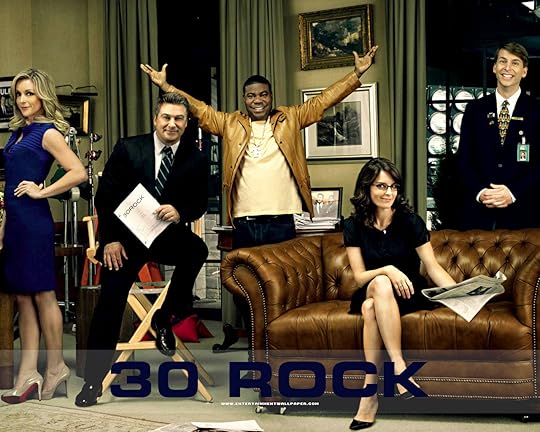
The form is so elemental, so basic, that we have difficulty imagining a time before it a single set, fixed cameras, canned laughter, zany sidekicks, quirky family antics. Obsessively watched and critically ignored, sitcoms were a distraction, a gentle lullaby of a kinder, gentler America—until suddenly the artificial boundary between the world and television entertainment collapsed. In this book we can watch the growth of the sitcom, following the path that leads from Lucy to The Phil Silvers Show ; from The Dick Van Dyke Show to The Mary Tyler Moore Show ; from M*A*S*H to Taxi ; from Cheers to Roseanne ; from Seinfeld to Curb Your Enthusiasm ; and from The Larry Sanders Show to 30 Rock . In twenty-four episodes, Sitcom surveys the history of the form, and functions as both a TV mixtape of fondly remembered shows that will guide us to notable series and larger trends, and a carefully curated guided tour through the history of one of our most treasured art forms.
416 pages, Paperback
First published January 1, 2014
About the author
Saul Austerlitz
7 books67 followersI am a freelance writer whose work has been published in the New York Times, New York Times Magazine, Esquire, Vanity Fair, Rolling Stone, the Boston Globe, Los Angeles Times, Slate, and The New Republic, among others.
I am an adjunct professor of writing and comedy history at New York University, as well as the author of Kind of a Big Deal: How Anchorman Stayed Classy and Became the Most Iconic Comedy of the Twenty-First Century (Dutton, 2023), Generation Friends: An Inside Look at the Show That Defined a Television Era (Dutton, 2019), Just a Shot Away: Peace, Love, and Tragedy with the Rolling Stones at Altamont (Thomas Dunne Books, 2018), Sitcom: A History in 24 Episodes from I Love Lucy to Community (Chicago Review Press, 2014), Another Fine Mess: A History of American Film Comedy (Chicago Review Press, 2010), and Money for Nothing: A History of the Music Video from the Beatles to the White Stripes (Continuum, 2007).
Booklist named Another Fine Mess one of the ten best arts books of 2010, and Just a Shot Away received rave reviews, including from the New York Times Book Review, which called it “the most blisteringly impassioned music book of the season.” Generation Friends was named the second-best comedy book of 2019 by New York magazine, as well as one of New York’s 15 best books on TV comedies.
I grew up in Los Angeles and am a graduate of Yale University and New York University's Tisch School of the Arts. I lives with my wife and two children in Brooklyn.
I am an adjunct professor of writing and comedy history at New York University, as well as the author of Kind of a Big Deal: How Anchorman Stayed Classy and Became the Most Iconic Comedy of the Twenty-First Century (Dutton, 2023), Generation Friends: An Inside Look at the Show That Defined a Television Era (Dutton, 2019), Just a Shot Away: Peace, Love, and Tragedy with the Rolling Stones at Altamont (Thomas Dunne Books, 2018), Sitcom: A History in 24 Episodes from I Love Lucy to Community (Chicago Review Press, 2014), Another Fine Mess: A History of American Film Comedy (Chicago Review Press, 2010), and Money for Nothing: A History of the Music Video from the Beatles to the White Stripes (Continuum, 2007).
Booklist named Another Fine Mess one of the ten best arts books of 2010, and Just a Shot Away received rave reviews, including from the New York Times Book Review, which called it “the most blisteringly impassioned music book of the season.” Generation Friends was named the second-best comedy book of 2019 by New York magazine, as well as one of New York’s 15 best books on TV comedies.
I grew up in Los Angeles and am a graduate of Yale University and New York University's Tisch School of the Arts. I lives with my wife and two children in Brooklyn.
Ratings & Reviews
Friends & Following
Create a free account to discover what your friends think of this book!
Community Reviews
Displaying 1 - 30 of 70 reviews

December 28, 2013
3,5 Stars!
It's a revealing book featuring some of the best sitcoms ever..
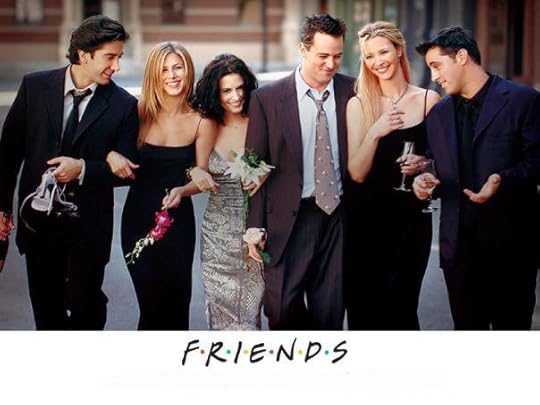
From I love Lucy to -my favorite- Friends and Community.
The layout is unique and inspired if i may add but not executed the way it was meant to be.. Every chapter is dedicated to an episode that stands out for some reasons and at many points the author gives a good and very compelling although too long introduction..
The beggining was so much better than the rest of the book, way before the middle the author starts to get all over the place and leads the reader into frustation..
The Verdict: It's funny, at points riveting, i 'm not going to call it essential for every TV-lover, but pretty good for everyone who loves to watch sitcoms and wants to make a trip down memory lane with a dash of informative essays and an interesting pov..
THOUGHTS ABOUT THE BOOK
- I loved the behind the scenes stories so much..
- The writing is good and the chapters are flowing, but i had some problems with a few of the the authors thoughts on some places..
- Great for everyone who likes sitcoms..
- It lacks on some basic details..
- It would be better if there were some more recent series.. In my opinion of course.
- The development in the world of sitcoms the book notes through history is quite fashinating..
ARC provided via Netgalley in exchange of an honest opinion. Thank you!
It's a revealing book featuring some of the best sitcoms ever..
From I love Lucy to -my favorite- Friends and Community.
The layout is unique and inspired if i may add but not executed the way it was meant to be.. Every chapter is dedicated to an episode that stands out for some reasons and at many points the author gives a good and very compelling although too long introduction..
The beggining was so much better than the rest of the book, way before the middle the author starts to get all over the place and leads the reader into frustation..
The Verdict: It's funny, at points riveting, i 'm not going to call it essential for every TV-lover, but pretty good for everyone who loves to watch sitcoms and wants to make a trip down memory lane with a dash of informative essays and an interesting pov..
THOUGHTS ABOUT THE BOOK
- I loved the behind the scenes stories so much..
- The writing is good and the chapters are flowing, but i had some problems with a few of the the authors thoughts on some places..
- Great for everyone who likes sitcoms..
- It lacks on some basic details..
- It would be better if there were some more recent series.. In my opinion of course.
- The development in the world of sitcoms the book notes through history is quite fashinating..
ARC provided via Netgalley in exchange of an honest opinion. Thank you!

December 16, 2014
I couldn't read the whole book. This book did 3 things that kill a book for me:
1. Not sticking to your point: If you are going to write about book about the history of the sitcom based on 24 episodes, it needs to be just that. A full page in the "The Simpsons" chapter was devoted to "South Park." A paragraph in the "Arrested Development" chapter was talking about how bad "Two and a Half Men" is (which I agree with, but that is not the given thesis of the book). Half of that chapter was about other shows. Stick to your thesis. If you are going to give criticisms or talk over other shows, make that part of your story.
2. Covering up your ideas with poor writing: This books is rife with run-on sentences and needlessly complicated writing.
"The passage of time, and the nearly universal acknowledgment of landmark shows like Seinfeld, The Simpsons, and Arrested Development, has rendered obsolete the ideological blinkers ("boob tube," "idiot box") that reflexively condemn television as inherently inferior or insipid."
That is one sentence. It is one pretentious and over-wrought sentence.
3. FACTUAL ERRORS!!!!: The most egregious problem with this book is the number of factual errors. I am a M*A*S*H fanatic. I grew up watching it. My family owned a M*A*S*H trivia game that we proved wrong with our deep knowledge of the show. I counted 3 factual inaccuracies in his chapter on this book. He had a factual error about The Office, a show I have memorized. He had another fact incorrect about the episode of Community, another of my favorite shows. I think that this was the case of either someone who was over-confident and didn't check or a weak editor.
I picked up this book because he included episodes from my 5 favorite sitcoms: M*A*S*H, Arrested Development, The Office, 30 Rock and Community. I ended up being so frustrated with this book I only read those chapters, the introduction, and the chapters on I Love Lucy and Friends, two shows I know somewhat well. I couldn't take anymore. There are better books about TV history out there, and many better criticism books. Don't bother with this one.
1. Not sticking to your point: If you are going to write about book about the history of the sitcom based on 24 episodes, it needs to be just that. A full page in the "The Simpsons" chapter was devoted to "South Park." A paragraph in the "Arrested Development" chapter was talking about how bad "Two and a Half Men" is (which I agree with, but that is not the given thesis of the book). Half of that chapter was about other shows. Stick to your thesis. If you are going to give criticisms or talk over other shows, make that part of your story.
2. Covering up your ideas with poor writing: This books is rife with run-on sentences and needlessly complicated writing.
"The passage of time, and the nearly universal acknowledgment of landmark shows like Seinfeld, The Simpsons, and Arrested Development, has rendered obsolete the ideological blinkers ("boob tube," "idiot box") that reflexively condemn television as inherently inferior or insipid."
That is one sentence. It is one pretentious and over-wrought sentence.
3. FACTUAL ERRORS!!!!: The most egregious problem with this book is the number of factual errors. I am a M*A*S*H fanatic. I grew up watching it. My family owned a M*A*S*H trivia game that we proved wrong with our deep knowledge of the show. I counted 3 factual inaccuracies in his chapter on this book. He had a factual error about The Office, a show I have memorized. He had another fact incorrect about the episode of Community, another of my favorite shows. I think that this was the case of either someone who was over-confident and didn't check or a weak editor.
I picked up this book because he included episodes from my 5 favorite sitcoms: M*A*S*H, Arrested Development, The Office, 30 Rock and Community. I ended up being so frustrated with this book I only read those chapters, the introduction, and the chapters on I Love Lucy and Friends, two shows I know somewhat well. I couldn't take anymore. There are better books about TV history out there, and many better criticism books. Don't bother with this one.

March 14, 2018
Recently, I realized I had never actually watched an entire episode of the classic sitcom Barney Miller. Of course, like everyone else, I grew up watching and loving sitcoms, but somehow missed this one. I realized, after watching most of the first season of Barney Miller before the scratched-up library DVD crapped out, that I consider myself more than just a casual sitcom fan—more like a student of the genre, I guess, even once taking a sitcom writing class with a staff writer from Everybody Loves Raymond (Ellen Sadler). All of this led me to wonder if anyone had written a book on the history of the sitcom, a definitive study of the format and its evolution—more than just a list and summation of the top 100 comedies of all time. I wanted a book that would really get in there, explore the groundbreaking and influential shows, and follow this thread through TV history and see the evolution of the sitcom, the influences of landmark shows on future series, and how it’s all connected. I was afraid that book didn’t exist, and if I wanted it to, I’d have to write it myself. Thank you Saul Austerlitz for saving me the trouble! This book was everything I was looking for.

March 15, 2014
Look, if anyone should love a book of essays about classic sitcom episodes, it should be me. If I could make a living doing so, I'd spend my life writing blog entries about the books I've liked and the sitcom episodes I love. I don't get super into movies and there's only a handful of television dramas that I attach myself to, but there are few things in the world of entertainment that make me happier than a well-done sitcom.
I picked this one up because it seemed kind of promising. I enjoyed Warren Littlefield's oral history of NBC's Must-See years but found myself wishing that it had provided more context and more critical analysis to enrich the nostalgia and facts that it so happily offered up. Austerlitz's effort seemed like it could offer that, but manages to flop spectacularly. I didn't read all of the essays, but I learned almost nothing new from the ones I did read on the shows that I love. The tone is overly academic, but the analysis that it's reaching for is not particularly deep or thoughtful. It ends up reading like plot summaries with a ten-dollar vocabulary.
Or, as my boyfriend so aptly put it, "It's like a college student writing a term paper that's due the next day, but didn't do the research and is covering it up with language he thinks sounds smarter than it really is."
Without any kind of thesis statements or focus points, the chapters tend to ramble and often end up discussing things that have nothing to do with the episode they are purportedly about. (The Seinfeld chapter is supposedly about the episode "The Pitch." Austerlitz spends maybe a page on that episode, and perhaps four or five on the episode "The Contest"). I mean, I understand that you have to provide context and offer specific examples but that's just not what's going on here. It's just...fluff that isn't building to anything resembling a point.
Also, I resent the dismissive tone he takes with Friends. I know dudes tend to shrug it off and I know the show grew kind of tired and formulaic in its latter seasons, but the first few years were pretty fucking brilliant and I will argue to the death with anyone who says otherwise. I'm fairly sure he gets a small but significant fact wrong about a piece of dialogue in "The One With the Embryos," so I'm not entirely convinced that he actually watched the episode with any thoughtful intent. If you're going to include the show in your book, at least give it the benefit of the doubt. The chapter felt like he resented the fact that he had to include the show in the first place because it was so beneath him.
Vulture or The AV Club regularly offer richer analysis of shows than Austerlitz does. I don't read enough Alan Sepinwall or James Poniewozik, but I always find that they're fairly incisive. And it's hard to go wrong with Linda Holmes. Each of these outlets have proven that thoughtful critiques can be written about silly sitcom episodes. In fact, it was the AV Club's discussion of "The One With The Embryos" that got me hooked on the website in the first place. Read that instead of Austerlitz's chapter if you want some thoughtful, engaging sitcom analysis.
I picked this one up because it seemed kind of promising. I enjoyed Warren Littlefield's oral history of NBC's Must-See years but found myself wishing that it had provided more context and more critical analysis to enrich the nostalgia and facts that it so happily offered up. Austerlitz's effort seemed like it could offer that, but manages to flop spectacularly. I didn't read all of the essays, but I learned almost nothing new from the ones I did read on the shows that I love. The tone is overly academic, but the analysis that it's reaching for is not particularly deep or thoughtful. It ends up reading like plot summaries with a ten-dollar vocabulary.
Or, as my boyfriend so aptly put it, "It's like a college student writing a term paper that's due the next day, but didn't do the research and is covering it up with language he thinks sounds smarter than it really is."
Without any kind of thesis statements or focus points, the chapters tend to ramble and often end up discussing things that have nothing to do with the episode they are purportedly about. (The Seinfeld chapter is supposedly about the episode "The Pitch." Austerlitz spends maybe a page on that episode, and perhaps four or five on the episode "The Contest"). I mean, I understand that you have to provide context and offer specific examples but that's just not what's going on here. It's just...fluff that isn't building to anything resembling a point.
Also, I resent the dismissive tone he takes with Friends. I know dudes tend to shrug it off and I know the show grew kind of tired and formulaic in its latter seasons, but the first few years were pretty fucking brilliant and I will argue to the death with anyone who says otherwise. I'm fairly sure he gets a small but significant fact wrong about a piece of dialogue in "The One With the Embryos," so I'm not entirely convinced that he actually watched the episode with any thoughtful intent. If you're going to include the show in your book, at least give it the benefit of the doubt. The chapter felt like he resented the fact that he had to include the show in the first place because it was so beneath him.
Vulture or The AV Club regularly offer richer analysis of shows than Austerlitz does. I don't read enough Alan Sepinwall or James Poniewozik, but I always find that they're fairly incisive. And it's hard to go wrong with Linda Holmes. Each of these outlets have proven that thoughtful critiques can be written about silly sitcom episodes. In fact, it was the AV Club's discussion of "The One With The Embryos" that got me hooked on the website in the first place. Read that instead of Austerlitz's chapter if you want some thoughtful, engaging sitcom analysis.
August 31, 2015
Imagine you had time to binge watch every episode of every great situation comedy. Well, this author did it for you. The more I read this book, the more I liked, then loved it. I am now searching for DVDs of the Honeymooners and Arrested Development. I'm thinking of quitting my day job and watching reruns all day.
A really fun book, makes you think and enjoy the unique American art of sitcoms. Would have given 5 stars, but sometimes the author stretches a bit with his own attempts at comedy or flowery prose.
A really fun book, makes you think and enjoy the unique American art of sitcoms. Would have given 5 stars, but sometimes the author stretches a bit with his own attempts at comedy or flowery prose.

March 8, 2026
As a sitcom enjoyer and someone with self-proclaimed bad taste, I enjoy over-analyzing the banal and mundane until I've managed to make a delicious sandwich out of crumbs. That being said, I was a bit disappointed with the surface level observations and talking points throughout that made up a majority of this book. I kept feeling like Charlie Brown as every time the author would start to touch on an interesting point (particularly when he would mention sitcom moments/elements that were significant at the time they aired due to surrounding cultural context), like Lucy, he would pull away before making any meaningful connections. I kept getting annoyed thinking he would go back and elaborate, but just...never did.
This was all made worse by the overly academic language that felt as if the author just discovered a thesaurus for the first time. It's aggravating to chug through big words that are merely a cover for the author's lack of meaningful analysis. Plus, the amount of run on sentences and meandering added to the slog. These choices made this a really dry read which felt like a disservice to the subject matter. Nostalgia being at the crux of most people's connections to and fondness for sitcoms requires a more casual and human approach. When covering the nearly 60 year (at the time of publication) history of something like sitcoms, invoking nostalgia in people who didn't experience some of these shows while they were on the air is crucial to bolstering your points. When discussing art, especially the ways it has impacted and reflected human culture, writers need to treat their medium as an art form as well and not just a means to put words to paper.
Another point of contention I have is the content the author chose to include/exclude. I understand when covering an extensive history, you can only include so much information, but when you frequently list or touch on sitcoms relevant to your main subjects and can go off on a full page tangent about South Park in the middle of your Simpsons chapter, I think my frustration is warranted. In the age of creators like Quinton Reviews - a media reviewer/analyst most known for watching, commenting, and analyzing iCarly and Victorious and their related media in a combined ~ 45+ hours of video content - I find length or time to not be good enough excuses for lack of depth in an analysis. As such, I believe significant sitcoms were brushed over, omitted, or even offensively misunderstood by the author.
In the brushed over category, Full House, Family Matters, and The Fresh Prince of Bel-Air, all series that ran for a significant amount of time and started, re-started, or prolonged the careers of many of its cast members (many of which are still relevant today). I wouldn't consider the content of these series to be particularly ground-breaking (though they did have their moments), the cultural impact and their status in the zeitgeist is definitely something worth addressing.
In the omitted category, Everybody Hates Chris. It's currently the only series that I personally watched that I felt surprised to not see even mentioned by the author. It's presentation from a technical standpoint definitely makes it stick out in the sitcom genre. The author on many occasions pointed out shows that subverted or even rewrote the expectations of the genre and I feel Everybody Hates Chris at least deserves a mention for that alone. A show that I personally haven't watched that I was also surprised to not see mentioned was Laverne and Shirley. Aside from the title and the leading ladies' bizarre cameo in the 2010s disaster of a children's sitcom, Sam & Cat, I know nothing about this series. Any Laverne & Shirley heads, feel free to stick up for this one in my stead.
My legitimate criticisms out of the way, I will now be activating hater mode. Although my level of appreciation/love for most of the sitcoms I enjoy can range from passive interest to fan, I have a secret final boss mode of appreciation for two series, of which the author grossly overlooked: The Drew Carey Show and It's Always Sunny in Philadelphia. Ironically, at the time of publication, both shows had been on the air for the same length of time (~9 years) and have been overlooked by the mainstream, albeit for different reasons (but that's another essay for another day). No matter, I will always go to bat for these two legends of the genre.
From both a content and technical perspective, it's WILD to reduce The Drew Carey Show to a passing mention in which you refer to it as "working class Friends." Call DJ Khaled because The Drew Carey Show is quite literally "suffering from success." It wasn't until last year, 2025 (11 years after publication of this book) that it finally got it's first ever DVD release. A main hurdle in this feat was the abundant use of licensed music, resulting in the DVD release having to dub over or even cut entire scenes, and even cut multiple full episodes. In short, capitalism sucks, resulting in making the difficult decision to sacrifice some of the media's integrity in order to preserve it and make it accessible. From covers of the show's multiple theme songs, live in-studio performances, full musical numbers, or just including a recorded track, TDCS racks up an impressive (and expensive) set list. The list of copyrighted music might only be matched by its extensive list of guest stars/appearances that run the gambit including Jamie Lee Curtis, Penn & Teller, David Cross, Joe Walsh, Steve Buscemi, Bo Derek, Carol Channing, and much much more.
In addition to everyone in Hollywood clambering to get in on TDCS, the show had impressive technical feats. Officially there are two live episodes (S5E08 and S6E05), however they performed both episodes three times back to back (once each for the Eastern/Central, Mountain and Pacific time zones) totaling 6 performances. Not only that, but each performance had segments that were completely improvised and featured many of the Whose Line cast members. Additionally, it was the first show to ever be broadcast simultaneously broadcast on TV and the Internet; the webcast peaked at 1 million views, and even caused the site to crash from the traffic. Whether it's a silly, but well-earned gimmick, or something as intricate as the cold open of S4E02 that used a technique of layering footage in homage to Polish short film, Tango (1981), TDCS was always willing to fuck around and find out.
Dismissing The Drew Carey Show as a simple Friends clone was bad enough, but then I had to read the author's shoddy recall and misinterpretation of the single episode of It's Always Sunny in Philadelphia he watched. Sunny was granted a single paragraph and yet the damage the author managed to do to my psyche is impressive. In that one paragraph, the author managed to get info wrong and indirectly admit his "research" stopped at S2E03. In an attempt to encapsulate the tone of the series, he lists the A plots of three episodes, S1E03, S2E03, and S1E02 respectively, and attempts to elaborate on the last one. I say "attempt" because his additional sentence of information (not including the bit of dialogue which he thankfully transcribed correctly) he incorrectly states that Dennis became an "antiabortionist zealot" after meeting a protestor. In actuality, with an upcoming pro-life vs. pro-choice protest, Dennis asks Dee which side of the abortion debate would have more women. From Dee's answer, Dennis flippantly decides he'll simply make an appearance - not become a zealot (fake or otherwise) - at the protest on the side of pro-choice to pick up women. Sure, it's not a major detail, but it's not a good look when you're meant to be presenting facts. This, paired with another review on here pointing out the author got a lot of M*A*S*H info incorrect despite dedicating an entire chapter to the series, greatly lowered my trust in the author.
This error paired with his knowledge and references not extending past the first three episodes of the first two seasons of a show that, at the time of publication, was about to air its tenth season feels disrespectful. With this 6 episodes worth of knowledge, the author had the gall to make the assumption (not observation because he clearly didn't watch enough to observe for himself) that it follows traditional sitcom rules of each episode returning to status quo. I'll say he's half right, because it occasionally does return to status quo, but more often than not, its own status quo is constantly changing - especially in later seasons - as the actions of the characters have consequences and continuity is seen throughout the series. In my opinion, a core aspect of the show is the characters desperately trying to create normalcy or delude themselves into some form of it, but failing disastrously and dealing with the compounding consequences. The characters actively grow and change (usually for the worse) and devastate those around them. The gang may think they have returned to status quo, but whatever disaster they caused in that episode ultimately changes them. It's not worth going into if you're not going to actually give it the attention it deserves.
Whether it's getting the detail of an episode wrong or misinterpreting the series as a whole, the cherry on top is not mentioning Sunny's indie roots that are rare in the genre and TV in general. The show started with three friends and a $200 budget. Even with its success today, the low-budget charm remains ingrained in the series from the library of royalty-free music to the original creators still holding full creative control over their work 20 years later.
I could go on ad infinitum but will spare myself and y'all from continuing my meandering info-dump.
I will say, although my gripes with this book are strong, I did enjoy how the author started out strong in laying the ground work and history of early sitcoms, especially when discussing the early era of I Love Lucy, The Dick Van Dyke Show, The Mary Tyler Moore Show, etc. I wasn't present in those years and I felt his description of episodes, explanation of production, and discussion of culture at the time was effective.
With my brain rot severe and my heart heavy, I am disappointed and low-key mad at this book. I wish we could give half star ratings here, because my rating is closer to a 2.5 than a 2. I didn't hate this reading experience, and I got something out of it even though at times I was aggravated to no end (hence my rambling). The things I disliked about this book just seemed to hit the specific buttons (special interests) that make me go crazy.
This was all made worse by the overly academic language that felt as if the author just discovered a thesaurus for the first time. It's aggravating to chug through big words that are merely a cover for the author's lack of meaningful analysis. Plus, the amount of run on sentences and meandering added to the slog. These choices made this a really dry read which felt like a disservice to the subject matter. Nostalgia being at the crux of most people's connections to and fondness for sitcoms requires a more casual and human approach. When covering the nearly 60 year (at the time of publication) history of something like sitcoms, invoking nostalgia in people who didn't experience some of these shows while they were on the air is crucial to bolstering your points. When discussing art, especially the ways it has impacted and reflected human culture, writers need to treat their medium as an art form as well and not just a means to put words to paper.
Another point of contention I have is the content the author chose to include/exclude. I understand when covering an extensive history, you can only include so much information, but when you frequently list or touch on sitcoms relevant to your main subjects and can go off on a full page tangent about South Park in the middle of your Simpsons chapter, I think my frustration is warranted. In the age of creators like Quinton Reviews - a media reviewer/analyst most known for watching, commenting, and analyzing iCarly and Victorious and their related media in a combined ~ 45+ hours of video content - I find length or time to not be good enough excuses for lack of depth in an analysis. As such, I believe significant sitcoms were brushed over, omitted, or even offensively misunderstood by the author.
In the brushed over category, Full House, Family Matters, and The Fresh Prince of Bel-Air, all series that ran for a significant amount of time and started, re-started, or prolonged the careers of many of its cast members (many of which are still relevant today). I wouldn't consider the content of these series to be particularly ground-breaking (though they did have their moments), the cultural impact and their status in the zeitgeist is definitely something worth addressing.
In the omitted category, Everybody Hates Chris. It's currently the only series that I personally watched that I felt surprised to not see even mentioned by the author. It's presentation from a technical standpoint definitely makes it stick out in the sitcom genre. The author on many occasions pointed out shows that subverted or even rewrote the expectations of the genre and I feel Everybody Hates Chris at least deserves a mention for that alone. A show that I personally haven't watched that I was also surprised to not see mentioned was Laverne and Shirley. Aside from the title and the leading ladies' bizarre cameo in the 2010s disaster of a children's sitcom, Sam & Cat, I know nothing about this series. Any Laverne & Shirley heads, feel free to stick up for this one in my stead.
My legitimate criticisms out of the way, I will now be activating hater mode. Although my level of appreciation/love for most of the sitcoms I enjoy can range from passive interest to fan, I have a secret final boss mode of appreciation for two series, of which the author grossly overlooked: The Drew Carey Show and It's Always Sunny in Philadelphia. Ironically, at the time of publication, both shows had been on the air for the same length of time (~9 years) and have been overlooked by the mainstream, albeit for different reasons (but that's another essay for another day). No matter, I will always go to bat for these two legends of the genre.
From both a content and technical perspective, it's WILD to reduce The Drew Carey Show to a passing mention in which you refer to it as "working class Friends." Call DJ Khaled because The Drew Carey Show is quite literally "suffering from success." It wasn't until last year, 2025 (11 years after publication of this book) that it finally got it's first ever DVD release. A main hurdle in this feat was the abundant use of licensed music, resulting in the DVD release having to dub over or even cut entire scenes, and even cut multiple full episodes. In short, capitalism sucks, resulting in making the difficult decision to sacrifice some of the media's integrity in order to preserve it and make it accessible. From covers of the show's multiple theme songs, live in-studio performances, full musical numbers, or just including a recorded track, TDCS racks up an impressive (and expensive) set list. The list of copyrighted music might only be matched by its extensive list of guest stars/appearances that run the gambit including Jamie Lee Curtis, Penn & Teller, David Cross, Joe Walsh, Steve Buscemi, Bo Derek, Carol Channing, and much much more.
In addition to everyone in Hollywood clambering to get in on TDCS, the show had impressive technical feats. Officially there are two live episodes (S5E08 and S6E05), however they performed both episodes three times back to back (once each for the Eastern/Central, Mountain and Pacific time zones) totaling 6 performances. Not only that, but each performance had segments that were completely improvised and featured many of the Whose Line cast members. Additionally, it was the first show to ever be broadcast simultaneously broadcast on TV and the Internet; the webcast peaked at 1 million views, and even caused the site to crash from the traffic. Whether it's a silly, but well-earned gimmick, or something as intricate as the cold open of S4E02 that used a technique of layering footage in homage to Polish short film, Tango (1981), TDCS was always willing to fuck around and find out.
Dismissing The Drew Carey Show as a simple Friends clone was bad enough, but then I had to read the author's shoddy recall and misinterpretation of the single episode of It's Always Sunny in Philadelphia he watched. Sunny was granted a single paragraph and yet the damage the author managed to do to my psyche is impressive. In that one paragraph, the author managed to get info wrong and indirectly admit his "research" stopped at S2E03. In an attempt to encapsulate the tone of the series, he lists the A plots of three episodes, S1E03, S2E03, and S1E02 respectively, and attempts to elaborate on the last one. I say "attempt" because his additional sentence of information (not including the bit of dialogue which he thankfully transcribed correctly) he incorrectly states that Dennis became an "antiabortionist zealot" after meeting a protestor. In actuality, with an upcoming pro-life vs. pro-choice protest, Dennis asks Dee which side of the abortion debate would have more women. From Dee's answer, Dennis flippantly decides he'll simply make an appearance - not become a zealot (fake or otherwise) - at the protest on the side of pro-choice to pick up women. Sure, it's not a major detail, but it's not a good look when you're meant to be presenting facts. This, paired with another review on here pointing out the author got a lot of M*A*S*H info incorrect despite dedicating an entire chapter to the series, greatly lowered my trust in the author.
This error paired with his knowledge and references not extending past the first three episodes of the first two seasons of a show that, at the time of publication, was about to air its tenth season feels disrespectful. With this 6 episodes worth of knowledge, the author had the gall to make the assumption (not observation because he clearly didn't watch enough to observe for himself) that it follows traditional sitcom rules of each episode returning to status quo. I'll say he's half right, because it occasionally does return to status quo, but more often than not, its own status quo is constantly changing - especially in later seasons - as the actions of the characters have consequences and continuity is seen throughout the series. In my opinion, a core aspect of the show is the characters desperately trying to create normalcy or delude themselves into some form of it, but failing disastrously and dealing with the compounding consequences. The characters actively grow and change (usually for the worse) and devastate those around them. The gang may think they have returned to status quo, but whatever disaster they caused in that episode ultimately changes them. It's not worth going into if you're not going to actually give it the attention it deserves.
Whether it's getting the detail of an episode wrong or misinterpreting the series as a whole, the cherry on top is not mentioning Sunny's indie roots that are rare in the genre and TV in general. The show started with three friends and a $200 budget. Even with its success today, the low-budget charm remains ingrained in the series from the library of royalty-free music to the original creators still holding full creative control over their work 20 years later.
I could go on ad infinitum but will spare myself and y'all from continuing my meandering info-dump.
I will say, although my gripes with this book are strong, I did enjoy how the author started out strong in laying the ground work and history of early sitcoms, especially when discussing the early era of I Love Lucy, The Dick Van Dyke Show, The Mary Tyler Moore Show, etc. I wasn't present in those years and I felt his description of episodes, explanation of production, and discussion of culture at the time was effective.
With my brain rot severe and my heart heavy, I am disappointed and low-key mad at this book. I wish we could give half star ratings here, because my rating is closer to a 2.5 than a 2. I didn't hate this reading experience, and I got something out of it even though at times I was aggravated to no end (hence my rambling). The things I disliked about this book just seemed to hit the specific buttons (special interests) that make me go crazy.
February 28, 2014
I must confess I read this book because there was a section on one of my favorite shows of all time, Community, and I thought the author must be a classy individual due to his love of the show as well. (I’m still angry that they cancelled that show! I have no idea what I shall do with all my free time now that Community is out of my life. Maybe go outside and enjoy nature…. DAMN IT.) While I did learn a lot about the “sitcom” and the history of television in general, the book was far from perfect. The chapter dedicated to Community felt very rushed, to the point where unless you had seen the show yourself, summaries included about Community episodes would seem disjointed and unclear. The author had a tendency to swear randomly throughout the FUCKING book that honestly had no GOD DAMN place and was jarring at times. I mean, this isn’t salty bar talk, where you ramble incoherently to your friends about all your vast knowledge of sitcoms until they tell you to shut up cause they can’t really hear you anyway. I just picture our lovely author yelling “DID YOU KNOW THAT THE HONEYMOONERS ONLY RAN FOR ONE GOD DAMN SEASON AND IT WAS PRETTY MUCH ALL FUCKING AD-LIBBED?”
But these are my only complaints. It is definitely worth a read if you are as big of a fan of sitcoms as myself.
RIP COMMUNITY
I mourn your untimely cancellation until I can fill the void with another sitcom. (I have a feeling I will be waiting for a while.)
**EDIT***
Community has been renewed for a 6 season! Hooray! I almost had to find a new show...
But these are my only complaints. It is definitely worth a read if you are as big of a fan of sitcoms as myself.
RIP COMMUNITY
I mourn your untimely cancellation until I can fill the void with another sitcom. (I have a feeling I will be waiting for a while.)
**EDIT***
Community has been renewed for a 6 season! Hooray! I almost had to find a new show...

May 10, 2014
Written as an exhaustive essay on the nature, tools and evolution of the sitcom on television, the reader will need both a tolerance for research-style academic writing and to have logged hours watching television to fully appreciate this book. I very much enjoyed it, but there are whole shows (Arrested Development, Community, Scrubs) that I have never seen, so I missed out on some of the material.
Further, once the tropes and ploys are completely deconstructed, one loses the magic; I'm not sure I will ever enjoy sitcoms the same way again. I may have broken my ability to watch TV.
Finally, you will be tired of the somewhat evasive adjective "well-scrubbed" by the time you finish this book - someone needs to get Austerlitz a thesaurus. Or perhaps this is simply evidence: too much TV rots your brains.
Further, once the tropes and ploys are completely deconstructed, one loses the magic; I'm not sure I will ever enjoy sitcoms the same way again. I may have broken my ability to watch TV.
Finally, you will be tired of the somewhat evasive adjective "well-scrubbed" by the time you finish this book - someone needs to get Austerlitz a thesaurus. Or perhaps this is simply evidence: too much TV rots your brains.

May 15, 2018
400 pages of sitcom analysis is exactly my kind of nerdery. I enjoyed this a lot more than I expected, and only skimmed a few pages here and there (I expected to skim entire chapters).

March 14, 2025
Absolutely terrific. Sure, I'm interested in the subject matter, but that actually means I'm more likely to be biased against this: I know more about the topic and will have my own opinions! Instead, this is a wonderful read, and throughout I was impressed by just how good the analysis was. Rather than falling into the common pitfalls of simply writing about how "good" a show is and listing funny bits, or rehashing biographies of popular stars, etc., Austerlitz actually sits down and lays out a case for the ways in which a particular sitcom moved the form forward, the influences upon it, and those that came after.
It's almost an Art Historical approach: context, style, technique ... and I hope others who write about media will read this and see the value of it. An example: he points out (which I noticed but hadn't considered) that Arrested Development really initiated the technique of someone mentioning something and then a rapid cut-away for only perhaps half a second (perhaps longer) to a relevant shot, e.g. "I haven't felt this good since space camp" followed by two seconds of a child actor smashing dioramas at space camp with a baseball bat. Austerlitz would mention this is somewhat related to how HBO's Dream On would cut to clips from old TV, and point out which shows would follow (e.g. Community).
Of course the Simpsons probably did it first!
And it doesn't hurt that I agreed with all of his included examples, although I would have moved Heaven and Earth to get Bewitched in there ... so it's better that he wrote it, because as much as I love Bewitched it wasn't ground-breaking or definitive in the same way as his examples.
On the down side: a couple (that I noticed) of factual errors that are probably the result of an over-confident memory, e.g. he thought cousins George Michael and Maeby sang "Afternoon Delight" but it was his Maeby and Uncle Michael, followed by George Michael and Aunt Lindsay. They're of very minor consequence and didn't affect my enjoyment one iota.
(Note: I'm a writer, so I suffer when I offer fewer than five stars. But these aren't ratings of quality, they're a subjective account of how much I liked the book: 5* = an unalloyed pleasure from start to finish, 4* = really enjoyed it, 3* = readable but not thrilling, 2* = disappointing, and 1* = hated it.)
It's almost an Art Historical approach: context, style, technique ... and I hope others who write about media will read this and see the value of it. An example: he points out (which I noticed but hadn't considered) that Arrested Development really initiated the technique of someone mentioning something and then a rapid cut-away for only perhaps half a second (perhaps longer) to a relevant shot, e.g. "I haven't felt this good since space camp" followed by two seconds of a child actor smashing dioramas at space camp with a baseball bat. Austerlitz would mention this is somewhat related to how HBO's Dream On would cut to clips from old TV, and point out which shows would follow (e.g. Community).
Of course the Simpsons probably did it first!
And it doesn't hurt that I agreed with all of his included examples, although I would have moved Heaven and Earth to get Bewitched in there ... so it's better that he wrote it, because as much as I love Bewitched it wasn't ground-breaking or definitive in the same way as his examples.
On the down side: a couple (that I noticed) of factual errors that are probably the result of an over-confident memory, e.g. he thought cousins George Michael and Maeby sang "Afternoon Delight" but it was his Maeby and Uncle Michael, followed by George Michael and Aunt Lindsay. They're of very minor consequence and didn't affect my enjoyment one iota.
(Note: I'm a writer, so I suffer when I offer fewer than five stars. But these aren't ratings of quality, they're a subjective account of how much I liked the book: 5* = an unalloyed pleasure from start to finish, 4* = really enjoyed it, 3* = readable but not thrilling, 2* = disappointing, and 1* = hated it.)

February 17, 2026
I thought this was a very detailed and informative book. It built on the knowledge I had gained from Tube of Plenty and gave a very focused view on this genre of television and its history. I enjoyed the variety of examples and that each chapter went beyond the titular show. It made each era that was covered seem more whole and showed how television goes much beyond those classics which still get rerun today.
Something I thought was interesting from this book was the difference in opinion on the popularity of different shows. A clear example for me would be Arrested Development. This book was published in 2014, so it predates the major accessibility of streaming services (with them being mentioned in this episode for rebooting AD). They were around but not super popular. Arrested Development, today, in my mind is a very popular show. It is well liked on the internet and is the source of many internet inside jokes (dead dove do not eat). But Austerlitz talks about this as well. How it was before it's time and he saw it as having a lot of possibility that clearly is being recognized by those in my generation. Another example of this would be Freaks and Geeks. This show was everywhere on tumblr in its heyday, and I think it's another example of Austerlitz having a solid prediction on what would leave a lasting mark on people's mind.
My only criticism of this book would be in its organization. The back and forth within the chapters got a little confusing with my internal timeline. I also thought the organization of the chapters themselves was kinda interesting. The gap between Seinfeld and Curb your Enthusiasm was understandable but I think should've been a little shorter in order to keep the information relevant. It was also a lot of information within each chapter, which did get a little overwhelming at times. For others, I would recommend one chapter at a time to be able to absorb everything included.
I learned a lot about a medium I really love and got some great recommendations for future watching. At the top of my list are the Larry Sanders Show and All in the Family. I look forward to going back through this book and watching each show mentioned and finding my own opinions on them. I think this is a great book for others looking to learn more about television history without going so far as Tube of Plenty.
Something I thought was interesting from this book was the difference in opinion on the popularity of different shows. A clear example for me would be Arrested Development. This book was published in 2014, so it predates the major accessibility of streaming services (with them being mentioned in this episode for rebooting AD). They were around but not super popular. Arrested Development, today, in my mind is a very popular show. It is well liked on the internet and is the source of many internet inside jokes (dead dove do not eat). But Austerlitz talks about this as well. How it was before it's time and he saw it as having a lot of possibility that clearly is being recognized by those in my generation. Another example of this would be Freaks and Geeks. This show was everywhere on tumblr in its heyday, and I think it's another example of Austerlitz having a solid prediction on what would leave a lasting mark on people's mind.
My only criticism of this book would be in its organization. The back and forth within the chapters got a little confusing with my internal timeline. I also thought the organization of the chapters themselves was kinda interesting. The gap between Seinfeld and Curb your Enthusiasm was understandable but I think should've been a little shorter in order to keep the information relevant. It was also a lot of information within each chapter, which did get a little overwhelming at times. For others, I would recommend one chapter at a time to be able to absorb everything included.
I learned a lot about a medium I really love and got some great recommendations for future watching. At the top of my list are the Larry Sanders Show and All in the Family. I look forward to going back through this book and watching each show mentioned and finding my own opinions on them. I think this is a great book for others looking to learn more about television history without going so far as Tube of Plenty.

January 12, 2022
This is a intelligently written and thoroughly researched book, which makes a lot of interesting points and is on the whole really good. There are two fairly big flaws to it though.
First is that the book doesn’t really match the promise of its title. It claims to focus on 24 individual episodes to chart the history of the sitcom. From that, you might expect a deep dive into those episodes, a forensic look at their intricacies and construction. But that isn’t what Austerlitz does. Each episode is, at best, a starting point for its chapter, which mainly focuses on a series as a whole but even expands beyond that to a series’ contemporaries, rivals and legacies. And that’s fine, it’s a decent structure, but it’s really not what’s implied. Some chapters barely even mention the episode they’re supposedly about and it makes you wonder why the premise of the book wasn’t just changed to “a history in 24 series”.
The other problem is that while Austerlitz is very well read on the subject matter, able to conjure diverse and frequently arcane references, these are somewhat stunted by geography. There’s an odd taint of American Exceptionalism to the entire book. Austerlitz claims the TV sitcom is a uniquely American format, despite the first one being British. The influence of British shows on the US output (especially prevalent in the 70s, with multiple direct adaptations) is frequently ignored or minimised. I wasn’t desperate for this book to focus on the UK too - it’s fine to set a limitation to your field of study - but it starts to feel like pointed ignorance in places. For instance, Austerlitz waxes lyrical about Norman Lear’s creation of All In The Family, seemingly grudgingly mentioning only in passing that it was lifted entirely from a pre-existing British show Til Death Us Do Part. I was genuinely curious whether the existence of the original British Office was going to warrant a mention (it does to be fair).
First is that the book doesn’t really match the promise of its title. It claims to focus on 24 individual episodes to chart the history of the sitcom. From that, you might expect a deep dive into those episodes, a forensic look at their intricacies and construction. But that isn’t what Austerlitz does. Each episode is, at best, a starting point for its chapter, which mainly focuses on a series as a whole but even expands beyond that to a series’ contemporaries, rivals and legacies. And that’s fine, it’s a decent structure, but it’s really not what’s implied. Some chapters barely even mention the episode they’re supposedly about and it makes you wonder why the premise of the book wasn’t just changed to “a history in 24 series”.
The other problem is that while Austerlitz is very well read on the subject matter, able to conjure diverse and frequently arcane references, these are somewhat stunted by geography. There’s an odd taint of American Exceptionalism to the entire book. Austerlitz claims the TV sitcom is a uniquely American format, despite the first one being British. The influence of British shows on the US output (especially prevalent in the 70s, with multiple direct adaptations) is frequently ignored or minimised. I wasn’t desperate for this book to focus on the UK too - it’s fine to set a limitation to your field of study - but it starts to feel like pointed ignorance in places. For instance, Austerlitz waxes lyrical about Norman Lear’s creation of All In The Family, seemingly grudgingly mentioning only in passing that it was lifted entirely from a pre-existing British show Til Death Us Do Part. I was genuinely curious whether the existence of the original British Office was going to warrant a mention (it does to be fair).

December 11, 2013
Actual score 3.5 stars for a strong beginning, but a meandering end that showed too much of the author's personal biases. Review to come 3/1/14.
Read This Review & More Like It At Ageless Pages Reviews
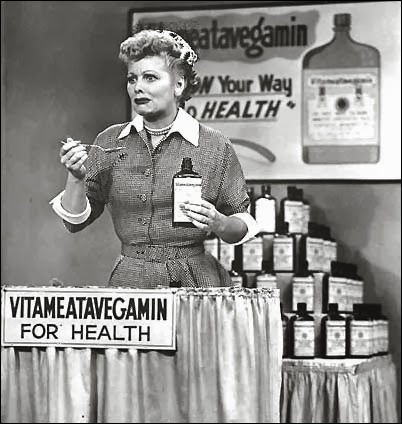
Cultural studies fascinate me, particularly the way television, movies, and books act as a lens to view the landscape of the times. Sitcom takes 24 snapshots of television through history, via some of the most famous or poignant episodes, and uses them to break down not just the represented shows, but the genre. Austerlitz has chosen episodes that mostly revolve around television, giving the whole thing a very meta quality. We see not only how Lucille Ball influenced a long line of female comediennes, (of whom television has always been more accepting than movies,) but through episodes like “Lucy Does a TV Commercial”, we also glimpse tv pulling back the curtain on itself.
He also uses each episode as a jumping off point for a larger look at first the featured show, then the era as a whole. The aforementioned chapter “Lucy Does a TV Commercial,” features another Lucy episode with TV as the centerpiece, as Ricky suggests creating “one of those husband-and-wife TV shows” in a pitch. (The joke being, of course, that we’re already watching one.) This allows us to segue into a look at other husband-and wife shows of the time, like Mama and The Goldbergs. In the end, he brings it back to Lucy and Ricky through the use of The Goldbergs to launch a very thought provoking section on race in early television. A later chapter on The Phil Silvers Show allows a look at the brief, and mostly forgettable, subgenre of military sitcoms, like Hogan’s Heroes, McHale’s Navy, and obviously, M*A*S*H. (M*A*S*H, of course, warrants its own chapter later in the book which is the jumping off point for a discussion on mixing drama with comedy, further continued in the Freaks and Geeks chapter which delves into where exactly the line between sitcom and drama is when the genres have become so muddled. Television is cyclical and not just a bit incestuous.)
The first two thirds of the book are the most successful as the author deftly weaves together the best known sitcoms of the 1950s - 1990s, along with a few lesser known, but important stepping stones like The Phil Silvers Show and The Larry Sanders Show. (Not that these are obscure shows, just that they don’t stand up to the other titans of TV mentioned, [half of the most watched finales in American history are represented].) I particularly enjoyed the looks at feminism on tv as an indicator of the greater cultural changes in The Mary Tyler Moore Show and All in the Family.
In trying to address race and tv, it goes a bit more poorly. For one, there are slurs. While a particular Bill Cosby quote does use the n-word in a powerful and appropriate way, the author uses it again, outside of the context of the quote, (and also uses an anti-gay slur whilst discussing Louie.) The All in the Family chapter seems to find a lot of humor in Archie’s continued bigotry and at one point seems to be indicating that this is equal to George Jefferson’s “racism” regarding interracial marriage on their eponymous spinoff. (Television does not exist in a vacuum, Jefferson’s hatred and fear of whitey are not the same as as Bunker’s prejudices.) Fortunately, the chapter is rescued by the last paragraphs that finally condemn Archie as a relic whose humor has “curdled”. The Cosby Show, the chapter and the actual product, handle the situation with far more sensitivity, as you’d imagine.
Unfortunately, the later years are where I found the book to struggle. Extremely big shows, like Everybody Loves Raymond, which repopularized domestic sitcoms after the Friends-like ensembles of the early 90s, and The Big Bang Theory, which is currently doing unprecedented numbers, are completely glossed over. A lot of time was devoted to feminism and racism, but there’s little mention of Will and Grace, (except as a Friends knock-off,) or Modern Family and their influence on gay issues. Even Ellen’s infamous coming out is dismissed as “supposedly groundbreaking”. There is some discussion of gay characters, mostly in the Sex and the City chapter, but I wish more time had been devoted to the normalization of homosexuality through television. It feels very superficial in comparison to earlier themes.
You can clearly see the author’s biases in these chapters, as he dismisses the contributions or importance of shows he finds banal. Arrested Development’s greatest lament isn’t that it was canceled, but that Two and a Half Men wasn’t. While I certainly won’t argue that TBBT or Raymond are high art, it’s clear the author favors quirky, embarrassment-led sitcoms in the vein of Seinfeld and Curb Your Enthusiasm, and that’s what he really wants to talk about. Unfortunately, I don’t, and often find the shows and the chapters mean spirited. Your enjoyment will probably depend on where you stand in the “should Arrested Development have been canceled?” debate.
There also seems to be some confusion as to what constitutes a sitcom and where the line exists as genres have become increasingly blurred. It’s an interesting argument, and while I can see justification for Sex and the City, even if I disagree, I can’t come to terms with Freaks and Geeks being included. Between the hour long runtime and, the author may not like the term but it is apropos, dramedy, it doesn’t fit the sitcom mold. It becomes obvious how shoehorned in it is, when the chapter segues into discussions of cop shows and M*A*S*H’s black humor. It seems like a personal favorite that the author believes was canceled too soon, again, and, again, wanted an excuse to talk about.
Despite some reservations, Sitcom is a fantastic jumping off point. It is a book that requires a fair understanding of the subject matter. In reading it, I watched many of the episodes to (re)familiarize myself with the characters and plots and to better follow along. This added a lot of depth and things to think about to shows I know well, as well as a newfound love for some I’d previously dismissed. The sitcom may be a derided genre, but once researched, there’s no denying that it is both incredibly important as a historical marker and a window into the more progressive future.
Read This Review & More Like It At Ageless Pages Reviews
Cultural studies fascinate me, particularly the way television, movies, and books act as a lens to view the landscape of the times. Sitcom takes 24 snapshots of television through history, via some of the most famous or poignant episodes, and uses them to break down not just the represented shows, but the genre. Austerlitz has chosen episodes that mostly revolve around television, giving the whole thing a very meta quality. We see not only how Lucille Ball influenced a long line of female comediennes, (of whom television has always been more accepting than movies,) but through episodes like “Lucy Does a TV Commercial”, we also glimpse tv pulling back the curtain on itself.
He also uses each episode as a jumping off point for a larger look at first the featured show, then the era as a whole. The aforementioned chapter “Lucy Does a TV Commercial,” features another Lucy episode with TV as the centerpiece, as Ricky suggests creating “one of those husband-and-wife TV shows” in a pitch. (The joke being, of course, that we’re already watching one.) This allows us to segue into a look at other husband-and wife shows of the time, like Mama and The Goldbergs. In the end, he brings it back to Lucy and Ricky through the use of The Goldbergs to launch a very thought provoking section on race in early television. A later chapter on The Phil Silvers Show allows a look at the brief, and mostly forgettable, subgenre of military sitcoms, like Hogan’s Heroes, McHale’s Navy, and obviously, M*A*S*H. (M*A*S*H, of course, warrants its own chapter later in the book which is the jumping off point for a discussion on mixing drama with comedy, further continued in the Freaks and Geeks chapter which delves into where exactly the line between sitcom and drama is when the genres have become so muddled. Television is cyclical and not just a bit incestuous.)
The first two thirds of the book are the most successful as the author deftly weaves together the best known sitcoms of the 1950s - 1990s, along with a few lesser known, but important stepping stones like The Phil Silvers Show and The Larry Sanders Show. (Not that these are obscure shows, just that they don’t stand up to the other titans of TV mentioned, [half of the most watched finales in American history are represented].) I particularly enjoyed the looks at feminism on tv as an indicator of the greater cultural changes in The Mary Tyler Moore Show and All in the Family.
In trying to address race and tv, it goes a bit more poorly. For one, there are slurs. While a particular Bill Cosby quote does use the n-word in a powerful and appropriate way, the author uses it again, outside of the context of the quote, (and also uses an anti-gay slur whilst discussing Louie.) The All in the Family chapter seems to find a lot of humor in Archie’s continued bigotry and at one point seems to be indicating that this is equal to George Jefferson’s “racism” regarding interracial marriage on their eponymous spinoff. (Television does not exist in a vacuum, Jefferson’s hatred and fear of whitey are not the same as as Bunker’s prejudices.) Fortunately, the chapter is rescued by the last paragraphs that finally condemn Archie as a relic whose humor has “curdled”. The Cosby Show, the chapter and the actual product, handle the situation with far more sensitivity, as you’d imagine.
Unfortunately, the later years are where I found the book to struggle. Extremely big shows, like Everybody Loves Raymond, which repopularized domestic sitcoms after the Friends-like ensembles of the early 90s, and The Big Bang Theory, which is currently doing unprecedented numbers, are completely glossed over. A lot of time was devoted to feminism and racism, but there’s little mention of Will and Grace, (except as a Friends knock-off,) or Modern Family and their influence on gay issues. Even Ellen’s infamous coming out is dismissed as “supposedly groundbreaking”. There is some discussion of gay characters, mostly in the Sex and the City chapter, but I wish more time had been devoted to the normalization of homosexuality through television. It feels very superficial in comparison to earlier themes.
You can clearly see the author’s biases in these chapters, as he dismisses the contributions or importance of shows he finds banal. Arrested Development’s greatest lament isn’t that it was canceled, but that Two and a Half Men wasn’t. While I certainly won’t argue that TBBT or Raymond are high art, it’s clear the author favors quirky, embarrassment-led sitcoms in the vein of Seinfeld and Curb Your Enthusiasm, and that’s what he really wants to talk about. Unfortunately, I don’t, and often find the shows and the chapters mean spirited. Your enjoyment will probably depend on where you stand in the “should Arrested Development have been canceled?” debate.
There also seems to be some confusion as to what constitutes a sitcom and where the line exists as genres have become increasingly blurred. It’s an interesting argument, and while I can see justification for Sex and the City, even if I disagree, I can’t come to terms with Freaks and Geeks being included. Between the hour long runtime and, the author may not like the term but it is apropos, dramedy, it doesn’t fit the sitcom mold. It becomes obvious how shoehorned in it is, when the chapter segues into discussions of cop shows and M*A*S*H’s black humor. It seems like a personal favorite that the author believes was canceled too soon, again, and, again, wanted an excuse to talk about.
Despite some reservations, Sitcom is a fantastic jumping off point. It is a book that requires a fair understanding of the subject matter. In reading it, I watched many of the episodes to (re)familiarize myself with the characters and plots and to better follow along. This added a lot of depth and things to think about to shows I know well, as well as a newfound love for some I’d previously dismissed. The sitcom may be a derided genre, but once researched, there’s no denying that it is both incredibly important as a historical marker and a window into the more progressive future.

June 27, 2021
This was made interesting mainly by the fact of the subject matter being interesting. Austerlitz describes without much insight or judgement, the exception being fat bodies and female creatives, the only recipients of negative criticism. This is especially odd reading in 2021 - Louis C.K. and Cosby are given a clean bill of health.
Sitcom has the occasional onanistic pronouncement about TV as a pagan deity, and so on, but what I'd prefer to read is why TVs stopped appearing in the background of TV shows - Austerlitz says it happens, but doesn't speculate why. That's one of a trend of solo statements without a broader context. I learned some good fun facts, but I don't think I learned anything else. Another example; the chapter about The Office and other mockumentary-style shows fails to mention how the format is cheaper and faster, and how that impacts the creation of those shows. Separately, a couple abortion storylines are mentioned, but the info I'd really love is missing - how did the audience respond? When was the first one? How long until the next?, etc.
What I really wanted was more I Like To Watch! I'm sure Austerlitz enjoys and appreciates his subject, but this feels like it's missing its heart. What he describes as TV destroying itself, I see as TV loving itself.
Sitcom has the occasional onanistic pronouncement about TV as a pagan deity, and so on, but what I'd prefer to read is why TVs stopped appearing in the background of TV shows - Austerlitz says it happens, but doesn't speculate why. That's one of a trend of solo statements without a broader context. I learned some good fun facts, but I don't think I learned anything else. Another example; the chapter about The Office and other mockumentary-style shows fails to mention how the format is cheaper and faster, and how that impacts the creation of those shows. Separately, a couple abortion storylines are mentioned, but the info I'd really love is missing - how did the audience respond? When was the first one? How long until the next?, etc.
What I really wanted was more I Like To Watch! I'm sure Austerlitz enjoys and appreciates his subject, but this feels like it's missing its heart. What he describes as TV destroying itself, I see as TV loving itself.

October 20, 2019
First of all, what a great idea for a book. And the research must have been so much fun. I imagine this guy sitting in the Museum of Broadcast Communications, just enjoying show after show of classic TV.
The tone of the book, though, sounded like a freshman rhetoric student with a thesaurus. For instance, in just one paragraph--maybe even the same sentence--he described "Seinfeld" as "pointillistic" and "dada-esque" (yadda yadda yadda). I mean, come on. He also clearly favors some tv shows over others. "Mad About You" is not just Seinfeld with married people, you twit.
And yet he's written another book that I want to read, "Money for Nothing," about music videos. Why do eggheads get to write these great books?
The tone of the book, though, sounded like a freshman rhetoric student with a thesaurus. For instance, in just one paragraph--maybe even the same sentence--he described "Seinfeld" as "pointillistic" and "dada-esque" (yadda yadda yadda). I mean, come on. He also clearly favors some tv shows over others. "Mad About You" is not just Seinfeld with married people, you twit.
And yet he's written another book that I want to read, "Money for Nothing," about music videos. Why do eggheads get to write these great books?

February 1, 2021
Why promise that you book is "a history in 24 episodes" and then spend each chapter discussing multiple episodes of multiple TV shows? I mean, it wasn't uninteresting, but it wasn't what I was expecting. Nothing really new and surprising about most of the shows that are profiled, but I guess the through line - sitcoms reflected American society until the last 20 years or so when they went all post-modern and started reflecting their own history - was moderately intriguing.
I've read more comprehensive sitcom guides and more insightful commentary on television in general, but skimming through this wasn't a bad way to spend a dreary weekend.
I've read more comprehensive sitcom guides and more insightful commentary on television in general, but skimming through this wasn't a bad way to spend a dreary weekend.

June 21, 2021
Really this is closer to 3 1/2 stars. I agree with a lot of the sitcom choices made by Austerlitz, but I think he spent way too much time on shows in the 50s and 60s. I think he also missed some key shows: Golden Girls deserved their own chapter along with It's Always Sunny in Philadelphia. Those two are seriously groundbreaking shows. I also don't consider Sex in the City to be a sitcom.
Those issue aside, this book should have been 24 Sitcoms from I Love Lucy to Community as he rarely sticks to just a single episode per chapter. Some chapters were even dominated by the mention of other tv shows entirely.
Those issue aside, this book should have been 24 Sitcoms from I Love Lucy to Community as he rarely sticks to just a single episode per chapter. Some chapters were even dominated by the mention of other tv shows entirely.

April 6, 2025
4.5 stars rounded down to 4. I do like that the book has a good balance of the book is not unreadable if you are familiar with a show that it focuses on in a chapter or not ‘above’ you if you have not seen it. In addition, the author does a good job giving nods to shows that were (for lack of a better term) ‘honorable mention’ and finding how they associate with some shows over others.
Obviously, writing the book today would be different due to streaming (which the author hints at), but it would have been nice if there was more of an investigation as to the ‘why’ of shows that are critically acclaimed but not watched vs. shows that are ‘rinse and repeat’ but get people to watch.
Obviously, writing the book today would be different due to streaming (which the author hints at), but it would have been nice if there was more of an investigation as to the ‘why’ of shows that are critically acclaimed but not watched vs. shows that are ‘rinse and repeat’ but get people to watch.

January 15, 2021
The book was well-written but two things rubbed me wrong. In the Friends chapter, the author referred to Living Single as black Friends and a knockoff. He then says Living Single was a black take on Sex and the City and Friends. Living Single predated both those shows so knockoff it was not. It was not a mainstream success like the other shows but explaining the shows through the lens of whiteness was lazy. Also, there were some mistakes in The Office. It made me a little wary that there could’ve been mistakes in earlier chapters that I couldn’t have detected.
This entire review has been hidden because of spoilers.

April 24, 2020
As a subgenre of literary work, I particularly enjoy social histories; those works that examine American history and social psychology through objects, sitcoms, and other cultural elements. This work expertly illustrates the evolution of society through the evolution of the sitcom...from finding a stable normality to exploring our limits to becoming increasingly self-deprecating. A must-read for TV fans and social critics alike!

January 29, 2021
I read and really enjoyed another book by this author so I gave sitcom a go. Unfortunately it was less about the history and evolution of the sitcom genre and more a retelling of certain episodes of specific shows. Unless I was familiar with the show he was writing about in a chapter I found myself skipping to get to the shows I had watched, and even those chapters I found to be underwhelming nostalgia.

August 14, 2019
An industry historical perspective, an actor historical perspective, a writer historical perspective, a showrunner historical perspective would have helped enliven what is essentially a mishmash tumble of perceived seminal episodes, attempted trenchant analysis, and highlights of dialogue that are often more entertaining than the entirety of this book.
March 2, 2018
It's ok. It does build on its themes as you get through the book, but it also feels a bit too academic at times. Actually, this book would be perfect if it had a companion clip library to show you everything they're talking about.

July 2, 2018
This was just what I wanted it to be. I enjoyed every chapter of the series I had seen.
Just reading the finale monologue from the Mary Tyler Moore show made me cry. I think it was the first time I cried at a finale and I haven't stopped since.
Just reading the finale monologue from the Mary Tyler Moore show made me cry. I think it was the first time I cried at a finale and I haven't stopped since.
July 11, 2020
I only read chapters pertaining to the sitcoms I have watched. So that means that I skipped over at least six chapters of the book. It was a fun quick read and I found it informative and entertaining.
January 23, 2021
3.5 stars. Decent overview.
If writing about the history of sitcoms, you should never mess-up the fact that Robert Reed is the father on the Brady Bunch, not Ralph Reed, who is a hate-monger extraordinaire, and helped Jack Abramoff rip-off Native Americans.
If writing about the history of sitcoms, you should never mess-up the fact that Robert Reed is the father on the Brady Bunch, not Ralph Reed, who is a hate-monger extraordinaire, and helped Jack Abramoff rip-off Native Americans.
December 30, 2024
Solid overview of the history of the sitcom. A bit tedious at times, and a bit more general than I would have preferred. Plenty to appreciate here, but kind of caught in between a true deep dive and a digestible overview.

March 4, 2019
As a self described tv junkie I absolutely loved this book. It was interesting to read and see the history of sitcoms from the 1950s to the early 2010s. TV sitcoms have come a long way.

July 26, 2021
Interesting book, though the author comes off as irritatingly snobby sometimes. I did like reading about how the sitcom has changed over time.

January 8, 2022
This was interesting, particularly the chapters about the early days of television.
Displaying 1 - 30 of 70 reviews