The Corpus Hermeticum is a collection of short philosphical treatises, a powerful fusion of Greek and Egyptian thought, written in Greek in Alexandria between the first and third centuries AD and rediscovered in the West in the fifteenth century when it was first translated into Latin by the great scholar and philosopher Marsilio Ficino. These writing were believed from antiquity up to the early seventeenth century to be the writings of Hermes Trismegistus, 'thrice-great Hermes', the name given by Greeks of the classical and Hellenistic periods to the Ibis-headed Egyption god Thoth. They were central to the spiritual work of Hermetic societies in late antique Alexandria, aiming to awake gnosis, the direct realistion of the truth of the identity of the invividual and the Supreme, and are still read as inspirational writings today.
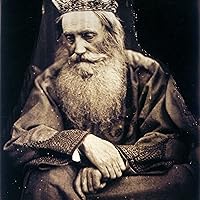
Hermes Trismegistus (Ancient Greek: Ἑρμῆς ὁ Τρισμέγιστος, "thrice-greatest Hermes"; Latin: Mercurius ter Maximus) is the purported author of the Hermetic Corpus, a series of sacred texts that are the basis of Hermeticism.
When I couldn't understand a concept or a passage from the Copenhaver translation, I came to this one by Salaman. Sometimes it helped, and sometimes it didn't. The overall tone of the translation isn't as dry as the one by Copenhaver, but if your goal is academic understanding that translation might be better.
I don’t feel I can adequately review a translation without having read other translations. That said, “The Way of Hermes” is readable, clear and lovely. I found my copy at a used book shop. I find myself curious about translations by J.D. Chambers (1882), W.W. Westcott (1894) and G.R.S. Mead(1906). Mead’s translation is now considered public domain and is available online, and I will revise this review after I read it.
The preface, foreword and afterword of this translation offered valuable and concise context about the collection of texts we call the “Corpus Hermetium”. They offer excellent and inspiring starting-points for the pursuit of the Hermetic Teachings and I will be referring back to this book often.
There was a time when the “Corpus Hermeticum” texts were considered to be Egyptian teachings and an important contribution to Judeo-Christian spiritual systems; That Hermes Trimegistus was contemporary to Moses. When it was concluded to have been written in the 1st - 3rd Century CE (by a Calvinist, so keepthat Protestant agenda in mind?) it was dismissed as being entirely a product of Platonic and Biblical influence.
It is theorized today, and emphasised in Gilles Quispel’s preface, that this collection of texts indeed contains wisdom from multiple cultures, and that at the beginning of the Christian Era there existed in Alexandria a secret society of mystics using language that would appeals to mystics off different backgrounds. I appreciate this ideal of appreciating Mystery beyond the limits of religious or civilian law. I also believe that we’ve hit an interesting time off renewed interest in spirituality without dogma (and that this was also the case in Renaissance Neo-Platonism and early 1900s Theosophy) and that more commentaries and discussions on the content of the “Corpus Hermetium” would be inpiring and help unite humans spiritually instead of dividing us by race, religion and citizenship.
The first thing you realize when reading the Corpus Hermeticum is that nothing is literal. Many of the ideas in the CH have permeated the many movements after it—both religious and new age.
Without spoiling a read through the book, I will say this.
God resides within us all. Whether you take that literally or equate God to energy, is up to you. The message is the same regardless.
Bastante interesante notar los paralelos con otros textos religiosos que llegaron después por zonas cercanas. Uno se pregunta si es la revelación del mismo dios interpretado diferente entre culturas o si el humano simplemente no es tan creativo al imaginar un dios.
Who Hermes Trismegistus actually was in a mystery to which we will probably never know the answer. But that is probably just as well--it could well divert the attention from his teachings and revelations, which are universal and timeless. This book provides a very accessible translation and commentary on the known works of Hermes, which goes beyond a mere academic approach. As it says in the introduction, "We have endeavoured to give the translation a freshness and vigour that will illuminate for today's reader the way these works drew and inspired listeners in antiquity and in the Renaissance. We hope thus to open the mind to the eternal questions that these treatises address: What am I? What is this world around me? What is my relation to it?" (Full disclosure: I am acquainted with Mr. Clement Salaman, one of the translators of this book.)
This book is very disappointing. Little more than nonsense and gibberish.
It talks vagaries about light, fire and water to "explain" creation. It goes on and on about how "The one and all" is indivisible and one, like if parroting this tautology would constitute some profound truth and revelation.
By the text you can tell that the author is an uninspired second rate intellect, that in no way can be compared with other relevant writers of antiquity such as Plato or Aristotle as the tradition says that was done by Facino, the original translator.
There is very little if anything to be gained by reading this book, not even a few nuggets of popular wisdom as you could expect from most traditional philosophical / mystical texts from antiquity.
I absolutely love that this translation is designed to express the "inspirational intent of these writings.". It's a gorgeous version, and I want to do a line by line comparison with other translations to really get at the heart of these texts. This book is excellent for a deep, enriching study of Hermes words.
When it comes to ancient texts like this, I don't like to give a star rating based on my opinion of their content. I don't think anyone is interested in my amateur opinion of The Corpus Hermeticum, but I will offer my impressions later. Instead, my rating is based on the quality of this edition.
It is probably the best translation that anyone outside of a university library can afford. The introduction and afterword are valuable. The index is helpful and well organized. It would have been nice to have some additional commentary and explanatory footnotes.
As for my thoughts on the text...
A few things become quickly apparent as you read The Corpus Hermeticum: 1) This material was not originally intended to be read cover to cover, and the order of the material seems entirely arbitrary. 2) This is intended to augment some program of ritual or meditation with various levels through which a practitioner would graduate until eventually achieving enlightenment or gnosis. 3) Something is missing, and it's probably the bits that the Byzantine Christians didn't like.
The Corpus Hermeticum and The Definitions of Trismegistus to Asclepius are purposefully esoteric. Many verses read like Zen koans, designed to guide thought in a particular direction to aid in enlightenment rather than to provide straight forward communication of a coherent thought. Some themes do clearly emerge that will strike a chord with Platonists, alchemists, Christians, and maybe even adherents to Eastern religions.
For example, a Christian might read The Hermeticum as a meditation on The Trinity. The passages that are preserved seem, at least to me, biased toward that interpretation with their frequent references to God the Father, Cosmos the Son, Nous the (holy) spirit.
Attempts are occasionally made to define creation and consciousness in terms of their (for lack of a better word) "physical" substance. Trismegistus and the Nous constantly describe the constituent elements that make up the body, the soul, the Nous, and God. He describes how these elements interact, come together, and occasionally dissolve.
There's a lot of discussion of the relationship between mortal man and immortal (lower case 'g') gods, as well as a discussion of man's relation to "lower" animals. It even gets into the enlightened man, possessed of Nous in his soul, with the unenlightened man, bereft of Nous. The emphasis on hierarchy and the separation of the practitioner from common and ignorant men has no doubt been appealing to secret societies that have embraced these texts throughout the ages.
I think the primary audience for this book is people who are interested in tracing the lineage of Western Esoteric thought. I don't know how useful it would be to a modern practitioner.
I haven't spent time with other translations of the Corpus, but sought out this one for what many attest is an easier readability. I found this read fascinating through and through, there is a lot we can guess, or infer, about the folks who read and were reading the Corpus - but the most staunch conclusion for me is how intertwined the world of Religion was.
Greek, Egyptian and Jewish ideas coming together in Alexandria end up forming the prototype for the Western religious tradition for the next 2000 years, and it is for this reason above all I consider Hermeticism one of the most fruitful paths I have explored as a Muslim living in diaspora with poor command of the Arabic language. Hermes brings us to our common understandings of Oneness, the Cosmos, and the cycles of generation and diminution. Through this a seeker is given much to contemplate and meditate on - for the purpose of any religion should not be to serve as an exoteric rulebook, but a reflection into our inner state.
Was Hermes an actual person? A true god among us? A prophet, contemporary (or a teacher of Moses)? Whether literally, or a figurative archetype that lets us peer into the mindset of the Renaissance Counter-Enlightenment movement, Hermes gives us a window (a mirror?) into who we really are.
Ok, uh--I really like book 11 and 12 and the Definitions. There is no book fully free of some of the parts of gnosticism I just can't get behind, namely the idea that the body is inherently corrupt and the point of life is to distance yourself from the physicality of pleasure and pain ASAP. However, these three books have the LEAST of that and the MOST of the platonism stuff I can actually get behind.
"For the creatures do not die, but as compound bodies, they are dissolved; and dissolution is not death, but is the dissolution of a mixture. They are dissolved not to be destroyed, but that new creatures may come to be. After all, what is the activity of life? Is it not movement? What, then in the cosmos is unmoving? Nothing, my son." Book 12. Good stuff.
The Way of Hermes was my first dip into Hermetic literature, and it proved an accessible entry point. The translation is clear and readable; I appreciated not needing a dictionary at hand or having to pause every few lines to look up unfamiliar terms.
I picked it up to satisfy both intellectual and spiritual curiosity about a body of work foundational to the Western Mystery Tradition. The vision here doesn’t neatly match how I see the world, but there are definite echoes: the macrocosm, a living, ordered cosmos, and the emphasis on mind, virtue, and praise. This isn’t a practical manual; it’s contemplative philosophy in short, concentrated passages, offering much to ponder. I can see myself returning to it for orientation and texture. Salaman offers a graceful doorway into the Hermetic tradition and an inviting place to begin.
While I understand the urge of some to rate this book based on their personal feelings on the substance of the source text, I don’t feel that is a fair approach. The intent of the book is to provide a modern translation of the work rather than an interpretation and, as such, those leaving reviews should mainly (if not only) consider the translation work itself. There are better forums in which to debate personal belief in the truth of the text’s substance. In that spirit:
This translation is clear and readable, with sufficient notes provided for those wanting insight into why certain decisions were made regarding the translators’ use of specific wording. I appreciated the sections of exegetical context as well, which can be helpful to those unfamiliar with the corpus.
Considering how old and how complex it would be to translate the repetitive points that seem to be over half the lessons saying the same thing can be forgiven for the value and knowledge they hold. The small pieces of new ideas in a few of the books is worth combing through the fluff of the same arguments rephrased again and again to weed out the impatient readers not worthy or capable of comprhending what the truth to these theories would even mean. I especially liked the "definitions" portion at the end. I would recommend reading it after The Kybalion then once you finish this, read The Kybalion again. Some fascinating stuff to consider. 🤔
The Corpus Hermeticum gets a little bit repetitive towards the end, but I am forever in love with the concept of divinity being inherently within us. Of course there’s a ton of interesting cosmology and theological ideology in the CH as well. Its biggest feature is simply in how much of a breath of fresh air it is to treat humanity as not bearing an original sin or having neutrality in matters of good and evil, but having a natural connection to the divine that we become lost from as a result of the conditions of mortality.
I was expecting the Corpus Hermeticum to be more ethereal and focused on The All and collective consciousness. Maybe it was the translation, but this seemed very much to me to be early Christian teachings hidden under a thin veil of esoteric thought. I did appreciate the newly translated Definitions of Hermes Trismegistus to Asclepius though. It was a great collection of thoughts and observations.
Uma tradução cuidadosa do Corpus Hermeticum - certamente a melhor que já tive acesso - com introdução, notas explicativas, contexto histórico e problemas de datação e recepção.
E, quase como bônus, a tradução das definições de Hermes para Asclepius, também com uma introdução bacana. Um material finíssimo.
This is a readable translation of the Corpus Hermeticum, the principle texts of Hermetic Philosophy and Theology. It is the most poetic "synthesis" of the two in the Western World. It has creation myths, dialogues, speculative thought, poetry, and initiatic symbolism. The collection can almost be seen as the Western World's version of the Upanishads.
solid translation that seems to prioritize the flow and readibility of the text. i found myself missing the detailed endnotes from the Copenhaver translation. they add significant context around translation difficulties which can muddle the meanings of this ancient literature. i was, however, happy with the inclusion of the Armenian Definitions to Asclepius.
Sempre tive muita curiosidade de conhecer as escritas herméticas, e por um lado foi bom satisfazer essa curiosidade, mas acredito que não pude absorver adequadamente as mensagens por trás dos textos. Toda a parte de introdução e de explicação é muito interessante, acredito que gostei muito mais de ler "sobre" as escritas herméticas do que lê-las propriamente.
Good translation. These four translators are the foremost scholars, coming from well esteemed universities in Paris, Boston, and Amsterdam. It is a necessary buy BUT it is slim. They really could have used more of their academic analysis in this book.
The best translation of The Corpus Hermeticum out there. The translators have done a excellent job in using language that is understandable and able to convey complicated ideas clearly