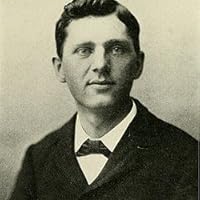
Gore Vidal, who died at the end of July 2012, is widely acknowledged as one of America’s foremost novelists, essayists and screenwriters. But Vidal was also a terrific conversationalist; indeed Dick Cavett once described him as “the best talker since Oscar Wilde.” Vidal was never more eloquent, or caustic, than when let loose on his favorite topic: the history and politics of the United States.
This book is made up from four interviews conducted with his long-time interlocutor, the writer and radio host Jon Wiener, in which Vidal grapples with matters evidently close to his heart: the history of the American Empire, the rise of the National Security State, and his own life in politics, both as a commentator and candidate.
The interviews cover a twenty-year span, from 1988 to 2008, when Vidal was at the height of his powers. His extraordinary facility for developing an argument, tracing connections between past and present, and drawing on an encyclopedic knowledge of America’s place in the world, are all on full display. And, of course, it being Gore Vidal, an ample sprinkling of gloriously acerbic one-liners is also provided.
Works of American writer Eugene Luther Gore Vidal, noted for his cynical humor and his numerous accounts of society in decline, include the play The Best Man (1960) and the novel Myra Breckinridge (1968) .
People know his essays, screenplays, and Broadway. They also knew his patrician manner, transatlantic accent, and witty aphorisms. Vidal came from a distinguished political lineage; his grandfather was the senator Thomas Gore, and he later became a relation (through marriage) to Jacqueline Kennedy.
Vidal, a longtime political critic, ran twice for political office. He was a lifelong isolationist Democrat. The Nation, The New Yorker, Vanity Fair, The New York Review of Books, and Esquire published his essays.
Essays and media appearances long criticized foreign policy. In addition, he from the 1980s onwards characterized the United States as a decaying empire. Additionally, he was known for his well publicized spats with such figures as Norman Mailer, William F. Buckley, Jr., and Truman Capote.
They fell into distinct social and historical camps. Alongside his social, his best known historical include Julian, Burr, and Lincoln. His third novel, The City and the Pillar (1948), outraged conservative critics as the first major feature of unambiguous homosexuality.
At the time of his death he was the last of a generation of American writers who had served during World War II, including J.D. Salinger, Kurt Vonnegut, Norman Mailer and Joseph Heller. Perhaps best remembered for his caustic wit, he referred to himself as a "gentleman bitch" and has been described as the 20th century's answer to Oscar Wilde
+++++++++++++++++++++++ Gore Vidal é um dos nomes centrais na história da literatura americana pós-Segunda Guerra Mundial.
Nascido em 1925, em Nova Iorque, estudou na Academia de Phillips Exeter (Estado de New Hampshire). O seu primeiro romance, Williwaw (1946), era uma história da guerra claramente influenciada pelo estilo de Hemingway. Embora grande parte da sua obra tenha a ver com o século XX americano, Vidal debruçou-se várias vezes sobre épocas recuadas, como, por exemplo, em A Search for the King (1950), Juliano (1964) e Creation (1981).
Entre os seus temas de eleição está o mundo do cinema e, mais concretamente, os bastidores de Hollywood, que ele desmonta de forma satírica e implacável em títulos como Myra Breckinridge (1968), Myron (1975) e Duluth (1983).
Senhor de um estilo exuberante, multifacetado e sempre surpreendente, publicou, em 1995, a autobiografia Palimpsest: A Memoir. As obras 'O Instituto Smithsonian' e 'A Idade do Ouro' encontram-se traduzidas em português.
Neto do senador Thomas Gore, enteado do padrasto de Jacqueline Kennedy Onassis, primo distante de Al Gore, Gore Vidal sempre se revelou um espelho crítico das grandezas e misérias dos EUA.
Faleceu a 31 de julho de 2012, aos 86 anos, na sua casa em Hollywood, vítima de pneumonia.
I have a confession to make. I am a Gore Vidal fan. For almost 20 years, I have read deeply from his novels and essays, and derived much insight from the TV and radio interviews he had given throughout his career. He was our Oscar Wilde and the gadfly of the American system, or as he often called it, "the American Empire."
Here in this slender book are excerpts from 4 different venues, spanning from 1988 to 2007, where Gore Vidal spoke at length (both publicly and in one-on-one interviews) about: "the history of the American Empire, the rise of the National Security State, and his own life in politics, both as a commentator and candidate."
Vidal led such a rich and varied life. He was one of the first of the Second World War generation to publish a best-selling novel (1946). Hailing from a patrician background, Vidal grew up in Northern Virginia and Washington DC, where his maternal grandfather was the first Senator from Oklahoma and his father (a West Point graduate and one of the U.S. Army's first pilots) was an advisor to FDR on aviation matters in the 1930s.
After his Army service and the publication of his debut, best-selling novel "Williwaw", Vidal reached a crossroads in 1948 with the publication of his third novel, "The City and the Pillar" which dealt directly with the theme of homosexuality. In this book, Vidal admits that he had the opportunity to run in 1948 for national office in New Mexico, where his family had political connections. But in order to pursue what might have been a sure political career in either the House or Senate, Vidal would've had to disavow "The City and the Pillar", which The New York Times roundly condemned. Well, Gore Vidal "took the road less travelled by, and that has made all the difference."
For the reader of this review, I'd like to leave you with these reflections from Gore Vidal: "If you want, let's say, to deny the people certain rights, keep them ignorant of the Bill of Rights. If nobody understands who we were, we won't question why we are what we are. ... [I]t's to the interest of the oligarchs --- the national security statespersons --- keep the people ignorant."
Vidal's passing in July 2012 left an unfulfillable void in the "Body Politic." He was the most aggressive opponent to the 'Perpetual War" and "National security State' crew. This book is an excellent introduction to Vidal for those who haven't yet read his marvelous historical novels and his essays.
There is no better path to understanding American history then to read all the novels in his "Empire series:"
Burr Lincoln 1876 Empire Hollywood Years Golden Age
Although all these novels elucidate where we went wrong as a republic, I think his "Golden Age" probably best speaks to those currently alive in the US. 1948 was the year that all hope was lost that we would be a Republic and not an Empire. Truman, was a 3rd rate machine politician, with no vision and who required borrowed ideas to deal with his complete ignorance of foreign affairs. There was another path the US could have taken. Henry Wallace was the candidate with vision. Vidal mentions the conspiracy to block Wallace.
This short book his broken up into 4 public interviews of Vidal. There is much overlap, but sometimes Vidal tailors his answers to identical questions, to the audience on hand.
Vidal is always a joy to read or listen to. He had an instinctive understanding of how American politics worked. There was no doubt much hoopla among the 1% when his death was announced. He was truly a national treasure, and I don't see any replacement any where in sight. Thank God we at least have YouTube to bring him back in little snippets!
Quick read that introduced me to Gore Vidal. Sharp wit rules throughout, and I’ll be reading more of his voluminous work, starting with Myra Breckenridge
Having just seen James Graham’s new play Best of Enemies about the ABC discussions between Republican commentator William Buckley and the left wing liberal Gore Vidal during the 1968 political conventions, I was moved to find out more about Vidal and his views.
There was so much literature to choose from, from biographies to Gore’s novels, plays and articles but I thought these interviews were a good introduction to the man.
The book is essentially the transcripts of 4 interviews between Gore Vidal and Jon Wiener from the early 21st century back to the 80s. While his answers sometimes vary to lend humour or incorporate hindsight Vidal stayed true to his liberal, anti war principles throughout and did not shy away from his right wing past. There was much debate about how and why he transitioned from right to left and the background and context to his fiction and historical writing - including his coining the term ‘American empire’ and I learnt a great deal about alternative views on key figures from American history from JFK (a close friend of Gore) to Lincoln!
I now need to delve further but this was, as I hoped, more than a good introduction.
This is a collection of 4 interviews with Gore Vidal, from 1986 through 2007. They mostly cover the same ground, and he tends to give roughly similar answers to the same questions, with slight variations over time.
Vidal was an immensely intelligent man, and was among the first to recognize and portray the United States as an empire - a term that earned him scorn from the establishment press at the time (the 50s and 60s), but which is now a commonplace. He also coined the term "national security state" back in the early 80s - another term that is now generally recognized as descriptive of our government but which was, then, subjected to derision and contempt.
He was born into a wealthy and politically connected family, which only partly explains his early access to notable politicians and artists in the early postwar period. He wrote his first two books when he was 19 and 20 while in the US army, receiving favorable reviews from the New York Times. But when he published The City and the Pillar, about the life of a gay man, he was placed on the New York Times shitlist, and never again received a favorable review from them. Which tells us a great deal more about the Times than it does about Gore Vidal.
He became left-wing by degrees, after starting as an America Firster while at Exeter. By 1968 he had recognized the American empire for what it was, and his trajectory to the left by then was irreversible. He had access to all the main political players during the 60s, and knew that the trumped-up fears about the USSR were only for public consumption, a way to advance the interests of what he would eventually term the national security state. That sort of knowledge is bound to make anyone a bit cynical. And he early on recognized the criminality and utter pointlessness of the Vietnam war, before opposition to the war was popular. He maintained his principled ant-war stance to the end, even breaking off his friendship with Christopher Hitchens because of the latter's support for the invasion of Iraq.
Never get tired of reading Gore Vidal...I hear his voice in my head.
Gore Vidal, who died at the end of July 2012, is widely acknowledged as one of America’s foremost novelists, essayists and screenwriters. But Vidal was also a terrific conversationalist; indeed Dick Cavett once described him as “the best talker since Oscar Wilde.” Vidal was never more eloquent, or caustic, than when let loose on his favorite the history and politics of the United States.
This book is made up from four interviews conducted with his long-time interlocutor, the writer and radio host Jon Wiener, in which Vidal grapples with matters evidently close to his the history of the American Empire, the rise of the National Security State, and his own life in politics, both as a commentator and candidate.
The interviews cover a twenty-year span, from 1988 to 2008, when Vidal was at the height of his powers. His extraordinary facility for developing an argument, tracing connections between past and present, and drawing on an encyclopedic knowledge of America’s place in the world, are all on full display. And, of course, it being Gore Vidal, an ample sprinkling of gloriously acerbic one-liners is also provided.
Gore Vidal was the author of numerous novels, short stories, plays, screenplays and essays. A winner of the National Book Award, he was also a tireless political activist and, running as Democratic candidate for Congress in upstate New York, received more votes for that district than any Democrat in a half-century.
A small book of interviews with Gore Vidal, the novelist, playwright, political activist, etc. It's a little egotistical, but Vidal makes appropriate fun of, and dishes out accurate criticisms of the dangerous conservatives in this country and the way they keep the US from moving forward and making progress.
It seemed like a lot of rambling without any coherence to me, but I'm also the first to admit that I'm not familiar with much of the subject matter (early 20th century American politics). There were good moments, but not quite enough for me.