

What do you think?

Tales from Silver Lands
Tales from Silver Lands is a collection of nineteen folktales, which Finger collected during his travels in South America. In them an assortment of animals, magical creatures, witches, giants, and children struggle for a life in which good overcomes evil. These fast-moving and adventuresome fantasies provide insight into the values and culture of native South American peoples. They stress the importance of close relationships, hard work, bravery, gentleness, and beauty, and contain colorful explanations of natural phenomena.
A tale of three tails --
The magic dog --
The calabash man --
Na-Ha the fighter --
The humming-bird and the flower --
The magic ball --
El Enano --
The hero twins --
The four hundred --
The killing of Cabrakan --
The tale of the gentle folk --
The tale that cost a dollar --
The magic knot --
The bad wishers --
The hungry old witch --
The wonderful mirror --
The tale of the lazy people --
Rairu and the star maiden --
The cat and the dream man (less)
A tale of three tails --
The magic dog --
The calabash man --
Na-Ha the fighter --
The humming-bird and the flower --
The magic ball --
El Enano --
The hero twins --
The four hundred --
The killing of Cabrakan --
The tale of the gentle folk --
The tale that cost a dollar --
The magic knot --
The bad wishers --
The hungry old witch --
The wonderful mirror --
The tale of the lazy people --
Rairu and the star maiden --
The cat and the dream man (less)
207 pages, Hardcover
First published January 1, 1924
Ratings & Reviews
Friends & Following
Create a free account to discover what your friends think of this book!
Community Reviews
Displaying 1 - 30 of 237 reviews

January 27, 2014
In the canon of Newbery winners, there isn't a lack of stinkers. Apparently, the librarians of yore who populated the Newbery committees were tasked with rooting out the most boring book to thrust upon their unsuspecting patrons. Though many may argue that the committees are still selecting snooze-worthy tomes, few will ever surpass Charles J. Finger’s colossally dull Tales from Silver Lands. His collection of nineteen Latin & South American folktales clocks in at a little over 200 pages, yet it took me nearly two months to force myself to read every blessed story.
It was an unpleasant experience to say the least.
Apple Paperbacks reissued the collection in 1989. The summary on the back of the book culminates with a flat-out lie: “…the best collection of stories you’ve ever read.”
Really, Apple?
Then what’s the deal with this girl on the book’s cover?
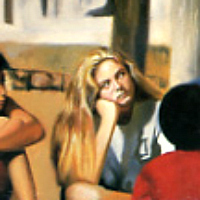
I guarantee this will be the look on the face of any child who even cracks this book open. Not that many children would be inclined to, anyway. As with most Newbery Medal winners that are older than twenty-five years, this book doesn’t circulate.
And it’s no wonder.
Finger’s storytelling style consists of florid descriptions that jam incongruously with a forced and folksy narrative style that, in an effort to venerate the ebb and flow of a traditional (read: oral) storyteller, instead comes dangerously close to mocking it. Great care is taken in setting scenes (that ultimately mean nothing), crafting characters (who ultimately do nothing), and/or creating grossly misappropriated cultural references to impart a sense of “wonder” and “awe”. Perhaps Apple Paperbacks recognized the latter observation: the ‘storyteller’ on the updated cover is an Aryan Wunderkind (who possesses the enviable talent of putting children to sleep).
In a delicious bit of irony, Finger writes the following sentence in “The Cat and the Dream Man”: “Indeed, you should be very grateful indeed to me for trimming all the uninteresting stuff away.”*
INDEED, this statement may be the most memorable moment in a book of wholly unmemorable moments. After reading the collection, I scanned the list of stories and, aside from the three final tales I had just read, I could only vaguely remember the plot of one story. It was about this old woman who is plagued by an impish creature. The story was called “El Enano”, and coupled with “The Tale of the Lazy People”, it is really the only entry I can recommend with the slightest shred of enthusiasm.
All told: unless you’re a Newbery Completionist, as I intend to be, travel ye not to the Silver Lands. Travel instead to Hell. At least it would be interesting and you’d have a worthy story to tell.
*Yes. There were indeed two indeeds in that sentence. WTG, editor!
It was an unpleasant experience to say the least.
Apple Paperbacks reissued the collection in 1989. The summary on the back of the book culminates with a flat-out lie: “…the best collection of stories you’ve ever read.”
Really, Apple?
Then what’s the deal with this girl on the book’s cover?
I guarantee this will be the look on the face of any child who even cracks this book open. Not that many children would be inclined to, anyway. As with most Newbery Medal winners that are older than twenty-five years, this book doesn’t circulate.
And it’s no wonder.
Finger’s storytelling style consists of florid descriptions that jam incongruously with a forced and folksy narrative style that, in an effort to venerate the ebb and flow of a traditional (read: oral) storyteller, instead comes dangerously close to mocking it. Great care is taken in setting scenes (that ultimately mean nothing), crafting characters (who ultimately do nothing), and/or creating grossly misappropriated cultural references to impart a sense of “wonder” and “awe”. Perhaps Apple Paperbacks recognized the latter observation: the ‘storyteller’ on the updated cover is an Aryan Wunderkind (who possesses the enviable talent of putting children to sleep).
In a delicious bit of irony, Finger writes the following sentence in “The Cat and the Dream Man”: “Indeed, you should be very grateful indeed to me for trimming all the uninteresting stuff away.”*
INDEED, this statement may be the most memorable moment in a book of wholly unmemorable moments. After reading the collection, I scanned the list of stories and, aside from the three final tales I had just read, I could only vaguely remember the plot of one story. It was about this old woman who is plagued by an impish creature. The story was called “El Enano”, and coupled with “The Tale of the Lazy People”, it is really the only entry I can recommend with the slightest shred of enthusiasm.
All told: unless you’re a Newbery Completionist, as I intend to be, travel ye not to the Silver Lands. Travel instead to Hell. At least it would be interesting and you’d have a worthy story to tell.
*Yes. There were indeed two indeeds in that sentence. WTG, editor!

December 30, 2011
Felt like I was falling down a mountain. I liked each short story less and less as the book went on. I tried to read them faster and faster.

December 22, 2008
Originally reviewed on my blog, Books from Bleh to Basically Amazing.
Tales from Silver Lands by Charles J. Finger won the John Newbery Award in 1925. I didn't know anything about the book when I picked it up other than it's Newbery, but I must say, I was quite pleasantly surprised by what I found.
I have always loved Fairy Tales. Like, a lot. If you remember, a few weeks ago I talked about my first experience reading Grimm's Fairy Tales, which helped cement my love for reading them as well. (If you are really interested, click here, and you can go back and read it.) So, imagine my delight when I realized this was a collection of 19 fairy tales recorded by Finger from South America. Although I'm not nearly as knowledgeable about other countries and their rich cultural histories as I'd like to be, I'm always open to learning more. And I think you can learn a lot about a society from their fairy tales and children's stories.
This was a real treat for me to read, and one I'm definitely looking forward to adding to my shelves and rereading, not only for myself but also to read to kids. I used to read some of the Grimm's fairy tales to my little brothers as a bedtime story, and I'd love to be able to add these tales to stories I can read/tell to young kids.
Although some of these stories might be classified as more mythology than fairy tale, I felt the same way reading these as I did reading the classic fairy tales. There's that sense of magic and possibility, where you know anything can happen, and although things might get a little rough along the way, and there probably won't be super happy ending, the good guys do win in the end.
I also noticed that the emphasis of each tale was placed on the struggles of each character rather than the resolution. The ending is always over so quickly. Normally, this is something that is a major no-no in writing, I mean, seriously. Who wants to read a 400 pg. build up to a 4 paragraph resolution?! But it seems to work in fairy tales. The stories aren't about what happens, it's about learning how to get there. We see their struggles, know their challenges and then we get to know they end up relatively alright in the end.
This is definitely a book I would recommend. The writing is a little older, but to anyone who is a fan of fairy tales in their original setting (or people who want to write a fairy tale retelling but are wanting new material) this is a great book to read and one that I strongly recommend.
Tales from Silver Lands by Charles J. Finger won the John Newbery Award in 1925. I didn't know anything about the book when I picked it up other than it's Newbery, but I must say, I was quite pleasantly surprised by what I found.
I have always loved Fairy Tales. Like, a lot. If you remember, a few weeks ago I talked about my first experience reading Grimm's Fairy Tales, which helped cement my love for reading them as well. (If you are really interested, click here, and you can go back and read it.) So, imagine my delight when I realized this was a collection of 19 fairy tales recorded by Finger from South America. Although I'm not nearly as knowledgeable about other countries and their rich cultural histories as I'd like to be, I'm always open to learning more. And I think you can learn a lot about a society from their fairy tales and children's stories.
This was a real treat for me to read, and one I'm definitely looking forward to adding to my shelves and rereading, not only for myself but also to read to kids. I used to read some of the Grimm's fairy tales to my little brothers as a bedtime story, and I'd love to be able to add these tales to stories I can read/tell to young kids.
Although some of these stories might be classified as more mythology than fairy tale, I felt the same way reading these as I did reading the classic fairy tales. There's that sense of magic and possibility, where you know anything can happen, and although things might get a little rough along the way, and there probably won't be super happy ending, the good guys do win in the end.
I also noticed that the emphasis of each tale was placed on the struggles of each character rather than the resolution. The ending is always over so quickly. Normally, this is something that is a major no-no in writing, I mean, seriously. Who wants to read a 400 pg. build up to a 4 paragraph resolution?! But it seems to work in fairy tales. The stories aren't about what happens, it's about learning how to get there. We see their struggles, know their challenges and then we get to know they end up relatively alright in the end.
This is definitely a book I would recommend. The writing is a little older, but to anyone who is a fan of fairy tales in their original setting (or people who want to write a fairy tale retelling but are wanting new material) this is a great book to read and one that I strongly recommend.

February 17, 2020
As folklore goes many of these stories might have been fun packaged as a single picture book, and written by a more skilled story-teller, but all together they were extremely tedious. The final trickster tale with the cat and the misfiring ax may have been my favorite - or just the only one I remember.
With 2o books to go on my Newbery quest, I repeatedly asked myself why I bothered finishing this one, wasn't knocking off a few of the early stories good enough? Were they really going to get any better? But integrity made me stick with it. I truly hope the final nineteen titles will not all be as monotonous.
If nothing else, this book illustrates the early need for a literary award for children's books. If this was the best 1924 had to offer young readers then it proved the need to offer a medal in pursuit of better material. I can only suppose how excruciating it is for today's committees to leave so many brilliant books unhonored every year, rather than take the least painful.
With 2o books to go on my Newbery quest, I repeatedly asked myself why I bothered finishing this one, wasn't knocking off a few of the early stories good enough? Were they really going to get any better? But integrity made me stick with it. I truly hope the final nineteen titles will not all be as monotonous.
If nothing else, this book illustrates the early need for a literary award for children's books. If this was the best 1924 had to offer young readers then it proved the need to offer a medal in pursuit of better material. I can only suppose how excruciating it is for today's committees to leave so many brilliant books unhonored every year, rather than take the least painful.

August 15, 2011
This was another Newbery winner that I found difficult to get my hands on. It's not great, but it's not terrible. No, strike that. After writing out the quotations I marked I realized there are more than a handful of useful observations of the human experience to file away. The stories are a little odd (remember, this coming from a North American), but I thought they were much more engaging than the "Shen of the Sea" stories.
"...evil, though it may touch the good, cannot for ever bind it..."
"if it should come to pass that you are offered the choice of things, see to it that you choose the simplest."
This sounds a little like the way I imagine Holly sees the world:
" He was rumbling and grumbling and peering here and there in a queer way. The boys noticed that he did not turn his head to look with a sweep of the eyes as they did, or as you do, turning to see in a semi-circle or over a greater extent. his way was different. He would turn his head in a certain direction with his eyes closed, then open them and look. From the place where his glance lit he could not turn. if he wanted to look somewhere else, he had to close his eyes and begin again, so that his looking was more like shooting a bullet at a mark than anything, and if he missed he missed, and had to begin again. And of course he often missed. Yet it was his way, and he must have been very satisfied with it to judge by the song he sang..."
"...in the morning they were well rested and strong, for as they had lived well and cleanly and none having a darkened window in his breast, their sinews were as steel, and every day was a new life in which to enter with eyes bright and shining."
"So at last came the light between day and night when neither was afraid, she brave at heart because of the passing of the burning light of day and he fearless because the night of sorrow had not yet come. Hand in hand they went towards a great plain all flower-spangled and smiling."
From "The Magic Knot":
"...as Borac grew, he saw beauty in common things and pointed out to the others the colours in the sunset sky, the pure blue of the lake water, the sun-sparkle on the stream, and the fresh green of the hill grass. Then, too, there were the songs of the birds. That music they had grown up with, had heard so often that they had forgotten the beauty of it all, until one day Borac began to call like a bird and from every tree and bush came a chorus so rich and so wonderful that the joy in their hearts was more like a sweet pain. You know how that is."
From "The Bad Wishers":
"Then he went on to tell of other witches that he knew, saying that there were many who were not all bad, but like men, were a mixture. True, they sometimes kept children, but that was not to be laid to their meanness but rather to their love of beauty. "For," he said, "it is no more wrong to keep a child to look at than it is to pluck a flower or to cage a bird. Or, to put it another way, it is as wrong to cage a bird as it is to steal a child.""
"There was a moment when she wanted to lose all that she had gained so that she could tell her brother that she shared his grief, but she remembered that being strong she could help him in his pain, so she went to him and took him by the hand and kissed his cheek."
From "The Hungry Old Witch":
""It is not right," he said, "that we should give away for nothing that which we have grown and tended and learned to love, nor is it right that we should feed and fatten the evil thing that destroys us.""
From "The Wonderful Mirror":
"Thus it was that Suso crept to quiet places and told her tale to the whispering leaves and to the evening breeze, and thus it was that in the midst of all that beauty of golden sunlight and silver-glinted waters and flower-twined forest she could not but be sad. For there were tears in her heart, and everything that her father did for her was as nothing and like a crumbling tower."
"Then Huathia took his flute and played sweet music until the world seemed full of peace, and gripping grief had vanished. Suso, too, sang sweetly, so that for a moment the father thought that the shadow that was upon him was but a dream and might pass."
From "The Tale of the Lazy People":
"...everywhere were little figures hurrying one after the other, going to and fro, busy about nothing, quarreling about nothing, fighting about nothing."
From "Rairu and the Star Maiden":
"Perhaps my friend Pedro of Brazil told me the story of Rairu and the Star Maiden for much the same reason that hungry men fall to talk of meals that they have eaten. When I say hungry men I do not mean men with an appetite, but men who have long been on the verge of starvation--shipwrecked sailors, men lost in the desert, and such like. The truth is that what the heart hungers for, the tongue talks of."
"...mind well that a little toil, a little striving, and thou shalt find me again. In the darkness lean on me, the more because thou knowest thyself to be weak. Under the shadow of death, dear Rairu, a fainting love is revived."
From "The Cat and the Dream Man":
"...the brave one is not he that does not fear, but rather he that fears and yet does the thing that he has set out to do."
"...evil, though it may touch the good, cannot for ever bind it..."
"if it should come to pass that you are offered the choice of things, see to it that you choose the simplest."
This sounds a little like the way I imagine Holly sees the world:
" He was rumbling and grumbling and peering here and there in a queer way. The boys noticed that he did not turn his head to look with a sweep of the eyes as they did, or as you do, turning to see in a semi-circle or over a greater extent. his way was different. He would turn his head in a certain direction with his eyes closed, then open them and look. From the place where his glance lit he could not turn. if he wanted to look somewhere else, he had to close his eyes and begin again, so that his looking was more like shooting a bullet at a mark than anything, and if he missed he missed, and had to begin again. And of course he often missed. Yet it was his way, and he must have been very satisfied with it to judge by the song he sang..."
"...in the morning they were well rested and strong, for as they had lived well and cleanly and none having a darkened window in his breast, their sinews were as steel, and every day was a new life in which to enter with eyes bright and shining."
"So at last came the light between day and night when neither was afraid, she brave at heart because of the passing of the burning light of day and he fearless because the night of sorrow had not yet come. Hand in hand they went towards a great plain all flower-spangled and smiling."
From "The Magic Knot":
"...as Borac grew, he saw beauty in common things and pointed out to the others the colours in the sunset sky, the pure blue of the lake water, the sun-sparkle on the stream, and the fresh green of the hill grass. Then, too, there were the songs of the birds. That music they had grown up with, had heard so often that they had forgotten the beauty of it all, until one day Borac began to call like a bird and from every tree and bush came a chorus so rich and so wonderful that the joy in their hearts was more like a sweet pain. You know how that is."
From "The Bad Wishers":
"Then he went on to tell of other witches that he knew, saying that there were many who were not all bad, but like men, were a mixture. True, they sometimes kept children, but that was not to be laid to their meanness but rather to their love of beauty. "For," he said, "it is no more wrong to keep a child to look at than it is to pluck a flower or to cage a bird. Or, to put it another way, it is as wrong to cage a bird as it is to steal a child.""
"There was a moment when she wanted to lose all that she had gained so that she could tell her brother that she shared his grief, but she remembered that being strong she could help him in his pain, so she went to him and took him by the hand and kissed his cheek."
From "The Hungry Old Witch":
""It is not right," he said, "that we should give away for nothing that which we have grown and tended and learned to love, nor is it right that we should feed and fatten the evil thing that destroys us.""
From "The Wonderful Mirror":
"Thus it was that Suso crept to quiet places and told her tale to the whispering leaves and to the evening breeze, and thus it was that in the midst of all that beauty of golden sunlight and silver-glinted waters and flower-twined forest she could not but be sad. For there were tears in her heart, and everything that her father did for her was as nothing and like a crumbling tower."
"Then Huathia took his flute and played sweet music until the world seemed full of peace, and gripping grief had vanished. Suso, too, sang sweetly, so that for a moment the father thought that the shadow that was upon him was but a dream and might pass."
From "The Tale of the Lazy People":
"...everywhere were little figures hurrying one after the other, going to and fro, busy about nothing, quarreling about nothing, fighting about nothing."
From "Rairu and the Star Maiden":
"Perhaps my friend Pedro of Brazil told me the story of Rairu and the Star Maiden for much the same reason that hungry men fall to talk of meals that they have eaten. When I say hungry men I do not mean men with an appetite, but men who have long been on the verge of starvation--shipwrecked sailors, men lost in the desert, and such like. The truth is that what the heart hungers for, the tongue talks of."
"...mind well that a little toil, a little striving, and thou shalt find me again. In the darkness lean on me, the more because thou knowest thyself to be weak. Under the shadow of death, dear Rairu, a fainting love is revived."
From "The Cat and the Dream Man":
"...the brave one is not he that does not fear, but rather he that fears and yet does the thing that he has set out to do."

January 31, 2021
After reading the reviews, it looks like I'm in the minority on this one. Usually I'm the one giving harsh, negative reviews to Newbery books, but in this case I'm one of the few that actually enjoyed it. :D
I will admit, there were quite a few stories, and I think the book would've been more readable if there hadn't been as many. I usually enjoy reading folktales, legends, and myths, though.
I'll admit that I don't really remember the beginning stories that much, as a I took a mighty long break in the middle, but I quite enjoyed the stories at the end.
My least favorite was probably the story about the lazy people which detailed how monkeys came into being. It just felt kind of long.
I enjoyed the story about the boy and girl escaping from the witch and one was night and one was day. I also liked the story about the villagers that turned into guanaco so that they could remain peaceful. It was fun how they showed up in other stories as well.
The story about the giant creepy cat was a little disturbing, but the trick at the end was satisfying.
As weird as it may sound, I could see myself rereading parts of this again.
I will admit, there were quite a few stories, and I think the book would've been more readable if there hadn't been as many. I usually enjoy reading folktales, legends, and myths, though.
I'll admit that I don't really remember the beginning stories that much, as a I took a mighty long break in the middle, but I quite enjoyed the stories at the end.
My least favorite was probably the story about the lazy people which detailed how monkeys came into being. It just felt kind of long.
I enjoyed the story about the boy and girl escaping from the witch and one was night and one was day. I also liked the story about the villagers that turned into guanaco so that they could remain peaceful. It was fun how they showed up in other stories as well.
The story about the giant creepy cat was a little disturbing, but the trick at the end was satisfying.
As weird as it may sound, I could see myself rereading parts of this again.
March 15, 2012
This book has 19 folk and fairy tales from Finger’s travels in South America. I am a total sucker for fairy tales so about this book: I loved it. It took longer to read for a variety of reasons, all of them having to do with my life, not the book. It was a real pleasure to read these stories.
According to the Encyclopedia of Arkansas History & Culture, Charles J. Finger traveled quite a bit as a young man: “Between 1890 and 1895, he traveled around South America, herding sheep and cattle, panning for gold, harvesting and selling sealskins, and working among the gauchos on the Argentine plains. In 1893, he served as a guide for the Franco-Russian Ornithological Expedition to Tierra del Fuego”. These stores are a collection of the folk tales he heard during those travels. His prose is charming, and the respect for the people who told him these stories is undeniably real. I found myself wondering if these people knew how much he loved them.
I’m trying to think of which story I liked best. As usual with me, it’s always the one I just read. There are a variety of stories: some that are reminiscent of Rudyard Kipling’s “Just So” stories — one about how certain animals received their particular tails, another tells why hummingbirds are so brightly colored. There are several cautionary tales — of the be-careful-of-what-you-wish-for variety, and full of wisdom they are. Only two or three times does he insert a small part of his own narrative, which I found very touching.
So, while I can’t tell you which one I liked best, I will tell you of one that one that touched me deeply: The Star Maiden. Perhaps it’s because he begins with the setting in which he heard the story, which is so believable and tragic I almost cried, or perhaps it’s because the fable of Rairu and his beloved Star Maiden reminds me strongly of the Greek tale of Orpheus and Eurydice, which is one of my very favorites. This one does have a happier ending, but not the one you’re thinking of so you’ll have to read it. And you will not be sorry.
According to a Wikipedia entry I cannot verify, Finger’s epitaph reads: “This voyage done, set and steer once more to further landfall on some nobler shore.” I like that. I hope it’s true.
According to the Encyclopedia of Arkansas History & Culture, Charles J. Finger traveled quite a bit as a young man: “Between 1890 and 1895, he traveled around South America, herding sheep and cattle, panning for gold, harvesting and selling sealskins, and working among the gauchos on the Argentine plains. In 1893, he served as a guide for the Franco-Russian Ornithological Expedition to Tierra del Fuego”. These stores are a collection of the folk tales he heard during those travels. His prose is charming, and the respect for the people who told him these stories is undeniably real. I found myself wondering if these people knew how much he loved them.
I’m trying to think of which story I liked best. As usual with me, it’s always the one I just read. There are a variety of stories: some that are reminiscent of Rudyard Kipling’s “Just So” stories — one about how certain animals received their particular tails, another tells why hummingbirds are so brightly colored. There are several cautionary tales — of the be-careful-of-what-you-wish-for variety, and full of wisdom they are. Only two or three times does he insert a small part of his own narrative, which I found very touching.
So, while I can’t tell you which one I liked best, I will tell you of one that one that touched me deeply: The Star Maiden. Perhaps it’s because he begins with the setting in which he heard the story, which is so believable and tragic I almost cried, or perhaps it’s because the fable of Rairu and his beloved Star Maiden reminds me strongly of the Greek tale of Orpheus and Eurydice, which is one of my very favorites. This one does have a happier ending, but not the one you’re thinking of so you’ll have to read it. And you will not be sorry.
According to a Wikipedia entry I cannot verify, Finger’s epitaph reads: “This voyage done, set and steer once more to further landfall on some nobler shore.” I like that. I hope it’s true.

September 22, 2023
Tales from Silver Lands is a collection of 19 folk tales from Central and South America. The tales span a range of genres and settings, from fairy tales with wicked witches to animal origin stories ("Just so" type stories), to tales of conquest over giants, and monsters.
The dust jacket says, "Mr. Finger learned these stories from the Indians in South America as he went from one "Silver Land" to another, far from railroads or main lines of travel.
The internet site "Encyclopedia of Arkansas" (Arkansas being the place where Finger settled after a number of years of adventure) says, "Between 1890 and 1895, he traveled around South America, herding sheep and cattle, panning for gold, harvesting and selling sealskins, and working among the gauchos on the Argentine plains. In 1893, he served as a guide for the Franco-Russian Ornithological Expedition to Tierra del Fuego."
While my inclination is to sometimes doubt the authenticity achieved by century-ago American writers of folk tales that are claimed to have originated in other lands, Finger does seem to have spent time among the people. Other reviewers on the internet have noted that Finger's tales are not ones that appear in other collections. So while these may not be what are considered "classic" South American folk tales, but they may very well be based on interesting yarns spun by people he met in his adventures.
I started reading this book this summer after I found the hardcover copy pictured at a booksale. It fits an RA 2023 reading challenge category (color in the title), and it fits toward my personal goal of reading the Newbery titles.
However, I discovered something about myself while reading this book - I don't actually really enjoy reading folktale collections alone all that much. A couple years ago I really enjoyed reading a daily folktale from around the world with my boys as part of our homeschool day. But on my own, I found it to be a bit of a slog. I do think it would have been more enjoyable as a read aloud.
There were a couple of stories that really stood out to me as being particularly enjoyable - for example, one about two children entrapped by a witch who let one child only see day and the other only see night, and how these children escape together. I also enjoyed a story about a village full of wooden puppets who were created to do all the work of the village, and soon the puppets even had puppets working for them...and you can imagine the chaos that ensues. But many of the other stories didn't hold my attention quite as much.
The Newbery committee really liked to honor collections of Folktales, myths, and other such stories during the first few decades of the award - so I might have to see if I can plan ahead to enjoy those as read-aloud or buddy reads with my 11 year old.
I think I would still recommend this book to those looking for a folktale collection set in this part of the world or to those who enjoy this genre, but if it's a genre you are less enthusiastic about this one might be one to pass over.
I'm giving this one only 3 stars based on how much I actually enjoyed reading it...I think it would have been 4 stars if I would have done it as a read aloud, one story at a time.
Content Consideration: Lots of magic/magic users as well magical and mythical creatures. Fighting and death (nothing too graphic). Children who are orphaned/alone.
The dust jacket says, "Mr. Finger learned these stories from the Indians in South America as he went from one "Silver Land" to another, far from railroads or main lines of travel.
The internet site "Encyclopedia of Arkansas" (Arkansas being the place where Finger settled after a number of years of adventure) says, "Between 1890 and 1895, he traveled around South America, herding sheep and cattle, panning for gold, harvesting and selling sealskins, and working among the gauchos on the Argentine plains. In 1893, he served as a guide for the Franco-Russian Ornithological Expedition to Tierra del Fuego."
While my inclination is to sometimes doubt the authenticity achieved by century-ago American writers of folk tales that are claimed to have originated in other lands, Finger does seem to have spent time among the people. Other reviewers on the internet have noted that Finger's tales are not ones that appear in other collections. So while these may not be what are considered "classic" South American folk tales, but they may very well be based on interesting yarns spun by people he met in his adventures.
I started reading this book this summer after I found the hardcover copy pictured at a booksale. It fits an RA 2023 reading challenge category (color in the title), and it fits toward my personal goal of reading the Newbery titles.
However, I discovered something about myself while reading this book - I don't actually really enjoy reading folktale collections alone all that much. A couple years ago I really enjoyed reading a daily folktale from around the world with my boys as part of our homeschool day. But on my own, I found it to be a bit of a slog. I do think it would have been more enjoyable as a read aloud.
There were a couple of stories that really stood out to me as being particularly enjoyable - for example, one about two children entrapped by a witch who let one child only see day and the other only see night, and how these children escape together. I also enjoyed a story about a village full of wooden puppets who were created to do all the work of the village, and soon the puppets even had puppets working for them...and you can imagine the chaos that ensues. But many of the other stories didn't hold my attention quite as much.
The Newbery committee really liked to honor collections of Folktales, myths, and other such stories during the first few decades of the award - so I might have to see if I can plan ahead to enjoy those as read-aloud or buddy reads with my 11 year old.
I think I would still recommend this book to those looking for a folktale collection set in this part of the world or to those who enjoy this genre, but if it's a genre you are less enthusiastic about this one might be one to pass over.
I'm giving this one only 3 stars based on how much I actually enjoyed reading it...I think it would have been 4 stars if I would have done it as a read aloud, one story at a time.
Content Consideration: Lots of magic/magic users as well magical and mythical creatures. Fighting and death (nothing too graphic). Children who are orphaned/alone.

November 18, 2021
Maybe I was influenced by a negative review I read before reading this but I didn’t enjoy this very much. That is why I rarely read reviews first! I think I may have read this before but if so, I didn’t remember it, which says something too. One reason was the lack of information. Only in a few of the tales do you know which country the tale comes from. Apparently all are from South America but that is a huge place! This information came from the jacket so even that much would be lost if the jacket disappeared. On a few the author notes it is from a specific country but most are left without a country. Certainly all are left without a tribe or native group.
The author intervenes too much, criticizing the person who told the tale by not trimming it down to the story and nothing else. But then the author does things like you can skip ahead to three asterisks and keep reading if you want. So why include that section at all? Since I wanted to be fair I read all of it. The sections invited to skip were boring and wandered all over the place. Why include them at all?
I’m not at all sure why this won the Newbery. I’m beginning to think the Newbery winners are not very good at all! Or maybe before the Newbery, there was a dearth of quality and that is what shows in these early titles? This is the 1925 Newbery. On to the next one!
The author intervenes too much, criticizing the person who told the tale by not trimming it down to the story and nothing else. But then the author does things like you can skip ahead to three asterisks and keep reading if you want. So why include that section at all? Since I wanted to be fair I read all of it. The sections invited to skip were boring and wandered all over the place. Why include them at all?
I’m not at all sure why this won the Newbery. I’m beginning to think the Newbery winners are not very good at all! Or maybe before the Newbery, there was a dearth of quality and that is what shows in these early titles? This is the 1925 Newbery. On to the next one!

May 10, 2022
Not a generally beloved Newberry title (all you have to do is look at the Goodreads reviews to conclude that), but my 11 year old daughter and I enjoyed these. She always enjoys folk / fairy tales from different cultures and this collection was no exception. (There's a little dash of "Just So Stories" in here too, as in giving fantastical explanations for why certain animals act the way they do or where some geographical features came from.) There are several stories with the underlying moral of "be careful what you wish for" which I always appreciate. (We humans seem to think if we could just have a few wishes granted, we'd be perfectly happy and content. But, come on. Life doesn't work like that and neither should fairy tales, right?)
These are written in an older style, but if your child has been introduced to the King James Bible or other old fashioned fairy tale stories, these tales will fit right in. Whether Charles J. Finger really collected these or just made them up...I don't really care one way or the other.
These are written in an older style, but if your child has been introduced to the King James Bible or other old fashioned fairy tale stories, these tales will fit right in. Whether Charles J. Finger really collected these or just made them up...I don't really care one way or the other.
June 9, 2010
Actually, I'm not sure I can put this on my read shelf....since it went onto the very short list (only the 2nd book) of books that I absolutely couldn't finish!!! I tried to skim through it, but it just was painful. Each chapter is a little story/folktale from other countries (like how did the hummingbird get it's color, etc). It started off ok, but it just got boring after a while. It felt like each chapter was so similar. I just couldnt' do any more. Maybe you could get through it if you read a chapter or 2 a day in between reading other books. I just can't read that way. I have to do one book at a time. Good luck with this one!!

July 15, 2016
As far as a collection of fairy-esque tales go, it was pretty charming. The stories get a little redundant (evil witch! enchanted animal!) if you read them in bulk, but the writing is easy to go with. Some tales stuck with me stronger than others, but most are fun to retell -just because of their level of absurdity. Even with a few boring bits, I think the cute pieces can pull the weight without too much trouble.

August 9, 2017
A collection of stories told to children and among adults in South America. The author collected them from the locals as he traveled among them. I had great fun reading the book and delighted in how different the stories were from the ones I learned as a child. My favorite was the story of Nasca and the fox-faced man. But I won't tell you which one that is. To find out, you will have to read the stories.

November 28, 2017
Spooky wooden block printed illustrations and the most boring collection of folk lore short stories I’ve ever read.

June 7, 2021
This is an okay book of South American folk tales, mainly from the western countries along the Andes. Some reviewers have speculated on the authenticity of the stories, but I have no evidence that they are made up. The author usually begins by explaining where he was when he heard the story and who told it to him.
I think the biggest shortcoming of the book is that the stories do not have much cultural information in them. They read like very general stories of witches, giants, and witches that could just as easily come from Germany as Uruguay. The one with the most local feeling, in my opinion, is "The Tale of the Gentle Folk," which leads into "The Tale that Cost a Dollar." Most people agree that the latter is the best story in the book.
I also enjoyed the trilogy of hero's journey stories: The Hero Twins, The Four Hundred, and The Killing of Cabraken.
I think the biggest shortcoming of the book is that the stories do not have much cultural information in them. They read like very general stories of witches, giants, and witches that could just as easily come from Germany as Uruguay. The one with the most local feeling, in my opinion, is "The Tale of the Gentle Folk," which leads into "The Tale that Cost a Dollar." Most people agree that the latter is the best story in the book.
I also enjoyed the trilogy of hero's journey stories: The Hero Twins, The Four Hundred, and The Killing of Cabraken.
January 26, 2026
Tales from Silver Lands is a collection of stories told to Charles Finger as he traveled in South America. Sometimes Finger adds a short introduction about who told the story or where he was when he heard it. I found these interludes to give an authenticity to the folk tales.
Even so, the folk tales themselves seemed tamed down for children. For example in the story of the brave 400 young men, the narrator turns what were perhaps deities of alcohol into a brave band of fighters who hunt down the evil giant Zipacna. The 400 join the Hero Twins Hunahpu and Blanque in their victory over the giant while in the original tale, the 400 boys are killed by the giant and become the Pleiades. Likewise the tale of The Calabash Man is turned into a happily ever after fairytale instead of a tale full of murder, revenge, and possession by spirits of animals.
The other stories are reminiscent of mythologies and folk tale themes in general. Some have morals, some explain history or nature. The discrepancies between the original tales may or may not have been Finger’s intention. Because he collected these stories from those who have passed them down for generations it is to be expected that they would change somewhat. I think however that there are too many happy endings for these to be accurate folk tales.
At first I was annoyed that yet another mythology was chosen for the Newberry. Why so many? And what is it that makes myths appealing to children while adults, or at least this adult, dislike them? Because I lived in the mythology/fairytale section of my local library as a child I asked myself what had changed in my reading preferences that made me initially dislike this book so much. It took me months of starting and stopping to get through it! Once I allowed myself to relax and enjoy these stories for what they were, short narratives loosely based on South American mythology and folklore, I breezed through them.
My favorite was perhaps The Bad Wishers. Finger recounts how he heard this story from a traveling companion after making a small wish. “‘Wishes are no good and he who wishes, risks. For why?’…Things had to go just so, he said, and no on win the world was wise enough to wish things as they should be wished.” To prove his point, the traveling companion told the story of The Bad Wishers. Even this story ends happily!
I do think that this book would appeal to most children who have been read good books. The stories are compelling and interesting. They can be read independently and enjoyed one at a time whenever interest allows.
Even so, the folk tales themselves seemed tamed down for children. For example in the story of the brave 400 young men, the narrator turns what were perhaps deities of alcohol into a brave band of fighters who hunt down the evil giant Zipacna. The 400 join the Hero Twins Hunahpu and Blanque in their victory over the giant while in the original tale, the 400 boys are killed by the giant and become the Pleiades. Likewise the tale of The Calabash Man is turned into a happily ever after fairytale instead of a tale full of murder, revenge, and possession by spirits of animals.
The other stories are reminiscent of mythologies and folk tale themes in general. Some have morals, some explain history or nature. The discrepancies between the original tales may or may not have been Finger’s intention. Because he collected these stories from those who have passed them down for generations it is to be expected that they would change somewhat. I think however that there are too many happy endings for these to be accurate folk tales.
At first I was annoyed that yet another mythology was chosen for the Newberry. Why so many? And what is it that makes myths appealing to children while adults, or at least this adult, dislike them? Because I lived in the mythology/fairytale section of my local library as a child I asked myself what had changed in my reading preferences that made me initially dislike this book so much. It took me months of starting and stopping to get through it! Once I allowed myself to relax and enjoy these stories for what they were, short narratives loosely based on South American mythology and folklore, I breezed through them.
My favorite was perhaps The Bad Wishers. Finger recounts how he heard this story from a traveling companion after making a small wish. “‘Wishes are no good and he who wishes, risks. For why?’…Things had to go just so, he said, and no on win the world was wise enough to wish things as they should be wished.” To prove his point, the traveling companion told the story of The Bad Wishers. Even this story ends happily!
I do think that this book would appeal to most children who have been read good books. The stories are compelling and interesting. They can be read independently and enjoyed one at a time whenever interest allows.

November 14, 2018
This isn't as bad as you would assume it to be considering it's South American tales written down by a person not of the culture. Overall, these read like a mix of Aesop and Grimm. I actually enjoyed reading a lot of this and do recommend it for people who enjoy folktales.

June 28, 2024
Imaginative legends from South America, this was a pleasant read. It’s one of the oldest Newbery medal winners.
The story “The tale that cost a dollar” is very similar to the story of Photogeno and Nycteris by George MacDonald.
The story “The tale that cost a dollar” is very similar to the story of Photogeno and Nycteris by George MacDonald.

March 7, 2025
I loved seeing the similarities between these stories and traditional European stories. I especially appreciated that these stories were less dark.

March 14, 2018
I question the accuracy and agenda of Western authors who write books about other cultures, even more so when they are being written as far back as 1924. That being said, I enjoyed Tales from Silver Lands more than I expected to, and I think anyone who enjoys Grimm or Aesop would enjoy it too. I wish reading aloud to children was still a thing, because these tales probably would have captured my imagination as a child, though I think my children now would be bored sitting and listening when they could be watching Youtube instead.

February 16, 2011
It's been a while since quit the Newbery journey, but here I am picking it up again. I'll just go ahead and say that I didn't love this book by any means, but I do find myself wanting to defend it. I've read some harsh reviews from other Newbery travelers, and I honestly didn't think it was THAT bad. Every place has its own set of folk and fairy tales, and honestly, I don't think I had ever heard any from Central and South America. I think I'm better off now that I have. I know I'm probably not going to meet some guy from Brazil and strike up a conversation about the 400 dudes that killed, those three giants any time soon, but I feel like I have a little better understanding or at the very least, a better appreciation for that culture now.
A lot of the tales, I had to labor through, but there were some bright spots (much like The Story of Mankind) I especially enjoyed the tale about the seal-like nose-less people. (It's almost like Latin America has it's own version of a Selkie, only a lot meaner) and the tale about the boy who only went outside at night, and the girl who only went outside at day. I also liked the Witch's Magic Ball story.
For 1925, I think this was a decent Newbery pick. There wasn't a whole lot else being published for children, I mean they couldn't just give it to the new Dr. Dolittle book every year, could they? I think children of 1925, especially those obsessed with exploring, and adventure, would have found these tales intriguing. Kids and even adults today? Not so much.
A lot of the tales, I had to labor through, but there were some bright spots (much like The Story of Mankind) I especially enjoyed the tale about the seal-like nose-less people. (It's almost like Latin America has it's own version of a Selkie, only a lot meaner) and the tale about the boy who only went outside at night, and the girl who only went outside at day. I also liked the Witch's Magic Ball story.
For 1925, I think this was a decent Newbery pick. There wasn't a whole lot else being published for children, I mean they couldn't just give it to the new Dr. Dolittle book every year, could they? I think children of 1925, especially those obsessed with exploring, and adventure, would have found these tales intriguing. Kids and even adults today? Not so much.

July 22, 2013
This 1925 Newbery Award winner is a collection of nineteen folk tales which the author, Charles J. Finger, collected while journeying through Central and South America. These tales come from such diverse places as Honduras, the Orinoco region of Venezuela, Guiana, Cape Horn, Brazil, the Andes, the southern Patagonia area of Argentina, Chile, the pampas of Paraguay, Uruguay, Colombia, and Bolivia. Some people will like them while others will not. They are fantastic and even bizarre stories that reflect the pre-Christian beliefs of Native South Americans, with magic, wizards, witches, casting spells, giants, and such things. However, in general, good is rewarded and evil is punished.
As is true of even Western “fairy tales,” many believers object to reading about such things related to enchantment and thus would want to avoid books like this. Obviously, sensitive children who have problems with nightmares should stay away from it too. Others may not care for the archaic narrative style, finding it a little difficult to wade through. Admittedly, the book has an overall “dark” feel to it, but as one who has always liked learning about the folklore of different cultures, I somewhat enjoyed it. Each family will have to make its own decisions on these matters. There are some references to smoking tobacco and a few instances of death and warfare, but nothing that most people would feel is overtly inappropriate or objectionable. Those who are fascinated with mythological explanations from various sources for natural phenomena should find it interesting.
As is true of even Western “fairy tales,” many believers object to reading about such things related to enchantment and thus would want to avoid books like this. Obviously, sensitive children who have problems with nightmares should stay away from it too. Others may not care for the archaic narrative style, finding it a little difficult to wade through. Admittedly, the book has an overall “dark” feel to it, but as one who has always liked learning about the folklore of different cultures, I somewhat enjoyed it. Each family will have to make its own decisions on these matters. There are some references to smoking tobacco and a few instances of death and warfare, but nothing that most people would feel is overtly inappropriate or objectionable. Those who are fascinated with mythological explanations from various sources for natural phenomena should find it interesting.

December 27, 2016
And the Newbery read/re-read continues. This is another early one. We used to take our kids to storytellers. So I've some familiarity with Anansi and Coyote tales. These are a bit different from those in that they are apparently from South and Central America. One of the challenges with these stories is that what works in the oral tradition doesn't necessarily work as well in the written. And where one of these stories might be a treat, nineteen of these stories are an annoyance. And an inconsistent annoyance, because a few were okay, and some left me wanting more. But even more were just tedious. Not an especially fun read. And yet would probably work as a single story though without pictures. 2.5 of 5.

November 1, 2015
Newbery Medal Winner--1925
A collection of tales gathered by the author during trips through South America, Tales From Silver Lands is an interesting mix of stories. Many remind me of the North American Natives' explanation stories--they include things like why the flamingo is pink and red, how seals and monkeys came into existence, etc. I really think most of the stories would be much more interesting read aloud--I havea feeling they lose some of the magic without the traditional story-telling aspect. My favorite was "The Wonderful Mirror", which of all the stories read the most like a fairy tale.
A collection of tales gathered by the author during trips through South America, Tales From Silver Lands is an interesting mix of stories. Many remind me of the North American Natives' explanation stories--they include things like why the flamingo is pink and red, how seals and monkeys came into existence, etc. I really think most of the stories would be much more interesting read aloud--I havea feeling they lose some of the magic without the traditional story-telling aspect. My favorite was "The Wonderful Mirror", which of all the stories read the most like a fairy tale.

December 21, 2012
Mixed opinion: I liked how different some of the tales were from the tales I had grown up with, but at the same time they were sometimes a little too strange (or perhaps I just read too many of them at one sitting).
I am reading the New Testament as well as the Ante-Nicene Fathers at the same time, so perhaps part of my trouble liking some of these was the elements of trickery rather than compassion (or at least all the compassionate parts seemed to lead to trouble), but those elements of trickery seemed *very* like those from Greek mythology, specifically thinking of the Odyssey.
I am reading the New Testament as well as the Ante-Nicene Fathers at the same time, so perhaps part of my trouble liking some of these was the elements of trickery rather than compassion (or at least all the compassionate parts seemed to lead to trouble), but those elements of trickery seemed *very* like those from Greek mythology, specifically thinking of the Odyssey.

December 20, 2008
I read these stories one at at time here and there and I found them to be of mixed quality. Some were lovely and interesting and others were gruesome and didn't seem to have much of a point or moral. I did find the South American setting of the stories interesting as that flavored the stories and made them quite different. For modern audiences, I can see this as a nice read-aloud to children although parents would need to do some explaining about some of the stories.
May 29, 2011
A very pleasant book of retellings of folktales from all over South America, first published in 1925. The elevated style hasn't aged much. However, comparison with other versions shows that Finger sometimes changed the stories a lot according to his idea of what was suitable for children, or other reasons of his own.
May 12, 2023
2.5 stars
Stories the author collected in South America. I think asa collection most are mediocre. My favorite story was The Cat and the Dream Man which would do well with some revision and illustrations.
Stories the author collected in South America. I think asa collection most are mediocre. My favorite story was The Cat and the Dream Man which would do well with some revision and illustrations.

February 23, 2011
My motto to complete this Newbery odyssey: "I think I can, I think I can..."
I have never been so ready to read books published in the 1950s!
I have never been so ready to read books published in the 1950s!
October 28, 2011
DNF - Boring folk tales from South America. Couldn't finish this one - not with so many other things I want to read.
Displaying 1 - 30 of 237 reviews