

What do you think?

Into Wine: An Invitation to Pleasure
This book makes learning about wine not only fun, but also truly inspiring.
It is also the result of years of experience: Olivier Magny is the young founder of France's #1 wine school. He's passionate about making wine more fun and its culture more accessible.
Reading this book, you will certainly learn profusely about wine, but you will also learn about all sorts of things far beyond wine that you never knew were connected. You will discover that wine is an eye opening window into our world.
INTO WINE is a journey - one that will appeal to anyone with an interest in wine - from the complete novice to the most seasoned drinker. Santé! (Amazon Description)
It is also the result of years of experience: Olivier Magny is the young founder of France's #1 wine school. He's passionate about making wine more fun and its culture more accessible.
Reading this book, you will certainly learn profusely about wine, but you will also learn about all sorts of things far beyond wine that you never knew were connected. You will discover that wine is an eye opening window into our world.
INTO WINE is a journey - one that will appeal to anyone with an interest in wine - from the complete novice to the most seasoned drinker. Santé! (Amazon Description)
- GenresNonfictionWine
220 pages, Paperback
First published April 17, 2013
About the author
Olivier Magny
4 books26 followersAt age 23, native Parisian Olivier Magny turned his back from the life his parents expected him to maintain to follow his true passion: wine.
One decade later, Olivier's unique approach to wine (French journalists like to refer to Olivier as "The Jamie Oliver of Wine") has turned his little company - O Chateau - into France's #1 wine tasting school & wine bar.
On top of being an international best-selling author and an award-winning sommelier, Olivier is also a guest speaker for Duke University, Melbourne University or Sciences Po.
But if you meet him, or are fortunate enough to read his books, what you'll discover is a incredibly talented young man with a unique voice, genuine passion and most of all... a wonderful sense of humor.
One decade later, Olivier's unique approach to wine (French journalists like to refer to Olivier as "The Jamie Oliver of Wine") has turned his little company - O Chateau - into France's #1 wine tasting school & wine bar.
On top of being an international best-selling author and an award-winning sommelier, Olivier is also a guest speaker for Duke University, Melbourne University or Sciences Po.
But if you meet him, or are fortunate enough to read his books, what you'll discover is a incredibly talented young man with a unique voice, genuine passion and most of all... a wonderful sense of humor.
Ratings & Reviews
Friends & Following
Create a free account to discover what your friends think of this book!
Community Reviews
Displaying 1 - 18 of 18 reviews

December 1, 2014
Part wine-culture primer, part sommelier (wine steward) memoir, and part agricultural guide, this book presents a consistently enlightening and oft-entertaining perspective on the wine industry.
Our guide is Olivier Magny, native Frenchman and owner of O Chateau – a top ranked wine tasting school & wine bar. Magny may very well be the anti-winesnob. His passion and vigor for wine is matched only by a genial desire for laymen consumers to cut through the jargon and be better informed, rather than intimidated.
His approach is one of refreshing good-humor with a touch of snark.
*“Most people whom you may view as wine experts are usually just good at one thing: winemakers are good at making wine, sommeliers at talking about it, and wine journalists at drinking it for free.” ―Olivier Magny

Fair Warning: This reader doesn't fancy herself a wine connoisseur. At all. I've visited exactly one vineyard, and a handful of wine tastings—which I basically smiled, nodded, and “hmm”ed my way through.
The wine that currently occupies my fridge comes in the form of a 3-liter box, and nothing about this book convinced (or tried to convince) me to set aside my unrefined-yet-affordable drinking habits.
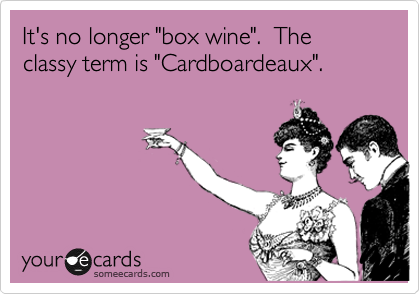
Go ahead and cringe. I can't see you. ^_^
The bottom line is, for someone like me—the wine-curious-yet-clueless—this book was an enticing and down-to-earth introduction.
Magny's prose is lighthearted, approachable, and sometimes poetic. There are a few minor errors throughout, and some phrasing instances in which it may feel more evident that English isn't his first language. But overall this added an authentic flavor rather than getting too far in the way of his writing. The book contains an extensive glossary and footnotes—which I'd encourage readers to use both during the read and in review.
His analogies were quirky, effective, and ever-encouraging. Take for example:
*“Just like literature, wine takes time to learn. Before having access to the emotion of a stunning poem or to the vigor of a captivating novel, we all had to go through a long initiation. First, we need to learn the alphabet, the sound of each letter. In wine, that would be learning about the grapes and their characteristics. Then, once we master our letters, we need to learn the arrangements of letters, the pronunciation, the grammar, the structure of sentences. Now we can read. In wine, that would be the stage when we start noticing differences between two reds. You no longer drink wine: you start drinking this wine.” ― Oliver Magny
I do wish he'd gone into more detail about the types of wine glasses and how they affect the flavor of wine, but he only makes passing mention. Still, this reader went from having never heard of the all-important term “terroir,” to grasping in detail why it makes all the difference in viticulture and, in the final analysis, the experience of wine-tasting. I come away equipped with better questions to ask, factors to consider, and ways to recognize marketing gimmicks.
I look forward to trying out my expanded mental palette, when next I have a chance to expand my literal palette. :)

December 18, 2013
I guess this is an interesting enough book if you know nothing about wine. Magny does a good job at making the world of wine approachable, without any of the snobbery that is usually involved in the subject. The book is informative but in a fun way. It is more an introduction to a way of life than a fact-filled “everything you ever wanted to know about wine” kind of book. That said, I only gave Into Wine a two-star rating because I felt Magny aimed his book at a non-French audience and tried too hard to bring on the French charm (the whole talk about terroir really has nothing charming about it when you are French). Being French, I found that quite annoying and I’m not sure the book will be such a success if it is ever translated into French.

August 2, 2025
Just fine. Good introductory book to wine. I can now read labels at the spirits store and understand the difference between France and other countries. I bought this book at goodwill and it's signed by the author.
A wine lover should actually be in love with wine. Wine drinking is eminently sensual.
The whole book was high on the french word terroir and that was really the only jargon
Californian vs French approach. Fun and readable vs depth, diversity and fart smelling
Good wine education isn’t about simplifying things, but giving people the key to understand the diversity of wine
Soil and bacteria are goated
If you do steroids, you get girls, but it comes with a price. With pesticides and chemical fertilizers, less work for business and less ppl on payroll. The world of wine as a whole has become a dunce. Vast majority of grapes used to make wine have been and are still loaded with pesticides.
Composting/ramial chipped wood are goated for soil health and returning organic matter to land
France is the only country where wine consumption has consistently decreased over the last 20 years. Average amount spent on a bottle is $5 and average sparkling+still for a household is $250.
In 2010, the french consumed over 130 million sleeping pills and anti depressants. The most morose people on earth. They’re more pessimistic than iraq and afghanistan, with only 5% of youngsters considering the future promising
Much like the 70’s when all the neighbors would convert to chemicals, we’re in the exact opposite place now. Something of a renaissance for good wine.
I need more organic and biodynamic fruit in my life
AOC =loud mouthed trickster, but also the french concept Appellation Origin Controlle
It would indeed be easier if all whites could be called Chablis, all sparklings champagne, and all reds chianti. But what a boring world that would be! We’re close enough in a lot of industries, let wine utilize many different players, including the small ones
When it comes to picking a wine: It matters how the grapes were farmed, and wether you like it. The other marketing stuff is vastly BS. (This feels incorrect but the book leaned on this)
Robert Parker might be cool but might be gay
China is the 5th largest wine drinking country.
Only france italy spain and turkey have more vines planted
China is a sleeping giant and makes a lot of mid wine rn not great not awful, but in the near future, could be amazing and have some of the most expensive in the world
A wine lover should actually be in love with wine. Wine drinking is eminently sensual.
The whole book was high on the french word terroir and that was really the only jargon
Californian vs French approach. Fun and readable vs depth, diversity and fart smelling
Good wine education isn’t about simplifying things, but giving people the key to understand the diversity of wine
Soil and bacteria are goated
If you do steroids, you get girls, but it comes with a price. With pesticides and chemical fertilizers, less work for business and less ppl on payroll. The world of wine as a whole has become a dunce. Vast majority of grapes used to make wine have been and are still loaded with pesticides.
Composting/ramial chipped wood are goated for soil health and returning organic matter to land
France is the only country where wine consumption has consistently decreased over the last 20 years. Average amount spent on a bottle is $5 and average sparkling+still for a household is $250.
In 2010, the french consumed over 130 million sleeping pills and anti depressants. The most morose people on earth. They’re more pessimistic than iraq and afghanistan, with only 5% of youngsters considering the future promising
Much like the 70’s when all the neighbors would convert to chemicals, we’re in the exact opposite place now. Something of a renaissance for good wine.
I need more organic and biodynamic fruit in my life
AOC =loud mouthed trickster, but also the french concept Appellation Origin Controlle
It would indeed be easier if all whites could be called Chablis, all sparklings champagne, and all reds chianti. But what a boring world that would be! We’re close enough in a lot of industries, let wine utilize many different players, including the small ones
When it comes to picking a wine: It matters how the grapes were farmed, and wether you like it. The other marketing stuff is vastly BS. (This feels incorrect but the book leaned on this)
Robert Parker might be cool but might be gay
China is the 5th largest wine drinking country.
Only france italy spain and turkey have more vines planted
China is a sleeping giant and makes a lot of mid wine rn not great not awful, but in the near future, could be amazing and have some of the most expensive in the world
August 16, 2017
4.5 stars
A few weeks ago I went on a vacation to France. I found myself wondering the streets of Paris and stumbled across O Chateau. I'm from California and a big wine connoisseur, so I decided to stop in for a tasting. O Chateau is beautiful and captivating. Most of the place is underground in a wine cellar. I had the best time walking around, playing with their interactive wine trivia games, and speaking with a very knowledgeable wine pourer. I noticed Into Wine behind the wine tasting area and I began to read the first chapter. I was surprised at how hard I laughed within the first few pages. I had to get this book!
I wasn't disappointed! It was a very witty and well laid out. I did not know the more technical aspects of wine making. Olivier did a great job explaining how a great wine is made from the soil up. I will forevermore use the word terroir when discussing wine. My favorite quote from the book: "we need terroir in our glasses, on our plates, on our streets, and in our conversations. I believe that terroir is the path to happiness." I appreciated how Olivier discussed wine from all over the world – not just France. Being a Californian, I was interested to hear his thoughts on French wine versus Californian wine.
One aspect of the book I was not expecting, and was extremely pleased with, was his rally cry for more organic and biodynamic wine. He further this sentiment with his talk of organic, local food. He exclaimed that terroir did not just stop at wine - It also encompasses food.
The real joy of this book was Olivier's sense of humor. At certain points of this book, I found myself laughing out loud (one time in public). I would highly recommend this book to anyone who enjoys wine, is looking to further their knowledge on the subject, and loves a good laugh. Great book, Olivier!
A few weeks ago I went on a vacation to France. I found myself wondering the streets of Paris and stumbled across O Chateau. I'm from California and a big wine connoisseur, so I decided to stop in for a tasting. O Chateau is beautiful and captivating. Most of the place is underground in a wine cellar. I had the best time walking around, playing with their interactive wine trivia games, and speaking with a very knowledgeable wine pourer. I noticed Into Wine behind the wine tasting area and I began to read the first chapter. I was surprised at how hard I laughed within the first few pages. I had to get this book!
I wasn't disappointed! It was a very witty and well laid out. I did not know the more technical aspects of wine making. Olivier did a great job explaining how a great wine is made from the soil up. I will forevermore use the word terroir when discussing wine. My favorite quote from the book: "we need terroir in our glasses, on our plates, on our streets, and in our conversations. I believe that terroir is the path to happiness." I appreciated how Olivier discussed wine from all over the world – not just France. Being a Californian, I was interested to hear his thoughts on French wine versus Californian wine.
One aspect of the book I was not expecting, and was extremely pleased with, was his rally cry for more organic and biodynamic wine. He further this sentiment with his talk of organic, local food. He exclaimed that terroir did not just stop at wine - It also encompasses food.
The real joy of this book was Olivier's sense of humor. At certain points of this book, I found myself laughing out loud (one time in public). I would highly recommend this book to anyone who enjoys wine, is looking to further their knowledge on the subject, and loves a good laugh. Great book, Olivier!

July 16, 2015
“But out of all the obscure nonsense infused in the world of wine, there is one word I’m in love with — one word the French language had the elegance to give birth to and to nurture. That word is: terroir.”
“… there is no understanding wine if you don’t have a good grasp of what terroir means.”
“Le terroir is what turns wine lovers on.”
For Olivier Magny (Parisian sommelier, wine educator and entrepreneur) terroir is a way of life. It’s a set of values, an active stance one takes in defense of place and authenticity. Into Wine, Magny’s forthcoming book, is a terroirist’s manifesto.
What is terroir? Like inner peace, love and punk rock, it’s a term that has different connotations for different people. Inasmuch as the word can be defined, I like referring to terroir as the collaborative effort of Mother Nature and humankind to capture the essence of a specific place and put it in a wine bottle. Magny likes American wine writer Matt Kramer’s translation: “somewhereness.” Magny later uses this generally-accepted definition: “Terroir is the essence of a place — its signature.” But for Magny, terroir is more than just the taste of slate and minerals in an Ürziger Würzgarten riesling. “Terroirism,” he writes, “is about doing the right thing, for yourself and for others, for the environment and for the community.”
If the word is loosely defined in the positive, perhaps terroir is best understood for what it is not. Magny considers pesticides and herbicides forces of anti-terroir. A large portion of the book is spent detailing how pesticides and herbicides harm the soil and denigrate the environment as a whole, all the while creating a culture of mass production and environmental apathy. “One of the biggest enemies of the expressions of terroir in wine,” Magny says, “is irrigation.” Shipping grapes from one region and sneaking them (legally) into a wine from another region is an act of anti-terroir. Filtration, oak chips and other winemaking tricks can rob a wine of its terroir.
One of the reasons I love this book is because Magny’s views on terroir, sustainability, organic viticulture, etc., largely correspond with my own. But even if you disagree with some of Magny’s points, this book will get you thinking about key aspects of the terroir culture, and that’s a good thing.
But Into Wine is more than just a love poem to terroir. Magny does a good job explaining the basics of the French Appellation d’Origine Contrôllé system of regional classification. He breaks down the different chemical processes of winemaking, gives advice for newbs on how to decipher wine labels, and lays out a helpful list of wineries around the world that practice biodynamic farming. The text is littered with interesting little info boxes, statistics, charts and stories from his wine travels. And Magny offers answers to 25 wine FAQs, including: What are sulfites? What is the sediment in the bottle? What do you think of Californian wine? His answer to the later — “Overall, overpriced!!” — is a little ridiculous, but, hey, he’s French.
If you’re looking for a textbook on wine varieties and regions, this is not it. If you’re thinking about getting “into wine,” if you’re mystified by this notion of terroir, if you’re curious about the interrelatedness of wine and environmental sustainability, hell, if you just like to drink the fucking stuff, read this book. Along with touring vineyards and attending copious amounts of wine tastings, this book is a good place to start a wine journey. Writing of his own travels through Wine-Nerdistan, Magny says, “studying wine was not just about Pinot Noir or Merlot, but also about plant biology, chemistry, history, geography, marketing, agronomy, etc. If I wanted to be good at what I did, I had a great deal to learn.” If this sounds overwhelming, don’t worry. Pop a cork, pour a glass, crack the book and just enjoy life.
Into Wine also includes a brief history of Magny’s project O Chateau, a wine tasting school and wine bar. In 2009, for example: “We moved into an old wine cellar near the Louvre. After launching Wine Dating evenings for singles in Paris, we get invited to host the first Milanese Wine Dating and make Italy’s main news show (drunk).” (What the hell was I doing in 2009 and why wasn’t I bumming around these events in Paris and Milan?) In 2012, the O Chateau Wine Bar received a prestigious Wine Spectator Award of Excellence, and Bonjour Paris named it “the best wine bar in Paris.” Not too shabby.
Despite being a Parisian, Magny has a relatively petite ego and little to no patience for snobbery. To him, growing, making, studying and tasting wine is all about increasing net happiness, not impressing a bunch of stuffy, overcompensating douches. Magny comes off as the type of guy you’d love to share a few glasses with, which is probably why O Chateau has been so damn successful. And Magny’s democratic approach to wine tasting spills over into his writing style, which is whimsical and cheeky. He quotes Goethe, George Carlin, Henry Ford, Count Dracula and others. He calls B.S. when he sees it.
He also falls into gimmick mode a little too often, for example, inserting three different footnotes into a 16-word sentence. Some two-page spreads have 10 different footnotes, which has a dizzying effect and distracts from Magny’s fast-moving trains of thought. (I recommend reading the book as I did, finishing the two pages of text and then going back over the footnotes.) Magny also frequently uses the cliché of comparing of wine to women. “Just like a woman, wine has bad hair days.” Proper crystal stems are “wedding dresses” for wine. “Wine is more than the sum of its parts, and that’s also why it’s so glorious (just like a woman).” One bottle is “a Californian cougar with fake boobs.” While I understand how this language could bother some women , I tend to think it’s pretty harmless, perhaps a bit lazy from a writer’s perspective. It’s also not incredibly surprising because — did I mention? — the guy’s French.
“… there is no understanding wine if you don’t have a good grasp of what terroir means.”
“Le terroir is what turns wine lovers on.”
For Olivier Magny (Parisian sommelier, wine educator and entrepreneur) terroir is a way of life. It’s a set of values, an active stance one takes in defense of place and authenticity. Into Wine, Magny’s forthcoming book, is a terroirist’s manifesto.
What is terroir? Like inner peace, love and punk rock, it’s a term that has different connotations for different people. Inasmuch as the word can be defined, I like referring to terroir as the collaborative effort of Mother Nature and humankind to capture the essence of a specific place and put it in a wine bottle. Magny likes American wine writer Matt Kramer’s translation: “somewhereness.” Magny later uses this generally-accepted definition: “Terroir is the essence of a place — its signature.” But for Magny, terroir is more than just the taste of slate and minerals in an Ürziger Würzgarten riesling. “Terroirism,” he writes, “is about doing the right thing, for yourself and for others, for the environment and for the community.”
If the word is loosely defined in the positive, perhaps terroir is best understood for what it is not. Magny considers pesticides and herbicides forces of anti-terroir. A large portion of the book is spent detailing how pesticides and herbicides harm the soil and denigrate the environment as a whole, all the while creating a culture of mass production and environmental apathy. “One of the biggest enemies of the expressions of terroir in wine,” Magny says, “is irrigation.” Shipping grapes from one region and sneaking them (legally) into a wine from another region is an act of anti-terroir. Filtration, oak chips and other winemaking tricks can rob a wine of its terroir.
One of the reasons I love this book is because Magny’s views on terroir, sustainability, organic viticulture, etc., largely correspond with my own. But even if you disagree with some of Magny’s points, this book will get you thinking about key aspects of the terroir culture, and that’s a good thing.
But Into Wine is more than just a love poem to terroir. Magny does a good job explaining the basics of the French Appellation d’Origine Contrôllé system of regional classification. He breaks down the different chemical processes of winemaking, gives advice for newbs on how to decipher wine labels, and lays out a helpful list of wineries around the world that practice biodynamic farming. The text is littered with interesting little info boxes, statistics, charts and stories from his wine travels. And Magny offers answers to 25 wine FAQs, including: What are sulfites? What is the sediment in the bottle? What do you think of Californian wine? His answer to the later — “Overall, overpriced!!” — is a little ridiculous, but, hey, he’s French.
If you’re looking for a textbook on wine varieties and regions, this is not it. If you’re thinking about getting “into wine,” if you’re mystified by this notion of terroir, if you’re curious about the interrelatedness of wine and environmental sustainability, hell, if you just like to drink the fucking stuff, read this book. Along with touring vineyards and attending copious amounts of wine tastings, this book is a good place to start a wine journey. Writing of his own travels through Wine-Nerdistan, Magny says, “studying wine was not just about Pinot Noir or Merlot, but also about plant biology, chemistry, history, geography, marketing, agronomy, etc. If I wanted to be good at what I did, I had a great deal to learn.” If this sounds overwhelming, don’t worry. Pop a cork, pour a glass, crack the book and just enjoy life.
Into Wine also includes a brief history of Magny’s project O Chateau, a wine tasting school and wine bar. In 2009, for example: “We moved into an old wine cellar near the Louvre. After launching Wine Dating evenings for singles in Paris, we get invited to host the first Milanese Wine Dating and make Italy’s main news show (drunk).” (What the hell was I doing in 2009 and why wasn’t I bumming around these events in Paris and Milan?) In 2012, the O Chateau Wine Bar received a prestigious Wine Spectator Award of Excellence, and Bonjour Paris named it “the best wine bar in Paris.” Not too shabby.
Despite being a Parisian, Magny has a relatively petite ego and little to no patience for snobbery. To him, growing, making, studying and tasting wine is all about increasing net happiness, not impressing a bunch of stuffy, overcompensating douches. Magny comes off as the type of guy you’d love to share a few glasses with, which is probably why O Chateau has been so damn successful. And Magny’s democratic approach to wine tasting spills over into his writing style, which is whimsical and cheeky. He quotes Goethe, George Carlin, Henry Ford, Count Dracula and others. He calls B.S. when he sees it.
He also falls into gimmick mode a little too often, for example, inserting three different footnotes into a 16-word sentence. Some two-page spreads have 10 different footnotes, which has a dizzying effect and distracts from Magny’s fast-moving trains of thought. (I recommend reading the book as I did, finishing the two pages of text and then going back over the footnotes.) Magny also frequently uses the cliché of comparing of wine to women. “Just like a woman, wine has bad hair days.” Proper crystal stems are “wedding dresses” for wine. “Wine is more than the sum of its parts, and that’s also why it’s so glorious (just like a woman).” One bottle is “a Californian cougar with fake boobs.” While I understand how this language could bother some women , I tend to think it’s pretty harmless, perhaps a bit lazy from a writer’s perspective. It’s also not incredibly surprising because — did I mention? — the guy’s French.
September 5, 2014
I took an afternoon's course at Chateau O in Paris several years ago, and this book captures Olivier's vibe quite well. It is mostly a treatise on the importance of ecologically sustainable wine, trumpeting the virtues of organic and biodynamic methods and small producers. (Adding some sulphur is apparently okay, however :-). Terrrioir is the thing, and mass-produced wines are mostly anonymous--he really does a good sell on drinking interesting wine that has a strong connection to the land and the people who grow the grapes. His opinions are sometimes presented as facts (I'd like to see some citations on statements like 'supplements are good for you', or about the increasing number of organic wine producers, for instance), and the editing or .pdf'ing software wasn't perfect--this is worrysome when he is using unfamiliar words, as there is really no way to tell if it is correct without checking an external site.
His lists of biodynamic and low-sulphur producers in the appendices are a great jumping off point for moving away from BigVino wines, but the biggest and most important takeaway is that sometimes wine that worked for you last week won't be as good today, and it's okay---you're not going crazy~ it's a natural, living product, and even bottles from the same vineyard and the same harvest is going to be a little different every time. A little bit of education and a good wine shop can go a long way in helping you find wine that is good for you, and the planet, at a reasonable price.
His lists of biodynamic and low-sulphur producers in the appendices are a great jumping off point for moving away from BigVino wines, but the biggest and most important takeaway is that sometimes wine that worked for you last week won't be as good today, and it's okay---you're not going crazy~ it's a natural, living product, and even bottles from the same vineyard and the same harvest is going to be a little different every time. A little bit of education and a good wine shop can go a long way in helping you find wine that is good for you, and the planet, at a reasonable price.

December 28, 2013
I don't drink wine and I am not planning to start, so I really only read this for book club. I found some of the statistics in the book about farming and organic produce very intersting. I did not like the almost unending footnotes (there were 438). I kept wishing that he had simply put his interjections into the text since I had to keep flipping (tapping, really, since I read it on my Kindle) back and forth. There are things I can take from the book despite not drinking wine like his observations on culture, terroir, and enjoyment of life. Because of this, I found it much more enjoyable than expected.

June 8, 2013
This is the second book I've read by Olivier Magny. He has a slightly quirky sense of humor and this book reads quickly. He writes about the importance of terroir in the art of winemaking, but it quickly becomes clear that this terroir can be an analogy for many things of importance in life. Like the vines he is so interested in, we must grow deep roots or suffer the same consequences of bad wine. An excellent read.

January 28, 2014
An insider look at the world of wine from the ground up, so to speak, as Magny gives a clear explanation of that sometimes confusing concept, terroir. He also explains the nuances of wine making, letting the reader in on why using less artificial pesticides, fertilizers will allow the wine to express a local flavor, instead of being a mass produced product. Nice book for getting some down to earth education about wine without the jargon and pretentiousness.
December 30, 2013
I bought this book to learn about wine. I ended up learning so much more, especially on the importance of organic and biodynamic farming. Written in a fun and relaxed tone, the book explained the essence of choosing a good bottle of wine without using the dry and encyclopedic approach that I often found in other wine books.

May 19, 2013
A charming and very French look at all things wine and wonderful. Magny is a devotee of soil and biodynamics and his passion for the magic of terroir is infectious. The book augments deep wine knowledge with silly asides and the footnotes are some of the best parts of the book.
January 1, 2016
Very disappointing.
The word "terroir" is mentioned about 783 times.
Other than learning that the "terroir" of a wine might affect it's taste and how Magny is making a ton of money teaching wine classes, I don't think I learned anything here.
The word "terroir" is mentioned about 783 times.
Other than learning that the "terroir" of a wine might affect it's taste and how Magny is making a ton of money teaching wine classes, I don't think I learned anything here.

May 10, 2013
Super book, funny and a great wine education. Find a good review over at http://www.southernfriedfrench.com/blog/

August 19, 2013
lots of great facts and information about the process of wine making from the soil to the bottle.

January 10, 2014
highly recommended, witty and lays low all the wine snobbery out there
January 17, 2014
Good instructions for real living
Starting as a story, the book ends up being advice for a better way of life. it has good info on wine from growing to buying.
Starting as a story, the book ends up being advice for a better way of life. it has good info on wine from growing to buying.

February 1, 2014
Very in depth from go to woe. The main lesson is to enjoy the wine you like without worring about what the wine snobs say.

November 27, 2014
Great breakdown of how to understand French wine designations.
Displaying 1 - 18 of 18 reviews