Jump to ratings and reviews
Rate this book

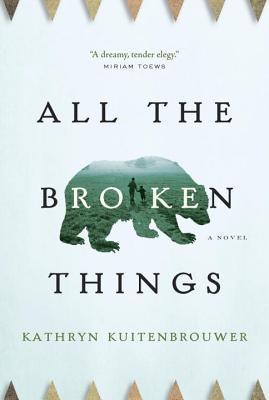
All the Broken Things

Rate this book
A novel of exceptional heart and imagination about the ties that bind us to each other, broken and whole, from one of the most exciting voices in Canadian fiction.
     September, 1983. Fourteen-year-old Bo, a boat person from Vietnam, lives in a small house in the Junction neighbourhood of Toronto with his mother, Thao, and his four-year-old sister, who was born severely disfigured from the effects of Agent Orange. Named Orange, she is the family secret; Thao keeps her hidden away, and when Bo's not at school or getting into fights on the street, he cares for her.
     One day a carnival worker and bear trainer, Gerry, sees Bo in a streetfight, and recruits him for the bear wrestling circuit, eventually giving him his own cub to train. This opens up a new world for Bo--but then Gerry's boss, Max, begins pursuing Thao with an eye on Orange for his travelling freak show. When Bo wakes up one night to find the house empty, he knows he and his cub, Bear, are truly alone. Together they set off on an extraordinary journey through the streets of Toronto and High Park. Awake at night, boy and bear form a unique and powerful bond. When Bo emerges from the park to search for his sister, he discovers a new way of seeing Orange, himself and the world around them.
   All the Broken Things is a spellbinding novel, at once melancholy and hopeful, about the peculiarities that divide us and bring us together, and the human capacity for love and acceptance.

352 pages, Paperback

First published January 14, 2014

18 people are currently reading
2380 people want to read

About the author

Kathryn Kuitenbrouwer

15 books62 followers
I am the author of the novels All The Broken Things, Perfecting, and The Nettle Spinner, as well as, the short fiction collection Way Up. My recent work is published in Joyland, Numéro Cinq, Significant Objects, Riddle Fence, Filter, The Walrus and Granta.

I teach at The University of Toronto and online through The New York Times Knowledge Network. I advise students in the University of Guelph MFA.

Ratings & Reviews

What do you think?
Rate this book

Friends & Following

Create a free account to discover what your friends think of this book!

Community Reviews

5 stars
186 (21%)
4 stars
354 (40%)
3 stars
255 (29%)
2 stars
54 (6%)
1 star
20 (2%)
Displaying 1 - 30 of 128 reviews
Profile Image for Ammara Abid.
205 reviews170 followers
February 7, 2017
Adults hated to be asked questions they could not answer.

This book is beautiful, tragic and moving. Brilliantly crafted, broke my heart at the same time fill my heart with courage and hope. I like it's lyrical writing style, emotional story, nice plot revovling around Bo & Orange but more could be linked with the war and agent Orange and it's deleterious effects on the living.

Moreover I would go with 5 stars but last 30 pages were flat, didn't hit me, the whole book was amazing but the end could have been better. Might be I was expecting more imaginative or painful end that's why didn't hit me. But on the whole this is an enjoyable read.
Profile Image for Petra.
1,241 reviews38 followers
October 17, 2017
This should be listed as YA. I felt it was written for 14-16 year olds.
The story of Bo and his family is a mixed bag. There are few details throughout, many issues to face. The treatment of Orange was, at first, rather distasteful.
An easy reading story, with grit. However, it's a book for the young, with the concerns of the young. There are also so many issues for poor Bo to deal with in his young age: the Vietnam war, Agent Orange, racism, immigration, his sister's deformity, earning money for his family....and more.
A decent enough story but not one I was completely enthralled with. Too young. Als0 a bit of a "throw every problem into the pot" type of story.
Profile Image for Natalie.
821 reviews40 followers
January 22, 2014
After the first 30 pages of All the Broken Things, I knew that I was reading something special. Moving, tragic, and full of impact, Kuitenbrower’s story of 14-year old Bo’s struggle to heal his family and find acceptance was beautiful and heart-breaking. The novel takes place in Toronto in 1983. Despite having lived in Canada for several years now, there are only two things that Bo cares about: fighting, and his little sister Orange. Born severely disfigured as a result of Agent Orange, a herbicide and defoliant used by the U.S. Army during the Vietnam War, Orange is the family secret who is kept hidden away. Bo’s mother, Rose, is repulsed by Orange. Unable to come to terms with the fact that Orange was born from her body, Rose is depressed, distant, and unable to find any joy in life.

Bo’s life is completely changed when he is discovered by Gerry, a bear trainer who sees a talent and promise in this tough kid that everyone else seems to ignore. Taking Bo under his wing, Gerry introduces him to the world of traveling fairs and bear wrestling. Giving Bo a bear cub of his own to train, Bo finds his world being opened up to new possibilities. Tragedy strikes, however, when Gerry’s boss, Max, begins dating Bo’s mother. Determined to have Orange in his freak show for the CNE, Max will stop at nothing to get his hands on Bo’s sister. When Bo wakes up to discover both his mother and his sister gone, he sets out to find them, with Bear by his side.

While the description above may make All the Broken Things sound strange and outlandish, the story itself is actually quite stunning. My heart immediately went out to Bo from the very beginning, as he struggled to find himself, and come to terms with his mother’s emotional absence and his sister’s disability. Despite the tragic moments of the novel, beauty can be found in Bo’s journey of self-realization. Through his struggles, Bo manages to find his own path in life, and finally sees his family in a whole new light. The sense of community that builds as the story progresses filled me with hope, and allowed me to feel optimistic about Bo and Orange’s future together.

Amongst this magical tale, Kuitenbrower seamlessly weaves together a number of historical facts that both shocked and amazed me. I was horrified to discover that Agent Orange had been produced in Elmira, Ontario for supply to the U.S. military throughout the Vietnam war. Kuitenbrower skillfully brought the horror of this destructive chemical to life through the character of Orange, whose very name (let alone her appearance), is a constant reminder of it’s presence in the background of the story. The novel’s glimpses of life at the CNE and the world of bear wrestling (which wasn’t outlawed until 1976), was also very fascinating, as I always viewed the use of bears for entertainment as something from the 19th century.

Exploring issues of responsibility, acceptance, heroism, and community, All the Broken Things is a masterful piece of writing that will pull at your heart-strings while also filling you with a sense of wonder and awe. This is a great work of Canadian fiction that deserves more buzz and fanfare than it has been getting. With plenty of topics to discuss, All the Broken Things would certainly make a great choice for book clubs! One thing is for sure, you’re guaranteed to fall in love with Bo and Bear, and will find yourself cheering them on until the very end.
Rating: 4.5 Stars
Profile Image for Heidi.
154 reviews11 followers
Read
February 26, 2017
A wonderful, illuminating story about people and animals in bondage and those who put them in that situation, and how nature and freedom are ultimately ascendant—sometimes taking a terrible route to get there.

A story about how mankind breaks things. About those who are not afraid to see things as they are, some of whom wish to keep things broken so they can profit from it. About others who hide their broken things because they are ashamed. About the dilemma of who sees more clearly, and who does more harm.

A story about Bo, the narrator, who, with the help of Sir Orfeo, Teacher, Max and other characters, all simultaneously fine and flawed, experiences enormous loss and insight as he finds out what it means to be a hero.

A few favourite quotations:

“He wanted to shout that these things were just broken. He wanted her to understand about the pride of broken things.”

“It was the shame Teacher conveyed, by trying to fix things.”

“The world is perfect in its own way. As perfect as anything. You just need to let things be.” (Which is why Bo’s sister, Orange Blossom, stays the same when Sir Gawain kisses her.)

“Whenever someone retells a story, bits get added and bits get lost.”

The bits that were missing for me in this inventive and memorable book, had to do with how some scenes appeared unlikely and not welded into the whole; e.g. the reactions of characters didn’t always (for me) match the severity of an event.
Profile Image for Krista.
1,469 reviews850 followers
March 10, 2015
He wasn't embarrassed. He was ashamed. And he wasn't ashamed of Rose. It was something deeper. It was the shame Teacher conveyed, by trying to fix things. He wanted to shout that these things were just broken. He wanted her to understand the pride of broken things.

From the Author's Note at the beginning of All the Broken Things: The strangest of the truths in this novel are the facts of a bear wrestling circuit in Ontario, the production of Agent Orange in the small town of Elmira, Ontario, and freak shows at the Canadian National Exhibition (CNE). With these strange but true facts in hand, Kathryn Kuitenbrouwer benignly fudges the timeline to allow a fourteen-year-old Vietnamese refugee, in the Toronto of 1983, to heal his complicated psychology through his relationship with a bear.

Bo's mother was widowed on the boat from Vietnam, and suffering Agent Orange poisoning and repulsed by the severely deformed daughter she gave birth to upon arriving in Canada, Rose has become an alcoholic who can neither properly care for her kids or hold down a job. Her daughter (named Orange Blossom in Vietnamese but called "Orange" by Bo and "Sister" by their mother) is a twisted, flippered, pop-eyed mute who throws herself at the walls and punches and bites those who try to care for her. Bo is gentle with his mother and sister but seeks out fistfights with his peers -- only when he's hitting or hit does he feel connected to the people around him. When fighting one evening, Bo is scouted by a carnie, Gerry, who wants Bo to become a bear wrestler (pure theater that would gain Bo's family much needed cash). Bo is eventually introduced to Max, the owner of the sideshow and collector of freakish folks. When Max learns about Orange, he becomes obsessed with meeting (and perhaps with possessing) her. Amidst all of this chaos, Gerry gives Bo his own cub to train for the next carnival season, and the relationship between the boy and his bear becomes the focus of the story.

There are so many emotionally charged ideas in All the Broken Things -- the Boat People, racism, child neglect, poverty, alcoholism, animal rights, the dignity of those with special needs, the Vietnam War, etc. -- that I started off thinking that I was reading something very special; all of these issues colliding made me think that I was feeling something, but in the end, there was no emotional payoff (beyond what's inherent in reading about any terrible situation), and more than anything, I was just annoyed.

I was annoyed that the sister -- whose birth defects were a result of exposure to Agent Orange -- was named "Orange Blossom" but called "Orange": every time her name was used, I asked myself, "Why? Why would that be her name?" I was annoyed that the teacher had formerly worked at Uniroyal in Elmira -- manufacturing Agent Orange for the American government during the Vietnam War -- and thought that she had to atone for that fact by sponsoring Vietnamese refugees: in the author's note, Kuitenbrouwer makes it clear that she thinks all of Canada needs to finally atone for the role we played in the poisoning of a foreign people (and while I can't quite get myself worked up into a state of national shame over this, I am certainly disturbed to read here that babies in Vietnam are still affected by the lingering effects of Agent Orange today). I was annoyed that Bo would be able to hide out (with a bear!) in High Park in Toronto for months and only come into contact with a veteran from the Vietnam War (with a freakshow-worthy face thanks to exploding ordinance). I was annoyed that when Bo asked Soldier Man how long he had been living in the park it was, ironically, ten years -- the same length of time that King Orpheus had wandered in the woods in the play Bo had studied in school -- and I know that because Bo makes the connection himself (and I hate having this kind of thing spelled out for me -- I need an author to trust that I'm paying attention). I was annoyed that Bo explained to his mother what the metaphor of a doorway is in the Orpheus play: every time someone crossed a threshold after that (should Bo enter Max's trailer? Emily's house?) it felt freighted with meaning, right up until Bo insists that it's time for Orange to cross the threshold into outside (and it's a good thing that Bo had spent those months in the park so that he, like Orpheus, could rescue the maiden…See? I was paying attention...)

And I didn't buy into so many plot points -- that Gerry would recognise the scrawny Bo as a natural-born bear wrestler, or that Bo could raise a bear cub in the city without getting caught, or that he could drop out of school and disappear without the authorities going nuts. And what's the deal with Emily's parents "not believing in chlorination" for their backyard pool? With green scum and frogs, that's not the equivalent of a pond (which would be spring-fed and a healthy ecosystem) but a stagnant biohazard.

I so wanted to join Kuitenbrouwer on this journey, but in the end, squeezing together these emotionally charged subjects made for an interesting concept that just didn't pay off. But what bumps it up from two stars to three is the relationship between Bo and Bear (the image of the bear licking the melting ice cream from between the boy's toes was skillfully wrought and will stay with me) and also the relationship between Bo and Orange (I totally believed that, as hard as caring for her was, Bo loved and respected his little sister just the way she was).
Profile Image for Christine.
Author 2 books14 followers
February 18, 2014
I've been reading Kathryn Kuitenbrouwer's work from her first collection of short stories, Way Up, and over the intervening years we've become friends. I know her work well. This new novel seems, in many ways, to be the book she has been tacking toward for years via her short stories and other novels, and it's a beauty.

In this modern fairy tale, she has woven together Agent Orange, bear wrestling and an Orpheus-like journey into a coming-of-age story that asks us to consider what is real, what is worthy of notice, and the ways in which these questions—and their answers—are connected.

On the surface, we have the story of a 14-year-old Vietnamese boy, Bo, who likes to street fight when he’s not in school or looking after his severely-disabled sister. His damaged mother, who is slowly dying as a result of Agent Orange, can barely keep her own head above water, so he’s both on his own and forced into the role of adult caregiver for Orange, the sister whose Vietnamese name translates to ‘orange blossom’ and also signifies her deformity. He shows real affection for and is protective of her but also chafes at the responsibility; he needs the sweet oblivion of the fight to forget the trauma of his trip to Canada and spend his enormous anger. A neighbourhood boy regularly obliges. A carny spots him one day and recruits him for bear wrestling on the carnival circuit, and Bo is smitten, both with the animal and that new world.

Although the magical edges to this story are distinct—bear-keeping in an urban space, characters like archetypal figures from fairy tales, deus-ex-machina leaps in the plot—the way the bear smells and feels, the intimacy of that grappling, is equally manifest. It’s an interesting juxtaposition, the suspended reality of the fairytale against the hyper-reality enforced by these sensuous details, and they work on each other to close the gap between them.

As is common in fairy tales, Bo is deserted by his family one day and must undertake an epic journey. He goes into the urban wild of High Park to both hide and seek, his bear in tow, and there he meets a mythical figure who seems a cross between Orpheus and Rumplestiltskin and whose magical madness helps Bo in practical and philosophical ways. This, after Bo’s first encounter with Soldier Man (who goes by no other name): “But mostly, he thought about what war and what soldier, and then, before he could stop his mind, he thought about his father, sharks, water.”

In the fairy tale cadence of the language, Kuitenbrouwer tips us off about her influences and intentions, and she pays homage to the form in a variety of ways, but what she has created is a thoroughly modern update of that literary form. Bo “imagined Bear—his bear—circumnavigating the city, for years and years, protecting him, and he knew it was nonsense, a fairytale, but still he wished it would be true.” Through Bo’s and Orange’s experiences in the carnival, Kuitenbrouwer asks us to think about the idea of spectacle and the role it plays in the construction of reality and identity. Bo's monstrously-deformed sister is an object of fear and fascination, but when she is finally given a voice, Kuitenbrouwer taps a universal human desire: what Orange wants is to be seen.
Profile Image for Michael Bryson.
Author 6 books15 followers
September 22, 2023
Despite being locked into a specific place (Toronto) and time (early 1980s) and linked to historical events and things (Vietnam War, Agent Orange, Elmira chemical plant), the action unfolds in a dream-like manner. Vietnamese refugee family in Canada becomes linked to bear wrestling carnies. It's delightful, sobering, exciting, frightening, and highly readable. Yum.
Profile Image for Erin.
253 reviews76 followers
March 14, 2014
Kathryn Kuitenbrouwer’s All the Broken Things centres around the bildungsroman story of Bo, a boy who wrestles bears and other boys, cares for his sister (Orange) and mother and navigates Vietnamese, refugee identities in 1970s Canada. Bo’s coming of age is as much about coming into his own sense of self as it is (and perhaps this is always the case in this genre) coming to understand that the people around him are as complex and flawed as he is.

As the title suggests, the novel is occupied with exploring questions around what/who is broken and whether these broken things and people need and want fixing, and also, whether such repair is ever possible. These questions get taken up in by the character of Teacher who attempts, over and over, to atone for her involvement in the production of Agent Orange by “saving” Bo and his family (in a somewhat heavy-handed move, Teacher works with a Church organization so that the ‘saving’ is as much about providing material shelter as it is rescuing of souls). At one point Bo remarks on Teacher’s efforts, noting that her attempts shame him – not in the actual acts, but in the idea that what is broken ought to be, or can be, fixed.

The relationship mirrors others in the novel – a classmate, Emily – in the paternalism of the white Canadian rescuing the refugee from his trauma and poverty. It is refreshing then, to find a character like Max – the owner of a carnival freakshow interested in employing Bo as a bear-fighter – who (at first, at least) nakedly exploits Bo. The reader finds this exploitation oddly refreshing as it’s not couched or obscured by rhetoric of benevolence and rescue. The ideas of rescue get further complicated in the relationship between Bo and Bear as the needs of the two and the reliance of each on the other explore exploitation and power in human-animal relationships.

Much like the heavy-handedness of Teachers allegiance with the Church, the metaphors in the novel feel a bit heavy: Bo’s fear of water; the parallels between Bear and Orange; the demand that Orange be kept hidden, inside. These are metaphors that get, at times, overplayed in ways that made this reader feel less inclined to think carefully about their meaning. It’s as if the predictable arrival of a water/drowning metaphor that in some ways exonerates the reader from having to think too carefully about the implications and effects of the metaphor because it gets recognized as “the water metaphor” instead of the thing it is meant to be signifying (helplessness, loneliness). This heaviness comes about in part, I think, from overuse and from a sort of ponderous, solemic introduction of the metaphor, a quiet-on-the-set feel that interrupts, rather than deepens.

The one metaphorical space that I did feel compelled by was the carnival. The layering of spectacle, the ideas of who watches and who is seen, the confusion of expectations/reality of what we think we see and how the object of our viewing sees her/him/itself gets exploded and refracted in exciting and unsettling ways.

In the Author’s Note that precedes the novel the reader is alerted that the most “fantastical” moments in the novel are those that are “really true” – the production of Agent Orange in Elimra, Ontario; the freak-shows at the CNE until the late 70s; bear-wrestling. In an odd parallel to the ”Believe it or Not” rhetoric of the freak-show/carnival itself, the author’s note serve as an (uncomfortable) call to the reader to be amazed (and entertained?) by the spectacle of historical fiction. While it’s clear from the narration and characterization of Bo that we are not, in fact, meant to be entertained by the history so much as troubled and unsettled, the Author’s Note in juxtaposition to the carnival metaphor/theme did, for me at least, raise questions about the spectacle – see history different! – elements of historical fiction that I had not considered before.

All this to say it’s a provocative novel with a rich exploration of Canadian history, individual identity, human-animal relationships and how we see/do not see, fix/do not fix those we imagine to be “broken.”
Profile Image for Corinne Wasilewski.
Author 1 book11 followers
August 27, 2016
Although I enjoyed reading this book, the story left me vaguely unsettled in the end. After giving it some thought, I think these are the reasons why:

-it reads like a modern day fairy tale with no lack of "giants to slay", however, instead of being "Once upon a time in a faraway land" this story is grounded in reality. We know this story's precise time and setting, we know about the Vietnam War and Agent Orange. It is this strange juxtaposition of fact and storytelling that I found jarring as a reader. I think the story would have been more effective if the details were not spelled out so clearly, but, left to the imagination of the reader to piece together (or not). If the reader failed to make the connections the story would still survive on its own merit.

-when it gets right down to it, the story is as much about Orange as it is Bo. The ending clearly supports the importance of Orange to the story and Sir Orfeo wouldn't be a metaphor for Bo if there wasn't an Orange to serve as Queen Heurodis. Unfortunately, there is little paper devoted to the development of Orange as a character and the little we do learn mostly comes through the eyes of Bo. Happily, this changes towards the end, but, I would have liked to see it a whole lot sooner.

Profile Image for Brendan Linwood.
81 reviews
December 29, 2016
It always frustrates me when I hear people ten years younger than me talk about reading the same books in high school that my parents read when they were that age. I have nothing against the classics; I just feel that our endless fixation on the same works published 50 or more years ago creates in some people a belief that nothing worth reading, worth really getting into, is being written today. This book is the perfect proof that that is not so.
Kathryn Kuitenbrouwer has written a masterpiece of Canadian literature. My heart soared and plunged with Bo as he navigated the already perilous waters of growing up, all the while having to look after (and later find) his layabout mother and a sister suffering birth defects from Agent Orange. Kuitenbrouwer writes with an innocence and grace that allows the purity of Bo's heroism to shine. There is so much good stuff here: wonderful, eloquent prose; delicate family dynamics balanced on the edge of a knife; lessons about life and adolescence; a distinct and unabashed Canadiana.
Highly recommended.
Profile Image for Tina.
228 reviews2 followers
July 26, 2016
Reading this book was an experience. At times I thought, where is this going? And then it would absolutely blow me away. Her writing is wonderful. She has a deep knowledge of those with physical and developmental disabilities, which is a large part of my life. I personally care for those who cannot care for themselves and find that society reacts in one of two way, either with pity or gratitude.
She takes the side of gratitude, which is refreshing and wonderful. I don't have the exact quotes, but she says that without agent orange, Orange would not be Orange and we should take pride in what is broken without hiding from it or changing it. Instead we should embrace what is different because in the end this is what is meant to be.
What a wonderful book and what should be an enlightening read for so many people.
Profile Image for Lauren Davis.
464 reviews4 followers
July 15, 2015
An original, powerfully written book about the immigrant experience, Vietnam's agent Orange and bear wrestling. Yup, you heard that right. The juxtaposition between gritty realism and magical surrealism is a real tour-de-force. Great review here: http://www.theglobeandmail.com/arts/b...
Profile Image for Suzanne.
Author 4 books138 followers
March 21, 2014
Loved this beautifully written novel. Loved how Kuitenbrouwer combined an urban tale with a wilderness survival story and I was completely swept away by the story of Bo and his bear. This novel took me on a fantastic journey and I really enjoyed every step of it.
Profile Image for Anndrea C.
37 reviews24 followers
June 29, 2015
Once in a while, I'll browse Quill and Quire for Canadian literature because I love books set in Toronto. LOVE. And I also want to support local authors. All the broken things by Kathryn Kuitenbrouwer was one of the books they reviewed at the time so I picked it up.

Since moving up to North York and having the pleasure of commuting daily (sarcasm), I switched over from reading off my iPhone and started reading off a tablet. I got this book prior to that change so I had this on and off relationship with that book seeing as I no longer read off my iPhone. It was my back up book when my Galaxy had no juice or if I forgot it at home.

With no motivation to read any of the books on my Moonreader shelf, I decided to finally continue reading All the broken things.

In sum, it's a coming of age story set in Toronto about a Vietnamese immigrant boy named Bo who ends up training a bear named Bear and working at the CNE back in the 80. This covered topics such as racism, bullying, herbicidal warfare on Vietnam, travelling by boat (read: illegal), mutations, freaks in the old sense of the word, bear wrestling and carnival folk.

When reading books by Canadian authors, there's a certain atmosphere to their writing. From Atwood to De Sa, I feel that there is a mystical veil surrounding the events in the book. Perhaps because most of the books I've read are set before I was born but in a city I currently live. It's like looking at images off Vintage Toronto. [Link here] Kuitenbrouwer's All the broken things definitely has that quality to it and I can't help but picture all these places in the 80s. I feel a certain detachment to these novels that cannot bring me to give them a very high rating but I certainly do not hate them.

With this novel, we are introduced to Bo. He's picked on at school for being Vietnamese and is beaten up by his bully almost everyday. He can stand up for himself but somehow doesn't. This sparked the interest of a man who has seen people bet on these 'fights' who noticed that Bo was holding back and saw his potential. First of all, I found that very creepy a man would be watching children fights. In 2014, if you see a man lurking in a school that does not resemble a parent, you know someone is calling the police. Since this is the 80s, I'll let it go.

Bo is then taken to see the carnie folk and was basically invited to be part of them to fight bears. I have no knowledge of bear wrestling but I can't imagine it to be at all safe (which you discover towards the end of the book). The story unfolds as we see his fight life intertwining with his family life which he's none too fond of considering his sister was deformed thanks to Agent Orange. He's given his own bear and is forced to grow up too quickly.

I definitely liked all the Canadian elements in the book. Winter, CNE, Toronto, mentioning all the neighborhoods on the west side, the lake, etc.
At the same time, it was painful to read Bo's experience with racism at school. Yes, he was liked by some and had friends but it was never a moment of Bo being better than people. It was about what Bo can do for them and how he worked for them. Or rather, what benefit Bo provided them. While there are still instances of racism now, it was a lot more prevalent before the 90s and even then, I got the occasional chink or flip or oriental.

All in all, it was an interesting read. It took me almost a year to finish (on and off) and I don't remember what sort of mood I was in when I got this but if you were to ask me now, I probably wouldn't be quick to say yes. I do not regret reading it but it did not captivate me as I hoped it would. 2.5 stars out of 5. It was more than OK but I didn't really like it.
Profile Image for Adriyanna Zimmermann.
116 reviews130 followers
February 12, 2016
I think Kathryn Kuitenbrouwer is a fantastic storyteller; her writing has a very lyrical aspect to it. She’s able to combine several important issues without overwhelming the reader. When it comes to All The Broken Things, everything is connected and flows really well. Kuitenbrouwer brings out a very emotional response from the reader and presents two ways of looking at things.

I instantly liked Bo and thought the author did a very good job of pushing the reader to be sympathetic towards him. Fourteen year old Bo is a very lonely person – he deals with bullying and prejudice on a daily basis, so his home life is mainly made up of his four year old sister, Orange, when their mother is at work. Orange was born severely disfigured from the effects of Agent Orange, a herbicide used during the Vietnam War. The reader witnesses what seems like Bo’s most confusing time of his life and being in his head, reading what he’s observing, is very fascinating. For one, Bo is extremely frustrated at his mother. She’s not home a lot and is trying to adopt a Canadian lifestyle. Bo doesn’t recognize it, but his mother seems to have depression. When she came to Canada, she didn’t expect for her husband to die on the journey and for Orange to be born disfigured – for her, this is shameful to live with. Ultimately, she doesn’t have a positive outlet. This pushes Bo to accept a job in the bear wrestling circuit – if his mother can be home with Orange, all the better for his family.

There was one thing I disliked about Bo: he’s a bit juvenile for his age and I don’t think the author has a complete picture of how a teenager acts. Bo is portrayed as smart and observant; even when he doesn’t understand something, he still gets a good or bad feeling from it. This is an adult book with a fourteen year old protagonist and the one reason it wouldn’t work as a YA book is because the author doesn’t fully believe in Bo the teenager. There were moments when Bo didn't understand something that I feel a teenager would. Make no mistake, I loved Bo and thought he was a great character, but I question the author’s idea of a teenager.

Kuitenbrouwer illustrates important issues of 1983 Toronto and I found myself in disbelief at the sort of things that were happening. When you learn new things like this, it paints a whole new perspective. There were issues ranging from discrimination and animal abuse re: circus/entertainment to poverty and suicide. The only thing I disliked about this was the author never seemed to focus on just one. When there are issues like these, I feel the author should create a solid discussion and not rely on the reader to start it. I also found troubling the lack of police action and the author doesn’t make clear if this was common in the 80’s.

I loved the relationship between Bo and his bear, Bear. It’s one of those things where you end up wishing for the same (yet different) deeply, connected bond with an animal. Even better, it makes me want to write about such a bond between human and animal (Life of Pi), or animal and animal (Two Brothers, The Lion King). Adding to that, the plot is fantastic and never fails to draw you in. I think I came off more harsh than my rating would suggest, but I really enjoyed this novel. I whole-heartidly believe you can both love a book and question it. Kuitenbrouwer is a beautiful writer and I definitely recommend this book!
Profile Image for Kerry Pickens.
1,187 reviews33 followers
December 19, 2020
This book should be listed as a YA novel as the plot is pretty simple and very slow. The main character is a 14 year old Vietnamese boy who has a severely disabled younger sister. The right of the story borderline on distasteful events as he becomes involved in training bears for a carnival, which usually involves animal cruelty. Another carnival worker that runs tries to get the boy's younger sister in his freak show. At the point, the story gets too weird.
Profile Image for Lorina Stephens.
Author 21 books71 followers
December 29, 2015
I was very much minded of Rohinton Mistry's novels when reading Kuitenbrower's All the Broken Things, albeit we've changed from writing about the tragedies of India's people to the tragedy of Canada's.

In this case Kuitenbrower tells a deftly-crafted tale of a Vietnamese mother, son and daughter who are refugees just after the infamous civil war that ravaged their country. Not only are they victims of the war, but of that deadly and devastating chemical known as Agent Orange, large quantities of which were produced in Grimsby, Ontario, by Uniroyal.

The story centres around the boy, Bo, who attempts to find the strength and compassion to not only deal with his mother who is rapidly sinking into depression, extreme poverty and the effects of Agent Orange, but his sister who was born grotesquely deformed because of the chemical.

It is also a story about freaks and misfits who find a home in the carnivals and sideshows that toured southern Ontario, and were featured at the Canadian National Exhibition.

So it is a story about broken people, broken in body and spirit. It is a story about broken morality. Broken promises. Broken trust.

And it is utterly, completely mesmerizing in the simplicity and beauty of Kuitenbrower's phrasing and story-telling ability.

Highly recommended.
1 review
January 2, 2014
This book is most definitely worth a read on a snowy winter day, or a warm summer day for that matter. There is a most satisfying balance of incredible fact with credible fiction. I always love to see how an author will weave seemly disparate events and people, hopes and dreams, together into one tale. This, of course, is the art of the author Kathryn Kuitenbrouwer, a expert storyteller, known for her short stories and earlier novels. Who else could draw together a wrestling bear, a young refugee boy, and Agent Orange so convincingly? Who else would chose to embed a medieaval story into this modern one, thus keeping the legend alive. I also very much enjoyed the important role of Toronto’s High Park in the journey of Bo and his bear. I imagine local and visiting readers will now enjoy strolling through this park looking in its shadows for bears! Well done, I say!

And, let me just finish with my own three “strangest of truths”:
Fact #1. I won a copy of this book from the Goodreads site.
Fact #2: I already had one copy of this book on order.
Fact #3: Now I have four copies of this book on order!
Profile Image for Scotchneat.
611 reviews9 followers
September 1, 2014
Bo lives in a rental house with his Mom, Rose, with sponsorship from a church and a group of people who helped them when they escaped VietNam after Agent Orange. His sister, Orange, is hidden away at home - locked inside her deformities and his mother's shame.

Bo fights the same boy every day, and one day, a Circus comes to town. A man sees Bo fight, and gives him a chance at a new source of income - fighting a circus bear. Then he brings Bo a cub, whom Bo names Bear, and they become best friends.

But then his mother and sister disappear, so Bo takes Bear on the road to try to find them.

Kuitenbrouwer admits to playing a bit with historical fact to get the circus and bear-fighting in, in the name of poetic license, but I think it works here.

It's lyrical and sad and hopeful.
Profile Image for Ann.
Author 3 books23 followers
January 2, 2015
Enchanting. Heartbreaking. Life-affirming.

I can't say enough about this book. When I think about some of its elements: Vietnamese "boat people" settling into Ontario, Agent Orange, bears, bear-wrestling, "freak shows"; it sounds preposterous, but it is exactly the opposite. Somehow Kuuitenbrouwer combines these themes to tell a tender, never-to-be-forgotten tale.

Bo, is a compelling, admirable, believable character and it is through him that we discover all the broken things. His life and how he struggles to make sense of it makes for a magical reading experience.

Rather than struggling to fathom how the author made this work, I think I will just reread it and savour the experience once more.
Profile Image for Kristy.
65 reviews
August 6, 2017
"All the Broken Things" had a lot of interesting themes - the Vietnam war, poverty in Canada, the immigrant experience, living with a disabilty or "differentness" - but the story itself was just bizarre and unsettling. I get that it was supposed to be almost mythological, fable-like... but so many far-fetched elements just seemed to be shoe-horned into the narrative. Bear wrestling, bullying, a travelling freak show, a child disfigured by chemical warfare, a depressed mother who copes with alcohol, a hateful step-father... I feel like I just woke up from a convoluted Can-Lit dream.
Profile Image for Niya.
452 reviews13 followers
July 1, 2014
The premise is an engaging one - the experience of Vietnamese immigrants to Toronto following the use of Agent Orange, the notion that there is an undeniable beauty in things that are broken, the notion that sometimes animals make better friends than humans ever could. Sadly, none of these themes are explored fully. While the characters are refreshingly not stock ones none of them are developed fully enough to result in a compelling text that you couldn't put down and walk away from.
Profile Image for Karrie.
842 reviews8 followers
April 24, 2014
The premise and the fact that this was too recent history were the most appealing part of the novel. The writing style was personal and very olfactory - but I had no sympathy for the mother character. Orange was vivid, but the bear which promised to be more of a character only added slightly to the story.
Profile Image for Christina.
105 reviews
July 4, 2015
Beautiful and sad at the same time. I had the overall feeling of melancholy throughout the read. It was easy to feel sorry for Bo but celebrate him at the same time. I was a bit unsatisfied by the open-ended ending though, it would have been nice to know there was something positive happening for Bo's future.
Profile Image for Morgan.
50 reviews6 followers
March 27, 2014
Not the best book, not the worst.


Profile Image for Pamela.
335 reviews
January 5, 2016


Bear is ready to move on, to live free, and that is hard, painful. Goodbyes are never easy with those we love. This could have been (should have been) the ending. So, here's a question about ending when it should end, or adding an explanation, that ties things up (no matter how untidily or inconsistently).
"He looked back at Bear once, twice, and stopped, whistled. He turned around and waited half a dozen times or more. He watched Bear move upstream as he moved down. Day was dawning. It was time for him to call her, so they could hide, but he didn't. He walked south, toward the lake, and hoped to hear her lumbering behind him, but she did not follow. He imagined Bear—his bear—circumnavigating the city, for years and years, protecting him, and he knew it was nonsense, a fairy tale, but still he wished it would be true. He walked south along the riverbank. The tears came unexpectedly sometime around Old Mill, and they did not let up until he heard the lapping waves of the lake."

Magickal. Nice.
"...He walked into the night, the park, that otherworld."

Beautiful description.
"...The air was thick with summer still, as if no one had told October about fall. ..."

More power of story, where you can be anything (but something glorious).
"'In the forest...'
Bo whispered close to Orange's malformed ear, bent into her as she rocked herself to sleep. 'In the forest you are a princess. It is a beautiful forest—yes, all blue and white, made entirely of paint—and in it there is a grand building. It might be a castle or a palace. For many it looks impossible, all brush strokes and colour. But you live in the palace and are famous for living there.'"

Teacher explains what happens when stories get retold (the power of story, of retelling, of the living story).
"'Why doesn't that happen in Sir Orfeo?'
'It's a really good question,' said Teacher. 'I don't really know. No one knows. But one thing is true. Whenever someone retells a story, bits get added and bits get lost.'
'I like this version better,' said Emily.
Teacher said, 'Me too.'"

Insight into what makes us (especially adults) uncomfortable.
"...If Jesus could make Orange a normal four-year-old, she would not be Orange. All of these thoughts unsettled Bo and he would have liked to ask someone, but adults hated to be asked questions they could not answer, so he kept them to himself. Sometimes when he was running at track, the answers came to him as feelings, driving right up from the earth through his legs to his brain."

Bo tells Orange a story. There isn't nearly enough of that in this book. I wish Kuitenbrouwer had used this techniqe more. It might have made the book more interesting, more connected. Perhaps more cohesive, more internally consistent.
"Orange was snotty with misery—he'd been away too long. 'When the doctors caught me,' he said, 'they shrieked. The nurses shrieked, my mother shrieked, my brother shrieked, and so was I born amid shrieking.' He could say what he liked because she didn't understand him. She gave no sign of understanding. 'In the worldly hierarchy, I am below the vulture. I believe I may be below the dandelion, which is very low indeed. I have not earthly use. But do not worry for I am quiet.'"

Here is what story can mean. This is why it is important to keep on telling over and over. It doesn't mean it won't change (and being re-told makes it dynamic, makes it change).
"She said, 'It's a very old story.' And she turned her face a little away from them. 'It has survived because people keep telling it.'"

Very powerful and evocative. The power of a small child to communicate and get his point in a very silent way. Nicely done.
"Teacher had stopped pacing and was standing halfway between the back and the front of the class, going on and on. From where he sat, Bo could smell her perfume. He stopped listening to her. He just smelled her, and tried to find space. He imagined the chalk brushes and all the little things in the room hurtling toward him as if he were a magnet, and then, without him even knowing it, he whispered, 'Stop,' and she heard and looked down at him and seemed to awaken from whatever trance she'd been in."

Much to think about in relation to refugees, and a life that I can not begin to imagine. Bo is asked in class by Teacher (his sponsor and she should know better) about his experience.
"He stared into the middle distance, and answered. 'I was on a boat in the ocean.' He did not say that everything about the boat and the ocean shamed him. The memory of it was like a monster, but just the feeling of a monster, without the actual monster, so he couldn't fight it. That there was no actual monster made it much worse. The bad feeling settled in if he let it.
'Can you tell the class how it was?'
He knew she wanted only and very badly to make him real to the class, but adults didn't understand real. They understood nice and kind and the rest they tried to ignore. In this way, they were far worse than the children, who at least teased him about the rest. The odd thing about the teasing was it made him real to the other kids for the duration of the mockery. That might be the only kind of real he would ever have."

Something about the reality of movies, and the reality of real life. What is it? Anything can happen in a movie, says Kuitenbrouwer, but not in real life. So, maybe it's the idea that our lives can be dull and lacking in motivation, plot, beginning and ending, but it's there in a movie, and our lives just go on. But we try to make meaning. Perhaps Bo is doing that, and that's what short stories and novels help us do: see our lives as stories, as rich, deep, and meaningful.
"...Something—anything—could happen in a movie, even if nothing ever happened in real life, or nothing new. Still, this did not stop Bo from wondering if something could, and what this new something might look or feel like."

This is where it really BEGINS, with story, with life, with tragic beginnings.
"Bo lay in his bed and stared at the ceiling, at the wallpaper, at the drawings he had made there. How should he begin? Once upon a time, he thought. Yes. Once there was a war that went on for years and years, and no one went unscathed, neither the side that lost nor the side that won. It went on and on, and some say still lingered in smaller ugly ways, passing from generation to generation.
In the country where this war took place, there lived a boy and his mother and father, and because of their ingenuity, and their luck, when the war ended, they were able to escape. They fled on a small wooden fishing boat, and were lost at sea, with some hundred or more other people.
The father soon fell ill, and even though he had survived treacherous battles, he was only human. One calm day, only three days into the voyage, he died. The people on the boat slid his body into the sea and tried to console the mother, who wailed and keened and reached her hand toward the ocean surface to try to grab at his shirt as he sank. Below deck, the boy pulsed his angry little body against a stranger who clung to him to keep him from seeing his father disposed of in this way.
Days passed, and they landed safely. They lived in a camp with others like themselves, and then the boy and his mother and the baby she was growing found a new home in a faraway country when no one knew them and they knew no one. And now they'd lived here for years, and it was like a dream where some things were real but you were never sure."

Thus it BEGINS (in 1984), with a reassurance that not everything bad stays that way, but this is just a prologue of sorts, and the story must unfold from here.
"Look at the bear licking Bo's toes up through the metal slats on the back porch. Bo is fourteen years old, and the bear not a year. The bear is named Bear. When the boy spreads his toes as wide as he can, Bear's mottled tongue nudges in between them and this tickles. Bear craves the soft vanilla ice cream that drips down Bo's cone and onto his feet. Bo imagines it must be glorious for Bear to huddle under the porch—her favourite spot—and lap and lick up the sweet cold treat. He imagines himself tucked in down there pretending to be a bear, and how wonderful it might be, after a day alone, to have someone drip sweet vanilla ice cream right into his mouth."
503 reviews
May 23, 2023
** Spoiler alert ** but I still encourage you to read this book!

There were 3 notables I did not know about. 1 - Ontario used to allow bear wrestling but was outlawed in 1976 after a trainer's fiancee was mauled to death. 2 - Freak shows were a huge attraction at the CNE and was ended in 1979. 3 - Agent Orange was a chemical used by the U.S. military during the Vietnam war to defoliate the jungles. It was produced in Elmira.

I don't know where to start with my review. I give it a rating of 5+ because I keep thinking about the story even after I've finished reading the book.

When I was in Grade 10, I had a classmate that was a Vietnam refugee. She was in the Phys. Ed class and sat behind me in our History class. What I remember of her was her happy nature and the fact that she spoke no English but we still somehow communicated with eachother. I do think of her time and again when I hear about the Vietnam War and wonder where/how she is.

Bo and his mom were refugees from Vietnam, arriving in Canada in 1983. Both his parents were affected by the Agent Orange chemical that produced open sores on their torsos. His dad died on the boat from these injuries. His mom dealt with severe pain from the after effects and ended her life before dying from it. Their daughter (named Orange) was born with severe birth defects and could not speak but eventually learned sign language to communicate.

Bo was a fighter and was soon spotted by Gerry who ran a bear wrestling act that travelled through Ontario at different town fairs. Bo signed a contract with him and was given a bear cub to train to wrestle as well as do circus tricks. When his sister, Orange was spotted in their home, Gerry and his boss Max wanted her to be a part of the shows too. Max and Bo's mom began a serious relationship and knowing she was going to die, made Max promise to care for both her children. Bo works the circuit with Gerry's bear first and then once he has finished training "Bear" he starts at the CNE. It is there that he learns that his mom has died and Max is now caring for his sister Orange who he has put on display. At the end of the exhibition, a tragedy occurs that ends the life of Gerry and his bear Loralei. By the end of the story, tere is no answer as to how they will care for eachother but he is longer embarrassed by his sister and is happy to be able to communicate with her by sign language.
Displaying 1 - 30 of 128 reviews

Can't find what you're looking for?

Get help and learn more about the design.