

What do you think?

Sergeant Wigan #2
La morte misteriosa di un libraio a Londra
« Vado continuamente alla ricerca di prime edizioni, che rivendo ad altri librai o talvolta direttamente ai collezionisti.» «Sembra un lavoro tranquillo.» «Lei crede? »
BERNARD J. FARMER
Una notte d’estate per le vie di Londra il sergente Wigan incontra un uomo visibilmente ubriaco. È Michael Fisk, un collezionista di libri rari, che finisce per contagiare il poliziotto con la sua stessa passione. Ma Wigan non può certo immaginare che si troverà coinvolto in un mondo bizzarro e molto pericoloso. Pubblicata per la prima volta nel 1956, un’indagine avvincente nel mondo del collezionismo librario che delizierà insieme gli accaniti bibliofili e gli appassionati del mistero.
BERNARD J. FARMER
Una notte d’estate per le vie di Londra il sergente Wigan incontra un uomo visibilmente ubriaco. È Michael Fisk, un collezionista di libri rari, che finisce per contagiare il poliziotto con la sua stessa passione. Ma Wigan non può certo immaginare che si troverà coinvolto in un mondo bizzarro e molto pericoloso. Pubblicata per la prima volta nel 1956, un’indagine avvincente nel mondo del collezionismo librario che delizierà insieme gli accaniti bibliofili e gli appassionati del mistero.
228 pages, Kindle Edition
First published January 1, 1956
About the author
Bernard J. Farmer
12 books12 followersBernard J. Farmer (1903-1964) was a British writer whose books included a series of police-focused crime fiction novels, and works on more diverse subjects such as The Gentle Art of Book Collecting. In Death of a Bookseller, the author combined these interests with excellent results.
Ratings & Reviews
Friends & Following
Create a free account to discover what your friends think of this book!
Community Reviews
Displaying 1 - 30 of 290 reviews
March 8, 2023
Originally published in 1956 this book has been issued again as part of the British Library Crime Classics series.
The story revolves around Sergeant Wigan, a policeman by vocation but also a bibliophile who is discovering the joys of tracing and buying first editions. When one of his book selling friends is found murdered with a very costly first edition missing from his shelves, Wigan is temporarily attached to the team investigating the murder.
Eventually someone is accused, tried, and found guilty of the murder, but Wigan is sure they have got the wrong man. Since the penalty for murder was then death by hanging he only has a limited time to find the real murderer. There are many suspects and much intrigue. The world of buying and selling books was apparently fraught with danger as large sums of cash traded hands.
I would recommend this book to anyone who enjoys a classic mystery, especially if you are happy to accept that in 1956 people viewed many major issues differently than we do today.
Thanks to Netgalley and the publisher for the opportunity to read and review this book.
The story revolves around Sergeant Wigan, a policeman by vocation but also a bibliophile who is discovering the joys of tracing and buying first editions. When one of his book selling friends is found murdered with a very costly first edition missing from his shelves, Wigan is temporarily attached to the team investigating the murder.
Eventually someone is accused, tried, and found guilty of the murder, but Wigan is sure they have got the wrong man. Since the penalty for murder was then death by hanging he only has a limited time to find the real murderer. There are many suspects and much intrigue. The world of buying and selling books was apparently fraught with danger as large sums of cash traded hands.
I would recommend this book to anyone who enjoys a classic mystery, especially if you are happy to accept that in 1956 people viewed many major issues differently than we do today.
Thanks to Netgalley and the publisher for the opportunity to read and review this book.

June 21, 2022
I really found this difficult to get in to and considered stopping it a number of times. But I was glad I had persevered and plodded on until the end because it suddenly got a lot more interesting and enjoyable. A strange book, and one that doesn’t have a particular genre, but rather hovers in amongst a few.

February 24, 2023
Bernard J. Farmer's Death of a Bookseller is the latest volume in the British Library Crime Classics series. I've read several volumes in this series and found them both well-plotted and uncomfortably anachronistic. These aren't the kinds of mysteries where you figure things out halfway through and then tap your fingers and wait for the ending to confirm what you've already figured out.
The uncomfortable bits are that these mysteries, written between 1890 and 1960, express views about gender/national/cultural identity that, frankly, are now offensive. I actually support the decision by the editors to leave this material in. We need to remind ourselves of what was viewed as inoffensive entertainment in our past. We need to be uncomfortable. In this instance, the bias took the shape of a good deal of gender stereotyping. Not good. But it's something I've found myself having to read around since my childhood, when Dick's life was much more interesting than Jane's.
Death of a Bookseller's strength—and no doubt the reason it was chosen for reprinting—is its depiction of the many players in the secondhand book market: runners scraping out a living finding the occasional quality volume in second-hand stores, owners and operators of bookstores from the homey to the high-end, buyers who spend their lives tracking down volumes wanted by wealthy collectors, and the collectors themselves. If you enjoy reading, these sorts of details can fascinate.
The plot involves a murdered "runner." He's not as badly off as some of his cohort, but he's certainly not rich. The most valuable thing he owned was a one-off volume of a famous poem, and this is the one item that appears to no longer be in his home. The D.I. in charge of the case is quickly convinced by circumstantial evidence to focus on one suspect, while a lower-ranking officer, who was a friend of the murdered man and who knows a bit about book collection, fears the wrong man will be convicted and executed. Things grow increasingly complicated (in a good way, not a confusing way) as more characters enter the story and a thread relating to occultism is introduced.
If you enjoy classic mysteries, you will probably be quite pleased with this volume. I received a free electronic review copy of it from the publisher via Edelweiss+; the opinions are my own.
The uncomfortable bits are that these mysteries, written between 1890 and 1960, express views about gender/national/cultural identity that, frankly, are now offensive. I actually support the decision by the editors to leave this material in. We need to remind ourselves of what was viewed as inoffensive entertainment in our past. We need to be uncomfortable. In this instance, the bias took the shape of a good deal of gender stereotyping. Not good. But it's something I've found myself having to read around since my childhood, when Dick's life was much more interesting than Jane's.
Death of a Bookseller's strength—and no doubt the reason it was chosen for reprinting—is its depiction of the many players in the secondhand book market: runners scraping out a living finding the occasional quality volume in second-hand stores, owners and operators of bookstores from the homey to the high-end, buyers who spend their lives tracking down volumes wanted by wealthy collectors, and the collectors themselves. If you enjoy reading, these sorts of details can fascinate.
The plot involves a murdered "runner." He's not as badly off as some of his cohort, but he's certainly not rich. The most valuable thing he owned was a one-off volume of a famous poem, and this is the one item that appears to no longer be in his home. The D.I. in charge of the case is quickly convinced by circumstantial evidence to focus on one suspect, while a lower-ranking officer, who was a friend of the murdered man and who knows a bit about book collection, fears the wrong man will be convicted and executed. Things grow increasingly complicated (in a good way, not a confusing way) as more characters enter the story and a thread relating to occultism is introduced.
If you enjoy classic mysteries, you will probably be quite pleased with this volume. I received a free electronic review copy of it from the publisher via Edelweiss+; the opinions are my own.

April 15, 2022
One for bibliophiles…
Sergeant Jack Wigan is on his way home from work one night when he comes across a drunk man swaying about in the middle of the road. He decides not to take him into custody, instead telling him to go home, and then accompanies him to make sure he gets there safely. The drunk man is Mike Fisk, a “runner” in the book trade, who’s been celebrating finding a rare and valuable edition of Keats’ Endymion. The two men hit it off and become friends, and Wigan is inspired by Fisk with an interest in rare books. Then one evening when he goes to call on Fisk, he finds him dead, stabbed and lying in a pool of blood with the book he was reading on the table before him – a rare book on the occult…
Martin Edwards tell us in his foreword that this book has had a kind of cult status for many years, and copies of it are hard to find and very expensive. This is the first time it has been reprinted in decades. The few initial ratings on Goodreads are not inspiring – they suggest the book may have been better left forgotten.
But when did I ever agree with the majority on books? It’s an oddity, certainly – not the greatest prose and the plot is rather loose and rambly, and there’s a weird thread running through it where sensible and rational people all seem to find the idea of raising the devil and demons not just possible, but quite likely. But for all that, I found that once I got used to the rather plain writing style I enjoyed it, and as it progressed towards the end, I got fully caught up in the story and found the tension building nicely.
Sergeant Wigan is a decent man with a strong sense of justice. Because of the knowledge he has gained of the rare books business, he is seconded to work on the investigation into Fisk’s death. The Inspector in charge of the case soon has a suspect in sight, and concentrates all his efforts on getting a conviction. He succeeds, and the man is sentenced to hang. But Wigan is unconvinced of his guilt, and sets out on his own time to find the true culprit before the sentence can be carried out. So it’s a race against time, with the clock ticking louder and louder as the fateful day set for the hanging draws nearer…
Apparently Farmer was himself a collector of rare first editions as well as being a former policeman, and he puts these experiences to good use in the novel. We get an idea of the life of a uniformed sergeant, running his squad, understanding his patch, and using his knowledge of the local criminals to keep the public safe. (It’s the 1950s, when these things were largely true. In fact, if anyone out there is as ancient as me, Wigan reminded me very much of Sergeant Dixon of Dock Green, the first TV police procedural in Britain.)
The rare book business is shown as home to all kinds of skulduggery and disreputable people, some truly loving the books but others simply seeing them as a way to make money from gullible collectors. Farmer shows us all levels, from the man selling books from a barrow, to the large traders selling from shops and catalogues, to the American millionaire, willing to pay any price or break any law so that his library will be better than anyone else’s. Farmer makes a few comments that suggest he may not have been pleased at so many rare British books making their way into American collections, and also hints a little sniffily that some collectors never read the books they display so proudly. It all felt very authentic to me, written by a man who clearly knew what he was talking about. And there’s lots of enjoyable references to specific rare first editions, and an indication of how authors rise and fall in the fashionable stakes of the collectibles market, sometimes on something as simple as a new film or TV adaptation of one of their books.
The plot itself is fine, though with that weird occult thread that is a bit jarring at points. Happily, however, the villain is human, as is the motive. I don’t think it’s fair-play, but the race against time aspect makes it feel like a cross between a mystery and a thriller, so that didn’t bother me. Overall, it’s not of the quality of the best mystery novels in either writing or plotting, but Wigan is an appealing character, the look at the book trade gives it an added interest and its very oddity gives it a kind of unique charm. Well worthy of its place in the BL’s Crime Classics series, and recommended as something a little different from the usual run. 4½ stars for me, so rounded up.
NB This book was provided for review by the publisher, the British Library.
www.fictionfanblog.wordpress.com
Sergeant Jack Wigan is on his way home from work one night when he comes across a drunk man swaying about in the middle of the road. He decides not to take him into custody, instead telling him to go home, and then accompanies him to make sure he gets there safely. The drunk man is Mike Fisk, a “runner” in the book trade, who’s been celebrating finding a rare and valuable edition of Keats’ Endymion. The two men hit it off and become friends, and Wigan is inspired by Fisk with an interest in rare books. Then one evening when he goes to call on Fisk, he finds him dead, stabbed and lying in a pool of blood with the book he was reading on the table before him – a rare book on the occult…
Martin Edwards tell us in his foreword that this book has had a kind of cult status for many years, and copies of it are hard to find and very expensive. This is the first time it has been reprinted in decades. The few initial ratings on Goodreads are not inspiring – they suggest the book may have been better left forgotten.
But when did I ever agree with the majority on books? It’s an oddity, certainly – not the greatest prose and the plot is rather loose and rambly, and there’s a weird thread running through it where sensible and rational people all seem to find the idea of raising the devil and demons not just possible, but quite likely. But for all that, I found that once I got used to the rather plain writing style I enjoyed it, and as it progressed towards the end, I got fully caught up in the story and found the tension building nicely.
Sergeant Wigan is a decent man with a strong sense of justice. Because of the knowledge he has gained of the rare books business, he is seconded to work on the investigation into Fisk’s death. The Inspector in charge of the case soon has a suspect in sight, and concentrates all his efforts on getting a conviction. He succeeds, and the man is sentenced to hang. But Wigan is unconvinced of his guilt, and sets out on his own time to find the true culprit before the sentence can be carried out. So it’s a race against time, with the clock ticking louder and louder as the fateful day set for the hanging draws nearer…
Apparently Farmer was himself a collector of rare first editions as well as being a former policeman, and he puts these experiences to good use in the novel. We get an idea of the life of a uniformed sergeant, running his squad, understanding his patch, and using his knowledge of the local criminals to keep the public safe. (It’s the 1950s, when these things were largely true. In fact, if anyone out there is as ancient as me, Wigan reminded me very much of Sergeant Dixon of Dock Green, the first TV police procedural in Britain.)
The rare book business is shown as home to all kinds of skulduggery and disreputable people, some truly loving the books but others simply seeing them as a way to make money from gullible collectors. Farmer shows us all levels, from the man selling books from a barrow, to the large traders selling from shops and catalogues, to the American millionaire, willing to pay any price or break any law so that his library will be better than anyone else’s. Farmer makes a few comments that suggest he may not have been pleased at so many rare British books making their way into American collections, and also hints a little sniffily that some collectors never read the books they display so proudly. It all felt very authentic to me, written by a man who clearly knew what he was talking about. And there’s lots of enjoyable references to specific rare first editions, and an indication of how authors rise and fall in the fashionable stakes of the collectibles market, sometimes on something as simple as a new film or TV adaptation of one of their books.
The plot itself is fine, though with that weird occult thread that is a bit jarring at points. Happily, however, the villain is human, as is the motive. I don’t think it’s fair-play, but the race against time aspect makes it feel like a cross between a mystery and a thriller, so that didn’t bother me. Overall, it’s not of the quality of the best mystery novels in either writing or plotting, but Wigan is an appealing character, the look at the book trade gives it an added interest and its very oddity gives it a kind of unique charm. Well worthy of its place in the BL’s Crime Classics series, and recommended as something a little different from the usual run. 4½ stars for me, so rounded up.
NB This book was provided for review by the publisher, the British Library.
www.fictionfanblog.wordpress.com

July 8, 2023
It wasn't bad, I liked it enough to get to the end, but I wouldn't suggest it to a friend and for certain it will not be among the books I will read a second time.
Sergeant Wigan, escorts a drunk man home one night to keep him out of trouble and the man introduces himself as Michael Fisk and explains that he deals in rare books. He has been out celebrating his last discovery : a John Keats’ personal inscribed copy of Endymion.
The two become friends and the book collector teaches Wigan all the tricks to discovering and collecting rare editions.
But one day Mike Fisk, the collector, is found dead and despite the arrest of a person, Sergeant Wigan wants to find out who, according to him, is the real killer.
The first half of the book flowed well, but it wasn't totally engaging for me, I didn't feel the unbridled desire to resume reading every time I had to interrupt.
In the second half of the book the mystery thickens and becomes more engaging, however I must admit that there are some rather absurd contradictions :
__SPOILER :
Also, though it is nice that the detective in question finds external collaborators...well, there are some chapters where the protagonist does nothing or almost nothing and it is the others who carry out the real detective work.
Even in the finale, the most decisive work is done by another character.
In any case, the reading is smooth and the book can be read in two or three days.
I gave 3 stars because Wigan is a pleasant main role character and the mystery, on the whole, is interesting since there are several suspicious characters and until the end you can't guess who really could be the murderer.
I apologize for my English, it's not my native language :-)
Sergeant Wigan, escorts a drunk man home one night to keep him out of trouble and the man introduces himself as Michael Fisk and explains that he deals in rare books. He has been out celebrating his last discovery : a John Keats’ personal inscribed copy of Endymion.
The two become friends and the book collector teaches Wigan all the tricks to discovering and collecting rare editions.
But one day Mike Fisk, the collector, is found dead and despite the arrest of a person, Sergeant Wigan wants to find out who, according to him, is the real killer.
The first half of the book flowed well, but it wasn't totally engaging for me, I didn't feel the unbridled desire to resume reading every time I had to interrupt.
In the second half of the book the mystery thickens and becomes more engaging, however I must admit that there are some rather absurd contradictions :
__SPOILER :
Also, though it is nice that the detective in question finds external collaborators...well, there are some chapters where the protagonist does nothing or almost nothing and it is the others who carry out the real detective work.
Even in the finale, the most decisive work is done by another character.
In any case, the reading is smooth and the book can be read in two or three days.
I gave 3 stars because Wigan is a pleasant main role character and the mystery, on the whole, is interesting since there are several suspicious characters and until the end you can't guess who really could be the murderer.
I apologize for my English, it's not my native language :-)

January 12, 2023
I absolutely adore Sergeant Jack Wigan! How thankful I am that Poisoned Pen Press has reissued this gem, which was first published in 1956. English author Bernard J. Farmer wrote an entire series with the resolute, conscientious Wigan, of which Death of a Bookseller is the second. (Fear not! I came to this book cold, and I enjoyed it just fine.) In it, Wigan befriends an isolated, idiosyncratic bookseller and becomes interested in bookselling himself. When the bookseller is knifed to death, Wigan gets involved.
With such a wonderful novel, I truly hope that publisher Poisoned Pen Press will publish the entire series. Please, please, please!
In the interest of full disclosure, I received this book from NetGalley and Poisoned Pen Press in exchange for an honest review.
With such a wonderful novel, I truly hope that publisher Poisoned Pen Press will publish the entire series. Please, please, please!
In the interest of full disclosure, I received this book from NetGalley and Poisoned Pen Press in exchange for an honest review.

October 9, 2024
Death of a Bookseller. How could you not be interested in reading this one when you love books! The cover alone is enough to pick it up with all those books lined up like your own little wishful library.
Sergeant Wigan a honest. moral and kind police officer that does not allow his lack of knowledge asking for help. He comes across Michael who is overly celebrating a purchase of a first edition of Endymion a poem by John Keats first published in 1818. A glorious purchase that has a inscription from Keats. A very rare purchase. Wigan does decide not to arrest him but chooses to take Michael home. The end up being friends. He learns from Michael all kinds of information about being a collector. Michael is later found murdered in his study and the coveted purchase is missing. Wigan is asked to help with the investigation and the DI assigned to the case.
Fred is arrested and charged with murder. Wigan does not think he did it, he finds the lack of evidence that is forced through to make a faster arrest for the DI, Wigan does his own investigation.
What I liked about this book was everything that surrounded it. I really enjoyed the glimpses into the secondhand and antique book trades of the 1950s, While Im sure a lot of it was dramatised for a sensational plot it was still a interesting enough read but not as thrilling as I had hoped.
Sergeant Wigan a honest. moral and kind police officer that does not allow his lack of knowledge asking for help. He comes across Michael who is overly celebrating a purchase of a first edition of Endymion a poem by John Keats first published in 1818. A glorious purchase that has a inscription from Keats. A very rare purchase. Wigan does decide not to arrest him but chooses to take Michael home. The end up being friends. He learns from Michael all kinds of information about being a collector. Michael is later found murdered in his study and the coveted purchase is missing. Wigan is asked to help with the investigation and the DI assigned to the case.
Fred is arrested and charged with murder. Wigan does not think he did it, he finds the lack of evidence that is forced through to make a faster arrest for the DI, Wigan does his own investigation.
What I liked about this book was everything that surrounded it. I really enjoyed the glimpses into the secondhand and antique book trades of the 1950s, While Im sure a lot of it was dramatised for a sensational plot it was still a interesting enough read but not as thrilling as I had hoped.

November 29, 2022
I loved the idea of this book, a mystery set amongst rare book dealers, but it wasn't as engaging as I had hoped.
Michael Fisk is found dead, and when one of his rivals, the bad tempered Fred Hampton, tried to sell a book that has clearly come from his collection, he is arrested and tried for his murder. PC Wigan, who was a friend of Fisk's, and his heir, doesn't think they have the right man and sets out to find the real murderer, which he must do before Hampton is hanged, so it becomes a race against time.
*Many thanks to Netgalley and the publishers for a review copy in exchange for an honest opinion.*
Michael Fisk is found dead, and when one of his rivals, the bad tempered Fred Hampton, tried to sell a book that has clearly come from his collection, he is arrested and tried for his murder. PC Wigan, who was a friend of Fisk's, and his heir, doesn't think they have the right man and sets out to find the real murderer, which he must do before Hampton is hanged, so it becomes a race against time.
*Many thanks to Netgalley and the publishers for a review copy in exchange for an honest opinion.*
August 14, 2023
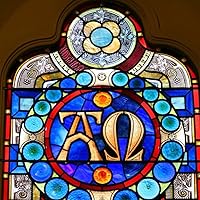
This story was all over the place. If I were the editor I would send it back for rewriting. There were parts that I liked, characters that I liked, but at times it seemed to meander pointlessly. I didn’t like all of the occult references. I wouldn’t recommend.
But I do love that cover!
But I do love that cover!
March 24, 2024
The world of a British book collector/buyer/seller can be as competetive and cutthroat as the world of a NYSE day trader. In this case it even includes murder!
Michael Fisk has spent his life collecting and selling rare books. One tipsy evening he befriends Sergent Wigan who escorts Fisk safely home. Inspired by Fisk's home Library Wigan becomes a bit of a bibliophile and pursues his own book collection as well as his friendship with Fisk. When Fisk is found dead, murdered in his own library, Wigan suspects another book collector/seller and attempts to go undercover in the antiquarian book trade in order to track down his friend's killer.
Written in an era before "Thriller" was an established genre this book possess a certain calm, almost the comfort of a cozy mystery. This was an inoffensive, very ordinary, mystery.
Michael Fisk has spent his life collecting and selling rare books. One tipsy evening he befriends Sergent Wigan who escorts Fisk safely home. Inspired by Fisk's home Library Wigan becomes a bit of a bibliophile and pursues his own book collection as well as his friendship with Fisk. When Fisk is found dead, murdered in his own library, Wigan suspects another book collector/seller and attempts to go undercover in the antiquarian book trade in order to track down his friend's killer.
Written in an era before "Thriller" was an established genre this book possess a certain calm, almost the comfort of a cozy mystery. This was an inoffensive, very ordinary, mystery.

May 5, 2023
This book got 3-stars from me for several different reasons not necessarily because of the story, but I learned some things of interest.
I learned a new word: bibliomystery = a story set mostly in a bookshop or library or if a major character is a bookseller or a librarian. This is such a book.
Author Farmer wrote a series of bibliomystery books of which this is one.
First published in 1956 it’s no surprise that some would find it ‘dated’. I happen to love ‘dated’, the language especially.
Sergeant Wigan befriends a gentleman, Michael Fisk, who happens to be a seller of rare books. Their friendship leads Wigan to develop an interest in the trade. When Fisk is found murdered Wigan is determined to find his murderer. A culprit is caught, tried, found guilty and set to be hanged, but Wigan is not convinced the right person has been caught so he sets about righting this injustice.
While this is no Agatha Christie, like the Christie mysteries, it offers several possible suspects right up to the end. I admit this was not an especially exciting read, but it wasn’t all bad either.
Author Farmer (I had not heard of before) was of special interest to me. Born in Kent in 1902 at age 21 he travelled to Winnipeg to work on an engineering project where he suffered a major accident. He would later travel widely throughout Canada and began submitting short stories to publications such as the Saturday Evening Post and Macleans which gained him some attention. Farmer returned to England in 1934 and in 1936 published a novel “Go West, Young Man” based on his life in Canada.
I learned a new word: bibliomystery = a story set mostly in a bookshop or library or if a major character is a bookseller or a librarian. This is such a book.
Author Farmer wrote a series of bibliomystery books of which this is one.
First published in 1956 it’s no surprise that some would find it ‘dated’. I happen to love ‘dated’, the language especially.
Sergeant Wigan befriends a gentleman, Michael Fisk, who happens to be a seller of rare books. Their friendship leads Wigan to develop an interest in the trade. When Fisk is found murdered Wigan is determined to find his murderer. A culprit is caught, tried, found guilty and set to be hanged, but Wigan is not convinced the right person has been caught so he sets about righting this injustice.
While this is no Agatha Christie, like the Christie mysteries, it offers several possible suspects right up to the end. I admit this was not an especially exciting read, but it wasn’t all bad either.
Author Farmer (I had not heard of before) was of special interest to me. Born in Kent in 1902 at age 21 he travelled to Winnipeg to work on an engineering project where he suffered a major accident. He would later travel widely throughout Canada and began submitting short stories to publications such as the Saturday Evening Post and Macleans which gained him some attention. Farmer returned to England in 1934 and in 1936 published a novel “Go West, Young Man” based on his life in Canada.

August 17, 2023
The introduction to this 1956 book says that it has long been a sought-after out-of-print volume, but I can’t imagine why. I was attracted to it by the “bookseller” in the title, being a lover of books about books. And in fact the setting—the rare book trade—was very interesting and earned this story its two stars. Rare book dealers, respectable and otherwise, and book “runners,” those who scour the landscape for books to feed the trade, comprise the bulk of the characters.
Sergeant Wigan is a policeman working in a London suburb; one night he encounters one of these bookmen and they strike up a friendship. So when his friend is murdered, he feels a personal interest in the case. He has been learning about rare books so he is temporarily assigned to the CID to help in the investigation. A suspect is soon charged but he doesn’t believe the man guilty, so he keeps digging into the business.
The author worked for a time as a policeman so the details of police procedures and office politics seem convincing. Unfortunately, as a write Bernard Farmer is plodding and clumsy. He explains, he summarizes, he tells us what to think. This book has been praised for its plotting, but I found many of the twists and turns wildly improbable, especially when supernatural elements come to be involved. The climactic scene of confession is just ridiculous.
It’s weird to claim that a book so full of verisimilitude in its details could be preposterous, but that was my experience of it. How I miss the greats of Golden Age mystery when I read a book like this!
Sergeant Wigan is a policeman working in a London suburb; one night he encounters one of these bookmen and they strike up a friendship. So when his friend is murdered, he feels a personal interest in the case. He has been learning about rare books so he is temporarily assigned to the CID to help in the investigation. A suspect is soon charged but he doesn’t believe the man guilty, so he keeps digging into the business.
The author worked for a time as a policeman so the details of police procedures and office politics seem convincing. Unfortunately, as a write Bernard Farmer is plodding and clumsy. He explains, he summarizes, he tells us what to think. This book has been praised for its plotting, but I found many of the twists and turns wildly improbable, especially when supernatural elements come to be involved. The climactic scene of confession is just ridiculous.
It’s weird to claim that a book so full of verisimilitude in its details could be preposterous, but that was my experience of it. How I miss the greats of Golden Age mystery when I read a book like this!

Read
September 13, 2023I read this because it opens with the acquisition of Keats' own copy of Endymion by the soon-to-be victim, and the body is found when the narrator drops by with a Dunsany first edition. Alas, neither has left much trace on the prose, which seems more defined by Farmer's own time as a policeman, clear to the extent of feeling distinctly pedestrian: "Sergeant Wigan had not before attended a trial for murder, but in his service in uniform as constable and sergeant he had 'been to court' (attended a court of summary jurisdiction) many hundreds of times; and he noted that procedures were in many respects similar, and were indeed based on common sense." Be still, my beating heart! It's interesting, though, to see the overlap with the last crime classic I read, Look To The Lady. Allingham may have been a far more interesting stylist, ready to take the story in stranger directions (and even her village called Sanctuary feels plausible next to Farmer's district of Sun), but both are equally aware of how unscrupulous wealthy collectors can be, and how, past a certain point, there's precious little the law can do about it: "Now, if I was you, I'd fix up that watch on The Spinning Heart without delay, or the Keats first, signed by author, will flit across the Atlantic before you can say Jack Robinson; and when next it turns up to public view it will be in the library of Silas K. Blooming Dough; and of course it can't possibly be the copy stolen from poor old Mike and sold by his murderer."
But is it being sold by his murderer? The upside of Farmer's previous job is that, as against the way a lot of fictional investigations work, he knows actual policing, and the limited options available to a sergeant, even one seconded for his specialist knowledge, when the decent but overly straightforward DI is sure he's got his man. The amount of evidence against the prime suspect is almost comical, but surely there's some significance to all those works on demonology the victim also owned, beyond leaving the reader curious about the moral compass of a man who wouldn't trade in mucky books ("They do any amount of harm, shoving some young man or woman down the road to moral degeneration") but once tried to summon the Devil Himself. Even here, though, as the occult increasingly overshadows the case, with rumours of diabolical manifestation and a terrible spectral bat, the writing remains so determinedly plain that no spell is ever cast. "At least Sir Manson had a name in the spiritualist world, and had investigated a famous haunted house where all kinds of violent phenomena had been encountered." Name the house, specify an incident, and that sentence could be suitably blood-curdling: "the famous Boscombe Manor case, with its ghostly throttling hands and terrible shrieks". As is, it's startlingly inert. Although in fairness, Sir Manson's companion Bruce is a very good dog. Him aside, though, the forces of law and order are all honest, conventional fellows, at worst a little too keen on following the rules, so you'll have no more luck finding a trace of character in them than the fiends of the abyss. The only exception to this maddeningly even world comes with the bookmen (and women), a cast of freaks, deviants and perfectly plausible killers, motivated by obsession (mostly either with rare volumes, or past slights in pursuit of same). I was naturally reminded of their successors in early Iain Sinclair, but the difference is that Driffield et al, eccentric as they may have been, needed a writer like Sinclair actively mythologising them to loom so large on the page - whereas these unsavoury specimens manage it even in the flat reports of a Farmer.
Those weirdos aside, the main interest I found was historical, especially after there was a mention of a QC and I was reminded that this whole business was taking place within the same vast reign that only ended last year. So you'll get a note like "Policemen's houses are not usually on the telephone" and realise, bloody hell, she saw the era of the landline as standard in, and she saw it out. The unique Keats is initially offered for sale at £300, which is of course only because it's hot - really it's worth as much as, ooh, a couple of grand! And of course the line "I think the pair of them would rob the British Museum if they thought they could get away with it" reads very differently now to even a couple of months back.
But is it being sold by his murderer? The upside of Farmer's previous job is that, as against the way a lot of fictional investigations work, he knows actual policing, and the limited options available to a sergeant, even one seconded for his specialist knowledge, when the decent but overly straightforward DI is sure he's got his man. The amount of evidence against the prime suspect is almost comical, but surely there's some significance to all those works on demonology the victim also owned, beyond leaving the reader curious about the moral compass of a man who wouldn't trade in mucky books ("They do any amount of harm, shoving some young man or woman down the road to moral degeneration") but once tried to summon the Devil Himself. Even here, though, as the occult increasingly overshadows the case, with rumours of diabolical manifestation and a terrible spectral bat, the writing remains so determinedly plain that no spell is ever cast. "At least Sir Manson had a name in the spiritualist world, and had investigated a famous haunted house where all kinds of violent phenomena had been encountered." Name the house, specify an incident, and that sentence could be suitably blood-curdling: "the famous Boscombe Manor case, with its ghostly throttling hands and terrible shrieks". As is, it's startlingly inert. Although in fairness, Sir Manson's companion Bruce is a very good dog. Him aside, though, the forces of law and order are all honest, conventional fellows, at worst a little too keen on following the rules, so you'll have no more luck finding a trace of character in them than the fiends of the abyss. The only exception to this maddeningly even world comes with the bookmen (and women), a cast of freaks, deviants and perfectly plausible killers, motivated by obsession (mostly either with rare volumes, or past slights in pursuit of same). I was naturally reminded of their successors in early Iain Sinclair, but the difference is that Driffield et al, eccentric as they may have been, needed a writer like Sinclair actively mythologising them to loom so large on the page - whereas these unsavoury specimens manage it even in the flat reports of a Farmer.
Those weirdos aside, the main interest I found was historical, especially after there was a mention of a QC and I was reminded that this whole business was taking place within the same vast reign that only ended last year. So you'll get a note like "Policemen's houses are not usually on the telephone" and realise, bloody hell, she saw the era of the landline as standard in, and she saw it out. The unique Keats is initially offered for sale at £300, which is of course only because it's hot - really it's worth as much as, ooh, a couple of grand! And of course the line "I think the pair of them would rob the British Museum if they thought they could get away with it" reads very differently now to even a couple of months back.

October 10, 2023
Not sure I would pay $10 as it looks to be priced today...But I did buy it for $1.99 and that was ok with me. It is dated but I enjoy that once in a while. Main focus was first edition books, a murder of man who dealt in them and a policeman who was introduced to the first edition world by the victim.

March 24, 2022
Am I missing something here?
According to Martin Edwards in the Introduction to this reprint, original copies of the novel are much sought after and the story has cult status among book lovers. Surely that can only be because of the huge amounts of information on book collecting, bookselling and arcane books which it contains, since it could hardly be said to have appeal for lovers of stylish writing, tight plotting and solid detective investigation.
The writing style is odd and simplistic, but not calculatedly so. It reminded me of the narration of Edgar Lustgarten's Scotland Yard true crime series shown on British TV years ago, a sort of flat pseudojournalese . The plot, concerning the murder of a bookman, also manages to drag in witchcraft, spiritualism and psychology, all very unconvincing and dull.
Almost everyone comes under suspicion and almost anyone could have committed the crime. By the time I reached the end, I really did not much care who the murderer was.
Plodding, dreary, and for me, one of the least interesting reads among the BLCC reprints.
Three stars for rarity value.
According to Martin Edwards in the Introduction to this reprint, original copies of the novel are much sought after and the story has cult status among book lovers. Surely that can only be because of the huge amounts of information on book collecting, bookselling and arcane books which it contains, since it could hardly be said to have appeal for lovers of stylish writing, tight plotting and solid detective investigation.
The writing style is odd and simplistic, but not calculatedly so. It reminded me of the narration of Edgar Lustgarten's Scotland Yard true crime series shown on British TV years ago, a sort of flat pseudojournalese . The plot, concerning the murder of a bookman, also manages to drag in witchcraft, spiritualism and psychology, all very unconvincing and dull.
Almost everyone comes under suspicion and almost anyone could have committed the crime. By the time I reached the end, I really did not much care who the murderer was.
Plodding, dreary, and for me, one of the least interesting reads among the BLCC reprints.
Three stars for rarity value.

March 9, 2023
This is another good example of reviving an older (here: 1956) mystery for the series of the British Library Crime Classics. I liked the setting amongst dealers of rare books and the positive example of Sgt. Wigan who can´t so easily be convinced by the guilt of an unpleasant rival of the dead bookseller. Soon not only he but several others from the book trade are involved in finding the real murderer. It was an exciting mystery on the whole.
Thanks to Poisoned Pen Press and Netgalley for an ARC ebook in exchange for an honest review.
Thanks to Poisoned Pen Press and Netgalley for an ARC ebook in exchange for an honest review.

July 12, 2023
3.5*
I found this to be a steady, if rather gloomy, plot. The lead character is engaging and well balanced unlike the rather tortured souls who often take the lead in a mystery novel. This is always a plus point for me.
The plot is very sad for much of the time and it is easy to imagine which side of the death penalty debate the author came down. This made for a very credible story for much of the time. Unfortunately there was a rather strange side plot involving the occult which just seemed unnecessarily sensational to me.
This is an extremely male-dominated book with female characters essentially restricted to minor roles with only one exception who was in all honesty rather pitiful.
I am glad I read the book but I do not imagine I will read it again.
I found this to be a steady, if rather gloomy, plot. The lead character is engaging and well balanced unlike the rather tortured souls who often take the lead in a mystery novel. This is always a plus point for me.
The plot is very sad for much of the time and it is easy to imagine which side of the death penalty debate the author came down. This made for a very credible story for much of the time. Unfortunately there was a rather strange side plot involving the occult which just seemed unnecessarily sensational to me.
This is an extremely male-dominated book with female characters essentially restricted to minor roles with only one exception who was in all honesty rather pitiful.
I am glad I read the book but I do not imagine I will read it again.
January 22, 2015
This is a strange tale, something in between a police procedural and a gothic story. It starts with a humble police sergeant developing an interest in rare books after striking up an unlikely friendship with a book dealer. When Sergeant Wigan's friend is found murdered, he is asked to help with the investigation. He meets several strange characters from the fringes of the rare book dealing world and begins to appreciate how ruthless book collectors can be. When the police arrest a suspect, St Wigan feels that they caught the wrong man. So he continues his own investigation among the bookdealers of London.
That is the police procedural aspect of the story. The Gothic aspect comes from the strange fascination with books about witchcraft, lurid stories about "raising Satan" and a couple of bizarre secondary characters, such as an unbalanced spinster who seems to have come straight out of Jane Eyre or Wuthering Heights. And of course, as this takes place in the England of about 1954, there is always the specter of the death penalty in the background, lending urgency to Sergeant Wigan's quest for justice.
An unusual read!
That is the police procedural aspect of the story. The Gothic aspect comes from the strange fascination with books about witchcraft, lurid stories about "raising Satan" and a couple of bizarre secondary characters, such as an unbalanced spinster who seems to have come straight out of Jane Eyre or Wuthering Heights. And of course, as this takes place in the England of about 1954, there is always the specter of the death penalty in the background, lending urgency to Sergeant Wigan's quest for justice.
An unusual read!

May 10, 2022
Utterly confusing book. Think Sherlock Holmes or Lord Peter Whimsey, but POV is Lestrade or Sugg. This plods on and on and on, introduces suspects in the last 20 pages when it indeed picks up pace. I'm utterly flabbergasted why this is touted as a classic.

March 7, 2023
A fascinating glimpse at the world of second hand bookdealers and ruthless book collectors willing to commit murder in order to obtain an out of print title in postwar London.
Cleverly plotted and full of unexpected twists and turns, this original whodunit kept me on the edge of my seat from start to finish with its sparkling dialogues and its terrific cast of exquisitely drawn characters. A truly delightful fictional journey that deserves to be enjoyed without any moderation whatsoever!
Many thanks to Poisoned Pen and Netgalley for this fabulous discovery!
Cleverly plotted and full of unexpected twists and turns, this original whodunit kept me on the edge of my seat from start to finish with its sparkling dialogues and its terrific cast of exquisitely drawn characters. A truly delightful fictional journey that deserves to be enjoyed without any moderation whatsoever!
Many thanks to Poisoned Pen and Netgalley for this fabulous discovery!

Read
December 27, 2025DNF 149/282
January 22, 2023
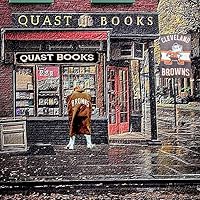
An entertaining bibliomystery loaded with plenty of nods & references to the world of book collecting.

July 8, 2023
"Some dealers and collectors have no conscience whatsoever ...
"Do you know, Sergeant, there are men and even women who
"would cheerfully kill me to get what I have found today?"
When Sergeant Wigan stops to escort a swaying reveler home at the end of his later shift, he is spun a tale of the ups and downs of a life spent collecting and selling rare books. His new companion, Michael Fisk, has been celebrating the acquisition of a signed copy of Keats's Endymion, and a trip to Fisk's library is enough to convince Wigan to begin his own collection. After developing a love for antiquarian books and a friendship with Fisk, Wigan is called upon by the C.I.D. when tragedy strikes and Fisk is found murdered in his library.
"Suspecting another book collector, seller, or agent of murdering his friend and stealing a precious volume, Wigan dives into the antiquarian book trade where pleasantries and a kind of collector's code mask simmering jealousies and ruthless desires."
~~back cover
I was disappointed in this book. 265 pages of agonizing retrospection, or meetings with people in the trade that don't advance the search at all. 95% of the action comes in the last couple of chapters, which means the previous 5% had to be pretty boring. And they were.
"Do you know, Sergeant, there are men and even women who
"would cheerfully kill me to get what I have found today?"
When Sergeant Wigan stops to escort a swaying reveler home at the end of his later shift, he is spun a tale of the ups and downs of a life spent collecting and selling rare books. His new companion, Michael Fisk, has been celebrating the acquisition of a signed copy of Keats's Endymion, and a trip to Fisk's library is enough to convince Wigan to begin his own collection. After developing a love for antiquarian books and a friendship with Fisk, Wigan is called upon by the C.I.D. when tragedy strikes and Fisk is found murdered in his library.
"Suspecting another book collector, seller, or agent of murdering his friend and stealing a precious volume, Wigan dives into the antiquarian book trade where pleasantries and a kind of collector's code mask simmering jealousies and ruthless desires."
~~back cover
I was disappointed in this book. 265 pages of agonizing retrospection, or meetings with people in the trade that don't advance the search at all. 95% of the action comes in the last couple of chapters, which means the previous 5% had to be pretty boring. And they were.

July 24, 2023
Did I wish to see who the culprit was? Yes. Did I also wish I were the type to just skip to the end and see how it played out without dragging myself through the story? Also, yes. This story was so very dry!

December 26, 2024
Sergeant Wigan’s hobby is collecting old books, a hobby he was introduced to by his friend Michael Fisk. So when Michael Fisk is murdered, Wigan is naturally very upset. But he comes to believe that the wrong man has been convicted of his friend’s murder, and sets out to find the real culprit. This is quite an entertaining mystery, with lots of detail about the rather dodgy antique book trade. Some book collectors (at any rate going by this book) are frighteningly ruthless in their pursuit of rarities. Sergeant Wigan is in the background for some of the story, as other people who want to catch the murderer do much of the investigating. It all gets a bit strange when we delve into the supernatural and the possibility of raising demons having something to do with it. I couldn’t really believe anyone would take that seriously, yet the Sergeant appears to. There are some very intense descriptions of the obviously terrified man convicted of the murder, and his despair as he waits for execution, and the atmosphere in the prison among those who wait with him. Although rather an odd book it was worth reading, I would read the others in this series if they ever become available.

June 18, 2026
Entertaining enough. British Library series editor Martin Edwards notes it was specifically selected for the 100th title republished in the BL's Classic Crime series because of its bookish subject matter, and the fact it is a cult classic amongst the book trade itself, and is itself now a sought after rare book which collectors fight over.
Easy to see why it has achieved this status: all the suspects are fanatical, thievish and thuggish antiquarian booksellers. The author himself was both a book collector and a policeman, so writes with authority. There are lots of in-jokes.
It's charming enough to be awarded three stars, and the basic material is good. Greater attention to pace and atmosphere, making better use of the set pieces, and sharper characterisation would have lifted this into the top class.
Easy to see why it has achieved this status: all the suspects are fanatical, thievish and thuggish antiquarian booksellers. The author himself was both a book collector and a policeman, so writes with authority. There are lots of in-jokes.
It's charming enough to be awarded three stars, and the basic material is good. Greater attention to pace and atmosphere, making better use of the set pieces, and sharper characterisation would have lifted this into the top class.

November 19, 2022
1954 One evening in Sun, Middlesex, Sergeant Jack Wigan looks after a drunk whereupon they become friends. When bookseller Michael Fisk is killed Wigan is seconded to the detective division to aid in the case because of his knowledge of the book trade learnt from Fisk.
An interesting mystery which took its time to become an enjoyable one.
An ARC was provided by the publisher via Netgalley in exchange for an honest review.
An interesting mystery which took its time to become an enjoyable one.
An ARC was provided by the publisher via Netgalley in exchange for an honest review.

July 9, 2026
Non c'è niente come un bel giallo classico per tenermi sveglia fino a tardi la sera. Questo poi, ambientato a Londra nel mondo dei librai che vendono edizioni rare, mi è sembrato particolarmente intrigante.

March 22, 2023
A murder mystery that centers around valuable book traders. The victim is murdered and some of his most prized books are missing. A man is convicted of the crime but our protagonist doesn't believe he did it. He starts to poke around and several people appear to have motives if for no other reason then they wanted the expensive books.
I liked the book market world but I couldn't really connect with any of the characters.
Death of a Bookseller was fine but I wouldn't recommend it.
I liked the book market world but I couldn't really connect with any of the characters.
Death of a Bookseller was fine but I wouldn't recommend it.

June 28, 2023
An interesting mystery taking place in the rare book industry. I like the fact that a police Sargent befriends a person who works in this area and tries his hand on it as well. When his friend is killed, he then goes further into this nutty world of book collecting.
Don’t want to give too much away - but suffice to say that it’s tough going to find evidence to find the murderer. And it also means that some in the book community need to step up and help as well. I liked the ending and they way it effected people at the end. Would love to have another mystery to read with Wigan in it… not sure I would be able to find it though. (Might have to go deep into the book collecting world.) :)
Don’t want to give too much away - but suffice to say that it’s tough going to find evidence to find the murderer. And it also means that some in the book community need to step up and help as well. I liked the ending and they way it effected people at the end. Would love to have another mystery to read with Wigan in it… not sure I would be able to find it though. (Might have to go deep into the book collecting world.) :)
Displaying 1 - 30 of 290 reviews