

What do you think?

The Feud: The Hatfields & McCoys: The True Story
For more than a century, the enduring feud between the Hatfields and the McCoys has been American shorthand for passionate, unyielding, and even violent confrontation. Yet despite numerous articles, books, television shows, and feature films, nobody has ever told the in-depth true story of this legendarily fierce—and far-reaching—clash in the heart of Appalachia. Drawing upon years of original research, including the discovery of previously lost and ignored documents and interviews with relatives of both families, bestselling author Dean King finally gives us the full, unvarnished tale, one vastly more enthralling than the myth.
Unlike previous accounts, King's begins in the mid-nineteenth century, when the Hatfields and McCoys lived side-by-side in relative harmony. Theirs was a hardscrabble life of farming and hunting, timbering and moonshining—and raising large and boisterous families—in the rugged hollows and hills of Virginia and Kentucky. Cut off from much of the outside world, these descendants of Scots-Irish and English pioneers spoke a language many Americans would find hard to understand. Yet contrary to popular belief, the Hatfields and McCoys were established and influential landowners who had intermarried and worked together for decades.
When the Civil War came, and the outside world crashed into their lives, family members were forced to choose sides. After the war, the lines that had been drawn remained-and the violence not only lived on but became personal. By the time the fury finally subsided, a dozen family members would be in the grave. The hostilities grew to be a national spectacle, and the cycle of killing, kidnapping, stalking by bounty hunters, and skirmishing between governors spawned a legal battle that went all the way to the United States Supreme Court and still influences us today.
Filled with bitter quarrels, reckless affairs, treacherous betrayals, relentless mercenaries, and courageous detectives, THE FEUD is the riveting story of two frontier families struggling for survival within the narrow confines of an unforgiving land. It is a formative American tale, and in it, we see the reflection of our own family bonds and the lengths to which we might go in order to defend our honor, our loyalties, and our livelihood.
Unlike previous accounts, King's begins in the mid-nineteenth century, when the Hatfields and McCoys lived side-by-side in relative harmony. Theirs was a hardscrabble life of farming and hunting, timbering and moonshining—and raising large and boisterous families—in the rugged hollows and hills of Virginia and Kentucky. Cut off from much of the outside world, these descendants of Scots-Irish and English pioneers spoke a language many Americans would find hard to understand. Yet contrary to popular belief, the Hatfields and McCoys were established and influential landowners who had intermarried and worked together for decades.
When the Civil War came, and the outside world crashed into their lives, family members were forced to choose sides. After the war, the lines that had been drawn remained-and the violence not only lived on but became personal. By the time the fury finally subsided, a dozen family members would be in the grave. The hostilities grew to be a national spectacle, and the cycle of killing, kidnapping, stalking by bounty hunters, and skirmishing between governors spawned a legal battle that went all the way to the United States Supreme Court and still influences us today.
Filled with bitter quarrels, reckless affairs, treacherous betrayals, relentless mercenaries, and courageous detectives, THE FEUD is the riveting story of two frontier families struggling for survival within the narrow confines of an unforgiving land. It is a formative American tale, and in it, we see the reflection of our own family bonds and the lengths to which we might go in order to defend our honor, our loyalties, and our livelihood.
10 pages, Audio CD
First published January 1, 2013
About the author
Dean King
75 books208 followersI like to read, wander cross-country, travel in cultures I don't understand, cycle, play squash, and I'm a foodie. But most of all I like to be in the throes of writing a book. This is invigorating work. The moment when the hard-won research combines with a bit of sweat and blood and occasionally a tear to become a fluid paragraph is like no other. What I hope to achieve is to suspend time and disbelief for the reader and carry her or him into another world, where they live more fully and in the moment.
Ratings & Reviews
Friends & Following
Create a free account to discover what your friends think of this book!
Community Reviews
Displaying 1 - 30 of 241 reviews

May 15, 2023
“Parts of the feud remain shrouded in mystery and probably always will. Still, this powerful true saga of love, lust, greed, and rage that ensnared three generations of two families on what was then an isolated and relatively lawless American mountain frontier is graphic enough. Its lessons are about what happens when society’s safeguards are absent or fall apart, when men – armed as they please – are left to their own devices to enforce ‘justice,’ and when family ties determine right and wrong and tribalism prevails. Our self-reliant, wilderness-dwelling forbears often had to grapple with a foe more potent and more relentless than external enemies: their own demons…”
- Dean King, The Feud: The Hatfields & McCoys, The True Story
History is full of feuding families.
Shakespeare used the tale of the 13th century Montagues and Capulets of Italy as the backdrop for his famous love story, Romeo and Juliet. In 17th century Scotland, Clan MacDonald offered hospitality to Clan Campbell at Glencoe, whereupon the Campbells proceeded to butcher the MacDonalds in their sleep. At this very moment, the United Kingdom’s House of Windsor is embroiled in a very public, very tedious intrafamily dispute between rival princes.
Here in the United States, we have the Hatfields and the McCoys.
For decades the families of Devil Anse Hatfield and Randall McCoy bludgeoned each other along the rugged border between Kentucky and West Virginia. As described by Dean King in The Feud, the Hatfields and McCoys presented a distinctly American take on the ancient tradition of warring tribes.
In this version, the participants wore their Sunday suits and grew long beards and posed for pictures with bandoliers of ammunition slung over their shoulders. There were gunfights, executions, kidnappings, and – of course – some star-crossed love affairs. Heavily armed and fueled by moonshine, the feud put a dozen family members into the boneyard, wounded others, and proved to be an enduring display of the nation’s most unfortunate values.
***
The Feud begins with an attempt to tease out the causes of the Hatfield-McCoy enmity. King notes at the outset that there was no single triggering event, but rather an accumulation of grievances, some big, some rather petty.
There was, of course, the divisions caused by the Civil War, between those who’d been Unionists and those who’d been secessionists. The whole of the feud played out against the backdrop of an unreconstructed country, still raw from its costliest war.
Stolen hogs also played a role, with Floyd Hatfield and Randolph McCoy arguing about the provenance of notch-eared pigs. When the matter went to trial, a Hatfield Justice of the Peace ruled for the Hatfields based on the testimony of a witness related to both families. Two McCoy brothers later killed that witness, but were acquitted on the grounds of self-defense.
The most obvious inflection point came in August 1882, on Kentucky’s Election Day. Rather than casting ballots, three McCoys fought a drunken Hatfield, killing him. Devil Anse organized a party of vigilantes who intercepted and murdered the three McCoys.
From there, it just got uglier.
***
The early going of The Feud is pretty slow. King has a lot of work to do in introducing us to these squabbling broods, and attempting to disentangle the intertwined family trees. There are a lot of characters involved, some with similar names, some with divided loyalties, some who have married their first cousins, and even though King provides genealogical charts and a running tally of the casualties, it can be hard to keep everyone straight. These initial chapters also cover a lot of ground in a hurry, carrying us from the 1860s to the 1880s.
Once King reaches the Election Day fight and its gory aftermath, The Feud really takes off. From there, the timeline is more condensed, there is a lot more action, and the pacing really improves.
***
Unsurprisingly, given the non-academic, non-world-historical nature of the Hatfields and the McCoys, The Feud is purely a narrative history. Having never read any of King’s books before, I found him to be a pretty good storyteller. The prose sometimes gets away from him, veering into overheated descriptions, but for the most part, it suits the material, which is inherently pulpy.
King also does a fine job with the characters, including ambitious patriarch Devil Anse, his exceptionally lethal son Cap, dubious lawman “Bad” Frank Phillips, and Deputy U.S. Marshal Dan Cunningham, who somehow lived to his nineties.
For all that, King’s chief achievement is in navigating a supremely convoluted, often poorly memorialized sequence of events with a measure of coherence. Unlike fiction, which – it is said – has to make sense, real life plotlines often unspool without any logic whatsoever. King has to deal with unfathomable decision-making, inexplicable twists, and a bit of anticlimax. Somehow, he manages to make sense of most of it, even the part where a Hatfield-McCoy legal case ended up before the United States Supreme Court.
***
The Feud’s best attribute is in the balance it achieves between its seedy, dime-store novel subject matter and its undeniable historicity. King clearly researched the heck out of this, and you can check his work by perusing 51-pages of annotated endnotes. Beyond the old letters, diaries, court transcripts, and newspaper stories, King talked to present-day family members to get their perspectives and oral histories. He also walked the grounds, which allows him to accurately evoke the geography, and even clear up an unlikely legend.
***
Most of the books I read are history books. Oftentimes, I choose titles that help me make sense of the world, by looking at how we got here, and why things are the way they are. But sometimes I just want to be entertained, or inspired, or thrilled, or scared. That’s why I have a dozen titles on the Titanic, and a like number about D-Day.
No intellectual imperatives drove me to pick up The Feud. I was simply in the mood for a hillbilly opera peopled by a cast of memorably unsavory figures willing to kill, maim, and terrify in defense of their hardscrabble kingdoms.
I certainly got what I wanted. Or what I thought I wanted.
It is a testament to King’s abilities that by the end of The Feud, I was more than ready to leave the bloody hollows behind. King achieves everything he set out to do, and the result is incredibly dispiriting to the soul. The men – and some of the women – in these pages are violent, unempathetic, and tempestuous. They are drunks; they are adulterers; they carry weapons without any sense of responsibility, and use them without any notion of consequences. They are driven by irresistible impulses to hurt at the slightest provocation.
Mostly, the Hatfields and McCoys were imbued with a ferocious, inchoate rage, one that fed on itself, becoming its own form of reasoning, its own impetus. Long after the original insults were forgotten, this red-faced, neck-veined, shrill-voiced anger kept the feud going.
It’s the same anger that surrounds us today.
- Dean King, The Feud: The Hatfields & McCoys, The True Story
History is full of feuding families.
Shakespeare used the tale of the 13th century Montagues and Capulets of Italy as the backdrop for his famous love story, Romeo and Juliet. In 17th century Scotland, Clan MacDonald offered hospitality to Clan Campbell at Glencoe, whereupon the Campbells proceeded to butcher the MacDonalds in their sleep. At this very moment, the United Kingdom’s House of Windsor is embroiled in a very public, very tedious intrafamily dispute between rival princes.
Here in the United States, we have the Hatfields and the McCoys.
For decades the families of Devil Anse Hatfield and Randall McCoy bludgeoned each other along the rugged border between Kentucky and West Virginia. As described by Dean King in The Feud, the Hatfields and McCoys presented a distinctly American take on the ancient tradition of warring tribes.
In this version, the participants wore their Sunday suits and grew long beards and posed for pictures with bandoliers of ammunition slung over their shoulders. There were gunfights, executions, kidnappings, and – of course – some star-crossed love affairs. Heavily armed and fueled by moonshine, the feud put a dozen family members into the boneyard, wounded others, and proved to be an enduring display of the nation’s most unfortunate values.
***
The Feud begins with an attempt to tease out the causes of the Hatfield-McCoy enmity. King notes at the outset that there was no single triggering event, but rather an accumulation of grievances, some big, some rather petty.
There was, of course, the divisions caused by the Civil War, between those who’d been Unionists and those who’d been secessionists. The whole of the feud played out against the backdrop of an unreconstructed country, still raw from its costliest war.
Stolen hogs also played a role, with Floyd Hatfield and Randolph McCoy arguing about the provenance of notch-eared pigs. When the matter went to trial, a Hatfield Justice of the Peace ruled for the Hatfields based on the testimony of a witness related to both families. Two McCoy brothers later killed that witness, but were acquitted on the grounds of self-defense.
The most obvious inflection point came in August 1882, on Kentucky’s Election Day. Rather than casting ballots, three McCoys fought a drunken Hatfield, killing him. Devil Anse organized a party of vigilantes who intercepted and murdered the three McCoys.
From there, it just got uglier.
***
The early going of The Feud is pretty slow. King has a lot of work to do in introducing us to these squabbling broods, and attempting to disentangle the intertwined family trees. There are a lot of characters involved, some with similar names, some with divided loyalties, some who have married their first cousins, and even though King provides genealogical charts and a running tally of the casualties, it can be hard to keep everyone straight. These initial chapters also cover a lot of ground in a hurry, carrying us from the 1860s to the 1880s.
Once King reaches the Election Day fight and its gory aftermath, The Feud really takes off. From there, the timeline is more condensed, there is a lot more action, and the pacing really improves.
***
Unsurprisingly, given the non-academic, non-world-historical nature of the Hatfields and the McCoys, The Feud is purely a narrative history. Having never read any of King’s books before, I found him to be a pretty good storyteller. The prose sometimes gets away from him, veering into overheated descriptions, but for the most part, it suits the material, which is inherently pulpy.
King also does a fine job with the characters, including ambitious patriarch Devil Anse, his exceptionally lethal son Cap, dubious lawman “Bad” Frank Phillips, and Deputy U.S. Marshal Dan Cunningham, who somehow lived to his nineties.
For all that, King’s chief achievement is in navigating a supremely convoluted, often poorly memorialized sequence of events with a measure of coherence. Unlike fiction, which – it is said – has to make sense, real life plotlines often unspool without any logic whatsoever. King has to deal with unfathomable decision-making, inexplicable twists, and a bit of anticlimax. Somehow, he manages to make sense of most of it, even the part where a Hatfield-McCoy legal case ended up before the United States Supreme Court.
***
The Feud’s best attribute is in the balance it achieves between its seedy, dime-store novel subject matter and its undeniable historicity. King clearly researched the heck out of this, and you can check his work by perusing 51-pages of annotated endnotes. Beyond the old letters, diaries, court transcripts, and newspaper stories, King talked to present-day family members to get their perspectives and oral histories. He also walked the grounds, which allows him to accurately evoke the geography, and even clear up an unlikely legend.
***
Most of the books I read are history books. Oftentimes, I choose titles that help me make sense of the world, by looking at how we got here, and why things are the way they are. But sometimes I just want to be entertained, or inspired, or thrilled, or scared. That’s why I have a dozen titles on the Titanic, and a like number about D-Day.
No intellectual imperatives drove me to pick up The Feud. I was simply in the mood for a hillbilly opera peopled by a cast of memorably unsavory figures willing to kill, maim, and terrify in defense of their hardscrabble kingdoms.
I certainly got what I wanted. Or what I thought I wanted.
It is a testament to King’s abilities that by the end of The Feud, I was more than ready to leave the bloody hollows behind. King achieves everything he set out to do, and the result is incredibly dispiriting to the soul. The men – and some of the women – in these pages are violent, unempathetic, and tempestuous. They are drunks; they are adulterers; they carry weapons without any sense of responsibility, and use them without any notion of consequences. They are driven by irresistible impulses to hurt at the slightest provocation.
Mostly, the Hatfields and McCoys were imbued with a ferocious, inchoate rage, one that fed on itself, becoming its own form of reasoning, its own impetus. Long after the original insults were forgotten, this red-faced, neck-veined, shrill-voiced anger kept the feud going.
It’s the same anger that surrounds us today.

February 18, 2018
I used to live in a itsy bitsy little town in southwestern Virginia, right in the little corner of the state that's bordered by West Virginia, Kentucky, and Tennessee. I no longer live there, but I do still live in the Appalachian Mountains, only in Pennsylvania now.
I bring this up because reading this book was both familiar and frustrating to me. A little Becky History: When I lived in Virginia, I lived less than an hour (by modern, car standards) from where the events in this book took place. I lived there from 2002-2004, and even then, it was pretty far from everything. The population was probably somewhere around 1,500, spread out over miles. The nearest McDonalds (for reference) was in the next county, 45 minutes away, by paved roads in a car at highway speed. Ditto Wal-Mart. There was one whole stoplight in town. There was a Hardee's, and that's where everyone hung out on Friday and Saturday nights, if they weren't having a bonfire in the woods somewhere. There was a Subway... inside the gas station. (Which I thought was so weird at the time. I've since seen it quite often and am used to it.) There were three main family names in the area. I stood in line at the gas station one day listening to a group of ladies discuss their relationships taking them from one family to another and back again as they married and remarried. A resident of the area couldn't throw a rock without hitting someone they were related to in some way. It was surreal to me, because I grew up in Jacksonville, Florida and had lived in both San Diego and San Francisco briefly prior to moving back to Florida, and then on to Virginia, and I had never experienced anything at all like this kind of culture. It was definitely a culture shock to me.
This was in 2002. A hundred and thirtyish years prior? I can't even imagine how secluded and isolated this region would have been, and the intermixing of a very small number of families so much greater. Crazy.
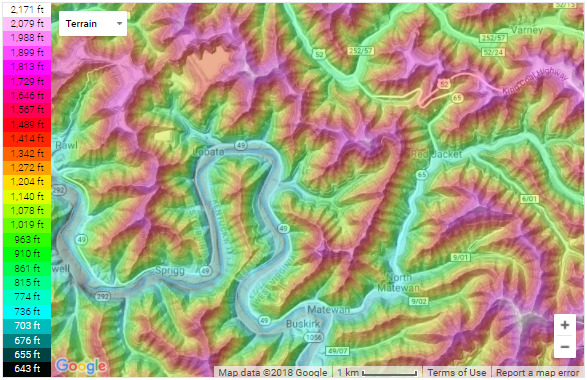
I mentioned before that this was both familiar and frustrating to me. Well, it was familiar because of all that above - my having lived in the area and traveled through some of the same areas mentioned in the book. (Wise, Virginia was specifically mentioned, and that was where the McDonalds was!) But it was frustrating because I didn't feel like the book did the area justice regarding how beautiful it is, and how secluded and isolated it would have been, especially how difficult it would have been to get around there. In the book everyone's just hopping around like they are teleporting from place to place, and it's only when outsiders, reporters or detectives, come that there's any semblance of distance or difficulty in getting around, and most of that is shown in the reluctance of the Hatfield clan to let strangers near them. But 20 or 40 or more miles through this kind of mountainous, forested terrain while on foot, or even horseback, would take a while. It's not just "Oh, we're gonna pop next door to Kentucky for some flour, BRB" kind of travel time. I mean, look at the variance on this topographical map. It ranges from 2000+ feet down to around 700ish feet.
It was also frustrating to me because, having lived practically next door, I kinda felt like I should have been able to live in this book and feel like I was there amongst these families. But I didn't, and that's pretty disappointing to me. For such a well-known feud, one that has entered popular culture as a Thing™ I feel like this book let me down somewhat.
Let me first start by saying that, of course I'd HEARD of the Hatfield/McCoy feud, but I didn't know anything about it really. So despite having lived practically a stone's throw away, I didn't pick up anything about it from proximity to where it happened. So I did find that this book was informative regarding the feud and the general facts. I found it interesting in a "can't look away from the train wreck" kind of way in that I was morbidly curious to know what happened.
But, that's about the extent of it. Over the last few years, I've been reading a lot more nonfiction, and enjoying the hell out of it. I find that well written nonfiction is just as enjoyable as fiction. But this... it just felt like the notes from the research were organized by year and event and then slapped together as a book. It didn't have a cohesive narrative, it was hard to follow, and despite covering the main events, I felt unsatisfied with it.
Let me just have a little rant here, because this REALLY bothered me. When introducing the characters, or people, since these were actual real humans and not fictional inventions, introduce them FULLY. If the man's name is Anderson, but he is called Anse, and then later that's revised to Devil Anse, TELL THE READER THAT UP FRONT.
Anse was intro'd as Anse Hatfield, then we got the story of how he started being called Devil Anse... and then over 150 pages later, there's a bounty for an "Anderson" Hatfield. Same dude.
Likewise, Randall was intro'd as Randall, but half a book later, he's interchangeably referred to as Randolph, which was SUPER confusing because Randolph is also his dead son's name. It was only by Googling that I actually learned that Randall was ALSO Randolph. That's just bad writing. If I don't know who is being referred to, how can I follow what is happening in the book?
There were also multiple people with the same names, so it was hard to follow based on that, and then there were times that the author wouldn't even USE names, which made things even harder to track. "The brothers" is not very helpful as a description when each family literally had like 13 kids. Come on now.
Also, I think there were times that the author just plain mixed people up. At one point, there was a "Johnse McCoy" mentioned, who, to my knowledge, didn't exist. Johnse Hatfield was Devil Anse's first born son, and was the only Johnse.
I did have to refer back to the family trees in the beginning of the book several times, even though it wasn't always helpful because it was only a selected portion of the families. It would have been nice to have an index of people involved, and their affiliations and loyalties.
Aside from being hard to follow, which I think would've been solved by more rigorous editing and maybe an index, I DID like the book. I thought that the use of foreshadowing was pretty well done, and kept my interest, so that's a plus, even though it was the most Stephen King, blatant style foreshadowing out there. (IE: "And that was the last time he saw her alive." etc)
I do feel like I have a better understanding of these families (though not a full one - I don't think that's possible now, if it ever was). The Hatfield tribe seemed vindictive and bloodthirsty, and unfortunately had enough political clout to get away with it. The McCoys definitely struck me as the victims, though not entirely innocent of blame. But their losses, and their ineffectual attempts at righting things legally, and attempting to then take matters into their own hands and still failing, made me feel rather bad for them. I couldn't imagine losing so many children at the hands of my neighbors, my IN LAWS, and absolutely nothing being done about it for decades. How crushing that must have been. Granted, they were not innocent, and I think had they been less proud, and less stubborn, many of these losses could have been avoided. But, hindsight is 20/20, as they say, and it's easy to throw couldas & shouldas around afterward. In the moment, and in a time of upheaval right after the Civil War, and without any kind of reliable law enforcement to turn to... I imagine it would be hard to NOT want to punish people who've hurt your family.
Ultimately, it's just sad to me that so many people had to die because of a disagreement stemming from being on opposite sides of the Civil War. These people lived together peacefully before the war, and afterward let bitterness over different ideals make them hate each other enough to kill... for DECADES.
It's scary to think of how easily that happens.
I bring this up because reading this book was both familiar and frustrating to me. A little Becky History: When I lived in Virginia, I lived less than an hour (by modern, car standards) from where the events in this book took place. I lived there from 2002-2004, and even then, it was pretty far from everything. The population was probably somewhere around 1,500, spread out over miles. The nearest McDonalds (for reference) was in the next county, 45 minutes away, by paved roads in a car at highway speed. Ditto Wal-Mart. There was one whole stoplight in town. There was a Hardee's, and that's where everyone hung out on Friday and Saturday nights, if they weren't having a bonfire in the woods somewhere. There was a Subway... inside the gas station. (Which I thought was so weird at the time. I've since seen it quite often and am used to it.) There were three main family names in the area. I stood in line at the gas station one day listening to a group of ladies discuss their relationships taking them from one family to another and back again as they married and remarried. A resident of the area couldn't throw a rock without hitting someone they were related to in some way. It was surreal to me, because I grew up in Jacksonville, Florida and had lived in both San Diego and San Francisco briefly prior to moving back to Florida, and then on to Virginia, and I had never experienced anything at all like this kind of culture. It was definitely a culture shock to me.
This was in 2002. A hundred and thirtyish years prior? I can't even imagine how secluded and isolated this region would have been, and the intermixing of a very small number of families so much greater. Crazy.
I mentioned before that this was both familiar and frustrating to me. Well, it was familiar because of all that above - my having lived in the area and traveled through some of the same areas mentioned in the book. (Wise, Virginia was specifically mentioned, and that was where the McDonalds was!) But it was frustrating because I didn't feel like the book did the area justice regarding how beautiful it is, and how secluded and isolated it would have been, especially how difficult it would have been to get around there. In the book everyone's just hopping around like they are teleporting from place to place, and it's only when outsiders, reporters or detectives, come that there's any semblance of distance or difficulty in getting around, and most of that is shown in the reluctance of the Hatfield clan to let strangers near them. But 20 or 40 or more miles through this kind of mountainous, forested terrain while on foot, or even horseback, would take a while. It's not just "Oh, we're gonna pop next door to Kentucky for some flour, BRB" kind of travel time. I mean, look at the variance on this topographical map. It ranges from 2000+ feet down to around 700ish feet.
It was also frustrating to me because, having lived practically next door, I kinda felt like I should have been able to live in this book and feel like I was there amongst these families. But I didn't, and that's pretty disappointing to me. For such a well-known feud, one that has entered popular culture as a Thing™ I feel like this book let me down somewhat.
Let me first start by saying that, of course I'd HEARD of the Hatfield/McCoy feud, but I didn't know anything about it really. So despite having lived practically a stone's throw away, I didn't pick up anything about it from proximity to where it happened. So I did find that this book was informative regarding the feud and the general facts. I found it interesting in a "can't look away from the train wreck" kind of way in that I was morbidly curious to know what happened.
But, that's about the extent of it. Over the last few years, I've been reading a lot more nonfiction, and enjoying the hell out of it. I find that well written nonfiction is just as enjoyable as fiction. But this... it just felt like the notes from the research were organized by year and event and then slapped together as a book. It didn't have a cohesive narrative, it was hard to follow, and despite covering the main events, I felt unsatisfied with it.
Let me just have a little rant here, because this REALLY bothered me. When introducing the characters, or people, since these were actual real humans and not fictional inventions, introduce them FULLY. If the man's name is Anderson, but he is called Anse, and then later that's revised to Devil Anse, TELL THE READER THAT UP FRONT.
Anse was intro'd as Anse Hatfield, then we got the story of how he started being called Devil Anse... and then over 150 pages later, there's a bounty for an "Anderson" Hatfield. Same dude.
Likewise, Randall was intro'd as Randall, but half a book later, he's interchangeably referred to as Randolph, which was SUPER confusing because Randolph is also his dead son's name. It was only by Googling that I actually learned that Randall was ALSO Randolph. That's just bad writing. If I don't know who is being referred to, how can I follow what is happening in the book?
There were also multiple people with the same names, so it was hard to follow based on that, and then there were times that the author wouldn't even USE names, which made things even harder to track. "The brothers" is not very helpful as a description when each family literally had like 13 kids. Come on now.
Also, I think there were times that the author just plain mixed people up. At one point, there was a "Johnse McCoy" mentioned, who, to my knowledge, didn't exist. Johnse Hatfield was Devil Anse's first born son, and was the only Johnse.
I did have to refer back to the family trees in the beginning of the book several times, even though it wasn't always helpful because it was only a selected portion of the families. It would have been nice to have an index of people involved, and their affiliations and loyalties.
Aside from being hard to follow, which I think would've been solved by more rigorous editing and maybe an index, I DID like the book. I thought that the use of foreshadowing was pretty well done, and kept my interest, so that's a plus, even though it was the most Stephen King, blatant style foreshadowing out there. (IE: "And that was the last time he saw her alive." etc)
I do feel like I have a better understanding of these families (though not a full one - I don't think that's possible now, if it ever was). The Hatfield tribe seemed vindictive and bloodthirsty, and unfortunately had enough political clout to get away with it. The McCoys definitely struck me as the victims, though not entirely innocent of blame. But their losses, and their ineffectual attempts at righting things legally, and attempting to then take matters into their own hands and still failing, made me feel rather bad for them. I couldn't imagine losing so many children at the hands of my neighbors, my IN LAWS, and absolutely nothing being done about it for decades. How crushing that must have been. Granted, they were not innocent, and I think had they been less proud, and less stubborn, many of these losses could have been avoided. But, hindsight is 20/20, as they say, and it's easy to throw couldas & shouldas around afterward. In the moment, and in a time of upheaval right after the Civil War, and without any kind of reliable law enforcement to turn to... I imagine it would be hard to NOT want to punish people who've hurt your family.
Ultimately, it's just sad to me that so many people had to die because of a disagreement stemming from being on opposite sides of the Civil War. These people lived together peacefully before the war, and afterward let bitterness over different ideals make them hate each other enough to kill... for DECADES.
It's scary to think of how easily that happens.

April 27, 2024
Murder, inbreeding and killing: that pretty much sums up the Hatfields & McCoys. Whatever you think you know about these famous Kentuckian and West Virginian families probably only scratches the surface.
It's hard to believe this public feud lasted for three decades and an estimated 60 people were killed - most of them not members of either family (a lot of shots went wide). It isn't 100% certain what started the feud, but it likely began when each family took an opposing side in the Civil War. Post-war slights like property disputes and plain old revenge escalated hostilities. Considering the period and location, there are a lot of missing facts filled in with hearsay and mythology... but the stories are damn juicy.
Appalachian stories never cease to fascinate me, and at the time, the notoriety of this feud was big enough to make national headlines. It must've been something to see, the times of Wild West Virginia (I'm not sure those times are over yet).
It's hard to believe this public feud lasted for three decades and an estimated 60 people were killed - most of them not members of either family (a lot of shots went wide). It isn't 100% certain what started the feud, but it likely began when each family took an opposing side in the Civil War. Post-war slights like property disputes and plain old revenge escalated hostilities. Considering the period and location, there are a lot of missing facts filled in with hearsay and mythology... but the stories are damn juicy.
Appalachian stories never cease to fascinate me, and at the time, the notoriety of this feud was big enough to make national headlines. It must've been something to see, the times of Wild West Virginia (I'm not sure those times are over yet).

May 17, 2013
(This review previously appeared in the Historical Novel Review) Within the last year, we’ve been treated to Hollywood’s rendition of the most famous family feud in American history – The Hatfields and the McCoys. It was a long, drawn-out, bloody affair and made for great stage drama. But Dean King’s The Feud sets the story straight. This well-researched, scholarly account of the infamous Hatfields/McCoys brings the affair the sort of professional scrutiny it has long needed. Virgil Carrington Jones’s book The Hatfields and the McCoys, first published in 1948, was an excellent first effort, but King, author of the bestselling Skeletons on the Zahara (Back Bay, 2005), has taken the country’s most famous feud light years beyond that.
King meticulously pieces together, through records and oral history, the origins of the quarrel and shows that there was far more to it than just a stolen pig, as some accounts would have it. What King does is bring flesh and sinew, blood and passion to ancient county records, and breathes life and color into old family tales. No matter what you knew, before reading The Feud, you will find your opinions transformed, sometimes wrenchingly so.
My only criticism is that there is sometimes too much information provided, information that does not always seem germane to the topic. But, in the final analysis, if you are interested in the Hatfield & McCoy debacle, The Feud should be your first stop.
King meticulously pieces together, through records and oral history, the origins of the quarrel and shows that there was far more to it than just a stolen pig, as some accounts would have it. What King does is bring flesh and sinew, blood and passion to ancient county records, and breathes life and color into old family tales. No matter what you knew, before reading The Feud, you will find your opinions transformed, sometimes wrenchingly so.
My only criticism is that there is sometimes too much information provided, information that does not always seem germane to the topic. But, in the final analysis, if you are interested in the Hatfield & McCoy debacle, The Feud should be your first stop.

November 12, 2018
----------GENERAL----------
1. The genealogies and map at the beginning are crucial. May want to bookmark; I flipped back constantly. A reminder—Hatfields are mostly of Logan County, West Virginia, and McCoys are mostly of Pike County, Kentucky. Counties are separated by the Tug River, but really, members from both families live on both sides. Interestingly enough, the two patriarch of the families, Randall McCoy and Devil Anse Hatfield (remember their names) fought together in the Confederacy, and were known companions.
“The families were on good terms with each other. In fact, tug valley dwellers were so intertwined that in 1849 they petitioned to move the virginia-kentucky line so that the entire valley would lie within virginia. ‘The present line,’ they noted, ‘divides neighborhoods, friends, and relations.’ Among the signers were more than a dozen McCoys and Hatfields.”
2. It’s an extremely well-cited book and the author sources from both Hatfield & McCoy family sources equally.
2. I now believe the controversial JD VANCE (LINK) when he says he’s descended from the Hatfields (the surname Vance is all over the place).
3. I knew there was intermarrying, but my god, it’s hard to tell the families apart there’s so much intermarriage.
4. So. Much. Incest.
5. The names. These people name their poor children things like Pharmer, Tennis, and Sink.
6. For some reason I felt a bit more emotionally connected to the Hatfields—maybe because I disliked Randall so strongly?—but I have to admit, they seem to be the real instigators here. Hatfields attack, and then they re-attack to prevent more attacks. The McCoys are just reacting to their shenanigans, not starting things. But Devil Anse seems to really love his family members, whereas Randall just seems to be defending his own honour.
7. A fun fact: genetic testing reveals that the McCoys had a rare hereditary disease called von Hippel-Landau disease (VHL) which resulted in tumors on the adrenal gland, giving them crazy tempers (probably all that inbreeding honestly).
----------TIMELINE----------
There is SO much information in this book but I wanted to give a brief description of the major events because I feel like most people don't know those kinds of details about the feud.
>> Three main events led to the feud: (1) the murder of Harmon McCoy (brother of Randall) at the end of the Civil War in December 1864; (2) when Randall and Floyd Hatfield (first cousin of Devil Anse on both sides) each claimed an escaped group of hogs and accused the other of stealing them (Floyd Hatfield won), and (3) the star-crossed love affair of Johnse (pronounced “Joncee”) Hatfield (son of Devil Anse) and Roseanna McCoy (daughter of Randall).
>> The Star-Crossed Lovers. The first two are relatively self-explanatory. As for the love affair: Johnse Hatfield (son of Devil Anse) took a shine to Roseanna McCoy (Randall’s daughter) and they hung out in the mountains together all day against their parents’ wishes. Then they rode to his parents’ home, and by then it was too late and Roseanna would have to stay the night. In the morning, Johnse wanted to marry her, but Devil Anse refused (out of stubbornness, apparently).
Randall didn’t find out where his daughter was for another month, by which time she and Johnse had been “living in sin” for weeks— unmarried but sleeping in the same bed (but can I point out this bed was in the same room as Johnse’s parents and the rest of the family? How much “sin” could they possibly have got up to?). Furious—as a matter of family honor, not concern for his daughter—Randall demanded that she come home. She refused. So Randall issued an ultimatum: Roseanna had to leave, or he would come get her and kill anyone in his way. Knowing it would start a feud if she refused after that declaration, she came home— but her father and brothers never spoke to her again.
When she realized she was pregnant by Johnse (again, HOW), she fled to her kindly aunt’s house. Johnse was desperate to see her again once he had learned she had left her parents’ house, but a warrant had issued for his arrest in Kentucky (thanks to Roseanna’s brothers who had friend in high places, and who were deputized to arrest him if they found him). The brothers come upon the couple making love and arrest him.
Alarmed about what they would do to Johnse, Roseanna stole a horse, rode it bareback through the mountains while several months pregnant, crossed the Tug River, and alerted Devil Anse, who raised up a group of armed Hatfields to get Johnse back.
Johnse was released and there was no violence, but the tensions were rising.
Roseanna gave birth to a child, Sally, who died of illness several months later. After grieving, she left to Pikeville to help relatives care for their children. Johnse followed her there and tried to get her to marry him, but she had had enough of the chaotic tragedy, and asked him to leave. They never saw each other again. (He ended up marrying Nancy McCoy, who— wait for it— was the fetus inside of Harmon McCoy’s wife when Harmon was killed at the end of the Civil War.)
>> Election Day Massacre. The real start of the war began in 1882, on Election Day, when everyone was gathered at the church on the Kentucky side of the Tug Fork. A dispute over a debt between Bad ‘Lias Hatfield (Devil Anse’s first cousin once removed) and Tolbert McCoy (Randall’s son) ended up with a fight between Ellison Hatfield (Devil Anse’s brother) and Tolbert, along with Tolbert’s younger brothers Pharmer and Bill. Ellison died, and Tolbert, Pharmer, and their other brother Bud (who looked so much like Bill that people thought he’d done it; Bud kept quiet about his innocence to protect his little brother) were dragged across the river and shot execution-style. (15-year-old Bill, whose brother died to protect him, either went a little crazy, then took sick and died not too much later, or he got the fuck out of Dodge like a sensible person and lived on in Washington state).
>> New Year’s Day Massacre. After some snitchin’ in the Hatfield family about a plan to kill Randall, Cap (Devil Anse’s son) and his friend beat the two snitching women (a mother and daughter—mother was actually born a McCoy) and left them for dead. They survived, but the mother’s brother, Jeff (a McCoy) came for revenge and was killed by Cap.
Then- for reasons I can’t really tell (possibly to prevent Randall from going after them?) because these people be crazy—the Hatfields attacked Randall and his family at night on New Year’s Day, killing his daughter Alifair and his son Calvin, and beating Randall’s wife Sally so badly she could barely walk. Roseanna McCoy- possibly from shock or grief at the news- dies shortly thereafter (she’s miles away in Pikeville at the time).
The McCoys obviously chase after the Hatfields for that and end up killing one of them and capturing several others, bringing them to stand trial for the murders of Tolbert, Pharmer, and Bud McCoy. Their cases would work its way up to the Supreme Court (Mahon v. Justice).
The Hatfields that stood trial mostly got life sentences, except Cotton Top Mounts (the illegitimate child of two first cousins, and a nephew of Devil Anse) who was hanged. Johnse and Cap are two of the Hatfields sent to jail, but Cap escaped and became a lawyer (in those days, apparently, a murder conviction didn’t prevent you from becoming a lawyer lol). As for Johnse, a few years into his sentence, he would save the prison warden’s life when an inmate attacked him. That, along with a letter signed by the McCoys asking for Johnse’s pardon (they were finally ready to put the feud behind them) ended up getting him released.
>> The Aftermath. Two of the Hatfield boys are killed after that, but the rest of Devil Anse’s children seem to turn out just fine. Johnse became a land agent for a coal company. After Cap’s wife Nan (who also rode a horse and shot a gun better than he did) taught him to read, Cap started a law firm with his blind son Coleman, and they were eventually joined by Coleman’s daughter Aileen, who became one of the first female practicing attorneys in West Virginia. Another son became a wealthy merchant, another became a doctor, and a third a sheriff.
In 1998, Bo McCoy (a minister from Waycross, Georgia) initiated a reconciliation. Over a thousand descendents of the two families came to have a mutual family reunion in the Tug Fork Valley that has since happened every year. In 2003, Reo Hatfield and Bo and Ron McCoy signed an official peace treaty in the wake of the 9/11 attacks.
1. The genealogies and map at the beginning are crucial. May want to bookmark; I flipped back constantly. A reminder—Hatfields are mostly of Logan County, West Virginia, and McCoys are mostly of Pike County, Kentucky. Counties are separated by the Tug River, but really, members from both families live on both sides. Interestingly enough, the two patriarch of the families, Randall McCoy and Devil Anse Hatfield (remember their names) fought together in the Confederacy, and were known companions.
“The families were on good terms with each other. In fact, tug valley dwellers were so intertwined that in 1849 they petitioned to move the virginia-kentucky line so that the entire valley would lie within virginia. ‘The present line,’ they noted, ‘divides neighborhoods, friends, and relations.’ Among the signers were more than a dozen McCoys and Hatfields.”
2. It’s an extremely well-cited book and the author sources from both Hatfield & McCoy family sources equally.
2. I now believe the controversial JD VANCE (LINK) when he says he’s descended from the Hatfields (the surname Vance is all over the place).
3. I knew there was intermarrying, but my god, it’s hard to tell the families apart there’s so much intermarriage.
4. So. Much. Incest.
5. The names. These people name their poor children things like Pharmer, Tennis, and Sink.
6. For some reason I felt a bit more emotionally connected to the Hatfields—maybe because I disliked Randall so strongly?—but I have to admit, they seem to be the real instigators here. Hatfields attack, and then they re-attack to prevent more attacks. The McCoys are just reacting to their shenanigans, not starting things. But Devil Anse seems to really love his family members, whereas Randall just seems to be defending his own honour.
7. A fun fact: genetic testing reveals that the McCoys had a rare hereditary disease called von Hippel-Landau disease (VHL) which resulted in tumors on the adrenal gland, giving them crazy tempers (probably all that inbreeding honestly).
----------TIMELINE----------
There is SO much information in this book but I wanted to give a brief description of the major events because I feel like most people don't know those kinds of details about the feud.
>> Three main events led to the feud: (1) the murder of Harmon McCoy (brother of Randall) at the end of the Civil War in December 1864; (2) when Randall and Floyd Hatfield (first cousin of Devil Anse on both sides) each claimed an escaped group of hogs and accused the other of stealing them (Floyd Hatfield won), and (3) the star-crossed love affair of Johnse (pronounced “Joncee”) Hatfield (son of Devil Anse) and Roseanna McCoy (daughter of Randall).
>> The Star-Crossed Lovers. The first two are relatively self-explanatory. As for the love affair: Johnse Hatfield (son of Devil Anse) took a shine to Roseanna McCoy (Randall’s daughter) and they hung out in the mountains together all day against their parents’ wishes. Then they rode to his parents’ home, and by then it was too late and Roseanna would have to stay the night. In the morning, Johnse wanted to marry her, but Devil Anse refused (out of stubbornness, apparently).
Randall didn’t find out where his daughter was for another month, by which time she and Johnse had been “living in sin” for weeks— unmarried but sleeping in the same bed (but can I point out this bed was in the same room as Johnse’s parents and the rest of the family? How much “sin” could they possibly have got up to?). Furious—as a matter of family honor, not concern for his daughter—Randall demanded that she come home. She refused. So Randall issued an ultimatum: Roseanna had to leave, or he would come get her and kill anyone in his way. Knowing it would start a feud if she refused after that declaration, she came home— but her father and brothers never spoke to her again.
When she realized she was pregnant by Johnse (again, HOW), she fled to her kindly aunt’s house. Johnse was desperate to see her again once he had learned she had left her parents’ house, but a warrant had issued for his arrest in Kentucky (thanks to Roseanna’s brothers who had friend in high places, and who were deputized to arrest him if they found him). The brothers come upon the couple making love and arrest him.
Alarmed about what they would do to Johnse, Roseanna stole a horse, rode it bareback through the mountains while several months pregnant, crossed the Tug River, and alerted Devil Anse, who raised up a group of armed Hatfields to get Johnse back.
Johnse was released and there was no violence, but the tensions were rising.
Roseanna gave birth to a child, Sally, who died of illness several months later. After grieving, she left to Pikeville to help relatives care for their children. Johnse followed her there and tried to get her to marry him, but she had had enough of the chaotic tragedy, and asked him to leave. They never saw each other again. (He ended up marrying Nancy McCoy, who— wait for it— was the fetus inside of Harmon McCoy’s wife when Harmon was killed at the end of the Civil War.)
>> Election Day Massacre. The real start of the war began in 1882, on Election Day, when everyone was gathered at the church on the Kentucky side of the Tug Fork. A dispute over a debt between Bad ‘Lias Hatfield (Devil Anse’s first cousin once removed) and Tolbert McCoy (Randall’s son) ended up with a fight between Ellison Hatfield (Devil Anse’s brother) and Tolbert, along with Tolbert’s younger brothers Pharmer and Bill. Ellison died, and Tolbert, Pharmer, and their other brother Bud (who looked so much like Bill that people thought he’d done it; Bud kept quiet about his innocence to protect his little brother) were dragged across the river and shot execution-style. (15-year-old Bill, whose brother died to protect him, either went a little crazy, then took sick and died not too much later, or he got the fuck out of Dodge like a sensible person and lived on in Washington state).
>> New Year’s Day Massacre. After some snitchin’ in the Hatfield family about a plan to kill Randall, Cap (Devil Anse’s son) and his friend beat the two snitching women (a mother and daughter—mother was actually born a McCoy) and left them for dead. They survived, but the mother’s brother, Jeff (a McCoy) came for revenge and was killed by Cap.
Then- for reasons I can’t really tell (possibly to prevent Randall from going after them?) because these people be crazy—the Hatfields attacked Randall and his family at night on New Year’s Day, killing his daughter Alifair and his son Calvin, and beating Randall’s wife Sally so badly she could barely walk. Roseanna McCoy- possibly from shock or grief at the news- dies shortly thereafter (she’s miles away in Pikeville at the time).
The McCoys obviously chase after the Hatfields for that and end up killing one of them and capturing several others, bringing them to stand trial for the murders of Tolbert, Pharmer, and Bud McCoy. Their cases would work its way up to the Supreme Court (Mahon v. Justice).
The Hatfields that stood trial mostly got life sentences, except Cotton Top Mounts (the illegitimate child of two first cousins, and a nephew of Devil Anse) who was hanged. Johnse and Cap are two of the Hatfields sent to jail, but Cap escaped and became a lawyer (in those days, apparently, a murder conviction didn’t prevent you from becoming a lawyer lol). As for Johnse, a few years into his sentence, he would save the prison warden’s life when an inmate attacked him. That, along with a letter signed by the McCoys asking for Johnse’s pardon (they were finally ready to put the feud behind them) ended up getting him released.
>> The Aftermath. Two of the Hatfield boys are killed after that, but the rest of Devil Anse’s children seem to turn out just fine. Johnse became a land agent for a coal company. After Cap’s wife Nan (who also rode a horse and shot a gun better than he did) taught him to read, Cap started a law firm with his blind son Coleman, and they were eventually joined by Coleman’s daughter Aileen, who became one of the first female practicing attorneys in West Virginia. Another son became a wealthy merchant, another became a doctor, and a third a sheriff.
In 1998, Bo McCoy (a minister from Waycross, Georgia) initiated a reconciliation. Over a thousand descendents of the two families came to have a mutual family reunion in the Tug Fork Valley that has since happened every year. In 2003, Reo Hatfield and Bo and Ron McCoy signed an official peace treaty in the wake of the 9/11 attacks.
June 12, 2013
I decided to check it out because of a good review. I figured I would just skim because it is not really up my alley. However, it was very interesting and it felt well researched, so I read the whole thing including notes. It is confusing because there are so many people to keep track of and the names don't match as neatly as you would think from feuding familes, but if you just follow the various "plots" it is intriguing to see what life was like at the time.

February 7, 2013
I won this book from Goodreads Book Giveaway. I love history and the story of the Hatfields and the McCoys which many books have been written. Mr King does a great service to the story of these two feuding families by clarifying and clearing up many of the stories and legends that surround this infamous time in our history. It is amazing before the Civil War the families chose to marry between the families but after the Civil War grudges and perceived slights to one another began to occur. These slights and grudges turned into monumental battles leading to a horrific amount of bloodshed. Giving new meaning to pioneer and mountain justice leaving law enforcement no legs to stand on as each side executed one another with a few innocent and not so innocent bystanders caught in the cross hairs. Thank goodness for the provided family trees provided to keep some of the minor players straight on where they fell in the family trees. This story is far from a simple theft of a pig or that these people were considered hillbillies. Far from it the Hatfields had a timber operation and the McCoys ended up in the coal business. They knew how to work the political and judicial system for the most part it worked in the Hatfields favor. Only a handful of the participants ever saw jail time and only one was hung for his part in the deaths. Amazing historical research with the help of both families and historical records that have never before been seen that help dispel many of the myths and why they became so legendary. This book is a must have for Hatfield & McCoy reference and to the history of the Appalachia and its people. I know I will be adding a copy to my library.

July 28, 2018
Ummm, this book is pretty amazing. It's hard to make a story like this boring (my....god....) but King certainly pushes the drama into a page turner. Until about 70% through, then it gets a little slow with some legal mumbo jumbo, but whatever, it was still captivating.
Here are my takeaways, in no particular order:
1. Holy heck, these people were bad ass.
2. Back in the day guns were really really inaccurate.
3. The amount of people named the same confused the heck out of me, but when the book started explaining the press kept getting everything wrong because everyone was named the same, I felt better.
4. A bit of a reminder into how young our country is with regard to generations of families, war, and building communities and cities in the US.
5. Bounty hunters! Moonshiners! Bootleggers! Gunslingers! I was partly mortified by what I read and really really entranced!
I liked the pictures and details given to the author directly from family members. I think a bit more time on digging into and explaining a few more characters would have brought this whole thing to life. The ending was abrupt. But I still recommend this, a very well researched and detailed, exciting account.
Here are my takeaways, in no particular order:
1. Holy heck, these people were bad ass.
2. Back in the day guns were really really inaccurate.
3. The amount of people named the same confused the heck out of me, but when the book started explaining the press kept getting everything wrong because everyone was named the same, I felt better.
4. A bit of a reminder into how young our country is with regard to generations of families, war, and building communities and cities in the US.
5. Bounty hunters! Moonshiners! Bootleggers! Gunslingers! I was partly mortified by what I read and really really entranced!
I liked the pictures and details given to the author directly from family members. I think a bit more time on digging into and explaining a few more characters would have brought this whole thing to life. The ending was abrupt. But I still recommend this, a very well researched and detailed, exciting account.

April 19, 2025
Audiobook

March 7, 2013
I won through Goodreads Giveaway. Not only did I enjoy but my husband did also.

Read
June 8, 2013Too confusing to keep track of so many people with the same names. I gave up and watched the movie.

June 26, 2023
After the American Civil War, a feud flared between the Hatfields and the McCoys, once peaceable neighbors, that lasted for decades and led to much death and destruction in their community.
Though the Hatfields and the McCoys are probably what spring to one's mind when one thinks of feuds, I didn't know much about the actual events of it. This book lays things out in an orderly manner, using sources from both sides to tell the tale. It was an astonishing story and I liked learning about the culture of the remote mountains in which the families lived.
However, I did think the writing was somewhat dry and had a lot of trouble keeping the many participants straight despite the author's best interests - a glossary would have been helpful. I also wished we learned more about those who crossed battle lines - so to speak - and what convinced them to switch sides in this tale of excessive family loyalty.
Though the Hatfields and the McCoys are probably what spring to one's mind when one thinks of feuds, I didn't know much about the actual events of it. This book lays things out in an orderly manner, using sources from both sides to tell the tale. It was an astonishing story and I liked learning about the culture of the remote mountains in which the families lived.
However, I did think the writing was somewhat dry and had a lot of trouble keeping the many participants straight despite the author's best interests - a glossary would have been helpful. I also wished we learned more about those who crossed battle lines - so to speak - and what convinced them to switch sides in this tale of excessive family loyalty.
December 16, 2013
I thought this was a really well researched and written book about the Hatfields and McCoys. Naturally the early history and some of the stories can be skeptical as record keeping wasn't the best in that area during the time but regardless King made it as inclusive and factual as possible. I enjoyed some of the side-stories about key characters involved in the feuding as it made it more enjoyable. I did find it difficult at times to figure out who certain people were as the inner marrying between the two families and the same or similar names didn't help, but the book I read had family trees with breakdowns during certain chapters with who was killed, injured or married which really helped. The same with the maps of the areas as creeks and ridges are constantly mentioned. Overall this was a solid read about the history of The Feud.

May 16, 2013
This book reminded me of the Smoky Mountains in Tennessee (although it doesn't take place there) and this 10 minute tv show that used to run in the mornings before the local news called The Heartland Series. That's why I chose to read it in the first place. Well, that's also the best part about it - the intimate descriptions of mountain life back in the day.
As for the feud itself, I wasn't captivated. There are some complex characters involved, but I agree with other reviewers that the relations between people were challenging to follow without repeatedly consulting the family trees in the front of the book. Since I was reading this more out of nostalgia for the mountains than for a true understanding of what occurred between these people, I couldn't be bothered.
As for the feud itself, I wasn't captivated. There are some complex characters involved, but I agree with other reviewers that the relations between people were challenging to follow without repeatedly consulting the family trees in the front of the book. Since I was reading this more out of nostalgia for the mountains than for a true understanding of what occurred between these people, I couldn't be bothered.

June 19, 2013
Truly awesome factual account of the notorious Hatfield-McCoy feud. King has done an enormous amount of research and put it all together in a very readable style. Filled with brutal killings and infighting, moonshining, intimidation, intermarriage, torture and murder, King reveals the facts of how the feud began and spanned decades in the wilds of the West Virginia/Kentucky border during the later decades of the 19th century. I appreciated the family charts he provided, as there were so many characters to follow, many had similar or the same names. Thrilling, heartbreaking, dark, and riveting, it was hard to put down. Highly recommend it.

June 19, 2013
It's amazing how the Hatfield and McCoy feud has worked itself into the lexicon of today without much understanding of what actually occurred. This book was an interesting, well researched look at the famous feud. For me, the strength of this book was how the author captured the unique time and place (after the civil war in the Appalachian Mountains).
However, I did have a hard time following the enormous cast of characters. Also, the author didn't really spend much time looking into the "why" of what made feuding and violence so common and acceptable. There were a huge amount of details about what happened, but I'm still wondering why!?
However, I did have a hard time following the enormous cast of characters. Also, the author didn't really spend much time looking into the "why" of what made feuding and violence so common and acceptable. There were a huge amount of details about what happened, but I'm still wondering why!?
May 7, 2013
The book is good but you have to really pay attention. The characters become intertwined throughout the story. I have read a lot of Great Plains and Western History involving Indians and whites, but reading about this feud puts the Indians barbarism to shame.

April 15, 2013
What a read, what a ride. Dean King is a masterful storyteller, and what a story this is! Superb.
June 9, 2013
Wow....very enlightening. Some parts went a little overboard with description, but overall I really liked it.

Read
September 19, 2026Horrifying yet enlightening, this book was hard to put down. Though I had a difficult time keeping all the convoluted family ties and events in proper order, it raised some big questions in my mind: how much influence do family genetics play in personality traits, even criminal behavior? How much does environment play in creating a suspicious and angry disposition? It is clear that some people broke free from the environment and were able to build healthy lives, but considering the number of violent episodes in that region, speculation runs wild. The unequal "justice" reminded me that there must be more to this human journey than what we experience here. The ending brought a sense of closure and a glint of hope to a dark epoch in American history, but I can't help but wonder about modern polarization issues and how we handle them in our own time and place.

April 25, 2017
I don't have enough knowledge of this period of history to assess whether it's a five star effort or not, but I suspect that it is.
It's a very comprehensive account of the origins and conclusion of the Hatfield/McCoy feud including a lot of original research that has never seen the light of day before. In my opinion, the facts favor the McCoys (slightly) as the Hatfields were calculating and ruthless while the McCoys were more reactionary.
It's as enjoyable of a read as such an account could possibly be.
It's a very comprehensive account of the origins and conclusion of the Hatfield/McCoy feud including a lot of original research that has never seen the light of day before. In my opinion, the facts favor the McCoys (slightly) as the Hatfields were calculating and ruthless while the McCoys were more reactionary.
It's as enjoyable of a read as such an account could possibly be.

January 24, 2025
The Hatfield-Mccoy Feud is well known lore, but Dean King takes his readers well beyond the lore and delivers an excellent history that spans the latter half of the 19th century. I learned much of the Hatfields and the McCoys and of the lawless environment of late-19th century Appalachia that set the stage for the feud. King delivers a well-written and remarkably well-researched volume. Far too many names for me to retain, but I will never forget Devil Anse Hatfield or Randall McCoy.
February 16, 2018
I learned a lot about this, the "quintessential American feud" by reading this book. It was hard to keep the two sides straight, but after a while I realized that it didn't matter. Both families were bad people! Moonshine, intermarriage, medical issues, and vile tempers combined to create a feud that led to a lot of bloody deaths.
September 4, 2023
3.5 stars -- Greatly appreciate the research involved and the lack of an apparent bias toward one side or the other. However, so much information was presented that it felt like the author went on tangents from time to time. Regardless of that minor (in my opinion) issue, I will use this much like a textbook of information for any future research. Lots of jumping-off points to explore.

April 24, 2019
Enjoyed the book although it felt like it plotted on. Somewhat slow and felt repetitive.

February 7, 2024
Learned a few things ! This was well written just so many characters from both sides to keep track of. 🤣
I have always wanted to know more about this feud.
I have always wanted to know more about this feud.
September 7, 2021
It’s so much bigger than two feuding families. Fascinating but slow and sluggish in parts. It is impossible to keep up with all of the names, so just keep reading rather than trying to remember who’s who. Overall, I’d recommend this book to anyone who enjoys history and folk lore.

May 26, 2021
Very detailed account of this decades-long battle between two of the most famous families in American history. What it boils down to is a bunch of inbreeding murders who allowed their pride and anger get the best of them, a fight that started in the civil war, heated up in a controversy over some pigs, and induced a hillbilly version of Romeo and Juliet. Interesting story, although it is difficult at times to follow all the names, locations, and dates. Recommended read.

May 7, 2016
This is a well-written, entertaining and (relatively) easy to follow history of the feud between the Hatfields and the McCoys. (I say "relatively" only because the material itself is so confusing that no account can possibly be an easy read.) King has assembled an impressive array of primary sources and it's only toward the very end, after the execution of Ellison "Cotton Top" Mounts, that the book slips and starts to read like a collection of anecdotes instead of a history---which is to say that King stops assessing his sources and merely relays them.
King does a good job of showing the links between the fortunes of the two families and the late nineteenth-century despoliation of West Virginia and eastern Kentucky: timber and coal and corruption (holy buckets the corruption) run like leitmotifs through the opera-worthy goings-on: betrayals and murders and star-crossed lovers and shoot-outs and biased trials and one execution. And under it all, like the beat of a big hollow-voiced drum, the aftermath of the Civil War keeps unspooling.
For the most part, Jacobean revenge tragedy (my academic specialty) has only the most fleeting of acquaintances with verisimilitude, but in this one way, life and art are indistinguishable: revenge may feel like a solution in the short term, but in truth it does nothing except compound destruction with destruction. No one wins. No one triumphs. There is no kind of satisfaction in the three-on-one murder of Ellison Hatfield or in the "executions" of his murderers (and don't forget the innocent Bud McCoy, murdered in mistake for his brother Bill). Only by the cockeyed internal logic of the feud does the cold blooded murder of Alifair McCoy make any kind of sense, but the judicial execution of her murderer, Cotton Top Mounts isn't a fair answer, either. The only people who "win" are the ones who survive long enough to outlive the dying-snake paroxysms of their family enmity, and even then, there was no survivor who had not lost a sibling, a parent, a child, or a spouse (or any combination of the above) to an absolutely pointless exchange of violence. And that's not winning, either.
King does a good job of showing the links between the fortunes of the two families and the late nineteenth-century despoliation of West Virginia and eastern Kentucky: timber and coal and corruption (holy buckets the corruption) run like leitmotifs through the opera-worthy goings-on: betrayals and murders and star-crossed lovers and shoot-outs and biased trials and one execution. And under it all, like the beat of a big hollow-voiced drum, the aftermath of the Civil War keeps unspooling.
For the most part, Jacobean revenge tragedy (my academic specialty) has only the most fleeting of acquaintances with verisimilitude, but in this one way, life and art are indistinguishable: revenge may feel like a solution in the short term, but in truth it does nothing except compound destruction with destruction. No one wins. No one triumphs. There is no kind of satisfaction in the three-on-one murder of Ellison Hatfield or in the "executions" of his murderers (and don't forget the innocent Bud McCoy, murdered in mistake for his brother Bill). Only by the cockeyed internal logic of the feud does the cold blooded murder of Alifair McCoy make any kind of sense, but the judicial execution of her murderer, Cotton Top Mounts isn't a fair answer, either. The only people who "win" are the ones who survive long enough to outlive the dying-snake paroxysms of their family enmity, and even then, there was no survivor who had not lost a sibling, a parent, a child, or a spouse (or any combination of the above) to an absolutely pointless exchange of violence. And that's not winning, either.

July 10, 2026
I came to The Feud: The Hatfields and McCoys: The True Story by Dean King already knowing the broad outlines of America's most famous family rivalry. Like many people, my introduction wasn't through history books but through the countless films, documentaries, television series, and dramatizations that have turned the Hatfields and McCoys into American folklore. Most of those adaptations naturally gravitate toward the tragic romance between Roseanna McCoy and Johnse Hatfield, casting them as Appalachian versions of Romeo and Juliet. I expected Dean King's book to expand on that familiar story, but what I found instead was something far larger, richer, and ultimately more tragic than any adaptation has ever managed to portray.
King's greatest accomplishment is stripping away over a century of myth without making the story any less compelling. Through exhaustive research, previously overlooked documents, and interviews with descendants, he reconstructs the feud not as a tidy morality play but as a sprawling web of family loyalties, Civil War grievances, political corruption, personal vendettas, and simple human pride. It becomes clear that there was never a single cause behind the violence. Instead, the feud simmered over decades before erupting into bloodshed that would define both families for generations.
The relationship between Roseanna McCoy and Johnson "Johnse" Hatfield remains the emotional heart of the book, and King's treatment of it is considerably more nuanced than most popular portrayals. Rather than simply presenting them as doomed lovers kept apart by hatred, he illustrates how complicated their circumstances really were. Roseanna genuinely loved Johnse, even going so far as to warn him when members of her own family planned to arrest or attack him. In perhaps the most heartbreaking aspect of the story, she chose love over blood, placing herself at odds with her own relatives in ways that permanently altered her life.
Johnse, meanwhile, emerges as a far more flawed figure than the romantic hero often depicted on screen. Handsome and charismatic, he inspired fierce devotion, but he also proved unreliable, eventually abandoning Roseanna despite her extraordinary loyalty. After becoming pregnant with his child, she was largely left to fend for herself while he moved on to another relationship. King doesn't sensationalize these events; instead, he allows the historical record to speak for itself, making Roseanna's story all the more devastating. Her tragedy isn't simply that she loved the wrong man—it is that she sacrificed everything for someone who ultimately failed to make the same sacrifice in return.
Knowing the romance beforehand actually enhanced my appreciation for the rest of the book because King demonstrates that their relationship wasn't the cause of the feud so much as another casualty of it. Their love story unfolded during a period when the Hatfields and McCoys still interacted socially despite mounting tensions, making it one final glimpse of what might have been before distrust hardened into irreversible violence. The romance has understandably become the most marketable part of the legend, but King shows that it represented only one thread in an enormously complicated tapestry.
That complexity, however, also becomes the book's biggest challenge.
Simply put, there are hundreds of people in this story.
Not dozens—hundreds.
The Hatfields and McCoys were enormous extended families, and King attempts to give nearly everyone their proper historical place. Some individuals appear repeatedly over several decades, while others enter for only a page or two before disappearing forever. Add in marriages between the families, cousins sharing first names, shifting political alliances, lawmen, judges, bounty hunters, and neighboring families, and it can occasionally feel like trying to memorize an entire county census. I found myself flipping back to the family trees more than once just to remind myself who belonged to which branch.
That isn't really a criticism of King's writing so much as an unavoidable consequence of telling the complete story honestly. The feud wasn't fought by two individuals; it was fought by generations of interconnected families whose lives overlapped in endlessly complicated ways. Still, readers should be prepared to pay close attention because keeping track of everyone can become difficult, particularly during the book's middle sections when multiple events unfold simultaneously across both sides of the Tug Fork.
What impressed me most was King's refusal to reduce anyone into simple heroes or villains. Devil Anse Hatfield, Randall McCoy, and the dozens of other central figures are presented as products of their environment—people shaped by the lingering scars of the Civil War, isolated Appalachian communities, family honor, and a justice system that often failed them. While the violence is shocking, King provides enough historical context to understand how such cycles of revenge became self-perpetuating rather than appearing as inexplicable acts of savagery.
The pacing also deserves praise. Despite being grounded in serious historical scholarship, the book rarely reads like an academic text. It has the momentum of a novel while remaining meticulously documented. Murders, courtroom battles, political intrigue, daring escapes, romances, betrayals, and shifting allegiances keep the narrative moving even when the sheer number of participants threatens to overwhelm the reader.
By the time I reached the final pages, I realized that the Hatfield-McCoy feud is far more than America's most famous family rivalry. It is a story about memory, mythmaking, generational trauma, and how personal grievances can become immortalized long after the people themselves are gone. Popular culture has preserved the legend, but King restores the humanity behind it.
Even though I occasionally struggled to remember exactly who everyone was, I never felt that the effort wasn't worthwhile. In fact, the overwhelming number of names reinforces the tragedy. Every one of those people had parents, children, siblings, hopes, and fears, and King's commitment to acknowledging them all gives the feud a human scale that no television adaptation can truly capture.
Overall, I found The Feud to be a fascinating and deeply rewarding read. It is demanding at times because of its scope, but it is also remarkably comprehensive and engaging. If you're looking for the definitive account of the Hatfields and McCoys, I genuinely believe this is it. For anyone who thinks they already know the story because they've watched a miniseries or seen a movie centered on Roseanna and Johnse, Dean King proves there is an even bigger—and far more compelling—story waiting beneath the legend.
King's greatest accomplishment is stripping away over a century of myth without making the story any less compelling. Through exhaustive research, previously overlooked documents, and interviews with descendants, he reconstructs the feud not as a tidy morality play but as a sprawling web of family loyalties, Civil War grievances, political corruption, personal vendettas, and simple human pride. It becomes clear that there was never a single cause behind the violence. Instead, the feud simmered over decades before erupting into bloodshed that would define both families for generations.
The relationship between Roseanna McCoy and Johnson "Johnse" Hatfield remains the emotional heart of the book, and King's treatment of it is considerably more nuanced than most popular portrayals. Rather than simply presenting them as doomed lovers kept apart by hatred, he illustrates how complicated their circumstances really were. Roseanna genuinely loved Johnse, even going so far as to warn him when members of her own family planned to arrest or attack him. In perhaps the most heartbreaking aspect of the story, she chose love over blood, placing herself at odds with her own relatives in ways that permanently altered her life.
Johnse, meanwhile, emerges as a far more flawed figure than the romantic hero often depicted on screen. Handsome and charismatic, he inspired fierce devotion, but he also proved unreliable, eventually abandoning Roseanna despite her extraordinary loyalty. After becoming pregnant with his child, she was largely left to fend for herself while he moved on to another relationship. King doesn't sensationalize these events; instead, he allows the historical record to speak for itself, making Roseanna's story all the more devastating. Her tragedy isn't simply that she loved the wrong man—it is that she sacrificed everything for someone who ultimately failed to make the same sacrifice in return.
Knowing the romance beforehand actually enhanced my appreciation for the rest of the book because King demonstrates that their relationship wasn't the cause of the feud so much as another casualty of it. Their love story unfolded during a period when the Hatfields and McCoys still interacted socially despite mounting tensions, making it one final glimpse of what might have been before distrust hardened into irreversible violence. The romance has understandably become the most marketable part of the legend, but King shows that it represented only one thread in an enormously complicated tapestry.
That complexity, however, also becomes the book's biggest challenge.
Simply put, there are hundreds of people in this story.
Not dozens—hundreds.
The Hatfields and McCoys were enormous extended families, and King attempts to give nearly everyone their proper historical place. Some individuals appear repeatedly over several decades, while others enter for only a page or two before disappearing forever. Add in marriages between the families, cousins sharing first names, shifting political alliances, lawmen, judges, bounty hunters, and neighboring families, and it can occasionally feel like trying to memorize an entire county census. I found myself flipping back to the family trees more than once just to remind myself who belonged to which branch.
That isn't really a criticism of King's writing so much as an unavoidable consequence of telling the complete story honestly. The feud wasn't fought by two individuals; it was fought by generations of interconnected families whose lives overlapped in endlessly complicated ways. Still, readers should be prepared to pay close attention because keeping track of everyone can become difficult, particularly during the book's middle sections when multiple events unfold simultaneously across both sides of the Tug Fork.
What impressed me most was King's refusal to reduce anyone into simple heroes or villains. Devil Anse Hatfield, Randall McCoy, and the dozens of other central figures are presented as products of their environment—people shaped by the lingering scars of the Civil War, isolated Appalachian communities, family honor, and a justice system that often failed them. While the violence is shocking, King provides enough historical context to understand how such cycles of revenge became self-perpetuating rather than appearing as inexplicable acts of savagery.
The pacing also deserves praise. Despite being grounded in serious historical scholarship, the book rarely reads like an academic text. It has the momentum of a novel while remaining meticulously documented. Murders, courtroom battles, political intrigue, daring escapes, romances, betrayals, and shifting allegiances keep the narrative moving even when the sheer number of participants threatens to overwhelm the reader.
By the time I reached the final pages, I realized that the Hatfield-McCoy feud is far more than America's most famous family rivalry. It is a story about memory, mythmaking, generational trauma, and how personal grievances can become immortalized long after the people themselves are gone. Popular culture has preserved the legend, but King restores the humanity behind it.
Even though I occasionally struggled to remember exactly who everyone was, I never felt that the effort wasn't worthwhile. In fact, the overwhelming number of names reinforces the tragedy. Every one of those people had parents, children, siblings, hopes, and fears, and King's commitment to acknowledging them all gives the feud a human scale that no television adaptation can truly capture.
Overall, I found The Feud to be a fascinating and deeply rewarding read. It is demanding at times because of its scope, but it is also remarkably comprehensive and engaging. If you're looking for the definitive account of the Hatfields and McCoys, I genuinely believe this is it. For anyone who thinks they already know the story because they've watched a miniseries or seen a movie centered on Roseanna and Johnse, Dean King proves there is an even bigger—and far more compelling—story waiting beneath the legend.
Displaying 1 - 30 of 241 reviews