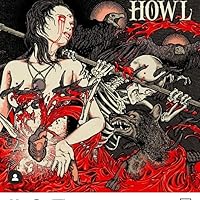
Set in Figeac, 1768, this is the story of young Malvina Raynal who, in the forbidding shadow of the gallows, is forced to watch her parents hang for murder. Their crime is the killing and eating of guests staying at their inn, and the punishment is death. This title is a gothic novel about food, flesh and frightening depravity.
Librarian Note: There is more than one author in the Goodreads database with this name.
Hi, thank you for stopping by my profile.
Being middle-aged, single and British, the stereotype might be of someone boring, with most of life's adventures far behind him. I keep my life secret from the world; certainly I don't want anybody who knows me to find out anything to dispel the myth that I am anything other than the stereotype.
I love to write stories which include a submissive character. The interaction between strong personalities and weaker ones has fascinated me for years and although my outward appearance suggests strength, it's simply not true. Although men have used me in the past for their own gratification, my fantasy is to find just one who will be there always to make me do his bidding.
If anyone wants to share his experiences, I'm always happy to listen. I'd like to hear your thoughts about my book too, why don't you shoot me an email at john_patrick@awesomeauthors.org.
If you think your friends would like it, you could share it with them too!
This is one of those books which relies on sensation to mask the weaker aspects of the overall narrative, with an unsatisfying trajectory, and a main character that is poorly drawn and unconvincing.
[CONTENT WARNING] The book starts off well enough, with the central focus on Malvina, a child whose parents are to be executed for a gruesome crime involving murder and cannibalism. The narrative then largely follows the trajectory of her life. There are a couple of things that begin to niggle as the story unfolds, not least of which is the unnatural precocity of the child Malvina, who is imbued with the taint of her parents's crimes even as she is taken in to be educated at a religious hospice.
As Malvina ages, and becomes more sexually aware, the narrative takes a darker turn, even as the language takes on ever more fantastical approaches to description, particularly when it comes to the more erotic, with Malvina's 'pert' breasts subject to increasingly ridiculous adjectives, for example, it was when her breasts were described as 'imperious' I began to move beyond frustrated with the book, and into the territory of annoyed.
Throughout the novel, rather than dealing with Malvina's internalised trauma, the focus is on the macabre, shocking, and distasteful. I am not going to spend any more of my time setting out what happened or why, but suffice to say, this is a book overly reliant on the horrible, without a lot of redeeming factors to make the effort to look past the gory and repugnant worth the reader's time.
This is one book which will not be finding a home on my bookshelf. I will never read it again.
Snippet;In the back of all the books available at my local library is a slip where you, as the reader, can leave your mark so others know who has read before them. I should have known after having seen this slip that this book was going to be a disturbing adventure, as some unlucky member of Haloche's audience had, ever so boldly, written "Yuck!" This book is the ultimate example of the "don't judge a book by its cover" rule. I was lead in by the beautiful painting on the front cover and, because of the title, I was expecting this book to be a romantic adventure, maybe that of a recluse artist or a haughty Parisian aristocrat, but what I got was instead a story that caused my stomach to turn. Full Review;http://bookywooks.blogspot.com/2009/1...