

What do you think?

Emaneska #2
Pale Kings
Emaneska is crying out for a saviour. The only question is:
Can they kill a child to save a world?
Emaneska’s Long Winter remains as bitter as a blade between the ribs. War is fast approaching. Gods and daemons are hovering on the horizon. Long-lost revelations arrive to haunt the lives of three men.
The Pale Kings are rising.
While Farden busies himself digging up his past in the strange deserts of Paraia, the storm-clouds begin to gather for Durnus, Elessi, Cheska, and Modren.
Together with Farfallen and his Sirens, they must fight to survive against the Long Winter, the vicious machinations of the new Arkmage, and the arrival of something much deadlier than both combined. War, deception, and murder are quickly becoming the only paths to salvation...
PALE KINGS, the explosive and long-awaited sequel to the critically-acclaimed debut THE WRITTEN, has finally arrived. Harder, darker, and faster, PALE KINGS aims to leave THE WRITTEN quivering and whimpering in the shadows.
Can they kill a child to save a world?
Emaneska’s Long Winter remains as bitter as a blade between the ribs. War is fast approaching. Gods and daemons are hovering on the horizon. Long-lost revelations arrive to haunt the lives of three men.
The Pale Kings are rising.
While Farden busies himself digging up his past in the strange deserts of Paraia, the storm-clouds begin to gather for Durnus, Elessi, Cheska, and Modren.
Together with Farfallen and his Sirens, they must fight to survive against the Long Winter, the vicious machinations of the new Arkmage, and the arrival of something much deadlier than both combined. War, deception, and murder are quickly becoming the only paths to salvation...
PALE KINGS, the explosive and long-awaited sequel to the critically-acclaimed debut THE WRITTEN, has finally arrived. Harder, darker, and faster, PALE KINGS aims to leave THE WRITTEN quivering and whimpering in the shadows.
600 pages, Kindle Edition
First published January 9, 2012
About the author
Ben Galley
51 books862 followersBen Galley is a British author of dark and epic fantasy books who currently hails from Vancouver, Canada. Since publishing his debut Emaneska Series, Ben has released the award-winning weird western Scarlet Star Trilogy and standalone The Heart of Stone, the critically-acclaimed Chasing Graves Trilogy, and the new Scalussen Chronicles.
When he isn’t conjuring up strange new stories or arguing the finer points of magic systems and dragon anatomy, Ben explores the Canadian wilds, sips Scotch single malts, and snowboards very, very badly. One day he hopes to haunt an epic treehouse in the mountains.
Find all of Ben’s books or join his Discord and Patreon at: www.linktr.ee/bengalley
When he isn’t conjuring up strange new stories or arguing the finer points of magic systems and dragon anatomy, Ben explores the Canadian wilds, sips Scotch single malts, and snowboards very, very badly. One day he hopes to haunt an epic treehouse in the mountains.
Find all of Ben’s books or join his Discord and Patreon at: www.linktr.ee/bengalley
Ratings & Reviews
Friends & Following
Create a free account to discover what your friends think of this book!
Community Reviews
Displaying 1 - 30 of 84 reviews

March 17, 2022
A great follow up to The Written! Pale Kings delves deeper into the history and lore of Emaneska.
The flow of the story was a little slow at the beginning. But, I soon got used to the pacing and really enjoyed it.
There are also multiple POV's unlike the first book. I'm glad Ben decided to do this. It was fun getting to view the story through characters I have come to appreciate and loathe over these last 2 books.
Full RTC!
Actual Rating: 4 stars ****
The flow of the story was a little slow at the beginning. But, I soon got used to the pacing and really enjoyed it.
There are also multiple POV's unlike the first book. I'm glad Ben decided to do this. It was fun getting to view the story through characters I have come to appreciate and loathe over these last 2 books.
Full RTC!
Actual Rating: 4 stars ****

July 2, 2020
4.5-stars for this one.
If you like some mythology mixed with your fantasy then I'm sure you will like these books. It is a 4-book-series and I have the remaining 2 books on my Kindle. As usual, I have other books that I have agreed to read first, but I will be reading books 3 and 4 ASAP.
This book felt better than the first one to me. Perhaps that is because I already knew the world and the characters? I think it's because the plot really begins to take shape in this book.
For those of you who like dragons, you will have your fill of them here, and a griffon too! I'm going to wrap this up with a picture or two, (just a warning for those of you reading this on mobile phones, I'm told that it's annoying when the screen suddenly fills with an image while you're trying to read the text).
Ready...?
Go!

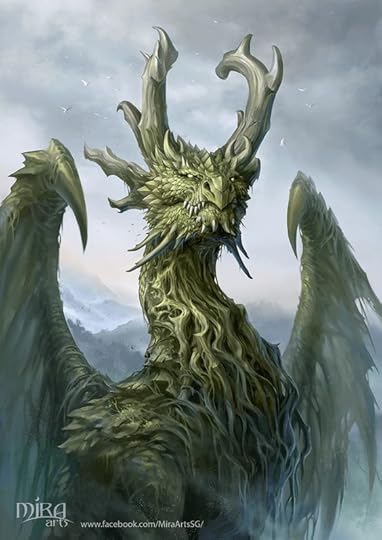
I'd definitely recommend giving this series a try.
Thanks for reading.
If you like some mythology mixed with your fantasy then I'm sure you will like these books. It is a 4-book-series and I have the remaining 2 books on my Kindle. As usual, I have other books that I have agreed to read first, but I will be reading books 3 and 4 ASAP.
This book felt better than the first one to me. Perhaps that is because I already knew the world and the characters? I think it's because the plot really begins to take shape in this book.
For those of you who like dragons, you will have your fill of them here, and a griffon too! I'm going to wrap this up with a picture or two, (just a warning for those of you reading this on mobile phones, I'm told that it's annoying when the screen suddenly fills with an image while you're trying to read the text).
Ready...?
Go!
I'd definitely recommend giving this series a try.
Thanks for reading.

May 17, 2023
I really enjoyed The Written, book one in this series. It was a great audio that just really worked for me and it was the same case here. I just think the accent Steven Cree has is beautifully suited to this type of novel, the setting, and of course for the characters.
I enjoyed the story here and the progression from The Written. There are some real heavy hitting betrayals pretty much towards the end of The Written and I like the way they are dealt with here and how you get more background information on them in this book. I like the expansion of the world and the new characters that are brought into it, and overall, it was just a really great experience.
I enjoyed the story here and the progression from The Written. There are some real heavy hitting betrayals pretty much towards the end of The Written and I like the way they are dealt with here and how you get more background information on them in this book. I like the expansion of the world and the new characters that are brought into it, and overall, it was just a really great experience.
August 12, 2024
2.75/5
This was the definition of middle book syndrome. Lots of world building and new characters. Lots of history and characters who were supposed to be dead. The apparition of the gods was pushing it.
Minor gods being more powerful than actual gods is breaking the laws of your own world building and I'm not a fan of that.
It does have dragons and gryphons, no hydra but monsters and creatures nonetheless. The MC got even dumber on book two.
This was the definition of middle book syndrome. Lots of world building and new characters. Lots of history and characters who were supposed to be dead. The apparition of the gods was pushing it.
Minor gods being more powerful than actual gods is breaking the laws of your own world building and I'm not a fan of that.
It does have dragons and gryphons, no hydra but monsters and creatures nonetheless. The MC got even dumber on book two.

May 16, 2012
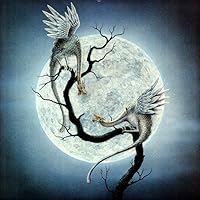
Another excellent cover picture, this time a Gryphon, a legendary creature with the head, talons, and wings of an eagle and the body of a lion.
In the times when God's, Daemons & Elves ruled in Emaneska, humans were nothing more than slaves. The Daemons grew to powerful and a great threat to the world. Orion was the lord of the Daemons and coupled with a human slave, who bore him three human children with Daemon blood.
The gods were in hiding and the humans resigned to a life of slavery but the God's had one last card to play, to save the world and start anew, they sacrificed themselves and flung the Daemons and Elves into the stars never to return along with the God's.
The three children of Orion hid amongst men, shapeshifters and immortal with great power, thousands of years they have planned and plotted to bring the age of the Daemons back to earth. Gradually ascending to positions of power they move to fulfil the prophecy of the dust song.
And one more terrible than Three shall come
one to which the stars succumb
and bring the power of Ragnorak upon the earth.
and leave all to bask in inholy birth.
The three children of Orion are the Pale Kings, the Nefalim's and a Pale King can only be killed by a brother but one is dead and the remaining two work together.
Cheska is pregnant with Fardens child, the result of Fardens infatuation and a child of two Written mages, Farden believes that Cheska still loves him but she is also the daughter of a Pale king and this is the child of the prophecy. Farden faces some tough decisions, stubborn and torn in two, can he prevail and turn the tide.
The story starts with Farden hunting for his Uncle, who was banished by the Arkmage's after succumbing to the madness that can strike a written mage and committing murder. His uncle Tyrfing was tattooed with five key elements, powerful and capable of shapeshifting, he has been lost for over ten years and may hold the key in the battle against the Pale Kings.
Pale Kings is a big improvement on The Written in every aspect, bigger & bolder, well written action sequences interlaced in an excellent plot. Characters who were on the periphery of the story in the first book get much bigger parts, all key to the story.
Durnus the Vampyre, mentor and close friend to Farden has a pivotal role to play but first he must find a release from the curse of the Vampyre and reclaim the power of his birthright.
The story contains extracts from the past, the god's manifest as shadow and attempt to influence the fight, all contribute to excellent world building as the battle reaches epic proportions. Not all survive as the major characters face a battle they can't win and it all makes for a fast paced, action packed, emotional and enjoyable read.
The final book in the trilogy Dead Stars definitely becomes one of my top ten anticipated books of 2013.
In the times when God's, Daemons & Elves ruled in Emaneska, humans were nothing more than slaves. The Daemons grew to powerful and a great threat to the world. Orion was the lord of the Daemons and coupled with a human slave, who bore him three human children with Daemon blood.
The gods were in hiding and the humans resigned to a life of slavery but the God's had one last card to play, to save the world and start anew, they sacrificed themselves and flung the Daemons and Elves into the stars never to return along with the God's.
The three children of Orion hid amongst men, shapeshifters and immortal with great power, thousands of years they have planned and plotted to bring the age of the Daemons back to earth. Gradually ascending to positions of power they move to fulfil the prophecy of the dust song.
And one more terrible than Three shall come
one to which the stars succumb
and bring the power of Ragnorak upon the earth.
and leave all to bask in inholy birth.
The three children of Orion are the Pale Kings, the Nefalim's and a Pale King can only be killed by a brother but one is dead and the remaining two work together.
Cheska is pregnant with Fardens child, the result of Fardens infatuation and a child of two Written mages, Farden believes that Cheska still loves him but she is also the daughter of a Pale king and this is the child of the prophecy. Farden faces some tough decisions, stubborn and torn in two, can he prevail and turn the tide.
The story starts with Farden hunting for his Uncle, who was banished by the Arkmage's after succumbing to the madness that can strike a written mage and committing murder. His uncle Tyrfing was tattooed with five key elements, powerful and capable of shapeshifting, he has been lost for over ten years and may hold the key in the battle against the Pale Kings.
Pale Kings is a big improvement on The Written in every aspect, bigger & bolder, well written action sequences interlaced in an excellent plot. Characters who were on the periphery of the story in the first book get much bigger parts, all key to the story.
Durnus the Vampyre, mentor and close friend to Farden has a pivotal role to play but first he must find a release from the curse of the Vampyre and reclaim the power of his birthright.
The story contains extracts from the past, the god's manifest as shadow and attempt to influence the fight, all contribute to excellent world building as the battle reaches epic proportions. Not all survive as the major characters face a battle they can't win and it all makes for a fast paced, action packed, emotional and enjoyable read.
The final book in the trilogy Dead Stars definitely becomes one of my top ten anticipated books of 2013.

April 15, 2023
a very good sequel
I enjoyed this sequel very much. There were some quick references to some creatures like faeries, which I got excited to hear about. But then, alas, nothing more came of it. There was only the one lycan, Jergan, who appeared again briefly but in a very important event. Also we heard about the elves but they weren’t around in the present. I wonder if there will be more about them in the next books,
Durnus was one of my favorite characters from the first book, and I was glad to see him develop into a very important one in this book. I wasn’t expecting the revelation so made it even more exciting. Tyrfingr was another complicated character. I did not suspect his certain power at all. Also I was happy that the explanation of the talking cat was addressed early on. Elessi was a bit perplexing for me. I didn’t understand her jealousy. She was a servant to Farden and nothing more was ever offered. So some of her decisions didn’t make sense to me.
But all the different magicks were interesting and enhanced the story. I particularly loved Ilios.
“He could feel Ilios picking apart his memories and his personality as though he were picking apart a carcass.” His mental ability was uncanny but mesmerizing.
At the end we witnessed a grand battle where people good and bad died. But we were left with an unholy notion that their job was still left unfinished.
What will Farden and the others do about it?
I enjoyed this sequel very much. There were some quick references to some creatures like faeries, which I got excited to hear about. But then, alas, nothing more came of it. There was only the one lycan, Jergan, who appeared again briefly but in a very important event. Also we heard about the elves but they weren’t around in the present. I wonder if there will be more about them in the next books,
Durnus was one of my favorite characters from the first book, and I was glad to see him develop into a very important one in this book. I wasn’t expecting the revelation so made it even more exciting. Tyrfingr was another complicated character. I did not suspect his certain power at all. Also I was happy that the explanation of the talking cat was addressed early on. Elessi was a bit perplexing for me. I didn’t understand her jealousy. She was a servant to Farden and nothing more was ever offered. So some of her decisions didn’t make sense to me.
But all the different magicks were interesting and enhanced the story. I particularly loved Ilios.
“He could feel Ilios picking apart his memories and his personality as though he were picking apart a carcass.” His mental ability was uncanny but mesmerizing.
At the end we witnessed a grand battle where people good and bad died. But we were left with an unholy notion that their job was still left unfinished.
What will Farden and the others do about it?

April 12, 2023
This was a massive step up from The Written. If you read the Written and wasn’t sure if you were going to continue the series, I highly recommend at least giving Pale Kings a try.

April 7, 2023
"Hindsight is a beautiful thing, mage. The past is for the memory, the present is for the mind."
A great sequel to what was a fun and intriguing first book. The pacing started off much slower in the second book of the Emaneska series and yet still managed to introduce more legendary creatures, new characters and gave secondary characters from book one key roles within this story (which mostly worked for me with the exception of one character).
I really enjoyed how mythology was weaved through the story and the way old secrets were revealed. I look forward to continuing to the next book and finding out what dark and enchanting twists will befall the characters.
A great sequel to what was a fun and intriguing first book. The pacing started off much slower in the second book of the Emaneska series and yet still managed to introduce more legendary creatures, new characters and gave secondary characters from book one key roles within this story (which mostly worked for me with the exception of one character).
I really enjoyed how mythology was weaved through the story and the way old secrets were revealed. I look forward to continuing to the next book and finding out what dark and enchanting twists will befall the characters.

November 18, 2012
Full review over at Fantasy Book Critic
Overall Rating = 3 & 1/2 stars
OVERVIEW/ANALYSIS: Pale Kings continues the story that began in The Written and is the second part on the Emaneska series. The book begins events in a Malazan like fashion by focusing on events nearly two and half millennia ago. The readers get to witness a birth which seems inconsequential however later on as they learn was of much consequence. Things then begin only a few weeks after the events of the first book.
Unlike the first book wherein the action was centered around Farden, in this book the story’s focus is extended to certain intriguing characters of the story. We get to see Farden again and he is trying to find out more of his past which apparently holds the key to his problems in a desert land called Paraia. The other characters who get a spotlight are Durnus, Farden’s vampyre mentor-cum-friend, Modren, another Written mage who is introduced in this story, and Towerdawn, Old Dragon and lord of the Sirens who we got to meet in the preceding volume. There are a lot more characters especially older ones who return from their previous roles and further intrigue the readers. There’s a lot more backstory that is revealed in this story and we finally get a clue to the amount of world building that has been developed for this series.
The best part about this book can be said that it is the LOTR to the preceding book, while some history and character background was hinted at. This book lays bare the screen on almost all spectrums of the story beginning with his history that is now forgotten mythology, to its characters as newer facets and older secrets are revealed. There’s also the multi-character POV approach that gives the story a wider panoramic feel. The characterization done is much better than its predecessor and while it’s still not the best but we do get to see Farden in a much more stronger and dangerous image as fostered in book one.
There’s also the action which is amped up insanely, be it with Farden or the sirens or the other parts of the book, the action sequences become a particular highlight of the story as the readers is constantly harried from one sequence to another with some rather startlingly plot twists and revelations in between. The reader hardly gets any time to breathe and there’s also the issue of character deaths which is rather surprising as the author keeps the story on an even keel by surprising us by dealing death cards at unexpected moments. Lastly I felt that this book had a much better ending than that of The Written, as compared to the first book there are various plot threads in this story however the author competently handles them to bring the story to a resounding and a bit tragic climax.
I was very much impressed by the difference between books one & two. Author Ben Galley showcased talent in his debut effort, in his sophomore offering he builds on that promise and gives the readers an action-packed epic fantasy tale that surprised me nicely. Count me in for this series and I look forward to the books three and four that promise an epic if not proper conclusion to this surprising series.
August 5, 2020
I found myself enjoying this entry about as much as the first book. Once again, a marvelous fantasy world is revealed before your eyes. This series is definitely playing into its strength in regards to world-building. The world of Farden and The Written is a mythical, dark, and enchanting world which we get to see even more of this time around.
The plot continues from the first book, with the imminent birth of a fabled child and the forces of both good and evil that need to reach it in time. It's a classic story element, and it works here.
Criticisms I have for this book are kind of the same as the previous book. There is a constant use of phrasing such as 'towards' vs 'toward' or 'forwards' vs 'forward'. Eg; Farden fell forwards and looked towards the crowd. That's technically correct, and indeed is the U.K. way of wording. But, like in the first book, Galley mentions in the preface the use of an editor he specifically hired to 'Americanize' the manuscript, so leaving wording in it like this seems like wasted money IMO.
Another criticism I'd say is that this book is much longer than the first, and there are times it really feels like it. Some scenes, while still good, seem to drag on at times. This book could certainly have been shaved down a fair amount.
My only other criticism, and this is entirely a personal view, is using the name Orion for a demon. When one is familiar with the mythology surrounding that name, applying it to a demon just seems... false? I guess? But that's just me.
Join the RK King readers' list for an exclusive FREE short story, plus inside info, musings, promos and more: RK King Writes
The plot continues from the first book, with the imminent birth of a fabled child and the forces of both good and evil that need to reach it in time. It's a classic story element, and it works here.
Criticisms I have for this book are kind of the same as the previous book. There is a constant use of phrasing such as 'towards' vs 'toward' or 'forwards' vs 'forward'. Eg; Farden fell forwards and looked towards the crowd. That's technically correct, and indeed is the U.K. way of wording. But, like in the first book, Galley mentions in the preface the use of an editor he specifically hired to 'Americanize' the manuscript, so leaving wording in it like this seems like wasted money IMO.
Another criticism I'd say is that this book is much longer than the first, and there are times it really feels like it. Some scenes, while still good, seem to drag on at times. This book could certainly have been shaved down a fair amount.
My only other criticism, and this is entirely a personal view, is using the name Orion for a demon. When one is familiar with the mythology surrounding that name, applying it to a demon just seems... false? I guess? But that's just me.
Join the RK King readers' list for an exclusive FREE short story, plus inside info, musings, promos and more: RK King Writes

November 12, 2012
WARNING: This review contains spoilers for the first book in the Emaneska series and some slight spoilers for this book. If you want to remain unspoiled, please click away or skip to the last paragraph.
A fortnight ago, I reviewed the first in Ben Galley's Emaneska series, The Written . It was rather an occasion, as it was the first self-pubbed book I've ever reviewed and it was an interesting experiment. While on the whole I'd enjoyed the novel, I did have some issues with it; some of them perhaps due to first-novel-itis, others due to the author’s stylistic choices. Still, I started Pale Kings looking forward to finding out what happened to Farden and company and to see whether he'd be able to save Emaneska. Unfortunately, while some of my niggles from the previous books were solved, others remained; Pale Kings made for another mixed reading experience, because even if there were some major things that bothered me, Galley writes a compelling tale and I did get invested in the characters.
So let's start off with the problems I had with the book. As with The Written Galley's prose is lavender and he tends to be rather more elaborate with his descriptions than necessary – or desirable in my case – but as mentioned in my previous review, whether you find this a problem is very much a case of personal taste. There is still a lot of head-hopping, though it's less confusing this time around, and Galley still makes the stylistic choices that bothered me in the previous book, but they were less intrusive this time around. One thing that did catch my eye this time around was the way the narrator intruded upon the story more, quite often turning omniscient, instead of limited. The narrator gave summations and foreshadows events in a way that felt intrusive rather than organic and a lot of the time it happened at shifts in the narrative, which made these feel clunky.
One problem that unfortunately carried over from the previous book is again Galley's treatment of the female characters. As before, we have the three characters of Elessi, Cheska, and Svarta, who mostly have the same problems as before. And Cheska, who seemed to gain some agency by the end of the first book, basically loses all of it again in this one, which was disappointing. We also get three new female characters. The first is Lerel, a pupil of Farden's uncle, but her role in the story is minimal and while it turns out she was around in the previous book all along, there is a lot of potential wasted in this character and I really hope she gets to be stronger, or more in the foreground, in the final book in the series. The second is General Agfrey, a Skölgarder, who is basically shown as very ugly, mannish, and cruel. Lastly, the is Lilith, another bad guy, who is introduced as a crone and a seer, but turns into more. She does have agency, but again, like Agfrey feels a little clichéd. In all, I found them disappointing.
There was one line in the book that just completely shook me out of the narrative and when I say it shook me, I mean it picked me up, rattled me until my eyes closed and then closed the book. And wasn't because it was a bad line exactly, but because it so blatantly was an homage to Tolkien that I just blinked. The line? "'Be on the lookout for strangers, and on the dawn of the fifth day watch for dragons in the sky to the north,' she said." In no other part of either of his books I've read so far does Galley show his influences so blatantly. I mean, I think I could guess at some of his inspirations, but this was just so totally revealing, it really bothered me. Luckily it was a onetime thing and I quickly managed to get back into the story.
Writing this review, it seems as if I really disliked the book, which really isn't the case. The story is good and there were some very interesting plot developments. Galley further deepens his world by showing us some of its history and creation myths, revealing more about the daemons and the gods in the process. We also get a fabulous new creature in the form of Ilios, the gryphon. I loved Galley's incarnation of this beast, the fact that he couldn't speak like a human, that he could only communicate mind-to-mind and mostly through dreams. He was one of my favourite things about the book. Another great addition is Tyrfing, Farden's uncle. I loved this broken, damaged man and the way he pulls himself together – or rather is badgered into it by Ilios – and takes his place in the ranks of the players allied to save the world from Vice's grip. Durnus' development and the decisions he has to make are fascinating too and I found them quite original.
In reading Pale Kings, it turns out that I can forgive a lot of stylistic problems as long as the story is good. Unfortunately, there wasn't as much growth from the previous book to this one and not all of the first novel flaws were gone, but once again, Galley proves he can tell a story. Despite Galley and myself perhaps not being the best fit stylistically, I do want to know how this story ends, so one could say that the author has done his job well. Pale Kings is a solid successor to The Written and I'm looking forward to finding out how Farden's story ends in The Dead Stars, which is expected somewhere in 2013.
This book was provided for review by the author.
A fortnight ago, I reviewed the first in Ben Galley's Emaneska series, The Written . It was rather an occasion, as it was the first self-pubbed book I've ever reviewed and it was an interesting experiment. While on the whole I'd enjoyed the novel, I did have some issues with it; some of them perhaps due to first-novel-itis, others due to the author’s stylistic choices. Still, I started Pale Kings looking forward to finding out what happened to Farden and company and to see whether he'd be able to save Emaneska. Unfortunately, while some of my niggles from the previous books were solved, others remained; Pale Kings made for another mixed reading experience, because even if there were some major things that bothered me, Galley writes a compelling tale and I did get invested in the characters.
So let's start off with the problems I had with the book. As with The Written Galley's prose is lavender and he tends to be rather more elaborate with his descriptions than necessary – or desirable in my case – but as mentioned in my previous review, whether you find this a problem is very much a case of personal taste. There is still a lot of head-hopping, though it's less confusing this time around, and Galley still makes the stylistic choices that bothered me in the previous book, but they were less intrusive this time around. One thing that did catch my eye this time around was the way the narrator intruded upon the story more, quite often turning omniscient, instead of limited. The narrator gave summations and foreshadows events in a way that felt intrusive rather than organic and a lot of the time it happened at shifts in the narrative, which made these feel clunky.
One problem that unfortunately carried over from the previous book is again Galley's treatment of the female characters. As before, we have the three characters of Elessi, Cheska, and Svarta, who mostly have the same problems as before. And Cheska, who seemed to gain some agency by the end of the first book, basically loses all of it again in this one, which was disappointing. We also get three new female characters. The first is Lerel, a pupil of Farden's uncle, but her role in the story is minimal and while it turns out she was around in the previous book all along, there is a lot of potential wasted in this character and I really hope she gets to be stronger, or more in the foreground, in the final book in the series. The second is General Agfrey, a Skölgarder, who is basically shown as very ugly, mannish, and cruel. Lastly, the is Lilith, another bad guy, who is introduced as a crone and a seer, but turns into more. She does have agency, but again, like Agfrey feels a little clichéd. In all, I found them disappointing.
There was one line in the book that just completely shook me out of the narrative and when I say it shook me, I mean it picked me up, rattled me until my eyes closed and then closed the book. And wasn't because it was a bad line exactly, but because it so blatantly was an homage to Tolkien that I just blinked. The line? "'Be on the lookout for strangers, and on the dawn of the fifth day watch for dragons in the sky to the north,' she said." In no other part of either of his books I've read so far does Galley show his influences so blatantly. I mean, I think I could guess at some of his inspirations, but this was just so totally revealing, it really bothered me. Luckily it was a onetime thing and I quickly managed to get back into the story.
Writing this review, it seems as if I really disliked the book, which really isn't the case. The story is good and there were some very interesting plot developments. Galley further deepens his world by showing us some of its history and creation myths, revealing more about the daemons and the gods in the process. We also get a fabulous new creature in the form of Ilios, the gryphon. I loved Galley's incarnation of this beast, the fact that he couldn't speak like a human, that he could only communicate mind-to-mind and mostly through dreams. He was one of my favourite things about the book. Another great addition is Tyrfing, Farden's uncle. I loved this broken, damaged man and the way he pulls himself together – or rather is badgered into it by Ilios – and takes his place in the ranks of the players allied to save the world from Vice's grip. Durnus' development and the decisions he has to make are fascinating too and I found them quite original.
In reading Pale Kings, it turns out that I can forgive a lot of stylistic problems as long as the story is good. Unfortunately, there wasn't as much growth from the previous book to this one and not all of the first novel flaws were gone, but once again, Galley proves he can tell a story. Despite Galley and myself perhaps not being the best fit stylistically, I do want to know how this story ends, so one could say that the author has done his job well. Pale Kings is a solid successor to The Written and I'm looking forward to finding out how Farden's story ends in The Dead Stars, which is expected somewhere in 2013.
This book was provided for review by the author.
This entire review has been hidden because of spoilers.
April 5, 2023
2nd time reading Pale kings, this time in audio format! Still holds up as my favourite in the series! The narrator, Steven Cree really brings life with his wonderful Scottish accent and you can start to notice his improvement as the series progresses.
This was read as part of an Emaneska read along hosted by myself and a fellow booktuber.
This was read as part of an Emaneska read along hosted by myself and a fellow booktuber.

January 2, 2017
This is a great follow-up by one of the forerunners of the self-publishing boom.
Right from the start Ben Galley draws us back into the world of Emaneska with vivid descriptions and rich use of language. Drawing heavily on Norse mythology, the book's well-wrought prose often personifies the elements and natural world: candles gutter shyly, skies cry, and fires bicker as warrior-mage Farden sets out to find his long-lost uncle and fellow Written Tyrfing.
The story is well paced and takes us from the desert southlands and their exotic sorceries and ruby-fingered elementals back to Nelska in the far north - where Farfallen and the rest of dragonkind are preparing for the obligatory world war - and eventually to backwards Albion and occupied Arka for the final denouement against arch villains Vice and Bane, now revealed as demonic demigods bent on global domination.
This is a classic tour de force of high fantasy and sword & sorcery. True, it still leaves something to be desired in its editing (although Galley has definitely tightened up in this area since his debut novel) and sometimes the dialogue is a little clunky. But these are really just quibbles about what is essentially a very well constructed piece of genre fiction, one in which the writer has given free rein to his extensive imagination and vocabulary without oversweetening the pot.
Thoroughly recommended to any fans of good old fashioned epic fantasy, and I look forward to reading the next instalment.
Right from the start Ben Galley draws us back into the world of Emaneska with vivid descriptions and rich use of language. Drawing heavily on Norse mythology, the book's well-wrought prose often personifies the elements and natural world: candles gutter shyly, skies cry, and fires bicker as warrior-mage Farden sets out to find his long-lost uncle and fellow Written Tyrfing.
The story is well paced and takes us from the desert southlands and their exotic sorceries and ruby-fingered elementals back to Nelska in the far north - where Farfallen and the rest of dragonkind are preparing for the obligatory world war - and eventually to backwards Albion and occupied Arka for the final denouement against arch villains Vice and Bane, now revealed as demonic demigods bent on global domination.
This is a classic tour de force of high fantasy and sword & sorcery. True, it still leaves something to be desired in its editing (although Galley has definitely tightened up in this area since his debut novel) and sometimes the dialogue is a little clunky. But these are really just quibbles about what is essentially a very well constructed piece of genre fiction, one in which the writer has given free rein to his extensive imagination and vocabulary without oversweetening the pot.
Thoroughly recommended to any fans of good old fashioned epic fantasy, and I look forward to reading the next instalment.

March 18, 2013
Absolutely bloody amazing! I can't speak more highly of this masterpiece of a fantasy epic, I loved every minute of it and even rationed it as I didn't want to finish it too quickly. Damn! I'm finished and now I have to wait until the end of May for the last two books in the Emaneska series, Dead Stars parts one & two to come out. I can't wait!
There is so much going on in Pale Kings and so many important plots and answers that to write too much would spoil it for those of you that have not had the joy of reading this series yet. What I will say is this book builds strongly on the characters you meet in the first book "The Written", the world of Emaneska opens out and you get a feeling of what an epic world this is. So vivid in its portrayal, so masterfully planned and written with such intense description and wonderful characters that you can't help but be drawn in to this world and find it hard to come out again...
This is rapidly becoming one of my favourite fantasy series ever, a classic to stand up there in the bookshelf with the more well known classics. Mr Ben Galley is an incredibly talented author! You have to read this series!
There is so much going on in Pale Kings and so many important plots and answers that to write too much would spoil it for those of you that have not had the joy of reading this series yet. What I will say is this book builds strongly on the characters you meet in the first book "The Written", the world of Emaneska opens out and you get a feeling of what an epic world this is. So vivid in its portrayal, so masterfully planned and written with such intense description and wonderful characters that you can't help but be drawn in to this world and find it hard to come out again...
This is rapidly becoming one of my favourite fantasy series ever, a classic to stand up there in the bookshelf with the more well known classics. Mr Ben Galley is an incredibly talented author! You have to read this series!
Read
February 12, 2012I read the first book in the Pale Kings series. I think it is every bit as good as the Inheiritance series. Whoo hoo Ben Galley.

November 9, 2018
Better than the first book. A strong sequel with tight plotting and trimmed prose. As a self-published book, I would definitely put this on a high pedestal, looking at the cover and the standard quality of work. Galley has definitely improved himself as an author, and he has shown his ability to tell a good story which is a winning situation for a young writer like him in the genre.
This book shows Galley's imagination with the thrilling pace of the narrative. He has imbued the mythology with more depth in order to widen the scope of the world, and its lore. I liked the change of setting from tge Arka to the deserts. The story shifts from one view to another, and it helps from keeping the monotony of a one dimensional narrative. To make the story more interesting, the gods make an appearance here, and their plans to save the world is intriguing as well as multilayered possibilities in which all the major characters play a role to fit in the grand scheme.
Farden's growth as a character is not much, but, he is given a more tentative touch of the flawed hero. The search for his uncle, and his subsequent meeting with him was a interaction which I enjoyed, though it felt a little clunky on Farden's part. However, I will say this, as you see in the cover, there is a gryphon here, and he is one hell of an awesome character apart from the talking dragons. Lerel the speaking cat was a surprise, and a cute one at that. Tyrfing is badass, more powerful and resourceful than Farden, and I was glad to see him fight. There is an unexpected twist about Durnus which I hope will astonish many a reader.
The action was amazing and bloody, with the dragons, and the antagonist Vice. Galley writes the chaotic situation of a battle nicely, and the magic is as explosive as usual. This is epic sword and sorcery fanatsy with a blast, and I liked it more than the first book. I would definitely read the sequel and see how Galley continues the story.
This book shows Galley's imagination with the thrilling pace of the narrative. He has imbued the mythology with more depth in order to widen the scope of the world, and its lore. I liked the change of setting from tge Arka to the deserts. The story shifts from one view to another, and it helps from keeping the monotony of a one dimensional narrative. To make the story more interesting, the gods make an appearance here, and their plans to save the world is intriguing as well as multilayered possibilities in which all the major characters play a role to fit in the grand scheme.
Farden's growth as a character is not much, but, he is given a more tentative touch of the flawed hero. The search for his uncle, and his subsequent meeting with him was a interaction which I enjoyed, though it felt a little clunky on Farden's part. However, I will say this, as you see in the cover, there is a gryphon here, and he is one hell of an awesome character apart from the talking dragons. Lerel the speaking cat was a surprise, and a cute one at that. Tyrfing is badass, more powerful and resourceful than Farden, and I was glad to see him fight. There is an unexpected twist about Durnus which I hope will astonish many a reader.
The action was amazing and bloody, with the dragons, and the antagonist Vice. Galley writes the chaotic situation of a battle nicely, and the magic is as explosive as usual. This is epic sword and sorcery fanatsy with a blast, and I liked it more than the first book. I would definitely read the sequel and see how Galley continues the story.
December 24, 2021
Amazing Sequel
I really enjoyed this book, so well written, cinematic , dramatic and quotable. Strong characterisation and imagery, I almost felt like I was there in some of the scenes, the markets and cities and so forth, intrigued to know what happens next, this is why I love reading.
I really enjoyed this book, so well written, cinematic , dramatic and quotable. Strong characterisation and imagery, I almost felt like I was there in some of the scenes, the markets and cities and so forth, intrigued to know what happens next, this is why I love reading.

February 14, 2019
War is fast approaching and Farden is on a personal quest to find his long lost uncle Tyrfing - a fellow Written. Will he find him and the answers he seeks?
This is the second book in the Emaneska series full of fantastic characters and mythical creatures. I loved both books, it has everything that makes a great fantasy.
I've gone straight into book three part one.
This is the second book in the Emaneska series full of fantastic characters and mythical creatures. I loved both books, it has everything that makes a great fantasy.
I've gone straight into book three part one.

April 29, 2023
PALE KINGS improves upon its predecessor in pretty much every way and I am very happy to have continued with this series. I am also glad that I read some of this visually, versus solely consuming the story via audio.
SETTING/WORLD
Once again, the world that Galley depicts is one of the strongest elements of the series. This time around, we also get to see some much more interesting corners of it. The story kicks off in a sandy, desert nation filled with strange creatures, customs, and foods. Seeing Farden navigate this realm in a fish-out-of-water fashion was greatly entertaining and it was in this particular location that the fantasy world felt truly set apart from others. The unusual mashup of fantastical creatures is even more diverse than before thanks to the myriad of desert-dwelling beings, a deeper exploration of nefalim lore, and the inclusion of mythological beings in the form of gods and daemons (and yes, there is also a gryphon, but more on that later). The role that the gods had to play this time around felt far more substantial and I finally started to see why this is marketed as a Norse-Inspired Fantasy. The exploration of these deities and the deeper lore of the world really brought things to life for me. I'd kind of felt like these elements were merely window dressing in THE WRITTEN, so I found myself quite pleased to have them take on actual meaning and substance. Overall, I felt so much more invested in this world and its people than I did in the first book and I left feeling curious to know more about the aspects of it that are still yet to be discovered.
CHARACTERS
Farden, Durnus, and Elessi all return for this new adventure. Although we see the three of them joined up at the end of the first book, they have actually all gone in separate directions when this one begins. We see Farden on a quest to find his long lost uncle, while Durnus joins up with the siren, Eryum, to assess the situation in Krauslung, and Elessi struggles to find her place in a world that is changing around her. Farden is still not a main character that I connect with particularly well, but I did find him to be a little more entertaining this time around. This might be for a couple of key reasons: 1) he has shaken his drug addiction, 2) the perspective shifts between other characters, giving us welcome breaks from his brooding, and 3) the voice I have for him in my head is much better than the one the narrator uses for him. I still didn't quite understand his obsession with Cheska, but that is probably because I was never bought into his relationship with her. Both her and Elessi also just did not come off super strong for me, nor did really any of the female characters. I wouldn't say that there is anything sexist here or anything, but for some reason the women annoyed me and didn't feel like they held meaningful roles, despite how many of them factored in heavily to the plot. Durnus and Eryum, however, absolutely stole the show for me. There are a couple of Sirens and Dragon characters that fell a little flat, but overall, these characters are still some of the best. I also found Tyrfing to be a rather interesting fellow and was glad that some of the potential plot holes around his actions (or lack there of) were proactively addressed. Mordren also plays a much more consequential role in this story whereas I had previously found him to be a somewhat lackluster and forgettable character.
As the cover gives away, this story also heavily features a gryphon character. I don't know if I was as head over heels for him as other participants in the Discord Read Along, but I definitely found him to be an adorable animal companion and a great addition to the cast, even if Farfallen is still my favorite character by a longshot. We even get to know some of the gods a little bit and I thought it was interesting to see original characters like Evernia mingle with figures from real-world mythology like Heimdall. Overall, I think the side cast is much more impressive this time around and that help prop up Farden's character a bit as well.
PLOT/TONE
Right from the beginning, this story has a much stronger sense of direction, even though there are a number of different narrative threads that we follow in parallel for a time. The hunt for Farden's uncle and the mystery about why he's been in hiding for so long was a lot of fun as was Vice's scheming. Seeing the deterioration of Krauslung was rather devastating in spite of the city not standing out in any particular way to me during THE WRITTEN. The juxtaposition between the city's desperate state and the exotic reaches of the desert nation that Farden explores offered some nice variety in the earlier chapters. There are also some great moments where the heroes have to wander ancient forests or convene in the frigid halls of Nelska. The general plot felt a lot more political and strategic this time around too. There are multiple moving parts as well as numerous narrative turns that kept things feeling fresh. The time spent on building out the mythology and lore caught me by surprise and I was delighted that we finally got some of this background. Even though there are far less bombastic action scenes this time around, I actually felt like PALE KINGS read at a much faster pace. When fights did break out, they felt even more special and the stakes seemed a lot higher since the scale of the conflicts were generally greater as well. Though there is a very clear lead-in to the next book and another slightly annoying cliffhanger ending, I found the book's resolution to be much more satisfying than the way that book one ended.
THE EBOOK/AUDIOBOOK
Unlike last time, I actually read this partly on Kindle, but eventually switched over to hybrid read it on Audio as well, in the interest of making sure I finished this in sync with the read along. Now that I have tried reading this visually, I can definitely say that I much prefer consuming the story that way than via the audiobook. There isn't anything objectively wrong with the way that the narrator tells the story, but there is something about the performance that just does not work super well for me. The prose is a pleasure to read with my eyes, but perhaps there is something about it that doesn't translate well to audio because I found it hard not to let my mind wander while listening. I also think the voices I have in my head for the characters work a lot better than the way that they are vocalized by the narrator, with Farden and Tyrfing being particular standouts in this regard. I have absolutely no idea what was going on with Tyrfing's voice, but I pretty much hated it and I still think that Farden is performed like a dollar store Geralt (from The Witcher). Is that a bit harsh? Probably. The audio may very well work a lot better for others than it did for me and with these books being as long as they are, it might be hard to get through them, without listening to at least part of it. So, while the audio is serviceable, I would say that it is best to read as much of this story visually as possible.
CONCLUSION
PALE KINGS is one of those sequels that greatly improves upon the book that came before it and has largely shifted my opinion of the series overall. I'm still a little undecided on if I want to continue with the read along or shift to reading this series on my own timeline, but I will definitely be continuing with it either way.
(+) Vivid descriptions of the landscapes.
(+) Farfallen is STILL an the best character
(+) I was much more immersed in the world and the different fantastical creatures that dwell within it
(+) Flashy action scenes with cool magic that are less frequent, but grander in scale
(+) The supporting cast is greatly improved
(+) The mythological aspects were outstanding
(+) Following different POV characters gave welcome breaks from Farden's moody perspective
( ) I didn't mind Farden as much this time, but still wouldn't consider him to be a particularly compelling lead
(-) The female characters didn't really work for me.
(-) There is something about the audio version that definitely does not work super well for me
(-) Another cliffhanger-y ending, though one that did not irk me as much as the first book
SETTING/WORLD
Once again, the world that Galley depicts is one of the strongest elements of the series. This time around, we also get to see some much more interesting corners of it. The story kicks off in a sandy, desert nation filled with strange creatures, customs, and foods. Seeing Farden navigate this realm in a fish-out-of-water fashion was greatly entertaining and it was in this particular location that the fantasy world felt truly set apart from others. The unusual mashup of fantastical creatures is even more diverse than before thanks to the myriad of desert-dwelling beings, a deeper exploration of nefalim lore, and the inclusion of mythological beings in the form of gods and daemons (and yes, there is also a gryphon, but more on that later). The role that the gods had to play this time around felt far more substantial and I finally started to see why this is marketed as a Norse-Inspired Fantasy. The exploration of these deities and the deeper lore of the world really brought things to life for me. I'd kind of felt like these elements were merely window dressing in THE WRITTEN, so I found myself quite pleased to have them take on actual meaning and substance. Overall, I felt so much more invested in this world and its people than I did in the first book and I left feeling curious to know more about the aspects of it that are still yet to be discovered.
CHARACTERS
Farden, Durnus, and Elessi all return for this new adventure. Although we see the three of them joined up at the end of the first book, they have actually all gone in separate directions when this one begins. We see Farden on a quest to find his long lost uncle, while Durnus joins up with the siren, Eryum, to assess the situation in Krauslung, and Elessi struggles to find her place in a world that is changing around her. Farden is still not a main character that I connect with particularly well, but I did find him to be a little more entertaining this time around. This might be for a couple of key reasons: 1) he has shaken his drug addiction, 2) the perspective shifts between other characters, giving us welcome breaks from his brooding, and 3) the voice I have for him in my head is much better than the one the narrator uses for him. I still didn't quite understand his obsession with Cheska, but that is probably because I was never bought into his relationship with her. Both her and Elessi also just did not come off super strong for me, nor did really any of the female characters. I wouldn't say that there is anything sexist here or anything, but for some reason the women annoyed me and didn't feel like they held meaningful roles, despite how many of them factored in heavily to the plot. Durnus and Eryum, however, absolutely stole the show for me. There are a couple of Sirens and Dragon characters that fell a little flat, but overall, these characters are still some of the best. I also found Tyrfing to be a rather interesting fellow and was glad that some of the potential plot holes around his actions (or lack there of) were proactively addressed. Mordren also plays a much more consequential role in this story whereas I had previously found him to be a somewhat lackluster and forgettable character.
As the cover gives away, this story also heavily features a gryphon character. I don't know if I was as head over heels for him as other participants in the Discord Read Along, but I definitely found him to be an adorable animal companion and a great addition to the cast, even if Farfallen is still my favorite character by a longshot. We even get to know some of the gods a little bit and I thought it was interesting to see original characters like Evernia mingle with figures from real-world mythology like Heimdall. Overall, I think the side cast is much more impressive this time around and that help prop up Farden's character a bit as well.
PLOT/TONE
Right from the beginning, this story has a much stronger sense of direction, even though there are a number of different narrative threads that we follow in parallel for a time. The hunt for Farden's uncle and the mystery about why he's been in hiding for so long was a lot of fun as was Vice's scheming. Seeing the deterioration of Krauslung was rather devastating in spite of the city not standing out in any particular way to me during THE WRITTEN. The juxtaposition between the city's desperate state and the exotic reaches of the desert nation that Farden explores offered some nice variety in the earlier chapters. There are also some great moments where the heroes have to wander ancient forests or convene in the frigid halls of Nelska. The general plot felt a lot more political and strategic this time around too. There are multiple moving parts as well as numerous narrative turns that kept things feeling fresh. The time spent on building out the mythology and lore caught me by surprise and I was delighted that we finally got some of this background. Even though there are far less bombastic action scenes this time around, I actually felt like PALE KINGS read at a much faster pace. When fights did break out, they felt even more special and the stakes seemed a lot higher since the scale of the conflicts were generally greater as well. Though there is a very clear lead-in to the next book and another slightly annoying cliffhanger ending, I found the book's resolution to be much more satisfying than the way that book one ended.
THE EBOOK/AUDIOBOOK
Unlike last time, I actually read this partly on Kindle, but eventually switched over to hybrid read it on Audio as well, in the interest of making sure I finished this in sync with the read along. Now that I have tried reading this visually, I can definitely say that I much prefer consuming the story that way than via the audiobook. There isn't anything objectively wrong with the way that the narrator tells the story, but there is something about the performance that just does not work super well for me. The prose is a pleasure to read with my eyes, but perhaps there is something about it that doesn't translate well to audio because I found it hard not to let my mind wander while listening. I also think the voices I have in my head for the characters work a lot better than the way that they are vocalized by the narrator, with Farden and Tyrfing being particular standouts in this regard. I have absolutely no idea what was going on with Tyrfing's voice, but I pretty much hated it and I still think that Farden is performed like a dollar store Geralt (from The Witcher). Is that a bit harsh? Probably. The audio may very well work a lot better for others than it did for me and with these books being as long as they are, it might be hard to get through them, without listening to at least part of it. So, while the audio is serviceable, I would say that it is best to read as much of this story visually as possible.
CONCLUSION
PALE KINGS is one of those sequels that greatly improves upon the book that came before it and has largely shifted my opinion of the series overall. I'm still a little undecided on if I want to continue with the read along or shift to reading this series on my own timeline, but I will definitely be continuing with it either way.
(+) Vivid descriptions of the landscapes.
(+) Farfallen is STILL an the best character
(+) I was much more immersed in the world and the different fantastical creatures that dwell within it
(+) Flashy action scenes with cool magic that are less frequent, but grander in scale
(+) The supporting cast is greatly improved
(+) The mythological aspects were outstanding
(+) Following different POV characters gave welcome breaks from Farden's moody perspective
( ) I didn't mind Farden as much this time, but still wouldn't consider him to be a particularly compelling lead
(-) The female characters didn't really work for me.
(-) There is something about the audio version that definitely does not work super well for me
(-) Another cliffhanger-y ending, though one that did not irk me as much as the first book
February 7, 2013
It's not always a compliment to say that you read a book in three days. To read something so quickly that took months to prepare doing draft, redraft and further redraft can be quite irksome for an author and, I have to admit, part of my hast in reading this book was due to another obligation to the author. However, another reason for so swift a reading was that this book is simply excellent and I couldn't help but complete it fully and immerse myself once more in Emaneska.
Reading this book reminded me of how much I'd missed the company of Farden. The great anti-hero is developed further in this book and becomes an even greater anti-hero for it. The challenges (both epic and personal) that he face in Pale Kings dwarf everything he faced in The Written and seeing him tackle them (or, sometimes, reluctantly tackle them) expanded his character and made him all the more enjoyable. Furthermore, it was great to see more of Modren (one of my favourite characters from The Written) and the addition of Tyrfing to the clan was welcome. However, my favourite supporting character in this book was Durnus who we simply didn't see enough of in The Written.
So yes, the story is great and the characters perhaps more so, but what of Galley as an author? Obviously anyone who has read The Written knows this author is a master storyteller, the way he can twist and turn a plot and keep his reader guessing for almost an entire book is nothing short of magic(k). But, as a wordsmith, the reader certainly can't complain either. Although Galley isn't going to rival Proust or (more realistically) Mervyn Peake for wordsmithery any time in the near future, he displays a great vocabulary and picks his words perfectly for each scene and the exciting tone of the book. Some would argue he could learn a thing or two from Cormac McCarthy and his ilk, however, certainly to my mind (and as much as I adore Cormac McCarthy), it could be argued that literature has become too rationed with its words, especially adjectives, and that the Fantasy genre, above all, deserves slightly more embellishment.
Pale Kings is a worthy successor to The Written and one that really shows Galley's development as an author. I highly recommend it highly.
Reading this book reminded me of how much I'd missed the company of Farden. The great anti-hero is developed further in this book and becomes an even greater anti-hero for it. The challenges (both epic and personal) that he face in Pale Kings dwarf everything he faced in The Written and seeing him tackle them (or, sometimes, reluctantly tackle them) expanded his character and made him all the more enjoyable. Furthermore, it was great to see more of Modren (one of my favourite characters from The Written) and the addition of Tyrfing to the clan was welcome. However, my favourite supporting character in this book was Durnus who we simply didn't see enough of in The Written.
So yes, the story is great and the characters perhaps more so, but what of Galley as an author? Obviously anyone who has read The Written knows this author is a master storyteller, the way he can twist and turn a plot and keep his reader guessing for almost an entire book is nothing short of magic(k). But, as a wordsmith, the reader certainly can't complain either. Although Galley isn't going to rival Proust or (more realistically) Mervyn Peake for wordsmithery any time in the near future, he displays a great vocabulary and picks his words perfectly for each scene and the exciting tone of the book. Some would argue he could learn a thing or two from Cormac McCarthy and his ilk, however, certainly to my mind (and as much as I adore Cormac McCarthy), it could be argued that literature has become too rationed with its words, especially adjectives, and that the Fantasy genre, above all, deserves slightly more embellishment.
Pale Kings is a worthy successor to The Written and one that really shows Galley's development as an author. I highly recommend it highly.

October 20, 2012
Much like "The Written", Ben Galley's second work is a passable and enjoyable story. I plan to read the third when it comes out. For an author Galley's age, this is a very good work. However, I think there is a lot of untapped potential here and I think some of his choices are sloppy. This is not meant to be cruel to Galley. After all, I read his first book when it was a free download on Amazon and it got me to buy his second. There are just a few writing choices that I think could be done differently and make his next work so much better.
I will name two examples in brief and then end on a positive note.
One, there are some bizarrely heavy-handed incidents of foreshadowing. Towards the end of the book, it shows a brief scene from a side character's point of view, and ends it with (paraphrasing and slightly exaggerating) "little did that person know their doom was soon at hand." Then it switches perspective to a main character who kills said side character. This was the worst offender by far. The rest were not bad, merely strange literary choices.
Two, there are a few too many scenes from the point of view of "throw away" side characters. Galley does a good job making his main characters sympathetic, and writes much better scenes when working from their point of view, but uses side characters as a crutch to get around his choice of using limited perspective instead of omniscient perspective. Limited perspective is an excellent and appropriate choice for the type of story Galley tells, but I think he's afraid of not showing certain things happening. If I were to make one recommendation for the third book, it would be try to write a first draft solely from the point of view of a single character and see what happens.
Perhaps I've been overly critical. I enjoyed reading this story and will look forward to the rest. For fans of standard fantasy fare, written with a stylistic flair and doing an excellent job avoiding the crutch of "my orcs and elves are just slightly different from Tolkien's", check out the Emaneska series. Galley is an author who shows a lot of promise and I am certain he will continue to improve as he progresses in his career.
I will name two examples in brief and then end on a positive note.
One, there are some bizarrely heavy-handed incidents of foreshadowing. Towards the end of the book, it shows a brief scene from a side character's point of view, and ends it with (paraphrasing and slightly exaggerating) "little did that person know their doom was soon at hand." Then it switches perspective to a main character who kills said side character. This was the worst offender by far. The rest were not bad, merely strange literary choices.
Two, there are a few too many scenes from the point of view of "throw away" side characters. Galley does a good job making his main characters sympathetic, and writes much better scenes when working from their point of view, but uses side characters as a crutch to get around his choice of using limited perspective instead of omniscient perspective. Limited perspective is an excellent and appropriate choice for the type of story Galley tells, but I think he's afraid of not showing certain things happening. If I were to make one recommendation for the third book, it would be try to write a first draft solely from the point of view of a single character and see what happens.
Perhaps I've been overly critical. I enjoyed reading this story and will look forward to the rest. For fans of standard fantasy fare, written with a stylistic flair and doing an excellent job avoiding the crutch of "my orcs and elves are just slightly different from Tolkien's", check out the Emaneska series. Galley is an author who shows a lot of promise and I am certain he will continue to improve as he progresses in his career.

November 12, 2019
A very good continuation of the Emaneska series.
After reading the first book "The Written" I knew what I was in for, and it didn't disappoint.
Just like in the first book, you find yourself reading through long spells of "nothingness" as a way of building up to the climatic moments of various storylines, something I've now come to terms with and in many ways I appreciate.
Overall it's an even more enjoyable experience from the first book and I'm looking forward to seeing how the sorry is taken on in the following books.
After reading the first book "The Written" I knew what I was in for, and it didn't disappoint.
Just like in the first book, you find yourself reading through long spells of "nothingness" as a way of building up to the climatic moments of various storylines, something I've now come to terms with and in many ways I appreciate.
Overall it's an even more enjoyable experience from the first book and I'm looking forward to seeing how the sorry is taken on in the following books.

June 30, 2013
So, if you read my review of Ben's first book, I mentioned that my rating was on potential, and though I commented on a few areas I thought could use improvements, I thoroughly enjoyed the book overall. Well, this book, the direct sequel to "The Written", really makes good on a lot of that potential. The magic system is expanded upon quite a bit, Farden's vambraces are elaborated upon, and the whole thing felt more confident and polished.
"The Written" finished with only the smallest amount of closure, with more questions and problems than answers. This book picks up as the characters struggle to deal with the aftermath. Farden searches for his exiled uncle while trying to come to grips with the finale of the first book, and the dragons and their riders prepare for the inevitable war. Galley's world building took a big step forward as we are introduced to additional regions and cultures. As I said, one of my biggest questions after the first book was about the magic system and the difference between sorcerers, mages and the Written. Well, Galley makes a conscientious effort to try and explain this a little bit, though it's still not completely clear. There is a lot of explanation about the gods and demons as sort of the underlying motives for all the conflict.
Again, the characters are great. Farden, in particular, is tremendous in all of his flaws and humanity. I really felt for him and the situation that he was put in. The other characters were also very fleshed out; none one was perfect, except for, maybe, the dragons, but the strength of the story was partially in the characters overcoming their flaws to try and work for the greater good.
I really enjoyed this book, and look forward to the finale of the series. I anticipate even more world building and fleshing out of the magic system and the pantheon of gods and demons to come.
"The Written" finished with only the smallest amount of closure, with more questions and problems than answers. This book picks up as the characters struggle to deal with the aftermath. Farden searches for his exiled uncle while trying to come to grips with the finale of the first book, and the dragons and their riders prepare for the inevitable war. Galley's world building took a big step forward as we are introduced to additional regions and cultures. As I said, one of my biggest questions after the first book was about the magic system and the difference between sorcerers, mages and the Written. Well, Galley makes a conscientious effort to try and explain this a little bit, though it's still not completely clear. There is a lot of explanation about the gods and demons as sort of the underlying motives for all the conflict.
Again, the characters are great. Farden, in particular, is tremendous in all of his flaws and humanity. I really felt for him and the situation that he was put in. The other characters were also very fleshed out; none one was perfect, except for, maybe, the dragons, but the strength of the story was partially in the characters overcoming their flaws to try and work for the greater good.
I really enjoyed this book, and look forward to the finale of the series. I anticipate even more world building and fleshing out of the magic system and the pantheon of gods and demons to come.

January 14, 2013
A nail-biting and fantastic follow up to the explosive 'The Written', 'Pale Kings' is a treatise on how everyone is not as they seem. Almost every character has an alibi that I didn't see coming, people portrayed as evil are good, good as evil. So interesting and woven as thick as a winter tapestry, Galley's use of words and storytelling is masterful and makes this book hard to put down.
The Pale Kings are coming, and no one could ever know who or why, Farden is charged with saving Emaneska once again but his doubts and human failings are getting in the way. With Cheska in the grips of Vice and Krauslung falling quickly, he doesn't have much time to decide who is on his side and how on earth he is going to achieve such a mountain of a task.
Galley, while using many, many fantastical creatures (which I love) also shows the fragility and two sides to the mind and injects humanity into all his characters. Looking forward to the next installment!
The Pale Kings are coming, and no one could ever know who or why, Farden is charged with saving Emaneska once again but his doubts and human failings are getting in the way. With Cheska in the grips of Vice and Krauslung falling quickly, he doesn't have much time to decide who is on his side and how on earth he is going to achieve such a mountain of a task.
Galley, while using many, many fantastical creatures (which I love) also shows the fragility and two sides to the mind and injects humanity into all his characters. Looking forward to the next installment!

June 30, 2013
This is the authors second book and wow what a difference from the first.
The writing in this has matured and is smoother. Characters are better described and more accessible. The storyline has deepened and I am starting to get little hints of a possibly good story.
It continues the tale of Farden, who appears to be coming to terms with the betrayal of his pregnant girlfriend and the unveiling of his best friend as a daemon. War is coming and even the vampyre is not who he seems.
Looking forward to part 3 although not happy that it is in 2 parts.
The writing in this has matured and is smoother. Characters are better described and more accessible. The storyline has deepened and I am starting to get little hints of a possibly good story.
It continues the tale of Farden, who appears to be coming to terms with the betrayal of his pregnant girlfriend and the unveiling of his best friend as a daemon. War is coming and even the vampyre is not who he seems.
Looking forward to part 3 although not happy that it is in 2 parts.

August 23, 2012
The second book in the series that follows a battle mage named Farden. In this installment Farden must find his uncle, and battle with himself to do the unthinkable. Kill his only love and his only child to save to world from monstrous daemons.
I made me sad when the book ended and the next in the series has yet to be released. I am fully addicted to this series.
I made me sad when the book ended and the next in the series has yet to be released. I am fully addicted to this series.
September 12, 2012
I enjoyed this book very much. It is the second in the Emaneska Series and the latest published. The writing and editing has improved significantly over the first book 'The Written'. The story line is well crafted (in both books) and good if you enjoy fantasy literature. I will be impatient to see the publishing of the next in the series. Good teaser at the end for the next one.

October 10, 2012
The second book in the series and it didn't disappoint. The proof reading was much better on this one so less distractions for me. I love the fast pace of these books there is always something lurking, with the turn of a page, to twist/turn the plot. Can't wait for the next installment hurry up Mr Galley. :-)
April 5, 2013
I downloaded the first part of this series (Written) as a freebie, and loved it enough to purchase the second installment. Definitely a great read. This volume is quite a bit shorter than the first, and more focused, but the two books together form a cohesive and complete story, but there's enough loose ends to look forward to in future books.

March 13, 2012
I really liked this book. The first book was great but this one was even better in so many ways. The character development expanded and things came out that I hadn't even dreamed of. The end made me wanting more so there better be more!
Displaying 1 - 30 of 84 reviews