

What do you think?
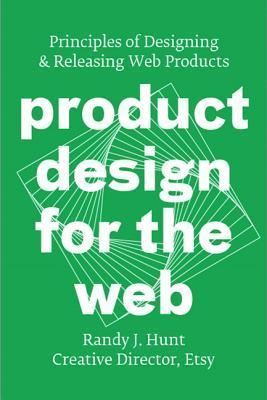
Product Design for the Web: Principles of Designing & Releasing Web Products
Web designers are no longer just web designers. To create a successful web product that’s as large as Etsy, Facebook, Twitter, or Pinterest–or even as small as a tiny app–you need to know more than just HTML and CSS. You need to understand how to create meaningful online experiences so that users want to come back again and again.
In other words, you have to stop thinking like a web designer or a visual designer or a UX designer or an interaction designer and start thinking like a product designer.
In this breakthrough introduction to modern product design, Etsy Creative Director Randy Hunt explains the skills, processes, types of tools, and recommended workflows for creating world-class web products. After reading this book, you’ll have a complete understanding of what product design really is and you’ll be equipped with the best practices necessary for building your own successful online products.
In other words, you have to stop thinking like a web designer or a visual designer or a UX designer or an interaction designer and start thinking like a product designer.
In this breakthrough introduction to modern product design, Etsy Creative Director Randy Hunt explains the skills, processes, types of tools, and recommended workflows for creating world-class web products. After reading this book, you’ll have a complete understanding of what product design really is and you’ll be equipped with the best practices necessary for building your own successful online products.
214 pages, Paperback
First published October 21, 2013
Ratings & Reviews
Friends & Following
Create a free account to discover what your friends think of this book!
Community Reviews
Displaying 1 - 24 of 24 reviews
August 12, 2023
5 starts for being the best collection of introductory material about how to best design and build web products.
It’s the book I’d love to have read when I finished my Mechanical Engineering degree and decided to work on web products.
It’s the book I’d love to have read when I finished my Mechanical Engineering degree and decided to work on web products.

February 13, 2018
It's a quick read. But after having read so many books and articles about design, I am not sure what this book added to my thoughts. I am gonna skim it through again at some point. A very handy book for beginners.
December 1, 2018
Looking at books for my intro to web product design course, this one was the most helpful and concise. It has easy steps for students to follow to get a basic understanding of how to get into a career as a visual product designer.

September 23, 2017
A good and solid introduction in digital product design. The principles described in the book very much apply to software engineering too!

February 25, 2018
Good for anyone looking to get into or understand more about how to make digital products, otherwise nothing new.

March 10, 2018
I really enjoyed this book I don't know why the Amazon reviews are so bleak.
I didn't know what Product Design consisted off. I knew the terminology of the word and that it's a vital role in web businesses. I've been a baby of the internet since I could remember. I always had a blog, banner rotation, tutorial websites and all those little bits I had online growing up. I never realised that all the things I did naturally to market my blog, bring traffic, update and improve it could be seen as Product Design development! This book explains everything from the fundamentals of Randy's journey of discovering what it was and all the different skills involved. It's a subject for those who are interested in multiple areas of the creative/marketing/tech side of the business. I am definitely even MORE interested in Product Design than I was before.
The process and way he talks through them are so logical it brings clarity to a very confusing and broad subject. I lent this book to my workmate who said a lot of the stuff he had to Google whilst reading so I'm not sure whether it's because I have a natural background in web products (without knowing they were web products) initially or whether it's just him.
All in all a very worthwhile read that I'm glad I came across in the library!!!!
I didn't know what Product Design consisted off. I knew the terminology of the word and that it's a vital role in web businesses. I've been a baby of the internet since I could remember. I always had a blog, banner rotation, tutorial websites and all those little bits I had online growing up. I never realised that all the things I did naturally to market my blog, bring traffic, update and improve it could be seen as Product Design development! This book explains everything from the fundamentals of Randy's journey of discovering what it was and all the different skills involved. It's a subject for those who are interested in multiple areas of the creative/marketing/tech side of the business. I am definitely even MORE interested in Product Design than I was before.
The process and way he talks through them are so logical it brings clarity to a very confusing and broad subject. I lent this book to my workmate who said a lot of the stuff he had to Google whilst reading so I'm not sure whether it's because I have a natural background in web products (without knowing they were web products) initially or whether it's just him.
All in all a very worthwhile read that I'm glad I came across in the library!!!!

June 14, 2025
The design of the book is really great.
But the content isn't that interesting... it appears obvious. But again, this book itself is really well designed with plenty if nice graphics.
But the content isn't that interesting... it appears obvious. But again, this book itself is really well designed with plenty if nice graphics.

July 8, 2017
Recommended to me by a UI Engineer Lead during an interview. Good overview of big picture ideas to evolve the mindset of seeing web apps and web pages as web products.

November 30, 2013
This book needed to be written and there is no more appropriate than Randy Hunt-- Etsy's creative director. With a background in graphics design and fine arts he can speak confidently about design perspectives, with web front end coding experience he can articulate the importance of knowing your materials and with a career cultivated at Easy (as opposed to some of the larger tech startups or shops); it's clear he has lived the experience of the pragmatic ship cycles within a more 'scrappy' organization.
What is this book?
Just beyond the reach of most design disciplines is a discipline that shares many of the same tools and language as many other design disciplines but instead of focusing on the artefact, the "discipline" of product design turns its gazed to the 'actualize' experience of using a product.
If this sounds like splitting hairs between UX, interaction design and general graphics design who have built websites on the web-- it is. But these are important hairs worth splitting. This book is about "product design" and as a book it seeks to help others embrace the product design mindset and to embrace the tools, perspective and practices of product design.
If in your experience you find a chasm between product management and design, consider this book a bidirectional bridge.
Why five stars?
This book is five stars because it fills what is a gap, in my view, in existing user experience literature. The difference between "Design" and design. That is the difference between Design as in the design studio organization and the process as which "Design" has come of age and design- the process of getting stuff done to ship compelling software as a team.
This book is not a must need for everyone. If you've spent a lot of time building web products and thrive in the fast pace, consider the lessons learned. However if you are new to mobile or web design and you find the time pressures a serious threat to your being as a designer (and the quality of your work) or are a product manager working with designer(s) that expect to have a voice, but unsure how to foster design AND ship-- this book is for you.
Hunt addresses this gap and names it product design. The book is pithy, it doesn't try to justify its existence by over expanding on concepts and it doesn't spend a lot of time rehashing points already made else where (such as designing with Agile).
Who is this book for?
People who work on web products. More explicitly...his book is for designers and product managers who have experienced a breakdown in communication across disciplines. This book is also for designers and design practitioners living with the tensions, tradeoffs and constraints in working in an engineering organization; and finally the book is for engineers and those in engineering disciplines who want to learn how to better participate in the design process.
Takeaways:
Prioritizing people over all else
Thinking beyond the product ad
Paying attention to the invisible features of a product
Learning through iteration
Embracing straightforward design
Embracing reality: the product is never done
What is this book?
Just beyond the reach of most design disciplines is a discipline that shares many of the same tools and language as many other design disciplines but instead of focusing on the artefact, the "discipline" of product design turns its gazed to the 'actualize' experience of using a product.
If this sounds like splitting hairs between UX, interaction design and general graphics design who have built websites on the web-- it is. But these are important hairs worth splitting. This book is about "product design" and as a book it seeks to help others embrace the product design mindset and to embrace the tools, perspective and practices of product design.
If in your experience you find a chasm between product management and design, consider this book a bidirectional bridge.
Why five stars?
This book is five stars because it fills what is a gap, in my view, in existing user experience literature. The difference between "Design" and design. That is the difference between Design as in the design studio organization and the process as which "Design" has come of age and design- the process of getting stuff done to ship compelling software as a team.
This book is not a must need for everyone. If you've spent a lot of time building web products and thrive in the fast pace, consider the lessons learned. However if you are new to mobile or web design and you find the time pressures a serious threat to your being as a designer (and the quality of your work) or are a product manager working with designer(s) that expect to have a voice, but unsure how to foster design AND ship-- this book is for you.
Hunt addresses this gap and names it product design. The book is pithy, it doesn't try to justify its existence by over expanding on concepts and it doesn't spend a lot of time rehashing points already made else where (such as designing with Agile).
Who is this book for?
People who work on web products. More explicitly...his book is for designers and product managers who have experienced a breakdown in communication across disciplines. This book is also for designers and design practitioners living with the tensions, tradeoffs and constraints in working in an engineering organization; and finally the book is for engineers and those in engineering disciplines who want to learn how to better participate in the design process.
Takeaways:
Prioritizing people over all else
Thinking beyond the product ad
Paying attention to the invisible features of a product
Learning through iteration
Embracing straightforward design
Embracing reality: the product is never done

February 23, 2015
Reading "Product Design for the Web" thorough the lens of a general design book reader, you could find any number of objections. It’s focused on specific kind of product design, especially if your practice is in a different kind of environment. It’s vague and general. It’s seems common sensical. It’s old news to those who’ve been developing software products for a living.
Read it as a guide for a client services designer (especially coming from print) or a student looking to start designing applications that get used and it resonates. How do you think about your work? What’s important? What aren't you considering? What about team work? If you’ve gone through the same journey, and are feeling a part of a highly functional team, Randy’s common sense starts sounding like deep wisdom. If something about your practice of designing for the web feels off, how are your principles different from ones described in the book? If you’re new to this, it’s a great survey of what to expect. Having followed Randy’s footsteps, I admit I’m biased in my review of "Product Design for the Web".
Read it as a guide for a client services designer (especially coming from print) or a student looking to start designing applications that get used and it resonates. How do you think about your work? What’s important? What aren't you considering? What about team work? If you’ve gone through the same journey, and are feeling a part of a highly functional team, Randy’s common sense starts sounding like deep wisdom. If something about your practice of designing for the web feels off, how are your principles different from ones described in the book? If you’re new to this, it’s a great survey of what to expect. Having followed Randy’s footsteps, I admit I’m biased in my review of "Product Design for the Web".

December 9, 2014
Great succinct read on product design for the web. I think that all digital design practitioners should read this. The methods and ideologies presented in the book, such as prototyping, user testing, and abandoning static mockups, are something that(even in 2015) some organizations and professionals struggle with. As product manager for Etsy, Randy J. Hunt provides thoughtful insight and articulated arguments for why this new approach to agile, iterative design is necessary to create awesome digital products that people love to use.

December 26, 2013
This is a very fast, lightweight, digestible book on digital product design. I enjoyed it.
However, I was left wanting more. I had hoped for more specific examples, greater depth, and more exposition. If you've been building web products for any significant amount of time (5+ years), only a few pages will surprise and delight you. Despite that, it's still worth your time to read.
However, I was left wanting more. I had hoped for more specific examples, greater depth, and more exposition. If you've been building web products for any significant amount of time (5+ years), only a few pages will surprise and delight you. Despite that, it's still worth your time to read.

December 23, 2014
Read it since it was recommended by someone in the technopreneurship circle. But it isn't upto the mark. the same theme is told a 1000 times throughout the book using different language. Needlessly bloated into 200+ pages.
I did learn some cool pointers for sure, but not a great book.
I did learn some cool pointers for sure, but not a great book.

February 24, 2015
An OK read.
There are stronger books out there on the topic.
This is a great prime for people from a print background, who are looking for an intro into designing digital products.
For seasoned digital product designers, this book will feel shallow.
There are stronger books out there on the topic.
This is a great prime for people from a print background, who are looking for an intro into designing digital products.
For seasoned digital product designers, this book will feel shallow.

June 13, 2020
Must read for wannabe product designers.
I would suggest anyone who want to do digital product design to read this and have a printout of the recap at the end of the book for quick reference.
I would suggest anyone who want to do digital product design to read this and have a printout of the recap at the end of the book for quick reference.

June 16, 2013
Not enough depth to be useful to readers who already know something about building Web products. Not enough basics to be useful to beginners.

Read
March 4, 2014This book is great so far. So looking forward to the rest ofit.
July 7, 2014
It's a good primer of product and UX design process. Not very in depth, but a good starting point.

October 6, 2014
Good overview of the principles and mindset of a great product designer. Insight in the nuance

January 19, 2015
Short little primer on product design.

February 9, 2015
Simply but a good foundation for a web product designer

June 3, 2015
A bit thin on the ground. Offered very little insight to someone who already does a bit of this.

April 1, 2016
The key insight for me was to design in terms of ux "flow" instead of an individual feature or page. I also enjoyed his advice to write the press release first. As a whole pretty cliche.

November 9, 2014
ETSYS RANDY J HUNT BRINGS THE SECRETS TO PRODUCT DESIGN.
DEFINTIELY RECCOMEND
DEFINTIELY RECCOMEND
Displaying 1 - 24 of 24 reviews