A man goes to sleep in his bed, in Amsterdam, and wakes up in a hotel room in Lisbon, where he had an affair many years ago. So starts an odyssey of memory, myth and melancholy of a life touched by grotesqueness, longing, unrequitedness and seclusion, recounted with effortless grace and serenity, probably in the face of his impending death.
‘I have never had an exaggerated interest in my own person, but unfortunately that did not imply I could stop thinking about myself at will, from one moment to the next. And that morning I certainly had something to think about. Another man might have resorted to a talk about life and death, but such weighty words do not come easily to my lips, even when there is no-one else there, as was then the case.’
The Following Story is an exquisitely written book, infused with humanity and contradictions; our protagonist accepts with alacrity a lugubrious life, has equanimity in the face of regrets and failures, and is filled with desire that's in equal measure replete with repression. It’s a reflective, purgatorial and philosophical tale, full of fatefulness, sometimes joy and death, uniquely delivered with a featherlight mordancy and wit. If recollections and purgatory are onerous subjects Nooteboom lyrically delivers them with charm and gracefulness. Though he's in a state of confusion few face death with such acquiescence as the protagonist when he awakes in a Lisbon hotel room.
‘I had woken up with the ridiculous feeling that I might be dead, but whether I was actually dead, or had been dead, or vice versa, I could not ascertain.’
Lyricism flows from acute observation, seamlessly woven with text that's metaphysical, has a touch of esotericism, classical references and modern idioms such that the story encompasses a timelessness whose balance at no time feels precarious or compromised. Though complex in scope and intention Nooteboom's delivery is deft, adept and one never loses a comprehension of the overall story where fable, metaphors, symbols and allegories are liberally sprinkled through contemporary prose and guide the narrative rather than confound it. But, ultimately, the reader must confront and resolve the conundrum of what is happening to our hapless anti-hero.
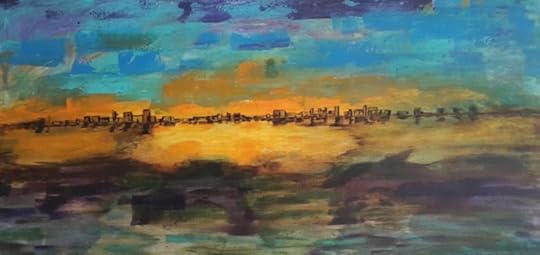
‘The water of the ocean looked black, it reeled, tossed, sailed away into itself, furling and unfurling, glistening sheets of liquid metal collapsing soundlessly, merging, each wave ploughing a furrow for the next to fold into, the inexorable, perpetual change into perpetually the same.’
In the end everything falls into place and in death our anti-hero has explained his life with dignity and composure such that one wouldn’t believe it might be told in any other way. I wasn't expecting to have such a sympathy with this introverted character full of limitations, imperfections and fears: a clown whose peculiarities satirised others peccadillos that they would have pronounced as normal.
What an exceptional book I’d hoped might never finish.