

What do you think?

The Irresistible Fairy Tale: The Cultural and Social History of a Genre
A provocative new theory about fairy tales from one of the world's leading authorities
If there is one genre that has captured the imagination of people in all walks of life throughout the world, it is the fairy tale. Yet we still have great difficulty understanding how it originated, evolved, and spread―or why so many people cannot resist its appeal, no matter how it changes or what form it takes. In this book, renowned fairy-tale expert Jack Zipes presents a provocative new theory about why fairy tales were created and retold―and why they became such an indelible and infinitely adaptable part of cultures around the world.
Drawing on cognitive science, evolutionary theory, anthropology, psychology, literary theory, and other fields, Zipes presents a nuanced argument about how fairy tales originated in ancient oral cultures, how they evolved through the rise of literary culture and print, and how, in our own time, they continue to change through their adaptation in an ever-growing variety of media. In making his case, Zipes considers a wide range of fascinating examples, including fairy tales told, collected, and written by women in the nineteenth century; Catherine Breillat's film adaptation of Perrault's "Bluebeard"; and contemporary fairy-tale drawings, paintings, sculptures, and photographs that critique canonical print versions.
While we may never be able to fully explain fairy tales, The Irresistible Fairy Tale provides a powerful theory of how and why they evolved―and why we still use them to make meaning of our lives.
If there is one genre that has captured the imagination of people in all walks of life throughout the world, it is the fairy tale. Yet we still have great difficulty understanding how it originated, evolved, and spread―or why so many people cannot resist its appeal, no matter how it changes or what form it takes. In this book, renowned fairy-tale expert Jack Zipes presents a provocative new theory about why fairy tales were created and retold―and why they became such an indelible and infinitely adaptable part of cultures around the world.
Drawing on cognitive science, evolutionary theory, anthropology, psychology, literary theory, and other fields, Zipes presents a nuanced argument about how fairy tales originated in ancient oral cultures, how they evolved through the rise of literary culture and print, and how, in our own time, they continue to change through their adaptation in an ever-growing variety of media. In making his case, Zipes considers a wide range of fascinating examples, including fairy tales told, collected, and written by women in the nineteenth century; Catherine Breillat's film adaptation of Perrault's "Bluebeard"; and contemporary fairy-tale drawings, paintings, sculptures, and photographs that critique canonical print versions.
While we may never be able to fully explain fairy tales, The Irresistible Fairy Tale provides a powerful theory of how and why they evolved―and why we still use them to make meaning of our lives.
256 pages, Paperback
First published April 8, 2012
About the author
Jack D. Zipes
150 books252 followersJack David Zipes is a retired Professor of German at the University of Minnesota. He has published and lectured extensively on the subject of fairy tales, their linguistic roots, and argued that they have a "socialization function". According to Zipes, fairy tales "serve a meaningful social function, not just for compensation but for revelation: the worlds projected by the best of our fairy tales reveal the gaps between truth and falsehood in our immediate society." His arguments are avowedly based on the neo-Marxist critical theory of the Frankfurt School.
Zipes enjoys using droll titles for his works like Don't Bet on the Prince and The Trials and Tribulations of Little Red Ridinghood.
He completed a PhD in comparative literature at Columbia University. Zipes taught at various institutions before heading German language studies at the University of Minnesota. He has retranslation of the complete fairy tales of the Brothers Grimm.
Zipes enjoys using droll titles for his works like Don't Bet on the Prince and The Trials and Tribulations of Little Red Ridinghood.
He completed a PhD in comparative literature at Columbia University. Zipes taught at various institutions before heading German language studies at the University of Minnesota. He has retranslation of the complete fairy tales of the Brothers Grimm.
Ratings & Reviews
Friends & Following
Create a free account to discover what your friends think of this book!
Community Reviews
Displaying 1 - 30 of 34 reviews

January 11, 2013
I really love the way Jack Zipes makes fairy tale scholarship both learned and accessible - this book does not really add anything new but it builds on a strong foundation and, really, I find anything to do with fairy tales fascinating

June 5, 2013
In-depth examination of fairy tales as historical genre, with discussions on the myriad stories that have not been studied (due to lack of translations) and the presence of women fairy tale collectors/writers who have been overlooked in the historiography of fairy tale collections, thanks to gender bias of male folklorists.
Discussion of fairy tale reinterpretation in contemporary art and film as well.
Discussion of fairy tale reinterpretation in contemporary art and film as well.

April 25, 2013
Um...yeah. Zipes wrote another book. The best bits were the appendices.

November 14, 2012
Jack Zipes is a leading authority on fairy tales, but he is trading on his reputation in this carelessly written book. It is more of a pastiche than an academic study. Instead of paraphrasing secondary sources, he almost always offers long quotations. This suggests that he has not entirely assimilated their ideas, and interferes with the flow of the text. The book has no central thesis, and the chapters are disconnected from one another. I am being a bit generous in giving it three stars, but Zipes' knowledge of fairy tales is so extensive that, even writing casually, he is still able to offer many interesting, if fragmentary, ideas and bits of information.

August 13, 2022
Özellikle Avrupa masalları için güzel bir araştırma kitabı. Mavi Sakal ve Baba Yaga hikayelerini anlatan kısımlarını beğensem de, masal derleyicileri hakkındaki kısımları çok uzun buldum ve ilgimi pek cezbetmedi.

June 27, 2013
I don't know. I thought there would be more that the author is trying to say about the subject. Its a pretty thin book. Even that, it skips all over the place and I wish the author went more in depth with the stuff it did touch on. (He spends a whole section on "Bluebeard" but only in the context of naming a movie he seems to hold in high regard because it does the fairy tale 'right' for some reason)
I mentioned it in the update that the author seems to have it out for Disney ("Tangled" too, specifically, for some reason) and look: Yes, Disney may be 'responsible' for watering down fairy tales and sanitizing them but I don't think they do it DELIBERATELY. Its not like they were able to and just didn't because they're dicks. Even the fairy tale movies still end up being dark stripped of most of the sexual and horrific elements.
I'm not butthurt over this, I just don't think it endears me to the point the author is trying to make bringing up Disney in an academic-style book about fairy tales only to say what most people already know about the Disney movies.
He tries to explore the rise in fairy tales in the place of graphic art and he's quick to label certain tales or adaptations 'sexist' and 'misogynist' but there's a larger movement or shift I think he's missing, like the shift in self-identifying with the villianous female characters over the "good" ones and the "updating" of princess, making them darker or more gothic. As for the gothic princesses thing, it may have to do with this gothic aesthetic becoming more prominent in popular culture as a whole or even internalizing the stories and movies, princesses and fairy tales becoming part of a kid's shared mythology and then these archetypes getting warped and updated over time.
I dunno. There were a lot of places he could have gone with this and maybe I was a bit disappointed that it was so short and skipped around so much. I just don't think shitting on Disney helped at all. Yeah, they're not accurate to the fairy tales. They've still become part of the popular culture. Children still know who Snow White, Cinderella, Sleeping Beauty and Red Riding Hood are, know enough to use them as metaphors in their art. He names a few pieces but doesn't seem to say much about them. Yeah, a painting of Snow White with three children and her Prince Charming as unhappy nuclear family. What does it SAY? The prevalence of Red Riding Hood not running away from the wolf but caressing it. What does it MEAN? I could extrapolate some kind of meaning or message out of them but the author doesn't.
I dunno. I'm used to books about fairy tales being more meaty than this. This felt rushed and a little cynical.
I mentioned it in the update that the author seems to have it out for Disney ("Tangled" too, specifically, for some reason) and look: Yes, Disney may be 'responsible' for watering down fairy tales and sanitizing them but I don't think they do it DELIBERATELY. Its not like they were able to and just didn't because they're dicks. Even the fairy tale movies still end up being dark stripped of most of the sexual and horrific elements.
I'm not butthurt over this, I just don't think it endears me to the point the author is trying to make bringing up Disney in an academic-style book about fairy tales only to say what most people already know about the Disney movies.
He tries to explore the rise in fairy tales in the place of graphic art and he's quick to label certain tales or adaptations 'sexist' and 'misogynist' but there's a larger movement or shift I think he's missing, like the shift in self-identifying with the villianous female characters over the "good" ones and the "updating" of princess, making them darker or more gothic. As for the gothic princesses thing, it may have to do with this gothic aesthetic becoming more prominent in popular culture as a whole or even internalizing the stories and movies, princesses and fairy tales becoming part of a kid's shared mythology and then these archetypes getting warped and updated over time.
I dunno. There were a lot of places he could have gone with this and maybe I was a bit disappointed that it was so short and skipped around so much. I just don't think shitting on Disney helped at all. Yeah, they're not accurate to the fairy tales. They've still become part of the popular culture. Children still know who Snow White, Cinderella, Sleeping Beauty and Red Riding Hood are, know enough to use them as metaphors in their art. He names a few pieces but doesn't seem to say much about them. Yeah, a painting of Snow White with three children and her Prince Charming as unhappy nuclear family. What does it SAY? The prevalence of Red Riding Hood not running away from the wolf but caressing it. What does it MEAN? I could extrapolate some kind of meaning or message out of them but the author doesn't.
I dunno. I'm used to books about fairy tales being more meaty than this. This felt rushed and a little cynical.

March 16, 2014
This book was pretty awful. WAY too academic--I hate to think about what other books the people who called this one "accessible" were reading. I think the prior library patron who took the book out before me said it best when she wrote in the margin, "your language sucks, you dried up academic prune," and in another place, "ugh." Literally the only reason I slogged my way through the whole thing is because I have a perfect record of finishing all of the books my book club had read and didn't want to break my streak.

July 20, 2020
Me gustó la parte donde aborda el tema de las brujas en las historias folclóricas (siendo Baba Yaga el ejemplo mas obvio de lo que está hablando) y cómo muchas de esas representaciones están relacionadas con la visión general de las mujeres.
También me pareció interesante la mención de varias recolectoras de historias que fueron ignoradas y son virtualmente desconocidas por el sesgo histórico.
Entiendo que Zipes tiene otros libros del tema y definitivamente quiero leerlos, así como revisar algunas de las referencias que menciona.
También me pareció interesante la mención de varias recolectoras de historias que fueron ignoradas y son virtualmente desconocidas por el sesgo histórico.
Entiendo que Zipes tiene otros libros del tema y definitivamente quiero leerlos, así como revisar algunas de las referencias que menciona.

Read
July 9, 2012Excessively readable and Zipes is brilliant as always, but this is a collection of essays about topics that he's covered well in the past. These essays seem to be written for vastly different audiences so if you are new to Zipes, I recommend Fairy Tales and the Art of Subversion first.
September 10, 2020
Zipes, J. (2014) «El irresistible cuento de hadas. Historia cultural y social de un género». Trad. de Silvia Villegas. Buenos Aires: FCE (Col. Espacios para la lectura). 400 pp.
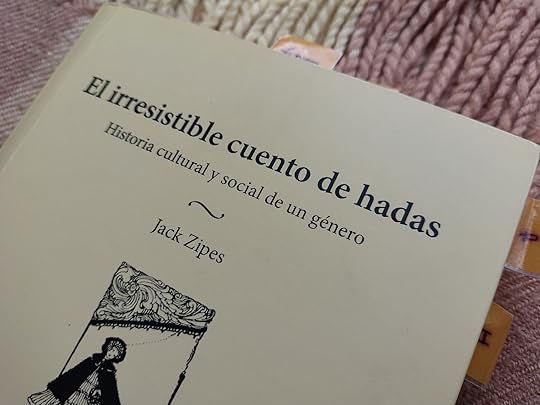
Detalle de cubierta de «El irresistible cuento de hadas. Historia cultural y social de un género» (FCE, 2014).
El irresistible cuento de hadas: historia cultural y social de un género es el libro Zipes más importante de su etapa de evolución cultural. Con una más que acertada traducción, la obra reúne nueve ensayos (siete capítulos y dos apéndices) en torno al sustrato oral del cuento de hadas y a las características de las reescrituras de otros siglos y del actual revisando tanto versiones literarias, cinematográficas y de las artes plásticas, como textos críticos sobre el género. Como suele suceder con los libros de Zipes, El irresistible cuento de hadas es un una amalgama de temas y aproximaciones teóricas que adquiere coherencia a partir de las conexiones que establece el autor.
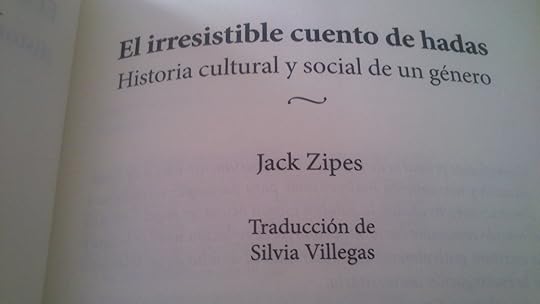
Portada de «El irresistible cuento de hadas. Historia cultural y social de un género» (FCE, 2014).
Los dos primeros capítulos, “la evolución cultural de la narración y los cuentos de hadas: la comunicación humana y la memética” y “el cuento de hadas en la evolución de la cultura” exploran, por un lado, las relaciones entre los cuentos populares orales y los cuentos de hadas literarios y, por otro, por qué ciertos motivos se repiten en los cuentos de hadas de diversas culturas. El recorrido histórico y teórico que se plantea es rico en conexiones pues rastrea los orígenes del género más allá de la época dorada del cuento de hadas francés (1690 y 1710). Por ejemplo, se adentra en el imaginario medieval explorando el impacto que personajes como Morgana y Melusina han tenido en la configuración de relatos que se abren al mundo feérico. También se remonta en ocasiones a relatos grecolatino para dar explicación a la poligénesis del cuento de hadas y aludir al origen oral del género.
Del marco teórico que se va dibujado en los primeros capítulos resulta particularmente interesante el desglose que se ofrece de la replicación del meme siguiendo a Michael Drout, quien lo resume en tres actos o fases: recognitio, actio y justificatio. Estas fases del proceso de repetición y adaptación del meme son ejemplificas en el capítulo tercero, “Remake de «Barba Azul» o el adiós a Perrault”. En éste se desarrolla conceptualmente qué es un remake y analiza cómo se actualiza la historia de Barba Azul en la película de Catherine Breillat de título homólogo (2009), la cual es una obra visual, narrativa y conceptualmente compleja en la que la creadora va introduciendo elementos autobiográficos y utiliza el relato del legendario serial killer para ofrecer nuevas imágenes de femineidad y problematizar el carácter patriarcal del relato.
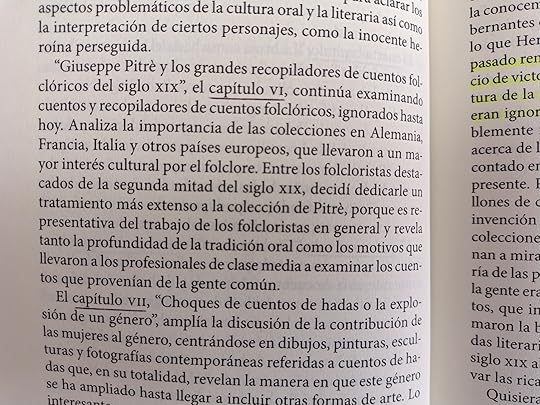
Fragmento de «El irresistible cuento de hadas. Historia cultural y social de un género» (FCE, 2014); p. 18.
En el capítulo siguiente, “La bruja como hada/el hada como bruja: las insondables Baba Yagas”, Zipes continúa el recorrido que había comenzado estudiando a Morgana adentrándose en la evolución de una imagen poderosa, la de la bruja, a partir de Baba Yaga, el personaje de la tradición eslava. Probablemente lo más valioso del capítulo es la cantidad de marcos teóricos que pone a dialogar; el texto habla de la importancia de W.R.S. Ralston, de material poco difundido de la obra de Vladimir Propp, de lo dicho por Andreas Johns sobre el carácter multifacético de Baba Yaga… La riqueza bibliográfica de este ensayo contrasta con su debilidad para respaldar con evidencias una de las cosas que se propone esclarecer al principio del capítulo: demostrar el origen grecolatino de la bruja-hada.
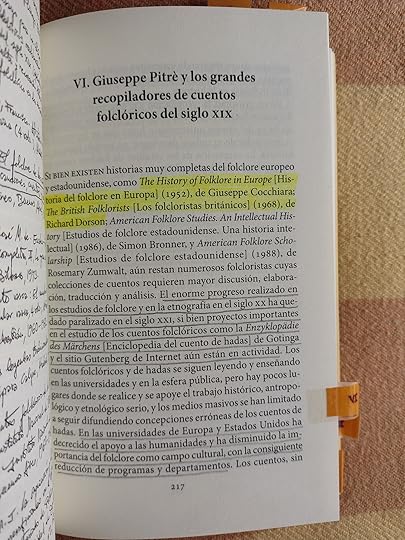
Fragmento de «El irresistible cuento de hadas. Historia cultural y social de un género» (FCE, 2014); p. 217.
Los capítulos cinco y seis conforman una unidad aparte. Tanto en “Cuentos de inocentes heroínas perseguidas y sus ignoradas narradoras y recopiladoras” como en “Giuseppe Pitrè y los grandes recopiladores de cuentos folclóricos del siglo XIX” se intenta rescatar colecciones de cuentos populares poco difundidos y dar notoriedad a compiladores folcloristas y creadores olvidados. El quinto capítulo específicamente se centra en autoras del siglo XIX –Laura Gonzenbach, Nannette Lévesque, Božena Nemcova, y Rachel Busk—y las protagonistas de sus historias, las cuales son víctimas de violaciones, relaciones incestuosas e injusticias de diversa índole. La exposición revindica la voz de la mujer de doble manera: primero dando visibilidad a quienes habían quedado opacadas por las versiones y las compilaciones masculinas (hermanos Grimm, Disney, etc.) y luego presentando y analizando relatos con heroínas que se forjan su propio destino y que no se ajustan a la moral de los cuentos de hadas clásicos. Zipes discute en el capítulo seis el tema de la literatura canónica enfocándose en la influencia de una colección de cuentos populares sicilianos del siglo XIX de Giuseppe Pitrè marginada por la crítica.
En el último capítulo, “Choques de cuentos de hadas o la explosión de un género” Zipes retoma el hilo interpretativo de la memética de los primeros capítulos y vuelve a un tema que lo acompaña desde su libro Don’t Bet on the Prince: las reinterpretaciones creadas a partir del feminismo. En este capítulo estudia cómo en las artes visuales de finales del siglo XX y principios del XXI se reproducen y critican imágenes inquietantes de los cuentos de hadas vinculadas con la maternidad, la femineidad y la infancia. Le dedica especial atención a las litografías de Kiki Smith, pero menciona otras reinterpretaciones feministas que han renovado la materia prima de los cuentos de hadas tradicionales como la narrativa de Angela Carter, los óleos Sharon Singer y las pinturas de Claire Prussian.
Este último capítulo entronca con los dos apéndices que le siguen, “Erudición sensacionalista: una «nueva» historia de los cuentos de hadas” y “Erudición reduccionista: una «nueva» definición del cuento de hadas” en cuanto que los tres –en mayor o menor medida—versan sobre el peso que tiene la crítica literaria y cultural en la creación de nuevos discursos en torno al cuento de hadas, sean éstos materializados en creaciones artísticas o en textos teóricos. El primer apéndice critica severamente el libro Fairy Tales: A New History de Ruth Bottigheimer, el cual busca deconstruir la idea de que los cuentos de hadas literarios provienen del mundo oral; para Zipes la autora (otra renombrada especialista en cuentos de hadas) simplifica y junta datos caprichosamente y no da elementos concretos para sustentar su hipótesis de que la evolución del cuento de hadas ha dependido desde el principio de la transmisión de textos impresos. En el segundo apéndice la crítica es ligeramente menos vehemente que en el primero pero también Zipes cuestiona con fuerza los postulados de Willem de Blécourt en Tales of Magic, Tales of Print. On the Geneology of Fairy tales and The Brothers Grimm y acusa al autor de ignorancia supina.
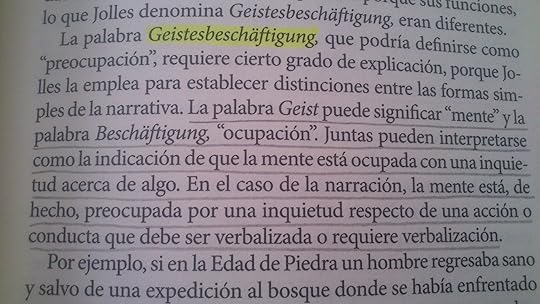
Fragmento de «El irresistible cuento de hadas. Historia cultural y social de un género» (FCE, 2014); p. 37.
Como puede verse a partir del resumen de las partes del libro, El irresistible cuento de hadas es fecundo en referencias y ofrece a través de un original mosaico de fuentes primarias y secundarias una revisión histórica y cultural del cuento de hadas que habla precisamente de los problemas de encasillar el género y de limitar sus orígenes e influencias. Aunque el subtítulo pareciera indicar que el libro es una suerte de manual de historia de la literatura, este ensayo está lejos de serlo; es más bien un catálogo de rarezas y obras destacables y la historia del género se insinúa a través de las interconexiones planteadas pero no se explica como tal. Eso según como sea vea es la gran fortaleza o la debilidad de la obra. Así mismo, llama la atención que, siendo un texto sobre la flexibilidad del género para su supervivencia, el libro no analice ejemplos que muestren su adaptabilidad en productos de la cultura de masas. Aún con estos posibles cuestionamientos, El irresistible cuento de hadas es una lectura sustanciosa y apasionante que sacia tanto a quienes quieran introducirse en las complejidades del tema por primera vez como aquellos más avezados en él.
[Fuente del texto: GRETEL (Grupo de Investigación de literatura infantil y juvenil y educación literaria de la Universitat Autònoma de Barcelona).]
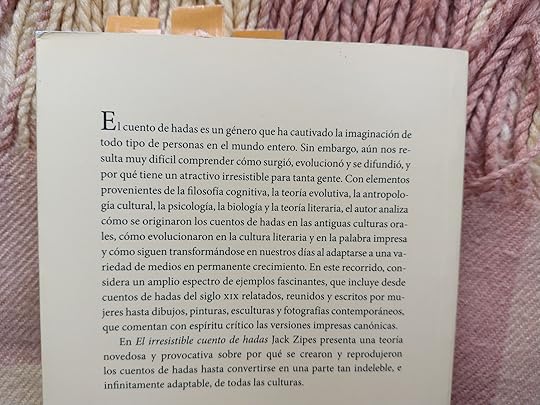
Detalle de cubierta de «El irresistible cuento de hadas. Historia cultural y social de un género» (FCE, 2014).
El irresistible cuento de hadas: historia cultural y social de un género es el libro Zipes más importante de su etapa de evolución cultural. Con una más que acertada traducción, la obra reúne nueve ensayos (siete capítulos y dos apéndices) en torno al sustrato oral del cuento de hadas y a las características de las reescrituras de otros siglos y del actual revisando tanto versiones literarias, cinematográficas y de las artes plásticas, como textos críticos sobre el género. Como suele suceder con los libros de Zipes, El irresistible cuento de hadas es un una amalgama de temas y aproximaciones teóricas que adquiere coherencia a partir de las conexiones que establece el autor.
Portada de «El irresistible cuento de hadas. Historia cultural y social de un género» (FCE, 2014).
Los dos primeros capítulos, “la evolución cultural de la narración y los cuentos de hadas: la comunicación humana y la memética” y “el cuento de hadas en la evolución de la cultura” exploran, por un lado, las relaciones entre los cuentos populares orales y los cuentos de hadas literarios y, por otro, por qué ciertos motivos se repiten en los cuentos de hadas de diversas culturas. El recorrido histórico y teórico que se plantea es rico en conexiones pues rastrea los orígenes del género más allá de la época dorada del cuento de hadas francés (1690 y 1710). Por ejemplo, se adentra en el imaginario medieval explorando el impacto que personajes como Morgana y Melusina han tenido en la configuración de relatos que se abren al mundo feérico. También se remonta en ocasiones a relatos grecolatino para dar explicación a la poligénesis del cuento de hadas y aludir al origen oral del género.
Del marco teórico que se va dibujado en los primeros capítulos resulta particularmente interesante el desglose que se ofrece de la replicación del meme siguiendo a Michael Drout, quien lo resume en tres actos o fases: recognitio, actio y justificatio. Estas fases del proceso de repetición y adaptación del meme son ejemplificas en el capítulo tercero, “Remake de «Barba Azul» o el adiós a Perrault”. En éste se desarrolla conceptualmente qué es un remake y analiza cómo se actualiza la historia de Barba Azul en la película de Catherine Breillat de título homólogo (2009), la cual es una obra visual, narrativa y conceptualmente compleja en la que la creadora va introduciendo elementos autobiográficos y utiliza el relato del legendario serial killer para ofrecer nuevas imágenes de femineidad y problematizar el carácter patriarcal del relato.
Fragmento de «El irresistible cuento de hadas. Historia cultural y social de un género» (FCE, 2014); p. 18.
En el capítulo siguiente, “La bruja como hada/el hada como bruja: las insondables Baba Yagas”, Zipes continúa el recorrido que había comenzado estudiando a Morgana adentrándose en la evolución de una imagen poderosa, la de la bruja, a partir de Baba Yaga, el personaje de la tradición eslava. Probablemente lo más valioso del capítulo es la cantidad de marcos teóricos que pone a dialogar; el texto habla de la importancia de W.R.S. Ralston, de material poco difundido de la obra de Vladimir Propp, de lo dicho por Andreas Johns sobre el carácter multifacético de Baba Yaga… La riqueza bibliográfica de este ensayo contrasta con su debilidad para respaldar con evidencias una de las cosas que se propone esclarecer al principio del capítulo: demostrar el origen grecolatino de la bruja-hada.
Fragmento de «El irresistible cuento de hadas. Historia cultural y social de un género» (FCE, 2014); p. 217.
Los capítulos cinco y seis conforman una unidad aparte. Tanto en “Cuentos de inocentes heroínas perseguidas y sus ignoradas narradoras y recopiladoras” como en “Giuseppe Pitrè y los grandes recopiladores de cuentos folclóricos del siglo XIX” se intenta rescatar colecciones de cuentos populares poco difundidos y dar notoriedad a compiladores folcloristas y creadores olvidados. El quinto capítulo específicamente se centra en autoras del siglo XIX –Laura Gonzenbach, Nannette Lévesque, Božena Nemcova, y Rachel Busk—y las protagonistas de sus historias, las cuales son víctimas de violaciones, relaciones incestuosas e injusticias de diversa índole. La exposición revindica la voz de la mujer de doble manera: primero dando visibilidad a quienes habían quedado opacadas por las versiones y las compilaciones masculinas (hermanos Grimm, Disney, etc.) y luego presentando y analizando relatos con heroínas que se forjan su propio destino y que no se ajustan a la moral de los cuentos de hadas clásicos. Zipes discute en el capítulo seis el tema de la literatura canónica enfocándose en la influencia de una colección de cuentos populares sicilianos del siglo XIX de Giuseppe Pitrè marginada por la crítica.
En el último capítulo, “Choques de cuentos de hadas o la explosión de un género” Zipes retoma el hilo interpretativo de la memética de los primeros capítulos y vuelve a un tema que lo acompaña desde su libro Don’t Bet on the Prince: las reinterpretaciones creadas a partir del feminismo. En este capítulo estudia cómo en las artes visuales de finales del siglo XX y principios del XXI se reproducen y critican imágenes inquietantes de los cuentos de hadas vinculadas con la maternidad, la femineidad y la infancia. Le dedica especial atención a las litografías de Kiki Smith, pero menciona otras reinterpretaciones feministas que han renovado la materia prima de los cuentos de hadas tradicionales como la narrativa de Angela Carter, los óleos Sharon Singer y las pinturas de Claire Prussian.
Este último capítulo entronca con los dos apéndices que le siguen, “Erudición sensacionalista: una «nueva» historia de los cuentos de hadas” y “Erudición reduccionista: una «nueva» definición del cuento de hadas” en cuanto que los tres –en mayor o menor medida—versan sobre el peso que tiene la crítica literaria y cultural en la creación de nuevos discursos en torno al cuento de hadas, sean éstos materializados en creaciones artísticas o en textos teóricos. El primer apéndice critica severamente el libro Fairy Tales: A New History de Ruth Bottigheimer, el cual busca deconstruir la idea de que los cuentos de hadas literarios provienen del mundo oral; para Zipes la autora (otra renombrada especialista en cuentos de hadas) simplifica y junta datos caprichosamente y no da elementos concretos para sustentar su hipótesis de que la evolución del cuento de hadas ha dependido desde el principio de la transmisión de textos impresos. En el segundo apéndice la crítica es ligeramente menos vehemente que en el primero pero también Zipes cuestiona con fuerza los postulados de Willem de Blécourt en Tales of Magic, Tales of Print. On the Geneology of Fairy tales and The Brothers Grimm y acusa al autor de ignorancia supina.
Fragmento de «El irresistible cuento de hadas. Historia cultural y social de un género» (FCE, 2014); p. 37.
Como puede verse a partir del resumen de las partes del libro, El irresistible cuento de hadas es fecundo en referencias y ofrece a través de un original mosaico de fuentes primarias y secundarias una revisión histórica y cultural del cuento de hadas que habla precisamente de los problemas de encasillar el género y de limitar sus orígenes e influencias. Aunque el subtítulo pareciera indicar que el libro es una suerte de manual de historia de la literatura, este ensayo está lejos de serlo; es más bien un catálogo de rarezas y obras destacables y la historia del género se insinúa a través de las interconexiones planteadas pero no se explica como tal. Eso según como sea vea es la gran fortaleza o la debilidad de la obra. Así mismo, llama la atención que, siendo un texto sobre la flexibilidad del género para su supervivencia, el libro no analice ejemplos que muestren su adaptabilidad en productos de la cultura de masas. Aún con estos posibles cuestionamientos, El irresistible cuento de hadas es una lectura sustanciosa y apasionante que sacia tanto a quienes quieran introducirse en las complejidades del tema por primera vez como aquellos más avezados en él.
[Fuente del texto: GRETEL (Grupo de Investigación de literatura infantil y juvenil y educación literaria de la Universitat Autònoma de Barcelona).]

December 10, 2022
"To collect, transcribe, and translate folklore is to recognize the values of some people and esteem their position in the world, even if one does not understand fully what the words of these people represent in the web of power and authority."
"The irony of the fairy tale's cultural evolution is that it is rooted out of human necessity, and we are still trying to determine why the fairy tale is so irresistible and necessary."
As one of the major players in the academic study of fairy tales, Jack Zipes offers up a wide range of thoughts on the historical evolutions and cultural aspects of this folklore genre. As is characteristic of his other books, each chapter essentially stands as an independent essay from the rest, providing a diverse collection of topics. Thus, although properly an academic book, it can simultaneously serve as a popular book for those outside of the field of folkloristics. Zipes' writing style is both lively and accessible to a general audience, while the general familiarity of fairy tales makes the subject matter attractive for those outside of this field.
Out of the particularly notable sections in this volume is a chapter on the cultural evolution of storytelling. This situates the rise of fairy tales within the larger history of the evolution of human communication and need to craft stories of one variety or another. Storytelling arises from the need to transfer ideas from one person to another. This is also bound up with aspects of traditionality whereby stories accumulate the thoughts of motifs of previous generations, being mass amalgamations, rather than the invention of a single mind. The chapter on Baba Yaga is, likewise, insightful, not only for the study of this pervasive figure of eastern European folklore, but for the more general thoughts on the formation of such folkloric characters and the stories themselves. Baba Yaga, though certainly derived from earlier witches and goddesses, cannot so linearly be traced back to a single origin. Instead, she is the product of a constellation of diverse influences, that meld together to form something wholly new. Other particular interesting bits include an examination of the historic neglect of female folkloric collectors of the nineteenth century, who were overshadowed in both scholarship and the popular imagination by others such as the Grimm Brothers, and an introduction to the work of Giuseppe Pitrè, an especially prolific folklorist of the same century also often overlooked. The final chapter, then, serves to bring the book back to the present century with a look at the artistic reception of several well-known fairy tales, emphasizing the point that such tales are not static in the form written down by the Grimms (or other collectors), but are living (breathing) stories that continue to provide valuable reflections on modern day cultural and social issues.
"The irony of the fairy tale's cultural evolution is that it is rooted out of human necessity, and we are still trying to determine why the fairy tale is so irresistible and necessary."
As one of the major players in the academic study of fairy tales, Jack Zipes offers up a wide range of thoughts on the historical evolutions and cultural aspects of this folklore genre. As is characteristic of his other books, each chapter essentially stands as an independent essay from the rest, providing a diverse collection of topics. Thus, although properly an academic book, it can simultaneously serve as a popular book for those outside of the field of folkloristics. Zipes' writing style is both lively and accessible to a general audience, while the general familiarity of fairy tales makes the subject matter attractive for those outside of this field.
Out of the particularly notable sections in this volume is a chapter on the cultural evolution of storytelling. This situates the rise of fairy tales within the larger history of the evolution of human communication and need to craft stories of one variety or another. Storytelling arises from the need to transfer ideas from one person to another. This is also bound up with aspects of traditionality whereby stories accumulate the thoughts of motifs of previous generations, being mass amalgamations, rather than the invention of a single mind. The chapter on Baba Yaga is, likewise, insightful, not only for the study of this pervasive figure of eastern European folklore, but for the more general thoughts on the formation of such folkloric characters and the stories themselves. Baba Yaga, though certainly derived from earlier witches and goddesses, cannot so linearly be traced back to a single origin. Instead, she is the product of a constellation of diverse influences, that meld together to form something wholly new. Other particular interesting bits include an examination of the historic neglect of female folkloric collectors of the nineteenth century, who were overshadowed in both scholarship and the popular imagination by others such as the Grimm Brothers, and an introduction to the work of Giuseppe Pitrè, an especially prolific folklorist of the same century also often overlooked. The final chapter, then, serves to bring the book back to the present century with a look at the artistic reception of several well-known fairy tales, emphasizing the point that such tales are not static in the form written down by the Grimms (or other collectors), but are living (breathing) stories that continue to provide valuable reflections on modern day cultural and social issues.

May 20, 2018
In Kenn Bannerman’s interview with Prof. Jack Zipes, a professor emeritus of German and comparative literature at the University of Minnesota and the author, translator and editor of dozens of studies and collections of folk and fairy tales, the latter shared his attitude towards fairy tales, stating that “I think I am very knowledgeable about fairy tales. I think I have a deep interest in fairy tales and I may even be obsessed by them. I feel driven to uncover tales that few people know and to share this knowledge and pleasure with other readers.”
In his latest book, The Irresistible Fairy Tale: The Cultural and Social History of a Genre, Zipes asserts the oral origins of fairy tales, and, drawing from the fields of, among others, cognitive science, evolutionary theory, anthropology, psychology and literary theory, he sets about expanding on his own approach to the genre, as well as exploring new research by such renowned scholars as Michael Tomasello, Michael Trout and Kate Distin. How and why tales were told and came to form the basis of culture is explained in terms of his own understanding of the evolution of the genre. After exploring the French school of fairy tale writing that emerged in the late 17th century, Zipes focuses on Catherine Breillat’s reinterpretation of Perrault’s Bluebeard, followed by a discussion of tales about witches such as Baba Yaga. The focus on the female is continued in an unveiling of 19th century folk and fairy tales told, collected, and written by women, which leads into a discussion of the role played by great collectors of folk tales in the 19th century. Zipes then rounds out his latest research into the genre of fairy tales by showing how such tales have now crossed over into other forms of artwork, including drawings, paintings, sculptures and photographs.
In showing how and why fairy tales have become a core part of our central being, Zipes reveals his extensive scholarship in the field, as well as his skill in expounding profoundly about his key interests and concerns relating to the fairy tale genre. This scholarly masterpiece, which has emerged from decades of thought on the subject, deserves a place in all literary collections, as well as consideration by all those concerned with this particular genre.
In his latest book, The Irresistible Fairy Tale: The Cultural and Social History of a Genre, Zipes asserts the oral origins of fairy tales, and, drawing from the fields of, among others, cognitive science, evolutionary theory, anthropology, psychology and literary theory, he sets about expanding on his own approach to the genre, as well as exploring new research by such renowned scholars as Michael Tomasello, Michael Trout and Kate Distin. How and why tales were told and came to form the basis of culture is explained in terms of his own understanding of the evolution of the genre. After exploring the French school of fairy tale writing that emerged in the late 17th century, Zipes focuses on Catherine Breillat’s reinterpretation of Perrault’s Bluebeard, followed by a discussion of tales about witches such as Baba Yaga. The focus on the female is continued in an unveiling of 19th century folk and fairy tales told, collected, and written by women, which leads into a discussion of the role played by great collectors of folk tales in the 19th century. Zipes then rounds out his latest research into the genre of fairy tales by showing how such tales have now crossed over into other forms of artwork, including drawings, paintings, sculptures and photographs.
In showing how and why fairy tales have become a core part of our central being, Zipes reveals his extensive scholarship in the field, as well as his skill in expounding profoundly about his key interests and concerns relating to the fairy tale genre. This scholarly masterpiece, which has emerged from decades of thought on the subject, deserves a place in all literary collections, as well as consideration by all those concerned with this particular genre.
August 7, 2023
Jack Zipes : Nezadržna moč pravljic - kulturna in družboslovna zgodovina žanra
Naslov izvirnika : The Irresistable Fairy Tale
Prevod : Alenka Černe
Pedagoška fakulteta, 2022
ISBN : 978-961-253-294-9
248 strani
#študije
Zelo zanimiva monografija o pravljicah (Conte de fee, Fairy Tale)i, s poudarkom na opredelitvi, memetiki in raziskavi izvorov (nad)žanra. Mnoge informacije so za splošno 'vednost' o pravljicah presenetljive; če je razmerje med ustnimi in literariziranimi tradicijami razumljivo, preseneča zlasti funkcija (otrokom namenjene postanejo kasneje) in izjemen ženski vpliv na razvoj ne samo načina pripovedi, temveč tudi zapisa pravljic (ženske - npr. d'Aulnoyine pravljice so bile pred znamenitimi Perraultjem ali bratoma Grimm). V sedmih poglavjih Zipes obravnava večino znanih pravljic (Sinjebradec, Rdeča kapica, Pepelka ali iz slovanske folklore vzeta 'vila' Jaga baba…) z njihovimi variacijami in sodobnimi interpretacijami.
Naslov izvirnika : The Irresistable Fairy Tale
Prevod : Alenka Černe
Pedagoška fakulteta, 2022
ISBN : 978-961-253-294-9
248 strani
#študije
Zelo zanimiva monografija o pravljicah (Conte de fee, Fairy Tale)i, s poudarkom na opredelitvi, memetiki in raziskavi izvorov (nad)žanra. Mnoge informacije so za splošno 'vednost' o pravljicah presenetljive; če je razmerje med ustnimi in literariziranimi tradicijami razumljivo, preseneča zlasti funkcija (otrokom namenjene postanejo kasneje) in izjemen ženski vpliv na razvoj ne samo načina pripovedi, temveč tudi zapisa pravljic (ženske - npr. d'Aulnoyine pravljice so bile pred znamenitimi Perraultjem ali bratoma Grimm). V sedmih poglavjih Zipes obravnava večino znanih pravljic (Sinjebradec, Rdeča kapica, Pepelka ali iz slovanske folklore vzeta 'vila' Jaga baba…) z njihovimi variacijami in sodobnimi interpretacijami.

November 22, 2024
This book was on a reading list for a course by the poet and educator Mari Dunning.
As someone who had never studied folklore as literature, but who comes from a culture with a strong oral tradition, I really enjoyed the way that the author used published accounts and artworks (including film) to explore different approaches taken to the collecting, presentation, re-presentation and subversion of stories dating back to the time before writing was the dominant form.
I particularly liked the explorations of work by Paula Rego and Kiki Smith and the foregrounding of contemporary women artists and writers and their different approaches to tales that have enshrined patriarchal norms for centuries.
Three word review: feminists retelling tales.
As someone who had never studied folklore as literature, but who comes from a culture with a strong oral tradition, I really enjoyed the way that the author used published accounts and artworks (including film) to explore different approaches taken to the collecting, presentation, re-presentation and subversion of stories dating back to the time before writing was the dominant form.
I particularly liked the explorations of work by Paula Rego and Kiki Smith and the foregrounding of contemporary women artists and writers and their different approaches to tales that have enshrined patriarchal norms for centuries.
Three word review: feminists retelling tales.

February 6, 2022
About half the chapters in here were very interesting (and slightly over my head), and the other half seemed like essays Zipes had written for someting else and smooshed into this book. I could follow them better, but also they were just doing less. By the time I got ot the end, I was uncertain what the throughline was. But I do know a lot more about Baba Yaga and various Italian tales I had never heard before.

June 21, 2018
Fena kitap değil ama Zipes'ın bazı yorumları çok ''heyecanlı''. Masallarda bazı arkaik mitlerin izlerinin olabileceğini herkes söylüyor zaten, fakat Zipes sürekli olarak eski tanrıçalarla bağ kurmuş. Kitap boyunca bunu tekrar etmesi biraz sıkıyor.

April 21, 2018
Quality Rating: Four Stars
Enjoyment Rating: Five Stars
Enjoyment Rating: Five Stars
February 11, 2025
I've come back to this book multiple times over the years. Highly recommend.

July 11, 2026
RTC I spent over a month on it and now I want to think about it and review my notes.

January 16, 2015
I almost didn't finish this book. The first two chapters, "The Cultural Evolution of Storytelling" and "The Meaning of Fairy Tale within the Evolution of Culture", bored me. I really, really wanted to read this because it's about fairy tales, but the academic-speak made me put down the book after a few paragraphs.
So I did something that I hardly ever do. I skipped the first two chapters and went straight to "Remaking Bluebeard", or Good-bye to Perrault. The book caught my attention from there. Remaking Bluebeard is as the chapter title says. Using a French film that retold the story, the author looked at the meaning of the Bluebeard fairy tale. I thought it interesting, though I wasn't sure if I agreed with all of the author's opinion, especially since I haven't seen the film.
Then, he went on to "Witch as Fairy/Fairy as With: Unfathomable Baba Yagas" and the book drew me in completely. Jack Zipes is at his best when he's introducing fairy tales to you and talking about them. He clearly knows a lot, and he has excellent examples in there - the Brothers Grimm and Perrault can just step aside, because there are many more voices to be heard. The next three chapters are the same, exploring the idea of a Heroine (possibly my favourite chapter in the book), a few great, but not very well-known fairy-tale collectors, and then coming back to this modern age to look at how fairy tales are being reinterpreted by artists.
You would think that with that, you read the end of the book, but according to Scribd, I was only 64% done. There are still two appendixes, "Sensationalist Scholarship: a 'New' History of Fairy Tales', where he basically tells you why he disagrees with the author of "A New History of Fairy Tales", and "Reductionist Scholarship: A "new" definition of the fairy tale", which again, he disagrees with. You can just consider them two book reviews.
If you're interested in a serious study of Fairy-Tales, you may want to check this book out. Feel free to skip chapters if it bores you.
This review was first posted at Inside the mind of a Bibliophile
So I did something that I hardly ever do. I skipped the first two chapters and went straight to "Remaking Bluebeard", or Good-bye to Perrault. The book caught my attention from there. Remaking Bluebeard is as the chapter title says. Using a French film that retold the story, the author looked at the meaning of the Bluebeard fairy tale. I thought it interesting, though I wasn't sure if I agreed with all of the author's opinion, especially since I haven't seen the film.
Then, he went on to "Witch as Fairy/Fairy as With: Unfathomable Baba Yagas" and the book drew me in completely. Jack Zipes is at his best when he's introducing fairy tales to you and talking about them. He clearly knows a lot, and he has excellent examples in there - the Brothers Grimm and Perrault can just step aside, because there are many more voices to be heard. The next three chapters are the same, exploring the idea of a Heroine (possibly my favourite chapter in the book), a few great, but not very well-known fairy-tale collectors, and then coming back to this modern age to look at how fairy tales are being reinterpreted by artists.
You would think that with that, you read the end of the book, but according to Scribd, I was only 64% done. There are still two appendixes, "Sensationalist Scholarship: a 'New' History of Fairy Tales', where he basically tells you why he disagrees with the author of "A New History of Fairy Tales", and "Reductionist Scholarship: A "new" definition of the fairy tale", which again, he disagrees with. You can just consider them two book reviews.
If you're interested in a serious study of Fairy-Tales, you may want to check this book out. Feel free to skip chapters if it bores you.
This review was first posted at Inside the mind of a Bibliophile

January 27, 2014
The Irresistible Fairy Tale by Jack Zipes is a mess, but a well-intentioned mess. There are parts that I got value out of, namely the chapters: "Witch as Fairy/Fairy as Witch: Unfathomable Baba Yagas" and "The Tales of Innocent Persecuted Heroines and Their Neglected Female Storytellers and Collectors." I will be definitely checking out the source materials that are mentioned in there. On the other hand, I felt as if I was reading an advertisement for various things throughout the collection, rather than actually learning anything. It also has large sections where Zipes just puts in fairy tales and I didn't really find purpose in that because I have read a collection of heroine-based fairy tales before and it really didn't have any place there, especially huge chunks of many fairy tales. I thought he could make his point with small sections and make it more powerful than the way he choose to do it. I was disappointed by the last chapter, entitled "Fairy Tale Collisions, or the Explosion of a Genre." I was interested by the art, but thought this was be a great chapter to bring up contemporary fairy tales and things of that nature. Part linguistics, part advertisement, part mini-fairy tale collection, and perhaps, a book to find sources of material that have something more cohesive to say than this book. It is a good book for a beginner in fairy tale studies, but is a little dull for the more experienced fairy tale reader.
December 1, 2016
A now-retired Professor of German, Zipes has been a major proponent in the importance of fairy tales. This book touches on several different subjects, largely centering around how the fairy tale began as an oral tradition, and the old tales continue to evolve even long after they've been written down. He presents the fairy tale world as one that can be weird, but is inherently more fair than the real one. Some of the chapters highlight female themes in the genre, including women who told the tales, fairies and witches as important figures, downtrodden girls as protagonists, and the changing themes of the Bluebeard story. Zipes also argues against a few more recent theories about the development of fairy tales, but since I hadn't read the works he was referring to, these parts were less interesting to me. Despite the description of the book insisting that it "presents a provocative new theory," I don't know that it really says anything particularly controversial. To me, it was mostly an interesting overview of the subject.

May 29, 2012
Prof. Zipes draws on many theories (anthropology, evolutionary theory, psychology, literary theory...) and uses a very large panel of examples to discuss the origin, nature and appeal of the fairy-tale. As always with Zipes's work, it is well written, engaging and convincing.
My only criticism would be his praise of Breillat's rewriting of Bluebeard which I found terrible. I am never against innovative rewritings of famous tales, but I found Breillat's work dull and cheap. Maybe the actors were just too bad for me to appreciate any message she was trying to convey through her movie.
My only criticism would be his praise of Breillat's rewriting of Bluebeard which I found terrible. I am never against innovative rewritings of famous tales, but I found Breillat's work dull and cheap. Maybe the actors were just too bad for me to appreciate any message she was trying to convey through her movie.

April 16, 2016
A scholarly work, exploring selected perspectives on the role and meaning of fairy stories in both modern and historic social contexts. Explores how and why fairy tales have been adapted through time, and why they continue to have enduring appeal. More a read for students of literature than for more general readership, this thoroughly-researched text should nonetheless hold interest for anyone who has more than a passing interest in the fairy tales genre.

Read
June 17, 2014Sometimes I forget what a mythology and folklore, and specifically, fairy tale, geek I am.
Then I see a book like this and I want to SQUEE!!!!
And then I devour it in all its academic glory, smack-dab in the middle of a superbusy summer, just because I can and I love it.
And they all lived happily ever after. The End.
Then I see a book like this and I want to SQUEE!!!!
And then I devour it in all its academic glory, smack-dab in the middle of a superbusy summer, just because I can and I love it.
And they all lived happily ever after. The End.

April 25, 2012
What a wonderful, enthralling resource. Really, very interesting. My favorite chapters were 1.The Cultural Evolution of Storytelling and Fairy Taless, 4.Witch as Fairy/Fairy as Witch and 5.Tales of Innocent Persecuted Heroines and Their Neglected Female Storytellers and Collectors

April 6, 2014
Really useful, mostly as a strong baseline of field research and, especially, as a mine for other scholars to read. The first section was most helpful for me, as the later sections heavily deal with specific tales.

January 14, 2016
Fairy tales begin with conflict because we all begin our lives with conflict.
Fictional stories that provide a truth applicable in the real world as a moral.

January 27, 2016
Don't believe the advertising. This is an academic book, and while some chapters are accessible, most are not. That said, the sections that are decipherable for a common audience were quite helpful, and Zipes turned me on to many fairy tail collections I hadn't previously heard of.
July 15, 2012
Academically oriented. Too much is devoted to an "argument" with other authors for the general reader to follow.
Displaying 1 - 30 of 34 reviews