Set at the turn of the twenty-first century in China along the Tumen River, which separates northeast China and North Korea, The Ginseng Hunter is an unforgettable portrait of life along a fragile border.
A Chinese ginseng hunter lives alone in the valley and spends his days up in the mountains looking for ginseng and preparing for winter. He is scarcely aware of the larger world until shadowy figures hiding in the fields, bodies floating in the river, and rumors of thievery and murder begin to intrude on his cherished solitude. On one of his monthly trips to Yanji, where he buys supplies and visits a brothel, he meets a young North Korean prostitute. Through her vivid tales, the tragedy occurring across the river unfolds, and over the course of the year the hunter unnervingly discovers that the fates of the young woman and four others rest in his hands.
Spare, intimate, and strikingly atmospheric, The Ginseng Hunter takes us into the little-understood lives of North Koreans and confirms Jeff Talarigo's immense gift for storytelling.
The Ginseng Hunter is based on actual events that are happening today in North Korea, also known as the DPRK, and along the Northeast border of China, to where many North Korean refugees flee.
In response to this humanitarian crisis, Liberty in North Korea, or LiNK, an international NGO, maintains programs in refugee protection and resettlement, leadership development for North Korean defectors, advocacy to stakeholders in the North Korean crisis, and the empowerment of citizens to make a difference with effective action. To learn more, please visit www.LiNKglobal.org .
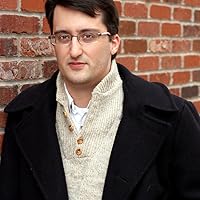
Jeff Talarigo is the author of three novels and numerous short stories. Born and raised in Pennsylvania, he has received many honors, including the American Academy of Arts and Letters Rosenthal Award for his first novel “The Pearl Diver”, one of eleven novels on the 2009 Notable Books List by the American Library Association for his second novel “The Ginseng Hunter”, NPR’s 2008 “Under the Radar”, a 2005 Kiriyama Prize Notable Book, been featured on NPR’s “Weekend Edition” and awarded a fellowship at the New York Public Library’s Cullman Center for Scholars and Writers in 2006-07. His work has been published in five languages. He lived in Japan for fifteen years and twice lived in the Gaza Strip, the setting for his third novel “In the Cemetery of the Orange Trees”.
The Publisher Says: A Chinese ginseng hunter lives alone in the valley, where he spends his days preparing for winter. He is scarcely aware of the larger world until shadowy figures, floating bodies, and rumors of murder begin to intrude on his cherished solitude. Then, on a trip to Yanji, he meets a young North Korean prostitute. Through her vivid tales, the tragedy occurring across the river unfolds, and soon the hunter realizes that the fates of the young woman and four others rest in his hands.An unforgettable look at life along the fragile border between China and North Korea, The Ginseng Hunter is a confirmation of Jeff Talarigo's talent for finding humanity in the most unexpected places.
My Review: A short, poetic novel of the Cultural Revolution era as seen from the viewpoint of a man whose life has been defined by following his family's tradition of gathering ginseng root in the wild. He narrates for us the events of that uneventful life, with a wistful, elegiac tone. The book illuminates a life and a folkway that this half-Korean, half-Chinese man is so deeply enmeshed into that the metaphors he uses in his head to explain the world to himself are all tied, in the end, to the natural world of his ginseng hunting.
Intertwined with his first-person narrative is a third-person narrative of a much younger North Korean woman, a prostitute with a daughter to support in a country where there is next to nothing material available to its citizens. She meets the ginseng hunter in the course of business, as he traverses the border between the two countries freely. He pursues a peculiar, sort-kinda relationship with her, and as the North Korean regime turns more insane than ever, lives are lost (to put it mildly) and the ginseng hunter's petite amie is at serious risk.
The novel's resolution of these strands...unworldly man must decide the fate of worldly woman...is succinct and played out like Chinese opera: Gesturally, accompanied by the bare minimum of speech needed, and set against the most gorgeous, lavish scenery imaginable.
I want to kill the lousy, incompetent, damnfool idiot editor and copy editor of this book. Dead. I'll be merciful and say it can be quick. But the truly lovely récit that is in this awkward short novel, the beautiful sparkling gem that could have been cut from the rock here, is lost.
What earthly use was there, I wondered as I cruised through this, in putting in the third-person narrative of the prostitute's dreary life? Did it do anything for the arc of the story? Not that I could see, it didn't. It jarred against the ginseng hunter's flowing narrative of his world and its widening circles in an unnecessary way. If the récit form had been followed, the young woman's dreadful plight, and his decision as to how he'd resolve it, would have been just as powerful. The ginseng hunter is the heart and soul and point of the book, or if he's not, the young prostitute is too poorly developed to play her role effectively.
But that's the book the editor created, and I assume she (specifically named in the author's acknowledgments) intended to create. That it isn't the book I'd've made out of the material at hand is just too damn bad for me, eh what?
Fair enough point. But in reading a book, is the reader not expected, indeed almost required, to participate in the creation of the story as the writer and the editor (and the copy editor, more on that anon) unfold it before him (in my case)? That is, in the act of reading, isn't the reader's job to allow the words to create emotional responses, to call up sense memories, to paint on the mind's canvas images of things known and unknown? And therefore, isn't it also incumbent on the reader to look carefully at those images, analyze those sense memories, and determine which ones are successfully evoked and which are wanting? Then comes the “why” of it...why did this not work for me? What was the author aiming at, and did I get there with him?
As my answers to all the above are “yes,” I'm willing to use my review, my opinion, informed by a long lifetime of reading and a career in publishing's outer groves, to offer informed conclusions as to what went right and what went wrong in a given text.
What went right in this story was all the ginseng hunter's viewpoint, and what went wrong was the awkward intersection between the prostitute's viewpoint and the ginseng hunter's viewpoint. Less can indeed be more, but more was needed to stitch these two narratives together and make a successful novel out of them. Less of what was given would have turned this into a beautiful récit. As it was, the beautiful bits earned the book three stars, which is more than I'd normally give a Frankenbook.
Lastly, I want to comment in terms most censorious upon the job done by the copy editor. By page 23, I was so angry that I followed my punkin pie around the house reading howlers and snarling about them, and then called a friend of mine and made HER listen to me rant about them. A person hired to copy edit a book who allows the non-word “clinged” to be typeset, printed, bound, and offered for sale in the United States of America should be subject to legal sanctions. I'll stop there, because I can feel my blood pressure rising, but there are other errors, not mere infelicities, that caused me severe pain. Copyediting is a serious job. How words are presented on a page is a very important part of how a book is perceived by readers. The purpose of the job is to make the author's words transparent vehicles for communicating the ideas they carry. It is jolting, jarring, to have to stop and say to one's self, “wha...? what was that again?” in the process of reading. That is what poor, or no, copyediting leads to, and why editors and copy editors are such crucial (if invisible to most readers) parts of the reading process.
Rant over. For today. Read the book, the ideas are wonderful and even mediocre presentation of them can't make them unpleasant enough to avoid.
Memorable ... dark reality of this portrait of North Korea's viciously callous political nature.
In a library, I'd consider applying a Horror spine label. It felt like being on Cormac's Road. The end wasn't likely to be uplifting. The Road
The book's back jacket quotes Booklist and Publisher's Weekly : "As incendiary as it is restrained, Talarigo's spare, evocative story provides a crucial voice to a tyrannized country." ... "movingly dramatizes the human faces behind political oppression ... a memorable, morally stringent tale."
Some quotes from one page
"The forest is so entwined with my family's history that I have come to view the trees as my siblings.
"High up in the Chanbai range, during the two and a half centuries of the Qing Dynasty, my father would tell me, the greatest hunters scoured this forest for Emperor's Ginseng: the purest of ginseng. This finest root was only for the emperor, and if it was discovered in the hands of a lesser hunter, he would have been flogged and exiled, even beheaded.
" ... my family had been hunters for many generations--until the Japanese army occupied Korea and invaded China. At the hands of the Japanese, my grandparents, along with thousands and thousands of their fellow Koreans, were forced across the river into China in support of Japan's expansionist dreams. Over the next decade, my grandfather labored in the fields and factories. He knew well the Japanese: as early as 1911, they had stripped Koreans of their names, their language, and their culture."
I was very thrilled to see Jeff Talarigo s second novel The Ginseng Hunter come into the store. His first novel, The Pearl Diver was a wonderful discovery. It reminded me of Michael Ondaatje s novels with its fluid time-schemes, vivid, poetic descriptions, and rich characterizations. So, I snatched up The Ginseng Hunter with a great deal of excitement. It did not let me down.[return]The unnamed main character of The Ginseng Hunter lives alone on a small farm close to the Chinese and North Korean border. He spends his spring and summer in the mountains looking for ginseng roots and tending his farm that will produce everything he needs to survive the long, bitter winter. It is a pattern he has held to most of his life. However, as North Korea, under the leadership of Kim Jong Il (The Dear Leader) slips deeper into poverty and famine, he finds that the countryside has become a highway for desperate Koreans slipping across the border to find food and money. At first he is weary of them but, after meeting a Korean woman who was sold into prostitution, and falling in love with her, he realizes he must do something to help. [return]Talarigo s writing is confident and delicate. He has the ability to imbue small gestures, and terse dialogue, with much more meaning than such spare lines seem capable of carrying. Perhaps that is why his two novels are so short. Such intricate work would lose its impact over any great length. That is not a knock against this wonderful book. In our media saturated world long, dense, literary novels are not going to reach much further past the book junky audience. A short tome, one like Mr. Talarigo s, is ideal for crossing the boundary between bookish types and non-bookish types. There is a lot here to be enjoyed, and a lot to recommended.
This is a story about life in China near the border river of Tumen. This is a sad, hard story about a middle-aged man simply known as the Ginseng Hunter who, you guessed it, hunts the ginseng plant. He performs this occupation in the spring and summer, just to survive vicious winters. But truth be told, that’s not what the story is about. It is about life as I said before, but at the heart it is a love story full of heartache, pain, loss, murder, betrayal, starvation, and poverty.
I’m giving it five stars because it’s a great story and an easy read to be literary fiction. It’s poetic in its language and elegant in its prose, and when you finish reading it, if you’re going through something, you won’t feel so bad about it. If life is good and you read this masterpiece, it will remind you to never take for granted what you have and love and cherish. Jeff Talarigo’s writing is beautifully descriptive.
Although this story takes place in the 1990s, it feels in its simplicity like the characters exist in a much older time. It tells of a traditional Chinese ginseng hunter who lives along a remote stretch of the the river separating China from North Korea, and his observances of and ultimate involvement with several Koreans who are escaping from the starvation and cruelty in their country into his. It is written in a spare, simple style that lacks emotion, but which in this case seems appropriate, since the horrors and cruelty exhibited require a certain amount of detachment. There are few if any happy tales coming from modern day North Korea, although this one is by no means the most horrific of the lot, since our protagonist's exposure is so limited. Interestingly, none of the characters are named, which accentuates the anonymity and detachment.
Jeff Talarigo’s haunting 2008 novel The Ginseng Hunter (Nan A. Talese/Doubleday) puts a face on hunger and the human effects of totalitarian rule, oppression and ill-wrought central planning.
Set in the mountains where China, North Korea and Russia meet, it’s peopled by Chinese, Chinese-Koreans—such as the ginseng hunter—and North Koreans who slip or bribe their way across the armed border to barter or escape the regime of their Dear Leader, Kim Jong Il.
The novel effectively places the reader in a world and amongst people whose existence generally remains a series of collective abstractions to us: forced labor, concentration camps, a million dead of starvation. (Go to the non-profit LiNK, Liberty in North Korea, overview page http://www.linkglobal.org/learn/nk101... to learn more of the ongoing crisis in North Korea.) It also revisits in flashback that area of China under Chariman Mao, whose utopian agricultural policies—The Great Leap Forward—resulted in the deaths of tens of millions of people.
But the book deals with these atrocities on the micro level—their impact on individuals and families, and what starvation does to your soul and moral compass. And it does so with a clear eye for the beauty of the hills and trees and for the details of small-town life, in dreamy, poetic prose. Nice, compressed work—my hardback edition runs some 175 pages—worthy of attention for anyone interested in glimpsing what goes on behind North Korea’s screen.
Starred Review. Novelists who compose stories involving a culture different from their own normally bring to mind the expression "scratching an itch from outside one's boot." Such is not the case with Talarigo (The Pearl Diver), who convincingly tells of a ginseng hunter plying his trade in a border town between China and North Korea. The novel moves from an idyllic to an emotional level as this North Korean loner who emigrated to China refuses to help an illegal alien working as a prostitute and then is forced to turn in a little girl who has just escaped from North Korea. Talarigo's characterization of this antihero, who borders on weak-minded and cowardly, is both sensitive and understanding. His descriptive prose is such that readers virtually see the wrinkles of the ginseng root, hear the sparrows' high-pitched call, and taste the cold, running stream. By subtly relating the struggle of plant life on the forest floor to the human struggle at the border, Talarigo offers us a novel that is ultimately a study of survival under hostile conditions. Highly recommended.—Victor Or, Vancouver P.L./North Vancouver City Lib., B.C.
interesting story depicting life at the start of the 21st century on the border between china and north korea. beautiful depictions of nature. short and sweet, but wish there could have been more development to his lover’s character… but the mystery of her is the essence of what her character portrays in the story
A short book with lots to offer. Set in China, just across the border from North Korea, the main character is, like his father and grandfather before him, a ginseng hunter. The descriptions of the search for ginseng in the forests, and the way it is harvested are both interesting and enlightening. In his lonely existence, the ginseng hunter often travels to the nearest city where he becomes friendly with a North Korean prostitute. Soon her story and that of her daughter are revealed. There is a lot of sorrow and unspeakable cruelty in the scenes which involve the North Koreans. Interestingly, none of the three main characters are given names. An excellent read, but due to the somber nature of the characters' situations, one that shouldn't be read while you are depressed.
Books allow you to enter the lives of others and learn from them. Good books put you into those lives, and you feel their joys and pains. This book is a painful read--not because it isn't good, but because it is so good that you feel the pain and horror of life at the border of China and North Korea as you live it with these characters, thanking the fates that it's not a life you have to live in reality.
A very interesting, moody and well-written story, certainly unique in its setting and characters. A definite recommend if you're a fan of Asia-based or "third world" literature.
I picked this up thinking it would be an interesting exploration of ginseng harvesting and life in China. This book is much more. It's a dark look at life in North Korea, China and Japan. Especially bleak are descriptions of the lives of the North Korean people, who barely survive the tyranny and oppression of the government.
It's an important book but it left me feeling helpless to do anything to improve the desperate conditions endured by the North Koreans.
This is a beautiful little book both in writing and design, but I struggled with the main character a lot. I could not understand his decision-making process and that created a lot of distance between me and the book. I'm glad I read it, and I found this perspective on North Korea very interesting, but the characterizations prevented me from really falling in love with it.
A bleak tale written in lyrical prose. The Ginseng Hunter is a sad, but beautiful tale about both humanity and lack thereof. Although it is short and told in a simple manner, it still manages to be affecting. None of the main characters are given names, but this is for the best, as the tale is already filled with enough pain just keeping the reader at a distance. Not a book for sad days, but a good one nonetheless!
Well, that was depressing. Excellent writing and so vivid. This is a book I will remember for a long time and that is saying something because most stories seem so fleeting nowadays.
At the beginning of the 21st century in China, there lives a Ginseng hunter who’s farm rests at the border of North Korea. He is vaguely aware of the challenges that others face over the boundaries but doesn’t give it much thought and spends his days working to survive the winter. In town he meets a woman from North Korea who opens his eyes to the famine and conflict that is prevalent everyday and gives him an understanding as to why refugees make the dangerous trip across the river into China. But only when a little girl shows up at his door does he truly understand their plight and what he must do to help others survive. This hauntingly wonderful little book provides such insight to the terror and suppression that is inflicted to so many innocents. I honestly was not aware of how truly grim it is over there and am thankful for the education. The story was beautifully written and although almost all characters remain nameless their painted images still float around my mind, where the knowledge gained still makes me think. Highly recommend this book not just for the history but also for beautiful tale.
Communism and tyranny from both sides of the river.
The turn of the seasons governs a ginseng hunter’s life. From spring to late autumn, he must gather enough carefully unearthed roots to buy what he cannot grow in order to survive the winter. Each spring, he must begin again.
This year, on the eve of the twenty-first century, the hunter’s life changes. On his monthly visit to the brothel in town, he meets a North Korean woman whose haunted chestnut brown eyes slide away from his with fear and distrust. The tips of her fingers are black beneath the bright red lacquer on her nails. He is at once curious and mesmerized. Instead of seeing a new woman every month, the hunter returns only to her and she becomes his lover. She tells him the story of her life so he will understand the world on the other side of the river that separates China and North Korean.
Back on his farm, he finds it more difficult to slide into the silence. He thinks only of his lover as he looks for whoever is raiding his garden and stealing from him and his neighbors. He knows it is North Koreans slipping across the river. If he catches them, he can hand them over for money. They will be taken back and maybe killed but it is not problem.
Jeff Talarigo gives few of the characters in The Ginseng Hunter names. Even the women of the brothel go by the owner’s name, Miss Wong. What drives Talarigo’s novel is not names but emotions and poetry and character, giving this often horrific tale a sedate and superbly poetic flow that changes each moment of the shared journey is revealed.
The North Korean woman’s tale of life under the Great Leader and his son, the Dear Leader, is heart breaking and horrendous. By contrast, Chairman Mao’s wholesale destruction of the swallows is benign even though it makes life for the main character and his family more difficult, but there is a deeper meaning here.
Instead of resulting to graphic details to shock the reader, he unfolds the story within the story slowly and careful, revealing the painful suppurating wound beneath the gauze. He deals no less carefully with the men who raid the hunter’s farm, the child with black feet and chestnut eyes that remind the hunter of his lover’s and the North Korean soldier who saves his life after coming to take the little girl back across the river.
The Ginseng Hunter is a beautiful written novel with unforgettable characters and simple human emotions. Each character is carefully drawn and feelingly portrayed with all their faults, flaws and humanity intact.
"When I was a boy, my mother and I would go outside on nights such as this, each of us carrying a bench. We would lie down and watch the sky. She told me that this was the only way to truly see it. She was correct. After a while, it would be as if the sky and the earth were reversed. Turned upside down - like right and wrong, I think."
This statement rather sums up this book. This was the most intense 177 pages I have read in a long time. I nearly couldn't finish and put it down a few times before I was able to go on. I am aching now as I finish and I also have fallen on my knees a number of times through the journey of this book because I am so ridiculously lucky and blessed to be where I am and to have what I have.
A few more bites I want to remember:
"'What kind of animal kills the person who feeds him?' What kind of person, I think, after feeding him turns around and sells him? Two banks to every river, each carrying a hundred different stories."
"Hiding in some think bushes, she knows that this day-to-day humiliation will be with her forever. She realizes that in this country even the living are dead."
"Yes, I will always be on the run. The only place where I could be safe is in South Korea, but almost no one ever succeeds in getting there. If we are caught, we are sent back. In North Korea I was also on the run, living in fear. I had not choice in that. At least this is a fear I have chosen."
"I tread cautiously for I know that under the forest floor the wars are fierce. What is seen on top may be serene, but beneath there is a battle for survival going on among the roots and weeds, all fighting over water and iron and copper and calcium and magnesium. Bloodroot and jewel weed, galax and hepatica, ginger and wild yam. Ginseng must compete with all of them. It is this constant tension that gives the ginseng root its gnarled appearance - the wrinkles speaking of character more than age. It is for this reason that every mature root I find is a celebration, a sign of survival."
Jeff Talarigo also wrote "ThePearl Diver". His knowlege and understanding of the culture of the Asian people is so interesting.
I know that right now, this winter as I sit comfortably in my home with the heat turned up to 68 that some people are starving and freezing and being killed. Revolution is in the air. But it seems far away and doesn't affect me. The disparity of the rich and poor is growning even in our country but will it reach the proportions that it has in other countries? Would we let that happen? Could we stop it?
What if you lived just across the river from a country where the people can't stop it and were willing to leave everything behind to get out of their homeland? They were willing to offer their bodies for the things that we take for granted. They are willing to die to escape their present life. What would you do if refugee, if refugee after refugee, came to your door?
An interesting view of reality that will stay in your conscience.
"I'm better off than many. Most of them sleep in abandoned buildings or in the mountains. I have food and a place to sleep." "But you're always scared." "Yes, I will always be on the run. The only place where I could be safe is in South Korea, but almost no one ever succeeds in getting there. If we are caught, we are sent back. In North Korea I was also on the run, living in fear. I had no choice in that. At least this is a fear I have chosen."
A powerful story about the cruelty of authoritarian regimes. The corruption of power misused brings misery as the human body and soul struggles to survive. No-one escapes from the consequences - the victims, the enforcers and those that observe from a distance - everyone is reduced by the power of corruption. Ginseng is said to restore mental and physical functioning. It might be used when fatigued, after illness, or during times of prolonged stress, chronic disease or low vitality. I pray that the people of North Korea are able to access the power and wisdom of their ancient traditions to regain their strength and fight for the freedom they rightfully deserve. The story is simply constructed, and moves with the seasons. Jeff Talargio does not preach, he presents the characters with compassion and without judgement. The reader is left with a feeling that a tremendous crime is being committed against all those under this regime.
Paints several snapshots of life along the border between China and North Korea, but the plot seemed less interesting to me than some of those self-contained scenes.
Recommended to people with an interest in China and North Korea, an interest in refugees and the reaction to their arrival, and an interest in a short quiet novel to pass the time. If you're looking for ethical dilemmas, those fall in here too...but personally I never grew too attached to any of the characters, which made me less interested by their ethical choices than I would be otherwise (perhaps this was since the narrator is so often treasuring his solitude).
This beautiful little book caught my eye at the library, as I am always interested in books from anywhere in Asia.
What a lovely surprise it was, the style was sparse and beautiful, and the story absorbing and sobering.
A ginseng hunter who lives alone on the border of north east china and north korea becomes caught up in the great tragedy that is north korea. As he befriends a north korean prostitute he learns of the situation in her country, and then he finds a child who has swum across the river to raid his farm for food.
Set at the turn of 21st century China on the border of North Korea, are two interwoven stories of a farmer who carefully gathers the valuable ginseng root and a women separated from her daughter. The theme of survival is currently happening as North Korean refugees attempt to flee to China. A spare and moving novella.
What I Liked The overall meaning of this book I think can be easily lost, because it's easy to forget that the story isn't about the prostitute. It's about the Ginseng Hunter... and he is important because we are all the Ginseng Hunter. We may not always live right on the border of horrific atrocities, but we know that preventable tragedy - trafficking, hunger, poverty - is happening around us and we are complacent or afraid, just like the Ginseng Hunter. He is nameless because he is us.
The simplicity of the novel is what makes it impactful. I read The Ginseng Hunter within an hour or less. The storyline was brief and incredibly compelling.
What I Didn't Like At times the prostitute telling her story was exploitative or somehow plastic. She laid out her story in a very bare, vulnerable way to a man that was using her for her body... and she told her story like a novelist.
The Ginseng Hunter (never named) whose father is a descendant of North Koreans transported generations earlier to China by the Japanese and who had a Chinese mother grows up on a small farm supplementing his crops with ginseng roots he collects and sells. During the spring to fall months he goes monthly to Yanji to sell his roots, buy supplies and visit a brothel. His isolation has kept him from understanding the political situation of North Korea across the Tumen River beside his farm and dividing the 2 countries. Things change when he meets young Korean prostitute who tells him her story. He then begins meeting Korean refugees, a Korean child and a Korean soldier all of which he has an impact on. A very sad, but poetic story.
This book is set at the turn of the 21st century with some flashbacks. It's about a ginseng hunter who finds less and less wild roots, but also about people trying to escape Northern Korea--both the horrors they were living through and the problems they caused along the border (he lives by the river they cross.)
If you like literary fiction that is also dismal and depressing, this book is for you--it's beautifully written and the author, who lived in Japan for 14 years (his wife's name is Japanese, so perhaps she is as well, but it can also be German, so I am not totally sure) and has seen how ginseng hunting is done plus known many people from Korea and China, etc, it's well-researched. But it is not a feel-good novel.
I'm from Minnesota, and our winters are brutal, unrelenting, and absolutely beautiful. So too this book: Hard to read, ugly truth, but also absolutely glorious. It's a quick read and that's a good thing; my sensitive heart couldn't handle a long version of this. But I'm very very glad I read it, and I can say I very much enjoyed it.
-1 star just because the MC doesn't have any agency, and injustice just flows all around him like a river around a rock while he refuses to take action. I would have liked to see more decisions, more movement from the MC. But it doesn't distract greatly from the book, and there's a message to be heard in his indecision and inability to act, isn't there.
I was interested in this book because I hadn’t read much historical fiction based in China, Japan, or North and South Korea. It was enlightening what people had to go through to try to escape Kim Jong Il’s tyranny but the story would’ve been better from the woman’s POV because her story would’ve relayed more to the readers. I didn’t care about this ginseng hunter at all. I also couldn’t get over a white man writing this story from a half Chinese half Korean guy’s POV. It wasn’t convincing at all. The book did make me more interested to read more about what happened in these countries during this time period but I wouldn’t call this book a good source of that information.
The unnamed ginseng hunter lives alone in China along the river separating him from North Korea. From his small farm, he sees soldiers guarding the river, ready to shoot anyone trying to escape. He spends the season in the mountains searching for ginseng and painstakingly extracting it from the earth to sell. He is a man of middle age whose monthly journey into the city finds him falling in love with a North Korean prostitute. As much as he wants to help her, he cannot sacrifice his own solitude.
Moving, haunting, and deeply troubling in the plight of the North Korean citizens.