Yevgeny Yevtushenko is the fearless spokesman of his generation in Russia. In verse that is young, fresh, and outspoken he frets at restraint and injustice, as in his now famous protest over the Jewish pogrom at Kiev.
But he can write lyrically, too, of the simple things of humanity - love, a birthday, a holiday in Georgia. And in 'Zima Junction' he brilliantly records his impressions on a visit to his home in Siberia.
Евгений Евтушенко Yevgeny Aleksandrovich Yevtushenko (Russian: Евгений Александрович Евтушенко; born 18 July 1933 in Zima Junction, Siberia) is a Soviet and Russian poet. He is also a novelist, essayist, dramatist, screenwriter, actor, editor, and a director of several films.
An important collection of poems, if a little on the slim side, from one of the greats to emerge from the Soviet Union (whom I didn't realise had died only last year). Two poems in particular are highly political, the long memoir, 'Zima Station' which connects his daily life and trip back home to sub-zero Siberia, and 'Babiy Yar' which deals with Russian anti-Semitism and the 1941 massacres in Kiev, which resulted in a nobel prize nomination.
Yevtushenko was much respected by others at the time both for his poetry and his political stance toward the Soviet Machine. He challenged the state, not in a political way but culturally through words. And as a recognized writer, he was banned from leaving his homeland for some time. But over his life was actually still well traveled and this only helped to strengthen his popularity in the West.
Not everything here struck me as great, a couple of poems didn't seem to fit in with the rest, but overall, considering I hadn't read Yevtushenko before and didn't know what sort of direction he wrote in, the vast majority impressed me. Some brief highlights - 'Waking' opens with,
Waking then was like a lonely dream in this cottage in this settlement, thinking: time to go and pick mushrooms, and ruffling your hair to wake you, and kissing your eyes open, all this each day a new discovery...
An extract from 'Lies'
Who never knew the price of happiness will not be happy. Forgive no error you recognize, it will repeat itself, a hundredfold and afterward our pupils will not forgive in us what we forgave.
And 'The Companion'
Masculine pride was muttering in my mind: I scraped together strength and I held out for fear of what she’d say. I even whistled. Grass was sticking out from my tattered boots. So on and on we walked without thinking of rest passing craters, passing fire, under the rocking sky of ‘41 tottering crazy on its smoking columns.
Finally some powerful lines from the mighty ' Babi Yar'
Wild grasses rustle over Babi Yar, The trees look sternly, as if passing judgement. Here, silently, all screams, and, hat in hand, I feel my hair changing shade to gray.
And I myself, like one long soundless scream Above the thousands of thousands interred, I’m every old man executed here, As I am every child murdered here.
No fiber of my body will forget this. May 'Internationale' thunder and ring When, for all time, is buried and forgotten The last of antisemites on this earth.
There is no Jewish blood that’s blood of mine, But, hated with a passion that’s corrosive Am I by antisemites like a Jew. And that is why I call myself a Russian!
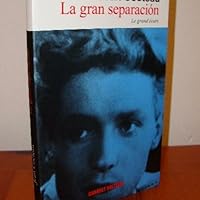
Yevtushenko: Selected Poems was the first translation of Yevtushenko’s poetry into English. It was published in 1962, and the translation was by Robin Milner-Gulland and Peter Levi.
It is an interesting selection of poems, when we consider his entire body of work. Yevgeny Aleksandrovich Yevtushenko (the stress is on the second “e” in each case) was born in 1933 in the remote town of Zima on the trans-Siberian railway. He was of mixed Ukrainian, Russian and Tartar blood. Although some of his ancestors were nobles, he was part of a peasant family. The year 1933 was long after the Revolution, the Civil war and the death of Lenin, so he had never experienced at first hand the tense emotions of those years. Neither could impressions of the Second World War feed directly into his poetry. Yevtushenko was born and brought up in the established Soviet Union, and the collapse of the Soviet Union (at the end of 1991, after Mikhail Gorbachev’s resignation) felt almost as distant a prospect in 1962, as it had been when he was born.
Already a published author at 19, Yevtushenko moved to Moscow after the Second World War, but dropped out of the Gorky Institute of Literature in Moscow where he was studying. In 1952, he joined the Union of Soviet Writers but in 1955, Yevtushenko wrote a poem about the Soviet borders being an obstacle in his life.
One of his most celebrated poems dates from this era: the 1956 poem “Zima Junction” or (“Zima Station”), which is the first one in this collection. It is a long autobiographical narrative poem; its 12 sections use over a third of this book, filling 33 pages out of 92. The inspiration was a journey back to his Siberian childhood home in 1953; we thus see the young narrator returning from Moscow during the transitional post-Stalin era. “Zima Junction” explores themes of moral courage, personal identity, and the tension between urban intellectual life and rural roots. Another important poem was “Babiy Yar” his famous protest over the Jewish pogrom at Kiev (Kyiv). Written in 1961, it is the penultimate poem in this collection. It is a powerful denunciation of both the 1941 Nazi massacre of over 33,000 Jews at the Babi Yar ravine and the subsequent Soviet authorities’ refusal to acknowledge the Jewish identity of the victims, or erect a monument at the site.
Interestingly, this poem directly inspired Dmitri Shostakovich’s Symphony No. 13 in B-flat minor, Op. 113, a choral symphony in 5 movements, which is officially subtitled “Babi Yar”. Shostakovich was deeply moved and mesmerised by Yevtushenko’s poem, and wanted to write a single-movement cantata based entirely on “Babiy Yar”. However, he then broadened his aim, and incorporated four more poems by Yevtushenko, all of which which targeted different societal problems in the USSR such as state fears, the hardships of Soviet women, and careerism.
Both men took an immense political risk. Yevtushenko’s poem had caused a massive public scandal because it openly attacked Soviet state-sanctioned anti-Semitism. Shostakovich himself had challenged the regime for a long time. Back in 1936, his music had incurred Stalin’s displeasure, and the official daily newspaper of the Communist Party of the Soviet Union “Pravda” published a damning article headed “Muddle Instead of Music”. Shostakovich was terrified that he might receive a death sentence or exile to a Gulag labour camp. He withdrew his controversial 4th symphony in C minor, Op. 43, camped outside his flat ready to flee if necessary, and produced a piece which sounded traditionally heroic, tonal, and accessible to the masses. Dubbed “A Soviet Artist’s Creative Reply to Just Criticism”, this 1937 work was Symphony No. 5 in D minor, Op. 47. It is widely considered the most politically charged and consequential piece of his entire career - and remains his most popular work, recorded and performed far more often than any of his other symphonies (although I personally like his monumental and discordant 4th ...) The premiere in Leningrad was a staggering success, receiving a standing ovation that lasted over half an hour, and Shostakovich regained his reputation as an approved Soviet composer. (It’s a fascinating and important piece of history, but only tangential really to this review.)
A decade later, the Arts in the USSR such as poetry, were still dominated by Soviet political dogma. Many Soviet literary critics were themselves products of the stifling political regime during the last years of Stalin’s rule. They reacted with violent hostility to Yevtushenko, as the translators describe him:
“a fresh, talented, unashamedly self-seeking and confident young poet whose professed concern was to seek out truth for himself and not have it dictated to him from above.”
In 1957, Yevtushenko was expelled from the Literary Institute for “individualism”. One person called him “the head of the intellectual juvenile delinquents” whose poems were “pygmy spittle”. He was banned from travelling but gained wide popularity with the Soviet public. His early work also drew praise from Boris Pasternak, Carl Sandburg and Robert Frost.
However as Nikita Khrushchev’s political “thaw” progressed, Yevtushenko was reinstated. By 1960, his travel privileges were restored, and he began making highly publicised poetry-reading tours. Yevtushenko’s poetry had begun to achieve world prominence, and he travelled abroad to France, the US, Cuba and Great Britain, with this first collection of poems in English being published in 1962. Ironically, his travel status swayed like a pendulum. After he published “A Precocious Autobiography” in France in 1963, Khrushchev slapped him with a second travel ban. Yet again Yevtushenko was restricted to the USSR, this time until May 1965, when the government finally permitted him to tour Italy.
However that ban was a year later, so also out of the scope of this review. As time went on he supported leaders such as Nikita Khrushchev and later Mikhail Gorbachev when they seemed to advance reform, but criticised them or distanced himself when he felt they fell short of their promises. His views therefore often appeared inconsistent because he was neither a loyal communist nor a full dissident; throughout his life he tried to balance artistic freedom, social justice, and Russian patriotism. Essentially he was an anti-Stalinist reformer who believed that the Soviet system could be made more humane, open, and honest rather than abolished.
Since he was partly Ukranian on his mother’s side, I wondered about his standing in Ukraine. He is usually described as a Russian poet, and in Ukraine his poetry is respected, but selectively. This is largely due to his poem “Babiy Yar”, mentioned before.
Today, we regard Yevtushenko as an important historical figure in twentieth-century Russian poetry, but his standing as a poet is more debated than it was at the height of his fame. He was to join poets such as Anna Akhmatova, Korney Chukovsky (a Russian children’s poet) and Jean-Paul Sartre in co-signing a letter of protest against the unfair trial of Joseph Brodsky, and also objecting to the Soviet-led military alliance formed in 1955 leading to the “Warsaw Pact” invasion of Czechoslovakia in 1968. However Anna Akhmatova was born in 1889, long before the Soviet Union came to power following the 1917 Bolshevik Revolution. She therefore wrote poetry both before and during the Soviet regime, and her passionate views are expressed consistently. For much of his life Yevtushenko was cautious about expressing his views. Here are 3 Western assessments:
“Yevtushenko’s politics have always been a complicated mixture of bravery, populism, and vulgar accommodation with dictatorship.”
Yevtushenko was “his country’s most controversial modern poet, a man whose reputation is poised between courageous behind-the-scenes reformer and failed dissident.”
Then there is this cynical but perhaps accurate thrust from the Sovietologist and literary critic Robert Conquest:
“The writers who had briefly flourished [under Khrushchev’s thaw] went two different ways. Solzhenitsyn and his like into silenced opposition; Yevtushenko and his like, sometimes reluctantly, sometimes in the hope of still influencing matters a little, into well-rewarded collaboration.”
With both Akhmatova and Yevtushenko however, I like their early work. They each seem to have an ability to move effortlessly from social to personal themes, or as the translators here say, to move: “from the publicist to the lyrical, and combine them in a single poem”. We rarely see this in English poetry.
I will quote five which I particularly like from this early selection. They are not the most famous, but they speak to me:
Lies
“Lying to the young is wrong. Proving to them that lies are true is wrong. Telling them that God’s in his heaven and all’s well with the world is wrong. They know what you mean. The young are people. Tell them the difficulties can’t be counted, and let them see not only what will be but see with clarity these present times. Say obstacles exist they must encounter, sorrow happens, hardship happens. The hell with it. Who never knew the price of happiness will not be happy. Forgive no error you recognize, it will repeat itself, increase and afterwards our pupils will not forgive in us what we forgave.”
(my bold)
Written in 1952, this is also known as “Telling Lies to the Young is Wrong”. It warns against shielding youth from harsh realities; to pretend that the world is completely safe only harms them. The poem reminds readers that young people are perceptive individuals who need to understand genuine hardships, obstacles, and the true cost of happiness rather than being fed illusions. There will be moral accountability; forgiving recognisable errors only allows them to multiply. Future generations will hold adults accountable for their compromises.
The next one Party Card from 1957 is more reflective. Rather than an instruction on moral precepts, this is a moving and poignant description of a single act. The poem shows us the grim realities of war through the eyes of a young boy, who encounters a fallen lieutenant and retrieves his party card during the chaos of conflict.
Party Card
“A shot-up forest full of black holes. Mind-crushing explosions. He wants some berries, he wants some berries: the young lieutenant, lying in his blood. I was a smallish boy, who crawled in the long grass till it was dark and brought him back a cap of strawberries, and when they came there was no use for them. The rain of July lightly falling. He was lying in remoteness and silence among the ruined tanks and the dead. The rain glistened on his eyelashes. There was sadness and worry in his eyes. I waited saying nothing and soaking, like waiting for an answer to something he couldn’t answer. Passionate with silence unable to see when he asked me, I took the party card from his pocket. And small and tired and without understanding wandering in the flushed and smoking dark, met up with refugees moving east and somehow through the terribly flashing night we travelled without a map, the priest with his long grey hair and his rucksack, and me and a sailor with a wounded arm. Child crying. Horse whinnying. And answered to with love and with courage and white, white, the bell-towers rang out speaking to Russia with a tocsin voice. Wheatfields blackened round their villages. In the woman’s coat I wore at the time. I felt for the party card close to my heart.”
The poem Gentleness is perhaps my favourite. Written in 1960, it points up society’s tendency to show indifference to the living, and only offering praise and affection after death. Yevtushenko was a great admirer of Vladimir Mayakovsky’s poetry, and this poem references his tragic suicide, which was never finally explained. It emphasises that offering basic warmth during a person’s life is far more meaningful than posthumous honours.
Gentleness
“This can’t go on: is after all injustice of its kind. How in what year did this come into fashion? Deliberate indifference to the living, deliberate cultivation of the dead. Their shoulders slump and they get drunk sometimes and one by one they quit; orators at the crematorium speak words of gentleness to history. What was it took his life from Mayakovsky? What was it put the gun between his fingers? If with that voice of his, with that appearance, if ever they had offered him in life some crumbs of gentleness. Men live. Men are trouble-makers. Gentleness is a posthumous honour.”
(my bold)
Or perhaps it is Talk, written in New York in 1960, reflecting on integrity under pressure. Yevtushenko notes how refusing to degrade oneself or compromise the truth, makes simple honesty look like courage:
Talk
“You're a brave man they tell me. I'm not. Courage has never been my quality. Only I thought it disproportionate so to degrade myself as others did. No foundations trembled. My voice no more than laughed at pompous falsity; I did no more than write, never denounced, I left out nothing I had thought about, defended who deserved it, put a brand on the untalented, the ersatz writers (doing what anyhow had to be done). And now they press to tell me that I'm brave. How sharply our children will be ashamed taking at last their vengeance for these horrors remembering how in so strange a time common integrity could look like courage.”
Finally Schoolmaster from 1956, tells a sad tale of an ageing, lonely schoolteacher who loses his train of thought during a mathematics lesson. We deduce that his wife has left him, been taken away, or died. It captures the quiet devastation of heartbreak and ageing as the master struggles with his routine against a backdrop of falling snow, and ends ambiguously as to his future:
Schoolmaster
“The window gives onto the white trees. The master looks out of it at the trees, for a long time, he looks for a long time out through the window at the trees, breaking his chalk slowly in one hand. And it’s only the rules of long division. And he’s forgotten the rules of long division. Imagine not remembering long division! A mistake on the blackboard, a mistake. We watch him with a different attention needing no one to hint to us about it, there’s more than difference in this attention. The schoolmaster’s wife has gone away, we do not know where she has gone to, we do not know why she has gone, what we know is his wife has gone away.
His clothes are neither new nor in the fashion; wearing the suit which he always wears and which is neither new nor in the fashion the master goes downstairs to the cloakroom. He fumbles in his pocket for a ticket. ‘What’s the matter? Where is that ticket? Perhaps I never picked up my ticket. Where is the thing?’ Rubbing his forehead. ‘Oh, here it is. I’m getting old. Don’t argue auntie dear, I’m getting old. You can’t do much about getting old.’ We hear the front door below creaking behind him.
The window gives onto the white trees. The trees are high and wonderful, but they are not why we are looking out. We look in silence at the schoolmaster. He has a bent back and clumsy walk, he moves without defences, clumsily, worn out I ought to have said, clumsily. Snow falling on him softly through silence turns him to white under the white trees. He whitens into white like the trees. A little longer will make him so white we shall not see him in the whitened trees.”
This book has a good 12 page introduction by the translators, regarding Yevtushenko’s place in Russian poetry. They give a brief overview of the various movements, both pre-Soviet and what was then current. In 1962 Yevtushenko was just 29 years old, and the world could not predict how important his future work might or might not be.
The “Notes” at the end consist of dates where known. As the editors say, at the time “Yevtushenko’s work is almost completely undocumented in English”, so the order of composition was noted, plus approximate dates.
Contents:
Zima junction Lies Visit Waking The Companion Weddings On a bicycle Later In Georgia Waiting The Knights Schoolmaster Birthday Party card Murder! Koshueti Colours Gentleness Encounter Talk Babiy Yar People
"To each his world is private, and in that world one excellent minute. And in that world one tragic minute. These are private.
In any man who dies there dies with him his first snow and kiss and fight. It goes with him..." . Middle stanzas of "People" by Yevgeny Yevtushenko, tr. From the Russian by Robin Milner-Gulland in Yevtushenko: Selected Poems, 1962.
Also found this alternate translation of these same stanzas, translated by Albert C. Todd for a 1991 selection of Yevtushenko... Always interesting to compare trandslated materials!
"Everyone has his own secret, private world. In that world is a finest moment. In that world is a tragic hour, but it is all unknown to us.
And if someone dies there dies with him his first snow, and first kiss, and first fight. He takes it all with him."
This slim volume has me thirsty for more of his work. Yevtushenko has a contemplative voice and poetic style - he captures the small moments, both in their gravity and evanescence.
This Penguin edition opens with an epic poem "Zimá Junction", about the poet's return to his childhood home in Siberia. It's a sobering and relatable tale of returning to a well-known place with new eyes.
My favorite part of this long poem (some 50 pages) describes berry picking with his aunt and cousins, and watching an ecstatic dance of a woman who they meet while picking berries.
I really like picking berries too... So I would have danced right along with her!
(Goodreads posted a spoiler alert about a book of poetry--What's the spoiler?)
The winters in Salmas (Shahpur), Western Azerbaijan, Iran, were very cold and most of the time with lots of snow. I had just spent Thanksgiving with other Peace Corps volunteers and other expatriates at the home of Carlton Coon, Jr., the US Consul in Tabriz, where food, drink, board games, and fascinating conversation stretched the holiday into more than 2 days. (See my review of his book.)
I was told that there was a USIA library in the center of Tabriz, so before I caught the bus back to Salmas, I went there and checked out a relatively new book of Yevtushenko’s poetry. I had read of him and understood that he was some sort of media child from the Soviet Union who was allowed to travel abroad, unusual at that time which was at the height of the Cold War. I didn’t know a lot about contemporary poets then, but I trudged on through what I found to be mostly boring poems. There were a few of them that sort of stuck in my mind but none that I would go back to for depth and the music of language.
The end of December, two years later, I was headed with a dozen or so others for Jiddah, Saudi Arabia, to teach English to Arab soldiers who manned anti-aircraft defenses. We were boarded on a KLM flight from JFK Airport headed for a stopover in Amsterdam. I was sitting next to a dour looking person who kept to himself. I studied him carefully when we were passed our cocktails by the stewardess. It was Yevtushenko. I had been reading about him in the paper over the last few days. He had been in New York City on some sort of cultural exchange. (A spy I thought—still do.)
“I should be thrilled,” I thought, "...Maybe ask him to sign the KLM menu." (I've never liked doing that anyway.) But, I didn’t. With a streak of Texas mule in me, my mind ran thusly: “If he’s going to be stuck up about it then I will too. After all, he’s already established and is his country's State pet poet, whereas I’m just starting. It’s not poet meets poet here.” I had lately discovered that all you had to do to call yourself a poet was to put a thought down as nonsensical as you like, keep the margins straight—or not, confuse readers with inappropriate metaphors, and discard meter and rhyme. Easy-peasy.
We did have our own self-proclaimed poet in our little group who insisted on writing his poetry with a special fountain pen (and who would get mad when he ran out of ink or forgot his pen). No pen, no opus. As we disembarked at Schiphol, I asked our stewardess if that was indeed Yevtushenko and she said that it was and that he was “big in Russia”.
Later as we sat down for drinks during the stopover, I told my fellow sojourners about whom I had been sitting next to. They did not know about Yevtushenko, except for the fountain pen poet who denied that it could have been him, because he was in Russia.
In later years I tried to read Yevtushenko again and thought how proud I was of myself for not engaging him in conversation and “asking him about his work”. If he was such an observant writer, curious about the world, he should have asked me about what I was up to, but knowing me back then I would have made up a wild story totally untrue just to thwart another spy, or any strange guy.
Now I know more about him as a brave opponent of the Communist regime, but savvy enough to survive a world of Orwell's "1984". I'm still glad I did not engage him. What was he going to do, smile and pretend? Years later I read "Babi Yar" and appreciated him a bit more. Lucky to have sat next to Yevtushenko and drunk a cocktail while he was drinking his...in silence.
This entire review has been hidden because of spoilers.
" How sharply our children will be ashamed taking at last their vengeance for these horrors remembering how in so strange a time common integrity could look like courage."
His vision of reality feels true in its simplicity but most of the time lacks that brilliant touch of the perfect word (of course, speaking from the translated perspective).
Yevgeny Yevtushenko has become one of my favorite poets! And Zima Junction has placed itself in my all time beloved poems. There is something so profound yet simple about his poetry that even after getting lost in translation, the percolating melancholy, and the rising nostalgia leaves you sighing and smiling. When Yevtushenko writes about snow, you rub your hands. When he tells you he misses something, you miss it with him. When he writes about rain, you get drenched. Gorgeous imagery, beautiful thoughts, simple topics. I wish I could speak Russian...
How sharply our children will be ashamed taking at last their vengeance for these horrors remembering how in so strange a time common integrity could look like courage.
Unfortunately history always looks like a posture in Yevtushenko. His powerful Babiy Yar is almost a period piece for him to bellow, "Injustice"--just as a childhood memory of a peasant murder upended his cosmology. These are essentially prose poems detailing travels and his own precocious youth. Not exactly ingratiating.
Waking then was like dreaming. Waking then was like a lonely dream in this cottage in this settlement, thinking: time to go and pick mushrooms, and ruffling your hair to wake you, and kissing your eyes open, all this each day a new discovery. We stayed on at the settlement for a month, gardens, chirping birds, the meadow paths winding among the wheat, tense creak of the floorboards underfoot. And when we cut the sunflower into two there was no need for special explanations. When under the presentiment of dawn we ran down into the river (gudgeon tickle your feet in those reaches) there was no place for complicated questions. At first it didn't seem a mystery incapable of human explanation that you lay dreaming in the night beside me. I thought it due from a just destiny that every morning was my rendezvous with you, which never could or would be broken. And how I flattered myself nothing in you could be unknown to me. You don't belong to the mind's calculations, and you disproved each of my demonstrations, since to be unexpected is your truth. You came to me never with what I knew, never the days' familiar repetitions, but new beginning and your new surprise. We felt no quarrel on that droning flight, and yet there was a presence moving around us circle by circle, flying with us and measuring up on us.
- Waking, pg. 55-56
* * *
My love will come will fling open her arms and fold me in them, will understand my fears, observe my changes. In from the pouring to bang the taxi door she'll run upstairs through the decaying porch burning with love and love's happiness, she''ll run dripping upstairs, she won't knock, will take my head in her hands, and when she drops her overcoat on a chair, it will slide to the floor in a blue heap.
- Waiting, pg. 67
* * *
This can't go on: is after all injustice of its kind. How in what year did this come into fashion? Deliberate indifference to the living, deliberate cultivation of the dead. Their shoulders slump and they get drunk sometimes and one by one they quit; orators at the crematorium speak words of gentleness to history. What was it took his life from Mayakovsky? What was it put the gun between his fingers? If with that voice of his, with that appearance, if ever they had offered him in life some crumbs of gentleness. Men live. Men are trouble-makers. Gentleness is a posthumous honour.
Yevgeny Yevtushenko is one of my favorite Russian poets. Years ago, while I was in graduate school at the State University of New York at Buffalo, I bought this copy. I still enjoy repairing to this collection every so often.
There is a nice, albeit brief, introduction to his work, written by Robin Milner-Gulland and Peter Levi. It does provide useful context for the poetry to follow. But it is the poetry that is the heart of this slim work. A few lines to illustrate his art. . . .
"Zima Junction"
"As we get older we get honester, that's something."
"Lies"
"Telling lies to the young is wrong. Proving to them that lies are true is wrong."
"Visit"
"with one sudden thought, how little I Have done in life, how much I can do."
"Waking"
"And how I flattered myself From time to time with proving to myself Nothing in you could be unknown to me. You don't belong to the mind's calculations, And you disproved each of my demonstrations, Since to be unexpected is your truth."
All in all, a nice, although brief, introduction to the poetry of Yevtushenko.
Skillfully contemplative and so very important. I’m still not quite sure how to feel about parts of this collection, but there is no doubt in my mind that these poems are works of art.
"THOSE weddings in wartime 1 The deceiving comfort ! The dishonesty of words about living. Sonorous snowy roads. In the wind’s wicked teeth I hurry down them to a hasty wedding at the next village. With worn-out tread and hair down in my eyes I go inside, I famous for my dancing, into the noisy house. In there tensed up with nerves and with emotion among a crowd of friends and family, called up, distraught, the bridegroom sitting beside his Vera, his bride. Will in a few days put his greatcoat on and set out coated for the war. Will see new country, carry a rifle. May also drop if he is hit. His glass is fizzing but he can’t drink it. The first night may be the last night. And sadly eyeing me and bitter-minded he leans in his despair across the table and says, ‘Come on then, dance.’ Drinks are forgotten. Everyone looks round. Out I twirl to begin. Clap of my feet. Shake. Scrape the floor with my toe-cap. Whistle. Whistle. Slap hands, Faster, leaping ceiling-high. Moving the posters pinned up on the walls:" ---
"MY love will come will fling open her arms and fold me in them, will understand my fears, observe my changes. In from the pouring dark, from the pitch night without stopping to bang the taxi door she’ll run upstairs through the decaying porch burning with love and love’s happiness, she’ll run dripping upstairs, she won’t knock, will take my head in her hands, and when she drops her overcoat on a chair, it will slide to the floor in a blue heap." ---
"A SHOT-UP forest full of black holes. Mind-crushing explosions. He wants some berries, he wants some berries: the young lieutenant, lying in his blood. I was a smallish boy, who crawled in the long grass till it was dark and brought him back a cap of strawberries, and when they came there was no use for them. The rain of July lightly falling. He was lying in remoteness and silence among the ruined tanks and the dead. The rain glistened on his eyelashes. There were sadness and worry in his eyes. I waited saying nothing and soaking, like waiting for an answer to something he couldn’t answer. Passionate with silence unable to see when he asked me, I took his party card from his pocket. And small and tired and without understanding wandering in the flushed and smoking dark, met up with refugees moving east and somehow through the terribly flashing night we travelled without a map, the priest with his long grey hair and his rucksack, and me and a sailor with a wounded arm. Child crying. Horse whinnying. And answered to with love and with courage and white, white, the bell-towers rang out speaking to Russia with a tocsin voice. Wheatfields blackened round their villages. In the woman’s coat I wore at that time, I felt for the party card close to my heart."
I studied Russian History for a year at the University of Chicago in 1960-61. I became a fan of Tolstoy and Dostoevsky during high school years, and fervently believed Russian authors knew more about human nature than any others. At the end of the academic year (May 1961) I was invited by my Russian History Professor, Tomas Riha, to an event at his apartment hosting Russian Poet, Yevgeny Yevtushenko. The poet was known to me only through my Professor and reading I had done about cultural life in Russia. At that time, the book under review, the first volume of poems by Yevtushenko translated into English, had not yet been published. The event was small and quiet. I was a very young 20: small town girl from Minnesota and not yet "experienced". Yevtushenko, seven years my senior, was handsome, dashing and very impressive. As I recall, he spoke no English - I did not speak Russian (I enrolled in a Russian class for the next academic year). We drank champagne and had horderves. Late in the evening Yevtushenk0 said to me, in broken English, with appropriate hand gestures, "French voman, Marianne, French voman" and insisted that champagne be poured into one of my shoes from which he drank!
In the years since, I have maintained my interest in Russian History, and poetry of all sorts. I purchased the volume under review in 1963, while attending graduate school at the University of Minnesota.
It is a small book, but both of his most famous poems are represented -Zima Junction and Babi Yar. I wish I could read them in Russian - my studies did not progress enough to do so. I like his voice, his courage to speak out about Jews in Russia. his connection with nature, and what I perceive to be a zest for life (perhaps I see the young man I met in 1961). I've read about his complicated relations with the Soviets and the controversy about whether he adequately supported fellow Russian authors. I reread the poems in this 1962 publication and am convinced he was a poet of valor, talent and history.
Epilogue
In 2010 my sister and I traveled from Bejing to Moscva on the Trans Siberian Railroad. We stopped in Irkutsk (near Yevtushenko's birthplace), and while lunching in a hotel I saw a man who very much resembled Yevtushenko. I asked him if he knew the poet - he was a relative!
This is the first book I bought upon arriving home from Viet-Nam in 1970. That 75-cent edition from the San Francisco airport is beside me as I write.
How sharply our children will be ashamed taking at last their vengeance for the horrors remembering how in so strange a time common integrity could look like courage
-from "Talk"
A poet is transcendent, and Yevtushenko, of blessed memory, is a poet.
This is an amazing book of poetry. These poems are from a time and place and yet they are timeless and reach far and wide because they map a familiar terrain of the soul. These lines were composed in the repressive communist Russia I grew up hearing about yet they are the visions and observations of a young man whose spirit couldn't be contained by borders or authority.
I took a very long break from starting this boo to finishing it but this collection of translated poetry by Soviet poet Yevtushenko is incredible, evocative, and touching. Translated as accurately as possible while maintaining the original sense of rhythm, it is hard to say how much this translation carries the spirit of the original text but based on these translations, Yevtushenko was a treasure.
Yevtushenko's ability to conjure up time and place with a nostalgic familiarity is the most striking weapon in his arsenal and is apparent in near enough all of the poetry in this collection. Throughout childhood reminiscences and revisitation, we see an image of the author's life through a familial and personal lens that seems filled with both aged wisdom and youthful simplicity. Starting with the author's most famous poem, the autobiographical Zima Junction, which runs for the first fifty pages of this 91-page book, it is the perfect scene-setter for Yevtushenko's aforementioned style as it is probably the most extreme example of it within the entire text.
The rest of the collection consists of similar nostalgic poems, albeit of less length, and it is those that recontextualized the first epic poem as the logical extremity of the author's verse and it is these follow-up poems that I found myself being completely captivated by, admittedly Zima Junction was perhaps a little too long for somebody like me, relatively new to poetry, to enjoy unquestionably. His poems all rely on memory, yet some strike upon a more profound chord as he deals with the political issues of the time and talks from his lived experience of tragedy, this staged side-by-side with verse about the joys of riding a bicycle; with both being conjured just as convincingly as the other. While many poems in the collection are touching, none seem more imbued with greater purpose than Babiy Yar, a protest poem about growing anti-Semitic rhetoric in the Soviet Union. I will end this review, which I hope indicates high recommendation with the closing lines of Babiy Yar.
No Jewish blood runs among my blood, but I am as bitterly and hardly hated by every anti-semite as if I were a Jew. By this I am a Russian
I feel like hiraeth governs a lot of people's lives, and a strong sense of longing to belong, and to come back to a place where one once belonged, is central to the human condition. Yevtushenko articulates this very clearly in Zima Junction, which pulls at your heartstrings and makes you long along with him.
Homecoming is always bittersweet - too many bad plays and poems and movies and books have been written with it in mind; Zima Junction is the exception. You have returned but you are not entirely you as you were when you lived there. People love you, and want to hear about your life further away, but as you tell them - proud to have gone - you also are somewhat downhearted that you're no longer solely the product of your hometown, but other experiences which make you an oddity for them. The last two lines of Zima Junction really got me. His home town addresses him, saying essentially, "Have me in mind, I shall be watching. You can return to me. Now go."
The last line is then:
I went, and I am still going.
His poems are concerned with nature, and the simple agriculture pursuits of life under the Soviet Union - mushroom picking (which, from looking into Chikatilo, I found was a very common pass time!), berry picking, harvest, and the slow transition from peasantry to urban life, and the value shift that comes from it.
Great poet of Soviet Russia who was fortunate enough to emerge in the last years of Stalin who had suppressed literature. He saw old truths in a fresh new way. Born in the remote town of Zima on the trans-Siberian railway, his mixture of Ukrainian and Tartar blood made him the ideal voice of the peasants and revolution. His famous poem "Zima Junction/Station" recalls his Siberian boyhood and return to his hometown after years spent in Moscow. One of the great themes of this epic poem is seeing good in bad situations which reflects the fact that he was made to dance and sing during the war as a boy. Other powerful themes explored are: maturity, objective change, self-discovery, the role of memory, passing of time, the impact of anxiety and hardship, exile, distance and war, the need for fortitude and patriotism, the importance of family(namely his grandfather and uncles), the reality of love, violence and class, the quest for home and truth and the contrasts of hope and worries, faith and unbelief, sleeping/dreaming and awakening/sleeplessness. This is a short but sweet volume giving a quick insight into the man as a personal and social poet, sometimes all in the same poem.
It's hard to know here whether I didn't click with the poems themselves or the translation, which was apparently a collaboration between a poet who knew no Russian and a student of Russian who was not a poet, a team composition that doesn't inspire in me much trust. I also admit to not being immediately familiar with the political and social climate these poems were being written into (which wasn't helped by the fact that the original years each poem were written wasn't printed alongside the text of the poems but all clustered into the end) and so I felt missing much valuable context. However I found the writing itself rarely grabbed me, which again may be the translation. I also had some misgivings about what he's saying in some passages. I did quite like the poem People, which had it opened the collection rather than closing it, might have given me more excitement from the start. Ah well, maybe I'll revisit with better eyes another day.
Wooee these were beautiful. Zima Junction is the stand out here of course, I loved the narrative of his family and his life intertwined with the Siberian landscape. The assertions throughout that it's okay to be young and confused were very cathartic;
''What can be done, wheat? Wise wheat. Personal shame. Personal weakness. I don't know how to set about it I mayn't be saint enough or fitted for it.' And the wheat answered with head scarcely moving, 'You're neither bad nor good, but simply very young.'
And of course the very end where the voice of Zima Junction encourages him to leave his hometown and explore;
'Have me in mind, I shall be watching. You can return to me. Now go.' I went, and I am still going.'
The other poems were also gorgeous, particularly Talk, Gentleness and Weddings.
Short book at ~100 pages. Half of it is one poem named Zima Junction, which he wrote in his early twenties about his Siberian hometown. It was pretty good but I found the later ones better, especially Babiy Yar (his most famous poem) and the ones about love (Waiting, Waking, Colours).
Favorite quotes:
"If the way I see you now is not the way / in which we saw you once, if in you / what I see now is new / it was by self-discovery I found it." (Zima Junction)
"Count happiness connatural to the mind / more than truth is, and yet / no happiness to exist without it" (Zima Junction)
"When your face / appeared over my crumpled life / at first I understood / only the poverty of what I have. / Then its particular light / on woods, on rivers, on the sea, / became my beginning in the coloured world / in which I had not yet had my beginning." (Colours)
A controversial figure both in his native Russia and abroad (Michael Weiss notably describe his politics as “a complicated mixture of bravery, populism, and vulgar accommodation with dictatorship”). This Penguin Modern European Poets edition from 1962, drawing on much of Yevtusenko’s early work (including his long autobiographical poem ‘Zima Junction’) is helpful in reminding the reader of the poetry - which, when the volume was first published, was only just beginning to be encroached on by the shadow of reputation.
I've always been impressed by the life in Yevtushenko'a poems. The life he led in the Soviet Union as a young man shines through in every poem. There is a mass of history referred to, a history worth investigating and paying attention to.
Someone gave me this a long time ago and I couldn't fall into it. But as I'm going through my poetry shelves, trying to free some space, I realize I want to hang on to it perhaps a little longer. While I didn't like everything I did like some pieces and lines well enough.
My favorites here were waking and later Zima junction is another beast but I enjoyed it immensely as well. I appreciated how much I needed to think about all the complicated context that went into these poems and is important for understanding them.
loved the history part, and learning the role which Yevtushenko play in russian literary history. the poems that stuck out for me was: zima junction, on a bicycle, and weddings.