

What do you think?

Flickan med glasfötter
Säregna saker händer på öarna i den avlägsna och snökalla skärgård som heter St. Haudas Land. Egendomliga bevingade varelser fladdrar förbi i de frusna myrmarkerna. Albinovita djur gömmer sig i de snöhöljda skogarna. Maneter lyser i havets djup. Och Ida MacLaird är sakta på väg att förvandlas till glas ... Det började i fötterna och förändringen sprider sig obönhörligt uppåt. Nu återvänder hon till St. Haudas Land, där hon tror att orsaken till förglasningen finns, i den fåfänga förhoppningen att hitta den enda människa som kanske skulle kunna hjälpa henne ...
318 pages, Paperback
First published May 1, 2009
About the author
Ali Shaw
4 books425 followersAli Shaw is the author of The Trees, The Man who Rained and The Girl with Glass Feet, which won the Desmond Elliott Prize for first novels. He grew up in Dorset and studied English Literature and Creative Writing at Lancaster University. He has worked as a bookseller and at Oxford’s Bodleian Library. He lives with his wife and two-year-old daughter.
Ratings & Reviews
Friends & Following
Create a free account to discover what your friends think of this book!
Community Reviews
Displaying 1 - 30 of 1,101 reviews

April 2, 2015
“Have you ever hoped for something? And held out for it against all the odds? Until everything you did was ridiculous? ”
One of the most beautiful books ever written.
The cover: beautiful
The language: beautiful
The setting: beautiful
The characters: beautiful
The story: strangely beautiful
The end...well let's not say more than that it was beautiful.
Find more of my books on Instagram
One of the most beautiful books ever written.
The cover: beautiful
The language: beautiful
The setting: beautiful
The characters: beautiful
The story: strangely beautiful
The end...well let's not say more than that it was beautiful.
Find more of my books on Instagram

March 28, 2010
There is no particular type of person so easy to make fun of as the teen or twenty-something man who takes himself really seriously. And yet, despite Ali Shaw basically falling into that category, imao, I don’t want to make fun of this book. I knew this guy, a while back, who was an emo musician surfer, and he was also so handsome that people apparently didn’t tell him he was wrong very often. This one time, when I first met him, he told me that Bright Eyes was the new Bob Dylan. That ended up ruining Bright Eyes for me because, while Mr. Eyes is sweet, he’s nowhere near the new Bob Dylan (I say with great distain). The reason I bring this up at all is that I think this book basically falls into the Bright-Eyes category. If young men rediscovering emotion is your thing, then I think this book would have a lot of really wonderful moments for you. Even if it’s not, I think this is basically a brave, and sometimes pretty, first-attempt at a novel.
You could mostly gag me with men rediscovering emotion, but, at the same time, isn’t it lovely? I feel like society is this giant middle school party where all the girls and boys were standing against opposite walls. But then the girls started running away from sap and the boys started running toward sap and it’s made this giant mosh pit that is kind of nice. Women learning to express emotion with their fists and men learning to express emotion with their words. Still, at some point, gag me.
So, I don’t really know what to do with this book. I felt a strange detachment from it, like I was reading all the characters from behind a two-way mirror. But, then, there were these crazy moments where something personal and painful directly from my life was there on the page, as though really it was Ali Shaw seeing me though a two-way mirror, not me seeing his characters. The separation was always there, though. Somehow the words of much of the story were phenomenally accurate to these very personal experiences I have had, but the emotion and actions that would have humanized the statements were really foreign to me.
For example, I have this friend right now who is always telling me how nerdy she is and how she’s happy to just curl up alone at her house with homework. The thing is that she dresses all in pink, almost always wears sparkly makeup, is addicted to exercising, and dressed as “MTV spring break” for Halloween last year. But the other thing is that she really is nerdy and curls up with homework alone all the time. So, the way she describes herself is accurate, but the way the truth of it looks is so foreign to me that it feels untrue. Those were the types of inconsistencies I felt in the story. I had a similar reaction, on a much smaller scale, to the movie 500 Days of Summer. It seemed like the kid was technically correct in recounting the words the girl said, but that he missed who she was and how she felt entirely.
But, I’m kind of freaking out about the way all of this played out in this book, and there’s no way to spare you from an over-share in talking about it, so close your eyes ye faint of heart. Keep in mind that I’m choosing the least personal example of the weird things from my life that Shaw described with this intense accuracy. The book is about a boy who lives on an island and has social anxiety disorder, depression, and an extreme fear of being touched. He meets this girl who is turning into glass from the feet up, and **SPOILER** as she slowly disappears, she teaches him to sort of reappear. **END SPOILER** The way Shaw describes her turning into glass is so painfully real, though. My mom died of amyotrophic lateral sclerosis (Lou Gehrig’s Disease) over the course of about eight years. When it started, she just lost feeling in her foot, and it slowly traveled through the rest of her body. It was exactly like her body was turning to glass, and in exactly the way Shaw describes in this book. He was horribly accurate.
So, every time he described the process of Ida turning into glass, it really resonated with me in this completely sickening way, but Ida herself, as a character, was where he lost me. This was not a huge problem in reading the story, but I think it’s good to be prepared when getting into it (more on this in a minute).
I was raised that women are evil, and there was a cartoon I saw when I was little that symbolizes this to me. The cartoon started out with a big, strong man standing next to a petite, little woman. As the frames went along, the woman got bigger and the man got smaller, until the last frame where there was just a coffin sitting next to a big, fat woman. Nice, huh? There’s something of the reverse of this happening in this book that doesn’t really sit right with me, but at the same time seems insanely accurate. **SPOILER AGAIN** All of the women disappear as the men learn to define themselves. It is compassionate in execution, and it resonates with me for all the times I feel like I have seen women disappear to their husbands and families. But, it still seems like a mistake to write that circumstance into a fantasy novel with nothing to redeem it. **END SPOILER**
(That reminds me of some confusion I have: assuming this book is actually fantasy, as my library labels it, I truly do not understand the line between fantasy and magical realism. I thought fantasy had to have elves, dwarves, or giants. Does anyone have working definitions for the two genres?)
Really, the problems I have with this book, like the above, are technical, but not insubstantial, and the biggest one is Ida’s character. It seems extremely unlikely, and undesirable, that a woman turning into glass would want to spend her painful illness teaching a shy photographer how to re-connect with the world. It seemed like a mistake to give Ida the glass illness, rather than Midas (the emo hero), and then write her as an ancillary character. She had the most potential to be an interesting character, but remained the least complex throughout. Shaw developed each of the men with more care, though they were less central characters. I don’t have a problem with characters being unrealistic (like the characters in Arrested Development, for example, or all of Quentin Tarantino’s women. I love all of them, even though none of them ring very true with my experiences. They’re more spectacular than life). But it kind of bugs me when male fantasies are of really boring or really creepy women. It felt like in his pretty successful attempt to be accurate and write what he knew, Shaw was reluctant to develop the women.
I think, actually, a lot of my trouble with the characters could be pretty easily fixed by developing the characters in the opposite direction of how Shaw presented them. For example, one character was introduced with a very touching description of his devotion to a woman who rejected him. Later, it turns out that this guy is a complete asshole, which made me feel betrayed as a reader. What if he was introduced as an asshole, and then Shaw revealed the background? That might be more conventional, but it would have worked better for me. The same was true with Ida. There was a beautiful scene about her, as a child, coming to terms with death, and for me that would have more successfully introduced her character than the physical description of her that Shaw used.
Throughout the book, Shaw juxtaposes beauty with ugliness in a really nice way. I think he has something to say about the incongruous brutality and delicacy of life that is really successful. That theme leads to a gratuitous scene where a teeny-tiny bull births a baby teeny-tiny bull, and that I could have done without. I was frustrated by, and even angry at, a lot of the character and story development, but I think it’s likely that any reader would feel differently about the story than any other reader. It was very domestic and personal in that way. It was beautiful and ugly and brutal and delicate. It's no Bob Dylan, though.
You could mostly gag me with men rediscovering emotion, but, at the same time, isn’t it lovely? I feel like society is this giant middle school party where all the girls and boys were standing against opposite walls. But then the girls started running away from sap and the boys started running toward sap and it’s made this giant mosh pit that is kind of nice. Women learning to express emotion with their fists and men learning to express emotion with their words. Still, at some point, gag me.
So, I don’t really know what to do with this book. I felt a strange detachment from it, like I was reading all the characters from behind a two-way mirror. But, then, there were these crazy moments where something personal and painful directly from my life was there on the page, as though really it was Ali Shaw seeing me though a two-way mirror, not me seeing his characters. The separation was always there, though. Somehow the words of much of the story were phenomenally accurate to these very personal experiences I have had, but the emotion and actions that would have humanized the statements were really foreign to me.
For example, I have this friend right now who is always telling me how nerdy she is and how she’s happy to just curl up alone at her house with homework. The thing is that she dresses all in pink, almost always wears sparkly makeup, is addicted to exercising, and dressed as “MTV spring break” for Halloween last year. But the other thing is that she really is nerdy and curls up with homework alone all the time. So, the way she describes herself is accurate, but the way the truth of it looks is so foreign to me that it feels untrue. Those were the types of inconsistencies I felt in the story. I had a similar reaction, on a much smaller scale, to the movie 500 Days of Summer. It seemed like the kid was technically correct in recounting the words the girl said, but that he missed who she was and how she felt entirely.
But, I’m kind of freaking out about the way all of this played out in this book, and there’s no way to spare you from an over-share in talking about it, so close your eyes ye faint of heart. Keep in mind that I’m choosing the least personal example of the weird things from my life that Shaw described with this intense accuracy. The book is about a boy who lives on an island and has social anxiety disorder, depression, and an extreme fear of being touched. He meets this girl who is turning into glass from the feet up, and **SPOILER** as she slowly disappears, she teaches him to sort of reappear. **END SPOILER** The way Shaw describes her turning into glass is so painfully real, though. My mom died of amyotrophic lateral sclerosis (Lou Gehrig’s Disease) over the course of about eight years. When it started, she just lost feeling in her foot, and it slowly traveled through the rest of her body. It was exactly like her body was turning to glass, and in exactly the way Shaw describes in this book. He was horribly accurate.
So, every time he described the process of Ida turning into glass, it really resonated with me in this completely sickening way, but Ida herself, as a character, was where he lost me. This was not a huge problem in reading the story, but I think it’s good to be prepared when getting into it (more on this in a minute).
I was raised that women are evil, and there was a cartoon I saw when I was little that symbolizes this to me. The cartoon started out with a big, strong man standing next to a petite, little woman. As the frames went along, the woman got bigger and the man got smaller, until the last frame where there was just a coffin sitting next to a big, fat woman. Nice, huh? There’s something of the reverse of this happening in this book that doesn’t really sit right with me, but at the same time seems insanely accurate. **SPOILER AGAIN** All of the women disappear as the men learn to define themselves. It is compassionate in execution, and it resonates with me for all the times I feel like I have seen women disappear to their husbands and families. But, it still seems like a mistake to write that circumstance into a fantasy novel with nothing to redeem it. **END SPOILER**
(That reminds me of some confusion I have: assuming this book is actually fantasy, as my library labels it, I truly do not understand the line between fantasy and magical realism. I thought fantasy had to have elves, dwarves, or giants. Does anyone have working definitions for the two genres?)
Really, the problems I have with this book, like the above, are technical, but not insubstantial, and the biggest one is Ida’s character. It seems extremely unlikely, and undesirable, that a woman turning into glass would want to spend her painful illness teaching a shy photographer how to re-connect with the world. It seemed like a mistake to give Ida the glass illness, rather than Midas (the emo hero), and then write her as an ancillary character. She had the most potential to be an interesting character, but remained the least complex throughout. Shaw developed each of the men with more care, though they were less central characters. I don’t have a problem with characters being unrealistic (like the characters in Arrested Development, for example, or all of Quentin Tarantino’s women. I love all of them, even though none of them ring very true with my experiences. They’re more spectacular than life). But it kind of bugs me when male fantasies are of really boring or really creepy women. It felt like in his pretty successful attempt to be accurate and write what he knew, Shaw was reluctant to develop the women.
I think, actually, a lot of my trouble with the characters could be pretty easily fixed by developing the characters in the opposite direction of how Shaw presented them. For example, one character was introduced with a very touching description of his devotion to a woman who rejected him. Later, it turns out that this guy is a complete asshole, which made me feel betrayed as a reader. What if he was introduced as an asshole, and then Shaw revealed the background? That might be more conventional, but it would have worked better for me. The same was true with Ida. There was a beautiful scene about her, as a child, coming to terms with death, and for me that would have more successfully introduced her character than the physical description of her that Shaw used.
Throughout the book, Shaw juxtaposes beauty with ugliness in a really nice way. I think he has something to say about the incongruous brutality and delicacy of life that is really successful. That theme leads to a gratuitous scene where a teeny-tiny bull births a baby teeny-tiny bull, and that I could have done without. I was frustrated by, and even angry at, a lot of the character and story development, but I think it’s likely that any reader would feel differently about the story than any other reader. It was very domestic and personal in that way. It was beautiful and ugly and brutal and delicate. It's no Bob Dylan, though.

January 25, 2013
It has the feel of a fairy tale crossed with a hint of horror. Creepiness lurked around the edges of the story, never overt, never overdone. I suppose the best fairy tales have that as well - the original ones can have an ominous edge.
Note: The rest of this review has been withdrawn due to the recent changes in Goodreads policy and enforcement. You can read why I came to this decision here.
In the meantime, you can read the entire review at Smorgasbook
Note: The rest of this review has been withdrawn due to the recent changes in Goodreads policy and enforcement. You can read why I came to this decision here.
In the meantime, you can read the entire review at Smorgasbook

April 12, 2010
I have contradicting feelings about The Girl With The Glass Feet.There were times when I absolutely loved it and times that I was sure I was not gonna be able to finish it.
Let me elaborate:
The book describes how a girl named Ida, is slowly turning into glass because of white monster that she saw in a bog(?? That's all I know,believe me!)and it somehow "cursed" her.Ida, meets Midas, a very shy and introverted guy-daddy issues-who falls in love with her and tries to save her.The other characters,besides Carl and Midas's father maybe, are not worth mentioning.If you are confused already, I don't think it gets any simpler!
Let's get one thing straight:this book was written brilliantly!Shaw's portraying of characters kind of reminded me of Stephen King's style, using each chapter for a different character, describing his/her most intimate thoughts and secrets,mostly about their lives and how they have come to be like this, in a very depressing and pessimistic way.
All this is of course great, but somewhere along the line it became quite tiring.You want to get to the story so much, and the book would not let you.Instead, it bombarded you with countless and very detailed descriptions of scenery and of stuff which was,in my opinion, completely irrelevant (moth-winged cattle??What was that all about??),that you constantly felt that the story is going nowhere and that you should probably put it back on your shelf.
And just when you thought this book is a lost cause, then came an amazing scene to completely change your perception about the whole thing.Especially Midas's flashbacks with his father and Carl's scenes.Then again, you come to rethink some stuff in the end and you just shrug and go "meh".All in all, I believe that the magnificent writing got in the way of the story because maybe, it was too good for it after all.
One thing is certain:The Girl With The Glass Feet is a very difficult book to critique!If you are looking for a very fine and exceptional prose, look no further.If you're looking for an amazing story,I'm not so sure.
Let me elaborate:
The book describes how a girl named Ida, is slowly turning into glass because of white monster that she saw in a bog(?? That's all I know,believe me!)and it somehow "cursed" her.Ida, meets Midas, a very shy and introverted guy-daddy issues-who falls in love with her and tries to save her.The other characters,besides Carl and Midas's father maybe, are not worth mentioning.If you are confused already, I don't think it gets any simpler!
Let's get one thing straight:this book was written brilliantly!Shaw's portraying of characters kind of reminded me of Stephen King's style, using each chapter for a different character, describing his/her most intimate thoughts and secrets,mostly about their lives and how they have come to be like this, in a very depressing and pessimistic way.
All this is of course great, but somewhere along the line it became quite tiring.You want to get to the story so much, and the book would not let you.Instead, it bombarded you with countless and very detailed descriptions of scenery and of stuff which was,in my opinion, completely irrelevant (moth-winged cattle??What was that all about??),that you constantly felt that the story is going nowhere and that you should probably put it back on your shelf.
And just when you thought this book is a lost cause, then came an amazing scene to completely change your perception about the whole thing.Especially Midas's flashbacks with his father and Carl's scenes.Then again, you come to rethink some stuff in the end and you just shrug and go "meh".All in all, I believe that the magnificent writing got in the way of the story because maybe, it was too good for it after all.
One thing is certain:The Girl With The Glass Feet is a very difficult book to critique!If you are looking for a very fine and exceptional prose, look no further.If you're looking for an amazing story,I'm not so sure.

January 6, 2017
A beautiful fairy-tale idea gets lost in a snowstorm of long scenery descriptions and underdeveloped characters.
Oh boy, this sucks. I had really hoped that this book would make it’s interesting synopsis come true, especially since I’ve read Shaw’s latest book “The Trees” last year and I loved it, but “The Girl With the Glass Feet” was simply not a good read.
Let’s start with the positive things: the intriguing story idea. The book resolves around Ida, a young women who is slowly turning into glass (starting with her feet) because she caught the eye of a strange white monster in a bog. Searching for a cure, she travels across the remote, snow-covered island of St. Hauda, and there she meets Midas, a shy, aspiring photographer who is willing to help her.
Their search across the island is extensively described, and in flashbacks we get to know the reclusive people living on St. Hauda a little better. Shaw’s writing style is not as polished as it is in his newest book, but you can already see his talent in characterization and mixing fantasy/folklore-elements with reality.
So all in all, the story isn’t terrible; it’s just that the author spends too many words on describing the setting and not enough on character development, even though this is a very character-driven story. The reader wants to know if Ida’s illness can be cured, but instead of that Shaw keeps writing about the bogs, the mythological creatures, and the side-characters. This way the story really starts to drag around the middle and becomes a pain to read.
The main characters themselves don’t make the story much better. The only interesting thing about Ida is that she suffers from a mysterious illness, but I found it hard to care for her condition since the author never lets her reflect on it; Ida is too busy running around the island and making heart-eyes at Midas to let the reader feel for her.
I didn’t connect with Midas either because his doubts and hesitation keep him from fully committing himself to Ida and her case. While Ida’s illness slowly becomes worse through the book, Midas is too tangled up in his daddy-issues to really support her. I couldn’t believe that Ida was so in love with this man, while the only thing I wanted to do was kick his ass to get him going.
So while the mystery of the glass-illness does make you keep on reading, the long accounts about icy bogs and the actions of the (main) characters are killing for the pace and the power of the story. You could easily skip 75 pages of the middle and you wouldn’t miss anything important to the plot.
If you want to read a good book by Ali Shaw, read “The Trees”. It has a much better plot, strong, growing characters and a great execution of magical events taking place in the real world. The Girl With the Glass Feet shows Shaw’s talent, but in my opinion, it’s far from his best work.
Oh boy, this sucks. I had really hoped that this book would make it’s interesting synopsis come true, especially since I’ve read Shaw’s latest book “The Trees” last year and I loved it, but “The Girl With the Glass Feet” was simply not a good read.
Let’s start with the positive things: the intriguing story idea. The book resolves around Ida, a young women who is slowly turning into glass (starting with her feet) because she caught the eye of a strange white monster in a bog. Searching for a cure, she travels across the remote, snow-covered island of St. Hauda, and there she meets Midas, a shy, aspiring photographer who is willing to help her.
Their search across the island is extensively described, and in flashbacks we get to know the reclusive people living on St. Hauda a little better. Shaw’s writing style is not as polished as it is in his newest book, but you can already see his talent in characterization and mixing fantasy/folklore-elements with reality.
So all in all, the story isn’t terrible; it’s just that the author spends too many words on describing the setting and not enough on character development, even though this is a very character-driven story. The reader wants to know if Ida’s illness can be cured, but instead of that Shaw keeps writing about the bogs, the mythological creatures, and the side-characters. This way the story really starts to drag around the middle and becomes a pain to read.
The main characters themselves don’t make the story much better. The only interesting thing about Ida is that she suffers from a mysterious illness, but I found it hard to care for her condition since the author never lets her reflect on it; Ida is too busy running around the island and making heart-eyes at Midas to let the reader feel for her.
I didn’t connect with Midas either because his doubts and hesitation keep him from fully committing himself to Ida and her case. While Ida’s illness slowly becomes worse through the book, Midas is too tangled up in his daddy-issues to really support her. I couldn’t believe that Ida was so in love with this man, while the only thing I wanted to do was kick his ass to get him going.
So while the mystery of the glass-illness does make you keep on reading, the long accounts about icy bogs and the actions of the (main) characters are killing for the pace and the power of the story. You could easily skip 75 pages of the middle and you wouldn’t miss anything important to the plot.
If you want to read a good book by Ali Shaw, read “The Trees”. It has a much better plot, strong, growing characters and a great execution of magical events taking place in the real world. The Girl With the Glass Feet shows Shaw’s talent, but in my opinion, it’s far from his best work.

June 12, 2017
"The Girl with Glass Feet" is the type of book you read when you want to escape from reality into a brand new mythical world. The story feels like a gothic fairy tale in a modern setting. It takes place on a mysterious remote island filled with myths and legends full of incredible tales, creatures, and maladies.
I had read this book a few years ago, but I couldn't get it out of my head. I realized it's because of its vibe. It has a cold, gloomy, and moody atmosphere. It is enchanting, like a magical horror story. I wouldn't say the book is perfect because there were many things I didn't like. However, reading it was a great experience nonetheless.
The story is about Ida Maclaird, who returns to an island to find a cure because her feet transform into glass. She's looking for a man called Henry Fuwa who might know how to help her. There she meets an introverted, awkward loner Midas Crook, trying to run away from the problems in his past. Together they set out to find a cure for her before it's too late.
However, Ida tries her best to draw Midas out of his shell and fall in love. But will they be able to find a cure, or will the story end in tragedy?
I loved the island where the story takes place. The descriptions of the surroundings with all its glory filled with beautiful details paints a vivid picture that the landscape becomes an integral part of the story. The achingly beautiful writing tugs at your heartstrings because of the way it portrays emotions. Emotions of loneliness, obsession, love, loss, heartbreak, pain, past regrets, longing.
The characters were realistic and had depth. You can understand them and relate to them. Midas was the one character I could connect with more; he loved his solitude and stayed away from people. The story is captivating, and there's a hint of mystery. As this is magical realism, you don't get to know why things are the way they are; you're just supposed to take the story as it is.
All in all, this is one of the best magical realism books I have read. I highly recommend reading it!
BOOKSTAGRAM
I had read this book a few years ago, but I couldn't get it out of my head. I realized it's because of its vibe. It has a cold, gloomy, and moody atmosphere. It is enchanting, like a magical horror story. I wouldn't say the book is perfect because there were many things I didn't like. However, reading it was a great experience nonetheless.
The story is about Ida Maclaird, who returns to an island to find a cure because her feet transform into glass. She's looking for a man called Henry Fuwa who might know how to help her. There she meets an introverted, awkward loner Midas Crook, trying to run away from the problems in his past. Together they set out to find a cure for her before it's too late.
However, Ida tries her best to draw Midas out of his shell and fall in love. But will they be able to find a cure, or will the story end in tragedy?
I loved the island where the story takes place. The descriptions of the surroundings with all its glory filled with beautiful details paints a vivid picture that the landscape becomes an integral part of the story. The achingly beautiful writing tugs at your heartstrings because of the way it portrays emotions. Emotions of loneliness, obsession, love, loss, heartbreak, pain, past regrets, longing.
The characters were realistic and had depth. You can understand them and relate to them. Midas was the one character I could connect with more; he loved his solitude and stayed away from people. The story is captivating, and there's a hint of mystery. As this is magical realism, you don't get to know why things are the way they are; you're just supposed to take the story as it is.
All in all, this is one of the best magical realism books I have read. I highly recommend reading it!
BOOKSTAGRAM

July 12, 2012
This book frustrated me. I wanted to like it, but the characters were just boring. I didn't care about any of them. Midas was pathetic and Ida was obnoxious. I couldn't believe the romance between these two, it felt false. Perhaps this book would have been a little better if we found out why Ida was turning into glass. What was with the winged bull moths and the animals turning white? Nothing was even remotely explained. And Midas never found out about his father! So frustrating. I also had an issue with some of the word choices and phrasing (How many times can a person use the word polystyrene in a book? Apparently, more than you would think. Also, the characters in this book enjoy shrieking.), but I'm just being picky.

ceci-n-est-ce-pas-un-compte-rendu
April 2, 2013Robin Romm
The hybrid form of the book—fairy tale, myth, psychological realism and fantasy—impresses. But Shaw's most delightful offerings are the vivid details he provides to make the magical real…The end of the book, saturated with color and emotion, is risky and brave like the message it imparts. Only a heart of glass would be unmoved.
—The New York Times
you rang, NY times?
The hybrid form of the book—fairy tale, myth, psychological realism and fantasy—impresses. But Shaw's most delightful offerings are the vivid details he provides to make the magical real…The end of the book, saturated with color and emotion, is risky and brave like the message it imparts. Only a heart of glass would be unmoved.
—The New York Times
you rang, NY times?

December 22, 2010
2023
This is the third time I’ve read this book, but it’s been about 9 years since the last time I read it. It’s not as good as I remembered. But I’m sure it’s just because I’m older, I see it with different eyes, or something. I remember loving it so much when I first read it, hence the review below. But thoughts and feelings change over time, and sadly, that’s what happened with this story. I still have fond feelings of love for it, it’s just lessened with time.
2009
Warning: this review is long and gushing because I love the book so
The Girl with Glass Feet is a beautiful, achingly romantic tale, full of breathless wonder and untold promises. It captured my heart, and I became a part of the story, part of the enchantment. And I loved it, oh so dearly. This book is like a fairytale, a poetically beautiful fairytale. Yet it’s more reminiscent of the original fairytales, with the flow of the writing and the very detailed descriptions. Ali Shaw, though, is modern, so this fairytale has more of a modern feel, with more developed characters and more emotion. But he still manages to make it feel like an old, graceful captivating tale, and it swept me away with its magical allure.
The story begins as a young man, Midas, is in the forest taking pictures. He comes upon a young woman, whose name is Ida, sitting on a rock. He finds her perhaps a bit odd, with her drab and strange appearance, and her rather large boots. Yet he is intrigued with her, of the picture she could pose in a photograph with the right lights and scene. After they part, he keeps thinking about her, about wanting to photograph her, but mostly of her strange boots. She finds him the next day, and they start spending time together. And then he discovers the truth about why she wears those boots. He feels compelled to help her, not necessarily because he feels that he should, but because he sees that she needs help, and he finds he wants to help her. He senses something beautiful from her, and feels drawn to her. But he’s unsure of these awakening feelings.
As their story develops, he starts to find himself, made possible by Ida. She brought light to his life, though he was always searching for it, when taking photographs to create the best possible picture with any light he could find. And he begins to realize that photographs are just captured memories. Nothing more. Those captured memories can’t bring back pleasant memories, not like the ones he remembers when he’s with Ida. He starts to look at life more closely as he is slowly brought out of his camera shell he introverts himself with. As the story progresses, they try to find a cure to Ida’s ailment, supposedly caused by a strange creature that turns everything it looks at pure white. As I kept reading, and was nearing the end, I realized where it was heading, where it had to inevitably go, and I feared for what I knew it would be. I pled with the book to not let it happen, to have a perfect, happily ever after ending. But I realized that that can’t always happen. Happy endings are far and few in between. It’s more the journey that makes the story, the trials and emotions the characters go through, that make them the person they become at the end, no matter the bitter ending it may hold. And I found I was pleased with the ending, though tears were streaming down my face.
I thought the development of the characters was done brilliantly. I connected with each character, I felt for them, I understood them and their plights. Ali Shaw stealthily works a way open for the reader to see into each characters minds, and to understand them better, especially through someone’s else’s eyes who may not think so highly of them. Ida was perhaps my favorite, although I love Midas, for his endearing qualities. He is a sweetheart. Ida is not afraid to let her guard down or to show people that she doesn’t care what they think. She never thinks that she isn’t good enough or beautiful enough to let someone love her. And she cares about people. Not everything is about her, though she still is desperately trying to find a cure. The best description of her is thought by Midas. He was amazed at how she took a moment to encounter the fear, then shouldered it and moved on. She is a strong heroine. She doesn’t let the presence of impending doom reduce her to a pathetic whisper of herself, or purge out the love she could feel for Midas.
The ending was heartbreaking, but amazingly done, with so much emotion and love. So perfect. I am in love with this book. I was enchanted with it. The writing was often thought provoking, infused into the characters minds and words and relaying them to the reader in a delicate, yet deep manner that made me stop and think some times. I didn’t expect to connect so fully with this story, but I did, and I enjoyed every last bit of the journey, and I’m still breathless at the wonder of it.
This is the type of book that everyone should read. It should be loved, and reread and praised for the truly breathtaking novel it is. It’s an engrossing, brilliant read. But it’s a quiet engrossment, that slowly wraps around you, tying you up in knots until you are completely bound, utterly captive to it’s allure, and you find you don’t even want out. You want to stay within the enchantment and never let it go. This is what happened to me. The Girl with Glass Feet is a brilliant jewel in my treasure chest, that will always stay close to my heart. The intriguing enchantment and endearing love story, the heartfelt moments of self realization and discovering one’s self and learning to love and trust others, the beautiful writing that flows slowly, unfolding the entire scene and background, and then flowing smoothly to the next scene; the entire story, every word and thought, stole into my heart, leaving me breathless with wonder and in utter awe with the poignant emotion interwoven into the story. Ali Shaw is a brilliant storyteller, and I praise him for his talent and stunning ability to weave such a heartfelt, beautiful tale.
Example of the writing I loved: It was a humid night, later to become a hated night, played over in his thoughts until he could watch it like a theater, retrospect’s dramatic irony making him scream at his younger self to see sense, see what his father had planned. Gray clouds had hung like dead petals in a spiderweb. In the far distance a lighthouse had pulsed. A haze of moonlight covered everything.
This is the third time I’ve read this book, but it’s been about 9 years since the last time I read it. It’s not as good as I remembered. But I’m sure it’s just because I’m older, I see it with different eyes, or something. I remember loving it so much when I first read it, hence the review below. But thoughts and feelings change over time, and sadly, that’s what happened with this story. I still have fond feelings of love for it, it’s just lessened with time.
2009
Warning: this review is long and gushing because I love the book so
The Girl with Glass Feet is a beautiful, achingly romantic tale, full of breathless wonder and untold promises. It captured my heart, and I became a part of the story, part of the enchantment. And I loved it, oh so dearly. This book is like a fairytale, a poetically beautiful fairytale. Yet it’s more reminiscent of the original fairytales, with the flow of the writing and the very detailed descriptions. Ali Shaw, though, is modern, so this fairytale has more of a modern feel, with more developed characters and more emotion. But he still manages to make it feel like an old, graceful captivating tale, and it swept me away with its magical allure.
The story begins as a young man, Midas, is in the forest taking pictures. He comes upon a young woman, whose name is Ida, sitting on a rock. He finds her perhaps a bit odd, with her drab and strange appearance, and her rather large boots. Yet he is intrigued with her, of the picture she could pose in a photograph with the right lights and scene. After they part, he keeps thinking about her, about wanting to photograph her, but mostly of her strange boots. She finds him the next day, and they start spending time together. And then he discovers the truth about why she wears those boots. He feels compelled to help her, not necessarily because he feels that he should, but because he sees that she needs help, and he finds he wants to help her. He senses something beautiful from her, and feels drawn to her. But he’s unsure of these awakening feelings.
As their story develops, he starts to find himself, made possible by Ida. She brought light to his life, though he was always searching for it, when taking photographs to create the best possible picture with any light he could find. And he begins to realize that photographs are just captured memories. Nothing more. Those captured memories can’t bring back pleasant memories, not like the ones he remembers when he’s with Ida. He starts to look at life more closely as he is slowly brought out of his camera shell he introverts himself with. As the story progresses, they try to find a cure to Ida’s ailment, supposedly caused by a strange creature that turns everything it looks at pure white. As I kept reading, and was nearing the end, I realized where it was heading, where it had to inevitably go, and I feared for what I knew it would be. I pled with the book to not let it happen, to have a perfect, happily ever after ending. But I realized that that can’t always happen. Happy endings are far and few in between. It’s more the journey that makes the story, the trials and emotions the characters go through, that make them the person they become at the end, no matter the bitter ending it may hold. And I found I was pleased with the ending, though tears were streaming down my face.
I thought the development of the characters was done brilliantly. I connected with each character, I felt for them, I understood them and their plights. Ali Shaw stealthily works a way open for the reader to see into each characters minds, and to understand them better, especially through someone’s else’s eyes who may not think so highly of them. Ida was perhaps my favorite, although I love Midas, for his endearing qualities. He is a sweetheart. Ida is not afraid to let her guard down or to show people that she doesn’t care what they think. She never thinks that she isn’t good enough or beautiful enough to let someone love her. And she cares about people. Not everything is about her, though she still is desperately trying to find a cure. The best description of her is thought by Midas. He was amazed at how she took a moment to encounter the fear, then shouldered it and moved on. She is a strong heroine. She doesn’t let the presence of impending doom reduce her to a pathetic whisper of herself, or purge out the love she could feel for Midas.
The ending was heartbreaking, but amazingly done, with so much emotion and love. So perfect. I am in love with this book. I was enchanted with it. The writing was often thought provoking, infused into the characters minds and words and relaying them to the reader in a delicate, yet deep manner that made me stop and think some times. I didn’t expect to connect so fully with this story, but I did, and I enjoyed every last bit of the journey, and I’m still breathless at the wonder of it.
This is the type of book that everyone should read. It should be loved, and reread and praised for the truly breathtaking novel it is. It’s an engrossing, brilliant read. But it’s a quiet engrossment, that slowly wraps around you, tying you up in knots until you are completely bound, utterly captive to it’s allure, and you find you don’t even want out. You want to stay within the enchantment and never let it go. This is what happened to me. The Girl with Glass Feet is a brilliant jewel in my treasure chest, that will always stay close to my heart. The intriguing enchantment and endearing love story, the heartfelt moments of self realization and discovering one’s self and learning to love and trust others, the beautiful writing that flows slowly, unfolding the entire scene and background, and then flowing smoothly to the next scene; the entire story, every word and thought, stole into my heart, leaving me breathless with wonder and in utter awe with the poignant emotion interwoven into the story. Ali Shaw is a brilliant storyteller, and I praise him for his talent and stunning ability to weave such a heartfelt, beautiful tale.
Example of the writing I loved: It was a humid night, later to become a hated night, played over in his thoughts until he could watch it like a theater, retrospect’s dramatic irony making him scream at his younger self to see sense, see what his father had planned. Gray clouds had hung like dead petals in a spiderweb. In the far distance a lighthouse had pulsed. A haze of moonlight covered everything.

April 16, 2018
I’m not sure how I felt about this one, perhaps the state I’m reading in at the moment but I was struggling to remember what was happening and who was who.

July 2, 2011
4 ¾ Stars.*
“I should take a photo.”
“No. Just remember it, and us in it.”
He swallowed.
She smiled. Here was rightness of place and time.”
There isn’t much I can say about this book that other people haven’t said in the other comments here.
This book is absolutely breath taking: it’s perfectly executed, immaculately paced and I fell in love with every single character**- flaws and all.
The world that Shaw creates is so lush and full of vivid colour and texture that if someone had run into my room proclaimingOh my GOD, I’m turning into glass! Whatdoidowhatdoido?!’ while I was reading this, I would have probably leapt up and be like “LET’S GO FIND HENRY FUMA IN A BOG!”.
Shaw took a beautiful idea and transformed it, adding layer upon layer, to an astonishing modern day fairy tale with the most gorgeous bitter sweet love story.
I'm not entirely sure what to do with myself after finishing this book.
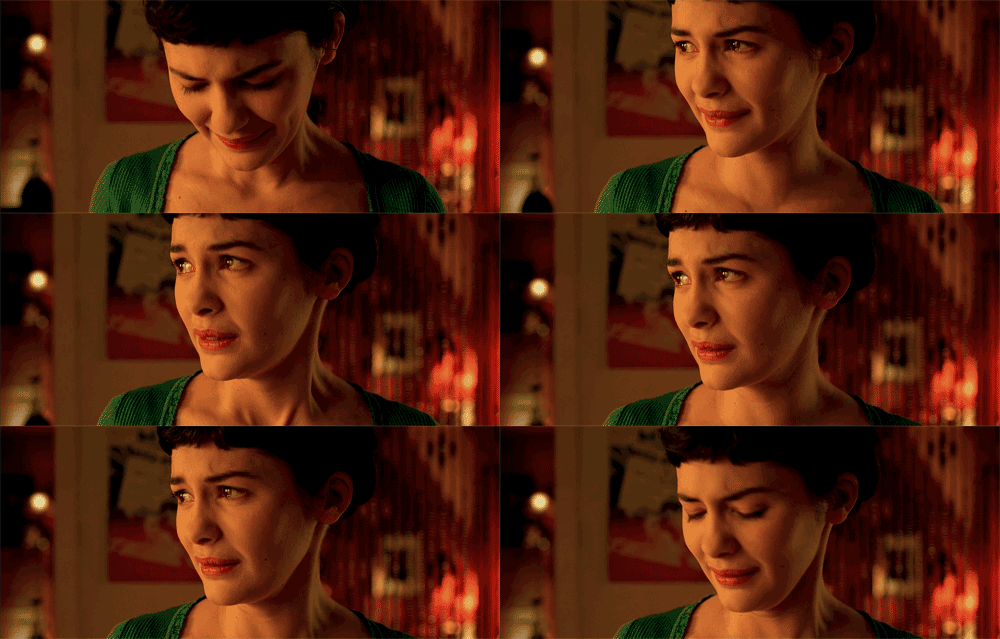
Honestly, I’ve spent the entire morning like this.
* The reason why this book has lost ¼ of a star is because I wanted to know more on the why side because I think it was over-looked. But that’s just me being pernickety and being nosey. I like to know facts.
**But mostly Midas Crook. I love you and your nervous skitteriness. Although I wanted to throttle you for approximately this entire book… I mostly wanted to kiss you. Hard.
“I should take a photo.”
“No. Just remember it, and us in it.”
He swallowed.
She smiled. Here was rightness of place and time.”
There isn’t much I can say about this book that other people haven’t said in the other comments here.
This book is absolutely breath taking: it’s perfectly executed, immaculately paced and I fell in love with every single character**- flaws and all.
The world that Shaw creates is so lush and full of vivid colour and texture that if someone had run into my room proclaimingOh my GOD, I’m turning into glass! Whatdoidowhatdoido?!’ while I was reading this, I would have probably leapt up and be like “LET’S GO FIND HENRY FUMA IN A BOG!”.
Shaw took a beautiful idea and transformed it, adding layer upon layer, to an astonishing modern day fairy tale with the most gorgeous bitter sweet love story.
I'm not entirely sure what to do with myself after finishing this book.
Honestly, I’ve spent the entire morning like this.
* The reason why this book has lost ¼ of a star is because I wanted to know more on the why side because I think it was over-looked. But that’s just me being pernickety and being nosey. I like to know facts.
**But mostly Midas Crook. I love you and your nervous skitteriness. Although I wanted to throttle you for approximately this entire book… I mostly wanted to kiss you. Hard.

December 18, 2009
I want to like it. Fault - too often the characters are unrealistic. There are several moments where I didn't believe in the characters. Falling in love is a facing life action - not a facing death action. It felt like the main plot worked against itself without any of the characters acknowledging this. Also - at times I was confused by the characters. The absolute magic of the book is interesting - but there is a forced sense of poetry that conflicts with just telling me a story. The glass feet pulled me out of the story more than it pulled me in. Strength - strong sense of location. The island is a believable mysterious place separate from the mainland and reality.

March 31, 2011
I am rather confused as to whether I liked this book or not. I guess I should start with what I liked:
The writing was lovely, very picturesque and descriptive.
The idea of the story was interesting.
Now on to what I didn't like:
The way the story unfolded fell short for me. Not only that, I had to push myself to keep reading, as much as I wanted to find out what happened in the story, it felt like I was being 'blocked' somehow from doing it. Whilst it was nice and all to read chapters about each characters lives, it stopped the story from flowing.
My biggest peeve regarding the story was how it abruptly ended; I was left feeling as though almost everything was left unanswered. Not only that, but I was left scratching my head trying to figure out what was the point of the 'flying cattle' and the 'white creature' amongst countless other titbits- it was if they had no point other than the excuse to fill pages talking about them.
In regards to the characters, whilst some were enjoyable, I didn't feel like any of their 'relationships' went anywhere, or that any of them actually 'did anything'.
To sum up, I still find it hard to give a definite response regarding whether I liked it or not, overall it has left me with a vague sense of dissatisfaction and apathy.
The writing was lovely, very picturesque and descriptive.
The idea of the story was interesting.
Now on to what I didn't like:
The way the story unfolded fell short for me. Not only that, I had to push myself to keep reading, as much as I wanted to find out what happened in the story, it felt like I was being 'blocked' somehow from doing it. Whilst it was nice and all to read chapters about each characters lives, it stopped the story from flowing.
My biggest peeve regarding the story was how it abruptly ended; I was left feeling as though almost everything was left unanswered. Not only that, but I was left scratching my head trying to figure out what was the point of the 'flying cattle' and the 'white creature' amongst countless other titbits- it was if they had no point other than the excuse to fill pages talking about them.
In regards to the characters, whilst some were enjoyable, I didn't feel like any of their 'relationships' went anywhere, or that any of them actually 'did anything'.
To sum up, I still find it hard to give a definite response regarding whether I liked it or not, overall it has left me with a vague sense of dissatisfaction and apathy.

November 6, 2010
Usually I´m not into fairy tales or fantasy books. "The Girl with Glass Feet" isn´t any of this, but there are phantastic elements in it and I enjoyed them very much. But mostly it is the extraordinaraly description of the two main figures that makes this book so outstanding to me. Life sureley can be horrible and using the lens of a camera to get some space between you and the world might seem a good plan, but finally it fails...

February 24, 2010
The farther away I get from having read this book the less fondly I remember it. The reason for this is that it's one of those books where the antagonists get punished, for being selfish and oblivious in the case of the main guy (although, oddly we're let into the cause of his selfishness, how he saw it, and its really terribly sad in the way that the protagonists plight in the novel isn't), or for lying about ability and wanting sex while guilty of being old in the case of a secondary female character (okay, that's slightly glib, but there is that undercurrent of 'ew how gross' associated with her age, which, by the way, isn't even that old. She's in her 40s). So there's all this punishment doled out at the end, but really I found the protagonist had just as much to account for as any of the 'bad guys' and we're told (deliberate word choice there) how he's redeemed and reborn through his experiences in the novel (we're also told how special and great he is by the precocious little girl character. Vomit. That character should be outlawed).
The thing is he's a jerk. A terrible jerk who's completely self centered, a navel gazer to the millionth power who I found so awful that I actually began to feel really sorry for the female lead that she was not only turning to glass, but turning to glass and stuck with this guy. And part of the book is that his terrible past has made him a navel gazing creep, but his past doesn't come across as that terribly awful. Basically his father didn't hug him enough (okay, glib again, but sort of true), AND WHATS WORSE is that he actively denies his father the redemption that's given to him.
Even at the very end, where he's left the island and is in this world of tropical color, having conquered his fears in order to live life like Ida did, he is only doing so in order to find a new and deeper means of retreat from the world. In the end he really hasn't changed at all, and the suffering of poor Ida just proves to have been pointless.
The more I think of it though, maybe this book isn't about redemption but about arbitrary unfairness of the universe, where some get their last words and others don't but everyone dies or disappears anyway and most of our opportunities will be missed ones. In which case it's a better book but still gets two stars because that's just horrifically nasty way of going about things.
The thing is he's a jerk. A terrible jerk who's completely self centered, a navel gazer to the millionth power who I found so awful that I actually began to feel really sorry for the female lead that she was not only turning to glass, but turning to glass and stuck with this guy. And part of the book is that his terrible past has made him a navel gazing creep, but his past doesn't come across as that terribly awful. Basically his father didn't hug him enough (okay, glib again, but sort of true), AND WHATS WORSE is that he actively denies his father the redemption that's given to him.
Even at the very end, where he's left the island and is in this world of tropical color, having conquered his fears in order to live life like Ida did, he is only doing so in order to find a new and deeper means of retreat from the world. In the end he really hasn't changed at all, and the suffering of poor Ida just proves to have been pointless.
The more I think of it though, maybe this book isn't about redemption but about arbitrary unfairness of the universe, where some get their last words and others don't but everyone dies or disappears anyway and most of our opportunities will be missed ones. In which case it's a better book but still gets two stars because that's just horrifically nasty way of going about things.
This entire review has been hidden because of spoilers.

January 11, 2012
Este é um daqueles livros que eu não sabia se iria gostar ou não porque não tinha lido nada (opiniões, criticas...) sobre ele. Já o tinha visto a algum tempo na Bertrand, mas como não tinha a certeza se o queria mesmo ou não não arrisquei. Mas, com a promoção da Bertrand, encontrei-o a 7,50 euros e decidi comprá-lo.
Tenho a dizer que é um dos meus livros favoritos. Não tem muitas personagens, não tem uma história muito densa, nem grandes intrigas e mistérios. Mas tem magia, uma grande magia que envolve todas as personagens que vão aparecendo ao longo do livro. Passados entrelaçados que se unem no presente, segredos guardados, memórias esbatidas...tudo se vai unindo com o decorrer do tempo descrito no livro.
Agarrou-me logo nas primeiras páginas, com o encontro entre a rapariga, Ida, e o rapaz, Midas. Um rapaz fotografo, tímido e um tanto assustadiço, de vinte e tal anos, uma rapariga também pela mesma idade mas um pouco mais nova, nada tímida e brincalhona. Quando eles se encontram na floresta o rapaz não lhe liga muito, mas a sua curiosidade recai sobre as estranhas botas que ela usa. O tempo passa e ele acaba por descobrir que os pés dela são feitos de vidro.
Ida tem um problema: está-se a transformar em vidro. Midas faz tudo para ajudar. A história é o decorrer do tempo em que ela procura uma cura, com a ajuda de Midas e de um homem chamado Carl, e de outro chamado Henry. Personagens cujas vidas estão entrelaçadas e unidas às de Ida e Midas, mas que não vou referir aqui porquê.
A paixão entre os dois jovens é o que tenta salvar Ida e é um dos mais fortes acontecimentos do livro, a meu ver.
Com um final que não estava à espera e que deixa algo a pairar na atmosfera da história, este é um livro que eu aconselho!
É um romance atual, bonito e inteligente. Muito bom mesmo!
Tenho a dizer que é um dos meus livros favoritos. Não tem muitas personagens, não tem uma história muito densa, nem grandes intrigas e mistérios. Mas tem magia, uma grande magia que envolve todas as personagens que vão aparecendo ao longo do livro. Passados entrelaçados que se unem no presente, segredos guardados, memórias esbatidas...tudo se vai unindo com o decorrer do tempo descrito no livro.
Agarrou-me logo nas primeiras páginas, com o encontro entre a rapariga, Ida, e o rapaz, Midas. Um rapaz fotografo, tímido e um tanto assustadiço, de vinte e tal anos, uma rapariga também pela mesma idade mas um pouco mais nova, nada tímida e brincalhona. Quando eles se encontram na floresta o rapaz não lhe liga muito, mas a sua curiosidade recai sobre as estranhas botas que ela usa. O tempo passa e ele acaba por descobrir que os pés dela são feitos de vidro.
Ida tem um problema: está-se a transformar em vidro. Midas faz tudo para ajudar. A história é o decorrer do tempo em que ela procura uma cura, com a ajuda de Midas e de um homem chamado Carl, e de outro chamado Henry. Personagens cujas vidas estão entrelaçadas e unidas às de Ida e Midas, mas que não vou referir aqui porquê.
A paixão entre os dois jovens é o que tenta salvar Ida e é um dos mais fortes acontecimentos do livro, a meu ver.
Com um final que não estava à espera e que deixa algo a pairar na atmosfera da história, este é um livro que eu aconselho!
É um romance atual, bonito e inteligente. Muito bom mesmo!

December 28, 2009
I loved, loved, loved this book. I had been spending a lot of time in YA fantasy and figured it was about time I made my way back into the adult literary world. This seemed like the perfect book to help me find my way. I've developed quite a soft spot for magical realism, and I think that this story vindicates my favoritism from that "genre."
Ida discovers that - tendon by tendon, vein by vein - she is slowly turning to glass. It begins with a splinter-sized piece on the sole of her foot and slowly starts spreading up her legs. In desperation, she travels back to the place it all began: St. Hauda's island, a monochromatic land of ice but also a magical land of tiny, moth-winged cattle and an unnamed creature that turns everything it sees pure white. Here, Ida meets Midas Crook, a painfully introverted photographer who becomes Ida's constant companion. As the two search desperately for a cure, Ida, out of pure need for connection and love, violently cracks the more metaphorical ice surrounding Midas. Dragging him out of his shell of inhibitions and memories, she forces him to be fully present and fully alive now, with her, before it's too late.
Wonderful. I'm recommending it to everyone and anyone, starting with my mom. :)
Ida discovers that - tendon by tendon, vein by vein - she is slowly turning to glass. It begins with a splinter-sized piece on the sole of her foot and slowly starts spreading up her legs. In desperation, she travels back to the place it all began: St. Hauda's island, a monochromatic land of ice but also a magical land of tiny, moth-winged cattle and an unnamed creature that turns everything it sees pure white. Here, Ida meets Midas Crook, a painfully introverted photographer who becomes Ida's constant companion. As the two search desperately for a cure, Ida, out of pure need for connection and love, violently cracks the more metaphorical ice surrounding Midas. Dragging him out of his shell of inhibitions and memories, she forces him to be fully present and fully alive now, with her, before it's too late.
Wonderful. I'm recommending it to everyone and anyone, starting with my mom. :)

December 16, 2016
Love love love! This is one of my favourite books!
It is beautifully written: in a quiet and almost creepy setting, a woman returns to the island after discovering her feet are turning to glass, to try and uncover its mystery cause.
Whilst there she meets a young man, Midas, an introvert, socially awkward and generally uncomfortable in his own skin.
They are a wonderful clash of personalities and to see their relationship grow, as the glass in Ida's feet gradually begins to spread it becomes a race against time to find the cause and a cure.
The entire book has a magical, mystical feel about it - you feel transported to a world where people hide away, and the very earth itself holds secrets.
The relationship between Midas and Ida also feels very real - they are both flawed, both make mistakes with the other, which just makes it so much more believable. You feel for them and can understand them in a complex way - no insta love here!
I cannot praise it highly enough - it is beautiful and heartbreaking and just wonderful. 5 stars!
It is beautifully written: in a quiet and almost creepy setting, a woman returns to the island after discovering her feet are turning to glass, to try and uncover its mystery cause.
Whilst there she meets a young man, Midas, an introvert, socially awkward and generally uncomfortable in his own skin.
They are a wonderful clash of personalities and to see their relationship grow, as the glass in Ida's feet gradually begins to spread it becomes a race against time to find the cause and a cure.
The entire book has a magical, mystical feel about it - you feel transported to a world where people hide away, and the very earth itself holds secrets.
The relationship between Midas and Ida also feels very real - they are both flawed, both make mistakes with the other, which just makes it so much more believable. You feel for them and can understand them in a complex way - no insta love here!
I cannot praise it highly enough - it is beautiful and heartbreaking and just wonderful. 5 stars!

April 2, 2017
"I think places take hold of us and we become mere parts of the landscape, taking on its quirks and follies."
______
Here was rightness of place and time.
The Girl With Glass Feet is a beautiful volume written in a wonderful way. A haunting mystery exploring the connection between natural world and human longing. This story of fable and fantasy bridges past and present and clears the future path. The setting is magical with visual description. Reading this novel brings back recollections of hiking my favorite paths, experiencing tricks of the light.
After my initial reading of The Girl With Glass Feet, I sought out other books by the author and loved them as well (The Man Who Rained and The Trees). Noteworthy is the mention of Ali Shaw book covers - the artwork is a fitting match for each brilliant story contained therein.
I hope to read more Ali Shaw in the future. In the meantime, I have been able to obtain both printed and audio editions of Ali Shaw's three remarkable novels for my personal library.
Read 2016-2017, 2022 and 2025
Related Works: The Odyssey, The Wonderful Wizard of Oz
Favorite Passages:
. . . light was magic, making the dull earth vivid.
______
Crows wheeled in a sky of oily rags. Hidden water gurgled nearby, welling into a dark pool at the bottom of the slope. Above the pool, the ray of light dangled like a golden ribbon.
______
What other people could not realize was that photography wasn't a job, a hobby or an obsession, it was simply as fundamental to his interpretation of the world as the effect of light diving in his retinas.
_______
But how did you find a recluse in a wilderness of recluses?
_______
. . . sometimes Midas suspected that life was a film with subliminal messages.
_______
Besides, he didn't have enough intact heartstrings to hand them to people to pull.
_______
He'd removed the lens cap to clean the glass beneath. The lens gleamed.
He enjoyed being alone.
_______
The jukebox played guitar solos from the seventies, and Ida thought how badly aged some of the tracks sounded, trapped like flies in the jam jar of the pub.
_______
. . . there was something kaleidoscopic about their movement. You started to see patterns, and before long you'd be hypnotized, your thoughts fluttering in the air around you.
_______
Memories were just photos printed on synapses. As such he justified sharing some of them with the world while keeping others locked in hidden albums.
_______
. . . he could neither fit in nor find anonymity.
_______
. . . feeling like the memory of a dream he knew was about to dissolve.
_______
A siren started outside and she had a sudden sense of the vastness of the city and the country beyond it, the landscape of the continent, cloud formations above, oceans under-mining, and herself barely a speck within it all.
_______
Bare fields passed like chessboards set with white trees and black crows. If you stared up at the low clouds you couldn't tell whether the fizz you saw was dust on your eyeballs or brewing snowfall.
_______
"He's a bit of a weirdo. But I think he's sweet."
_______
"I must hide the dragonflies."
_______
"It's all a shame, Midas. Nothing good ever came from my marriage to your father."
_______
. . . there had been an understanding. Like insects they had engaged on frequencies without the need for words or body language.
_______
"She didn't tell you anything about . . . secret things?"
"Well . . . yes. Something deeply secret, yes."
_______
"Maybe you noticed something different. When you returned to St. Hauda's Land. A taste on the air. A mannerism the birds have. A peculiar snowfall, making almost mathematical patterns. A white animal that's not an albino."
_______
_______
Even so young, he'd begun to think of negatives as light snares: the light burns in a negative as a physical remnant of the past. Memories made of light. A print was a wonderful thing, but it was the negative that should be treasured. Without them you held only a simulacrum; with them he would have held a fragment of his mother's past, as real as a piece of recovered hair or nail.
_______
She had a fine skeleton, lean limbs and hair floating around her head as if underwater.
_______
The evening twinkling out behind snow clouds. The root of the woods a serrated threat to the sky. Snow melting as it fell, settling on the leafy road to be pulped by tires.
_______
Then there were the negatives. How he missed negatives. They were the actual rays of light, bounced straight off a landscape, an object, a person, and scarred onto the film. Photographic negatives were the hardest evidence you could get of your memories. They were the char left by the fire, the bruise left on your skin.
_______
Gray clouds had hung like dead petals in a spiderweb.
_______
"Have you ever been skiing, Midas?"
"Me? No. I've never even been swimming."
"You're joking."
He shook his head. "Can't swim. Absolutely forbidden as a child."
"Why?"
"My father thought it wasn't safe."
"You didn't think to learn, now that you're an adult?"
He shook his head. "I don't like large bodies of water."
She burst out laughing. "Jesus! You live on the tiniest island!"
_______
She had reservations about photography. She didn't want to be part of the ghostly chorus of the photographed.
_______
At one point she thought she saw a figure, standing in the bog in a log coat buttoned up to its throat. But the coat was the color of tall grass and the arms were just the shifting of reeds.
_______
"People look for patterns in their existences, and one of the patterns they see on these islands is that of families making the same mistakes through generations."
_______
She had this power (he recalled feeling it now at their first meeting that summer) to prize open your carapace and get in among the gooey mess beneath.
_______
"Then defy what people think."
_______
When I first found them they swarmed all over me, with their wings humming so hard I thought for a moment I'd be lifted from the ground.
_______
They sat down to eat at the table, over which he threw a cloth patterned with brown butterflies. Henry served the crabs, and Ida thought they tasted of the swamp.
_______
The trees on the journey back were the bowed white heads of old women. Snow came down at a lazy pace and coated the hackles of a tomcat Ida saw dragging a blackbird along the road.
_______
The taxi dropped her off outside Midas's house and she moved so slowly through his gate and yard that a laughing kid yelled in passing, "Cheer up, granny!" then saw her youthful face and looked confused.
________
She shook herself. He was amazed at how she took a moment to encounter the fear, then shouldered it and moved on. She stepped towards him. The space between them seemed to shrink by a mile, every snowflake falling between them looking large as a feather.
_______
"Mermaids, Sirens and Capricorns, that sounds appropriate." His father turned it over and read from the back cover. "A thought-provoking collection of essays examining the fantasies and nightmares of sailors, Hm. What do you think?"
. . . .
"What about this one? More immediate, perhaps. Below Her Midriff: Dogs! This'll perk your interest, Midas. This splendid book, complete with twelve full-color plates, traces the coastlines of Greece in search of the mythical beast Scylla, whose legs were famously transformed into dogs by the sorceress Circe. That sounds just your cup of tea."
_______
A black seabird dipped into the ocean like a nib dipping into an inkwell.
_______
Soon rumors circulated that Hector had purchased birds of a hundred species, canaries and cockatoos and nightingales, but that every single one was silent. An aviary of mute birds. Those who had entered it told of an eerie quiet, the opening and closing of a hundred beaks without a single warble or tweet on the air.
_______
This land was full of death traps: Ida saw in the drive of the only cottage they passed a tree hung with both Christmas lights and dead moles. Beyond it the road turned in from the sea and climbed a series of zigzags back to higher ground where, at the very summit, Gurm Island's last headlands were laid out below to the north, like bones cast on the ground by a soothsayer.
_______
He had always believed in a point where a photograph became like a headstone. The photos of the dead had a distant quality about them that the photos of the living didn't possess.
_______
Midas recognized that distant look, seen so many times on his mother's face. An elsewhere look. Ida's thoughts would be in some other year, no doubt, before all this began.
_______
An armada of jellyfish had floated in on the tide. One or two were large as sails, with bodies rippling just inches under the surface, flying pennants of tentacles. The tiniest ones were the size of thimbles, with crests of violet suckers. One giant orb glowed brighter than the others. Its body was full of a nebula of golden light, as if it had swallowed an angel.
Nearer by floated a swarm of about a hundred lantern-sized jellies. Ida gasped when a spark of electric yellow sputtered momentarily in the body of one. It had been a flash of light like a faulty lightbulb. A second spark faltered in another jelly, this time a strobe of pink. Another lit up deeper down, red as a clot of blood. The tide gulped against the stilts of Enghem Stead.
Another jelly flashed, and this one stayed alight. A yellow blaze bobbing in the water. Its emanation kindled the lights of its neighbors. Their bodies sparkled, and the sparkles turned to steady shines: yellow, pink, crimson and cyan. The effect slowly ricocheted across the cove until the water was a multi-colored brilliance. Refracted color glittered up the walls of the houses.
Midas and Ida leaned in silence over the rail of the deck. He noticed how close her hands were to his on the rail. He didn't move away.
"Imagine living in a place like this," she said, "where you could watch this every night."
_______
As her thoughts metamorphosed into half dreams, she translated the nighttime noises of the house and heaters into the huffing of moth-winged bulls.
_______
He couldn't miss this light, and he didn't think the others would understand.
_______
"I thought I would spend my retirement in Enghem photographing this and that, but cameras were something I became suspicious of. Digital cameras in particular. They were the most robotic and futile of things. A mechanical eye with a mechanical memory. It reminded me of . . . mistakes in the way I had seen the world."
_______
"I am sorry," said Hector. "My mind flits from thought to thought. I get ahead of myself. I don't explain. The doctor says there's something wrong with me, but it feels like my mind is more correct than ever it was in my business years."
_______
There is an astrology of eyes at work in the world. Looks can align like planets and, in this instance, the resulting eclipse shaded out yours truly.
_______
"When a person feels imprisoned by their circumstances, they make mistakes."
________
"I feel like a half-exposed photograph. I can make out what it portrays, but it doesn't have any depth."
_______
The air was filled with a million flakes, sinking slowly like ocean sediment. Snow flew across St. Hauda's Land's roads and heaped on shrubs. A bird with broad wings coasted on the air currents above like a stingray.
_______
He imagined dying and being cut open and there were all his bones and muscles and his bared arteries and capillaries leading to a cavity in his chest where, instead of a heart, he had his camera.
_______
"Love . . . is not something you understand when you're a grown-up, Den. It's just as if it's . . . a memory of something that should have been. From stories . . . and . . . I don't know whether you really can be in love."
_______
"Lettuce, tomatoes, spuds, honey roast ham. I'm making you a salad and a jacket potato because you, well . . . Bloody hell, Midas, look at you."
_______
The mist seemed now to billow and expand almost suddenly, as if the earth had exhaled a deep breath on a cold day.
_______
The winter was inside his coat and under his shirt, frosting his lungs; but even in the freezing anxiety of the moment, the fact that he had found her made his heart hot.
_______
Tenderness and emotion went hand in hand with bits of gut and blood.
_______
He ripped the pages from their binding and chucked them furiously into the air. They battled the wind like terrified creatures, flapping against each other.
_______
She watched the vapors from peat flats rise, made visible by cold. The milk white of the sky reflected in channels of water and a rat that lay dead at the side of the road, tail and hind legs crucified by tire treads.
______
Here was rightness of place and time.
The Girl With Glass Feet is a beautiful volume written in a wonderful way. A haunting mystery exploring the connection between natural world and human longing. This story of fable and fantasy bridges past and present and clears the future path. The setting is magical with visual description. Reading this novel brings back recollections of hiking my favorite paths, experiencing tricks of the light.
After my initial reading of The Girl With Glass Feet, I sought out other books by the author and loved them as well (The Man Who Rained and The Trees). Noteworthy is the mention of Ali Shaw book covers - the artwork is a fitting match for each brilliant story contained therein.
I hope to read more Ali Shaw in the future. In the meantime, I have been able to obtain both printed and audio editions of Ali Shaw's three remarkable novels for my personal library.
Read 2016-2017, 2022 and 2025
Related Works: The Odyssey, The Wonderful Wizard of Oz
Favorite Passages:
. . . light was magic, making the dull earth vivid.
______
Crows wheeled in a sky of oily rags. Hidden water gurgled nearby, welling into a dark pool at the bottom of the slope. Above the pool, the ray of light dangled like a golden ribbon.
______
What other people could not realize was that photography wasn't a job, a hobby or an obsession, it was simply as fundamental to his interpretation of the world as the effect of light diving in his retinas.
_______
But how did you find a recluse in a wilderness of recluses?
_______
. . . sometimes Midas suspected that life was a film with subliminal messages.
_______
Besides, he didn't have enough intact heartstrings to hand them to people to pull.
_______
He'd removed the lens cap to clean the glass beneath. The lens gleamed.
He enjoyed being alone.
_______
The jukebox played guitar solos from the seventies, and Ida thought how badly aged some of the tracks sounded, trapped like flies in the jam jar of the pub.
_______
. . . there was something kaleidoscopic about their movement. You started to see patterns, and before long you'd be hypnotized, your thoughts fluttering in the air around you.
_______
Memories were just photos printed on synapses. As such he justified sharing some of them with the world while keeping others locked in hidden albums.
_______
. . . he could neither fit in nor find anonymity.
_______
. . . feeling like the memory of a dream he knew was about to dissolve.
_______
A siren started outside and she had a sudden sense of the vastness of the city and the country beyond it, the landscape of the continent, cloud formations above, oceans under-mining, and herself barely a speck within it all.
_______
Bare fields passed like chessboards set with white trees and black crows. If you stared up at the low clouds you couldn't tell whether the fizz you saw was dust on your eyeballs or brewing snowfall.
_______
"He's a bit of a weirdo. But I think he's sweet."
_______
"I must hide the dragonflies."
_______
"It's all a shame, Midas. Nothing good ever came from my marriage to your father."
_______
. . . there had been an understanding. Like insects they had engaged on frequencies without the need for words or body language.
_______
"She didn't tell you anything about . . . secret things?"
"Well . . . yes. Something deeply secret, yes."
_______
"Maybe you noticed something different. When you returned to St. Hauda's Land. A taste on the air. A mannerism the birds have. A peculiar snowfall, making almost mathematical patterns. A white animal that's not an albino."
_______
_______
Even so young, he'd begun to think of negatives as light snares: the light burns in a negative as a physical remnant of the past. Memories made of light. A print was a wonderful thing, but it was the negative that should be treasured. Without them you held only a simulacrum; with them he would have held a fragment of his mother's past, as real as a piece of recovered hair or nail.
_______
She had a fine skeleton, lean limbs and hair floating around her head as if underwater.
_______
The evening twinkling out behind snow clouds. The root of the woods a serrated threat to the sky. Snow melting as it fell, settling on the leafy road to be pulped by tires.
_______
Then there were the negatives. How he missed negatives. They were the actual rays of light, bounced straight off a landscape, an object, a person, and scarred onto the film. Photographic negatives were the hardest evidence you could get of your memories. They were the char left by the fire, the bruise left on your skin.
_______
Gray clouds had hung like dead petals in a spiderweb.
_______
"Have you ever been skiing, Midas?"
"Me? No. I've never even been swimming."
"You're joking."
He shook his head. "Can't swim. Absolutely forbidden as a child."
"Why?"
"My father thought it wasn't safe."
"You didn't think to learn, now that you're an adult?"
He shook his head. "I don't like large bodies of water."
She burst out laughing. "Jesus! You live on the tiniest island!"
_______
She had reservations about photography. She didn't want to be part of the ghostly chorus of the photographed.
_______
At one point she thought she saw a figure, standing in the bog in a log coat buttoned up to its throat. But the coat was the color of tall grass and the arms were just the shifting of reeds.
_______
"People look for patterns in their existences, and one of the patterns they see on these islands is that of families making the same mistakes through generations."
_______
She had this power (he recalled feeling it now at their first meeting that summer) to prize open your carapace and get in among the gooey mess beneath.
_______
"Then defy what people think."
_______
When I first found them they swarmed all over me, with their wings humming so hard I thought for a moment I'd be lifted from the ground.
_______
They sat down to eat at the table, over which he threw a cloth patterned with brown butterflies. Henry served the crabs, and Ida thought they tasted of the swamp.
_______
The trees on the journey back were the bowed white heads of old women. Snow came down at a lazy pace and coated the hackles of a tomcat Ida saw dragging a blackbird along the road.
_______
The taxi dropped her off outside Midas's house and she moved so slowly through his gate and yard that a laughing kid yelled in passing, "Cheer up, granny!" then saw her youthful face and looked confused.
________
She shook herself. He was amazed at how she took a moment to encounter the fear, then shouldered it and moved on. She stepped towards him. The space between them seemed to shrink by a mile, every snowflake falling between them looking large as a feather.
_______
"Mermaids, Sirens and Capricorns, that sounds appropriate." His father turned it over and read from the back cover. "A thought-provoking collection of essays examining the fantasies and nightmares of sailors, Hm. What do you think?"
. . . .
"What about this one? More immediate, perhaps. Below Her Midriff: Dogs! This'll perk your interest, Midas. This splendid book, complete with twelve full-color plates, traces the coastlines of Greece in search of the mythical beast Scylla, whose legs were famously transformed into dogs by the sorceress Circe. That sounds just your cup of tea."
_______
A black seabird dipped into the ocean like a nib dipping into an inkwell.
_______
Soon rumors circulated that Hector had purchased birds of a hundred species, canaries and cockatoos and nightingales, but that every single one was silent. An aviary of mute birds. Those who had entered it told of an eerie quiet, the opening and closing of a hundred beaks without a single warble or tweet on the air.
_______
This land was full of death traps: Ida saw in the drive of the only cottage they passed a tree hung with both Christmas lights and dead moles. Beyond it the road turned in from the sea and climbed a series of zigzags back to higher ground where, at the very summit, Gurm Island's last headlands were laid out below to the north, like bones cast on the ground by a soothsayer.
_______
He had always believed in a point where a photograph became like a headstone. The photos of the dead had a distant quality about them that the photos of the living didn't possess.
_______
Midas recognized that distant look, seen so many times on his mother's face. An elsewhere look. Ida's thoughts would be in some other year, no doubt, before all this began.
_______
An armada of jellyfish had floated in on the tide. One or two were large as sails, with bodies rippling just inches under the surface, flying pennants of tentacles. The tiniest ones were the size of thimbles, with crests of violet suckers. One giant orb glowed brighter than the others. Its body was full of a nebula of golden light, as if it had swallowed an angel.
Nearer by floated a swarm of about a hundred lantern-sized jellies. Ida gasped when a spark of electric yellow sputtered momentarily in the body of one. It had been a flash of light like a faulty lightbulb. A second spark faltered in another jelly, this time a strobe of pink. Another lit up deeper down, red as a clot of blood. The tide gulped against the stilts of Enghem Stead.
Another jelly flashed, and this one stayed alight. A yellow blaze bobbing in the water. Its emanation kindled the lights of its neighbors. Their bodies sparkled, and the sparkles turned to steady shines: yellow, pink, crimson and cyan. The effect slowly ricocheted across the cove until the water was a multi-colored brilliance. Refracted color glittered up the walls of the houses.
Midas and Ida leaned in silence over the rail of the deck. He noticed how close her hands were to his on the rail. He didn't move away.
"Imagine living in a place like this," she said, "where you could watch this every night."
_______
As her thoughts metamorphosed into half dreams, she translated the nighttime noises of the house and heaters into the huffing of moth-winged bulls.
_______
He couldn't miss this light, and he didn't think the others would understand.
_______
"I thought I would spend my retirement in Enghem photographing this and that, but cameras were something I became suspicious of. Digital cameras in particular. They were the most robotic and futile of things. A mechanical eye with a mechanical memory. It reminded me of . . . mistakes in the way I had seen the world."
_______
"I am sorry," said Hector. "My mind flits from thought to thought. I get ahead of myself. I don't explain. The doctor says there's something wrong with me, but it feels like my mind is more correct than ever it was in my business years."
_______
There is an astrology of eyes at work in the world. Looks can align like planets and, in this instance, the resulting eclipse shaded out yours truly.
_______
"When a person feels imprisoned by their circumstances, they make mistakes."
________
"I feel like a half-exposed photograph. I can make out what it portrays, but it doesn't have any depth."
_______
The air was filled with a million flakes, sinking slowly like ocean sediment. Snow flew across St. Hauda's Land's roads and heaped on shrubs. A bird with broad wings coasted on the air currents above like a stingray.
_______
He imagined dying and being cut open and there were all his bones and muscles and his bared arteries and capillaries leading to a cavity in his chest where, instead of a heart, he had his camera.
_______
"Love . . . is not something you understand when you're a grown-up, Den. It's just as if it's . . . a memory of something that should have been. From stories . . . and . . . I don't know whether you really can be in love."
_______
"Lettuce, tomatoes, spuds, honey roast ham. I'm making you a salad and a jacket potato because you, well . . . Bloody hell, Midas, look at you."
_______
The mist seemed now to billow and expand almost suddenly, as if the earth had exhaled a deep breath on a cold day.
_______
The winter was inside his coat and under his shirt, frosting his lungs; but even in the freezing anxiety of the moment, the fact that he had found her made his heart hot.
_______
Tenderness and emotion went hand in hand with bits of gut and blood.
_______
He ripped the pages from their binding and chucked them furiously into the air. They battled the wind like terrified creatures, flapping against each other.
_______
She watched the vapors from peat flats rise, made visible by cold. The milk white of the sky reflected in channels of water and a rat that lay dead at the side of the road, tail and hind legs crucified by tire treads.
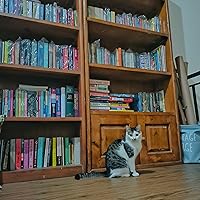
April 9, 2011
"...kau tidak pernah ingin tahu...ke mana perginya perasaan?"
Jika diminta menceritakan isi buku ini, rasanya saya hanya bisa menjawab bahwa Gadis dengan Kaki dari Kaca adalah sebuah dongeng yang indah tentang perasaan dan isi hati manusia. Mungkin tubuh yang berubah menjadi kaca atau makhluk-makhluk aneh bersayap yang ditemukan di Kepulauan St. Hauda's Land adalah metafora yang digunakan penulis dan hanya dia yang benar-benar memahami maknanya. Karena sampai seribu tahun dari sekarang pun mungkin saya tidak akan pernah melihat gadis berkaki kaca atau lembu bersayap, tapi saya paham bahwa pertemuan dengan mereka bisa mengubah hidup saya dengan cara yang tak pernah terbayangkan.
Ida MacLaird sebelumnya adalah gadis yang sangat aktif, gemar bertualang ke berbagai negara dan hobi menyelam di laut. Sampai suatu hari dia mendapati kakinya perlahan-lahan berubah menjadi kaca, dan hilang sudah segala kesenangan hidupnya yang membutuhkan fisik sempurna. Kini Ida mengisi hari-harinya dengan menyusuri Kepulauan St. Hauda's Land yang sunyi untuk berusaha mencari pengobatan. Dan pada prosesnya bertemu orang-orang 'aneh' yang menjalani hidup mereka dalam dunia sunyi masing-masing, orang-orang yang menyimpan berbagai rahasia dan masa lalu kelam. Orang-orang yang menyiksa diri dengan bergelimang dalam kenangan, meski kenangan itu menyakitkan. Orang-orang yang memilih untuk tidak bersentuhan dengan manusia lain, demi melindungi diri mereka sendiri yang rapuh.
Midas Crook hanya berteman dengan kameranya, hanya memercayai dunia yang dia lihat melalui lensa kamera, bukan dunia nyata yang terbentang di depan matanya. Persentuhan dengan manusia lain membuatnya bergidik, walaupun dulu hati Midas sesak melihat ayahnya yang selalu menghindar dari pelukan dan sentuhan ibu Midas, istrinya sendiri.
Henry Fuwa yang hidup menyendiri di wilayah paling terpencil di Kepulauan itu, dengan pita suara yang kaku karena tidak pernah digunakan untuk berbicara dengan manusia lain. Henry yang memendam cinta pada wanita yang salah dan tetap dihantui olehnya hingga bertahun-tahun kemudian. Henry yang diyakini Ida mengetahui obat untuk penyakitnya, namun ternyata menyimpan rahasia mengejutkan tentang manusia-manusia kaca.
Carl Mausen, sahabat keluarga Ida yang mencoba menolong Ida seperti dulu dia berusaha menolong ibu Ida. Carl juga tak pernah beranjak dari masa lalu, dan kedatangan Ida malah semakin membuatnya terpuruk, walaupun sebenarnya dia bisa memiliki kehidupan yang lebih bahagia, andai dia tak begitu terpaku pada kenangan yang menyakitkan.
Kehidupan manusia-manusia yang hidup berdekatan namun tidak pernah berhubungan ini kemudian saling berkelindan setelah kedatangan Ida. Hati-hati mulai terbuka, rahasia-rahasia mulai terkuak, dan masa lalu mulai terkubur.
Buku ini menyampaikan, dengan penuturan yang indah, bahwa kita harus berani menghadapi kenyataan, jangan melarikan diri dengan menyalahkan masa lalu yang kita anggap telah membentuk diri kita yang sekarang. Bahwa Tuhan kerap memberi kita kesempatan untuk bahagia sekaligus kesempatan untuk berduka, dan kita sendiri yang harus memutuskan apakah akan memanfaatkan kesempatan itu atau memilih berlindung dalam zona nyaman yang tak membutuhkan pengorbanan perasaan. Bahwa cinta sejati adalah berani mendampingi apa pun yang terjadi, bahkan walaupun waktu yang kita miliki tak sampai hitungan jari.
Jika diminta menceritakan isi buku ini, rasanya saya hanya bisa menjawab bahwa Gadis dengan Kaki dari Kaca adalah sebuah dongeng yang indah tentang perasaan dan isi hati manusia. Mungkin tubuh yang berubah menjadi kaca atau makhluk-makhluk aneh bersayap yang ditemukan di Kepulauan St. Hauda's Land adalah metafora yang digunakan penulis dan hanya dia yang benar-benar memahami maknanya. Karena sampai seribu tahun dari sekarang pun mungkin saya tidak akan pernah melihat gadis berkaki kaca atau lembu bersayap, tapi saya paham bahwa pertemuan dengan mereka bisa mengubah hidup saya dengan cara yang tak pernah terbayangkan.
Ida MacLaird sebelumnya adalah gadis yang sangat aktif, gemar bertualang ke berbagai negara dan hobi menyelam di laut. Sampai suatu hari dia mendapati kakinya perlahan-lahan berubah menjadi kaca, dan hilang sudah segala kesenangan hidupnya yang membutuhkan fisik sempurna. Kini Ida mengisi hari-harinya dengan menyusuri Kepulauan St. Hauda's Land yang sunyi untuk berusaha mencari pengobatan. Dan pada prosesnya bertemu orang-orang 'aneh' yang menjalani hidup mereka dalam dunia sunyi masing-masing, orang-orang yang menyimpan berbagai rahasia dan masa lalu kelam. Orang-orang yang menyiksa diri dengan bergelimang dalam kenangan, meski kenangan itu menyakitkan. Orang-orang yang memilih untuk tidak bersentuhan dengan manusia lain, demi melindungi diri mereka sendiri yang rapuh.
Midas Crook hanya berteman dengan kameranya, hanya memercayai dunia yang dia lihat melalui lensa kamera, bukan dunia nyata yang terbentang di depan matanya. Persentuhan dengan manusia lain membuatnya bergidik, walaupun dulu hati Midas sesak melihat ayahnya yang selalu menghindar dari pelukan dan sentuhan ibu Midas, istrinya sendiri.
Henry Fuwa yang hidup menyendiri di wilayah paling terpencil di Kepulauan itu, dengan pita suara yang kaku karena tidak pernah digunakan untuk berbicara dengan manusia lain. Henry yang memendam cinta pada wanita yang salah dan tetap dihantui olehnya hingga bertahun-tahun kemudian. Henry yang diyakini Ida mengetahui obat untuk penyakitnya, namun ternyata menyimpan rahasia mengejutkan tentang manusia-manusia kaca.
Carl Mausen, sahabat keluarga Ida yang mencoba menolong Ida seperti dulu dia berusaha menolong ibu Ida. Carl juga tak pernah beranjak dari masa lalu, dan kedatangan Ida malah semakin membuatnya terpuruk, walaupun sebenarnya dia bisa memiliki kehidupan yang lebih bahagia, andai dia tak begitu terpaku pada kenangan yang menyakitkan.
Kehidupan manusia-manusia yang hidup berdekatan namun tidak pernah berhubungan ini kemudian saling berkelindan setelah kedatangan Ida. Hati-hati mulai terbuka, rahasia-rahasia mulai terkuak, dan masa lalu mulai terkubur.
Buku ini menyampaikan, dengan penuturan yang indah, bahwa kita harus berani menghadapi kenyataan, jangan melarikan diri dengan menyalahkan masa lalu yang kita anggap telah membentuk diri kita yang sekarang. Bahwa Tuhan kerap memberi kita kesempatan untuk bahagia sekaligus kesempatan untuk berduka, dan kita sendiri yang harus memutuskan apakah akan memanfaatkan kesempatan itu atau memilih berlindung dalam zona nyaman yang tak membutuhkan pengorbanan perasaan. Bahwa cinta sejati adalah berani mendampingi apa pun yang terjadi, bahkan walaupun waktu yang kita miliki tak sampai hitungan jari.

November 12, 2010
Occasionally I find that a particular book, for no obvious reason, keeps popping up everywhere - in my Amazon recommendations, in mentions on friends' blogs, in magazines' books-of-the-year lists - until I end up feeling like I almost HAVE to read it. The Girl with Glass Feet is one such book. Based on the premise (a love story, set on a somewhat fantastical fictional archipelago, about the relationship between Midas, a shy photographer, and Ida, a girl who is slowly turning into glass) I wasn't sure if I would enjoy it or detest it. I love well-depicted relationships in books, but tend to stay away from anything explicitly described as a romance, since they're often far-fetched, sugary and just not very good. In the end, this book was some of those things - it certainly might prove a bit too sweet for some tastes - but it's also quite delightful and made for compulsive reading.
The setting of St Hauda's Land is full of hints of magic (strange creatures, eccentric characters with vaguely ridiculous names) but, crucially, is grounded in reality firmly enough to stop the story getting too silly. The modern details of the characters' lives, such as Midas using his digital camera and laptop, often seem out of place as the story has a timeless feel, with the quality of a fairytale. I think this must have been what Ali Shaw was aiming for, and he's done a very good job of it. The book even has a grim, dark flipside redolent of original fairytales, in the form of flashbacks revealing the characters' family histories: Midas's parents' loveless marriage; academic Carl's unrequited obsession with Ida's mother, and loner Henry's similar infatuation with Midas's mother; Ida's mother's untimely death, and Midas's father's suicide. As the plot unfolds, we see how the characters' lives have intersected at various points and how the young protagonists (especially Midas) have been damaged by their parents' behaviour; this works because it gives depth to something that might otherwise seem too twee and flimsy.
Other reviews have pointed out that the 'theme' of the book seems to be that the male characters grow stronger and 'find themselves' as the female characters fade away and/or die. I'm sure the fact that Ida's name is contained within Midas's isn't a coincidence; it's as though the women are just vessels, despite the fact that one of them gives the book its title and forms the basis for the whole plot. It's hard to tell whether the extent of this is what the author intended or not. I found the fate of Midas's mother particularly disturbing; at the end of the story she is abandoned by both her son and her former lover just because she isn't the woman she used to be, or seems as though she 'isn't there'. From an ordinary perspective, it would seem she's either mentally ill or severely depressed; but perhaps because the genre here is 'magical realism', this isn't dealt with. Perhaps we're meant to see Henry as cowardly (and as 'bad', in his own way, as Carl turns out to be) because he doesn't help her, but what of Midas?
This is a whimsical and charming story, but I think it's best if you enjoy it at face value - as a sweet, fanciful fable with a love story at its heart - and don't delve too deep into the possible meanings of the plot. I read it quickly and enjoyed it a lot more than I initially thought I might.
The setting of St Hauda's Land is full of hints of magic (strange creatures, eccentric characters with vaguely ridiculous names) but, crucially, is grounded in reality firmly enough to stop the story getting too silly. The modern details of the characters' lives, such as Midas using his digital camera and laptop, often seem out of place as the story has a timeless feel, with the quality of a fairytale. I think this must have been what Ali Shaw was aiming for, and he's done a very good job of it. The book even has a grim, dark flipside redolent of original fairytales, in the form of flashbacks revealing the characters' family histories: Midas's parents' loveless marriage; academic Carl's unrequited obsession with Ida's mother, and loner Henry's similar infatuation with Midas's mother; Ida's mother's untimely death, and Midas's father's suicide. As the plot unfolds, we see how the characters' lives have intersected at various points and how the young protagonists (especially Midas) have been damaged by their parents' behaviour; this works because it gives depth to something that might otherwise seem too twee and flimsy.
Other reviews have pointed out that the 'theme' of the book seems to be that the male characters grow stronger and 'find themselves' as the female characters fade away and/or die. I'm sure the fact that Ida's name is contained within Midas's isn't a coincidence; it's as though the women are just vessels, despite the fact that one of them gives the book its title and forms the basis for the whole plot. It's hard to tell whether the extent of this is what the author intended or not. I found the fate of Midas's mother particularly disturbing; at the end of the story she is abandoned by both her son and her former lover just because she isn't the woman she used to be, or seems as though she 'isn't there'. From an ordinary perspective, it would seem she's either mentally ill or severely depressed; but perhaps because the genre here is 'magical realism', this isn't dealt with. Perhaps we're meant to see Henry as cowardly (and as 'bad', in his own way, as Carl turns out to be) because he doesn't help her, but what of Midas?
This is a whimsical and charming story, but I think it's best if you enjoy it at face value - as a sweet, fanciful fable with a love story at its heart - and don't delve too deep into the possible meanings of the plot. I read it quickly and enjoyed it a lot more than I initially thought I might.

March 14, 2012
I did not enjoy this book.
The blurb and the cover drew me in, the promise of albino animals and glowing jellyfish and a girl slowly turning to glass. I am not a fan of romantic fiction, not in any sense at all, and so this was a novel that was never going to be for me, and did not realise how much of this was going to be based on the romances of every character introduced when I picked it up.
Overall, it feels so flat. I found myself unable to connect with any of the characters or to really care about anything that happened to them, it felt that there were each missing the sort of depth that would make them seem real. The ideas seemed half-fleshed out too, the moth-winged bulls, the animal that turns things white, the jellyfish that glow. If they were intended to signify or mean something, then the symbology was completely lost on me, they felt like things thrown in to give credence to the idea that the island was magic.
There was one particular part that irritated me so much that I raged out loud. The book takes place in Winter, the nearing of Christmas is repeatedly mentioned, and yet from the descriptions in the book it seems as though the island is bursting with life, that one cannot turn a corner without seeing some small animal. This was most frustrating when puffins were mentioned. The birds are seen onshore, yes, certainly, but between May and August when it's breeding season. Otherwise they are pelagic, that is, spend most of their time in the open ocean and even then certainly not in the frozen North. Something small, unimportant? I guess so, but it's the kind of thing that instantly draws you away and jerks you out of the story with its sheer wrongness, like seeing a treasured phrase misquoted and mangled.
The most disappointing thing about this book was the ending, the final chapter. In that single page it felt as though any personal growth that Midas could have gone through was in some way negated, that he was going to spent the rest of his life trying to reach that glass body of Ida, rather than actually going out and living it.
The blurb and the cover drew me in, the promise of albino animals and glowing jellyfish and a girl slowly turning to glass. I am not a fan of romantic fiction, not in any sense at all, and so this was a novel that was never going to be for me, and did not realise how much of this was going to be based on the romances of every character introduced when I picked it up.
Overall, it feels so flat. I found myself unable to connect with any of the characters or to really care about anything that happened to them, it felt that there were each missing the sort of depth that would make them seem real. The ideas seemed half-fleshed out too, the moth-winged bulls, the animal that turns things white, the jellyfish that glow. If they were intended to signify or mean something, then the symbology was completely lost on me, they felt like things thrown in to give credence to the idea that the island was magic.
There was one particular part that irritated me so much that I raged out loud. The book takes place in Winter, the nearing of Christmas is repeatedly mentioned, and yet from the descriptions in the book it seems as though the island is bursting with life, that one cannot turn a corner without seeing some small animal. This was most frustrating when puffins were mentioned. The birds are seen onshore, yes, certainly, but between May and August when it's breeding season. Otherwise they are pelagic, that is, spend most of their time in the open ocean and even then certainly not in the frozen North. Something small, unimportant? I guess so, but it's the kind of thing that instantly draws you away and jerks you out of the story with its sheer wrongness, like seeing a treasured phrase misquoted and mangled.
The most disappointing thing about this book was the ending, the final chapter. In that single page it felt as though any personal growth that Midas could have gone through was in some way negated, that he was going to spent the rest of his life trying to reach that glass body of Ida, rather than actually going out and living it.

May 22, 2010
An inventive and richly visual novel about young lovers on a quest to find a cure for a magical ailment, perfect for readers of Alice Hoffman
Strange things are happening on the remote and snowbound archipelago of St. Hauda’s Land. Unusual winged creatures flit around the icy bogland, albino animals hide themselves in the snow-glazed woods, and Ida Maclaird is slowly turning into glass. Ida is an outsider in these parts, a mainlander who has visited the islands only once before. Yet during that one fateful visit the glass transformation began to take hold, and now she has returned in search of a cure.
Midas Crook is a young loner who has lived on the islands his entire life. When he meets Ida, something about her sad, defiant spirit pierces his emotional defenses. As Midas helps Ida come to terms with her affliction, she gradually unpicks the knots of his heart. Love must be paid in precious hours and, as the glass encroaches, time is slipping away fast. Will they find a way to stave off the spread of the glass?
The Girl with Glass Feet is a dazzlingly imaginative and magical first novel, a love story to treasure.
*****Rate this 5/5. A beautiful, but sad and tragic love story about a girl who is slowly turning to glass and how her love turns Midas' heart from one that is frozen to one that will finally experience first love. Magical and beautiful in the same vein as Alice Hoffman's books, which are my favorite.
Strange things are happening on the remote and snowbound archipelago of St. Hauda’s Land. Unusual winged creatures flit around the icy bogland, albino animals hide themselves in the snow-glazed woods, and Ida Maclaird is slowly turning into glass. Ida is an outsider in these parts, a mainlander who has visited the islands only once before. Yet during that one fateful visit the glass transformation began to take hold, and now she has returned in search of a cure.
Midas Crook is a young loner who has lived on the islands his entire life. When he meets Ida, something about her sad, defiant spirit pierces his emotional defenses. As Midas helps Ida come to terms with her affliction, she gradually unpicks the knots of his heart. Love must be paid in precious hours and, as the glass encroaches, time is slipping away fast. Will they find a way to stave off the spread of the glass?
The Girl with Glass Feet is a dazzlingly imaginative and magical first novel, a love story to treasure.
*****Rate this 5/5. A beautiful, but sad and tragic love story about a girl who is slowly turning to glass and how her love turns Midas' heart from one that is frozen to one that will finally experience first love. Magical and beautiful in the same vein as Alice Hoffman's books, which are my favorite.
July 15, 2011
When I read the synopsis of this book, I was intrigued to say the least. The idea of the central female character slowly turning to glass, and the central male being a photographer immediately seemed to imply an interesting subtext to be explored, all with an air of a classic fairytale. The book certainly exploits its 'fairytale' positioning, with elements of (seemingly) fantastical Scandinavian folklore woven through the tale. Jellyfish explode into light when they die, and creatures roam the woods turning things white by simply looking at them. This, coupled with the remote, monochrome Archipelago backdrop combine to create an almost 'Brothers Grimm' like sense of the fantastic. That this works so successfully is a testament to the quality of writing within this book.
However, as the book drew to a close, I didn't feel satisfied. The characters, for me, seemed slightly flat and under developed, and there didn't seem to be enough to form any bonds with any of the characters. For me, at least. I think, perhaps, I also expected a slightly more fulfilling conclusion- it isn't terrible in any sense, but I expected to be taken by surprise to a far greater degree, given the 'fantasy' elements of the book that are so prevalent.
Overall, though, a very strong and imaginative debut.
However, as the book drew to a close, I didn't feel satisfied. The characters, for me, seemed slightly flat and under developed, and there didn't seem to be enough to form any bonds with any of the characters. For me, at least. I think, perhaps, I also expected a slightly more fulfilling conclusion- it isn't terrible in any sense, but I expected to be taken by surprise to a far greater degree, given the 'fantasy' elements of the book that are so prevalent.
Overall, though, a very strong and imaginative debut.

June 8, 2009
In Mr B's bookshop in Bath I asked for something beautiful to read.
"Beautiful to look at or beautiful to read?" I was asked.
"Both," I replied, being greedy.
This is what I was handed.
"Beautiful to look at or beautiful to read?" I was asked.
"Both," I replied, being greedy.
This is what I was handed.

March 30, 2011
I'm excited to see what Shaw comes out with next.

March 15, 2017
I stalled out on this one at 215 pages and discovered that I really couldn't care less about what happened in the remaining 70 pages. I read the end and called it good. I won't exactly rush to read one of Shaw's other books either.

January 9, 2012
Before I completely tear this book to shreds, I'd like to just mention that I love the cover. Unfortunately, that's about all I liked.
Midas meets a girl named Ida, who is turning into glass.
Honestly, I can't come up with a better synopsis than that. This book just made me feel stupid. I didn't "get it". But, to be quite honest, I'm not entirely sure there was anything to "get".
The premise is intriguing and promises a sort of contemporary fantasy story. Unfortunately, it reads more like literary fiction. Bad literary fiction. There are endless descriptions that border on purple prose. Stop describing rocks and snow and get on with it, already. All the description felt like unnecessary padding... and I say unnecessary because the story was meaty enough to stand on its own, had the author done it right. He didn't, though. Instead, we're introduced to a number of mysteries that seem to have nothing to do with each other and which, in the end, are never explained. I don't think I've been this pissed off at a book's ending since I read Breaking Dawn (and that really pissed me off). As far as I'm concerned, it's lazy writing to introduce a bunch of mysteries and then not bother to explain any of them.
As for the characters, I wasn't impressed. They all read alike, and the author's habit of not using speech attributions made for some confusion in numerous places. Midas was not especially likeable. Heck, nobody was especially likeable. Everyone seemed emotionally stunted and odd, with the exception of Denver, a seven-year-old girl with the demeanour of a 37-year-old psychologist. (Don't even get me started on how her hair changed colour between pages 81 and 82. Editors, wake up!) I have a feeling that Midas was little more than a (rather blatant) self-insert... but even that didn't help make him anything more than a one-dimensional twit. Since the characters all acted alike, down to their mannerisms (it seems that the only way one can show distress is to put one's face in one's hands), when one of them went and did something a little different, it was jarring and seemed inconsistent. And, ultimately, when the conclusion came, I'd formed so little attachment to any of the characters that I didn't care.
The premise was a good one, and had it been done well, it could have worked. It's like this book wanted to be The Time Traveler's Wife. But without the chemistry between the characters, some basic answers about the mysterious affliction, and a decent ending that actually resolves something, The Girl with Glass Feet will only ever be a second-class wannabe.
http://theladybugreads.blogspot.ca/20...
Midas meets a girl named Ida, who is turning into glass.
Honestly, I can't come up with a better synopsis than that. This book just made me feel stupid. I didn't "get it". But, to be quite honest, I'm not entirely sure there was anything to "get".
The premise is intriguing and promises a sort of contemporary fantasy story. Unfortunately, it reads more like literary fiction. Bad literary fiction. There are endless descriptions that border on purple prose. Stop describing rocks and snow and get on with it, already. All the description felt like unnecessary padding... and I say unnecessary because the story was meaty enough to stand on its own, had the author done it right. He didn't, though. Instead, we're introduced to a number of mysteries that seem to have nothing to do with each other and which, in the end, are never explained. I don't think I've been this pissed off at a book's ending since I read Breaking Dawn (and that really pissed me off). As far as I'm concerned, it's lazy writing to introduce a bunch of mysteries and then not bother to explain any of them.
As for the characters, I wasn't impressed. They all read alike, and the author's habit of not using speech attributions made for some confusion in numerous places. Midas was not especially likeable. Heck, nobody was especially likeable. Everyone seemed emotionally stunted and odd, with the exception of Denver, a seven-year-old girl with the demeanour of a 37-year-old psychologist. (Don't even get me started on how her hair changed colour between pages 81 and 82. Editors, wake up!) I have a feeling that Midas was little more than a (rather blatant) self-insert... but even that didn't help make him anything more than a one-dimensional twit. Since the characters all acted alike, down to their mannerisms (it seems that the only way one can show distress is to put one's face in one's hands), when one of them went and did something a little different, it was jarring and seemed inconsistent. And, ultimately, when the conclusion came, I'd formed so little attachment to any of the characters that I didn't care.
The premise was a good one, and had it been done well, it could have worked. It's like this book wanted to be The Time Traveler's Wife. But without the chemistry between the characters, some basic answers about the mysterious affliction, and a decent ending that actually resolves something, The Girl with Glass Feet will only ever be a second-class wannabe.
http://theladybugreads.blogspot.ca/20...

January 11, 2010
The premise of this novel is quite arresting: after a short visit on her mother's birthplace, the Northern Archipelago of St. Hauda's Land, where strange people live and even stranger things happen, young Ida Maclaird's feet have transformed into glass and moreover, the "glass infection" in her body is slowly spreading. From a chance conversation with secluded island naturalist Henry Fuwa, she believes her strange illness is peculiar to St. Hauda's Lands so she must go back if she has any hope of finding a cure. Planning to stay at her deceased's mother schoolfriend Carl Mausen who is now an academic but still living there, she meets by chance young Midas Crook, a photographer and flower seller, whose dead father of the same name was Charles' colleague and mentor, while his estranged mother has secrets of her own.
The energetic and brash girl, now reduced to crutches and desperation and the introvert and directionless boy do not seem that great a fit, but when time is short and fate knocks on the door, human companionship takes an added urgency and value.
As in many other novels with fantastic elements that take place in our day, nothing is really explained about those elements, so the "glass infestation" is taken as a given. Also even from the short overview above, it is clear that the relationships between the characters, dead and alive, are quite complicated and several twists are slowly revealed as the novel progresses.
However the most compelling element of "The Girl with Glass Feet" is its superb style: the description of the islands and its people, the interactions between the main characters and ultimately the life-affirming "message" of people coming together in extreme situation and making the most of what's possible for them which reminded me on occasions of the master of such EM Remarque whose novels about unlikely love in times of extreme danger are still the best I've ever read.
If there is one niggle I have about "The Girl with Glass Feet" is that its interesting cast of characters is not fully developed outside of the main heroes and to a large extent Carl and the novel rushes a bit towards its inevitable end. Another fifty or so pages and the novel would have been an A++ for me, but even so it is an A+ and already a contender for a slot in my best of 2010.
The energetic and brash girl, now reduced to crutches and desperation and the introvert and directionless boy do not seem that great a fit, but when time is short and fate knocks on the door, human companionship takes an added urgency and value.
As in many other novels with fantastic elements that take place in our day, nothing is really explained about those elements, so the "glass infestation" is taken as a given. Also even from the short overview above, it is clear that the relationships between the characters, dead and alive, are quite complicated and several twists are slowly revealed as the novel progresses.
However the most compelling element of "The Girl with Glass Feet" is its superb style: the description of the islands and its people, the interactions between the main characters and ultimately the life-affirming "message" of people coming together in extreme situation and making the most of what's possible for them which reminded me on occasions of the master of such EM Remarque whose novels about unlikely love in times of extreme danger are still the best I've ever read.
If there is one niggle I have about "The Girl with Glass Feet" is that its interesting cast of characters is not fully developed outside of the main heroes and to a large extent Carl and the novel rushes a bit towards its inevitable end. Another fifty or so pages and the novel would have been an A++ for me, but even so it is an A+ and already a contender for a slot in my best of 2010.

May 31, 2010
An amazing idea, gorgeous prose... and a completely boring middle. This book would have fared better as a short story. There is so much to love about this book (i. e. the descriptiveness) but that is exactly what weighs this book down. I read the first couple chapters, got bored out of my mind, and skipped to the end. And the sad part is, I don't feel like I missed anything by skipping the middle. The end is where the best stuff is. All my skipping around could have been avoided by making this novel a short story.
But I am happy that this isn't one of those books where they have a really cool title, but it's about something mundane. That's my biggest pet peeve. Like, I once saw this book called, "The green glass ocean" or something, and I was like, COOL, a book about an ocean of glass! And I read the inside cover, and it was a historic fiction novel!!! So I'm just glad this book didn't end up being about a girl who gets stage fright and feels like her feet are glass or something dumb like that.
Awesome parts (spoiler alert)—
“Her toes were pure glass. Smooth, clear, shining glass. Glinting crescents of light edged each toenail and each crease between the joints of each digit. Seen through her toes, the silver spots on the bedsheet diffused into metallic vapors” (pg 62)
“The lenses of her eyes gelled. The black dots of her pupils became pinpricks, closed like locks, were gone. For a moment her head was a glaciated rose, then it was empty.
He started to shake and cried, “Help!” for all the good it could do. He was still held in her frozen embrace. When at last he withdrew his hands from her hair, unable to look at her face, he heard snapping. Glass fibers that had been her hairs clung to his fingers and cut crisscross lacerations into his skin.” (pg. 280)
But I am happy that this isn't one of those books where they have a really cool title, but it's about something mundane. That's my biggest pet peeve. Like, I once saw this book called, "The green glass ocean" or something, and I was like, COOL, a book about an ocean of glass! And I read the inside cover, and it was a historic fiction novel!!! So I'm just glad this book didn't end up being about a girl who gets stage fright and feels like her feet are glass or something dumb like that.
Awesome parts (spoiler alert)—
“Her toes were pure glass. Smooth, clear, shining glass. Glinting crescents of light edged each toenail and each crease between the joints of each digit. Seen through her toes, the silver spots on the bedsheet diffused into metallic vapors” (pg 62)
“The lenses of her eyes gelled. The black dots of her pupils became pinpricks, closed like locks, were gone. For a moment her head was a glaciated rose, then it was empty.
He started to shake and cried, “Help!” for all the good it could do. He was still held in her frozen embrace. When at last he withdrew his hands from her hair, unable to look at her face, he heard snapping. Glass fibers that had been her hairs clung to his fingers and cut crisscross lacerations into his skin.” (pg. 280)
Displaying 1 - 30 of 1,101 reviews