

What do you think?

Dennis Hopper: The Wild Ride of a Hollywood Rebel
One of America's most intriguing show-business luminaries and true rebels, Dennis Hopper's amazing life was a roller-coaster series of triumphs and failures. Always intent on proving his genius and leaving a legacy, the Emmy-winning and Oscar-nominated Hopper acted in more than 115 movies and four TV series, directed seven films, and passionately pursued an artist's life as a photographer and creator and collector of modern art, embracing the work of artists like Warhol and Lichtenstein before the label "pop art" was even coined. Dennis Hopper: The Wild Ride of a Hollywood Rebel explores Hopper's life from his lonely childhood in Kansas, where he became determined to win the affection of others by becoming a great artist, to his often drug-fueled days and nights in Hollywood and his spiritual home in Taos, New Mexico.
Dennis Hopper: The Wild Ride of a Hollywood Rebel unsparingly documents Hopper's journey from a self-destructive bad boy to a reformed member of the Hollywood establishment and iconic survivor of the counterculture, providing a revealing look at his early days in Hollywood, when he had an affair with 16-year-old Natalie Wood and took acting lessons from James Dean; the making of Easy Rider, the crushing failure of The Last Movie; and Hopper's lost years in Taos and his recovery and political right turn in the late 1980s.
The book also delves into Hopper's tumultuous personal life, including his dramatic attempt to divorce his wife while he battled terminal cancer. This is the first book to cover the entire life and career of the man who hung out with James Dean, Elvis Presley, and Jack Nicholson, costarred in and directed Easy Rider, and came back big in Blue Velvet, overcoming years of alcoholism and drug addiction. Dennis Hopper: The Wild Ride of a Hollywood Rebel is a must-listen for Hopper's fans, film buffs, and listeners hooked on celebrity scandals.
©2011 Peter L. Winkler (P)2012 Audible, Inc.
Dennis Hopper: The Wild Ride of a Hollywood Rebel unsparingly documents Hopper's journey from a self-destructive bad boy to a reformed member of the Hollywood establishment and iconic survivor of the counterculture, providing a revealing look at his early days in Hollywood, when he had an affair with 16-year-old Natalie Wood and took acting lessons from James Dean; the making of Easy Rider, the crushing failure of The Last Movie; and Hopper's lost years in Taos and his recovery and political right turn in the late 1980s.
The book also delves into Hopper's tumultuous personal life, including his dramatic attempt to divorce his wife while he battled terminal cancer. This is the first book to cover the entire life and career of the man who hung out with James Dean, Elvis Presley, and Jack Nicholson, costarred in and directed Easy Rider, and came back big in Blue Velvet, overcoming years of alcoholism and drug addiction. Dennis Hopper: The Wild Ride of a Hollywood Rebel is a must-listen for Hopper's fans, film buffs, and listeners hooked on celebrity scandals.
©2011 Peter L. Winkler (P)2012 Audible, Inc.
Audiobook
First published August 16, 2011
Ratings & Reviews
Friends & Following
Create a free account to discover what your friends think of this book!
Community Reviews
Displaying 1 - 21 of 21 reviews

September 27, 2015
 Read by Greg Itzin 16:12:31
Description: A true American rebel, Dennis Hopper s amazing life was a roller-coaster series of triumphs and failures. Hopper acted in more than 115 movies, directed seven himself, and passionately pursued an artist s life as a photographer, creator and art collector. This book explores Hopper s life from his lonely childhood in Kansas, to his drug-fuelled days and nights in Hollywood and his spiritual home in Taos, New Mexico. From Hopper s early days in Hollywood, where he had an affair with 16-year-old Natalie Wood and took acting lessons from James Dean, his 60s head trips and the making of Easy Rider, his lost years in Taos, to his recovery and political right-turn in the 80s, this book unsparingly documents his journey from self-destructive bad boy to iconic survivor of the counterculture. It also delves into Hopper s tumultuous personal life, including his dramatic attempt to divorce his last wife while he battled terminal cancer. This is the first book to cover the entire life and career of the man who hung out with James Dean, Elvis Presley, and Jack Nicholson, co-starred in and directed Easy Rider, and returned to form in Blue Velvet, overcoming years of alcoholism and drug addiction. This is a must-have for Hopper fans, film buffs, and readers hooked on celebrity scandals.

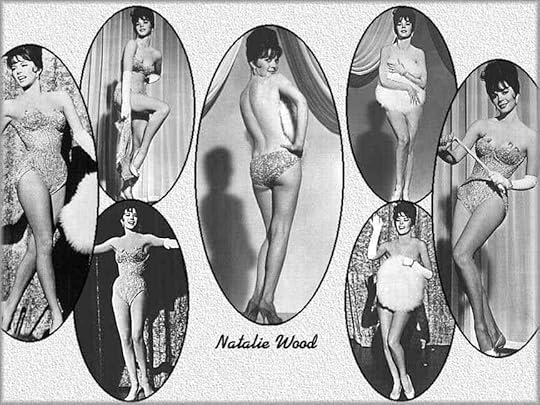 Natalie was nothing like the innocent Maria from West Side Story
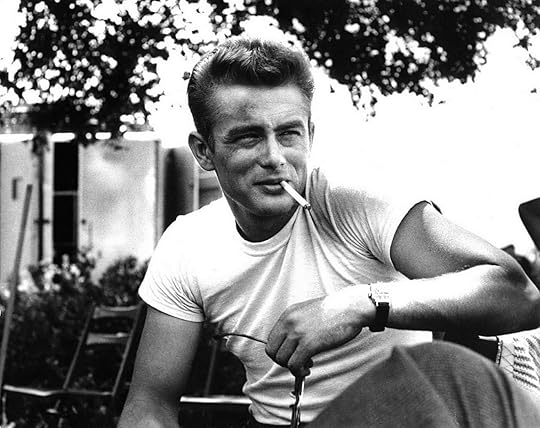 James Dean
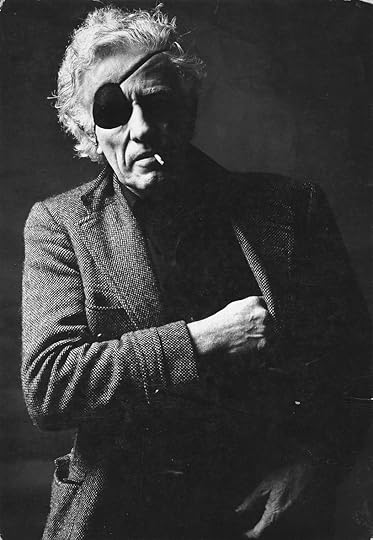 Nick Ray
November 19, 2023
I’m not sure I’d have described myself as a Dennis Hopper fan, but it’s undeniable that he led a fascinating life.
But listening to this book, I remember how much of his acting work I enjoyed: APOCALYPSE NOW; BLUE VELVET; RED ROCK WEST; SPEED. Even TEXAS CHAINSAW MASSACRE 2 (which I might like more than most) and LAND OF THE DEAD (which I might also like more than most).
Of his directorial work, I’ve seen EASY RIDER, but I’m the wrong generation to really feel its vibe. However, given the entire canon only makes up 6 films, maybe I will check the rest out.
As knowing he led a fascinating life going into this, I found this to be a fascinating telling of it. I’m not sure I’d ever have wanted to hang out with the man (in fact, he frequently seems to have been a monster), but there was something crazed and compulsive to him as an artist, and I’m inspired to explore more.
Which is the sign of a good biography.
But listening to this book, I remember how much of his acting work I enjoyed: APOCALYPSE NOW; BLUE VELVET; RED ROCK WEST; SPEED. Even TEXAS CHAINSAW MASSACRE 2 (which I might like more than most) and LAND OF THE DEAD (which I might also like more than most).
Of his directorial work, I’ve seen EASY RIDER, but I’m the wrong generation to really feel its vibe. However, given the entire canon only makes up 6 films, maybe I will check the rest out.
As knowing he led a fascinating life going into this, I found this to be a fascinating telling of it. I’m not sure I’d ever have wanted to hang out with the man (in fact, he frequently seems to have been a monster), but there was something crazed and compulsive to him as an artist, and I’m inspired to explore more.
Which is the sign of a good biography.

August 12, 2021
Dennis Hopper: The Wild Ride of a Hollywood Rebel
By Peter L. Winkler
2011; 376 pages
If you pick up this hefty biography of Dennis Hopper in hopes of being regaled with stories of a bloodshot-eyed, rapid-fire talking wildman hellraising and pushing the limits of debauchery, you won’t be disappointed.
Before he was a Hollywood legend, Hopper was huffing gasoline as a boy and hallucinating skyscrapers onto the barren Kansas plains. Winkler reports that the precocious Hopper took to getting high really early in life, discovering the wonders of his grandpa’s tractor gas tank before he had chin whiskers.
Hopper wasn’t even a teenager when he started “ … becoming more adventurous, he breathed deeply of the gas fumes and went reeling from their dizzying effect. He enjoyed this disorientation and started doing it nearly every day. He would stretch out on the hood of the tractor, huff the gas fumes, and turn on his back. The sky turned into an animated fantasy, with clouds transformed into clowns and goblins. Dennis had his first bad trip one afternoon when he OD’d on gas. The grill and lights on the tractor were transformed into the face of a terrifying monster attacking him. Dennis’ grandfather pulled him away from the tractor as he smashed away at its lights and windshield with his baseball bat. Dennis was so high, he wasn’t even aware of what he was doing until his grandparents explained it to him afterward.”
The book is replete with memorable, almost unbelievable stories like that, charting Hopper’s course from Kansas to Hollywood and the world, with an up-and-down but always unconventional career and a string of both loving and damaging relationships. The women in Hopper’s life didn’t fare well, including his last wife, as the volatile, selfish and frankly chauvinistic Hopper was clearly incapable of a healthy romantic relationship. His male friends had a tough time with him too – yes, his stoner buddy Peter Fonda and he never got along and bickered for decades over who was the real genius behind the film, and in comical irony, over who should get the biggest paycheck. Hopper’s penchant for self-destruction was rivaled only by his vanity and obstinacy.
Winkler’s book is good, although especially for Hopper’s later years, he over-relied on contemporary journalistic accounts and online gossip. It’s not an academic biography or a very sophisticated one, but it never bores. Also, Winkler has a knack for using a lot of great quotes and stories from Hopper himself and his friends and foes.
Growing up in Kansas, Hopper says: “It was the Dust Bowl, so I had to wear a gas mask to school five days a week because the dust was so heavy in the air … there were bread lines and soup lines, it was really bad.”
Later, in Hollywood, Hopper would ape James Dean and wear the same insouciant, nihilistic tone of jaded youth, which fit him like a snug leather jacket:
“I come from Kansas, which is nowhere. And I hate my parents, who are no one.”
Of his father, “I learned more about him at his funeral than I did growing up.”
Hopper is candid about his admiration and copying of Dean. Dean comes alive a bit in the text, but often through Hopper’s idealized lens. Hopper on Dean, his idol: “’He was a guerilla artist who attacked all restrictions on sensibility,’ Hopper said. ‘Once he pulled a switchblade and threatened to murder his Director. I imitated his style in art and in life. He got me into a lot of trouble … I am an introvert by nature. Social things are not my best. I would prefer sitting quietly rather than thinking that I have to make some sort of conversation to prove myself, advanced some philosophies. I was always unbearably shy. That was probably one of the reasons that I drink into drugs.’”
But Hopper wasn’t just an hopeless drug and drink addict, he was also a legitimately gifted actor with manic range and bursting intensity.
“Success in Hollywood came remarkably easy for Dennis Hopper. It began on the day that he auditioned for Medic. Hopper didn’t stand out from the other actors anxiously awaiting the return to audition until he was called in to the casting director’s office. After a little small talk, hopper suddenly fell to the floor, feigning an epileptic seizure. Hopper was so convincing, the casting director was afraid that he was really having a seizure. His hand reached for the phone just as hopper suddenly jumped up, does it himself off, and smiled broadly. The casting director stuck his head out the door and told the 32 other actors waiting in the corridor they could go home. Hopper had the role.”
Winkler does a good job of unearthing some little known history too. Who would have thought Hopper and Marlon Brando had a connection to Dr. Martin Luther King?
“Several days before the start of King’s march in 1965, Harper was out walking with some friends in Hollywood when Marlon Brando pulled up alongside him in his limousine and rolled down the window. Brando said, ‘What are you doing?’ Hopper said, ‘Nothing,” Brando said ‘How would you like to go to Selma and Montgomery? We’re having a little march.’ Hopper said, ‘Great!’
There’s a lot in the book about the addictions, not just the fun part, but also the self-pity and the grousing and depression that comes with it. Hopper fought and beat back that reality for a long time, trying to portray his usage as part of the work of a self-proclaimed creative genius, but the mask eventually slips.
“Hopper rationalized his addiction with the conviction that great art can only result through the derangement of the artist’s senses with drugs. Blake’s ‘those who restrain desire, do so because theirs is weak enough to be restrained’ and ‘the road of excess leads to the palace of wisdom’ expressed Hopper’s credo. ‘You see,’ he later said, ‘I didn’t relate any of the terrible things that happened to me to my using. I thought drinking and drugging were all part of being a tragic artist. No one, certainly none of my friends, even tried to point it out to me. I think they were afraid to. I didn’t think I was destroying myself. I had blackouts, of course and bad trips. But I had great plans. I was going to write a book titled How to Use Drugs to Improve Your Life.’”
This realization is particularly stark:
“If you argued with me, I’d point to Fitzgerald and Hemingway and Thomas Wolfe and Tennessee Williams and Modigliani and Jack London. I used to quote Van Gogh, who said, ‘I had to drink the whole summer to find the yellow.’ No I say it’s probably because he couldn’t find the fucking paintbrush! I think that when you start dealing with the arts and people in the arts it’s beyond denial. Many people think is their right. They have to go and seek the bottle. They have to seek the drugs and disorienting themselves. That’s a tragedy in itself. With that kind of rationale, it is almost impossible for anybody to talk to you about it and say you have a problem. In my mind, I was an artist and writer. The reality was that I was just a drunk and a drug addict. It wasn’t helping me create. In fact, it hindered me. It stopped me from getting jobs. I dealt with the rejection by taking more drink and drugs. All alcohol and drugs got me was a lot of misery.”
As for the party stuff, before the reform, here is a taste.
“Hopper later describe a typical day in his life in the mid to late ‘70s. ‘a lot of sex. A lot of coke. But mainly alcohol. I took a lot of drugs, mainly cocaine, but the problem was drink. I would take cocaine, lines as long as your arm, every five minutes, just so I could carry on drinking. There wasn’t a day when I was sober. It was relentless. Part of it was that I was so driven. That driven to genius thing. But a lot of what was going on in my life was just … dark.’”
By the late 1970s, after his turn in Apocalypse Now, Hopper reached levels of depravity that are hard to imagine. Retreating to Taos, he “was doing half a gallon of rum with a fifth of rum on the side, twenty-eight beers and three grams of cocaine a day – and that wasn’t getting high, that was just to keep going, man.”
I love this little nugget about Laurence Fishburn and Hopper on the set of Apocalypse. You can really get a sense of the Wildman in his harrowing zone here.
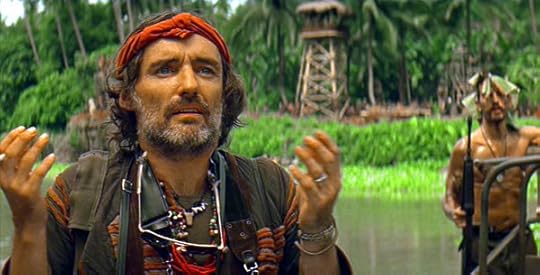
“Hopper even picked up a disciple during production. Laurence Fishburne was only 14 when he lied about his age to get the role of a crewmember on the Navy patrol boat that transports Willard to Kurtz’ compound. ‘All of his performance was improvisational,’ he said of Hopper. ‘It was stunning, the stream of consciousness coming out of him. I was just a kid… But I was blown away by his ability. He didn’t pay much attention to me, but I shadowed him for a while because I thought, ‘here’s a guy who is free, here’s a guy who is really free.’”
And the descent.
“Perpetually high, Hopper would fall into a hypnagogic state, mistake fragments of dreams for reality, and shoot real bullets through the ghosts of D.H. Lawrence and James Dean that stalked him into the walls surrounding him. Hopper was once so startled by what appeared to be the face of a stranger staring back at him that he shot at it with his revolver.”
Hopper got sober and back into the swing of acting in the 1980s after the abyss of the 1970s. The new Hopper was a great actor and even got the chance to direct again, most notably with the hit Colors in 1988. The Hopper of that time was far more conservative than the iconoclastic desperado or Easy Rider or The Last Movie. His philosophy, always flexible, totally flipped:
“Addressing the issue of whether movies made viewers violent, Hopper said, ‘Blame the killing on the movies? Blame it on kids with guns. Blame it on police who don’t have enough guns. Blame it on rock cocaine. Blame it on poverty. But don’t blame it on the movies. Films don’t kill; people do.’ Where was the Dennis Hopper who made The Last Movie, which blamed Hollywood for the impact of movie violence on innocent viewers?”
There’s not much about True Romance and the brilliant Hopper performance in that criminally underrated film, which was directed by Tony Scott off a Quentin Tarantino script. Hopper and Christopher Walken make truly sweet music in a scene rife with violence, opera, World History and pop anthropology. They stuck to the script, but the acting was the work of two masters.
“The only improvisation in the whole thing, because Tarantino’s script was so good, was the bit about the eggplant and the cantaloupe.” If you know, you know.
When it came time to go home, the dying Hopper went out like you would expect Mr. Easy Rider, in a cloud of reefer smoke.
With cancer, after experimental treatments, “He spent much of that time in bed, shrouded in the smoke from the medicinal marijuana he smoked, woozy from the marijuana and heavy doses of prescription painkillers he took to relieve the pain of the cancer eating away at him.”
I’ll end with a smattering of Hopper’s noteworthy quotes:
“I come from Kansas, which is nowhere. And I hate my parents, who are no one.”
“I was terrible in school because I didn’t like reading … I’d rather live it, man, get out in the street, get it on.”
“Jimmy and I found we were both neurotic and had to justify our neurosis by creating, getting the pain out and sharing it.”
“I’m a social protest painter. I can’t help it. I don’t know much about the past, I’m not really interested in the future, or in space. I like to make things about what I see. I see a corrupt place, which I kind of enjoy. I’m kind of corrupt myself.”
By Peter L. Winkler
2011; 376 pages
If you pick up this hefty biography of Dennis Hopper in hopes of being regaled with stories of a bloodshot-eyed, rapid-fire talking wildman hellraising and pushing the limits of debauchery, you won’t be disappointed.
Before he was a Hollywood legend, Hopper was huffing gasoline as a boy and hallucinating skyscrapers onto the barren Kansas plains. Winkler reports that the precocious Hopper took to getting high really early in life, discovering the wonders of his grandpa’s tractor gas tank before he had chin whiskers.
Hopper wasn’t even a teenager when he started “ … becoming more adventurous, he breathed deeply of the gas fumes and went reeling from their dizzying effect. He enjoyed this disorientation and started doing it nearly every day. He would stretch out on the hood of the tractor, huff the gas fumes, and turn on his back. The sky turned into an animated fantasy, with clouds transformed into clowns and goblins. Dennis had his first bad trip one afternoon when he OD’d on gas. The grill and lights on the tractor were transformed into the face of a terrifying monster attacking him. Dennis’ grandfather pulled him away from the tractor as he smashed away at its lights and windshield with his baseball bat. Dennis was so high, he wasn’t even aware of what he was doing until his grandparents explained it to him afterward.”
The book is replete with memorable, almost unbelievable stories like that, charting Hopper’s course from Kansas to Hollywood and the world, with an up-and-down but always unconventional career and a string of both loving and damaging relationships. The women in Hopper’s life didn’t fare well, including his last wife, as the volatile, selfish and frankly chauvinistic Hopper was clearly incapable of a healthy romantic relationship. His male friends had a tough time with him too – yes, his stoner buddy Peter Fonda and he never got along and bickered for decades over who was the real genius behind the film, and in comical irony, over who should get the biggest paycheck. Hopper’s penchant for self-destruction was rivaled only by his vanity and obstinacy.
Winkler’s book is good, although especially for Hopper’s later years, he over-relied on contemporary journalistic accounts and online gossip. It’s not an academic biography or a very sophisticated one, but it never bores. Also, Winkler has a knack for using a lot of great quotes and stories from Hopper himself and his friends and foes.
Growing up in Kansas, Hopper says: “It was the Dust Bowl, so I had to wear a gas mask to school five days a week because the dust was so heavy in the air … there were bread lines and soup lines, it was really bad.”
Later, in Hollywood, Hopper would ape James Dean and wear the same insouciant, nihilistic tone of jaded youth, which fit him like a snug leather jacket:
“I come from Kansas, which is nowhere. And I hate my parents, who are no one.”
Of his father, “I learned more about him at his funeral than I did growing up.”
Hopper is candid about his admiration and copying of Dean. Dean comes alive a bit in the text, but often through Hopper’s idealized lens. Hopper on Dean, his idol: “’He was a guerilla artist who attacked all restrictions on sensibility,’ Hopper said. ‘Once he pulled a switchblade and threatened to murder his Director. I imitated his style in art and in life. He got me into a lot of trouble … I am an introvert by nature. Social things are not my best. I would prefer sitting quietly rather than thinking that I have to make some sort of conversation to prove myself, advanced some philosophies. I was always unbearably shy. That was probably one of the reasons that I drink into drugs.’”
But Hopper wasn’t just an hopeless drug and drink addict, he was also a legitimately gifted actor with manic range and bursting intensity.
“Success in Hollywood came remarkably easy for Dennis Hopper. It began on the day that he auditioned for Medic. Hopper didn’t stand out from the other actors anxiously awaiting the return to audition until he was called in to the casting director’s office. After a little small talk, hopper suddenly fell to the floor, feigning an epileptic seizure. Hopper was so convincing, the casting director was afraid that he was really having a seizure. His hand reached for the phone just as hopper suddenly jumped up, does it himself off, and smiled broadly. The casting director stuck his head out the door and told the 32 other actors waiting in the corridor they could go home. Hopper had the role.”
Winkler does a good job of unearthing some little known history too. Who would have thought Hopper and Marlon Brando had a connection to Dr. Martin Luther King?
“Several days before the start of King’s march in 1965, Harper was out walking with some friends in Hollywood when Marlon Brando pulled up alongside him in his limousine and rolled down the window. Brando said, ‘What are you doing?’ Hopper said, ‘Nothing,” Brando said ‘How would you like to go to Selma and Montgomery? We’re having a little march.’ Hopper said, ‘Great!’
There’s a lot in the book about the addictions, not just the fun part, but also the self-pity and the grousing and depression that comes with it. Hopper fought and beat back that reality for a long time, trying to portray his usage as part of the work of a self-proclaimed creative genius, but the mask eventually slips.
“Hopper rationalized his addiction with the conviction that great art can only result through the derangement of the artist’s senses with drugs. Blake’s ‘those who restrain desire, do so because theirs is weak enough to be restrained’ and ‘the road of excess leads to the palace of wisdom’ expressed Hopper’s credo. ‘You see,’ he later said, ‘I didn’t relate any of the terrible things that happened to me to my using. I thought drinking and drugging were all part of being a tragic artist. No one, certainly none of my friends, even tried to point it out to me. I think they were afraid to. I didn’t think I was destroying myself. I had blackouts, of course and bad trips. But I had great plans. I was going to write a book titled How to Use Drugs to Improve Your Life.’”
This realization is particularly stark:
“If you argued with me, I’d point to Fitzgerald and Hemingway and Thomas Wolfe and Tennessee Williams and Modigliani and Jack London. I used to quote Van Gogh, who said, ‘I had to drink the whole summer to find the yellow.’ No I say it’s probably because he couldn’t find the fucking paintbrush! I think that when you start dealing with the arts and people in the arts it’s beyond denial. Many people think is their right. They have to go and seek the bottle. They have to seek the drugs and disorienting themselves. That’s a tragedy in itself. With that kind of rationale, it is almost impossible for anybody to talk to you about it and say you have a problem. In my mind, I was an artist and writer. The reality was that I was just a drunk and a drug addict. It wasn’t helping me create. In fact, it hindered me. It stopped me from getting jobs. I dealt with the rejection by taking more drink and drugs. All alcohol and drugs got me was a lot of misery.”
As for the party stuff, before the reform, here is a taste.
“Hopper later describe a typical day in his life in the mid to late ‘70s. ‘a lot of sex. A lot of coke. But mainly alcohol. I took a lot of drugs, mainly cocaine, but the problem was drink. I would take cocaine, lines as long as your arm, every five minutes, just so I could carry on drinking. There wasn’t a day when I was sober. It was relentless. Part of it was that I was so driven. That driven to genius thing. But a lot of what was going on in my life was just … dark.’”
By the late 1970s, after his turn in Apocalypse Now, Hopper reached levels of depravity that are hard to imagine. Retreating to Taos, he “was doing half a gallon of rum with a fifth of rum on the side, twenty-eight beers and three grams of cocaine a day – and that wasn’t getting high, that was just to keep going, man.”
I love this little nugget about Laurence Fishburn and Hopper on the set of Apocalypse. You can really get a sense of the Wildman in his harrowing zone here.
“Hopper even picked up a disciple during production. Laurence Fishburne was only 14 when he lied about his age to get the role of a crewmember on the Navy patrol boat that transports Willard to Kurtz’ compound. ‘All of his performance was improvisational,’ he said of Hopper. ‘It was stunning, the stream of consciousness coming out of him. I was just a kid… But I was blown away by his ability. He didn’t pay much attention to me, but I shadowed him for a while because I thought, ‘here’s a guy who is free, here’s a guy who is really free.’”
And the descent.
“Perpetually high, Hopper would fall into a hypnagogic state, mistake fragments of dreams for reality, and shoot real bullets through the ghosts of D.H. Lawrence and James Dean that stalked him into the walls surrounding him. Hopper was once so startled by what appeared to be the face of a stranger staring back at him that he shot at it with his revolver.”
Hopper got sober and back into the swing of acting in the 1980s after the abyss of the 1970s. The new Hopper was a great actor and even got the chance to direct again, most notably with the hit Colors in 1988. The Hopper of that time was far more conservative than the iconoclastic desperado or Easy Rider or The Last Movie. His philosophy, always flexible, totally flipped:
“Addressing the issue of whether movies made viewers violent, Hopper said, ‘Blame the killing on the movies? Blame it on kids with guns. Blame it on police who don’t have enough guns. Blame it on rock cocaine. Blame it on poverty. But don’t blame it on the movies. Films don’t kill; people do.’ Where was the Dennis Hopper who made The Last Movie, which blamed Hollywood for the impact of movie violence on innocent viewers?”
There’s not much about True Romance and the brilliant Hopper performance in that criminally underrated film, which was directed by Tony Scott off a Quentin Tarantino script. Hopper and Christopher Walken make truly sweet music in a scene rife with violence, opera, World History and pop anthropology. They stuck to the script, but the acting was the work of two masters.
“The only improvisation in the whole thing, because Tarantino’s script was so good, was the bit about the eggplant and the cantaloupe.” If you know, you know.
When it came time to go home, the dying Hopper went out like you would expect Mr. Easy Rider, in a cloud of reefer smoke.
With cancer, after experimental treatments, “He spent much of that time in bed, shrouded in the smoke from the medicinal marijuana he smoked, woozy from the marijuana and heavy doses of prescription painkillers he took to relieve the pain of the cancer eating away at him.”
I’ll end with a smattering of Hopper’s noteworthy quotes:
“I come from Kansas, which is nowhere. And I hate my parents, who are no one.”
“I was terrible in school because I didn’t like reading … I’d rather live it, man, get out in the street, get it on.”
“Jimmy and I found we were both neurotic and had to justify our neurosis by creating, getting the pain out and sharing it.”
“I’m a social protest painter. I can’t help it. I don’t know much about the past, I’m not really interested in the future, or in space. I like to make things about what I see. I see a corrupt place, which I kind of enjoy. I’m kind of corrupt myself.”

March 30, 2015
We blew it, man! Not really, at least not always. Hopper clearly lived life on his own terms, often to the detriment of the folks who loved him, but he left a body of work, of art that defines a time when everything in America changed. This book, on the other hand, is a mess without any artistic pretense, barely reaching above tabloid reporting in many of its chapters. Far as I can tell, it's the only biography of Hopper to be had and its collage of quotes harvested indiscriminately from dozens of sources is perhaps appropriate to its subject, but as a coherent narrative it ain't great. Credit where due though ... the authorship of Easy Rider is a Rashomon-like puzzle and Winkler explores all the facets in aching detail. Clearly the question mattered a lot to Dennis Hopper and colored the last 2/3 of his life, so the explication here is a kind of lens on the insecurities that defined the man. Me, I want to use the GPS app that Hopper voiced late in his career and I'd like to see Wim Wenders' buried film, Palermo Shooting, with Hopper as Death stalking an artist uneasy in his art.

October 20, 2014
Dennis Hopper has had an intricate and fabled life as an actor, director, photographer, painter and art collector. Film historian Peter L. Winkler has done a pretty good job of sorting through the myths, rumours, and legends about the subject to get at something like the truth and a set of facts. Never the easiest subject, Hopper emerges in these pages as an obsessed artist and one who never let the truth get in the way of a good story. His main focus has always been work, sometimes to the detriment of his human relationships, especially those with women. It's not the happiest or most pleasant of stories but it's a human one and one that needed telling, if only to dispel the inaccuracies previously broadcast. A worthwhile read. - BH.

June 5, 2017
Fantastically researched and presented biography on sometimes genius/sometimes psycho Dennis Hopper, as an artist, filmmaker, rebel, and counter-culture icon. The author has done a wonderful job in highlighting the man's lust and desire to create something substantial and timeless, with reflection on his early years as well as his great roles in the classic Hollywood pictures up to and including his actor-for-hire roles later in his career. This is a must-read for fans of film, Hollywood, rebel spirit, counter-culture, and the gonzo lifestyle. It's too bad Dennis Hopper is gone; it seems he took a big piece of Hollywood with him; the manic, creative intensity that eludes so many in the film community today. Highly recommended.

September 7, 2011
Praise For Dennis Hopper: The Wild Ride of a Hollywood Rebel
“This enjoyable, well-researched and clear-eyed biography doubles as a cultural history, as Hopper goes from Rebel Without a Cause, Giant, Easy Rider, Apocalypse Now and Blue Velvet to Super Mario Bros, Speed and Waterworld.”––The Guardian
“Winkler's worthy and well-researched biography pays due attention to Hopper's achievements as actor and filmmaker, but it's the scandal that Winkler is really interested in, and Hopper's life was positively packed with it.”––Irish Independent
“Big, gossipy, irreverent”––The Scotsman
“Engrossing . . . meticulously researched”––Paperback of the Week, The Irish Times
“Entertaining and eventful”––London Review of Books
“This is a fluent recapitulation of the drink and the drugs and the womanizing, the yearning for high art and the years slumming it in trash.”––Best Film Books of the Year, London Evening Standard
“I knew Dennis Hopper in his wild days and his sober days, and this book captures the man in his many incarnations. Winkler's deeply researched biography of Hopper is the definitive book on this live wire who lived on the high wire.”––Filmmaker Philippe Mora
“All I can say is . . . whew! Wild Ride is exactly that. One incredible drug and drink-fueled tale tumbles over the next. Hopper, as presented by author Winkler, is fascinating.”––Liz Smith
“Winkler's new biography of the counter-culture symbol . . . is full of tough research and interviews, and reads as fast and furious as the man.”––Patrick McGilligan, author of Jack's Life (a biography of Jack Nicholson) and Nicholas Ray: The Glorious Failure of an American Director
“Absolutely riveting. Without a doubt, the definitive biography of this talented, multi-faceted man. Winkler has written the first book to fully document Hopper’s life and work. This is a remarkable chronicle of a flawed, troubled, talented genius.”––Tucson Citizen
“Dennis Hopper: The Wild Ride of a Hollywood Rebel is the Hopper biography I was looking for, a serious, exhaustively researched effort that will stand as the definitive account of the life and work of the director-star of Easy Rider. It’s an endlessly compelling read.” ––FilmSwoon
“This week I read Dennis Hopper: The Wild Ride of a Hollywood Rebel, and instantly fell in love with the story. So engrossing, so sensational . . . It's the one book you need to pick up and read at some point in your life.”––Canyon News
“A readable and remarkably even-handed chronicle of one of Hollywood's wildest cards. Winkler knows his subject––and the territory––and he objectively delivers the goods on Dennis Hopper.”––Stephen M. Silverman, author of David Lean and The Fox That Got Away: The Last Days of the Zanuck Dynasty at 20th Century Fox
“Run––don’t walk––to the nearest book vendor and get your hands on a copy. I was hooked on Winkler’s biography from the minute I picked it up, and I suspect that will be the case with other film addicts. If you’re hooked on celebrity scandals, Winkler provides more than enough of them to satisfy those afflicted with that guilty pleasure.”––HuntingtonNews.net
“This enjoyable, well-researched and clear-eyed biography doubles as a cultural history, as Hopper goes from Rebel Without a Cause, Giant, Easy Rider, Apocalypse Now and Blue Velvet to Super Mario Bros, Speed and Waterworld.”––The Guardian
“Winkler's worthy and well-researched biography pays due attention to Hopper's achievements as actor and filmmaker, but it's the scandal that Winkler is really interested in, and Hopper's life was positively packed with it.”––Irish Independent
“Big, gossipy, irreverent”––The Scotsman
“Engrossing . . . meticulously researched”––Paperback of the Week, The Irish Times
“Entertaining and eventful”––London Review of Books
“This is a fluent recapitulation of the drink and the drugs and the womanizing, the yearning for high art and the years slumming it in trash.”––Best Film Books of the Year, London Evening Standard
“I knew Dennis Hopper in his wild days and his sober days, and this book captures the man in his many incarnations. Winkler's deeply researched biography of Hopper is the definitive book on this live wire who lived on the high wire.”––Filmmaker Philippe Mora
“All I can say is . . . whew! Wild Ride is exactly that. One incredible drug and drink-fueled tale tumbles over the next. Hopper, as presented by author Winkler, is fascinating.”––Liz Smith
“Winkler's new biography of the counter-culture symbol . . . is full of tough research and interviews, and reads as fast and furious as the man.”––Patrick McGilligan, author of Jack's Life (a biography of Jack Nicholson) and Nicholas Ray: The Glorious Failure of an American Director
“Absolutely riveting. Without a doubt, the definitive biography of this talented, multi-faceted man. Winkler has written the first book to fully document Hopper’s life and work. This is a remarkable chronicle of a flawed, troubled, talented genius.”––Tucson Citizen
“Dennis Hopper: The Wild Ride of a Hollywood Rebel is the Hopper biography I was looking for, a serious, exhaustively researched effort that will stand as the definitive account of the life and work of the director-star of Easy Rider. It’s an endlessly compelling read.” ––FilmSwoon
“This week I read Dennis Hopper: The Wild Ride of a Hollywood Rebel, and instantly fell in love with the story. So engrossing, so sensational . . . It's the one book you need to pick up and read at some point in your life.”––Canyon News
“A readable and remarkably even-handed chronicle of one of Hollywood's wildest cards. Winkler knows his subject––and the territory––and he objectively delivers the goods on Dennis Hopper.”––Stephen M. Silverman, author of David Lean and The Fox That Got Away: The Last Days of the Zanuck Dynasty at 20th Century Fox
“Run––don’t walk––to the nearest book vendor and get your hands on a copy. I was hooked on Winkler’s biography from the minute I picked it up, and I suspect that will be the case with other film addicts. If you’re hooked on celebrity scandals, Winkler provides more than enough of them to satisfy those afflicted with that guilty pleasure.”––HuntingtonNews.net
October 29, 2013
For the most part I enjoyed this book. I love rebels and generally fucked up people and Hopper takes the cake from the late 50s to the late 70s. Then he gets sober and well he's just not so much fun anymore ;-)
He completely ruined my fantasy about Natalie Wood, according to him she was a sex addict often participated in orgies and slept with the producer of "Rebel without a Cause' all while still a teenager, say it ain't so ;-)
The on-going story of who really wrote Easy Rider is a major theme of the book, in fact he sued Peter Fonda over it and they hated each other for years, though acted like buddies when it was necessary. He also cheated the self claimed real writer (Terry Southern) and refused to give him even 1% of the profits saying all he did was come up with the name. I guess we will never know, nor does it matter at this point. His 1st or 2nd wife (hard to keep up there were 7 including Michelle Phillips for a week)was in the process of divorcing him as "Easy Rider" was being made but told her lawyer she wanted the art but no part of the worthless biker movie, so he lost his early Warhol's and Lichtenstein's but kept the rights to what became one of the largest grossing films in history.
Hopper was an artist in all means of the word, from painting and photography to writing, acting and directing he covered all the bases.
His friendship and then remorse ever James Dean's death (Hopper was with him for "Rebel and "Giant") left a mark on him for life and he thought at one time it was his job to pick up the "crazy" where Dean left off. He spent his life trying to be James Dean and for the most part it just alienated him in Hollywood.
His alcohol and drug abuse he says made him violent and crazy as all his ex wifes will attest (except the last one after he was sober) but even she said he beat her. They were in the process of getting a divorce when he died of colon cancer.
He could never get the acting or directing parts he wanted as he had a horrible reputation of telling directors to fuck off and would show up to the set zonked out of his mind. Many said they never knew who would come out of the trailer from day to day "crazy Dennis" or 'normal Dennis" which was still pretty crazy.
I was fascinated by the people he hung out with, he knew all the "heads" in the acting world like Jack Nicholson and Marlon Brando but also hung out with Warhol and his gang. When he died the paintings he collected went for millions.
All in all it's a sad story of a self proclaimed genus and all the things he did to prove how smart and stupid he really was. He was perhaps our last tragic artist!
He completely ruined my fantasy about Natalie Wood, according to him she was a sex addict often participated in orgies and slept with the producer of "Rebel without a Cause' all while still a teenager, say it ain't so ;-)
The on-going story of who really wrote Easy Rider is a major theme of the book, in fact he sued Peter Fonda over it and they hated each other for years, though acted like buddies when it was necessary. He also cheated the self claimed real writer (Terry Southern) and refused to give him even 1% of the profits saying all he did was come up with the name. I guess we will never know, nor does it matter at this point. His 1st or 2nd wife (hard to keep up there were 7 including Michelle Phillips for a week)was in the process of divorcing him as "Easy Rider" was being made but told her lawyer she wanted the art but no part of the worthless biker movie, so he lost his early Warhol's and Lichtenstein's but kept the rights to what became one of the largest grossing films in history.
Hopper was an artist in all means of the word, from painting and photography to writing, acting and directing he covered all the bases.
His friendship and then remorse ever James Dean's death (Hopper was with him for "Rebel and "Giant") left a mark on him for life and he thought at one time it was his job to pick up the "crazy" where Dean left off. He spent his life trying to be James Dean and for the most part it just alienated him in Hollywood.
His alcohol and drug abuse he says made him violent and crazy as all his ex wifes will attest (except the last one after he was sober) but even she said he beat her. They were in the process of getting a divorce when he died of colon cancer.
He could never get the acting or directing parts he wanted as he had a horrible reputation of telling directors to fuck off and would show up to the set zonked out of his mind. Many said they never knew who would come out of the trailer from day to day "crazy Dennis" or 'normal Dennis" which was still pretty crazy.
I was fascinated by the people he hung out with, he knew all the "heads" in the acting world like Jack Nicholson and Marlon Brando but also hung out with Warhol and his gang. When he died the paintings he collected went for millions.
All in all it's a sad story of a self proclaimed genus and all the things he did to prove how smart and stupid he really was. He was perhaps our last tragic artist!

January 1, 2024
Not really everything you ever wanted... (to know) about Dennis Hopper; But every sensational exploit ever committed gets collated, memorialized.
Picked up this Hopper bio specifically, because...
• 1) After Marlon Brando, Hopper yielded the most extraordinarily engaging legacy-Hollywood anecdotals in Robert Sellers' guilty indulgence Hollywood Hellraisers; I'd wanted to read more about Hopper's manic antics while editing Easy Rider (1969), The Last Movie (1971) and Colors (1988).
&...
• 2) mid-80s (aka sober-) Hopper's time on Tobe Hooper's oft-under commemorated 1986 Texas Chainsaw Massacre sequel, and John Flynn's, wholly neglected, independent Dirty Harry-knockoff, Nails (1995). Unfortunately, author Peter Winkler continues this trend by overlooking Nails entry from Hopper's filmography entirely; Likewise with aforementioned Chainsaw sequel: extending one paragraph to cover Hopper's golf swing (around the Austin, TX links), and chainsawing birthday cakes (celebrated Hopper's 50th Birthday while on location with Hooper's production crew)
So less than half of my expectations were addressed; Nevertheless here are some other selects from Winkler's Hopper bio...
Dennis Hopper needed to convince David Lynch, who supposedly never consumed an illicit substance, while on location, filming Blue Velvet (1986), his villainous character, Frank Booth, would react more erratically or agitated (as intended) from huffing nitrous oxide or laughing gas, rather than the helium Lynch initial outlined throughout filming.
Jodie Foster, less than a year before landing her first gig, was envious of Hopper's directing opportunity on Backtrack (1990) (aka Catchfire) and felt she could have done a better job ...that, Or she correctly identified Hopper's instinctual posture towards exploiting women (and relayed as much to [her] professional counterpart)...
Director, producer, writer James Brooks reinforces his cinematic dilettante aptitude (sans Hollywood prodigy Polly Platt overseeing his production outfit)
And finally...
Addiction physicians at showbiz detox clinic, Studio 12, induced Hopper with Parkinsons...
Picked up this Hopper bio specifically, because...
• 1) After Marlon Brando, Hopper yielded the most extraordinarily engaging legacy-Hollywood anecdotals in Robert Sellers' guilty indulgence Hollywood Hellraisers; I'd wanted to read more about Hopper's manic antics while editing Easy Rider (1969), The Last Movie (1971) and Colors (1988).
&...
• 2) mid-80s (aka sober-) Hopper's time on Tobe Hooper's oft-under commemorated 1986 Texas Chainsaw Massacre sequel, and John Flynn's, wholly neglected, independent Dirty Harry-knockoff, Nails (1995). Unfortunately, author Peter Winkler continues this trend by overlooking Nails entry from Hopper's filmography entirely; Likewise with aforementioned Chainsaw sequel: extending one paragraph to cover Hopper's golf swing (around the Austin, TX links), and chainsawing birthday cakes (celebrated Hopper's 50th Birthday while on location with Hooper's production crew)
So less than half of my expectations were addressed; Nevertheless here are some other selects from Winkler's Hopper bio...
Dennis Hopper needed to convince David Lynch, who supposedly never consumed an illicit substance, while on location, filming Blue Velvet (1986), his villainous character, Frank Booth, would react more erratically or agitated (as intended) from huffing nitrous oxide or laughing gas, rather than the helium Lynch initial outlined throughout filming.
🎦 Hopper even served as a technical advisor of sorts to Lynch, who was a naif when it came to drugs. In the film, Frank Booth huffs some substance from a handheld inhaler. “I’m thankful to Dennis,” Lynch said, “because up until the last minute it was gonna be helium—to make the difference between ‘Daddy’ and the baby that much more.”
Jodie Foster, less than a year before landing her first gig, was envious of Hopper's directing opportunity on Backtrack (1990) (aka Catchfire) and felt she could have done a better job ...that, Or she correctly identified Hopper's instinctual posture towards exploiting women (and relayed as much to [her] professional counterpart)...
🎦 In 1996, Hopper told Charlie Rose, “I have a problem with Jodie, and it was not a problem when I was working with her and directing her in the movie. She did something that wasn’t very pleasant to me. I had a picture I wanted to use Meryl Streep in, and I wanted to direct her in a movie, and Jodie went out of her way to call her and tell her she shouldn’t work with me, and I can’t really come to grips with that one. I called her a number of times. She’s refused to call me back. It blew what I thought at the time was a go project a few years ago. ’Cause Meryl suddenly said no. She [Foster] thought that I had this AA mentality where I was really just doing this sober drunk or something, and I just couldn’t possibly understand women. But she didn’t say that, confront me with that on the set, so I didn’t know where that was coming from, ’cause I thought I treated her rather well.”
🎦 Hopper shot Out of the Blue (1980) in five weeks in a drug-fueled rush of efficiency instead of the six-and-a-half weeks that were originally scheduled. Hopper proceeded to edit the film in six weeks using only one Moviola.
Director, producer, writer James Brooks reinforces his cinematic dilettante aptitude (sans Hollywood prodigy Polly Platt overseeing his production outfit)
🎦 “...director James L. Brooks told Hopper that Carried Away was the first American art film.”Fcking lol. Carried Away (1996) ...From the Director of VIEW FROM THE TOP (2003) or as Gwyneth graciously commemorates: '...more like, View From My Ass.'
And finally...
Addiction physicians at showbiz detox clinic, Studio 12, induced Hopper with Parkinsons...
🎦 Doctors gave him the antipsychotic drug, Prolixin, which causes the symptoms of Parkinson’s disease in rare cases. Hopper became one of those cases. The doctors gave him Cogentin to counteract the Prolixin, but the inadequate dose was insufficient to reverse his Parkinsonian syndrome. Hopper’s body became frozen. He couldn’t make gestures, form sentences, or turn his head. It took him minutes to agonizingly get food or a cigarette into his mouth. “It lasted for three months without them knowing what had happened,” he recalled. “I was in lockup cleaning toilets and shaking so badly I screamed, ‘I can’t do it.’ And the guard said, ‘You’re going to do it!’ but I couldn’t hold the rag.”
The doctors made Hopper into a living public-service announcement. They marched him in front of three sobriety meetings a day, saying, “See, this is what happens when you drink and use drugs.” Ben Irwin wrote, “The night before I met Dennis Hopper for the first time, he had burst stark naked into a meeting at a recovery center where I was working as an alcoholism-and-drug counselor. He was a resident at the center, and he was escorted none too gently back to his quarters. That did not keep him from repeating the performance, once again unclothed, a week later. No character he had ever portrayed on-screen, including the doper in Easy Rider, came close to projecting the dazed, lunatic quality that characterized Dennis Hopper. If he was not totally deranged at this time, he was giving an Academy Award performance.”
Hopper checked himself out of Studio 12 and flew to Las Vegas, where Elen Archuleta was waiting to drive him to Taos. “We were driving back to Taos, and on the way there, I told her that I’m going to kill myself because I obviously wouldn’t be able to act again,” he recalled. Archuleta flew him back to L.A. to see his doctor. After examining Hopper, his doctor exclaimed, “My God, they didn’t give you enough Cogentin!” He injected Hopper with several doses of the drug and said, “There, that ought to do it.” Hopper got up and put his hand in his back pocket in one fluid move. Suddenly released from his nightmare, he cried tears of joy, saying, “My God, I’m back.”

June 4, 2020
One star for taking the time to assemble Dennis Hopper's life into a thorough and in depth biography, and another avoiding mythmaking, calling Hopper on his bullshit, and not steering away from the complicated areas of Hopper's life (his trouble with women).
Overall though, this is a terribly written book. Random unwarranted jabs at Hopper are littered throughout the book, along with the writer openly disliking several of Hopper's greatest films and using this biography to awkwardly shoehorn his film critiques in.
I finished the book asking myself whether this author even likes Dennis Hopper or his work, and wondering why this person would take the time to write this book.
I'm happy I read it, because as far as I know this is the only comprehensive DH biography available, but I look forward to never reading it again, and wouldn't recommend it to anyone. Happy I didn't buy a physical copy.
Overall though, this is a terribly written book. Random unwarranted jabs at Hopper are littered throughout the book, along with the writer openly disliking several of Hopper's greatest films and using this biography to awkwardly shoehorn his film critiques in.
I finished the book asking myself whether this author even likes Dennis Hopper or his work, and wondering why this person would take the time to write this book.
I'm happy I read it, because as far as I know this is the only comprehensive DH biography available, but I look forward to never reading it again, and wouldn't recommend it to anyone. Happy I didn't buy a physical copy.

July 13, 2015
I have to give the author kudos for taking precise notes on what his resources say and that he does his research to confirm the accuracy of the resources statements and clarify the correction in his book, but I found there was more detail than I really was wanting to know. I also found it confusing when the author put more than one resources statements back-to-back. I had to reread a paragraph now and again to make sure I was understanding which source had what perspective on Mr Hopper.
I guess I was looking for something more like a summarization with a dive in now and again for clarify. If you're looking for lots of details, this would be a great book for your education on Mr. Hopper.
I guess I was looking for something more like a summarization with a dive in now and again for clarify. If you're looking for lots of details, this would be a great book for your education on Mr. Hopper.

November 21, 2018
Maybe producing great art could possibly be an excuse for being a horrible person (which Hopper seems to have been for the most part) but did Hopper ever produce great art? Crazy, interesting life it was though.

January 13, 2012
Very well written and informative. Lots of factual information.

September 29, 2021
It's a thorough job of covering such a complex character as Dennis Hopper. I thought I'd run into him as the wild man who told me to get lost, then put me up and drove me into Taos in May 1969. The timeline doesn't quite fit, but that shows how many over-the-top wildmen were (or still are) on the lose on the American landscape. I love his acting, but glad I don't have to live with his mood swings. Read it & weep for what he could have been with a little more self-control. RIP brother.
July 30, 2020
Very interesting if a little long winded

January 28, 2023
Would have been 4 stars if the last 3rd didn't read like a laundry list...

May 29, 2016
This biography reflects it's subject (the drug fueled but occasionally brilliant actor Dennis Hopper) at times, often rambling with diversions into obsessive rabbit holes. The author tells Hopper's story from his Kansas youth to his days as an acolyte of James Dean, the heady days of Easy Rider, his decade blackballed by Hollywood due to insane behavior and finally his return to the big screen in the late 70s and 80s. It also details his expansive drug use and his troubled relationships with women, from a 16 year old Natalie Wood to his five wives, including his final wife who fought his attempts to gain a deathbed divorce. Of particular interest to many readers is the detailed exploration of the authorship of the Easy Rider screenplay, a question that obsessed Hopper for the last 40 years of his life. This is a bit of a long and disjointed book and not for casual movie fans, but those with a specific interest in the work of Dennis Hopper will find it rewarding.

May 2, 2013
A great wild and revealing portrait of (self-)tortured actor, frustrated director, successful art collector and self-important renegade Dennis Hopper. The tangled tales of who write the script to Easy Rider, why Hopper did so many crappy movies, and just what led to the notoriety-through-obscurity of "The Last Movie" make this a cineophile's goldmine.

February 13, 2013
As crazy as this book made Hopper, and he was, his story just was not that interesting. Maybe a movie fanatic will like it better.
November 18, 2016
Great for References, dates and situations. Regrettably poorly printed(typos, bad punctuation)

June 29, 2013
Uninteresting
Displaying 1 - 21 of 21 reviews