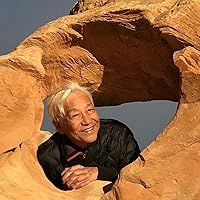
John Biggs spent his professional life as an academic psychologist and educator in England, Canada, Australia and Hong Kong. He has published extensively as an academic, his most important work being Teaching for Quality Learning at University (Open University Press, 1998; 4ed with Catherine Tang as co-author). He retired from Hong Kong University to concentrate on writing. He has published five novels: The Girl in the Golden House (Pandanus Books 2003), Project Integrens (Sid Harta 2006), Disguises (Burville Books 2007, republished as an-book),Tin Dragons (Maygog, 2008) and From Ashes to Ashes (Interactive Publications, 2013) and a collection of short stories, Towards Forgiveness: Sino-Tasmanian stories from two islands, Ginninderra, 2012. Non-fiction includes Tasmania over Five Generations (Forty Degrees South, 2010), a social-political history of Tasmania as seen through the eyes of the Biggs family, and Changing Universities (Strictly Literary, 2013) an academic memoir, recounting some of the more bizarre, traumatic and rewarding aspects of university life in several countries. Further details at www.johnbiggs.com.au
HIGHER EDUCATION, PAST AND PRESENT: IN THE EAST, WEST, AND SOUTH
David Y. F.
John Biggs’s Changing Universities: A Memoir about Academe in Different Places and Times (published in 2012) relates his experiences ranging from “the traumatic, through the hilarious, to the highly rewarding” in seven universities in four different countries over a period of over 60 years. The book caught my attention especially because John was one of the colleagues at the University of Hong Kong about whom my memories stand out clearly, even though he was from a different department.
Biggs’s writing style is neither highbrow nor academic. His book is entertaining, full of his true-to-life experiences that read like storytelling. He does not shy away from naming names, relating how comically (and poorly) international conferences are run, or even how at times the pursuit of monetary gains may amount to a national scandal (e.g., re-marking failed international students but not failed HECS students at an Australian university because the former pay higher fees).
Biggs reveals a telling instance of how politics gets in the way of international research:
“President George Bush Snr had been seriously pissed off at the poor showing of US high schools in maths and science. So it was put to the meeting that the sampling procedures be changed in such a way that the sampling of schools in IEA studies to favour the performance of American students. No IEA members objected because major funding was at stake…. The prospect of engaging these ultra-cool, smooth-tongued Ivy League Republican Party professionals in high stakes debate was daunting. Maybe this is why Australian politicians were rolled so easily when the Bush Family and their bullyboys forced their agenda on them on quite different issues.”
Adding to all that, the chapter “Disjoint Ventures: Some Chinese Universities” is a tale of intercultural mismatch. Biggs speaks his mind, directly. He doesn’t play games. He likes to follow international standards. Not surprisingly, the chapter reminds me of the Monkey King who accompanied his master in search of Buddhist scriptures in India in the Chinese novel Journey to the West. Not disposed to subservience, Monkey King wreaked havoc in the heavenly palace of the Jade Emperor—which is hierarchically organized, protocol-bound, and intolerant of deviance, much like universities in mainland China.
In all, Changing Universities is particular useful to me in terms of comparing notes with a colleague whose paths have touched mine in more ways than one through time.
Loss of the Golden Age?
Biggs says, “Almost all university funding in the mid-twentieth century came from the public purse in the belief that universities had an obligation to the public to create and promulgate knowledge unfettered by commercial or political constraints.” Comparing universities of 30 and more years ago: “Today’s universities are not only suffering problems but are also not serving society in the way they are uniquely capable of doing.” One reason is that universities today have become largely self-funding, “run like commercial institutions along corporate and managerial lines.” Their mission “has become one of preparing students for workforce across a broad range of professions.”
Self-funding is getting increasingly difficulty. In the Chronicle of Higher Education, we may find recent headlines (referring to U.S.) such as: “43% of College Fund Raisers Don’t Expect to Meet Goals” and “How to Recognize Warning Signs of a Death Spiral.” Such warning signs forebode a bleak future for U.S. academic institutions and threaten their faculty members. What about institutions in Asia? Public institutions in wealthy Hong Kong and Singapore continue to receive enviable funding compared with their Western counterparts. But having money is only a necessary, not sufficient, condition for academic excellence. I interpret the problems of Asian institutions in the framework of utilitarianism, economic development, and social Darwinism. As I have stated in Rewriting Psychology: An Abysmal Science? published in 2019 (chap. “Pressure Cooker Education: Social Darwinism and Status Ranking in Asia”; visit https://www.universal-publishers.com/... ):
Utilitarian and especially economic considerations often dictate educational priorities and policies. Education in Confucian-heritage societies is under pressure to reform. Despite the weight of its own tradition, it is now responding to the socioeconomic realities of the modern age. Economic viability in the 21st century depends on knowledge as a human resource.
Nations that invest in this resource will thrive; nations that fail to do so imperil their own survival…. Economic agendas work both on and through education policy: Education is not just the handmaiden of a national economy; it is also an instrument by which economic forces reach their goals. It is now integral to the machinery that drives economic changes, affecting the daily lives of teachers, students, and parents. Educational establishments … stand to gain in a nation’s quest for competitive advantages, and they also open themselves up to the charge of being subverted by economic agendas. At risk is their autonomy and ability to articulate the goals of education beyond pure economic profit, for example, the development of moral character.
Social Darwinism extends the theory of evolution from the biological into social, political, and educational domains. It views society and the economy as a competitive arena in which the “fittest” would rise to the top and the “unfit” eliminated. Today, social Darwinism rides on as a dominant ideology underlying economic agendas. Metaphors from the business world conjure frightful imagery: “cutthroat competition”; “predatory takeover”; and “You die, I live” (a literal translation of a Chinese expression).
Carried into the world of education, social Darwinism breeds the mentality of a rat race: for students, to outscore others in examinations; for academicians, to outperform others in publishing papers; for administrators, to vie with other institutions in gaining prestige. In this climate, institutions spend inordinate amounts of money and energy on image promotion, much like what is done in business, rather than on educating and the pursuit of excellence. Administrators, particularly in Asia, habitually proclaim their institution as “world class.” Where has the time-honored virtue of modesty gone?
Increasingly, contract renewals for staff members and allocation of resources both across and within institutions are pegged to performance indicators—a practice sometimes referred to as “management by terror.”
My personal experiences speak to the loss of the Golden Age, particularly in the loss of collegial courtesy and generosity. During the 20th century, my letters by snail mail sent out to professors, many of whom I had not met in person, were answered; visits to their institutions were received with courtesy, even warmth. Nowadays, my outbound emails to academics risk being permanently lost in cyberspace, unacknowledged. Under the pressure to publish or perish, academics have no time for other academics from whom they don’t expect to derive benefit.
The University of Hong Kong
John Biggs account of The University of Hong Kong occupies four chapters (11-14). Chapter 11 is named “A Bad Mistake? The University of Hong Kong.” Before long into the chapter, Biggs gave his answer, “I had made a bad, bad mistake coming to Hong Kong.” Why such a bad mistake? Soon after taking up his post as Professor of Education, Biggs found out that the students did know their examination marks. Here is an exchange between Biggs and the Dean of the Faculty of Education.
Biggs: But what about their civil rights? Isn’t it the students’ right to know their assessment results? Dean: You’re in Hong Kong, a colony. There are no civil rights here [sic]
In the classroom, Biggs soon encountered the notorious, deadening silence of Chinese students in response to his attempts to engage them in discussions. Unfortunately he did not mention two needed qualifications. First, that he was talking specifically about students at the University of Hong Kong. In my experience, students in mainland China are much more vocal, even articulate. Second, that he expected the language of exchange to be English. But the deadening silence may turn into lively discussion, as when I used Cantonese (the students’ mother tongue) as the medium of exchange.
My own experience shows that the cause of the deadening silence may not be located within individual students, but in the quality of the teacher-students relationship. Late in my career, I finally understood and put into practice the principle that I have to transform myself first before I can change the students. This means that I have to be self-liberated from my proclivities for perfectionism, authoritarianism, and intolerance. It has taken me decades to learn this simple truth! As I have described in Madness May Enrich Your Life: A Psychologist’s Spiritual Awakening (expanded ed., published in 2020; visit https://www.amazon.com/Madness-Enrich...
They [the students] come into my office like scared rabbits or mice seeing a cat, formal, stiff, uneasy. But I am no cat. I dislike status distinctions, and I don’t humiliate students, ever. Those who are not afraid of me have no problem.
My standards are high. My logic is as sharp as a knife. And I speak my mind. That makes me enough of a cat to make a student feel like a little mouse. On top of that, one of my teaching assistants once said to me point-blank: “You look too solemn. You don’t smile much. So students find it hard to approach you, even though you are actually approachable. Remember to smile!” I listened, and I was thankful. She was one of those who weren’t afraid of me.
Finally, I succeeded in some measure to become a self-liberated teacher—in my old age, about to retire. Biggs reported a similar experience:
As noted, my first experiences were discouraging. Then in 1989, in the tutorial class corresponding to my first poor start in 1987, the students were lively, critical, funny. Perhaps in those two years I was more used to local conditions and had learned to relax, allowing them to relax in turn.
What about the social environment of the expatriate staff? Here is Biggs’s colorful characterization: “Scratch the British skin of Hong Kong and rich Chinese blood flowed. Most expats accordingly didn’t mix with Chinese socially or bother to learn Cantonese.” And why did expatriates come to Hong Kong?
The Brits had different reasons than expats from other countries. As British nationals in a British Colony, Brits had the right to come and go as they pleased. Writer Simon Winchester, himself a Brit, captured one kind of British expatriate with his FILTH acronym: Failed In London Trying Hong Kong (we’re talking pre-1997, before the Territory was handed back to Mainland China).
All these stir up a lot of emotions about the University of Hong Kong, where I had spent most of my professional life. Here is a relevant selection from Madness May Enrich Your Life: A Psychologist’s Spiritual Awakening:
The University of Hong Kong … was dense with anachronism. Hoity-toity Oxbridge pretensions and Mandarin scholasticism (some say academic warlordism) were marital partners made in heaven. External examiners, mostly from the U.K., descended on the local scene, to be treated like overlords. American scholarship was treated with condescension, as second class (“The American doctorate is equivalent to the British master’s degree” was uttered with predictable regularity—a defensive reaction to the threat of increasing American dominance and corresponding decreasing British status). Chinese language and learning were relegated to third-class status…. An English lecturer in philosophy once asked me, “Is there such a thing as philosophy in Taiwan?”
Status distinctions were nonnegotiable, as in the glorious days of Empire. Even washrooms were differentially marked for “gentlemen” (reserved for senior staff) and for “boys” (reserved for minor staff). Pomp and circumstance received more attention than intellectual pursuits. I saw precious little evidence of the university functioning as a center of East-West learning or intercultural exchange on an equal footing.
Most expatriates led self-imposed ghetto-like lives, with little or no meaningful interaction with the local people, as if they had never left their home country. They had no need and were unable to converse in the local language (Cantonese), even after having lived in Hong Kong for decades. All these constitute good material for a case study of how intelligent and knowledgeable people can be self-encapsulated.
The University of Hong Kong was a place of racial separation and thinly disguised racial discrimination…. Expatriate (mostly British) staff had generous perks (e.g., heavily subsidized housing, paid long-term leave) that local (i.e., Chinese) staff did not have. Such discrimination was rationalized on high principles that most people today would find blatantly hypocritical.
In all, colonialism corrupted academic institutions, which corrupted the academic staff that in turn, acting as negative role models, corrupted the students. Even by design, it would be difficult to achieve the efficiency with which these institutions produced students with a turtle-like syndrome: refusing to stick their necks out, speak up, or act like young adults with a vision or passion for living (see “Slavery and Colonialism: Evils of a Bygone Age?” in Rewriting Psychology: An Abysmal Science?).
Now, the times have changed. There are indications of exchange on a more egalitarian basis and an increasing flow of knowledge in the East-to-West direction. These indications reflect a changing global balance of economic prowess. If history is a guide, political and military might will eventually follow. To conclude, here is my vision for the future:
East is East, and West is West. Excesses in one mirror deficiencies in the other, and vice versa. Each has something from which the other needs to learn, And something that the other should reject. East is West, and West is East: The world will be a better place. Concluding Reflections I am grateful to John Biggs for leading me to reflect on my academic career as well as the future of academia. It is pointless to lament over the passing of the Golden Age of tertiary education. But it is not to argue
How have universities changed over the past 60 years? Are they functioning any better now than they once were? These are some of the issues that John Biggs faces in reviewing his long academic career. From student days Biggs wanted to apply psychology to education. It was a long journey via universities in Australia, the UK, Canada and Hong Kong. His experiences were variously traumatic, bizarre, hilarious and rewarding, with the SOLO Taxonomy and constructive alignment as outcomes. His story tells us what universities were once like, how they came to be what they are today, with a hopeful stab at what they might be like in future. He is critical of the modern corporate university but denies that, once upon a time, universities exemplified a Golden Age of scholarship. Far from it.
“Biggs is a true scholar, happiest when left to his research and teaching. He had administration thrust upon him … but he thrust back.” John Kirby, Professor of Education and Psychology, Queen’s University, Canada
“John Biggs tells the story of change via a remarkable career – across four continents, seven universities, and different cultures. Biggs raises serious questions about how universities are run, for what reason, and for what benefits. A perfect read not only for current academics but also for outsiders who wonder what happens in the ivory towers.” John Hattie, Professor of Education and Director, Melbourne Education Research Institute, University of Melbourne