

What do you think?

The Complete Little Nemo
Meet Little Nemo, a diminutive hero of comic narrative, but one of the greatest dream voyagers of the 20th century. The master creation of Winsor McCay (1869–1934), restless sleeper Nemo inspired generations of artists with his weekly adventures from bed to Slumberland, a realm of colorful companions, psychedelic scenery, and thrilling escapades.
Nemo’s creator Winsor McCay was a founding figure in the modern American entertainment industry, above all with his revolutionary comics, which set standards for panel layout and storytelling technique, timing and pacing, and architectural and other detail that left an inestimable influence on subsequent artists, including Robert Crumb and Federico Fellini.
TASCHEN’s sumptuous Winsor McCay: The Complete Little Nemo 1905–1927 collects, for the very first time, and in full, glorious color, all 549 episodes of Little Nemo. In the illustrated accompanying volume, art historian and comics expert Alexander Braun places Winsor McCay’s life and work within the cultural history of the U.S. media and entertainment industry, and explores the immense art historical value of McCay's dream narrative. At once an adventure story, visual delight, and piece of cultural history, this publication is a tremendous monument to one of the most innovative pioneers—and one of the most intrepid explorers—of comic history.
Nemo’s creator Winsor McCay was a founding figure in the modern American entertainment industry, above all with his revolutionary comics, which set standards for panel layout and storytelling technique, timing and pacing, and architectural and other detail that left an inestimable influence on subsequent artists, including Robert Crumb and Federico Fellini.
TASCHEN’s sumptuous Winsor McCay: The Complete Little Nemo 1905–1927 collects, for the very first time, and in full, glorious color, all 549 episodes of Little Nemo. In the illustrated accompanying volume, art historian and comics expert Alexander Braun places Winsor McCay’s life and work within the cultural history of the U.S. media and entertainment industry, and explores the immense art historical value of McCay's dream narrative. At once an adventure story, visual delight, and piece of cultural history, this publication is a tremendous monument to one of the most innovative pioneers—and one of the most intrepid explorers—of comic history.
708 pages, Over-Sized Hardcover - 14" x 17.5"
First published December 5, 2014
About the author
Winsor McCay
161 books94 followersWas an American cartoonist and animator, best known for the comic strip Little Nemo (begun 1905) and the animated cartoon Gertie the Dinosaur (1914). For legal reasons, he worked under the pen name Silas on the comic strip Dream of the Rarebit Fiend.
A prolific artist, McCay's pioneering early animated films far outshone the work of his contemporaries, and set a standard followed by Walt Disney and others in later decades. His comic strip work has influenced generations of artists, including creators such as William Joyce, André LeBlanc, Moebius, Maurice Sendak, Chris Ware and Bill Watterson.
A prolific artist, McCay's pioneering early animated films far outshone the work of his contemporaries, and set a standard followed by Walt Disney and others in later decades. His comic strip work has influenced generations of artists, including creators such as William Joyce, André LeBlanc, Moebius, Maurice Sendak, Chris Ware and Bill Watterson.
Ratings & Reviews
Friends & Following
Create a free account to discover what your friends think of this book!
Community Reviews
Displaying 1 - 22 of 22 reviews
January 16, 2015
Eisnein's No.15 Favorite Artist/Artbook. Check Out No.16 Right HERE. Go Back to No.1 HERE.
Make It BIGGER. Make It Dangerously Heavy. Yes.
Well, I already had one of the two Sunday Press 16" x 21" reprints, as well as the two-book collection from Checker that collects McCay's entire 'Little Nemo in Slumberland' run. I'm a McCay fan, obviously. But then Taschen did their thing, producing a truly colossal edition that terrifies the toughest of bookcases. With a cloth-bound hardcover format close to the Sunday Press dimensions, it collects every Little Nemo page into one not-so-handy volume... and I couldn't say no to that. If you're wondering which version of 'Little Nemo in Slumberland' to buy, this is the one.

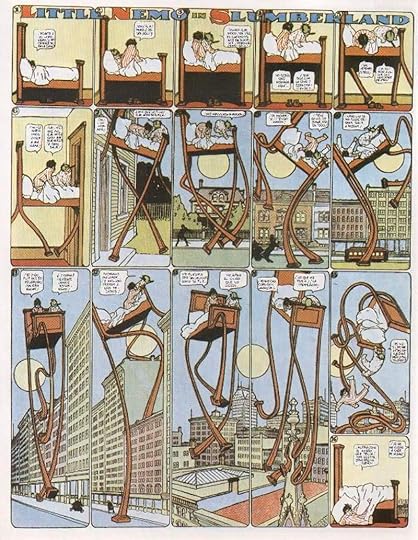

Regarding complaints that the book is not quite as big as the original broadsheet newspaper pages: there's not much difference between the 'full-size' Sunday Press pages -- 16" x 21" -- and the Taschen pages, about 14" x 18". If I had to guess, I'd say this is the absolute upper limit of what the factory bookbinders are capable of; I know that the Sunday Press books were hand-bound for exactly that reason. If I'm right, that extra inch or so makes a very big difference in price, satisfies the obsessive-compulsive desire for authenticity afflicting most of us book collectors, but offers no appreciable gains in reading enjoyment.

Regarding complaints that the book is too big: shut the fuck up.

Regarding complaints that Taschen is claiming to have invested far more time and money on art 'restoration' than they actually did: fair enough. One reviewer gave a convincing and detailed account of his reasons for knocking the book down to 4-stars instead of 5, and they relate to what he considers Taschen's sub-par restoration and use of flawed source material, including pages with creases, and at least one tear. This, after Taschen claimed to have spent years on the job. It's true, I don't see any real improvement on the Sunday Press reprints -- but they only reprinted 20 - 25% the material this work does. They were able to skip the rarest, poorest pages, while Taschen could not. Still, it's a legitimate gripe; I just don't think it comes close to negating the many, many positives of this brilliant collection. The idea of art restoration as it applies to newspaper comic-strips is pretty hazy, and trying to find suitable 100+ year old Sunday pages, printed on pulpy newsprint with an acidic content that makes yellowing and brittleness inevitable, is not an easy task. Regardless of preservation efforts, the existing strips will soon completely deteriorate... making efforts like this essential. Unlike Prince Valiant -- which debuted 30 years after Winsor McCay's most popular strip -- using original art for pristine black-and-white facsimiles, or printer's proofs like the ones Fantagraphics uses for its excellent color reprints, are simply not options. I was impressed with the vibrancy of the colors, and I think the scans equal those used in the Sunday Press editions, but it's a matter of personal taste and varying expectations.
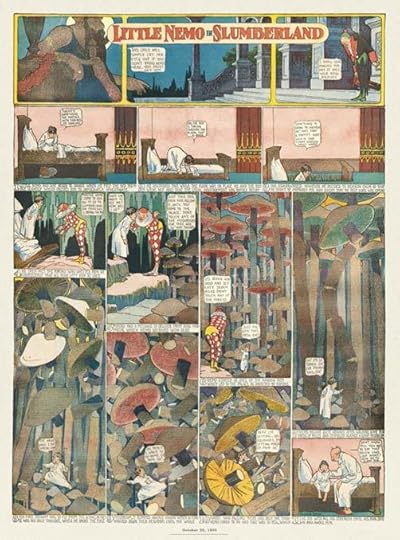
The massive, clothbound hardcover is introduced by Alexander Braun, who provides biographical and historical detail for each stage of McCay's career: the original run of 'Little Nemo in Slumberland' was the best; the printing presses at the Pulitzer flagship were the best of the best, allowing for the most vivid and carefully executed colors any strip would see for some time. When McCay was lured away by the notorious William Randolph Hearst, the title had to be changed to avoid lawsuits, the colors lost some of their lustre, and the strips themselves began to very gradually decline in quality. Hearst was more interested in McCay's prodigious talents as an illustrator, providing work to accompany the editorials. Providing beautifully rendered illustrations for the right-wing screeds of Hearst's chief mouthpiece and propagandist left little time for Nemo.

There is also a 13.5" x 17.25" softcover written by Braun -- 'Winsor McCay: A Life of Imaginative Genius' -- that is worth a fair amount on its own, and a wonderfully-designed carry-case (identical to the case that the Taschen book on Hieronymus Bosch came in, constructed in an over-sized manner to protect the corners -- make sure to save the box). The biographical volume by Braun is far from a cheap bonus; I would have purchased it if it wasn't included, so I'm once again impressed by the value and the quality. Laid out in the style and font of a turn-of-the-20th-century 'broadsheet' newspaper, the articles are fascinating, exploring a wide array of topics relating to McCay's artistic accomplishments. It also contains many of McCay's editorial illustrations and other comic strips -- his first, 'Little Sammy Sneeze', as well as the darker psychological themes of 'Dreams of the Rarebit Fiend'. McCay created the strip just four years after Freud released his revolutionary book 'On the Interpretation of Dreams'.
This is an essential volume for hardcore sequential art aficionados, and the perfect tribute to one of America's most important and unique artistic talents. It's a remarkable book, and one I never thought would be possible at the price it's going for.
Eisnein's No.15 Favorite Artist/Artbook. Check Out No.16 Right HERE. Go Back to No.1 HERE.
More Art-book Reviews
More Comic-book Reviews
More Novel Reviews
A Mysterious Review Related to the Book in Question, But Written by a Friend Instead
Make It BIGGER. Make It Dangerously Heavy. Yes.
Well, I already had one of the two Sunday Press 16" x 21" reprints, as well as the two-book collection from Checker that collects McCay's entire 'Little Nemo in Slumberland' run. I'm a McCay fan, obviously. But then Taschen did their thing, producing a truly colossal edition that terrifies the toughest of bookcases. With a cloth-bound hardcover format close to the Sunday Press dimensions, it collects every Little Nemo page into one not-so-handy volume... and I couldn't say no to that. If you're wondering which version of 'Little Nemo in Slumberland' to buy, this is the one.
Regarding complaints that the book is not quite as big as the original broadsheet newspaper pages: there's not much difference between the 'full-size' Sunday Press pages -- 16" x 21" -- and the Taschen pages, about 14" x 18". If I had to guess, I'd say this is the absolute upper limit of what the factory bookbinders are capable of; I know that the Sunday Press books were hand-bound for exactly that reason. If I'm right, that extra inch or so makes a very big difference in price, satisfies the obsessive-compulsive desire for authenticity afflicting most of us book collectors, but offers no appreciable gains in reading enjoyment.
Regarding complaints that the book is too big: shut the fuck up.
Regarding complaints that Taschen is claiming to have invested far more time and money on art 'restoration' than they actually did: fair enough. One reviewer gave a convincing and detailed account of his reasons for knocking the book down to 4-stars instead of 5, and they relate to what he considers Taschen's sub-par restoration and use of flawed source material, including pages with creases, and at least one tear. This, after Taschen claimed to have spent years on the job. It's true, I don't see any real improvement on the Sunday Press reprints -- but they only reprinted 20 - 25% the material this work does. They were able to skip the rarest, poorest pages, while Taschen could not. Still, it's a legitimate gripe; I just don't think it comes close to negating the many, many positives of this brilliant collection. The idea of art restoration as it applies to newspaper comic-strips is pretty hazy, and trying to find suitable 100+ year old Sunday pages, printed on pulpy newsprint with an acidic content that makes yellowing and brittleness inevitable, is not an easy task. Regardless of preservation efforts, the existing strips will soon completely deteriorate... making efforts like this essential. Unlike Prince Valiant -- which debuted 30 years after Winsor McCay's most popular strip -- using original art for pristine black-and-white facsimiles, or printer's proofs like the ones Fantagraphics uses for its excellent color reprints, are simply not options. I was impressed with the vibrancy of the colors, and I think the scans equal those used in the Sunday Press editions, but it's a matter of personal taste and varying expectations.
The massive, clothbound hardcover is introduced by Alexander Braun, who provides biographical and historical detail for each stage of McCay's career: the original run of 'Little Nemo in Slumberland' was the best; the printing presses at the Pulitzer flagship were the best of the best, allowing for the most vivid and carefully executed colors any strip would see for some time. When McCay was lured away by the notorious William Randolph Hearst, the title had to be changed to avoid lawsuits, the colors lost some of their lustre, and the strips themselves began to very gradually decline in quality. Hearst was more interested in McCay's prodigious talents as an illustrator, providing work to accompany the editorials. Providing beautifully rendered illustrations for the right-wing screeds of Hearst's chief mouthpiece and propagandist left little time for Nemo.
There is also a 13.5" x 17.25" softcover written by Braun -- 'Winsor McCay: A Life of Imaginative Genius' -- that is worth a fair amount on its own, and a wonderfully-designed carry-case (identical to the case that the Taschen book on Hieronymus Bosch came in, constructed in an over-sized manner to protect the corners -- make sure to save the box). The biographical volume by Braun is far from a cheap bonus; I would have purchased it if it wasn't included, so I'm once again impressed by the value and the quality. Laid out in the style and font of a turn-of-the-20th-century 'broadsheet' newspaper, the articles are fascinating, exploring a wide array of topics relating to McCay's artistic accomplishments. It also contains many of McCay's editorial illustrations and other comic strips -- his first, 'Little Sammy Sneeze', as well as the darker psychological themes of 'Dreams of the Rarebit Fiend'. McCay created the strip just four years after Freud released his revolutionary book 'On the Interpretation of Dreams'.
This is an essential volume for hardcore sequential art aficionados, and the perfect tribute to one of America's most important and unique artistic talents. It's a remarkable book, and one I never thought would be possible at the price it's going for.
Eisnein's No.15 Favorite Artist/Artbook. Check Out No.16 Right HERE. Go Back to No.1 HERE.
More Art-book Reviews
More Comic-book Reviews
More Novel Reviews
A Mysterious Review Related to the Book in Question, But Written by a Friend Instead

July 24, 2023
I feel bad not giving this one a full five star rating!
I got the smaller sized copy, so not full newspaper sized... but I think this size was nice. Big enough to see the dialogue, small enough to still handle. Awesome to have all of these strips together in one big collection.
Over 500 full page Sunday strips. All beautifully illustrated in an Art Noveau style with dream-like imagery reminiscent at times of Surrealism paintings.
Each strip ends with a jarring event that wakes Little Nemo up in his bed. We get to explore Slumberland with him each week along with Princess, Flip (a mischievous companion who essentially becomes the main character later on), Imp (a pretty racist caricature of the natives of Slumberland). Each Christmas season we get a strip or two featuring Santa Claus and then a literal old man as the past year and a baby as the new year. There's no cohesive narrative throughout, but many of the weeks do continue a small story.
So reading this all together, it does become very repetitive. I also found the dialogue most of the time to be a bit redundant, just simply saying what we're already seeing.
However, I think the art and setting more than makes up for anything lacking in the plot and characters.
I got the smaller sized copy, so not full newspaper sized... but I think this size was nice. Big enough to see the dialogue, small enough to still handle. Awesome to have all of these strips together in one big collection.
Over 500 full page Sunday strips. All beautifully illustrated in an Art Noveau style with dream-like imagery reminiscent at times of Surrealism paintings.
Each strip ends with a jarring event that wakes Little Nemo up in his bed. We get to explore Slumberland with him each week along with Princess, Flip (a mischievous companion who essentially becomes the main character later on), Imp (a pretty racist caricature of the natives of Slumberland). Each Christmas season we get a strip or two featuring Santa Claus and then a literal old man as the past year and a baby as the new year. There's no cohesive narrative throughout, but many of the weeks do continue a small story.
So reading this all together, it does become very repetitive. I also found the dialogue most of the time to be a bit redundant, just simply saying what we're already seeing.
However, I think the art and setting more than makes up for anything lacking in the plot and characters.

August 25, 2022
I love Windsor McCay and his amazing art (aside from all the extremely awful racism endemic to 100 years ago very present in this book). As a person who has been passionate about the history of "the funny pages" my whole life, I was so excited when Taschen released this omnibus in our wonderful/expensive "golden age of reprints."
However, this book is impossibly big. Sitting with the book in your lap is going to hurt the circulation in your legs. This book really needs a lectern like the giant dictionaries get in university libraries: a dedicated support zone that will hold this book at a readable slant. Lacking that, I have to clear off my whole kitchen table to read the dang thing. Even getting the book out of its protective box is an ordeal. It's a very sexy collector's item, but almost impossible to read, which is pretty heartbreaking because that's why I bought it. Not to flex on my shelf, as no one who comes to my house even knows who Windsor McCay is. I get a lot more use out of the volumes of Windsor McCay political cartoons that I own, because they are divided into small volumes that I can actually hold.
However, this book is impossibly big. Sitting with the book in your lap is going to hurt the circulation in your legs. This book really needs a lectern like the giant dictionaries get in university libraries: a dedicated support zone that will hold this book at a readable slant. Lacking that, I have to clear off my whole kitchen table to read the dang thing. Even getting the book out of its protective box is an ordeal. It's a very sexy collector's item, but almost impossible to read, which is pretty heartbreaking because that's why I bought it. Not to flex on my shelf, as no one who comes to my house even knows who Windsor McCay is. I get a lot more use out of the volumes of Windsor McCay political cartoons that I own, because they are divided into small volumes that I can actually hold.

December 2, 2017
"Surely this can't be real! I must be dreaming! Did you ever dream you were dreaming? I must be dreaming!"
And with that, Winsor McCay closes out Little Nemo, some 550 full page strips over 22 years. It took two years of reading a few strips at a time with my daughter, but we finished Little Nemo today. Amazing, Simply amazing.
McCay's work is not without it's flaws:
* the book contains all three publishing periods of the strip, and the final 1920's segment (produced 10 years after the strips first 'cancellation') is distinctly weaker than the prior ones. That makes the end of the book somewhat depressing because you can't help to compare them to the dizzying heights of the strip in its heydey.
* It's easy to forget how Flip was a gross caricature of an Irish immigrant in the 1905 strips because we don't see those images as much these days, but there's no avoiding Impy the Jungle Imp. Yes, he's a glorious force of chaos in the strip and Little Nemo wouldn't be the same without him but... ugh.
*The first year of the strip, some 50 pages, make it look like it's going to be gloriously absurdist takes on the same idea over and over as Nemo tries and fails to reach Slumberland proper over and over, but once he arrives... wow. The last year was building up some of the insane internal logic of the place, and once McCay allows himself longer narratives his creativity and imagery echoes though the next 100 years of comic strips.
And with that, Winsor McCay closes out Little Nemo, some 550 full page strips over 22 years. It took two years of reading a few strips at a time with my daughter, but we finished Little Nemo today. Amazing, Simply amazing.
McCay's work is not without it's flaws:
* the book contains all three publishing periods of the strip, and the final 1920's segment (produced 10 years after the strips first 'cancellation') is distinctly weaker than the prior ones. That makes the end of the book somewhat depressing because you can't help to compare them to the dizzying heights of the strip in its heydey.
* It's easy to forget how Flip was a gross caricature of an Irish immigrant in the 1905 strips because we don't see those images as much these days, but there's no avoiding Impy the Jungle Imp. Yes, he's a glorious force of chaos in the strip and Little Nemo wouldn't be the same without him but... ugh.
*The first year of the strip, some 50 pages, make it look like it's going to be gloriously absurdist takes on the same idea over and over as Nemo tries and fails to reach Slumberland proper over and over, but once he arrives... wow. The last year was building up some of the insane internal logic of the place, and once McCay allows himself longer narratives his creativity and imagery echoes though the next 100 years of comic strips.

March 15, 2015
Un excelente edición que recopila todas las páginas de uno de los grandes clásicos de las series de prensa, incluyendo una amplia biografía del autor. Las tiras no se reproducen al tamaño original, pero el tomo ya es lo bastante difícil de manejar de por si y el tamaño permite la lectura sin esfuerzo ¿Es una edición perfecta? pues no porque la calidad de la restauración de algunas páginas deja que desear pero es una edición de toda la obra y sólo por la calidad del trabajo de McCay ya se merece el 5.
July 21, 2019
The first run is the best...the reboots in the early teens and the 1920s were not so creative or engaging. The best aspect of this volume is the 144 page history that goes along with it.

March 17, 2023
I waited several years for this book to be republished, and it now feels great having it sitting on my shelf after a four-month reading. Allot roughly this time if you want to embark on both the panels and the marvellous and thorough essay by Alexander Braun, who painstakingly portrays all aspects of the life of the workaholic McCay. This book is — literally — heavy duty (more than 4 kg / 9 lb) so consider it no commuter-friendly. The weekly panels are roughly auto-conclusive, so you might miss a bit of narrative through the lot according to nowadays standards. But this piece of cartoon history comes as it is: the way a pioneer envisioned a new medium in a shape the likes of which this world had never seen before. And would somehow never again be able to mimic. A true guiding light, worshipped by all your favourite comic-book artists, this is a work not to be missed by any 9th art connoisseur.
A quote from the Washington Post on the back cover summarizes it all:
“The Little Nemo panels are quite literally the stuff that dreams are made of.”
A quote from the Washington Post on the back cover summarizes it all:
“The Little Nemo panels are quite literally the stuff that dreams are made of.”

February 9, 2021
I wanted to read Little Nemo for years, and so, a few weeks ago, when I finally got my hands onto this book, I was really excited to dive in. At first I was absolutely astonished by the artwork - so so well executed, marvelous really. McCay was a wonderful artist. However, there's a lot of repetitiveness in the stories as well as a lot of racism and that was quite disheartening and disappointing.

July 15, 2019
Between discovering this and Dreams of the Rarebit Fiend, McCay has become one of my all-time favorite artists. Absolutely visionary stuff for 1905-1909. It still feels really fresh today, no one does comics storytelling like it. Incredibly precise artistic vision. This XXL book is as big as a TV, too, which is pretty fun if you don't have to go anywhere with it.
June 18, 2018
Very racist and somewhat repetitive. And the book's large format (seemingly determined by the relatively small size of the text) makes it a chore to read.
Too bad because there's some imaginative stuff in here.
Too bad because there's some imaginative stuff in here.
November 29, 2020
Sublime! What else is there to say? It's Winsor McCay!

Read
September 2, 2026بالاخره تمام شد. نه از این نظر که کمیک بدی بود و از دستش راحت شدم. از این نظر که این سفر چند ماهه تمام شد. اگر بخواهم در یک جمله توصیف کنم باید بگویم که کمیک جادویی بود. باورکردنی نیست که کمیکی برای صد سال پیش باشد و این قدر تاثیرگذار، متفاوت و پر از ریزهکاری باشد. اینکه هنوز هم خواندنی باشد و مهمتر از همه از تصاویرش لذت ببریم. به عنوان یکی از ستونهای کمیک واقعاً خواندنش لذتبخش بود اما کمی هم ریزتر بشویم.
کمیک دربارۀ پسری به نام نمو است که در تمام کمیکها تلاش دارد به سرزمینی به اسم «اسلامبرلند» برسد اما در واقعیت که در خواب. هر کمیک نمو یک صفحه است که ماجرایی برای رسیدن به اسلامبرلند برایش پیش میآید و نمادینتر پنل کمیک آخرین پنل است که نمو از خواب بیدار میشود. نمو در هر کمیک این مسیر را طی میکند و به دلایل مختلف بیدار میشود حتی اگر بخواهم دقیقتر بگویم کمیکهای زیادی هست که بیشتر شبیه کابوس است و خود نمو هم بهش اشاره میکند. اما کمیک این شکلی نیست که هر بار یک داستان مجزا برای نمو پیش بیاید بلکه انگار نمو در یک خواب طولانی است و هر وقت میخوابد ادامۀ همان قبلی را میبیند. در این مسیر به اسلامبرلند میرسد، دوباره دور میشود و هزاران بلای مختلف به سرش میآید.
در این راه چندتا همراه پیدا میکند که هر کدام شخصیت خودشان را دارند. یکیشان اصلاً حرف نمیزند و شبیه قبلیههای آفریقایی است. یکیشان فقط خرابکاری میکند و در کمیکهای آخر هم همراه دیگری به سوی اسلامبرلند راهی میشود. شخصیتهای دیگری هم از خود اسلامبرلند مثل پرنسس هستند که دلیل رفتن نمو به اسلامبرلند همین است. تقریباً تمام کمیکها منحصربهفرد هستند. البته میشود به شکل موضوعی آنها را از هم جدا کرد اما هر کدام ماجرای خودشان را دارند. گاهی شهر تغییر میکند، گاهی اسیر میشوند، گاهی حیوانات و جانوران مختلف بهشان حمله میکنند، گاهی اتفاقات عجیب میافتد و همهچیز در این کمیک هست و جادو از همینجا میآید. از اینجا که مککی چون در یک سرزمین رویایی است هر کاری میکند و این خلاقیت و تخیل واقعاً شبیه خواب است نه مثل آثار امروزی که حتی خواب هم شبیه واقعیت است. هر اتفاقی میافتد و واقعاً حس اینکه بعدی چی میشود؛ حس اینکه چطور به این فکر رسیده باعث میشود آدم کیف کند. بهترین راه برای درک بهتر کمیک گشتن در اینترنت و خواندن چندتا از قصهها است.
کمیکها تقریباً بدون جملهها هم قابل فهم هستند و من برخی از کمیکها را فقط نگاه کردم. رنگها و تصاویر و جزییاتی که در هر کمیک به کار رفته بسیار زیبا است. در طراحی برای من یادآور «آرت نوو» بود و خیلی زیاد یاد موخا میافتادم. این رنگیرنگی بودن و زیبایی در هر وسیله و لباس و طراحی واقعاً چشمنواز بود. اینکه هر شی میتواند به زیباترین شکل طراحی بشود. از این منظر واقعاً حسرتبرانگیز بود مخصوصاً که ما هر چی جلوتر آمدیم هم طراحی ضعیفتر شد و هم کمیکآرتیستها به سمت مینیمال کار کردن رفتند.
اما از نظر داستانی و طراحی شکلی از اورینتالیسم هم در کار دیده میشود. نه به این معنی که ما خوب هستیم و بقیه وحشی و عقبمانده هستند بلکه فکر میکنم بیشتر از کلیشهها میآید. خیلی از کمیکها برای جادویی کردن فضا در طراحی صحنهپردازی و طراحی شبیه تابلوهای قدمی است که است که از هزار و یک شب کشیده میشود و اینجا کمی در ذوق میخورد اما برای کمیکی که برای صد سال پیش هست خیلی هم عجیب نیست چون همین تفاوت است که باعث میشود برای خواننده جادویی باشد. البته با نگاه امروزی میشود نقدهایی به کمیک داشت اما از آنها میگذرم چون نهایتاً برای من آن قدر عمیق نبودند و فکر نمیکنم از قصد خواسته چیزی را تولید یا بازتولید کند.
در کمیکهای سالهای آخر نمو وارد دنیای خودش میشود و از اسلامبرلند فاصله میگیرد. داستانها در خانه و شهری که زندگی میکند میافتد و انگار مککی میخواسته شکل دیگری از کمیک را تجربه کند اما نهایتاً با اسلامبرلند و آخرین سفر نمو به آنجا پایان مییابد.
کمیک دربارۀ پسری به نام نمو است که در تمام کمیکها تلاش دارد به سرزمینی به اسم «اسلامبرلند» برسد اما در واقعیت که در خواب. هر کمیک نمو یک صفحه است که ماجرایی برای رسیدن به اسلامبرلند برایش پیش میآید و نمادینتر پنل کمیک آخرین پنل است که نمو از خواب بیدار میشود. نمو در هر کمیک این مسیر را طی میکند و به دلایل مختلف بیدار میشود حتی اگر بخواهم دقیقتر بگویم کمیکهای زیادی هست که بیشتر شبیه کابوس است و خود نمو هم بهش اشاره میکند. اما کمیک این شکلی نیست که هر بار یک داستان مجزا برای نمو پیش بیاید بلکه انگار نمو در یک خواب طولانی است و هر وقت میخوابد ادامۀ همان قبلی را میبیند. در این مسیر به اسلامبرلند میرسد، دوباره دور میشود و هزاران بلای مختلف به سرش میآید.
در این راه چندتا همراه پیدا میکند که هر کدام شخصیت خودشان را دارند. یکیشان اصلاً حرف نمیزند و شبیه قبلیههای آفریقایی است. یکیشان فقط خرابکاری میکند و در کمیکهای آخر هم همراه دیگری به سوی اسلامبرلند راهی میشود. شخصیتهای دیگری هم از خود اسلامبرلند مثل پرنسس هستند که دلیل رفتن نمو به اسلامبرلند همین است. تقریباً تمام کمیکها منحصربهفرد هستند. البته میشود به شکل موضوعی آنها را از هم جدا کرد اما هر کدام ماجرای خودشان را دارند. گاهی شهر تغییر میکند، گاهی اسیر میشوند، گاهی حیوانات و جانوران مختلف بهشان حمله میکنند، گاهی اتفاقات عجیب میافتد و همهچیز در این کمیک هست و جادو از همینجا میآید. از اینجا که مککی چون در یک سرزمین رویایی است هر کاری میکند و این خلاقیت و تخیل واقعاً شبیه خواب است نه مثل آثار امروزی که حتی خواب هم شبیه واقعیت است. هر اتفاقی میافتد و واقعاً حس اینکه بعدی چی میشود؛ حس اینکه چطور به این فکر رسیده باعث میشود آدم کیف کند. بهترین راه برای درک بهتر کمیک گشتن در اینترنت و خواندن چندتا از قصهها است.
کمیکها تقریباً بدون جملهها هم قابل فهم هستند و من برخی از کمیکها را فقط نگاه کردم. رنگها و تصاویر و جزییاتی که در هر کمیک به کار رفته بسیار زیبا است. در طراحی برای من یادآور «آرت نوو» بود و خیلی زیاد یاد موخا میافتادم. این رنگیرنگی بودن و زیبایی در هر وسیله و لباس و طراحی واقعاً چشمنواز بود. اینکه هر شی میتواند به زیباترین شکل طراحی بشود. از این منظر واقعاً حسرتبرانگیز بود مخصوصاً که ما هر چی جلوتر آمدیم هم طراحی ضعیفتر شد و هم کمیکآرتیستها به سمت مینیمال کار کردن رفتند.
اما از نظر داستانی و طراحی شکلی از اورینتالیسم هم در کار دیده میشود. نه به این معنی که ما خوب هستیم و بقیه وحشی و عقبمانده هستند بلکه فکر میکنم بیشتر از کلیشهها میآید. خیلی از کمیکها برای جادویی کردن فضا در طراحی صحنهپردازی و طراحی شبیه تابلوهای قدمی است که است که از هزار و یک شب کشیده میشود و اینجا کمی در ذوق میخورد اما برای کمیکی که برای صد سال پیش هست خیلی هم عجیب نیست چون همین تفاوت است که باعث میشود برای خواننده جادویی باشد. البته با نگاه امروزی میشود نقدهایی به کمیک داشت اما از آنها میگذرم چون نهایتاً برای من آن قدر عمیق نبودند و فکر نمیکنم از قصد خواسته چیزی را تولید یا بازتولید کند.
در کمیکهای سالهای آخر نمو وارد دنیای خودش میشود و از اسلامبرلند فاصله میگیرد. داستانها در خانه و شهری که زندگی میکند میافتد و انگار مککی میخواسته شکل دیگری از کمیک را تجربه کند اما نهایتاً با اسلامبرلند و آخرین سفر نمو به آنجا پایان مییابد.

August 25, 2025
Holy god what a behemoth !!!!!! The initial run ? Incredible. Fun meta ideas, GORGEOUS art and colouring, weird and whacky. Peters out and becomes really dull during the tour across North America (although it gives Winsor McCay a chance to draw sprawling cityscapes, which he is very good at). Second iteration, intensely less interesting, despite primarily focussing on Flip, the only interesting character in the whole strip. Although, near the end, things pick up a bit, but this is mostly due to the fact that McCay borrows setting and characters and ideas directly from fairy tale, throwing Little Nemo and Co. into the world of Mother Goose (Mother Goose Village or some shit like that), and has them meet and fuck around with the giant from Jack and the Beanstalk, Cinderella, and later on outside of the village, Aladdin, Captain Kidd, Robinson Crusoe, etc. The drawings and colour dip in quality throughout this second iteration. The third iteration revives an old nameless character that follows Flip around and buys into his plots (Flip calls him "professor", and he will often be a kind of virtuoso depending on need for the strip, i.e. "professor" is a crack-shot with a snowball, he's the greatest batter in the world, etc.), and names him (Slivver? Slivv for sure). I really like Slivv and Flip playing off of each other, and they bring MUCH needed character to the strip. The colour and drawing quality improves, and dips again at the very end, and some interesting meta-ideas pop up again. Overall, I'd say run one gets 4.5 starz, run two gets 2.5 starz, and run three gets 3 starz. Good stuff.

September 20, 2025
What a trip has been to read through two and a half years the whole adventures of Nemo and his playdates. It's both a trip to another land and a nostalgic past, a lovely place with incredible artwork. There are a lot of memorable strips, but to name a few standouts: the initial run on the New York Herald Tribune when Nemo tried to reach the Princess; the introduction of Flip; the trip to Mars and the journey around US major cities; the toned-down colours and humanity in the run of "If animals could tell their side of the story" strips; the first strips going back to the NY Herald Tribune which was a return to force; the visits to different traditional tales; the prehistoric visit which is definitely a precursor to The Flintstones; and of course, all the strips that celebrate Christmas and New Year's Eve every year.
Sure there are times when the strips get repetitive or have been done before (how many times can giant locusts/mosquitos/etc attack Nemo?), but what else can you expect of a 22 year span weekly publication? And I do think McCay could've done with less text when his beautiful illustrations tell more, but this is almost the birth of a medium so it makes sense that visual narratives weren't that develop, and in the end these are stories and characters that will remain with me forever, so that's more than anyone could ask for.
Sure there are times when the strips get repetitive or have been done before (how many times can giant locusts/mosquitos/etc attack Nemo?), but what else can you expect of a 22 year span weekly publication? And I do think McCay could've done with less text when his beautiful illustrations tell more, but this is almost the birth of a medium so it makes sense that visual narratives weren't that develop, and in the end these are stories and characters that will remain with me forever, so that's more than anyone could ask for.

August 8, 2023
Despite the pigeonholed formal structure that Winsor McCay enforces on "Little Nemo in Slumberland", it can't be denied the sheer imagination that goes into crafting each strip. There are so many fantastic pieces of sequential storytelling within a single page due to McCay's genius compositions. Many of the strips hardly make any sense, but it's a visual treat from start to finish. Realistically, the stories don't garner much attention on their own, but the fact that McCay churned out page after page like this every week for 20+ years is really worth respecting. This truly is one of the greatest comics of all time.
The expansive documentation and history in this volume is also worth perusing. Taschen did an A+ job putting this collection together.
The expansive documentation and history in this volume is also worth perusing. Taschen did an A+ job putting this collection together.
September 16, 2026
Non cercate altrove, tutto il fumetto è qui

December 28, 2025
The ridiculous amount of time I took to read this was largely due to my reluctance to plough through the interminable introduction, as insightful as it was. It became a low priority over a couple of years. But plow through I finally did, and made it to the toons, which were delightful enough, even if the creative force was mostly spent by the end. McKay's longevity with Nemo, as well as his skill and heart made a body of work that has been plundered by the comics industry ever since, and understably so.
For its time, Nemo must have been an utter revelation. With backgrounds beautifully detailed and illustrated, with wacky dream-like interpretations and logic playing out with characters that were as frustrating as they were endearing. I couldn't escape comparing Flip and his chaotic, destructive character with a certain political figure of present times, only Flip has an endearing quality about him as well, which the present figure entirely lacks.
A treasure trove of visual storytelling from (mostly) over a century ago, complete and at an unwieldly size (I fould myself resting the book on the back of my reading chair headset, and reading the volume standing up, as though at a pew in church as the only comfortable way to read a tome of this size and weight), it is a must have for graphic narrative historians, and lovers of masterful early graphic storytelling alike.
For its time, Nemo must have been an utter revelation. With backgrounds beautifully detailed and illustrated, with wacky dream-like interpretations and logic playing out with characters that were as frustrating as they were endearing. I couldn't escape comparing Flip and his chaotic, destructive character with a certain political figure of present times, only Flip has an endearing quality about him as well, which the present figure entirely lacks.
A treasure trove of visual storytelling from (mostly) over a century ago, complete and at an unwieldly size (I fould myself resting the book on the back of my reading chair headset, and reading the volume standing up, as though at a pew in church as the only comfortable way to read a tome of this size and weight), it is a must have for graphic narrative historians, and lovers of masterful early graphic storytelling alike.

April 20, 2022
This book is very excellent.

December 20, 2014
Il miglior libro che esista per tutti quelli che amano 3 cose: i fumetti, l'arte e i sogni.

Read
February 21, 2019Notre chronique est disponible sur le webzine : https://www.deuxiemepage.fr/2015/03/3...

February 15, 2020
1905-1927

Read
December 30, 2017Brilliant at first, but a pretty damning look at how tired, racist cliches can derail even the fiercest of imaginations. Once McCay starts embodying more minstrel humor, the comics get much less creative.
Displaying 1 - 22 of 22 reviews